


Reborn in a Small Nation, I Have a Tiger Tally!
重生小国,我有一枚虎符!
- Status
- Completed
- Length
- 1.1M Words
- Genre
- Eastern Fantasy
- Subgenre
- Otherworld Continent
- Updated
- 10mo ago
- Source
- Qidian
Stats
493Chapters
0Votes
6.4kRecs
21.3kFans
Tags
Synopsis
More by this author
 Shadow Demon World: Starting with the Chai Gang
 A Livestock Keeper on a Production Team in the 1960S
 Cultivation: Starting with Sand Camels
 Cultivating Immortality and Longevity by Raising Sea Beasts
 Reborn in 1992: Starting with Planting Trees in the Desert
 The Super Family Head System
 Reborn as a Ming Dynasty Maritime Merchant
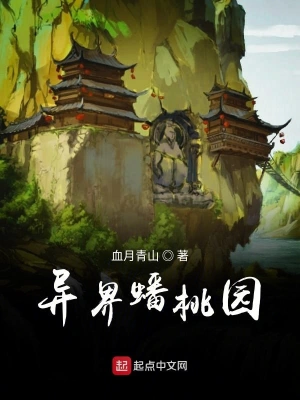 The Otherworldly Peach Orchard
 Reborn in the Three Kingdoms: Starting with Raising Chickens
Readers also read
 Supreme Talent: Speedrunning the Myriad Worlds
 Everyone Practices Evil Arts, So Why Are You Bathed in Divine Light?
 I Can See the Progress Bar
 Fate Is Set!
 A Record of a Mortal's Journey to Immortality: I Earn Immortality by Grinding Achievements for Rewards
 Starting as a County Magistrate, I Become a Celestial Official in the Immortal Dynasty
 Knight Lord: Starting with Daily Intelligence
 Lord Evolution
 A Record of a Mortal's Journey to Immortality: Choosing Hextech in the Chaotic Star Sea
 A Clan's Rise: Starting with Daily Intelligence
 Dark Three Kingdoms Lord
 The Northern Realm
The Otherworldly Peach Orchard
Reborn in the Three Kingdoms: Starting with Raising Chickens
Reborn as a Ming Dynasty Maritime Merchant
The Super Family Head System
Reborn in 1992: Starting with Planting Trees in the Desert
Cultivating Immortality and Longevity by Raising Sea Beasts
Cultivation: Starting with Sand Camels
A Livestock Keeper on a Production Team in the 1960S
The Northern Realm
The Otherworldly Peach Orchard
Reborn in the Three Kingdoms: Starting with Raising Chickens
Reborn as a Ming Dynasty Maritime Merchant
The Super Family Head System
Reborn in 1992: Starting with Planting Trees in the Desert
Cultivating Immortality and Longevity by Raising Sea Beasts
Cultivation: Starting with Sand Camels
A Livestock Keeper on a Production Team in the 1960S
Reader comments 31
Google Translate
Even an introduction is written in a mess.
After reading the introduction, there are a lot of Chinese styles mixed with great knights and grand dukes. Why are the Chinese titles not enough for you to write 😅
There are too many explanations, so Luo Liba won't get to the point.
Don't just continue to implement the current system. Who knows that the current system will be advanced? In an ignorant society with modern systems, have you ever considered how Wang Mang died?
Does the author think that once he becomes the boss, he can completely control everyone's minds and bodies? Let people go out to fight without giving them money, equipment, or food. To be realistic, look at the last years of the Ming Dynasty. When there is a war, there is no money, and when there is a war, money has to be distributed. When the country finally fell, there was no large-scale rebellion in the nine sides, and they were still raising money before their death.
After reading a few chapters, I went to work as a soldier and had to bring my own food and pay for weapons and training! It's so outrageous that they opened the door to outrageous people. It's so outrageous.
Speechless
Wages are graded and people are graded. Isn't that the primitive grade system? If you change the thread, you will actually get a first-class salary! The same goes for the level of force. If it were me, I would have pinched you to death when you were a soldier. If a civilian fights with a prince, you look too good. In reality, a township chief can pinch you to death!
In the Western aristocratic system, the third-level male and female nobles, and the fifth-level nobles were imposed by translation. The Eastern aristocratic system is generally based on the Duke and the Prince. This system was established during the Zhou Dynasty and has been used ever since, but it is different in each dynasty. In the beginning, the Zhou Dynasty did not have an obvious fifth-class nobility. At first, the five-class nobility was just the division of responsibilities between the Zhou Dynasty and the vassal states, but it had a certain degree of superiority and inferiority. Later, in the Spring and Autumn Period, the hierarchy of princes was gradually formed for the purpose of forming alliances. Chinese titles can be roughly divided into three levels according to their seniority. Dukes are the most respected, followed by uncles and sons. In the West, the highest title is for a male, followed by an uncle, and then for a male. The meaning of Zhou Chaogong is the prince of the emperor. The most noble and important person under the emperor is usually sealed within the king's territory. Assisting the emperor is equivalent to the central minister. This kind of country is also called the kingdom of Kinei. The Song Dynasty was the only principality sealed outside the country after the previous king. The Dukes of the Zhou Dynasty include: Zhou Gong, Zhao Gong, Bi Gong, Guo Gong, Nangong, Yu Gong, etc. Some scholars also believe that Gong is not a title or a common title but an honorary title. The princes are usually called Bohou. Those who serve as important royal ministers, such as the Three Dukes, can be given the title Gong, which refers to the princes who serve as ministers. For example, the inscriptions on the unearthed bronzes include Zhao Bo, and the Song Dynasty had two types: Song Gong and Song Bo. The meaning of Zhou Chaohou is to serve as a scout for the king. This level is the most important among the ancient nobles. It is the military nobleman of the emperor in various places. It is responsible for guarding the safety of the emperor of Zhou Dynasty. He is also the magistrate of each region. He has strong military strength and is equivalent to the border army of the Zhou Dynasty. He has his own military tasks. For example, Qilu is responsible for guarding the eastern region and guarding against the Dongyi forces. Xing Yan was responsible for resisting Rong Di north of the Yellow River. Chen Caisong was responsible for guarding Huaisi and resisting Xu Huai's forces. The Jin State was responsible for guarding the left and right passages of Wang Ji in the Hedong area. Yingsui is responsible for guarding the Suizao Corridor and protecting the Jindao and Xihang. There is Datong Mountain in the south, which is the economic lifeline of the dynasty. Just look at the geographical location of the feudal lords in the Zhou Dynasty and you will know that the lords are generally on the front line of the dynasty's territory and have great strategic significance. Most of the people who survived the Spring and Autumn and Warring States periods were marquises. Qi, Lu, Chen, Cai, Wei, Jin, Xing, and Yan were all marquises, and the three families were divided into Jin. When the Chen family replaced the Qi family, the emperor of Zhou granted the four families the title of marquis instead of dukes. It is likely that the status of the marquis during this period was the highest. Otherwise, why don't you want a male? Zhou Chaobo is a feudal prince. He does not have to perform military obligations and only needs to pay tribute. He is equivalent to a marquis without military obligations. At the same time, it also represents the meaning of a large clan. Zhou Dynasty Bo You, Qin Bo, Cheng Bo, Cao Bo, Zheng Bo, etc. Viscounts are generally given to barbarians or weak princes. The officials of the emperor of Zhou, the small clans of the princes' clans, and the ministers of the princely states can all be called a certain son. For example, Zhao Chengzi, Ji Sunwenzi, Chen Huanzi, Han Kangzi, Wei Wuzi, Ning Huizi, etc. Baron is generally the male uniform in the five-suit system. This is not very important in the title and is rare.
It was okay at the beginning, but it became more and more rubbish later on. The golden finger is so useless that it can't add breakthrough points when it reaches the rank? And you can't add loyalty orange to the included subordinates. It's rare to see such a rubbish golden finger! One scholar took up 70% of the first hundred chapters and didn't get promoted. Procrastination is terrible.
The introduction persuades me to quit, there is a lot of verbosity in it, and the book is definitely not that good. I don't even have the desire to click on this introduction. I believe many people do the same. I suggest the author change the introduction.