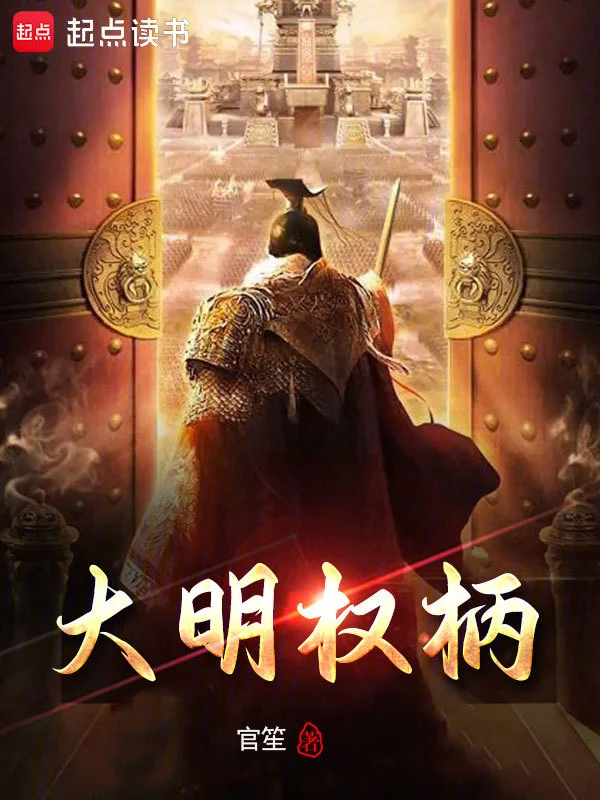
Ming Authority
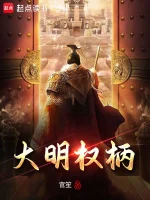
大明权柄
- Status
- Completed
- Length
- 1.8M Words
- Genre
- Historical
- Audience
- Male
- Subgenre
- Song-Yuan-Ming Dynasties
- Updated
- 6mo ago
- Source
- Qidian
Stats
0Monthly votes
13.8kRecommends
35.3kFans
484Chapters
Tags
Synopsis
Reader comments
In booklists 2
Historical Time Travel Novels of Song, Yuan, Ming and Qing Dynasties
Novels that travel through the Song, Yuan, Ming and Qing dynasties
21Books1.2kFollows12moUpdated


If You Like Cool Style, You Can Check It Out
Full of useful information. I personally prefer the cold style
39Books41Follows17dUpdated
Readers also read
 Talker in the Song Dynasty
 Please Call Me Your Majesty the Tsar
 In the Red Mansion: Escort Daiyu to Beijing at the Beginning
 1914 Begins with the Rejection of the Schlieffen Plan
 Never Walk Alone!
 Long Wanshengshi
 When I Was in Hongwu, I Started by Rebelling Against the Party.
 Daming: Have I Become Wanli's Portable Grandfather?
 I Am Drawing a Hot-Blooded Episode in the Zhiyu Episode!
 Master, Gao Zai
 Taichang Daming
 Emperor of the Song Dynasty 1066
 My Leisurely Career as a Censor
 Ming Ting
 Your Majesty, Please Forgive Me.
 Han Family Achievements
 Swallow the Ming Dynasty
 The Dictatorial Ming Dynasty
 Song Xu
The subject matter is too bad
A person traveling through the Chongzhen Dynasty still wants to change the Ming Dynasty within the civil service system?
A few comments and exchanges with the author
Finally, someone has seen that Chongzhen's imperial power is missing, but you have a big problem with Chongzhen's image. Chongzhen was politically naive, not stupid, not insane. Your Chongzhen here does not look like a normal young man. And Chongzhen's performance in terms of trustworthiness is not enough. He has a high degree of trust in his teachers and famous ministers. So the emperor was the one who got the most wool. Faced with Chongzhen's military deficiencies, how are you going to engage in political struggle, and how are you sure Chongzhen can protect you? You don't think he wants to protect you because you have a golden body, right? The political ecology of the Chongzhen Dynasty was out of control. The emperor's words may not always work. It requires the approval of representatives from the six cabinet ministries before it can be implemented. If you want to carry out political reform during the Chongzhen period, you have to overthrow not a few officials, but a class. Reform cannot save the Ming Dynasty, nor can it save the life of pig feet. Whether it's overthrowing a class or a few officials needing to ensure that you have military power or that Chongzhen has military power, I haven't seen any action on military power now. In fact, it's very dangerous if you fail at the beginning. Basically, you can die twice in Chapter 10. Look forward to subsequent updates to see what the idea of this novel is. By the way, the biggest problem of the Ming Dynasty was food. Having money does not mean having food. The problem during the Chongzhen period was the worldwide food shortage. If the Ming Dynasty could succeed in reform, as long as the money was not available, the Ming Dynasty would starve. Hope to pay attention to the food issue. This is what I said about reform not being able to save the Ming Dynasty. Only by overthrowing the original interest classes and letting everyone eat together can we overcome this world-wide food shortage problem. As for the reform method, the most successful one is another Manchu Qing Dynasty, which massacred the Han people who had no food, and this is the damn Ming Dynasty written by Mao. This is where many authors tend to make mistakes. They think that bringing the Ming Dynasty imperial power perspective to the massacre of the rebels is not a Manchu act.
Chongzhen really had no choice but to die. This was the choice of the imperial military group. The military group has abandoned the central court. This is the biggest reason. There is no turning back from the backstabbing of soldiers. If the court has money, it will be the end of the Song Dynasty. If there is no money, rely on ability. Either the peasants will revolt and change the dynasty, or the outside world will invade. There is no third ending. Once the will of the army is awakened, it must flow like a river of blood. Looking at the status of warriors in the Ming Dynasty, it was extremely low. No matter how chaotic the civil servants are, it is not scary. Isn't it obvious in history what the consequences will be if the military attachés are chaotic? No matter how bad the pen barrel is, as long as the knife handle is stable, it is just a matter of an imperial edict. History has never been short of literati who served as officials. If the handle of the knife is messed up, there is nothing you can do to save it. The time travelers have not found the key place, thinking that killing a few corrupt officials can be done with a few wise ministers in the court, which is nonsense. The military group is the cornerstone, this force is the most powerful, but it was abandoned by the Zhu family. Your status has been grinding on the ground for many years, and others will no longer play with you. If you dare to save money, others will ask for your money. If you dare to train the new army, others will dare to open the door and let the Qing army enter the pass, and use various means to draw the new army away. When the military group grows large enough, you can go to Coal Mountain. This is why the outer guanning army has been fighting the Qing Dynasty non-stop, and the internal bandits have been unable to be exterminated. The army is letting go of water. If there is no battle, they are the dogs of the literati. If there is a battle, they can win the popular drink. If they lose, the court will not dare to kill military generals, but only civil servants. If they win, they will let others go, let the enemy go, and continue to be happy and happy. How can this be a comeback?
It would be better to go back to my hometown with the money and raise the banner. It would be better to buy a new one and just be a mender. Alas.
If the protagonist does not become the emperor, then the protagonist must carry out comprehensive changes that limit the emperor's rights. It is useless if the protagonist just copies the technology of later generations and adds a few reforms. If a country wants to produce a large number of original inventions and creations, it must carry out systematic changes in ideological foundation, political structure, legal system, social forces and other aspects. The reason why Britain was the first to enter the Industrial Revolution is that after experiencing the ideological changes of the European Renaissance, coupled with the British Glorious Revolution of 1688, the king's rights were further restricted. Britain established the framework of parliamentary sovereignty and the rule of law, and the bourgeoisie, the new aristocracy, and the king formed a check and balance, which allowed British civilians to gain unprecedented freedom. At this time, the degree of freedom of scholars, craftsmen, and farmers in Britain was higher than that of other European countries at the same time, and it was far more liberal than the civilians of China's Ming and Qing dynasties. The high degree of freedom of all British civilians fully inspired everyone's strength. The power of the Chinese emperor was not greatly restricted, and all officials, gentry and landlords were dependent on the imperial power. The freedom of civilians, who account for the vast majority of the country's population, is too low. This system inhibits innovation and hinders social development. China's Zhou Dynasty was a feudal system, and the central government could not control much of the local princes' affairs. The princes competed with each other. During this period, Chinese civilization truly allowed a hundred flowers to bloom. Most of the essence of Chinese civilization came from this period. During the Spring and Autumn Period and the Warring States Period, the "Mo Jing" recorded the principles of optics and mechanics, and the germination of geometry had emerged; the "Gan Shi Xing Jing" recorded astronomical observation data. But from the Qin Dynasty to the Qing Dynasty, there was almost no progress! The institutional innovation of the Spring and Autumn and Warring States periods stagnated after the Qin and Han Dynasties, lacking the ability to dynamically adjust. Since the Qin Dynasty, especially since the Han Dynasty deposed all schools of thought and only respected Confucianism, Chinese civilization has almost stood still and entered a dead end. The Zhou Dynasty and the Spring and Autumn Period and the Warring States Period were similar to the ancient systems of most European countries. They were all feudal systems. Even in successive years of war, less than 10% of the country's total population died directly or indirectly as a result of the war. But from the Qin Dynasty to the Qing Dynasty, every dynasty would kill half or more of the country's population due to war! What is even more tragic is that every time the dynasty changes, the system and civilization have almost no progress! {"NickName":"Restriction and Supervision","UserId":417773267}
There is really no need to preserve the Ming Dynasty at this time, and it cannot be preserved. It is rotten from top to bottom, rotten to the core. It is better to tear it down and rebuild it.
This is one of the two rare late Ming Dynasty books that have been published recently, but they all have a common problem: they are not updated well!
Writing about being an official in the Chongzhen era
I don't even know how the author wrote it. First of all, the character of Chongzhen is not expected. He offended the Donglin Party from the beginning and allowed him to jump up and down. It's funny! but the Maintaining Balance You, a 5th-grade officer, don't really think you have a chance to see the emperor alive. I think those strategies are naive, just like the US Audit Office, which exposed the corruption of the US military through its own means. Since Wei Zhongxian stepped down and the Eunuch Party was liquidated, the Donglin Party has been unable to suppress it, even if the emperor comes. Looking at you jumping up and down, the first thing the emperor will deal with is you
The protagonist looks more and more stupid.
With just one sentence of fighting for power, the entire court was forcibly subdued. It's too clumsy.
The demise of the Ming Dynasty was the result of the resonance of multiple factors. Even if the protagonist traveled through time and became Emperor Chongzhen, even if the time traveler possessed modern knowledge, it would be difficult to break through the triple dilemma of institutional inertia, financial collapse and political corruption. The most likely scenario is to extend the Ming Dynasty for 10-20 years, but it cannot change the fate of surviving for at most 20 years before being destroyed.
Why do most dynasties in historical novels call officials "adult"❓ Before the Yuan Dynasty, "adult" in all dynasties was usually used to address parents and elders. "Adult" was rarely used to address officials in formal situations. It was occasionally used as a flattering title for eunuchs (eunuchs). Officials in the Yuan Dynasty were generally not called "adults" and were addressed by their official positions in formal situations. However, in informal situations, senior officials or special groups occasionally began to be called "adults". Officials in the Ming Dynasty were usually not called "adults". In formal occasions, they were addressed by official position, rank or "old gentleman". In informal situations, sporadic use cases have emerged due to the influence of the Yuan Dynasty (for example, in the Yuan drama "Pipa Ji", senior officials are called "adults"). The Ming Dynasty notebook "Gu Bu Gu Lu" mentions that the Sansi (the highest local administrative agency) addressed the governor as "Old Sir" and the patrol supervisor as "Sir Sir", but such usage is still an isolated phenomenon. In Ming Dynasty novels (such as "Journey to the West"), the title "adult" is occasionally seen, but it is more influenced by the Yuan Dynasty drama scripts rather than a true portrayal of officialdom. In reality, calling an ordinary official "sir" may lead to misunderstanding or even ridicule, as it is more commonly used to refer to parents or eunuchs. Before the mid-Qing Dynasty, "adult" was rarely used alone as an official title. Pu Songling's "Strange Stories from a Chinese Studio" mentioned that during the Kangxi period, there was no convention for the title of "adult" for officials, and it was not until Yongzheng that it gradually became common. Fang Junshi's "Jiaoxuan Suilu" pointed out that during the Kangxi period, non-imperial officials and even governors were not called "sir". It was not until Yongzheng that calling officials "sir" gradually became common.
The fight is endless, hurry up and destroy it
I get caught every time, I'm sick! ! !
Don't hold back, they are all Chongzhen, and there are still several Donglin Party members in the center of the court
There were too many problems at the end of the Ming Dynasty. Without destruction, we could only let bandits level the world.
At the end of the Ming Dynasty, the opposition forces to reform were too strong, internal reforms were difficult, and various interest groups were intertwined. It would be better to fight the world again. It is better to let the rogue bandits destroy the existing system and build it again. The Zhu family cannot help them at all. If you try to help, you will face constraints everywhere. Might as well just talk to the big blade. If the central government cannot own the means of production, that is, land, there will be no rule of law at all.
The Ming Dynasty is rotten from the root. There is no way to save it, not even gods coming down to earth can save it!
It's written in a weird way. Every time he gets caught with pig's feet, he gets away, and he's already dead in jail.
In the first 10 chapters, I died more than twice.
There were so many plans to go to Liaodong to rescue Mao, but the Qing army didn't come directly in later. So what's the use of rescuing Mao? You planned so much and it was all useless in the end?
This is a thinking of Ming history
When the Ming Dynasty was established in 1368, years of wars had led to desolation of the land, a sharp decline in population, and a serious lack of social productivity. Recuperation and recuperation were a must-have national policy. In 1371, Ming Taizu issued the "Sea Ban", which prohibited all Chinese ships from going to sea and severely punished private traders and ship owners. In 1374, the Baobao Promotion Department was established, and the Ming Dynasty Baobao was officially issued the following year. It was initially put on the market through financial channels such as salary and military pay, and the paper currency standard was forcibly implemented, severely cracking down on privately minted copper coins, and prohibiting the circulation of gold and silver. (Since the imperial court banned the circulation of gold and silver, then the gold and silver circulating among the people Where did it come from? It is obvious that precious metals such as gold and silver have not needed national power to give them credit value since ancient times. Through border smuggling and the trade development of the land and sea Silk Road in the past dynasties, bureaucratic capital and private tycoon families have accumulated a large amount of hard currency gold, silver and copper. Since the Song Dynasty, A large amount of precious metals in society are no longer in the hands of the court, and the newly established Ming Dynasty court has almost no gold and silver reserves. In order to maintain the operation of the country, it needs to continue to make financial expenditures. If precious metals are directly used as the national currency, it is tantamount to the country voluntarily giving up its monetary sovereignty, and the court will only have one. It is an empty shelf and exists in name only. For example, if banknotes are forced to be used as national currency without reserves, the country will still be subjugated if the country's credit is completely overdrafted) In 1381, Ming Taizu further strengthened the sea ban policy and issued the "Da Ming Huidian", which required all merchant ships to go to sea with government approval. (While prohibiting private overseas trade, the tribute trade system was used to establish maritime trade monopolized by the central royal power. Earning overseas gold and silver provided credit support for the Ming Dynasty treasure banknotes. Hedging bureaucratic capital and private capital used hoarded precious metals to seize the country's monetary sovereignty. All foreign trade was settled with treasure banknotes. The Ming Dynasty purchased precious wood and spices. , Foreign luxury goods, foreign trade silk, porcelain, iron pots, prices were all set by the Ming Dynasty) In 1402, Emperor Yongle ascended the throne. In addition to continuing to maintain Zhu Yuanzhang's national policy, he also sent Zheng He on seven voyages to the West from 1405 to 1433 (expanding trade routes, destroying pirates and escorting merchant ships, and monitoring private smuggling). Zhu Yuanzhang established the rules of living for the people when he founded the country, and set the tax rate at a very low level. Emperor Yongle was able to move the capital to Beijing, build the Forbidden City, build the Ming Tombs, conduct five expeditions to Mobei, conduct an expedition to Vietnam, repair the Great Wall, and dredge the North-South Grand Canal. Compiling the Yongle Canon, any of the above items would be enough for the whole court and the public (such as Emperor Yang of the Sui Dynasty and Emperor Wu of the Han Dynasty), but if the Yongle Dynasty did all these things, then he must have the money to do these things, and where does this money come from? It can only be the Western trade. It is easy to earn, otherwise there is no way to explain the national finances (all the vassal states at that time accepted the Ming Dynasty treasure banknotes. Zheng He used such depreciating banknotes to exchange for a large amount of gold, silver and various physical objects. The Ming Dynasty treasure banknotes can be printed as much as they want, and the Ming Dynasty does not need to worry Regarding the issue of inflation, Zheng He sold high and bought low. Ming historians estimate that Zheng He made seven voyages to the West and earned 720,000 taels of gold and 12.76 Million taels of silver. This is the total income. At the same time, he spent a total of 6 million taels of silver on the seven voyages. The total cost was that when Ming Xianzong Zhu Jianshen became emperor, there were still 2.4 Million taels of silver in the treasury) In 1435, Ming Xuanzong died at the age of 37, and Ming Yingzong, who was only 8 years old, succeeded to the throne. Amid the cry of "wasting people, hurting money, and not beneficial to the national economy", all data and information related to the maritime trade in the Western Sea and the maritime fleet were basically sealed or destroyed, causing the central finance of the Ming Dynasty to shrink significantly. Even with the support of the wealth accumulated in previous maritime trade, the national credit of the Ming Dynasty treasure banknotes began to gradually decline and depreciate. (From the epitaph of Guo Yan, we can learn that he was ordered to supervise the construction of 120 "Xiaban sea ships" in the eighth year of Zhengtong (1443) of Emperor Yingzong of the Ming Dynasty, and was appointed as the "general coordinator of the eight prefectures". Due to his good supervision, "the military and the people benefited from it". After the completion, "tens of thousands of military and civilian officials from the eight prefectures came to the mansion to express their thanks." This confirms Emperor Yingzong of the Ming Dynasty was preparing to restart the national plan for the Western Ocean trade. After the ship was built, it was first put on hold due to the civil uprising, and then the Tumubao Incident occurred in 1449. In 1457, just a few months after the restoration of the Emperor Yingzong of the Ming Dynasty, he wanted to start the Western Ocean trade plan again. Zhang Zhao objected on the grounds of needing disaster relief. In order to provide relief to the former. Let him clean up the mess and sail to the West. By the Chenghua period in 1464, Emperor Xianzong of the Ming Dynasty Zhu Jianshen ordered the Ministry of War to search for archives of Zheng He's voyages to the West, but found that the relevant documents (including charts) were missing, and Liu Daxia, an official of the Ministry of War at the time, was accused of hiding or destroying them. Archives, since then the imperial court has completely lost the ability to return to the Western Ocean) In 1567, Longqing Emperor Zhu Zaijing was forced to shut down the business due to the increasing national financial deficit. Bureaucratic capital and private capital began to encroach on the maritime trade that was originally a monopoly of state-owned enterprises in the Ming Dynasty. With the massive inflow of wealth and silver, most of the tax revenue went into the hands of bureaucratic capital and private capital, except for the imperial court. The amount of silver in private circulation also increased massively, and the monetary sovereignty of the Ming Dynasty was gradually being eroded. Longqing Emperor Zhu Zaijing was an adult and knew the stakes. Silver must not be allowed to become the legal currency of the Ming Dynasty. However, this was the last step for bureaucratic capital and private capital plutocrats to steal the monetary sovereignty of the Ming Dynasty. From the death of Ming Xuanzong at the age of 37 to the ascension of Emperor Longqing to the throne, it was 1 In 31 years, it was 132 years before Emperor Longqing switched on and off. How could the century-old plan of bureaucratic capital and private capital plutocrats stop progressing and fall short? Therefore, Emperor Longqing had to die in 1572, five years after the switch, in pursuit of beauty and lust, in order to ensure that Emperor Wanli, who was only 10 years old, ascended the throne. In 1581, Zhang Juzheng promoted a whip law to abolish treasure banknotes and use silver as the national currency. As a result, the country lost its monetary sovereignty, and its economic lifeline gradually fell into the hands of bureaucratic interest groups, Jiangnan gentry and maritime merchants who controlled large amounts of gold and silver. They emptied the country's wealth and got rid of the control of the central royal power. After Zhang Juzheng's death, Emperor Wanli liquidated him on charges of "authoritarianism and chaos in government", deprived him of his title and ransacked his home. Wanli once ordered "dissection of coffins and slaughter of corpses", intending to dig graves and whip corpses to vent his anger. However, due to the strong persuasion of officials such as Chief Assistant Shen Shixing, this was not actually implemented. In the Chongzhen period, there were no eunuchs to check and balance, and Chongzhen could only borrow money from ministers to pay the army, until the Manchu Qing Dynasty, the collaborator selected by the capital tycoons, entered the customs in 1644 (I just want to be the wife of the county magistrate, I don't care who is the county magistrate, this is the fundamental reason why the Song and Ming Dynasties fell from the world twice). By 1662, the Southern Ming Dynasty fell, and the Manchu Qing Dynasty began a 295-year dark rule.
Want to work during the reign of Emperor Chongzhen?
You have to kill a group of ministers and recruit a group of ministers. This is the lowest bottom line. In fact, nothing can be done. Emperor Chongzhen wanted to do something, but countless people blocked it. If you don't work, you will die, and if you work, you will die. Why not kill other ministers?
How retarded. Calling 10 days dad is enough to risk your life to save people. How much kindness is this?
Come on
Come on
Good book, worthy of being an old author
Author
Do all the novels you open have multiple female protagonists?
Does the author stop writing books?
The author's writing is very layered. Have you stopped writing?
Please call your Majesty the Crown Prince😏
Classic good book Come on
Come on, brother😜