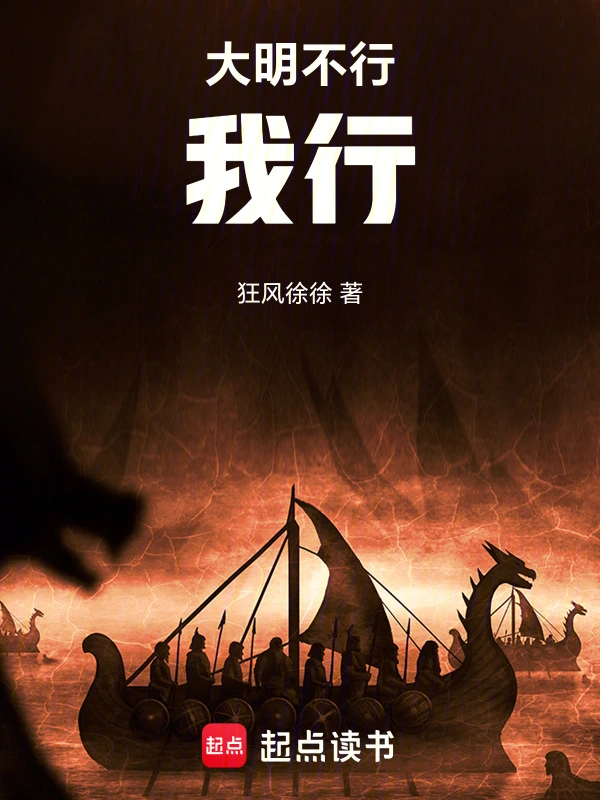
If Ming Dynasty Can't Do It, I Can!
大明不行,我行!
- Status
- Ongoing
- Length
- 1.5M Words
- Genre
- Historical
- Audience
- Male
- Subgenre
- Song-Yuan-Ming Dynasties
- Updated
- 1d ago
- Source
- Qidian
Stats
21Monthly votes
2.9kRecommends
5.9kFans
643Chapters
Tags
Honours
Synopsis
Reader comments
In booklists 1

Readers also read
 Red Mansion: Start Escaping and Farming from the Equipment Bar
 Northern Qi, Sage Khan
 Fu Ming 1627
 After Lying in Bed for Three Years, He Was Forced to Help the Han Dynasty
 Siheyuan: Start by Picking up Attributes
 Taipingji
 Ming Dynasty Heroes
 Beastmaster: I Can See the Evolutionary Path
 Immortal Who Seizes the Body
 Taichang Daming
 Master, Gao Zai
 Long Wanshengshi
 Green Performer
 The Early Tang Dynasty
 Daming Under Facebook
I have seen that the Ming Dynasty died at Chongzhen, Wanli, Jiajing, Zhu Di and Zhu Yuanzhang🤫
I don't quite understand some questions about historical texts
🙂 The reason why I post this is because there are few people, so the probability of random comments and deletions should be smaller (laughs). There are a few things that I don't understand and don't understand. 1. What I don't understand is that you go back to being a general and charge to kill the enemy, and you lead the charge. Aren't you afraid of being tricked? And many of them are when they have thousands or tens of thousands of followers. 2. If you travel back in time to become an official and reform, I want to laugh. Can a wealthy gentleman from an aristocratic family allow you to do it? Can the emperor withstand the impeachment of those so-called honest officials and literati without killing you? 3. It becomes even more funny when the emperor learns Confucianism and fights with the civil servants with wisdom. There are hundreds of people on the other side, and all of them are from Confucianism. How can you fight them (without using force)? 4. Actually I don't want to say this (there will be a lot of people scolding me if I say it), but I still want to ask, why don't you rebel when there are so many people out there? Just because it was the last feudal court of the Han people? Then you, the time traveler, are not Han? What's the difference between Zhujia Tianxia and the trash behind? It is also not about treating the people at the bottom as cattle and horses. Isn't it also an era when people at the top are human beings? Zhu Yuanzhang was born at a low level, but what was the result? Does he treat the bottom class as a human being? Especially those systems that treat them as human beings? 🙂Finally, just don't protect your master and scold me. Refutation is possible.
It's really poisonous. Those who write novels are so fond of bringing modern military systems back to ancient times, regardless of whether they suit the social system of the time.
The Ming Dynasty does not count as the emperor guarding the country.
Then the Manchus were frightened by thousands of people and fled the capital. The capital of the Tang Dynasty was attacked six or seven times. What does it count?
This introduction requires more than two, you can write it down!
Why are historical time-travel novels almost all about soul travel, and many protagonists still have systems or personal space? It is better to write that the protagonist can travel between modern and ancient times through time and space channels. After all, it is based on Einstein's theory of relativity. It is very interesting to write about the protagonist traveling between modern times and ancient times through time and space channels. This can show the direct collision between modern times and ancient times. There are already many stories about the protagonists rebelling in the early Qing Dynasty, including the Kangxi Dynasty and the Yongzheng Dynasty. It would be interesting to write a book in which the protagonist rebelled between Kublai Khan and Yuan Dynasty in the Yuan Dynasty or Zhu Yuanzhang and Hongwu Year in the Ming Dynasty.
Chapter three, what is the protagonist's character? Border soldiers? Merchant? Read through the history of Ming Dynasty? Otherwise, I would have to die in Jiajing.
Why is this book so weird?
After reading a few pictures, it turned out that the capital city was captured^_^. It seems that only Li Zicheng was captured in the capital city in the Ming Dynasty, and they were all internally unstable and planned to surrender to Caipo City.
The military system is modern, but the weapons are cold weapons. Why is it so awkward? Now that we have money and territory, shouldn't we recruit some craftsmen to develop firearms? There was no way to rely on blood and courage in the early stage. Shouldn't we promote some technological progress now? Otherwise, why would you wear it back, except for your own ambition and killing more people?
Jiajing
I won't mention who Jiajing was. He was a strong-willed man. His son was killed, and only two wives were left. Two of his wives died, and the imperial doctor who saved him also died. He was burned 21 times. In modern times, it would be good for any person to live for decades in the past. That dynasty could scold the emperor every day like the Ming Dynasty. The first step of regicide was for the people to openly and openly scold the emperor every day. If they dare to scold the emperor today, they would dare to regicide tomorrow. This is human nature.
Just a reminder
There was no memorial system in the Ming Dynasty, memorials were the system of the Qing Dynasty
The country of the Ming Dynasty was neither feudal nor democratic
Call it feudal. The emperor does not control the direct army or financial power. He cannot directly appoint officials. Various national affairs have to be discussed. The cabinet can sometimes refute the emperor and give him a hat. Call him democratic. From the beginning of the establishment of the dynasty, People are divided into three, six or nine classes, treating farmers as tenants, treating generals as guardians, treating civil servants as housekeepers, and treating businessmen as cash machines. This kind of country cannot last long at all. It is a pity that those famous ministers and generals in the Ming Dynasty could have played a greater role in another dynasty.
The lack of popularity of this book may have a lot to do with its title.
I have been reading this book for a while and found that the author's description of the war scenes in the cold weapon era was very good, and the other plot descriptions were also good. Logically speaking, this book should not be so bleak. After thinking about it, there may be several reasons: 1. There are too many books about the Ming Dynasty, and I am drowned in the sea of books and cannot get up. 2. Most of the protagonists in Ming Chuan that I have seen are auxiliary, assisting the emperor and the country. There are indeed very few people who did not start fighting for hegemony in the late Ming Dynasty. 3. This title seemed strange to me, because I got it from the author's previous book, so the book was put on the bookshelf a long time ago. I haven't read it yet because I don't like the title. I started reading this book a while ago when there was a shortage of books. The poor subscription situation is a pity for the author. In summary, it is recommended that the author and editor discuss and try changing the title of the book.
😆 Yan Shifan said that you are worthy of carrying 2 Beijing and 13 provinces on your shoulders like me, Mr. Xiaoge 😃 😏
First place
First
Update!
I'm saving up to wait until this battle is finished and watch it together, but I won't be able to update it if I wait.
I strongly suggest that the author change the title of the book. It is obviously not a novice novel, but it is chosen to have such a title.
First place
First again
The first book in Mingchuan's novels to side with businessmen and literati. This is the correct strategic consideration. In any era, people and families who are able to stand out are at the forefront of history. Imperial power is the biggest enemy. In addition to the so-called national righteousness, in the entire Ming Dynasty starting from Zhu Yuanzhang, almost every emperor was not a normal person, and its governance ability was even inferior to that of the Qing Dynasty in many aspects. Behind this absurdity is the serious irrationality of the political structure, and the unlimited expansion of imperial power has thrown society out of balance.