


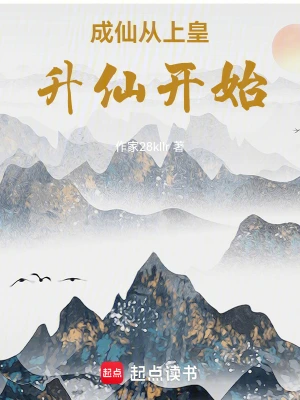
Becoming Immortal Begins with the Supreme Emperor's Ascension
成仙从上皇升仙开始
- Status
- Completed
- Length
- 262k Words
- Genre
- Eastern Fantasy
- Subgenre
- Xuanhuan
- Updated
- 1y ago
- Source
- Qidian
Stats
87Chapters
0Votes
18.2kRecs
4.8kFans
Tags
Synopsis
More by this author
In booklists 1
Readers also read
 Fate Is Set!
 Everyone Practices Evil Arts, So Why Are You Bathed in Divine Light?
 Supreme Talent: Speedrunning the Myriad Worlds
 I Can See the Progress Bar
 A Record of a Mortal's Journey to Immortality: I Earn Immortality by Grinding Achievements for Rewards
 The Mystic Compendium of Guixu
 Heaven's Curse
 Lord Evolution
 A Record of a Mortal's Journey to Immortality: Choosing Hextech in the Chaotic Star Sea
 A Three-Foot Sword, an Immortal Above
 The Supreme Golden Palace
 Master of the Dragon Court
 Grand Divination
 Lord of the Netherworld
Reader comments 21
Google Translate
The evolution of the image of "immortal" in classical China
The concept of "immortal" has existed in the pre-Qin Dynasty. The image of the immortal in the pre-Qin period is imitated by the image of a god, with wings and blue eyes and square pupils. The main representative group is the Fangxian Tao formed by the witches, Yin-Yang and Taoists. There are three ways to become an immortal: 1. Mainly taking elixirs directly to become flying gods, 2. Taking elixirs and elixirs to refine elixirs. 3. A Qi practitioner who breathes heaven and earth and achieves the union of inner heaven and earth with outer heaven and earth. The representatives of the three methods passed down to later generations to achieve immortality are: 1. He Xiangu, who took the essence of mica in the Tang Dynasty and achieved enlightenment, and died after the Tang Dynasty. 2. Zhang Tianshi, who achieved enlightenment by taking the Dragon and Tiger Pill in the Han Dynasty, later transformed into the Diyuan Dan method of the Taoist Three Yuan Dan method in the Tang Dynasty. 3. In the Tang Dynasty, Xie Ziziran, who practiced Qi and gained Taoism, became popular in the Han and Jin Dynasties. In the Tang Dynasty, it was transformed into the Tianyuan Dan method of Sanyuan Dan method. In the Han Dynasty, the image of "immortal" began to be distinguished from "gods and men". By the Jin Dynasty, it was completely independent. The demon test began in the Jin Dynasty, and became popular in the early Song Dynasty. Immortals of merit and Taoism emerged. Earth immortals performed eight hundred good deeds, and heavenly immortals performed 1,300 meritorious deeds. After passing the ten demon examinations, the five-day demon king tested the method and was recommended by the god king to ascend to immortality. The demons here are all examiners, and the five-day demon kings are even the gods of the five heavenly emperors. The Tao of Immortals flourished. The most famous thing in the Tang Dynasty is the rise of inner alchemy, and all methods were transformed into alchemy. From then on, alchemy became authentic, and the concept of Da Luo Tianxian was formally put forward: transcending everything, eternal freedom. In the Song Dynasty, Lin Lingsu proposed the Great Enlightenment Golden Immortal, taking the Buddha as the Great Enlightenment Golden Immortal, and the Bodhisattvas as great masters. He and his disciple Sa Shoujian opened the thunder method to become an immortal. The theory of the Five Immortals Festival emerged. Different methods lead to different paths forward and different abilities. The Immortal Immortal of Corpse Execution: Those who are alive are not alive, and those who are dead are not dead. Those who kill three corpses will not be cursed by witches, the magic of gods will not cause disasters, and those who practice Qi will not create troubles The most important part of their achievements will always be in the world, but after they become enlightened, they will no longer be disturbed by the world. The principles of becoming an immortal are very different, but the goals are the same, 1. Qi practitioners believe that all things are only Qi, so they can feel the changes in heaven and earth and realize the great way by taking Qi. 2. Shijie Xian believes that the outline of heaven and earth is Yin and Yang. Great death is great life. As long as you die completely and live completely again, you can grasp the roots of heaven and earth. From incomplete life and death to complete life and death, we can achieve the step from not knowing to the enlightenment. 3. The method of killing three corpses is considered to be a great thief of heaven and earth (Yin Fu Jing). It is diametrically opposed to the concept of Qi practitioners. They believe that since Tao has no counterpart, every bit of Tao and the Tao of heaven and earth have complete Tao. People cannot achieve Tao because heaven and earth steal people's energy and spirit. Such thieves should be three corpses in the human body. You can achieve enlightenment by beheading three corpses. 4. The inner alchemy method inherits the concepts of Qi training method and outer alchemy method, and proposes the inner alchemy method. In the small world of the human body, it simulates the big world. The inner alchemy is the Tao, and when the alchemy is completed, the Tao will respond. Compared with the Qi training method, it takes less time, consumes less than the Waidan method, and is safer.
Heck, I went back to read Tahoe a few days ago, and the author said, "There are really no elementary school students reading my book." In fact, I was a primary school student when I read it.
Don't change your number
Be better. I think back in those days, when your book "Primordial Talismans" had just been published for more than ten chapters, I fell in love with it. At that time, you were still the author of several updates a day
Does anyone have any recommendations for good novels about spiritual cultivation without female protagonists?
Battle of the Great Dao, Illustrated Book of Destruction of Luck, Taihao, Taiyi, Dao Pijiuxiao, Yuan Fulu of the Great Desolation, White Bone Taoist Palace, Emei Patriarch, Sword Ode, Gou Immortals of the Heavens, Taishang Baozhuan, Yuchen Golden Seal, Yuanshi Jade Urn, Fantasy World Traveling through the Prehistoric Period, Mingzun, Lanke Chess Fate. Seen it all. Do you have any recommendations?
If you're not a brother, let's just write the book in a large size. There's nothing to be embarrassed about. Once Yu Dao Qian Kun is over, it's over. If you open a new book, no one can say anything. Basically no one knows about your small size.
I came here because of the reputation and liked the introduction of Dao Pi Jiuxiao: I lingered on the Double Ninth Festival and explored the peach blossom place in the past.
It's amazing, Wuji's writing style can be seen at a glance as the unique starting point. .
The Red Mansion begins with the emperor's ascension to immortality
When I saw Yang Yu's room today, I started to interpret the novel from Dream of Red Mansions again. 🤓 First correspond to the characters that have appeared: 1. Yang Yu (Lin Yue\Shao Di) - Lin Daiyu: Jade (He's Bi), Yong Xucai, the Moon in the Water (Yinyue Huantian Banner), Beautiful Jade Flawless (Hidden Jade Villa), the lonely forest of the fairyland in the world. "Peach Blossom Walk" (Xiantaoyuan, the peach enters the Tao?) "Apricot curtain is in sight" ("The Divine Farmer's Code of the Great Sun"?) Hibiscus·Wind and Dew Clear Sorrow - Don't blame the east wind and sigh at yourself 2. Zhuge Hong - Xue Baochai: Gold (Red Sky Sword), stop virtue, flower in the mirror (Magnolia Garden?), Langyuan fairy flower, the crystal snow of the nobles in the mountain. Peony·Beautiful crown of flowers - no matter how ruthless it is, it is moving Chai and Dai are integrated - Liangyi Qixingpei 3. Zhao Wenzhi - Jia Yuanchun? [Hate the impermanence] It's just the right time to be happy and prosperous, but hate the impermanence again. Open your eyes and throw everything away. Wandering around consumes the soul. Looking at my hometown, the road is far away and the mountains are high. 4. Zhao Wenyin-Jia Tanchun? Talent comes from being shrewd and ambitious. Born in the last days, luck has declined. Xinghua·Yaochi Fairy--Red apricots planted in the clouds Huang Miaoqing-Jia Baoyu? Wei Li——Wei Ruolan? Pei Ran——Feng Ziying? The eldest princess of Chu——Jia Min The eldest princess of Qin——Aunt Xue Taizu of the Zhao family—Jia Daishan Taizong of the Zhao family—Jia Zheng Dong Yao—Mrs. Wang Emperor Dong—Jia She The eldest prince—Jia Hu The second prince—Jia Lian Wang Jingxian——Mrs.
I haven't started reading this book yet
There were two big problems with the author's previous books. One was that he liked to pretend to be naive. The protagonist pretended to be naive, but he was ruthless towards his enemies, and his characters were fragmented. Second, the protagonist likes to rebuild the most. He does not have the courage to move forward. He always thinks about the way out and gets tired just watching it. In other words, he likes to push his boundaries. Henghua persuaded me to quit at the beginning.
It's a bit dull and I couldn't finish reading it after seven or eight chapters. Why bother deliberately creating so-called humor. All I can say is that Tahoe is the pinnacle.