
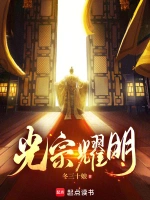
Guangzong Yaoming
光宗耀明
- Status
- Completed
- Length
- 1.6M Words
- Genre
- Historical
- Audience
- Male
- Subgenre
- Song-Yuan-Ming Dynasties
- Updated
- 2mo ago
- Source
- Qidian
Stats
0Monthly votes
42.5kRecommends
110.9kFans
482Chapters
Tags
Synopsis
Reader comments
In booklists 5
The Rolling Yangtze River Passes Eastward
Establish a mind for the heaven and earth, establish a destiny for the living people, carry forward the unique teachings of the past saints, and create peace for all generations. Zhang Zai. The barbarian mansions on Tougao Street in Yi County were placed to show that those who were thousands of miles away would definitely be punished no matter how far away they were. Ban Gu. The bright moon of the Qin Dynasty was at the Pass of the Han Dynasty, and the people who marched thousands of miles have
89Books2.7kFollows1moUpdated
Traveling Through History, Exquisite Products Dominate China and Foreign Countries
Travel to ancient times and achieve hegemony
42Books122Follows1yUpdated


I Am Yuesheng
After twenty years of reading, I have accumulated three hundred thousand books.
23Books64Follows10moUpdated


Record the Novels You Often Read
Book list with strange status that is always under review
74Books4Follows1yUpdated


Xiancao Base, City, History, Science Fiction
I've seen them all and they're all good.
39Books1Follows1yUpdated
Readers also read
 Talker in the Song Dynasty
 1914 Begins with the Rejection of the Schlieffen Plan
 In the Red Mansion: Escort Daiyu to Beijing at the Beginning
 Please Call Me Your Majesty the Tsar
 The Tang Dynasty Began with the Heian Shi Rebellion
 Taichang Daming
 Huang Ming
 Nanming, This Emperor Is a Bit Stable
 I Studied Abroad in Modern Times
 Emperor of the Song Dynasty 1066
 Spring of the 14Th Year of Wanli
 Emperor Ning Has the Guts
 Prince Consort of Shengming Dynasty
 Jingming
 Great Master
The author mentioned the Wanli finance and mineral tax issues, so I have to recommend Teacher Fang Xing's paper "Mineral Tax Silver, Positive Taxes and Late Ming Finance" which contains a lot of detailed discussion and specific data, which should help the author's plot design. Some excerpts are as follows: By counting various commercial taxes from the 25th to the 34th year of Wanli, Lin Feng pointed out that during this period, about 2 million taels of commercial taxes were collected every year. Excluding the original 600,000 taels of pass tax, 200,000 taels of business tax and the 60,000 taels of Huguang Yangtze River inheritance tax, the actual increase in commercial taxes was more than 1.1 Million taels, plus the mining tax of about 300,000 taels, a total of 140 The balance is 1,241,000 taels, which is close to the 1.241 Million taels of mining tax/regular tax levy estimated in this article. It should be noted that the mining tax taels collected by the mining supervisors and converted into positive taxes levied by local governments, whether it is 1.241 Million taels per year estimated by this article, more than 1.4 Million taels calculated by Lin Feng, or more than 1.8 Million taels estimated by Nan Bingwen, are all calculated based on existing literature. Incomplete data may lead to inaccurate calculations in some aspects, but this does not prevent a general estimate of the mining tax/positive tax. The mine tax silver taels/positive tax calculated above can not only be regarded as the plunder of urban industrial and commercial enterprises by the royal family and eunuch yamen, but also reflect to a certain extent the amount of new taxation that urban industrial and commercial enterprises in the middle and late Wanli period were relatively able to bear. This was of great significance to the tax system reform of the Ming Dynasty, which took the opportunity of increasing industrial and commercial taxes. In the post-Zhang Juzheng era, the central finance of the Ming Dynasty continued to be in deficit, and the main arrears were military pay. The royal family's uncontrolled spending and the three major Wanli levies made the Ming Dynasty's finances even worse. Starting from the sixth year of Wanli, first as an exception and then as a rule, the royal family borrowed 200,000 taels of comprador silver from Taicang every year, but never repaid it. By the 32nd year of Wanli, the royal family had borrowed a total of 5.2 Million taels from Taicang in 26 years, all of which were used as border payment silver. In the twenty-ninth year of Wanli, a total of 2.5 Million taels of silver were spent on jewelry and other items needed for the registration and wedding of the prince and the kings. Since it was not a rated expense, Taicang could not pay it, so it had to activate its reserves of Taipusi Horse Price Silver. In August of the thirty-fifth year of Wanli, Li Sixiao, the young minister of Taipu Temple, reported to the emperor that during the Longqing Dynasty and the early Wanli period, Taipu Temple had accumulated more than 1,000 taels of horse-valued silver. It borrowed 7.53 Million taels from Taipu Temple for the three major conquests of Wanli, borrowed 1.5 Million taels to raise side payments, and borrowed more than 700,000 taels for the registration and wedding of the crown prince and kings, but none of them were repaid. From the 18th year of Wanli to the 35th year of Wanli, the Ministry of Husbandry, the Ministry of Rites, and the Ministry of Industry borrowed a total of 10.58 Million taels of silver from Taipus Temple. As a total reserve, Taipusi only had 270,000 taels of horse-priced silver left. In the 32nd year of Wanli, 3.72 Million taels of border wages should have been paid, but only 1.84 Million taels were actually paid, leaving 1.88 Million taels in arrears. However, the internal officials urged the payment of 200,000 taels of comprador silver the following year. Shen Guanyi, a bachelor, said that he and Zhao Shiqing, the Minister of Household Affairs, could only "cry relative to each other" when faced with the current situation of being owed border wages from outside, pressing compradors internally, and "Taicang was like a wash".
These so-called novels that have no cheats or systems and rely entirely on the protagonist's own strategy are actually the author's biggest cheat. No matter how NC the protagonist is, the author cannot kill his protagonist. Otherwise, normally speaking, the eunuch with an obviously crooked buttocks at the beginning would be beaten to death as soon as possible by raising his left foot first, as a warning to other slaves to prevent other slaves from following the same example and saying that he should keep it first like the protagonist, maybe as a surprise soldier.
A constitutional monarchy in China? He was immediately ignored by the civil service group, and then fell into the water and drowned. From now on, the emperor will be a decoration, the generals will be used as dogs, the civil service family will dominate, and the head of the civil service will become the substantive emperor. There is no vacuum in power. Author, are you conscious of pursuing a constitutional monarchy in China?
Make money honestly, but if you don't have money, where will you get the money for reform? How can you buy soldiers without money? Without soldiers, if you reform the literati, officials and gentry, who will care about you?
The fall of the Ming Dynasty in Wanli refers to Zhang Juzheng and Qi Jiguang being liquidated by Emperor Wanli. Zhang Juzheng's reforms failed. It does not refer to Emperor Wanli's struggle for the country's foundation, or the failure of the three major expeditions or the failure of Saarhu. The latter are all consequences. Zhang Juzheng was liquidated because of it. After ten years of Wanli, the Ming Dynasty was hopeless. Land clearing is to prepare for tax collection and suppression of annexation. Zhang Juzheng's whipping method and examination method are all in the service of land clearing, and Qi Jiguang's Beijing camp is Zhang Juzheng's guarantee for the New Deal and Wanli. The reason why the Jiajing New Deal failed is because Jiajing did not have violent institutions to protect itself, protect the New Deal, and protect the empire. After ten years of Wanli, it is already difficult to rebuild the Beijing camp. This book, hahaha
Slaughter the gentry in the south of the Yangtze River, and the Ming Dynasty will last at least 100 years.
You received a reward of 1,000,000 starting coins from Taibaimao
Emperor Wanli was such a procrastinator. How could he break his guard when he heard that the Ming Dynasty could live for fifty years? Maybe I'm still a little happy, and I can continue to mess it up for decades, but I won't lose it anyway. . .
Write more about the court and less about the war. Judging from Jingming, the empress is not good at writing war scenes.
The protagonist of this book is too arrogant. He always feels that he is omnipotent. He looks down on this one and looks down on that one. Anyone who can be the chief assistant of Jiuqing is not a talent. The protagonist does not look down on anyone.
I thought there was some clever trick. Even if the Xuanwu Sect inheritance method is illogical, I can accept it. It's still a weird thing to do for a long time. It's not interesting at all. If you can get good grades, you're a fool. It's a waste of time.
Whether it's the intrigues in the palace or the undercurrents in people's hearts, they are all written very delicately, indeed exquisitely. But it's totally unlikable. Whether it is the lame Wanli, the duplicitous Concubine Zheng, the loyal Wang An, the mature Chen Ju, or the protagonist who kneels in the rain with his tail curled up like a dog and claims to be filial to Wanli holding a knife, none of them have the feeling of grabbing the attention. It is not only a problem of depression, but also a reversal and image extension that does not have enough weight. From the first chapter, the description of the protagonist gives people a feeling of wisdom and reassurance. In order to protect Wang An, he even resisted the decree face to face. The plot was different from the plot of confronting Concubine Zheng in other books. But all the subsequent plots made this image lose popularity. I was still guessing at the beginning whether there was some back-up plan, but after looking at it later I found that it was just a pure start, with no trump cards. I was frightened, and met with the furious Wan Li, who elicited the adjustment of Queen Mother Li. What follows is even more inexplicable. The protagonist is a prince who has not seen the emperor in ten years. After time travel, he has neither the means of long-term drug administration nor the help of the bodyguards who have been trained in the palace since childhood. How could Wanli, one of the few powerful and long-lived emperors of the old Zhu family, be made to want to delegate power and hide due to so-called prophecies and "pressure" from officials? Then the protagonist actually took advantage of the general trend and rose to power under the derivation of the plot, and suddenly became popular both inside and outside the palace. The whole process took about ten chapters, in which the protagonist prepared a team, the handle to control the situation in the palace, how to exert subjective initiative, methods to resolve conflicts, etc. There was very little content. The part where Wan Li was killed was even more scrawled at 10 or even 9 points. When I read it, question marks popped up in my head. It belongs to the kind of person who writes about a process that is so depressing that it makes people frown, and constantly repeats what kind of pressure Wanli, who believes in Buddhism, is going through that is completely incomprehensible to people, etc., And finally gives a sudden result that does not seem to be very satisfying. The protagonist ascends the throne. Ah, is this really possible? How about just writing about Xuanwumen?
In fact, someone who behaves wisely and powerfully cannot become an emperor.
In fact, if the protagonist shows wisdom and prowess, he will not be the emperor. I can't remember the names of many emperors and figures. Sorry From the time Emperor Zhengde began to adopt military attachés and reuse eunuchs, to the moment when he saw the assets of the Jiangnan Civil Service Group during his southern tour, and then to the deaths of people who fell into the water planned by the Civil Service Group, the Ming Dynasty began to be controlled by the Civil Service Group. The battle over etiquette is a battle over who has the final say. Jiajing fought for it at the beginning, but ended up with various assassinations. He became disheartened and went to practice immortality, the yes man of his son's civil servant group. Why is the master-disciple relationship between Wanli and Zhang Juzheng so tense? Zhang Juzheng actually still controls the government with a civil servant group. If Zhang Juzheng slowly returns to power as the little emperor, maybe the Ming Dynasty can be saved, because the Ming Dynasty belongs to the Zhu family (the country is the property of the Zhu family) Industry, there's nothing wrong with that, isn't it? Doesn't your own industry want to benefit others? ) However, the civil servant group has slowly transformed into capitalism. They don't care about the Ming Dynasty. They have no righteousness for the family and the country and focus on self-interest. They don't want to give any resources to the court and the people. Wanli struggled for a while, but the result was still the same as his grandfather's. Later, he basically didn't go to court because the court didn't count. The Red Pill Case is a bit confusing. The new emperor has started to mess around and shows his stupidity. It feels like the civil servant group and the forces on the imperial concubine's side failed to discuss the consequences. The Carpenter Emperor, if you can be a carpenter, you are definitely not stupid. Tianqi made a lot of money when he came to the throne. He used Wei Zhongxian in an important position. It is said that he also likes to train soldiers and horses. He is young and energetic. The civil servants took a look and asked, "What do you want to do?" If this doesn't kill you, you won't be a righteous emperor again. The result was that he fell into the water and died. If he fell into the water twice and died, it was obvious that we were the ones who killed him. Chongzhen took the blame for the emperor. In fact, state management has nothing to do with him. If the civil servant group had not wiped out the common people, leading to natural and man-made disasters, leading to the beginning of rebellion, and the civil servant group panicking (who is most afraid of rebellion, the rich people are afraid, because it is tearing down and starting over) the civil servant group began to shift the blame and make things worse. Chongzhen slowly took control of the court, but it was too late. Finding the bottom line, I personally feel that the civil and military constraints are still unbalanced. During Zhu Yuanzhang's time, military generals only fought wars and civilian officials managed the people. As a result, his great grandson was deceived into cutting down the vassalage. What kind of age are you still cutting down the vassalage? Are you a fool? After all the attempts to cut down the vassalage, which prince has successfully rebelled? What's more, the nine princes restrict each other. It would be great to wait until I have a son who grows up to replace the Prince of Jiubian. Personally, I think this is Lao Zhu's original template. In this way, his son or uncle will always guard the border, and it can also prevent the land of military households on the border from being eaten up. Zhu Di, let alone his children and grandchildren, Emperor Cricket died a little early. This is doubtful. Logically speaking, he was considered a warrior and his health should be good. Everyone knows that the name "Emperor" means that it doesn't matter to the Ming Dynasty because so many soldiers died, because the country is big enough. But it was a turning point in the Ming Dynasty's transition from the noble to the military, and the beginning of the Song transformation of the Ming Dynasty. Jingtai focused on Qian, and it is undeniable that Yu Shaobao turned the tide, but it was fatal to cut off the military power of the noble generals. (It is not Hei Yuqian, this is the struggle between the civilian group and the noble generals, not individuals, but the result of collective struggle.) From here, the military power of civilian officials was mobilized, the Song Dynasty model was launched, and capitalism was launched. The capitalism here is not modern capitalism. In fact, it's almost the same. I don't believe in any perfect system, because in the end it's all the same. No system is perfect because only a few people are in power. Human nature is inherently evil and human nature is inherently good. So if the protagonist shows wisdom and prowess, then he will definitely have no chance of becoming the emperor. The civil servant group will not want an emperor who rides on their head. You will die of illness without ascending the throne🤭
Use prophecy to break the situation? Tsk, that's it
No golden fingers, fight against national interest groups, awesome
What the hell, the heir is so cowardly, and he still has the right to speak that he only started to have through dream prophecies. It's just that Gong Dou doesn't have it, and Mang doesn't have it either. He just used the stupidest way to get to the position.
From Chapter 10 to Chapter 15, the protagonist is invisible for five chapters. I can understand that you want to write about the background behind it, but we are reading novels, not history books. If you want to read history, I will not read this book. Moreover, the front part is full of wordy stuff, what the hell, do you have a lot to do with the protagonist? Why don't you just write about what the protagonist did to fight for the throne?
Bore explosion problem
Bore blasting was a global problem at the time, especially in Europe, where the metallurgical industry was immature. The gun blasting rate was actually very high, and it also caused serious accidents. In 1574, the Governor of the Spanish Netherlands ordered 300 cast iron cannons from the Liege Cannon Foundry. However, due to the lack of casting iron technical support, although these iron cannons were delivered on time, after testing, all of them exploded and no one was spared. Wathier Godefrin, the director of the cannon foundry and the cannon caster, was also arrested and imprisoned because of the failure of the cannon casting. Source Colin J. M. Martin—"Full fathom five wrecks of the Spanish Armada" The cast iron cannon artifacts from three periods, including the Inmarill Rose that sank in 1545; Gustav's leather cannon, and the Batavia that sank in the Netherlands in 1629, all have obvious traces of splicing. Most of the extant European wrought iron cannons from the late Ming Dynasty have barrels that are level with the barrel, and traces of gaps in the iron bars are clearly visible. This is irrefutable evidence that can be found online. European wrought iron cannons even mentioned in their own documents that they could not be loaded with high-pressure granular gunpowder, and they often exploded and the real King of Scotland was killed on the spot. The ratio of saltpetre to carbon to sulfur was 7.5:1.5:1 In the nineteenth century and 5:1:1 in the sixteenth century. Additionally, powder made in France and Italy at least up to the end of the sixteenth century was not grained.'' Morin "Morphology" Powdered gunpowder burns slowly and produces a lower chamber pressure. The energy of granular gunpowder is 1.5 Times that of powdered gunpowder, and the burning rate is 3 times that of powdered gunpowder. , As a result, Western European wrought iron cannons only used low chamber pressure powder gunpowder, and the chambers repeatedly exploded. It was still possible to replace them with granular gunpowder. During the British expedition to Cadiz in Spain in November 1625, due to the greed and embezzlement of military contractors, and the lack of management experience of state officials, who knew nothing about military logistics support, the British expedition not only lacked food and clothing, but also used shabby weapons. There were even many matchlocks that did not even have fire holes, so they could not be fired at all. The country invested a lot of money, but there were too many moths, which ultimately led to the failure of the war. During the Battle of Oudenaarde on July 31, 1667, 600 French heavy matchlock guns exploded on the battlefield in one day (Source: "Un probl ème opé rationnel du "the prac tife of a rtillerie" In 1621, Spain cast 150 new bronze cannons within two years. Due to the poor skill of the gunsmiths, these cannons were not cast well. Among them, 20 of 36 cannons were damaged when they were tested for the first shot. Although the British cast iron cannons in the 17th century had a temporary monopoly in Europe, unfortunately it was only in the early 17th century that there were records of the British adding limestone to blast furnace smelting, and it was not until the fall of the Ming Dynasty that they began to use coke for smelting. Fortunately, the British's high-quality low-sulfur and low-phosphorus iron ore helped them a lot. Otherwise, with their metallurgical technology, the iron cannons they cast would not be much better than those of Spain. Also, the Hongyi artillery introduced in the early days of Chongzhen exploded in front of all civil and military officials during the first test firing in the capital, and the remaining unexploded parts were sent to the Liaodong battlefield for use. European science and technology has also developed step by step. Some people think that Europe has been advanced for three to five hundred years or even longer because of its advanced science and technology in modern times. How is it possible that real life is not an instant improvement across eras by clicking "Upgrade" in a video game?
The Ming Dynasty should have perished a long time ago, but it should not be the peasant army that destroyed it, and it should not be the lucky Manchus who replaced it.
The previous writing about trying to seize the throne was okay, but after Wanli suffered a stroke, the plot lost its purpose. It was like a headless fly. It was just describing the attitudes of all the forces in the government at that time and his own little thoughts and actions. The author was showing off his skills, but what did I see? I really can't stand it. Writing a boring historical article must have a target audience. Do you want to attract people who like powerful countries, machinations, or just plain fun? I can't see anything, and I've wasted such a good subject matter and the author's historical information.
What a pity, one of the top novels
The writing is quite good, with a large structure of advantages, a dense concentration of exciting points, and a good rhythm. The writing style is a little inferior but not bad. It can be said to be very rare. It is much better than the so-called masters such as Wolf of a certain series. Those who always translate classical Chinese into vernacular are backward compatible. I wish it could be translated abroad. It makes me want to vomit. It's just that the updates are very slow, causing the grades to get worse and worse, and the author can't persevere... I hope the author will continue writing novels, and carefully plan the writing time for the next one, especially not to interrupt the updates all the time. As long as you ensure this, the results will be good. Praise the author, don't let those who can't understand the faults blindly interrupt the writing career. You are really a potential stock, come on 💪, I look forward to your next novel.
Female author?
Hey, the writing is still good, but the story is much worse. The methods are not Machiavellian at all, but it is because of the female author. Various reforms are just a matter of a few words from the emperor. How can it be so easy?
This emperor is not good to you, and you are still a licker, won't you kill him?
The Ming Dynasty could still be saved before Wanli. After Wanli, even if you become the emperor, you will not be saved. You can only rebel and start over.
Who are the national traitors?
The feudal bureaucratic landlord class is a traitor to the country, and the feudal civil servant interest group cannot be cured unless the Ming Dynasty is destroyed.
Hurry up and finish the settlement. Anyway, you probably won't be able to write this update 😒
The writing is very good, support it by voting for it.
Finished spreading flowers! ! ! ! The novel is quite good. I like the protagonist's reforms the most, using imperial power to gradually improve the system from top to bottom. However, the author's military operations are not well written. I didn't understand it if I read it quickly, and I don't want to read it slowly. The plot in the later period is also a bit boring. I feel that the Holy King who has been in power for more than 20 years should be in control, and reform and even war should not be so difficult... It is not so exciting. I hope the author's next novel can be more refreshing. He has been quietly farming for so many years, and the plot should be more vivid.
More reasonable. He has relatively correct views on military and political history. Being close to modern reality can lead to development with patience. In recent years, we have not been self-righteous from a modern perspective and world view. . It is the best history book in the past five years.
Can the protagonist be allowed to intervene in the Battle of Sekigahara in Japan and the Battle of Osaka?
Maintain Japan's separatist rule and wait for opportunities to log in to Japan