


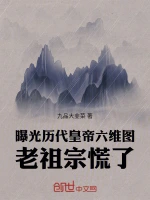
The Six-Dimensional Charts of Every Emperor Are Exposed, and the Ancestors Panic
曝光历代皇帝六维图,老祖宗慌了
- Status
- Completed
- Length
- 2.6M Words
- Genre
- Historical
- Subgenre
- Alternate History
- Updated
- 1y ago
- Source
- Qidian
Stats
Tags
Synopsis
More by this author
In booklists 7

A List of Creative and Unusual Reads
A personal list of completed books with unusual and creative concepts. I mainly recommend books with wild ideas, few or no comparable works, and that are at least readable enough to finish. Updated irregularly. I also have another list, “My Top 100 Completed Books,” with my subjective reviews of the completed works I’ve read. I hope these two lists can help with your reading slump.

Hidden Gems (Hilarious, Unhinged, Horror, Survival, Historical, Slice of Life, Xianxia, Fantasy, Infinite Worlds, Fanfiction)
I read all kinds of genres, but I'm not interested in formulaic power-leveling stories for beginners. I want smart characters and sound logic. The protagonist can be unhinged or perfectly normal, but I won't read about one whose characterization is all over the place, whose words and actions contradict their setup, or whose values don't sit right with me. Usually that means a selfish, cold-blooded protagonist whose behavior has no reasonable explanation.

Books That Keep Me Reading
Books that, after I leave them alone for a while, make me want to pick them back up when I see the title. I've removed some that didn't make me want to keep reading. Right now, I'm mainly reading When Pride Still Matters and From Unemployed to Bringing the Music Scene's Demon King Back.

Personal Recommendations
Honestly, you should be able to tell from my sharp choice of words that I'm one of the three legendary people who can save the world: *****! Ahem, just kidding. Back to the point: I made this list to recommend some works I like and share a few personal opinions. It's definitely not for some kind of veteran badge. I have no idea what that even is! Updates depend (on my mood). PS1: If you don't like it, don't yell at me. And don't yell at me if it gets dropped, because I'm a victim too. PS2: I'm n
Reading Log: Some Good Books I've Read and Want to Save
Keeping a record of books I've read and liked.
Thirty Years in Search of Swords
My tastes are broad, but I'm very picky: a book needs creativity, good writing, a compelling plot, and a well-built world.

Test Account's Genre Lists (Light Novels, Wild-Idea Fiction, Fan Fiction)
Recommendations of ongoing and completed novels followed by the test account. Anything that hasn’t updated for over thirty days will be removed.
Readers also read
 Chronicles of the Red Mansion
 In the Ming Dynasty, the Days When the Cows and Horses Turned Over
 The Corpse Plague of 1916
 An Important Town in the Residual Tang Dynasty
 League of Legends: I Just Turned Pro, and You're Saying the League Is Dead?
 Emperors Sit in on a Modern History Class
 Ming Dynasty: Taking Zhu Yuanzhang on a Tour of the Forbidden City
 Simultaneous Transmigration: Becoming a Legend Before the Story Begins
 Starting with Saving Manchester United
 Sky Screen: The Hegemon Charges into Battle, Leaving Emperors of Every Era Stunned
 Northern Song Dynasty: I Spoiled the Future, and Zhao Kuangyin Broke Down
 Historical Regrets: It Starts with Meeting Lü Zhi
 I Make Videos, and the Ancestors Seize the Chance to Change History
Reader comments 41
Google Translate
Chen Sheng and Wu Guang dared to deny the justice of the uprising, but Qin Chui seemed to be a little too outrageous.
Qin Chui is the most annoying
Qin Shihuang is a charming ancestor at every turn. His personal ability can be said to be mediocre among all the emperors in China. Can you please stop blowing up myths about him! ! He was created by the heritage of six generations, and when Qin Chui came to say that it was all the credit of Qin Shihuang. Is it difficult to destroy the six kingdoms with the foundation of the Sixth Generation? So is Zhao Kuangyin far superior to Qin Shihuang? People were killed from the Five Dynasties and Ten Kingdoms. At that time, China was not divided into more countries than the Six Kingdoms?
I can't stand it when I see the prosperous age of Han Wu. Emperor Wu of the Han Dynasty was awesome, and Emperor Wu of the Han Dynasty was also awesome. But you are really making an international joke when you come to the Han Dynasty. I really can't stand it.
Even the Qing Dynasty had people who wanted to restore it, but absolutely no one in the Qin Dynasty proposed its restoration. When Liu Bang entered Guanzhong, the old Qin people greeted him in a crowded way. Their base all hoped that Qin would perish soon.
He was the one who was overthrown by the rebels more than ten years after Qin Shihuang died. The system of Qin was completely destroyed by Qin Shihuang, and Qin II could be said to have been tricked to death by him.
This kind of ranking would have no credibility if it wasn't Liu Bang who ranked first. Ying Zheng's system was not suitable for the unification, which led to the death of the second generation. It was Liu Bang who used prefectures and states to make parallel transitions that allowed the unification system to continue. , Until Liu Che made the unification deeply rooted in the hearts of the people, To put it bluntly, the system of Yingzheng relied on the Han people to wipe their ass and improve it, so that it could be passed down through the ages. The Han Dynasty gave them the confidence to unify, Ying Zheng's reputation began to change in the late Ming Dynasty, and it only began to change in the past ten years in modern times. Also, the emperors who are higher up have their own bonus points, because they are good at There is no reference answer to the matter. It should be Henkel, Tang Zong, Hanwen, Hanwu, and Shihuang. Those who are not ranked among the top three are basically just history buffs. They can only listen to marketing accounts and have never understood the official history.
Can Qin Shihuang's system construction also achieve S-level full marks? If it was full marks, why did Chen Sheng and Wu Guang revolt a year after Qin Shihuang's death? Why is it that everyone in the world has rebelled against such a good system? Don't say that it was all the fault of Qin II. After all, rebellions broke out one year after Qin Shihuang's death. Qin Shihuang died a few years later and was the king of subjugation. It was a big mistake for Qin Shihuang to fully implement the system of prefectures and counties. Like Liu Bang, we should first implement the prefectures and states as a transition, and then cut down the vassal vassalage after decades of popular support in the world.
There are a lot of comments about Qin Shihuang in the comment area
Some say that Qin Shihuang's incompetence is all due to his ancestors, and some say that Qin Shihuang is all due to his boasting. Then Qin Shihuang's achievements and faults can be summarized, 1. Unify the six kingdoms and end the more than 400 years of division in the Spring and Autumn and Warring States periods. The Spring and Autumn and Warring States periods that have been divided for six hundred years can be said to be independent kingdoms. They were defeated one by one through diplomatic means, distant contacts and close attacks. After unification, they defeated Baiyue in the south, defeated the Huns in the north for more than 800 miles, and captured the land of Hetao. The importance of the Loop is self-evident. It can be said that Ying Zheng's martial arts is also among the best among the two thousand years of feudal monarchs. As for some people saying that it was because of the remaining heroes of Fen VI and the decline of the Six Kingdoms that Ying Zheng missed the mark, that is arbitrary. 2. The idea of great unification is dictated by heaven, and you will live a long and prosperous life. In eight words, the idea of feudal unification began to spread for more than two thousand years. Some people say that it was implemented during the Western Zhou Dynasty, so the cultures of the Six Kingdoms were different when the Western Zhou Dynasty was implemented? The county system is vertically managed by the emperor. The Qin Dynasty was a typical example of classical military imperialism. It was also the only two dynasties in which imperial power was sent to the countryside. The other was the Western Han Dynasty, which received the legacy of the Qin Dynasty. The above two points are the most typical functions The second is the wonders, the Great Wall, Epang Palace, the Eastern Tour of Qin Shihuang's Mausoleum, Feng Chan, etc. 1. As an offensive and defensive fortification, the Great Wall is an important support for both defense and offense. It has functions such as food transit and warning. For the empire that can attack, the Great Wall is an offensive transit base, and for the empire that cannot attack, the Great Wall is a defensive base. Some people say that building the Great Wall is exploiting the people. It did have an impact on the people, but the corvee system of the Qin Dynasty was paid, although it was not much, and there were unearthed records before. If you are interested, you can search it yourself. The rest of the Epang Palace and the imperial mausoleums' eastward tours all caused corvee, but they were not the root cause of the empire's collapse. 2. Burning books to trap Confucians has always been a criticism of Confucianism, but it turned out that they were trapping deceitful alchemists, and what they destroyed were poems, books, and quotations from hundreds of schools of thought, and the official archives were also kept. It became the burning of books and the entrapment of Confucians because the descendants of Confucius wrote about the burning of books and entrapment of Confucians in the Shang Dynasty. Imprisoning thoughts and ignorant people. 3. The reason for the heir directly became the trigger for the death of the second generation. However, many scholars speculate that Fusu was decentralized in preparation for the handover of military power, and was assisted by his confidant Meng Tian. However, Ying Zheng died early and there was no heir. 4. The fundamental reason for the demise of the Qin Dynasty was the collapse of the military merit system. After unifying the six kingdoms, the empire could not provide the rewards that should be distributed, which meant that the subjective initiative was gone. The reason why there was no direct collapse was that Ying Zheng's personal prestige was too high, so attacking the Huns in the north and pacifying Baiyue in the south was probably another way out. If the uprising in Dazexiang fails, all law enforcement officials will be killed. It is clearly recorded in the unearthed documents that if there is force majeure, there will be no too serious punishment. And even if you miss the deadline, it is not a capital crime. Of course, this was during the period when Ying Zheng was in power, and you could get paid for your work, but the laws of the Qin Dynasty were strict, and they became even stricter in the second generation. There are both merits and demerits. In the eyes of today's people, if a godly man cheats on his husband, he can be killed directly without any guilt. Human traffickers who were caught were immediately punished with death and those who drowned baby girls were severely punished. The laws of the Qin Dynasty are still in use today and have high universality. The strong promotion of unification also laid the foundation for those who came after, and together with Liu Bang, the founder of the Han Dynasty, they directly laid a solid foundation. A unified dynasty was established for two thousand years. The emperors of later generations could not escape from this circle. By the way, one of the Mongolian, Liao, Jin, and Song states was not orthodox. Guess who it is 🙂
Average
The first problem is to deny the legality and legitimacy of the people's uprising. For example, Chen Sheng and Wu Guang were called rebels. For example, calling the Yellow Turban Uprising "Yellow Turban Rebellion" "Rebellion" and "thief" are very subjective words, which should not be the case from a neutral and objective perspective. The second problem is that the score limit is too easy to reach, and the various types are lumped together, resulting in no distinction. For example, the influence on future generations is also divided into five points. Some emperors rely on the system to achieve it, some emperors rely on the inventions and creations of the dynasty, and some emperors rely on literature and art. But are these the same level of influence as Ying Zheng's unification of the world? Moreover, you are evaluating an emperor, not an inventor, a writer, or an artist. Many of these messy scores have nothing to do with the emperor's duties and must be added. What if you add a category of culture and art? Because the author only divided the scores into five grades, and set the perfect score to be relatively easy to achieve, this caused some partial contestants to be suppressed in disguise. ——It's about Emperor Qin and Emperor Wu of Han. Especially Qin Huang, who scored twenty-three points out of 30. As a result, nearly ten people higher than him emerged from the two Han Dynasties alone. I was so angry that I laughed. What the author meant was that as an emperor, Emperor Qin was just barely good enough to be considered a wise king? What if you add a single item [Exception] to a unique evaluation? Or change the five-point system to a ten-point system or even a hundred-point system? The third one is the confusion and arbitrariness of the evaluation criteria. In the first two Han Dynasties, there was an Empress Dowager Deng who did the fighting. You attribute the achievements of Empress Dowager Deng to the tyrant. Next is Cao Wei or Jin. You also attribute the achievements of the ministers to the emperor. When it comes to Liu Chan, why don't you include Zhuge Liang's achievements? Why don't Zhuge Liang and Jiang Wei's influence be attributed to him? Let's put it this way, Hu Hai is currently the lowest, with three points or five points, and other tyrants who are messing around have 9---13 points. And Liu Chan, 8 points. The fourth one is the rigidity and inflexibility of the evaluation standards. It is also mechanical materialism, applied mechanically. This is also reflected in the evaluation of Liu Chan. To evaluate a person, we should not look at it one-sidedly and in isolation, but in a dialectical and connected way. What was the situation like when he took over this stall? How many natural and man-made disasters have there been? How many difficulties and obstacles are there? What is his goal? What did he do? What changes at the end compared to the beginning? What role did he play in this historical development? [Accelerated destruction, no merit, no merit, defying the will of heaven and continuing the country] Compared with Liu Chan, if he defeated eight states with one state, the normal situation would be failure. He did fail, but he had slight negatives/no negatives. 3 Points is an average score, so 2-3 points are normal. Knowing people and employing them, Liu Chan took out his mentors one by one, and did not engage in any unnatural operations that killed meritorious deeds and loyalties. He did not discover any talents, but he was not a guy who could not tolerate others, and he was not worried about his great achievements that could shake the master. So a score of 3 is normal, a score of 2 is discrepant but acceptable. What other diplomatic strategies are there? If there is no diplomacy, you will get a basic score of 2 points. I won't list the others one by one. 5X6=30 points. Liu Chan, as a mediocre person who doesn't mess around, 12-15 is the normal range. As a result, the author gave a Jie Zhou level of 8 points. I really couldn't stand it. On review, I discovered that the author is a mechanical materialist who only looks at the results, not the beginning and the process.
Does the Qin Dynasty point its sword at Europe? Did Qin Shihuang not know about the Xiongnu? Didn't even defeat the Huns and returned to Europe? Just attack the Xiongnu from the north and expand the Zhuyue to the south, the Great Wall of Qin, the imperial mausoleum of the Qin Dynasty, and the people of Afang Palace have become shit, and return to Europe? The First Emperor wanted to be hanged during his reign, right?