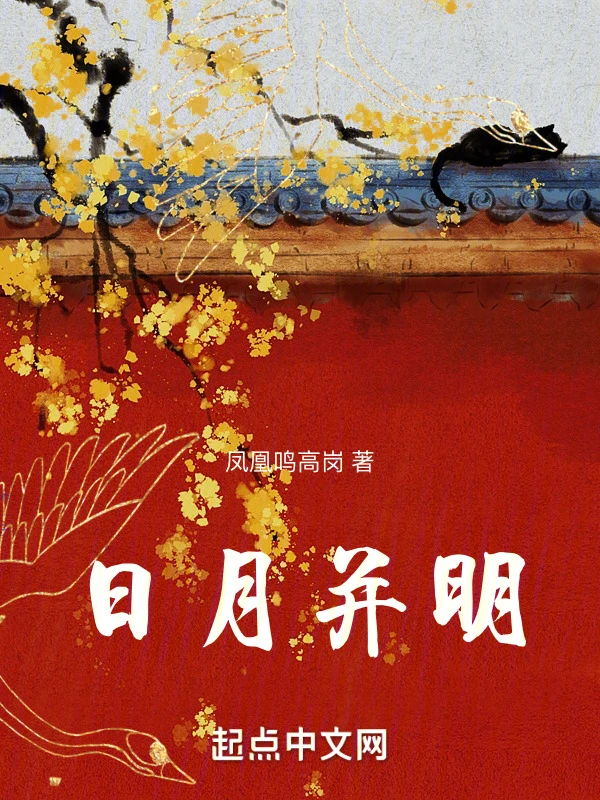
The Sun and the Moon Shine Together
日月并明
- Status
- Ongoing
- Length
- 343k Words
- Genre
- Historical
- Audience
- Male
- Subgenre
- Song-Yuan-Ming Dynasties
- Updated
- 2y ago
- Source
- Qidian
Stats
0Monthly votes
308Recommends
14Fans
66Chapters
Tags
Synopsis
Reader comments
Readers also read
 After Lying in Bed for Three Years, He Was Forced to Help the Han Dynasty
 Red Mansion: Start Escaping and Farming from the Equipment Bar
 Northern Qi, Sage Khan
 Fu Ming 1627
 If You Are Already an Adventurer, Who Should Work Hard on Your Own?
 Late Ming Dynasty: I Foresee the Future
 Taichang Daming
 The Artist Begins in Prison
 Traveling at the Same Time: Great Love to the Heavens
 Rebel
Rebel
 Guide to Picking up Leaks from Prosthetic Bodies in Mining Areas
 Long Wanshengshi
 I Pretended to Be the Emperor in Ming Dynasty
Given Chongzhen's suspicious and useless character, if you give him all the famous officials from all dynasties, he will kill them all.
To count on him, it would be better to take the Wulu route and have the Queen Mother come to court.
The comments section is too aggressive. Although Chongzhen was not a good emperor, he was in such a mess at the end of the Ming Dynasty. Whoever you replace him would be the same. Chongzhen did not receive an imperial education since he was a child. He had tried his best to make it like this. Moreover, Chongzhen was not mainly responsible for the demise of the Ming Dynasty. He was still able to endure the situation when the right time, place and people were no longer there. I still admire him.
The harem is involved in politics. Wen Chen will kill you. Especially when I met a man who was suspected of being seriously ill. The emperor who just returned to his own use. Want to eat shit?
Give the author a suggestion, can the male protagonist be replaced by Zhu Youxiao? Historically, the heroine also assisted Zhu Youjian, but Zhu Youjian failed to do anything. With Zhu Youjian's broad mind, he felt that the heroine had really become Feng Aotian and helped him succeed. He might have become suspicious again. If Zhu Youjian himself does not change and become stronger from the bottom of his heart, no matter how much the heroine pays to him, she may be more disappointed in the end. On the contrary, if the male protagonist is Zhu Youxiao, Zhu Youxiao's mental state is stronger than that of his younger brother. Moreover, Zhu Youxiao is also the emperor of the Ming Dynasty. If the male protagonist is Zhu Youxiao, the sun and moon can also shine together. Compared with Zhu Youxiao, Zhu Youjian himself was more influenced by the scholar-officials of the Donglin Party in terms of character. On the contrary, Zhu Youxiao was less affected by the scholar-officials, and he supported Wei Zhongxian and made progress in the fight against the scholar-officials group. In fact, human nature will change. Historically, Zhu Youjian had a good relationship with the heroine. This was based on the heroine's status and thinking. Only then could Zhu Youjian look weaker than Zhu Youjian, and Zhu Youjian could rest assured about the heroine. If the heroine becomes Feng Aotian, given Zhu Youjian's dark psychology, it might be another tragedy for Lan Yinxuguo. Some things cannot be solved with love, as was the case with the heroine and Zhu Youjian in the previous life. And the male protagonist is replaced by Zhu Youxiao, which is also convenient for these plots to be Zhu Youxiao.
In terms of the social atmosphere in the late Ming Dynasty, the harem was involved in politics, the imperial concubines were involved in politics, civil servants, eunuchs, relatives, imperial power, and border towns (bian towns and Jurchens had common interests in cooperation). It was really easy to mess with them all. The author should stop writing history and write imaginary stories. There is no need to indulge in this hot spot.
Who was resurrected and buried?
Sacrificial burials have basically disappeared since the Eastern Han Dynasty. In the Southern Song Dynasty, after Song Gaozong died, his two concubines were forced by Song Xiaozong to commit suicide and be buried, setting a relatively bad precedent. Scholar-officials in the Southern Song Dynasty encouraged sacrifice and burial, which became a trend. Mongolians in the Yuan Dynasty did not have the custom of burial, but they did not object to civilian burial. As usual, commendations will be given to women who so-called "voluntarily" sacrificed their lives. The royal family of the Ming Dynasty has records of burials. There are three main records recorded in the official classics of the Ming Dynasty: the burials after the deaths of Zhu Di, Ming Renzong and Ming Xuanzong. ——Zhu Yuanzhang was buried after his death. There is no record in the official Ming Dynasty classics. It can only be found in the unofficial histories two hundred years after his death. It was published in a book during the great prosperity of the publishing industry in Jiangnan during the Wanli period. It is not accepted for the time being. Burial is something that happens after the death of the emperor. In terms of responsibility, Renzong was responsible for the burial of Zhu Di, Xuanzong was responsible for the burial of Renzong, and Zhu Qizhen, Yingzong of the Ming Dynasty, was responsible for the burial of Xuanzong. The list of burials was determined by the new emperor and the cabinet. Interestingly, the cabinets for these three important burials were all the same group of people, that is, the famous "Three Yang Cabinet" of the Ming Dynasty: Yang Shiqi, Yang Rong, and Yang Pu. Especially since Yingzong of Ming Dynasty was only nine years old when he succeeded to the throne. After Xuanzong died, he was buried and killed ten palace officials. The whole process was completely led by Yang Shiqi and Yang Rong. The moment when the new emperor first ascends the throne is when the imperial power is at its weakest. As the auxiliary minister left by the previous emperor to the new emperor, the cabinet has the greatest power at this time. At least for a few months before the funeral of the previous emperor was completed, the new emperor could not do anything. Everything had to be decided by the cabinet. Moreover, Ming Renzong and Ming Xuanzong were both Confucian "sage kings". Together with Ming Xiaozong, they were rated as the three sage kings of the Ming Dynasty by the civil servants. They were good examples of listening to the civil servants on everything. The edicts of Zhu Di, Renzong, and Xuanzong did not contain any content about burial. Even if they did, if the cabinet felt that this was too cruel and suggested not to implement it, both Renzong and Xuanzong would definitely listen to them. As for the nine-year-old Ming Yingzong, of course he would not express any opinions. In this case, the Sanyang cabinet held great power and even carried out three consecutive funerals. These three virtuous ministers, who were well-read in poetry and books, and spoke of benevolence, righteousness, and morality, had no psychological burden when they drew circles to decide which innocent palace maids and concubines to kill. I never heard that they said a word "no" about burial. I even suspect that the burial was originally their idea. Because people like Renzong and Xuanzong were kind-hearted and soft-eared, it was unlikely that they would order the palace people to be buried. After careful calculation, this "Sanyang Cabinet" really didn't do any good things. In the eleven years from the death of Zhu Di to the death of Xuanzong, they dominated the world. Their main achievements were presiding over three funerals and killing dozens of innocent concubines and daughters, abandoning Annan, and stopping their voyages to the West. Yang Shiqi's son annexed land in his hometown and killed dozens of people. Yang Rong received countless horses and other bribes from the border generals. We have told these stories in the first volume. In this way, they are still called the best and most capable cabinet combination in the Ming Dynasty by civil servants. Why on earth? It was simply that the emperor wanted to investigate officials for corruption and dereliction of duty, and they all tried to dissuade them - this should be the biggest reason why they were called wise ministers. It was Zhu Qizhen, Emperor Yingzong of the Ming Dynasty, who really abolished royal burials. Zhu Qizhen had a characteristic that he hated civil servants and trusted the eunuch Wang Zhen. He arrested Yang Shiqi's son and killed him, and dismissed Yang Rong on charges of corruption. Is there a causal relationship between this and his decision to abolish the royal burial system? Because Zhu Qizhen was not brainwashed by Neo-Confucianism, he still retained a little bit of spirituality. He found that the idea of burial was too inhumane, so he left a will before his death to end royal burial forever. The emperor's family banned sacrificial burials, but the people did not stop. Private burials will not be publicized because killing is illegal. But when we read about the various "martial women" recorded in history books, there are too many women who "voluntarily" followed their husbands to death. If we speculate from the perspective of human nature, I am afraid that a large number of them were not voluntary, but "voluntary" and were forced to commit suicide under the pressure of their families. Then, the family would come forward to fabricate a touching story about how a loyal woman voluntarily sacrificed her husband, and applied to the court for recognition. On the issue of burial, it can be seen that Taoists and Neo-Confucianists are murderous and inhumane. This also has nothing to do with the change of dynasties, only the dominance of Neo-Confucianism. It was the same in the Qing Dynasty. The Manchu royal family originally had the custom of sacrificial burial, but it was abolished by Emperor Kangxi. However, it should be noted that Emperor Kangxi ordered the abolition of not only royal burials, but also private burials. The original words of Kangxi recorded in "Records of the Qing Dynasty" are as follows "Now I see that there are many people who have died in the capital and in the provinces... It is abnormal to commit suicide to death... From the king to the small people, the matter of women committing suicide should be strictly prohibited forever." This passage makes it very clear that the custom of sacrificial burial is not unique to the royal family, but is a custom from top to bottom. Emperor Kangxi also saw that this matter was abnormal and contrary to human nature. There must be something wrong in it, and it was impossible for everyone to seek death voluntarily. So it was strictly prohibited. He also stipulated that such cases would not be commended in the future. Those who really wanted to die voluntarily must first report to the government for approval. But judging from what happened later, I still couldn't help it. Because the person is already dead, it is said that he committed suicide secretly, and the family members did not know about it beforehand. So what can you do if you don't report it to the government for approval? The only one who can really ban it is the royal family. Foot binding, widowhood, and burial were the persecutions suffered by Chinese women under the "natural principles" ruled by the Neo-Confucians.
The main reason is that you wrote more about Zhu Youxiao than the male protagonist and the female protagonist. Although it is a good thing to be non-obsessive and have big feelings and small love, I am very anxious and want to see the female protagonist.
Why not try to travel through Chongzhen's biological mother? Chongzhen lost his mother when he was young, and his father died young, so he was mentally unhealthy. If a time traveler travels through Chongzhen's biological mother, not only can he become the Queen Mother in one step, but he can also directly change Chongzhen's thoughts in one step.
In fact, we might as well just change the introduction and make Zhu Youxiao the male protagonist. The female protagonist did almost nothing, and the originally scheduled male protagonist Zhu Youjian did not show up. If the male protagonist is Zhu Youxiao and there is a female protagonist, and the male protagonist has been showing off his talents, at least the viewing experience will be better. Zhu Youxiao is also the emperor of Ming Dynasty, and already has Wei Zhongxian's sword. With Zhu Youxiao as the male protagonist, the rest of the plot is better. In fact, Zhu Youjian was just not suitable to be an emperor. He lived his small life honestly as a prince, studying the Four Books and Five Classics, and then his brother was always there, which was a kind of perfection.
Going against the grain, dressing up as Concubine Tian is really going against the grain. If I really like Chongzhen, which one is better? Is it better to be an original concubine or choose Empress Zhou? Isn't it more cost-effective to dress up as his daughter?
The author is really a novice. Who told you that you need to mail the contract when signing a contract now? If you are not a platinum master, or below, the contract is a template contract and can be signed directly electronically.
In fact, I think it would be great if the heroine and Hai Lanzhu Dayu'er fight together in the palace. I feel that it is a bit unsettling for a woman who has no plot of her own and relies on the emperor's love and Mary Sue's halo! Wu Zetian succeeded because of Li Zhi's support. Zhu Youjian supported the heroine because of Li Zhi. How much does Yang Jian support his wife?
In fact, this situation is not as good as if Zhu Youjian was reborn, repented, and struggled.
The writing is really good, and the writing quality is comparable to that of some great authors. But there are two points. One is that the introduction is not well written. One is that it is too short. If you keep updating at this level, I think Qianding will be the best. I will also recommend it to my friends around me.
Chongzhen must be responsible for the death of the Ming Dynasty. He was stupid after reading the books of sages, and was deceived by the Donglin Party. He did not learn the lesson of "his brother's heavy use of the Donglin Party when he came to the throne led to the defeat of Liaodong." Once he came to power, he still favored the Donglin Party, abolished the factory guards, and destroyed the power directly under the emperor, leading to the irreversible destruction of the tax administration and the Liaodong War. Not allowing the prince to go south led to internal strife in several small courts in the Southern Ming Dynasty. In order to smear the Ming Dynasty, the Qing Dynasty was just leading the rhythm, pouring all dirty water on Chongzhen. The method was to take quotes out of context, ignore the cause and process, and use the results to smear Chongzhen. A typical example is "Chen Xinjia was protected by Chongzhen, committed a crime and made meritorious service, and pitted Chongzhen. "Chongzhen was so angry that he chopped him down" was slandered as "Chongzhen was unwilling to take responsibility"; and "Chongzhen changed many cabinet ministers, which led to the deterioration of the situation." Li Longji changed many prime ministers before the Anshi Rebellion, and no one accused Li Longji of replacing him with the Anshi Rebellion.
The plot is moving too slowly, there is a lot of historical science, and the heroine has never done anything in so many chapters
Jingshan Park has many plants and trees, and Youjian likes the crooked neck tree.
In the Chongzhen Dynasty, no capable person could do his best to save the world. Everyone is restricted regardless of their identity. If the means are extraordinary, they will step down immediately.
Not as good as the Carpenter Emperor, Chongzhen is suspicious,
Guys, do you have any recommendations for books similar to the story of women traveling through the late Ming Dynasty?