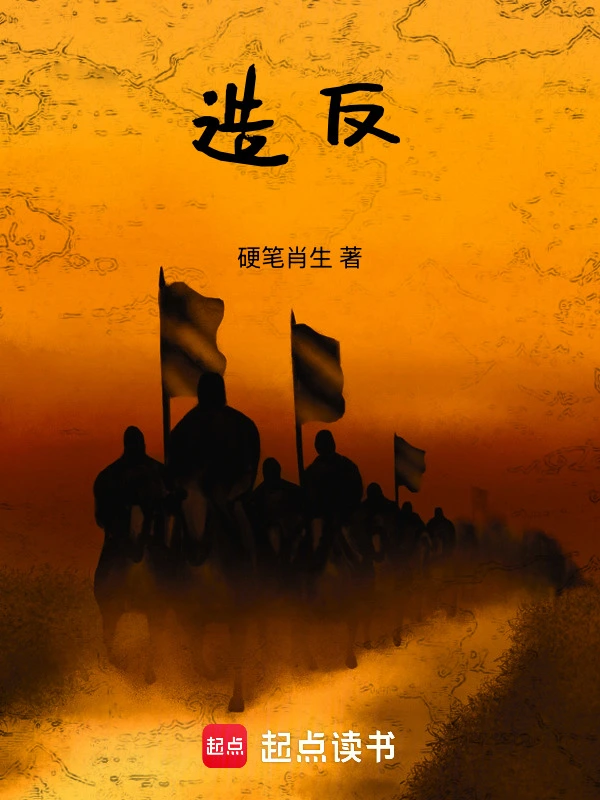
Rebel
造反
- Status
- Ongoing
- Length
- 156k Words
- Genre
- Historical
- Audience
- Male
- Subgenre
- Alternate History
- Updated
- 3d ago
- Source
- Qidian
Stats
132Monthly votes
896Recommends
17Fans
60Chapters
Tags
Synopsis
Reader comments
Readers also read
 At the Beginning, Please Ask Chongzhen to Abdicate!
 I Am a Tyrant in Nanming
 Red Mansion Xiaoke
 Fu Ming 1627
 Daming: Attack, Emperor Yongle!
 Tang Dynasty: from the Remnant Soldiers of Anxi to the Powerful Ministers of Chang'an
 Late Ming Dynasty: Lion of East Asia
 I Get a New Character Every Week
 Transform into Tang Monk and Become Stronger Starting from Covering the Sky to Obtain Scriptures
 Common Man in the World
 Money Demon
 A Fierce Soldier in Jinyang in the Late Tang Dynasty
 Sylvia
 I Have a Paradise World
 After Rebirth, I Became More Refined
 After the Shenhao System Disappeared
 Reborn When Graduating from University
 Home in Peach Blossom Land
 Return to Senior Year of High School
 I Have Land in Africa
1.: Continuous Sitting ≠ Common people dare not escape from corvee collectively The author's logical misunderstanding: With the Continuous Sitting System, escaping will be implicated, so the people do not dare to escape. Historical facts: 1. There are prerequisites for the effectiveness of the joint operation: the government can continue to control the village, the household registrations are interoperable, and the police can quickly pursue them. 2. Small-scale individual escapes, with neighbors staying where they are, can easily be reported and held accountable; The entire village and dozens of households fled into the mountains together, and the joint system directly failed. It is impossible for the government to send troops into the mountains to search for an entire disappeared village all year round. The police force in Qin and Han Dynasties is limited, and the control power in mountainous areas is almost vacuum. In the Qin, Han, Wei and Jin Dynasties, there were a large number of refugees, mountain dwellers, and shady households. In essence, they collectively escaped from taxes and servitude. Sitting together is a means of deterrence, not a universal shackle; if the pressure exceeds the bottom line of survival, deterrence will be directly ineffective. 2. Refuge in the mountains: Sorting of the greatest threats The author's wrong sorting: tigers → miasma; The real bottom survival sorting: it is the lack of salt, then the lack of food, and then the danger of tigers. As for miasma and the like, it seems that there is no such thing in the north. 1. Salt is the lifeline Long-term salt deficiency in the human body will lead to fatigue, edema, and loss of working ability, making it difficult for the ethnic group to survive for a long time. You can hunt and collect in the mountains to satisfy your hunger, but natural salt mines are extremely difficult to find. This is the most difficult problem for people fleeing into the mountains to solve. 2. The soil in the mountainous areas is thin, and the newly opened wasteland is okay in the first one or two years. However, the soil fertility soon declines, and the agricultural output is extremely low, making it difficult to feed a dense population. 3. About tigers: Tigers naturally avoid large crowds. More than a dozen people settled together with spears and wooden branches, and tigers rarely took the initiative to attack the camp. Tigers preferentially attack lone individuals. Beasts are scattered risks, not the core obstacle that can prevent the village from taking root. The author deliberately enlarges the beasts to create tension, which is a dramatization routine for Internet literature. 4. Miasma has geographical boundaries! Key points: There is basically no miasma in the northern mountainous areas. Miasma core distribution: hot and humid valleys south of the Yangtze River, Lingnan, and dense forests in western Hunan and western Hubei. There are no large-scale miasma epidemics in the Loess Plateau and northern mountains. Many authors do not distinguish between north and south. When they write about the mountains, they just copy the template. 3. Cotton is a typical flaw (fatal bug in Qin and Han backgrounds) 1. Asian cotton (except kapok): it was only introduced to the Western Regions in small quantities in the Western Han Dynasty, and almost none in the Central Plains; 2. Ordinary people in the mainland widely used cotton to spin yarn and make cotton clothes as late as the Song and Yuan Dynasties; 3. Pre-Qin and Qin and Han Dynasties relied on: linen, fur, silk cotton (silk wadding), and felt blankets to keep out the cold. Many authors only vaguely remember that "there were no cotton-padded clothes in ancient times", but they can't tell the time. They write casually that people in the mountains wear cotton-padded clothes, which directly misplaces the era. 4. The objective situation of the mixed era of iron and bronze ware (late Warring States Period ~ Qin and early Western Han Dynasty) In this stage, bronze and iron ware indeed went hand in hand: Upper-class ritual vessels and a small number of weapons still used copper; farming tools and new main battle weapons gradually became iron. There is nothing wrong with this setting. The mistake is that this setting is forcibly stacked with Cotton, Northern Miasma, and Omnipotent in the same world view, and they are incompatible with each other. 5. 1. Fragmented textual research Take a single entry: even sitting, iron tools, and corvee can be named as nouns; but it does not sort out the timeline, geographical boundaries, and practical limitations of system operation. Only look at the legal provisions and not the loopholes in the implementation of the law. The law says "severe punishment for escape" does not mean that no one escapes in reality. There are a large number of refugee records in history books, which is the gap between regulations and reality. 2. Like to apply common templates for web articles Deep mountains = tigers everywhere and miasma everywhere. This is a routine passed down from decades of popular novels. The author is too lazy to independently deduce the underlying survival logic and directly copies the template. He did not think about it from his perspective: If you are a refugee farmer, what is the primary problem that hinders your survival?
The setting of this book is seriously out of touch with the real logic of the countryside. It copies the model of modern urban idlers and applies it to the traditional rural background. The logical flaws are very obvious.
Anyone who is familiar with Hunan's rural customs knows that in traditional acquaintance and clan villages, idle gangsters who have been entrenched and causing trouble for a long time will never be allowed to exist. In the old days, rural autonomy was extremely strong, and the order and clan restraint in the countryside far exceeded that in the cities. If there were villains who ran rampant and harmed their neighbors, they would be quickly dealt with by the countryside, leaving no room for long-term survival. The author grew up in Hunan since he was a child, so he should be well aware of the true state of the local countryside. Twenty years ago, there were roaming criminals such as car bandits and road bullies in the countryside of Hunan, but they were all mobile crimes and did not dare to stay for a long time. They were by no means local gangsters who were rooted in one place and active all year round. In addition, in the old days, people who were slightly powerful in the countryside and occasionally crossed the line basically relied on the clan system and were strongly restricted by the rural covenants and clan rules. It is impossible for there to be a large number of ruffian groups in the book who are free and unruly and dominate the countryside for a long time. The setting of this section of the book is seriously out of touch with the real logic of Hunan's countryside. It copies the model of modern urban idlers and applies it to the traditional rural background. The logical flaws are very obvious.
Petition
Author, your urban campus novels are different from everyone else. You have your own unique thoughts and ideas. These experiences often resonate with me deeply. I have ordered every one of them. Haven't you finished the last one? You are the only one in the world who can write the creativity of returning to college for four years. Although I also read history, the authors of historical novels always end up exhausting themselves. This track does not matter unless you make money for love. Imaginary history is really a sinkhole. You have such a high talent in the campus city, world-class talent to do things that you are not good at. Just like Dembele doesn't play football to play games
Why is there no recurring university😭😭😭
I've been a bit naughty lately. Do I have to suppress the male protagonist like this?
It's the end of the Du Dynasty, and the government is not dark and corrupt enough. If you report your merits, you can be promoted. Don't you need bribes? I feel that the official administration is too clear and clear, unlike the end of the dynasty 😅
Alternate history, sinkhole track, how did you come up with the idea to write this.
If you want to write about rebellion, just pick an ancient history. Write
If you want to write about rebellion, it's not that you're not allowed to write about it. Why don't you just choose ancient history to write about? Why bother with history? It's an imaginary history without a sense of immersion. Even if you speak testimony. If you use ancient history, you can also witness it. Like "Looking North to the Country" and "Seizing the Jiajing Dynasty", these are all ancient history. And there is a lot of content in it, and the content of Jianzheng has not been blocked. You can definitely write it, as long as it is not too explicit. You can write about it, but you are creating an imaginary history and there is no sense of immersion at all.
What was Zhao Quan thinking? He knew who Xu Fei was, but he still strived for military glory. Is this a modern person?
This is The Eunuch, no need to read it
Go back to modern society. We have been waiting for you.
Aren't you tired of writing? When writing historical novels, rigorous history lovers will use a magnifying glass to find unreasonable places. They work so hard every day to search for information and construct an imaginary world view. Why are you so angry? You also want to go back to the past. As long as you write, we will always follow you and accompany you to make up for your regrets. Whether it is a dream, eternal life, schizophrenia, or a cycle, we are always there.
Why isn't it a campus article, the perverted kind?
The author is somewhat competent, and it can be seen that he writes seriously.
Who is reading this kind of novel?
If you want to write about historical themes, just write about the Song and Ming Dynasties. Why write about fiction? It's very niche.
Come on 😎{"TopicId":"804728532092780544","TopicName":"Book Famine Terminator"}