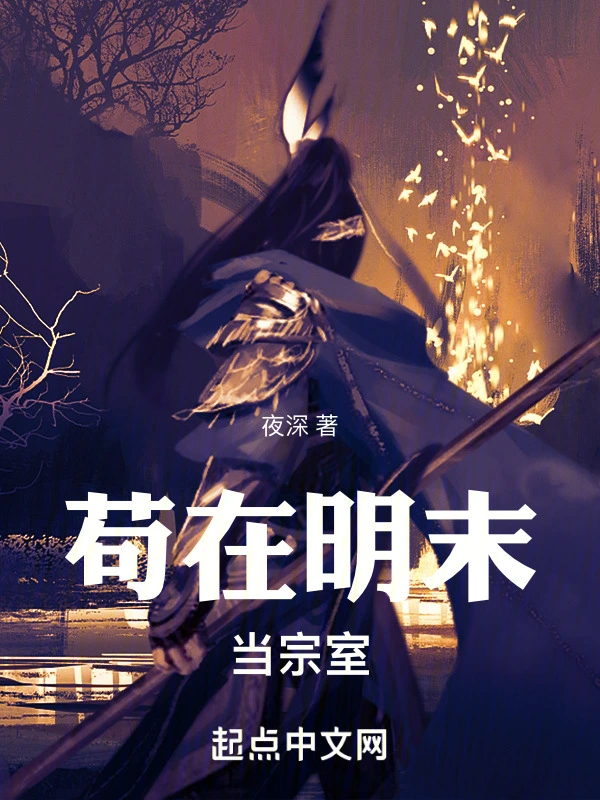
Gou Became a Clan Member in the Late Ming Dynasty
苟在明末当宗室
- Status
- Completed
- Length
- 4.2M Words
- Genre
- Historical
- Audience
- Male
- Subgenre
- Alternate History
- Updated
- 1y ago
- Source
- Qidian
Stats
0Monthly votes
23.6kRecommends
64.7kFans
1.3kChapters
Tags
Synopsis
Reader comments
In booklists 3


Book Waste Series
Book recommendations are welcome, but they are required to have at least fifty chapters, otherwise they will be gone soon.
28Books4.5kFollows1yUpdated
Historical Literature Has No System
High rationality
14Books11Follows1yUpdated


Book List of Phoenix Tribulation 1
MyViP
10Books3Follows1yUpdated
Readers also read
 In the Red Mansion: Escort Daiyu to Beijing at the Beginning
 Talker in the Song Dynasty
 1914 Begins with the Rejection of the Schlieffen Plan
 Please Call Me Your Majesty the Tsar
 I Am a Great Power
 Taichang Daming
 Long Wanshengshi
 Entrepreneurship in the Late Tang Dynasty
 Everyone Is Responsible
 1848 Qing Dynasty Charcoal Burner
 Gou Qin
 Huang Ming
 Great Traitor
 The Great Rebels in the Late Ming Dynasty
 Tianmen
 My Wife and I Both Time Travel
 Reading Life
 Return to the Golden Age
 Witch Riddle
Come on, author💪
After reading it in one go, I felt it was quite novel. The story flowed well. It felt a little weird when I leaked the secret to my clan relatives in the middle: I kept it secret for a long time and then leaked it over a meal. It didn't seem like someone who would make a big deal out of it. I also hope that the author can handle the relationship between sister-in-law and uncle (laughs). It's quite toxic if it's not handled well. Finally, two monthly tickets are presented, the author cheers.
It is a good book, but there are too many historical plots in it. Indeed, the author has a deep knowledge of Ming history. I should have read the history of the Southern Ming Dynasty frequently, but the history of the Southern Ming Dynasty is very irritating. I read novels for entertainment, not to get angry. The historical plot should not be expanded too much, and the protagonist advances slowly. If this book had 1 million fewer words, it would be a more popular book.
Zhu Yuanzhang did not love the country or the people, but only loved his descendants. It is a pity that his descendants were slaughtered to pieces because of him. Hundreds of thousands of them were slaughtered.
The gentleman has been beheaded for five generations. That was Mencius trying to save face for the world, but in fact the third generation had already faded away.
Wei Zhongxian was really good at making money. At least when Wei Zhongxian was in power, the Ming Dynasty was not short of money, and it did not increase taxes on the people indiscriminately. Wei Zhongxian always dug into the pockets of the rich. This is also the reason why Wei Zhongxian is so hated. As long as he raises more taxes on civilians and levies less business taxes, history will definitely be a good eunuch.
I saw your book on the new book list and came to visit. I also just opened a new book, and the subject matter is similar. You write about the lower-level clans in the late Ming Dynasty, and I write about the top-level clans in the mid-Ming Dynasty. What a fate! I wish the new book a great sale!
This book has more than two million words, but there are not many readers. I saw many reviews saying that it was "watery". I read dozens of chapters and it was indeed quite watery, but the author's writing style was not bad. If it were not so watery, the results would not be so bad. The author may not have thought that the worse the grades, the less qualified the readers will be, and the old readers will also leave. You don't have many readers to begin with, and you won't make much money by wasting time writing thousands of words every day. You might as well end the problem of opening a new book as soon as possible and adjusting the "water" of the new book. I found that the author's previous books were very long, and the results were not very good. Is this how he developed the "water" problem?
I have changed books a long time ago. I abandoned the last book after reading the introduction. The Rebel was so well written.
It would be too explosive to not be clear with your sister-in-law, not to mention that the clan is your best identity in this mess... Please be careful...
I thought it was so awesome to travel back in time. I got a gun and just did business. I laughed to death. How can I do business when the country is about to be destroyed? I read Chapter 400 and wrote a stupid dog. I went to please the civil servants. I might as well imitate the Confucian family and become a traitor.
Those who take the route of elite soldiers are the most annoying. Qi Jiajun is the best example and they were not destroyed by others.
It's 500 chapters, and it basically hasn't changed history. It's just showing you what happened in the late Ming Dynasty.
If you travel back to the last clan of Wanli in the Ming Dynasty, you can find a way to take people to Taiwan, then Luzon, Nanyang, and Australia. This can help disperse China's population and establish new systems outside the country. After all, it is easier to draw on a white paper than to make changes!
The reading experience of the story was very poor. I stared at Xia San Road at the beginning.
At the beginning of the chapter, I stared at Xia San Road and kept narrating. I am also an old bookworm. I have no books to read, so I reluctantly read it. However, the story of the lower three paths has been described. The historical article mainly focuses on the story logic of opening and closing, and cautiousness. The writing of this kind of article is purely based on interest. I guess I will stop updating it soon. It gives me the feeling that the author checks Baidu Library every day, but still doesn't open VIP. Therefore, his confidence and historical strength are insufficient. The beginning of the article does not point out what the current problem is and how to solve it. Now that we have reached that point, what problems will arise in the future? Is there any history for reference? Then there is the matter between me and my brother's wife. "I want to marry my elder sister-in-law Cao Pi, but I hope my sister-in-law will take the initiative to tell me that she wants to be Cao Pi." This can be summarized in this way. I don't dislike this situation. For example, in Mike's book, "Long Sword of the Late Jin Dynasty", the male protagonist relies on women to gain power, but he is also generous. I married my mistress Cao Pi. He wrote it very realistically. Cao Pi is not the main character, but to get what everyone needs. I needed money, management talents, and aristocratic families to support me, and I used my own force to open up the situation and protect the bosses, so although the bosses thought I was a scumbag, they pinched their noses and approved. Then there is no problem with his family. Although it is a rural family, it can still grow through the resources I have worked hard for. The clan is weak, so I should encourage you. This book is the one I complain about the most, because I actually looked forward to it after reading the post, but the first three chapters are the most revealing and the most attractive to users. They are written like a junior high school graduate. I wrote this post to save others from being poisoned.
It's really sad to see that you, a rebel leader, don't think about how to recruit talents, expand the army, and improve your reputation in the army. Instead, you focus entirely on fighting wits and courage with civilian officials, and you surrender. When the Manchus entered the country, they were so brutal and brutal that all the officials had to call themselves slaves. There was no shortage of officials, but the protagonist was afraid of this and that. "Well, it's better to just recruit 5,000 confidants and set up a school for native officials. Instead of teaching anything, just let them memorize some military arts, memorize them by rote, and practice some martial arts." Practice for a year and a half, and directly use this as the basis for recruiting the backbone. Those who can't survive will serve as soldiers, and they will attack an army of 1.8 Million people. Anyone who disobeys will be killed. How many students have been raised in the Ming Dynasty for more than 200 years, but they still don't have to work as officials. As for food and grass, if there are soldiers, I'm afraid there won't be any. The world is in chaos, so we need to plow it again and kill all those who deserve to be killed, so that we can better build the world. If the protagonist thinks about ZTE like this, I'm afraid it will only exist in the author's book. Even if your policies and systems are good, you must have loyal people to implement them. In the late Ming Dynasty, corrupt officials were rampant, and landlords and wealthy businessmen gathered together. If you don't kill everyone, you will die. If you want ZTE, you will eat shit.
The first chapter is poisonous. Are you trying to summarize the founding of the Ming Dynasty? The protagonist is not the late Ming Dynasty?
It is better to read the history books than to read this book. It starts from Wanli and ends at Chongzhen and Luoli. Many things are not novels at all, but are adaptations of history books. The latest dozens of chapters do not even include the progress of the protagonist. They are all about the world view. It is really better to read the history books.
The first chapter is the water background, the second chapter introduces the sister-in-law, and the third chapter introduces the niece. I would like to call it the golden three chapters. Pure summary. I only read these three chapters.
This sister-in-law is really superfluous. It's very simple, if the protagonist accepts. What will my brother's children think? That's fine if you can accept it, but what if you can't? Moreover, now that the protagonist is rich and his sister-in-law's life has improved, but the protagonist takes it away and can only live a small life, what good will it do to her? As for the protagonist's little affection, it's nothing. It's not love to the death, and the protagonist doesn't lack women either.
The writing is very detailed, I feel like it will take at least 100 chapters for the main character to take off.
In the Ming Dynasty, the emperor's clan was raised like pigs. Beware of thieves. It seems to be beneficial to the stability of the country, but in fact it is an important failure for the continuation of the lifeline of the Ming Dynasty. If the clan is not prosperous, the royal family will mourn.
Without ideals and beliefs, the sooner you prepare, the sooner you will collapse!
The protagonist sent everyone under him into the officialdom of the late Ming Dynasty early. Have you ever thought that people's hearts will change? Have you ever thought about how powerful the officialdom is? Of course, if a person soaks in a dye vat alone, the color will not change for ten or eight days, but what about ten or eight years? When the real protagonist takes over the world, how many people will be available? A group of people who don't know why they are fighting are the easiest to be corrupted. Without ideals and beliefs, relying on so-called kinship and gratitude will not last long!
I have watched many Qing Dynasty operas, and I am both a master and a slave. There was no such title in the Ming Dynasty.
It's not a question of whether it's good or not, but it's that too much energy is spent writing characters and plots that have no direct connection with the protagonist. As for Tianqi Wei Zhongxian, Donglin Party Chongzhen and Yuan Chonghuan, I don't know what to write about them? The plot that should have been covered in one go is also covered in large sections. This is the first time I have ever written a novel without writing the protagonist and supporting characters, without writing the main plot and sub-plots. Even if I spend half the time writing the background story that everyone knows, it is still a story that has no meaning except to distract people.
I now have a disease that makes me want to vomit when I see the term "civilian group" 😅. The Donglin Party in history cannot be regarded as a very cohesive group. Is it necessary to repeatedly say that the civil servant group conspired to cause chaos and ruined the court? It is obvious that no one has the security of political means, and everyone is too selfish. Emperors and civilian officials are like this.
A well-conceived Sanwu novel with only an outline. 1. No characterization: everyone is a faceless "codename", no personality and no behavioral logic. 2. No scene description: only text "labels" remain in the troubled times of the late Ming Dynasty, no pictures and no atmosphere. 3. No dialogue: all communication depends on the author's "narration", no interaction and no plot tension In fact, the author's conception is a novel outline. The author has no writing skills at all. He conceived an outline but didn't know how to write it. Then he added the outline to the historical data and his personal evaluation of the historical data and characters to supplement it, and then it turned into a novel.
The protagonist and Wanli are of the same generation. Wanli is the eighth generation of Zhu Di's family, and the protagonist is the eighth generation of Zhu Hong's family.
Luo Li, I can finish what I could have said in one sentence, but after talking about it for three chapters, I was convinced.
I don't like having a harem. Machiavellianism and passion are what I really like.
The plot advances too slowly
The author's writing style is good, and I read dozens of chapters. I'm still talking about trivial matters here. When writing a book, you have to advance the plot with some small climax in the middle, so how can you continue to follow such a flat narrative. I couldn't help but look at the table of contents. It looks like there are more than a thousand chapters that haven't been enthroned yet? It's not fun, it's a lonely journey without guidance