


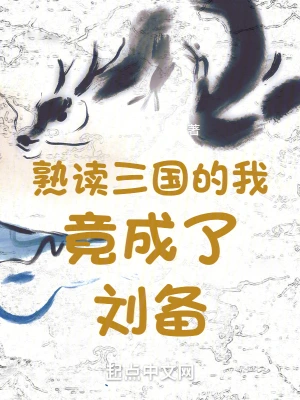
I Knew the Three Kingdoms by Heart, Yet Somehow Became Liu Bei
熟读三国的我竟成了刘备
- Status
- Completed
- Length
- 1.2M Words
- Genre
- Historical
- Subgenre
- Qin-Han & Three Kingdoms
- Updated
- 2y ago
- Source
- Qidian
Stats
383Chapters
0Votes
3.2kRecs
29.5kFans
Tags
Synopsis
More by this author
In booklists 1


Readers also read
 Daming: Asking for the Throne at the Beginning, Lao Zhule Went Crazy
 My Father Is Wen Tianxiang, and We Win the Battle of Yashan from the Start
 My Only Method: I Will Add More Points to Become Stronger at the End of Ming Dynasty
 A Guide to Building Civilization in a Primitive Tribe
 A Record of a Mortal's Journey to Immortality: I Earn Immortality by Grinding Achievements for Rewards
 Late Han Emperor Zhaolie: Rising from Liaoxi
 Reforging the Three Kingdoms: Only the Uphill Battles Are Fun
 Lord Evolution
 A Record of a Mortal's Journey to Immortality: Choosing Hextech in the Chaotic Star Sea
 Late Han: The Han Dynasty Shall Not Fall
 The Glorious Journey at the End of the Han Dynasty
 Three Kingdoms: Restoring the Han Dynasty from Changban Slope
 Attaining Martial Sainthood, Starting in the Republic of China
 Three Kingdoms: Investing in Liu Xuande, the Greatest Achiever of All
Reader comments 28
Google Translate
It made me happy to see Cao Cao massacre Xuzhou. I've seen people overwhelm the protagonist, but it's rare to overwhelm the protagonist's IQ. When Dong Zhuo came to Beijing, the protagonist directly killed Dong Zhuo, saying that he wanted to protect the people of Luoyang from being poisoned, and then he had a father on his head and could not do anything. After Cao Cao started to rise, it was obviously the best time to suppress Cao Cao. It would be too boring to confidently say that there is no opponent in the world. Later, beating Yuan Shao and Chunyu Qiong delayed the protagonist for several months. Then now Cao Cao raises troops to massacre Xuzhou. Not to mention that Cao Cao managed to recruit 50,000 people in half a year with half of Yanzhou, and if he still had to keep people to guard his home, it would be even more. This force even surpasses the protagonist who occupies half of the state, and then the protagonist's first thought when he sees these 50,000 people is that he is intimidated? Afraid of Cao Cao's revenge? Let's not talk about occupying the other half of Yanzhou and just let Cao Cao go there to massacre Xuzhou. When Luoyang left Luoyang for himself, he had to kill Dong Zhuo. Now that he can get Xuzhou, let Cao Cao massacre his own territory? You really have it, and there is also Chen Gong in Yanzhou who can stab Cao Cao in the back. Stealing Cao Cao's house yourself is the best chance to kill Cao Cao. It feels like now we are trying to forcibly reconcile the original world line of the Three Kingdoms. Even if Cao Cao may be attacked by Yuan Shao, he must kill Liu Bei first to prevent him from gaining a foothold. As a result, Liu Bei is letting Cao Cao develop here. It feels like his IQ has been overdrawn during the Yellow Turbans.
Let's talk about the advantages first. It can be seen that the author has considered the background of the times. Although I think it is a bit shallow, as a novel, there is no need to be too serious as long as the meaning is achieved. The character dialogue is also more in line with the story of the Three Kingdoms as we understand it. This is really good. The story outlines in some novels are good, but the character dialogue is too full of modern vocabulary and has no sense of substitution at all. Let's talk about the shortcomings. The more obvious one is the description of the Yellow Turban Rebellion. Many parts that have little or no connection with the protagonist are described. It feels like a part of the Romance of the Three Kingdoms has been moved over. The pace is a little faster. Now that the Yellow Turban Rebellion has passed, I don't know what happened or what the protagonist's role was in it. I know that the protagonist was made a prefect at the end. The third problem is that there are too few details in all aspects. Guan Yu and Zhang Fei, two such important figures, were sworn to each other just like the Taoyuan Three. Daily communication is basically zero, and relationships are cultivated. Kowtow and share life and death is what the Hong Kong community does. Zhao Yun and others joined the team relatively hastily. In the political environment at that time, if you accept the leader or serve as an aide, you cannot betray easily, otherwise you will be politically dead, and no one will want you. Therefore, Zhao Yun and others made their choices very carefully. The description of this point is really sloppy. I hope the author slows down the pace and writes the rest of the story well.
I have only read a few chapters, and I feel a little uncomfortable and have a bad premonition. Logically speaking, as a Shu Han party, any Shu Han novel above the passing line should be encouraged, but I saw the author mention Han Xin several times, and his tone revealed extreme blind worship, and he kept repeating the now criticized fallacy that "Liu Bang is a military waste and he relies on Han Xin to conquer the world." I don't want to argue about the issue of Liu Bang and Han Xin here. I just want to say that if a writer's understanding of Han Xin in ancient military affairs is still limited to "building plank roads in the open and secretly hiding in Chen Cang", "fighting the last ditch", and "surviving after death" ", "Han Xin commanded to pacify the Three Qin Dynasties", "Han Xin pacified the North alone", "Han Xin was besieged on all sides and defeated Xiang Yu" and other stages, then let me tell readers in advance here - don't have any expectations for the author's description of military wars. Although I basically have no expectations for the description of military wars in the novels of the Three Kingdoms, I think there is still a passing grade. I suggest the author to read "Three Kingdoms Riding and Cutting", "The Remaining Smoke of the Han Dynasty", and "The Rise of the Han Dynasty" (I only mention these books because I have read them recently). The descriptions of military wars are all above the passing grade, and they are more realistic. Speaking of truth, let me say one more thing: Whether it is true or not does not depend at all on whether duels appear in your book, because in ancient wars, there were many scenes of duels (or duels between small and elite troops). They were originally called "Zhishi". If you look through the biographies of military generals in the past dynasties, you will know that many of them have been recorded in history books. The most unrealistic typical plot: a few counselors stay behind the scenes, talking about conspiracies and shocking conspiracies, treating their own generals as puppets and treating the enemy as fools and manipulated at will - this is not war, this is just child's play.
I have tried my best to give up my mind and read it, but you are a bit insulting to my intelligence by raising Cao Cao so bluntly. I have lost the twenty yuan, so I leave.
Zhuge Liang is far more powerful than in the novel. In the novel, borrowing arrows from a straw boat and setting fire to Red Cliff can be described in just a few words. Real war requires understanding the geography of mountains and rivers, training and commanding troops, and there are countless details. Zhuge Liang was named Marquis of Wu, and even after the death of the Shu Han Dynasty, Zhuge Liang's opponent Sima Jin did not deny Zhuge Liang's qualification to be called Marquis of Wu. The posthumous titles of Marquis Wu, Emperor Wu, and Wu are so awesome that it goes without saying. Shu and Wei have only one continent, and the other has nine states. Needless to say, hard power. As a result, Zhuge Liang beat Sima Yi five times in a row from a blitzkrieg player to a coward who could only defend and avoid battles. Needless to say, the number of battles the Wei army fought did not need to be said, but in the later period, the Wei army was afraid of the Han army. When Zhuge Liang was alive, Sima Yi was cowardly and Cao Rui was frugal. When Zhuge Liang died, Sima Yi couldn't believe it at first, and didn't dare to move for several months. Finally, he attacked, and when he saw Jiang Wei and the Han army, he immediately withdrew. Only after Jiang Wei died and these Han troops retreated could Jin dare to destroy the Han. As soon as Zhuge Liang died, Cao Rui immediately started building construction and enjoying himself. These few points alone show how powerful Zhuge Liang is. Someone is definitely going to argue with the Chronicle of the Three Kingdoms. The Chronicle of the Three Kingdoms was written by Chen Shou after he joined the Jin Dynasty. Does he dare to write it truthfully? Chen Shou must be flattering Sima Yi. In this regard, Chen Shou wrote: If Jingzhou had not been lost, it would have been difficult to recover without the help of the people. It means that Zhuge Liang's intelligence is monstrous. Everyone in the Sima family admitted this. Moreover, historians have unearthed a large amount of information over the years, and historians have unanimously determined that Zhuge Liang should be called the Marquis of Wu.
It's still a bit shallow. It seems that the author mainly relies on romance. Romance novels have become less popular in recent years, and historical texts have gradually evolved from shallow to profound, which increasingly requires a test of the writer's skills.
What about money and food issues?
I don't understand why the protagonist just sets up some workshops and does some business, so he doesn't lack money and food when he farms some fields? The money and food accumulated by a wealthy family for several generations is unreasonable. I think the productivity in the late Eastern Han Dynasty was at a low level. The farmers' risk resistance was very low. Coupled with natural and man-made disasters, the people were in dire straits. In the late Eastern Han Dynasty, not only the common people had nothing to eat, but the landlords and warlords were also short of food. Otherwise, how could we use human flesh to make good food? I heard that during the tragedy, even the rich and powerful Yuan Shu's army had to eat mulberry trees to satisfy their hunger. How could Cao Cao's army be short of money and food? How many years has he been here? You will not be short in one year. There are still natural disasters, but the drought is gone in one year. As for the plague, I also like Liu Bei. The development is so good and smooth. I don't know, I thought it was Yuan Shao. With just one sentence, Lu Zhi's disciples will be unimpeded. Maybe he is like Liu Bei. There were so many registered disciples named Lu Zhi that I didn't even know him. I felt that social interaction in that era really wasn't about ability. Otherwise, Yuan Shao, who had the idea of recruiting Dong Zhuo to the capital, could have overwhelmed Cao Cao. Such a powerful person could only be created with real swords and guns. How could Liu Bei be so stupid?
The cunning Liu Bei is no longer Liu Bei
Liu Bei changed his eldest brother several times, but no one ever questioned his character. Gongsun Zan, Yuan Shao, Tao Qian, Cao Cao, and Liu Biao all saw that Liu Bei had extraordinary ambitions, but he never harmed him, gave away soldiers, horses, or territories. Even though he was displaced, many people were still willing to follow him. This is the charm. He is kind-hearted and heroic, and he can be called a true hero. The time traveler used the prophet to change Liu Bei. Even if he achieved something, it would be nothing. There are too many such heroes in history, and such Liu Bei would no longer be Liu Bei.
I have finished reading it. It should be said that it is very good. I used historical knowledge to complete the strategic layout of the Yellow Turban Rebellion in advance. It has generals and counselors, large-scale troops, and stable base areas and financial resources. If I want to say the flaw, I think it is the Taoyuan sworn alliance. In this life, Liu Bei has already been a county magistrate + famous. After so many civil and military affairs, he has sworn alliances with Guan and Zhang alone. It is too deliberate. However, the entire novel is definitely rated 85 out of 100.
The protagonist is not as good as Liu Bei, but you are still reborn as Liu Bei, and you have failed. It's better to go directly to Liu Bei of the Three Kingdoms.