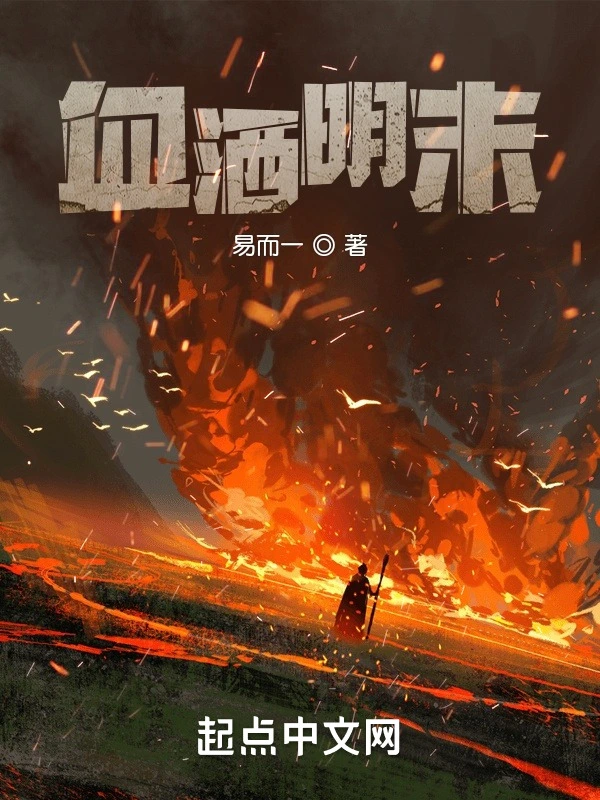
Blood Spilled at the End of Ming Dynasty
血洒明末
- Status
- Ongoing
- Length
- 77k Words
- Genre
- Historical
- Audience
- Male
- Subgenre
- Song-Yuan-Ming Dynasties
- Updated
- 3y ago
- Source
- Qidian
Stats
0Monthly votes
198Recommends
6Fans
34Chapters
Tags
Synopsis
Reader comments
In booklists 1


Readers also read
 Fu Ming 1627
 Northern Qi, Sage Khan
 Red Mansion: Start Escaping and Farming from the Equipment Bar
 After Lying in Bed for Three Years, He Was Forced to Help the Han Dynasty
 If You Are Already an Adventurer, Who Should Work Hard on Your Own?
 Late Ming Dynasty: I Foresee the Future
 Late Ming Dynasty: Lion of East Asia
 The Artist Begins in Prison
 Traveling at the Same Time: Great Love to the Heavens
 Sailing: I Grow Potatoes in America
 I Am a Tyrant in Nanming
 Rebel
Rebel
Trial reading of the new book "Blood Scattered at the End of Ming Dynasty" In the troubled last years of the dynasty, the poor people struggled to survive
[Highlights] The beginning of the novel details the famine in the late Ming Dynasty. 1. All useful things had been stripped off the body of the corpse lying on the roadside, and there were even traces of flesh and blood being gouged out. 2. The hungry people looked numb and showed no concern for anything except food. When they met the protagonist who had just traveled through time and was wearing 'strange' modern clothes, no one took a second look at him. 3. The scoundrels did not dare to resist the corrupt officials who exploited them. Instead, they swung their knives at the weaker ones, specifically targeting the old, weak, sick and disabled who had just suffered a disaster. 4. There is a plague of locusts in the west, wild beasts at night, and drought in the original place. In the late Ming Dynasty, when disasters occurred every year, people could only choose a better one among many bad options. World View Lin Fei, who had just traveled to the late Ming Dynasty, was taught a lesson by natural and man-made disasters. Eating grass roots, drinking muddy water, being robbed... Under the oppression of natural and man-made disasters, Lin Fei broke his usual cowardice and embarked on the road of uprising together with the victims who were traveling with him. Uprising in the late Ming Dynasty Status of the work: Serializing, 67,000 words. The author is Yi Yiyi, a lv1 writer of China Literature Group. Recommended reading group: Book lovers who like the history of the Ming Dynasty, peasant uprisings, and novels with decent growth-oriented protagonists. Warning: 1. The protagonist of this article started with an ordinary person's mentality. After encountering various incidents, he gradually awakened spiritually. Book friends who like the protagonist of refreshing novels should be careful to watch inside. {"TopicId":"847235287436099584","TopicName":"New book trial reading"}{"TopicId":"886256127972278272","TopicName":"Weekend Book Recommendation"}
Trial reading of new book: "Blood Scattered at the End of Ming Dynasty" The growth path of ordinary people under the oppression of disaster
[Points to watch] 1. The beginning of the article describes the scenes of starvation and disasters in the last years of the Ming Dynasty, both from the perspective of the protagonist and from the supporting characters: in the face of famine, officials did not provide relief to the people, but instead used clever pretexts to collect money wantonly; rogues especially targeted the old, weak, sick and disabled who had caused the disaster, and blocked roads and robbed them. 2. A decent and growth-promoting protagonist. Psychologically, the protagonist only gradually grows from an ordinary person to a leader in his own right through events in the disaster years: Facing thugs and gangsters who block the road and rob him, the protagonist is unable to resist because of hunger, and it is difficult to help others. In the end, In the end, the baggage was taken away, which shows the cowardly and helpless mentality of an ordinary person when he first traveled to ancient times. Under the inner struggle, he broke through the cowardice of daily life, launched a sneak attack to regain the baggage, and escaped with his companions. The protagonist finally recalled modern moral education under oppression. 3. The protagonist carries a backpack containing high-yielding crops with him when he travels through time, which increases the chance of an ordinary person surviving when he travels back to ancient disaster years. World View Starving people everywhere and fighting for years. The prosperity of each dynasty is different, but the decline of each dynasty is the same suffering, which belongs to the suffering of the poor people. Lin Fei, a modern man, physically traveled to the first year of Chongzhen. The devastation and hunger in his belly made him realize that all he could rely on was modern knowledge and the crops he carried in his backpack. {"TopicId":"886256127972278272","TopicName":"Weekend Book Recommendation"}{"TopicId":"847235287436099584","TopicName":"New Book Trial Reading"} [Uprising in the Late Ming Dynasty] Work status: Serialized, 67,000 words. The author is Yi Yiyi, a lv1 writer of China Literature Group. Recommended reading group: Book lovers who like the history of the Ming Dynasty, peasant uprisings, and novels with decent protagonists. Warning: 1. The protagonist of this article is a person who has physically traveled through time. Book friends who do not like this type of novels should be careful when reading.
Physical time travel. . . The virus you carry could wipe out a quarter of the world's population. . .
I thought it was okay at first, but when the protagonist let go of the person who tied the protagonist to the county town to be sold, I immediately felt like I didn't want to watch it. In some situations, it's right that you don't want to do the absolute best, but in some situations, you must do the absolute best, otherwise the enemy will look down on you...
A good man with a kind heart will live a long life!
At the end of the Ming Dynasty, resolutely rebel, mobilize the broad masses of farmers, carry out armed struggle, first take root in the countryside, and then surround the cities from the countryside,,,