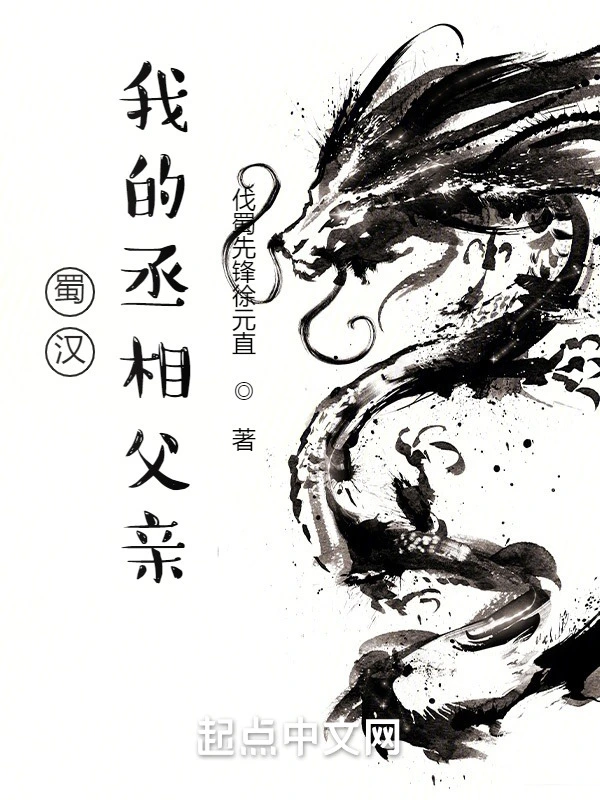
Shu Han: My Father, the Prime Minister
蜀汉:我的丞相父亲
- Status
- Ongoing
- Length
- 224k Words
- Genre
- Historical
- Audience
- Male
- Subgenre
- Qin-Han & Three Kingdoms
- Updated
- 3y ago
- Source
- Qidian
Stats
0Monthly votes
2.1kRecommends
53Fans
98Chapters
Tags
Synopsis
Reader comments
Readers also read
 Fu Ming 1627
 Red Mansion: Start Escaping and Farming from the Equipment Bar
 Northern Qi, Sage Khan
 After Lying in Bed for Three Years, He Was Forced to Help the Han Dynasty
 If You Are Already an Adventurer, Who Should Work Hard on Your Own?
 Three Kingdoms: Angrily Denounced the Theory of Hatred for the Country, Saying That Jiang Wei Was an Amateur
 Recasting the Three Kingdoms: the Headwind Situation Is What Makes It Interesting
 The Artist Begins in Prison
 Traveling at the Same Time: Great Love to the Heavens
 Three Kingdoms: Ji Han, the Great Physiognomist
 Ji Hantianxia
If you really don't want to discuss it, you throw out the historical data and he tells you that the historical data are false and made up. What can you do? For information about Zhuge Liang's governance of Shu, see Zhuge Liang's formulation of "Shu Ke". If Liu Bei and Zhuge Liang did not touch the interests of the aristocratic family, then where could they come from? Liang's punishments were severe and harsh, and the people were tortured, and the gentlemen and villains would feel resentment. Who is the gentleman and who is the villain? Even Fazheng said that we are guests and Yizhou people are the hosts. We should appease Yizhou people and not make too strict laws. What is Fa Zheng? When he was the governor of Shu County, he would retaliate for his anger. Even he said so. Isn't it enough for Shu Han to attack the powerful nobles? The righteousness of guest and host should be lowered, and I hope that the ban will be suspended to comfort him Not to mention the explanation. Zhuge Liang was asked to learn the three chapters of Liu Bang's covenant. What did Zhuge Liang say? People from Shu are independent and independent. Would you like to translate what does this mean? Quotation: Liu Bei immediately ordered Zhuge Liang to lead Fazheng, Liu Ba, Li Yan, and Yi Ji to formulate the Shu Han law "Shu Ke". The "Three Kingdoms: Zhuge Liang's Biography" annotated "Shu Ji" and said, "Liang's punishment method was severe and harsh, and the people were tortured, and the gentlemen and villains were filled with resentment." During a discussion, Fazheng once said: "In the past, the great ancestor entered the pass and made a three-part agreement. The people of Qin knew their virtues, but now the emperor is using his power as an excuse. He occupied a state, and when he first established his country, he did not favor him; and the righteousness of guest and host should be lowered to each other. I hope that the ban will be suspended to comfort his hope." But Zhuge Liang said: "You know one thing, but you don't know the other thing. Qin was unruly and harsh in government, and the people complained, and the common people shouted, and the world collapsed. Because of this, Gaozu was able to promote economic development. Liu Zhang was weak, and he has been there since Yan The kindness of many generations, the restraint of laws and regulations, the mutual support, the virtues and governance are not promoted, and the punishment is not restrained. The people of Shu are arbitrary and arbitrary, and the way of monarchs and ministers is gradually replaced by mausoleum. is slower. So the harm is due to this. My authority today is based on the law. If you follow the law, you will know the kindness. If you limit it with the nobility, you will know the glory. It is written here for the purpose of governance. Yuzheng is the prefect of Shu County and General Yangwu. He controls the capital from outside and is the mastermind from inside. The virtue of a meal, the resentment of jealousy, all will be retaliated, and several people who are good at killing and wounding themselves will be retaliated. It may be said that Zhuge Liang said: "The law is correct in the Shu County and it is too arrogant. The general should enlighten the lord and suppress his power. " Liang replied: "My lord is in Gong'an. He is afraid of the power of Cao Gong in the north, the pressure of Sun Quan in the east, and the fear of Mrs. Sun's life changing at the elbow and armpit when approaching. At this time, he is advancing and retreating like a wolf, and the filial piety of the law is his support, so that he can soar and cannot be copied. How to prevent the righteousness of the law and make him unable to carry out his evil intentions! "
In fact, the previous writing was quite good, until the author said that it was not enough to be cool and wanted to be cool, and then the writing style directly traveled from the end of Han Dynasty to the sweet year of 1945 in the Western calendar, and it directly turned me upside down.
The author's attitude is worse than that of the readers. He can clearly explain it well but insists on a few weird words. If you don't throw a tantrum, who will?
Tell a little interesting story about Zhuge Liang and Qiao Zhou. Qiao Zhou met Zhuge Liang for the first time, maybe because he looked a little strange? Zhuge Liang's officials all laughed out loud. After Qiao Zhou left, the relevant departments wanted to punish those who laughed, but Zhuge Liang said: I can't even hold back my laughter, let alone my subordinates? There is no punishment. I wonder what they are laughing at? The other thing I mentioned in the novel is that Liu Chan prohibited all officials from going to express condolences to Zhuge Liang. Only Qiao Zhou was the fastest, and even the ban failed to catch up with him. "Qiao Zhou, whose courtesy name is Yunnan, has a simple appearance and no talent for debating. Zhuge Liang led Yizhou as a pastor, and Zhou Wei encouraged learning and work. When they first met, everyone on the left and right laughed. When he came out, someone asked him to push back the laugher, and said brightly: "I can't bear it alone, how about the left and right! " "Liang died in the enemy's court. When Zhou heard about it at home, he rushed to it. There was an imperial edict prohibiting it, but Zhou was able to get it quickly. "
The first army is divided into five battalions. The battalion commander is the school captain. There are 2,000 people in each battalion. They are divided into front, rear, left, right and middle troops. The middle is the guard, and the front, rear, left and right are Sima. One section has 400 people, and there are Sima, and one section has 2 Qu, and there are military princes, and one section has 200 people. There are two villages in one song, with a village chief and one hundred people in each village. There are two teams in one camp and one team is composed of fifty people. There are five units in a team, why is the leader, the leader of the corps? Usually the leader of ten thousand people is basically the general of one party. For example, Zhou Yu's troops in the Battle of Chibi were only 30,000. Zhou Yu's military rank, Sun Ce, was Jianwei Zhonglang General. He was named a partial general after taking Nanjun after the Battle of Chibi. The Prime Minister said in "Later's Discipline" that after the death of Qu Chang, there were more than 70 generals. These are actually the backbone of the army. The commander of Qu is two hundred generals, and the commander of Tuen is one hundred generals. Further up, Sima (400 people) and Colonel Lieutenant (2000 people) are actually middle- and high-level officers. Zhao Yun, Wei Yan and others led thousands of troops to attack the enemy. In more peaceful times, even captains were senior military ranks and were only awarded during wartime. But in troubled times, let alone the captain. Zhonglang generals and titled generals are given away casually!
A general topographic map of Wenshan County where the protagonist is located. Wenshan County basically established residential areas with the Minjiang River as the center.
The author is a eunuch, you don't need to read it, please leave.
The author has gone to the palace to be a eunuch. Let's all disperse.
Do you know why Sima Yi can win? They occupy the Central Plains, and the territory and population are several times yours, especially the population. Cao Pi had a population of more than 4 million at the time. How many did you have in Shu? Why did Zhuge Liang want the Northern Expedition to delay the development of Wei? They didn't have to do anything and they developed slowly and you were crushed. As for the territory, don't say that Shu is the Mansion of Heaven. How can it be compared to the Central Plains?
Ji Han does not necessarily refer to Shu Han, it means the end of Han Dynasty. The official name of Liu Bei's country should be Han. However, the reader's ability to accept it should be taken into consideration. After all, the Shu Han Dynasty is different from the Eastern Han Dynasty, and the Shu Han Dynasty is more widely spread and easier to be accepted by people, so most of the articles use Shu Han Dynasty. Three Kingdoms. King Chenliu: In the past, "Ji Han" collapsed, the nine lands were subverted, and Liu Bei and Sun Quan took the opportunity to cause trouble. Jia Kui's biography: Commentary: Since the "Han Dynasty", the governor of the prefectures has given power to foreign countries Wen Diji: Pei's note quotes Sun Sheng as saying: In the second "Han Dynasty", Wang Daoling was late, Cui Lin's biography: As for the "Han Dynasty", the failure is that the position of the assistant is not secret? Jin. Baopuzi: In the past, the mausoleum was late in the "Han Dynasty", and the emperor's bridle was not strong, but he was replaced by the public's righteousness Book of the Later Han Dynasty. Liu Yu Gongsun...: Liu Yu admired his reputation for being a Taoist, and he pastored himself with loyalty. How beautiful, the name of "Ji Han" is also the eldest son
Is Pig Horn the one in the novel who was so stupid that he went out to fight in Mianzhu City and was killed by Deng Ai? It's an insult to his father's name!
I am just a writer of novels, not a thesis. But if an opinion is not supported by evidence, is it persuasive? I have not found any information about the serious land annexation in the Shu Han Dynasty. In terms of an agricultural society I think the serious phenomenon of land annexation is that the poor have no land to stand on, and the rich have endless fields. If a serious peasant uprising breaks out, then it will be considered a serious land annexation, right? But I didn't find any information on this. As for Shu Han's straight money, is it very rare? What about the economy of Wu State? The big spring is five hundred, the big spring is worth one thousand, the big spring is two thousand, the big spring is five thousand. Wei State deposed Dong Zhuo's small coin and restored the five baht coin, but it ended in failure and eventually degenerated into barter. What can we say? The price of grain is so high that five baht is enough to make the people trade with grain and silk. "Book of Jin·Shi Huo Zhi" records: "In the reign of Emperor Ming, money wasted on grain for a long time, and there were more and more ingenuity in the world. People competed with wet grain for profit, and made thin silk as a market. Although they were severely punished, they could not be banned."
Seeing someone from the capitulation faction as a teacher is really trying to persuade a disgusting person to retreat.
I feel that the last three kingdoms are worse than anything else. As long as you don't collapse, you can completely drag down the enemy to death. To be honest, if there is no civil strife, it is not impossible to completely separate the regime. If you want to go further, you should vigorously develop farming and military training to survive for a long time.
In fact, the Shu Han itself appointed a large number of Shu scholars, but did not give up its supreme power. Quoted from Shu Han Regime and Yizhou Gentlemen, author: Li Zhaocheng.
Zhuge Zhan
Why let Qiao Zhou be the master? This man is a capitulator. By the way, at this time, can the Cao Wei clan also have a powerful figure, and we can jointly fight against Sima Zhao in the uprising in Youzhou or Huainan. This will also be good for the Shu Han. I don't want to see Cao Wei be destroyed by Sima Zhao, even if I make up a Cao Wei clan, I hope you can meet my request.
The map made by the UP owner of station B should be based on the Book of the Later Han Dynasty and the Chronicles of County and Country. The census time is 140 years, the fifth year of Yonghe, Emperor Shun. This data is not necessarily correct. For example, Yongchang County, the most controversial area, has a population of an astonishing 2 million. Although there is an Ailao within, the population of 2 million is too exaggerated. Even if the barbarians are included, it will not be so large. Also, although war will cause the population to be reduced to ten, for example, some people believe that during the Three Kingdoms era, the total population was only 8 million. This is simply ignorance of history. Ten years after the Western Jin Dynasty conquered the Shu Han, its population reached an astonishing 16 million. These people are obviously not born suddenly, but are a previously hidden population. Not to mention that demographics have always been a big problem! With such high administrative power and technology in modern times, it is impossible to do a good job in demographics. The most typical one is the sixth census in 2010, in which the fertility rate was only 1.18. In the seventh census in 2020, the fertility rate was 1.3. In fact, in the past ten years, China's fertility rate has plummeted. Then in terms of demographics, how come it is 1.18 First and then 1.3? So when it comes to population, everyone can enjoy it. Maybe in the future, AI or robots can really provide accurate statistics.
The thinking of some readers is simply more feudal than that of the ancients, which is simply unbelievable. The protagonist decides to become a disciple of Qiao Zhou. Why is this a poisonous point? You said Qiao Zhou is a poisonous point, then of course there is no problem. But why is it poisonous for the protagonist to decide to become a disciple? Logically speaking. The protagonist is an orphan, who can care about the protagonist? The protagonist becomes a disciple on his own, which has become an established fact. Even if others want to take care of it, they can only hold their noses and admit this fact. Is it possible that Jiang Wan or someone stood up and announced that the apprenticeship is invalid! Is it possible? The protagonist is an orphan. As Zhuge Liang's orphan, who in Shu is qualified to take care of the protagonist at this moment? Liu Chan? He himself is being taken care of. Jiang Wan, Fei Yi, Dong Yun? As the prime minister's former officials, they can only give advice to the protagonist. Do they have the ability to forcibly anoint the protagonist? Logically speaking, I can't see anything wrong with the plot of my apprenticeship. If you think it is poisonous, please review your logic. Han Yu wrote "Shi Shuo" during the Tang Dynasty. The teacher does not have to be better than the disciple, and the disciple does not have to be inferior to the teacher. Confucius even studied under Tanzi, Xiang and Laodan. Ma Rong, a great scholar of the Eastern Han Dynasty, even took Ban Zhao as his teacher. I really don't understand what some people call the poison of apprenticeship. Where is the poison? To be honest, my level of history is only half a bottle of water. I have only read most of the Three Kingdoms, the Huayang Kingdom, the Shishuo Xinyu, and the first few biographies of the Book of Jin. At least with my level, I don't dare to blame others, because my level is just like that, I haven't even finished reading Romance of the Three Kingdoms. But why do some people come to make outrageous comments after only reading the novel and even the marketing account?
The following information should not include: military settlements, civilian settlements, official households, clan household registrations, ethnic minority household registrations, and uncountable deceased households, hidden households, private tribes of aristocratic families, and tenant households. Interested students can read "Chinese Population History" written by teacher Ge Jianxiong. Population data of the Three Kingdoms: First, the "Historical Biography" in Volume 33 of "Three Kingdoms" quotes Wang Yin's "Book of Shu": "(Liu Chan) also sent Li Hu, the minister, to deliver the records of the people, with 280,000 households, 940,000 men and women, 102,000 armored soldiers, and 40,000 officials." It was the first year of the Yanxing of the Shu Han Dynasty, that is, 263 AD. Second, the annotation of "Sun Hao Biography" in Volume 48 of "Three Kingdoms" quotes "Jinyang Qiu": "(Wang) Jun collected his maps and led four prefectures, forty-three counties, three hundred and thirteen counties, 523,000 households, 2.3 Million men and women, 230,000 soldiers... There were more than 5,000 people in the harem." It was the fourth year of Wu Tianji, that is, 280 AD. Third, "The Book of Jin" Volume 14 "Geography": "In the first year of Liu Bei's Zhangwu (221), the feudal kings of the prefectures were also named, or they were named remotely, not by checking the land. The period was 100,000, and the number of men and women was 900,000. Fourth, "The Book of Jin" Volume 14 "Geography": "In the fifth year of Sun Quan's Chiwu (242), the feudal kings were also named Zhongzhou. The period is 523,000, with a population of 2,400,000 men and women.