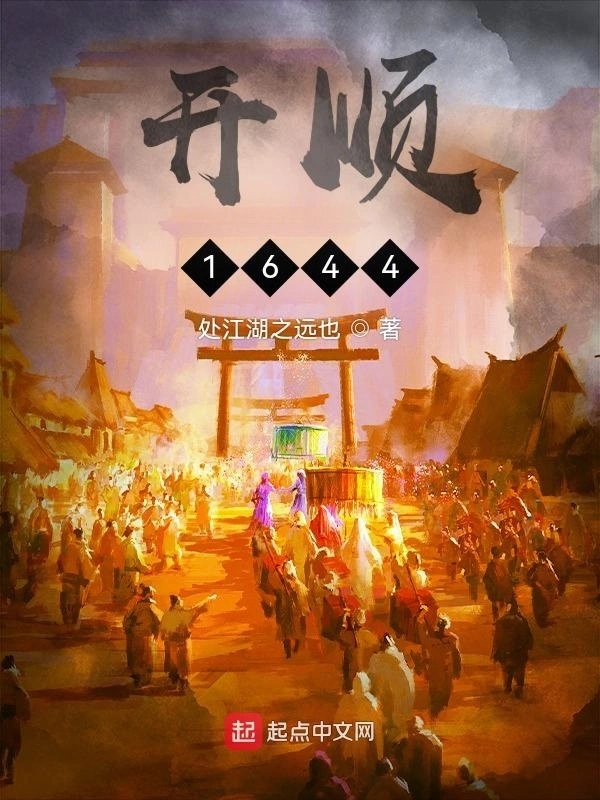
Kaishun: 1644
开顺:1644
- Status
- Completed
- Length
- 403k Words
- Genre
- Historical
- Audience
- Male
- Subgenre
- Song-Yuan-Ming Dynasties
- Updated
- 3y ago
- Source
- Qidian
Stats
0Monthly votes
1.7kRecommends
3.5kFans
126Chapters
Tags
Synopsis
Reader comments
Readers also read
 1914 Begins with the Rejection of the Schlieffen Plan
 Please Call Me Your Majesty the Tsar
 Talker in the Song Dynasty
 In the Red Mansion: Escort Daiyu to Beijing at the Beginning
 Never Walk Alone!
 Taichang Daming
 Da Liu Bandits
 Daming: Have I Become Wanli's Portable Grandfather?
 I Am Drawing a Hot-Blooded Episode in the Zhiyu Episode!
 Anti-Qing: Start with a Piece of Stone!
 Sun and Moon: Yongli 1656
 Long Wanshengshi
 The Sixteen Kingdoms of the Sui Dynasty
Li Zicheng's art of military struggle. 1. Pay attention to military training. During the intervals between wars, the army will conduct horse-riding and archery assessments from morning to night, in order to promote the soldiers' martial arts training. Before the battle, the cavalry formed a three-tiered formation, known as the "Three Walls". They charged and killed without looking back. If the battle cannot be won, the cavalry feigns defeat, the infantry refuses to fight, and the cavalry goes around the enemy's rear or flanks to carry out siege to win. When attacking the city, there were three shifts day and night, taking turns, with cavalry surrounding them, and infantry firing strong bows and cannons, so that the defenders did not dare to look outside. Then some people climbed up the city using ladders or cave cars, or people wore iron jackets and armor, and used axes, awls and other tools to dig out the city bricks in turns, leaving a pillar of earth in three to five steps and gradually deepening. When the pillars fall and the city collapses, either thick ropes are tied to the earthen pillars and everyone pulls them together, causing the pillars to fall and the city collapses. Or they can be filled with gunpowder and lead out, and the explosives explode and the city collapses, allowing the army to invade. It is said in history that Li Zicheng was good at attacking and did not use ancient methods. 2. Continuously summarize experience. The peasant army constantly summed up experience in the combat methods for capturing Kaifeng. First, there is a surprise attack, and then there is a force attack. When neither surprise attack nor force attack works, it is changed to a long siege. In order to achieve a long-term siege, they first occupied the prefectures and counties around Kaifeng, cut off Kaifeng's wings, and enhanced their own strength. This shows that the peasant army has a long-term vision for fighting, and it also shows that Li Zicheng is good at learning war in war, absorbing experience and lessons, and constantly improving his strategic and tactical level. 3. Pay attention to attacking reinforcements. Four of the five battles in the Central Plains were fought around the attack on Kaifeng. Although the peasant army unconsciously implemented the operational principle of siege and reinforcements of "attacking it must save it", every time when enemy reinforcements arrived, the peasant army would abandon the siege and fight for reinforcements, thus presenting a situation of repeated annihilation of the official army by siege-attack, siege-attack. In previous battles, the enemy besieged and the peasant army broke the siege. But this time, the peasant army besieged and defeated the enemy. This change showed that the peasant army had taken the initiative in the war. 4. Flexible and diverse tactics. In the battle, the peasant army adopted various tactics such as feigning crossing to show the enemy, allowing the enemy to penetrate deep, baiting the enemy and annihilating them. Demonstrated improvement in tactical proficiency. 5. The goal of the struggle is clear. The peasant army is fighting closely around the strategic goal of "taking over the world". The first is to capture Kaifeng and "occupy Heluo". Therefore, it is bound to win Kaifeng three times. After Kaifeng was submerged, they wanted to attack Shaanxi. Because the battle of Jiaxian showed that the Ming army in Shaanxi still had some strength, they turned to attack Xiangyang. In order to clear the way to capture Xiangyang, Runing was captured first. The entire combat operation was conducted under the guidance of clear strategic intentions and appeared to be well-organized, completely getting rid of the characteristics of blind mobile operations in the past. All this shows that after more than ten years of military struggle, the peasant army leader Li Zicheng's ability to control war has been greatly improved. Li Zicheng possessed strong military strength and also learned the ability to use this strength.
Guan Fumin, originally a general under Sun Chuanting, served as the commander-in-chief of Ningxia. He resisted tenaciously when Li Zicheng pacified Shaanxi, and had to surrender until the situation was over. However, in the battle against foreign aggression, he did not betray Li Zicheng because of his old grudges. He died in the Battle of Shanhaiguan, becoming the first senior general of the Chuang Army to die in the battle against the Qing Dynasty. Zhou Fengwu was originally a general under Zuo Liangyu. In 1642, Li Zicheng attacked Xiangyang. Zuo Liangyu fled without a fight, leaving Zhou Fengwu's army behind and not even taking away Zhou Fengwu's family members in Xiangyang City. Zhou Fengwu's troops were trapped in the mountains and without food. After learning that his mother, wife and two sons had been captured by Li Zicheng and given preferential treatment, Zhou Fengwu surrendered to the Chu army. In 1644, Zhou Fengwu died in the Battle of Shanhaiguan. Yu Shangyou, the former censor of the Ming Dynasty, surrendered to the Chuang Army in 1642 and served as Minister of the Dashun Army Government. He died in the Battle of Shanhaiguan. Wang Zayao, the former governor of Miyun in the Ming Dynasty, surrendered after Li Zicheng conquered Beijing and was appointed Yin of Shuntian Prefecture, where he selected talents for the Dashun Dynasty and appeased the people. At the beginning of Wu Sangui's rebellion, he falsely claimed that his return to Shanhaiguan was due to a misunderstanding. Li Zicheng sent Wang Zayao to appease Wu Sangui with a letter from Wu Sangui's father, Wu Xiang, but Wu Sangui detained Wang Zayao. On the second day after the Battle of Shanhaiguan, Wu Sangui handed over Wang Zeyao to the Qing army. Wang Zeyao refused to surrender and was killed. Wei Xuelian, a former Ming Dynasty concubine and a famous painter, surrendered after Li Zicheng entered Beijing. After Li Zicheng withdrew from Beijing, Wei Xuelian was disappointed with Li Zicheng and refused to surrender to the Qing Dynasty, so he committed suicide. Bai Bangzheng was originally a mid-level officer in the Ming Dynasty. In the battle to suppress the peasant army, he gradually became a senior general based on his military exploits, and he reached the rank of commander-in-chief of the Xuanfu. The earliest leader of the peasant army, Baishui Wanger, who ignited the fuse of the peasant war in the late Ming Dynasty, died in his hands. When Li Zicheng entered Beijing, he led his troops to surrender. Li Zicheng ignored the old grudges and entrusted him with the important task of water transportation. Due to the invasion of the Qing army, Bai Bangzheng was recalled to Xuanfu to organize defense. After the Battle of Shanhaiguan, Li Jian and others who were demoted from the Ming Dynasty in Xuanfu rebelled and surrendered to the Qing Dynasty. Bai Bangzheng refused to rebel and was killed. Zhang Tianlin, one of the early leaders of the Peasant Army, fought jointly with Li Zicheng for a long time. During the low ebb of the peasant army in 1638, he surrendered to Sun Chuanting, but refused to claim credit by killing other peasant soldiers. Instead, he followed Sun Chuanting to Beijing to fight against the Qing army. After Sun Chuanting's death, Zhang Tianlin returned to Li Zicheng's command and guarded Datong. She and his generals Ke Tianxiang and Zhang Heilian were killed in the rebellion launched by Jiang Quan and other Ming Dynasty generals. Gu Kecheng, an important general of the Chuang Army and former battalion commander. After the Battle of Shanhaiguan, he led more than 10,000 soldiers to fight the Qing army in Qingdu in order to cover the retreat of the main force, and died in the battle. Wu Su, a Jinshi of the Ming Dynasty, surrendered to the Chu army in 1643 and served as the defense envoy of Xuhuai. After Wu Su took office, he actively reorganized the army and repaired the Yellow River embankment. At the same time, he was an upright official. He once angrily rebuked those who gave gifts in court. After the Battle of Shanhaiguan, Wu Su prepared to organize all the stragglers near Xuzhou to resist the Qing army, but he believed his old acquaintance. Lu Zhenfei, the governor of Huaiyang in the Southern Ming Dynasty, was captured by Lu Zhenfei, tortured and sent to Nanjing to be killed. Other civil and military officials of the Shun Dynasty who were killed in the rebellion of the Ming Dynasty officials and gentry were Yan Jie, Wu Zhengwen, Guo Du, Li Daochun, Zhou Xiang, Liu Kaize, Jia Yongnian, Dong Fu, Yao Yingfeng, Lu Chuandi, Duan Xianzhu, Pei Longyu, Huang Ding, Li Dingguo, Bi Sancai, Ma Yinghu, Pan Yuelong, Zhang Yaoran, Li Tingyao, Huang Yingxuan, Wang Xiangji, Zhang Juntian, Jia Shisheng, Yang Liang, Xu Guangqi, Zhang Jichang, Liu Fuyan, Li Kaifang, Du Zipei, Liang Panshi, Ma Linsheng, Lan Zhen, Zhang Jishan, Zhu Zhengse, Wang Yuedu, Cao Huaizhen, Jin Jiuxi, Zhang Dounan, Li Qingzhu, Jia Yuanlin, Fu Zhipu, Yi Zhengqian, Wang Huangji, Liu Shizeng, Su Min'an, Cheng Wenhuan, Zhang Wenxing, Liu Zhu Jing, Ren Chongzhi, Fu Long, Liu Junben, Gao Kejia, Dong Kuanxi, Li Shihao, Yin Baoheng, Cao Jialin, Yang Mingsheng, Zhao Tingxian, Chen Qi, Jia Sanjun, Guo Weibang, Sun Cheng, Xu Chengyin, Fan Jun, Shang Guojun, Xue Chengxuan, Sun Handuyu, Liu Xianqing, Wang Lianghan, Li Zhengang, Wang Zhixiang, Li Diaoding, Lu Bizhou, Wang Fu, Wang Daocheng, Li Yun Gui, Hui Zaigong, Feng Dajing, Wang Yuqi, Lu Shengyu, Li Boyuan, Li Rucong, Song Chaoxiang, Jia Shijun, Guo Jingbang, Sun Cheng, Xu Chengyin, Fan Jun, Shang Guojun, Xue Zhu, Gong Keshun, Zhao Jing, Feng Shiyu, Shi Kebao, Hao Xiaoren, Yang Guidong, Tu Yuan, Wang Du, Ma Jun, Wang Yechang, Li Ruocai, Wang Bingchun, Yang Shaotang, Yang Ying, etc. Among the officials and gentry of the Ming Dynasty who launched the rebellion, most of them surrendered to the Qing Dynasty, except for a few people such as Lu Zhenfei and Ling Ji who were loyal to the Southern Ming Dynasty. Local officials of the Shun Dynasty in Shandong either retreated with the main force or were killed. Only Xintai County Magistrate Zhou Zuoding held on to Xintai County. He refused six attempts to surrender by the Qing Dynasty, held on to Xintai for several months, and finally died in the line of duty. Bai Jiuhe, an important general of the Chuang Army, was appointed by Li Zicheng to guard Tianjin when he came to Beijing. He would "buy and sell equally without disturbing anyone". After the Qing army entered the pass, Baijiuhe died in battle during the retreat. Cai Shi, the shepherd of Dashun Liaozhou, pretended to surrender to the Qing army and secretly provided intelligence to the rebel army. After the Qing army found out, they deported him to Beijing, but he escaped on the way and has been missing since. Sun Mingyi, the defense envoy of Dashun Lu'an, died when the Qing army attacked the city. The teacher knew that the prefect of Lu'an in Dashun died when the Qing army came to attack the city. Zhang Shiying, the magistrate of Tunliu County in Dashun, died when the Qing army attacked the city. Chen Yongfu, whose family was poor when he was young, was once a beggar. In order to survive, he joined the official army. During the battle with the peasant army, he gradually became a senior general due to his military exploits. During the three battles between the Chu and Kaifeng troops, he held on to Kaifeng and caused great damage to the Chu troops, even blinding one of Li Zicheng's eyes. After Li Zicheng defeated Sun Chuanting, Chen Yongfu was desperate, but he was worried about Li Zicheng's revenge and did not dare to surrender. Li Zicheng broke an arrow and swore to him, promising not to harm him, and made him a general and an earl. Chen Yongfu was very grateful and he was loyal to Li Zicheng. After the Battle of Shanhaiguan, Chen Yongfu guarded Taiyuan and tried his best to quell the rebellion and stabilize Shanxi's defense. Due to Jiang Quan's rebellion, Taiyuan's gates were opened and it became an isolated city. However, Chen Yongfu flatly refused the Qing army's persuasion to surrender and resisted the Qing army's superior force attack for 20 days with a garrison of only more than 10,000 people. In the end, the Qing army used Hongyi artillery to blast open the city wall, Taiyuan fell, and Chen Yongfu died in the battle. Han Wenquan, the former censor of Henan Province in the Ming Dynasty, surrendered to the Chu army in 1644 and was appointed as Shanxi Jiedushi. He guarded Taiyuan with Chen Yongfu and died in battle. Gong Wencai was originally a cake seller in the mines of Jiaxiang, Shandong. In 1641, he led the miners to resist the tyranny of the Ming Dynasty and later accepted the canonization of Li Zicheng. In 1644, he died fighting against the Qing Dynasty. Ma Yingxiao, the leader of the peasant army in eastern Shandong, accepted Li Zicheng's canonization and died in the anti-Qing war in 1644. The rest of the army later developed into the powerful Yuyuan Army, which persisted in fighting in Shandong for a long time. It was not until the eighth year of Shunzhi that the Qing Governor Zhang Cunren dug the Yellow River to flood the Yuyuan Army tunnels, adopted the three-guang policy, burned Yulin, and massacred large areas in southwest Shandong until it was almost a no-man's land, and finally suppressed the Yuyuan Army. Ma Shiyao, an important general of the Chuang Army. During the Battle of Tongguan, he led his troops to pretend to surrender to the Qing army, intending to cooperate with Li Zicheng to capture Tongguan. However, the incident was revealed and he was killed by Duduo. Chen Shangxin, originally a student in Sanyuan County, Shaanxi Province, was captured by the Qing army when the Chuang army abandoned Shaanxi, and was killed for preserving the seal of the Dashun regime. Lu Yingbiao, a middle-level general of the Chuang Army, persisted in fighting in northern Hubei when the Chuang Army retreated south, and died in battle. Liu Zongmin, one of the earliest generals who followed Li Zicheng, was a blacksmith and served as Li Zicheng's deputy for a long time. He was seriously injured in the battle of Shanhaiguan and later participated in the battle of Tongguan. On the way to retreat from Huguang to Jiangxi, Liu Zongmin tried his best to cover Li Zicheng, but was defeated and captured, and was killed unyieldingly. Ren Jirong was originally a junior officer in the Ming Dynasty. When the Chuang army attacked Luoyang, Ren Jirong's troops had been in arrears of pay and food and clothing for a long time. However, Zhu Changxun, the lucky king in Luoyang City, hoarded a large amount of food and money and refused to distribute it. He also forced the soldiers to fight against the Chuang army. So he launched an uprising with Tian Hu, Xie Yinglong and others and opened the door to welcome the Chuang army. Ren Jirong later gradually grew into an important general of the Chuang Army, and died in the Anti-Qing War in Hubei in 1645. Ren Guangrong, the brother of Ren Jirong, was a garrison in Nanyang in the Ming Dynasty. When the Chuang army attacked Nanyang, he joined the Chuang army for his brother Ren Jirong. He died in the Anti-Qing War in Hubei in 1645. Xin Sizhong, an important general of the Chuang Army, was responsible for pacifying Qinghai after He Jin died in battle and made great contributions. After the Chuang Army abandoned Shaanxi, Xin Sizhong died in the anti-Qing struggle in Hubei. Xie Yinglong, a middle-level general of the Chuang Army and a servant of the Ming Dynasty general Luo Dai, was proficient in firearms. He joined the Chuang Army during the Luoyang Uprising and died in the anti-Qing struggle in Hubei. Zhang Li, a middle-level general of the Chuang Army, was born in a prison and commanded the navy. He died in the Battle of Fuchikou in 1645. Ma Shitai, a mid-level general of the Chuang Army, died in the anti-Qing struggle in Hubei in 1645. Ye Yunlin was originally a scholar of the Ming Dynasty and a native of Jiaxian County, Henan Province. In 1642, Li Zicheng and Luo Rucai defeated Sun Chuanting in Jiaxian County. The officers and soldiers robbed everywhere due to lack of food. Ye Yunlin was furious and joined the Chuang Army. In 1645, he died in the anti-Qing struggle in Hubei. Luo Dai'en, Luo Rucai's uncle, was ordered by Li Zicheng to command Luo Rucai's old army after Li Zicheng killed him. He died in the anti-Qing struggle in Hubei in 1645. Zhang Hong, a mid-level general of the Chuang Army, was attacked and killed by the Nanming army in Qianjiang, Hubei Province in 1645. Bai Wang, an important general of the Chuang Army, was responsible for staying in Huguang when Li Zicheng came to Beijing to resist the rebellion of Zuo Liangyu and the gentry. After Li Zicheng died, Bai Wang was assassinated by a traitor. Meng Changgeng, a mid-level general of the Chuang Army, joined in the Battle of Luoyang and was responsible for guarding Jingzhou. He was killed by a traitor in 1645. Deng Yanzhong, a member of the Ming Dynasty, surrendered to the Chuang Army in 1643 and served as Minister of the Criminal Government. After the Chuang army joined forces with the Ming Dynasty to fight against the Qing Dynasty, he served in the Longwu court of the Southern Ming Dynasty and died in the battle to defend Quzhou in 1646. In addition, a large number of Dashun officials disappeared during this period, including Yang Yongyu, Wang Jiazhu, Xiao Yingkun, Gu Junen, Yao Xiyin, An Xingmin, Liang Qilong, Zhou Shiqi, Chen Xin, Geng Sangui, Zhang Hongzuo, Qi Zhizhen, Wu Yangde, Bai Zuchang, Qin Jing, Zhang Jingchen, Li Pizhu, Ding Changqi, Liu Zhongtai and so on. Liu Fangliang, an important general of the Chuang Army and the commander-in-chief of Zuoying, was responsible for putting down the rebellion in Shanxi after the Qing army entered the Pass. He personally led the team to counterattack the Qing army in the Battle of Tongguan. During the retreat to Huguang, Liu Fangliang commanded the navy to fight the Qing army and suffered heavy losses. In 1646, Liu Fangliang and Li Guo participated in the Battle of Jingzhou and were attacked by the Qing army. Liu Fangliang stepped forward and fought hard to block the Qing army, buying time for the main force to retreat, and died heroically in the battle. Liu Rukui, an important general of the Chuang Army and a subordinate of Liu Fangliang, was responsible for suppressing the rebellion of the gentry in northern Henan after the Qing army entered the Pass. He died together with Liu Fangliang in the Battle of Jingzhou. Yang Yanchang was originally a subordinate of Liu Guoneng, the leader of the peasant army. After Liu Guoneng surrendered to the army, he was besieged by Li Zicheng. Liu Guoneng committed suicide and ordered Yang Yanchang to lead his men to surrender to Li Zicheng. After the Qing army entered the Pass, Yang Yanchang had been fighting with Li Guo and died in the Battle of Jingzhou. Lin Chengcheng, formerly the leader of the independent peasant army, later joined Li Zicheng's command and died in the Battle of Jingzhou. Huang Jun, a middle-level general of the Chuang Army, persisted in resisting after the main force of the Chuang Army abandoned Shaanxi, and died in battle in 1646. Wang Wenyao was originally the seventh captain of the peasant army Zhang Cunmeng. After Zhang Cunmeng surrendered to the official army, he and Li Zicheng, who was the eighth captain at the time, broke away from Zhang Cunmeng. Later they became Li Zicheng's subordinates and stayed with him for a long time. When the Chuang army abandoned Shaanxi, Wang Wenyao persisted in resisting in Shaanxi and died in battle in 1647. Guo Junzhen, a middle-level general of the Chu army, retreated into the mountains and persisted in resistance when the Chu army abandoned Shaanxi. He "marched in a disciplined manner, did not enter people's homes, did not kill or loot, and greeted them wherever they went." In 1647, Guo Junzhen was shot to death by a stray arrow during a battle with the Qing army. Liu Wenbing, a middle-level general of the Chuang Army, fought against the Qing Dynasty with Guo Junzhen. After Guo Junzhen died, he led the rest of his troops to break out. His whole family was captured by the Qing army and was killed unyieldingly. He Hongqi, a middle-level general of the Chuang Army, responded to He Zhen's uprising in 1645, "No killing, no soldiers entering other people's homes", "Forcing the troops to recruit from each fort, and giving false orders, and everyone is happy to obey", "There are many people who will follow, and those who do not follow in each fort will be waiting for the thieves to prepare food and grass." In 1647, he was defeated and died in battle. Li Guo, Li Zicheng's nephew, was an important general of the Chuang Army and the commander of the rear camp. After the Qing army entered the Pass, he served as the chief general in the battles of Zhending, northern Shanxi, and northern Shaanxi. After Li Zicheng's death, he led the Chuang Army to be reorganized into the Loyalty Battalion, united the Ming Dynasty to fight against the Qing Dynasty, and presided over the battles against the Qing Dynasty such as the Battle of Jingzhou and the Battle of Changsha. After the fall of Hunan, Li Guo led the Zhongzhen Battalion to retreat into Guangxi and was attacked by the local Ming army. The Zhongzhen camp had no territory, lacked supplies, and most of them were from the north. They were not accustomed to the acclimatization and climate, and a lot of people got sick. Li Guo also fell ill. Guangxi warlord Chen Bangfu hoped to unite with Li Guo and hijack the Yongli court of the Southern Ming Dynasty. However, Li Guo always refused to provoke a civil war, intimidating Chen Bangfu from tampering and ensuring the safety of the Yongli court. In 1649, Li Guo died of illness. Tian Hu, originally a junior officer of the Ming Dynasty, rebelled during the Battle of Luoyang and later grew into an important general of the Chuang Army. After the Battle of Shanhaiguan, he followed Li Guo to fight against the Qing army. In 1649, he died of illness in Guangxi due to acclimatization. Zhang Neng, a tinker by birth, was an important general in the Chuang Army. He fought with Li Guo for a long time. He died of illness in Guangxi in 1649. Liu Shijun, father-in-law of Li Zicheng, fought with Liu Xiyao against the Qing army for a long time. He died of illness in 1649. Liu Hongcai, a middle-level general of the Chuang Army. When the Chuang Army abandoned Shaanxi, he led his troops to hide in the mountains and persist in resisting. In 1649, Liu Hongcai was defeated and died in battle while responding to Wang Yongqiang's rebellion against the Qing Dynasty. His men continued to fight for two more years. Hui Shiyang, one of the Five Tigers of Donglin, Li Zicheng made a living by herding sheep when he was young. He once herded sheep for Hui Shiyang's family, and Hui Shiyang was quite friendly to him. In 1643, Li Zicheng pacified Shaanxi and invited Hui Shiyang to join the Dashun court, with a status second only to Niu Jinxing. When the Chuang army abandoned Shaanxi, Hui Shiyang was old and unable to accompany him. In 1649, Hui Shiyang participated in the anti-Qing uprising led by Wang Yongqiang and was killed after the failure. Gao Yigong, brother-in-law of Li Zicheng, was an important general of the Chuang Army. When the Qing army entered the pass, he was staying in northern Shaanxi. Later, he organized the Yulin Defense War and took the initiative to attack the Qing army many times. When the Chuang army abandoned Shaanxi, Gao Yigong went south with Li Guo and served as Li Guo's deputy for a long time. After Li Guo died of illness, Gao Yigong took charge of the Zhongzhen Camp. Chen Bangfu also proposed that the Zhongzhen Camp hijack the Yongli Imperial Court. Gao Yigong scolded: "Although I have been a giant bandit, I have no ambitions. How can I do this?" He seized Chen Bangfu's supplies and ordered him not to have any more ideas about the Yongli Imperial Court. At this time, a serious party dispute broke out within the Yongli court. One faction hoped to invite Gao Yigong to Wuzhou, where the court was located, to purge the opposition by force. However, after Gao Yigong came to Wuzhou, he relied on the strong military deterrence of the Zhongzhen Camp to forcibly stop the party struggle in the Yongli court, released political prisoners in prison, and even Jin Bao, Meng Zhengfa and others who had long criticized and slandered the Zhongzhen Camp were released, and asked all factions to unite to fight against the Qing Dynasty. Gao Yigong hoped that the Yongli court could become a real court, unify the military and financial power of Guangxi, lead the resistance to the Qing Dynasty, and be willing to take the lead in handing over power. However, the imperial court has always done nothing. Most of the ministers are busy fighting against each other. Warlords such as Chen Bangfu launched another attack on the Zhongzhen camp. Gao Yigong was completely disappointed with the Yongli court. In 1651, Gao Yigong went to Kuidong via western Hunan, preparing to join Liu Tichun, Yuan Zongdi and other generals of the invading army. However, he was attacked by Chieftain Peng who had surrendered to the Qing Dynasty, and was killed by a poisoned arrow. Helan, an important general of the Chuang Army, fought with Li Guo and Gao Yigong for a long time, and died at the same time as Gao Yigong. Liu Xiyao, originally the leader of an independent peasant army, later joined the Chuang Army. After Li Zicheng established power in Xiangyang, Liu Xiyao was responsible for farming work. After Li Zicheng died, he joined the Zhongzhen Battalion and joined the Ming Dynasty to fight against the Qing Dynasty with Li Guo. After the Zhongzhen Battalion retreated into Guangxi, Liu Xiyao had a disagreement with Li Guo and led his troops to Guangdong, where he was attacked by the local Ming army. Since then, he has been fighting against the Qing Dynasty in the mountainous areas at the junction of Guangdong and Chu. In 1651, Liu Xiyao died in a battle with the Qing troops led by Shang Kexi and Geng Jimao.
The fact that Li Zicheng participated in the Gansu border army mutiny in the second year of Chongzhen is not stated in the "History of the Ming Dynasty". This rumor first came from Wu Weiye's "Sui Kou Jilue", and the main source was Wu Weiye's imagination that was full of ideas. The record of this incident in "Sui Kou Chronicles" can be said to be full of loopholes. First, the characters are wrong, "Gandu Mei Zhihuan" and "General Guo Jing" are actually the governor of Gansu Mei Zhihuan and the general Wang Guojing. Second, the location was wrong. The location of the mutiny was Anding County, not Jin County as Wu Weiye said. Third, Wang Guojing was not killed at all and lived well. Ji Liuqi's "Northern Strategy of the Ming Dynasty" tells this story in more detail. According to Ji Liuqi's writing style, it is probably based directly on Wu Weiye's book and expanded by imagination. In Ji Liuqi's version of the story, Mei Zhihuan has returned to being the governor of Gansu. It's probably because the title "Gandu Governor" is so ridiculous that even Ji Liuqi can't stand it. However, he added another character-Liu Liangzuo. Liu Liangzuo and Li Zicheng started an uprising together. What is the difference between this and the golden standard Shi Qingshan? Moreover, Mei Zhihuan, who was suppressing the mutiny at that time, wrote a letter "Dingluoshu", detailing the story of the mutiny, and he couldn't even fight with Li Zicheng. The mutiny took place in Anding, not Jin County. At that time, the Gan army was in a hurry and would not pass through Jinxian County from Lanzhou to Anding. Instead, it would pass through the Xiaguanying and Qingshuiyi areas in the northeast of Jinxian County. I wouldn't dare say that if it were anywhere else, but I am still familiar with the terrain in this area. The leaders of the mutiny were Wang Jincai, Yin Dengke, and Wu Tianyin, not Li Zicheng and Liu Liangzuo. The people who were killed in the mutiny were Zhuang Lang's general Sun Huaizhong and two generals, not Xining's general Wang Guojing, and no county magistrate was killed. There is no mention of the murder of magistrates in the county annals of Anding and Jin counties. As for how Wu Weiye and Ji Liuqi came up with these things, we can only say that this is their consistent style. Unfortunately, these two products were quite famous, and a lot of people copied them, such as Mao Qiling's "Houjianlu", which caused endless poison. The statement that Li Zicheng defected to Zhang Cunmeng during the uprising in the fourth year of Chongzhen comes from "Yansui Town Chronicles" and "Yan'an Prefecture Chronicles". Among all serious historical materials, none is more credible than Wu Weiye and Ji Liuqi.
It was the first time for the author to write a book. I knew that my writing skills were not good, and I didn't think about how much money I wanted to make. I just wanted to share my story, so I didn't open the VIP account at 200,000 words, but planned to open it at 300,000 words. I hope everyone can support me and give me an initial subscription.
Isn't the behavior of this kind of protagonist just like Li Yan in history, except that he lives longer. If the uprising succeeds, he will have to be killed by Li Zicheng in the end. This is because the strongest force in the camp has offended you when you first started to gain momentum. Even Li Zicheng is afraid of you. No matter how talented you are, you will still die. Author: Does your protagonist take a supporting role? If so, I don't even bother to read it. This guess will lead to the same ending as Han Xin Yue Fei.
During the late Ming Dynasty, the Northwest Peasant Army had an absolute hellish start. Unless an armed force capable of repelling the Ming army's encirclement and suppression could be established in the early days of Chongzhen, the bandits would have no chance of establishing a base. In history, Li Zicheng finally achieved a staged victory and defeated the counter-encirclement and suppression campaign, then established power in Xiangyang, and then went north to attack the capital. However, by this time, the Qing Dynasty had already been farming for almost a century, and Li Zicheng had just begun.
The letter Wu Sangui was furious and became a beauty, and the unofficial historian wrote the book.
In the historical period of the late Ming Dynasty and the early Qing Dynasty, it would not be a good thing for China if the protagonist successfully established a Han emperor state without a golden finger. Even if the Qing Dynasty could not stand it anymore, it was the last great development period of the ancient Chinese feudal dynasty (the Mongolian Emperor did not admit that he was a Central Plains dynasty, so he did not belong to it). During the rule of the Qing Dynasty, the Central Plains Dynasty truly eliminated the border troubles of the northern nomads for the first time, and established effective rule over Northeast Xinjiang, Tibet, and Mongolia. Since the Song Dynasty, the Han people have been deeply influenced by the dominance of Confucianism and have lost the desire to explore outside. This cannot be changed by a protagonist without a golden finger. If the protagonist still follows the path of the feudal dynasty, he will at best be Zhu Di. If the protagonist wants to modernize and reform, it will not work. Without the external environment of "three thousand years of great changes", it is unrealistic for China to carry out major reforms.
It's frustrating to watch. Li Zicheng doesn't have much strength now, so he might as well win over people in the army and start a new business.
List of officials who died during the Ming Dynasty (part)
Shi Kefa Grand Master Zhang Huangyan Shangshu Zhu Shugui King Ningjing Yan Yingyuan Dian Shi Li Chengdong Hui Guogong He Tengjiao Dingxing Hou Huang Degong Jingnanbo Gao Jie Xingpingbo Qu Shishu Bachelor Ma Shiying? Bachelor Fan Jingwen Bachelor Zhang Yao Chief Envoy Xia Wanheng Chief Envoy Zhao Jianji Chief Envoy Zhuang Zugao Inspector Su Guansheng Bachelor Zeng Ying Bachelor Zhu Jizuo Bachelor He Fengsheng Prince Taibao Zhang Tongchang Governor Zhang Shenyan Minister Gao Hongtu Minister Wang Jiayan Minister Fu Zuolin Minister Wu Zhongluan Minister Yang Wencong Shangshu Cai Maode Censor of Youqiandu Wei Jingyuan Censor of Youqiandu Fan Wenguang Censor of Youqiandu Ling Yiqu Dali Qing Jiang Yueguang Bachelor Wu Bing Bachelor Yang Tinglin Bachelor Chen Zizhuang Bachelor Li Banghua Censor of Zuodu Yin Shen Taichang Qing Xu Shiqi Shangshu Gao Zhuo Shangshu Li Xiangzhong Shangshu Wu Zhongluan Shangshu Ni Yuanlu Minister Meng Zhaoxiang Minister Wang Jingliang Inspector Nan Juyi Minister Mao Wenbing Deputy envoy of military preparations Lin Gangzhong Deputy envoy of military preparations Bi Gongchen Deputy envoy of military preparations Sun Kangzhou Magistrate Fang Zhiping Magistrate Yang Jialong Zhizhou Yan Menggui Counselor Hou Junzhao Zhizhou Liu Bida County Magistrate Wang Youmao Deputy Military Envoy Zhou Yuji General Soldier Li Zhuo County Magistrate Zhu Jiashi Deputy Inspector Xu Yousheng Governor Langzhong Zhu Mintai General Judge Ninglong Deputy General Dong Yongwen Chief Soldier Liu Jiuqing Lieutenant General Shen Yixiao County Magistrate Gu Jingwen Command Wang Xingjian Magistrate Wang Xi County Magistrate Chen Linxun Deputy Military Envoy Zhou Fengxiang East Palace Lecturer Liu Lishun Compilation Meng Zhangming Jinshi Wang Wei East Palace Lecturer Wu Ganlai Du Geshizhong Ma Shiqi Zuo Shuzi Wu Linzheng Taichang Shaoqing Wang Qiaodong Participation in politics Zhang Jimeng Magistrate Qi Chi Deputy envoy of military preparation Kongjiao Qianshi Yao Xiang Tongzhi Liu Jiayin general soldier Liu Shidou Bingbei Qianshi Shen Yunzuo magistrate Wang Lizing magistrate Liu Sance magistrate Gu Shengyi magistrate Zhao Jiawei chief bookkeeper Bu Dajing classical history Diao Huashen Doctor Qin Mintang Magistrate Zhu Yunluo Magistrate Ai Wuding Magistrate Zheng Mengmei Magistrate Shan Zhibin Jiaoyu Zhu Yuyin Censor Shi Bangyao Zuo Fudu Censor Wu Yuying Ge Shizhong Cai Ruhui Chief Officer Jiang Tenglong Juren Wang Qi'e Jinshi Li Hanyi Yuanwailang Gao Qixun General Chen Zheng Command Wang Chengxian Guerrilla Wang Shijie County Prime Minister Duan Jianjin Professor Yang Mingsheng Experience Wei Chongzhi Prisoner Shan Guozuo Dianshi Gao Gongji Juren Yang Shijun Juren Wu Ziqi Township Official Liu Guan Township Official Yang Yuanying Township Official Zeng Yizhizhou Zhizhou Mi Shou Tu Censor Geng Tinglu Supervisor of the Army Ma Ganzhe Zhizhou Xi Shangzhen Juren He Si Zhizhou Jin Shiding Juren Leng Yangchun Zhizhou Xia Zuxun County Magistrate Duan Bomei Juren Chen Changyi County Magistrate Du Tianzhen Juren Liao Luheng Jinshi Xu Daoxing Experience Jiao Runsheng Magistrate Liu Tingbiao General judge Luo Guoqi, inspector Wang Yunkai, official Shen Xun, Geishizhong Fan Shutai, Jinshi, Gao Mingheng, minister Ma Congpin, Jinshi, Geng Yinlou, Yuan Wailang Xu Qian, right concubine, Lu Shanji, Taichang Shaoqing Xue Yi'e, Zhizhou Zhou Yuji, chief soldier Weng Zhiqi, chief soldier Liu Zhaoji Zuo Dudu Yu Huang Shangshu Li Xiangzhong Shangshu Zhang Liangzhe Youqiandu Censor Qiu Zude Youqiandu Censor Shen Youlong Youqiandu Censor Zhou Dingyuan Youqiandu Censor Xiong Rulin Bachelor Shen Chenquan Bachelor Zhu Dadian Bachelor Zhang Guowei Bachelor Yi Bangcai Vice-General Ma Yingkui Vice-General Zhuang Zigu Vice-General Lou Ting Vice-General Jiang Yunlong Vice-General Li Yu Vice-General Tao Guozuo Counselor Xu Jin Counselor Feng Guoyong Counselor Chen Guangyu Counselor Li Long Counselor Xu Chunren Counselor Li Dazhong Guerrilla Sun Kaizhong Guerrilla Yao Huailong Dusi Jie Xuezeng Dusi Wang Hao Guanglu Shaoqing Zhu Minru General Zhenxi Zhou Zhen Zhongshusheren Lu Daqi Minister Hou Weishi Chief Nasong Tu Zhifu Ren Minyu Prefect Qu Congzhi Tongzhi Wang Zuanjue Tongzhi Zhou Zhiwei County Magistrate Luo Fulong Magistrate Yang Zhenxi Salt Transport Envoy Wu Daozheng Magistrate Wang Zhiduan County Magistrate Wang Sicheng Deputy General He Gang Magistrate Wu Erxi Jinshi Huang Duanbo Chief Officer Liu Chengzhi Langzhong Wu Jiayin Chief Officer Gong Tingxiang Zhongshu Sheren Dr. Chen Yujie Chen Yongji Secretary Wang Yibin Guerrilla Zhang Liangzuo Dusi Liu Tong Dusi Wang Tingzuo Dusi Wang Daokun Tongzhi Gu Xianjian Magistrate Gao Dai Chief Ye Ruya Chief Wu Jingzheng Magistrate Deng Yanzhong Recommended Official Fang Zhao Magistrate Zhu Yongyou Minister Liu Shixun Anyang General Zuo Maodi The censor of Youyidu Qi Biaojia The censor of Youyidu Zhang Kentang The censor of Youyidu Yuan Jixian The censor of Youyidu Zhang Mingyang Zuodudu Zheng Zunjian General Affairs Minister Dong Zhining Geishizhong Zhu Yangshi Langzhong Lin Ying Chief Jiang Yongji Chief Dong Yuan Chief Zhu Wannian Chief Gu Zhen Chief Li Kaiguo Chief Gu Zhongyao Chief Su Zhaoren Zhongshu Sheren Dai Zhongming Suo Zheng Gu Mingji Staff Advisor Liu Chao Eunuch Li Daiwen County Magistrate Chen Zilong Ge Shizhong Xia Yunyi Chief Lu Zhiyu Deputy Chief Tang Fen Political Participation Lin Mei To Shizhong Du Tingjian Magistrate Chen Hanhui Minister Wang Ruikuan Taipu Shaoqing Lu Zhenfei Right deputy censor Liu Zhongzao Pingren Chen Shiqi Youqiandu censor Long Wenguang Youqiandu censor Zhang Bojing Youqiandu censor Zhang Xiaoqi Youqiandu censor Jinsheng Qianshi Wen Huang Recommendation Wu Yingji Jinshi Wu Hanchao Jinshi Pang Changyin County Magistrate Chen Qianfu Dali Temple Shaoqing Shen Tingyang Minister Lin Ruzhu Minister Lin Xun Yuanwailang Zheng Weihong Censor Huang Dapeng Geshizhong Wang Shihe Magistrate Hu Shangchen Commander Xiong Wei To Shizhong Peng Qisheng Bingbei Qianshi Zhou Hu in charge Wang Mingji Tongfan Wan Faxiang Toi Shizhong Gong Fen in charge Lin Qi in charge Wang Qixuan in charge Li Suiqiu in charge Liu Angxiao in charge Lu Sizong in charge Qian Qianheng in charge Yuan Cong'e Zhongshu Sheren Liu Mengjun Zhongshu Sheren Liu Yingshi Zhongshu Sheren Wu Guoqiu Recommended official Guo Ningdeng Tongpan Hu Zhen recommended official Lin Fengchun Magistrate Right Deputy Censor of the Capital Yao Qiyin Supervisory Censor Zhan Guangheng Vice Minister Hu Mengtai Chief of Staff Jie Chongxi Feng Houdun Discipline Yan Qiheng Bachelor Sun Zhiyin Guerrilla Yin Xi Censor of the Capital Liu Huichang Juren Deng Siming Censor Wang Yangzheng Magistrate Zeng Hengying Chief Jie Chongxi Right Deputy Censor of the Capital Wenying Yuanwailang Tian Gui Tongzhi Bi Zhenshi Juren Fu Dingquan Minister Chen Shilian Chief Chen Xiangming Chief Liang Wanjue Juren Chen Bangyan Chief He Fu Tongzhi Shao Zongyuan Magistrate Fang Zhenghua Zhongguan Liu Zhongsi Command Zhang Datong Guard Zhang Zhitan Guard Zhu Zhifeng Youqiandu Censor Zhang Kuang Youqiandu Censor Wen Yunchang commanded Liu Hongen commanded Dai Shijue commanded Liu Yuanjing commanded Lv Jiuzhang commanded Lv Yizhao commanded Li Yiguang commanded Yang Ruxiu Zhongjun Guan Minzhi Zhenfu Yang Renzheng Qianhu Li Shangzhong Qianhu Ji Dong Qianhu Zhao Shigui Qianhu Liu Benyuan Qianhu Hou Jixian Qianhu Zhang Shoudao Qianhu Liu Chaoqing Baihu Liu Yue Baihu Tian Shouzheng Baihu Wang Haoshan Baihu Qiang Zhongwu Baihu Wang Erzhi Baihu Hao Guozhong General Shen Xi General General Zhang Luofu Jinshi Zhang Luojun Jinshi Jin Yudong Supervisor Han Dongming Zhizhou Chen Guozheng Jinshi Zhang Weigang General judge Zhang Erhui Juren Sun Congfan Juren Gao Jing Juren Liu Zhibo Inspector Chen Tailai Youqiandu censor Zhang Jiayu Youqiandu censor Lan Yan forward Zhang Ying marching Sima Zhang Wanli admiral Wei Biao deputy general Pu Shiyong deputy general Hong Fu Lieutenant General Pan Geng Supervisor Household Officer Zhong Yiwei Supervisor Household Officer Duan Yingju Admiral Huang Lan General Soldier Qi Xun Zhongshu Sheren Fu Guan Bachelor Lin Sheng Chen Kui Zhao Desheng Zheng Ying Wu Zhengxi Yin Mengqi Yin Mengfu Feng Dacheng Yang Xiankai Yang Yijia Xiao Shixian Gu Renlong Kong Shicheng Yu Jishan Geng Xizhe Li Kaifang Wang Chaohe Zhan Tianyan Xue Daguan Xue Zhihan Lu Wei Gao Xiaozhan Wang Shixiu Wang Zuan Wang Ji Wang Xu Dai Zhilan Chen Tianba Lu Yu Zhang Youde Feng Yingchang Xu Wang Zhang Chen Liangmo Shen Jiayun Xu Zhi Cheng De Jin Xuan Fan Qifang Li Ruocai Yao Shizhong Zhang Luxuan Zhang Jie Yang Weiyuan Huang Huangxi Huang Duanbo Liu Chengzhi Wu Jiayin Gong Tingxiang Wu Keji Chen Shida Pan Ji Zhou Bunian Zhu Wei Fu Rijiong Zhao Jinglin Zhang Junzheng Zou Qanyao Zou Zhiqi Lin Shiying Dynamic Prime Minister Xie Qiu Si Shipan Wang Zhan Ma Chunren Wang Taifu Xia Wanchun Xia Zhixu Hou Tongzeng Zuo Tongzheng Huang Chunyao Zhang Ximei Dong Yongyuan Ma Yuandiao Tang Quanchang Xia Yunjiao Zhu Jihuang Xia Weixin Wang Hua Lu Jiushao Huang Yuqi Xu Chu Chen Hongxun Yang Yongyan Sun Daomin Zhang Qian Su Dadao Zhuang Wancheng Lu Shibo Lu Yunjiang Gui Zhijia Zhou Fupei Lu Yanchong Shen Zhengxian Zhu Guoshi Xu Ming Xu An Wang Zaizhong Wu Xingzhen Zhou Ruifu Sun Zhaokui Guo Weijing Xia Long Lu Yingjiao Zhang Luoyan Zhang Luoshan Zhang Luozhe Guo Mingshi Han Feng He Yizhong Du Rifang Wang Fa Liu Zongxiang Tian Yangming Liu Zizhong Wang Lianfang Tang Wenqiong Fan Zhenting Yang Xuan Li Mengxi Zhang Shixi Gao Panlong Hao Qiyu Xu Yan Cao Su Lin Weiqing Zhou Chen Li Ruyi Li Ruokui Wang Minghao Wang Jiexiu Yin Yuan Song Tangqi Guo Heng Wang Gongchen Wang Yunhong
Reading a novel, I am still a wage earner, and I feel a little bit emotional.
First day on shelves
The first three chapters! Dear readers, please support me greatly!
King Fu only has 300,000 taels of silver? The author looks down upon the king of Ming Dynasty
How should I put it? It looks weird.
I just read three chapters and stopped reading. The entry point is too bad. I was sentenced to death for meeting Li Zicheng, but ended up in the big tent. Four or five people begged for mercy. In this relationship, do I still need to be sentenced to death? Can't we meet directly? Even if you can't meet directly, you can just go to the old leader for a recommendation. Is it difficult? When the army is defeated, if you let the soldiers run away, who knows whether you are a spy or not. Who would dare to use you directly without background or origin? Too naive. You are among the bandits. These people, how should I put it, are more cunning and vicious than today's drug dealers, and can rebel in a world of cannibalism. Which one is not a human spirit. People just haven't seen modern science and technology, but when it comes to courage and ability, it's all left in history. They may not be as strong as you in science, technology and related aspects, but they can crush you in other aspects. Don't treat them like fools. Goodbye,
In history, the time of Li Zicheng's uprising should be three years or four years after the reorganization. He defected to the original leader, who should also be Zhang Mengcun, and became the captain of his eighth team, known as the eighth team general Li Zicheng. The first time he came to prominence was in the fifth year of Chongzhen. The Censor of Shandong Province mentioned in his book: "Among the thieves in the middle of Jin... The most arrogant ones are Chuangjiang and Zijinliang. They wear gold and red, and the thieves follow suit. So they all use red clothes as their nickname." At the end of the same year, Li Zicheng conquered Liaozhou, Shanxi, and solved the crisis of Zijinliang (used by Wang himself) in Shangfeng. Among the civilian and official armies, Chuangjiang Li Zicheng gradually gained momentum. According to records, Zi Cheng was "fierce and courageous", "he guarded the people strictly, gave orders in one order, and led an army without daring to look up, so he won the battle and became more powerful than all the bandits."
The sequence of historical events before and after the Battle of Shanhaiguan (Reprinted from Zhizhihu)
On March 6, Chongzhen ordered the Ming army in western Liaoning to abandon all the territory outside Shanhaiguan and march to Beijing to serve the king. On March 13, Wu Sangui's troops withdrew into the pass. On March 19, the Shun army captured Beijing. On March 21st, Shunjun took the first examination to select Ming Dynasty officials. On March 22, Wu Sangui surrendered to the Shun Army, handed over the defense of Shanhaiguan to the Tang Tong Department of the Shun Army, and marched towards Beijing. On March 23, Shunjun took the second examination to select Ming Dynasty officials. Li Zicheng summoned the Ming Dynasty to demote his officials. On March 26, Shunjun took the third test to select Ming Dynasty officials. Wu Sangui suddenly rebelled, attacked Tang Tong, and captured Shanhaiguan. On March 27, the Shun army began to torture and plunder the Ming Dynasty's nobles, eunuchs, and unemployed third-rank or higher officials. Note that the torture, looting and recovery of stolen goods only started on the second day after Wu Sangui rebelled. After this, Li Zicheng ordered Wu Sangui's father Wu Xiang to write a letter to persuade Wu Sangui to surrender. While Wu Sangui pretended to have peace talks with Li Zicheng, he also sent people to contact the Qing Dynasty. At the same time, the Qing Dynasty learned about the change of ownership in Beijing and immediately prepared to go to war. On April 1, Hauge was deposed as a commoner. Liu Zongmin organized the army to conduct large-scale drills. On April 2, Shunjun opened the imperial examination in Beijing. On April 6, Shunjun Dong Xueli and other troops went south to deploy defense against Nanming. Li Zicheng organized a riding and shooting exercise with thousands of participants in Wanshou Mountain. On April 8, Li Zicheng ordered a halt to the pursuit of stolen goods and subsidies. On April 9, the Qing army sent troops. The original plan was to enter the pass through the northern part of Zhili as usual. On April 13, Li Zicheng believed that Wu Sangui's negotiations lacked sincerity and decided to use force and send troops from Beijing, but he still did not terminate the negotiations. In order to persuade Wu Sangui to surrender, he also brought Wu Xiang and Chongzhen's three sons with him. On April 15, the Qing army contacted Wu Sangui, changed their plan, and headed for Shanhaiguan. On April 20, the Shun army arrived west of Shanhaiguan. At this time, Wu Sangui completely gave up the negotiations. In Lianshan, the Qing army learned that the Shun army was approaching Shanhaiguan, so they advanced quickly. On April 21, the Shun army stormed Shanhaiguan and Wu Sangui suffered heavy losses. The Qing army arrived east of Shanhaiguan, but did not enter the battle. On April 22, Wu Sangui could not withstand the offensive of the Shun army and lost almost all his bargaining chips, so he had to ask for help from the Qing army. The Qing army joined the battle and defeated the Shun army, ending the Shanhaiguan Campaign.
I think the author should also consider that the Shun Army rarely has experience in organizing city defense battles. There is experience in field operations, but the mode is relatively simple The Five Battles in Henan For Fu Zonglong, the two political goals of Chengtian and Kaifeng were used to carry out large-scale maneuvers to bring down Fu's tribe and then ambush For Wang Qionian, it was in Henan Dong seized the gap in the Wang tribe and made a surprise attack to behead him Zhuxianzhen began a frontal battle. After the confrontation, Zhuxianzhen beat the Ming army forward and forced the Ming army to flee. In the first battle with Sun Chuanting, he first failed in an ambush and then seized on the Ming army's military discipline to counterattack in confusion. In the second battle with Sun Chuanting, the Chuang army fought on their own preset battlefield after stretching the Ming army's communication line. There was still a slight tactical setback at first, but they relied on the battle layout to cut off the Ming army's supplies and then won. Although the Shun army won all five battles, in four of them (except for the first battle with Sun Chuanting), they caught one of the Ming troops and fled first (or failed to save them until death), causing the entire front to collapse. The first battle with Sun Chuanting also took advantage of the Ming army's small victory and the collapse of the looting formation. However, with the Qing army, the Shun army faced two fundamental differences from the previous Ming army 1. The direct armed forces of the Qing army, especially the Eight Banners soldiers, would not flee first to preserve their strength when the situation was slightly at a disadvantage. Except for the Green Camp and the foreign Mongolian soldiers, in the Battle of Northern Shaanxi, in the face of Gao Yigong's surprise attack, the foreign Mongolian soldiers collapsed and fled. 2. The strategic leadership experience of the Qing court was much higher than that of Chongzhen, so it did not have the advantage of following the army's preset battlefield operations at the end of the communication line (the annihilation of Fu Zonglong and Sun Chuanting was both, and although the battle against Wang was not a preset battlefield, it also stretched the Qin army's front).
I haven't watched it yet, but I hope it will be in the king's camp. First of all, we must get rid of banditism and have a stable rear area to cultivate our own bureaucrats. The landlords and civil servants should be punished by giving up their wages and salaries, and they should reduce rents and interest rates for the common people. Hold high the banner of the new Confucian school to clean up the old school. Immediately after entering Beijing, he announced the revision of Ming History. Restore vitality as quickly as possible to resist counterattacks.
What to say about this book? I remembered talking about the end of the Ming Dynasty with my colleagues before. In fact, their ideas are quite similar to the protagonist... The protagonist has the feeling of an ordinary person who has unfortunately traveled through time... I look forward to the growth of the protagonist in the follow-up, and he can be sharp and sharp.
This novel by Kaishun is so well written. Come on, the author. Li Song. Friends who are book-hungry can read it. It has more than 1 million words. It is very well written.
I never understood why history textbooks regarded the Taiping Rebellion as the peak of the Chinese peasant uprising. Later, because I was interested in history, I read a lot of materials including "Five Thousand Years", "History of the Ming Dynasty", "Hanshu" and "Three Kingdoms". A detailed comparison of their entire uprising process revealed that except for the political program of the Taiping Heavenly Kingdom, which systematically proposed the "Celestial Land Acquisition System" to end the rule of the landlord class and eliminate the landlord class, and the "New Chapter of Zizheng", which took the capitalist road, all others either failed or evolved into dynastic wars.
Jew Jewmo, You, Shile Ye, Song Dynasty Ci Leye, Yaslan, Israel, Yaslandai? Sa lost Shile Garden?, Tunguska Shaman, Tungushu, Fuyu You, Hebrew, Xianbeli language? Halinuya? Ha, Xia Dynasty? West, Guangdong, East, Hainan, and this book are all Xia ha sa sa Xia? Ha Sa Ke? Ke Sa Yu? The three sisters of Red Mansion Weasel? India was ruled by the slave owners of ancient Tibet. The ancient pronunciation of the word "Buddha" is fu, po, and Buddha. These historical clues are constantly being cut and the reasoning is still confusing.