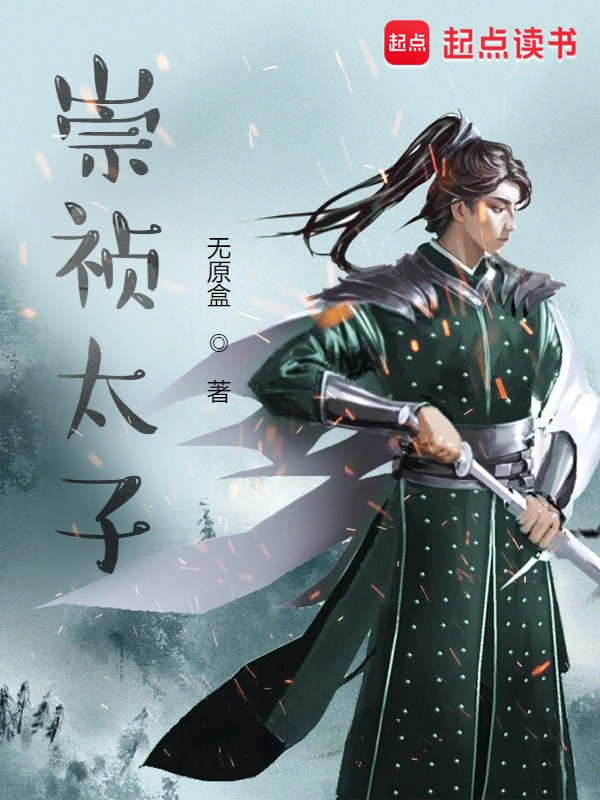
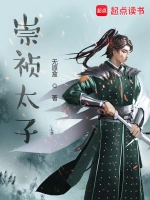
Prince Chongzhen
崇祯太子
- Status
- Completed
- Length
- 1.9M Words
- Genre
- Historical
- Audience
- Male
- Subgenre
- Song-Yuan-Ming Dynasties
- Updated
- 1y ago
- Source
- Qidian
Stats
Tags
Synopsis
Reader comments
In booklists 12

Tingfeng Pavilion (A Small Pavilion for Collecting Good Books)
Please collect more and follow this book list. It will be updated from time to time. You are welcome to give the book list Amway and likes in the highlights of this book. Thank you (recently some of the included novels Amway have been deleted for some reason)
Sou Shu Xiaoge (Welcome to Collect and Follow)
Please collect and follow this book list, give more likes to the novels you have collected, and read more about Amway in the novels. Like everyone, thank you!

2018~Essay Appreciation!
Be a villain reading essays in the spring breeze! On the benefits of omnivores: Benefit 1: No need to worry about food and grass. Benefit 2: You don't need to think about whether there are books that suit your taste#📖📚📖%* Benefit 3: No need to grab food to eat! Eat whatever you have and become a villain who is not picky about food. Benefit 4: Social animals! No matter which book club you go to, you will always have friends. By the way, an also likes ##, let's wear couple clothes together!

🐝Mysterious Food and Grass🐪armed Escort🦀sacred Book Qualification"
1: If you want to recommend a book, please leave a message in the editing area. 2: Remember to mark artificial advertisements as artificial advertisements. Three: If you collect the book list, remember to click on the red heart and plus sign! Four: Please don't browse the book review area! Five: Children's shoes with flowers in hand, remember the flowers!

Promote Overseas in 2018!
There are books that promote spirituality in 2018, so don't forget to bring two to read. As the new year is approaching, I will select books that basically promote the spirit and recommend them to bookworms! If you want to complain, leave your opinions in the lower right corner. You can leave your opinions in the book review and we will share them.
🍁🌵Wonderful Articles to Share🌵🍂
Collect fashion information and enjoy the wonderful articles from all over the world! Hello everyone, this is a book list world full of wonderful literature. There may not be one-of-a-kind great books here, but there must be some weird books that may be canonized as gods tomorrow&. I have been wandering in the ocean of secretaries for a long time, silently enjoying the edification and the joy, anger, sorrow and joy brought by the characters in the book. It is very comfortable. I will share th
Timely Rain Comes to Promote Books-2025//
A very timely book list! If you have a fresh, creative idea for your book and you want me to add it to my book list, no problem. Make it your mission to collect all kinds of fresh books! Here we will present you with fresh books one by one📚... If you have a good book, you can leave a message in the book list comment area. Looking forward to your visit! .

History, Cultivation Immortals (Personal)
Personal book list, I like to read books about history and cultivation.
A Wise Book List for Old Readers!
Every reader has different tastes, and many books are rich in philosophy of life. Today I would like to recommend a few books with great learning spirit. I really like reading this kind of books, they are great and beautiful!

Magic Little White Horse Book List!
The single owner discovered that there are still dark horses in the Internet literary circle. The qualifications may be mediocre in the early stage, but once the order is recommended, it starts to skyrocket and explode. The single owner has been fortunate enough to witness the enlightenment of several dark horses. After being pushed five or six times, it was always at the bottom and not very popular. The last time it was strongly pushed, it immediately exploded and established its dominance. Eve

Qingli Sunshine Book List
The book has its own beauty like jade, and the book has its own golden house. Find the fragrance under the warm sun, the fragrance from the ocean of words.

My Backup Energy Source
Maybe not a classic, but definitely worth watching
Readers also read
 Please Call Me Your Majesty the Tsar
 Talker in the Song Dynasty
 In the Red Mansion: Escort Daiyu to Beijing at the Beginning
 1914 Begins with the Rejection of the Schlieffen Plan
 Never Walk Alone!
 Taichang Daming
 Long Wanshengshi
 Daming: Have I Become Wanli's Portable Grandfather?
 I Am Drawing a Hot-Blooded Episode in the Zhiyu Episode!
 Huang Ming
 Sun and Moon: Yongli 1656
 Jinting Han People
I'll make Damingjun eleven
What replica of Constantinople and Nanjing? Constantinople!
Can the author add some details? Beg
I hope the author can see it.
The Ming army has no full pay, but a full pay is invincible
The author deserves to be a descendant of the Qing Dynasty. The average number of warriors in the Qing Dynasty is as high as 100, and the scouts can defeat a hundred soldiers. In the midst of thousands of soldiers, they cut melons and vegetables and treat the Ming army as a toy. In the end, they were defeated by the halo of the protagonist. 👍👍👍
About foreign gunners
In 1563, there were only 158 gunners in the whole of Spain, plus 50 management and technical personnel; by 1619, these two numbers increased to 297 and 92 respectively. From the mid-1680s to the mid-18th century, the number of gunners listed on the payroll of the Vienna government department was about 600. In 1630, the total number of Russian firearms troops was 4215; by the middle of the century, in 1650, this number had become 4250, with little increase; until the 17th century In the 1980s, the number increased significantly to 7,000 - "A Preliminary Study on the Military Revolution of the Ottoman Empire in Early Modern Times" European science and technology also developed step by step. Some people think that Europe has been advanced for three to five hundred years or even more because of its advanced science and technology in modern times. How is that possible 🙂
The plot and human nature are well written. It can be written more, and the war scenes can be reduced. Several small characters like Zhou Xiancai can be added throughout the text. One can be written about civilians, traders, Qing soldiers, and puppet soldiers. The impact of changes in the situation on society can be reflected through small characters. Of course, in the early stage, I will mainly write about the protagonist. In the later stage, I can write more about the changes in small tasks and life, and some small suggestions.
It looked pretty good at first. The battle to defend the city was written and written, and it was turned into a martial arts novel. A Manchurian scout fought against a hundred enemies on the city wall, moved around on the shoulders of the defenders, and finally flew in front of the prince and challenged him to a duel. This poisonous point can be skipped and simply written. It is so speechless.
This writing is like becoming a bald son in 1949, and it was when millions of troops were crossing the Yangtze River. The bald man ran away. You don't have a golden finger, and you still want to change your life. I really think too much.
I only read the first three chapters and went to subscribe later. Author, believe me, as long as you can be evil and ruthless, I will subscribe to all of your books. I think your writing is more realistic.
The reverse plug-in is too large
This Guangzhou was lost as if it were a game. Historically, it was lost because the era was gone and the whole country was swallowed up by the whale. Now the protagonist sits firmly on half the throne. Are the gentry and locals in Guangzhou allowed to be conquered without any effort? Half of the soldiers were damaged in just a few days, and it took no time to build siege equipment on the opposite side? Does it take no time to disassemble the artillery on the other side? This time is not enough for Guangzhou to ask for help? When attacking a city, if we rely on prisoners to attack the city, we can just as well stop it on civilians. The other side attacked the city personally, and we organized civilians to exchange their heads for the other side. How many soldiers did the other side transport to replace their heads? Or will the foreigners really attack the city themselves?
After reading 60 chapters, I probably know the reason why the author is not popular. First of all, he likes to mix his own views on historical things and associations with the development of events in the book. This is not pleasing. At least the authors of several popular historical books at Qidian do not have this habit The second one is the description of the battle scene, and the description is not very wordy, so the impression is very poor. It is a bit like an old man describing a war he participated in, but he kept talking over and over again, but he could not find the main points, let alone feel happy. I did not dare to think about the large army fighting later, how should the author write In fact, the author's grasp of history is acceptable, but the writing looks strange. It is recommended to polish it and see how the popular ones are written For example, take Shao Song Dynasty, the dilemma faced by the protagonist of that book is similar to this book. In the description of the characters, the two authors can't tell the difference between the pros and cons, but the war, scenes, and detailed descriptions of this book are much worse For example, Mai Ke's book is also a very documentary author. What he writes is actually not boring. The entire growth of the protagonist and the heroine's strategy are quite heroic as he wakes up to seize the power of the world and falls drunk on the knees of a beautiful woman Let's talk about the current hit, Big Cousin's books. He really likes to put the protagonist in danger, and then save the day, as well as the political game between the parties, to make readers happy But his first book was actually not well written, and there was a plot of a dead girl, but since the end of the Song Dynasty, he has not messed with it. So much to say, I mainly feel that the author of this book may be too old, and the amount of updates should not be his main business, so it is actually difficult to change his thinking, but I do see the advantages of this book, so I sincerely hope that the author can make changes. There are too few historical articles that can be read at the starting point. I still hope that the author who has considerable research on history can become popular There are too few that can be read now. Basically, they are all newbies who are mentally retarded. Basically, they can do whatever they want.
The author should not bring up the Industrial Revolution. The commodity economy of the Ming Dynasty was completely deformed and could not be called the germination of capitalism. The premise of the Industrial Revolution is that agricultural output has increased significantly, so that the excess population can engage in industrial production. Currency reform, market economy, and ideological foreshadowing are all indispensable. The most important thing is that you have to have a bourgeoisie. As for the commodity economy of the Ming Dynasty, it was completely a deformed product that relied on power to develop. During the protagonist's lifetime, every effort should be made to support the bourgeoisie. The bourgeoisie is the representative of the advanced productive forces of that era. After the protagonist's death, the bourgeoisie will be considered successful if it can survive the siege of the landlords and gentry. The industrial system cannot be successful by just arbitrarily arranging people. The bourgeoisie cannot stand, and all the pig's feet have done is to eliminate life and death.
Seeing that there are no shortcomings so far! The same period can be considered excellent! Let me give you some advice: take extraordinary measures in emergency situations! It is really not decisive enough to deal with the internal situation during this period, especially after this good news! You can do something with your power! Finally, the monarchy is the monarchy. Don't try to be a republic. It's a bit disgusting.
The opening setting angle of this book can be said to be one of the most novel novels about the late Ming Dynasty that I have ever seen, and it successfully attracted me, an old bookworm with tricky tastes~!
Most readers who can still read text novels instead of playing games and watching short videos are at least 30 years old, right? These readers have experienced severe beatings from society. They don't want to read too cruelly, but they also see that they have to be reasonable. The readers have grown up and have higher requirements. Nan Ming basically can't make a comeback... No matter how you write it, it's hard to make sense. To write an article at this point in time, I either have to be more novice and write more coolly, or go overseas. It is impossible to satisfy all readers. It may be much better to subscribe only to some extreme users.
Ming Dynasty Stations and Military Firearms
Weibo artist: Egg-proof dairy cow;
Why does the author believe in conspiracy theories so much? When writing historical articles, shouldn't he look for historical materials from regular experts? Take the Tumubao Incident, you said it was a conspiracy by civil servants, and you also said it was a conspiracy by civil servants to strangle the palace maid. If you analyze people from the most rational perspective, many unexpected things happen by mistake and chance. No one has any subjective will to make this happen. Poor information in various aspects and fluctuations in human nature are all factors that cause accidents. If according to the author's thinking, all unexpected things in the world can find a responsible person who subjectively promotes their occurrence, then a car accident must be intentional. Floods occur intentionally, and gas pipeline leaks and explosions occur intentionally. This kind of thinking and attitude of yours is also very tiring to live in life. You will find the meaning of every move of the person you associate with, and you will ponder it for a long time to understand the hidden meaning. If someone coughs and clears their throat if they are not familiar with it, you will think that they are interrupting you or hinting at something. You will definitely get high marks if you do this kind of reading comprehension.
The beginning of the late Ming Dynasty can be called hell. The Little Ice Age has just arrived. There are Qing troops entering the pass outside and Nanming fighting for power inside. It is indeed very interesting.
The writing is indeed good, the characters' IQs and plot logic are all online, but I just felt tired while watching it, banging my head here and there.
Bore explosion problem
Bore blasting was a global problem at the time, especially in Europe, where the metallurgical industry was immature. The gun blasting rate was actually very high, and it also caused serious accidents. In 1574, the Governor of the Spanish Netherlands ordered 300 cast iron cannons from the Liege Cannon Foundry. However, due to the lack of casting iron technical support, although these iron cannons were delivered on time, after testing, all of them exploded and no one was spared. Wathier Godefrin, the director of the cannon foundry and the cannon caster, was also arrested and imprisoned because of the failure of the cannon casting. Source Colin J. M. Martin—"Full fathom five wrecks of the Spanish Armada" The cast iron cannon artifacts from three periods, including the Inmarill Rose that sank in 1545; Gustav's leather cannon, and the Batavia that sank in the Netherlands in 1629, all have obvious traces of splicing. Most of the extant European wrought iron cannons from the late Ming Dynasty have barrels that are level with the barrel, and traces of gaps in the iron bars are clearly visible. This is irrefutable evidence that can be found online. European wrought iron cannons even mentioned in their own documents that they could not be loaded with high-pressure granular gunpowder, and they often exploded and the real King of Scotland was killed on the spot. The ratio of saltpetre to carbon to sulfur was 7.5:1.5:1 In the nineteenth century and 5:1:1 in the sixteenth century. Additionally, powder made in France and Italy at least up to the end of the sixteenth century was not grained.'' Morin "Morphology" Powdered gunpowder burns slowly and produces a lower chamber pressure. The energy of granular gunpowder is 1.5 Times that of powdered gunpowder, and the burning rate is 3 times that of powdered gunpowder. , As a result, Western European wrought iron cannons only used low chamber pressure powder gunpowder, and the chambers repeatedly exploded. It was still possible to replace them with granular gunpowder. During the British expedition to Cadiz in Spain in November 1625, due to the greed and embezzlement of military contractors, and the lack of management experience of state officials, who knew nothing about military logistics support, the British expedition not only lacked food and clothing, but also used shabby weapons. There were even many matchlocks that did not even have fire holes, so they could not be fired at all. The country invested a lot of money, but there were too many moths, which ultimately led to the failure of the war. During the Battle of Oudenaarde on July 31, 1667, 600 French heavy matchlock guns exploded on the battlefield in one day (Source: "Un probl ème opé rationnel du "the prac tife of a rtillerie" In 1621, Spain cast 150 new bronze cannons within two years. Due to the poor skill of the gunsmiths, these cannons were not cast well. Among them, 20 of 36 cannons were damaged when they were tested for the first shot. Although the British cast iron cannons in the 17th century had a temporary monopoly in Europe, unfortunately it was only in the early 17th century that there were records of the British adding limestone to blast furnace smelting, and it was not until the fall of the Ming Dynasty that they began to use coke for smelting. Fortunately, the British's high-quality low-sulfur and low-phosphorus iron ore helped them a lot. Otherwise, with their metallurgical technology, the iron cannons they cast would not be much better than those of Spain. Also, the Hongyi artillery introduced in the early days of Chongzhen exploded in front of all civil and military officials during the first test firing in the capital, and the remaining unexploded parts were sent to the Liaodong battlefield for use. European science and technology has also developed step by step. Some people think that Europe has been advanced for three to five hundred years or even longer because of its advanced science and technology in modern times. How is it possible that real life is not an instant improvement across eras by clicking "Upgrade" in a video game?
Cao Zhijian
I and many readers may not be familiar with the characters who appear in the history of the Southern Ming Dynasty, so I will search for character records when reading, and put them here for everyone to understand. The following is the Ming army general Cao Zhijian who appeared in Chapter 240. A simple evaluation is that he is a typical military leader in troubled times, and he is a disgrace. Cao Zhijian (? - 1650), Courtesy name Guangyu, was a native of Wenzhou, Zhejiang Province in the Ming Dynasty. The Cangzhou Guard was hereditary. After the Qing troops entered the pass, ninety-three people in the family died in the royal service. When he was young, he lived in poverty in Nanjing and made a living by delivering newspapers. Liu Xizhuo, the censor, patrolled Hunan and served as a member of the Chinese army to guard Changsha. Liu Xizhuo was defeated and captured, but he was killed if he refused to surrender. Zhijian fled to Zhenxiaguan. Later he settled in Hengzhou. He once said to himself: "I was a lamp-burning Buddha in my previous life, and I studied under Qu Tan. Li Er and Zhong Ni were both my disciples. How much more can those who are sitting here and arrogant now be compared with others!" Zhu Yanyao, the king of Yuan'an, raised troops to occupy Chenzhou and claimed to be the king of Liao, but he was not recognized. In October of the first year of Hongguang, Cao Zhijian killed him. In May of the fourth year of Shunzhi (1647), Cao Zhijian retreated from Jiangxi to Jianghua and Yongming. In the sixth year of Shunzhi (1649), Jierhalang led his army to defeat Yongzhou and Daozhou. Cao Zhijian and others retreated to the Longhu Pass area in Gongcheng, Guangxi (the border between Hunan and Guangxi provinces). In the seventh year of Shunzhi (1650), Kong Youde's troops occupied Longhu Pass, and more than 10,000 soldiers died in the battle. Cao Zhijian was defeated and fled to Guanyang, Guangxi where his younger brother Cao Si was stationed. Even the official seal of Yongguo was lost. On September 12, Kong Youde ordered Dong Ying, He Jinsheng and others to attack Guanyang. The Zhijian brothers were defeated and fled to Qingtangwo in Gongcheng. The next day, the Qing army attacked Qingtangwo in three groups, and Zhijian fled into a remote mountain cave. After Jiao Lian rescued Cao Zhi, he built a stronghold in He County and built a stronghold on the mountain. Soon he died of illness. His subordinates Wang Dajie, Lei Zhaosheng and Ou Zhengfu joined Li Dingguo. One thing to mention, this Jiao Lian appeared in the previous article and designed with Qu Shichu to kill the traitor general Yang Guowei. He fought bravely and was quite loyal, but in the end he was trapped and killed by Chen Bangfu. ———————————————————— Attached is a paragraph of text seen on Zhihu, which should be recorded in historical materials: "…Ganzhou was besieged, and Cao Zhijian decisively retreated to Hunan. However, Hunan was not peaceful either. Three kings and one Duke of the Qing Dynasty marched in a crushing manner, and the rogue bandits collapsed completely. Cao Zhijian's troops fled to Guangxi and were stationed in Pingle. " "In November 1646, Zhu Youlang changed the Yuan Dynasty and proclaimed himself emperor, and soon ran from Zhaoqing to Guilin. As the leader of the armed forces closest to Guilin, Cao Zhijian was promoted to Baochang Bo. When the army was besieging Yongzhou and Quanzhou, Cao Zhijian was promoted to the Marquis of Baochang for his merits and was given the imperial edict to act expeditiously. Cao Hou knew well that food and grass should be sent first before the troops were moved. He collected all the taxes from Yongzhou, Chenzhou, Guiyang and other places for his own use, and even drove away all the local officials appointed by He Ge. After the death of Jin and Wang Wang in Nanchang, the Qing army returned Later, He Tengjiao was defeated in Xiangtan, and Cao Zhijian was stationed at the border of Hunan and Guangxi to prevent the invasion. Du Yinxi, who was retreating from the north to the south, was ambushed by him, killed his lieutenant, and killed his soldiers. He Tufu, a local armed force, was also killed by him for welcoming Du Yinxi. After seeing Ma Jin Zhongjin being granted the title of Duke of E, Cao Zhijian also petitioned for the title and was granted the title of Duke of Yong. "
For the Qing Dynasty at the end of the Ming Dynasty, internal factions were established, rebel forces were growing stronger, people were in dire straits, and external forces were strong. Therefore, facing this situation, it is simply unimaginable for a little emperor to gain a foothold in Jiangnan and turn defeat into victory. To put it mildly, before there was no order to shave their heads, most officials and businessmen were eager to give up. It is a scene of the end of the dynasty. The so-called wise people are eager to make new contributions in the new dynasty so as to control the distribution of power and wealth again
Good book. I almost gave up on it at first because I felt that Prince Nan didn't look like the Crown Prince of Chongzhen. I almost missed a treasure. Everything was written very reasonably, but it was very heartbreaking when Huang Degong died. What a loyal minister!
Zhang Kuang Yan Qiheng
Zhang Kuang (1611-1647), courtesy name Yuye, nicknamed Ashan, Han nationality, from Songjiang. In the ninth year of Chongzhen (1636), the Yuan Dynasty was overthrown, and it successively resisted the attacks of Li Zicheng's peasant army and the Qing army. When guarding Changsha, he successively recruited the remnants of Li Zicheng's peasant army and Zuo Liangyu's old army, and was promoted to the right minister of the Ministry of War. Later, he saw that the generals were gathering troops, but they did not obey orders and were timid to fight. He became depressed and vomited blood, and ended up writing "Poem of Death" and died in Dong'an County. He died at the age of thirty-six. In the second year of Yongli, he was given to the prince Taibao and Huating Bo, with the posthumous title Wenyi. Yan Qiheng (?——1651), A native of Shanyin, Zhejiang Province in the Ming Dynasty, whose courtesy name was Qiuye. Jinshi in the fourth year of Chongzhen. In addition to being the head of the Ministry of Punishment, he served as the magistrate of Guangzhou and moved to Hengyong as deputy envoy to the army. During the reign of Nan Mingyong, he was the Minister of the Ministry of Rites and the Bachelor of Dongge University. He was an upright and honest official, and he was fair-minded in all situations. He was not tolerated by Li Yuanyin and other "Five Tigers" and was slandered as an evil party. If you block Sun Ke, you can hope to be crowned king and be killed. ———————————————————— These two people often appear in the chapter of He Tengjiao. They are both extremely talented people. Zhang Kuang's evaluation is especially high. He was He Tengjiao's right-hand man when he was supervising Hunan, and he was really a capable minister. Yan Qiheng was loyal and upright, and he became a cabinet minister in Yongli Dynasty, but he was unable to save himself. Description of Zhang Kuang: "In the first year of Yongli (1647), He Tengjiao traveled across the state. Zhang Kuang alone led more than a thousand troops to garrison Baiya City to contain the enemy's southward invasion. At that time, Liu Chengyin was in Wugang, and Liu Chengyin could not send out reinforcements. Zhang Kuang knew that things could not be done, and was generous and indignant. He did not eat grains, but only ate fruits and melons, which attracted a lot of attention. He was drunk because he was sick. When he was about to die, he summoned his disciples to have a drink with each other. He ordered Xiaoxu to make a clapper and sing a sad song from the pillow, asking the guests to join in. The sound of the banquet became more and more mournful. Kuang died at the age of thirty-six, and his disciple Xiao Weilong was buried in Shiqi Station. All the people in Mian were sent to him in plain clothes. They went to the market for days and mourned each other in the streets. In the evening, He Tengjiao saw a big star falling from the southern sky, and the light spread all over the earth. He Tengjiao was shocked and said: Zhang Kuang is not lucky. When the coffin was carved, Lu Ding was ill from Daozhou and cried bitterly. The commander of the Qing Dynasty heard Zhang Kuang's death and said happily: If one of the two enemies is gone, I will have nothing to worry about. " Evaluation of Yan Qiheng: "Although Qiheng rarely changed his talents, he was an upright official, loyal to his boss, and was unfavorable in times of trouble. He adhered to his principles and adhered to his principles. It made warriors and generals see him. It is not easy to do it. The commentator remembers the survival of the two countries, and they are both called Qu and Yan; they also say that they are tall and tall, and they want to be like ministers in the prosperous times. What a tragedy!
Ming Dynasty Forging Artillery Technology
There are two major types of artillery popular in the world from the 14th to the 17th century: "forged cannon" and "cast cannon". The wrought iron cannon technology popular in the 15th to 16th centuries, based on all existing Western European artifacts and comparison with the cultural relics of the Ming Dynasty, the Ming Dynasty's wrought iron cannon technology was stronger than that of Europe at the same time until its demise. I would like to emphasize that the real impact of the Franco machine on the Ming Empire was its breech-loading gun's design for rapid reloading, which was similar to that in Europe at the same time. It was horizontal to the barrel and had clear gaps in the iron bars. It can be seen that the Ming Dynasty did not like the forging technology at all (it was simply shoddy). This kind of forging method could not withstand the high chamber pressure of granular gunpowder, and it was extremely easy to explode the chamber. The biggest difference between the Ming Dynasty's forged iron cannons was that the production method was detailed in the "Arms and Arms". The biggest feature of the forged iron cannons forged by this method was that there were no gaps and a flat and smooth bore. Even by the end of the Ming Dynasty, the only country in the world that could mass-produce various types of seamless wrought iron cannons was the Ming Empire. This also made the Ming Dynasty's wrought iron cannons superior to those in Europe in terms of charge capacity and projectile weight. European wrought iron cannons were unable to solve the seamless process of wrought iron cannons until the middle of the 17th century. The cast iron cannons from three periods, including the British Mary Rose that sank in 1545, Gustav's leather cannon, and the Batavia that sank in the Netherlands in 1629, all have obvious traces of splicing. And all the existing large, medium and small wrought iron cannon cultural relics of the Ming Dynasty, whether they are various types of Weiyuan cannons, Fran machines, and captive-killing cannons, are all seamless. The seamless bamboo shell type wrought iron firearm technology of the Ming Dynasty was widely used as early as the Hongzhi Dynasty. This is ironclad evidence that Shandong cultural relics have been preserved, and it has nothing to do with Westerners. The detailed manufacturing method of a heavy wrought iron general cannon is recorded in Volume 14 of "Synopsis of Armaments". It can be seen that the craftsmanship of Chinese forged iron cannons is different from that of the West from the beginning. This method of burning red iron sheets and wrapping large and small ones can not only make the cannon without traces of splicing, but also greatly reduce blisters in the barrel and obtain a smooth barrel with a unified caliber. On March 6, 1627, the Governor of Portugal and India informed the king that the Governor of Macau, D. Filipe Lobo, had found "two casting masters" and was on his way to Goa. The two Chinese iron-smiths were not accustomed to using cast iron from Goa, so they made no progress in making cannons and returned to China. On March 14, 1632, the Portuguese King approved the Portuguese and Indian Governor-General to use Macao Chinese masters to cast iron cannons in Goa. Monsoon Book, Lisbon National Archives, Volume 30, Page 166. Chinese artillery was also sold to Europe "Selected History of Old Colonialism" quoted the record in Volume 24 of "Philippine Islands" and mentioned that the Spanish obtained copper cannons through Chinese merchants: Two documents in 1574 and 1576 said that the goods shipped to Manila by Chinese merchants included flour, barley flour, sugar, various dried and fresh fruits, steel, iron, tin, lead, red and white copper, fine porcelain, various silk fabrics and various small items. What's especially important is that there are "a large number of bronze cannons that are very well cast, as well as various military supplies." It was always discovered that overseas Chinese invented a new cannon-casting process and ordered fifty of them to be cast at one time. The raw materials used by Spanish bandits to make weapons and ammunition, such as steel, iron, copper, lead, tin and nitrate, were supplied by China. He also imported cannon from China. The Spanish clearly recorded it in the "History of the Great Chinese Empire" published in 1585: In a letter to our master, the King, Captain Alda said after talking about other things: "... The weapons used by the Chinese are the same as ours, and the artillery is of good quality. On some ships, the minister personally saw it As you can see, the cannon body is well-proportioned, and the casting process is better than ours. It is more solid than ours. There are cannon factories in every city, and they are constantly manufacturing them every day." In the 17th century, the Ming Dynasty was the world leader in metallurgical technology, and the quality of its self-produced Hongyi cannons quickly caught up with the support of local technology. "History of Technology", Oxford University's European masterpiece "The Complete History of the Chinese Empire", writes that Spanish officers lamented that "the artillery is better than ours and more threatening." "The Age of Firearms" (written by Tonio, a Portuguese historian of East Asia) evaluated the Ming Dynasty's imitation Hongyi cannon as one of the best artillery in the 17th century. (This is where the artillery of the Ming Dynasty truly took the lead) In the nearly one hundred years before and after the demise of the Ming Dynasty, the new firearms developed in Europe were stronger than the Ming Dynasty, but the metallurgical forging technology was not as good as the Ming Dynasty.
The beginning of the writing is very good. I hope it can be maintained in the future and not too big.
Fu Shangrui
Fu Shangrui (1616.1.13[5]~1649[3]), Courtesy name Xizheng, was born in Wuding Prefecture, Jinan Prefecture, Shandong Province. In the 12th year of Chongzhen (1639), he ranked sixth in the Shandong Township Examination, ranked 153rd in the General Examination in the 13th year of Chongzhen (1640), and ranked 21st in the top three in the Imperial Examination. He was granted the title of Observer of Government in the Ministry of Household Affairs, and moved to Huangzhou Prefecture to be promoted as an official. He was good at serving superior officials and was appreciated by Wang Yangji, the governor of Hubei. Li Zicheng fell into Chengtian and Huangzhou was earthquake-stricken. Wang Yangji went to Rui to manage the affairs of Wuchang Prefecture to avoid bandits. Zhang Xianzhong crossed the river from Huangzhou and invaded Wuchang. Wang Yangji transferred him to Rui to supervise the army in the north of the Yangtze River. Wuchang fell, and he followed Wang Yangji to avoid Hanchuan. Zhang Xianzhong entered Shu and Wang Yangji was arrested. Fu Shangrui returned to Wuchang to meet He Tengjiao, the governor of Huguang. Tengjiao was delighted and recommended him as a minister in Changsha. He transferred to Hunan Province as a counselor and was granted the title of Shaoqing of Taipu Temple. Tengjiaoji's subordinates allied themselves with Changsha, and Shangrui proposed the establishment of thirteen towns, which later became a major disaster in Hunan. He ordered the censor of Qiandu to patrol Pian (Pianqiao Guard) Yuan (Yuanzhou), and invited Hu Yue, Wu Sheng, and Chen Shaoyao to send more than 5,000 troops to guard Pingjiang and Liuyang. Shangrui's family came from Shandong and strongly praised the Shandong Jin gentry who surrendered to the Qing Dynasty. Shang Rui was moved, so he abandoned Pingjiang, made excuses to enter the Wei, went south from Liling to Baoqing, and stationed in Yuanzhou. He said that Pian and Yuan were his flood areas, and took Liu and Li garrison to the west. In August of the first year of Yongli (1647), the Qing soldiers invaded Yuan, and Shangrui raised his troops to surrender. The Qing soldiers massacred the city of Yuanzhou, and Pianqiaowei and Zhenyuan also fell. Kong Youde took him to the north. In the second year (1648), Jin Shenghuan was killed anyway. The Qing Dynasty considered him an internal response, and in the spring of the third year of Yongli (1649), he and Liu Chengyin were executed in Hankou, Wuchang.
About artillery ballistics
The mathematical basis of external ballistics is Newton's three laws and the law of universal gravitation, first published in 1687. Otherwise, there is no way to calculate ammunition at all. In other words, before Newton's three laws, only empirical formulas could be used for gunfire. The "New Science" published by Tartaglia in 1537 was actually Tartaglia's public advertisement for job hunting. However, his work was kicked out of the textbook in 1590 because it was not accurate enough. (😏 "New Science" laid the foundation of modern ballistics, but the book "New Science" believed that the cannonballs would fall vertically at the highest point, which made me laugh to death😃😃😃hahaha) Tartalia claimed to have never fired a cannon. The book "New Science" had nothing to do with artillery at the beginning, but it was later practiced by Spanish people in large numbers Real In fact, Western ballistics has always been relatively slow to respond to the research on mathematics and physics, the production and use of artillery are often inconsistent (for example, the British artillery during the Peninsular War once pulled out a bunch of Spanish Harborg-era cannons for supplementary purposes), the projectiles of muzzle-loading guns often use shrinking bullets, and the people who teach mathematics may not know how to fire artillery. European artillery-related mathematics education can only cultivate intuition to a large extent (this was even the case in the 20th century. The preface to the US military-related textbooks in the 20th century also emphasized that practitioners who introduced the use of artillery were more capable of training and practicing artillery officers than mathematics professors. Benefits), many of those equipment are simply money-making gadgets - Galileo started to engage in ballistics back then just to promote his own equipment, but if you really plan to use these things that may even be based on Aristotelian mechanics to defeat the enemy, then you can only say good luck. The accurate hit range of traditional general artillery and Western artillery in the Ming Dynasty was actually the same "two hundred steps", and the Ming army had better conditions to spend money on target training. At the same time, those European mercenaries even skipped musket shooting because the economy and wages could not support it: (frontier fortress in the Jiajing period) and could see beyond the trenches. The terrain is vast. If you encounter a large enemy approaching the border and the officers and soldiers unexpectedly fire their weapons and crossbows from far and near, you should consider placing them outside the wall of the enemy's tower. This method is suitable and a mound of six to seven feet should be erected about two hundred paces above the suspected thief. If the thieves come to this pile, use the extremely distant divine cannon to attack. Invincible gunslinger. Use the cannon tip to point out the machine and other weapons to attack it. It's about a hundred and fifty steps up. Another mound of soil five or six feet tall was erected. Like thieves here. Then use weapons such as the Sub-far Divine Spear, the Erlang Machine Seven-Eyed Gun, etc. To attack them. About a hundred steps further. Then set up a mound four to five feet tall. Like thieves here. Then use the long-range arm, crossbow, arrow, rocket, three-eyed gun, Fran machine and other weapons to attack them at the same time. Then every shot will hit the target. No one is safe from harm. You will see thieves running and hiding. Don't dare to spy on my frontier. The 1849 "Supplementary Readings and Records" believes that the range of the open artillery and the foreign artillery in the Opium War are the same, two hundred paces: there is also a test target, the close one can only be one hundred lunges, counting fifty feet; the far one is two hundred lunges, counting one hundred feet; further away, it is vague and subtle, and the inspection is unreal. This is consistent with what Chen said, exactly. The most effective use of early artillery was actually to bring it closer and aim directly 😠 European science and technology also developed step by step. Some people think that Europe has been advanced for three to five hundred years or even more because of its advanced technology in modern times. How is that possible?
One of the great things about historical literature is that after conquering the world, the impact of the re-established country on the world structure, as well as some changes in domestic society, the impact of the re-established country on the people at the bottom, the changes in everyone's lives, what various social systems are like, there is a lot to write about. In fact, this is a fun point. In fact, I have been reading this book for a long time, just to see what you will write later, but it disappeared as I kept reading.
This part of Pingding Jiangzuo area is still amazing. In particular, he unearthed the gaps in the historical power vacuum period in Nanjing. He wrote a great article and was very imaginative. Thank you author.