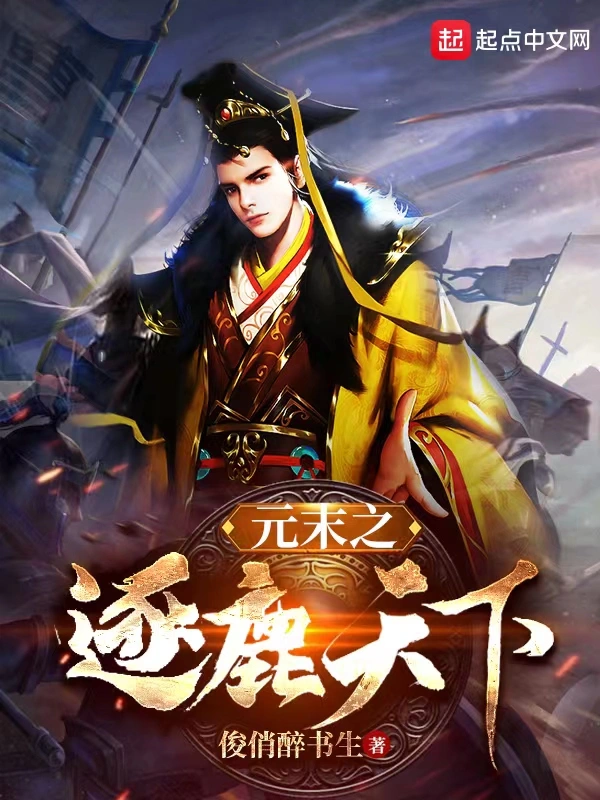
At the End of the Yuan Dynasty, the World Was Dominated by Deer
元末之逐鹿天下
- Status
- Completed
- Length
- 1.0M Words
- Genre
- Historical
- Audience
- Male
- Subgenre
- Alternate History
- Updated
- 2y ago
- Source
- Qidian
Stats
0Monthly votes
11.2kRecommends
21.7kFans
286Chapters
Tags
Synopsis
Reader comments
In booklists 1




Readers also read
 In the Red Mansion: Escort Daiyu to Beijing at the Beginning
 Please Call Me Your Majesty the Tsar
 1914 Begins with the Rejection of the Schlieffen Plan
 Talker in the Song Dynasty
 Never Walk Alone!
 Ten Kingdoms Week
 Ming Dynasty959
 Daming: Have I Become Wanli's Portable Grandfather?
 I Am Drawing a Hot-Blooded Episode in the Zhiyu Episode!
 Emperor Ning Has the Guts
 Gou Qin
 Late Jin Dynasty: from Two-Legged Sheep to Human Emperor
 Game of Thrones Alexander the Great's Iron Throne
 Douluo Begins to Dominate the World from Common People
 The Late Bloomer Qin Dynasty
On why the rulers of the Yuan Dynasty did not allow people to use Chinese characters, only numbers? According to rumors, the rulers of the Yuan Dynasty not only did not allow Zhu Yuanzhang's family to have names, but also did not allow all Han people to have names. How dare you create such a rumor! Check the "History of the Yuan Dynasty", can you find the number of Han people with names and surnames? So, such rumors are both despicable and low-level. Unexpectedly, some people believed it! What made this rumor spread quickly and make a noise in the world should be a popular historical book called "Those Things in the Ming Dynasty". When introducing Zhu Yuanzhang's nickname "Zhu Chongba", the book said in a naughty yet humorous tone: "This name was chosen not because the Zhu family was engaged in mathematics, but because in the Yuan Dynasty, people who could not go to school or be officials had no names and could only be named after the sum of their parents' ages or the date of birth. (Those who registered a household registration will definitely be dazzled)". Because the author of the book categorically mentioned in the preface of the book that no part of the book he wrote is without origin, that is, everything written is well-founded.
"Since ancient times, this position has been done by gangsters, villains, and beggars. Why can't I do it when I stand up to the generals of the Yuan Dynasty?" ——Cheng De
Looks good, steals Zhu Yuanzhang's wife
I only watched the beginning, and it was too dramatic. Uprising is a head-turning thing. In this era of wars and wars, Yuan Ting is also nervous. You have less than 20 soldiers under your command, and you are not keeping warm, so you are just shouting a declaration of rebellion. It is simply playing house. The Yellow Turban Uprising has been a secret association for more than ten years, but on the eve of the uprising, it was betrayed by a traitor, and this traitor was a disciple of Zhang Jiao himself. How many days have you known each other? How many real soldiers do you have under your command? Another poisonous point, I started copying the teacher's poems to show off even though I had no achievements, and when I happened to show off, I was so surprised that the macho man fell from the sky, and the macho man kneeled down when he heard it 😰 I would like to say goodbye first, it's too poisonous.
Steal Lao Zhu's wife😡😡
Can you arrange a similar plot of King Qin circling a pillar?
For example, before the decisive battle with Chen Youliang, the protagonist was drunk, and then the people around the protagonist betrayed him. They came from Chen Youliang's camp and prepared to assassinate the protagonist and complete what Chen Youliang asked.
Some book friends mentioned that Xu Da must be captured. This is what I want to capture in my outline. If Haozhou is captured, he will appear before Guo Zixing's uprising in Haozhou.
In fact, there is no need to have Queen Ma. Queen Ma is virtuous, but the author can create a new and better one. Zhu Yuanzhang relied on the primitive accumulation of political power behind Queen Ma. You don't need to be afraid of this definition before Guo Zixing. According to the TV series version, Zhu Chongba showed no ambition at first. It was Guo Tianxu's targeting and Li Shanchang's appearance that gave Zhu Yuanzhang the motivation and strategy to fight for hegemony!
I took my parents to the hospital for medical treatment today. The update will be later~
The author is great. How is the protagonist's future daughter-in-law, Xu Da's daughter? Queen Renxiao in history, virtuous, strategic, political, military formation, and martial arts.
This is my author brother🤫🤫🤫
The best way to protect yourself is to stay under the emperor's nose. In Ming Dynasty, distance cannot increase beauty, but can only increase suspicion. ——He Sanwu
Life is here, and going away is like dying in the morning. My soul has returned, how sad I am. ——Cheng De
It's been a while since I read a book about traveling through the end of the Yuan Dynasty. Can the author create a reading group? Here is a list of scientists, craftsmen, and medical scientists from the late Yuan and early Ming dynasties! Can Lu, the two deaf heroes at the end of the Yuan Dynasty, appear without Yang Zhongkai? Historically, it was Zhu Yuanzhang's deaf great counselor and deaf general who founded the Jue Shengwei. Lü need not call himself Shigushan Deaf, and he was the elder brother of Liu Bowen and Yao Guangxiao! Just look at the author Baidu's new version of China's Deaf Historical Chronology. Yang Zhongkai is one of the celebrities of the Yang deaf-mute family from the Sui Dynasty to the present. He is a descendant of Yang Xin, the founding deaf general of the Song Dynasty (the founder of the Silent Warriors of the Song Dynasty), and the great-grandson of Yang Zheng, the last commander of the Silent Warriors in Yashan! Yang Zhongkai is Yang Zhongkai! Therefore, the Jueshengwei of the Ming Dynasty should become the protagonist! Biographies of people, Chronicles of famous craftsmen in China throughout the ages, New chronology of major events in Chinese history, Chronology of the history of world civilizations, General history of Chinese medicine. After checking the authors of these five information books, there is also Tao Chengdao who can make a rocket car and a hot air balloon made of copper and iron due to the guidance of the protagonist! Historically, Zhu Yuanzhang had no awareness of aviation, and Tao Chengdao fell to his death while making a wooden rocket speeder.
{"NickName":"Zixia Fairy","UserId":192958615}You can refer to it
The author has some ideas, but the writing style is a bit immature. If you write two more books, the next grenade will be you!
Author, if you have time, read these books carefully. They will definitely help you improve your writing. Come on 💪Aoli
How to Defeat the Cavalry Since ancient times, the cavalry has been one of the most powerful arms. With the help of horses, the originally weak infantry has become a force with high assault and mobility. Unfortunately, in Chinese history, except for a few dynasties, its military strength was mainly infantry, which caused them to suffer a big loss when facing cavalry. But the cavalry is not invincible. Facts have proved that the heavy infantry of ancient Rome could restrain the cavalry with spear formations, but the Chinese had never been in the habit of wearing dozens of kilograms of armor, and there was no Sino-Western exchange system at that time. The Chinese have Chinese methods. They are constantly studying methods of using infantry to control cavalry. One of the successful ones is Zhuge Liang. The Shu army under his command was a nightmare for Cao Wei's army. He invented several weapons to restrain cavalry. The first is the tripping nail. This thing has a unique design. No matter how you throw it on the ground, there will always be one side of the iron nail pointing upward. Before the battle, they were scattered in the area where the cavalry was about to attack. When the cavalry arrived, the horses' hooves would be smashed. The method of use is similar to today's bicycle repair vendors scattering thumbtacks on the road. Of course, the only difference is that after your horse is punctured, no one will help you patch it up. The second move is the wooden cart. Zhuge Liang's army is equipped with wooden chariots. When cavalry is found, the wooden chariots are blocked in front of the infantry to block the cavalry attack. They are also considered mechanized troops. The most ruthless move is the third move, which is also Zhuge Liang's most miraculous invention - the repeated crossbow. This is definitely a machine gun from that time. According to historical records, this kind of repeating crossbow can hit ten shots at a time and is extremely lethal. Therefore, the Wei cavalry at that time was very afraid of fighting with the Shu army. But this method is too maneuverable and not suitable for offense, so the scope of its use is not large.
I haven't read it yet. I must encourage you for this subject matter. The end of the Yuan Dynasty is actually very exciting. Many readers fell to their knees when they saw Liu Xiu, Li Shimin, and Zhu Yuanzhang! Do you understand survivor bias? People who are unlucky cannot reach the end. Of course, they also need ability, but I think luck is also very important. Just like Chai Rong, who was called the most enlightened king of the Five Dynasties by many people, but who died of a sudden illness?
Chronology of wars in the late Yuan and early Ming Dynasty 1351 In the eleventh year of Yuan Zhizheng, Fang Guozhen's uprising - the Battle of Daluyang Liu Futong's uprising - the battle of Zhu Gao and Haozhou Li Er (Zhima Li) uprising Xu Shouhui's uprising - the battle of Qishui and Huangzhou Liu Futong's uprising - the battle of Anfeng Deng Nan's second uprising in Jiangxi 1352 Yuan Zhizheng 12th year Meng Haima's Uprising - Battle of Qianjiang King Quan's Uprising - Battle of Nanyang and Xiangyang Guo Zixing's Uprising - Battle of Haozhou Ma Zizhao's Uprising Tu You and Yingbida's Uprising - Battle of Funing Prefecture Xu Shouhui's Uprising - Battle of Wuchang Xu Shouhui's Uprising - Return Battles of Zhou and Xiazhou Xu Shouhui's Uprising—Battle of Jingzhou and Zhongxing Road Xu Shouhui's Uprising—Battle of Jiangzhou Xu Shouhui's Uprising—Battle of Raozhou and Xinzhou Xu Shouhui's Uprising—Battle of Zhejiang Xu Shouhui's Uprising—Battle for Jiangzhou 1353 In the 13th year of Yuan Zhizheng, Xu Shouhui's uprising - the Yuan army attacked Anhui, Jiangxi and Huguang The Wang Shanbu rebel army and the Yuan army fought for Fuzhou Zhang Shicheng's uprising - the battle of Taizhou and Gaoyou Zhu Yuanzhang's uprising - the battle of Chuzhou 1354 In the 14th year of Yuan Zhizheng, Zhang Shicheng's battle to defend Gaoyou Leiyang Yao people's uprising 1355 In the fifteenth year of Yuan Zhizheng, Zhu Yuanzhang's uprising—the battle of Hezhou Zhu Yuanzhang's uprising—the battle of Quarry Xu Shouhui's uprising—the counterattack of Huguang Zhang Shicheng's Uprising—Battle of Hezhou Zhang Shicheng's Uprising—Battle of Hangzhou Zhu Yuanzhang's Uprising—Battle of Jiqing Liu Futong's Uprising—Battle of Taikang Zhu Yuanzhang and Zhang Shicheng—Battle of Changzhou The Battle of Zhao Jun Attacking Huai'an with Rebel Army Liu Futong's Uprising—Battle of Tongguan and Xiaoling 1357, the 17th year of Yuan Zhizheng Liu Futong's uprising - the battle to attack Shandong Zhu Yuanzhang's uprising - the battle of Ningguo Zhu Yuanzhang and Zhang Shicheng - the battle of Changxing Zhu Yuanzhang and Zhang Shicheng - the battle of Jiangyin Zhu Yuanzhang and Zhang Shicheng—The Battle of Changshu Zhu Yuanzhang's Uprising—The Battle of Huizhou Zhu Yuanzhang's Uprising—The Battle of Chizhou Zhu Yuanzhang's Uprising—The Battle of Yangzhou 1358 In the 18th year of Yuan Zhizheng, Liu Futong's uprising - the battle of attacking Shangdu Xu Shouhui's uprising - the battle of Anqing and Ganzhou Liu Futong's uprising - the battle of attacking Dadu Zhu Yuanzhang's uprising - the battle of Wuyuanzhou Zhu Yuanzhang's uprising - the battle of Jiande Zhu Yuanzhang's uprising - the battle of Wuzhou 1359, the 19th year of Yuanzhizheng Xu Shouhui's Uprising—The Battle of Xinzhou Zhu Yuanzhang and Xu Shouhui—The Battle of Chizhou Zhu Yuanzhang and Xu Shouhui—The Battle of Qianshan Zhu Yuanzhang and Zhang Shicheng—The Battle of Lin'an and Huzhou Zhu Yuanzhang's Uprising— Battle of Quzhou Zhu Yuanzhang's Uprising—Battle of Chuzhou Zhu Yuanzhang and Zhang Shicheng—Battle of Jiangyin Zhu Yuanzhang and Zhang Shicheng—Battle of Jiande Liu Futong's Uprising—Battle of Bianliang 1360 In the 20th year of Yuan Zhizheng, Zhu Yuanzhang and Chen Youliang - the battles of Chizhou and Taiping Zhu Yuanzhang and Chen Youliang - the battle of Jiankang The fierce battle between Yuanchahantemuir and Boluotemuir The battle of Lehumutmuir to rebel against the Yuan Dynasty The Yuan army suppressed the Liaodong uprising army 1361 Yuanzhizheng 21st year Zhu Yuanzhang and Chen Youliang - the battles of Anqing and Jiangzhou The Yuan army suppressed the Red Turban rebels - the battle of Shandong 1362 The 22nd year of Yuan Zhizheng Xia Mingyuzhen's attack on Yunnan Zhu Yuanzhang and Zhang Shicheng - the battle of Zhu Quanzhou The battle of Luo Youxian's rebellion against Zhu Yuanzhang Yuan and Goryeo - the battle of Yalu River 1363 The 23rd year of Yuan Zhizheng Zhu Yuanzhang and Zhang Shicheng - the Battle of Anfeng Zhu Yuanzhang and Chen Youliang - the Battle of Poyang Lake 1364 The 24th year of Yuan Zhizheng Zhu Yuanzhang's battle to destroy Wuchang The battle of Boluotemu against the Yuan crown prince Zhu Yuanzhang and Zhang Shicheng - the battle of Changxing Xingan Deng Zhongqian's rebellion against Wu 1365 The 25th year of Yuan Zhizheng Zhu Yuanzhang and Chen Youding - the Battle of Jianning Zhu Yuanzhang and Zhang Shicheng - the Battle of Xincheng Zhu Yuanzhang and Zhang Shicheng - the Battle of Lianghuai 1366, the twenty-sixth year of Yuan Zhizheng Zhu Yuanzhang and Zhang Shicheng - the Battle of Huzhou Zhu Yuanzhang and Zhang Shicheng - the Battle of Eastern Zhejiang Zhu Yuanzhang and Zhang Shicheng - the Battle of Pingjiang 1367, the twenty-seventh year of Yuan Zhizheng Qian Hegao's Rebellion Zhu Yuanzhang and Fang Guozhen - the Battle of Eastern Zhejiang Zhu Yuanzhang and Chen Youding - the Battle of Fuzhou and Yanping The battle between Yuan Kutmu and Li Siqi and others to attack each other Zhu Yuanzhang's attack on Shandong (4) 136 AD 8 years - 1911 AD Ming: 1368-1643 Qing: 1644-1911 Ming: 1368-1643 Ming: 1368-1643 1368 In the first year of Hongwu, Emperor Taizu of the Ming Dynasty, the Ming Army's Northern Expedition to Henan The Ming Army's Northern Expedition to Dadu The Ming Army's Northern Expedition to Shanxi 1369, the second year of Hongwu in the Ming Dynasty, the Ming Army's Northern Expedition to Shaanxi and Gansu The Yuan Army's Kukutmul attack on Lanzhou 1370, the third year of Hongwu in the Ming Dynasty The battles of Shen'eryu and Yingchang in the Ming Dynasty The battle of Xingyuan in the Xia Dynasty Sun Gupu's uprising Japanese invasion of Deng, Lai, Zhejiang, Fujian, and Binhai counties The battle of Wuzhou, the remnants of the Yuan Dynasty, attacked by the Ming army The Ciliman uprising in Huguang 1371, the fourth year of Hongwu in the Ming Dynasty The Ming Army Mingsheng, the Battle of Chongqing, and Chengdu Gaozhou He Junshan's uprising at sea 1372 The fifth year of Hongwu in the Ming Dynasty The Ming Army suppressed the "Dongman" in Hunan and Guangxi The Ming Army attacked Yuan Hanbei and the Battle of Gansu Japanese harassment of Wenzhou and Funing 1373 The sixth year of Hongwu in the Ming Dynasty The Ming attacked Sancha Mountain and the Battle of Datong 1374 In the seventh year of Hongwu in the Ming Dynasty, the Ming army attacked Baideng, Daning, and Fengzhou. The barbarians in Yong, Dao, and Zhuzhou rebelled The Japanese invaded Jiaodong 1375 In the eighth year of Hongwu in the Ming Dynasty, the "barbarians" rebelled in Guizhou The battle in which the Yuan army harassed Liaodong 1376 In the ninth year of Hongwu in the Ming Dynasty, the Yuan army invaded Yan'an. In the tenth year of Hongwu in the Ming Dynasty, the Ming army attacked Tubo The chieftain Dong Tieli of Weimao in Sichuan revolted 1378 In the eleventh year of Hongwu in the Ming Dynasty, the Ming army attacked the chieftain of Wenchuan The Wu Mian'er uprising of the Wukai barbarians The Yuan army harassed the Ming border 1379 In the twelfth year of Hongwu in the Ming Dynasty, the barbarians in Songzhou, Sichuan uprising Peng Pugui uprising 1380 The thirteenth year of Hongwu in the Ming Dynasty The Battle of Helin in the Ming and Yuan Dynasties The Ming Army attacked the Mongolian Army at Chijin Station The Yuan Army attacked Yongping Yangshan Guishan Barbarian Revolt 1381 The 14th year of Hongwu in the Ming Dynasty The Ming Dynasty attacked Yuangu Beikou The Wuxi Barbarian Rebellion in Huguang Ye Dingxiang's Rebellion in eastern Zhejiang The Ming Army attacked the "sea pirates" in Guangdong 1382 The 15th year of Hongwu in the Ming Dynasty The battle to recover Yunnan in the Ming Dynasty The Wu retreated from the barbarians and revolted 1383 The sixteenth year of Hongwu in the Ming Dynasty The revolt of Zijiu The mountain people in Longquan Yongxin revolted The Japanese invaded eastern Zhejiang 1384 The seventeenth year of Hongwu in the Ming Dynasty The Ming troops attacked Xifan and the battle of Yiji Nailu 1385 The eighteenth year of Hongwu in the Ming Dynasty Sizhou Man Rebellion Wukai Man Revolt Luchuan Silun Rebellion 1386 The 19th year of Hongwu in Ming Dynasty, Yunnan Zhendong and Puman Revolt 1387 The 20th year of Hongwu in Ming Dynasty, the Ming army attacked Jinshan 1388 The 21st year of Hongwu in Ming Dynasty The Ming army's attack on Silunfa and Dingbian battle The Ming army's attack on Yuanyuerhai The Dongchuan barbarian uprising The Yuezhou chieftain Azi's uprising 1389, the 22nd year of Hongwu in the Ming Dynasty, the Jiuxidong barbarian uprising 1390, the 23rd year of Hongwu in the Ming Dynasty The Ming attacked the remnants of the Yuan Dynasty in the battle of Yidu The barbarian uprising in Guizhou The Ganzhou people and the Huguangdong barbarian uprising The barbarian uprising in Shizhou, Huguang The nobles in Duyun scattered Mao and the barbarians uprising 1391, the twenty-fourth year of Hongwu in the Ming Dynasty The Ming attack on Heiling, the king of Yuan and Liao Dynasty The Ming army attacked Hami Japanese pirates harassed Leizhou Wukai barbarian uprising 1392 In the 25th year of Hongwu in the Ming Dynasty, Duyun Dongman and Weiman uprising The battle of Lu Timur Jianchang in Dingyue, Ming Dynasty 1394 In the 27th year of Hongwu in the Ming Dynasty, Japanese pirates harassed eastern Zhejiang and Jinzhou 1395 In the 28th year of Hongwu in the Ming Dynasty, the Taozhou barbarians revolted It was proposed that the barbarians revolt 1396 In the 29th year of Hongwu in the Ming Dynasty, the barbarians in Chen and Guizhou revolted in Huguang In the 31st year of Hongwu in the Ming Dynasty, the Ming Dynasty attacked Dao, Qianmeng, and Meng. "Battle of Jingnan" Battles of Jiahe and Haocheng Japanese pirates harassed eastern Zhejiang 1402, the fourth year of Jianwen in the Ming Dynasty "Battle of Jingnan" Battle of Nanjing 1403, the first year of Yongle, Emperor Chengzu of the Ming Dynasty, Tatars attacked Liaodong People's Uprising in Yongxin, Jiangxi Barbarian uprisings in Qingyuan and other places 1405, the third year of Yongle, Ming Dynasty The battle of the Ming army attacking Babaidadian 1406 The fourth year of Yongle in the Ming Dynasty The people of Nanyang in Henan revolted The battle of the Ming Dynasty attacking Annan The battle of Japanese pirates harassing Salmon 1407 The fifth year of Yongle in the Ming Dynasty The barbarians in Liuzhou and Xunzhou in Guangxi revolted 1408 The sixth year of Yongle in the Ming Dynasty The anti-Ming war in Annan 1409 The seventh year of Yongle in the Ming Dynasty The battle of the Ming army against the Japanese in Qingzhou The pirates harassed Qinzhou The battle of Qiu Fu attacking the Tatars at Quhe in the Ming Dynasty 1410, the eighth year of Yongle in the Ming Dynasty Zhu Di attacked the Tatars at the Battle of Quhe Returned to Haramaya and occupied Suzhou to fight against the Ming Dynasty Li Deliang's uprising in Changsha Japanese pirates harassed Fuzhou Tatars attacked Hedong 1411, the ninth year of Yongle in the Ming Dynasty The Ming army's attack on Jiaozhi Japanese pirates plundered Guangdong Japanese pirates harassed Panshiwei in eastern Zhejiang The battle between Zheng He and Ceylon 1412 The 10th year of Yongle in the Ming Dynasty The uprising of Xifan in Gansu 1413 The 11th year of Yongle in the Ming Dynasty The Japanese pirates plundered the Changguo Guard Sizhou and Jingzhou Miao uprising 1414 The 12th year of Yongle in the Ming Dynasty The Ming Dynasty's attack on Wala Hulan and the sudden hypothermia battle 1415 The thirteenth year of Yongle in the Ming Dynasty The barbarian uprising in Guangxi The battle of Zheng He's attack on Su Menda and Su Ganla The barbarian uprising in Shandu, Sichuan 1416 The fourteenth year of Yongle in the Ming Dynasty Liu Zijin's uprising 1417 The fifteenth year of Yongle in the Ming Dynasty The Ming army attacked the Japanese Jin Xiangwei Battle Jiaozhi Anti-Ming Rebellion 1418 The 16th year of Yongle in the Ming Dynasty The Japanese attacked Songmenwei The Rebellion of Lili et al in Jiaozhi 1419 The 17th year of Yongle in the Ming Dynasty The Battle of Wanghaitan in the Ming Dynasty 1420 The 18th year of Yongle in the Ming Dynasty Tang Saier's Uprising 1422 The 20th year of Yongle in the Ming Dynasty Zhu Di's Northern Conquest of the Tartars Japanese Plunder of Xiangshan 1423 The 21st Year of Yongle in the Ming Dynasty The Liuzhou Barbarian Revolt Wala Attacks Alutai 1424 The 22nd Year of Yongle in the Ming Dynasty Zhu Di's Northern Conquest of Alutai Guangxi Pingle and Xunzhou Barbarian Revolt 1425 The First Year of Hongxi's Renzong in the Ming Dynasty The battles of Anding and Quxian of Xifan by the Ming army 1426, the first year of Xuande of Ming Dynasty, the battle of Ming Han King Zhu Gaoxu against Le'an of Ming Dynasty 1427, the second year of Xuande of Ming Dynasty, the Songpan Man uprising The battle of Kaiping by Ming army against Tatars 1428, the third year of Xuande of Ming Dynasty The Battle of Xifengkou against Wuliangha in the Ming Dynasty The Guangxi soldiers suppressed the Xincheng, Xun, Liu and other barbarians 1429, the fourth year of Xuande in the Ming Dynasty, the Tatars attacked Kaiping 1430, the fifth year of Xuande in the Ming Dynasty, the Ming army attacked Xifan Quxian
If you have a recommendation vote, please vote for it. If you have a monthly vote, it would be even better. Keep reading and never give up. This is the first time I was roped in by the author to be the operating officer. If I don't do well, there is nothing I can do. I was convinced by the author's few words as soon as I got excited! Comments and messages are welcome, and votes are welcome! !
After reading the first few chapters, it feels like a pornographic work, and it doesn't matter whether you read the rest or not. The writing is good, but the story is too ordinary.
How did Zhu Yuanzhang deal with it? The Juesheng Guards all went to catch him.
I voted, come on
"The Confusion of Conferred Gods, Breaking the Barriers of Conferred Gods"
I hope you will come and visit us often. 🤝
Yao Guangxiao was in the Zhu Dai period. Zhu Yuanzhang reigned for more than thirty years after the eight-year war. Zhu Yunwen only came to power in four years. How could he be in the late Yuan Dynasty?
The writing is very good. I support the author and use your precious place to recommend a new book [can be recommended to each other]
"An old man who traveled back in time picked up rags and made a living by making bad movies" [Nod to see directly] A director graduate from his previous life accidentally traveled back in time and became an old man who picked up rags. He worked hard in variety shows, worked professionally, begged on live broadcasts, ate takeaways from Overlord's meals, and made bad movies to earn disgust points to continue his life. Kill decisively and without any scruples to survive After that, he traveled through infinite scary and strange planes to collect film materials. You can invest with confidence, thank you for your support
Magnificent
I gained a lot of historical knowledge. Learned and fully support! Jijia Bookshelf