Ming Dynasty959
大明王朝959
- Status
- Ongoing
- Length
- 2.5M Words
- Genre
- Historical
- Audience
- Male
- Subgenre
- Five Dynasties Ten Kingdoms
- Updated
- 1d ago
- Source
- Qidian
Stats
437Monthly votes
45.6kRecommends
134.4kFans
619Chapters
Tags
Honours
Synopsis
Reader comments
In booklists 2
Chronicles of the Five Dynasties: Blades and Poems in Troubled Times
Heroes are vying for the throne, mountains and rivers are splitting apart, and you can watch the images of troubled times struggling, plotting, love and hate in the cracks of history - this most noisy and silent era is waiting for you to unfold.
10Books36.7kFollows6moUpdated

History Book List
History bookworms, share this with friends who are book-hungry. If you think it's okay, come back and give it a like, thank you!
47Books1.3kFollows21dUpdated
Readers also read
 After Lying in Bed for Three Years, He Was Forced to Help the Han Dynasty
 Northern Qi, Sage Khan
 Gou Served as Sima Under Dong Zhuo
 Red Mansion: Start Escaping and Farming from the Equipment Bar
 Siheyuan: Start by Picking up Attributes
 Huang Ming
 Late Jin Dynasty: from Two-Legged Sheep to Human Emperor
 Immortal Who Seizes the Body
 Devouring the Starry Sky: Infinite Opportunities to Hoard Treasures at the Beginning
 Anti-Qing: Start with a Piece of Stone!
 Emperor Ning Has the Guts
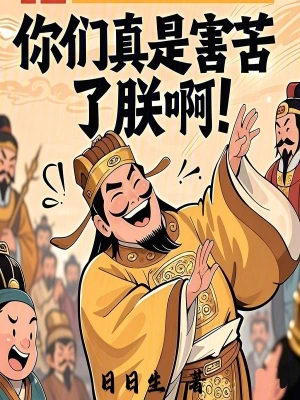 You Have Really Hurt Me.
Women are not like clothes. I beg you, can you please stop nagging at women? How could a woman speak in the Five Dynasties State of History?
Overall average. On the one hand, the writing feels stiff in some places. On the other hand, it lacks details of the war and does not reflect the role of the protagonist. He does not strategize or lead the way. Political measures are vague and scientific and technological innovations are ignored. The protagonist always feels a little less heroic. Finally, the story about the Queen of the Zhou Dynasty entering Shu is a bit plagiarized from Ten Kingdoms and Qianjiao~
This is a good entry point. Most of what I watched started from the Battle of Gaoping.
The so-called bright powder and bright black
The Ming Dynasty is special because Zhu Yuanzhang was the founder of the unified nation with the lowest starting point in the history, so the hell start is the most difficult, at least that's what most people think. From the perspective of worshiping the strong, it is naturally worthy of praise. In addition, the Ming Dynasty did not originate from the name of the ancient vassal states. It was the last feudal dynasty of the Han people. With the comparison between the Yuan and Qing Dynasties, it is naturally worthy of praise. As for the oppression of the people in the feudal era, the emperor of the Zhu family was merciful and unlucky. It depends on who he compares with. It must be compared with other feudal dynasties. And by the Ming and Qing Dynasties, China's feudal era had reached the peak of centralization, or the emperor's centralization of power. If something went wrong, the emperor would naturally bear the biggest blame. During the Han and Tang dynasties, when families were prosperous, was there little darkness? But history is what people write down and pass down. Sima Jin was the most shameful dynasty, but only Sima Zhong, a fool, cannot be hated. Then other people in power must bear the filth of that era. In order to fight for power, it is nothing more than those tricks. The relatives support the young prince and fight against the ministers. The emperor uses eunuchs to fight against the ministers and relatives. The ministers collude with each other and fight against the emperor. The world is as black as crows. I am not a fan of the Ming Dynasty. If I were not named Zhu when I traveled to the late Ming Dynasty, I would definitely rebel against his mother. But compared with the foreign races of the Yuan and Qing Dynasties, the Jin Dynasty and the weak Song Dynasty, the Ming Dynasty can be said to be the most emotionally worthy dynasty in thousands of years.
Some people in the comment area got mad because they scolded the protagonist because of his country name and surname. They didn't say how good the Ming Dynasty was in history. They just thought that the protagonist's country name was appropriate, and they became anxious 🤭
What mistakes are easy to make in historical novels❓ Before the Ming Dynasty, the emperor was not called "Emperor", the Song Dynasty mostly called him "Guan Jia", and other dynasties often called him "Your Majesty". The Ming Dynasty began to occasionally call the emperor "Your Majesty", and in most cases he called the emperor "Your Majesty". After Kangxi of the Qing Dynasty, people began to be generally called "Emperor". Princes and princes call themselves: Princes in the pre-Qin and Han Dynasties can be called "Gu", and a few can be called "Ignores". After the Wei, Jin, Southern and Northern Dynasties, the title of "Ignores" gradually became exclusive to the emperor, and princes, princes and princes can only be called "Gu" or "I". Song, Yuan and Ming called themselves "I" or "I". Before the Qing Dynasty, princes and princes rarely called themselves "this king". Starting from the Kangxi year of the Qing Dynasty, princes generally called themselves "this king". In ancient times, women called themselves: "nujia" was a modest name for women after the Song Dynasty. Women in the Han and Tang Dynasties more often called themselves "concubine", and noble women could call themselves "I" and "I". Before the mid-Ming Dynasty, most dynasties used copper coins for daily transactions, with very little gold and silver. It was only in the mid-to-late Ming Dynasty that silver became the mainstream currency. In the late Ming Dynasty, "meeting votes/deposit checks" appeared among the people. There were no unified rules. Most of them were deposits and withdrawals/exchange receipts from acquaintances or local circulation, and were not legal currency. In the early years of Daoguang in the Qing Dynasty (1823): Rishengchang Bank was established, and private banks began to issue standardized banknotes, focusing on cross-regional exchange. They were only circulated in Shanxi merchant trade circles and major commercial ports, and were not yet popular. In the third year of Xianfeng in the Qing Dynasty (1853): the official issued the Ministry of Revenue official banknotes (official banknotes), which were forced to circulate nationwide. At the same time, the network of private banknotes expanded to the whole country, and official and private banknotes ran parallel. The use of banknotes entered an explosive period and became the "starting point of popularization." High-leg tables and chairs only completely replaced the low tables for sitting on the floor in the Song Dynasty. During the Han and Tang dynasties, people knelt and sat on the tables to eat and discuss matters. The furniture was mainly low tables and couches. The memorial system was only established during the Kangxi period of the Qing Dynasty. Officials in the Tang and Song Dynasties used "memorials", "tables" and "statements" when submitting memorials, while in the Ming Dynasty they used "memorials" and "memorials". There is no such thing as "memo" or "zhezi". In ancient formal occasions, the hand-over gesture was performed with the left hand outside and the right hand inside. The right hand outside was a special "unlucky gift" for funerals. "Better greetings" is a unique etiquette of the Qing Dynasty. It was mostly used by subordinates to superiors and juniors to elders. During the Tang and Song dynasties, people often performed cross-hand salutes and bows to greet greetings when they met, and there was no such thing as "sending greetings". Before the Yuan Dynasty, lower-level officials rarely called superior officials "adult". In some dynasties, subordinates called eunuchs "adult", and in some dynasties, they called their parents and elders "adult". Beginning in the Yuan Dynasty, lower-level officials would occasionally call officials of second-rank and above "sir". From the middle and late Ming Dynasty, only officials of third-rank and above would be called "sir" by their subordinates. Officials with lower ranks could not be called "sir". However, in the late Ming Dynasty, there began to appear a few cases where officials above the fourth rank were called "adult". Before the mid-Qing Dynasty, following the rules of the Ming Dynasty, only officials of third rank or above would be called "adult". Starting from the mid-Qing Dynasty, calling officials "adult" gradually became common for lower-level officials. Attention! ! ! What is mentioned above is that lower-level officials refer to higher-level officials. No matter which dynasty, it is absolutely impossible for higher-level officials to call lower-level officials "sir". Some novels even write about emperors or nobles calling other officials "sir". This is simply contrary to Tiangang! ! ! Finally, let's talk about the problem of civilians calling officials Before the middle and late Qing Dynasty, civilians in various dynasties and generations called officials differently, and most of them called them "officials" and "masters". From the middle to late Qing Dynasty, civilians also called officials "adult". {"NickName":"Supervision and Restriction","UserId":406440657}
Mrs. Hua Rui, it's better to forget it.
The soldiers on the front line are fighting desperately, but they still think that "140,000 people have all taken off their armor", and they are enjoying the wealth of the people, and they still think that "the concubine found out about it in the deep palace". I turned around and had a great time playing with Zhao Da.
A humanoid country, although Zhu Wen is not a human
But Houliang was really good to the people. Zhu Wen turned the white land into a densely populated place, which shows that his policies were indeed effective.
The struggle for hegemony must be written about women. But there are different types of women. For example, a diva having fun. The wives and concubines of the defeated. A businesswoman from a well-off family. A virtuous wife who shares hardships. An official daughter who can make you progress. You have to think about these things. For example, with a singer who does nothing to help you dominate. Is it possible that you still want to have a romantic relationship with her? Isn't this nonsense? And fighting for hegemony definitely requires someone to rely on and help. The protagonist currently has no clan. No nephews or brothers. Minions of the No Country Party. Wifeless people help. Not even Chongba and Liu Bang, two emperors who started from the grassroots, could compare. It is recommended that the author assign a place of origin for the protagonist. Return home in fine clothes. Go to your hometown to look for available hair schools. Township party. Clan brothers come as minions. Otherwise, we can only rely on the wife clan and Yuan Cong. The basic disk is a bit thin🪖
Not to mention anything else, the author's bronze cannon is really nonsense. It weighs more than 100 kilograms and uses explosive bullets. The cannon weighs more than 100 kilograms and the cannon is smaller than an egg. It will explode like a piece of wool.
Some people are talking nonsense there, saying that the Northern Song Dynasty could move its capital to Nanjing. It is simply TM giving up its orthodox status. In the impression of people in the Tang and Song Dynasties, the establishment of Nanjing meant something that was peaceful. Because whoever built Nanjing as the capital was Soochow, Eastern Jin, Liu Song, Southern Qi, Nanliang, Southern Chen, and Southern Tang. Don't compare the Ming Dynasty with the Five Dynasties and Ten Kingdoms period. There is a difference of hundreds of years, and the productivity and production relations are different. Whenever the emperor dares to talk about moving the capital to Nanjing, just wait for someone else to wear a yellow robe. Also, let's talk about why in ancient my country, the country was always in the south. Since the Qin and Han Dynasties, the biggest threat to the Central Plains has been the Huns in the north. Since Emperor Wu of the Han Dynasty opened up the Western Regions and managed the four northern counties of the Korean Peninsula, the Central Plains Dynasty's strategy for dealing with nomadism was the Great Wall + heavy troops Without the great warm period of the Tang Dynasty, Tubo would not have been able to take shape Thousands of years after the Tang Dynasty, Tubo became increasingly miserable. As the climate cooled, the output of food crops in the Tubo Plateau plummeted. So since ancient times, heavy troops have not been in the south. According to the combat effectiveness of the ancient army, the south generally placed second-class corps. Only the first line of the Great Wall is the elite in the country, which is commonly known as the Nine Sides in the Ming Dynasty and the three major surrendered military areas in the Tang Dynasty. The threat of annihilation of the Central Plains Dynasty has always been greater from the north than from the south.
One son of Wanli occupies 40,000 acres of land, which translates to 4 million acres, which is enough land for 80,000 households and 500,000 to 600,000 people to survive. Not to mention the other princes, princes, and grandsons, who completely regard the country as their own vegetable plot. If they are destroyed well, if it is not for the Yuan in front and the Qing behind, the evaluation of Ming will at least drop a few notches.
The name of the country Ming is quite nice. Daliang, Daliang. It's equal to coolness. Zhu Wen is just uneducated. Called a beam. It's really cold
There is only one reason why Ming Neng can be praised, that is, he is caught between Yuan and Qing.
Bianliang is not suitable to be a capital, and its military is at the bottom, so it needs the so-called 800,000 forbidden troops.
The only advantage is that water transportation is developed. It's too easy to get rid of the cavalry. In order to defend Bianliang, at least half of the national power needs to be placed on it. Historically, Zhao Kuangyin did not move the capital because Zhao Guangyi was selfish and feared that the power of moving the capital would be damaged. If you choose Bianliang, you can only attack but not defend. In ancient times, agriculture was so poor and there were no railways. It would have been very expensive to build a capital in Bianliang. Dazhao himself said that after establishing the capital in Bianliang, he did not know that he would have to spend endless money and food on it. Er Zhao actually found a lie that the stability of the country depends on the wise king rather than the stability of the mountains and rivers. The problem is that he himself is a villain and has nothing to do with being wise. Luoyang is better. Jinling in the south at least has the Yangtze River as a barrier, but the development of Jiangnan was not enough at that time.
I might as well read a history book
I didn't want to criticize this trash novel, but I just can't stand it anymore. You have traveled through time to establish the Ming Dynasty. Agriculture, commerce, military industry, education, technology, organizational structure, military organization and tactics, etc., None of them are ahead of the Central Plains. Who gave you the courage to defeat Zhao Da's unification of the world? Did Liang Jingru give it to you? It's good for you to be a little ahead. Why don't I read a history book? There is no feeling of pleasure at all.
I saw someone talking about Bianliang, let me comment
I saw some people saying that Bianliang is not suitable to be the capital, so I would like to express my personal understanding. Before the Song Dynasty, the capitals of major dynasties and major military forces were basically distributed along the Yellow River. From west to east are Chang'an, Luoyang and Yecheng. Let's not talk about Luoyang. The Tang Dynasty declined after being captured by Huang Chao And Luoyang's location is suitable for defense, but not suitable for economic communication It is mountainous and has no big rivers. After Yecheng, the Murong family, Wei Ran and other great masters committed suicide, there was no possibility of a comeback in Yecheng. Moreover, the land around Yecheng was developed in the Tang Dynasty, and its nutritional value has decreased, and the soil fertility has begun to become insufficient. The area around Chang'an is equivalent to Yecheng and is no longer suitable as a capital. After being exploited by the Qin, Han, and Tang dynasties, the result of the development of the Guanlong Plain was a significant decrease in the number of forests and the destruction of the ecosystem. It was not until the middle of the Ming Dynasty that things eased. Later, it was cut down by Nian Gengyao during his campaign. In the Qing Dynasty, Shaanxi suffered more serious damage from deforestation. The conclusion is that the above three places are no longer suitable as capitals. So where else could the capital be established in the Northern Song Dynasty at that time? One, Bianliang. Two, Jinan. Third, the Northern Expedition captured Yanjing. Why not set the capital in the south? Since the Tang Dynasty, the South had just received its first large-scale immigration development, and it would not be fully developed until the Song Dynasty. So although the south had economic development at this time, its population and density were far less than those in the north. Compared with Bianliang, Jinan is located further east and is not suitable as the capital of the Northern Song Dynasty because it is too far away from Xixia. In the end, the Song Dynasty settled its capital here out of desperation.
What's the point of being lustful? The founding emperors usually had very strong desires.
The founding emperors must have been lustful people. If you don't have a strong desire, why would you want to fight for the world? Just be a prince. The difference is that a wise king has self-control, while a foolish king only wants to enjoy himself when he becomes an emperor. Let's live the emperor's addiction. Women, enjoyment, are the spice of the emperor's life. Liu Bang was greedy for money and lustful, Liu Bei liked fine clothes, Cao Cao liked collecting wives, Li Shimin killed Li Yuanji and treated his wife as his concubine. Writing or engaging in politics is not a waste of energy. If you keep suppressing it, you will become a psychopath. As long as you don't kill people for fun and don't be overly arrogant and licentious, it doesn't matter.
This novel is completely plagiarized from the author Xifeng Qian's work "Ten Kingdoms and Thousands of Beauties". If I hadn't been a reader long enough, I would have gotten away with it.
Tooth Soldier Quotations
Ya Bing: No reward will be given. Why should I help you fight the war? Yabing: I got all the rewards. Why should I go to war? Tooth Soldier: Commander in chief is incompetent. The army was defeated. Still reluctant to give out rewards. To be killed. Yabing: There will be an attack tonight. It is appropriate for the public to disperse all his property to serve as military supplies. Yabing: Jiedu is dead. You go borrow money and give rewards. Brothers recommend you to stay behind🙂🙂
One shot to the end, I see to the end. The rigor of polished history looks okay.
This author is true🧠🈶💩, he can forgive you even if you have breakfast, are you kidding me?
What was the foundation of the Ming Dynasty?
It's the health system! It's the health center! It's the health center! Hereditary guard!
Map
The last picture of Nanhan
Has the author never seen a woman? So sexually repressed?
I won't talk about the Lucky girl before, but I will also remember the female doctor. It's very powerful now. The soldiers will send you a message when you are demoted. In order to confirm that you are still alive, go back and see if you died in the battle. You turn around and ride in the same car with someone else's widow and arrange a breast-grabbing plot? ? ? Is it too depressing?
Rubbish
The protagonist is a transcendent. Everyone knows the most basic economic common sense. The protagonist, the emperor, is so stupid in this chapter. He is a completely reckless man and does not understand any economic common sense.
666 Massacre of the City So what's the difference between you and Cao Cao's Manchus? There's no distinction between Han people and Khitan people.
1. The main force of the Khitan had been severely damaged in the decisive battle and was unable to organize large-scale reinforcements; the Yanshan Pass was completely locked, and Youzhou was completely turned into an isolated city, with no possibility of external relief; 2. The food roads were smooth, so there was no need to worry about being attacked by supplies, and the army could be stationed for a long time; the main force could farm on the spot, alleviating the pressure of transporting grain to the rear; 3. There were 300,000 people in Youzhou City, and the food reserve limit was six months to one year. The more people there are, the faster the consumption will be. If the stalemate continues, famine will inevitably break out in the city, and self-defeat is the outcome recognized by everyone; 4. The time bonus is entirely on your own side, there is no need to compete for speed. The current situation of military strength, the most fatal contradiction The total number of forbidden troops in the country is only 300,000. The West Route Army was defeated early, losing 40,000 to 50,000 elite troops; Then the main force fought decisively, and another 20,000 were lost in the battle; Now if we forcefully attack Youzhou, we will need to add 20,000 forbidden troops. The total net loss before and after was about 80,000 core elites. The ancient elite imperial guards were not farmers recruited temporarily. Training, armor, and actual combat experience all need to be accumulated over many years and cannot be replenished in a short time. These 300,000 forbidden troops are the trump card in the protagonist's hand. They can intimidate the vassal towns internally, prevent civil strife, and suppress the Khitan externally. The army's casualties have reached the limit of endurance. The whole army can barely maintain itself by relying on the "Northern Expedition is expected to be a general trend." Once huge casualties occur again, the morale of the army will be easily shaken. Core slot: Use non-renewable elites to exchange for waitable results 1. There is no scarcity of income Youzhou will surrender sooner or later. The difference is only whether it is won half a year earlier or half a year later. Taking it early will not change the overall situation of Khitan being seriously injured, and taking it late will not lose its strategic advantage. 2. The price is unaffordable Twenty thousand elites are a real and permanent loss. The balance of factions in the court is only a matter of internal affairs, and there are many ways to reconcile it: dividing jurisdictions after the war, granting land rewards, promoting subordinates, and rewarding people with false titles. The stupidest plan is to drive soldiers to death and rely on their blood to create war merits to balance the court. To put it bluntly: The game in the court is the upper-level chess game, and the elite army is the foundation of a country. The upper-level chess game can compromise, delay, and exchange interests; once the foundation is hollowed out, all power and tactics will come to nothing. Extending a key point: a misunderstanding that many online writers are prone to fall into Many authors who write about hegemony and historical novels will have an illusion: The power of emperors = checking and balancing factions at all times, and giving priority to balancing the government at all times. But truly mature strategic thinking has a bottom line: during large-scale external wars, internal political checks and balances must give way to the overall military situation. The first priority in wartime is to preserve military strength and achieve strategic goals; factional conflicts can be dealt with slowly after the city is captured and the army is reorganized. The protagonist's current operation is equivalent to: a sure-win game, just to realize the victory as early as possible, and take the initiative to cut off his arm.
It's getting worse and worse. How good the writing is in the front, but I can't stand it at all in the back. I don't know what I'm thinking, especially after becoming emperor, I feel like someone else has written the same thing. After looking at the latest chapter, I just want to say, you should change the country's name and write nonsense.
What are you writing? The more you write, the more embarrassing you become.