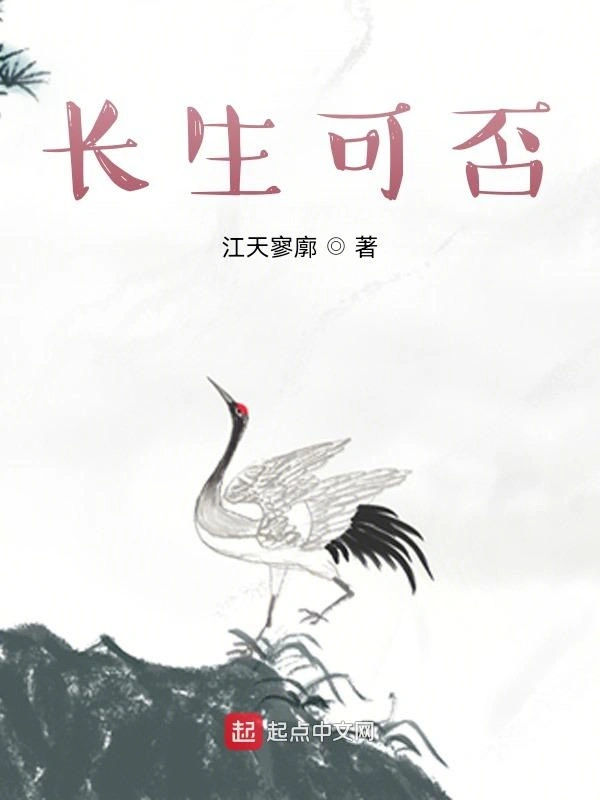
Is It Possible to Live Forever?
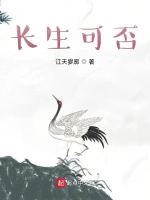
长生可否
- Status
- Completed
- Length
- 1.2M Words
- Genre
- Cultivation
- Audience
- Male
- Subgenre
- Cultivation Civilization
- Updated
- 2y ago
- Source
- Qidian
Stats
Tags
Synopsis
Reader comments
In booklists 7
Drifting Calligrapher
I am here to thank everyone for sending me 🌹🌹 horror city Lingluo Ring Become an Immortal through a Hundred Refinements Immortal Ni great master Cover the sky prehistoric creation Favoring Ming tycoon The Story of Time and Space of the Six Dynasties Become a magic stick in the Song Dynasty Primordial Yuanlong Prehistoric Dragon Lord Marvel's Soul Master Pirates of Heaven holy market Zichuan Unscientific news spread every day The First Village of Tang Dynasty Ming tycoon Super travel of time a


I Like More Couples and See More Seedlings
Basically, they are books that can be read
Hodgepodge
The halo of greatness is useless.

Committed to Digging for Seedlings, Old Bookworms Put Out Book Lists
Recommended by long-time bookworms, don't be surprised if it doesn't match your taste. After all, tastes are different. Although my introduction is simple, the books are all good books. I will write down all the good books I have read. Well, as long as I can still write up, haha. There are various types, don't worry, there will always be one you like in the future, click and follow, 😊I can't add more for now, I will add if you can, sorry, so if you like the book, click and like it, it will be tr
Crescent Warehouse
Call for newcomers and archeology for the elderly
Books That I Think Are Good
A more logical novel~
🧐Taste Recommendation
Personal recommendations
Readers also read
 Guixuxuanji
 Xuanjun
 Immortal Travel
 Your Magic Weapon Version Is Too Low!
 Never Walk Alone!
 The Ming Dynasty and New Rome and the Infinite Divine Machine
 Taishang Jinque
 Daming: Have I Become Wanli's Portable Grandfather?
 I Am Drawing a Hot-Blooded Episode in the Zhiyu Episode!
 Immortality
 True Lord Chilong
 A Sword Flies to Ask for Immortality
 The Great Song Dynasty Brought Literary Giants
 Mountain Ghost Edict
 Fisherman's Chant
 There Are Knights in Blue Star
 I May Be a Bit Strong
Your writing style is very good and very serious, but you have neglected the two most important things about the novel, the first is that it is interesting, and the second is that it is popular.
Famous science fiction novels often consider the readers' knowledge and try their best to write them in a popular way, instead of focusing on knowledge and theories that readers are not interested in, often brushing them off. Why does the author, on the other hand, completely ignore whether the readers are interested or understandable, and devote a large number of chapters to that mysterious and boring truth? Is this the pride of the author? It's your business if you don't understand.
This is the second time I clicked on this book When I clicked on it for the first time, I saw Tang Daren's stuff, so I patiently read eight or nine chapters out of curiosity, then decisively collected it and added it to my bookshelf, because I knew this book was not something I could read at that time, and I was too impetuous at that time. Now after clicking on it this time, the more I read, the more surprised I feel, but at the same time, the more I read, the heavier I feel. I don't know how to describe this heaviness. It may be caused by the incompatibility between reality, novels and the spiritual level. After watching it for a while, I feel depressed. The author talks about spiritual practice very well. The purpose of Taiyi Jinhua, the origin of Qi body, and some things about cultivation. Seeing that there are so few comments, I still feel that good things can only be appreciated by reading deeply.
Not bad, not bad! Not enough! Guiding poison (reading) is finally no longer poisonous
😁
The book is filled with a sense of dissonance. It is described as for the sake of the people, but in fact it is just a bunch of speculators who pin their hopes on the immortal emperor. It can be said that it is more ridiculous than the stocking shop. The above is not a big problem. The big problem is that the guidance of revolutionary theory results in the fairy emperor that the revolution wants to overthrow. The whole book looks like a huge joke.
Good guy, you lied to me a hundred points before you complained. The author definitely didn't have a deep understanding of Taoism. He just talked about the most basic Longhu Mountain. How could he agree with Pangu Kaitian? My dad is a Taoist priest, okay? The book is a good book, but I don't deserve it! There are thousands of words to say, but I don't know what to complain about. It makes my head hurt when I read it. When I read the Twenty-Four Histories, I didn't feel so uncomfortable when I recited the Analects. In summary, people who want to read it should go and see it. People who don't want to read it don't need to spend money on it. The author doesn't know how to write about a female protagonist. In fact, he doesn't have to write about it. I feel that there is no sense of inconsistency at all with the female protagonist. Forcibly adding it is like the number of words in water.
After reading more than 20 chapters, the writing style is beyond praise, surpassing most people, the content is not perfunctory, and it is obviously well prepared. There's probably a reason why it's not popular. Redundant content. There are long sections about the "Tao" setting, and only a small part of the entire chapter is to promote the development of the plot. This is almost the case in the previous dozen chapters. This is not to exclude the content of these practice settings, but you have too many of them. "Settings" are constantly introduced, but the protagonist never officially starts practice. The content has no climax at all and lacks the desire to watch it in one sitting. It is simply called "high-end water". The creation of the protagonist's character gives people the feeling, just like what the heroine commented, in one word: dull and a little silly. But at the beginning, it was explained that the protagonist was a time traveler and was sixteen years old before time travel. The protagonist in the article did not look sixteen years old at all. On the contrary, it was very consistent with his current age of five or six years old. To put it bluntly, most people didn't come to see how a five- or six-year-old child grew up step by step. They came because of the title. As a result, it was uneventful from beginning to end when they came in.
It's actually quite interesting, but a man who has lived for more than 20 years is crushed by an eight-year-old child in all directions. Could it be that the protagonist is dumbfounded on the mountain. . . . . Maybe it's because I've never seen an eight-year-old child prodigy, but the signs of raising one side are too obvious.
Regarding whether Hong Bao has been to America or not?
Regarding "1421: China's Discovery of the World" mentioned in the previous chapter, as well as the Ming Dynasty's arrival in America, you can check Hong Bao's epitaph. The epitaph mentions that the sky is tens of thousands of miles overseas, which is two different locations from the sky in the general sense of the Ming Dynasty. Ma Huan's "Yingya Shenglan" has very detailed records about the Tianfang Kingdom: "From then on, we took half a day's journey to the Tiantang Temple, whose hall is named Kai'abai. The outer wall city has 466 gates, with white jade pillars on both sides of the gate. There are 467 pillars, 99 in the front, 110 in the back, 132 on the left, and 133 on the right. Fifteen. The hall is built with five-color stones and has a square roof. The interior is made of five large agarwood beams and the pavilion is made of gold. The walls are covered with rose dew, ambergris and earth, and the fragrance is endless. Two black lions are used to cover the door. Every year until December 10th, people who have traveled a long distance will come to worship in the hall. A piece of silk was cut off for inspection, and the king then woven a cover over it, which remained intact year after year. On the left side of the hall was the tomb of Saint Sima Yi, whose tomb was covered with green. It is made of clay and gemstones, one foot and two feet long, three feet high and five feet wide. The wall surrounding the tomb is made of stacked yellow jade and is more than five feet high. Four towers are built in the four corners of the city. Every week, people climb this tower to worship. Singing ceremony. On the left and right sides are the halls where the ancestors taught their teachings, which are also made of stone and are very ornately decorated. " In other words, the Tianfang mentioned in the Ming Dynasty generally refers to Mecca, but this is obviously inconsistent with the distance mentioned in Hongbao's epitaph. It means that Hongbao's Tianfang is a place farther away. Comparing the map, Mecca should be in Europe or America. The Xuande gold medals unearthed in the eastern United States in the 1990s prove from the side that the Ming Dynasty had the ocean-going shipping technology to reach the Americas. To sum up, Hong Bao's arrival in America cannot even be regarded as fiction or fiction. Although this is wrong with the history we learned during compulsory education, it is probably something that can withstand scrutiny and interpretation.
Thoughts on the current book environment
Welcome to discuss I think the biggest impact of this book is the construction of a Huawei-based cultural communication system. The refutation of a series of known fake cultural relics makes people think about the world line if Huaxin culture can develop. I hope the author can bring a more exciting world on this basis.
The writing is good, but it's too slow and I couldn't help but jump through it. The protagonist is a child, so there's no sense of involvement. It's hard to get popular when writing articles about cultivating immortals like this, because it's too pyrotechnic. Not to mention transcendence, why does the protagonist come into the world to save all people? There's nothing fairy-like about it. I can't stand it if my heart is not calm.
The quality of this novel can instantly beat more than 90% of current online novels. Why are there so few readers?
Why would the Celestial Master of Longhu Mountain agree with Pangu's creation of heaven? When Zhang Daoling established Taoism, he believed that Taishang Laojun was the first god in the world. Most Taoist classics also mention Taishang as the creator of heaven, and in Taoist belief, Taishang Laojun is the creator of heaven and earth.
How to put it, I feel it is well written. The explanatory perspective and the explanation of major historical events in the late Ming Dynasty are very novel. It is no longer a scripted narrative, but a bold speculation based on the existing information. The angle of entry is novel and unconventional. There is also a very special explanation about personal practice, rather than the kind of practice that is just a matter of giving the method, avoiding the appearance that the monk's own practice is like a rootless tree or a sourceless water. When a tall building rises from the ground, one should first understand the rationale and nature in practice, and understand the basic principles in order to walk out a broad road step by step. This is rarely reflected in many books. After reading through, I feel that the author's writing is very rigorous and realistic, and the description of the principles of cultivation and the development of the story is also detailed and appropriate. Regarding the character creation, the writing is also distinctive and vivid. At least I am very impressed with the main characters currently appearing. Even the current villains' behavior is in line with their respective status and status, and they also have corresponding motivations for doing things. The villains also have brains, which is good. I hope the author will work hard!
About the ruins mentioned in Chapter 254
If nothing else, it should refer to several giant ruins excavated on March 3rd. The Nihewan Basin generally refers to the Yangyuan Basin, and broadly includes the Yuxian Basin, Zhuolu Basin, Huailai Basin and the Datong Basin in Shanxi. Archeology has discovered more than 500 Paleolithic sites from the middle of the Early Pleistocene to the end of the Late Pleistocene, dating from more than 1.7 Million to 10,000 years ago. The Maquan Gou site group confirmed 17 different stages of ancient human cultural layers between 1.76 Million and 1.26 Million years ago, and 7 cultural layers between 1.36 Million and 1 million years ago were discovered in the Xiaochangliang-Donggutuo area. Well-preserved footprints of steppe mammoths were found in the second cultural layer of Maquangou, and the third cultural layer revealed a scene of ancient humans hunting and dismembering steppe mammoths. In the IV cultural layer of the Shigou site, a clear ancient lakeside gully in Nihewan was revealed. More than 2,000 animal fossils and stone products were unearthed, with more than a dozen animal species. Some bones preserved traces of cutting, smashing and gnawing by carnivores. Multiple groups of stone artifacts that can be pieced together continuously were discovered, and the overall scene of ancient humans making stone tools and dismembering animals for meals 1.5 Million years ago was discovered on the shores of the ancient Nihewan lake. The Donggutuo site has obtained systematic age, environmental, and sedimentological information, revealed the formation process of the site and the adaptation model of ancient humans, and provided key materials for studying the relationship between the evolution of the Nihewan ancient lake and early Pleistocene human activities. The Maliang-Hougou Site Group preserves nine cultural layers dating from more than 800,000 to 350,000 years ago. The Banjingzi site unearthed prefabricated and repaired stone core peelings dating from 100,000 to 86,000 years ago. Fire relics and sites for dismembering and processing animal resources dating back 45,000 years have been discovered at the Xibaimaying site, which is speculated to be a temporary camp for ancient humans. It provides important information for exploring the late Pleistocene human survival model in the Nihewan Basin and even in East Asia. Relics of stone leaf technology dating from 29,000 to 27,000 years ago have been discovered at sites such as Youfang, which is of great value for exploring the emergence and spread of stone leaf and fine stone leaf technology in North China and for cultural exchanges between the East and the West. Fire ponds, fine stone leaf technology stone tools, decorations and pottery shards dating back 20,000 to 10,000 years ago were discovered in the Hutouliang site group, which provides scientific and reliable stratigraphic and cultural basis for exploring the transition from the Paleolithic Age to the Neolithic Age.
No, I originally thought it was a purely fantasy novel about fictional history. The subject matter was very good and very appealing to my taste, but later I saw that politics and officialdom accounted for a large proportion. Especially the part involving reform is so ideal. The author wanted to write so much that I felt it was a bit empty. Maybe I am old and have a rigid mind, don't blame me
There's no sense of immersion! The protagonist is a time-traveler, and the writing is so simple and childish. The protagonist is still a five- or six-year-old child. He wants to be strong but not powerful, and he wants to be knowledgeable but has little knowledge! The author set up a sentence that the protagonist is a born immortal and knows it from birth, which solves the problem that the protagonist has to transfer all the knowledge from his previous life, and it is not awkward, and all the supporting characters agree with it! Moreover, when the protagonist was five or six years old, he began to worry about the country and the people. He had the mentality of a saint and wanted to do something for the people every day. The key point is that your protagonist is very simple and has no scheming! A time traveler in the 21st century has become like a saint. He always wants to do something for the people and change the past. Otherwise, he feels sorry for himself. Is this a sense of superiority over the common people in the past?
The gap between the protagonist and the heroine is too big. It feels like the heroine is the one who has traveled through time. It would be better if the heroine appeared later, so that the protagonist would know more and not look like a fool in front of the heroine. The contrast would not be so big. The protagonist in chapters 21 to 23 is completely a foil to the heroine. I feel that the protagonist is very stupid, very stupid, very stupid. The 16 years in the previous life have been wasted. Maybe the sense of substitution is too strong. It is very annoying to watch.
Three pieces of advice for authors and readers 1: Writing online novels is like begging for food from a fool. Two: The vast majority of people in the world are not smart. Three: This book is not suitable for those people. I like it very much, but author, many people nowadays don't have the habit of reading. If you just like it as a hobby, then that's great. I will always support it. If you intend to make a living, then the reality is cruel, and it is very difficult to beg from a fool.
The bourgeoisie has destroyed all feudal, patriarchal and pastoral relations wherever it has gained sway. It ruthlessly cuts off all kinds of feudal fetters that bind people to their natural superiors. It leaves no other connection between people except naked interests and ruthless "cash transactions." It submerged the sacred outbursts of religious piety, chivalrous zeal, and philistine sentimentality in the icy waters of egoistic planning. It turns human dignity into exchange value and replaces countless chartered and self-earned freedoms with a conscienceless freedom of trade. In short, it replaces exploitation masked by religious and political fantasies with open, shameless, direct and explicit exploitation. The bourgeoisie has erased the sacred aura of all professions that have always been respected and awe-inspiring. It turned doctors, lawyers, priests, poets, and scholars into wage laborers it paid to recruit. The bourgeoisie has torn off the veil of tenderness that covered family relationships and turned this relationship into a purely financial relationship. The bourgeoisie has revealed that the brutal use of human power, which was highly praised by the reactionaries in the Middle Ages, was supplemented by extreme laziness. It was the first to prove what human activities can achieve. It created miracles that were completely different from the Egyptian pyramids, Roman aqueducts, and Gothic churches; it completed expeditions that were completely different from the Great Migration of Nations and the Crusades. The advantage of capital over feudalism is that it exposes all false totems of the human spirit and truly puts the naked truth before people's eyes.
This book is indeed called a divine book. Although many of the author's opinions come from Douyin and Bilibili, at least the logic is self-consistent. In recent years, the forgery of cultural relics in the West has reached an unscrupulous level. People with a little knowledge of physics will not think that this is a real antique. The more they understand these things, the more they feel that the so-called Western Renaissance is a big scam.
The book is good, but there are so many private items that I can't even read it.
It is recommended that the author patch up the character of the protagonist. A 16-year-old boy with a weak body, obsessed with Taoism to maintain his health and a high school education, knows too much! The distribution of overseas gold and silver mines, Mr. Mao's remarks, capital theory, financial theory, historical theory, etc. According to the current character design, it is really impossible for the protagonist to understand so much! ! ! Please add a patch that has an IQ of 160 and is jealous of talents, so the body is weak and eventually dies young!
I have read about twenty chapters, and the book is a good book. Unfortunately, the author's Wenqing disease is a bit serious, so it is not my cup of tea.
The writing is really to my liking. The setting of the martial arts and cultivation system, the collision and integration of technology, and the author's unique analysis of the Ming Dynasty and various historical materials made me feel even more amazing. On the way to send Deng Wengu to Beijing, various obstacles and entanglements of interests fully demonstrated the class corruption that brought down the Ming Dynasty. The entry of Deng Wengu was achieved through the intertwining of various coincidences. Watching historical articles, what you want is to see a better alternate history in the different changes.
I ask people in the world, is it possible to live forever? I asked Guo Zuo, is it possible to live forever? I asked Civilization, is it possible to live forever? These three questions are indeed majestic! After watching, I sighed: But I am uneducated, so I can conquer the world with just one sentence 😂
It's so well written. It would be great to have this novel earlier. There are some parts that should be read carefully. I can't calm down. I feel overwhelmed when I look back. There are too many fast food novels. I can't adapt to this kind of author. I came here to see the cultivator who pretends to be an immortal. You have made history for me. Pay attention when writing and read it very seriously. Please be civilized and punish the readers.
In the Ming Dynasty, the sun and moon are in the sky Sir, through the ages, the world is full of reds Sir, ask three questions, whether you can keep your mind, and whether you can fulfill your mission The more you understand history, the more awe you have, and the deeper you go into history, the more you can appreciate the fearless spirit of Mr. Daring to ask the sun and moon to change the sky The dog's head saves life, does this sun and moon represent the Ming Dynasty?
I found this book in a tidal wave, and I personally think that this book can be called "literary to convey the Tao". From this point of view alone, this book is better than most works. (Is it normal for characters to be cold-blooded?) There is also the characterization of the characters, which is particularly outstanding. Both sides of the conflict have online IQs, switching between offense and defense, and natural pleasure. Some of the plot arrangements are even more amazing, and the detailed descriptions scattered in the text are also worth savoring. ps1: I really like reading about ancient Taoist knowledge, but I still hope that the author can control the length. After all, it is a novel based on a commercial model 😃. ps2: It's best for the author to just read the comments and have fun. It's better to write the book according to his own ideas. Some of the comments are quite speechless 😏.