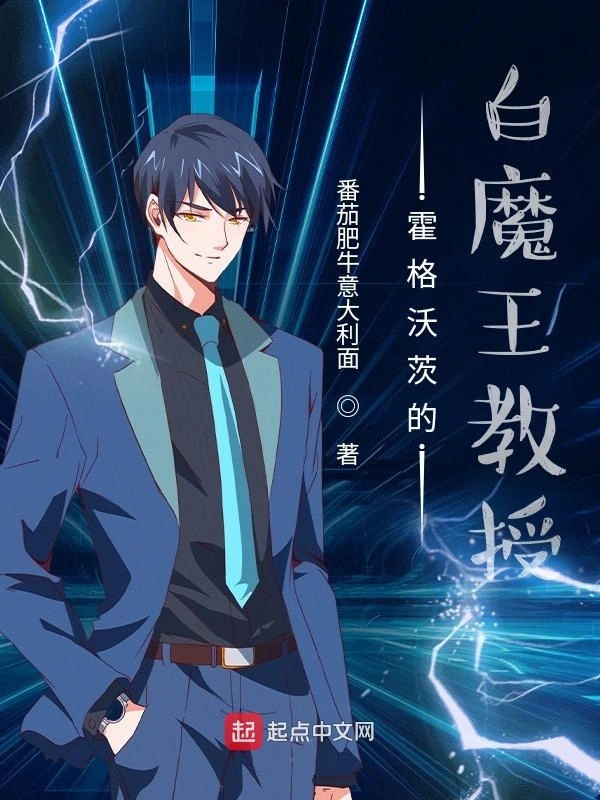
Professor White Devil at Hogwarts
霍格沃茨的白魔王教授
- Status
- Ongoing
- Length
- 376k Words
- Genre
- Light Novel
- Audience
- Male
- Subgenre
- Fan Fiction
- Updated
- 4y ago
- Source
- Qidian
Stats
0Monthly votes
5.7kRecommends
8.9kFans
175Chapters
Tags
Synopsis
Reader comments
Readers also read
 Douluo Jueshi: I, the Last Natural Disaster
 Conquer the Comic World Starting from Bone King
 New Age Melancholic Warrior
 Become a Serious Person Starting from Hokage
 Siheyuan: Start by Picking up Attributes
 He's Just the Defense Against the Dark Arts Professor.
 There's Something Terribly Wrong with My Hogwarts
 Beastmaster: I Can See the Evolutionary Path
 Immortal Who Seizes the Body
 A Certain Magical Hogwarts
 The Cursed Prince of Slytherin
 Hogwarts: Why Do You Call Me the Demon King?
Faction Nine Palace Grid (data from Du Niang, invaded and deleted): 1. Lawful Good Lawful Good is a camp that combines a sense of honor and compassion. People in this camp seem to be knights living in modern times, full of righteousness and hatred of evil. Can perform everything seriously, reliable and trustworthy. Dedicated to fighting evil, they are aboveboard, speak their mind, help those in need, uphold justice and speak out about injustice. Kindness can no longer be used to describe them. Perhaps justice is the best adjective. They are knights living in modern times. They are full of righteousness, hate evil as much as hatred, can carry out everything seriously, are reliable and trustworthy. 2. Neutral Kindness Neutral Kindness is usually called "True Kindness". They are a camp that does good without prejudice and does not violate their personal beliefs. Neutral and good characters believe that the balance of power is very important, and that unilateral emphasis on order or chaos cannot achieve the highest good. Because the entire universe is filled with creatures working towards various goals, if you want to pursue the highest good, you cannot destroy this balance, or even try to maintain it. If supporting social order can bring about the highest good, then we can do it. If overthrowing the existing social order can achieve the highest good, then we must do it. Social structure is of little significance to them. 3. Chaotic Good Chaotic Good is a camp that combines kind hearts and free spirits. People in this camp act according to their own will and rarely consider other people's norms and requirements for them. Although he likes to act according to his own wishes, he has a good heart, has his own moral bottom line and way of doing things, is kind, friendly and charitable. He believes in goodness and justice, but believes that laws and regulations are useless, and hates those who coerce and order others. He follows his own moral principles, which, although good, may not be consistent with those of society. 4. Lawful Neutral Lawful neutral characters believe that order and organization are very important sources of balance of power. Absolute order is more important than moral conscience, good and evil, right and wrong. They believe that the establishment and improvement of order can make everything stable or better. They recognize the existence and powerful significance of the law, and follow the content of the law to manage all classes in an orderly manner. No matter whether the ruling class of this society is an autocratic tyrant or a peaceful and democratic government, as long as the ruling class does not follow the rule of law and destroy the order and balance, such people do not care. There must be laws in this world, and laws must be obeyed. For them, as long as it is a reasonable and strong regulation, no matter what the result is, no matter what the cost, it must be followed without error. As long as the characters or voices who oppose it are wrong. 5. Absolute neutrality Absolute neutrality is a camp that follows the trend of the times and does not hold any prejudice. Characters in this alignment believe in the power of absolute balance and therefore refuse to take any action that is considered evil and violent. Between good and evil, order and chaos, they do not follow one in particular, but they are not committed to maintaining a neutral state of things. Such people believe that good is better than evil, and they prefer to have good rather than evil neighbors and rulers. Nonetheless, he does not commit himself to supporting good in any situation or in all ways. On the other hand, there are certain absolutely neutral figures who are committed to moderate philosophical views. They believe that good, evil, order, and chaos are all biased and dangerous extreme views. They advocate the path of neutrality as the best and most balanced path in the long run. They follow their own path and are unwilling to participate in good and evil. They believe that nature is their unchanging belief. 6. Chaotic Neutral Chaotic Neutral characters act on their own impulses and are complete individualists. Characters in this camp attach great importance to their own freedom rights and are not committed to protecting the freedom of others. They despise authority, resent restrictions and challenge tradition. They will not deliberately interfere with group organizations and social order like protestors or anarchists, because if they do so, they must change their camp to good (to save the world) or evil (to eliminate dissidents). The behavior of chaotic neutrals may be difficult to predict, but the logic of behavior is not completely random. The probability of them walking across the bridge is not equal to the probability of jumping from the bridge. They tend to follow their hearts, often ignoring legal rules and secular traditions, thinking only about how wanton they are. Although the characters in this camp hold unrealistic ideals, in terms of belief concepts, freedom always ranks first, and good, evil, right and wrong, and moral concepts are secondary to their own freedom. 7. Lawful Evil People in this camp regard a good organizational system as a convenient tool, a group united by desire, and demonstrate the negative characteristics of the collective through the organization. In theory, they will follow their own standards and try their best to get what they want, regardless of whether it hurts others. They value tradition, loyalty and discipline, but do not care about the value of freedom and life. They play by the rules without compassion or enthusiasm. They like the hierarchical system because they can rule their subordinates and take orders from their superiors. They are unwilling to break laws or promises, partly out of nature and partly because they rely on discipline to protect them from objections from those with whom they hold moral objections. Some lawful evil people have certain taboos: not killing (but will order subordinates to do so) or not harming children (if not necessary), thinking that this is "better" than lawless evil. Some lawful evil species regard evil as a belief. In addition to harming others to achieve their own goals, they also enjoy spreading evil. They may also serve evil gods or masters, seeing malignity as part of their job. The scary thing about lawful evil is that he does evil systematically and plannedly, so he often succeeds. 8. Neutral Evil Characters in this alignment dislike discipline and are not willing to abide by laws, traditions, or any "noble" beliefs, but they are not as restless and conflict-loving as characters of the Chaotic Evil alignment. They think entirely about themselves and only see interests that can benefit themselves, pure and simple, and do not care at all about the people who die because of this interest. This type of person has no preference for order and law. They will only follow the law if they can benefit themselves. Otherwise, they will break the contract without hesitation. However, they are not as restless or conflict-loving as chaotic evil ones. Neutral evil people regard their own interests as an ideal and believe in their own practices. The scary thing about the neutral evil camp is that they will have no sense of honor and object distinction at all for their own benefit. 9. Chaotic Evil Characters in this alignment will do anything driven by their own desires, hatred and desire for destruction. They are violent, vicious, arbitrary, brutal and erratic, taking whatever they can without restraint. People in this camp are seen as a cancer on civilization. All the groups they joined and formed were poorly organized. In the world of such people, only coercion and violence can make chaotic and evil people work together. Only the truly strong can occupy the leadership position, and as long as any one shows signs of weakness, he will be replaced by someone who comes from behind. What chaotic evil desires to destroy is not only beauty and life, but also the order that maintains beauty and life. Simplified version Lawful Good: Mohism/Egalitarianism Believe in strong rules and do good based on them Neutral Good: Humanism Do good within your own principles but respect the rules Chaotic Good: Human Rights/Utilitarianism Do good according to your own standards, regardless of the rules. Have your own standards for good and evil. Lawful neutrality: Legalism/contractualism Rules first, no regard for good and evil Absolute neutrality: Taoism/principleism Independent of various forces and trends, not taking sides, maintaining moderation Chaotic Neutral: Anarchism Freedom first, do whatever you want Lawful Evil: Fascism Do evil in an organized and disciplined manner Neutral Evil: Lawless Do evil for your own reasons, do not follow the rules but do not destroy them Chaotic evil: anti-social/anti-humanism Regard all beauty and order as nothing, rely solely on destructive instincts to commit evil and take pleasure in it
Why is filling the protagonist with black magic memories considered abusive?
Cassandra
Come to this post to recommend novels with the heroine Furong.
In other fanfics, the main character is a student, and they just copy the plot of buying a wand. But your main character is a professor, and you force him to buy a wand? You've just written Chapter 4 and you're telling readers that you don't have anything of your own, are you?
The runes of Anglo-Saxon Furthock (=runes), the runes in this book are based on this, infringement and deletion!
Feoh The simplest meaning of this rune is cow. However, in a nomadic primitive society, cattle represented the accumulation of wealth, so the deeper meaning of this letter is wealth. Cows are transportable or movable, and their meaning is movable or transportable wealth, thus also referring to modern money and possessions. Its third and deepest meaning is that it represents wealth in an energetic, emotional and spiritual sense. It is worth noting that Feoh belongs to Freyette, and Frey is the god of fertility. For a primitive society, this is the greatest wealth of all. Ur Ur stands for bison. The bison is essentially a beast of strength and courage. In a superficial sense, this letter represents the untamed and uncontrollable force of freedom. In a deeper sense, it represents spiritual and inner strength, physical fitness and sexual prowess. Þorn The Þorn is an offensive weapon and a defensive means, it can trap a person and block the enemy. It represents energy, including excessive violence and sexual desire. This is an ambiguous letter that can suggest good luck or suggest that good luck is about to change. Oss This is a prophetic and revealing letter, symbolizing wisdom and reason. It often expresses advice. Rad The direct meaning of Rad is travel or wheel. But it can also mean a physical or mental or emotional journey, as in some kind of long-term undertaking that requires perseverance, planning and determination to complete. Cen The rune means light, and this light illuminates the road ahead. It has a deep meaning, the light of knowledge, which illuminates the darkness of uncertainty or ignorance. It is almost certainly related to the Scots word "Ken" (knowledge or understanding). In its deepest sense, Cen represents the light of creativity and the creation of new ideas. Gyfu Gyfu is a gift, something that one person gives to another person. It has a deeper meaning, that receiving a gift places the recipient into an obligation to the giver, and perhaps its deeper meaning is that it creates a contract between the two. In a deeper sense, Gyfu implies a contract of love or influence. Wynn Wynn is the rune letter indicating reward. It symbolizes victory or a feeling of contentment and happiness and maybe even success. On its spiritual level, this letter symbolizes proximity to God. In its deepest sense, Wyn means partnership and shared joy. Hagal Hagal The rune letter represents hail, which means division, difficulty, obstruction, restriction, disease. The letter also implies that the beginning of these qualities is sudden and unpredictable. Nyd This letter represents poverty or hardship, and its superficial meaning is misfortune. It also means perseverance and patience. Implying that every experience, no matter how adverse it may be, is often a beneficial experience. Is The simplest meaning of this letter is ice. But, in its slightly deeper sense, it reflects that snow is graceful, delicate, and beautiful, but it is also deceptive, looking like it might be trying to help you when it might not. Snow can be an obstacle. In a deeper sense, it represents possible delays in planning. Emotionally, it means the cooling down of passion, but it can also mean the quelling of anger. Ger Ger means harvest, which means harvesting crops in autumn. However, it also represents the entire growth cycle of a crop during the year and, therefore, the cycle of change and growth. In a deeper sense, it represents cause and effect, meaning that you reap what you sow. Thus, in the deepest sense, this letter stands for natural justice, i. E., That you will be duly rewarded for your actions, whether good or bad. Eoh The rune means yew tree, which symbolizes death or rebirth. The yew tree is green all year round and therefore never dies. It represents rebirth or incarnation in the Valhalla in Northern Europe. In a deeper sense, Eoh represents continuity and permanence. Perðro It is a "dice shaker", meaning to gain skill and random luck. It is believed to indicate the need for a person to give them the best chance. It also represents the revealing of hidden secrets as well as pregnancy and childbirth (with the hidden baby inside). In a deeper sense, Perðro represents moderate eating and sexual pleasure. Eolhx Eolhx represents the antlers of the deer, symbolizing the hand that neutralizes danger. Thus, this rune signifies the requirements for protection and success. Since this letter represents antlers or an upwardly extending hand, it also implies reaching the Kingdom of God. Sigel The meaning of this letter is the power of the sun, which represents the victory of God over the devil, the victory of light over darkness, and the victory of clarity over blur. It is a symbol of victory. Tyr'et Tyr Tyr is the Norse god of war or the god of fair games and rules. It represents determination, perseverance and male sexual desire. Beorc Beorc is the birch tree and represents family and the family unit, as well as the joy derived from the cycle of sexuality, fertility and growth. It could be about people, ideas and new ventures. In the deepest sense, it represents rebirth, purification and renewal. Eh It stands for horse, and its simplest meaning is to represent transportation or movement. However, the horse is also a symbol of strength and speed. In its deepest sense, Eh represents spiritual progress. Because there must be a relationship between horse and rider that benefits both, the rune Ehwaz also represents partnership, confidence, loyalty and progress. Mann The - letter represents the human individual and it also shows the contradiction between the fact that humans live together as a family and the fact that we die alone. The meanings represented by this rune are believed to be unique to humans: wisdom, language, the ability to plan and dominate our environment, and the potential for advanced intelligence. Lagu Lagu is water, which means it has different appearances in different environments. Water is the most important substance in life. It represents danger (drawn from floods or sea voyages), it also represents the challenges of the journey and the risk of shipwreck. In a slightly deeper sense, Lagu illustrates the fluidity of life. It generally denotes the so-called feminine intuitive abilities, spiritual awareness, and access to the unconscious. It also embodies sexual urges. Ing Ing represents conclusion or ending. Ing, like Frey, was the god of fertility, and the conclusion could represent orgasm or fertility and each the result of completion. This positive rune represents strength, security, health and libido. In a deeper sense, it represents spiritual ambition and achievement. Dæg Dæg represents daytime and therefore light. It is the sunlight of dawn and midsummer. It also represents the spiritual light of God and therefore growth, change and development. Odel Odel represents the wealth that comes from the fact that real estate is actually the land itself. Because it is passed down through the generations, it is also a symbol of inherited qualities or characteristics that are passed down from one generation to another. Thus, in a deeper sense, it represents an accumulation or long-term growth.
I love this feeling so much!
Anglo-Saxon Fussac contains 29 letters, which were later increased to 33 letters. At the same time as it was the Frisian Fusok, but unfortunately no complete rune table has been preserved. The earliest inscription that can be found was probably carved during the wave of Germanic immigrants in the second half of the fifth century, but it was probably carved by a northern rune master because it used the Hagalaz rune of Old Fusac rather than the Anglo-Saxon version. Subsequently, with waves of immigration, these runes spread from Frisia to England. The inscription tradition in England began before 450 AD, and only about 60 runic objects have been found in eastern and southeastern England, which were carved around 650 AD. Because the evidence is so sparse and many rune objects are mobile, it is difficult to determine their time and distribution.
Well, it was 1991 when Harry was 11 years old, the protagonist was 17 years old, and Fleur was in seventh grade in 1994-1995, which means Fleur was only 13 years old in 1991. Well, the heroine was too tortured. Cassandra was born in 1997, so she may have traveled back 17 years. Um. It can be said to be very outrageous.
Are there any novels with the heroine Furong? Recommend it
More than thirty chapters are not considered a torturer! ! ! ! ! It's just the training needed to make the protagonist grow up. If this is considered abusing the protagonist, then I recommend you to read the pure and refreshing article, and the author's writing is indeed quite good 🙂🙂 Although I don't know why there are so few people.
In my opinion, time is a power that even God cannot fully control. However, when you are weak (even Dumbledore and others), any time and space are too ethereal and empty. This can easily break down. Be careful.
I never knew what the saying in the introduction meant? And not just one book is like this, but many books are like this. Xxx said so.
Recently, I have done a good job in reversing the story of Quirrell. It feels like a climax when I read it. The author will keep up the good work!
Is the author of this novel planning to involve a new worldview or introduce new powers?
It's time for the protagonist to stand up