


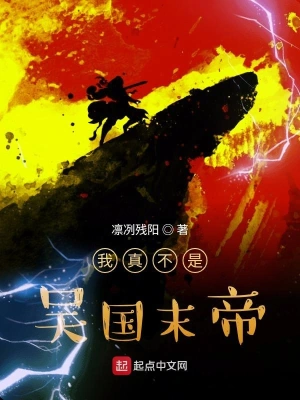
I'm Really Not the Last Emperor of Wu
我真不是吴国末帝
- Status
- Completed
- Length
- 351k Words
- Genre
- Historical
- Subgenre
- Qin-Han & Three Kingdoms
- Updated
- 5y ago
- Source
- Qidian
Stats
159Chapters
0Votes
2.2kRecs
2.7kFans
Tags
Synopsis
More by this author
In booklists 1
Readers also read
 My Father Is Wen Tianxiang, and We Win the Battle of Yashan from the Start
 Daming: Asking for the Throne at the Beginning, Lao Zhule Went Crazy
 My Only Method: I Will Add More Points to Become Stronger at the End of Ming Dynasty
 A Guide to Building Civilization in a Primitive Tribe
 Slaughtering My Way Through the Marvel Universe: Starting with The Boys
 Three Kingdoms: I, Liu Chen, Would Rather Die Than Surrender to Wei!
 The Age of the Yellow Sky
 The Road Less Traveled
 The World of the Extreme Path: Tempering My Body Through Terror
 Making My Way in the Three Kingdoms, Fighting for the Realm
 Liu Xie: I Really Just Want to Abdicate!
 Three Kingdoms: I Will Continue My Life with Direct Advice. I, Ma Chao, Is the Strongest King.
 Upright and New
 Three Kingdoms: Cao Cao and I Can Hear Each Other's Thoughts
Reader comments 22
Google Translate
"I'm Really Not the Last Emperor of Wu" Dragon Tower
Everyone can leave the supporting role they want to play here. I will choose suitable characters and add them to the novel.
The history of the Three Kingdoms is indeed thrilling! Dig deep!
I sorted out the people named Xu mentioned in "Three Kingdoms" and made a list: Xu Shao, Xu Hun, Xu Qian, Xu You, Xu Zhi, Xu Yan, Xu Yun (Wei), Xu Xiang, Xu Dan, Xu Qian, Xu Chu, Xu Ding, Xu Yi, Xu Zong, Xu Min, Xu Jing, Xu Qin, Xu You, Xu Yun, Xu Guo, Xu Ci, Xu Xun, Xu Shulong, Xuchang, Xu Shao, Xu Gong, Xu Zhao.
Jiuzhen Taishou
Gu Lang (218-272), courtesy name Yixian, was a native of Leiyang County, Hengyang County. He was an outstanding statesman, military strategist and national hero of the Three Kingdoms. He served successively as Langzhong of Wu State, Shangshu Lingshi, Junzhongzheng, Liuyang Ling, Duwei, Shangshulang, Guangzhou Governor-General, Lieutenant General of the Five-Functional Lieutenant, and Grand Zhongzheng doctor. He quelled the rebellion in Jiaozhi (today's Vietnam) and maintained the stability of the southern border of Wu State. After the rebellion was quelled, he moved to Jiuzhen to be the prefect. In the first year of Wu Fenghuang (272), he died of illness in Rensuo and was buried in Leiyang. We defended and rectified the border areas and resisted foreign aggression. The people lived and worked in peace and contentment, and the governance of southern Xinjiang was fruitful. In order to show his achievements, the "Stele of Gufu Jun, Jiuzhen Prefecture of Wu Gu" was engraved. In the sixth year of Wu Yong'an (263 years), Lu Xing, an official in Jiaozhi County, killed the prefect and tempted Jiuzhen and Rinan to betray Wu. In the third year of Baoding (268), Wu sent Liu Jun, the governor of Jiaozhou, and Xiu Ze, the former governor, to lead an army to conquer, but they all failed and the soldiers were defeated. Sun Hao, Lord of Wu, issued an edict to summon generals to quell the chaos. Officials in the Manchu Dynasty believed that Gu Lang had served in Guangzhou and had a reputation and was worthy of this important task. In November of the first year of Jianheng (269), Gu Lang led his troops through Panyu, Zangda, and marched to Jiaozhi to attack Lu Xing. Jiaozhi surrendered, Jiuzhen and Rinan surrendered. After the rebellion was over, Gu Lang moved to Jiuzhen to be the prefect.
Soochow Scholar: Yang Quan
Yang Quan, also known as Deyuan, also known as Yang Zi, whose birth and death dates are unknown, was born in Suiyang. Philosopher, representative of Chongyou School of Metaphysics. In his early years, he came to Wu from his hometown during the war, so his activities were mainly in the Wuyue area. Yang Quan was a virgin in the state of Wu. After Jin defeated Wu, Yang Quan was conscripted into Jin. Soon he lived in seclusion and wrote, imitating Yang Xiong and writing 14 volumes of "Tai Xuan Jing", and also wrote 16 volumes and 2 volumes of "The Theory of Physics". On the one hand, Yang Quan affirmed the objectivity of "the nature of heaven and earth, the principles of nature", and on the other hand, he affirmed that humans have the subjective initiative to utilize and transform nature. This is a relatively scientific conclusion drawn on the issue of the relationship between heaven and man, and it is also in direct opposition to the fatalistic thinking advocated by metaphysicians at that time. In addition, Yang Quan's excellent academic style that is deeply rooted in reality, attaches great importance to agriculture, handicrafts and other scientific and technological production knowledge, and emphasizes "the work of good farmers" and "the skill of craftsmen" is also commendable.
Governor of Xiakou
During the late Han Dynasty and the Three Kingdoms period, countless talented people emerged. They shined in their respective fields, and even those who seemed mediocre still made contributions. This article will take a look at the successive governors of Xiakou in the state of Wu. Huang Zu sat in Jiangxia County for more than ten years, and the brothers Sun Ce and Sun Quan also competed with him for ten years. Huang Zu was stationed in Xiakou for a long time. Sun Quan obviously had a deep understanding of the importance of this place during his repeated campaigns against Huang Zu. Therefore, Sun Quan not only built Xiakou City in the second year of Huangchu (221), but also appointed the governor of Xiakou, who were basically all important officials of the clan. I sorted out the successive governors of Xiakou in Jiangdong during the Three Kingdoms of the late Han Dynasty and made a list: Cheng Pu, Sun Jiao, Sun Huan, Sun Xi, Sun Lin, Sun Yi, Sun Xiu, and Lu Shu. In addition, Sun Yin may also temporarily become the governor of Xiakou. "The power was divided between Jingzhou and Liu Bei, Pu restored Jiangxia, moved the bandit generals, and died" - "Three Kingdoms·Cheng Pu Biography" [Cheng Pu was the only one who served as the prefect of Jiangxia twice. Based on "Three Kingdoms·Sun Jiao Biography", it can be seen that Cheng Pu once supervised Xiakou. From the existing historical data, Cheng Pu was also the first person in the Jiangdong camp to truly supervise Xiakou, and he also died in office. When Cheng Pu served as the prefect of Jiangxia, the administrative office was placed in Shaxian, and Xiakou was within Shaxian County] "The capital was moved to protect the generals who conquered the captives, and Cheng Pu was appointed to supervise Xiakou" - "Three Kingdoms: Biography of Sun Jiao" [Sun Jiao, the third son of Sun Jing, was of the same generation as Sun Quan. He was Cheng Pu's successor and had many experiences of competing with Cao Cao at Ruxukou. He promoted many talents during his tenure and gained Sun Quan's trust. When he attacked Jingzhou, Sun Quan even considered appointing him and Lu Meng as governors of the left and right ministries respectively] "Brother Jiao Jiao has died, and he will rule them all on behalf of him, so as to promote Wu Zhonglang and become the prefect of Jiangxia" - "Three Kingdoms· "The Biography of Sun Huan" [Sun Huan, Sun Jing's fourth son, his brother Sun Jiao died in the 24th year of Jian'an (219). He led the Jiangxia Prefecture, and apparently also took over the responsibilities of the Xiakou Governor. He followed Sun Jiao's deployment at that time, and raised Sun Jiao's The best talents are also treated with courtesy] "My younger brother Xi Si, who led the army, committed suicide because of his guilt, and the country was eliminated" - "Three Kingdoms: Sun Jiao Biography" [Sun Xi xī, Sun Jiao's son, Sun Huan only led Sun Jiao's troops on behalf of Sun Xi and his brother Sun Yin. After taking over Sun Jiao's tribe, it is possible to succeed as the governor of Xiakou] "The neighboring governor of Xiakou Mian and General Weiyuan will live and serve" - "The Chronicles of the Three Kingdoms·The Biography of Sun Lin" [Sun Lin, the son of Sun Benbēn, is also a descendant of the clan. When Sun Lin was 9 years old, he took charge of Yuzhang County on his behalf. After serving for 20 years, he was moved to the post of Lieutenant Governor of Xiakou. He was also a competent official. He died in the twelfth year of Chiwu (249)] "Yicong Zhennan" Move the army to the town, and supervise Xiakou on holidays" - "Three Kingdoms·The Biography of Sun Huan" [Sun Yi, the concubine of Sun Neighbor, he supervises Xiakou on holidays can be regarded as inheriting his father's legacy, but as an important member of the clan, he served in Ganlu Er In the year (257), he chose to drag his family and surrender to the Wei Dynasty. Therefore, he was set up as a model by the Wei State. Not only was he appointed as the Chariot and Cavalry General Yi Tong Sansi, he was also granted the title of Marquis of Wu] "Tai Zixiu was a former general. Army, Governor of Xiakou" - "Three Kingdoms: Biography of Sun Kuang" [Sun Xiu, Sun Kuang's grandson, Sun Kuang is Sun Quan's younger brother. Sun Xiu's father, Sun Tai, was shot and killed by a stray arrow when he followed Sun Quan to besiege Hefei. When Sun Xiu served as the governor of Xiakou, he made a similar choice to Sun Yi. Perhaps they both felt the pressure brought by Sun Hao. He also chose to surrender to the Jin overnight and was appointed as the Cavalry General Yi Tong Sansi] "Jianhengzhong, during the holiday, moved to the governor of Xiakou" - "Three Kingdoms·Biography of Lu Su" [Lu Shu, Lu Su's posthumous body] He moved to the post of governor of Xiakou during the Jianheng period and died in the third year of Fenghuang (274)] "In the summer of the first year of Tianji, Sun Shen, the governor of Xiakou, went out of Jiangxia and Runan to burn down the residents" - "The Chronicles of the Three Kingdoms·The Biography of Sun Hao" [Sun Shen, the son of Sun Huan, was another descendant of the clan, which shows the importance of the position of governor of Xiakou in the Kingdom of Wu. Sun Shen served as the governor of Xiakou before the first year of Tianji (277), and should be the last governor of Xiakou in the state of Wu Reprinted from Weibo "Bingbi Chunqiu Lu Shusheng"
Happy New Year🎉🎉🎉, may all your wishes come true🎆🎆🎆
Recommended book: "Wu Bamboo Bamboo Bamboo Slips and Wu Zhi"
"Wu Bamboo Slips and Wu System" is a book published by Peking University Press in 2019. The author is Ling Wenchao. Changsha Zoumalou Three Kingdoms Wu Slips are important historical materials discovered in recent years about the political, economic and social life of the Sun Wu period in the Three Kingdoms. The main contents are some administrative books of the Linxiang Marquis during the Jiahe period of Sun Wu. Most of the affairs involved were important affairs of the Linxiang Marquis, which not only truly reflected the characteristics of the daily administration of Linxiang County, but also faithfully recorded the affairs and current affairs that the Linxiang Marquis was focusing on at that time and even related to the overall situation of Sun Wu. The interpretation and utilization of these Wu bamboo slips has become one of the hot topics in the field of historical research in recent years. This book is an attempt to use these Wu bamboo slips to interpret the Sun-Wu system and even its relationship with the Han and Jin systems. The book has a clear structure, in-depth analysis, and rigorous discussion. It is an excellent academic work. Ling Wenchao is an associate professor at the School of History at Beijing Normal University and a PhD in history at Peking University. From 2011 to 2017, he worked at the Institute of History and the Collaborative Innovation Center for Unearthed Documents and Ancient Chinese Civilization Research at the Chinese Academy of Social Sciences. The main research fields are the history of Qin, Han, Wei and Jin, and bamboo slips and silk studies. The main representative works include "Compilation and Research of the Collection of Wu Bamboo Bamboo Slips at Zoumalou" and so on.
Soochow Scholar: Yao Xin
Yao Xin, a figure in the Soochow period and a native of Wuxing. He once served as Taichang Qing. He studied under Fan Ping, a native of Qian Tang Dynasty. According to historical records, Yao Xin's works include "Notes on Zhouyi" and "Xintian Lun". "Three Kingdoms" and "Book of Jin" did not list his biography. His life story is scattered in historical biographies and other documents. Yan Kejun's "Quan San Guo Wen" says: "Xinzi Yuandao, Baoding was Taichang at the beginning. There are ten volumes of Shiwei, two volumes of Yao's New Book, and two volumes of collection." Lu Deming's "Classic Interpretation" says: "Yao Xin , named Deyou. " Ruan Xiaoxu's "Qilu" said: "Zi Yuanzhi, a native of Wuxing, Wu Taichangqing." Yao Xin's birth and death dates are not listed in the "Three Kingdoms", so the exact time cannot be determined. According to research by Taiwanese scholar Jian Boxian, Gu Tan was a disciple in Jiaozhou for two years, and died in Jiaozhi in the 42nd year of his reign (Tan Di Cheng died in the 37th year of his life). Tan Zu was in the 10th year of Chiwu (247), and he was forty-two years old. Counting backwards, he should have been born in the 12th year of Jian'an (207). Yao Xin and Er Gu were both nephews of Lu Xun, and they lived together with Tan. The Biography of Lu Xun places Yao Xin after Er Gu, so his birth date should not be earlier than the twelfth year of Jian'an. In the second year of Baoding (267), Yao Xin was envoyed to welcome the gods. He was about sixty years old, and his death year was later. That is, Yao Xindang lived around the interval from 207 to 267. (See "An Examination of the Remains of Confucian Classics of the Three Kingdoms and Two Jin Dynasties Preserved Today", Sanmin Book Company) This examination is credible. "Book of Jin·Astronomical Chronicles": Wu Taichang Yao Xin created "Xin Tian Lun" and said: Human beings are spiritual insects, and their shape is most like the sky. Nowadays, people's foreheads are so luxurious that they touch their chests, but their necks cannot be carried over their backs. Taking the various bodies in close proximity, we know that the body of heaven is lower to the earth in the south and higher in the north.
Shao Chou commits suicide to avoid Guo Dan case
The case of Shao Chou's suicide to avoid Guo Dan occurred in the third year of Fenghuang in Soochow (AD 274). At that time, rumors circulated in Kuaiji County that Sun Fen (Sun Quanzi), Marquis of Zhang'an, would become emperor. Xi Xi, the governor of Linhai County, wrote a letter criticizing the state affairs to Guo Dan, the governor of Kuaiji County. Guo Dan only handed Xi Xi's letter to the court, but did not report the spread of the rumors. Sun Hao ordered the arrest of Guo Dan on the charge of "not talking nonsense". Guo Dan was afraid that he would not be able to clear himself, so Shao Chou, the meritorious official of Kuaiji County, said to Guo Dan: "This is my responsibility, you don't have to worry." Shao Chou went to the officials in charge and surrendered. He confessed that he did not report the matter and that the rumors were spreading, which was his own fault and had nothing to do with the governor. When the officials in charge presented Shao Chou's confession, Sun Hao's anger remained unabated. Shao Chou was worried that Guo Dan would inevitably die, so he committed suicide to prove his innocence. Before committing suicide, he wrote a confession saying: "I, Shao Chou, was born in the border area and I am not familiar with the way of education. Just because of my higher family status, I became an official of this county. I surpassed others and became the head of the county's subordinates. I was unable to assist the prefect in his promotion." Educate and educate the people. Nowadays, there are rumors among the people. I think this is nonsense. Although it is not true, it is not something to be afraid of. The throne is the most important weapon in the world. I hate these ugly words anymore. Hear goodbye, so I intend to hide my hatred in writing, calm down the restlessness, and return to silence, and the rumors will naturally stop. My heart always insists on this idea, so Guo Dan retracts his correct opinion and silently submits to me. It is really offending because of this. It was my fault. I didn't dare to escape the death penalty, so I surrendered. I had to ask the emperor to open his eyes and come down to investigate." The officials collected Shao Chou's body and presented it to Sun Hao, who then ordered that Guo Dan be pardoned and sent to Jian'an County to build ships. Sun Hao, Lord of Wu, highly praised Shao Chou's integrity and virtue, and issued an edict to Kuaiji counties to paint Shao Chou's paintings and hang them in temples for worship.