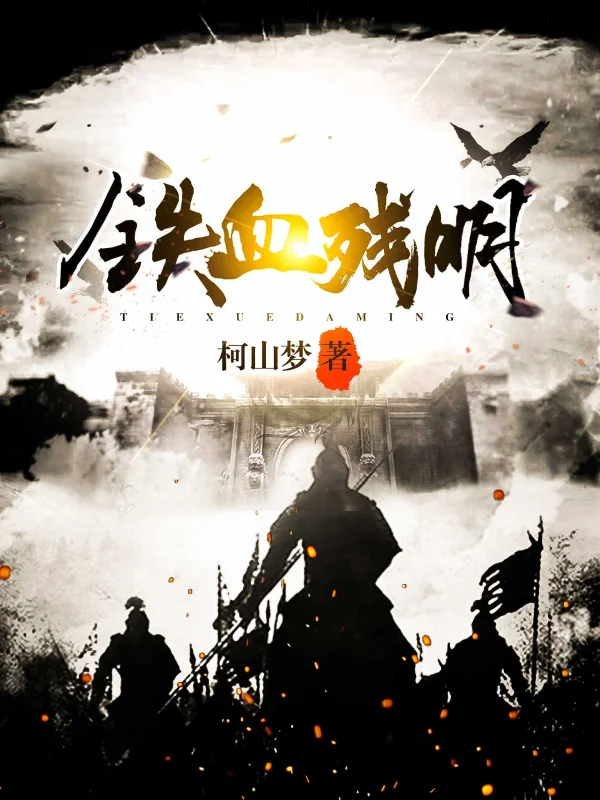
Iron-Blooded and Residual Brightness
铁血残明
- Status
- Ongoing
- Length
- 2.5M Words
- Genre
- Historical
- Audience
- Male
- Subgenre
- Song-Yuan-Ming Dynasties
- Updated
- 3d ago
- Source
- Qidian
Stats
Tags
Honours
Synopsis
Reader comments
In booklists 32
Explore more →

Always Looking for Small Seedlings
What if you were Fang? I have no books to read, I don't know which book to choose, and I don't know which one is good among a bunch of books. At this time, you need someone to tell you which book has a high praise rate and high retention rate. What are the similar books? They all exist in my circle. This is the direction for your book selection. The original intention of creating this book list is to recommend good books to everyone.
Representative Books of Various Types of Online Articles
Flowers bloom on the other side, people grow old on the river
15-Year-Old Bookworm: History, Fairy Tales, Fantasy, Fantasy, Urban Reading List
5🌟Grass jelly, 4🌟grain, 3🌟hay, 2🌟slightly poisonous, 1🌟poisonous weed To collect the book list, please click on the empty space in the middle below🌟
I Love History, Although the Real History Is Very Heavy!
Mainly time-travel novels from the late Ming and early Qing dynasties. Of course, I would also recommend good novels from the Tang and Song dynasties.
Absolutely Exquisite
None
Smile Recommends Good Books
Qidian is a relatively recommended book that I have read. Since the time span is more than ten years, the evaluation of the old book is only for reference. Continuously updating....
[Serial Novel Qualification Appraiser] (For Individuals)
Drawing on Yang Xiaobo's ideas, novels have different qualifications, which determine the achievements they can achieve. Qualification level: dull → mediocre → slightly talented → gifted → amazingly talented Shan Zhu is not averse to outsiders except western fantasy and light novels, and is a bit of an omnivore. 20260322: The list owner has been busy recently, so I will update the book list after this. Those who recommend book lists will read hundreds of chapters first and then put the valuab
Recommended by a Fifteen-Year Old Bookworm
Can't go wrong with the recommendation
The Book of Divine Works Only Recommends Classics or Seedlings That Have Been Read, Specifically to Save the Book Shortage.
I only recommend the most classic books or exciting new books that I have read, covering all genres It is being updated continuously. If you have any good books, you can remind me to add them. (Book friends can judge the quality of a book by comparing likes and dislikes)
Dust of History
Try your best to dig for gold in the sea of history books. This book tends to be serious and textual research. Fire prevention, theft prevention, eunuch prevention and literary youth prevention.



Stroll on the Tip of the Pen and Indulge in Time
Everything is imperfect, and online writing is no exception! Recommendation does not mean perfection, and complaints do not mean lack of love. Praise and criticism are the soul of this list! The third grade of online writing in the eyes of a single master Low quality, reasonable routines (lots of routines, large quantities, full control) Middle-grade fantasy without boundaries (expand your imagination and win unexpectedly) Top grade: sadness likes anger (moving people with emotion can achieve la
Ming Dynasty Historical Masterpiece
The historical article of Xiancao Ming Dynasty that I have read
Qidian Historical Article Review
Analyze and comment on the historical articles I have read, praise and recommend good works, and criticize bad works that are satirical. It attaches great importance to logic and historical laws, and does not recognize Xiaobaiwen and Shuangwen.
A Book About People Who Have Tried Poison Themselves
It's a messy book list. It should be reasonable and have a plot. If you read it for a while and find it unreasonable or too watery, delete it. They are all books you read by yourself.

Classic Sacred Books and Seedling Boost
Recommended classic online books, including completed ones and those in the process of being updated. In addition, we will also temporarily include some new books by potential newcomers. If you need to add a book list, please click Favorite to follow and send flowers. Generally, it will be promoted for one week.
Catch up on Reading & Gain Weight
Works being updated
Qin, Han, Wei, Jin, Tang, Song, Yuan, Ming and Qing
Rating and simple ranking of historical texts of each dynasty
The Books I Have Read
Just to record it for myself, I read a lot of books and read them later, so I can't tell them apart.
Good Book
Books that I personally think are worth reading
Recommend Some Books That I Think Are Good
The content of the book is very diverse, including urban, fantasy, history, light novels, and science fiction.
Personal Book List, Bookworms Love to Read It
Killing, Xianxia, American comics, multiverse
Personal Collection
Some favorite books Contains individual ratings (T0, T0.5, T1)
A Glimpse into Historical Texts
The taste of historical literature will change greatly with different stages of life. I would like to briefly recommend a few historical texts that I have read to inspire others.
It's so Good That I Can't Stop
Here are all the good novels I have read in the past few years that I can think of. They are all novels that make people want to stay up all night and read them. Use ⭐ as the rating, four ⭐ and above are worth watching.
Readers also read
 I Am a Tyrant in Nanming
 At the Beginning, Please Ask Chongzhen to Abdicate!
 Red Mansion Xiaoke
 Fu Ming 1627
 Disciples of Fangcun Mountain, Traveling Westward
 Jinting Han People
 Taiping Heavenly Kingdom 1854
 I Have a Dark Secret Martial World
 Peninsula: My Idol Is Randomly Refreshed
 Everyone Is Responsible
 Number One Scholar
 1848 Qing Dynasty Charcoal Burner
This book is suitable for readers who have never read the history of the late Ming Dynasty. The writing style is not critical, but it is like a summary of the history of the late Ming Dynasty with personal information. It forces the duality of historical figures. There are no pure bad guys and good guys Those with poor conduct and mediocre abilities in history, such as Yang Sichang and Ruan Dacheng, have become both light and dark characters in the author's works The Biography of Lu Xiangsheng and Sun The court must write about death. Yang Sichang, who killed Lu Xiangsheng, also wrote about the suffering. I felt like it was stuck in my throat In addition to seeing the protagonist climbing the steps step by step, the tragedies of the late Ming Dynasty have not changed at all. In fact, this is a hegemony novel. I don't really want to review the rough history of the Southern Ming Dynasty again. I am more idealistic. I like to watch the drama of the dragon's pressure before the loyal minister's good death.
Discussion on the setting of the protagonist's character
First of all The protagonist Pang Yu was set up as a financial liar before the Soul Transmutation, so there is really very little morality and responsibility in him. As for why we should substitute such a negative modern perspective into ancient times? This is actually related to what this book really wants to show. The title of the book is "Iron-Blooded Remaining Ming". It is an era of disrupted order, social turmoil, constant wars, natural disasters and man-made disasters. There is no doubt that the last years of the Ming Dynasty are an unbearable memory in Chinese history. How to find an appropriate entry point for this memory? From the perspective of social structure, no matter which dynasty the number of farmers is always the largest, but in the past dynasties, only half of Hong Xiuquan and Zhu Yuanzhang actually started the country from farmers. As the most important component, farmers have been at the bottom of political participation for a long time. Only when they overthrow the old forces and establish a new order will they stand on the stage of history again and again. Whether Chen Sheng, Wu Guang, or Huang Chao Zhangjiao, they all fought back against oppression. Natural disasters can be estimated and rarely become the targets of common people's struggles. Only man-made disasters have been the goal of struggle in all dynasties. The reason why man-made disasters become disasters must be those who bring disaster to others. In fact, most of the biggest officials that farmers have ever seen in their lives were officials who collected grain and taxes. As the basis of local administration in the Ming Dynasty, officials developed a complex and universal set of "rules." People lived by these rules, and the government relied on these rules to operate. It may seem inconspicuous, but it is actually the basis of a political power. As the regime weakens, these "rules" will inevitably continue to "adapt" and "evolve." Therefore, by the end of the dynasty, the reasons for the decline of this regime and the legacy of history can be roughly seen just from the local "rules". As a government figure that most people come into contact with and hate, Zao officials themselves are not well-received, whether they are Shihao officials or Tongcheng officials. Only by truly substituting into the daily life of Zao officials and the set of "rules" at the grassroots level of feudal society can we truly feel the weight of taxes, the suffering of the people, the legacy of past dynasties, social unrest, and the collapse of the country. So as modern people with normal moral character, the education and ideas we have received make us naturally feel compassion and closeness to these people. But there is always a layer of clothing between this and the operation of the real "rules". This layer of clothing prevents us from seeing clearly its vicious, terrifying, cannibalistic feudal records. The author specially chose a financial liar (I once wondered if the author was also a member of the Big A), which makes the connection between ancient and modern thoughts particularly smooth and more immersive. But simple substitution is not what the author really wants to express. From the perspective of rules, we have seen the prison inmates working in bed and renting houses to earn extra money, the street vendors who were bribed by street officials, the "clear insights" of the township mayors Li Jia and Shen Mingting, the cold-blooded meanness of the tax collectors who urged grain collection, and other exploitative methods such as kicking, scattering, deceitful mailing, and high-interest rates. Correspondingly, there are the county magistrates who are eager to make money by taking scientific examinations for their own money, the petty officials who donate money and receive a basic salary just to live by the "rules", the masters who are hired as non-staff personnel and have the power to serve as officials without real purpose, and even the substitutes who serve as jailers for big families. One by one, they are unheard of but as detailed as personal experience, so we gnash our teeth and we hate to curse. The protagonist also goes from taking it for granted at the beginning, to being tolerant and giving in without causing others to lose their fortune, to lamenting and protecting the children after encountering a sick father and a weak mother when collecting land taxes, and finally seeing the little girl being dragged away by her own uncle in the human trafficking market. They came to sell their land, but their landowners were deceived and taxed too high. The loan interest compounded, and their small family couldn't afford it. Their mother committed suicide by diving into the water, and her father was often ill. The young girl just sold herself to get a medicine to cure her father's illness and keep her younger siblings alive. But what can you do under which circumstances? No matter how much money or food you have, you will only feed it into the bellies of tigers and wolves. So after witnessing this with your own eyes, what do you want to do? An accidental opportunity gives you a lot of money and a medium-sized official position. Originally, all of this had been achieved, but the bandits came, and the father of the girl he liked and his familiar neighbors were killed inexplicably without any grievances. In the countryside outside the city, every distressed farmer family was destroyed, their food was robbed, and their houses were burned down. The little girl who sold herself to save her family was reluctant to wear the red cloth shoes you gave her until her death (perhaps she had never worn shoes in her life), but these are troubled times! You feel that what you have done is not enough, you could have done more, these innocent people, these familiar people, these people you care about would not have to die. Only greater rights and strength can protect more people. At the beginning, you were timid and cowardly, with no experience, half for your ideals, half for your life, and half for your future. You were lucky to win in battles, and you continued to accumulate experience and get promoted. You also witnessed massacres and being massacred one after another. Kind-hearted farmers were driven by rogue bandits to kill people and drink blood, and timid people were forced to climb the city and invade the city. You recognize the faces of these officials and become more clear-minded and accustomed to them. Later you learned that man-made disasters are not just caused by petty officials. There are corrupt bureaucrats above, there are rogue bandits who wantonly plunder, exile and destroy, and there are foreigners who loot, burn and kill without hesitation. There are many, many more. You meet more and more, and the troubles you deal with become more and more complicated. You did a lot of bad things in your previous life, but in this life you really want to be a good person. Starting from the gratitude of the villagers for surviving, from the trust of the beloved woman, from the happy faces of hungry people after they are well fed, maybe it is just the first sentence - "Thank you." Thanks to my brother for the candy, my mother couldn't bear the debt and drowned, so I had no choice but to sell myself. I just hope that I can get some recovery medicine for my father, and that my younger brothers and sisters can have enough to eat. I will repay your kindness in the next life." Dear readers, the story line is far from over, and Can Ming's road is far from over. As for the character setting, I can only talk about it here. The rest needs to be discussed by you and me together. People are free to decide what is good and what is wrong. Everyone is welcome to speak out.
I read it in four days. It is undoubtedly a good book.
Wanli Shenjun was exhausted after reading the book and came across this one. I started reading it on the 15th and have seen the last few pictures today. The conclusion is that it is a good book. Maybe those who have just read the book are a little surprised. The protagonist in the first few chapters seems to be a very confusing and nonsensical character. Why did he let me continue reading and reach the end? Everything is in the book. After Chapter 20, I was slowly brought into the desperate era of turmoil in the last years of the dynasty, chaos and destruction of people's families. The author restored the dark era of the Central Plains dynasty through a series of flesh-and-blood characters. The protagonist is created through a series of side descriptions to express his unburned heart. In my opinion, Miss Zhou and the little girl are more like a mirror of the protagonist, reflecting his undying kindness. He is not the neurotic character at the beginning. Instead, I think this is a bad taste of the author, as if he hopes to block some anxious book friends from the world he carefully constructed. I hope my new friends can read it with peace of mind. This book is quite good, and I am short of books 😭
As a Koda fan who has read/listened to it four or five times in the late Ming Dynasty, can I criticize it?
What I wrote before is all nonsense. After reading a few chapters, I was persuaded to quit. After reading a few chapters, I was persuaded to quit. It went back and forth several times. I patiently read Chapter 26 and felt a little familiar, but I still couldn't get excited. Only after the civil unrest can we watch it seriously. As a result, during the time I read the first 20 chapters, whether I read the comments or the comments on Zhihu, all the old fans praised it. Just... Are you really appreciative or are you just being ignorant? Yes! I admit that the descriptions in the previous chapters are very detailed, and the character descriptions are very immersive. But I'm here to see the story. I don't care about the plot of the story, but just talk about the details? Pang Yu is not only a fool in the eyes of others, but also from the perspective of the audience. Some people say that the beginning of the late Ming Dynasty was not as good as that of the Can Ming Dynasty, but due to the double penetration in the late Ming Dynasty, Ke Da used the dialogue between the two to pave the way for some psychological changes very well. And what about Pang Yu? Where is Zhou Yueru? And what about those He Xianya and his ilk? Praising the plot aside, let's just say that the plot design at the beginning highlights one thing: I can't write about time travel. In the late Ming Dynasty, Koda could not write about time travel, but that book entered the main plot relatively quickly, unlike Can Ming, who had been grinding away in the lower-level official circles for so long and only wrote about social scenes.
The best historical novel from Qidian, bar none
How to evaluate a book
To evaluate a book, you must first read it. Only by practicing can you have the right to speak, and only by reading can you have the objectivity and authenticity of the evaluation. Book friends, please don't open your mouth and say that you are the only one who is first and second. Readers who prefer novels, please tell us more about the author's story conception, writing logic, character description, scene creation, event arrangement, and more importantly, you can pay attention to personal characters, family interests, and war atmosphere. If you are interested in history, please talk more about people's livelihood, customs, officialdom system, literature and history, and even etiquette, clothing, food and beverages, and architectural styles. Book friends who are scolding, please don't open your mouth and keep silent. Please describe which sentence in that part, what thing about that character makes you feel uncomfortable, and what should be changed for the better? Is it straightforward language and poor logic? Or is it disrespectful of historical facts and wanton fabrication? Is it plagiarism and imitation, with nothing new? Or is it war and There are no outstanding features in farming, scheming and beauties? Every chapter that comes up does not have any reference to people who are praised or beaten or scolded. Please treat them as human beings. The best way to deal with human beings is to ignore them. For literary criticism that can be discussed, and the comments and criticisms are rich and reasonable, everyone should still provide support as much as possible. Books include hundreds of things, hundreds of things are related to books, people gather together, and things are divided into groups. If some people make sense, try to make others understand them. If some people don't make sense, try to say as few words as possible. If you can't make more friends after a little try, just let them go. A mature person is actually not very able to absorb and accept things beyond his inherent knowledge. We all share the same ideas, and when we come together in harmony, we are strangers in the world when we violate our righteousness.
I can't understand it, it feels like it's all a trap and no fun at all
More than 100 chapters. I am still the head of the government office, and I have sworn sworn brothers at the beginning. The protagonist is the second child, but the eldest brother is written out of the inner circle. The female character who appears at the beginning and has been throughout more than 100 chapters has a very high appearance rate. I thought she was the heroine. After a battle, her father died and then there was no chance. Too much, too abrupt; Sun Tianxiu had so much preparation in the early stage, and gave gifts and things to the protagonist, and also interacted with the protagonist's parents. I thought she was the second female lead, but it was written to death after dozens of chapters. It felt like the character regretted it after she appeared and didn't know how to exit, so she just wrote it to death. Waste of time, quit the trap
Neither iron-blooded nor blind
Now that I have read "Iron-Blooded Remaining Brightness", I have only one biggest impression: the title of the book seriously misleads readers. From the beginning to the end, it is almost all about farming, stationing troops, accumulating resources, doing business, and engaging in local power. With more than two million words, the plot always revolves around "how to develop safely" and "how to expand steadily", and basically avoids the real cruel choices in Chongzhen's last years. The problem is not to write a farming novel, but this - you can't write a farming novel during the Chongzhen period that eliminates blood, war, and sacrifice, and then call it "Iron-Blooded Remaining Bright". Where is Can Ming Can? Remnants in the background board. Where is the iron blood? Reflected in the title. As a civil servant, the protagonist has been a bystander to the broken mountains and rivers for a long time, and the times have been reduced to stage scenery. As long as the place can protect itself and live a good life, it is enough to advance the plot. The so-called "remnant brightness" has not become a proposition that must be responded to head-on. If this was a "Record of Farming and Trooping in the Late Ming Dynasty", I would not have any objection; But it is called "The Iron-Blooded Remaining Ming Dynasty". After writing two million words, I am still farming and stationing troops, which essentially means that this is not a problem of rhythm, but a fundamental mismatch between the creative direction and the title of the book.
Reading Iron Blood Can Ming is much more tiring than Late Ming
I read historical texts, and I prefer to read historical textual criticism texts than non-brained cool texts, but this book hardly makes readers feel justice. The author restores a real turbulent era at the end of the dynasty, and the pain of being a peace dog rather than a person in troubled times is vividly displayed on the page. This article is perhaps the best example among all online articles of how difficult it is to perform a time-travel operation without cheats, but it does not give readers any emotional release. After the depression and tension, there is confusion as to why the protagonist is fighting. In the final analysis, there are several reasons. 1. The author chose to fight the bandits as the main line of the book (rather than establishing slaves), but the bandits and the people are essentially two sides of the same coin. Winning the bandits all the time cannot give readers a sense of justice; secondly, the book does not give the protagonist a golden finger in terms of base areas and money and food. As a result, the protagonist must constantly deal with the corrupt bureaucracy for the management and growth of the army, and make many mediation benefits. Tolerating the behavior of bureaucrats picking peaches is very real, but it will make readers unable to gain a sense of justice and identity after a long series of battles. Instead, they will feel a sense of loss that nothing has changed, but only increased consumption; thirdly, the author has created a protagonist who puts interests first, which makes it difficult to create an emotional relationship. Whether it is a barely-written emotional drama or the brotherhood of the brothers in the military camp, there is no one, and some are only intrigues and despair. To sum up, this leads to the fact that Can Ming is indeed practical and well-tested, but there is no single aspect that readers can relate to, which makes the book extremely depressing and makes readers too tired. In fact, as long as one of these three aspects can give a slightly romantic background, even if the other two aspects remain unchanged, I think it will make people more three-dimensional. Pure reality and evil require a bit of idealism and conscience to make it deeper, and vice versa.
Is "Iron-blooded Remnant" the first cjb or the first historical novel?
I found that everyone's evaluation of Iron Blood Can Ming is becoming more and more polarized, so I thought of analyzing this issue on a whim. First of all, let me give a personal conclusion: Ke Shanmeng is indeed unique in the field of serious history and military literature; there is no need to praise this book as perfect. The advantages of this book are very prominent, but it is also its advantages that lead to its "flaws." I hope to look at the late Ming Dynasty and the Iron-Blooded Remaining Ming Dynasty dialectically from the following points: 1. Historical textual research Historical textual research is actually a part that Shi Chuanwen has to talk about, but everyone, regardless of praise or criticism, actually recognizes Ke Da's ability in this area. Too detailed research may lead to lengthy sermons that affect the structure of the novel, while careless research may make it difficult to read. This is also the reason why many short stories cannot be read. In other words, cultural workers must be literate 2. Detailed description I think this is the core reason why Keda can stand out among historical texts and has so many readers. His descriptions of various scenes (especially war scenes) are unparalleled in the martial arts world, and are also what many book reviews have mentioned as "cinematic" and "imagery", which is almost the same as the "heroic" label of grenades that are afraid of water. When I first read the description of the battlefield in the late Ming Dynasty, the details of the front line, the atmosphere of war, and the pace of advancement were all perfect, and it was absolutely enjoyable to watch. In the late Ming Dynasty, this feature was further reflected. 3. Character description I believe that the mixed reviews of character description are precisely caused by Koda's extreme pursuit of scene details. This is a double-edged sword. In a war, especially in the later stages of the war, the protagonist's position is very far back. This means that if you want to present wonderful movie-like images, you actually need more camera positions. Different authors have adopted different plans for this camera position, thus forming different character styles. Grenade is afraid of water, for example. He focuses more on the generals. I have to admit that this kind of group portrait is very flattering, because everyone has their own filters and stereotypes about these famous generals in history. The grenade only needs to meet this stereotype, and it is enough to escape. Using generals as the camera is indeed very heroic, but the disadvantage is that it is difficult to grasp the larger scenes. The group portraits of Iron-blooded Can Ming are actually in place. Ke Da prefers to focus on small characters, which complements his ability to describe the details of scenes, and has created characters like Zhong Qi. The shortcomings are also very simple. The protagonist is invisible and the famous general has been out of position for a long time, which will give people the feeling of "Am I really reading a historical novel?" Especially the daily descriptions between wars are really tiring to read. It is true that your little characters are well written, but in today's fast-paced world, it is actually a very unpleasant thing for everyone to calm down and immerse themselves in this dynasty to experience the joys and sorrows of little characters in the context of the times. I think this is the main source of negative comments about the University of Science and Technology. If you can see it, you will feel that it is amazing. If you can't see it, you will feel that a group of little people are living in a camp. In fact, the son-in-law also encountered the same problem in his later period. In comparison, I think Ke Da's writing of the little characters is more vivid. However, the son-in-law used a trick to set up a new protagonist, which has both advantages and disadvantages, which will not be analyzed here. 4 The absence of emotional scenes The last problem is also a common problem in many historical novels, which is the lack of emotional scenes. I have to say that the absence of emotional scenes is actually not a big deal, but it happened to be offset by Ke Daqing's way of writing group portraits. The emotional drama itself can be used as a seasoning. Adding a little bit of it can add a bit of reading interest when there are no historical celebrities or protagonists appearing, but it is too big. . . . This is probably what is called what I gain but I am fortunate to lose my life. The emotional drama about Grenade's fear of water is also a mess, but what he wrote was a portrait of a group of heroes, and he didn't need any hormones to hook the readers. I think the emotional drama about the son-in-law is the best integrated with the main plot. Of course, everyone also noticed the problem of this book avoiding the description of war. As for writing emotional dramas to the state of Hui Ming Dynasty, it is actually not a good idea, that is, time travel love stories. To sum up, Ke Da's writing style is indeed the best, because few people can master this level of detailed description. But this is also based on his unique portrayal of small characters in group portraits, sacrificing the excitement of the daily parts, which ultimately leads to the wavy viewing experience of the two books. As the saying goes, every author has his own area of expertise. It is enough for everyone to find what they want to read and read it. It is not like putting a certain book on the altar or throwing it into the dirt.
The three-dimensional view is okay, but the protagonist occasionally speaks some modern words and abstract behavior which makes people feel a little alienated. Like a madman🤔
When the bright moon comes out, it is difficult to write Mid-Autumn Festival poems. As soon as "Iron Blood" came out, it became difficult to write about time travel during the Chongzhen period.
Comparing Wangwen and Canming is really insulting to this work. They are really different.
I read a lot of physical books in all genres, fiction and non-fiction. Among them, Tang Haoming's "Zeng Guofan" trilogy is relatively similar to Can Ming, but I think Can Ming is better. This is due to the advantage of the number of online words. The author can describe a variety of flesh-and-blood characters. Unlike other mediocre online article authors, the author Can Ming puts his excellent character creation ability into some small characters. This allows readers to have a deeper understanding of the current situation of the army, the various meticulous details unique to the bottom or top of the country during that period, the enemies and the Han people who had to rely on, and a series of extremely detailed situations. The existence of these little characters makes readers feel as if they are really living in that era, unlike other online articles that rarely describe these, but largely describe the world from the perspective of the protagonist. This is basically the common problem of the same type. Their descriptions of small figures seem to be limited to the level of generals in their own army, and rarely to the level of ordinary soldiers. Even if they are, it is a sign that the soldiers are about to perform meritorious service. The perspective of small figures at the level of disabled soldiers often exists, so that readers can clearly feel the changes in the army every moment, and they themselves also have their own biographies. This makes readers know that they will be really sad when they sacrifice, unlike other online articles that are just a series of numbers. ........... In addition to the small characters, there are also "baoyi" who are unique to that era. The incompetence of the country's corrupt army forced the abducted people to become Baoyi, and then wrote in detail about their miserable situation of being inferior to the enemy and even inferior to animals. This work is slower in process than the author's earlier work "Late Ming", but it is also more detailed. Having a Douban entry and scoring 9.3 Is already a height that all online writers cannot reach in their lifetime
Generally
5W collection, some readers are so confident.
Write down the desolation of the remaining bright days, and then you can see the character of the troubled times
After reading "The Iron-Blooded Remaining Ming", you will understand what the real chaotic times of the late Ming Dynasty were. It does not write Long Aotian's cool prose, but only writes about the struggles and planning of small people in a collapsing world; it does not pile up fictional plots, and every county government rule, squire game, and military and political operation are well-documented. The battlefield is harsh, the human heart is complex, and the narrative is calm. The desolation and iron blood of the remaining light are written deeply. The layout, writing style, and details are all top-notch. After reading it, you will know what the pinnacle level of historical online writing is.
Spy master
After reading historical online articles for so many years, Ke Da is the best writer of espionage wars among the historical novels I have read. It can be said that no one can match him. Other authors either do not know how to write espionage wars at all, or they just brush it off, or their writing is stiff. Only Ko Da's espionage wars combine all aspects and have both strategy and strategy. The grand layout at all levels and the detailed descriptions of the plan and execution. Through the psychological games and armed battles between the enemy and ourselves in spy battles, not only the characters are vivid on the page, but also we can intuitively feel that spy battles are actually an extremely important part of the war. Looking at the current situation through the book, we can catch a glimpse of the leopard. Writing all the way from the late Ming Dynasty, Chen Xin first took control of his father-in-law's fleet and asked Lu Chuanzong and others to assassinate the second master. During the Dengzhou Incident, Geng Zhongming hunted down Lu Chuanzong in close combat in the secret room, and when Chen Xin was liquidating the secret power of Chen Xin in the capital, he played a game with another spy, as well as several spy battles in this book. It can be said that it is wonderful and a movie-level enjoyment.
Thoughts on reading "Can Ming"
This book was not originally designed to cater to the trend of mainstream cool literature, such as I was instantly invincible after my rebirth. Instead, it starts from the perspective of the bottom characters in the late Ming Dynasty, and writes the darkness and light of human nature very cleverly. People have both the dark side of cowardice, greed, viciousness, and ruthlessness, as well as the positive side of kindness, sincerity, and ambition. Human nature is complicated, and no one is perfect. Unless you read a brainless cool novel, this book is obviously not. This book tells a realistic world in the late Ming Dynasty through the perspectives of many different characters and the plot design of multiple scenes. You have to be patient when reading. If you want to read the kind of book that makes people secrete dopamine and rush adrenaline at the beginning, this book is not suitable for you. It is not a cool book. It is a portrayal of the hard life of the people at the bottom of the Ming Dynasty. It is about the intrigues and struggles for power among the powerful in the late Ming Dynasty. Seizing the Power, it is the confrontation between the three forces of the late Ming Dynasty, the bandits, and the Qing Dynasty... There are many foreshadowings in the book. When you actually read that a certain foreshadowing that you once inadvertently revealed in the book suddenly appears, you can feel the ingenious plot setting of the book. I also hope that the author will not pay too much attention to some bad reviews. Time will tell whether the book is a good book. I hope the author will be faster 🤓
😆 After reading Chapter 20, I don't know where the word "iron and blood" is. . .
Let me go, it's true or not, the updates are so diligent.
I originally read it on a pirated website, but the book was so good. Now pay to watch the genuine version and support the author.
Updates are too slow
Judging from the unfolding of the plot, with this update speed, it will take ten years for this book to be completed.
Is this the true history of the Ming Dynasty's unification of the world?
I can't stand it anymore and retreat, it's all just a blow.
The more I watched it, the more I couldn't stand it. Not to mention the protagonist's insistent chatter in modern dialect at the beginning. I realized that I didn't look like a person after time travel. It took about 20 chapters to become more serious. At the beginning, the protagonist forced a woman named Zhou Yueru to be molested by the original character, and her family owed the protagonist a huge sum of money, which was equivalent to the entire family property. It also added a psychological description that was dark and disgusting. When I saw this, I immediately wanted to give up. I read the reviews and said that it would get better with changes in the future. Keep reading. After Zhou Yueru's father was released from prison this week, he was given PTSD by the protagonist's brothers. When he saw the protagonist, he became stressed. During the war, the girl was beaten to death because her father was not a local. After her father died, the woman continued to help the protagonist with things. She didn't understand the logic and thought there would be some drama later. Then this woman basically became invisible later. There is also the little girl who is called the protagonist's uncle. When I gave the little girl shoes, I had a premonition that I would need a knife. After a few dozen chapters, I did so. After reading dozens of chapters, I found that the women in this book are purely tools used to advance the plot. After using it, they disappear. And after reading so many chapters, the protagonist is still the same protagonist. He is selfish. Being a good person is still just a matter of words. He does it casually when there is no conflict of interest. In the final analysis, it is for reputation. He's too old to see that he's really an asshole protagonist, he's too toxic. Anyone who doesn't like it should get off the bus immediately.
"Iron-Blooded" is generally a failed online novel. I mentioned one or two sentences in the chapter book before, which described the little eunuch torturing the maids in the palace. I said that the writing was like a literary classic, and it had no meaning except to torture the readers. As a result, many people said that you are suitable for reading novels. I have been reading online books for about 25 years. I registered at Qidian in 2007 and spent more than 3,700 hours reading at Qidian. Of course I have read "Late Ming", otherwise I would not read this novel because of its reputation. But "Iron-Blooded" is worse than what netizens wrote, and not even a little bit worse. The worst thing is the facial makeup of the characters in the novel. Among them, Wang Dashan, Tan Laizi, Wu Dacai, Xiao Wazi, and the blackened little eunuch are the five major poisonous points of this novel. The descriptions of these five people are all failures, because they are all facial expressions. Wang Dashan's blackening after joining the refugee army corresponds to Xiao Wazi's albinism, Wu Dacai's viciousness and desire, and Tan Laizi's struggle. These are all disgusting things. As long as this book does not include these five people, it will be much better and become a successful work, because any non-facial description of other people is very exciting, but the author especially likes to write about these five people, wasting almost all the proportion on them, and torturing the readers. The protagonist created in this book is also a failure. Sometimes Pang Yu pretends to be profound, and sometimes he is very naive. Pang Ding has been following him for so long, and he still behaves like a servant. It is impossible not to have any awareness of power, let alone the inexplicable wife of the protagonist. The supporting actress is also very inexplicable. She is the one who helps Pang Yu with accounting. Her father was beaten to death, but she still works inexplicably. The most successful characters in this book are all very small supporting characters, such as Liu Ru and the private salt dealer. Because when the author wrote these characters, he did not deliberately try to create something profound about them, so they were vivid and attractive. Originally, the part about the thin horse in Yangzhou was also well written, but the subsequent training process was just a mess. I probably watched too much about KGB and so on. In ancient times, there were enough interpersonal networks. It was not easy to collect some information. It was so funny to have to practice fighting and so on. Speaking of so many senior generals, almost all of them are faceless paper figures without any psychological changes or personality changes. All the lights shine on Wu Tacai's face. Hey, I know many people can't read this book and say it's not good, but this book is definitely overrated. Anyway, I really gave up. I used to be shocked by the author's mastery of various historical materials and details, but I really couldn't stand the overall novel. When I saw the five poisonous characters appear, I had a headache, so I could only say goodbye.
Make complaints
I don't understand. It can be said that the double-crossing of the late Ming Dynasty does not know how to write about time travel, but even if a growth-oriented player like Liu Min persuaded him to quit the double-crossing, Chen Xin was quick-witted and had a great plot. Why did Xinkai have to choose a villain as the protagonist and then travel through time to do evil first? Doesn't writing like this lower the style of the novel? Can't express the intended intention? Many so-called old readers see criticism as "not suitable for you" and "novices are only suitable for novices", which is almost a specific personal attack in the Internet reader circle (after all, it implies nothing more than a lack of taste, a low level of appreciation, and even a lack of knowledge and IQ). Could it be that I felt uncomfortable after reading it, or that there shouldn't be any expressions of discomfort in the book review section? Let's take a step back and say that what you are writing is a time-travel novel after all. The so-called making up for regrets and so on, after all, it is to sell feelings to make readers happy, including the author himself. It is necessary to seriously discuss the merits and demerits of history and even use the past to satirize the present. There are many forms that can carry more views and more rigorous expressions, and it does not include finding a modern person to travel back to ancient times to compete for world hegemony. Reading a piece of fast-food literature is so superior. The author's knowledge reserve is none of your business. Why is it that it has become impossible to discuss the casting of the opening chapter, discuss the angle of description, and criticize the protagonist's gangsterism? Could it be that he is right? Isn't it right that the plot of a modern criminal traveling back in time to cheat and abduct is annoying? Shouldn't it be criticized? Is it wrong to say that the sense of substitution is low and most people disdain it? Getting back to the subject, I thought carefully about the author's choice of characters for this book, "Late Ming". I probably knew that I would be scolded for writing this way, but I still went my own way, probably because I felt that it was extremely difficult to achieve anything in the right way. In a situation where everything is muddy and muddy, only behaviors that were not recognized in normal society can work. It is said that the old society turns people into ghosts, and the new society turns ghosts into people. And if the author just wants to write about the end of the Ming Dynasty, he must put the stage in a situation where the achievements will fall apart quickly. If he wants to find a way out in this cross-section, the lower the sense of normal social morality, the more successful he will be. Therefore, "Late Ming" started brewing from the apocalypse. Chen is just a modern bureaucrat who still has lower moral standards than ordinary people. However, "Remnant Ming" must have no taboos and unscrupulous means from the beginning, so he chose a modern criminal. I feel from the bottom of my heart that most people would find it difficult to even protect themselves, let alone turn things around and rebuild the world, so I secretly agree with the internal logic of doing whatever it takes to make things happen; but I also feel from the bottom of my heart that it is impossible to create a future without moral values, and a big tree cannot grow from a rotten root, so no matter what, I still have to criticize the hidden logic of such casting. From the first few chapters, I feel that the protagonist is a shameless person. No matter how he runs into troubled times, at his core, he is a shameless person who will do whatever it takes to achieve personal gain. This kind of person has established a dynasty. What kind of people will surround him and what kind of regime will he establish? If we want to twist a crooked-necked tree back by arranging various plots, why can't it be reversed and let contemporary gentlemen with certain abilities forge ahead and grow up in ancient times before they can act? If you simply feel that there are too many normal people written about, you must be clever and write about a bad person to be new and different, I really have to say that this bad job is really messed up.
The composition of county government officials in the Ming Dynasty
At the beginning, Xiao Pang bullied others to dig out the first pot of gold, portraying "the yamen opens to the south, if you have reason but no money, don't come in." More exciting content later is inseparable from Xiao Pang's gradual success within the system. There are many descriptions of grassroots work in the book, which are solidly and vividly displayed in the author's writing, which well reflects Xiao Pang's enthusiasm for work. As a lot of historical data of the Ming Dynasty, in order to have a general understanding of this system, I have compiled some information about this aspect that I have seen on the Internet and posted it for reference.
I didn't read the book, I only looked at the comment section, and there were only two things in it: trolling and personal attacks. 1. Ladi: No matter what other writing is like, there is no bright spot and it is all rubbish. However, no matter what is written in this book, no matter whether it is logical or not, it is all good (the views of the readers of this book are not mine). 2. Personal attack: As long as the published opinions have even a little doubt about the content of the book, they will definitely be personally attacked and cannot tolerate any doubts from others.
I have read more than 20 chapters so far. The protagonist is very unlikable, at least I don't like it. The writing is good but the plot has many small poisonous points. This doesn't matter, after all, no book is flawless. And I've also heard that this book is going to be great later on. But fans of this book are very dissatisfied. Just like the idol fan circle, they always say that my brother is great and number one in the world. No input from others is allowed. Among them, I particularly hate the fact that some people keep saying that this book is the best in history and that it leads in some way. After reading this book, the others are just useless. What's the difference between this and Cai Xukun's fans calling him the nickname Big C? It makes people laugh. There are so many great masters of historical literature, and classic works emerge in endlessly, who dares to say that he is the first? Why bother the author?
Just a few thoughts that I'm not unhappy about💡Reasons for abandoning the book with more than 300 chapters
This book might as well be renamed The Great Warlord of Canming. I have read many Ming Dynasty novels, but I have never seen one that lacks class consciousness. As a time-traveler, the protagonist tries to flatter the bureaucrats without any limit, and takes pride in breaking into the landlord-bureaucratic class in order to keep his bank and gambling house alive and increase his power and wealth. He is a direct replica of Zuo Liangyu. We treat rogue bandits just like ancient people, treating them as savage beasts without any humanity. They just kill them without thinking about the reasons behind them. Of course, the protagonist or the author is not called a white lotus in troubled times, but as I said, the protagonist and the protagonist's team must have a class stance, whether they are fighting for the bureaucrats and the Ming Dynasty, fighting for the people to change the society, or fighting for personal power and wealth. I think readers who love reading about the Ming Dynasty and historical fictional novels all have feelings for their family and country. They have great ambitions to make sacrifices and dare to make the sun and the moon change the sky. You can have different methods, different routes, and be whimsical, but you can never be as corrupt and decadent as the protagonist!
New readers need to be patient, but the public is very discerning!
This is the result of my favorite historical writer voting on the Longkong Forum. Ke Shanmeng is second only to Little Monster and far ahead of other works. I hope new readers will be more patient Rules Description 1. A total of 25 writers, limited to 5 selected 2. Not included after the Qing Dynasty, such as "Xinshun 1730", "Red Dawn", "The Deserter at War" 3. Imaginary works not included, such as "The Son-in-law", "The Spring and Autumn Period of the Chu Family", "Mo Shang Xing" 4. Foreign historical topics Materials not included Omitted works Go with the breeze: "The Ming Dynasty Primary School Student" Fuchun Mountain Residence: "The Ming Dynasty" The last title: "The Warring States Career" Lucky Sulla: "The Official of the Tang Dynasty" Chris Weber: " "The Festival of the World" He Liuhun: "The Vast Sky" Red Army: "Le Huma" Yu Yan: "The Heroes of the Late Eastern Han Dynasty", "Xuande" Crab's Heart: "Song of Fufeng", "The Remaining Smoke of the Han Cauldron" Supplementary Voting Results of Whirlpool Academy