


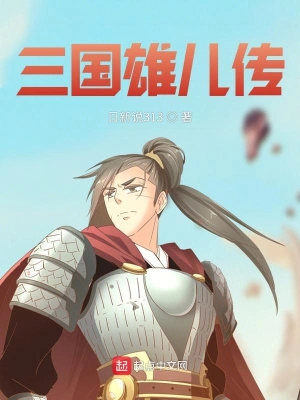
Tale of a Hero of the Three Kingdoms
三国雄儿传
- Status
- Completed
- Length
- 584k Words
- Genre
- Historical
- Subgenre
- Qin-Han & Three Kingdoms
- Updated
- 3y ago
- Source
- Qidian
Stats
188Chapters
0Votes
12.2kRecs
9.9kFans
Tags
Synopsis
More by this author
Readers also read
 My Only Method: I Will Add More Points to Become Stronger at the End of Ming Dynasty
 Daming: Asking for the Throne at the Beginning, Lao Zhule Went Crazy
 My Father Is Wen Tianxiang, and We Win the Battle of Yashan from the Start
 A Guide to Building Civilization in a Primitive Tribe
 Slaughtering My Way Through the Marvel Universe: Starting with The Boys
 Late Han: The Han Dynasty Shall Not Fall
 Han Descendants of the Jin Court
 The Road Less Traveled
 The World of the Extreme Path: Tempering My Body Through Terror
 Three Kingdoms: I Rebuked the Treatise on Hating the Kingdom and Called Jiang Wei an Amateur
 The Glorious Journey at the End of the Han Dynasty
 Father, Don't Panic, I Am Really Liu Chan
 A Liangzhou Chronicle of the Three Kingdoms
Reader comments 17
Google Translate
I hope more historical figures will appear. There are too many original characters and it feels like I'm watching a fictional show 🤐
Assembly call! ! ! Let's talk about the characters of the Three Kingdoms in the late period that you know! ! !
Welcome to share the characters you know in the later period of the Three Kingdoms period. It would be better if you attach simple deeds. (The author will also appear from time to time to update some historical deeds of the characters in the book). All book friends are welcome to participate in the discussion 🤝🤝
It's well written, but it's just a bit unhappy. The imperial government is oppressing people. How many people nowadays can tolerate the oppression. With swords in their hands, they dare to raise troops to surrender to Wei. The generals who surrendered to Wei will take the lead in the charge. As for Sima with a Han surname and a Wei surname, how many of them care about it?
It's a pity. It's actually quite well written. Maybe that's why I don't recommend it.
Traveling through the ancient times of the Nine-Rank Zhongzheng System, I thought it was a primitive and backward system... I always thought that as a modern person, having a golden finger is arrogant... What will be the end of the eternal emperor who opened the imperial examination? ? . The establishment of the imperial examination system was also one of the main reasons for the fall of the Sui Dynasty. . . .
Come on come on! Let's see how it turns around in the later period. So far, it's very well written. The plot and writing are highly readable. I look forward to it being released soon. I'll pre-order it once it's released.
Portrait of Jiang Wei
I sorted out the characters with the surname Wu in "The Chronicles of the Three Kingdoms", "The Book of Jin", and "The Chronicles of the Huayang Kingdom" and made a list: Wu Zhao zhào, Wu Zhou, Wu Bei gāi, Wu Fu, Wu Shao, Wu Mao, Wu Tong, Wu Cha, and Wu Chen. Most of the characters were active in the Western Jin Dynasty, and the one who left more records in history books should be Wu Ye. "Wu Zhou of the State of Pei was the commander of Xia Pi, and he respected the different Zhou Dynasties, and he was the leader of the imperial family. The general was engaged in illegal activities, and Zhou was guilty of it, so he accepted the imperial examination, and Ba Yi benefited Zhou." - "Three Kingdoms·Zang Ba Biography" In the end, Hu Zhi persuaded them to reconcile the conflict] "Wu Bei, named Yuan Xia, was from Zhuyi in the state of Pei. His father Zhou was Wei Weiwei" - "Book of Jin·Biography of Wu Bei" [Wu Bei, the son of Wu Zhou, became famous at a young age and also liked to criticize people. Sima Zhao also valued him very much and reviewed people with him many times. Eventually, he became an official in the Western Jin Dynasty and became Dr. Zuo Guanglu. He was also in the Kaifu and Yitong divisions. He was posthumously named "Dinghou" and had a son, Wu Fu. Xia and Mao Ji Xia are both well-known. Although their fathers, brothers, and villagers look forward to each other, no one can think of their merits and demerits." - "Book of Jin·Biography of Wu Ye" They were brothers who were equally famous when they were young. Wu Shao was appointed as a regular attendant of Sanqi, and Wu Mao was appointed as a regular attendant or servant of Sanqi. He was famous for his integrity as an official. After he was framed and killed, Fu Zhi was appointed as his superior. The book complains] "His son-in-law Wu Tong also said that Xu 'should have a place to set up a camp and have someone to support him'" - "Book of Jin·Biography of Xun Xu" [Wu Tong, Xun Xu's son-in-law, once advised Xun Xu to Manage your own affairs, so that people will rely on and support him] "Wucha, the internal history of Wuling, was harmed by his county barbarians, and he returned with a lonely army" - "Book of Jin·Biography of Wang Rong" [Wucha, who served as the internal history of Wuling during the Western Jin Dynasty, was killed by the local barbarians] "Therefore, Wu Shen, the governor of Qingzhou, wanted to follow his mother and brother, and paid Xi for many years. Empress Wen knew that he had exceeded it, and sent troops to capture Xi. "——"Book of Jin·Biography of Yu Liang" [Wu Chen, an official who served as governor of Qingzhou during the Western Jin Dynasty, was related by marriage to Yu Bing's son Yu Xi, and had supported him privately] "Brazilian Governor Zhang Yan commander Wu Zhao and the Han Dynasty commander Xuan decided to send troops to surround it, and Di asked Li Xiong for help." - "Huayang National Chronicles"
I sorted out the characters with the Qiao surname in "The Chronicles of the Three Kingdoms", "The Book of Jin", and "The Chronicles of the Huayang Kingdom" and made a list: Qiao Zhou, Qiao Deng, Qiao Xi, Qiao Xian, Qiao Tong, Qiao Xiu, Qiao Zong, Qiao Xianzhi. According to the "Huayang Guozhi", there is a family named Qiao in Nanchong. The Qiao surnames named Qiao Zhou and Qiao Zong all come from Nanchong, Brazil. Further back in time, there are also Qiao Jing, Qiao Xuan, Qiao Yingying, etc. "Qiaozhou was named Yunnan, and he was a native of Xichong, Brazil" - "Three Kingdoms·Qiaozhou Biography" [Qiaozhou was one of the famous Confucian scholars in Yizhou during the Three Kingdoms period. Du Zhen, Luo Xian, Wen Li, Chen Shou and others were his disciples. He served as an official in Jihan and Guanglu. Although he was not involved in political affairs, his descendants often consulted him. Qiao Zhou wrote "On Chou Guo Lun". When Zhong Hui and Deng Ai conquered Shu, he also urged Liu Chan to surrender, while Sima Zhao believed that he "had made great contributions to the whole country". Qiao Zhou had three sons: Qiao Xi, Qiao Xian, and Qiao Tong] "In the early days, Brazil Qiao went to the south of the town to invite troops, but there were no soldiers in the south of the town. He presented himself as General Yang Lie and Zi Tong's internal history, and recruited three Shu Han people as soldiers to conquer the prefectures and counties." - "Huayang National Chronicles" [Qiao Deng, the son of Qiao Xian, served as General Yang Lie and internal history of Zulu County in the fourth year of Yongjia (310). He defeated Li Xiong, but was eventually killed by Li Xiong] "Uncle Xi, Cha Xiaolian, Dazhongzheng of the headquarters, Mian Qiyang Order" - " Huayang Guozhi" [Qiao Xi, the son of Qiao Zhou, was once promoted as Xiaolian and served as a great official. He should also have certain talents and learning] "Uncle Tong, courtesy name Yanshao, a young celebrity, refused the order of the prefecture, Liangzhou governor Shouliang and Dongqiang Xiaowei He Pangong's three divisions and the general shogunate were ministers. In addition to Xi Ling, there were also those who wrote the biography. Qiao Tong inherited his father's legacy and was also very insightful in the study of Confucian classics] "Qiao Xiu, courtesy name Yuan Yan, Brazilian" - "Book of Jin·Yi Yi Biography" [Qiao Xiu, the son of Qiao Xi, he lived in seclusion all year round and refused recommendations from all parties. With his good reputation, he was able to survive during the war. It can provide some shelter for fellow villagers] "Qiao Zong is a native of Nanchong, Brazil. His ancestors Xianzhi has the same name in the West" - "Book of Jin·Qiao Zong Biography" [Qiao Xianzhi, Qiao Zong was a figure in the Eastern Jin Dynasty, and his grandfather Qiao Xianzhi was "Han Sikong", who was probably also from the Eastern Han Dynasty]
I sorted out the characters named Suo in "Three Kingdoms" and "Book of Jin" and made a list: Suo Zhanzhàn, Suo Jing, Suo Kun gěng, Suo Suo quǎn, Suo Qiú, Suo Yu yù, Suo Chen chēn, Suo Zhěn, Suo Yong, Suo Fu. The most famous person here in later generations is undoubtedly Suo Jing. In fact, "Book of Jin" contains many characters with Suo surnames, but they appeared later, especially in "Book of Jin·Zhang Guizhuan", there are several people with Suo surnames from Dunhuang County. "Guan and Fufeng Neishi Dunhuang Suo Jing was good at cursive calligraphy" - annotation of "Three Kingdoms·Wei Jian Biography" [Suo Jing was a famous calligrapher in the Wei and Jin Dynasties. He inherited Zhang Zhi's cursive calligraphy and named his own glyph "Silver Hook Hao Wei". His calligraphy works can still be seen today. Compared with his achievements in the field of calligraphy, Suo Jing's achievements in political affairs were not so dazzling. In the end, he became a general and was posthumously awarded the titles of Taichang and Sikong. He has five sons: Suo Kun, Suo Fu, Suo Qiu, Suo Yu, and Suo Wei. Among them, Suo Yu was awarded the title of Marquis of Anchang Township, and the youngest son Suo Wei is the most famous] "Suo Jing, courtesy name You'an, a native of Dunhuang. His father Zhan was the governor of the north." - "Book of Jin·Biography of Suo Jing" According to the records of his "official family for many generations", Suo Jing's family was quite prosperous in the late Han Dynasty and the Three Kingdoms period] "Liang Fen, the general of the Wei, was the situ, Qu Yun, the governor of Yongzhou, was the envoy, the leading general, and the official recorder. Suo Wei, the governor of Jingzhao, was the right servant of the minister" - "Book of Jin·Huai Di Ji" [Suo Wei, Suo Jing's son, Suo Jing was responsible for He had high hopes, and Suo Wei was indeed the most accomplished among his descendants. He served from an official in the Western Jin Dynasty to a general of Hussars. Together with Suo Jing, they became famous all over the country and were called the "Five Dragons of Dunhuang". However, they died early, and only Suo Jing became famous in the world] "Suo Fu, the Taifu soldier who joined the army, spoke to Gui Yue" - "Book of Jin·Biography of Zhang Gui" [Suo Fu, the Taifu army soldier under Zhang Gui, who once suggested the restoration of the five-baht coin to him, should also have been born in the Three Kingdoms period]