


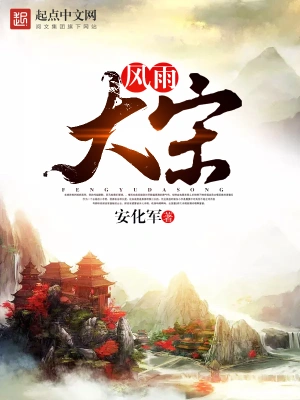
The Stormy Song Dynasty
风雨大宋
- Status
- Completed
- Length
- 3.1M Words
- Genre
- Historical
- Subgenre
- Song-Yuan-Ming Dynasties
- Updated
- 6y ago
- Source
- Qidian
Stats
Tags
Synopsis
More by this author
In booklists 53
Explore more →
Farming Fiction and a Nursery for Promising New Reads
Reading is like savoring delicious food. A good book can keep you hooked and broaden your horizons. Books are like portals that let you glimpse the wonders of another world. I'm open to recommendations, but this list only accepts novels with consistent logic. No need to recommend formulaic stories with nothing new to offer. Also, don't self-promote books that clearly aren't pastoral fiction based on the title or blurb. It's best to recommend directly in the comments using your author account, so
If the Spring Breeze Had Pity for the Flowers, Would You Let Me Be Young Again?
A record of the years


Personal Collection of Premium Books I’ve Subscribed To
Handpicked favorites from my subscribed books
Books I Like, Maybe You Will Too
I'll add to this list from time to time. Recent reads: Ming Zun, Restarting Life, Reborn in 1993. Who Still Starts a Legitimate Business After Rebirth?, I Saw Everything, Reborn in 2008: Rising from Knockoff Phones, Reborn in 1993, Shushan's Earth Immortal Who Guards the World, Immortal Corpse in the Mortal World From the Strange and Supernatural to Longevity Through the Paper-Folding Secret Manual, Humanity's Revolutionary Alliance, 1917 My historical-fiction gems: The Ambitious Man of the Warr
As If an Old Friend Had Come
In the bloom of youth, I dream without knowing. When I wake, I must return.
Brother Xun's Three Flavors Study
🦔🦔🦔 Brother Cha sent me here 🐗🐗🐗 Run Tu, you'll never catch me 🚶🚶🚶I want to watch the drama 🍉🍉🍉Xun, come have some gossip (⋌▀¯▀)=☞ Nothing to read... Looking for books... ........ ........ 🙇🙇🙇My lord, you're back...

[Gems and Hidden Treasures] Top-Tier Reads Through Old Fengzhu’s Eyes
◆ I've been reading for ten years, and only include the best books I've read. ◆ My standards are strict. I rate books according to my personal taste. Three stars means a solid recommendation. ◆ I'll only add books with excellent writing, plots, and themes, and they have to be uplifting and compelling enough to keep me reading. ◆ I'll add or remove books according to my tastes from time to time. Promising new books aren't rated. Note: Scroll down for books with high ratings. Follow the list bef
There Is a Path Through the Book Mountain
A varied taste, with all kinds of styles. Let's enjoy some good writing together.
From a Thousand Books, the Good Ones Remain
I think they're all pretty good. I'll gradually weed out the ones that aren't.
These Books Keep Me Going Through Reading Slumps...
A lot of readers are running out of books, so here are some recommendations. If you haven't read any of these, give them a try. If an author has a good new book, I'll recommend that too.
Dreaming Back to the Ends of the Earth: A Historical Fiction Recommendation Hub
🌟 This list is really more of a bookmark folder. Every book here is one I plan to read, am currently reading, or have already finished. I wouldn't include any books I don't want to read myself. There are also some books I haven't recommended individually, only mentioned in the descriptions of other books. That doesn't mean they're bad. I just don't think they need a separate recommendation. They're either too well known, similar in style to the books I recommend, or written by the same author. S
Books This Thirteen-Year Veteran Can Get Into: There's Something for Everyone
I'm finding it harder and harder to find anything to read. I hope we can recommend good books to each other that are easy to get into.

A Record of the Books I’ve Read
Mostly historical novels
An Eighteen-Year Veteran Reader
Eighteen years as a seasoned reader, and every book is a gem
Great Historical Fiction
Great historical novels
The Peng Family Library
Enjoyable and beloved
A History Buff's Book Nook: The Song Dynasty
The history of the Song Dynasty is fascinating. It was one of the few legitimate dynasties to last for several hundred years, yet it never achieved true unification before its fall. Its civil officials and generals were all remarkably capable, but it still couldn't shake its reputation as a weak dynasty, losing every battle. Three northern dynasties came and went, while its own territory kept shrinking. It seemed capable of little beyond holding on to what it had. First, its culture: In calligra

Eternal Youth!
Writing everyone's youth through novels!

A Look Back at the Books I’ve Followed
All books I’ve read myself and remember quite well
The Best Books I’ve Read
Ten years of reading experience

Reading in Peace
I was delighted when I happened to find out I could create a book list. Every book suits a certain kind of reader. I don’t need mindless stories or harems. Finding a book that feels like mine in this sea of stories lets me escape into another world anytime, anywhere, like enjoying a warm cup of afternoon tea. Rated out of three stars: three stars means a classic, one star means decent, and two stars falls in between. I’ll slowly add new books. Why slowly? I’m picky about what I like, or, as you’
Mostly New Books and Hidden Gems, Plus Finished Favorites!
Most recommendations are based on my personal taste. I've been reading for ten years.
A Look Back at History Through the Years
A collection of historical novels that are better than decent
New Book Recommendations
Urban fiction, competitive fiction, and historical fiction
Readers also read
 My Only Method: I Will Add More Points to Become Stronger at the End of Ming Dynasty
 A Guide to Building Civilization in a Primitive Tribe
 Daming: Asking for the Throne at the Beginning, Lao Zhule Went Crazy
 My Father Is Wen Tianxiang, and We Win the Battle of Yashan from the Start
 Slaughtering My Way Through the Marvel Universe: Starting with The Boys
 The Ming Dynasty's Chief Minister
 A Life of Wealth and Glory
 The Road Less Traveled
 The World of the Extreme Path: Tempering My Body Through Terror
 The Ming Dynasty Behind the Mask
 Striving in the Last Years of Hongwu
 A Plan to Revive the Northern Song
 The Kingdom of Tianhan
 Pasturing the Great Ming
 From Tianshui to Bianjing
 Reborn in the Song Dynasty: A Map Lies Within My Eyes
Reader comments 48
Google Translate
Actually, goat hair is really not suitable for textiles. . .
The textile industry is very particular. Goat hair is not suitable for weaving into fine cloth and can only be used for tents and felts. The first thing the wool textile industry must solve is the breed of sheep. Only sheep that are specialized in producing wool can do it. There is only one breed of sheep in the world that is suitable for wool textiles, the Spanish Merino sheep. In addition, the cotton textile industry has similar problems. Cotton is an original species in India and is a tropical plant. It basically cannot survive in temperate zones. Therefore, it is impossible to provide a large amount of cotton before cultivating cold-resistant varieties. Moreover, cotton is divided into long-staple cotton and short-staple cotton. . . In fact, the foundation of the development of human society is agriculture and animal husbandry. Different varieties of agricultural and animal husbandry products directly determine the production structure and life structure. There is nothing wrong with the author's golden finger, but I think it is better to round it out.
Today I read a book "History of Chinese Clique", which mentioned the struggle between the Northern and Southern Clique in the Northern Song Dynasty. I don't know if this new angle of interpretation of party strife can hold up, but the bits of information mentioned in it are indeed eye-opening. From the previous book "A Life of Wealth", I feel that the protagonists subconsciously want to stay away from party strife. In the previous book, the protagonist made his fortune quickly and early, forming his own faction. Later, he was inevitably dragged into the banner by others; in this book, the protagonist seems to be unable to avoid party strife, right? The question is not whether we can avoid party strife, but how to avoid duplication with the previous book. My opinion is that party struggle is a fact and a current situation. To avoid repetition, why not write a little bit about it? Otherwise, the original amazingness has cooled down, and now it is very dull and difficult to attract people. A bit off topic, I would like to share with you some interesting examples from the summary book: 1. Wang Anshi wrote in "The Book of Statements" that the world "suffered from the failure of Jinling (Wang Anshi) to govern". Northerners rumored that the sound of cuckoos was heard on the Tianjin Bridge in Luoyang, which foreshadowed that "when the southerners are prime ministers and special tasks are changed, the world will be in chaos" 2. Han Qi: "Anshi will be in power for a long time." A Hanlin scholar is more than enough, but he cannot be in the position of assisting Bi." 3. When Lu Huiqing discussed the new law with Sima Guang, Lu Huiqing said, "Why don't you just say something? If you don't follow your words, why not go?" Shenzong had no choice but to explain: "How can we argue with each other?" 4. Fu Bi Wang Anshi dismissed the prime minister and changed the sentence to Ruzhou. Wang Anshi was still willing and said, "Although Bi is responsible, he still does not lose his wealth and honor. In the past, Gun was killed by Fang Ming, and Gonggong was killed by Xiang Gongliu. Bi committed these two crimes and stopped seizing the chancellor. Why should he punish the traitor?" The emperor did not answer. Bi said: "I don't know the new law, so I can't govern the county. I would like to return to Luo to take care of my illness." Fu Bi was eventually forced to become an official.
Anda, I think that after the book "A Life of Wealth" failed to end, you will definitely be able to write a great Song Dynasty book.
Briefly talk about "the method of treating Confucian officials"
Let's start with a little story. In the early years of Xining, Sima Guang made suggestions on the management of the Yellow River. Emperor Shenzong saw it and thought it was good, so he planned to appoint Sima Guang to take charge of the management of the Yellow River. Then an important minister, Lu Gongzhu, a veteran of the old party, stood up and said: "River management is complicated, so it is not the reason why we should praise those close to the job and treat Confucian officials." This means that river management is not something that the state should send Confucian officials to do for the purpose of giving preferential treatment to Confucian officials. At first glance, this question seems to mean that Confucian ministers have a special superior status. However, the question arises. River management always needs to be done by sending people to do it, and the person who does it should be at a similar level to Sima Guang. So it should be more than two systems. If he is a Jinshi, he is not considered a "Confucian minister" who needs preferential treatment? There is no such truth. Therefore, the "Confucian ministers" in this sentence may have a specific reference, and the country's use of such Confucian ministers also has specific appointment and transfer routes. In this context, Lu Gongzhu came up with the words "no method of treating Confucian ministers." What it actually means is that there are special methods for using cadres like Sima Guang. Emperor, you'd better use them according to the established methods. So what is this kind of Confucian official? What are the specific ways to use it? I think this kind of Confucian officials are cadres who, after passing the imperial examinations and high-level subjects, have held various government positions, mostly working in retreat departments in the capital, focusing on ideological construction but lacking practical work experience at the grassroots level. A typical example is Sima Guang. There were many such figures in the Ming and Qing Dynasties, such as Weng Tonghe, Guangxu's emperor. The way to treat Confucian officials is to make the best use of their talents. Let them do ideological work, write documents and talk about things, and let others do the actual work and the things that require responsibility. Most emperors have no big problem in effectively performing the job of "head of state", but they are often unable to perform the role of "head of government" well. At this time, some professional "professional managers" must be needed to solve this problem. The role of these professional managers is the prime minister. For the emperor, the prime minister is also the biggest threat to his authority. It is not uncommon in history for the prime minister's power to usurp the imperial power. Therefore, the emperor must have a group of people to restrain the prime minister. For the emperor, it is often difficult to catch the prime minister's shortcomings in specific work and the consequences are serious, because finding problems in specific work will make it difficult for subsequent successors to adapt. Then the most effective "opposition party" is the "Confucian ministers" who hold high the banner of Confucian ideology. From an ideological point of view, The rebuttal was based on a high moral level, and the emperor had relatively large discretionary power in handling the matter, which was just right. Since the prime minister was the head of the bureaucracy, it was actually impossible to handle everything in line with Confucian ideology. After all, he had ammunition and achieved the sustainable development of the entire mechanism.
I couldn't stand it after watching the beginning. The author does not understand the privileges of the ancient literati class. In the Song Dynasty, the scholar-bureaucrats ruled the world together. Did they think they were just a few officials above the temple? Are you kidding me? No matter how depressed the literati are, how dare a few restaurant businessmen dare to bully them? They are the ones with the lowest status
In this book, I feel that the technological tree of steam engines has climbed too fast. In the early days, low-pressure steam engines were only so-so for driving cars and ships, and it was a bit exaggerated to use them for trains. With Du Jinglue's understanding of technology in the book, it is impossible to achieve practical medium-pressure steam engines in more than ten years. An Jun wrote well about the official system, military system, Confucianism and reforms of the Song Dynasty, but his writing about scientific and technological knowledge was really poor. You must know that it was not easy to develop a steam engine in the Song Dynasty, and it was not so fast to put into production practical railway locomotives. To make a steam engine, you must have machine tools. You must first solve the processing problems of bearings, spindles, gears, screw rods, etc., And other machine tool components. After the components are solved, the hydraulic machine tool can be assembled, and then the cylinder, piston, connecting rod, gear, flywheel and other parts of the steam engine can be manufactured. Okay, cutting tools are necessary, right? At worst, you have to get a crucible of carbon tool steel to make knives, right? How to measure carbon content? How to judge the temperature of molten steel? All these require a long time and a lot of practice to get results You also have to find a way to roll seamless steel pipes to transport high-temperature steam... And you also have to research and make oil-containing packing for sealing... You can't do all the mechanical processing alone, and you also have to teach your disciples basic mathematics, basic physics, and mechanical drawing. , Tolerances and coordination, machining technology, turning technology, boring technology, milling technology, grinding technology, casting technology, heat treatment technology... To make a low-pressure steam engine, we must first solve the power problem of the machine tool, and then solve the accuracy problem of the machine tool itself. Without higher-precision machine tools, a medium-pressure steam engine cannot be developed. The improved steam engine invented by Watt was far inferior to the steam engine developed by Du Zhongxiao. However, the error of the boring machine used by Watt to boring the cylinder was within 1.5 Mm. Think about it, can Du Zhongxiao's original machine tool be used to make a practical medium-pressure steam engine? Even after the steam locomotive has been built, it still needs dispatching, maintenance, and operation personnel, and it will take a lot of effort for the time-travelers to train. The ancients had no experience, so you have to lead some people first... So there are too many problems. In the Song Dynasty, if the time-travelers were not graduated in mechanical processing, they wanted to create a real-time travel system in the mid-to-late 19th century. It will take a lifetime to get to know the basics of using high-speed trains. Of course, even if you can build a low-pressure steam engine in a lifetime, it is still worth it. If you are a mechanical time traveler, you will have to spend fifteen to twenty years of exploration and talent training before you can hope to achieve the performance of the train in "The Wind and Rain in the Song Dynasty", and mass production may not be possible. An Jun, let me give you a piece of advice. "The Storm in the Song Dynasty" is worse than "A Life of Wealth". Readers who like "A Life of Wealth" just like your ideological nature. As long as Anjun demonstrates his thoughts and theories through stories one by one instead of preaching throughout the book, he will definitely be very popular. But you have to cater to the appetite of some people. You can climb the technology tree, or you can climb the technology tree. You have to write in a reasonable way, but the current result is that it is impossible to paint a tiger as an anti-dog. Anjun, the emergence of the steam engine was a major explosion of the industrial revolution. The Song Dynasty will face great changes. There will be development in various places. They will not stand still waiting for Du Zhongxiao to attack the Western Regions. Therefore, how to deal with the production relations after the Song Dynasty has the steam engine is the real problem. With medium-pressure steam engines, the Khitan, Xixia, Western Regions, and Jiaozhi are no longer a problem. The Song Dynasty can destroy them at will. It is completely boring for Anjun to write about these one-sided wars.
After reading more than a dozen chapters, no wonder the author's book is not on the list. He buys good wine with distiller's grains, and then he is afraid that others will have no food to eat, so he goes to charity? He can't even take care of it. Where is the Holy Mother from? According to your heart, do you seek peace of mind in every business you do? This kind of thinking doesn't matter in modern times. In ancient times, it might have been said to be deceptive and evil-intentioned.
Have you ever discovered that Qidian is a group of fake textual research parties, using the historical phenomena of the Ming and Qing Dynasties to forcefully peddle the entire ancient Chinese history, and then using gossip materials from countless hands on the roadside?
I think the reason for the slow progress of this book is that the author wants to write it seriously. Boss Du has no connections and is too young. He wants to carry out drastic reforms but has no capital. He doesn't want to rebel and is not an emperor. When the powerful officials are old and no one cares about them, they just want to develop the economy and develop rapidly in the officialdom. First, they have mixed seniority, and second, they support their own people, develop a community of interests, and a community of ideas and destiny. By then, being a powerful official will not be in place. The most important thing is that the author is poor and has no money to cheat Xiao Du...😁😁😁
This book is written like a history textbook, the plot has no ups and downs, and is even more flat than my great-uncle's electrocardiogram.