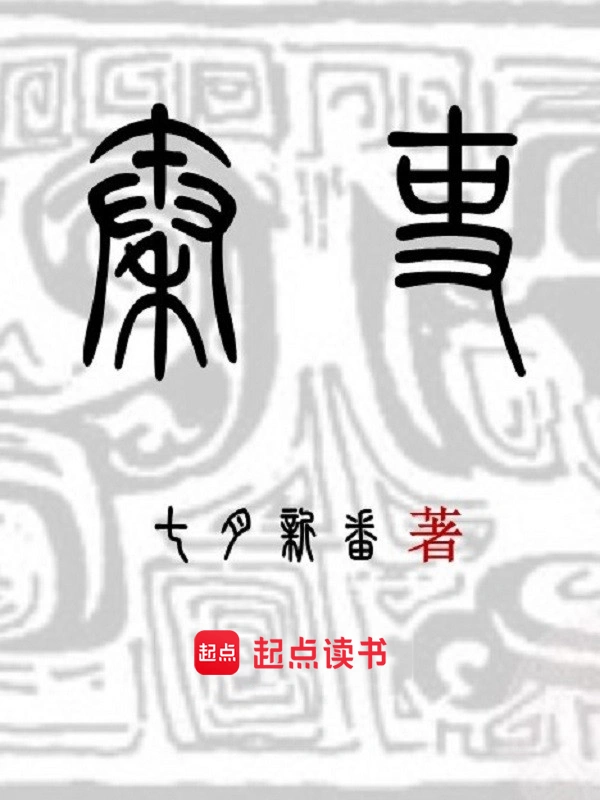
Qin Officials
秦吏
- Status
- Completed
- Length
- 3.4M Words
- Genre
- Historical
- Audience
- Male
- Subgenre
- Pre-Qin Antiquity
- Updated
- 2y ago
- Source
- Qidian
Stats
Tags
Honours
Synopsis
Reader comments
In booklists 2.2k
Explore more →


Books I Read
Some books I usually read
The First Makeup of the World of Mortals, the Mountains and Rivers Are Boundless
Recommended books are not limited to channels or categories, mainly male videos, personal taste, don't comment if you don't like them. Author friends please do not promote yourself. Book friends are welcome to share their favorite works.

A Long Review List Focusing on Seedlings
Self-recommendations will be deleted, but those who are interested will basically try the poison. In addition, I will not help with reviews, so don't force it, thank you.
Inventory of the Strongest Books in 2018
There are many years in a person's life, and each year leaves traces, deep or shallow. Every year, there are always some books that are like a dazzling galaxy that cannot be avoided. Every year, there are always some people who are there and cannot be ignored. In 2018, this book list will take you to meet these books and these people! (There is a kind of book list that he has to read backwards to see the highlights. Why? Because I write it forward! By the way, I will add another sentence, only t
Divine Book Seedling🔥complete a Classic🔥unpopular Good Book🔥imaginary Anecdotes
Changed name! Thanks for the review! [Note] On a whim, I want to start a likes war to see how many books can reach 9999 likes through the likes war. There are now 11 books. [Special Note] Comrades, be sure to collect the book list, click on the five-pointed star🌟 at the bottom of the screen, and turn it into a red star to collect the book list, instead of paying attention to me! Click the little heart below 👇! 2. I felt that the number of places in the book list was seriously insufficient, so
The [Most] Book List to Read Even If You Stay up Late
[Special Note] Click on Lao Chai's avatar to see Lao Chai's main book list. With 30,000 followers, the main book list is even more exciting. Haha, I wanted to take stock of some of the most interesting works in 2018. I would like to thank Qidian for giving me this opportunity. [Special Note] Comrades, be sure to collect the book list, click on the small five-pointed star🌟 at the bottom of the screen, and turn it into a red star to collect the book list, instead of paying attention to me! ! Let'
🔥Lao Chai's Book List No. 7 [History] - the Dust of History🔥
[Special Note] Comrades, be sure to collect the book list, click on the small five-pointed star🌟 at the bottom of the screen, and turn it into a red star to collect the book list, instead of paying attention to me! ! ! It's not about me! ! ! Click the little heart below 👇! 😄 Please pay attention to Lao Chai's main book list - The Divine Book Seedlings🔥A complete masterpiece🔥Imaginative and wonderful articles🔥Unpopular fairy grass 1. (I am planning to create a series of high-quality historical au


The Four Great Classics in Internet Literature
If the Internet literature community selects the "Four Great Masterpieces" Will these books undoubtedly appear on the list? They represent a category or the pinnacle of works!
Red Ji's Shuhuang Relief Center
Personal reading standards: The writing is good, reasonable, and self-consistent. It can be imaginative, but the deduction must be reasonable, it is best to have practical information, and the plot should be as detailed as possible. This book is a list of personal tastes. It collects works that Chiji has personally read and feels are worth recommending. We do not seek to satisfy everyone! I have a clear preference for good writing and imaginative settings, and Taneda-style works! Don't like to e
July's History Book List
My taste is very picky

A Collection of Fantasy and Classic Novels
"Jiang Ye": A story about "Haotian" falling into the world, joining the world, and then falling in love with the mortal world. "The Great Road to the Sky": Laomao Wenqing's writing style makes people unable to put it down. "Youth Song": I'm following it recently. "White Armor": The story of a community doctor.

Interesting Historical Novel
I sincerely recommend good books to take you to appreciate the ancient scenery and survey the long history. They are all very interesting historical novels that save the country from danger, change history, and achieve different careers. Parallel time and space, ancient China, ancient Europe, different social backgrounds. Book lovers, this is a list of historical topics, please do not recommend other genres.
Excellent Books for Future Readers
I have a lot of reading experience. I have read many types of novels over the years, and I have been recommending books for nine years. Most of my book list has been read and understood by myself, and I feel that each book has its own characteristics and is different from ordinary literature. Everyone has their own type of novels that they like to read. If the books I recommend can suit your liking, that would be the best. The content of the books I recommend is very good and interesting. You ar
Bazhanghe Push Book
[Recommend all kinds of good-looking novels, basically all of them are high-quality products that have been ordered] [These are all my favorite works] If there are some good ones that are not on the book list, you can leave them in the comment area. I will try them out when I have time. If you like them, I will add them to the book list. Thank you🌸🌸🌸 Promote books! Promote books! Leave a mark on your past obsessions.
The Green Hills Are Still There, and the Sunsets Are Red Several Times! History Book List
Five Thousand Years of China, Recommended High-Quality Historical Writings

Yipin Bookstore
The best stories always make people unable to help but read them all, and then start to endure the trouble of catching up. Over the years, too many good works have appeared, and I have read one after another. Every time I look at them, my eyes are blurred, I feel drowsy, but I can't stop. A first-class work, created with the ingenuity of a first-class writer, I have to recommend it. Good stories are the accompaniment of ordinary life and the pipa music on the way forward. Let's appreciate good w
Good Historical Records
History Book ListDedicated to History Mainly, I recommend some good historical books and high-quality seedlings to everyone! There are many storms on the list, but they are all indifferent. Guys, do you feel familiar looking at the books in this list? I only recommend high-quality history books! Dear readers who like historical articles, please come in. If you like it, please give it a like, add a follow, and add it to your bookmark list. Please click "Pentagram⭐️" below to bookmark this boo
A Retrospective of Classic Masterpieces, but Not a Review
Selected works that have become popular over the years, let us review the classics, read the final masterpieces, bid farewell to the book shortage, and collect the ones we like to read.

[Long Commentary List, Continuously Updated]
Selected serial best-sellers, popular sacred books, and completed classics from 2018 to 2026. 👍 If you like the books in this book list, you can "click the red ⭐️ below to collect this book list". Please like and follow the book list to support it! Adding to this book list is based on the following seven points. 1. How many fans are subscribed to? 2. This chapter talks about how popular it is 3. How many times do you support the reward? 4. Lots of positive reviews in the book review area 5. Bre
The Golden Book Recommender's Library
This book list recommends complete works of various types.
Writing Miracle
Based on the best-selling and reading volume of the book, select books and add them to the book list. Everyone is welcome to recommend high-quality seedling books in the comment area.
[Twenty Years of Internet Writing, Complete Historical Work]
A specially recommended book list for novices. Lao Bai should have read it before, so you don't need to read it. A good start with more than one million words, a complete book
The Annual Phenomenon-Level Masterpiece, All of Which Are Ordered by Thousands of People
Only the best works are recommended. Other works are recommended in Shiqu Pavilion and Jiutian Lanyuelou Book List.
Shanhe Library
None
Readers also read
 At the Beginning, Please Ask Chongzhen to Abdicate!
 Fu Ming 1627
 I Am a Tyrant in Nanming
 Red Mansion Xiaoke
 Qingdu Shanshuilang
 Picked up a Copy of Chronicles of the Three Kingdoms
 The Heroic Ambitions of the Late Eastern Han Dynasty
 Disciples of Fangcun Mountain, Traveling Westward
 I Have a Dark Secret Martial World
 Training Da Song
 Picked up a Shihuang Emperor
 A Lifetime of Wealth
 Spring and Autumn I Am the King
 Hanque
 New Book
 Qin Li: Extra
 Kuang Fu Han Room
 Warring States Period
[Qin Li finished this activity] Foundation, friendship.
Hei Fu is a person from Anlu. He was born in the capital of Guizhou Province. He is very intelligent. He is not capable of learning but has many ingenious ideas. Composting benefits people's livelihood, papermaking promotes education, stirrups promote martial arts, and the list goes on and on. ,,,, ,,,,, If not, how could Anlu be so well-connected with many local generals who would follow him? If not, how could he have been in the officialdom for several years and promoted all the junior officials to be talented people who would help him succeed. Every time I think about this, I just sigh that God's will is unpredictable. Heifu was a common people, although he was allowed to be civilized and military, but it was difficult for him to leave the county. However, he obtained the way of heaven, so he had three friends to help him achieve his goal. ,,,, When Li Xin attacked Chu, Hei Fu followed You. When he was defeated, You was rescued by Hei Fu. Remembering this kindness, I love his talent even more, so I try my best to help him. Without support, although Heifu has some minor achievements, he can only return to his hometown to serve as an official, or become a powerful person in the area. He can enter the county government, fully display his talents, and then rise to the top. When Hei Fu arrived in Xianyang and entered the temple, he repeatedly went against Li Si's wishes, which hurt his heart and finally could not bear his enemy. Later, when he saw Hei Fu getting close to Fusu, Fang was angry and broke off the relationship. Therefore, Heifu raised an army to fight against the rebellion, but because he was not afraid of its power, he led his army to fight against him, and was ultimately bound. How could Mr. Hei have the heart to kill him? When the pass is broken, his family will be restored and his wealth will be extended. Later generations lamented this situation and said: We were destined to be friends with each other for a long time, but we had no part in helping them stir up troubles. It is said to be destined but not destined. fusu was the eldest son of the first emperor. The emperor loved him very much at the beginning, and his name was Fusu, which means good wood, which shows his expectation. However, Fusu was born in a deep palace, was stronger than a woman's hand, and was close to Confucianism. The emperor did not like him at first, so he did not establish him as a prince. When Heifu marched to the west, the emperor ordered Fusu to accompany him, hoping that he would get rid of his benevolent and weak spirit and build a strong character. Fusu knew all of them from high-ranking families. Now he saw Hei Fu. He was strong and strong, with a face as cold as coal. He was very different from others. His actions seemed to have deep meaning, so he was attracted to learn from him. Hei Fu also liked Fu Su's noble character, so he got close to him. Later, they jointly conquered Haidong. Although Chen Ping was not angry and the two had a good relationship and tried to obstruct him, Fu Su was trained by Hei Fu and showed his mastery for the first time. He finally returned victorious. The emperor was delighted when he saw it and wanted to establish a crown prince, and Hei Fu was also given a big responsibility. However, due to the evil deeds, Fusu fell into a treacherous conspiracy and ran away to join the black husband, and died on the road. The emperor was angry with Hei Fu and wanted to kill him, but Hei Fu faked his death and escaped. When the emperor died, he came out with the imperial edict, put down the chaos and suppressed the rebellion, treated Su's young son kindly, granted him the title of Marquis and established the country. During the chaos in Shenzhou, there was a shadow of Fusu, whose name was Bai Ying. He pretended to be a prince, raised troops in Liao, and arrogantly claimed the king. Chen Ping was afraid that Fusu was still there, so he tried his best to stop him. Later, Hei Fu personally went to war to distinguish the authenticity. Bai Ying did not dare to resist Wang Shi, so he went to plead guilty in person. When Hei Fu saw his appearance, he felt sad for his old friend and pardoned him. Later generations took pity on him and sang: A handsome young man is like a beauty, but in troubled times, his life is miserable. It is said that a beauty has a bad life. There is also Chen Ping, whose surname is Yangwu, with good appearance and good plans. However, he came from a poor family, did not know how to make money, and was despised by the village. Fortunately, he met a black husband, avenged his injustice, helped him get married, and even more recognized his talent and ambition. He helped him several times and treated him like a brother. Chen Ping felt his great kindness, so he took him as his master and vowed to help him achieve his great cause, even if he died a hundred times without regrets. I saw that Fusu was kind and kind, not a hero, and I saw that Hei Fu was on good terms with him, so he was afraid of unforeseen disasters, so he went against Hei Fu's wishes and secretly plotted to Fu Su. When Hou Bai Ying launched an uprising, he was afraid that Fu Su was still alive, so he targeted him in every possible way and used one man's plan to suppress Liaodong. He also took strange risks, went deep into the enemy's territory, divided the rebels, drove away tigers and devoured wolves, and finally helped Hei Fu rule the world. It is said that Zhang Liang fell in love with a black man, for fear of being jealous, he swallowed charcoal and painted his face to avoid disaster. This is just a rumor and cannot be believed. The world praises Chen Ping, saying: "The king and his ministers will grow old together, and we will grow old together." This is called growing old together. ,,,,, Those who admire you are nothing more than the foundation of the dynasty and the deep love of brotherhood. Therefore, you can know that the value of life is only based on love.
I don't know when this book started to become less perfect in my mind. It may have been after Fusu's life or death was uncertain, or after Black Dog rebelled against the Qin Dynasty. In fact, I also know that the ending is coming soon, so I am waiting to see what the black dog will do and how to do it. Then the black dog conquered Xianyang. However, what is ridiculous is that there is no Qin official in the capital of Qin. Someone once said: Officials are where the people's lives hang. Some people have also said: As a Qin official, you can turn the tide. But at this moment, who is the Qin official? The censor is a group of flies, and the ministers are a group of villains. In addition, there are a group of warriors, a group of moralists, and a group of conspirators. Can Li Qin be placed on that man's shoulders? The honor of the Northern Expedition, the prestige of the regent, the hardships of the reformers, the road of the empire, everything was shouldered by this man. In my mind, Heifu never thought about changing two thousand years. What he wanted to change was the destruction of the Qin Dynasty. What he wanted to change was just a period of history. He couldn't think of much, so he didn't think about it. History has changed a lot. It's okay to do what you do now with a clear conscience. Why do you have to create an impossible world unity? However, I still look forward to being able to sort out the complicated plot in July, find the most suitable ending, and give this book a complete ending.
[Qin Officials Completed This Activity] Regency Era·Troika
Qin, regent for 36 years, Heifu was 70 years old. In Xianyang Palace, Hei Fu stood beside the emperor as he had for decades, with his eyes slightly closed, allowing the people below to discuss quietly or heatedly. I don't know if his earlier oath with Zhang Cang, Zhao Tuo and other long-lived people really had an effect. He now looks nothing like a 70-year-old person, but more like a 50-year-old man. His hair is white and black, his body is still upright, and he can eat two kilograms of pig shoulder meat three meals a day. But the old wounds that had been hurting for a long time and the increasingly lack of energy during the court meetings in recent days still made him realize that he was old. Since he became regent at the age of 35, he has been in this position for more than 30 years. Now is the time to abdicate in favor of someone worthy of his post, lest he make some unwise moves that will affect his posthumous reputation when he gets old and loses consciousness. Now, when the people in the audience are still debating the handover and succession issues of Heifu's retirement, Heifu, who is at the center of the topic, can't help but recall everything he has done as regent over the years. Having served as regent for more than 30 years, Heifu felt that he had done a lot. He had both merits and demerits, but the merits far outweighed the faults. He did not dare to say that there was no one before or after him, but he also dared to say that he was no worse than all the great leaders in the history he knew. Such a self-evaluation is certainly not in line with his usual humble image, but he is seventy years old and has been humble for seventy years. Why can't he still be a little more arrogant when judging the merits and demerits of this life? After counting, he has done a lot of great things in his life. Let's not talk about those before the regency. When I was criticizing the merits and demerits of the First Emperor 30 years ago, half of the credit was given to Brother Zheng. Let's just talk about the ones after the regency. The first step is to unify the world again. With the solid foundation laid before the regency, and thanks to the First Emperor Yu Ze, Liuhe was wiped out in just two years, and the grasslands and South Vietnam that the First Emperor failed to pacify during his reign were also included. In the three years of recuperation, relying on small-scale military and immigration activities, he also captured the Western Region, Haijiao (formerly HN Island) and Fanghu (formerly TW Island). Except for the southwest jungle, plateau and outer grassland occupied by barbarians, which cannot be actually ruled, he has basically realized the Chinese territory he is most familiar with. After unification, there will be internal affairs. The first item of internal affairs is agriculture, and Heifu can be proud to say that in the past thirty years, China's agriculture has definitely reached the best level in the farming era. From ten taxes to one to thirty taxes that are almost non-existent, agricultural taxes have been reduced again and again, but warehouses have always been rich, and grain prices have been getting lower year by year. This is the effect he has achieved through the use of Mohists and farmers, improved equipment, farming methods, breeding techniques, and some guidance from future experience. Five years ago, under his long-term guidance, the ministers also passed a resolution at the court meeting: the amount of food provided would no longer reflect the official position, but instead would be replaced by money, porcelain, silk and other luxury goods. There is no way, food is really too cheap, and God has been very generous in recent years. There were only two major droughts in the past two years. However, with proper response from all parties, the reduction in food production was not large, let alone other times. In order to prevent the granaries from being full and the food to be wasted, the Qin State has been selling various grains and their by-products to foreigners from the Western Regions, grassland barbarians, southwestern barbarians and Yingzhou natives at high prices, and obtained high profits from it. But this is not Heifu's most proud agricultural achievement. What he is most proud of is that over the past 30 years, he has used various means to allow the Chinese people to greatly expand the boundaries of agriculture in their eyes. Farmers are no longer limited to growing staple foods such as corn, rice and later promoted wheat. Instead, under the planning and guidance of the government, they have included vegetables, fruits, melons and other non-staple foods as well as cash crops such as cotton and rapeseed into their own cultivation. To do this in the environment of a small farmer economy, Heifu feels that he is unprecedented and unprecedented. In addition to these two points, there is another point that cannot be said to be his credit. In fact, when all this happened, he was a little stunned - in some areas suitable for grazing, many Qin people gave up farming and turned to what only those Hu people who fell into the embrace of Qin could do: animal husbandry. As time goes by, to this day, rough statistics show that the number of Qin people who specialize in animal husbandry in Qin is more than ten times greater than the number of Hu people who have not yet been naturalized. The reason why this phenomenon occurs, Heifu feels, is probably inseparable from the economic policies he has formulated over the past 30 years. He has seen the prosperous scene in the future when the commodity economy is fully developed. Therefore, after seven or eight years of recuperation and the world's agricultural production gradually reaching a new level with the help of Mohist farmers, he worked hard to establish a commodity economy mechanism that was subject to government supervision but was dynamic enough, mainly based on the developed small farmer economy. There were many people who opposed it, because in the ancient times of small-scale peasant economy, business was not a good thing in the eyes of various academic schools except for a few schools that had been expelled. However, when Heifu and Chen Ping used the historical experience of Jiaodong, the ministers agreed to conduct pilot projects in several places. Then it got out of hand. After the war, in a land that was full of waste, business opportunities were everywhere as long as you were willing to pursue them, especially those experienced old businessmen from Jiaodong. They first set off a prosperous market economy boom in the pilot areas and then throughout the country. The spontaneous popularity of Heifu's promotion of other crops and animal husbandry among the Qin people was inseparable from these businessmen. The prosperity that seemed to happen overnight was of course indispensable for all kinds of chaos. If officials from various schools had not kept a close eye on businessmen, and the central and local governments had responded quickly to prevent the spread of this chaos, I am afraid that Qin would not be so vibrant and energetic now. During this process, an interesting anecdote also happened: after people from the Confucian school discovered the wonderful uses of business, although they didn't say anything, the proportion of management economics in the teaching content in the college began to rise rapidly. Later, a teacher Meng Xue who couldn't stand it pointed it out, and then gradually restrained it. It can be seen from this that after commerce once flourished in such a unified country, how influential it was. Even the previous adjustment of the salary structure of officials by Xianyang Palace was inseparable from it. It also promoted exchanges and integration between the original seven countries, naturalized Hu people, Yue people and people from the Western Regions. It can be said that it served multiple purposes with one stone. Now that business is booming, in the 21st year of the Regency, Heifu began to prepare for a task that he originally thought would be left to future generations-the reform of the monetary system. However, he was not the first person to propose currency reform. The first person to bring it to the stage was his close friend Zhang Cang, who was in the "economy" position at the time. The word "economy" was of course proposed by Heifu. He used this word to explain the business activities of merchants. The position of "economy" was also equivalent to the later Minister of Commerce, which specialized in coordinating and managing merchants and commercial activities across the country, and also managed Qin's foreign trade. It was a new important position in the Regency era, with a high position and power, comparable to that of Jiuqing. Although it was a temporary position established under the new situation, it was quickly made permanent. Originally, the work of the "Economy" Minister was completed by subordinate officials who governed the history of Sui, but this was obviously unable to adapt to the new needs in the new situation. The same is true for today's monetary policy. Originally, the currency based on copper coins could meet the daily needs of the people, but it became very obstructive under the frequent bulk trade between states and counties. Big businessmen, local governments, and even some local small businessmen began to want a currency system that was more convenient for trade. Not to mention Zhang Cang, who was in charge of the overall trade situation of Qin State, he was the first person to notice this problem, earlier than Heifu. The solution proposed by Zhang Cang also exceeded Heifu's imagination. It was not the precious metal progression based on gold, silver and copper that Heifu had thought of before, nor was it the epoch-making but unfeasible paper currency, but "tokens". The inspiration for "Tokens" comes from those bamboo scroll books in the past. After paper books replaced bamboo books and became the mainstream, bamboo books have become a kind of luxury collection and "cultural relics" and were shelved in the cabinet. Zhang Cang has always been addicted to books in the past, but now, when he looks at these books that take up space, are useless, and require constant manual maintenance, he feels a numbness in his scalp, and cannot burn them on fire, so he thinks hard all day long about how to reuse them. Unexpectedly, he thought of the wonderful use of bamboo scrolls in commercial circulation. The "token" system is not complicated. In fact, it has no direct connection with the new currency. Instead, the merchant holds a bamboo scroll before departure and goes to the local government to obtain a special written record of his assets to prove that he has sufficient assets and delivers it to the government. Then he can directly use this certificate to deliver goods to the supplier with the government's certification. The supplier will get a certificate from the government at the delivery point, proving how much copper coins he has received. It is only temporarily stored at the government. He can use this certificate to withdraw the money from the local government, or he can continue to save it, or even transfer the money directly to other counties for withdrawal through certain procedures. Considering that there might be merchants who kept the copper coins obtained in this way, Zhang Cangcai specially chose bamboo scrolls, because a bamboo scroll can record many transaction amounts, and the amount can also be easily deleted on the back and front of the roll. After Zhang Cang finished speaking, Heifu's eyes widened when he heard it. Isn't this the ancient version of a bankbook? After the introduction by Lu Jia and other ministers, Heifu suddenly realized that similar forms had long existed, including but not limited to "vouchers", "coupons", "contracts", etc., But they had always been only a temporary and private means and had not been officially promoted. When he was young, he used this form of authentication when he made bets with others. He immediately made the decision and changed the name of "token" to "passbook". After several fierce debates among the ministers, this form was finalized. In conjunction with the construction and development of logistics and postal networks between local governments, more than ten years later, "passbook" transactions have become the mainstream of bulk transactions. Almost no businessmen run around with a lot of coins anymore, and more than half of each big businessman's assets have always been in the hands of the government. Without him, it is convenient. After integrating the loss of currency transported by merchants into the normal logistics process between local and central government, the efficiency and share of bulk commodity transactions immediately increased significantly. In the booming market demand environment, a long-awaited sprout was born. Don't get me wrong, it is not an anachronistic monster like capitalism, but a special factory-style industry, also called "adaptive economic industry" by Heif. Due to the excessive real estate, the government's faint encouragement, and the social environment also secretly promoted it, Qin's large agricultural population began to spontaneously pursue a better quality of life. Changing the crops grown, or investing in animal husbandry, are just the foundations within the foundation, still revolving within the larger framework of agriculture. But when a rich farmer in Anlu found that he used new technologies and new methods to cultivate his three-acre land, and spent 1/3 or more of his time every day, everything changed. The farmer next door always didn't want to farm and only focused on making wood products to make money. As a result, his harvest level was still at the level of decades ago. Everything changed. Soon after, he and his neighbors applied to the government to transfer the land. This is the first case of people demanding land annexation since the Qin Dynasty relaxed its strict laws during the regency era. It also happened in Heifu's hometown, Anlu County, which naturally caused a lot of controversy in the court. Conservatives such as Xiao He and Cao Shen believe that precedents cannot be set, otherwise large landowners who cannot be controlled will appear in the future. However, land annexation has never been allowed in Qin law. Qin has always implemented state ownership of land, and private land annexation is absolutely not allowed. Reformers such as Chen Ping and Zhang Cang believe that in the current situation of serious excess agricultural output value, it is a serious waste to tie people who are willing and able to switch to other industries to the land. Moreover, according to the documents submitted by Anlu County, not only are these two people willing to fight and the other is willing to suffer, but also there is a situation where labor force is wasted. Heifu thought for a while and decided to combine the two opinions. On the one hand, he rejected the two people's requests to transfer land voluntarily. On the other hand, he organized a pilot project in Anlu and asked the local government to inquire about the opinions and abilities of each person. Based on public opinion, people's power and land distribution, the government organized land redistribution in the local area to give full play to everyone's productivity, and set up strict reward and punishment measures to prevent anyone from boasting and making a mess of the allocated land. Two years later, the pilot was expanded, and four years later it was implemented nationwide. By the sixth year of the policy's implementation, the number of farmers with land use rights in the country had decreased by one-third. These people who did not want to farm either devoted themselves to individual crafts or became a small businessman, but more people, under the guidance of big businessmen and the government, devoted themselves to becoming factory workers, mass-producing bulk commodities that were in short supply in the Qin State's unique assembly line form. At first, this kind of production flourished all over the place, disorderly and chaotic, but soon, under the coordination and coordination of Xianyang and the local government, these factories were concentrated, and the market competition was chaotic for a few months, and order was restored. Of course there are a lot of family conflicts. The husband wants to farm and the wife wants to do handicrafts. Or when it comes time for factories to move, many people are unwilling to leave the local area and live in other places. The general result of the former is mutual compromise, the land continues to be cultivated, but less planting is done, the cultivation is intensive, high-end products are grown, and the handicrafts are also developed in the direction of high-end private art in small workshops. There are also a few who get divorced if they don't get along. In the latter case, the government and the chamber of commerce came forward to give generous compensation to the relocated people. However, the few people who insisted on not moving had to fend for themselves because of the promise they made when they gave up their land. This is a reform of production relations that is not very grand. It started from agriculture, led to commerce, and then led to industry. Under the guidance and restraint of the government, these three carriages promoted each other and thrived. By the time Heifu was 70 years old, they had all grown into the pillars that could support this huge empire. Among them, I dare not say that his black husband's contribution is seventy percent, but at least no less than three points. It is an unbreakable truth that production relations determine the superstructure. During his leadership in the reform of production relations, Qin's superstructure also underwent many important changes. ("The Regency Era·On the National System" is currently being drafted, please like and comment for support)
The next work pays tribute to Wang Mang
"The Officials of Qin" paid tribute to the First Emperor, and the next work can pay tribute to Wang Mang, the great statesman in ancient China and the time traveler. At the end of this chapter, I suggest that the second part of July be written to travel back to the period of Wang Mang's new dynasty. If you think about it carefully, it still has a lot of selling points: 1. Wang Mang overturned the Han Dynasty and was pushed back by Guangwu. This is a magnificent history. Various forces competed, and heroes from all walks of life appeared together. The original history was bizarre and tortuous, and there were many paradoxes: Wang Mang replaced the Han Dynasty, reorganized the system, and the Battle of Kunyang was incredible. 2. Many readers are not familiar with that period of history. There are very few works from this period, and there are no outstanding writers to explore it. It can be said to be a rich mine worth exploring and creating. 3. Wang Mang himself is a time traveler. If he travels back in time and someone inherits his mantle, they will each reveal their secrets. How interesting! It is strongly recommended to consider this subject in July, you must be responsible 😁!
Make up a nonsense "Jing is difficult to ask for counter-protest"
Hu Hai, the son of the pretender who came to the court, was young, had a heart like a lard, was a wolf by nature, was evil and secluded when he was close, killed the king and stole the throne, and secretly mourned without revealing anything. God is angry and uses its punishments, disasters and punishments come frequently, thieves and thieves appear in droves, and there is no fear. People and gods are jealous of each other, and heaven and earth will not tolerate it. Yu Benbuyi worked hard in Nanjun and accumulated military exploits to become a general. The late emperor did not regard his ministers as despicable, so he gave him the title of Wei, the title of Jimo, and the title of Marquis Wuzhong. The doctor Xia Wuji went south with the late emperor's edict. I shed tears and feel sad, so I am angry at the wind and clouds and want to secure the country. Now I respectfully carry out the First Emperor's legacy and continue the great cause of the First Emperor. We hope to quell the calamity of the Northern Dynasty, save the people from ruin, and avert the great calamity of stealing the country. I am worried that the unknown soldiers and civilians will be my enemies, so I tell you in advance: When the troops arrive, the generals will return to their righteousness, and we will jointly establish a meritorious service in pacifying the disaster; the people should not avoid it, and we will build a safe home together. My orders are solemn, and there will be no offense. Those who return to me will live in peace in the Qin Dynasty forever, and those who carry me will flee outside the Great Wall. To protect our Chinese people, the First Emperor left an edict to order the prince (Fusu or the prince is higher?) To pacify them. How could Hu Hai rule them? I was afraid that the Qin Dynasty would be polluted and smelly for a long time, causing disturbance to the people, so I led the heroes to work hard to clear it out, aiming to suppress the rebellion and suppress the rebellion, so that the army and the people could find their place, and the army and the people would be in their proper place.
Qin Li finished this activity—Prime Minister Chen's family
[Complete activity of "Qin Officials"] "Historical Records" Sima Kaixuan "Prime Minister Chen's Family" Prime Minister Chen Ping was a native of Yangwuhu County. When he was young, his family was poor, but he had lofty aspirations. He admired the grand father-in-law and hoped that he could rule a country. He was good at studying, had thirty acres of land, and lived alone with his brother and uncle. The uncle was honest and filial, and Litian Zongping sent him on a study tour. When the villagers saw the situation, they turned their backs on it and did not engage in production. Ping is a man of great beauty and appearance. People may say to Chen Ping, "How can you be so poor and fat?" His sister-in-law was jealous of Ping and ignored the family's production, and said, "You also eat chaff. It's better to have an uncle like this than not." When the uncle heard this, he chased his wife and abandoned him. In the 22nd year of the Qin Dynasty, Duke Shi Xia attacked Wei from Wang Ben, suppressed Wuhu in Fuyang, and rectified the countryside. Hearing Zhongming talk about Chen Ping's theft of his sister-in-law, he thought about the ethics of Qin law. He went to the hometown temple to interrogate him, and found out that he was wronged. Ping was a pure and good-natured man. He appealed to the court with his heartfelt feelings, and the past suspicions were settled. Zhang, the third elder in the township, praised Chen Ping's talents. Xia Gong had a keen eye for jade and called Ping's official document. It was difficult for Ping to understand his meaning. He lowered his head and faced the water. He was shocked and thought that Xia Gong was like the previous king of Wei. Xia Gong studied and taught Chen Ping, making him deal with miscellaneous things, and he was at a low level. He considered the different laws of Qin and Wei, and offered suggestions to Duke Xia to balance the business. Wang Ben collected grain, and then offered suggestions when the situation was low. He lured Dong Guochang's tens of thousands of dollars to ask officials for information, so that Zhang's loan of grain was not as good as that of the common people. Xia Gongyan said that he had recommended himself to Chen Ping in the past. He believed that Chen Ping was a sharp cone, and he was too passionate to be loyal to him. The Zhang family concealed the crime, the incident happened, and the body of his son was left. Chen Ping knew it and remonstrated to eradicate the root cause. Xia Gong did not take it seriously, and Jueping scholar was murderous. Xia Gong used Zhang Ao's child as bait and used crossbows to capture Wei Wu's soldiers. When Chen Ping saw it, his face looked sad. Ping went from Xia Gong to Wang Ben to receive grain. He first saw the city of Daliang in Wei. It collapsed and was destroyed. He sighed: "Liang collapsed and Wei died." Ping wanted to get it, so he asked Duke Xia to be a conqueror. Zhang Huixi agreed to marry him. Xia Gong said goodbye to Yangwu, and Chen Ping left his hometown for more than ten miles to see him off. He bowed down and asked for advice. Xia Gong smiled and said, "Will this king be able to conquer the world one day?" Chen Ping was shocked. Ping married Zhang's daughter, who benefited from his income and traveled extensively. In the twenty-fourth year of the Qin Dynasty, Qin destroyed Jingchu, took charge of Ping and collected grain, and made Pingjue an official. In the twenty-seventh year of Qin Shi Huang's reign, Ping's reputation became more and more prominent. In Lizhongshe, he presided over the sacrifices and divided the meat evenly. The villagers praised him and said: "Good, Chen Ruzi is the best!" When the snow fell, Ping entered Xianyang, and Xia Gong met him at the bridge. Zhang Cang was Ping's wife and brother, so he tried to discuss it, and Ping analyzed the grievances of the people in Shandong. Also, Sima Ranju was suspicious of Qi, Wu Qi fell to Wei and went to Chu, and Zhao Li Mu was slandered and defeated. This was not the difference between the monarch and the general. The filial son was suspected of repeated arrivals, and the city tiger was made up of three people. Therefore, the loyal ministers will also be killed by Du You." When he wanted to fight against the Huns next year, Ping said: "The Art of War says that you treat your soldiers like babies, so you can go with them to the deep stream; you treat your soldiers like your beloved sons, so you can die with them." Ping wandered into the Wushi caravan to explore the true and false status of the Huns, and visited Mr. Yanyan. The Huns took the Wushi caravan to Helan Mountain and met Young Master Maodun. During the banquet, Ping felt that there was a rift between Maodun and his son, and there was a dispute between the elder and the younger. He noticed that Maodun was unusually talented and worried about it. When the First Emperor visited Yunzhong in the north, Chen Ping went to Touman City to confront Ju Wu in court to intimidate Touman. Touman asked: "You are a young official, how big is China?" Ping Qian said: "China is a vast country with abundant resources and outstanding people. There are tens of millions of people who are very peaceful." Chen Ping returned to the Qin Dynasty. Duke Xia wanted to attack the Xiongnu in a surprise attack and destroy their remnants. When Prince Yuezhi came to court, he suspected that he was a false treason and made contact with Longxi. There was nothing wrong with it. Xia Gong is the brick and stone of the country. He waded in the quicksand in the west and expanded the sea in the east. He eliminated Jiaodong and guarded it in the east. After passing Peixian County, he met Xiao Cao and talked about Huang Lao. He was very happy. Xia Gong appointed Cao Shen as his staff. The Jiaodong gentry were divided and in danger. When it came to Jimo, Chen Ping presented the six methods of governing the county: "Establish authority, make things clear, command troops, establish trust, have enough food, and eliminate bandits." Duke Xia followed this, deposed the commanders, supported the old clans, established legal teachings, reduced punishments, removed sentries, promoted students, set examinations, appointed good officials, built public toilets, made chickens stay at night, and ordered raccoons to control rats. They all used their abilities to frighten Xiaoxiao. Spring plowing is carried out on an equal footing, farmers are sought after, and mulberry farming is advocated. There are 24 solar terms, and slang is sung. The First Emperor visited Jiaodong eastward and tasted salt fields. Chen Ping planned to sell salt for private purposes and wanted to carry out land reform. He blamed the fields. He governed the rich and powerful with vigour, and governed the people with gentleness. The emperor patrolled the city at night, and the ordinary people shouted long live. Xia Gong and Chen Ping discussed the shortcomings of the government. Ping said: "What Xia Gong did was to open the source. However, Qin's shortcomings cannot be solved by opening the source. Now Qin is like a supercar, it does not have a fixed axle and wheel. Only by loosening the reins can the people rest. The emperor is sitting in the car, and the prime minister is holding the bridle for him. You should rule the world." Xia Gong smiled and held his palms. The pirates invaded the border, Linzi was in danger, and the whole country rebelled. The defenders stirred up trouble and insulted Duke Xia. Jiaodong's reinforcements were not accepted at all. The First Emperor was angry and made Duke Xia the commander. Chen Ping suppressed Jiaodong, pacified the people, took care of the victims, provided wages and gifts, and kept food routes open. This became the cave of Duke Xia in Jiaodong. In the second year, he sailed with stars and sailed to the east of the sea. The young master helped Su go on an expedition, and Chen Ping set up obstacles for him. Jiaodong was designated as a special economic zone, and the Haidong Chamber of Commerce was established. Chen Ping was in charge of it and the goods were settled in the area. The Southern Expedition was unfavorable and the defeated army overthrew the general. He chose Xia Gong as the general and was granted the title of Marquis of Nanchang. Chen Ping made Princess Xia a guest and became an official. Xiao He followed Xia Gong to the south and was timid to say goodbye. Chen Ping broke willows and danced to drive away ghosts and nightmares, and Xiao Cao laughed. As a county magistrate, he would accumulate grain and build stations, build armed forces, and protect trading companies. After a great victory in the Southern Expedition, the emperor patrolled south. Duke Xia was attacked and disappeared. The First Emperor pursued him as Marquis of Wuzhong. Hu Hai conspired to usurp the throne. Jiaodong attacked Duke Xia's old party, and Cao and Chen were killed. Shandong rebelled, Chen Ping stirred up the situation, and Qi was in chaos. Thirteen merchants and monks gathered together to organize an event, killing officials and rioting. Marquis Wu Zhong raised his troops in June. Weiyang returned to Kuaiji and sent envoys to Jiaodong to regain contact. In addition to the Ping Jiaodong garrison, they made plans to rescue Langya. The false prince Fusu appeared in Jiaodong. It was difficult for Chen Ping to distinguish the authenticity. It was Xia Gong's plan to seize the sea ships. Quan Zang Tu attacked Liao and blocked the false prince in Yan. Xia Gong was in Guanzhong, Hu Hai died and the government was destroyed. Fan Zeng, Chu Ya's father, made an appointment with Qi Pengyue to jointly conquer Jiaodong, hoping to destroy Xia Gong's old tribe. Guan Zhongding, Chen Ping was appointed as the commander of the carriage, acting as a Dianke, and attacked the bandits from the six countries. Not long after, Chen Ping recruited Pengyue to attack Pengcheng, driving out tigers and devouring wolves. Dragon Qie counterattacked Pengyue, and both sides suffered losses. Peng Yue returned, and according to Ping's plan, he killed the puppet king Tian Guang of Qi, wiped out the corrupt scholars of Qi and Lu, imprisoned Confucius, and recruited many county officials to attack Chu. Ping entered the camp of Xia Gong in Qiao. Five years after leaving Jieshi, the monarch and his ministers met again in front of everyone. Xia Gong appointed Ping as the prime minister. Afterwards, Xiang Yu was ambushed from all sides and surrounded and killed. When the world was first settled, Chen Ping was granted the title of Marquis of Che as a tribute. Xia Gong went north to pacify the Xiongnu, and Chen Ping followed him. He pretended to be a lure to the enemy, appeared in the siege of Baideng, strangled both internal and external, and pacified the grassland. Fusu, the false prince, went to Wuzhou Mountain with Xia Gong. Xia Gong improved his eyesight and recognized Bai Lei, and the land of Yan was restored. In the second year of the regency, Chen Ping was the prime minister on the right side of the Xianyang meeting. He served as prime minister for two terms for ten years. He assisted Wanji, managed Yin and Yang, managed the yin and yang, followed the four seasons, and nurtured the suitability of all things. In the thirteenth year of the regency, Chen Ping went to the west to assist Li Xin and educate the western frontier. On the way, he wrote "Journey to the West" and compiled a map of the territory of the Qin Dynasty. In the twenty-seventh year of the regency, Chen Ping became ill and died in the capital of Baima. Zi Chen bought Daihou. At the beginning, Chen Ping said: "I have many conspiracies, which are forbidden by Taoism. My world is over, and it will never come back again, so I have many evil disasters." Xia Gong said: "When I first met Ping, he was a raw jade. Over time, his arms became flat, and his household was flat, and he became my friend." Tai Shigong said: When Prime Minister Chen Ping was young, he was good at the skills of Huangdi and Laozi. Return to Xia Gong. He often comes up with strange plans to save the country from troubles and troubles. Prime Minister Chen, the clouds and mists evaporate and change, bending and extending at any time. He observes the causes and challenges, and the eagle strikes the bird of prey. It is difficult for those who come after him to catch up. Decorating the ancestral temple, ending up with an honorable name, and calling him a virtuous prime minister. Who can do this without knowing how to plan? PS: I have taken the time to write about Chen Ping in the past few days. My hands are still raw and I can no longer write. It is normal to have deviations when recording history, but I still ask you to correct any omissions. 😜
Praise from the First Emperor and Heifu
I stand with the First Emperor x Heifu! ! ―――――――――――― The King of Qin first practiced Zuo and took the stage alone with his sword in hand. His eyes are wide open and his talents are wide open. The sixth generation has inherited the legacy, and the will to unify is as strong as iron. There are 30,000 officials and 8,000 elite soldiers. The countries in Shandong are becoming increasingly sloppy, competing for profits, drunkenness and luxury. The palaces are exquisitely carved and decorated, and the houses of the common people are taken away by conscripts. Zhongzhou Bandang has been fighting for a long time, and we mourn for our livelihood and cry for Guizhou. In the good years, there is no surplus grain, but in the famine years, the nobles lose their wealth. Thirty thousand people in large counties and thousands in small towns died in eighteen or nineteen cases. When will the sacrifice of one's life lead to peace and the people of the seven kingdoms stop fighting? The king of Qin then prospered in the hearts of the world, and the sky in Lantian camp was filled with jade energy. There are swords like thorns, spears like forests, bows and crossbows like the sun, and oars and shields like the shadows. The dragon flag is fierce, and the mysterious clothes are shining. Who does the general say? The Wang family is a column. So the tiger devoured Hanchuan, the eagle struck Zhao Yuan, the rhinoceros marched to exhaust Wei, and the wolf chased the swallow. The generals of Chu passed their heads to the palace, and the king of Qi bared his flesh in front of the city. Hey! So prosperous! So strong! Husband, the prosperity of the Qin Dynasty can be described! The Emperor of Qin is invincible, and his unification achievements are unparalleled. Since the crown and belt were in peace, the army was ordered to conquer Chou. The galloping pheasants are flying in the clouds, and the smell of the northern kingdom is gone. The Chanyu did not dare to go against the color, and the Great Wall was built to control the west and east. Lingnan Baiyue relies on remoteness and danger, and its tattoos and bare feet are eccentric. The three armies worked hard to dig it through, and the Lingqu canal was smooth and the road was far away. One word, quantity and balance, can make all the weapons and golden people come true. The First Emperor was confused and arrogant, so he built Epang Palace and Lishan Mausoleum. Jin Chuang has not yet rested, and the spring fields have not yet been plowed. The Chi Road runs through Xianyang, with no pedestrians but ropes to follow. The towering building has been built for six generations, and the legacy cannot be restored. God couldn't bear the suffering of Li Shu, so he taught the Tengu to cross out of Huyang Pavilion. Don't you see, the dog is black, the famous black man is black and the heart is even blacker. Catch lawbreakers, capture thieves, step on awls to make compost and benefit farming. Working hard to protect peace, he was shocked by Zhongli's arrow. From now on, I cherish my life like a coward, and grow steadily without wandering. At first, he besieged Daliang with Wang Ben, and later with Wu Hou, he defeated Gaoyang. First he ascended the flag and drove into Ying, and summoned his Majesty to be the first man. The first lieutenant guarded the glue in the north, and the cunning rabbit camped in the cave ready to escape. Divide the giant clans and launch a new policy, benefiting business and sailing across the sea to Tongliao. Continuing the prosperity of papermaking in Baijia, opening the Institute of Minzhi. Training troops to prepare for stealing and passing laws, governing the county is like a real Qin official. Europe was granted the title of Marquis Changnan, but the people were unwilling to sacrifice his soldiers in vain. The Ouluo thieves were eliminated in the first battle, and everyone returned home feeling at ease after setting up camp. The First Emperor's southern tour was about to move, and the black dog faked his death to avoid suspicion. The rebellious son Hu Hai killed his father, and the treacherous minister Zhao Gao hid the emperor's body. Woohoo! How magnificent the First Emperor was in life, and how miserable in death! Being a master of human beings and only listening to what is believed will only make people sigh like this for thousands of years! Black Dog raised troops in Dazeli and vowed to repay the late emperor with the imperial edict. Only one division can draw a solitary bow, and one can learn from the sun and the moon that one is loyal. Thousands of people actually entered Xianyang Lord, and his military use was unparalleled and was called martial arts. But the first emperor knew about the black husband, and the two of them deeply admired Fusu. After the death of the First Emperor, the people rebelled, bandits and chaos broke out again, and Guandong and Huainan fell into battle. Accepting the land without benefiting the people, the situation has been divided when the people leave. The black dog is trustworthy and shows kindness, and the wife of the head of Guizhou pretends to be the emperor's concubine. The palace is opened to house a wide collection of books, and the gardens are plowed to bring acres of spring. The soldiers were well fed and confident, so they went out to Guandong to fight against the bandits. First defeat Zhao and Wei, then surrender to Han, and then challenge Qi to defeat Chu, and the world will obey. Xia Gong held up the sky with one hand, and succeeded the first emperor to achieve peace. The government of Qin is an official of Qin. I am a sage, a thief, a loyal and a rebel, but I will not complain. Let future generations observe my politics, know my conduct, enforce my laws, and regulate my orders. Remember my history, comment on my style, appreciate my aspirations, and comment on my name. Ask the black man Ru Qin Li? I am worthy of the common people of China.
Commemoration of CompletionNo one in the world is a hero
I haven't read many historical novels in this genre, and Qin Li is one I have read seriously. I first saw it in March 2018. I was bored and searching for books on the selected page. I clicked in at random and found that this book was inspired by the earliest family letter in China. The style of the whole book is also different from the usual historical novels. The careful research also gives this book a sense of reality. Originally I read this book just for its novelty, and I was also happy to read it for fun in July, so I subscribed sporadically. It was not until Heifu Nanzheng in December that my mind was drawn to it. At that time, the conflict between the First Emperor and Hei Fu was gradually emerging. The First Emperor was focused on spreading the pie, while Hei Fu was running around working as a paper framer. This was the turning point for Qin officials. After that, the first emperor didn't have much time and wanted to eliminate some disasters for future generations, but Hei Fu faked his death to avoid this disaster. Then the most important contradiction he has to face is whether to replace Huangpao, or to protect Da Qin and control the government. [There is no hero between heaven and earth] This chapter gave me the answer. After living in the Qin Dynasty for decades, facing the pushers behind him and the concepts of the current era, he did not lose his head. Instead, he was able to stay out of the matter and gave an objective evaluation to the people of this era and himself. On this issue, he chose to be cunning and became the regent of Qin to reunite the broken mountains and rivers and improve the legal system. However, he did not go further, but left the future to the choices of future generations. This approach is very smart and cunning. Thinking about it carefully, Heifu has always retained the ideas of modern people, such as marrying only Ye Zijin. I definitely don't think it is due to July's concern about the peace of the family [Manual Dog Head] In general, this book has a good beginning and a perfect ending. It does not finish the story like other novels, but chooses appropriate blank spaces. This is also my favorite. Finally, let me interpret the title from my own perspective. No one in the world is a hero, just because everyone is writing their own story in the torrent of the times, just like Heifu.
Thoughts after reading "Qin Officials"
In my very limited reading experience of "time travel novels", "Qin Li" is the only work that brings surprises so far, mainly because of its insight into historical logic. Like other time-travel novels, the protagonist returns to ancient times with the experience of modern people to "cheat". However, the "cheating" setting of the "black husband" in "Qin Li" is not to satisfy the "obscene" of history by fans of a certain dynasty, but to restore the deep-seated logic of historical evolution to readers as much as possible. First of all, the novel tells the author's thoughts on the reasons for the "death of the second generation" of the Qin Empire through the perspective of the "black husband" who is possessed by the modern police: the inability of the Qin officials to manage the grassroots governance of the Six Kingdoms' homeland, and the deviation of the Qin Empire's high-level officials from the "law" in Legalist thought. At the same time, in the process of "black husband" and "cheating", modern China and the Qin Empire are engaged in a clever dialogue. The author constantly "plays tricks" to let readers feel the "modernity" that Qin civilization has touched more than two thousand years ago. After 1949, modern China participated in the construction of modernity and even established a unique model and standard of modernity. It was nothing but a jade and a jade, and the return of the king.
Have a good journey
Have a great trip in July. Qin Li acquaintance, you are one of my favorite authors. You, the authors of historical novels, have taken us through one glorious era after another, saved generations of ancestors, and made up for regrets time after time. How can you say that you have no clothes and share the same robe with me? You made me feel the rich history come alive. Thanks
Qin Officials is extremely real. It can be seen that the author searched a lot of historical materials and tried to use words to recreate the unprecedentedly powerful Qin Dynasty more than 2,000 years ago. As an extremely rigorous historical text, it can withstand scrutiny in many details and is consistent with history. It is one of my favorite historical texts.
[Review of Qin Li's Book] I am not ashamed to let others criticize me
Qin Li is finished, and there is one less novel in my follow-up novels. What I have to say is that in July, I finally did not write another ending that made me almost vomit blood. The last ending waiting to be revealed is very meaningful. I can also make a final conclusion about this Qin Li. Based on my many thoughts on this book, I will write my summary of this book in three paragraphs. It can be regarded as my feeling for this book. First of all, what is a Qin official? The book actually gives a written definition at the beginning: in the eighth chapter of the book, it is clearly written that "the way to be an official must be pure and upright, cautious and firm, careful and selfless, careful and detailed, quiet and not harsh, and the judgment should be reward and punishment." This standard for Qin officials, even today, can be said to be an extremely high standard! However, at that time, did everyone really think so? Qi Qi did not say this explicitly, but among the various people in the following article, we saw that different people had different thoughts about Qin officials. In Chen Ping's eyes, Qin officials were the cornerstone of Qin's unification of the world. In Ye Teng's mouth, Qin officials are the king's party members in charge of the country; in Sima Xin's mind, Qin officials are law enforcers who have to turn a blind eye; and in Zulong's heart, Qin officials are tools to realize his grand ambitions. Qi Qiyue never defined these various views and ideas. He just listed everyone's thoughts in the book in that magnificent era, so that we, as readers, can have a better understanding of the Qin officials themselves, not just the cold and ruthless descriptions in history books. As for what Qin officials are, Qi Qi also has his own opinions. This is at the end of this book, so I won't mention it here for the time being. But this kind of description is very rare in the vast historical novels written by Qidian. Here, I should applaud July. Now that we have said what a Qin official is, why do people become Qin officials? Different people have different opinions. In that era, people who became Qin officials actually had one reason: in the Qin Dynasty, only being a Qin official had a way out. Whether it was entering the government as a civil servant, or rushing into the battlefield to win military honors, in essence, under Qin's military merit system, those at the head of Guizhou would have a place. Heifu is a typical living advertisement. Although as a time traveler, he can open up channels for rapid advancement through a lot of knowledge from later generations, but if he lived in an era that only looked at bloodline and family background, then he would not even have this opportunity to rise. From this, we can also see the importance of being a Qin official. Of course, for these similar reasons, there are many people among them who have quite a lot of differences. Hei Fu wants to control his own destiny and realize his ideals, Dongmen Bao wants to keep his title, Gong Ao wants to preserve his family, and Li Si wants to fulfill his ambitions. Each of them gained their own purpose from it, but they also lost something of themselves. This makes the word "Qin Li" not only complex in definition, but also thick in reason. This duality is rare in millions of historical novels. In the end, which is the final theme of this book, it is also July's heartfelt torture: What should Qin officials do? Throughout the book, we have seen how different people implemented the Qin officials. Ye Teng perfectly implemented the policies of the First Emperor, and finally ended up as Marquis of Gaoliang, which was a good beginning and a good ending. However, without someone, he could not stop the flood after his death; Sima Xin cleverly followed the wind and finally became the new Qin Dynasty. A hero, but his way of doing things and his bottom line are difficult for him to go further in his future official career; Xiao He wisely followed the final winner and has his place in the torrent of the times, but historical changes may prevent him from leaving the allusion of "Xiao Gui Cao Sui", which I have to say is a pity. I won't list them all. The different ways of being officials of Qin gave them different endings, but it illustrates the fact that when you make a decision, life will give you a certain way. As for how to view this issue in July, I will continue from the above, the last chapter of the book: "The law is the program of the world." "The officials are where the people hang their lives!" Even though this is just a beautiful dream, as long as everyone has such an idea in their hearts, the way of being an official will continue, and civilization will eventually continue. At this point, what I want to say ends here. Some people may ask: Why didn't you say more about the protagonist? In fact, Heifu's ideas and methods have been vividly described in Qi Qi's book. If I elaborate more, it would be superfluous, so I will leave it here. In addition, I always think that this book has an obscure way of writing two protagonists. The main protagonist is naturally Heihu, but there is another protagonist, which is happy. If Heifu is the "fake" Qin official who changed the general trend of the world in the torrent of times, then happy is the "real" Qin official who has always adhered to it for many years. The sum of the two of them is the official of Qin. No matter how others evaluate them, they stick to their own goals. So why should I comment too much on their specific practices? As my title says, I feel no shame in letting others judge me.
Articles picked up at your fingertips and character crafted with great concentration.
After reading more than 300 chapters, I couldn't help but read the finale. After seeing Hei Fu's choice, I felt at peace. The Book of Songs and ancient prose that the author picked up at his fingertips are even more admirable. The most amazing thing is that although the writing is mostly in classical Chinese, it is not boring and mixed with a little humor. I also like the author's description of the supporting characters even more. History is an ensemble play, and only an ensemble play can be worthy of this vast thousand-year history. The author does not just stare at the protagonist, but switches perspectives at any time, allowing us to touch the hearts of the ancients along with the writing. Just like Zhang Liang, just like the grandson of the Tang family, just like the ink of the south, praise!
The author brings alive the history of the Qin Dynasty and the various characters of the Qin Shihuang era. It is no longer as dry and stiff as in the history textbooks, nor as dry and gray as the terracotta warriors and horses in the Mausoleum of Qin Shihuang. Instead, it has color, vitality, and a sense of reality that touches the historical atmosphere of the times, making us readers immersed/excited in it! It also tells the story of "officials", "loyalty" and "faith" from ancient times to the present! Finally, it ends with a writing style that connects the past and the present, which is so breathtaking! It suddenly became clear! !
[Qin Li finished this activity] It smells so good!
I started paying attention to Spring and Autumn in July. I remember that Spring and Autumn had just over a hundred chapters at that time. In the blink of an eye, "Qin Li" was completed, and the years flew by. I was there when "Qin Li" was released. After all, I had been paying attention to Mingyue, and then it was updated and became a new book, so I read the first chapter of "Qin Li" in my heart... It didn't taste good, so I didn't read it. Until a long, long time later, Heifu had returned from driving the Huns from the north. In the Xianyang court, he discussed with Li Si the burning of books and enforcing Confucianism, and the conferment of Zen on Mount Tai. Papermaking and printing seemed to be very interesting. I opened the book "Qin Li" on the bookshelf for the nth time and read it. Then there were Jiaodong, Chen Ping, Xiao He, Xu Fu, and the magnificent Southern Expedition to Baiyue... And the Northern Expedition with red flags rolling... Huh? ... It smells so good! I really like the story of the collapse of the First Emperor and the rebellion of the black husband, the plot is explosive! Cong Heifu led the Qin army to pacify Lingnan, Fusu fled, Hu Hai was established as the prince, Zulong died, and troubled times came! The lingering charm of various schools of thought still exists. It is a time of great struggle for unification of the world. Xiang Yu, Xiang Liang, Chen Ping, Xiao He, Han Xin, Zhang Liang, Zhao Gao, Li Si, Fu Su, Hu Hai, Ying Zheng... So well written. Holding the Black Dragon Banner, he led the Qin army to drive the Xiongnu to the north, capture Baiyue to the south, reach Dayue in the west, and conquer the Canghai in the east! My Great Qin, my Qin officials. From black toilets all over the south, to black dogs being more famous than white horses... From the unification of weights and measures to the construction of the Great Wall, the New Deal in Jiaodong is rising From the unification of writing to papermaking, southern cane sugar is sold all over the country... From burning books and humiliating Confucian scholars to being enshrined in Mount Tai, I stand beside the First Emperor... From being in charge of the temple to being in charge of the temple, he (black) Husband) survived Wang Jian to death, Ying Zheng... Survived Li Xin, Fu Su... Survived Li Si... Looking around now, in the last years of the Qin Dynasty, the land of China, the heroes of the world, the gangster named Liu was far away in the Yan land, and the boy with double eyes was tired of running around. ! (Laughing)
This is one of the funniest historical novels I have read 😁. Generally speaking, the quality is very high. There is a character in the Qin Slips of Time Travel into Yunmeng that is not recorded in the history books but does exist. In the end, a terracotta warrior was excavated by archeology, which is somewhat echoing. At the end of writing, Zulong's legacy has been inherited, many historical shortcomings have been made up, and the main characters have basically been explained. It can be said that the most essential part is over. From now on, I can only write about things like governing the country and opening up new territories. There are too many things to look at at the starting point. As for the institutional issues that everyone is discussing, thousands of years later, the only thing left behind is the rule of law and the selection of talents, which can only be infinitely approached, but cannot be completely achieved. In the end, stone wonders like the Great Library can survive forever. In fact, will the butterfly effect brought about by Heifu really make today's China better? From the Opium War to the rebirth of New China, I have always regarded myself as a sovereign country. I am afraid that one day I will be taught that if the country falls into the hands of people like Diary Maniac, will the Chinese nation be able to revive? History cannot be assumed. Finally, the only shortcoming of this book is that the author is really bad at writing about war. He wets his pants when the big scenes come up 😜 and is crushed by superior troops every day. He is like Zeng Guofan, which is not pleasant at all.
Finished book review
"Qin Officials" is finished, it's like a dream Tell me about it Eight years of reading, I entered the circle of history In a sense, "Qin Officials" is the first historical online article I have read July is a kind of theory for me Think about life. I graduated from the history department and wrote historical online articles. I took up the history of the pre-Qin Dynasty (Praise for Killing Qijiang) by myself Let's talk about "Qin Officials" In 1975, a large number of Qin bamboo slips were unearthed in Suihudi, Hubei, later known as Yunmeng Qin Jian. Then the family letters of a young soldier from the Qin Kingdom were unearthed He traveled back in time from two thousand years later. He was not a prince or the son of a minister, he was a man with no surname, Hei Fu I have always looked down on some people who traveled through time. When I went back to ancient times, I only wanted to preserve myself and be a man who planned for myself? Collect famous generals and beauties and become a stamp collector? But, the black man without a surname, he took the most difficult road. He disturbed the blind mountain and became the leader of Huyang Pavilion. He followed the army to attack Chu, cut off the king's flag, and entered Xianyang, where he became a new star. When he was stationed in Dai in the north, the eldest son broke into captivity. Dongzhen Jiaodong, the second son Fubo. Conquer Baiyue in the south and expand the southern frontier. Expedition to the Northern Qin Dynasty and restoration of the country. It is decided that the regent of the Qin Dynasty will be Duke Xia! I am a Han Chinese and a Qin native. Jiujiu and Lao Qin fought against the national calamity together. Iron Eagle Warrior, are you afraid of a battle? The law is the order of the world The officials are the life of the people The gloomy clothes and hats are the middle summer. The place where the laws and orders are carried out is Da Qin. Come on, Heifu, I respect you
After reading the posts in the circle, some people are struggling with the name Qin Li. I think this is not necessary. The meanings of Qin Li in the article are different. The title of the book Qin Li not only represents Heifu's life as an official of Qin, but also represents the vast number of people who made unknown contributions to the establishment of the empire. It also represents a spirit in which the fate of the world hangs in the balance. Heifu still called himself a Qin official during the rebellion, which represented Heifu's willingness to inherit the political system and personnel of Qin, minimize the number of rebels, avoid minimum bloodshed and sacrifice, and speed up the unification process. Heifu finally said that it does not matter whether he recognized the officials of Qin or not. The history books have their own comments on the first. The key to the officials of Qin is not Qin, nor the officials, but asking for orders for the people, setting instructions for the country, and establishing peace for the world. After doing this, does it still matter whether they are officials of Qin or not? As for happy, as a standard Qin official who was born and raised here, he believed in his heart that the key to containing such a spirit lies in the name Qin Li. After Hei Fu's enlightenment and inspiration from what he saw, he finally stopped worrying about the name and injected the soul of Qin Li into the new dynasty. In other words, if even the most stubborn people no longer struggle, why should we struggle? The full text has completed the sublimation from the title of Qin Li to the power of Qin Li to the responsibility of Qin Li and then to the sublimation of Qin Li's soul. The word Qin Li runs through the whole text, and both light and dark lines revolve around Qin Li. So what's the problem with calling it "Qin Li"?
When I was in junior high school, I could read any book and became addicted to it. Later, I read too much and became picky. In other words, it was appreciation before and now it is appreciation. A poorly written book is logically confusing and full of comedy. I really can't believe that the author, who is still a recent graduate, can write such a complete social outlook and human mentality. Sorry, I read the pirated version first, and then I felt that I should support the author. Thank you for your story. I haven't read a book like this in several years.
If we say who started the transformation of historical literature, then I personally think it started with the writing of "Qin Li" in July. From the perspective of the history of online literature and the popular category of historical novels, Qin Li is an epoch-making work. It brought about a wave of rigorous literature, and allowed history lovers and latecomers to see more possibilities for historical novels. Just like Heifu in the story, he stood at the crossroads of history and made decisions that affected history. Big yyds in July!
In fact, it should be fully subscribed. I remember that the subscription seems to be higher than the reward share. Chatting expresses one's feelings and expresses one's feelings. I remember that I started reading this book around the 20th chapter, and I don't know how long it took. I read it every day and really like your book. I hope your relatives and friends can express their condolences. Also, I know that Qiyue is a writer I have never met but I like very much. I think he should be someone you should be proud of. Thank you July, goodbye July.
Brief review
Over the years, I have read a lot of historical novels, but the novel "Qin Li" always gives me a bright feeling. Especially this novel does not give me the feeling that everything is dominated by the protagonist. Instead, it depicts group portraits, which is very touching.
This book has a rigorous historical background. Various academic views and schools of thought in the pre-Qin period are real. The author presents them one by one, which is brilliant. There are also amazing character descriptions, including Prime Minister Zuo Li Si, the scheming Chen Ping... Each of the ancient characters seems to have come to life.
Thoughts after reading - simple book review
I have heard about the name for a long time, so I read the full text. In general, the overall story is okay, and it is worth reading in your spare time. The character settings and descriptions of many small characters (such as happy) are quite good. On the other hand, the writing of celebrities who have passed down history is not very good. Even if the historical line changes greatly in the later period, each celebrity has experienced completely different people and events in the original history. Many events have even affected their life trajectory, but the characters and the way they deal with things are still playing the role of the names summarized in today's history. So Zhang Liang is still Zhang Liang, Xiao He is still Xiao He, he is the prescribed actor on the stage, not Zhang Liang in Qin Li, and Xiao He in Qin Li is not a real person in the world of Qin Li... In addition, the endless typos made me feel like I was reading a pirated version; the inappropriate and bad jokes made me almost want to give up; In addition, it may be an early work, and some places feel that the writing is not very rigorous. There will be a moment when I feel that this is not Qin Shi's story, and it is a bit dramatic. In general, the quality of the book is generally average. In the previous era, the public review would have been above average; but the overall text is casual and not rigorous. If I didn't know the author, I would have given up on the plot a long time ago when I read it for the first time. The private review is average and not recommended;
This book has a wild imagination. The protagonist Hei Fu travels through the Qin Dynasty more than two thousand years ago and becomes a Qin official. As a time traveler, Heifu wants to end the war and this era of chaos and disorder more than anyone else.
In every aspect, it's good. After reading this historical novel by the author, I don't care much about other historical novels. I feel like "I don't want to see the mountains when I return from Huangshan Mountain".
Final words
2026.3.17 Finished spreading flowers! Frankly speaking, I am not very interested in historical themes, but I was deeply attracted by the author's writing style and narrative, and I followed it all the way to the ending without knowing it. When I read Jiang Xinyu before, the book mentioned the need to "educate through entertainment". I was still thinking, what kind of work can live up to these four words? After reading this book, I found the answer. In my opinion, it truly achieves the goal of "edutaining and entertaining, engaging the ears and the brain", allowing me to gain a lot of historical knowledge unknowingly during the hearty reading. It's a pity that the author passed away too early due to God's jealousy of talent. Thank you for writing such a good work, I will always remember you, new episode in July!
Life is like a dream, sir, have a good journey...
I can only say that it is very readable, and there is still more to it. Although it is time travel, it does not have too many cheats. It reads much better than some historical texts such as Summoning Famous Generals and the like. Great love. 🌹
I watched the pirated version for a while (because I felt it was inappropriate to subscribe after it was finished, and I will renew it if it is serialized). Later, I heard that the author was ill, so I came back to pursue the original version and cast a monthly recommendation vote. I hope July will recover soon and continue to produce better works.