


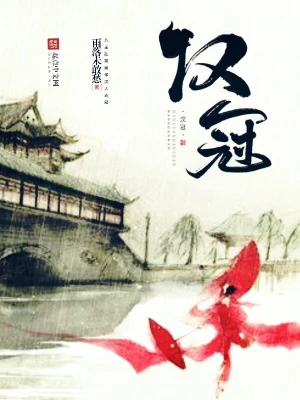
The Han Crown
汉冠
- Status
- Completed
- Length
- 2.2M Words
- Genre
- Historical
- Subgenre
- Jin-Sui-Tang Dynasties
- Updated
- 1y ago
- Source
- Qidian
Stats
754Chapters
0Votes
18.4kRecs
23.5kFans
Tags
Synopsis
More by this author
In booklists 4
Lazy Meow’s Reading List
I'm pretty lazy and rarely log in. If you'd like me to add a book, just leave its title and I'll add it when I see it. As for recommendations, I can't copy and paste them (or maybe I just don't know how?) and I'm too lazy to type them out, so sorry about that...
62Books46Follows6yUpdated
A Reminder List of Great Books I Haven't Read Yet
A reading list of good books to remember.
35Books4Follows6yUpdated

The Latest Historical Fiction
Sharing some pretty good new historical novels.
11Books1.4kFollows7yUpdated
Yuluo Jun's Booklist
Yu Luo Jun's bookshelf. All great books!
22Books0Follows8yUpdated
Readers also read
 Daming: Asking for the Throne at the Beginning, Lao Zhule Went Crazy
 My Father Is Wen Tianxiang, and We Win the Battle of Yashan from the Start
 A Guide to Building Civilization in a Primitive Tribe
 My Only Method: I Will Add More Points to Become Stronger at the End of Ming Dynasty
 Slaughtering My Way Through the Marvel Universe: Starting with The Boys
 The Ming Dynasty's Chief Minister
 The Ming Dynasty Behind the Mask
 The Road Less Traveled
 The World of the Extreme Path: Tempering My Body Through Terror
 A Plan to Revive the Northern Song
 The Great Bandit
 The Rise of the Heir
 Shu Han Dynasty
 Cao Wei Dynasty
 The Great Ming
Reader comments 29
Google Translate
All three chapters were withdrawn, and prices skyrocketed. First of all, before the Song Dynasty, gold and silver were not normal currencies in circulation and were only used as precious metals. Since China does not produce silver and its mining technology is backward, copper is generally used as currency. Moreover, due to the heavy burials in the Han Dynasty, gold and silver are generally buried in tombs, so it is even more scarce. After the Wanli period of the Ming Dynasty, due to the influx of American silver into China, the amount of silver was only equivalent to several thousand pieces. In the early years of the Ming Dynasty, the Ming Dynasty Zong rewarded Yu Qian with only twenty taels of silver. The annual salary of the Qing Dynasty prince was only ten thousand taels. During the Wei, Jin, Southern and Northern Dynasties, officials were not paid, and most of them were given grain, cloth, and silk. Food, cloth, and silk were hard currencies equivalent to money, and the common people had little money. After all, taxes are collected on food and cloth.
If a book like this wants the protagonist to successfully fight for hegemony, he must first completely defeat the power of the Hu people in the war. After all, the population of the two sides at that time was already close, and he had experienced the Three Kingdoms War. If he did not fight the Hu people first, it would be Li Zicheng, especially the Huns in Hanoi, who were a serious problem.
The rise of poor families in the late Jin Dynasty basically belongs to YY.
The Sima family must bear 90% of the responsibility for the chaos in China
The Sima family is responsible for 90% of the chaos in China. Although the Cao family seized the throne, they violently attacked the Hu people outside the customs. The most disgusting thing is that after seizing the throne, the family ruined China.
When I first read it, it wasn't very good. My father had just died, and he went directly to a brothel in order to speculate on wine. No matter what the purpose of this behavior was, it was unfilial in ancient times, and besides, he was a scholar. In the early stage, I took filial piety as my starting point, but within a few days I was visiting a brothel and writing love poems.
The more I write about it, the weaker the flavor becomes. I don't see the style of the Wei and Jin Dynasties at all. Marxism-Leninism is good, but what I want to read when reading this book is the style of the Wei and Jin Dynasties.
There is a system, but without a system you are dead. How naive it is to want to change the world from a humble family
Chapter 34: The value of the manor is too exaggerated
I just read Chapter 34. The first part was basically okay, but the manor in Chapter 34 scared me, saying it was worth three thousand gold. As mentioned earlier, one tael of gold and ten taels of silver, that is, this manor of more than 60 acres is worth 30,000 taels of silver. It is too exaggerated. The price of one acre of 500 taels of silver is gold grown? In the Western Jin Dynasty, there were few people in the land, so the land occupation order was issued. Land is not valuable, but people are valuable. How many people do you have on your sixty acres of land? Even outside the capital city of Luoyang, it's not worth that much. It's only a hundred gold at most, and sixty acres can't be called a manor. ,,? At that time, a manor was equivalent to a village, with dozens of households and thousands of acres of land, and even large households with hundreds or thousands of households were self-sufficient in the manor.
The style of the Wei and Jin Dynasties mainly refers to the Eastern Jin Dynasty! Regarding the helplessness of Yiguan's journey to the south, the northern kingdom suffered from massacres, but the Eastern Jin Dynasty was really unsatisfactory, and it gave rise to despair of reality, which was just a dream!
Han Shou is a descendant of Han Wangxin and has nothing to do with the Marquis of Huaiyin.