Library
Browse and search books
513 novels found
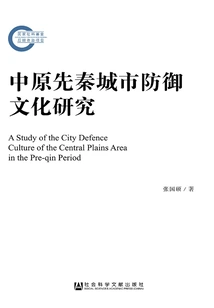
中原先秦城市防御文化研究(国家社科基金后期资助项目)
Zhang Guoshuo
Based on an in-depth discussion of the discovery, attributes, and development stages of pre-Qin cities, this book conducts a comprehensive and systematic analysis and research on the types and construction techniques of urban defense facilities during this period, the construction and evolution of defense systems, the defense culture model, the comparison of defense culture between the Central Plains and surrounding cities, and the development and utilization of defense cultural resources in Central Plains cities. The book divides the three stages of pre-Qin city development in the Central Plains, discusses the capital defense systems in each period of Xia, Shang, and Zhou, demonstrates the pre-Qin "city wall system" and "defending on four sides" urban defense models, and studies the commonalities and differences of pre-Qin urban defense culture in the Central Plains and surrounding areas. These results are all innovative.
Based on an in-depth discussion of the discovery, attributes, and development stages of pre-Qin cities, this book conducts a comprehensive and systematic analysis and research on the types and construction techniques of urban defense facilities during this period, the construction and evolution of defense systems, the defense culture model, the comparison of defense culture between the Central Plains and surrounding cities, and the development and utilization of defense cultural resources in Central Plains cities. The book divides the three stages of pre-Qin city development in the Central Plains, discusses the capital defense systems in each period of Xia, Shang, and Zhou, demonstrates the pre-Qin "city wall system" and "defending on four sides" urban defense models, and studies the commonalities and differences of pre-Qin urban defense culture in the Central Plains and surrounding areas. These results are all innovative.
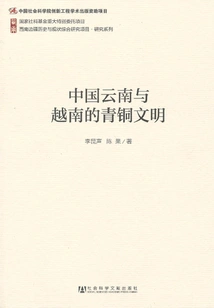
中国云南与越南的青铜文明
Chen Guo Li Kunsheng
This is the first academic monograph to conduct a comprehensive study of the Bronze Age culture of Yunnan, China and Vietnam. Taking the origin, development and evolution of early civilizations as the main line, the author sorted out the cultural development process from the late Neolithic Age to the Bronze Age and finally to the early Iron Age in Yunnan and Vietnam in China, and attempted to conduct archaeological studies on the various Bronze Age cultures in Yunnan and Vietnam. The book also attempted for the first time a comparative study on the origins of the bronze cultures in the two places, their livelihood patterns, religious sacrificial rituals and other aspects.
This is the first academic monograph to conduct a comprehensive study of the Bronze Age culture of Yunnan, China and Vietnam. Taking the origin, development and evolution of early civilizations as the main line, the author sorted out the cultural development process from the late Neolithic Age to the Bronze Age and finally to the early Iron Age in Yunnan and Vietnam in China, and attempted to conduct archaeological studies on the various Bronze Age cultures in Yunnan and Vietnam. The book also attempted for the first time a comparative study on the origins of the bronze cultures in the two places, their livelihood patterns, religious sacrificial rituals and other aspects.
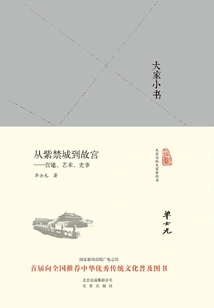
大家小书:从紫禁城到故宫:营建、艺术、史事
Shan Shiyuan Shan Jiayun
"History of the Forbidden City" was first written in 1962. It includes three parts: the palace architecture of the Forbidden City, the construction history of the Forbidden City, and the historical sites of the Forbidden City. It uses a simple and easy-to-understand approach to give life to the boring silicon shingle and tile stone buildings, making it not boring to read.
"History of the Forbidden City" was first written in 1962. It includes three parts: the palace architecture of the Forbidden City, the construction history of the Forbidden City, and the historical sites of the Forbidden City. It uses a simple and easy-to-understand approach to give life to the boring silicon shingle and tile stone buildings, making it not boring to read.
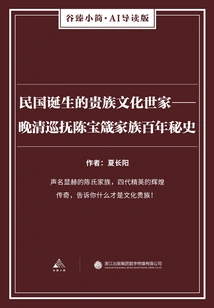
民国诞生的贵族文化世家:晚清巡抚陈宝箴家族百年秘史(谷臻小简·AI导读版)
Xia Changyang
The famous Chen family, the glorious legend of four generations of elites, tells you what a cultural aristocrat is! There are many famous and distinguished families in Chinese history, but the only one who is famous in "Cihai" is Chen Baozhen from Xiushui, Jiangxi (known as Yining in ancient times). Chen Baozhen, the governor of Hunan in the late Qing Dynasty, Chen Sanli, a representative figure of Tongguang poetry, Chen Hengke, a painter, Chen Yinke, a master of history, and Chen Fenghuai, the "father of the Chinese Botanical Garden", are the famous "Five Heroes of the Chen Family". The century-old legend of the four generations and five heroes of the Chen family in Yining illuminates the epitome of the fate of modern Chinese intellectuals...
The famous Chen family, the glorious legend of four generations of elites, tells you what a cultural aristocrat is! There are many famous and distinguished families in Chinese history, but the only one who is famous in "Cihai" is Chen Baozhen from Xiushui, Jiangxi (known as Yining in ancient times). Chen Baozhen, the governor of Hunan in the late Qing Dynasty, Chen Sanli, a representative figure of Tongguang poetry, Chen Hengke, a painter, Chen Yinke, a master of history, and Chen Fenghuai, the "father of the Chinese Botanical Garden", are the famous "Five Heroes of the Chen Family". The century-old legend of the four generations and five heroes of the Chen family in Yining illuminates the epitome of the fate of modern Chinese intellectuals...
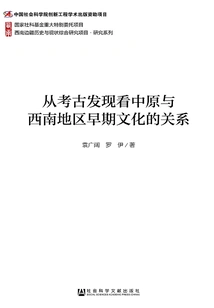
从考古发现看中原与西南地区早期文化的关系
Yuan Kuangkuang Roy Et Al.
This book is a comparative study of archaeological culture based on geographical divisions. It first sorts out the early archaeological and cultural sequences in the Central Plains, Sichuan Basin and Qinghai-Tibet Plateau, and then analyzes the Central Plains, Qinghai-Tibet Plateau and Central Plains according to different transmission routes. After studying the archaeological and cultural relationship with the Sichuan Basin, we finally came to the conclusion that in the late Neolithic Age, the archaeological culture of the Central Plains region had a greater impact on the culture of the Qinghai-Tibet Plateau; after entering the Bronze Age, the archaeological culture of the Central Plains region and the Sichuan Basin became more closely connected.
This book is a comparative study of archaeological culture based on geographical divisions. It first sorts out the early archaeological and cultural sequences in the Central Plains, Sichuan Basin and Qinghai-Tibet Plateau, and then analyzes the Central Plains, Qinghai-Tibet Plateau and Central Plains according to different transmission routes. After studying the archaeological and cultural relationship with the Sichuan Basin, we finally came to the conclusion that in the late Neolithic Age, the archaeological culture of the Central Plains region had a greater impact on the culture of the Qinghai-Tibet Plateau; after entering the Bronze Age, the archaeological culture of the Central Plains region and the Sichuan Basin became more closely connected.
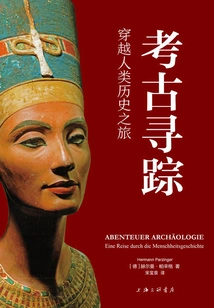
考古寻踪:穿越人类历史之旅
(germany) Hermann Persinger
This is a popular work that introduces archeology and archaeological research results to a broad audience. According to the order of human historical development, the book provides a relatively systematic summary of archaeologists from various countries around the world, with a special focus on the latest major archaeological discoveries and research results achieved by German archaeologists. It is an important supplement to similar works in Britain, France, the United States and other countries. In vivid and easy-to-understand language, "Archaeological Traces: A Journey Through Human History" summarizes the millions of years of physiological evolution and long-term development of material culture of human beings from the Paleolithic Age, through farming, animal husbandry and settled life in the Neolithic Age, and the gradual emergence of division of labor and differentiation between rich and poor based on the smelting and processing of metals in the Bronze and Iron Ages, which eventually gave rise to social classes and the emergence of ancient world civilizations, all the way to modern history including the Second World War. The author properly captures the characteristics of each historical period of mankind, briefly introduces the evolution and development process of human society, and at the same time highlights the outstanding contribution of archeology in the study of each historical period.
This is a popular work that introduces archeology and archaeological research results to a broad audience. According to the order of human historical development, the book provides a relatively systematic summary of archaeologists from various countries around the world, with a special focus on the latest major archaeological discoveries and research results achieved by German archaeologists. It is an important supplement to similar works in Britain, France, the United States and other countries. In vivid and easy-to-understand language, "Archaeological Traces: A Journey Through Human History" summarizes the millions of years of physiological evolution and long-term development of material culture of human beings from the Paleolithic Age, through farming, animal husbandry and settled life in the Neolithic Age, and the gradual emergence of division of labor and differentiation between rich and poor based on the smelting and processing of metals in the Bronze and Iron Ages, which eventually gave rise to social classes and the emergence of ancient world civilizations, all the way to modern history including the Second World War. The author properly captures the characteristics of each historical period of mankind, briefly introduces the evolution and development process of human society, and at the same time highlights the outstanding contribution of archeology in the study of each historical period.
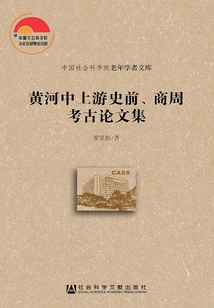
黄河中上游史前、商周考古论文集
Liang Xingpeng
This collection includes 19 papers since the author started participating in archaeological work and 1 research excavation report, totaling 20 papers. This collection systematically discusses the cultural characteristics, divisions, staging and age of various ancient remains in Shaanxi and its adjacent Gansu, Shanxi and other regions from the Yangshao Culture to the Western Zhou Dynasty, as well as their mutual relationships. It also puts forward some new insights and has a certain role in promoting the study of the archaeological cultural sequence in this region.
This collection includes 19 papers since the author started participating in archaeological work and 1 research excavation report, totaling 20 papers. This collection systematically discusses the cultural characteristics, divisions, staging and age of various ancient remains in Shaanxi and its adjacent Gansu, Shanxi and other regions from the Yangshao Culture to the Western Zhou Dynasty, as well as their mutual relationships. It also puts forward some new insights and has a certain role in promoting the study of the archaeological cultural sequence in this region.
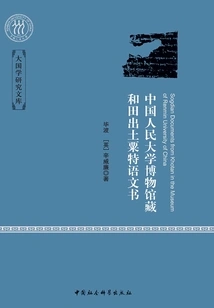
中国人民大学博物馆藏和田出土粟特语文书
Bibo (english) William Xin
This book is the result of the interpretation and compilation of 13 Sogdian documents unearthed in Hotan (ancient Khotan), Xinjiang, which were collected by the Museum of Renmin University of China in 2010. This batch of documents is not only the largest batch of Sogdian documents published in China in recent years, but is also of great research interest. The contents of the documents include economic documents, letters and other secular documents, dating from about the end of the 8th century, and provide important reference materials for understanding the Sogdian barbarians from Central Asia who were active in the four towns of Anxi at the end of the Tang Dynasty's rule in the Western Regions.
This book is the result of the interpretation and compilation of 13 Sogdian documents unearthed in Hotan (ancient Khotan), Xinjiang, which were collected by the Museum of Renmin University of China in 2010. This batch of documents is not only the largest batch of Sogdian documents published in China in recent years, but is also of great research interest. The contents of the documents include economic documents, letters and other secular documents, dating from about the end of the 8th century, and provide important reference materials for understanding the Sogdian barbarians from Central Asia who were active in the four towns of Anxi at the end of the Tang Dynasty's rule in the Western Regions.
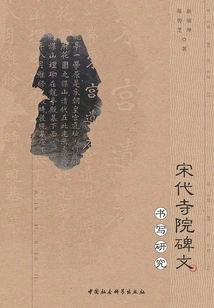
宋代寺院碑文书写研究
Zhao Dekun Chen Chuanzhi
Through a systematic and in-depth study of temple inscriptions in the Song Dynasty, this book believes that the multi-dimensional Buddhist beliefs of the Song Dynasty were established and presented in the rich and colorful temple inscriptions. Regarding the practical value of Buddhism, although the positions and understandings of the official, folk and monasteries are different, there is no opposition or conflict between them, but complement and echo each other. Ultimately, through the writing of inscriptions by literati, monks and common people, the basic ideological aspects of Buddhist culture in the Song Dynasty were constructed: life well-being, spiritual freedom and social harmony. This conclusion undoubtedly has profound implications for the current modern country that integrates the forces of all parties, promotes social harmony, and realizes democracy and civilization.
Through a systematic and in-depth study of temple inscriptions in the Song Dynasty, this book believes that the multi-dimensional Buddhist beliefs of the Song Dynasty were established and presented in the rich and colorful temple inscriptions. Regarding the practical value of Buddhism, although the positions and understandings of the official, folk and monasteries are different, there is no opposition or conflict between them, but complement and echo each other. Ultimately, through the writing of inscriptions by literati, monks and common people, the basic ideological aspects of Buddhist culture in the Song Dynasty were constructed: life well-being, spiritual freedom and social harmony. This conclusion undoubtedly has profound implications for the current modern country that integrates the forces of all parties, promotes social harmony, and realizes democracy and civilization.
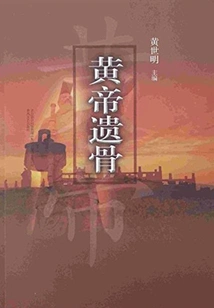
黄帝遗骨
Huang Shiming
In 2011, "Liaoshen Evening News" sent a capable team to conduct field inspections in Inner Mongolia and western Liaoning. They interviewed many archaeological experts and private researchers and obtained a large amount of detailed information. This book is based on fifteen articles published in "Liaoshen Evening News" after this inspection. It also includes a number of articles about the remains of the Yellow Emperor published in authoritative domestic newspapers in recent years. It is compiled and published with a total of 250,000 words. These articles demonstrate the historical fact that the Huangdi tribe originated in the Liaohe River Basin from different aspects. The article has a clear argument, rigorous argumentation and well-founded evidence. After it was first published in the newspaper, it attracted close attention from the domestic archaeological and historical circles.
In 2011, "Liaoshen Evening News" sent a capable team to conduct field inspections in Inner Mongolia and western Liaoning. They interviewed many archaeological experts and private researchers and obtained a large amount of detailed information. This book is based on fifteen articles published in "Liaoshen Evening News" after this inspection. It also includes a number of articles about the remains of the Yellow Emperor published in authoritative domestic newspapers in recent years. It is compiled and published with a total of 250,000 words. These articles demonstrate the historical fact that the Huangdi tribe originated in the Liaohe River Basin from different aspects. The article has a clear argument, rigorous argumentation and well-founded evidence. After it was first published in the newspaper, it attracted close attention from the domestic archaeological and historical circles.
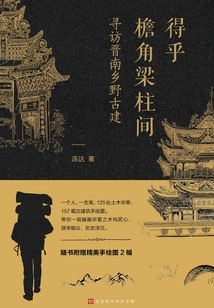
得乎檐角梁柱间:寻访晋南乡野古建
Lianda
Shanxi Province now preserves about 70% of the country's large wooden buildings before the Ming Dynasty. The number of ancient buildings in various forms ranks first in the country. The Pingyang and Hedong areas in southern Shanxi have preserved many ancient buildings that span a long time, cover a wide range of forms, and have a high density of ancient buildings. There are buildings from the Tang, Song, Jin, Yuan, Ming, and Qing periods, and they are known as "a paradise for lovers of ancient architecture." In this book, the author Lianda uses sincere and ingenious words paired with 157 exquisite hand-drawn paintings to show readers the beauty of 124 ancient buildings in southern Shanxi. He records the current status of many little-known ancient buildings and also records his whereabouts and thoughts in words. It allows us to feel the beauty of traditional ancient buildings more deeply, understand the history and humanistic stories in them, and at the same time, pay more attention and protection to traditional buildings and culture.
Shanxi Province now preserves about 70% of the country's large wooden buildings before the Ming Dynasty. The number of ancient buildings in various forms ranks first in the country. The Pingyang and Hedong areas in southern Shanxi have preserved many ancient buildings that span a long time, cover a wide range of forms, and have a high density of ancient buildings. There are buildings from the Tang, Song, Jin, Yuan, Ming, and Qing periods, and they are known as "a paradise for lovers of ancient architecture." In this book, the author Lianda uses sincere and ingenious words paired with 157 exquisite hand-drawn paintings to show readers the beauty of 124 ancient buildings in southern Shanxi. He records the current status of many little-known ancient buildings and also records his whereabouts and thoughts in words. It allows us to feel the beauty of traditional ancient buildings more deeply, understand the history and humanistic stories in them, and at the same time, pay more attention and protection to traditional buildings and culture.
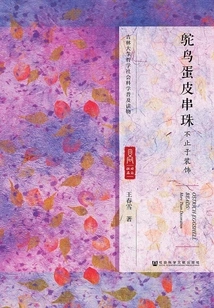
鸵鸟蛋皮串珠:不止于装饰
Wang Chunxue
The origin of primitive art is an ancient and fashionable topic. A large number of ostrich egg skin beads have been found in Paleolithic sites. These non-practical products are considered to be the most vivid and concrete representatives of the changes in the spiritual field of ancient humans. They are the origin of primitive artistic creation and early records of modern human behavior. This book comprehensively uses archaeological results at home and abroad, taking the ostrich egg skin beads unearthed in my country as an example, to explore the production process and symbolic significance of personal ornaments in the Paleolithic Age, providing an important inspiration for analyzing and explaining the emergence and development of ancient human symbolic behavior and the origin and spread of primitive art.
The origin of primitive art is an ancient and fashionable topic. A large number of ostrich egg skin beads have been found in Paleolithic sites. These non-practical products are considered to be the most vivid and concrete representatives of the changes in the spiritual field of ancient humans. They are the origin of primitive artistic creation and early records of modern human behavior. This book comprehensively uses archaeological results at home and abroad, taking the ostrich egg skin beads unearthed in my country as an example, to explore the production process and symbolic significance of personal ornaments in the Paleolithic Age, providing an important inspiration for analyzing and explaining the emergence and development of ancient human symbolic behavior and the origin and spread of primitive art.
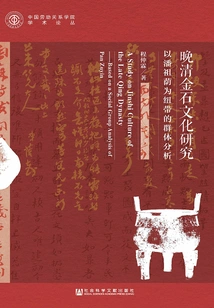
Research on Epigraphic Culture in the Late Qing Dynasty: Group Analysis with Pan Zuyin as the Link
History晚清金石文化研究:以潘祖荫为纽带的群体分析
Cheng Zhonglin
A group of important epigraph collectors and epigraphists emerged in the late Qing Dynasty. Their collection types, quantity, quality, etc. Greatly exceeded their predecessors, showing the characteristics of extensive collection, precise identification, and group textual research. Among the epigraphers of this period, Pan Zuyin had the largest collection of bronzes, which influenced the epigraphic cultural activities of this group. This book uses Pan as a link to go deep into the group, sort out their thoughts and practices, describe the late Qing epigraphy culture from one side, and reveal the uniqueness of the late Qing epigraphy culture. At the same time, it studies the impact of epigraphy culture on the art of calligraphy and seal cutting, analyzes a series of changes in creative concepts, creative methods, etc., And provides inspiration for today's related art research and creation.
A group of important epigraph collectors and epigraphists emerged in the late Qing Dynasty. Their collection types, quantity, quality, etc. Greatly exceeded their predecessors, showing the characteristics of extensive collection, precise identification, and group textual research. Among the epigraphers of this period, Pan Zuyin had the largest collection of bronzes, which influenced the epigraphic cultural activities of this group. This book uses Pan as a link to go deep into the group, sort out their thoughts and practices, describe the late Qing epigraphy culture from one side, and reveal the uniqueness of the late Qing epigraphy culture. At the same time, it studies the impact of epigraphy culture on the art of calligraphy and seal cutting, analyzes a series of changes in creative concepts, creative methods, etc., And provides inspiration for today's related art research and creation.
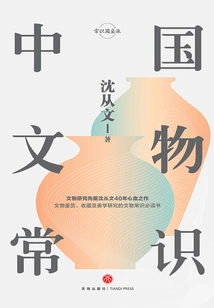
中国文物常识
Shen Congwen
This book covers ancient people's daily necessities, transportation, cultural life, arts and crafts, etc., And is more specific to the evolution and development of ancient jade, ceramics, glass, mirrors, lacquerware, chariots, carriages, fans, embroidery, clothing, lions, dragons, phoenixes, and fish patterns. Mr. Shen Congwen used the attitude of a writer to sort out the common sense related to cultural relics, and talked about various cultural relics from the perspective of appreciation, filling the gaps in the history of cultural relics in my country.
This book covers ancient people's daily necessities, transportation, cultural life, arts and crafts, etc., And is more specific to the evolution and development of ancient jade, ceramics, glass, mirrors, lacquerware, chariots, carriages, fans, embroidery, clothing, lions, dragons, phoenixes, and fish patterns. Mr. Shen Congwen used the attitude of a writer to sort out the common sense related to cultural relics, and talked about various cultural relics from the perspective of appreciation, filling the gaps in the history of cultural relics in my country.
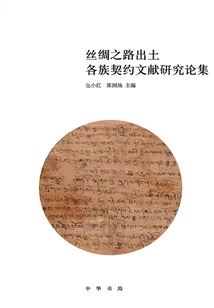
丝绸之路出土各族契约文献研究论集
Editor-in-chief Chen Guocan
The Institute of Unearthed Documents and Traditional Economy of Wuhan University took the lead in organizing well-known experts and scholars in the study of contracts of various ethnic groups in China. In 2014, it applied for and undertook the major project of the National Social Science Fund "Compilation of Contract Documents of Various Ethnic Groups Unearthed on the Silk Road and Its Relationship with Chinese Contracts" "Comparative Research" (14ZDB030), cooperated to systematically sort out contracts in some ethnic languages, and also carried out multi-faceted research on the contract documents of various ethnic groups. In October 2015, the "Research on Ethnic Contracts Unearthed from the Silk Road" was held in Turpan City "International Academic Forum", more than 40 experts and scholars from home and abroad participated in the meeting. They conducted multi-faceted discussions on the Qilin, Tubo, Uighur, Xixia, Chagatai and Chinese contract documents unearthed along the ancient Silk Road. They also discussed the prosperity of contracts along the Silk Road. Many insights were put forward in terms of the role of the contract in various ethnic languages, the similarities and differences between contracts in various ethnic languages and those in Chinese, as well as the evolution of differences and convergence, the adjustment of the Silk Road route and its economic activities in different periods, and the understanding of the characteristics and regularity of the development of the contract itself. These academic results are now compiled into the "Collection of Research on Contract Documents of Various Ethnic Groups on the Silk Road" for the purpose of wider exchange.
The Institute of Unearthed Documents and Traditional Economy of Wuhan University took the lead in organizing well-known experts and scholars in the study of contracts of various ethnic groups in China. In 2014, it applied for and undertook the major project of the National Social Science Fund "Compilation of Contract Documents of Various Ethnic Groups Unearthed on the Silk Road and Its Relationship with Chinese Contracts" "Comparative Research" (14ZDB030), cooperated to systematically sort out contracts in some ethnic languages, and also carried out multi-faceted research on the contract documents of various ethnic groups. In October 2015, the "Research on Ethnic Contracts Unearthed from the Silk Road" was held in Turpan City "International Academic Forum", more than 40 experts and scholars from home and abroad participated in the meeting. They conducted multi-faceted discussions on the Qilin, Tubo, Uighur, Xixia, Chagatai and Chinese contract documents unearthed along the ancient Silk Road. They also discussed the prosperity of contracts along the Silk Road. Many insights were put forward in terms of the role of the contract in various ethnic languages, the similarities and differences between contracts in various ethnic languages and those in Chinese, as well as the evolution of differences and convergence, the adjustment of the Silk Road route and its economic activities in different periods, and the understanding of the characteristics and regularity of the development of the contract itself. These academic results are now compiled into the "Collection of Research on Contract Documents of Various Ethnic Groups on the Silk Road" for the purpose of wider exchange.
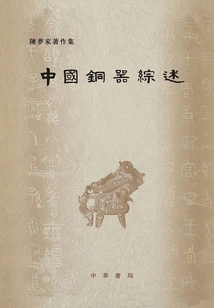
中国铜器综述(陈梦家著作集)
Chen Mengjia
This book is a related work that the author completed in 1947 at the same time as the "Collection of Chinese Bronze Ware Collection in the United States". According to the English manuscript of V1 collected by the Institute of Archeology of the Chinese Academy of Social Sciences, it was translated into Chinese by Wang Rui and four others. The translation was reviewed by Zhang Changshou and Wang Shimin. The book is divided into fifteen chapters. Based on the information available at the time, it provides a comprehensive and in-depth discussion of many aspects of the study of Chinese bronzes, such as research methods and brief history, regional distribution and cultural background, bronze terminology and shape classification, shape and decoration, forgery and casting, inscriptions, dating, etc. Some of the chapters are quite exciting. This is a work that has been lost for a long time due to historical reasons in the history of Chinese bronze research and has important academic value.
This book is a related work that the author completed in 1947 at the same time as the "Collection of Chinese Bronze Ware Collection in the United States". According to the English manuscript of V1 collected by the Institute of Archeology of the Chinese Academy of Social Sciences, it was translated into Chinese by Wang Rui and four others. The translation was reviewed by Zhang Changshou and Wang Shimin. The book is divided into fifteen chapters. Based on the information available at the time, it provides a comprehensive and in-depth discussion of many aspects of the study of Chinese bronzes, such as research methods and brief history, regional distribution and cultural background, bronze terminology and shape classification, shape and decoration, forgery and casting, inscriptions, dating, etc. Some of the chapters are quite exciting. This is a work that has been lost for a long time due to historical reasons in the history of Chinese bronze research and has important academic value.
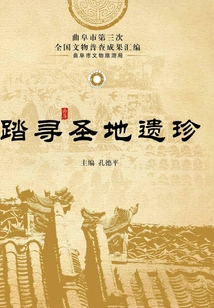
踏寻圣地遗珍
Editor-in-chief Kong Deping
This book is a compilation of the results of the third national cultural relics census in Qufu City, including a compilation of "Three Census" documents, "Three Census" work records, a collection of "Three Census" results, and "Three Census" harvest experiences and major work events. Through this cultural relics census, we have a new understanding of the protection of cultural relics in the field, and we have new ideas and new feelings on how to do a good job in cultural relics protection. ?
This book is a compilation of the results of the third national cultural relics census in Qufu City, including a compilation of "Three Census" documents, "Three Census" work records, a collection of "Three Census" results, and "Three Census" harvest experiences and major work events. Through this cultural relics census, we have a new understanding of the protection of cultural relics in the field, and we have new ideas and new feelings on how to do a good job in cultural relics protection. ?
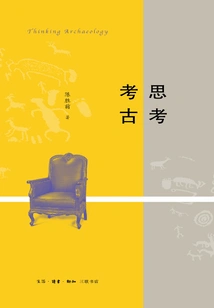
Thinking About Archeology
History思考考古
Chen Shengqian
This book is another work by Chen Shengqian on archaeological theory, methods, practice and reflection besides "Learning Archeology". If "Learning Archeology" is written for young people who are interested in archeology, are new to archaeology, and are new to working in the field, then "Thinking about Archeology" is aimed at archaeological researchers who have been working in the field for many years, as well as the general public who want to have a deeper understanding of archeology. The author analyzes the subject of archeology from the aspects of ontology thinking, archaeological significance, archaeological identity, the development of contemporary archeology, and the research status of Chinese archeology. In particular, he summarizes and reflects on the development of Chinese archeology, covering both its advantages and disadvantages, and puts forward good ideas. The attitudes towards academic studies and life are integrated throughout, and the content is richer and the vision is broader.
This book is another work by Chen Shengqian on archaeological theory, methods, practice and reflection besides "Learning Archeology". If "Learning Archeology" is written for young people who are interested in archeology, are new to archaeology, and are new to working in the field, then "Thinking about Archeology" is aimed at archaeological researchers who have been working in the field for many years, as well as the general public who want to have a deeper understanding of archeology. The author analyzes the subject of archeology from the aspects of ontology thinking, archaeological significance, archaeological identity, the development of contemporary archeology, and the research status of Chinese archeology. In particular, he summarizes and reflects on the development of Chinese archeology, covering both its advantages and disadvantages, and puts forward good ideas. The attitudes towards academic studies and life are integrated throughout, and the content is richer and the vision is broader.
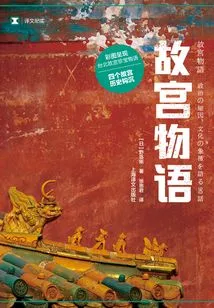
Forbidden City Story
History故宫物语
Q
In the first part of the book, "Talk about Cultural Relics," Nojima Tsuyoshi reviews 37 important collections of the Taipei National Palace Museum, including "Jade Cabbage," "Traveling in Streams and Mountains," "Quick Snow Scenery," "Mao Gong's Cauldron," and "Dwelling in the Fuchun Mountains." He sometimes describes the works themselves, but more often the background of their creation and the stories of these cultural relics during the wartime displacement. The second article "Talk about the Forbidden City" China, each chapter revolves around the historical figures and events related to the Forbidden City, giving a close-up of the past of the Forbidden City. "The history of the Forbidden City is the epitome of China's modern history. Culture reflects everything in China, and the Chinese people also reflect their own history and destiny through culture." The third chapter, "Interviewing People from the Past," reveals unknown historical details through exclusive interviews with former deans of the Forbidden City and other social figures.
In the first part of the book, "Talk about Cultural Relics," Nojima Tsuyoshi reviews 37 important collections of the Taipei National Palace Museum, including "Jade Cabbage," "Traveling in Streams and Mountains," "Quick Snow Scenery," "Mao Gong's Cauldron," and "Dwelling in the Fuchun Mountains." He sometimes describes the works themselves, but more often the background of their creation and the stories of these cultural relics during the wartime displacement. The second article "Talk about the Forbidden City" China, each chapter revolves around the historical figures and events related to the Forbidden City, giving a close-up of the past of the Forbidden City. "The history of the Forbidden City is the epitome of China's modern history. Culture reflects everything in China, and the Chinese people also reflect their own history and destiny through culture." The third chapter, "Interviewing People from the Past," reveals unknown historical details through exclusive interviews with former deans of the Forbidden City and other social figures.
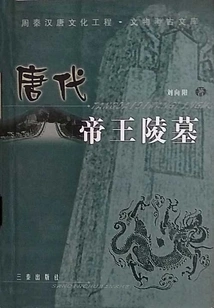
唐代帝王陵墓
Liu Xiangyang
This book uses physical historical materials discovered by archaeologists as evidence to historically and systematically explain the institutional characteristics of the imperial mausoleums of the Tang Dynasty and the process of their occurrence, development, rise and decline. It also conducts extensive and in-depth discussions on the stone carvings of the mausoleums, the burial system, and the historical status, merits and demerits of the tomb owners.
This book uses physical historical materials discovered by archaeologists as evidence to historically and systematically explain the institutional characteristics of the imperial mausoleums of the Tang Dynasty and the process of their occurrence, development, rise and decline. It also conducts extensive and in-depth discussions on the stone carvings of the mausoleums, the burial system, and the historical status, merits and demerits of the tomb owners.
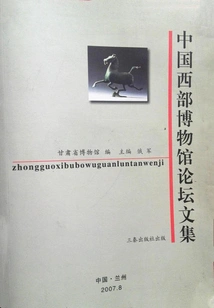
中国西部博物馆论坛文集
Editor Of Gansu Provincial Museum Editor-in-chief Of Russian Army
The papers included in this book cover six aspects: museum construction and development, museum management and services, museum display and display, appreciation and research of museum collections, collection and protection of museum collections, and cultural heritage and protection.
The papers included in this book cover six aspects: museum construction and development, museum management and services, museum display and display, appreciation and research of museum collections, collection and protection of museum collections, and cultural heritage and protection.
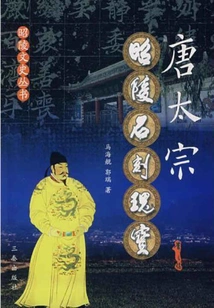
唐太宗昭陵石刻瑰宝
Ma Haijian Guo Rui
This book analyzes and explains the history, culture and stone carving art of Zhaoling Mausoleum of Emperor Taizong of the Tang Dynasty. Contents include: Six Horses of Zhaoling, stone statues of chiefs of the Fourteen Kingdoms, Shinto tablets, epitaphs, and other stone carvings.
This book analyzes and explains the history, culture and stone carving art of Zhaoling Mausoleum of Emperor Taizong of the Tang Dynasty. Contents include: Six Horses of Zhaoling, stone statues of chiefs of the Fourteen Kingdoms, Shinto tablets, epitaphs, and other stone carvings.
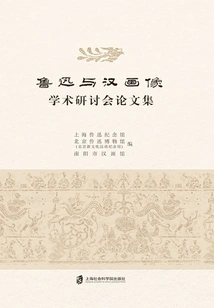
鲁迅与汉画像学术研讨会论文集
Shanghai Lu Xun Memorial Hall, Etc.
This book mainly collects the relevant research papers of scholars at home and abroad on Lu Xun's research on Han portrait stones, and discusses other researchers' related research and data inspection on Han portrait stones. This book mainly collects the relevant research papers of scholars at home and abroad on Lu Xun's research on Han portrait stones, and discusses other researchers' related research and data inspection on Han portrait stones.
This book mainly collects the relevant research papers of scholars at home and abroad on Lu Xun's research on Han portrait stones, and discusses other researchers' related research and data inspection on Han portrait stones. This book mainly collects the relevant research papers of scholars at home and abroad on Lu Xun's research on Han portrait stones, and discusses other researchers' related research and data inspection on Han portrait stones.
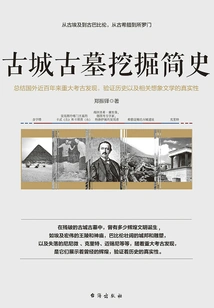
古城古墓挖掘简史
Zheng Zhenduo
"A Brief History of the Excavation of Ancient Tombs in Ancient Cities", with pictures and texts, uses refined and popular language to summarize the major archaeological discoveries made abroad from the 19th century to the early 20th century, such as the discovery and excavation process of important relics in ancient Egypt, ancient Babylon, and ancient Greece. This is one of Mr. Zheng Zhenduo's important archaeological works. It has detailed information, clear organization, vivid diction, and strong academic significance and readability. In addition, the appendix of this book also includes Zhu Xie's "Illustrated Research on the Tombs of the Six Dynasties in Jiankang Lanling", making the content of this book richer and more complete. There are approximately 160 pictures inserted into the book, many of which are very precious old photos.
"A Brief History of the Excavation of Ancient Tombs in Ancient Cities", with pictures and texts, uses refined and popular language to summarize the major archaeological discoveries made abroad from the 19th century to the early 20th century, such as the discovery and excavation process of important relics in ancient Egypt, ancient Babylon, and ancient Greece. This is one of Mr. Zheng Zhenduo's important archaeological works. It has detailed information, clear organization, vivid diction, and strong academic significance and readability. In addition, the appendix of this book also includes Zhu Xie's "Illustrated Research on the Tombs of the Six Dynasties in Jiankang Lanling", making the content of this book richer and more complete. There are approximately 160 pictures inserted into the book, many of which are very precious old photos.
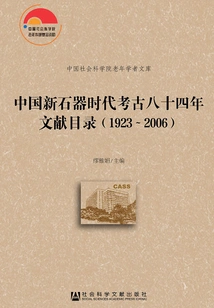
Catalog of Chinese Neolithic Archaeological Documents for 84 Years (1923-2006) (2 Volumes in Total)
History中国新石器时代考古八十四年文献目录(1923~2006)(全2册)
Miao Yajuan
This book is a tool for searching archaeological documents of the Neolithic Age in China. It includes Chinese books, newspapers and periodicals on the archaeological excavation and research of the Neolithic Age published in China (including Hong Kong, Macao and Taiwan) from 1923 to 2006. It also includes some internal materials and documents from several related disciplines. On the basis of the traditional arrangement of archaeological data from the Neolithic Age in China, the book adds items arranged around academic research topics.
This book is a tool for searching archaeological documents of the Neolithic Age in China. It includes Chinese books, newspapers and periodicals on the archaeological excavation and research of the Neolithic Age published in China (including Hong Kong, Macao and Taiwan) from 1923 to 2006. It also includes some internal materials and documents from several related disciplines. On the basis of the traditional arrangement of archaeological data from the Neolithic Age in China, the book adds items arranged around academic research topics.
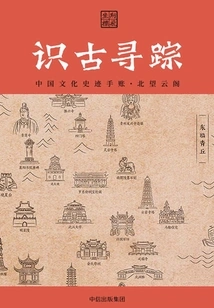
识古寻踪:中国文化史迹手账·北望云阁
Fly Group
Si Fei's team has paid attention to and visited the "National Protection" theme for more than ten years. It has in-depth sorted out seven batches of "National Protection" lists, totaling 4,296 places, compiled nearly 10,000 historical sites, and presented China's most magnificent ancient buildings, painted sculptures, murals, grottoes, ruins, tombs, etc. From multiple angles. It compiled a detailed visit guide based on on-the-spot travel experience. "Searching for the Ancients: A Handbook of Chinese Cultural and Historical Relics" consists of four volumes, with provinces, cities, and counties as divisional units, and marked with "National Security" batches, eras, and addresses. It is a live map of historical and cultural relics that can be used at any time and is easy to read and write.
Si Fei's team has paid attention to and visited the "National Protection" theme for more than ten years. It has in-depth sorted out seven batches of "National Protection" lists, totaling 4,296 places, compiled nearly 10,000 historical sites, and presented China's most magnificent ancient buildings, painted sculptures, murals, grottoes, ruins, tombs, etc. From multiple angles. It compiled a detailed visit guide based on on-the-spot travel experience. "Searching for the Ancients: A Handbook of Chinese Cultural and Historical Relics" consists of four volumes, with provinces, cities, and counties as divisional units, and marked with "National Security" batches, eras, and addresses. It is a live map of historical and cultural relics that can be used at any time and is easy to read and write.
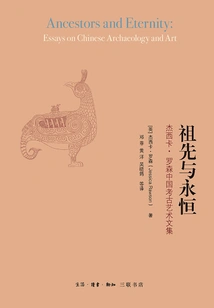
Ancestors and Eternity: Anthology of Chinese Archaeological Art by Jessica Rosen (open Art History)
History祖先与永恒:杰西卡·罗森中国考古艺术文集(开放的艺术史)
(british) Lawson
Professor Rosen has a wide range of interests in Chinese culture, including ancient Chinese bronzes and jades, as well as the later revival of bronzes. She pays attention to the role of "sets" of bronze ware in the ritual procedures of the Shang and Zhou dynasties. This theory is very effective in exploring the development of bronze ware. In terms of jade, Professor Rosen's contribution mainly focused on the preservation and reuse of ancient jade in the later period. For example, many reused ancient jade were discovered in the tomb of Fuhao in the Shang Dynasty. In recent years, Professor Rosen has mainly focused on research on the development of Chinese tomb structures, trying to show how ancient tombs were understood by tomb owners and builders. She explores the evolution of monolithic burial forms in early China (from the Shang to Han dynasties), and also focuses on China's exchanges with inland Asia. Professor Rosen is also committed to some recent projects, such as organizing the "Prosperity of the Prosperity - Three Dynasties of Emperors Kang, Yong and Qian" art exhibition in London to recreate China's three dynasties and its rich artistic connotation to Western society. In her research on recent Chinese art, she has a special interest in the use of "decoration", focusing on the comparative study of the decorative traditions of Western culture and Far Eastern culture, thereby revealing the important cultural differences and similarities between the two regions.
Professor Rosen has a wide range of interests in Chinese culture, including ancient Chinese bronzes and jades, as well as the later revival of bronzes. She pays attention to the role of "sets" of bronze ware in the ritual procedures of the Shang and Zhou dynasties. This theory is very effective in exploring the development of bronze ware. In terms of jade, Professor Rosen's contribution mainly focused on the preservation and reuse of ancient jade in the later period. For example, many reused ancient jade were discovered in the tomb of Fuhao in the Shang Dynasty. In recent years, Professor Rosen has mainly focused on research on the development of Chinese tomb structures, trying to show how ancient tombs were understood by tomb owners and builders. She explores the evolution of monolithic burial forms in early China (from the Shang to Han dynasties), and also focuses on China's exchanges with inland Asia. Professor Rosen is also committed to some recent projects, such as organizing the "Prosperity of the Prosperity - Three Dynasties of Emperors Kang, Yong and Qian" art exhibition in London to recreate China's three dynasties and its rich artistic connotation to Western society. In her research on recent Chinese art, she has a special interest in the use of "decoration", focusing on the comparative study of the decorative traditions of Western culture and Far Eastern culture, thereby revealing the important cultural differences and similarities between the two regions.
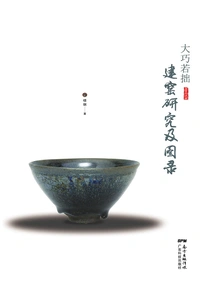
大巧若拙:建窑研究及图录(下)
Lou Gang
The book is divided into two parts: "Volume 1: Research on Kiln Building - Literary Discussion" and "Volume 2: The Beauty of Kiln Building - Picture Catalog". It tells the history of kiln building, types of kilns, production techniques of kiln, kiln decoration art, cultural and artistic connotation of kiln building, external export of kiln building, re-understanding of the historical status of kiln building, discussion of the reasons for the rise and fall of kiln building, kiln collection status and value assessment, and the identification of forgeries of kiln building utensils.
The book is divided into two parts: "Volume 1: Research on Kiln Building - Literary Discussion" and "Volume 2: The Beauty of Kiln Building - Picture Catalog". It tells the history of kiln building, types of kilns, production techniques of kiln, kiln decoration art, cultural and artistic connotation of kiln building, external export of kiln building, re-understanding of the historical status of kiln building, discussion of the reasons for the rise and fall of kiln building, kiln collection status and value assessment, and the identification of forgeries of kiln building utensils.
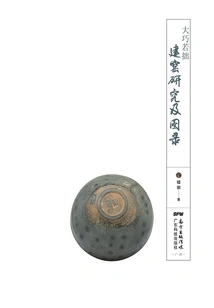
大巧若拙:建窑研究及图录(上)
Lou Gang
The book is divided into two parts: "Volume 1: Research on Kiln Building - Literary Discussion" and "Volume 2: The Beauty of Kiln Building - Picture Catalog". It tells the history of kiln building, types of kilns, production techniques of kiln, kiln decoration art, cultural and artistic connotation of kiln building, external export of kiln building, re-understanding of the historical status of kiln building, discussion of the reasons for the rise and fall of kiln building, kiln collection status and value assessment, and the identification of forgeries of kiln building utensils.
The book is divided into two parts: "Volume 1: Research on Kiln Building - Literary Discussion" and "Volume 2: The Beauty of Kiln Building - Picture Catalog". It tells the history of kiln building, types of kilns, production techniques of kiln, kiln decoration art, cultural and artistic connotation of kiln building, external export of kiln building, re-understanding of the historical status of kiln building, discussion of the reasons for the rise and fall of kiln building, kiln collection status and value assessment, and the identification of forgeries of kiln building utensils.
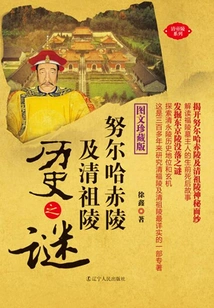
努尔哈赤陵及清祖陵历史之谜
Xu Xin
This book starts with analyzing the mystery of Nurhaci's death, and then proceeds to explore the historical mysteries of Nurhaci's Fuling Mausoleum and related ancillary tombs layer by layer. There is a legend that the tomb owner of Neifu Fuling Mausoleum moved his tomb many times. He was originally the owner of Tokyo Mausoleum, but was later lost in history. In order to clear up the fog, it is necessary to investigate the development history of Tokyo Mausoleum. The emergence and decline of Tokyo Tomb are inseparable from Yongling, the ancestral mausoleum of the Qing Dynasty. Therefore, the mystery of Yongling's history is analyzed at the end of this book. A book about the imperial mausoleum, telling three histories.
This book starts with analyzing the mystery of Nurhaci's death, and then proceeds to explore the historical mysteries of Nurhaci's Fuling Mausoleum and related ancillary tombs layer by layer. There is a legend that the tomb owner of Neifu Fuling Mausoleum moved his tomb many times. He was originally the owner of Tokyo Mausoleum, but was later lost in history. In order to clear up the fog, it is necessary to investigate the development history of Tokyo Mausoleum. The emergence and decline of Tokyo Tomb are inseparable from Yongling, the ancestral mausoleum of the Qing Dynasty. Therefore, the mystery of Yongling's history is analyzed at the end of this book. A book about the imperial mausoleum, telling three histories.
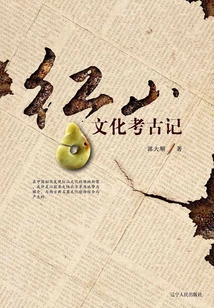
红山文化考古记
Guo Dashun
This book is based on the archaeological history of Hongshan culture over more than half a century, and runs through the scientific exploration and touching discoveries at the excavation site, such as the author's personal experience in the unearthing of the "Oriental Goddess" and the research on the earliest and largest jade dragon in my country. Telling about the origins of traditional Chinese national culture such as the origin of "Descendants of the Dragon", the scope of activities of the Yellow Emperor in ancient historical legends, and the origins of the Temple of Heaven, the Imperial Ancestral Temple and the Imperial Tombs - the charm and value of Hongshan culture are vividly recorded in its records. The author has studied in the Department of Archeology of Peking University for more than ten years. He is a disciple of Mr. Su Bingqi and the excavation director of the Niuheliang site. Cultural relics, archaeological sites, etc., Make this archaeological popular science work vividly display the cultural intersection and the formation of the original cultural community in China 5,000 years ago.
This book is based on the archaeological history of Hongshan culture over more than half a century, and runs through the scientific exploration and touching discoveries at the excavation site, such as the author's personal experience in the unearthing of the "Oriental Goddess" and the research on the earliest and largest jade dragon in my country. Telling about the origins of traditional Chinese national culture such as the origin of "Descendants of the Dragon", the scope of activities of the Yellow Emperor in ancient historical legends, and the origins of the Temple of Heaven, the Imperial Ancestral Temple and the Imperial Tombs - the charm and value of Hongshan culture are vividly recorded in its records. The author has studied in the Department of Archeology of Peking University for more than ten years. He is a disciple of Mr. Su Bingqi and the excavation director of the Niuheliang site. Cultural relics, archaeological sites, etc., Make this archaeological popular science work vividly display the cultural intersection and the formation of the original cultural community in China 5,000 years ago.
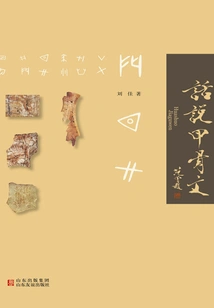
Talking About Oracle
History话说甲骨文
Liu Jia
This book focuses on the topic of oracle bone inscriptions. It gives a very complete and comprehensive introduction to the discovery and spread of oracle bone inscriptions, the influence of oracle bone inscriptions on famous literati in the past dynasties, and the practice of oracle bone inscriptions by later calligraphers. It also contains a lot of first-hand information. It is a useful book for both cultural readers and calligraphy researchers. This year marks the 110th anniversary of the discovery of oracle bone inscriptions. This book is both a gift for relevant academic seminars and a long-selling book. This is where its value lies. ?
This book focuses on the topic of oracle bone inscriptions. It gives a very complete and comprehensive introduction to the discovery and spread of oracle bone inscriptions, the influence of oracle bone inscriptions on famous literati in the past dynasties, and the practice of oracle bone inscriptions by later calligraphers. It also contains a lot of first-hand information. It is a useful book for both cultural readers and calligraphy researchers. This year marks the 110th anniversary of the discovery of oracle bone inscriptions. This book is both a gift for relevant academic seminars and a long-selling book. This is where its value lies. ?
何以中国:公元前2000年的中原图景
Xu Hong
On the ancient and mysterious bronze vessel He Zun, the word "China" appears. This important weapon was unearthed in Baoji, Shaanxi Province in the 1960s. The 122-character inscription tells the story of King Wu of Zhou's major decision to build the eastern capital after the destruction of the Shang Dynasty. Among them, "I built my home in China and came from the Xue (Y) people", which means that I wanted to build the capital in the center of the world and rule the people here. In fact, long before the establishment of the Western Zhou Dynasty - in 2000 BC, in the Central Plains region, the earliest China had begun to unfold its vast and long picture.
On the ancient and mysterious bronze vessel He Zun, the word "China" appears. This important weapon was unearthed in Baoji, Shaanxi Province in the 1960s. The 122-character inscription tells the story of King Wu of Zhou's major decision to build the eastern capital after the destruction of the Shang Dynasty. Among them, "I built my home in China and came from the Xue (Y) people", which means that I wanted to build the capital in the center of the world and rule the people here. In fact, long before the establishment of the Western Zhou Dynasty - in 2000 BC, in the Central Plains region, the earliest China had begun to unfold its vast and long picture.
Record Miracles
History记录奇迹
Zhang Tianzhu
This book is divided into twenty sections, recording the arduous process of archaeological excavation, cultural relic protection, and museum construction at various stages in an all-round and multi-angle manner. What is particularly valuable is that it records the brilliant achievements of the archeology of the Qin Terracotta Warriors and Qin Shihuang's Mausoleum. It also records the touching sight of the terracotta warriors and horses being exhibited at home and abroad, with tourists flocking to view the Qin Terracotta Warriors, and audiences from all over the world praising the miracle.
This book is divided into twenty sections, recording the arduous process of archaeological excavation, cultural relic protection, and museum construction at various stages in an all-round and multi-angle manner. What is particularly valuable is that it records the brilliant achievements of the archeology of the Qin Terracotta Warriors and Qin Shihuang's Mausoleum. It also records the touching sight of the terracotta warriors and horses being exhibited at home and abroad, with tourists flocking to view the Qin Terracotta Warriors, and audiences from all over the world praising the miracle.
实用古玉辨伪
Li Xiao
"Practical Antique Jade Identification" is divided into 8 chapters: an overview of the development of ancient jade, methods of identifying ancient jade counterfeiting, identification of ancient jade materials, ancient jade treatment techniques, ancient jade counterfeiting, recommended books for learning ancient jade identification, examples of ancient jade identification, and examples of ancient and modern jade materials. Based on a scientific analysis of the historical evolution, characteristics and production techniques of ancient Chinese jades, the method of identifying true and false ancient jades is described from the aspects of ancient jade materials, production techniques and counterfeiting methods. The specific identification process is described in detail through the actual identification of more than 40 pieces of ancient jade.
"Practical Antique Jade Identification" is divided into 8 chapters: an overview of the development of ancient jade, methods of identifying ancient jade counterfeiting, identification of ancient jade materials, ancient jade treatment techniques, ancient jade counterfeiting, recommended books for learning ancient jade identification, examples of ancient jade identification, and examples of ancient and modern jade materials. Based on a scientific analysis of the historical evolution, characteristics and production techniques of ancient Chinese jades, the method of identifying true and false ancient jades is described from the aspects of ancient jade materials, production techniques and counterfeiting methods. The specific identification process is described in detail through the actual identification of more than 40 pieces of ancient jade.
Three Days in Pompeii
History庞贝三日
(italian) Alberto Angela
On October 24, 79 AD, Mount Vesuvius suddenly erupted, destroying the nearby city of Pompeii. Hot lava buried the city, forming pumice up to six meters thick on the ruins. Countless people struggled in misery and tried to escape. They begged the gods for help, but failed to escape the terrifying clutches of death. It was not until modern times that archaeologists were able to discover the twisted remains of these victims. Alberto Angela has been investigating the Vesuvius area for many years. With the help of archaeologists and volcanologists, in this book, he recreates all the living things in Pompeii before and after the volcanic eruption, and restores the occurrence of the disaster, fully showing the scenes before and after this catastrophe, taking readers through time and space, and immersing themselves in the scene. This book also provides illuminating new answers to complex questions. This book combines the latest research on Pompeii and is both detailed and profound: it is an exciting journey into the ancient world, a heart-stopping report of a serious disaster, and a unique book that is easy to understand, educational and entertaining. "Three Days in Pompeii" shows readers the "seemingly real" recovery of the ancient city of Pompeii before it was completely destroyed by the volcanic eruption: landforms, architecture, city scale, people's living habits, transportation methods, and methods of quickly and effectively exchanging information. It will allow readers to get to know the seven survivors one by one who escaped from the worst disaster in history: their gender, name, age, and occupation. It will provide readers with a true and accurate route to explore Pompeii and its surrounding areas: from the streets of the city to the courtyard villas of the nobles, to the farms on the hillside... In addition, it will also overturn the well-known conclusion that "Pompei was annihilated due to the eruption of Vesuvius" and correct the date of the eruption. This book is a brilliant work dedicated to the world by the author Alberto Angella, who conducted twenty years of in-depth and meticulous research through precise and scientific observation of every minute discovery in the archaeological site, and integrated the research and opinions of volcanologists, historians, botanists, anthropologists and forensic experts. The Italian version of this book has been reprinted five times in Italy, and this book is its Chinese version.
On October 24, 79 AD, Mount Vesuvius suddenly erupted, destroying the nearby city of Pompeii. Hot lava buried the city, forming pumice up to six meters thick on the ruins. Countless people struggled in misery and tried to escape. They begged the gods for help, but failed to escape the terrifying clutches of death. It was not until modern times that archaeologists were able to discover the twisted remains of these victims. Alberto Angela has been investigating the Vesuvius area for many years. With the help of archaeologists and volcanologists, in this book, he recreates all the living things in Pompeii before and after the volcanic eruption, and restores the occurrence of the disaster, fully showing the scenes before and after this catastrophe, taking readers through time and space, and immersing themselves in the scene. This book also provides illuminating new answers to complex questions. This book combines the latest research on Pompeii and is both detailed and profound: it is an exciting journey into the ancient world, a heart-stopping report of a serious disaster, and a unique book that is easy to understand, educational and entertaining. "Three Days in Pompeii" shows readers the "seemingly real" recovery of the ancient city of Pompeii before it was completely destroyed by the volcanic eruption: landforms, architecture, city scale, people's living habits, transportation methods, and methods of quickly and effectively exchanging information. It will allow readers to get to know the seven survivors one by one who escaped from the worst disaster in history: their gender, name, age, and occupation. It will provide readers with a true and accurate route to explore Pompeii and its surrounding areas: from the streets of the city to the courtyard villas of the nobles, to the farms on the hillside... In addition, it will also overturn the well-known conclusion that "Pompei was annihilated due to the eruption of Vesuvius" and correct the date of the eruption. This book is a brilliant work dedicated to the world by the author Alberto Angella, who conducted twenty years of in-depth and meticulous research through precise and scientific observation of every minute discovery in the archaeological site, and integrated the research and opinions of volcanologists, historians, botanists, anthropologists and forensic experts. The Italian version of this book has been reprinted five times in Italy, and this book is its Chinese version.
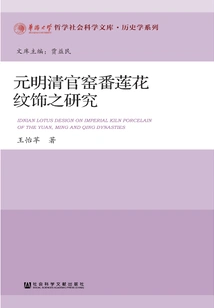
Research on the Lotus Flower Decoration of Official Kilns of the Yuan, Ming and Qing Dynasties
History元明清官窑番莲花纹饰之研究
Wang Yiping
This book takes the official kilns of the Yuan, Ming and Qing Dynasties as the matrix, and studies the flower lotus patterns decorated on them. With the help of technology, pattern science, botany and related historical documents, the research results found that the flower lotus patterns decorated on the official kilns of the Yuan, Ming and Qing Dynasties were a pattern decoration created by the imagination of craftsmen and the norms of the royal system. The content of lotus flower decoration is not only rich in content and diverse in appearance, but also contains dual attributes of practicality and aesthetics. The lotus flower decoration not only contains ancient social, economic, cultural and other rich connotations, but is also an important carrier of ancient Eastern and Western cultural exchanges.
This book takes the official kilns of the Yuan, Ming and Qing Dynasties as the matrix, and studies the flower lotus patterns decorated on them. With the help of technology, pattern science, botany and related historical documents, the research results found that the flower lotus patterns decorated on the official kilns of the Yuan, Ming and Qing Dynasties were a pattern decoration created by the imagination of craftsmen and the norms of the royal system. The content of lotus flower decoration is not only rich in content and diverse in appearance, but also contains dual attributes of practicality and aesthetics. The lotus flower decoration not only contains ancient social, economic, cultural and other rich connotations, but is also an important carrier of ancient Eastern and Western cultural exchanges.
旧石器技术:理论与实践
Li Yinghua
This book introduces in detail the theories and methods of Paleolithic technology research pioneered and developed by French scholars in the 20th century, and systematically applies them to the research of Paleolithic materials in my country for the first time. It demonstrates the advantages of this method in research and explores its feasibility in research.
This book introduces in detail the theories and methods of Paleolithic technology research pioneered and developed by French scholars in the 20th century, and systematically applies them to the research of Paleolithic materials in my country for the first time. It demonstrates the advantages of this method in research and explores its feasibility in research.
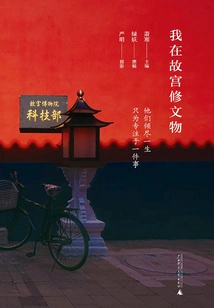
我在故宫修文物
Xiao Han
"I Repair Cultural Relics in the Forbidden City" focuses the camera on the cultural relic restorers of the Forbidden City for the first time. They have existed for hundreds of years, but they have always been unknown. The book contains 12 cultural relic restorers' reviews and insights on history and life in oral form. It is also a microcosm of the centuries-old history of cultural relic restoration in the Forbidden City. Against the background of the great times, a group of cultural relic restorers with unique skills and rejuvenating skills silently stick to a corner of the "cold palace" and take care of priceless "national treasures" day after day. They are watchmakers, bronze makers, painters, carpenters, and lacquer workers in the Forbidden City... They are passed down from generation to generation and are important intangible cultural heritage of the Forbidden City. The world outside the palace walls is changing rapidly, but inside the palace walls, they have to spend several years touching the same cultural relic. Thousands of parts of a palace clock need to be perfectly assembled; a bronze that has been broken into more than 100 pieces needs to be spliced together; an ancient painting needs to be uncovered in a month or two; it takes several years to decades to copy a painting... They use their whole life to interpret the strong belief of "persistence because of love" and "choosing one thing for a lifetime". Their generation may not have received formal education, but they still have a strong sense of craftsmanship in their bodies. They left the Forbidden City and were no different from ordinary people. They spent their lives healing the works of previous masters that had been corroded by time, and finally, they erased their own traces. They repaired cultural relics in the Forbidden City, and also repaired the impetuous human mind, our desires, and our self-righteous value standards. This may be the most touching part of this book.
"I Repair Cultural Relics in the Forbidden City" focuses the camera on the cultural relic restorers of the Forbidden City for the first time. They have existed for hundreds of years, but they have always been unknown. The book contains 12 cultural relic restorers' reviews and insights on history and life in oral form. It is also a microcosm of the centuries-old history of cultural relic restoration in the Forbidden City. Against the background of the great times, a group of cultural relic restorers with unique skills and rejuvenating skills silently stick to a corner of the "cold palace" and take care of priceless "national treasures" day after day. They are watchmakers, bronze makers, painters, carpenters, and lacquer workers in the Forbidden City... They are passed down from generation to generation and are important intangible cultural heritage of the Forbidden City. The world outside the palace walls is changing rapidly, but inside the palace walls, they have to spend several years touching the same cultural relic. Thousands of parts of a palace clock need to be perfectly assembled; a bronze that has been broken into more than 100 pieces needs to be spliced together; an ancient painting needs to be uncovered in a month or two; it takes several years to decades to copy a painting... They use their whole life to interpret the strong belief of "persistence because of love" and "choosing one thing for a lifetime". Their generation may not have received formal education, but they still have a strong sense of craftsmanship in their bodies. They left the Forbidden City and were no different from ordinary people. They spent their lives healing the works of previous masters that had been corroded by time, and finally, they erased their own traces. They repaired cultural relics in the Forbidden City, and also repaired the impetuous human mind, our desires, and our self-righteous value standards. This may be the most touching part of this book.
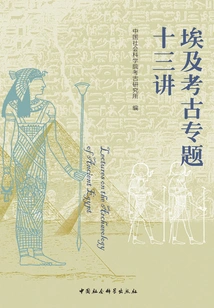
埃及考古专题十三讲
Compiled By The Institute Of Archeology, Chinese Academy Of Social Sciences
In July 2016, the major project of the China Social Science Innovation Project "Archaeological Excavation and Research in Egypt" was successfully established. As part of a major project, the Institute of Archeology of the Chinese Academy of Social Sciences invited six well-known Egyptology experts at home and abroad to organize a total of 13 academic lectures on Egyptian archeology. They gave wonderful explanations on several important issues in Egyptology and Egyptian archeology. The lecture topics basically covered the main fields of Egyptology research and were designed to cover the current hot and cutting-edge issues in international Egyptology and Egyptian archeology research. This book can be read by Egyptology researchers and archaeologists, as well as by students and ordinary people who are interested in ancient Egyptian civilization.
In July 2016, the major project of the China Social Science Innovation Project "Archaeological Excavation and Research in Egypt" was successfully established. As part of a major project, the Institute of Archeology of the Chinese Academy of Social Sciences invited six well-known Egyptology experts at home and abroad to organize a total of 13 academic lectures on Egyptian archeology. They gave wonderful explanations on several important issues in Egyptology and Egyptian archeology. The lecture topics basically covered the main fields of Egyptology research and were designed to cover the current hot and cutting-edge issues in international Egyptology and Egyptian archeology research. This book can be read by Egyptology researchers and archaeologists, as well as by students and ordinary people who are interested in ancient Egyptian civilization.
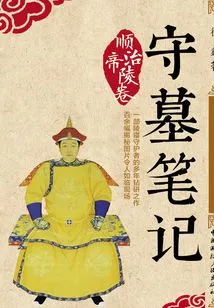
守墓笔记:顺治帝陵卷
Xu Xin
"Tomb Guarding Notes (Shunzhi Emperor's Mausoleum Volume)" written by Xu Xin is based on official history and Qing palace archives, combined with the latest research results in today's historical circles, and uses popular and skillful writing to tell the little-known secrets about Shunzhi Emperor himself and his tomb. "Tomb Keeper's Notes" is based on the official history and Qing palace archives, combined with the author's more than 20 years of on-site investigation and research experience of the tombs, to interpret for you the Feng Shui and establishment, history and secrets, theft and cleanup of the Three Tombs outside the Pass, the Eastern Qing Tombs, and the Western Qing Tombs, reflecting the origin, development, glory and decline of the Qing Dynasty.
"Tomb Guarding Notes (Shunzhi Emperor's Mausoleum Volume)" written by Xu Xin is based on official history and Qing palace archives, combined with the latest research results in today's historical circles, and uses popular and skillful writing to tell the little-known secrets about Shunzhi Emperor himself and his tomb. "Tomb Keeper's Notes" is based on the official history and Qing palace archives, combined with the author's more than 20 years of on-site investigation and research experience of the tombs, to interpret for you the Feng Shui and establishment, history and secrets, theft and cleanup of the Three Tombs outside the Pass, the Eastern Qing Tombs, and the Western Qing Tombs, reflecting the origin, development, glory and decline of the Qing Dynasty.
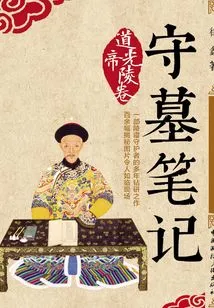
守墓笔记:道光帝陵卷
Xu Xin
This is a work of years of research by the guardians of the tomb, with more than a hundred revealing pictures that make you feel like you are there! The mausoleum is the tomb of ancient emperors. It is the condensation of a dynasty, the projection of an era, and the refraction of society. It is a part of traditional Chinese culture, a rich cultural wealth left to future generations, and a true historical record left in the mountains and rivers. It condenses the sharp historical information that cannot be copied. By studying the imperial tombs, we can not only know the basic situation of politics, economy, military, religion, culture, technology and other aspects of that period in history, but sometimes we can also correctly interpret historical mysteries or unrecorded historical events. Emperor Daoguang reigned for 30 years and built the mausoleum for 15 years. He broke with the ancestral precepts and built two buildings and demolished one. Finally, a mausoleum with special construction regulations and astonishing cost was left behind - Muling. What kind of mystery is hidden in such twists and turns? Xu Xin's "Tomb Guarding Notes (Mausoleum of Emperor Daoguang Volume)" will give you an in-depth analysis.
This is a work of years of research by the guardians of the tomb, with more than a hundred revealing pictures that make you feel like you are there! The mausoleum is the tomb of ancient emperors. It is the condensation of a dynasty, the projection of an era, and the refraction of society. It is a part of traditional Chinese culture, a rich cultural wealth left to future generations, and a true historical record left in the mountains and rivers. It condenses the sharp historical information that cannot be copied. By studying the imperial tombs, we can not only know the basic situation of politics, economy, military, religion, culture, technology and other aspects of that period in history, but sometimes we can also correctly interpret historical mysteries or unrecorded historical events. Emperor Daoguang reigned for 30 years and built the mausoleum for 15 years. He broke with the ancestral precepts and built two buildings and demolished one. Finally, a mausoleum with special construction regulations and astonishing cost was left behind - Muling. What kind of mystery is hidden in such twists and turns? Xu Xin's "Tomb Guarding Notes (Mausoleum of Emperor Daoguang Volume)" will give you an in-depth analysis.
Bronze
History青铜器
Chen Xiejun
The Shanghai Museum is one of the museums with the richest collection of ancient Chinese bronzes. It has a collection of nearly 7,000 bronzes of various types from various periods. This book selects nearly 50 bronze treasures from the Shanghai Museum, copies them as they are, and draws the original drawings, which not only restores the appearance of the originals but also displays the patterns on the bronzes to a greater extent. In order to further help readers understand the bronze ware, its history and characteristics, the bronze ware is introduced and described in detail.
The Shanghai Museum is one of the museums with the richest collection of ancient Chinese bronzes. It has a collection of nearly 7,000 bronzes of various types from various periods. This book selects nearly 50 bronze treasures from the Shanghai Museum, copies them as they are, and draws the original drawings, which not only restores the appearance of the originals but also displays the patterns on the bronzes to a greater extent. In order to further help readers understand the bronze ware, its history and characteristics, the bronze ware is introduced and described in detail.
Jade
History玉器
Chen Xiejun
The Shanghai Museum has a rich collection of ancient Chinese jades, with nearly 7,000 pieces of various types of jades from various periods. This book selects nearly 50 pieces from the collection of jade treasures in the Shanghai Museum, copies them as they are, and draws the original drawings, which not only restores the appearance of the original works but also displays the patterns on the jade articles to a greater extent. In order to further help readers understand the jade, its history and characteristics, the artifact is introduced and described in detail.
The Shanghai Museum has a rich collection of ancient Chinese jades, with nearly 7,000 pieces of various types of jades from various periods. This book selects nearly 50 pieces from the collection of jade treasures in the Shanghai Museum, copies them as they are, and draws the original drawings, which not only restores the appearance of the original works but also displays the patterns on the jade articles to a greater extent. In order to further help readers understand the jade, its history and characteristics, the artifact is introduced and described in detail.
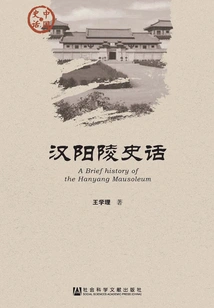
汉阳陵史话
Wang Xuelia
Hanyang Mausoleum is a joint burial cemetery where the fourth emperor of the Western Han Dynasty, Emperor Jing Liu Qi, and Queen Wang were buried in the same tomb in different caves. It is located on the top of the Xianyang Plain in Shaanxi Province. The two mausoleums in the shape of a four-sided platform are tall and majestic, reflecting the political clarity, social stability and economic prosperity of the "Wenjing Reign" period. The author of this book is a person who has personally experienced the scientific archaeological excavation and research of Han Yangling. He tells readers about the establishment of the cemetery, the discovery of cultural relics and the stories of historical figures through the book "History of Han Yangling". The content is rich and interesting.
Hanyang Mausoleum is a joint burial cemetery where the fourth emperor of the Western Han Dynasty, Emperor Jing Liu Qi, and Queen Wang were buried in the same tomb in different caves. It is located on the top of the Xianyang Plain in Shaanxi Province. The two mausoleums in the shape of a four-sided platform are tall and majestic, reflecting the political clarity, social stability and economic prosperity of the "Wenjing Reign" period. The author of this book is a person who has personally experienced the scientific archaeological excavation and research of Han Yangling. He tells readers about the establishment of the cemetery, the discovery of cultural relics and the stories of historical figures through the book "History of Han Yangling". The content is rich and interesting.
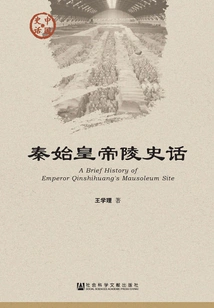
秦始皇帝陵史话
Wang Xuelia
The Mausoleum of Qin Shihuang is the tomb of Ying Zheng, the first emperor in Chinese history. There are a large number of burial pits and tombs of different shapes and connotations scattered around the mausoleum. More than 400 of them have been discovered, including the world-famous "Eighth Wonder of the World" Terracotta Warriors and Horses Pit. The Mausoleum of the First Emperor of Qin is one of the largest, most unique and richest imperial mausoleums in the world. It fully demonstrates the ingenuity of the working people of ancient China more than 2,000 years ago and is the pride and precious wealth of the Chinese nation. This book explores the appearance, scale, layout, unearthed cultural relics, and historical documents of the mausoleum, and reproduces a vivid history of the mausoleum construction for readers.
The Mausoleum of Qin Shihuang is the tomb of Ying Zheng, the first emperor in Chinese history. There are a large number of burial pits and tombs of different shapes and connotations scattered around the mausoleum. More than 400 of them have been discovered, including the world-famous "Eighth Wonder of the World" Terracotta Warriors and Horses Pit. The Mausoleum of the First Emperor of Qin is one of the largest, most unique and richest imperial mausoleums in the world. It fully demonstrates the ingenuity of the working people of ancient China more than 2,000 years ago and is the pride and precious wealth of the Chinese nation. This book explores the appearance, scale, layout, unearthed cultural relics, and historical documents of the mausoleum, and reproduces a vivid history of the mausoleum construction for readers.
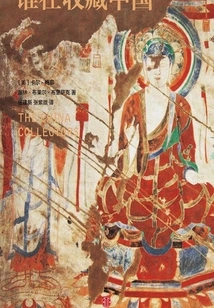
Who is Collecting China?
History谁在收藏中国
(u. S.) Karl Mayer Shailene Blair Brissac
In the past two centuries, the West came to China, plundered art treasures from caves, palaces and art dealers' secret rooms, and stole a large number of national treasures such as sculptures, furniture, porcelain, calligraphy and paintings. Dunhuang murals, Longmen Grottoes, Zhaoling Six Horses... Where are these rare treasures now? Among the treasure thieves, besides the notorious Stein, Warner, and Lu Qinzhai, who are the other lesser-known "masterminds"? By consulting private documents, historical archives, and the memoirs of major figures, the two authors describe in detail the history of how Western collectors, headed by Americans, tried their best to obtain Chinese art from the Opium War to 1949. These cultural relics eventually gave birth to the booming development of the Chinese antique market in Europe and the United States, and also inspired the Chinese people's efforts to rely on the art market to promote the return of national treasures.
In the past two centuries, the West came to China, plundered art treasures from caves, palaces and art dealers' secret rooms, and stole a large number of national treasures such as sculptures, furniture, porcelain, calligraphy and paintings. Dunhuang murals, Longmen Grottoes, Zhaoling Six Horses... Where are these rare treasures now? Among the treasure thieves, besides the notorious Stein, Warner, and Lu Qinzhai, who are the other lesser-known "masterminds"? By consulting private documents, historical archives, and the memoirs of major figures, the two authors describe in detail the history of how Western collectors, headed by Americans, tried their best to obtain Chinese art from the Opium War to 1949. These cultural relics eventually gave birth to the booming development of the Chinese antique market in Europe and the United States, and also inspired the Chinese people's efforts to rely on the art market to promote the return of national treasures.
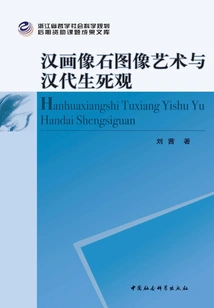
汉画像石图像艺术与汉代生死观
Liu Qian
As a special funerary artwork of the Han Dynasty, Han portrait stones have experienced more than three hundred years of development and have immeasurable value in the history of art and culture. Although there are differences in spatial distribution and uneven temporal development of Han portrait stones, there are obvious convergence and stylized features in the subject matter, content and composition form of Han portrait stones in various places. Based on this understanding, this book comprehensively reveals the theme of the Han Dynasty's view of life and death in the image art of Han Dynasty stone sculptures. It also analyzes the development and evolution of the Han Dynasty's outlook on life and death shown in its image art by taking Han Dynasty stone sculptures in southern Shandong, northern Jiangsu, northern Anhui, and eastern Henan as examples, and reveals the important historical value of the Han Dynasty's stone sculptures in this region. In addition, the "cosmic space schema" is an important clue that runs through the development of the entire Han Dynasty stone carvings. This book provides an in-depth analysis of the relationship between this schema and the artistic theme of Han stone stone images, and reveals its cultural origins.
As a special funerary artwork of the Han Dynasty, Han portrait stones have experienced more than three hundred years of development and have immeasurable value in the history of art and culture. Although there are differences in spatial distribution and uneven temporal development of Han portrait stones, there are obvious convergence and stylized features in the subject matter, content and composition form of Han portrait stones in various places. Based on this understanding, this book comprehensively reveals the theme of the Han Dynasty's view of life and death in the image art of Han Dynasty stone sculptures. It also analyzes the development and evolution of the Han Dynasty's outlook on life and death shown in its image art by taking Han Dynasty stone sculptures in southern Shandong, northern Jiangsu, northern Anhui, and eastern Henan as examples, and reveals the important historical value of the Han Dynasty's stone sculptures in this region. In addition, the "cosmic space schema" is an important clue that runs through the development of the entire Han Dynasty stone carvings. This book provides an in-depth analysis of the relationship between this schema and the artistic theme of Han stone stone images, and reveals its cultural origins.
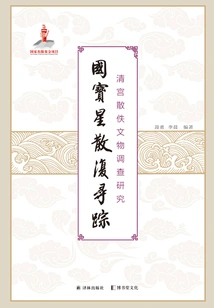
国宝星散复寻踪:清宫散佚文物调查研究
Duan Yong Li Chen
This book collects and organizes research investigation data on the lost cultural relics of the Qing Dynasty, sorting out the quantity distribution, management information and preservation of the Qing palace cultural relics scattered outside the Palace Museum; the focus of the research is the Qing palace cultural relics that were illegally lost overseas (that is, the Qing palace cultural relics that were plundered and smuggled overseas due to war, theft, illegal trade, etc. In modern times). It can provide strong evidence and legal support in future cultural relic recovery work.
This book collects and organizes research investigation data on the lost cultural relics of the Qing Dynasty, sorting out the quantity distribution, management information and preservation of the Qing palace cultural relics scattered outside the Palace Museum; the focus of the research is the Qing palace cultural relics that were illegally lost overseas (that is, the Qing palace cultural relics that were plundered and smuggled overseas due to war, theft, illegal trade, etc. In modern times). It can provide strong evidence and legal support in future cultural relic recovery work.