Library
Browse and search books
895 novels found
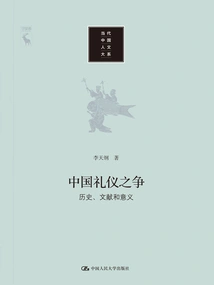
中国礼仪之争:历史、文献和意义
Li Tiangang
The "Chinese Etiquette Controversy" was a major event that took place in China in the late Ming and early Qing dynasties, spread to Europe, and had an impact on subsequent Western and Chinese cultures. The core of the debate concerns Chinese sacrificial rituals, such as "reverence to heaven", "sacrifice to ancestors" and "sacrifice to Confucius". Confucian Catholics such as Xu Guangqi maintained sacrifices after their conversion, while Jesuits such as Matteo Ricci tolerated it with a tolerant attitude of "complementing Confucianism and changing Buddhism." This practice was later questioned and finally led to conflicts during the Kangxi period. Enlightenment thinkers such as Leibniz, Voltaire, and Montesquieu participated in the debate, and European "Sinology" formed a series of views on this, which profoundly affected the history of Chinese thought in the 20th century. This book uses the newly published Chinese documents of the "Chinese Etiquette Controversy" to provide a detailed description of this period of history for the first time, and points out its importance in the history of the Ming and Qing dynasties, church history, Chinese and Western cultural exchanges, and comparative classical studies.
The "Chinese Etiquette Controversy" was a major event that took place in China in the late Ming and early Qing dynasties, spread to Europe, and had an impact on subsequent Western and Chinese cultures. The core of the debate concerns Chinese sacrificial rituals, such as "reverence to heaven", "sacrifice to ancestors" and "sacrifice to Confucius". Confucian Catholics such as Xu Guangqi maintained sacrifices after their conversion, while Jesuits such as Matteo Ricci tolerated it with a tolerant attitude of "complementing Confucianism and changing Buddhism." This practice was later questioned and finally led to conflicts during the Kangxi period. Enlightenment thinkers such as Leibniz, Voltaire, and Montesquieu participated in the debate, and European "Sinology" formed a series of views on this, which profoundly affected the history of Chinese thought in the 20th century. This book uses the newly published Chinese documents of the "Chinese Etiquette Controversy" to provide a detailed description of this period of history for the first time, and points out its importance in the history of the Ming and Qing dynasties, church history, Chinese and Western cultural exchanges, and comparative classical studies.
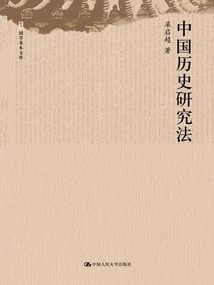
中国历史研究法
Liang Qichao
This book is a masterpiece of historical theory that Liang Qichao dabbled in Eastern and Western history in his later years. It combines the past and current situation of Chinese history books and systematically organizes historical theory. It is analytically analyzed, concise and comprehensive, with theories, methods, examples and judgments. It is worthy of being a masterpiece of modern Chinese history. The author has a deep understanding of traditional Chinese history and fully understands the essence of Western historical research. Combined with his own research experience, many of his academic experiences still have important reference value to this day.
This book is a masterpiece of historical theory that Liang Qichao dabbled in Eastern and Western history in his later years. It combines the past and current situation of Chinese history books and systematically organizes historical theory. It is analytically analyzed, concise and comprehensive, with theories, methods, examples and judgments. It is worthy of being a masterpiece of modern Chinese history. The author has a deep understanding of traditional Chinese history and fully understands the essence of Western historical research. Combined with his own research experience, many of his academic experiences still have important reference value to this day.
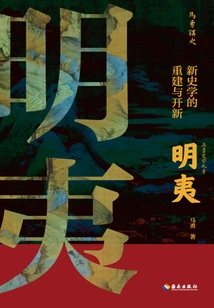
明夷:新史学的重建与开新
Ma Yong
This book is a collection of articles on historical experience by Teacher Ma Yong sorting out historical research, and is divided into two parts: "Experiences of Older Historians" and "My Historical Research". "Experiences of Older Historians" introduces the experiences of Zhang Taiyan, Jiang Tingfu, Zhang Yinlin, Fan Wenlan, Hu Sheng and other seniors in historical research, the influence of general social trends of thought when they conducted historical research, the historical concepts and methods they upheld, etc., And analyzes the value of famous historical works such as "Book of Readings" and "Introduction to Qing Dynasty Academics" and their status in the history of Chinese history. "My Historical Research" introduces some of Ma Yong's own methods and experiences in historical research, which can be learned and used by readers in related majors. With an academic attitude of broad opening and closing, this book dispels the charm and preserves the truth, and reconstructs the overall context of the transformations in modern history.
This book is a collection of articles on historical experience by Teacher Ma Yong sorting out historical research, and is divided into two parts: "Experiences of Older Historians" and "My Historical Research". "Experiences of Older Historians" introduces the experiences of Zhang Taiyan, Jiang Tingfu, Zhang Yinlin, Fan Wenlan, Hu Sheng and other seniors in historical research, the influence of general social trends of thought when they conducted historical research, the historical concepts and methods they upheld, etc., And analyzes the value of famous historical works such as "Book of Readings" and "Introduction to Qing Dynasty Academics" and their status in the history of Chinese history. "My Historical Research" introduces some of Ma Yong's own methods and experiences in historical research, which can be learned and used by readers in related majors. With an academic attitude of broad opening and closing, this book dispels the charm and preserves the truth, and reconstructs the overall context of the transformations in modern history.
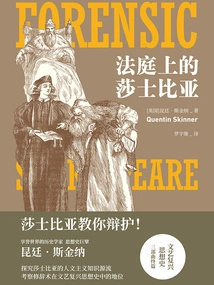
Shakespeare in Court
History法庭上的莎士比亚
(uk)quentin Skinner
This book is a masterpiece on Shakespeare's rhetoric by Quentin Skinner, a world-renowned historian and giant in the history of thought. By analyzing the language of characters in works such as "Romeo and Juliet", "The Merchant of Venice", "Julius Caesar" and "Hamlet", the author re-examines the classic Shakespeare court drama from the perspective of rhetoric and explains Shakespeare's creative process. Often people think of Shakespeare as having judicial talents, praising him for his direct presentation of life, etc., But in Skinner's opinion, these views are incorrect. The reason why Shakespeare was able to create these court dramas was that he received a very common rhetorical education at that time, which enabled him to master a set of rhetorical rules and apply them to drama creation. With an exquisite structure, rich historical facts and excellent arguments, this book examines the status of rhetoric in the history of Renaissance thought. It is Skinner's unique research and practice in the history of thought that surpasses previous political science works.
This book is a masterpiece on Shakespeare's rhetoric by Quentin Skinner, a world-renowned historian and giant in the history of thought. By analyzing the language of characters in works such as "Romeo and Juliet", "The Merchant of Venice", "Julius Caesar" and "Hamlet", the author re-examines the classic Shakespeare court drama from the perspective of rhetoric and explains Shakespeare's creative process. Often people think of Shakespeare as having judicial talents, praising him for his direct presentation of life, etc., But in Skinner's opinion, these views are incorrect. The reason why Shakespeare was able to create these court dramas was that he received a very common rhetorical education at that time, which enabled him to master a set of rhetorical rules and apply them to drama creation. With an exquisite structure, rich historical facts and excellent arguments, this book examines the status of rhetoric in the history of Renaissance thought. It is Skinner's unique research and practice in the history of thought that surpasses previous political science works.
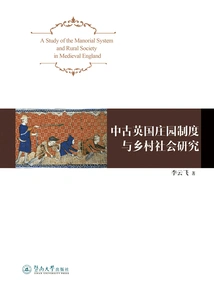
中古英国庄园制度与乡村社会研究
Li Yunfei
This book mainly selects the situation of the manor in the heyday of the 13th century, and makes a comprehensive discussion of it, including the exploration of the reasons for the formation of serfdom and manor system, the management of feudal master real estate and the management of manor, the scale and efficiency of direct management of manor, the commercial production of manor, the composition of labor force in manor, the conversion of labor and its impact on farmers and feudal lords, the establishment, calculation and auditing of manor revenue and expenditure account books, the profit of manor, manor court, the relationship between manor and village community, etc.
This book mainly selects the situation of the manor in the heyday of the 13th century, and makes a comprehensive discussion of it, including the exploration of the reasons for the formation of serfdom and manor system, the management of feudal master real estate and the management of manor, the scale and efficiency of direct management of manor, the commercial production of manor, the composition of labor force in manor, the conversion of labor and its impact on farmers and feudal lords, the establishment, calculation and auditing of manor revenue and expenditure account books, the profit of manor, manor court, the relationship between manor and village community, etc.
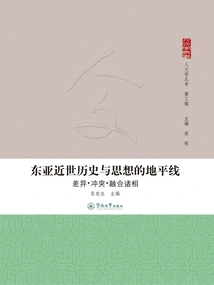
The Horizon of Modern East Asian History and Thought: Difference, Conflict, and Integration Phases
History东亚近世历史与思想的地平线:差异·冲突·融合诸相
Editor-in-chief Zhang Xiansheng
This book focuses on the history and thought of modern Japan, and paints a complex picture of the intersection, conflict, and integration of various ideas in the intellectual space of modern East Asia that reflects historical facts.
This book focuses on the history and thought of modern Japan, and paints a complex picture of the intersection, conflict, and integration of various ideas in the intellectual space of modern East Asia that reflects historical facts.
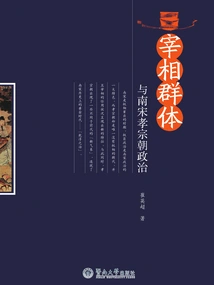
宰相群体与南宋考宗朝政治
Cui Yingchao
Through the analysis and investigation of the political situation and the status of the group of prime ministers in the Xiaozong Dynasty, this book discusses the role and influence of different groups of prime ministers in the Xiaozong Dynasty on different political issues at different historical stages. On this basis, it further reveals the profound influence of the groups of prime ministers on the political appearance, characteristics and development trends of the Xiaozong Dynasty.
Through the analysis and investigation of the political situation and the status of the group of prime ministers in the Xiaozong Dynasty, this book discusses the role and influence of different groups of prime ministers in the Xiaozong Dynasty on different political issues at different historical stages. On this basis, it further reveals the profound influence of the groups of prime ministers on the political appearance, characteristics and development trends of the Xiaozong Dynasty.
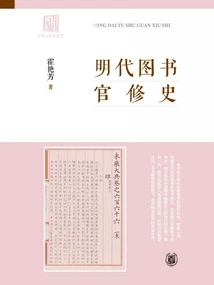
明代图书官修史
Huo Yanfang
This book explores the organizational structure, preliminary revision personnel, achievements and representative results of the Ming Dynasty's official books, summarizes the characteristics of the Ming Dynasty's official books, and reveals its status and influence in the history of Chinese book compilation. In the Ming Dynasty, book publishing entered a period of rapid development, and private engravings attracted much attention. This book focuses on official-edited books and is a useful supplement to related research.
This book explores the organizational structure, preliminary revision personnel, achievements and representative results of the Ming Dynasty's official books, summarizes the characteristics of the Ming Dynasty's official books, and reveals its status and influence in the history of Chinese book compilation. In the Ming Dynasty, book publishing entered a period of rapid development, and private engravings attracted much attention. This book focuses on official-edited books and is a useful supplement to related research.
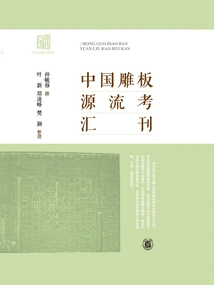
中国雕板源流考汇刊
Written By Sun Yuxiu And Compiled By Ye Xin Et Al.
This book is the first work to systematically study editions from a modern perspective, and it still has important reference value today. In addition to the current edition, this time it also includes newly discovered manuscripts and serialized editions, showing the author's exquisite writing thoughts. The Hanfen Building of the Commercial Press is named after Shu Lin, and this book is the academic essence of its founder, which can be called the "Hanfen Building Code".
This book is the first work to systematically study editions from a modern perspective, and it still has important reference value today. In addition to the current edition, this time it also includes newly discovered manuscripts and serialized editions, showing the author's exquisite writing thoughts. The Hanfen Building of the Commercial Press is named after Shu Lin, and this book is the academic essence of its founder, which can be called the "Hanfen Building Code".
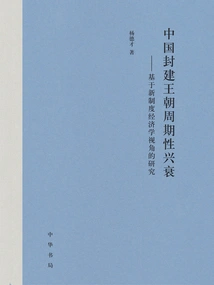
中国封建王朝周期性兴衰:基于新制度经济学视角的研究
Yang Decai
Ancient Chinese society has experienced more than two thousand years of feudal dynasty rule since the Qin Dynasty. During this period, dozens of dynasties rose and fell, with life cycles of varying lengths, but without exception they all experienced the process of establishment, rise, prosperity, decline, and destruction. Scholars have conducted extensive discussions on the cyclical rise and fall of China's feudal dynasties from different disciplines such as history, sociology, politics, economics and law. Unlike most studies that focus on exploring the cyclical rise and fall of feudal dynasties from a certain social structure or its influence, this book conducts a systematic analysis from the perspective of new institutional economics. It includes both macro-theoretical analysis and specific case analysis, and extensively involves theories such as institutional changes, interest groups, path dependence, decentralization, Confucian ideology, ruler preferences, and limited rationality. The argument is profound and provides multi-faceted inspiration.
Ancient Chinese society has experienced more than two thousand years of feudal dynasty rule since the Qin Dynasty. During this period, dozens of dynasties rose and fell, with life cycles of varying lengths, but without exception they all experienced the process of establishment, rise, prosperity, decline, and destruction. Scholars have conducted extensive discussions on the cyclical rise and fall of China's feudal dynasties from different disciplines such as history, sociology, politics, economics and law. Unlike most studies that focus on exploring the cyclical rise and fall of feudal dynasties from a certain social structure or its influence, this book conducts a systematic analysis from the perspective of new institutional economics. It includes both macro-theoretical analysis and specific case analysis, and extensively involves theories such as institutional changes, interest groups, path dependence, decentralization, Confucian ideology, ruler preferences, and limited rationality. The argument is profound and provides multi-faceted inspiration.
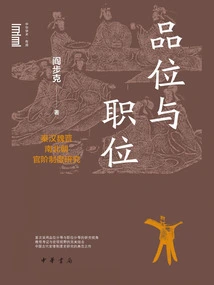
品位与职位:秦汉魏晋南北朝官阶制度研究
Yan Buke
The official system is a key that opens the door to historical research. The author takes the official rank system of the Qin, Han, Wei, Jin, Southern and Northern Dynasties as the research object, and for the first time adopts the concepts of "grade classification" and "position classification" to construct a new analytical framework; and from this new perspective, he combs and examines the titles of the Zhou Dynasty, the twenty-first military honors and ranks of the Qin and Han Dynasties, the Wei and Jin Dynasties The official titles, official titles, honorary titles, general titles, and casual officers in the Southern and Northern Dynasties, up to the civil and military ranks of the Tang Dynasty, are outlined as a clue of evolution and change, and provide a series of unique explanations for their nature and significance, and then divide the development of the traditional bureaucratic hierarchy into five stages. This book has made profound advancements in terms of historical views, research perspectives and methods, and specific examinations.
The official system is a key that opens the door to historical research. The author takes the official rank system of the Qin, Han, Wei, Jin, Southern and Northern Dynasties as the research object, and for the first time adopts the concepts of "grade classification" and "position classification" to construct a new analytical framework; and from this new perspective, he combs and examines the titles of the Zhou Dynasty, the twenty-first military honors and ranks of the Qin and Han Dynasties, the Wei and Jin Dynasties The official titles, official titles, honorary titles, general titles, and casual officers in the Southern and Northern Dynasties, up to the civil and military ranks of the Tang Dynasty, are outlined as a clue of evolution and change, and provide a series of unique explanations for their nature and significance, and then divide the development of the traditional bureaucratic hierarchy into five stages. This book has made profound advancements in terms of historical views, research perspectives and methods, and specific examinations.
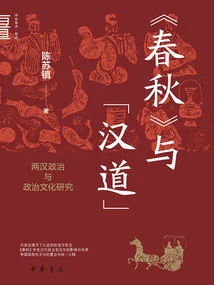
spring and Autumn" and "han Dao": a Study of the Politics and Political Culture of the Han Dynasty
History《春秋》与“汉道”:两汉政治与政治文化研究
Chensu Town
The so-called "Han Dao" refers to the way of governing the country and the world in the Han Dynasty. The author describes and analyzes in depth and in detail how, driven by Confucian scholar-bureaucrats, Confucian classics, mainly the Spring and Autumn Annals, resorted to the creation and legislation of the "Great Unification" empire, and how it affected the actual historical process of the Han Empire, thereby achieving the "Han Dao" and establishing the basic model for ancient Chinese political culture. This book runs through the entire historical process from the founding of the Western Han Dynasty to the Eastern Han Dynasty. The issues covered, such as the Huang Lao Wuwei politics implemented in the early Han Dynasty under the background of "passing the Qin Dynasty", the rise and dominance of Confucianism, the "overlord and Taoism" Han family law, the ancient restructuring driven by Confucianism, and the political and academic changes between the two Han Dynasties, are all major moments in Chinese history. This book connects these issues that have a far-reaching impact on the development of Chinese culture in a coherent manner, sometimes with novel and unique discussions, demonstrating the author's profound ability to integrate the history of ideas, politics, and institutions.
The so-called "Han Dao" refers to the way of governing the country and the world in the Han Dynasty. The author describes and analyzes in depth and in detail how, driven by Confucian scholar-bureaucrats, Confucian classics, mainly the Spring and Autumn Annals, resorted to the creation and legislation of the "Great Unification" empire, and how it affected the actual historical process of the Han Empire, thereby achieving the "Han Dao" and establishing the basic model for ancient Chinese political culture. This book runs through the entire historical process from the founding of the Western Han Dynasty to the Eastern Han Dynasty. The issues covered, such as the Huang Lao Wuwei politics implemented in the early Han Dynasty under the background of "passing the Qin Dynasty", the rise and dominance of Confucianism, the "overlord and Taoism" Han family law, the ancient restructuring driven by Confucianism, and the political and academic changes between the two Han Dynasties, are all major moments in Chinese history. This book connects these issues that have a far-reaching impact on the development of Chinese culture in a coherent manner, sometimes with novel and unique discussions, demonstrating the author's profound ability to integrate the history of ideas, politics, and institutions.
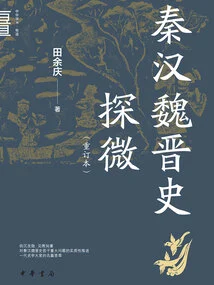
秦汉魏晋史探微(重订本)
Tian Yuqing
Mr. Tian Yuqing said that his historical research results "mostly belong to the category of preliminary exploration, saying what others have not said." The nineteen articles collected in this book are his representative works in exploring hidden mysteries in the field of Qin, Han, Wei and Jin history. These articles are subtle and provide fascinating research and analysis on several major issues in the history of Qin, Han, Wei and Jin, such as the anti-Qin incident in Chu during the Qin and Han Dynasties ("Speaking of Zhang Chu"), Emperor Wu of the Han Dynasty's transformation from an expansionary policy to a "conservative" policy ("On the Luntai Edict"), and the conflict between Cao Wei and other political forces in the founding period ("Han and Wei") "The Qing Xu Haoba", "The Controversy between Cao and Yuan and the Great Families"), the political history of Shu ("Re-understanding of "Longzhong Dui"", "The Prosperity and Destruction of Li Yan and Zhuge's Employment", "Four Topics in the History of Shu"), and the relationship between Sun Wu's regime and Jiangdong's powerful families ("The Road to the Founding of Sun Wu", "Ji Yan Case and Related Issues"), etc., Are all far-reaching and highly regarded works.
Mr. Tian Yuqing said that his historical research results "mostly belong to the category of preliminary exploration, saying what others have not said." The nineteen articles collected in this book are his representative works in exploring hidden mysteries in the field of Qin, Han, Wei and Jin history. These articles are subtle and provide fascinating research and analysis on several major issues in the history of Qin, Han, Wei and Jin, such as the anti-Qin incident in Chu during the Qin and Han Dynasties ("Speaking of Zhang Chu"), Emperor Wu of the Han Dynasty's transformation from an expansionary policy to a "conservative" policy ("On the Luntai Edict"), and the conflict between Cao Wei and other political forces in the founding period ("Han and Wei") "The Qing Xu Haoba", "The Controversy between Cao and Yuan and the Great Families"), the political history of Shu ("Re-understanding of "Longzhong Dui"", "The Prosperity and Destruction of Li Yan and Zhuge's Employment", "Four Topics in the History of Shu"), and the relationship between Sun Wu's regime and Jiangdong's powerful families ("The Road to the Founding of Sun Wu", "Ji Yan Case and Related Issues"), etc., Are all far-reaching and highly regarded works.
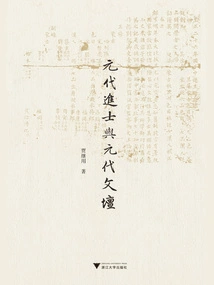
元代进士与元代文坛
Jia Jiyong
Jinshi writers in the Yuan Dynasty were the most important literary group in the Yuan Dynasty and were directly related to the literary ecology and the composition of the literary world in the Yuan Dynasty. Research in this area is still blank. This book is a work that examines the relationship between the Jinshi writers of the Yuan Dynasty and the literary world of the Yuan Dynasty. It aims to explore the status and influence of the Jinshi writers of the Yuan Dynasty in the literary world at that time. The main contents include the ethnic composition of the Jinshi writers of the Yuan Dynasty and the literary world of the Yuan Dynasty, the regional nature of the Jinshi writers of the Yuan Dynasty and the literary world of the Yuan Dynasty, the Han nationality (including southerners) Jinshi writers and the literary world of the Yuan Dynasty, the Mongolian Semu Jinshi writers and the literary world of the Yuan Dynasty, and the Jinshi writers of the Goryeo Dynasty and the literary world of the Yuan Dynasty. Through the above research, we can draw the following conclusion: the multi-ethnic Jinshi writers in the Yuan Dynasty were the key to the formation of the multi-ethnic literary world, the core of the northern and southern literary circles, and extremely influential in the literary world in the middle and late Yuan Dynasty. The Jinshi of the Yuan Dynasty not only established a great reputation in most of the capital, but also led the trend in the south of the Yangtze River. They not only made many achievements in creation, but also had pioneering achievements. The literary world in the Yuan Dynasty was prosperous and their power was very great. The study of multi-ethnic Jinshi writers in the Yuan Dynasty has added new content to the literary history of the Yuan Dynasty.
Jinshi writers in the Yuan Dynasty were the most important literary group in the Yuan Dynasty and were directly related to the literary ecology and the composition of the literary world in the Yuan Dynasty. Research in this area is still blank. This book is a work that examines the relationship between the Jinshi writers of the Yuan Dynasty and the literary world of the Yuan Dynasty. It aims to explore the status and influence of the Jinshi writers of the Yuan Dynasty in the literary world at that time. The main contents include the ethnic composition of the Jinshi writers of the Yuan Dynasty and the literary world of the Yuan Dynasty, the regional nature of the Jinshi writers of the Yuan Dynasty and the literary world of the Yuan Dynasty, the Han nationality (including southerners) Jinshi writers and the literary world of the Yuan Dynasty, the Mongolian Semu Jinshi writers and the literary world of the Yuan Dynasty, and the Jinshi writers of the Goryeo Dynasty and the literary world of the Yuan Dynasty. Through the above research, we can draw the following conclusion: the multi-ethnic Jinshi writers in the Yuan Dynasty were the key to the formation of the multi-ethnic literary world, the core of the northern and southern literary circles, and extremely influential in the literary world in the middle and late Yuan Dynasty. The Jinshi of the Yuan Dynasty not only established a great reputation in most of the capital, but also led the trend in the south of the Yangtze River. They not only made many achievements in creation, but also had pioneering achievements. The literary world in the Yuan Dynasty was prosperous and their power was very great. The study of multi-ethnic Jinshi writers in the Yuan Dynasty has added new content to the literary history of the Yuan Dynasty.
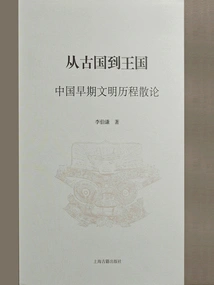
从古国到王国:中国早期文明历程散论
Li Boqian
This article contains Mr. Li Boqian's papers on ancient Chinese civilization. Mr. Li's research on the origin of early Chinese civilization is very insightful, and he proposed a three-stage theory of the evolution of early Chinese civilization, namely ancient country-kingdom-empire. Published many related articles in "Chinese Civilization" and other books and newspapers. These articles not only interpret the spatiotemporal relationship and interaction between these types of vessels and the evolution of early Chinese civilization through the study of a certain type of vessel, such as pottery, Yazhang, primitive porcelain, Ningxiang bronzes, etc.; They also interpret individual sites, such as Liangzhu, Taosi, Wangchenggang, Yuhuicun, Xinzhai, Dingtao Shilipu North, The research on the Sanxingdui Site, Yaoheyuan, Wanfu Nao, etc. Has revealed the status of these sites in the evolution of early Chinese civilization, and then upgraded to the study of ancient countries and kingdoms, thus triggering the elucidation and thinking of how to find evidence from archaeological excavations for the Yellow Emperor's era and the deeds of Dayu. These articles are now collected into a book to show the history of early Chinese civilization for the benefit of readers.
This article contains Mr. Li Boqian's papers on ancient Chinese civilization. Mr. Li's research on the origin of early Chinese civilization is very insightful, and he proposed a three-stage theory of the evolution of early Chinese civilization, namely ancient country-kingdom-empire. Published many related articles in "Chinese Civilization" and other books and newspapers. These articles not only interpret the spatiotemporal relationship and interaction between these types of vessels and the evolution of early Chinese civilization through the study of a certain type of vessel, such as pottery, Yazhang, primitive porcelain, Ningxiang bronzes, etc.; They also interpret individual sites, such as Liangzhu, Taosi, Wangchenggang, Yuhuicun, Xinzhai, Dingtao Shilipu North, The research on the Sanxingdui Site, Yaoheyuan, Wanfu Nao, etc. Has revealed the status of these sites in the evolution of early Chinese civilization, and then upgraded to the study of ancient countries and kingdoms, thus triggering the elucidation and thinking of how to find evidence from archaeological excavations for the Yellow Emperor's era and the deeds of Dayu. These articles are now collected into a book to show the history of early Chinese civilization for the benefit of readers.
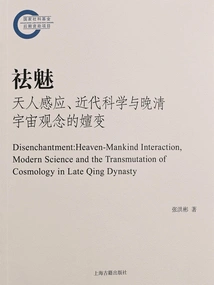
祛魅:天人感应、近代科学与晚清宇宙观念的嬗变
Zhang Hongbin
In the long tradition of China, there is no lack of belief and reverence for heaven, heaven, countless personal gods, ghosts and other divine beings in national rituals and daily life. However, since the early years of the Republic of China, these sacred beings have basically disappeared from the public life of the middle and upper classes. The highest representatives of political power no longer claim to be ordered by heaven. Most of the public speeches of intellectuals no longer strive to prove that heaven is a sacred existence worthy of awe and belief. Belief in personal gods and various forms of belief based on the laws of yin and yang and the five elements have become suspicious in public speech. How did this fundamental change occur? Why did this change happen? Starting from the perspective of intellectual history, this book examines the challenges that Christian natural theology and the modern scientific knowledge contained in it posed to the traditional cosmology in the late Qing Dynasty. It also examines how local intellectuals used the theory of evolution based on biological evolution to respond to the challenge, thereby explaining the disenchantment of the traditional cosmology and the weakening of the legitimacy of faith traditions.
In the long tradition of China, there is no lack of belief and reverence for heaven, heaven, countless personal gods, ghosts and other divine beings in national rituals and daily life. However, since the early years of the Republic of China, these sacred beings have basically disappeared from the public life of the middle and upper classes. The highest representatives of political power no longer claim to be ordered by heaven. Most of the public speeches of intellectuals no longer strive to prove that heaven is a sacred existence worthy of awe and belief. Belief in personal gods and various forms of belief based on the laws of yin and yang and the five elements have become suspicious in public speech. How did this fundamental change occur? Why did this change happen? Starting from the perspective of intellectual history, this book examines the challenges that Christian natural theology and the modern scientific knowledge contained in it posed to the traditional cosmology in the late Qing Dynasty. It also examines how local intellectuals used the theory of evolution based on biological evolution to respond to the challenge, thereby explaining the disenchantment of the traditional cosmology and the weakening of the legitimacy of faith traditions.
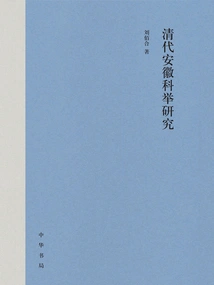
清代安徽科举研究
Liu Baihe
Anhui occupies an important and special position in the imperial examination system of the Qing Dynasty. It is an integral part of the developed and core areas of the imperial examination system in the Qing Dynasty. "Research on the Imperial Examination in Anhui in the Qing Dynasty" places the imperial examination within the framework of the state and the local area, and the imperial examination and society. It takes the five dimensions of the imperial examination system, the imperial examination society, the imperial examination figures, the imperial examination documents and the imperial examination geography as the main body, and conducts a detailed and in-depth academic observation of the imperial examination in Anhui in the Qing Dynasty, with a view to reflecting its overall appearance and change process.
Anhui occupies an important and special position in the imperial examination system of the Qing Dynasty. It is an integral part of the developed and core areas of the imperial examination system in the Qing Dynasty. "Research on the Imperial Examination in Anhui in the Qing Dynasty" places the imperial examination within the framework of the state and the local area, and the imperial examination and society. It takes the five dimensions of the imperial examination system, the imperial examination society, the imperial examination figures, the imperial examination documents and the imperial examination geography as the main body, and conducts a detailed and in-depth academic observation of the imperial examination in Anhui in the Qing Dynasty, with a view to reflecting its overall appearance and change process.
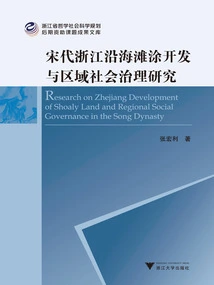
宋代浙江沿海滩涂开发与区域社会治理研究
Zhang Hongli
This book proposes and demonstrates a unique theoretical paradigm - co-opetitionism, which achieves major innovations and breakthroughs in international relations theory and solves many difficulties faced by the three traditional mainstream international relations theories; and then develops the two-level game into a two-level co-opetition model to achieve cross-level theoretical integration; by redefining security, establishing the research boundaries of security and identifying stable variables in the process of competition and cooperation within the unit, achieving transcendence of the Copenhagen School's securitization theory; and finding a new path for security interpretation by evolving from competition-jointism to harmony and cooperation. The proposal of co-opetitionism will have innovative, pioneering and landmark contributions in the fields of Chinese international relations theory and security studies in the long run.
This book proposes and demonstrates a unique theoretical paradigm - co-opetitionism, which achieves major innovations and breakthroughs in international relations theory and solves many difficulties faced by the three traditional mainstream international relations theories; and then develops the two-level game into a two-level co-opetition model to achieve cross-level theoretical integration; by redefining security, establishing the research boundaries of security and identifying stable variables in the process of competition and cooperation within the unit, achieving transcendence of the Copenhagen School's securitization theory; and finding a new path for security interpretation by evolving from competition-jointism to harmony and cooperation. The proposal of co-opetitionism will have innovative, pioneering and landmark contributions in the fields of Chinese international relations theory and security studies in the long run.
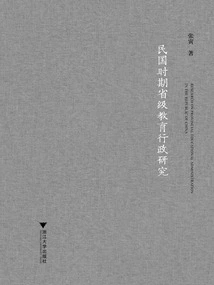
民国时期省级教育行政研究
Zhang Yin
This book mainly examines the process of provincial educational administration adapting to the rapid transformation of politics, economy, society, and education in modern my country, including the evolution and operation of provincial educational administration organizations, personnel administration, education finance, and supervision administration. Based on an objective evaluation of the status of provincial education administration in modern my country, this paper systematically summarizes the experience and lessons learned from the operation of provincial education administration during this period, aiming to provide reference for solving current provincial education administration problems. Comprehensive use of research methods such as literature method, case method, comparative method, quantitative method, etc., And theoretical methods from administrative management, political science, sociology and other disciplines, from an overall research perspective, comprehensively analyze the development history of provincial education administration during the Republic of China.
This book mainly examines the process of provincial educational administration adapting to the rapid transformation of politics, economy, society, and education in modern my country, including the evolution and operation of provincial educational administration organizations, personnel administration, education finance, and supervision administration. Based on an objective evaluation of the status of provincial education administration in modern my country, this paper systematically summarizes the experience and lessons learned from the operation of provincial education administration during this period, aiming to provide reference for solving current provincial education administration problems. Comprehensive use of research methods such as literature method, case method, comparative method, quantitative method, etc., And theoretical methods from administrative management, political science, sociology and other disciplines, from an overall research perspective, comprehensively analyze the development history of provincial education administration during the Republic of China.
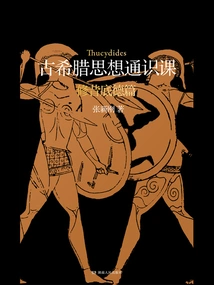
古希腊思想通识课:修昔底德篇
Zhang Xingang
In 431 BC, the 27-year Peloponnesian War broke out between two major camps within the Greek world. In this far-reaching war, various city-states and people of all colors took turns to appear, making their own choices in various extreme environments. The History of the Peloponnesian War written by the ancient Greek historian Thucydides has become a classic masterpiece of Western history. Thucydides believed that the growing power of Athens aroused fear in Sparta, and that Sparta had to respond to this threat. This logic that there must be a war between an established power and an emerging power is what later generations called the "Thucydides Trap." This book is Professor Zhang Xingang's interpretation of the book "History of the Peloponnesian War". Professor Zhang selected the most important events in the book and sorted out the causes, consequences and internal logic of the Peloponnesian War according to the course of time. He also used this to explore important issues related to the thought and spirit of the ancient Greeks, such as citizen character, city-state government, power and justice, revealing Thucydides' in-depth and complex thinking on the "human condition".
In 431 BC, the 27-year Peloponnesian War broke out between two major camps within the Greek world. In this far-reaching war, various city-states and people of all colors took turns to appear, making their own choices in various extreme environments. The History of the Peloponnesian War written by the ancient Greek historian Thucydides has become a classic masterpiece of Western history. Thucydides believed that the growing power of Athens aroused fear in Sparta, and that Sparta had to respond to this threat. This logic that there must be a war between an established power and an emerging power is what later generations called the "Thucydides Trap." This book is Professor Zhang Xingang's interpretation of the book "History of the Peloponnesian War". Professor Zhang selected the most important events in the book and sorted out the causes, consequences and internal logic of the Peloponnesian War according to the course of time. He also used this to explore important issues related to the thought and spirit of the ancient Greeks, such as citizen character, city-state government, power and justice, revealing Thucydides' in-depth and complex thinking on the "human condition".
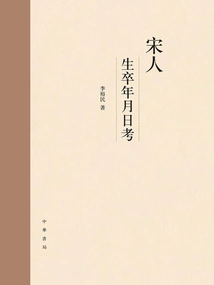
宋人生卒年月日考
Li Yumin
This book is the result of more than 20 years of hard work by Mr. Li Yumin, a well-known expert on Song history, and has made detailed research on the birth and death dates, months, and days of more than 2,500 Song Dynasty figures. Most of them have not been researched by others or have been wrongly researched. It is a meaningful achievement in the study of Song Dynasty figures and a reference book with rich reference value. This book is arranged in stroke order, and each entry is preceded by the "Index of Biographical Materials of Song Dynasty" and the volume and page of the index for easy reference. At the back of the book, there is an index of names, font sizes, and main references for easy retrieval.
This book is the result of more than 20 years of hard work by Mr. Li Yumin, a well-known expert on Song history, and has made detailed research on the birth and death dates, months, and days of more than 2,500 Song Dynasty figures. Most of them have not been researched by others or have been wrongly researched. It is a meaningful achievement in the study of Song Dynasty figures and a reference book with rich reference value. This book is arranged in stroke order, and each entry is preceded by the "Index of Biographical Materials of Song Dynasty" and the volume and page of the index for easy reference. At the back of the book, there is an index of names, font sizes, and main references for easy retrieval.
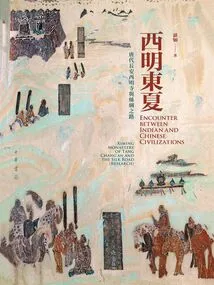
西明东夏:唐代长安西明寺与丝绸之路(全二册)
Zhanru
Ximing Temple was a royal temple located in Yankangfang, Chang'an City, the capital of the Tang Dynasty. It was the first of the temples when the Tang Dynasty was prosperous. It was also the so-called "national temple". It was not only the carrier of the daily activities of the monks, but also a place for translation of scriptures, a place for writings, a place for foreign monks to study abroad, a place for royal ceremonial activities and even a place for citizen cultural activities. It was a center of intellectual pilgrimage that constantly attracted surrounding religious and secular elites, and its radiation range covered the entire surrounding areas and countries. Buddhist elites such as Xuanzang, Bu Kong, Daoxuan, and Hui Lin were all active here. "Western Ming, Eastern Xia: Ximing Temple and the Silk Road in Chang'an during the Tang Dynasty" takes Ximing Temple in Chang'an as the starting point, and sorts out the role of the temple in Chang'an Buddhism and even Chinese Buddhism from three routes: "Pamir Plateau-Dunhuang-Chang'an", "Ximing Temple-Hangzhou-Japan", and "South China Sea-Guangzhou-Chang'an", and clearly presents the Chang'an civilization on the land and maritime Silk Roads. The sacred and secular, transcendental world and wealth, politics and religion, spirit and material, China and foreign lands, East and West are perfectly blended, reflecting the subtle relationship between royal power and religious power in the Middle Ages and the interaction between the sacred and the secular. It allows readers to deeply understand the impact of Buddhist culture that came through the Silk Road on Chinese civilization, and understand the broad mind of Chinese culture that embraced all rivers and embraced all things at its peak. This book is divided into two parts: "Research Part" and "Historical Data Part". In-depth research and detailed historical data complement each other and complement each other.
Ximing Temple was a royal temple located in Yankangfang, Chang'an City, the capital of the Tang Dynasty. It was the first of the temples when the Tang Dynasty was prosperous. It was also the so-called "national temple". It was not only the carrier of the daily activities of the monks, but also a place for translation of scriptures, a place for writings, a place for foreign monks to study abroad, a place for royal ceremonial activities and even a place for citizen cultural activities. It was a center of intellectual pilgrimage that constantly attracted surrounding religious and secular elites, and its radiation range covered the entire surrounding areas and countries. Buddhist elites such as Xuanzang, Bu Kong, Daoxuan, and Hui Lin were all active here. "Western Ming, Eastern Xia: Ximing Temple and the Silk Road in Chang'an during the Tang Dynasty" takes Ximing Temple in Chang'an as the starting point, and sorts out the role of the temple in Chang'an Buddhism and even Chinese Buddhism from three routes: "Pamir Plateau-Dunhuang-Chang'an", "Ximing Temple-Hangzhou-Japan", and "South China Sea-Guangzhou-Chang'an", and clearly presents the Chang'an civilization on the land and maritime Silk Roads. The sacred and secular, transcendental world and wealth, politics and religion, spirit and material, China and foreign lands, East and West are perfectly blended, reflecting the subtle relationship between royal power and religious power in the Middle Ages and the interaction between the sacred and the secular. It allows readers to deeply understand the impact of Buddhist culture that came through the Silk Road on Chinese civilization, and understand the broad mind of Chinese culture that embraced all rivers and embraced all things at its peak. This book is divided into two parts: "Research Part" and "Historical Data Part". In-depth research and detailed historical data complement each other and complement each other.
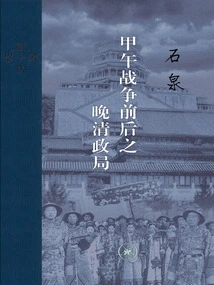
甲午战争前后之晚清政局
Shiquan
This book was derived from the master's thesis written by Professor Shi Quan when he was a student of Mr. Chen Yinke, and was completed in 1948. After half a century of history, it was washed away and buried by wind, rain, and dust. It was first published in 1997. This reprint has a completely new look. Aiming to perfect this classic. The author has a strong sense of urgency, and through the investigation of the evolution of China's internal political situation before and after the Sino-Japanese War of 18-1889, he clarifies that the Sino-Japanese War of 18-1888 was actually an important turning point in China's modern history, in order to keep pace with the evolution of the international situation in the Far East. The overview of this book is rigorous and broad, and the argumentation is profound. The author's diligent exploration has withstood the test of time and provides an excellent example for us to understand how scholars in the Republic of China viewed the late Qing Dynasty.
This book was derived from the master's thesis written by Professor Shi Quan when he was a student of Mr. Chen Yinke, and was completed in 1948. After half a century of history, it was washed away and buried by wind, rain, and dust. It was first published in 1997. This reprint has a completely new look. Aiming to perfect this classic. The author has a strong sense of urgency, and through the investigation of the evolution of China's internal political situation before and after the Sino-Japanese War of 18-1889, he clarifies that the Sino-Japanese War of 18-1888 was actually an important turning point in China's modern history, in order to keep pace with the evolution of the international situation in the Far East. The overview of this book is rigorous and broad, and the argumentation is profound. The author's diligent exploration has withstood the test of time and provides an excellent example for us to understand how scholars in the Republic of China viewed the late Qing Dynasty.
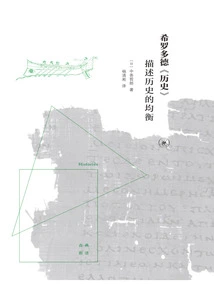
希罗多德《历史》:描述历史的均衡
(japan) Zhongwu Zhelang
Compared with later historians such as Thucydides, Herodotus, the "Father of History," paid more attention to conveying the meaning of history. In addition to telling ancient stories exactly as they were, he also added creative content to his "historical" records, making the book "History" more like another legend about the world from some angles. The first part of the book starts from the life of Herodotus and discusses the writing process of "History" and the way it records history and the world; the second part analyzes the text of "History" and puts forward the term "wheel" to highlight Herodotus's proposition of world balance.
Compared with later historians such as Thucydides, Herodotus, the "Father of History," paid more attention to conveying the meaning of history. In addition to telling ancient stories exactly as they were, he also added creative content to his "historical" records, making the book "History" more like another legend about the world from some angles. The first part of the book starts from the life of Herodotus and discusses the writing process of "History" and the way it records history and the world; the second part analyzes the text of "History" and puts forward the term "wheel" to highlight Herodotus's proposition of world balance.
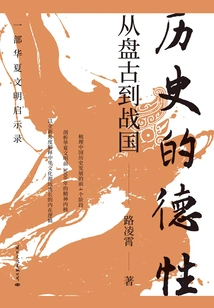
历史的德性:从盘古到战国
Lu Lingxiao
This book takes "virtue" as the fundamental clue and program to explore the consistent development thread in Chinese history and civilization inheritance, starting from the mythical story of Pangu's creation of the sky and ending in the era of hundreds of schools of thought in the Warring States Period. The biggest feature of this book is to grasp the fundamental point of "virtue", through the analysis of virtue and the exploration of its origin and development in history, as well as its historical appearance in different historical periods, and the guiding role of virtue in historical development as the starting point of interpretation. , Using research methods and research perspectives such as historical documents, archaeological research, and modern science, it profoundly reveals the appearance of Chinese civilization in different periods of history, and introduces new research results from academia, which to some extent subverts some of the history and civilization history that the public has known in the past. Therefore, this book is not only limited to revealing the evolution process of a civilization's development to readers, but more importantly, the author's combing and elaboration of this civilization's evolution is based on a series of new conclusions based on rigorous scientific method research, as well as the different roles these new conclusions play in the process of historical development and civilization evolution.
This book takes "virtue" as the fundamental clue and program to explore the consistent development thread in Chinese history and civilization inheritance, starting from the mythical story of Pangu's creation of the sky and ending in the era of hundreds of schools of thought in the Warring States Period. The biggest feature of this book is to grasp the fundamental point of "virtue", through the analysis of virtue and the exploration of its origin and development in history, as well as its historical appearance in different historical periods, and the guiding role of virtue in historical development as the starting point of interpretation. , Using research methods and research perspectives such as historical documents, archaeological research, and modern science, it profoundly reveals the appearance of Chinese civilization in different periods of history, and introduces new research results from academia, which to some extent subverts some of the history and civilization history that the public has known in the past. Therefore, this book is not only limited to revealing the evolution process of a civilization's development to readers, but more importantly, the author's combing and elaboration of this civilization's evolution is based on a series of new conclusions based on rigorous scientific method research, as well as the different roles these new conclusions play in the process of historical development and civilization evolution.
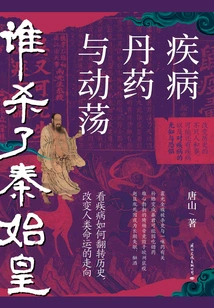
谁杀了秦始皇:疾病、丹药与动荡
Tangshan
In ancient Chinese society where medical conditions were underdeveloped, even the most wealthy people and the supreme emperors could not escape the troubles of diseases. From the time when Qin Shihuang sought immortality and medicine, key figures who could single-handedly influence the development of history began to fight against diseases. Starting from the perspective of pathology, this book explores the connection between diseases, elixirs and historical turmoil, as well as the chain reactions caused by diseases and the choices made by key figures in the face of diseases. Everyone will get sick, and diseases are deeply embedded in history. However, we often look at the problem from the perspective of contemporary medicine and ignore the role of diseases in the historical process. The author tries to dig out the neglected details in historical records and provide readers with a new perspective on history.
In ancient Chinese society where medical conditions were underdeveloped, even the most wealthy people and the supreme emperors could not escape the troubles of diseases. From the time when Qin Shihuang sought immortality and medicine, key figures who could single-handedly influence the development of history began to fight against diseases. Starting from the perspective of pathology, this book explores the connection between diseases, elixirs and historical turmoil, as well as the chain reactions caused by diseases and the choices made by key figures in the face of diseases. Everyone will get sick, and diseases are deeply embedded in history. However, we often look at the problem from the perspective of contemporary medicine and ignore the role of diseases in the historical process. The author tries to dig out the neglected details in historical records and provide readers with a new perspective on history.
唐代科举与文学:全二册(傅璇琮文集)
Fu Xuancong
Based on combing the relevant literature on the imperial examination system in the Tang Dynasty, this book examines the various subjects of the Tang Dynasty's imperial examinations, such as Ming Jing, Jinshi, and system examinations. It also examines the subject setting, content evolution, tribute examinations, examination papers, and banquets of the imperial examinations in the Tang Dynasty. It also explores the impact of the imperial examination system on the literary atmosphere and social trends of the time. By combining historical and literary research, it comprehensively examines the relevant social historical materials in historical records and literary descriptions of the ancients, studies the life path, way of thinking, and psychological state of scholars in the Tang Dynasty, and strives to reproduce some of the era style and social customs at that time. It pioneered a trend in the history of research and has far-reaching influence.
Based on combing the relevant literature on the imperial examination system in the Tang Dynasty, this book examines the various subjects of the Tang Dynasty's imperial examinations, such as Ming Jing, Jinshi, and system examinations. It also examines the subject setting, content evolution, tribute examinations, examination papers, and banquets of the imperial examinations in the Tang Dynasty. It also explores the impact of the imperial examination system on the literary atmosphere and social trends of the time. By combining historical and literary research, it comprehensively examines the relevant social historical materials in historical records and literary descriptions of the ancients, studies the life path, way of thinking, and psychological state of scholars in the Tang Dynasty, and strives to reproduce some of the era style and social customs at that time. It pioneered a trend in the history of research and has far-reaching influence.
A Series of Examinations of Poets of the Tang Dynasty: Two Volumes (collected Works of Fu Xuancong)
History唐代诗人丛考:全二册(傅璇琮文集)
Fu Xuancong
This book conducts detailed research on the life stories and writings of 32 poets in the early Tang Dynasty, the prosperous Tang Dynasty and the early middle Tang Dynasty. It fills in the gaps or corrects errors. It has detailed information and rigorous arguments, and many of them have not been published before. This book also makes a macroscopic examination of the status and influence of the poets' creations in literary history, as well as the poetry world and poetry schools at that time, and strives to summarize the development laws of literary history. In particular, it analyzes the different groups of poets in the north and south during the Dali period, which has opened up a new trend of group research in the study of Tang Dynasty literature since the 1980s. This book was first published in 1980. Academics believe that the publication of this work "suddenly pushed the study of Tang literature to a new level."
This book conducts detailed research on the life stories and writings of 32 poets in the early Tang Dynasty, the prosperous Tang Dynasty and the early middle Tang Dynasty. It fills in the gaps or corrects errors. It has detailed information and rigorous arguments, and many of them have not been published before. This book also makes a macroscopic examination of the status and influence of the poets' creations in literary history, as well as the poetry world and poetry schools at that time, and strives to summarize the development laws of literary history. In particular, it analyzes the different groups of poets in the north and south during the Dali period, which has opened up a new trend of group research in the study of Tang Dynasty literature since the 1980s. This book was first published in 1980. Academics believe that the publication of this work "suddenly pushed the study of Tang literature to a new level."
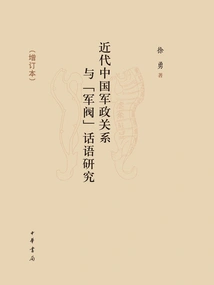
A Study of Military-political Relations and "warlord" Discourse in Modern China (updated Edition)
History近代中国军政关系与“军阀”话语研究(增订本)
Xu Yong
The warlords' discourse is interesting, useful and full of academic research value. For more than a hundred years, relevant research at home and abroad has continued. At the end of the 20th century, the author used emerging electronic retrieval technology and overseas study visits to study various historical materials and advanced research. He found that in the chain of ancient and modern usage examples, Chinese warlords were originally in the context of military merit. In the modern Japanese "anti-warlord" democratic movement, they were converted into critical and derogatory meanings, and then returned to China. They served all walks of life and revolutionary parties in the use of culture to control military forces and the integration of military-political and military-party relations. The cross-regional transmission of the word warlord and its escaping function are common issues in the history and culture of modern China, East Asia and the world. The author's preliminary research has been revised this time, and he looks forward to sharing his encouragement with readers.
The warlords' discourse is interesting, useful and full of academic research value. For more than a hundred years, relevant research at home and abroad has continued. At the end of the 20th century, the author used emerging electronic retrieval technology and overseas study visits to study various historical materials and advanced research. He found that in the chain of ancient and modern usage examples, Chinese warlords were originally in the context of military merit. In the modern Japanese "anti-warlord" democratic movement, they were converted into critical and derogatory meanings, and then returned to China. They served all walks of life and revolutionary parties in the use of culture to control military forces and the integration of military-political and military-party relations. The cross-regional transmission of the word warlord and its escaping function are common issues in the history and culture of modern China, East Asia and the world. The author's preliminary research has been revised this time, and he looks forward to sharing his encouragement with readers.
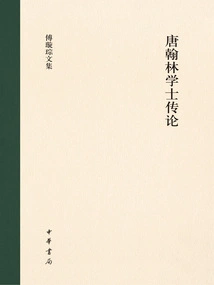
唐翰林学士传论:全四册(傅璇琮文集)
Fu Xuancong
Hanlin scholars in the Tang Dynasty were the highest level of scribes participating in politics. This position with a reputation for literary talent was established in the prosperous Tang Dynasty and lasted until the end of the Qing Dynasty. As an important phenomenon in social and political culture, and as the inevitable path to officialdom for literati in the feudal era, the imperial examination system and the Hanlin Academy, Jinshi and Hanlin bachelors are unavoidable when studying the history and culture of the 1,230 years from the Tang to the Qing Dynasty. This book is a biographical biography of more than 200 Hanlin scholars in the Tang Dynasty, and expands the collection of historical materials as much as possible. In addition to basic materials such as the two "Tang Shu", "Complete Tang Poems" and "Complete Tang Prose", it also covers a wide range of poetry collections, miscellaneous historical notes, stone inscriptions, etc. It can not only correct some misconceptions in the history books, but also obtain historical and cultural phenomena worth thinking about from the experiences of these more than 200 Hanlin scholars, and provide an example of the integration of literature and history for the entire study of ancient Chinese Hanlin scholars.
Hanlin scholars in the Tang Dynasty were the highest level of scribes participating in politics. This position with a reputation for literary talent was established in the prosperous Tang Dynasty and lasted until the end of the Qing Dynasty. As an important phenomenon in social and political culture, and as the inevitable path to officialdom for literati in the feudal era, the imperial examination system and the Hanlin Academy, Jinshi and Hanlin bachelors are unavoidable when studying the history and culture of the 1,230 years from the Tang to the Qing Dynasty. This book is a biographical biography of more than 200 Hanlin scholars in the Tang Dynasty, and expands the collection of historical materials as much as possible. In addition to basic materials such as the two "Tang Shu", "Complete Tang Poems" and "Complete Tang Prose", it also covers a wide range of poetry collections, miscellaneous historical notes, stone inscriptions, etc. It can not only correct some misconceptions in the history books, but also obtain historical and cultural phenomena worth thinking about from the experiences of these more than 200 Hanlin scholars, and provide an example of the integration of literature and history for the entire study of ancient Chinese Hanlin scholars.
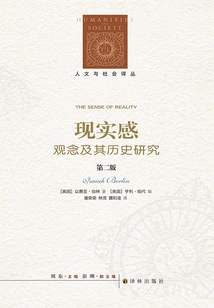
现实感:观念及其历史研究(第二版)
J
In the nine articles in the main body of "The Sense of Reality: A Study of Ideas and Their History," Isaiah Berlin explores some of the core concepts that have dominated the development of European history in the past three centuries, traces the rise and evolution of important ideological trends, and teases out an evolutionary path from Kantianism through Romanticism to nationalism. The book touches on many topics, such as realism in history, political judgment, and the responsibility of art. Berlin pointed out that good historians, politicians and novelists have a similar talent for discerning the characteristics and subtle relationships of specific moments, which is the "sense of reality." These articles demonstrate Berlin's extremely profound knowledge, insight, and fluent writing. This book has been updated to the second edition of Princeton, with a preface written by Timothy Snyder, and two articles written by Berlin himself: "The Great Russian Critic: V. G. Belinsky" and "The End of Perfect Social Theory", which are of great reading value.
In the nine articles in the main body of "The Sense of Reality: A Study of Ideas and Their History," Isaiah Berlin explores some of the core concepts that have dominated the development of European history in the past three centuries, traces the rise and evolution of important ideological trends, and teases out an evolutionary path from Kantianism through Romanticism to nationalism. The book touches on many topics, such as realism in history, political judgment, and the responsibility of art. Berlin pointed out that good historians, politicians and novelists have a similar talent for discerning the characteristics and subtle relationships of specific moments, which is the "sense of reality." These articles demonstrate Berlin's extremely profound knowledge, insight, and fluent writing. This book has been updated to the second edition of Princeton, with a preface written by Timothy Snyder, and two articles written by Berlin himself: "The Great Russian Critic: V. G. Belinsky" and "The End of Perfect Social Theory", which are of great reading value.
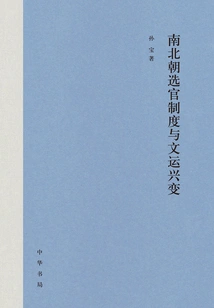
南北朝选官制度与文运兴变(全二册)
Sun Bao
The selection of civil servants in the Southern and Northern Dynasties was closely related to the literati, and the connection between the two was objective and universal. With the exception of a few foreign literati who remained in office throughout their lives, most of the literati in the Southern and Northern Dynasties combined multiple identities such as writers, officials, thinkers, scholarly celebrities, and rural leaders. Driven by the revival of the Confucian progressive value system and the concept of secular officials, scholars generally accumulated knowledge and skills through pre-official education, and then accepted official qualification review, recommendation, selection, planning, and reexamination, and then qualified as candidate officials until they were finally released and started their careers. After becoming an official, you also have to undergo official experience such as assessment during the employment period and transfer and promotion. The place and term of office of a literati determine the region, route, and length of stay of that person, as well as their sense of country and country and the regional characteristics of their literature. In addition, the public-private relationship between a literati's superiors and subordinates constitutes the content of his interpersonal interactions and social activities, which in turn determines the content of his literary expression. The nature of their official appointment and the scope of their duties determine the nature and stylistic characteristics of their official documents, and can even solidify their creative types; the group interactions during their official tenure also determine the collective nature of scribes' literary creation, and can even develop into a trend indicator in the literary world. It can be said that the official selection system is the key to analyzing the literati and cultural movement of the Northern and Southern Dynasties. This book summarizes the internal and external reasons and manifestations of the connection between the official selection system and literature in the Southern and Northern Dynasties, fully reveals the types and cultural and educational motivations of the official selection system in the Southern and Northern Dynasties, and the internal connection between the official selection process and the officialdom ecology and the mentality of scholars. It also conducts special research on the influence of the official selection system, official office operations, and official selection culture in the Southern and Northern Dynasties on literature. The official selection system in the Southern and Northern Dynasties continued the old system of the Han and Jin Dynasties, but also expanded new institutional functions. Through the penetration and coupling of family politics, scholarly official habits, and literary styles, a unique mixture of "official selection and literature" was formed during this period. It had a profound impact on the evolution of the literary world structure, the criticism and transformation of literary trends, and the expansion of the scope of literary theory in later generations.
The selection of civil servants in the Southern and Northern Dynasties was closely related to the literati, and the connection between the two was objective and universal. With the exception of a few foreign literati who remained in office throughout their lives, most of the literati in the Southern and Northern Dynasties combined multiple identities such as writers, officials, thinkers, scholarly celebrities, and rural leaders. Driven by the revival of the Confucian progressive value system and the concept of secular officials, scholars generally accumulated knowledge and skills through pre-official education, and then accepted official qualification review, recommendation, selection, planning, and reexamination, and then qualified as candidate officials until they were finally released and started their careers. After becoming an official, you also have to undergo official experience such as assessment during the employment period and transfer and promotion. The place and term of office of a literati determine the region, route, and length of stay of that person, as well as their sense of country and country and the regional characteristics of their literature. In addition, the public-private relationship between a literati's superiors and subordinates constitutes the content of his interpersonal interactions and social activities, which in turn determines the content of his literary expression. The nature of their official appointment and the scope of their duties determine the nature and stylistic characteristics of their official documents, and can even solidify their creative types; the group interactions during their official tenure also determine the collective nature of scribes' literary creation, and can even develop into a trend indicator in the literary world. It can be said that the official selection system is the key to analyzing the literati and cultural movement of the Northern and Southern Dynasties. This book summarizes the internal and external reasons and manifestations of the connection between the official selection system and literature in the Southern and Northern Dynasties, fully reveals the types and cultural and educational motivations of the official selection system in the Southern and Northern Dynasties, and the internal connection between the official selection process and the officialdom ecology and the mentality of scholars. It also conducts special research on the influence of the official selection system, official office operations, and official selection culture in the Southern and Northern Dynasties on literature. The official selection system in the Southern and Northern Dynasties continued the old system of the Han and Jin Dynasties, but also expanded new institutional functions. Through the penetration and coupling of family politics, scholarly official habits, and literary styles, a unique mixture of "official selection and literature" was formed during this period. It had a profound impact on the evolution of the literary world structure, the criticism and transformation of literary trends, and the expansion of the scope of literary theory in later generations.
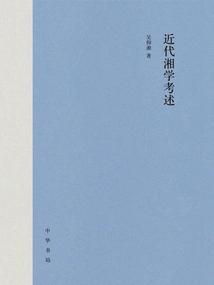
近代湘学考述
Wu Yangxiang
"Hunan academics flourished in modern times". This book combs the development origins, ups and downs of Hunan Confucian classics, Zhuzi studies, linguistics and bibliography since modern times. From the perspective of case studies, we conducted in-depth and specific examinations, reviews, and judgments on the historical events, writings, or achievements of modern Hunan studies, involving many famous scholars such as Nanjing Academy and Zeng Guofan, Wang Kaiyun, Pi Xirui, Fu Dingyi, Zeng Yunqian, Ma Zonghuo, etc.
"Hunan academics flourished in modern times". This book combs the development origins, ups and downs of Hunan Confucian classics, Zhuzi studies, linguistics and bibliography since modern times. From the perspective of case studies, we conducted in-depth and specific examinations, reviews, and judgments on the historical events, writings, or achievements of modern Hunan studies, involving many famous scholars such as Nanjing Academy and Zeng Guofan, Wang Kaiyun, Pi Xirui, Fu Dingyi, Zeng Yunqian, Ma Zonghuo, etc.
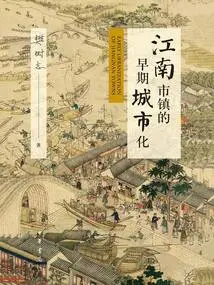
江南市镇的早期城市化
Fan Shuzhi
This book conducts a comprehensive study and discussion of more than 40 typical towns in the five prefectures of Suzhou, Songjiang, Hangzhou, Jiaxing, and Huzhou in the Yangtze River Delta from the Ming and Qing dynasties to the Republic of China, the most economically active area in Jiangnan, and outlines the evolutionary trajectory of their gradual urbanization.
This book conducts a comprehensive study and discussion of more than 40 typical towns in the five prefectures of Suzhou, Songjiang, Hangzhou, Jiaxing, and Huzhou in the Yangtze River Delta from the Ming and Qing dynasties to the Republic of China, the most economically active area in Jiangnan, and outlines the evolutionary trajectory of their gradual urbanization.
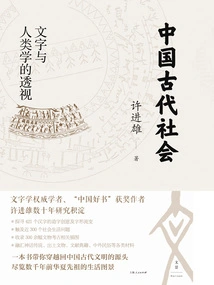
中国古代社会:文字与人类学的透视
Xu Jinxiong
Xu Jinxiong, an authoritative scholar of contemporary philology, has created a masterpiece about ancient Chinese characters and related social culture. He uses myths and legends, unearthed cultural relics, classics, research reports, Chinese and foreign folk customs, anthropological theories, and the background of ancient civilizations to analyze the creativity of character creation with professional knowledge and plain narrative, reveals the mysterious origin and meaning of characters, and leads readers to experience the infinite charm of ancient characters. Use words as the key to unlock the "encyclopedia" of ancient Chinese social life: the author carefully extracts 421 ancient words that are closely related to daily life, covering writing, ancient history, fishing and hunting, animal husbandry, agriculture, grains, metallurgy, crafts, food, clothing, etc. It covers all aspects of social life such as clothing, housing, transportation, entertainment, commerce, medicine, war, sacrifices, and the four spirits. It eliminates contemporary misunderstandings of many etiquette, habits, and ideas in ancient times, and presents a panoramic view of ancient Chinese society in a true and interesting way.
Xu Jinxiong, an authoritative scholar of contemporary philology, has created a masterpiece about ancient Chinese characters and related social culture. He uses myths and legends, unearthed cultural relics, classics, research reports, Chinese and foreign folk customs, anthropological theories, and the background of ancient civilizations to analyze the creativity of character creation with professional knowledge and plain narrative, reveals the mysterious origin and meaning of characters, and leads readers to experience the infinite charm of ancient characters. Use words as the key to unlock the "encyclopedia" of ancient Chinese social life: the author carefully extracts 421 ancient words that are closely related to daily life, covering writing, ancient history, fishing and hunting, animal husbandry, agriculture, grains, metallurgy, crafts, food, clothing, etc. It covers all aspects of social life such as clothing, housing, transportation, entertainment, commerce, medicine, war, sacrifices, and the four spirits. It eliminates contemporary misunderstandings of many etiquette, habits, and ideas in ancient times, and presents a panoramic view of ancient Chinese society in a true and interesting way.

Li Bai and Du Fu
History李白与杜甫
Guo Moruo
Reading Li Bai's poems makes people feel: when he is drunk, it is when he is sober; when he is not drunk, it is when he is confused. Du Fu is an ambitious man. He always wants to make a big splash and achieve 90,000 miles in one fell swoop. But he never achieved this hope in his life. Whenever Li and Du are mentioned at the same time, people seem to sigh like this: Li Bai has never been old, but Du Fu has never been young.
Reading Li Bai's poems makes people feel: when he is drunk, it is when he is sober; when he is not drunk, it is when he is confused. Du Fu is an ambitious man. He always wants to make a big splash and achieve 90,000 miles in one fell swoop. But he never achieved this hope in his life. Whenever Li and Du are mentioned at the same time, people seem to sigh like this: Li Bai has never been old, but Du Fu has never been young.
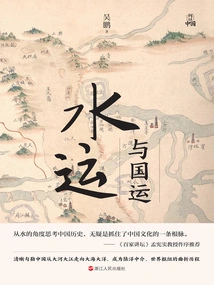
水运与国运
Wu Peng
Why China? The land of China is crisscrossed by water networks. Water is the source of life. Water conservancy is the lifeblood of agriculture and the root of culture. The guiding role of water in China's historical development is just like the flow of water, twists and turns, and meandering firmly. It can be said that the Chinese nation originated and was formed here. Wu Peng, a doctorate in history from Renmin University of China and an emerging writer, leads readers upstream from a unique and novel perspective to explore the secrets of the rise and fall of dynasties and the direction of Chinese history, providing a new perspective for us to deeply understand Chinese civilization. The characteristics of this book are the perfect blend of scholarship and interest, rich and solid historical materials, easy-to-understand language, and the integration of realistic concerns and historical thinking. Are the records of water conservancy and water wars we see today completely consistent with the facts? How does the Chinese nation integrate continental civilization and maritime civilization? What is the position of the history of Chinese civilization in the history of world civilization? The author asks questions layer by layer, showing readers the history of Chinese civilization under the influence of water transportation with clear logic and simple explanations.
Why China? The land of China is crisscrossed by water networks. Water is the source of life. Water conservancy is the lifeblood of agriculture and the root of culture. The guiding role of water in China's historical development is just like the flow of water, twists and turns, and meandering firmly. It can be said that the Chinese nation originated and was formed here. Wu Peng, a doctorate in history from Renmin University of China and an emerging writer, leads readers upstream from a unique and novel perspective to explore the secrets of the rise and fall of dynasties and the direction of Chinese history, providing a new perspective for us to deeply understand Chinese civilization. The characteristics of this book are the perfect blend of scholarship and interest, rich and solid historical materials, easy-to-understand language, and the integration of realistic concerns and historical thinking. Are the records of water conservancy and water wars we see today completely consistent with the facts? How does the Chinese nation integrate continental civilization and maritime civilization? What is the position of the history of Chinese civilization in the history of world civilization? The author asks questions layer by layer, showing readers the history of Chinese civilization under the influence of water transportation with clear logic and simple explanations.
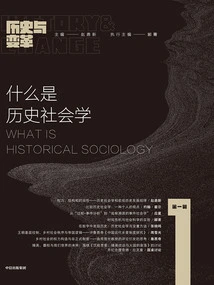
历史与变革(第一辑):什么是历史社会学
Editor-in-chief Zhao Dingxin
Historical sociology is concerned with "big issues", such as the formation and development of nations, the different paths of "passive" modernization in the non-Western world under the pressure of the "rise of the West", the impact of factors such as environment, technology, population, war and epidemics on long-term historical development patterns, etc., Etc., Issues that are of great significance to understanding and improving the current living conditions of mankind and have important reference value for understanding the current world situation. The editor-in-chief of this book, Zhao Dingxin, has been engaged in historical sociology research in recent decades, and is gradually promoting historical sociology research in China. The "History and Change" series of books is an important platform for Zhao Dingxin and his team to intensively present their previous research accumulation, and at the same time continue to promote and develop the existing research community. "History and Change" is not only a highly professional sociology magazine with high academic value, but also a philosophy and social science platform with high professional standards that can discuss various historical and realistic issues and major methodological issues. "History and Change" advocates the establishment of a historical sociology methodology with Chinese characteristics that is highly recognized overseas, as well as an understanding of history and historical laws through extensive and open exchanges and discussions. As the first volume of this series of books, "History and Change (First Volume): What is Historical Sociology" selects the thoughts of domestic and foreign historical sociologists on the core issues of historical sociology, including 5 monographs, 2 book reviews, and the text of a roundtable discussion.
Historical sociology is concerned with "big issues", such as the formation and development of nations, the different paths of "passive" modernization in the non-Western world under the pressure of the "rise of the West", the impact of factors such as environment, technology, population, war and epidemics on long-term historical development patterns, etc., Etc., Issues that are of great significance to understanding and improving the current living conditions of mankind and have important reference value for understanding the current world situation. The editor-in-chief of this book, Zhao Dingxin, has been engaged in historical sociology research in recent decades, and is gradually promoting historical sociology research in China. The "History and Change" series of books is an important platform for Zhao Dingxin and his team to intensively present their previous research accumulation, and at the same time continue to promote and develop the existing research community. "History and Change" is not only a highly professional sociology magazine with high academic value, but also a philosophy and social science platform with high professional standards that can discuss various historical and realistic issues and major methodological issues. "History and Change" advocates the establishment of a historical sociology methodology with Chinese characteristics that is highly recognized overseas, as well as an understanding of history and historical laws through extensive and open exchanges and discussions. As the first volume of this series of books, "History and Change (First Volume): What is Historical Sociology" selects the thoughts of domestic and foreign historical sociologists on the core issues of historical sociology, including 5 monographs, 2 book reviews, and the text of a roundtable discussion.
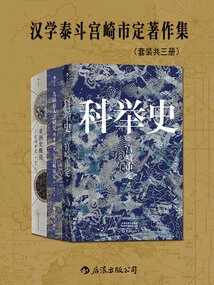
汉学泰斗宫崎市定著作集(套装共三册)
I
"History of Imperial Examinations": This book is a masterpiece of Miyazaki City's research on imperial examinations. The author combs through the talent selection system in ancient China, from the Xiaolian Ke in the Eastern Han Dynasty to the Nine-Rank Officials' Law in the Wei and Jin Dynasties, and finally developed into the imperial examination system. Taking the imperial examination in the Qing Dynasty as an example, the author introduces in detail the procedures and details of the imperial examination, as well as the use of other official appointments other than the imperial examination. It elaborates on the profound impact of the imperial examination system on Chinese society since the Ming and Qing Dynasties. "Research on the Nine-Rank Officials' Law: The Prehistory of the Imperial Examination": This book takes the Nine-Rank Officials' Law, the official selection system that runs through the Wei, Jin, Southern and Northern Dynasties, and down to the Sui and Tang Dynasties, as the research object. Breaking through the traditional research model, it accurately describes the development and evolution of the system over more than 300 years, revealing that the Nine-Ranks' Officials' Law is different from what is traditionally understood. There are essential differences in the "Nine Ranks of Zhongzheng System", and using this as a clue to integrate the official selection system, position official system and clan system in the Wei, Jin, Southern and Northern Dynasties, it profoundly reveals the development and evolution of the political system in the Wei, Jin, Southern and Northern Dynasties, and opens up a new situation for the study of the official selection system in ancient China. A must-read for studying the history of China's Wei, Jin, Southern and Northern Dynasties, Sui and Tang Dynasties. "An Overview of Asian History": On the vast Asian continent, there are Chinese civilization in East Asia, civilization in West Asia, Sanskrit civilization in India, and Japanese civilization. Various heterogeneous civilizations are connected through the links of transportation, compete with each other, and compensate for each other, thus unfolding a grand picture of the development process of Asian history. From this, we can further understand the true history of all mankind. The author puts forward the "theory of West Asian civilizations flowing eastward" and opens up a new field of "Asian history", focusing on examining the transportation connections between civilizations. Through the transfer and changes of transportation lines, he reveals the historical trends of the rise and fall of civilizations and the evolution of the times.
"History of Imperial Examinations": This book is a masterpiece of Miyazaki City's research on imperial examinations. The author combs through the talent selection system in ancient China, from the Xiaolian Ke in the Eastern Han Dynasty to the Nine-Rank Officials' Law in the Wei and Jin Dynasties, and finally developed into the imperial examination system. Taking the imperial examination in the Qing Dynasty as an example, the author introduces in detail the procedures and details of the imperial examination, as well as the use of other official appointments other than the imperial examination. It elaborates on the profound impact of the imperial examination system on Chinese society since the Ming and Qing Dynasties. "Research on the Nine-Rank Officials' Law: The Prehistory of the Imperial Examination": This book takes the Nine-Rank Officials' Law, the official selection system that runs through the Wei, Jin, Southern and Northern Dynasties, and down to the Sui and Tang Dynasties, as the research object. Breaking through the traditional research model, it accurately describes the development and evolution of the system over more than 300 years, revealing that the Nine-Ranks' Officials' Law is different from what is traditionally understood. There are essential differences in the "Nine Ranks of Zhongzheng System", and using this as a clue to integrate the official selection system, position official system and clan system in the Wei, Jin, Southern and Northern Dynasties, it profoundly reveals the development and evolution of the political system in the Wei, Jin, Southern and Northern Dynasties, and opens up a new situation for the study of the official selection system in ancient China. A must-read for studying the history of China's Wei, Jin, Southern and Northern Dynasties, Sui and Tang Dynasties. "An Overview of Asian History": On the vast Asian continent, there are Chinese civilization in East Asia, civilization in West Asia, Sanskrit civilization in India, and Japanese civilization. Various heterogeneous civilizations are connected through the links of transportation, compete with each other, and compensate for each other, thus unfolding a grand picture of the development process of Asian history. From this, we can further understand the true history of all mankind. The author puts forward the "theory of West Asian civilizations flowing eastward" and opens up a new field of "Asian history", focusing on examining the transportation connections between civilizations. Through the transfer and changes of transportation lines, he reveals the historical trends of the rise and fall of civilizations and the evolution of the times.
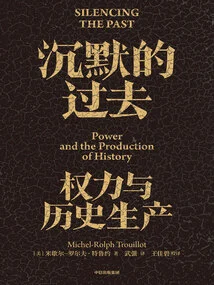
沉默的过去:权力与历史生产
(u. S.) Michel-rolf Truillot
This is a modern work on how history is made. The author's perspective goes far beyond the cliché that history is written by the victors. By telling the story of the Haitian Revolution and the differences in celebrations commemorating Columbus' landing in different countries, the author discovers four key moments when silence entered history. The author's analysis reveals the entanglement of forces in the birth of history, arguing that this entanglement applies not only to archives but also governs the processes and practices through which history is authenticated, sanctioned, and organized into intellectual domains. Silence, he points out, is inherent in history because any event loses some of its components when it enters history. History means not only the socio-historical process but also our knowledge of that process, but the boundary between these two meanings is often quite fluid. He distinguished history, memory and novels, and proposed a storage model of history, arguing that this model is neither fixed nor changeable at will, and that if the model was complete, then history would not be formed. Through a sharp interrogation of history, the author's elegant writing and quick thinking allow the silent past to speak. Only when people begin to seriously examine what history is, can they take history and the future into their own hands.
This is a modern work on how history is made. The author's perspective goes far beyond the cliché that history is written by the victors. By telling the story of the Haitian Revolution and the differences in celebrations commemorating Columbus' landing in different countries, the author discovers four key moments when silence entered history. The author's analysis reveals the entanglement of forces in the birth of history, arguing that this entanglement applies not only to archives but also governs the processes and practices through which history is authenticated, sanctioned, and organized into intellectual domains. Silence, he points out, is inherent in history because any event loses some of its components when it enters history. History means not only the socio-historical process but also our knowledge of that process, but the boundary between these two meanings is often quite fluid. He distinguished history, memory and novels, and proposed a storage model of history, arguing that this model is neither fixed nor changeable at will, and that if the model was complete, then history would not be formed. Through a sharp interrogation of history, the author's elegant writing and quick thinking allow the silent past to speak. Only when people begin to seriously examine what history is, can they take history and the future into their own hands.
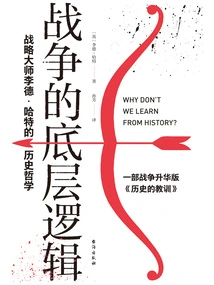
战争的底层逻辑:战略大师李德·哈特的历史哲学
H
This is a masterpiece in his later years with the master of history Liddell Hart. It highly summarizes the author's research results on the history of war and strategy theory, and refined his own philosophy of history with his lifelong efforts. From the macro perspective of a strategist, the author moves from history through the present to the future, exploring why humans make the same mistakes again and again in the fields of war, politics, and society, sounding a wake-up call for mankind. With the rigor and objectivity of a historian, combined with first-hand investigation data, the author provides a detailed and thorough analysis of the underlying logical issues why mankind has repeatedly fallen into the quagmire of war from the political system, social environment, public opinion, decision-making process and other aspects. The content of this book is short and concise, and the views are profound and sharp. It is worth reading and understanding again and again by readers of any era.
This is a masterpiece in his later years with the master of history Liddell Hart. It highly summarizes the author's research results on the history of war and strategy theory, and refined his own philosophy of history with his lifelong efforts. From the macro perspective of a strategist, the author moves from history through the present to the future, exploring why humans make the same mistakes again and again in the fields of war, politics, and society, sounding a wake-up call for mankind. With the rigor and objectivity of a historian, combined with first-hand investigation data, the author provides a detailed and thorough analysis of the underlying logical issues why mankind has repeatedly fallen into the quagmire of war from the political system, social environment, public opinion, decision-making process and other aspects. The content of this book is short and concise, and the views are profound and sharp. It is worth reading and understanding again and again by readers of any era.
百年古代文学教育史论(1840—1949)
Wang Ximing
This book focuses on areas that few academics pay attention to, examines the relevant parts of basic education and university education, and forms a relatively systematic understanding of the history of ancient literary education over a century. The first chapter of this book mainly discusses changes in official policies and their impact on ancient literature education. Chapter 2 discusses the impact of the collision and integration of Chinese and Western cultures on ancient literature education from the perspectives of theoretical input and educational practice. The third chapter discusses the modern transformation of ancient literature education. Chapter 4 mainly discusses three points: first, the imbalance and lag in the implementation of education policies since the late Qing Dynasty; second, the characteristics of the integration of official education and private education in revolutionary base areas, and the tenacious survival of ancient literary education; third, the development of unofficial education such as old-style literary creation, private school education, family education, and self-education under the revolution in communication methods. This book is suitable for ancient literature research scholars and educators.
This book focuses on areas that few academics pay attention to, examines the relevant parts of basic education and university education, and forms a relatively systematic understanding of the history of ancient literary education over a century. The first chapter of this book mainly discusses changes in official policies and their impact on ancient literature education. Chapter 2 discusses the impact of the collision and integration of Chinese and Western cultures on ancient literature education from the perspectives of theoretical input and educational practice. The third chapter discusses the modern transformation of ancient literature education. Chapter 4 mainly discusses three points: first, the imbalance and lag in the implementation of education policies since the late Qing Dynasty; second, the characteristics of the integration of official education and private education in revolutionary base areas, and the tenacious survival of ancient literary education; third, the development of unofficial education such as old-style literary creation, private school education, family education, and self-education under the revolution in communication methods. This book is suitable for ancient literature research scholars and educators.
北京大学中国古文献研究中心集刊(第二十四辑)
Peking University Chinese Ancient Literature Research Center
This book is a collection of papers written by teachers and doctoral candidates from the Chinese Ancient Literature Research Center of Peking University, as well as researchers in related fields at home and abroad. The content involves theoretical research on ancient literature, compilation and research of handed down documents, research on ancient characters and unearthed documents, research on overseas Chinese books and sinology, and other related fields such as the study of ancient Chinese documents. The whole book is divided into four parts according to Jing, Shi, Zi and Ji, which are reflected in blank lines in the table of contents. The papers may be the latest research on a specific issue in a related field, or they may be an examination of the lives and travels of famous ancient Chinese scholars, or they may be an exchange and discussion of overseas sinology. The papers in this issue have novel perspectives and detailed content.
This book is a collection of papers written by teachers and doctoral candidates from the Chinese Ancient Literature Research Center of Peking University, as well as researchers in related fields at home and abroad. The content involves theoretical research on ancient literature, compilation and research of handed down documents, research on ancient characters and unearthed documents, research on overseas Chinese books and sinology, and other related fields such as the study of ancient Chinese documents. The whole book is divided into four parts according to Jing, Shi, Zi and Ji, which are reflected in blank lines in the table of contents. The papers may be the latest research on a specific issue in a related field, or they may be an examination of the lives and travels of famous ancient Chinese scholars, or they may be an exchange and discussion of overseas sinology. The papers in this issue have novel perspectives and detailed content.
梁启超:东亚文明史的转换
(japan) Naoki Hazama
This book describes Liang Qichao's ideological changes and activity practices during his exile in Japan after the 1898 Coup of 18, from founding the "Qing Yi Bao" to writing the "Xinmin Congbao", from advocating constitutionalism to aiming for a "new people". The book has a very clear timeline. It appropriately restores the thoughts reflected in Liang Qichao's articles in various periods and analyzes them within the framework of the transformation of modern East Asian civilization. It reveals the changes in Liang Qichao's thoughts during this period and the huge impact of his newspaper activities on modern China, and highlights Liang Qichao's important position in the modern history of East Asia.
This book describes Liang Qichao's ideological changes and activity practices during his exile in Japan after the 1898 Coup of 18, from founding the "Qing Yi Bao" to writing the "Xinmin Congbao", from advocating constitutionalism to aiming for a "new people". The book has a very clear timeline. It appropriately restores the thoughts reflected in Liang Qichao's articles in various periods and analyzes them within the framework of the transformation of modern East Asian civilization. It reveals the changes in Liang Qichao's thoughts during this period and the huge impact of his newspaper activities on modern China, and highlights Liang Qichao's important position in the modern history of East Asia.
中国抗日根据地社会保障研究
Tan Zhongyan
The core of the study of "Research on Social Security in China's Anti-Japanese Base Areas" is the social security work in China's Anti-Japanese Base Areas. By sorting out the background, overview, and content of its development, it analyzes the characteristics presented in the development process, summarizes the role of social security in the Anti-Japanese Base Areas on social development, and summarizes experience and enlightenment in order to provide reference for the development of social security during the period of socialist construction. The social security in China's anti-Japanese base areas was rooted in the special historical period of the Anti-Japanese War. It was closely related to the development level of productive forces and changes in the social situation at that time, and reflected obvious subjective, extensive, hierarchical, targeted and wartime characteristics. The good and orderly operation of social security work in the anti-Japanese base areas was conducive to stabilizing social order, mobilizing all social classes and strata to participate in the war, and laying the necessary social, material and mass foundations for the victory of the anti-Japanese war. "Research on Social Security in China's Anti-Japanese Base Areas" is guided by Marxist social security theory, takes modern social security theory as a breakthrough, and combines modern sociological theory with the historical facts of the development of the Anti-Japanese Base Areas, combining micro and macro. It not only examines the development and changes of social security in each base area, but also takes the anti-Japanese base areas as an overall concept to examine the development and evolution of social security from a macro perspective and draw basic historical conclusions. At the same time, the historical materials of the anti-Japanese base areas were sorted out from the perspective of social security, with a view to accumulating them for future research.
The core of the study of "Research on Social Security in China's Anti-Japanese Base Areas" is the social security work in China's Anti-Japanese Base Areas. By sorting out the background, overview, and content of its development, it analyzes the characteristics presented in the development process, summarizes the role of social security in the Anti-Japanese Base Areas on social development, and summarizes experience and enlightenment in order to provide reference for the development of social security during the period of socialist construction. The social security in China's anti-Japanese base areas was rooted in the special historical period of the Anti-Japanese War. It was closely related to the development level of productive forces and changes in the social situation at that time, and reflected obvious subjective, extensive, hierarchical, targeted and wartime characteristics. The good and orderly operation of social security work in the anti-Japanese base areas was conducive to stabilizing social order, mobilizing all social classes and strata to participate in the war, and laying the necessary social, material and mass foundations for the victory of the anti-Japanese war. "Research on Social Security in China's Anti-Japanese Base Areas" is guided by Marxist social security theory, takes modern social security theory as a breakthrough, and combines modern sociological theory with the historical facts of the development of the Anti-Japanese Base Areas, combining micro and macro. It not only examines the development and changes of social security in each base area, but also takes the anti-Japanese base areas as an overall concept to examine the development and evolution of social security from a macro perspective and draw basic historical conclusions. At the same time, the historical materials of the anti-Japanese base areas were sorted out from the perspective of social security, with a view to accumulating them for future research.
Selected Poems of Du Mu (supplementary and Revised Edition) Biography of Du Mu Chronology of Du Mu
History杜牧诗选(补改本) 杜牧传 杜牧年谱
Miao Yue
Mu is a dazzling star in the poetry world of the late Tang Dynasty. He was born into a noble family that has existed for hundreds of years, but he was informal and indulgent; his poems and prose were handsome, vigorous, and graceful; his talents and political ambitions focused on the great changes that took place in the politics and literature of the middle and late Tang Dynasty. This is an excellent way for us to understand the literature and politics of the late Tang Dynasty. "Selected Poems of Du Mu" (Supplementary Edition), Biography of Du Mu, and Chronology of Du Mu are a collection of three special books on Du Mu research by historian Miao Yue, including three parts: "Selected Poems of Du Mu", "Biography of Du Mu" and "Chronology of Du Mu". "Selected Poems of Du Mu" is arranged in the order of creation time, with detailed explanations and annotations. It brings together the author's many years of research results, with concise writing and solid textual research. "Du Mu's Selected Poems" has been well received by academics and society as an anthology for ordinary readers to understand Du Mu's poetry style. This publication is based on the author's unpublished manuscript and revised "Du Mu's Selected Poems", adding and deleting some poems and providing explanations and annotations. "The Biography of Du Mu" and "The Chronicle of Du Mu" combine the author's results of many years of research on Du Mu, and are both readable and academic.
Mu is a dazzling star in the poetry world of the late Tang Dynasty. He was born into a noble family that has existed for hundreds of years, but he was informal and indulgent; his poems and prose were handsome, vigorous, and graceful; his talents and political ambitions focused on the great changes that took place in the politics and literature of the middle and late Tang Dynasty. This is an excellent way for us to understand the literature and politics of the late Tang Dynasty. "Selected Poems of Du Mu" (Supplementary Edition), Biography of Du Mu, and Chronology of Du Mu are a collection of three special books on Du Mu research by historian Miao Yue, including three parts: "Selected Poems of Du Mu", "Biography of Du Mu" and "Chronology of Du Mu". "Selected Poems of Du Mu" is arranged in the order of creation time, with detailed explanations and annotations. It brings together the author's many years of research results, with concise writing and solid textual research. "Du Mu's Selected Poems" has been well received by academics and society as an anthology for ordinary readers to understand Du Mu's poetry style. This publication is based on the author's unpublished manuscript and revised "Du Mu's Selected Poems", adding and deleting some poems and providing explanations and annotations. "The Biography of Du Mu" and "The Chronicle of Du Mu" combine the author's results of many years of research on Du Mu, and are both readable and academic.
中国古代官阶制度引论(第二版)
Yan Buke
"Introduction to the Official Rank System in Ancient China (Second Edition)" focuses on theoretical and methodological issues in the study of the bureaucratic hierarchy in ancient China. The author refers to relevant theories in social sciences, systematically constructs the research model of ancient official ranks, and proposes a series of questions, clues, and corresponding research methods and concepts. Starting from the "taste-position" framework, the research object of official rank is defined as "grading and classification of official positions" and "grading and classification of officials", respectively discussing the constituent elements of rank, rights and responsibilities, qualifications, salaries, privileges, courtesy, the style and interval of the grade structure, grade official titles and the rules for using ranks, etc. Then from the technical level to the political level, starting from the duality of functional organization and identity organization, it provides a more comprehensive explanation of the characteristics of the ancient Chinese official hierarchy and the major clues and various aspects of the changes in the taste structure. "Introduction to the Official Rank System in Ancient China (Second Edition)" has unique reference value for studying the bureaucratic hierarchy in ancient China and understanding the centralized bureaucratic politics of ancient China.
"Introduction to the Official Rank System in Ancient China (Second Edition)" focuses on theoretical and methodological issues in the study of the bureaucratic hierarchy in ancient China. The author refers to relevant theories in social sciences, systematically constructs the research model of ancient official ranks, and proposes a series of questions, clues, and corresponding research methods and concepts. Starting from the "taste-position" framework, the research object of official rank is defined as "grading and classification of official positions" and "grading and classification of officials", respectively discussing the constituent elements of rank, rights and responsibilities, qualifications, salaries, privileges, courtesy, the style and interval of the grade structure, grade official titles and the rules for using ranks, etc. Then from the technical level to the political level, starting from the duality of functional organization and identity organization, it provides a more comprehensive explanation of the characteristics of the ancient Chinese official hierarchy and the major clues and various aspects of the changes in the taste structure. "Introduction to the Official Rank System in Ancient China (Second Edition)" has unique reference value for studying the bureaucratic hierarchy in ancient China and understanding the centralized bureaucratic politics of ancient China.
从未央宫到洛阳宫:两汉魏晋宫禁制度考论
Chensu Town
The author of this book's previous research focused on the politics and political culture of the Han Dynasty and has achieved remarkable results. In recent years, I have turned to the issue of the palace prohibition system of the Han, Wei and Jin Dynasties, which has been rarely touched upon by historians in the past. After several years of research, I carefully searched and combed relevant historical materials, and combined with the latest data from many years of exploration and excavation by the archaeological community, I conducted a systematic and in-depth discussion on the combination of the palace system and the palace prohibition space. Based on the predecessors, a series of new insights were put forward. The article has been published in publications such as "Historical Research", "Chinese History Research", and "Institute of History and Linguistics" and other publications, and has received attention and praise from the academic community. Overall, this research has been greatly advanced. The reason why this achievement is important is not only that it is of indispensable value to the history of the Han Dynasty, but also because the palace ban system of the Han, Wei, and Jin Dynasties has left a deep imprint on the history of the dynasty that has lasted for thousands of years. It has direct and indirect relevance and practical significance to today's research in the fields of ancient literature, archeology, art, and art, as well as the dissemination of cultural heritage, and even to the creation of contemporary film and television art works.
The author of this book's previous research focused on the politics and political culture of the Han Dynasty and has achieved remarkable results. In recent years, I have turned to the issue of the palace prohibition system of the Han, Wei and Jin Dynasties, which has been rarely touched upon by historians in the past. After several years of research, I carefully searched and combed relevant historical materials, and combined with the latest data from many years of exploration and excavation by the archaeological community, I conducted a systematic and in-depth discussion on the combination of the palace system and the palace prohibition space. Based on the predecessors, a series of new insights were put forward. The article has been published in publications such as "Historical Research", "Chinese History Research", and "Institute of History and Linguistics" and other publications, and has received attention and praise from the academic community. Overall, this research has been greatly advanced. The reason why this achievement is important is not only that it is of indispensable value to the history of the Han Dynasty, but also because the palace ban system of the Han, Wei, and Jin Dynasties has left a deep imprint on the history of the dynasty that has lasted for thousands of years. It has direct and indirect relevance and practical significance to today's research in the fields of ancient literature, archeology, art, and art, as well as the dissemination of cultural heritage, and even to the creation of contemporary film and television art works.
“天命”如何转移:清朝“大一统”观的形成与实践
Yang Nianqun
The famous historian Professor Yang Nianqun has been engaged in political history research for more than 20 years and is a masterpiece in political history. He uses "grand unification" as a method to open up a new perspective on understanding China. He draws a holographic image of the Qing Dynasty's establishment of special "legitimacy" and deeply reveals the nature of the imperial power of the Qing Dynasty. He reinterprets the core concepts of Chinese tradition and explores its continuing role in the turning process of modern history.
The famous historian Professor Yang Nianqun has been engaged in political history research for more than 20 years and is a masterpiece in political history. He uses "grand unification" as a method to open up a new perspective on understanding China. He draws a holographic image of the Qing Dynasty's establishment of special "legitimacy" and deeply reveals the nature of the imperial power of the Qing Dynasty. He reinterprets the core concepts of Chinese tradition and explores its continuing role in the turning process of modern history.