Library
Browse and search books
2,823 novels found
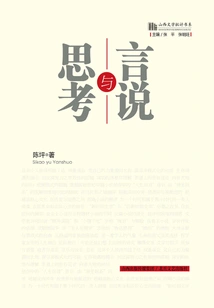
山西文学批评书系:思考与言说
Chenping
Shanxi is a great literary province with a long literary tradition. It has produced many great writers with outstanding achievements in history, as well as many great critics. For example, Sikong Tu of the Tang Dynasty wrote the classic literary criticism "Twenty-Four Poems" and other works. In the history of modern Shanxi literature, there have also been some very influential critics, such as Li Jianwu. Since the new era, with the prosperity of creation in our province, literary criticism has played an important role in guiding and promoting creation. Especially in the 1980s, with "The Critic" magazine as the core, a team of critics that attracted attention in the national criticism circle was gathered and cultivated, becoming one of the components of the "Rise of the Jin Army". After more than 20 years of hard work, these critics have accumulated richer and richer knowledge, become more and more theoretically sophisticated, have a broader vision of criticism, and have become more and more outstanding in their writing achievements.
Shanxi is a great literary province with a long literary tradition. It has produced many great writers with outstanding achievements in history, as well as many great critics. For example, Sikong Tu of the Tang Dynasty wrote the classic literary criticism "Twenty-Four Poems" and other works. In the history of modern Shanxi literature, there have also been some very influential critics, such as Li Jianwu. Since the new era, with the prosperity of creation in our province, literary criticism has played an important role in guiding and promoting creation. Especially in the 1980s, with "The Critic" magazine as the core, a team of critics that attracted attention in the national criticism circle was gathered and cultivated, becoming one of the components of the "Rise of the Jin Army". After more than 20 years of hard work, these critics have accumulated richer and richer knowledge, become more and more theoretically sophisticated, have a broader vision of criticism, and have become more and more outstanding in their writing achievements.
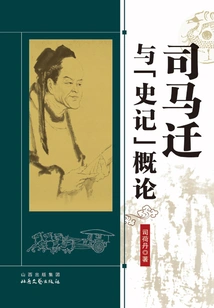
司马迁与《史记》概论
Hedan
Sima Qian's "Historical Records" is the first biographical general history in the history of Chinese history that connects ancient and modern times and covers hundreds of generations. It is also the beginning of our country's biographical literature. Mr. Lu Xun evaluated it as "the swan song of a historian, the unrhymed "Li Sao"".
Sima Qian's "Historical Records" is the first biographical general history in the history of Chinese history that connects ancient and modern times and covers hundreds of generations. It is also the beginning of our country's biographical literature. Mr. Lu Xun evaluated it as "the swan song of a historian, the unrhymed "Li Sao"".
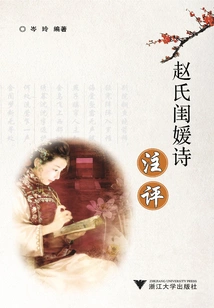
赵氏闺媛诗注评
Cen Ling
There are four concubines of the Zhao family in two generations. Zheng Shuzhao, wife of Zhao Tinghuang, wrote "Poems Behind Shuxuan", Zhao Tinghuang's concubine Tang Zhen wrote "Yunying Yinjuan", Zhao Tinghuang's eldest son Zhao Yi's concubine Luo Mianxian wrote "Fragrant House Poems", and Zhao Tinghuang's second son Zhao Yi's wife Hua Xuan wrote "Manuscript of Wenzilou Poems". Their creations ran through the second half of the 19th century. The Zhao family had four concubines from two generations, two of whom (Tang Zhen and Luo Mianxian) committed suicide. The four concubines of the Zhao family from two generations, with their life interests and thoughts and emotions recorded in their poems, as well as their tragic acts of committing suicide as husbands, show us the living conditions and emotional flow of intellectual women in the late Qing Dynasty.
There are four concubines of the Zhao family in two generations. Zheng Shuzhao, wife of Zhao Tinghuang, wrote "Poems Behind Shuxuan", Zhao Tinghuang's concubine Tang Zhen wrote "Yunying Yinjuan", Zhao Tinghuang's eldest son Zhao Yi's concubine Luo Mianxian wrote "Fragrant House Poems", and Zhao Tinghuang's second son Zhao Yi's wife Hua Xuan wrote "Manuscript of Wenzilou Poems". Their creations ran through the second half of the 19th century. The Zhao family had four concubines from two generations, two of whom (Tang Zhen and Luo Mianxian) committed suicide. The four concubines of the Zhao family from two generations, with their life interests and thoughts and emotions recorded in their poems, as well as their tragic acts of committing suicide as husbands, show us the living conditions and emotional flow of intellectual women in the late Qing Dynasty.
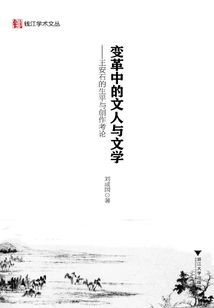
变革中的文人与文学:王安石的生平与创作考论
Liu Chengguo
It is generally believed that "Jinggong style" refers to Wang Anshi's later poetry style. Its poetry carrier is mainly based on quatrains, and its artistic style is both tragic and leisurely, elegant and exquisite, free from vulgarity, refined and refined, etc. In recent years, some scholars have also traced the reasons for the formation of "Jing Gong style" from aspects such as Wang Anshi's poetic development, political career, mentality in his later years, ideological changes, etc. Some popular literary history books have also accepted their assertions. For example, "History of Chinese Literature" in the "Course for the 21st Century" series, Volume 3, Chapter 3, Section 4, "Wang Anshi's Poems" says: "The most representative works of Wang Anshi's poems in the later period are the lyrical quatrains describing scenes. It was these poems that made Wang Anshi famous in the poetry world at that time.
It is generally believed that "Jinggong style" refers to Wang Anshi's later poetry style. Its poetry carrier is mainly based on quatrains, and its artistic style is both tragic and leisurely, elegant and exquisite, free from vulgarity, refined and refined, etc. In recent years, some scholars have also traced the reasons for the formation of "Jing Gong style" from aspects such as Wang Anshi's poetic development, political career, mentality in his later years, ideological changes, etc. Some popular literary history books have also accepted their assertions. For example, "History of Chinese Literature" in the "Course for the 21st Century" series, Volume 3, Chapter 3, Section 4, "Wang Anshi's Poems" says: "The most representative works of Wang Anshi's poems in the later period are the lyrical quatrains describing scenes. It was these poems that made Wang Anshi famous in the poetry world at that time.
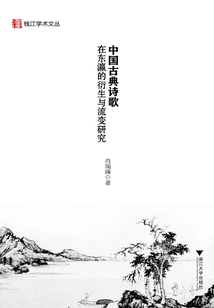
中国古典诗歌在东瀛的衍生与流变研究
Xiao Ruifeng
"Research on the Derivation and Evolution of Chinese Classical Poetry in Japan" edited by Xiao Ruifeng attempts to systematically study the derivation and evolution of Chinese classical poetry in Japan through an overall review of Japanese Chinese poetry, and to observe the far-reaching influence of Chinese classical poetry in a broader academic time and space. The book not only examines the cultural circle of Chinese characters covering East Asia from a broad perspective, comprehensively displays the channels and methods of Chinese culture's spread to the East, discusses the historical reasons why Chinese classical poetry was derived from Japan, but also analyzes the stage characteristics of the development of Japanese Chinese poetry in detail, and clearly outlines its ups and downs, and the trajectory of its evolution. In addition, "Research on the Derivatives and Evolution of Chinese Classical Poetry in Japan" also provides a deeper perspective on the origins and relationships between Japanese Chinese poetry and Chinese classical poetry, and further reveals the multiple and comprehensive role of the times, living environment, aesthetic taste, national psychology, cultural traditions and other factors in the process of poetry dissemination and acceptance.
"Research on the Derivation and Evolution of Chinese Classical Poetry in Japan" edited by Xiao Ruifeng attempts to systematically study the derivation and evolution of Chinese classical poetry in Japan through an overall review of Japanese Chinese poetry, and to observe the far-reaching influence of Chinese classical poetry in a broader academic time and space. The book not only examines the cultural circle of Chinese characters covering East Asia from a broad perspective, comprehensively displays the channels and methods of Chinese culture's spread to the East, discusses the historical reasons why Chinese classical poetry was derived from Japan, but also analyzes the stage characteristics of the development of Japanese Chinese poetry in detail, and clearly outlines its ups and downs, and the trajectory of its evolution. In addition, "Research on the Derivatives and Evolution of Chinese Classical Poetry in Japan" also provides a deeper perspective on the origins and relationships between Japanese Chinese poetry and Chinese classical poetry, and further reveals the multiple and comprehensive role of the times, living environment, aesthetic taste, national psychology, cultural traditions and other factors in the process of poetry dissemination and acceptance.
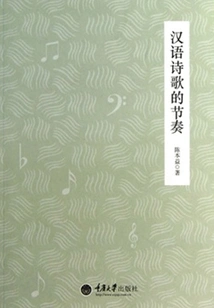
Rhythm of Chinese Poetry
Literature汉语诗歌的节奏
Chen Benyi
This book systematically studies the rhythm issues of Chinese poetry and is divided into three parts: upper, middle and lower. Based on the analysis and evaluation of several Chinese poetry rhythm theories, the previous article pointed out that the rhythm of Chinese poetry is a "syllable-pause" rhythm, and this rhythm has its special phonetic basis and composition mechanism. The middle part discusses the composition rules and characteristics of rhythmic forms (including rhythmic units, sentence patterns or line patterns, stanza patterns, postures and rhythmic tones) in the Book of Songs, Songs of Chu, five or seven-character poems and lyrics, focusing on exploring difficult issues such as the origin of certain rhythmic forms from the perspective of tone and rhythm. The second part, on the basis of analyzing and evaluating the theory and practice of representative modern new poetry rhythm forms, discusses the composition rules and characteristics of the metrical new poetry rhythm form and the free style new poetry rhythm form, focusing on the construction principles and basis of the two new poetry styles. The middle part and the second part also discuss the unique rhythmic function of Chinese poetry rhyme, and the relationship between this rhyme and the rhythm of syllables and pauses.
This book systematically studies the rhythm issues of Chinese poetry and is divided into three parts: upper, middle and lower. Based on the analysis and evaluation of several Chinese poetry rhythm theories, the previous article pointed out that the rhythm of Chinese poetry is a "syllable-pause" rhythm, and this rhythm has its special phonetic basis and composition mechanism. The middle part discusses the composition rules and characteristics of rhythmic forms (including rhythmic units, sentence patterns or line patterns, stanza patterns, postures and rhythmic tones) in the Book of Songs, Songs of Chu, five or seven-character poems and lyrics, focusing on exploring difficult issues such as the origin of certain rhythmic forms from the perspective of tone and rhythm. The second part, on the basis of analyzing and evaluating the theory and practice of representative modern new poetry rhythm forms, discusses the composition rules and characteristics of the metrical new poetry rhythm form and the free style new poetry rhythm form, focusing on the construction principles and basis of the two new poetry styles. The middle part and the second part also discuss the unique rhythmic function of Chinese poetry rhyme, and the relationship between this rhyme and the rhythm of syllables and pauses.
Spring
Literature泉水
Liu Hongkai
In our real life, there are some people who are too hypocritical and care about face too much. What they say and what they do are inconsistent and there is nothing they don't know. They are very good at bragging in front of others and think that others are not as good as themselves. Sometimes my face is too big, and I don't know if it's because I'm fat or because I'm holding back my breath.
In our real life, there are some people who are too hypocritical and care about face too much. What they say and what they do are inconsistent and there is nothing they don't know. They are very good at bragging in front of others and think that others are not as good as themselves. Sometimes my face is too big, and I don't know if it's because I'm fat or because I'm holding back my breath.
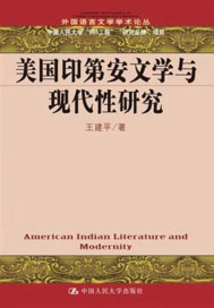
美国印第安文学与现代性研究
Wang Jianping
This book takes the factional dispute between nationalism and cosmopolitanism in American Indian literary criticism as a clue, examines the influential Indian critics, writers and their representative works since the mid-20th century, and grasps the historical evolution of Indian literature in the tension between tradition and modernity. Through the organic combination of overall research and case studies, this book strives to present the basic appearance of American Indian literature. The main research areas involve identity politics, tribal sovereignty, indigenous communities, nationality, cosmopolitanism, literary canons, aesthetic categories, the nature and function of Indian literature, and its intellectualization, discipline and institutionalization and other major issues.
This book takes the factional dispute between nationalism and cosmopolitanism in American Indian literary criticism as a clue, examines the influential Indian critics, writers and their representative works since the mid-20th century, and grasps the historical evolution of Indian literature in the tension between tradition and modernity. Through the organic combination of overall research and case studies, this book strives to present the basic appearance of American Indian literature. The main research areas involve identity politics, tribal sovereignty, indigenous communities, nationality, cosmopolitanism, literary canons, aesthetic categories, the nature and function of Indian literature, and its intellectualization, discipline and institutionalization and other major issues.
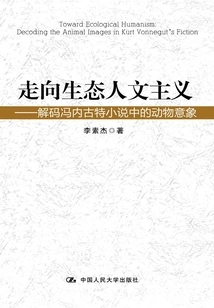
Towards Ecohumanism
Literature走向生态人文主义
Li Sujie
Starting from the perspective of animal studies, this book explains the concept of ecological humanism. Based on this theoretical basis, this book discusses in detail the relationship between humans and animals in the novels of the famous contemporary American writer Kurt Vonnegut. It deeply explores the connotation, function, value and significance of the ubiquitous animal images in the novels, and has a profound influence on "Slaughterhouse-Five" and "Slaughterhouse-Five". "Breakfast of Champions", "The Banshee of Titans", "The Trick", "Grappagos Islands", "The Joke" and other novels to deeply interpret the carnivorous behavior, animal companions, animal farms and other expressions of human-animal relationships, showing the ferocity of human nature and post-industrial society presented by Vonnegut through these images...
Starting from the perspective of animal studies, this book explains the concept of ecological humanism. Based on this theoretical basis, this book discusses in detail the relationship between humans and animals in the novels of the famous contemporary American writer Kurt Vonnegut. It deeply explores the connotation, function, value and significance of the ubiquitous animal images in the novels, and has a profound influence on "Slaughterhouse-Five" and "Slaughterhouse-Five". "Breakfast of Champions", "The Banshee of Titans", "The Trick", "Grappagos Islands", "The Joke" and other novels to deeply interpret the carnivorous behavior, animal companions, animal farms and other expressions of human-animal relationships, showing the ferocity of human nature and post-industrial society presented by Vonnegut through these images...
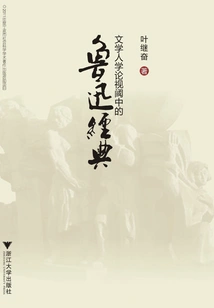
文学人学论视阈中的鲁迅经典
Ye Jifen
What we will continue to discuss here is still the issue of how to read Lu Xun's classics in a classroom. "Still" to "continue the discussion" means: A few years ago, the author wrote some words about this that are not lacking in sincerity but are somewhat rough when read today. Various signs in recent years show that the topic of Lu Xun's classic mass communication still attracts people's attention and thinking with unfaded enthusiasm. This is an ordinary thing that happens almost every day, but due to the emergence of words such as "Lu Xun" and "classic", it has become an academically related and widely involved issue. For this seemingly local problem, we are willing to put it into a broad and in-depth academic perspective and look forward to getting a gratifying result.
What we will continue to discuss here is still the issue of how to read Lu Xun's classics in a classroom. "Still" to "continue the discussion" means: A few years ago, the author wrote some words about this that are not lacking in sincerity but are somewhat rough when read today. Various signs in recent years show that the topic of Lu Xun's classic mass communication still attracts people's attention and thinking with unfaded enthusiasm. This is an ordinary thing that happens almost every day, but due to the emergence of words such as "Lu Xun" and "classic", it has become an academically related and widely involved issue. For this seemingly local problem, we are willing to put it into a broad and in-depth academic perspective and look forward to getting a gratifying result.
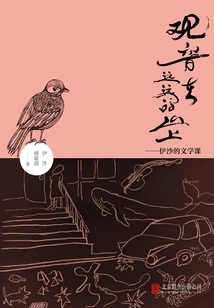
观音在远远的山上:伊沙的文学课
Yisha Han Jingyuan
This book originated from the 400,000 lecture notes recorded by Han Jingyuan, a student in the Chinese Department of Xi'an International Studies University, while listening to Mr. Yisha's lectures. After being compiled and polished by Mr. Yisha, the lecture notes of these four courses have become a large book full of originality and personality, about writing, literature and life, which is the essence of his 21 years of teaching.
This book originated from the 400,000 lecture notes recorded by Han Jingyuan, a student in the Chinese Department of Xi'an International Studies University, while listening to Mr. Yisha's lectures. After being compiled and polished by Mr. Yisha, the lecture notes of these four courses have become a large book full of originality and personality, about writing, literature and life, which is the essence of his 21 years of teaching.
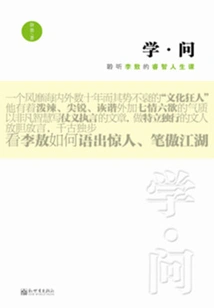
学·问:聆听李敖的睿智人生课
Xu Mo
"Learning and Questioning: Listening to Li Ao's Wisdom Life Lessons" uses quotations, reviews, and biographies to show readers the pride and personality of this "cultural madman" from the perspectives of life, gender, articles, politics, and culture. It also reveals and examines his various thoughts and opinions, which can help readers gain a deeper and more comprehensive understanding of Mr. Li Ao's person and knowledge. In addition, "Learning·Question: Listening to Li Ao's Wisdom Life Lessons" has another mission, which is to encourage more people to love life and face life positively through Mr. Li Ao's humorous and sharp attitude and his enlightenment and optimism about life.
"Learning and Questioning: Listening to Li Ao's Wisdom Life Lessons" uses quotations, reviews, and biographies to show readers the pride and personality of this "cultural madman" from the perspectives of life, gender, articles, politics, and culture. It also reveals and examines his various thoughts and opinions, which can help readers gain a deeper and more comprehensive understanding of Mr. Li Ao's person and knowledge. In addition, "Learning·Question: Listening to Li Ao's Wisdom Life Lessons" has another mission, which is to encourage more people to love life and face life positively through Mr. Li Ao's humorous and sharp attitude and his enlightenment and optimism about life.
L
Literaturel
M
"History of Ci in the Northern Song Dynasty" comments one by one on the famous poets in the Northern Song Dynasty and the social background at that time. "History of Ci in the Northern Song Dynasty" will be of great reference value to readers who study and research the history of ancient literature. The lyrical function of words has the ultimate expression and complex changes in their hands. The style of Song Ci is even more colorful, dazzling and beautiful. Such as Yan Shu's gentleness and elegance, Liu Yong's graceful humor, Su Shi's majestic elegance, Zhou Bangyan's elegance, Li Qingzhao's freshness and smoothness, Jiang Kui's elegance and elegance, Xin Qiji's melancholy and frustration, Wu Wenying's beauty and profoundness, Wang Yisun's twilight and lingering...
"History of Ci in the Northern Song Dynasty" comments one by one on the famous poets in the Northern Song Dynasty and the social background at that time. "History of Ci in the Northern Song Dynasty" will be of great reference value to readers who study and research the history of ancient literature. The lyrical function of words has the ultimate expression and complex changes in their hands. The style of Song Ci is even more colorful, dazzling and beautiful. Such as Yan Shu's gentleness and elegance, Liu Yong's graceful humor, Su Shi's majestic elegance, Zhou Bangyan's elegance, Li Qingzhao's freshness and smoothness, Jiang Kui's elegance and elegance, Xin Qiji's melancholy and frustration, Wu Wenying's beauty and profoundness, Wang Yisun's twilight and lingering...
Human Value and Its Realization
Literature人的价值及其实现
Guo Jinhong Zhu Yanhong
Although this treatise implements the study of the three major theorems or laws of Anthropology from beginning to end, and implements the third theorem or law of Anthropology, which is a new synthesis of the first two major theorems or laws, in essence, this treatise is not the kind of work that goes from concept to concept, and from category to category. Rather, when implementing the third theorem or law of human science and implementing a new synthesis of the first two theorems or laws, it directly faces social life and develops theoretical narratives with the social historical logic and life logic in value realization as the central content. This can be seen by just reading chapters such as "Value Realization and Intersubjective Intentional Structure", "Extensive Causality Theory of Value Realization", "Cultural Logic and its Dialectical Movement", "Knowledge Structure and Value Realization", and "Understanding of Deep Value Realization".
Although this treatise implements the study of the three major theorems or laws of Anthropology from beginning to end, and implements the third theorem or law of Anthropology, which is a new synthesis of the first two major theorems or laws, in essence, this treatise is not the kind of work that goes from concept to concept, and from category to category. Rather, when implementing the third theorem or law of human science and implementing a new synthesis of the first two theorems or laws, it directly faces social life and develops theoretical narratives with the social historical logic and life logic in value realization as the central content. This can be seen by just reading chapters such as "Value Realization and Intersubjective Intentional Structure", "Extensive Causality Theory of Value Realization", "Cultural Logic and its Dialectical Movement", "Knowledge Structure and Value Realization", and "Understanding of Deep Value Realization".
明清之际小说作家研究
Zhu Ping
The Chongzhen period of the Ming Dynasty and the Shunye period of the Qing Dynasty are collectively called the "Ming and Qing Dynasties". The Ming and Qing Dynasties were an important revolutionary period in the development history of ancient Chinese novels. "Research on Novel Writers of the Ming and Qing Dynasties" conducts an overall study of the novel writers of the Ming and Qing Dynasties, examines the living conditions and creative mentality of writers, and examines the interactive relationship between factors such as era, region, writers, and works. It has relatively general reference and enlightenment significance for studying the laws of literary creation and development of various genres and eras.
The Chongzhen period of the Ming Dynasty and the Shunye period of the Qing Dynasty are collectively called the "Ming and Qing Dynasties". The Ming and Qing Dynasties were an important revolutionary period in the development history of ancient Chinese novels. "Research on Novel Writers of the Ming and Qing Dynasties" conducts an overall study of the novel writers of the Ming and Qing Dynasties, examines the living conditions and creative mentality of writers, and examines the interactive relationship between factors such as era, region, writers, and works. It has relatively general reference and enlightenment significance for studying the laws of literary creation and development of various genres and eras.
别说你懂写网文
Thousand Fantasy Ice Clouds
This book starts from the basic concepts of Internet literature, from writing skills to work analysis, from reader psychology to marketing strategies, and finally talks about the author's personal growth, from the outside to the inside, and in-depth layer by layer. It not only sets up a ladder of growth for Internet article authors, but also paints a panoramic view of Internet literature for Internet article readers.
This book starts from the basic concepts of Internet literature, from writing skills to work analysis, from reader psychology to marketing strategies, and finally talks about the author's personal growth, from the outside to the inside, and in-depth layer by layer. It not only sets up a ladder of growth for Internet article authors, but also paints a panoramic view of Internet literature for Internet article readers.
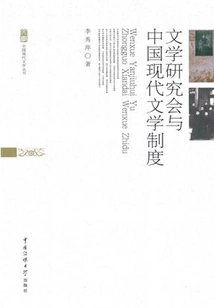
文学研究会与中国现代文学制度
Li Xiuping
This book draws on the latest results of current literary system research and effectively applies them to the investigation of "literary research societies" in the history of modern Chinese literature, including "the literary society organization system of the literary research society", "the creative system of professional writers of the literary research society", "the editing system and communication system of the literary research society", The institutional system of the "Literary Research Association" is discussed in several aspects such as "Literary Research Association's Literary Debate and Criticism System", which provides a new perspective for the study of literary societies; some materials that have been ignored by traditional text research, writer research, and aesthetic research have also received full attention, which is of enlightening significance in broadening and deepening our understanding of modern Chinese literature.
This book draws on the latest results of current literary system research and effectively applies them to the investigation of "literary research societies" in the history of modern Chinese literature, including "the literary society organization system of the literary research society", "the creative system of professional writers of the literary research society", "the editing system and communication system of the literary research society", The institutional system of the "Literary Research Association" is discussed in several aspects such as "Literary Research Association's Literary Debate and Criticism System", which provides a new perspective for the study of literary societies; some materials that have been ignored by traditional text research, writer research, and aesthetic research have also received full attention, which is of enlightening significance in broadening and deepening our understanding of modern Chinese literature.
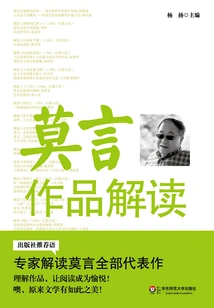
Interpretation of Mo Yan's Works
Literature莫言作品解读
Editor-in-chief Yang Yang
This is a compilation of interpretations of Mo Yan's representative works from various periods by well-known scholars such as Wang Dewei, Deng Xiaomang, Shi Jingqian, Li Tuo, and Li Jingze. It covers all of Mo Yan's novels and short and medium-length works, and clearly shows the trajectory of Mo Yan's 30-year literary creation, China's first Nobel Prize winner in literature. By understanding Mo Yan's works, you can understand Mo Yan's life history. This is a compilation of interpretations of Mo Yan's representative works from various periods by well-known scholars such as Wang Dewei, Deng Xiaomang, Shi Jingqian, Li Tuo, and Li Jingze. It covers all of Mo Yan's novels and short and medium-length works, and clearly shows the trajectory of Mo Yan's 30-year literary creation, China's first Nobel Prize winner in literature. By understanding Mo Yan's works, you can understand Mo Yan's life history.
This is a compilation of interpretations of Mo Yan's representative works from various periods by well-known scholars such as Wang Dewei, Deng Xiaomang, Shi Jingqian, Li Tuo, and Li Jingze. It covers all of Mo Yan's novels and short and medium-length works, and clearly shows the trajectory of Mo Yan's 30-year literary creation, China's first Nobel Prize winner in literature. By understanding Mo Yan's works, you can understand Mo Yan's life history. This is a compilation of interpretations of Mo Yan's representative works from various periods by well-known scholars such as Wang Dewei, Deng Xiaomang, Shi Jingqian, Li Tuo, and Li Jingze. It covers all of Mo Yan's novels and short and medium-length works, and clearly shows the trajectory of Mo Yan's 30-year literary creation, China's first Nobel Prize winner in literature. By understanding Mo Yan's works, you can understand Mo Yan's life history.
从身份到契约:不完全城市化困局的理性思考
Editor-in-chief Ma Xuesong
This book is a collection of essays. The author of each essay not only conducts theoretical discussions around a common theme, but also interprets the theme from different perspectives in their respective fields.
This book is a collection of essays. The author of each essay not only conducts theoretical discussions around a common theme, but also interprets the theme from different perspectives in their respective fields.
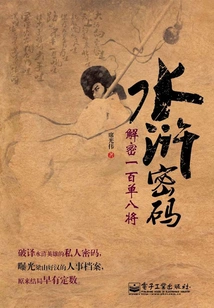
水浒密码:解密一百单八将
Xi Guangwei
There are 108 heroes in Liangshan, involving a total of 77 surnames. Among them, the surname Li is the most popular, with 7 people, accounting for about 7% of the total number of heroes. This proportion is basically the same as the proportion of Li surnamed in the national population today. Shi Naian is really prescient. Among the 108 heroes in Liangshan, 33 have served as civil servants in governments at all levels in the Song Dynasty (based on the appearance of the characters); 25 gang bosses are kings of the mountain (based on the first appearance of the characters); 10 are from landlords and rich farmers. People; 9 people from private self-employed businesses who opened hotels; 8 people from fishing background; 23 people from other backgrounds... This article re-analyzes the fate of the 108 heroes on Liangshan from the perspective of modern people, allowing readers to appreciate this literary masterpiece from a new perspective.
There are 108 heroes in Liangshan, involving a total of 77 surnames. Among them, the surname Li is the most popular, with 7 people, accounting for about 7% of the total number of heroes. This proportion is basically the same as the proportion of Li surnamed in the national population today. Shi Naian is really prescient. Among the 108 heroes in Liangshan, 33 have served as civil servants in governments at all levels in the Song Dynasty (based on the appearance of the characters); 25 gang bosses are kings of the mountain (based on the first appearance of the characters); 10 are from landlords and rich farmers. People; 9 people from private self-employed businesses who opened hotels; 8 people from fishing background; 23 people from other backgrounds... This article re-analyzes the fate of the 108 heroes on Liangshan from the perspective of modern people, allowing readers to appreciate this literary masterpiece from a new perspective.
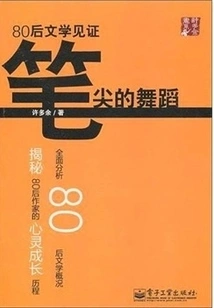
笔尖的舞蹈:80后文学见证
Much Redundant
Ten years ago, the post-80s generation was a new term that was circulated among teenagers. Today, 10 years later, the post-80s generation has become an important force at all levels of the current society - they will determine the fate of this country in the next 50 years, or even longer. The writers and poets born in the 1980s are the soul of this group. This book tells the story of the growth of the hearts and minds of the generation born in the 1980s. It also shows readers the dance of youth described by the writers born in the 1980s.
Ten years ago, the post-80s generation was a new term that was circulated among teenagers. Today, 10 years later, the post-80s generation has become an important force at all levels of the current society - they will determine the fate of this country in the next 50 years, or even longer. The writers and poets born in the 1980s are the soul of this group. This book tells the story of the growth of the hearts and minds of the generation born in the 1980s. It also shows readers the dance of youth described by the writers born in the 1980s.
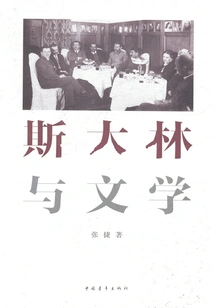
Stalin and Literature
Literature斯大林与文学
Zhang Jie
There are countless works on Stalin's life and activities as a politician, but "Stalin and literature" is still a new topic. This book is a monograph on the study of Stalin's literary thoughts and literary activities. The content includes: Stalin's literary thoughts, that is, the formation and development of Stalin's literary thoughts and his main discussions on literature; Stalin's literary leadership activities, including the process of formulating and implementing various literary policies and his comments on some literary works; Stalin's relationship with writers, including Stalin's interactions with the older generation of writers and poets, his contact with the new generation of writers who grew up in the Soviet era, and his attitude towards "fellow traveler" writers, etc.
There are countless works on Stalin's life and activities as a politician, but "Stalin and literature" is still a new topic. This book is a monograph on the study of Stalin's literary thoughts and literary activities. The content includes: Stalin's literary thoughts, that is, the formation and development of Stalin's literary thoughts and his main discussions on literature; Stalin's literary leadership activities, including the process of formulating and implementing various literary policies and his comments on some literary works; Stalin's relationship with writers, including Stalin's interactions with the older generation of writers and poets, his contact with the new generation of writers who grew up in the Soviet era, and his attitude towards "fellow traveler" writers, etc.
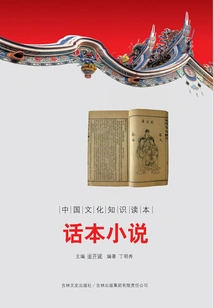
Story Novel
Literature话本小说
Editor-in-chief Jin Kaicheng
The main content of "Huaben Novels" is divided into chapters such as an overview of Huaben Novels, Song Dynasty Huaben Novels, and their influence on later literature. "Hua" had a meaning in ancient times of "story". This meaning was already popular in the Sui Dynasty, and was used in the Tang, Song, Yuan and Ming dynasties.
The main content of "Huaben Novels" is divided into chapters such as an overview of Huaben Novels, Song Dynasty Huaben Novels, and their influence on later literature. "Hua" had a meaning in ancient times of "story". This meaning was already popular in the Sui Dynasty, and was used in the Tang, Song, Yuan and Ming dynasties.
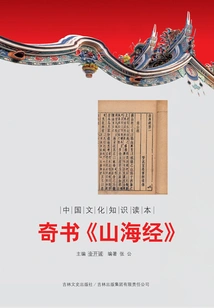
奇书《山海经》
Editor-in-chief Jin Kaicheng
"The Classic of Mountains and Seas" is an ancient pre-Qin book and the oldest geography book rich in myths and legends. It mainly describes ancient geography, products, myths, witchcraft, religion, etc., And also includes ancient history, medicine, folk customs, ethnicity, etc. In addition, "The Classic of Mountains and Seas" also records some strange events in the form of running accounts, about which there is still considerable controversy. The most representative myths and fables include Kuafu chasing the sun, Nuwa mending the sky, Jingwei filling the sea, Gun and Yu controlling the floods, etc.
"The Classic of Mountains and Seas" is an ancient pre-Qin book and the oldest geography book rich in myths and legends. It mainly describes ancient geography, products, myths, witchcraft, religion, etc., And also includes ancient history, medicine, folk customs, ethnicity, etc. In addition, "The Classic of Mountains and Seas" also records some strange events in the form of running accounts, about which there is still considerable controversy. The most representative myths and fables include Kuafu chasing the sun, Nuwa mending the sky, Jingwei filling the sea, Gun and Yu controlling the floods, etc.
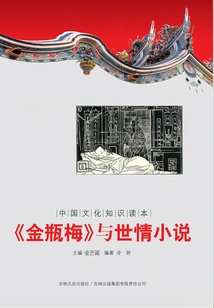
jin Ping Mei" and World Love Novels
Literature《金瓶梅》与世情小说
Compiled By Leng Yan
This book is the first full-length novel independently created by a literati in the history of Chinese literature. It is a landmark work in the history of Chinese literature. It was written around the Longqing to Wanli years of the Ming Dynasty. It has a total of 100 chapters and about 900,000 words, including more than 850 large and small characters. It was called "the first wonderful book" by Zhang Zhupo, a famous theorist in the early Qing Dynasty. It is such a work that has been banned and banned many times throughout the ages, and has had an ill-fated fate. There are also different opinions on the identity of its author.
This book is the first full-length novel independently created by a literati in the history of Chinese literature. It is a landmark work in the history of Chinese literature. It was written around the Longqing to Wanli years of the Ming Dynasty. It has a total of 100 chapters and about 900,000 words, including more than 850 large and small characters. It was called "the first wonderful book" by Zhang Zhupo, a famous theorist in the early Qing Dynasty. It is such a work that has been banned and banned many times throughout the ages, and has had an ill-fated fate. There are also different opinions on the identity of its author.
Fifteen Lectures on Chinese Literature
Literature中国文学十五讲
Zhou Xianshen
"Famous Masters General Lecture Series" is a set of large-scale multi-disciplinary popular books initiated by Peking University and co-written by more than ten key universities and some scientific research units across the country. The complete series of books plans to publish 100 titles, covering literature, history, philosophy, art, social sciences, natural sciences and other major subject areas. The first and second batches of nearly 50 titles will be published within 2004. Academician Xu Zhihong, president of Peking University, serves as the director of the editorial committee of this book series. Professor Wen Rumin, director of the Chinese Department of Peking University, serves as the executive editor. A large number of authoritative experts from various disciplines across the country presided over the writing of each book. So far, this is one of the series with the widest subject coverage, the largest scale, and the strongest compilation lineup among similar popular reading materials and textbooks. The positioning of this book series is "general knowledge". It is a high-quality popular reading book that can meet the requirements of all kinds of readers in society to acquire knowledge and improve their literacy. It is also a lecture book series designed to cooperate with the promotion of quality education in colleges and universities. It can be used as teaching materials and extracurricular readings for undergraduate general courses (general elective courses). Quality education is becoming the trend in today's university education and social citizenship education.
"Famous Masters General Lecture Series" is a set of large-scale multi-disciplinary popular books initiated by Peking University and co-written by more than ten key universities and some scientific research units across the country. The complete series of books plans to publish 100 titles, covering literature, history, philosophy, art, social sciences, natural sciences and other major subject areas. The first and second batches of nearly 50 titles will be published within 2004. Academician Xu Zhihong, president of Peking University, serves as the director of the editorial committee of this book series. Professor Wen Rumin, director of the Chinese Department of Peking University, serves as the executive editor. A large number of authoritative experts from various disciplines across the country presided over the writing of each book. So far, this is one of the series with the widest subject coverage, the largest scale, and the strongest compilation lineup among similar popular reading materials and textbooks. The positioning of this book series is "general knowledge". It is a high-quality popular reading book that can meet the requirements of all kinds of readers in society to acquire knowledge and improve their literacy. It is also a lecture book series designed to cooperate with the promotion of quality education in colleges and universities. It can be used as teaching materials and extracurricular readings for undergraduate general courses (general elective courses). Quality education is becoming the trend in today's university education and social citizenship education.
Pragmatics and Intention: a Study of Dialogue in "a Dream of Red Mansions" (revised Edition)
Literature语用与意图:《红楼梦》对话研究(修订版)
Sun Ailing
Study the function and phenomenon of dialogue in novels, use contextualism, pragmatics, intentionality theory, and dialogue function to conduct cross-sectional analysis, explain various phenomena of dialogue in "A Dream of Red Mansions" to a certain extent, and present research on Chinese novels from different angles.
Study the function and phenomenon of dialogue in novels, use contextualism, pragmatics, intentionality theory, and dialogue function to conduct cross-sectional analysis, explain various phenomena of dialogue in "A Dream of Red Mansions" to a certain extent, and present research on Chinese novels from different angles.
Literary History as a Discipline
Literature作为学科的文学史
Chen Pingyuan
"Literature" not only serves as a department, a major, and a course, but also serves as cultivation, interest, and spirituality. "Literary history" as a knowledge system has played a huge role in expressing national consciousness, condensing national spirit, absorbing foreign cultures and integrating into the process of "world literature". Literary history as a subject was formed at the turn of the 19th to 20th centuries under the influence of Western academic concepts, and achieved comprehensive development in the 20th century. "Literary History as a Subject" focuses on exploring some specific issues in literary history and literary history writing that arose under this background.
"Literature" not only serves as a department, a major, and a course, but also serves as cultivation, interest, and spirituality. "Literary history" as a knowledge system has played a huge role in expressing national consciousness, condensing national spirit, absorbing foreign cultures and integrating into the process of "world literature". Literary history as a subject was formed at the turn of the 19th to 20th centuries under the influence of Western academic concepts, and achieved comprehensive development in the 20th century. "Literary History as a Subject" focuses on exploring some specific issues in literary history and literary history writing that arose under this background.
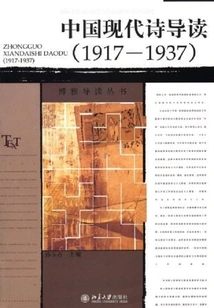
中国现代诗导读(1917-1937)
Sun Yushi
"Introduction to Modern Chinese Poetry (1917-1937)" contains many literary dialogues between poets and poetry interpreters, which can be read by those engaged in related research or readers who are interested in Chinese literature. Modern Chinese poetry, also called "new poetry", refers to the vernacular poetry that originated from the "May Fourth Movement" period to the founding of New China in 1949, that is, poetry that uses modern Chinese, freely expresses thoughts and feelings, and is eclectic in form.
"Introduction to Modern Chinese Poetry (1917-1937)" contains many literary dialogues between poets and poetry interpreters, which can be read by those engaged in related research or readers who are interested in Chinese literature. Modern Chinese poetry, also called "new poetry", refers to the vernacular poetry that originated from the "May Fourth Movement" period to the founding of New China in 1949, that is, poetry that uses modern Chinese, freely expresses thoughts and feelings, and is eclectic in form.
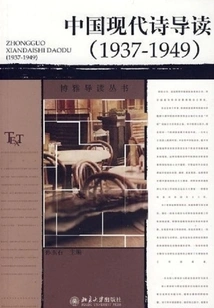
中国现代诗导读(1937-1949)
Sun Yushi
Modern Chinese poetry, also called "new poetry", refers to the vernacular poetry that originated from the "May Fourth Movement" period to the founding of New China in 1949, that is, poetry that uses modern Chinese, freely expresses thoughts and feelings, and is eclectic in form. This book contains many literary dialogues between poets and poet interpreters.
Modern Chinese poetry, also called "new poetry", refers to the vernacular poetry that originated from the "May Fourth Movement" period to the founding of New China in 1949, that is, poetry that uses modern Chinese, freely expresses thoughts and feelings, and is eclectic in form. This book contains many literary dialogues between poets and poet interpreters.
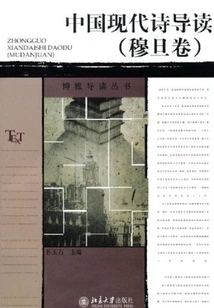
中国现代诗导读(穆旦卷)
Sun Yushi
Modern Chinese poetry, also called "new poetry", refers to the vernacular poetry that originated from the "May Fourth Movement" period to the founding of New China in 1949, that is, poetry that uses modern Chinese, freely expresses thoughts and feelings, and is eclectic in form. This book contains many literary dialogues between poets and poet interpreters.
Modern Chinese poetry, also called "new poetry", refers to the vernacular poetry that originated from the "May Fourth Movement" period to the founding of New China in 1949, that is, poetry that uses modern Chinese, freely expresses thoughts and feelings, and is eclectic in form. This book contains many literary dialogues between poets and poet interpreters.
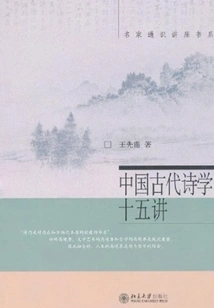
中国古代诗学十五讲
Wang Xianpei
"Fifteen Lectures on Ancient Chinese Poetics" strives to give readers a preliminary impression of our nation's literary and ideological tradition, and to realize that there are many lively, implicit and meaningful remarks in it, which can enlighten wisdom and cultivate sentiment. At the same time, the author hopes that through the study of ancient poetics, readers can feel the endless interest of local literary theory, and appreciate that many ancient literary works can help us appreciate all literature, and be beneficial to psychological purity and spiritual sublimation.
"Fifteen Lectures on Ancient Chinese Poetics" strives to give readers a preliminary impression of our nation's literary and ideological tradition, and to realize that there are many lively, implicit and meaningful remarks in it, which can enlighten wisdom and cultivate sentiment. At the same time, the author hopes that through the study of ancient poetics, readers can feel the endless interest of local literary theory, and appreciate that many ancient literary works can help us appreciate all literature, and be beneficial to psychological purity and spiritual sublimation.
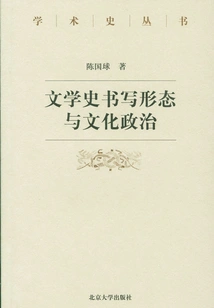
文学史书写形态与文化政治
Chen Guoqiu
Each chapter of "The Writing Form of Literary History and Cultural Politics" is discussed in a slightly chronological order: from the establishment of the Constitution of the Capital University in the late Qing Dynasty and the modern "literary" subject concept, to the relationship with the writing of the "literary history" in the initial period, to Hu Shi's construction of a far-reaching view of literary history with the "Vernacular Literary Movement" around the "May 4th Movement", to Lin Geng's "poetic heart" in the 1940s to evoke the "amazing" "Chinese Literature" "History of Learning", it turns to two completely different writings of literary history in Hong Kong in the 1950s and 1970s by Liu Cunren and Sima Changfeng, who moved south from the Central Plains. Finally, it takes two "ongoing" writing activities as objects to look at the various writing problems that have to be dealt with when "Chinese literary history" wants to add "Hong Kong literature" part, or when "Hong Kong literature" wants to enter the process of "literary history".
Each chapter of "The Writing Form of Literary History and Cultural Politics" is discussed in a slightly chronological order: from the establishment of the Constitution of the Capital University in the late Qing Dynasty and the modern "literary" subject concept, to the relationship with the writing of the "literary history" in the initial period, to Hu Shi's construction of a far-reaching view of literary history with the "Vernacular Literary Movement" around the "May 4th Movement", to Lin Geng's "poetic heart" in the 1940s to evoke the "amazing" "Chinese Literature" "History of Learning", it turns to two completely different writings of literary history in Hong Kong in the 1950s and 1970s by Liu Cunren and Sima Changfeng, who moved south from the Central Plains. Finally, it takes two "ongoing" writing activities as objects to look at the various writing problems that have to be dealt with when "Chinese literary history" wants to add "Hong Kong literature" part, or when "Hong Kong literature" wants to enter the process of "literary history".
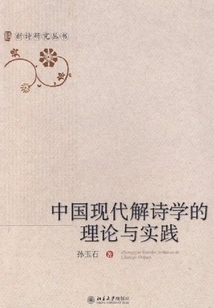
中国现代解诗学的理论与实践
Sun Yushi
Since the emergence of modern Chinese poetry, especially modern new poetry, it has been facing the question of being "difficult to understand". This book aims at this problem, based on the efforts of Zhu Ziqing, Wen Yiduo and others to "interpret poetry", starting from the internal construction and external environment of new poetry, trying to establish a new path for interpreting modern Chinese poetry, especially modern poetry.
Since the emergence of modern Chinese poetry, especially modern new poetry, it has been facing the question of being "difficult to understand". This book aims at this problem, based on the efforts of Zhu Ziqing, Wen Yiduo and others to "interpret poetry", starting from the internal construction and external environment of new poetry, trying to establish a new path for interpreting modern Chinese poetry, especially modern poetry.
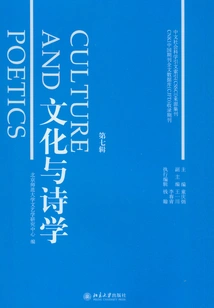
Culture and Poetics (seventh Series)
Literature文化与诗学(第七辑)
Beijing Normal University Literature And Art Research Center
"Culture and Poetics (Seventh Series)" is the seventh series of "Culture and Poetics" and provides an in-depth study of Chinese culture and poetics. The book is divided into five parts, including: theoretical research, discussion albums on major issues in historical theme creation and adaptation, literary criticism, essays, and book reviews. "Culture and Poetics (Volume 7)" is rich in content, thorough in discussion, and highly readable.
"Culture and Poetics (Seventh Series)" is the seventh series of "Culture and Poetics" and provides an in-depth study of Chinese culture and poetics. The book is divided into five parts, including: theoretical research, discussion albums on major issues in historical theme creation and adaptation, literary criticism, essays, and book reviews. "Culture and Poetics (Volume 7)" is rich in content, thorough in discussion, and highly readable.
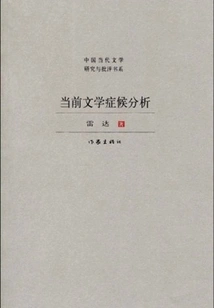
Symptom Analysis of Current Literature
Literature当前文学症候分析
Radar
"Analysis of Current Literary Symptoms" is one of the series of books, which provides an in-depth analysis of current literary symptoms. "Contemporary Chinese Literature Research and Criticism Series" selects the works of thirteen representative contemporary critics. These collections are all selected by them from their own literary research and criticism works. Undoubtedly, this large-scale literary research and criticism series is not only the work of these critics themselves, but also represents the highest level of today's literary criticism. At the same time, it shines with the independent wisdom of these critics in their different personal styles.
"Analysis of Current Literary Symptoms" is one of the series of books, which provides an in-depth analysis of current literary symptoms. "Contemporary Chinese Literature Research and Criticism Series" selects the works of thirteen representative contemporary critics. These collections are all selected by them from their own literary research and criticism works. Undoubtedly, this large-scale literary research and criticism series is not only the work of these critics themselves, but also represents the highest level of today's literary criticism. At the same time, it shines with the independent wisdom of these critics in their different personal styles.
马瑞芳趣话王熙凤
J
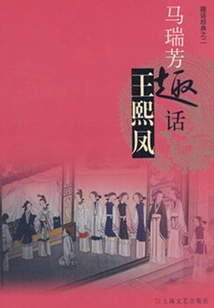
This book is a continuation of "Ma Ruifang's Quotes on the Dream of Red Mansions". In this work, Professor Ma uses humorous, vivid and interesting narration to analyze all the hidden aspects of Wang Xifeng, the most important character in "A Dream of Red Mansions" besides Bao Dai. It fully demonstrates Professor Ma's profound foundation in classical literature and superb knowledge of red studies. Through a new interpretation of Wang Xifeng, the work, on the one hand, explores and understands the character's personality traits and true thoughts from the clues surrounding Sister Feng's story and character activities; on the other hand, it explores and speculates on Cao Xueqin's artistic conception and creative intentions inside and outside the text. This book is not only a beautiful article that comprehensively decrypts, interprets and analyzes Wang Xifeng, but also an open-ended text with a sense of exploration and suspense. It is not only a rigorous academic work on red studies, but also an easy-to-understand, relaxed and interesting academic essay. It has both academic value and readability.
This book is a continuation of "Ma Ruifang's Quotes on the Dream of Red Mansions". In this work, Professor Ma uses humorous, vivid and interesting narration to analyze all the hidden aspects of Wang Xifeng, the most important character in "A Dream of Red Mansions" besides Bao Dai. It fully demonstrates Professor Ma's profound foundation in classical literature and superb knowledge of red studies. Through a new interpretation of Wang Xifeng, the work, on the one hand, explores and understands the character's personality traits and true thoughts from the clues surrounding Sister Feng's story and character activities; on the other hand, it explores and speculates on Cao Xueqin's artistic conception and creative intentions inside and outside the text. This book is not only a beautiful article that comprehensively decrypts, interprets and analyzes Wang Xifeng, but also an open-ended text with a sense of exploration and suspense. It is not only a rigorous academic work on red studies, but also an easy-to-understand, relaxed and interesting academic essay. It has both academic value and readability.
诸子学略说
J
This book is mainly based on "A Brief Introduction to the Studies of Zhuzi" and "A Brief Introduction to Zhuzi". It collects most of Mr. Taiyan's words on the Zhuzi and carefully edited and proofread them. Mr. Taiyan's academic studies include classics, history, works, and collections. He has especially conducted in-depth research on Confucianism, Taoism, Mohism, and Legalism in pre-Qin Dynasty. He discusses the rights and wrongs of various schools of thought. He has unique insights and can explain profoundly and simply in a simple and fascinating way. This book is Mr. Taiyan's lifelong effort in governing the scholars' studies. It is actually the best reading for introduction to the thoughts of the pre-Qin scholars.
This book is mainly based on "A Brief Introduction to the Studies of Zhuzi" and "A Brief Introduction to Zhuzi". It collects most of Mr. Taiyan's words on the Zhuzi and carefully edited and proofread them. Mr. Taiyan's academic studies include classics, history, works, and collections. He has especially conducted in-depth research on Confucianism, Taoism, Mohism, and Legalism in pre-Qin Dynasty. He discusses the rights and wrongs of various schools of thought. He has unique insights and can explain profoundly and simply in a simple and fascinating way. This book is Mr. Taiyan's lifelong effort in governing the scholars' studies. It is actually the best reading for introduction to the thoughts of the pre-Qin scholars.
俄苏现代著名作品(世界文学百科丛书)
Editor-in-chief: Feng Ping, Liu Dongyue, Niu Jiangtao
"Famous Modern Russian and Soviet Works" analyzes famous modern Soviet and Russian works including "The Imperial Envoy", "The Wolf and the Sheep", "The Captain's Daughter", "Father and Son", "Mother", etc. From the aspects of the work's historical background, content introduction, and influence. It is a good reading book for us to study and understand the overview of modern Soviet Russian literature, and it is also a good reading book collected by libraries.
"Famous Modern Russian and Soviet Works" analyzes famous modern Soviet and Russian works including "The Imperial Envoy", "The Wolf and the Sheep", "The Captain's Daughter", "Father and Son", "Mother", etc. From the aspects of the work's historical background, content introduction, and influence. It is a good reading book for us to study and understand the overview of modern Soviet Russian literature, and it is also a good reading book collected by libraries.
Travel Notes of the Past Dynasties
Literature历代游记
Li Munan Qie Zhiyi Liu Jinling
Literature is an image reflection of social life that uses language as a tool, touches people with emotions. The reason why literary works can move people emotionally is, on the one hand, because the writer himself is strongly moved and has a high expressive ability; on the other hand, because in general, the writer's emotions are based on human nature, so they can connect with readers.
Literature is an image reflection of social life that uses language as a tool, touches people with emotions. The reason why literary works can move people emotionally is, on the one hand, because the writer himself is strongly moved and has a high expressive ability; on the other hand, because in general, the writer's emotions are based on human nature, so they can connect with readers.
Fables of the Ages
Literature历代寓言
Li Munan Qie Zhiyi Liu Jinling
Literature is an image reflection of social life that uses language as a tool, touches people with emotions. The reason why literary works can move people emotionally is, on the one hand, because the writer himself is strongly moved and has a high expressive ability; on the other hand, because in general, the writer's emotions are based on human nature, so they can connect with readers.
Literature is an image reflection of social life that uses language as a tool, touches people with emotions. The reason why literary works can move people emotionally is, on the one hand, because the writer himself is strongly moved and has a high expressive ability; on the other hand, because in general, the writer's emotions are based on human nature, so they can connect with readers.
Literary Giant
Literature文坛巨匠
Li Munan Qie Zhiyi Liu Jinling
Literature is an image reflection of social life that uses language as a tool, touches people with emotions. The reason why literary works can move people emotionally is, on the one hand, because the writer himself is strongly moved and has a high expressive ability; on the other hand, because in general, the writer's emotions are based on human nature, so they can connect with readers.
Literature is an image reflection of social life that uses language as a tool, touches people with emotions. The reason why literary works can move people emotionally is, on the one hand, because the writer himself is strongly moved and has a high expressive ability; on the other hand, because in general, the writer's emotions are based on human nature, so they can connect with readers.
Don't Be Confused
Literature不惑卮言
Zhan Donghua
In recent years, domestic academic circles have had very heated discussions on the issue of literary classics. Focusing on the meaning of classics and the construction, deconstruction and reconstruction of classics, they have conducted in-depth discussions from aspects such as cultural logic, consumer relations, national identity, image expansion, and communication mechanisms, and have put forward some valuable theoretical perspectives. However, these writings cannot be regarded as a once-and-for-all solution to classic problems. On the contrary, this old topic contains many new problems that require us to understand and recognize from multiple angles.
In recent years, domestic academic circles have had very heated discussions on the issue of literary classics. Focusing on the meaning of classics and the construction, deconstruction and reconstruction of classics, they have conducted in-depth discussions from aspects such as cultural logic, consumer relations, national identity, image expansion, and communication mechanisms, and have put forward some valuable theoretical perspectives. However, these writings cannot be regarded as a once-and-for-all solution to classic problems. On the contrary, this old topic contains many new problems that require us to understand and recognize from multiple angles.
Ancient Couplets
Literature古代楹联
Li Munan Qie Zhiyi Liu Jinling
Literature is an image reflection of social life that uses language as a tool, touches people with emotions. The reason why literary works can move people emotionally is, on the one hand, because the writer himself is strongly moved and has a high expressive ability; on the other hand, because in general, the writer's emotions are based on human nature, so they can connect with readers.
Literature is an image reflection of social life that uses language as a tool, touches people with emotions. The reason why literary works can move people emotionally is, on the one hand, because the writer himself is strongly moved and has a high expressive ability; on the other hand, because in general, the writer's emotions are based on human nature, so they can connect with readers.
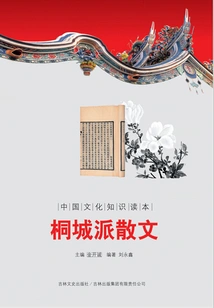
Tongcheng School Prose
Literature桐城派散文
Jin Kaicheng
"Tongcheng School Prose" edited by Jin Kaicheng and Liu Yongxin tells the story: Tongcheng School, also known as Tongcheng Ancient Prose School, was the largest literary school in the Qing Dynasty. It was founded by Dai Mingshi and Fang Bao. It was promoted by Liu Dahuai and its influence gradually increased. By the time of Yao Nai, it developed to the Dingzhan period. Fang Bao, Liu Dahuai and Yao Nai are called the "Three Ancestors of Tongcheng" by later generations. In "Tongcheng School Prose", the development of the Tongcheng School almost always coincided with the national destiny of the Qing Dynasty, and it lasted until the May Fourth New Culture Movement before it completely disappeared. The time span spanned more than 200 years. The Tongcheng School's long-lasting influence, wide spread, and prominent momentum are rare in the history of Chinese literature and Chinese literary criticism.
"Tongcheng School Prose" edited by Jin Kaicheng and Liu Yongxin tells the story: Tongcheng School, also known as Tongcheng Ancient Prose School, was the largest literary school in the Qing Dynasty. It was founded by Dai Mingshi and Fang Bao. It was promoted by Liu Dahuai and its influence gradually increased. By the time of Yao Nai, it developed to the Dingzhan period. Fang Bao, Liu Dahuai and Yao Nai are called the "Three Ancestors of Tongcheng" by later generations. In "Tongcheng School Prose", the development of the Tongcheng School almost always coincided with the national destiny of the Qing Dynasty, and it lasted until the May Fourth New Culture Movement before it completely disappeared. The time span spanned more than 200 years. The Tongcheng School's long-lasting influence, wide spread, and prominent momentum are rare in the history of Chinese literature and Chinese literary criticism.
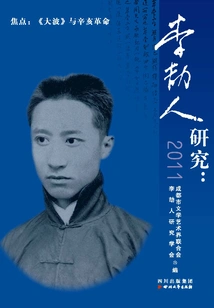
Li Jieren Research: 2011
Literature李劼人研究:2011
Chengdu Federation Of Literary And Art Circles, Etc.
Chengdu Federation of Literary and Art Circles, Li Jieren Research Society, 2011 Collection of Li Jieren Research Papers.
Chengdu Federation of Literary and Art Circles, Li Jieren Research Society, 2011 Collection of Li Jieren Research Papers.
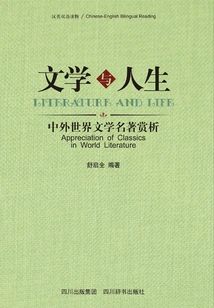
Literature and Life
Literature文学与人生
Compiled By Shu Qiquan
The book is subtitled "Appreciation of Chinese and Foreign World Literary Masterpieces" and covers Chinese and foreign classics such as "A Dream of Red Mansions", "Pi Ke Mei Liang", "Journey to the West", "Hamlet", "Les Misérables", "The Romance of the Three Kingdoms", "The Old Man and the Sea" and "Water Margin". In the introduction, the author makes a clear statement, defines literature and its functions, and clarifies the relationship between people and life, literature and life.
The book is subtitled "Appreciation of Chinese and Foreign World Literary Masterpieces" and covers Chinese and foreign classics such as "A Dream of Red Mansions", "Pi Ke Mei Liang", "Journey to the West", "Hamlet", "Les Misérables", "The Romance of the Three Kingdoms", "The Old Man and the Sea" and "Water Margin". In the introduction, the author makes a clear statement, defines literature and its functions, and clarifies the relationship between people and life, literature and life.
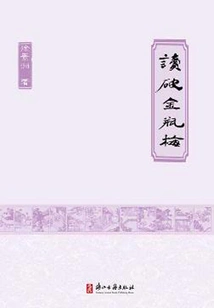
Read Through Jin Ping Mei
Literature读破金瓶梅
Xu Jingzhou
"Jin Ping Mei" is a masterpiece handed down from generation to generation and is known as "the first wonderful book". "Jin Ping Mei" mainly describes the life of Ximen Qing and the rise and fall of his family from prosperity to decline, with Ximen Qing as the center. On the one hand, it radiates to the market, and on the other hand, it reflects the official society. It shows the broad picture of an era and the political and social life of all living beings. It depicts the typical character of Ximen Qing and many women such as Pan Jinlian and Li Ping'er. Xu Jingzhou's "Reading the Plum in the Golden Lotus" uses the form of notes to jokingly talk about the strange people and strange things in the wonderful book "The Plum in the Golden Lotus", commenting on the characters' personalities, appreciating the artistic skills, paying attention to details in reading, and writing in a friendly and interesting way.
"Jin Ping Mei" is a masterpiece handed down from generation to generation and is known as "the first wonderful book". "Jin Ping Mei" mainly describes the life of Ximen Qing and the rise and fall of his family from prosperity to decline, with Ximen Qing as the center. On the one hand, it radiates to the market, and on the other hand, it reflects the official society. It shows the broad picture of an era and the political and social life of all living beings. It depicts the typical character of Ximen Qing and many women such as Pan Jinlian and Li Ping'er. Xu Jingzhou's "Reading the Plum in the Golden Lotus" uses the form of notes to jokingly talk about the strange people and strange things in the wonderful book "The Plum in the Golden Lotus", commenting on the characters' personalities, appreciating the artistic skills, paying attention to details in reading, and writing in a friendly and interesting way.
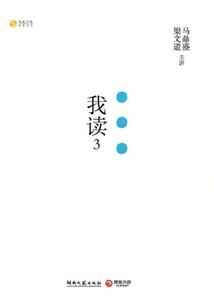
I Read.3
Literature我读.3
Phoenix Books
"I Read 3" uses the most concise and straightforward way to present the core of a book to readers from multiple perspectives from the author, writing background, content, etc. The speaker has covered a wide range of topics, digested and absorbed every book, and finally formed a pertinent review. Use easy-to-understand language to convey various ideological trends and social and cultural hot spots to readers calmly and objectively. There is a short story behind each book, which is very interesting to read.
"I Read 3" uses the most concise and straightforward way to present the core of a book to readers from multiple perspectives from the author, writing background, content, etc. The speaker has covered a wide range of topics, digested and absorbed every book, and finally formed a pertinent review. Use easy-to-understand language to convey various ideological trends and social and cultural hot spots to readers calmly and objectively. There is a short story behind each book, which is very interesting to read.