Library
Browse and search books
3,417 novels found
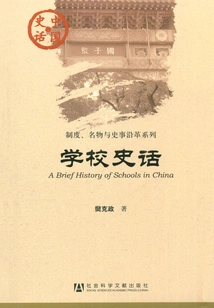
School History
History学校史话
Fan Kezheng
This book begins with the emergence of schools in the late primitive society and tells the history of the development of school education in China from the Xia Dynasty to the late Qing Dynasty. It is proposed that schools began to appear in the Xia Dynasty, the first dynasty in Chinese history. During the Western Zhou Dynasty, schools had initially formed a set of academic systems and management systems. During the Spring and Autumn Period and the Warring States Period, private schools emerged and developed. After the Han Dynasty, the feudal school education system initially took shape, and after the Wei and Jin Dynasties, it continued to develop and improve, forming a feudal school education model consisting of official schools, private schools, and academies. After 1840, with the invasion of foreign capitalism and the emergence of modern schools similar to those in the West, the feudal school education model was broken, and Chinese school education began to transform. After the Guimao academic system was promulgated in 1903, it was eventually replaced by the modern academic system. The rich heritage of Chinese education, which has a long history, can be critically absorbed by modern people, and it also has certain reference significance for today's educational reform.
This book begins with the emergence of schools in the late primitive society and tells the history of the development of school education in China from the Xia Dynasty to the late Qing Dynasty. It is proposed that schools began to appear in the Xia Dynasty, the first dynasty in Chinese history. During the Western Zhou Dynasty, schools had initially formed a set of academic systems and management systems. During the Spring and Autumn Period and the Warring States Period, private schools emerged and developed. After the Han Dynasty, the feudal school education system initially took shape, and after the Wei and Jin Dynasties, it continued to develop and improve, forming a feudal school education model consisting of official schools, private schools, and academies. After 1840, with the invasion of foreign capitalism and the emergence of modern schools similar to those in the West, the feudal school education model was broken, and Chinese school education began to transform. After the Guimao academic system was promulgated in 1903, it was eventually replaced by the modern academic system. The rich heritage of Chinese education, which has a long history, can be critically absorbed by modern people, and it also has certain reference significance for today's educational reform.
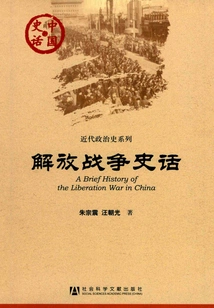
解放战争史话
Wang Chaoguang Zhu Zongzhen
The Liberation War was a just war led by the Chinese Communist Party across the country and the People's Liberation Army to oppose the civil war launched by the Kuomintang reactionaries and win the victory of the New Democratic Revolution. Its history can be roughly divided into several stages: setbacks for peace, strategic defense, strategic counterattack, strategic decisive battle, and strategic pursuit. This book uses concise writing to show us the magnificent history of the Liberation War. It also describes the combat operations of various field armies during the war, as well as the three major battles and other important campaigns and battles, so that we can have a panoramic understanding of it. This book has a concise narrative and smooth writing, and can be used as a popular reading for teenagers and even the general public to understand the history of the Liberation War.
The Liberation War was a just war led by the Chinese Communist Party across the country and the People's Liberation Army to oppose the civil war launched by the Kuomintang reactionaries and win the victory of the New Democratic Revolution. Its history can be roughly divided into several stages: setbacks for peace, strategic defense, strategic counterattack, strategic decisive battle, and strategic pursuit. This book uses concise writing to show us the magnificent history of the Liberation War. It also describes the combat operations of various field armies during the war, as well as the three major battles and other important campaigns and battles, so that we can have a panoramic understanding of it. This book has a concise narrative and smooth writing, and can be used as a popular reading for teenagers and even the general public to understand the history of the Liberation War.
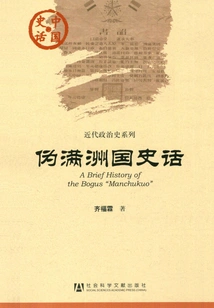
伪满洲国史话
Qi Fulin
The Puppet Manchukuo, established in 1932, was the first puppet regime in modern Chinese history created by the Japanese imperialists who used force to launch the September 18th Incident, seize the northeastern region of my country, divide the Chinese territory, and recruit and use traitors. Using this puppet regime, Japan implemented colonial rule in Northeast China for nearly 14 years. Through brutal military suppression, crazy economic plunder, and colonial enslavement education, Japan attempted to make Northeast China a strategic base for Japan to expand its war of aggression. However, from the time the Japanese army attacked Shenyang, an unstoppable resistance to violence aroused in the hearts of the Chinese people. Under the call and influence of the Communist Party of China, the people of Northeast China launched an indomitable struggle. In August 1945, with the complete defeat of Japanese imperialism in the war of aggression, the puppet Manchukuo that existed as a tool of its aggression also collapsed. This book introduces the entire process of the emergence, development and demise of the Puppet Manchukuo in a concise way, reminding people to face up to history and cherish peace.
The Puppet Manchukuo, established in 1932, was the first puppet regime in modern Chinese history created by the Japanese imperialists who used force to launch the September 18th Incident, seize the northeastern region of my country, divide the Chinese territory, and recruit and use traitors. Using this puppet regime, Japan implemented colonial rule in Northeast China for nearly 14 years. Through brutal military suppression, crazy economic plunder, and colonial enslavement education, Japan attempted to make Northeast China a strategic base for Japan to expand its war of aggression. However, from the time the Japanese army attacked Shenyang, an unstoppable resistance to violence aroused in the hearts of the Chinese people. Under the call and influence of the Communist Party of China, the people of Northeast China launched an indomitable struggle. In August 1945, with the complete defeat of Japanese imperialism in the war of aggression, the puppet Manchukuo that existed as a tool of its aggression also collapsed. This book introduces the entire process of the emergence, development and demise of the Puppet Manchukuo in a concise way, reminding people to face up to history and cherish peace.
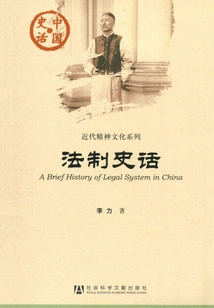
Legal History
History法制史话
Li Li
In the 16th century, the arrival of Western missionaries one after another laid the foundation for the spread of Western culture in China. However, it was not until the early Qing Dynasty that they began to bring Western law and jurisprudence to China. When China's traditional legal system encounters Western civilization, what kind of development will China's modern legal system have? Starting from the introduction of international law in the early Qing Dynasty, this book uses rich historical materials to introduce readers in detail to the impact of the introduction of Western jurisprudence on China's legal tradition, as well as the development process of China's modern legal system.
In the 16th century, the arrival of Western missionaries one after another laid the foundation for the spread of Western culture in China. However, it was not until the early Qing Dynasty that they began to bring Western law and jurisprudence to China. When China's traditional legal system encounters Western civilization, what kind of development will China's modern legal system have? Starting from the introduction of international law in the early Qing Dynasty, this book uses rich historical materials to introduce readers in detail to the impact of the introduction of Western jurisprudence on China's legal tradition, as well as the development process of China's modern legal system.
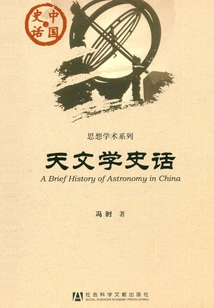
History of Astronomy
History天文学史话
Feng Shi
Ancient Chinese astronomy is closely related to astrology. Since ancient times, astrologers have always adhered to the creed of "observe astronomy to observe changes in time. When the sky hangs down, you can see good and bad luck." This has given Chinese astronomy a mysterious color from the beginning. Ancient Chinese astronomy is extensive and profound. It not only shows the scientific history of ancient ancestors' observation and timing of phenomena, but also is a useful key to understanding Chinese culture. This book combines philology and archeology to systematically explain the history of ancient Chinese astronomy from a new perspective. It provides original explanations of important issues such as the origin of astronomy, the formation of the Twenty-eight Stars system, the establishment of the Four Symbols system, and the development of star charts.
Ancient Chinese astronomy is closely related to astrology. Since ancient times, astrologers have always adhered to the creed of "observe astronomy to observe changes in time. When the sky hangs down, you can see good and bad luck." This has given Chinese astronomy a mysterious color from the beginning. Ancient Chinese astronomy is extensive and profound. It not only shows the scientific history of ancient ancestors' observation and timing of phenomena, but also is a useful key to understanding Chinese culture. This book combines philology and archeology to systematically explain the history of ancient Chinese astronomy from a new perspective. It provides original explanations of important issues such as the origin of astronomy, the formation of the Twenty-eight Stars system, the establishment of the Four Symbols system, and the development of star charts.
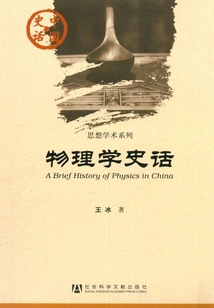
History of Physics
History物理学史话
Wang Bing
Physics is an important department in natural science, which mainly studies the universal laws of material movement and the basic structure of matter. Physics has a long history and glorious achievements in ancient China. This book briefly introduces the characteristics, important books and figures, material concepts and physical thoughts in China from ancient times to the first half of the 20th century. It discusses the origin and development of physics (including mechanics, thermal science, acoustics, optics, charge and magnetism and other branches), its main content, major achievements, and its position in the history of world science.
Physics is an important department in natural science, which mainly studies the universal laws of material movement and the basic structure of matter. Physics has a long history and glorious achievements in ancient China. This book briefly introduces the characteristics, important books and figures, material concepts and physical thoughts in China from ancient times to the first half of the 20th century. It discusses the origin and development of physics (including mechanics, thermal science, acoustics, optics, charge and magnetism and other branches), its main content, major achievements, and its position in the history of world science.
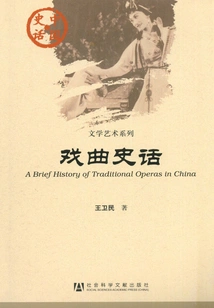
History of Opera
History戏曲史话
Wang Weimin
Opera is a wonderful flower in ancient Chinese culture. It has gone through ups and downs for eight or nine hundred years from the Song, Jin, and Yuan dynasties when it was first produced to the present. After three major stages of development: Song and Yuan Southern Opera and Yuan Zaju, Ming and Qing Legends, and Qing Dynasty Local Opera, Chinese opera represented by Peking Opera has not only become the quintessence of China, but is also popular all over the world. Based on this, this book uses detailed and powerful materials and lively and popular language to tell you the ups and downs of Chinese opera.
Opera is a wonderful flower in ancient Chinese culture. It has gone through ups and downs for eight or nine hundred years from the Song, Jin, and Yuan dynasties when it was first produced to the present. After three major stages of development: Song and Yuan Southern Opera and Yuan Zaju, Ming and Qing Legends, and Qing Dynasty Local Opera, Chinese opera represented by Peking Opera has not only become the quintessence of China, but is also popular all over the world. Based on this, this book uses detailed and powerful materials and lively and popular language to tell you the ups and downs of Chinese opera.
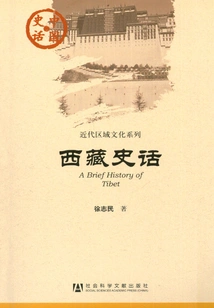
Tibetan History
History西藏史话
Xu Zhimin
Although this book starts from the ancient history of Tibet, it focuses on the vicissitudes of Tibet's history over the past century. That is, the history of how Tibet in modern China moved from a semi-colony coveted and encroached upon by imperialist powers to one that completely expelled imperialist forces and fully integrated into the big family of the motherland; how it moved from a political system where religion and politics were ruled by gods and Buddhas to a national regional autonomy in which the people are the masters; and how it moved from a dark, cruel, backward feudal serfdom society that lasted for thousands of years to a bright road to a socialist society. History has proven, and will continue to prove, that without the Communist Party of China, there would be no new Tibet with a socialist society and no new happy life for the people of all ethnic groups in Tibet.
Although this book starts from the ancient history of Tibet, it focuses on the vicissitudes of Tibet's history over the past century. That is, the history of how Tibet in modern China moved from a semi-colony coveted and encroached upon by imperialist powers to one that completely expelled imperialist forces and fully integrated into the big family of the motherland; how it moved from a political system where religion and politics were ruled by gods and Buddhas to a national regional autonomy in which the people are the masters; and how it moved from a dark, cruel, backward feudal serfdom society that lasted for thousands of years to a bright road to a socialist society. History has proven, and will continue to prove, that without the Communist Party of China, there would be no new Tibet with a socialist society and no new happy life for the people of all ethnic groups in Tibet.
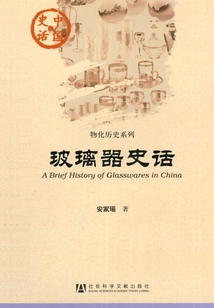
History of Glassware
History玻璃器史话
An Jiayao
Glass is one of the oldest man-made materials invented by humans with the birth of civilization. It was born in the Mesopotamia between the 25th and 23rd centuries BC and has a history of more than 4,000 years. Glass products appeared relatively late in China. The earliest unearthed glass appeared in tombs at the end of the Spring and Autumn Period and the beginning of the Warring States Period. It has a history of 2,500 years ago. Glass was once one of the most expensive materials in history. Until the 4th century BC in Western Asia, the value of glass was still on par with gold. Before the Ming Dynasty, the value of exquisite glassware was much higher than gold. At the same time, glass has been a popular trade item since its birth. People in ancient times, especially the upper class, just like today, liked novel and unique products from other places, and glassware was also one of the items they pursued. This book uses the glassware discovered by domestic archaeological discoveries in recent years as clues and combines it with documentary records to explore the occurrence and development process of ancient Chinese glass. Ancient Chinese glass is a unique style in the history of world glass. This book attempts to reflect the changes in people's aesthetics, values, and religious views in ancient Chinese society from the perspective of glassware, as well as the cultural and technological exchanges between ancient China and foreign countries.
Glass is one of the oldest man-made materials invented by humans with the birth of civilization. It was born in the Mesopotamia between the 25th and 23rd centuries BC and has a history of more than 4,000 years. Glass products appeared relatively late in China. The earliest unearthed glass appeared in tombs at the end of the Spring and Autumn Period and the beginning of the Warring States Period. It has a history of 2,500 years ago. Glass was once one of the most expensive materials in history. Until the 4th century BC in Western Asia, the value of glass was still on par with gold. Before the Ming Dynasty, the value of exquisite glassware was much higher than gold. At the same time, glass has been a popular trade item since its birth. People in ancient times, especially the upper class, just like today, liked novel and unique products from other places, and glassware was also one of the items they pursued. This book uses the glassware discovered by domestic archaeological discoveries in recent years as clues and combines it with documentary records to explore the occurrence and development process of ancient Chinese glass. Ancient Chinese glass is a unique style in the history of world glass. This book attempts to reflect the changes in people's aesthetics, values, and religious views in ancient Chinese society from the perspective of glassware, as well as the cultural and technological exchanges between ancient China and foreign countries.
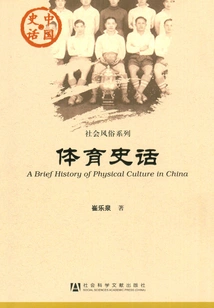
Sports History
History体育史话
Cui Lequan
Sports is a unique culture. When it became independent from the survival labor of ancient people, it was endowed with the connotation and effect of games, competition, fitness and education. When people mention sports, they will think of scenes of leaping dragons and tigers, of strength and fitness, and of a vibrant life. Based on rich historical materials, this book shows readers the colorful traditional sports activities of the Chinese nation in a concise and systematic structure. A relatively systematic introduction to national sports with a long history, such as ball games, martial arts, track and field, health care, chess, and folk recreation activities. At the same time, it also introduces the various traditional sports of ethnic minorities, the organizational form and management of ancient Chinese sports, the emergence and spread of modern Western sports in China, and other issues.
Sports is a unique culture. When it became independent from the survival labor of ancient people, it was endowed with the connotation and effect of games, competition, fitness and education. When people mention sports, they will think of scenes of leaping dragons and tigers, of strength and fitness, and of a vibrant life. Based on rich historical materials, this book shows readers the colorful traditional sports activities of the Chinese nation in a concise and systematic structure. A relatively systematic introduction to national sports with a long history, such as ball games, martial arts, track and field, health care, chess, and folk recreation activities. At the same time, it also introduces the various traditional sports of ethnic minorities, the organizational form and management of ancient Chinese sports, the emergence and spread of modern Western sports in China, and other issues.
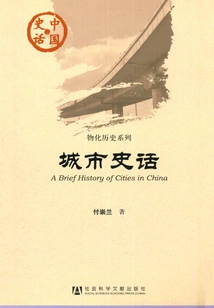
Urban History
History城市史话
Fu Chonglan
China is one of the birthplaces of mankind and one of the countries with the earliest origins of cities in the world. Over the past five thousand years, the center of development of Chinese cities has shifted from west to east, from north to south, and then expanded from south to north, and from east to west. The city's uniqueness and rich diversity are the result of thousands of years of history. The existence and development of cities are determined by specific social, political, economic, customary and cultural and geographical environmental conditions. Without this specificity, cities cannot develop. In Chinese history, there are urban planning and design ideas that are good at adapting to the land, adapting to mountains and rivers, adapting measures to local conditions, and being skillful in creation. We build our own cities according to the different natural geographical conditions, customs and habits, economic strength, and technical means of different places. This has not only formed the national and local characteristics of cities in various places, but also formed the rich and colorful urban civilization of the Chinese nation.
China is one of the birthplaces of mankind and one of the countries with the earliest origins of cities in the world. Over the past five thousand years, the center of development of Chinese cities has shifted from west to east, from north to south, and then expanded from south to north, and from east to west. The city's uniqueness and rich diversity are the result of thousands of years of history. The existence and development of cities are determined by specific social, political, economic, customary and cultural and geographical environmental conditions. Without this specificity, cities cannot develop. In Chinese history, there are urban planning and design ideas that are good at adapting to the land, adapting to mountains and rivers, adapting measures to local conditions, and being skillful in creation. We build our own cities according to the different natural geographical conditions, customs and habits, economic strength, and technical means of different places. This has not only formed the national and local characteristics of cities in various places, but also formed the rich and colorful urban civilization of the Chinese nation.
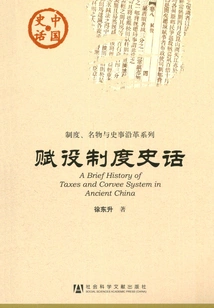
History of the Levy System
History赋役制度史话
Xu Dongsheng
This is a relatively popular history of the ancient Chinese taxation and servitude system. According to the narration of the times, it not only clarifies the historical facts, but also summarizes the historical characteristics. It is readable and has reference value. The evolution of taxes and servitude in ancient China was characterized by sequence, repetition and differentiation. Sequentiality means that the reform of the tax and servitude system is carried out step by step and successively, and is proposed based entirely on the development and changes of the political and economic situation at that time; in the process of evolution, a certain period and a certain type of tax may disappear and then come back, showing recurrence; due to the uneven economic development in various regions, the problem of unbalanced tax burden has arisen. Different regions have different burdens and different collection methods, which constitutes the complexity of China's tax and servitude burden.
This is a relatively popular history of the ancient Chinese taxation and servitude system. According to the narration of the times, it not only clarifies the historical facts, but also summarizes the historical characteristics. It is readable and has reference value. The evolution of taxes and servitude in ancient China was characterized by sequence, repetition and differentiation. Sequentiality means that the reform of the tax and servitude system is carried out step by step and successively, and is proposed based entirely on the development and changes of the political and economic situation at that time; in the process of evolution, a certain period and a certain type of tax may disappear and then come back, showing recurrence; due to the uneven economic development in various regions, the problem of unbalanced tax burden has arisen. Different regions have different burdens and different collection methods, which constitutes the complexity of China's tax and servitude burden.
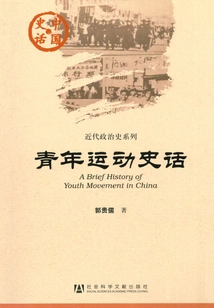
History of Youth Movement
History青年运动史话
Guo Guiru
Youth are the future of the motherland, and youth are the hope of the country. Whenever national calamity strikes in history, young people will bravely rush to the forefront of demonstrations, using their enthusiasm, courage and indomitable spirit to defend truth, dignity and sovereignty... This book uses the activities of young people in modern history in major historical events such as the Revolution of 1911, the May 4th Movement, the Great Revolution, the Anti-Japanese National Salvation Movement, and the Anti-Civil War as clues to show readers that turbulent era and the unyielding, courageous and resisting spirit of young people.
Youth are the future of the motherland, and youth are the hope of the country. Whenever national calamity strikes in history, young people will bravely rush to the forefront of demonstrations, using their enthusiasm, courage and indomitable spirit to defend truth, dignity and sovereignty... This book uses the activities of young people in modern history in major historical events such as the Revolution of 1911, the May 4th Movement, the Great Revolution, the Anti-Japanese National Salvation Movement, and the Anti-Civil War as clues to show readers that turbulent era and the unyielding, courageous and resisting spirit of young people.
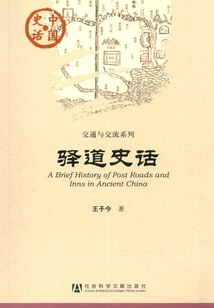
Story of Post Road
History驿道史话
Wang Zijin
The relay system composed of ancient Chinese post roads and stations can be compared to the meridians of the Chinese civilization system. The vitality and vitality of Chinese civilization have the historical role of the relay system. The postal transmission system in various historical periods mainly served military politics, promoting the strengthening of armaments and sound administration; the progress of civil communication forms was also related to the role of the postal transmission system; the lives of post officials and post soldiers in the past also reflected the social conditions at that time from one aspect. Due to the special cultural role of Yichuan, there are many contents related to Yichuan in ancient mythical legends, poems, songs, and folk tales. Analyzing these phenomena is undoubtedly beneficial to a comprehensive understanding of Chinese traditional culture.
The relay system composed of ancient Chinese post roads and stations can be compared to the meridians of the Chinese civilization system. The vitality and vitality of Chinese civilization have the historical role of the relay system. The postal transmission system in various historical periods mainly served military politics, promoting the strengthening of armaments and sound administration; the progress of civil communication forms was also related to the role of the postal transmission system; the lives of post officials and post soldiers in the past also reflected the social conditions at that time from one aspect. Due to the special cultural role of Yichuan, there are many contents related to Yichuan in ancient mythical legends, poems, songs, and folk tales. Analyzing these phenomena is undoubtedly beneficial to a comprehensive understanding of Chinese traditional culture.
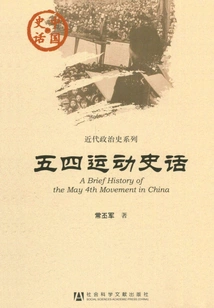
五四运动史话
Chang Pijun
In January 1919, the victorious countries of World War I held a "Peace Conference" in Paris, France. China, as one of the Allied Powers of World War I, participated in the conference. Chinese representatives proposed at the peace conference the abolition of foreign spheres of influence in China, the withdrawal of foreign troops in China, and the cancellation of the "Twenty-One" and other just demands. However, the Paris Peace Conference ignored the fact that China was also one of the victorious countries and rejected the requests made by the Chinese representatives. It even decided to transfer Germany's rights and interests in Shandong, China, to Japan. After the news reached China, students in Beijing were furious. Students, businessmen, education circles and many patriotic groups called in to condemn Japan's disrespectful behavior and demanded that the Chinese government uphold national sovereignty. However, the Beiyang government succumbed to the pressure of imperialism, and Britain, the United States, France, Japan, Italy and other countries ignored the calls of the Chinese people and signed the "Peace Treaty between the Allied Powers and Participating Countries with Germany", the "Versailles Peace Treaty", which still transferred Germany's rights in Shandong to Japan. At the Paris Peace Conference, the Chinese government's diplomatic failure directly aroused strong dissatisfaction among the Chinese people, thus triggering the May Fourth Movement.
In January 1919, the victorious countries of World War I held a "Peace Conference" in Paris, France. China, as one of the Allied Powers of World War I, participated in the conference. Chinese representatives proposed at the peace conference the abolition of foreign spheres of influence in China, the withdrawal of foreign troops in China, and the cancellation of the "Twenty-One" and other just demands. However, the Paris Peace Conference ignored the fact that China was also one of the victorious countries and rejected the requests made by the Chinese representatives. It even decided to transfer Germany's rights and interests in Shandong, China, to Japan. After the news reached China, students in Beijing were furious. Students, businessmen, education circles and many patriotic groups called in to condemn Japan's disrespectful behavior and demanded that the Chinese government uphold national sovereignty. However, the Beiyang government succumbed to the pressure of imperialism, and Britain, the United States, France, Japan, Italy and other countries ignored the calls of the Chinese people and signed the "Peace Treaty between the Allied Powers and Participating Countries with Germany", the "Versailles Peace Treaty", which still transferred Germany's rights in Shandong to Japan. At the Paris Peace Conference, the Chinese government's diplomatic failure directly aroused strong dissatisfaction among the Chinese people, thus triggering the May Fourth Movement.
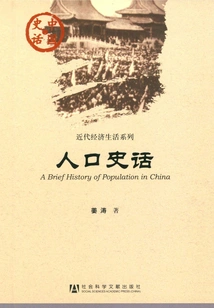
Population History
History人口史话
Jiang Tao
China is a large civilized country with a long history and has a large population since ancient times. According to historical records, the earliest household registration statistics began in the Taiyuan area in 789 BC. Over the next two thousand years, with the rapid changes in productivity and the rise and fall of dynasties, China's population grew slowly in cyclical fluctuations, reaching more than 400 million by the end of the Qing Dynasty and the beginning of the Republic of China. This book is divided into nine chapters. The author starts from the pre-Qin Dynasty and ends with the founding of New China, giving a relatively comprehensive introduction to the historical process of China's population changes. It also gives a detailed description of the population development and changes in the north and south during the three periods before, during and after the Qing Dynasty, in terms of time and region, and digs into the specific causes of each change, providing useful experience and inspiration for future population development.
China is a large civilized country with a long history and has a large population since ancient times. According to historical records, the earliest household registration statistics began in the Taiyuan area in 789 BC. Over the next two thousand years, with the rapid changes in productivity and the rise and fall of dynasties, China's population grew slowly in cyclical fluctuations, reaching more than 400 million by the end of the Qing Dynasty and the beginning of the Republic of China. This book is divided into nine chapters. The author starts from the pre-Qin Dynasty and ends with the founding of New China, giving a relatively comprehensive introduction to the historical process of China's population changes. It also gives a detailed description of the population development and changes in the north and south during the three periods before, during and after the Qing Dynasty, in terms of time and region, and digs into the specific causes of each change, providing useful experience and inspiration for future population development.
History of Geography
History地理学史话
Du Yu
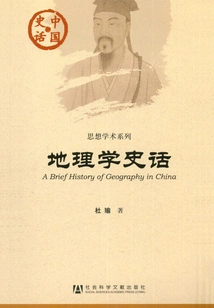
My country's ancient geography achievements are world-renowned. The famous American geographer James also admitted in "History of Geographic Thought" that "ancient China attached great importance to the study of geography" and that "the achievements of the Chinese people were the most important" in the Middle Ages. He also believes that: "The study of Chinese geography, as part of its extensive academic tradition, has made great progress at that time, surpassing anything known in Christian Europe." Indeed, the development of ancient geography in my country has a long history. It was formed in the pre-Qin Dynasty, matured in the Qin and Han Dynasties, developed in the Tang and Song Dynasties, and was brilliant in the Ming and Qing Dynasties. Whether it is the understanding of the great rivers and mountains of the motherland or the geographical understanding of foreign countries, whether it is physical geography or human geography, it has always been in a leading position in the world. Even in terms of scientific geography, as early as the Northern Song Dynasty in my country, Shen Kuo was exploring natural laws in many fields of geography, and there were already signs of scientific geography theory. This book describes these brilliant achievements of ancient Chinese geography one by one.
My country's ancient geography achievements are world-renowned. The famous American geographer James also admitted in "History of Geographic Thought" that "ancient China attached great importance to the study of geography" and that "the achievements of the Chinese people were the most important" in the Middle Ages. He also believes that: "The study of Chinese geography, as part of its extensive academic tradition, has made great progress at that time, surpassing anything known in Christian Europe." Indeed, the development of ancient geography in my country has a long history. It was formed in the pre-Qin Dynasty, matured in the Qin and Han Dynasties, developed in the Tang and Song Dynasties, and was brilliant in the Ming and Qing Dynasties. Whether it is the understanding of the great rivers and mountains of the motherland or the geographical understanding of foreign countries, whether it is physical geography or human geography, it has always been in a leading position in the world. Even in terms of scientific geography, as early as the Northern Song Dynasty in my country, Shen Kuo was exploring natural laws in many fields of geography, and there were already signs of scientific geography theory. This book describes these brilliant achievements of ancient Chinese geography one by one.
棉麻纺织史话
Liu Kexiang
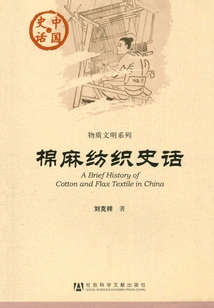
The first textiles to appear in China were hemp and kudzu. My country is the hometown of hemp. Before cotton cultivation was widely promoted in the Yuan and Ming dynasties, hemp fabrics were the most important clothing materials for ordinary people. Cotton spinning and artificial cultivation of cotton were first developed in the ethnic minority areas in South China, Southwest and Northwest my country. . Cotton and linen textiles are an important part of my country's ancient civilization. This book systematically describes the origin and development of cotton and linen cultivation and textiles in my country, and gives a detailed introduction to the historical cotton and linen textile production conditions, including distribution of production areas, product structure, production methods, production tools, production development, process technology, business scope, business methods, etc. It focuses on the major inventions and innovative achievements of working people in the past generations in cotton and linen cultivation, textiles, weaving, printing and dyeing, so that readers can have a detailed understanding of the development of my country's cotton and linen cultivation and textile history. It is a good informative book suitable for the public.
The first textiles to appear in China were hemp and kudzu. My country is the hometown of hemp. Before cotton cultivation was widely promoted in the Yuan and Ming dynasties, hemp fabrics were the most important clothing materials for ordinary people. Cotton spinning and artificial cultivation of cotton were first developed in the ethnic minority areas in South China, Southwest and Northwest my country. . Cotton and linen textiles are an important part of my country's ancient civilization. This book systematically describes the origin and development of cotton and linen cultivation and textiles in my country, and gives a detailed introduction to the historical cotton and linen textile production conditions, including distribution of production areas, product structure, production methods, production tools, production development, process technology, business scope, business methods, etc. It focuses on the major inventions and innovative achievements of working people in the past generations in cotton and linen cultivation, textiles, weaving, printing and dyeing, so that readers can have a detailed understanding of the development of my country's cotton and linen cultivation and textile history. It is a good informative book suitable for the public.
Exegetical History
History训诂学史话
Zhou Xinyan
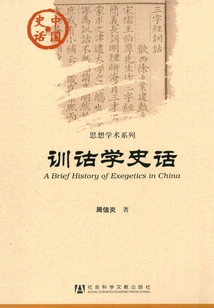
Exegesis is an ancient science. It not only explains the meaning of words in ancient documents, but also analyzes the grammatical and rhetorical phenomena in them, so as to better help people read classical documents. Exegesis first sprouted in the pre-Qin era. After development in the Han, Wei, Sui, Tang, Song, Yuan and Ming dynasties, it finally reached a peak in the Qing Dynasty. In the Qing Dynasty, not only did two major exegetical schools emerge - the Wu School and the Wan School, a number of famous exegetical masters emerged, but also a large number of outstanding exegetical works appeared, such as Zhu Junsheng's "Shuowen Tongxun Ding Sheng", Duan Yucai's "Shuowen Jiezi Annotation", Shao Jinhan's "Erya Justice", etc. These works have had a significant and far-reaching impact on the development of exegesis from the Republic of China to the present day.
Exegesis is an ancient science. It not only explains the meaning of words in ancient documents, but also analyzes the grammatical and rhetorical phenomena in them, so as to better help people read classical documents. Exegesis first sprouted in the pre-Qin era. After development in the Han, Wei, Sui, Tang, Song, Yuan and Ming dynasties, it finally reached a peak in the Qing Dynasty. In the Qing Dynasty, not only did two major exegetical schools emerge - the Wu School and the Wan School, a number of famous exegetical masters emerged, but also a large number of outstanding exegetical works appeared, such as Zhu Junsheng's "Shuowen Tongxun Ding Sheng", Duan Yucai's "Shuowen Jiezi Annotation", Shao Jinhan's "Erya Justice", etc. These works have had a significant and far-reaching impact on the development of exegesis from the Republic of China to the present day.
中国早期国家史话
Wang He
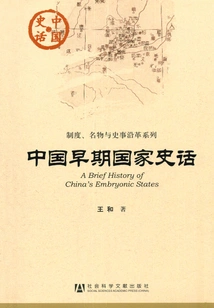
The so-called early countries refer to the initial countries that have not yet developed into a state that is purely based on regional organization and embodies the state form that combines geographical and blood characteristics. China's early state period refers to the Xia, Shang, and Western Zhou dynasties. This period of history is a history in which the ancient ancestors of the Chinese nation, after tens of thousands of years of development, growth and reproduction, finally broke through the shackles of ethnic-state structured society and nearly completed the development and occupation of the core areas within the territory of today's China. It has a vital and decisive influence on the formation, cohesion and continuation of the national system, national spirit and cultural characteristics of China and the Chinese nation. While other ancient civilizations in the world have all gone through the process of development, prosperity, decline, and finally annihilation, the long-standing Chinese civilization has an endless and tenacious vitality because of this glorious history, from ancient times to today.
The so-called early countries refer to the initial countries that have not yet developed into a state that is purely based on regional organization and embodies the state form that combines geographical and blood characteristics. China's early state period refers to the Xia, Shang, and Western Zhou dynasties. This period of history is a history in which the ancient ancestors of the Chinese nation, after tens of thousands of years of development, growth and reproduction, finally broke through the shackles of ethnic-state structured society and nearly completed the development and occupation of the core areas within the territory of today's China. It has a vital and decisive influence on the formation, cohesion and continuation of the national system, national spirit and cultural characteristics of China and the Chinese nation. While other ancient civilizations in the world have all gone through the process of development, prosperity, decline, and finally annihilation, the long-standing Chinese civilization has an endless and tenacious vitality because of this glorious history, from ancient times to today.
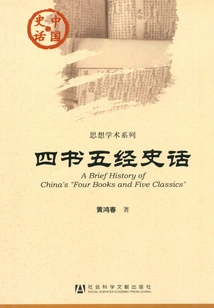
四书五经史话
Huang Hongchun
History is recorded in documents, preserved in traditions, and also exists in our inheritance. Nine young Ph. D. S from Beijing Normal University worked together to interpret and introduce the "Four Books and Five Classics" from the perspective and experience of young people in the new century. "Believe it when you believe it, and leave it when you doubt it." The writing style is simple and concise, and the writing is smooth and easy to understand, so as to help readers better read and understand the classics of traditional Chinese culture.
History is recorded in documents, preserved in traditions, and also exists in our inheritance. Nine young Ph. D. S from Beijing Normal University worked together to interpret and introduce the "Four Books and Five Classics" from the perspective and experience of young people in the new century. "Believe it when you believe it, and leave it when you doubt it." The writing style is simple and concise, and the writing is smooth and easy to understand, so as to help readers better read and understand the classics of traditional Chinese culture.
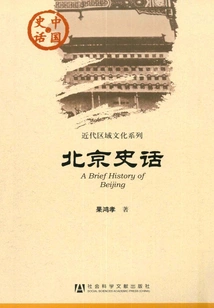
Beijing History
History北京史话
Guo Hongxiao
Beijing, the capital of New China. It has a history of more than 3,000 years as a city and more than 850 years as a capital. It was the capital of six dynasties in history. It brings together Chinese culture since the Yuan, Ming and Qing dynasties, and has many historical sites and cultural landscapes. It is one of the cities with the most world cultural heritage in the world. In modern Chinese history, Beijing has played an extremely important role. The May 4th Movement and the December 9th Movement both took place in Beijing, and then shocked the country like a prairie fire, setting off a patriotic movement to save the Chinese nation from danger. Although Beijing's modern industry and commerce started late, it is unique. Beijing-style culture, with its unique style and charm, is an important part of Chinese culture. If you want to know more, find the answers in this book.
Beijing, the capital of New China. It has a history of more than 3,000 years as a city and more than 850 years as a capital. It was the capital of six dynasties in history. It brings together Chinese culture since the Yuan, Ming and Qing dynasties, and has many historical sites and cultural landscapes. It is one of the cities with the most world cultural heritage in the world. In modern Chinese history, Beijing has played an extremely important role. The May 4th Movement and the December 9th Movement both took place in Beijing, and then shocked the country like a prairie fire, setting off a patriotic movement to save the Chinese nation from danger. Although Beijing's modern industry and commerce started late, it is unique. Beijing-style culture, with its unique style and charm, is an important part of Chinese culture. If you want to know more, find the answers in this book.
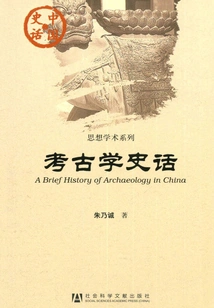
Archeology History
History考古学史话
Zhu Naicheng
This book takes the development of Chinese archeology as a clue and introduces us to several famous scholars who played an important role in the development history of Chinese archeology, such as Wang Guowei, Luo Zhenyu, Anderson, Liang Siyong, Xia Nai, Fu Sinian, etc. They either have an indissoluble bond with epigraphy and oracle bone inscriptions, or are involved in the study of Dunhuang documents, or they have dedicated their lives to the study of prehistoric culture. It can be said that without their dedicated research, there would be no achievements in archeology in our country today, and there would be no overall prosperity of archeology in our country today.
This book takes the development of Chinese archeology as a clue and introduces us to several famous scholars who played an important role in the development history of Chinese archeology, such as Wang Guowei, Luo Zhenyu, Anderson, Liang Siyong, Xia Nai, Fu Sinian, etc. They either have an indissoluble bond with epigraphy and oracle bone inscriptions, or are involved in the study of Dunhuang documents, or they have dedicated their lives to the study of prehistoric culture. It can be said that without their dedicated research, there would be no achievements in archeology in our country today, and there would be no overall prosperity of archeology in our country today.
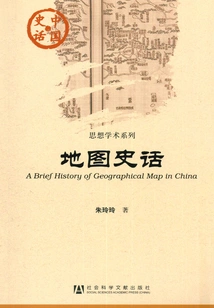
Map History
History地图史话
Lingling Zhu
This book reproduces in concise and vivid language the evolution and development process in the field of cartography and surveying during the five thousand years of history from the Pre-Qin Dynasty to the Republic of China. The book is arranged in chronological order, highlighting the characteristics of maps drawn in each dynasty, and focuses on the Warring States Qinju County Map unearthed in Fangmatan, the Western Han Dynasty "Topographic Map", "Garrison Map", "City Map" unearthed in Mawangdui, Pei Xiu's "Six Cartographies", the national maps of the Tang and Song Dynasties, the maritime maps of the Ming and Qing Dynasties, and the "Imperial Map" and "The Map of the Western Regions" compiled by Kangxi and Qianlong, etc., Which had an impact on world cartography. It is a popular reading book that comprehensively understands the development of cartography in my country and the contribution of the Chinese nation to world cartography.
This book reproduces in concise and vivid language the evolution and development process in the field of cartography and surveying during the five thousand years of history from the Pre-Qin Dynasty to the Republic of China. The book is arranged in chronological order, highlighting the characteristics of maps drawn in each dynasty, and focuses on the Warring States Qinju County Map unearthed in Fangmatan, the Western Han Dynasty "Topographic Map", "Garrison Map", "City Map" unearthed in Mawangdui, Pei Xiu's "Six Cartographies", the national maps of the Tang and Song Dynasties, the maritime maps of the Ming and Qing Dynasties, and the "Imperial Map" and "The Map of the Western Regions" compiled by Kangxi and Qianlong, etc., Which had an impact on world cartography. It is a popular reading book that comprehensively understands the development of cartography in my country and the contribution of the Chinese nation to world cartography.
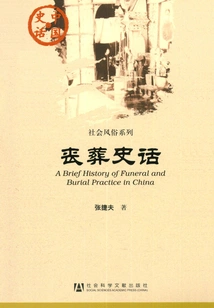
Funeral History
History丧葬史话
Zhang Jiefu
Funeral, simply put, is to conduct funerals and bury the dead. The earliest human beings lived much like ordinary animals. They acted unconsciously and abandoned their bodies in the wilderness after death, allowing animals to peck at them. It can be said that there was no funeral for people at that time. The custom of funeral originated with the emergence of the concept of human soul and gradually developed. This book uses a large number of historical facts to introduce the rise and fall of funeral culture in various dynasties. It also introduces the funeral thoughts and manifestations of various ethnic groups and factions, as well as the different manifestations and characteristics of funeral culture and funeral rituals, as well as their different impacts in history. I believe that after reading this book, you will have a clear and comprehensive understanding of our country's funeral culture.
Funeral, simply put, is to conduct funerals and bury the dead. The earliest human beings lived much like ordinary animals. They acted unconsciously and abandoned their bodies in the wilderness after death, allowing animals to peck at them. It can be said that there was no funeral for people at that time. The custom of funeral originated with the emergence of the concept of human soul and gradually developed. This book uses a large number of historical facts to introduce the rise and fall of funeral culture in various dynasties. It also introduces the funeral thoughts and manifestations of various ethnic groups and factions, as well as the different manifestations and characteristics of funeral culture and funeral rituals, as well as their different impacts in history. I believe that after reading this book, you will have a clear and comprehensive understanding of our country's funeral culture.
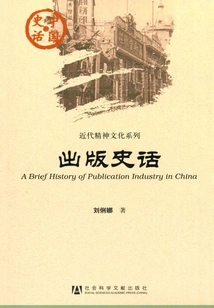
Publishing History
History出版史话
Liu Lina
This is a booklet that systematically introduces the development of China's modern publishing industry. The author introduces us to a series of issues closely related to the publishing industry in China's modern history, such as the publications of the Taiping Heavenly Kingdom, the official bookstore during the Westernization period, the spread of Western learning to the East and the craze for translation, Xia Ruifang and the Commercial Press, the inland book sales of Kaiming Bookstore, the publishing law in the late Qing Dynasty and the early Republic of China, the New Culture Movement and publishing, and the spread of Marxism. From this we can see the development process of China's publishing industry in modern times.
This is a booklet that systematically introduces the development of China's modern publishing industry. The author introduces us to a series of issues closely related to the publishing industry in China's modern history, such as the publications of the Taiping Heavenly Kingdom, the official bookstore during the Westernization period, the spread of Western learning to the East and the craze for translation, Xia Ruifang and the Commercial Press, the inland book sales of Kaiming Bookstore, the publishing law in the late Qing Dynasty and the early Republic of China, the New Culture Movement and publishing, and the spread of Marxism. From this we can see the development process of China's publishing industry in modern times.
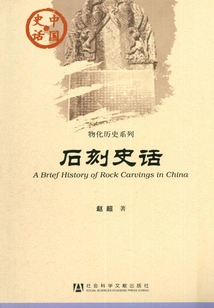
History of Stone Carvings
History石刻史话
Zhao Chao
Ancient Chinese stone carvings include two categories: text inscriptions and artistic sculptures. Only text inscriptions include tablets, cliffs, epitaphs, scripture engravings, inscriptions, architectural inscriptions, dharma stickers and other types. This book mainly focuses on text inscriptions. According to the order of development of the times and combined with relevant historical facts, this book introduces various text inscription materials in ancient China in detail, and provides a scientific explanation of the generation and evolution of various types of stone carvings. At the same time, this book also provides a detailed and vivid introduction to a large number of famous stone carvings. I believe that through this book, readers will have a deeper and more comprehensive understanding of the art and culture of ancient Chinese stone carvings.
Ancient Chinese stone carvings include two categories: text inscriptions and artistic sculptures. Only text inscriptions include tablets, cliffs, epitaphs, scripture engravings, inscriptions, architectural inscriptions, dharma stickers and other types. This book mainly focuses on text inscriptions. According to the order of development of the times and combined with relevant historical facts, this book introduces various text inscription materials in ancient China in detail, and provides a scientific explanation of the generation and evolution of various types of stone carvings. At the same time, this book also provides a detailed and vivid introduction to a large number of famous stone carvings. I believe that through this book, readers will have a deeper and more comprehensive understanding of the art and culture of ancient Chinese stone carvings.
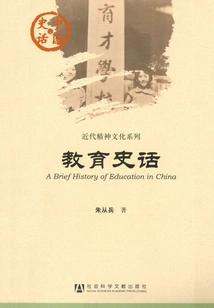
Education History
History教育史话
Zhu Congbing
Modern education in China has experienced a process of evolution from old-style education to new-style education, from semi-feudal and semi-colonial education to new-democratic education. The decline of old-style education, the emergence of new-style education, the formation of semi-feudal and semi-colonial education, and the victory of new-democratic education constitute the basic content of China's modern education history and the basic path of educational modernization. Semi-feudal and semi-colonial education, including education led by successive governments and enslaved colonial education by foreign aggressive forces, was gradually formed on the basis of the emergence of new education and is the main component of modern education. However, new democratic education represents the development direction of modern education. Education carries the mission of enlightenment and is related to the ideological and cultural quality of the nation. It is an important way to realize people's modernization and, to some extent, determines the development direction of China's modern society. Understanding the basic content and basic laws of modern Chinese education can deepen our understanding of China's modernization process and China's modern social changes.
Modern education in China has experienced a process of evolution from old-style education to new-style education, from semi-feudal and semi-colonial education to new-democratic education. The decline of old-style education, the emergence of new-style education, the formation of semi-feudal and semi-colonial education, and the victory of new-democratic education constitute the basic content of China's modern education history and the basic path of educational modernization. Semi-feudal and semi-colonial education, including education led by successive governments and enslaved colonial education by foreign aggressive forces, was gradually formed on the basis of the emergence of new education and is the main component of modern education. However, new democratic education represents the development direction of modern education. Education carries the mission of enlightenment and is related to the ideological and cultural quality of the nation. It is an important way to realize people's modernization and, to some extent, determines the development direction of China's modern society. Understanding the basic content and basic laws of modern Chinese education can deepen our understanding of China's modernization process and China's modern social changes.
History of Ancient Jade
History古玉史话
Lu Zhaoyin
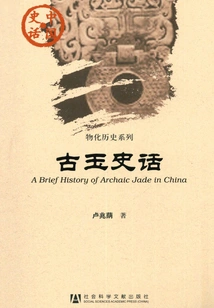
Chinese jade has a very long history, and the long-standing jade culture occupies a very important position in the glorious history of Chinese civilization. It can be seen from the development process of ancient jade that Chinese jade has been linked to ideology since primitive society. It is closely related to ancient people's living habits, religious beliefs, sacrificial rituals, political thoughts, moral creeds, funeral systems, etc. This is incomparable to any other material artifact. Jade culture has therefore become an important part of ancient Chinese culture and occupies a certain position in the history of Chinese culture and thought. An in-depth understanding of jade culture is of great significance to a comprehensive understanding of ancient Chinese traditional culture.
Chinese jade has a very long history, and the long-standing jade culture occupies a very important position in the glorious history of Chinese civilization. It can be seen from the development process of ancient jade that Chinese jade has been linked to ideology since primitive society. It is closely related to ancient people's living habits, religious beliefs, sacrificial rituals, political thoughts, moral creeds, funeral systems, etc. This is incomparable to any other material artifact. Jade culture has therefore become an important part of ancient Chinese culture and occupies a certain position in the history of Chinese culture and thought. An in-depth understanding of jade culture is of great significance to a comprehensive understanding of ancient Chinese traditional culture.
伦理道德史话
Ma Yong
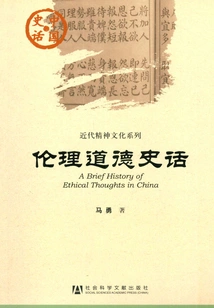
Ethics in traditional Chinese society are based on Confucianism, which is Confucian ethics. Confucian ethics has occupied a dominant position in Chinese history for a long time. It not only influenced the thoughts and words and deeds of the Chinese, but also successfully influenced the people of many Southeast Asian countries and became part of their national culture, thus forming the Confucian cultural circle. With the development of our country's society, Confucian ethics has begun to be integrated with modernization. It is no longer synonymous with obsolescence and backwardness. The essence of its thoughts has begun to be accepted, promoted, and learned by people. It is an indispensable and important part of our country's traditional culture. This book starts from the mutual growth, decline and conflict between foreign culture and traditional Chinese moral and ethical culture, and comprehensively displays to readers the development trend of traditional Chinese ethics and morality in today's society. It also proposes that traditional Confucian ethics is also constantly developing and changing. It will continue to enrich and transform itself with the process of modernization, making it gradually become one of the power resources for the further development and prosperity of our nation.
Ethics in traditional Chinese society are based on Confucianism, which is Confucian ethics. Confucian ethics has occupied a dominant position in Chinese history for a long time. It not only influenced the thoughts and words and deeds of the Chinese, but also successfully influenced the people of many Southeast Asian countries and became part of their national culture, thus forming the Confucian cultural circle. With the development of our country's society, Confucian ethics has begun to be integrated with modernization. It is no longer synonymous with obsolescence and backwardness. The essence of its thoughts has begun to be accepted, promoted, and learned by people. It is an indispensable and important part of our country's traditional culture. This book starts from the mutual growth, decline and conflict between foreign culture and traditional Chinese moral and ethical culture, and comprehensively displays to readers the development trend of traditional Chinese ethics and morality in today's society. It also proposes that traditional Confucian ethics is also constantly developing and changing. It will continue to enrich and transform itself with the process of modernization, making it gradually become one of the power resources for the further development and prosperity of our nation.
十四年:从1931到1945
"biographical Literature"
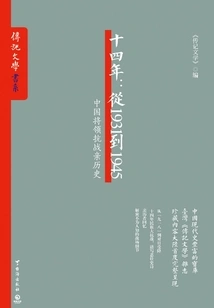
This book collects the recollections of those who experienced the Anti-Japanese War published in Taiwan's "Biography and Literature" magazine. These witnesses include He Yingqin, Zhang Fakui, Song Zheyuan and other senior generals of the national army, as well as middle and lower-level officers of the national army who have participated in large and small battles. Since the "September 18th Incident" in 1931, the Chinese nation has experienced a bloody war of resistance that lasted fourteen years. This book selects five major historical events: the September 18th Incident, the July 7th Incident, the Battle of Songhu, the Battle of Taierzhuang, and the surrender of Japan. Through the memories of those who witnessed the war, this book uses first-hand information to decipher the unknown details of the battlefield for readers, and recreates the tragic epic of the Chinese nation in close-up.
This book collects the recollections of those who experienced the Anti-Japanese War published in Taiwan's "Biography and Literature" magazine. These witnesses include He Yingqin, Zhang Fakui, Song Zheyuan and other senior generals of the national army, as well as middle and lower-level officers of the national army who have participated in large and small battles. Since the "September 18th Incident" in 1931, the Chinese nation has experienced a bloody war of resistance that lasted fourteen years. This book selects five major historical events: the September 18th Incident, the July 7th Incident, the Battle of Songhu, the Battle of Taierzhuang, and the surrender of Japan. Through the memories of those who witnessed the war, this book uses first-hand information to decipher the unknown details of the battlefield for readers, and recreates the tragic epic of the Chinese nation in close-up.
找寻真实的蒋介石:蒋介石日记解读(1)
Yang Tianshi
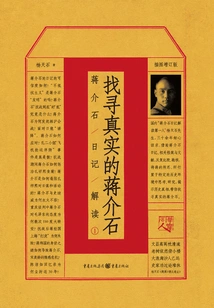
The work is mainly based on Chiang Kai-shek's diary, supplemented by other important relevant historical materials at home and abroad, leading readers to explore Chiang Kai-shek's life and inner world. The author uses a large number of quotes and analysis to study Chiang Kai-shek's diary. With solid academic foundation and authoritative information, the author shows readers Chiang Kai-shek's political activities, war strategy against Japan, international diplomacy, personal life, family life and inner world in the form of special topics. Through the excavation of historical materials, we can get closer to the inner world of the characters and explore their ideological development process.
The work is mainly based on Chiang Kai-shek's diary, supplemented by other important relevant historical materials at home and abroad, leading readers to explore Chiang Kai-shek's life and inner world. The author uses a large number of quotes and analysis to study Chiang Kai-shek's diary. With solid academic foundation and authoritative information, the author shows readers Chiang Kai-shek's political activities, war strategy against Japan, international diplomacy, personal life, family life and inner world in the form of special topics. Through the excavation of historical materials, we can get closer to the inner world of the characters and explore their ideological development process.
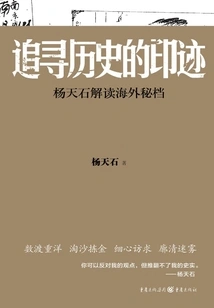
追寻历史的印迹:杨天石解读海外秘档
Yang Tianshi
The famous historian Yang Tianshi traveled back and forth between the two sides of the Taiwan Strait, the United States, Japan and other places for more than ten years. He searched for original materials scattered in overseas libraries and archives. He organized, verified and explained the obtained materials. He saw what no one had seen before and what no one had said before. He used a large number of first-hand materials to cross-check each other, which brought to light the historical secrets behind some important people and events in modern Chinese history.
The famous historian Yang Tianshi traveled back and forth between the two sides of the Taiwan Strait, the United States, Japan and other places for more than ten years. He searched for original materials scattered in overseas libraries and archives. He organized, verified and explained the obtained materials. He saw what no one had seen before and what no one had said before. He used a large number of first-hand materials to cross-check each other, which brought to light the historical secrets behind some important people and events in modern Chinese history.
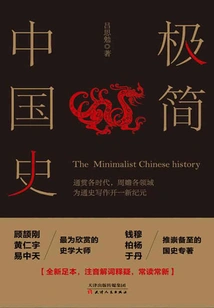
Minimalist Chinese History
History极简中国史
Lu Simian
An introductory book on national history that has been a best-seller since the Republic of China and has been highly praised by Gu Jiegang, Qian Mu, Huang Renyu, Bo Yang, Yi Zhongtian, Yu Dan and others. The book is written in vernacular, and the narrative is as specific as possible, with few generalizations. It was a high school history textbook that was widely used and had a large circulation at that time. The specialized knowledge on history, geography and other aspects involved in the book are not easily found in general reference books. In this book, the author uses concise and smooth words to describe China's historical trends, institutional evolution, and cultural development from ancient times to the 1930s. The final chapter is based on the great rejuvenation of the Chinese nation. It is a great encyclopedia of Chinese history that runs through all eras and looks at all fields.
An introductory book on national history that has been a best-seller since the Republic of China and has been highly praised by Gu Jiegang, Qian Mu, Huang Renyu, Bo Yang, Yi Zhongtian, Yu Dan and others. The book is written in vernacular, and the narrative is as specific as possible, with few generalizations. It was a high school history textbook that was widely used and had a large circulation at that time. The specialized knowledge on history, geography and other aspects involved in the book are not easily found in general reference books. In this book, the author uses concise and smooth words to describe China's historical trends, institutional evolution, and cultural development from ancient times to the 1930s. The final chapter is based on the great rejuvenation of the Chinese nation. It is a great encyclopedia of Chinese history that runs through all eras and looks at all fields.
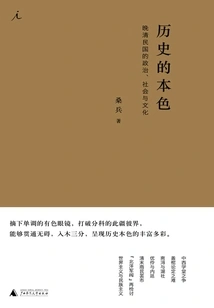
The True Color of History: Politics, Society and Culture in the Late Qing and Republic of China
History历史的本色:晚清民国的政治、社会与文化
Sang Bing
Famous scholars in modern history re-discussed the approach to scholarship and explored the late Qing Dynasty and the Republic of China. Taking off the monotonous colored glasses and breaking the boundaries of one subject and another, only then can we have an unobstructed and thorough understanding of the subject and present the true nature of history. This book is a collection of articles written by the author in recent years and published in various academic journals. We selected a total of fourteen articles related to the theme of "Politics, Society and Culture of the Late Qing and the Republic of China" and wrote them into independent books. The main articles include "The Controversy between Chinese and Western Studies from the Imperial Examination to the School", "The Conflict between Pioneers and Noumenon - An Essay on the Second Trend of Renyin Xunxi Public School" and "The Grand Stage of Life in Heaven and Earth - --Peking Opera Actor Tian Jiyun and the Reform Revolution in the Qing Dynasty" "The Coffin Lifting Theory is Hard to Determine: Public Opinion Reaction to Zhang Zhidong's Death" "Changes in Urban Structure and Businessmen's Strikes in the Late Qing Dynasty" "Disagreement, New Theory and the Truth in the Founding of the Republic of China" "Reexamination of the Word "Beiyang Warlord" and the Beijing Government of the Republic of China" "World Democracy" Articles such as "Righteousness and Nationalism - Sun Yat-sen's Response to the New Culture School" and "The Generation and Evolution of the Concept of "South China" and a Review of Regional Studies" bring together the latest research results in related fields of modern history, which are important inspirations for us to re-understand the transformation of Chinese society in the late Qing Dynasty and the Republic of China.
Famous scholars in modern history re-discussed the approach to scholarship and explored the late Qing Dynasty and the Republic of China. Taking off the monotonous colored glasses and breaking the boundaries of one subject and another, only then can we have an unobstructed and thorough understanding of the subject and present the true nature of history. This book is a collection of articles written by the author in recent years and published in various academic journals. We selected a total of fourteen articles related to the theme of "Politics, Society and Culture of the Late Qing and the Republic of China" and wrote them into independent books. The main articles include "The Controversy between Chinese and Western Studies from the Imperial Examination to the School", "The Conflict between Pioneers and Noumenon - An Essay on the Second Trend of Renyin Xunxi Public School" and "The Grand Stage of Life in Heaven and Earth - --Peking Opera Actor Tian Jiyun and the Reform Revolution in the Qing Dynasty" "The Coffin Lifting Theory is Hard to Determine: Public Opinion Reaction to Zhang Zhidong's Death" "Changes in Urban Structure and Businessmen's Strikes in the Late Qing Dynasty" "Disagreement, New Theory and the Truth in the Founding of the Republic of China" "Reexamination of the Word "Beiyang Warlord" and the Beijing Government of the Republic of China" "World Democracy" Articles such as "Righteousness and Nationalism - Sun Yat-sen's Response to the New Culture School" and "The Generation and Evolution of the Concept of "South China" and a Review of Regional Studies" bring together the latest research results in related fields of modern history, which are important inspirations for us to re-understand the transformation of Chinese society in the late Qing Dynasty and the Republic of China.
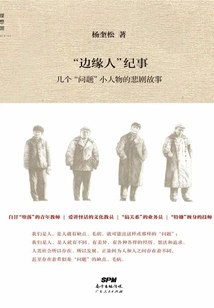
“边缘人”纪事:几个“问题”小人物的悲剧故事
Yang Kuisong
Reconstruct the life experiences of the "four types of elements" and see how the political and social ecology affects the fate of ordinary people! This book focuses on an impressive group of "marginal people". They are very ordinary, there are many of them, and most of their experiences are bumpy and complicated. Professor Yang Kuisong used eight "problem figures" with different origins, regions, occupations, and experiences as cases to reconstruct their personal experiences and observe and experience the impact of the political ecology of that era on ordinary people from the closest distance.
Reconstruct the life experiences of the "four types of elements" and see how the political and social ecology affects the fate of ordinary people! This book focuses on an impressive group of "marginal people". They are very ordinary, there are many of them, and most of their experiences are bumpy and complicated. Professor Yang Kuisong used eight "problem figures" with different origins, regions, occupations, and experiences as cases to reconstruct their personal experiences and observe and experience the impact of the political ecology of that era on ordinary people from the closest distance.
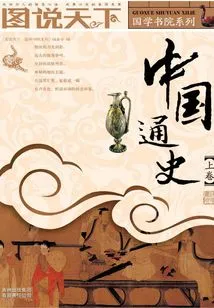
中国通史(上卷)(图说天下·国学书院系列)
Editorial Board Of "illustrations Of The World·chinese Studies Academy Series"
In the book "General History of China", we have adopted a completely different third approach, trying to reduce subjective evaluations, expanding our horizons from traditional aspects such as the rice economy, dynastic family systems, foreign invasions from northern nomads, and Confucian classical orthodoxy. We have included major historical events in agriculture, science, handicrafts, culture, tax systems, legal systems, bureaucracies, etc. Into the book, and transformed the imperial genealogical nature of traditional Chinese history books into the nature of a historical encyclopedia. Although we strive to use line drawings to present the facts of Chinese history, no one can expect that a history book can tell all the rise and fall, humanistic trends, and regulations and systems in China's history. After all, the five thousand years of glorious China's historical accumulation are too heavy for a book to bear. We just hope that the clever and meticulous narrative in the book can make you feel the grand national power of the Tang Dynasty and the economic boom of the Song Dynasty; the vivid pictures of cultural relics can make you feel the brutal killing strategy and the might of the strong cavalry; The real-life pictures can let you feel the artistic charm of the grottoes of the Northern Dynasties and the dance pavilions of the Southern Dynasties... In addition to allowing readers to dream back to the previous dynasties through pictures and texts, we also hope to make the heavy historical facts concise and let the wisdom in history enlighten your life today.
In the book "General History of China", we have adopted a completely different third approach, trying to reduce subjective evaluations, expanding our horizons from traditional aspects such as the rice economy, dynastic family systems, foreign invasions from northern nomads, and Confucian classical orthodoxy. We have included major historical events in agriculture, science, handicrafts, culture, tax systems, legal systems, bureaucracies, etc. Into the book, and transformed the imperial genealogical nature of traditional Chinese history books into the nature of a historical encyclopedia. Although we strive to use line drawings to present the facts of Chinese history, no one can expect that a history book can tell all the rise and fall, humanistic trends, and regulations and systems in China's history. After all, the five thousand years of glorious China's historical accumulation are too heavy for a book to bear. We just hope that the clever and meticulous narrative in the book can make you feel the grand national power of the Tang Dynasty and the economic boom of the Song Dynasty; the vivid pictures of cultural relics can make you feel the brutal killing strategy and the might of the strong cavalry; The real-life pictures can let you feel the artistic charm of the grottoes of the Northern Dynasties and the dance pavilions of the Southern Dynasties... In addition to allowing readers to dream back to the previous dynasties through pictures and texts, we also hope to make the heavy historical facts concise and let the wisdom in history enlighten your life today.
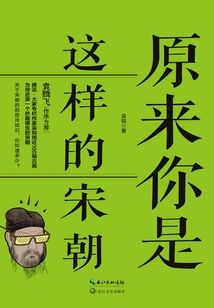
原来你是这样的宋朝
Wu Gou
What? ! There was already a free book fair in the Song Dynasty? ! Yes, the Song Dynasty Book Fair is held every May, with free book viewing and tea and wine reception. What? ! There was already a "BBS forum" in the Song Dynasty? ! Yes, the inscribed poems (original post) and the harmonious poems (followed post) on the walls of hotels in the Song Dynasty were collected and published in the poetry collection "Deer Nu Poems". What? ! The Song Dynasty also had a national husband who was loved by everyone? ! Yes, Su Dongpo was "loved" by thousands of women. Even the queen and the empress dowager were his die-hard fans. What? ! There were already NGO organizations in the Song Dynasty? ! Yes, Fan Zhongyan founded Paradigm Yizhuang to provide free assistance to the poor and has continued to operate for nearly 1,000 years. What? ! Did the Song Dynasty have a running water system? ! Yes, Su Shi designed and Wang Minzhong built Guangzhou's tap water system, using hollow bamboo pipes to bring spring water from Baiyun Mountain into the city. The prosperity and interest of the Song Dynasty are far beyond ordinary people's understanding. Open this book "So You Are Like This Song Dynasty", Wu Gou, a columnist at Tencent · Everyone and a famous researcher of Song history, will use nearly 100 ancient paintings and official historical materials to restore to you a very interesting and very different Song Dynasty.
What? ! There was already a free book fair in the Song Dynasty? ! Yes, the Song Dynasty Book Fair is held every May, with free book viewing and tea and wine reception. What? ! There was already a "BBS forum" in the Song Dynasty? ! Yes, the inscribed poems (original post) and the harmonious poems (followed post) on the walls of hotels in the Song Dynasty were collected and published in the poetry collection "Deer Nu Poems". What? ! The Song Dynasty also had a national husband who was loved by everyone? ! Yes, Su Dongpo was "loved" by thousands of women. Even the queen and the empress dowager were his die-hard fans. What? ! There were already NGO organizations in the Song Dynasty? ! Yes, Fan Zhongyan founded Paradigm Yizhuang to provide free assistance to the poor and has continued to operate for nearly 1,000 years. What? ! Did the Song Dynasty have a running water system? ! Yes, Su Shi designed and Wang Minzhong built Guangzhou's tap water system, using hollow bamboo pipes to bring spring water from Baiyun Mountain into the city. The prosperity and interest of the Song Dynasty are far beyond ordinary people's understanding. Open this book "So You Are Like This Song Dynasty", Wu Gou, a columnist at Tencent · Everyone and a famous researcher of Song history, will use nearly 100 ancient paintings and official historical materials to restore to you a very interesting and very different Song Dynasty.
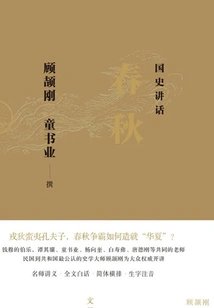
国史讲话:春秋
Gu Jiegang Tong Shuye
"Lectures on the History of the Nation: Spring and Autumn Period" was originally called "Lecture Notes on the History of the Spring and Autumn Period". It was a lecture note compiled by the famous Chinese historian Mr. Gu Jiegang during his lectures at Yenching University in the 1930s. The manuscript was co-written by Mr. Gu and Mr. Tong Shuye, a famous historian of the same period and a representative of the ancient history school. The book consists of a main part (twenty chapters in total) and an appendix (ten chapters in total). The main part mainly talks about the political history of the Spring and Autumn Period, and the appendix mainly talks about the social history of the Spring and Autumn Period, leading readers to understand the formation of the Chinese nation and its early thoughts.
"Lectures on the History of the Nation: Spring and Autumn Period" was originally called "Lecture Notes on the History of the Spring and Autumn Period". It was a lecture note compiled by the famous Chinese historian Mr. Gu Jiegang during his lectures at Yenching University in the 1930s. The manuscript was co-written by Mr. Gu and Mr. Tong Shuye, a famous historian of the same period and a representative of the ancient history school. The book consists of a main part (twenty chapters in total) and an appendix (ten chapters in total). The main part mainly talks about the political history of the Spring and Autumn Period, and the appendix mainly talks about the social history of the Spring and Autumn Period, leading readers to understand the formation of the Chinese nation and its early thoughts.
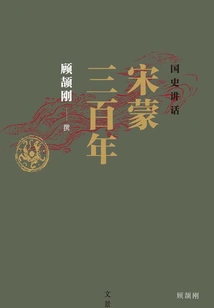
国史讲话:宋蒙三百年
Gu Jiegang
Why was the Song Dynasty, which was extremely prosperous and powerful, always suppressed by foreigners? Or you can also ask the other way around, how could the Song Dynasty, which was always invaded by foreign races, still be prosperous and prosperous? From Zhao Kuangyin, who gave up his military power over a glass of wine and counted all the agencies, to Aguda, who started a rebellion with two thousand people and conquered thousands of miles, from Abaoji, who unified eight tribes and destroyed everything, to Temujin, who conquered the east and west and made the world surrender, how did the Song, Liao, Xia, Jin and Yuan take turns to conquer the world? What are the similarities and differences in their rise, growth and decline? Why did the struggle for survival among China's various ethnic groups reach a climax in these three hundred years? Qian Mu's Bole was the legendary teacher who taught Tan Qixiang, Tong Shuye, Yang Xiangkui, Hou Renzhi, Bai Shouyi, Hu Houxuan and many other masters of history. Historian Gu Jiegang, who had long been the number one in the history of the Republic of China, gave lectures with sincerity and ease. It turns out that although the development trend of history is inevitable, it is full of coincidences and helplessness...
Why was the Song Dynasty, which was extremely prosperous and powerful, always suppressed by foreigners? Or you can also ask the other way around, how could the Song Dynasty, which was always invaded by foreign races, still be prosperous and prosperous? From Zhao Kuangyin, who gave up his military power over a glass of wine and counted all the agencies, to Aguda, who started a rebellion with two thousand people and conquered thousands of miles, from Abaoji, who unified eight tribes and destroyed everything, to Temujin, who conquered the east and west and made the world surrender, how did the Song, Liao, Xia, Jin and Yuan take turns to conquer the world? What are the similarities and differences in their rise, growth and decline? Why did the struggle for survival among China's various ethnic groups reach a climax in these three hundred years? Qian Mu's Bole was the legendary teacher who taught Tan Qixiang, Tong Shuye, Yang Xiangkui, Hou Renzhi, Bai Shouyi, Hu Houxuan and many other masters of history. Historian Gu Jiegang, who had long been the number one in the history of the Republic of China, gave lectures with sincerity and ease. It turns out that although the development trend of history is inevitable, it is full of coincidences and helplessness...
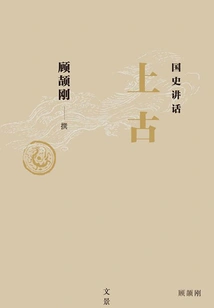
国史讲话:上古
Gu Jiegang
In ancient times, in ordinary people's minds, there were all kinds of magnificent and moving myths and legends, such as Pangu created the world, Nuwa skillfully mended the sky, Fuxi created the Eight Trigrams, Shen Nong tasted hundreds of herbs, Yao and Shun abdicated, Dayu controlled the floods, etc. For thousands of years, these legends have been regarded as trustworthy history and influenced generations of people. But, is that really the case? There are also the Xia, Shang and Zhou dynasties. Apart from Xia Qi seizing the throne, Shang Tang annihilating Jie, King Wen defeating Zhou, as well as the stories of kings, saints and virtuous ministers such as Bigan gouging out his heart, Jiang Shang fishing, Zhou Gong spitting out food, and the specious characterization of a "slave society", there seems to be no other deep imprint in the memory. However, is this period of history that lasted almost two thousand years really nothing more than that? Qian Mu's Bole, the teacher of Tan Qixiang, Tong Shuye, Yang Xiangkui, Bai Shouyi and other historical masters, and the historian Gu Jiegang, who has long been the number one in the history of the Republic of China, started his lectures with sincerity and ease. It turns out that the true meaning of antiquity is not the legend of the Three Sovereigns and Five Emperors, nor the stories of sages and saints written by King Tang and Wen of Shang Dynasty, but the birth of "China" and "Country" that are connected by our blood...
In ancient times, in ordinary people's minds, there were all kinds of magnificent and moving myths and legends, such as Pangu created the world, Nuwa skillfully mended the sky, Fuxi created the Eight Trigrams, Shen Nong tasted hundreds of herbs, Yao and Shun abdicated, Dayu controlled the floods, etc. For thousands of years, these legends have been regarded as trustworthy history and influenced generations of people. But, is that really the case? There are also the Xia, Shang and Zhou dynasties. Apart from Xia Qi seizing the throne, Shang Tang annihilating Jie, King Wen defeating Zhou, as well as the stories of kings, saints and virtuous ministers such as Bigan gouging out his heart, Jiang Shang fishing, Zhou Gong spitting out food, and the specious characterization of a "slave society", there seems to be no other deep imprint in the memory. However, is this period of history that lasted almost two thousand years really nothing more than that? Qian Mu's Bole, the teacher of Tan Qixiang, Tong Shuye, Yang Xiangkui, Bai Shouyi and other historical masters, and the historian Gu Jiegang, who has long been the number one in the history of the Republic of China, started his lectures with sincerity and ease. It turns out that the true meaning of antiquity is not the legend of the Three Sovereigns and Five Emperors, nor the stories of sages and saints written by King Tang and Wen of Shang Dynasty, but the birth of "China" and "Country" that are connected by our blood...
中国历史简明读本
Chen Tianxuan
The trajectory of Chinese history - history has gone through this way: one chaos and one governance cycle. After a long period of time, they must be divided, and if they are divided for a long time, they must be united. This is the traditional way of telling Chinese history.
The trajectory of Chinese history - history has gone through this way: one chaos and one governance cycle. After a long period of time, they must be divided, and if they are divided for a long time, they must be united. This is the traditional way of telling Chinese history.
Illustrated Chinese History
History图释中国史
Lu Simian
Mr. Lu Simian is a famous historian in our country with a wealth of works. His historical research spanned all eras and looked into all fields. He made unique contributions to China's general history, chronological history and various specialized history fields, leaving a valuable wealth for future generations to study and research. The famous historian Mr. Yan Gengwang once said, "Those who have broad theoretical fields, rich narratives, and can write deeply, I always recommend Mr. Lu Simiancheng, Mr. Chen Yuan'an, Mr. Chen Yinke and Mr. Qian Mubin as the four predecessors of history." This book is a high school history textbook that Mr. Yan was invited to compile in the 1930s. When it was written, paper was very expensive in Luoyang, and people around the world rushed to circulate it. This book uses concise and smooth words to describe China's historical trends, institutional evolution, and cultural development from ancient times to the 1930s. The final chapter is based on the great rejuvenation of the Chinese nation. It is not only clear and accurate, but also embodies the author's unique research methods and comprehensive or specific insights. It is still an excellent popular reading on the general history of China. However, this book was produced in the 1930s. Due to the underdevelopment of science and technology and the imperfect collection of personal information, there are inevitably some errors in the book. Especially the chronology of historical events, some of which are inconsistent with modern chronology, we have corrected according to the modern chronology; we have retained the chronology involved in historical periodization, because different periods represent different views on history. This is a matter of benevolence and wisdom. More opinions and opinions are also beneficial to the development of history.
Mr. Lu Simian is a famous historian in our country with a wealth of works. His historical research spanned all eras and looked into all fields. He made unique contributions to China's general history, chronological history and various specialized history fields, leaving a valuable wealth for future generations to study and research. The famous historian Mr. Yan Gengwang once said, "Those who have broad theoretical fields, rich narratives, and can write deeply, I always recommend Mr. Lu Simiancheng, Mr. Chen Yuan'an, Mr. Chen Yinke and Mr. Qian Mubin as the four predecessors of history." This book is a high school history textbook that Mr. Yan was invited to compile in the 1930s. When it was written, paper was very expensive in Luoyang, and people around the world rushed to circulate it. This book uses concise and smooth words to describe China's historical trends, institutional evolution, and cultural development from ancient times to the 1930s. The final chapter is based on the great rejuvenation of the Chinese nation. It is not only clear and accurate, but also embodies the author's unique research methods and comprehensive or specific insights. It is still an excellent popular reading on the general history of China. However, this book was produced in the 1930s. Due to the underdevelopment of science and technology and the imperfect collection of personal information, there are inevitably some errors in the book. Especially the chronology of historical events, some of which are inconsistent with modern chronology, we have corrected according to the modern chronology; we have retained the chronology involved in historical periodization, because different periods represent different views on history. This is a matter of benevolence and wisdom. More opinions and opinions are also beneficial to the development of history.
A Brief History of China
History中国简史
(france) René Grusset
"A Brief History of China" written by French historian and sinologist Grusset is one of the classic works for Westerners to study Chinese history. In the book, the author uses major historical events and historical figures as points to connect the history of China for thousands of years. Based on these points, the author unfolds the picture and intercepts unique visual aspects one by one, from the origin of China to the fall of the Qing Dynasty. At the same time, the author does not write about Chinese history in isolation, but puts it into the overall context of world history. Through horizontal and vertical comparisons, he looks at Chinese history and civilization more objectively from another perspective, and shows us a Chinese history that is different from previous perspectives.
"A Brief History of China" written by French historian and sinologist Grusset is one of the classic works for Westerners to study Chinese history. In the book, the author uses major historical events and historical figures as points to connect the history of China for thousands of years. Based on these points, the author unfolds the picture and intercepts unique visual aspects one by one, from the origin of China to the fall of the Qing Dynasty. At the same time, the author does not write about Chinese history in isolation, but puts it into the overall context of world history. Through horizontal and vertical comparisons, he looks at Chinese history and civilization more objectively from another perspective, and shows us a Chinese history that is different from previous perspectives.
中日关系史话
Wang Jianlang
China and Japan are separated by a narrow strip of water and have close relations. The friendly exchanges between the two countries can be traced back to the Qin and Han Dynasties. In ancient times, China, as Japan's largest neighbor, had many influences on Japanese culture, economy, and all aspects of life. It can be said that before the 19th century, China and Japan were equal and friendly neighbors. However, this friendly relationship quickly changed with the intervention of Western powers. Japan showed a valuable spirit of tolerance and absorption of foreign cultures in the face of foreign humiliation, launched a series of domestic reforms, and opened the way for the development of capitalism in Japan. Since then, China and Japan have embarked on completely different development paths. As its national power grew stronger, Japan's ambition to invade other countries also expanded step by step, and eventually joined the ranks of foreign powers invading China. This began a 70-year history of aggression against China.
China and Japan are separated by a narrow strip of water and have close relations. The friendly exchanges between the two countries can be traced back to the Qin and Han Dynasties. In ancient times, China, as Japan's largest neighbor, had many influences on Japanese culture, economy, and all aspects of life. It can be said that before the 19th century, China and Japan were equal and friendly neighbors. However, this friendly relationship quickly changed with the intervention of Western powers. Japan showed a valuable spirit of tolerance and absorption of foreign cultures in the face of foreign humiliation, launched a series of domestic reforms, and opened the way for the development of capitalism in Japan. Since then, China and Japan have embarked on completely different development paths. As its national power grew stronger, Japan's ambition to invade other countries also expanded step by step, and eventually joined the ranks of foreign powers invading China. This began a 70-year history of aggression against China.
中华二千年史(中)
Deng Zhicheng
Deng Zhicheng began to write "General History of China" for teaching needs. In 1934, the Commercial Press included it in the "University Series" and renamed it "Two Thousand Years of History of China". Twenty years later, the author continued to compile the Ming and Qing Dynasty parts, and the whole book was completed, with 2.7 Million words. It is unique among similar historical works. From the unification of the Qin Dynasty to the Revolution of 1911 and the fall of the Qing Dynasty, it narrates the Three Kingdoms, the Jin and the Southern and Northern Dynasties, the Sui, Tang, and Five Dynasties, the Song, Liao, Jin, Xia, and Yuan Dynasties, etc. It is finally completed in 5 volumes and 9 volumes. It is truly a magnificent masterpiece. The book combines several genres such as chronicle style, chronological style, biographical style, and chapter style. The chronicle style is the backbone of the book, compiling historical facts, institutions, academics, literature, customs, religions, etc. Of each dynasty, supplemented by charts, using simplicity to control complexity, with clear entries and rich content.
Deng Zhicheng began to write "General History of China" for teaching needs. In 1934, the Commercial Press included it in the "University Series" and renamed it "Two Thousand Years of History of China". Twenty years later, the author continued to compile the Ming and Qing Dynasty parts, and the whole book was completed, with 2.7 Million words. It is unique among similar historical works. From the unification of the Qin Dynasty to the Revolution of 1911 and the fall of the Qing Dynasty, it narrates the Three Kingdoms, the Jin and the Southern and Northern Dynasties, the Sui, Tang, and Five Dynasties, the Song, Liao, Jin, Xia, and Yuan Dynasties, etc. It is finally completed in 5 volumes and 9 volumes. It is truly a magnificent masterpiece. The book combines several genres such as chronicle style, chronological style, biographical style, and chapter style. The chronicle style is the backbone of the book, compiling historical facts, institutions, academics, literature, customs, religions, etc. Of each dynasty, supplemented by charts, using simplicity to control complexity, with clear entries and rich content.
唐史原来超有趣大全集(超值白金版)
Fang Jiao
This book is based on official history and collects the research results of historical scholars over the years. It records the prosperity and decline, peace and turmoil, civilization and loss of the Tang Dynasty in the past three hundred years. The language of the book is vivid, interesting and readable.
This book is based on official history and collects the research results of historical scholars over the years. It records the prosperity and decline, peace and turmoil, civilization and loss of the Tang Dynasty in the past three hundred years. The language of the book is vivid, interesting and readable.
半小时漫画中国史2
Bastard
Read comics for half an hour and learn about 5,000 years of history. Use comics to interpret history and start a new reading trend! "Half-Hour Comic History of China 2" is the second part of the "Half-Hour Comic History of China" series. The climax of the Han Dynasty, the Three Kingdoms era where heroes competed for power, and the unrestrained style of the Wei and Jin Dynasties all shine in this book! "Half-hour Comic History of China 2" is actually a rigorous and minimalist history of China! The author has been highly recommended by Zhang Quanling, former CCTV host and mentor of the popular online TV series "Qi Pa Shuo"! Read comics for half an hour and learn about five thousand years of history. Use comics to interpret history and start a new reading trend. Just through hand-drawings and jokes, Erhuizi has drawn out a clear historical context: the Spring and Autumn Period and the Warring States Period are like a class, the Great Qin Dynasty is like a class, the Great Qin Dynasty is just too addictive, the Three Kingdoms have three major battles, the Wei and Jin Dynasties are full of weird things, the Southern and Northern Dynasties are rich in prodigal sons, the Tang Dynasty has a cool national style... Uncovering the complicated historical surface, omitting the insignificant details, every page There are historical jokes that will make you laugh every three seconds, while the emperors and generals hand-drawn by the idiots are cheap and silly: Emperor Qin, Emperor Wu of Han, Emperor Zong of Tang, Emperor Song, Cao Cao, and Sun Quan are all just like you and me, with strengths and weaknesses, friends and enemies, and their amazing energy bursting out at key points in history has created three thousand years of wonderful Chinese history. And while you are laughing out your abs, you have unknowingly understood the history.
Read comics for half an hour and learn about 5,000 years of history. Use comics to interpret history and start a new reading trend! "Half-Hour Comic History of China 2" is the second part of the "Half-Hour Comic History of China" series. The climax of the Han Dynasty, the Three Kingdoms era where heroes competed for power, and the unrestrained style of the Wei and Jin Dynasties all shine in this book! "Half-hour Comic History of China 2" is actually a rigorous and minimalist history of China! The author has been highly recommended by Zhang Quanling, former CCTV host and mentor of the popular online TV series "Qi Pa Shuo"! Read comics for half an hour and learn about five thousand years of history. Use comics to interpret history and start a new reading trend. Just through hand-drawings and jokes, Erhuizi has drawn out a clear historical context: the Spring and Autumn Period and the Warring States Period are like a class, the Great Qin Dynasty is like a class, the Great Qin Dynasty is just too addictive, the Three Kingdoms have three major battles, the Wei and Jin Dynasties are full of weird things, the Southern and Northern Dynasties are rich in prodigal sons, the Tang Dynasty has a cool national style... Uncovering the complicated historical surface, omitting the insignificant details, every page There are historical jokes that will make you laugh every three seconds, while the emperors and generals hand-drawn by the idiots are cheap and silly: Emperor Qin, Emperor Wu of Han, Emperor Zong of Tang, Emperor Song, Cao Cao, and Sun Quan are all just like you and me, with strengths and weaknesses, friends and enemies, and their amazing energy bursting out at key points in history has created three thousand years of wonderful Chinese history. And while you are laughing out your abs, you have unknowingly understood the history.
National Memorial (part 7): a Record of the Kuomintang's Naval Resistance on the Frontal Battlefield
History国殇(第七部):国民党正面战场海军抗战纪实
Wang Xiaohua
"National Memorial (Part 7): A Record of the Kuomintang's Frontal Battlefield Naval Resistance" is a tragic naval history in which the Republic of China Navy fought to the death with Japan's powerful enemy and died heroically for the country. For hundreds of years, maritime troubles have never subsided, and the ancestral maritime territory has been repeatedly invaded and intensified. In the first Sino-Japanese War in the 19th century, the Beiyang Fleet, which seemed to be the largest in East Asia, was completely wiped out; in the second Sino-Japanese War in the 20th century, the weak Republic of China Navy bravely showed its sword and died for its country in the face of a powerful enemy.
"National Memorial (Part 7): A Record of the Kuomintang's Frontal Battlefield Naval Resistance" is a tragic naval history in which the Republic of China Navy fought to the death with Japan's powerful enemy and died heroically for the country. For hundreds of years, maritime troubles have never subsided, and the ancestral maritime territory has been repeatedly invaded and intensified. In the first Sino-Japanese War in the 19th century, the Beiyang Fleet, which seemed to be the largest in East Asia, was completely wiped out; in the second Sino-Japanese War in the 20th century, the weak Republic of China Navy bravely showed its sword and died for its country in the face of a powerful enemy.