Library
Browse and search books
2,472 novels found
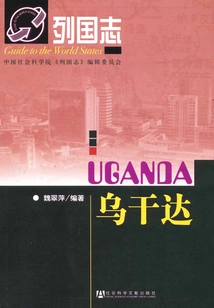
Uganda
History乌干达
Wei Cuiping
Uganda is a landlocked country in eastern Africa, close to the center of the African continent and is known as the "Heart of Africa". Due to the superior natural conditions, primitive people lived in it in ancient times. A few hundred years ago, a large number of foreign ethnic groups moved in, bringing agriculture and animal husbandry. A centralized kingdom emerged in the 13th and 14th centuries AD, and became a British colony at the end of the 19th century. It gained independence from British colonial rule in 1962. This book introduces Uganda's geography, history, politics, economy, culture, military, diplomacy, etc. With detailed information, providing a window of knowledge for readers to understand Uganda.
Uganda is a landlocked country in eastern Africa, close to the center of the African continent and is known as the "Heart of Africa". Due to the superior natural conditions, primitive people lived in it in ancient times. A few hundred years ago, a large number of foreign ethnic groups moved in, bringing agriculture and animal husbandry. A centralized kingdom emerged in the 13th and 14th centuries AD, and became a British colony at the end of the 19th century. It gained independence from British colonial rule in 1962. This book introduces Uganda's geography, history, politics, economy, culture, military, diplomacy, etc. With detailed information, providing a window of knowledge for readers to understand Uganda.
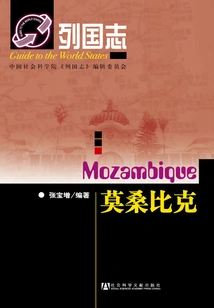
Mozambique
History莫桑比克
Zhang Baozeng
Mozambique, the full name of the Republic of Mozambique, believes that "the light is coming". It is located in southeastern Africa, bordering Tanzania to the north, Malawi, Zambia, and Zimbabwe to the west, South Africa and Swaziland to the south, the Indian Ocean to the east, and Madagascar across the Mozambique Strait. The territory covers an area of approximately 800,000 square kilometers and the population is approximately 16 million (1997). There are more than 60 tribes in the country, and the vast majority belong to the Bantu language family. The official language is Portuguese. The terrain of the whole country is high in the northwest and low in the southeast. The northwest is a plateau and mountainous area, the central part is a platform, and the southeastern coast is one of the largest plains in Africa. It has a savanna climate with an average annual temperature of 20°C. The annual precipitation decreases from 1000 mm in the north to 750 mm in the south. The main mineral deposits include coal, iron, copper, gold, etc. It is rich in water conservancy and fishery resources, and is rich in shrimps and shellfish. Agriculture is the foundation of the national economy, and 80% of people are employed in the agricultural sector. The main crops include rice, corn, cashew nuts, cotton, etc. The industry is mainly agricultural and forestry product processing industry. Economic development is lagging behind and it is one of the least developed countries. Portugal invaded in 1505, became a Portuguese protectorate in 1700, became independent in June 1975, and established diplomatic relations with my country in the same month.
Mozambique, the full name of the Republic of Mozambique, believes that "the light is coming". It is located in southeastern Africa, bordering Tanzania to the north, Malawi, Zambia, and Zimbabwe to the west, South Africa and Swaziland to the south, the Indian Ocean to the east, and Madagascar across the Mozambique Strait. The territory covers an area of approximately 800,000 square kilometers and the population is approximately 16 million (1997). There are more than 60 tribes in the country, and the vast majority belong to the Bantu language family. The official language is Portuguese. The terrain of the whole country is high in the northwest and low in the southeast. The northwest is a plateau and mountainous area, the central part is a platform, and the southeastern coast is one of the largest plains in Africa. It has a savanna climate with an average annual temperature of 20°C. The annual precipitation decreases from 1000 mm in the north to 750 mm in the south. The main mineral deposits include coal, iron, copper, gold, etc. It is rich in water conservancy and fishery resources, and is rich in shrimps and shellfish. Agriculture is the foundation of the national economy, and 80% of people are employed in the agricultural sector. The main crops include rice, corn, cashew nuts, cotton, etc. The industry is mainly agricultural and forestry product processing industry. Economic development is lagging behind and it is one of the least developed countries. Portugal invaded in 1505, became a Portuguese protectorate in 1700, became independent in June 1975, and established diplomatic relations with my country in the same month.
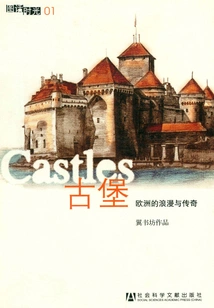
古堡:欧洲的浪漫与传奇
This Book Writing Team
Only by understanding the castle can you understand the real Europe. The castles in Western Europe are romantic and magnificent, the castles in Eastern Europe are legendary, the castles in Central Europe are full of fairy tale atmosphere, the castles in Northern Europe are simple and steady, and the castles in Southern Europe have unique styles. The castle embodies Europe's past and present, romance and legend. This is a war-torn fortress, here is where knights come and go, here is a secret garden where romance and conspiracy coexist, here are legends that exist in reality, here are the legends of dragons, vampires and princesses. People live for it, fight for it, and die for it. Everything has already started and everything is calm. Open this book and take a journey through time, walk into the castle, and enter the deepest mysterious depths of European culture.
Only by understanding the castle can you understand the real Europe. The castles in Western Europe are romantic and magnificent, the castles in Eastern Europe are legendary, the castles in Central Europe are full of fairy tale atmosphere, the castles in Northern Europe are simple and steady, and the castles in Southern Europe have unique styles. The castle embodies Europe's past and present, romance and legend. This is a war-torn fortress, here is where knights come and go, here is a secret garden where romance and conspiracy coexist, here are legends that exist in reality, here are the legends of dragons, vampires and princesses. People live for it, fight for it, and die for it. Everything has already started and everything is calm. Open this book and take a journey through time, walk into the castle, and enter the deepest mysterious depths of European culture.
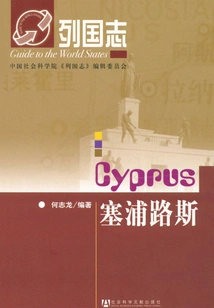
Cyprus
History塞浦路斯
He Zhilong
Known as the "Island of Love", "Island of Saints" and "Island of Copper", the small country of Cyprus has a history that is disproportionate to its region. It has experienced successive occupations by the Assyrians, Egyptians, Persians, Alexander the Great, the Ptolemaic Dynasty of Egypt, the Roman Empire, the Byzantine Empire, Richard the Lionheart, the French, Venetians, the Ottoman Empire and British colonial rule. Shortly after independence in 1960, conflicts between the Greek and Turkish communities resumed. In 1974, Turkish armed intervention led to the division of the two communities into the north and the south. The reconciliation talks between the two communities mediated by the international community have failed to resolve, and the situation of division remains. In May 2004, the Greek-controlled Republic of Cyprus in the south unilaterally joined the EU, while the "Turkish Republic of Northern Cyprus" in the north is still recognized only by Turkey.
Known as the "Island of Love", "Island of Saints" and "Island of Copper", the small country of Cyprus has a history that is disproportionate to its region. It has experienced successive occupations by the Assyrians, Egyptians, Persians, Alexander the Great, the Ptolemaic Dynasty of Egypt, the Roman Empire, the Byzantine Empire, Richard the Lionheart, the French, Venetians, the Ottoman Empire and British colonial rule. Shortly after independence in 1960, conflicts between the Greek and Turkish communities resumed. In 1974, Turkish armed intervention led to the division of the two communities into the north and the south. The reconciliation talks between the two communities mediated by the international community have failed to resolve, and the situation of division remains. In May 2004, the Greek-controlled Republic of Cyprus in the south unilaterally joined the EU, while the "Turkish Republic of Northern Cyprus" in the north is still recognized only by Turkey.
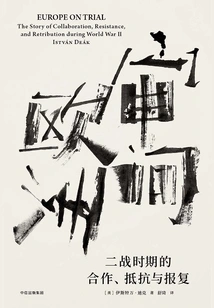
审问欧洲:二战时期的合作、抵抗与报复
(us) Istvan Dick
How one politician, Hitler, and one nation, the Germans, could completely change the face of an entire continent remains a mystery, but Germany's power is actually more limited than is generally recognized. Take the Jews as an example. Without the enthusiastic cooperation of many non-German Europeans, the Nazis would not have been able to achieve the final level of purges. On the contrary, without the resistance of many non-German Europeans, the survival of so many Jews would be unimaginable. Regarding the German Nazis, during World War II in Europe, national governments, local institutions, and individuals from different social classes all chose passive compliance, active cooperation, or resistance at different times. In this book, acclaimed historian Istvan Dick explores cooperation, resistance, and revenge during the Second World War. The author examines these three themes through the experiences of countries and peoples under German occupation and under Soviet, Italian, and other military rule. They faced many moral and ethical dilemmas. Should they cooperate with the occupiers, remain neutral in the war and survive, or risk their lives as resisters? Most people chose all three scenarios based on the different circumstances of the war at different times. The author discusses the purge of actual or suspected war criminals and wartime collaborators in the aftermath of the brutal war, primarily through a variety of violence, deportations, and judicial trials before the Nuremberg International Tribunal and numerous other local tribunals. This book is intended to help us understand the moral causes and consequences of wartime and postwar times.
How one politician, Hitler, and one nation, the Germans, could completely change the face of an entire continent remains a mystery, but Germany's power is actually more limited than is generally recognized. Take the Jews as an example. Without the enthusiastic cooperation of many non-German Europeans, the Nazis would not have been able to achieve the final level of purges. On the contrary, without the resistance of many non-German Europeans, the survival of so many Jews would be unimaginable. Regarding the German Nazis, during World War II in Europe, national governments, local institutions, and individuals from different social classes all chose passive compliance, active cooperation, or resistance at different times. In this book, acclaimed historian Istvan Dick explores cooperation, resistance, and revenge during the Second World War. The author examines these three themes through the experiences of countries and peoples under German occupation and under Soviet, Italian, and other military rule. They faced many moral and ethical dilemmas. Should they cooperate with the occupiers, remain neutral in the war and survive, or risk their lives as resisters? Most people chose all three scenarios based on the different circumstances of the war at different times. The author discusses the purge of actual or suspected war criminals and wartime collaborators in the aftermath of the brutal war, primarily through a variety of violence, deportations, and judicial trials before the Nuremberg International Tribunal and numerous other local tribunals. This book is intended to help us understand the moral causes and consequences of wartime and postwar times.
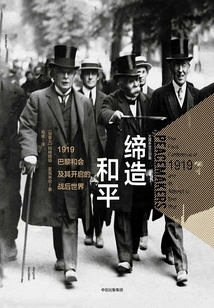
缔造和平:1919巴黎和会及其开启的战后世界
W
"Making Peace: The 1919 Paris Peace Conference and the Post-War World It Opened (Great Power Diplomacy Trilogy)" returns to the diplomatic scene of the 20th century and witnesses the struggle of great powers that gave birth to a new order in the century of war. Oxford University professor and Johnson Prize winner vividly relives the Paris Peace Conference and looks at the sketches of today's world drawn by heads of state a century ago. An earth-shaking war, an unprecedented peace effort, a war that ended war, a peace that ended peace. International relations historian Margaret Macmillan uses a novelistic style and relies on massive documents to present the true history of the Paris Peace Conference. Macmillan uses rich details and poignant writing to show us a group portrait of the peacemakers, vividly expressing their personalities, ideals and prejudices, and is not merciless to her great-grandfather Lloyd George. She told us that the Paris Peace Conference was not only the Treaty of Versailles and the League of Nations that were criticized by the world, but the outbreak of World War II in 1939 should not be attributed to them either. However, the participants are not exempt from the blame for their poor decision-making. They originally wanted to create peace, but instead planted the seeds for larger-scale wars and more conflicts.
"Making Peace: The 1919 Paris Peace Conference and the Post-War World It Opened (Great Power Diplomacy Trilogy)" returns to the diplomatic scene of the 20th century and witnesses the struggle of great powers that gave birth to a new order in the century of war. Oxford University professor and Johnson Prize winner vividly relives the Paris Peace Conference and looks at the sketches of today's world drawn by heads of state a century ago. An earth-shaking war, an unprecedented peace effort, a war that ended war, a peace that ended peace. International relations historian Margaret Macmillan uses a novelistic style and relies on massive documents to present the true history of the Paris Peace Conference. Macmillan uses rich details and poignant writing to show us a group portrait of the peacemakers, vividly expressing their personalities, ideals and prejudices, and is not merciless to her great-grandfather Lloyd George. She told us that the Paris Peace Conference was not only the Treaty of Versailles and the League of Nations that were criticized by the world, but the outbreak of World War II in 1939 should not be attributed to them either. However, the participants are not exempt from the blame for their poor decision-making. They originally wanted to create peace, but instead planted the seeds for larger-scale wars and more conflicts.
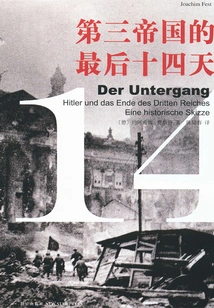
第三帝国的最后十四天
(germany) Joachim Feist
Joachim Feist, the author of "The Last Fourteen Days of the Third Reich", is a German historian and a respected authority on Nazi Germany. He is known as a person who "knows Hitler better than Hitler himself." After collecting, combing, and screening a large number of historical materials (including many brand-new first-hand materials), Feist describes what happened in the last 14 days of Hitler and his Third Reich's demise after they were besieged by the Soviet Red Army in 1945. In a way that is close to the psychology of historical figures, he presents the war situation, the last resistance of the Nazis, the apocalyptic life in the underground bomb shelter of the Reich Chancellery, the wedding of Hitler and Eva Braun, and the process of how both of them committed suicide in the end. In addition to the four narrative chapters, four reflective chapters are also used to discuss how "a country in an extreme state" was involved in the whirlpool of history. The last 14 days of the Third Reich were also the last 14 days of Hitler. Through these 14 days, the causes and consequences of the entire World War II are refracted and revealed, making this book a classic masterpiece.
Joachim Feist, the author of "The Last Fourteen Days of the Third Reich", is a German historian and a respected authority on Nazi Germany. He is known as a person who "knows Hitler better than Hitler himself." After collecting, combing, and screening a large number of historical materials (including many brand-new first-hand materials), Feist describes what happened in the last 14 days of Hitler and his Third Reich's demise after they were besieged by the Soviet Red Army in 1945. In a way that is close to the psychology of historical figures, he presents the war situation, the last resistance of the Nazis, the apocalyptic life in the underground bomb shelter of the Reich Chancellery, the wedding of Hitler and Eva Braun, and the process of how both of them committed suicide in the end. In addition to the four narrative chapters, four reflective chapters are also used to discuss how "a country in an extreme state" was involved in the whirlpool of history. The last 14 days of the Third Reich were also the last 14 days of Hitler. Through these 14 days, the causes and consequences of the entire World War II are refracted and revealed, making this book a classic masterpiece.
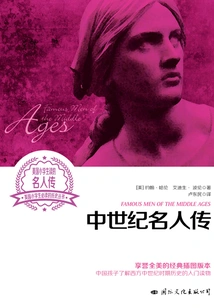
中世纪名人传
(u. S.) John Harlan Addison Pollan
This book is the third part of Harlan's "Celebrity Series" historical biographies. It goes from ancient Rome to modern times. It is a historical book for American primary school students. As an educator and historian, the biographies of historical celebrities written by Harlan are standard reading materials for primary school curriculum in the United States. They are very popular among primary school students and well received by parents and professionals.
This book is the third part of Harlan's "Celebrity Series" historical biographies. It goes from ancient Rome to modern times. It is a historical book for American primary school students. As an educator and historian, the biographies of historical celebrities written by Harlan are standard reading materials for primary school curriculum in the United States. They are very popular among primary school students and well received by parents and professionals.
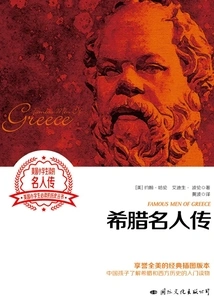
Greek Biographies
History希腊名人传
(u. S.) John Harlan Addison Pollan
This book is the first part of Harlan's "Celebrity Series" historical biographies. It is a historical book written for American primary school students. As an educator and historian, the biographies of historical celebrities written by him are standard reading materials for American primary school curriculum. They are very popular among primary school students and well received by parents and professionals.
This book is the first part of Harlan's "Celebrity Series" historical biographies. It is a historical book written for American primary school students. As an educator and historian, the biographies of historical celebrities written by him are standard reading materials for American primary school curriculum. They are very popular among primary school students and well received by parents and professionals.
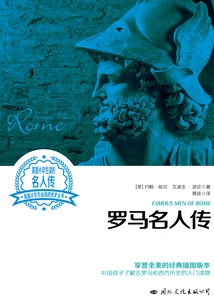
Roman Biographies
History罗马名人传
(u. S.) John Harlan Addison Pollan
This book is the second part of Harlan's "Celebrity Series" historical biographies. It begins with ancient Greece and continues with the Middle Ages. It is a historical book written for American primary school students. As an educator and historian, the biographies of historical celebrities written by Harlan are standard reading materials for primary school curriculum in the United States. They are very popular among primary school students and well received by parents and professionals.
This book is the second part of Harlan's "Celebrity Series" historical biographies. It begins with ancient Greece and continues with the Middle Ages. It is a historical book written for American primary school students. As an educator and historian, the biographies of historical celebrities written by Harlan are standard reading materials for primary school curriculum in the United States. They are very popular among primary school students and well received by parents and professionals.
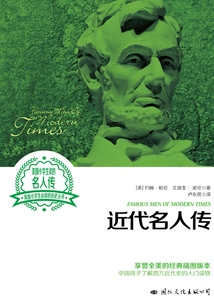
近代名人传
(u. S.) John Harlan Addison Pollan
This book is the last part of Harlan's "Celebrity Series" historical biographies. It takes over the Middle Ages and is a historical book for American primary school students. As an educator and historian, the biographies of historical celebrities written by Harlan are standard reading materials for primary school curriculum in the United States. They are very popular among primary school students and well received by parents and professionals.
This book is the last part of Harlan's "Celebrity Series" historical biographies. It takes over the Middle Ages and is a historical book for American primary school students. As an educator and historian, the biographies of historical celebrities written by Harlan are standard reading materials for primary school curriculum in the United States. They are very popular among primary school students and well received by parents and professionals.
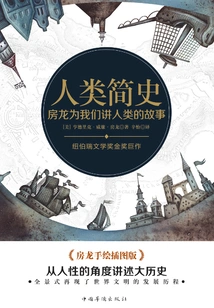
人类简史:房龙为我们讲人类的故事(插图版)
Fanglong
"A Brief History of Mankind" is one of Van Loon's representative works. The author uses images and smooth words to let readers see the history of human civilization development for thousands of years. The story begins in ancient times, then tells the origins of the Egyptian and Mesopotamian civilizations, the brilliance of the Greek and Roman eras, and then follows the clue of the origin of religion to tell the development of medieval society... It can be said that this is a classic book that has been best-selling around the world and has provided spiritual food to many readers.
"A Brief History of Mankind" is one of Van Loon's representative works. The author uses images and smooth words to let readers see the history of human civilization development for thousands of years. The story begins in ancient times, then tells the origins of the Egyptian and Mesopotamian civilizations, the brilliance of the Greek and Roman eras, and then follows the clue of the origin of religion to tell the development of medieval society... It can be said that this is a classic book that has been best-selling around the world and has provided spiritual food to many readers.
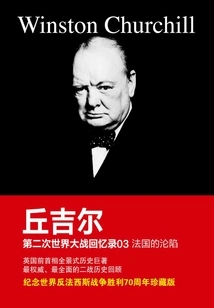
第二次世界大战回忆录3:法国的沦陷
J
"World War Series (Volume 2): The Fall of France" tells the story of the Swedish Academy's speech in awarding the Nobel Prize for Literature to Churchill: "Churchill's speech was concise, agile, penetrating, and touching. His speech was like It seems to have the power to reshape history. ... At a critical moment when human freedom and dignity were at stake, Churchill inspired people's fighting spirit with his unique eloquence. Perhaps it was these great speeches that established him as an immortal monument."
"World War Series (Volume 2): The Fall of France" tells the story of the Swedish Academy's speech in awarding the Nobel Prize for Literature to Churchill: "Churchill's speech was concise, agile, penetrating, and touching. His speech was like It seems to have the power to reshape history. ... At a critical moment when human freedom and dignity were at stake, Churchill inspired people's fighting spirit with his unique eloquence. Perhaps it was these great speeches that established him as an immortal monument."
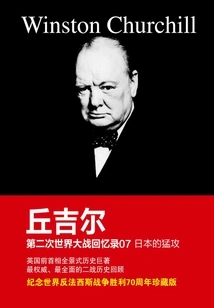
第二次世界大战回忆录7:日本的猛攻
(british) Churchill
"World War Series (Volume 2): Japan's Onslaught" describes Japan's aggression against relevant countries in Asia and the Pacific Rim in the middle of World War II, as well as the different responses of the United States and Britain to this. After long preparations, Japan launched a comprehensive war of aggression in the Asia-Pacific region, causing the United States to pay a heavy price in the Pacific battlefield and causing Britain to suffer huge losses in Southeast Asia. At that time, the world situation was entering an extremely anxious period. From China to Myanmar, from Malta to Madagascar, everyone was involved in this unpredictable melee. In addition, the book also reflects the key role China played in resisting Japanese aggression.
"World War Series (Volume 2): Japan's Onslaught" describes Japan's aggression against relevant countries in Asia and the Pacific Rim in the middle of World War II, as well as the different responses of the United States and Britain to this. After long preparations, Japan launched a comprehensive war of aggression in the Asia-Pacific region, causing the United States to pay a heavy price in the Pacific battlefield and causing Britain to suffer huge losses in Southeast Asia. At that time, the world situation was entering an extremely anxious period. From China to Myanmar, from Malta to Madagascar, everyone was involved in this unpredictable melee. In addition, the book also reflects the key role China played in resisting Japanese aggression.
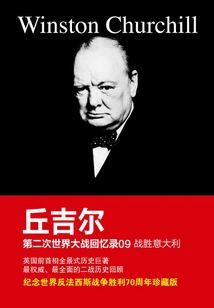
第二次世界大战回忆录9:战胜意大利
J
Brief introduction to "World War Series: Victory over Italy": From June to December 1943, the Allied forces worked together to conquer Sicily and force Mussolini to collapse, thus further tightening the encirclement of Nazi Germany. As the war situation gradually became clearer, the prototype of the post-World War II international order took shape. "World War Series: Victory over Italy" traces and reproduces the entire process of the Allies' victory over Italy, touching on the complex and subtle relationships between the United States, Britain, France and other Allied powers.
Brief introduction to "World War Series: Victory over Italy": From June to December 1943, the Allied forces worked together to conquer Sicily and force Mussolini to collapse, thus further tightening the encirclement of Nazi Germany. As the war situation gradually became clearer, the prototype of the post-World War II international order took shape. "World War Series: Victory over Italy" traces and reproduces the entire process of the Allies' victory over Italy, touching on the complex and subtle relationships between the United States, Britain, France and other Allied powers.
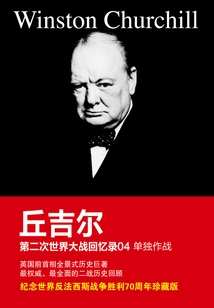
第二次世界大战回忆录4:单独作战
J
In this book, the author tells the story of how, as Prime Minister, First Chancellor of the Exchequer, Defense Minister and Leader of the House of Commons in the early days of World War II, when Germany launched a fatal attack on Britain, in the absence of external assistance, he led the British people to fight bravely and jointly passed through the most difficult period of the war. During this period, although the British people were isolated and helpless, they always held on to the fortress and tenaciously resisted the air attacks of German aircraft day and night. The situation in North Africa is even less optimistic, and the Italians are taking the opportunity to continue to encroach on North African countries. Under this situation, the British government actively sought support from the United States, Spain and other countries in an attempt to jointly fight against the further expansion of fascism.
In this book, the author tells the story of how, as Prime Minister, First Chancellor of the Exchequer, Defense Minister and Leader of the House of Commons in the early days of World War II, when Germany launched a fatal attack on Britain, in the absence of external assistance, he led the British people to fight bravely and jointly passed through the most difficult period of the war. During this period, although the British people were isolated and helpless, they always held on to the fortress and tenaciously resisted the air attacks of German aircraft day and night. The situation in North Africa is even less optimistic, and the Italians are taking the opportunity to continue to encroach on North African countries. Under this situation, the British government actively sought support from the United States, Spain and other countries in an attempt to jointly fight against the further expansion of fascism.
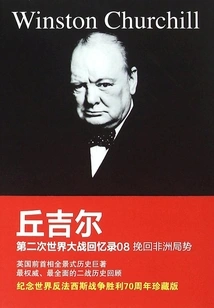
第二次世界大战回忆录8:挽回非洲局势
J
"Churchill's Memoirs of World War II 08: Saving the Situation in Africa" takes readers into the stalemate stage in the middle of World War II and into the difficult and spectacular historical landscape on the African battlefield. At that time, after withstanding the initial fierce offensive of the fascist countries, the Allies gradually gained a foothold. Eisenhower led his troops into North Africa and reversed the situation in Africa in one fell swoop; Churchill successively visited Moscow and Washington, demonstrating magnificent great-power diplomacy. At the same time, the romantic Casablanca and the mysterious Katyn, Poland, these familiar place names are looming in the book.
"Churchill's Memoirs of World War II 08: Saving the Situation in Africa" takes readers into the stalemate stage in the middle of World War II and into the difficult and spectacular historical landscape on the African battlefield. At that time, after withstanding the initial fierce offensive of the fascist countries, the Allies gradually gained a foothold. Eisenhower led his troops into North Africa and reversed the situation in Africa in one fell swoop; Churchill successively visited Moscow and Washington, demonstrating magnificent great-power diplomacy. At the same time, the romantic Casablanca and the mysterious Katyn, Poland, these familiar place names are looming in the book.
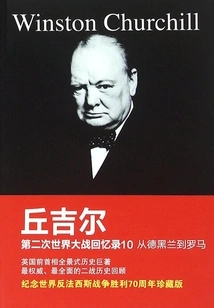
第二次世界大战回忆录10——从德黑兰到罗马
J
"Churchill's Memoirs of World War II No. 10: From Tehran to Rome" faithfully records the late period of World War II. After the war in Italy ended, the Allies assessed the situation, cooperated closely, and carefully formulated the final strategy for launching a general offensive against Nazi Germany. From Tehran to Rome, the heads of allied countries held a series of compact and productive meetings, which promoted the final victory of the war and roughly determined the division of the post-war world map. At the same time, in Yugoslavia, Greece, Burma and other places, the war is still arduously continuing, but the dawn of victory has begun to appear in the sky.
"Churchill's Memoirs of World War II No. 10: From Tehran to Rome" faithfully records the late period of World War II. After the war in Italy ended, the Allies assessed the situation, cooperated closely, and carefully formulated the final strategy for launching a general offensive against Nazi Germany. From Tehran to Rome, the heads of allied countries held a series of compact and productive meetings, which promoted the final victory of the war and roughly determined the division of the post-war world map. At the same time, in Yugoslavia, Greece, Burma and other places, the war is still arduously continuing, but the dawn of victory has begun to appear in the sky.
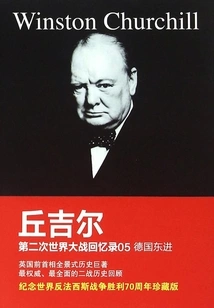
第二次世界大战回忆录5:德国东进
K
"World War Series (Volume 2): Germany's Eastward Advance" Editor's Recommendation: A panoramic historical masterpiece by the former British Prime Minister, which deciphers the little-known inside story of World War II and provides insight into the ever-changing international relations.
"World War Series (Volume 2): Germany's Eastward Advance" Editor's Recommendation: A panoramic historical masterpiece by the former British Prime Minister, which deciphers the little-known inside story of World War II and provides insight into the ever-changing international relations.
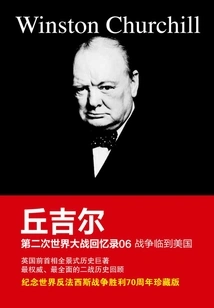
第二次世界大战回忆录6:战争临到美国
(british) Churchill
"World War Series (Volume 2): War Is Coming to America" describes the complex relationship between the United States and the Allies, from secretly providing assistance to the Allies, to gradually changing its attitude towards the war as the situation developed, until the "Pearl Harbor incident" that humiliated the United States. The United States, a military power that tried to stay out of the war in the early days, truly joined the camp of the Allies and participated in the struggle to resist and eliminate fascist Germany and Japan.
"World War Series (Volume 2): War Is Coming to America" describes the complex relationship between the United States and the Allies, from secretly providing assistance to the Allies, to gradually changing its attitude towards the war as the situation developed, until the "Pearl Harbor incident" that humiliated the United States. The United States, a military power that tried to stay out of the war in the early days, truly joined the camp of the Allies and participated in the struggle to resist and eliminate fascist Germany and Japan.
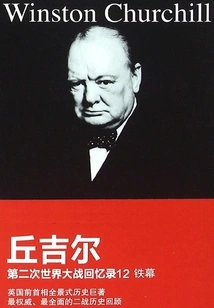
第二次世界大战回忆录12:铁幕
J
"Churchill's Memoirs of World War II 12: The Iron Curtain" records the magnificent history before the Allied forces were about to achieve total victory in the late World War II: the successful convening of the Yalta Conference, the Soviet Red Army's march to Berlin, the defeat and surrender of German fascism, the friction between the United States, Britain and the Soviet Union, the United States dropping two atomic bombs on Japan and the impact of the Potsdam Proclamation. At the same time, it also shows the complex and subtle relationships within the Allies. Although a series of international conferences established a new order, the barriers and contradictions between the Western world and the Soviet Union have never been eliminated. The world was ruthlessly divided into two halves by the "Iron Curtain".
"Churchill's Memoirs of World War II 12: The Iron Curtain" records the magnificent history before the Allied forces were about to achieve total victory in the late World War II: the successful convening of the Yalta Conference, the Soviet Red Army's march to Berlin, the defeat and surrender of German fascism, the friction between the United States, Britain and the Soviet Union, the United States dropping two atomic bombs on Japan and the impact of the Potsdam Proclamation. At the same time, it also shows the complex and subtle relationships within the Allies. Although a series of international conferences established a new order, the barriers and contradictions between the Western world and the Soviet Union have never been eliminated. The world was ruthlessly divided into two halves by the "Iron Curtain".
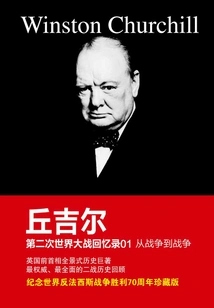
第二次世界大战回忆录1:从战争到战争
J
This book explains the author's own perspective on the situation from 1919 to 1939, and his in-depth consideration of a series of policies of Germany as a defeated country and Britain and France as victors after World War I. On this basis, it details Germany's preparations for launching World War II and Hitler's conspiracy. In this book, the author shows his vision and wisdom as a great statesman and strategist through relevant historical materials.
This book explains the author's own perspective on the situation from 1919 to 1939, and his in-depth consideration of a series of policies of Germany as a defeated country and Britain and France as victors after World War I. On this basis, it details Germany's preparations for launching World War II and Hitler's conspiracy. In this book, the author shows his vision and wisdom as a great statesman and strategist through relevant historical materials.
刘祚昌美国史讲义(名师讲义)
Written By Liu Zuochang And Compiled By Liu Wentao
Mr. Liu Zuochang is one of the founders of the study of American history in New China. In teaching, scientific research is the basis and premise, the topic-based teaching method and the problem-based teaching model are organically combined, and the seminar-based teaching method is adopted to directly introduce students to the frontier and main battlefield of scientific research. ?
Mr. Liu Zuochang is one of the founders of the study of American history in New China. In teaching, scientific research is the basis and premise, the topic-based teaching method and the problem-based teaching model are organically combined, and the seminar-based teaching method is adopted to directly introduce students to the frontier and main battlefield of scientific research. ?
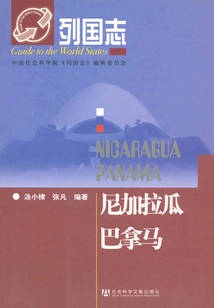
Nicaragua
History尼加拉瓜
Tang Xiaodi
This book introduces the basic information of Nicaragua's land and people, history, politics, economy, diplomacy, military, education, culture, science and health.
This book introduces the basic information of Nicaragua's land and people, history, politics, economy, diplomacy, military, education, culture, science and health.
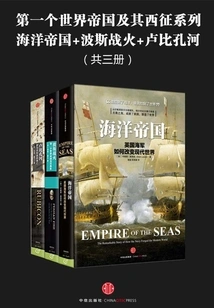
第一个世界帝国及其西征系列:海洋帝国+斯战火+波卢比孔河(共三册)
(uk) Brian Lively Tom Holland
In 49 BC, Caesar led the Gallic legions across the Rubicon River and returned to Rome, pushing the 460-year-old Roman Republic into the abyss of civil war. The Rubicon is a dividing river. According to the laws of the Roman Republic, any general was not allowed to lead his army across the Rubicon, otherwise he would be considered a treason. In the 1st century BC, it was in front of this small river that Caesar made the decision to rebel. Why did Caesar, who was at the top of power, do this? What made him determined to leave the glory of the Republic behind when he hesitated on the banks of the Rubicon? Where will Rome go under Caesar? How will the world outside Rome change? "Rubicon" tells us the decline of the Roman Republic through the incident of Caesar crossing the Rubicon. Since the establishment of the Republic in 509 BC, Rome has expanded rapidly after several conquests. By the 1st century BC, it had transformed from a small city-state into a world empire. The republic was unsustainable, and Rome would usher in a drastic social change. The book focuses on describing the social conditions of class antagonism and contradictions in the Republic before the advent of change. The dazzling stars in Roman history also appeared one after another during this period. The three Roman giants who competed for dictatorial privileges, Cicero and Cato who adhered to the concept of the Republic, and Spartacus who launched a slave uprising... Together they performed the bloody process of the decline of the Roman Republic, and sketched a portrait of the late Republic full of sacrifice, betrayal, disaster, intrigue and unlimited ambition. In the 5th century BC, Persia was determined to conquer Greece westward, and the eastern and western worlds fell into war. Persia was an unprecedentedly powerful super empire in the world at that time, with a mighty iron cavalry and the ability to destroy countless enemies. Starting from Cyrus, the "King of the Universe", in just one generation, Persia swept across the entire Middle East and established a huge country extending from India to Egypt. Greece is located on the Aegean coast. It is barren and weak, with many city-states, and its territory is not as large as a small province in Persia. In the eyes of the Persians, Greece is a group of rogue countries, and Persia should bring them truth and order; in the eyes of the Greeks, Persia is an unreasonable barbarian, and the Greeks have the blood of "cannot be enslaved" flowing in their bones. There are insurmountable differences between the two civilizations. Differences create doubts, and doubts lead to war. "Persian War: The First World Empire and its Western Expedition" tells the story of the causes and consequences of the Persian War and the entire process, from the Persian emperor who was proficient in power and the Greek city-states who were keen on infighting, to the Spartan warriors with militarized and perverted management, and the Athenian politicians who flaunted good government, writing a majestic epic full of wildness. The highlight of the book is the restoration of the thrilling and fierce battle scenes between the two sides. Whether it is the encounter between the two sides on the Plains of Marathon in 490 BC; or the bloody battle between 300 Spartan warriors against Xerxes, the "King of Kings" at the Thermopylae; or the naval battle of Salamis, in which 1,200 Persian warships were completely defeated by 300 Athenian warships... Every scene is depicted as vividly as if the reader was on an ancient battlefield and saw it with his own eyes through armor. As the first international contest across Europe and Asia in the classical world, the Persian War marked the beginning of thousands of years of conflict between Eastern and Western civilizations. "Persian War: The First World Empire and its Western Expedition" reproduces this civilizational struggle in the classical world from a new perspective. For readers who want to understand this period of history, this book is a highly anticipated introductory book. 1. From the 400-year struggle of the British Navy, tell the rise of the British Empire and how it changed the modern world. A primer on the rise and fall of sea power and civilization. The first part, "Heart of Oak", tells the story of the development of the Royal Navy from the 16th to the 18th century. The wealth, power and honor of the empire will be born in the ocean; the second part, "The Golden Sea", tells the rise of the British Empire from the 18th to the 19th century. During this period, Britain proved that "whoever controls the ocean controls the world"; the third part, "The Rising Wind", tells the story of maritime trade and maritime hegemony in the 19th century. Britain holds two tridents, creating the imperial legend of the 19th century; The fourth chapter, "Great Changes in the Sea," tells the story of the decline of the British Empire's maritime hegemony from the 20th century to World War I, and the crisis of global civilization it triggered. 2. Take history as a mirror and reflect on how marine civilization changed the modern world order. Britain is one of the representative countries of maritime civilization. The rise of the British Empire and the formation of the modern world have been deeply marked by maritime civilization. Traditional China has always adhered to a closed agricultural civilization, and has long been isolated and lagging behind the modern world dominated by maritime civilization. How to bridge the gap between agricultural civilization and marine civilization? Is it to reconstruct modern society in the way of marine civilization? Or seek the unity of agricultural civilization and marine civilization? In today's society, each of us should reflect on these issues. 3. The Sunday Times bestseller and the BBC hit documentary of the same name. "Empire of the Sea" was listed as a bestseller in the "Sunday Times". When the documentary of the same name was broadcast in the UK, the response from everyone from the Prime Minister to the public was extremely enthusiastic. The documentary is hosted by Dan Snow, the famous host of the BBC history column. Together with the book, it presents a 400-year history of the rise and fall of the empire full of heroic ambitions, and impassionedly reproduces the unparalleled glory that the British Empire once created. In 1588, the British Royal Navy defeated the Spanish Armada. This victory created a legend. In the next few hundred years, the wealth, power and glory of the empire would be born in the ocean. The Royal Navy would push Britain from the edge of Europe to the center of the modern world. "Empire of the Sea" takes the 400-year development history of the British Navy as the main line and tells the story of the rise of the British Empire and how it affected the rise and fall of modern civilization. The book is divided into four chapters, "Heart of Oak", "Golden Ocean", "Wind and Surge", and "Great Changes in the Ocean", one by one showing Britain's journey from controlling the lifeline of maritime traffic to establishing a global maritime empire, which ultimately led to a crisis in global civilization. Readers can explore the following history from the book: How did the Royal Navy develop from a ragtag group engaged in maritime plunder to a world policeman maintaining "peace under the British Empire"? From the 16th to the 18th century, how did Britain defeat almost all maritime powers in Europe and create a maritime legend of dominating the world? The pirate Drake, Prime Minister William Pitt Jr., Lord Admiralty Fisher and Churchill... What impact did the naval reforms they carried out have on the British political, economic and cultural systems? Britain became the birthplace of the Industrial Revolution and shaped modern capitalist civilization. What are the intrinsic connections between these and the Royal Navy? Why did Britain and Germany engage in a naval arms race, and how did British maritime hegemony go from its peak to its decline?
In 49 BC, Caesar led the Gallic legions across the Rubicon River and returned to Rome, pushing the 460-year-old Roman Republic into the abyss of civil war. The Rubicon is a dividing river. According to the laws of the Roman Republic, any general was not allowed to lead his army across the Rubicon, otherwise he would be considered a treason. In the 1st century BC, it was in front of this small river that Caesar made the decision to rebel. Why did Caesar, who was at the top of power, do this? What made him determined to leave the glory of the Republic behind when he hesitated on the banks of the Rubicon? Where will Rome go under Caesar? How will the world outside Rome change? "Rubicon" tells us the decline of the Roman Republic through the incident of Caesar crossing the Rubicon. Since the establishment of the Republic in 509 BC, Rome has expanded rapidly after several conquests. By the 1st century BC, it had transformed from a small city-state into a world empire. The republic was unsustainable, and Rome would usher in a drastic social change. The book focuses on describing the social conditions of class antagonism and contradictions in the Republic before the advent of change. The dazzling stars in Roman history also appeared one after another during this period. The three Roman giants who competed for dictatorial privileges, Cicero and Cato who adhered to the concept of the Republic, and Spartacus who launched a slave uprising... Together they performed the bloody process of the decline of the Roman Republic, and sketched a portrait of the late Republic full of sacrifice, betrayal, disaster, intrigue and unlimited ambition. In the 5th century BC, Persia was determined to conquer Greece westward, and the eastern and western worlds fell into war. Persia was an unprecedentedly powerful super empire in the world at that time, with a mighty iron cavalry and the ability to destroy countless enemies. Starting from Cyrus, the "King of the Universe", in just one generation, Persia swept across the entire Middle East and established a huge country extending from India to Egypt. Greece is located on the Aegean coast. It is barren and weak, with many city-states, and its territory is not as large as a small province in Persia. In the eyes of the Persians, Greece is a group of rogue countries, and Persia should bring them truth and order; in the eyes of the Greeks, Persia is an unreasonable barbarian, and the Greeks have the blood of "cannot be enslaved" flowing in their bones. There are insurmountable differences between the two civilizations. Differences create doubts, and doubts lead to war. "Persian War: The First World Empire and its Western Expedition" tells the story of the causes and consequences of the Persian War and the entire process, from the Persian emperor who was proficient in power and the Greek city-states who were keen on infighting, to the Spartan warriors with militarized and perverted management, and the Athenian politicians who flaunted good government, writing a majestic epic full of wildness. The highlight of the book is the restoration of the thrilling and fierce battle scenes between the two sides. Whether it is the encounter between the two sides on the Plains of Marathon in 490 BC; or the bloody battle between 300 Spartan warriors against Xerxes, the "King of Kings" at the Thermopylae; or the naval battle of Salamis, in which 1,200 Persian warships were completely defeated by 300 Athenian warships... Every scene is depicted as vividly as if the reader was on an ancient battlefield and saw it with his own eyes through armor. As the first international contest across Europe and Asia in the classical world, the Persian War marked the beginning of thousands of years of conflict between Eastern and Western civilizations. "Persian War: The First World Empire and its Western Expedition" reproduces this civilizational struggle in the classical world from a new perspective. For readers who want to understand this period of history, this book is a highly anticipated introductory book. 1. From the 400-year struggle of the British Navy, tell the rise of the British Empire and how it changed the modern world. A primer on the rise and fall of sea power and civilization. The first part, "Heart of Oak", tells the story of the development of the Royal Navy from the 16th to the 18th century. The wealth, power and honor of the empire will be born in the ocean; the second part, "The Golden Sea", tells the rise of the British Empire from the 18th to the 19th century. During this period, Britain proved that "whoever controls the ocean controls the world"; the third part, "The Rising Wind", tells the story of maritime trade and maritime hegemony in the 19th century. Britain holds two tridents, creating the imperial legend of the 19th century; The fourth chapter, "Great Changes in the Sea," tells the story of the decline of the British Empire's maritime hegemony from the 20th century to World War I, and the crisis of global civilization it triggered. 2. Take history as a mirror and reflect on how marine civilization changed the modern world order. Britain is one of the representative countries of maritime civilization. The rise of the British Empire and the formation of the modern world have been deeply marked by maritime civilization. Traditional China has always adhered to a closed agricultural civilization, and has long been isolated and lagging behind the modern world dominated by maritime civilization. How to bridge the gap between agricultural civilization and marine civilization? Is it to reconstruct modern society in the way of marine civilization? Or seek the unity of agricultural civilization and marine civilization? In today's society, each of us should reflect on these issues. 3. The Sunday Times bestseller and the BBC hit documentary of the same name. "Empire of the Sea" was listed as a bestseller in the "Sunday Times". When the documentary of the same name was broadcast in the UK, the response from everyone from the Prime Minister to the public was extremely enthusiastic. The documentary is hosted by Dan Snow, the famous host of the BBC history column. Together with the book, it presents a 400-year history of the rise and fall of the empire full of heroic ambitions, and impassionedly reproduces the unparalleled glory that the British Empire once created. In 1588, the British Royal Navy defeated the Spanish Armada. This victory created a legend. In the next few hundred years, the wealth, power and glory of the empire would be born in the ocean. The Royal Navy would push Britain from the edge of Europe to the center of the modern world. "Empire of the Sea" takes the 400-year development history of the British Navy as the main line and tells the story of the rise of the British Empire and how it affected the rise and fall of modern civilization. The book is divided into four chapters, "Heart of Oak", "Golden Ocean", "Wind and Surge", and "Great Changes in the Ocean", one by one showing Britain's journey from controlling the lifeline of maritime traffic to establishing a global maritime empire, which ultimately led to a crisis in global civilization. Readers can explore the following history from the book: How did the Royal Navy develop from a ragtag group engaged in maritime plunder to a world policeman maintaining "peace under the British Empire"? From the 16th to the 18th century, how did Britain defeat almost all maritime powers in Europe and create a maritime legend of dominating the world? The pirate Drake, Prime Minister William Pitt Jr., Lord Admiralty Fisher and Churchill... What impact did the naval reforms they carried out have on the British political, economic and cultural systems? Britain became the birthplace of the Industrial Revolution and shaped modern capitalist civilization. What are the intrinsic connections between these and the Royal Navy? Why did Britain and Germany engage in a naval arms race, and how did British maritime hegemony go from its peak to its decline?
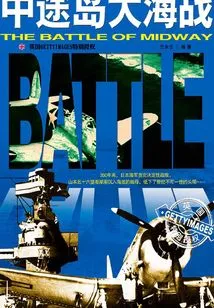
The Great Battle of Midway
History中途岛大海战
Wang Yongsheng
The Battle of Midway changed the balance of strength between Japanese and American aircraft carriers in the Pacific battlefield. After this battle, the U. S. Military stabilized the war situation in the Pacific battlefield, enabled the U. S. Strategy of "Europe first, then Asia" to be successfully implemented, and created important conditions for the U. S. Military to gradually shift from defense to offense... "The Battle of Midway" written by Wang Yongsheng tells the whole process of the Battle of Midway.
The Battle of Midway changed the balance of strength between Japanese and American aircraft carriers in the Pacific battlefield. After this battle, the U. S. Military stabilized the war situation in the Pacific battlefield, enabled the U. S. Strategy of "Europe first, then Asia" to be successfully implemented, and created important conditions for the U. S. Military to gradually shift from defense to offense... "The Battle of Midway" written by Wang Yongsheng tells the whole process of the Battle of Midway.
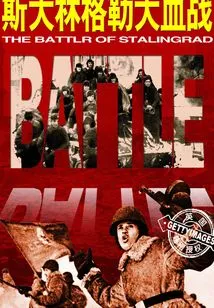
斯大林格勒大血战
Tan Qi
The Battle of Stalingrad was a battle fought by Nazi Germany to capture the southern city of Stalingrad in the Soviet Union during World War II. It lasted from June 28, 1942 to February 2, 1943. The Battle of Stalingrad was a turning point on the Eastern Front of World War II. After this war, the Soviet Union began to gradually take the strategic initiative. "Long Live Peace: A Collection of Pictures and Texts of World War II: The Bloody Battle of Stalingrad" is a detailed interpretation of this battle.
The Battle of Stalingrad was a battle fought by Nazi Germany to capture the southern city of Stalingrad in the Soviet Union during World War II. It lasted from June 28, 1942 to February 2, 1943. The Battle of Stalingrad was a turning point on the Eastern Front of World War II. After this war, the Soviet Union began to gradually take the strategic initiative. "Long Live Peace: A Collection of Pictures and Texts of World War II: The Bloody Battle of Stalingrad" is a detailed interpretation of this battle.
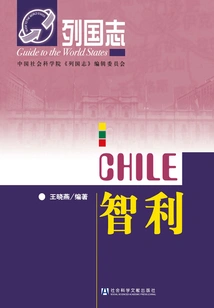
Chile
History智利
Wang Xiaoyan
Chile is the narrowest country in the world and is known as the "beautiful skirt" of the Western Hemisphere. Here you'll find the Atacama Desert, the "dryest place in the world", the magnificent Andes Mountains, the mysterious Easter Island and Tierra del Fuego, as well as the passionate Cuica dance. Known as the "Land of Copper Mines", it is also the only country in the world that produces natural saltpeter. It became a Spanish colony in 1541 and gained independence in 1810. Contemporary Chile's new social security system is very distinctive, and its comprehensive foreign policy has made it one of the most active countries in South America in economic and trade activities.
Chile is the narrowest country in the world and is known as the "beautiful skirt" of the Western Hemisphere. Here you'll find the Atacama Desert, the "dryest place in the world", the magnificent Andes Mountains, the mysterious Easter Island and Tierra del Fuego, as well as the passionate Cuica dance. Known as the "Land of Copper Mines", it is also the only country in the world that produces natural saltpeter. It became a Spanish colony in 1541 and gained independence in 1810. Contemporary Chile's new social security system is very distinctive, and its comprehensive foreign policy has made it one of the most active countries in South America in economic and trade activities.
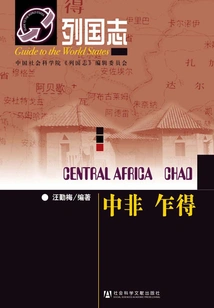
Central Africa Chad
History中非乍得
Wang Qinmei
The Central African Republic and the Republic of Chad are two adjacent landlocked countries in central Africa and are the poorest countries in the world. This book provides a relatively comprehensive introduction to its land, people, history, economy, science, education, health, culture, culture, military, diplomacy and other aspects. The information is informative and novel, and the discussion is objective, fair and realistic. It is a good reference book for understanding and studying China, Africa and Chad.
The Central African Republic and the Republic of Chad are two adjacent landlocked countries in central Africa and are the poorest countries in the world. This book provides a relatively comprehensive introduction to its land, people, history, economy, science, education, health, culture, culture, military, diplomacy and other aspects. The information is informative and novel, and the discussion is objective, fair and realistic. It is a good reference book for understanding and studying China, Africa and Chad.
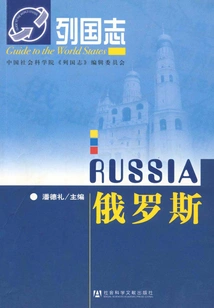
Russia
History俄罗斯
Pan Deli
Russia is the country with the largest land area surrounding our country. The relationship between Russia and China is very complicated. Tsarist Russia once invaded China and plundered a large area of China's territory. During the Soviet period, China received a large amount of assistance from the Soviet Union, and there were also major debates between China and the Soviet Union. After the disintegration of the Soviet Union, relations between Russia and China have gradually improved, and the two countries have the same or close views on many major international issues. Understanding Russia and improving relations with Russia are of great significance to our country's security and socialist construction. The book "Russia" edited by researcher Pan Deli, an expert on Russia, is an important reference book for understanding Russia.
Russia is the country with the largest land area surrounding our country. The relationship between Russia and China is very complicated. Tsarist Russia once invaded China and plundered a large area of China's territory. During the Soviet period, China received a large amount of assistance from the Soviet Union, and there were also major debates between China and the Soviet Union. After the disintegration of the Soviet Union, relations between Russia and China have gradually improved, and the two countries have the same or close views on many major international issues. Understanding Russia and improving relations with Russia are of great significance to our country's security and socialist construction. The book "Russia" edited by researcher Pan Deli, an expert on Russia, is an important reference book for understanding Russia.
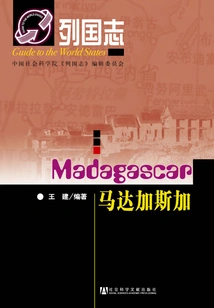
Madagascar
History马达加斯加
Wang Jian
Madagascar is a beautiful island country located in the southwest Indian Ocean, facing the African continent across the Mozambique Strait. The unique geographical location and natural environment form the unique species of flora and fauna on the island of Madagascar, and the tourism resources are extremely rich. Around the 14th century, the Melina people established the Kingdom of Imelina. At the beginning of the 19th century, Radama I basically unified the entire island and established the Kingdom of Madagascar. During the unification process, all the ethnic groups on the island gradually merged into the Malagasy nation. In 1896, Madagascar became a French colony. After unremitting struggle, the people of Madagascar gained independence on June 26, 1960. Since independence, after three republic periods, political crises have occurred from time to time, seriously hindering the normal social and economic development. It is one of the least developed countries.
Madagascar is a beautiful island country located in the southwest Indian Ocean, facing the African continent across the Mozambique Strait. The unique geographical location and natural environment form the unique species of flora and fauna on the island of Madagascar, and the tourism resources are extremely rich. Around the 14th century, the Melina people established the Kingdom of Imelina. At the beginning of the 19th century, Radama I basically unified the entire island and established the Kingdom of Madagascar. During the unification process, all the ethnic groups on the island gradually merged into the Malagasy nation. In 1896, Madagascar became a French colony. After unremitting struggle, the people of Madagascar gained independence on June 26, 1960. Since independence, after three republic periods, political crises have occurred from time to time, seriously hindering the normal social and economic development. It is one of the least developed countries.
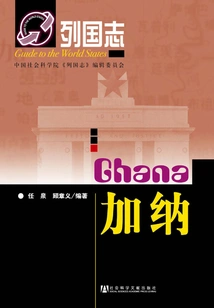
Ghana
History加纳
Ren Quan
Ghana is a West African country rich in gold and cocoa, as well as strategic material manganese ore and industrial diamond ore. Since 1992, Ghana has embarked on the path of democratization by implementing constitutionalism and a multi-party system politically, and has implemented reform and opening up economically. Foreign direct investment is protected by law. It has been hailed by the international community as a "model" for economic restructuring in African countries, and the title of "least developed country" has been canceled by the United Nations. In the past 28 years, Ghana has enjoyed social stability, sustained economic development, and an average annual GDP growth rate of 5%, making it one of the ideal target countries for foreign direct investment.
Ghana is a West African country rich in gold and cocoa, as well as strategic material manganese ore and industrial diamond ore. Since 1992, Ghana has embarked on the path of democratization by implementing constitutionalism and a multi-party system politically, and has implemented reform and opening up economically. Foreign direct investment is protected by law. It has been hailed by the international community as a "model" for economic restructuring in African countries, and the title of "least developed country" has been canceled by the United Nations. In the past 28 years, Ghana has enjoyed social stability, sustained economic development, and an average annual GDP growth rate of 5%, making it one of the ideal target countries for foreign direct investment.
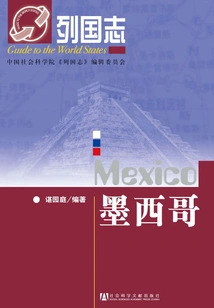
Mexico
History墨西哥
Chen Yuanting
From deserts dotted with vegetation to tropical jungles with unique features, from snow-capped volcanic craters to turquoise blue seas and silver beaches, the unique diversity of region and climate has created a mysterious and diverse Mexico. As a Latin American country located in North America, today's Mexico is becoming a bridge between developed and developing countries, East and West, with its superior geographical location and rich and diverse culture. As the largest Spanish-speaking country in the world, Mexico today also relies on its rich cultural heritage and future-oriented innovative spirit to maintain a unique position on the stage of modern civilization.
From deserts dotted with vegetation to tropical jungles with unique features, from snow-capped volcanic craters to turquoise blue seas and silver beaches, the unique diversity of region and climate has created a mysterious and diverse Mexico. As a Latin American country located in North America, today's Mexico is becoming a bridge between developed and developing countries, East and West, with its superior geographical location and rich and diverse culture. As the largest Spanish-speaking country in the world, Mexico today also relies on its rich cultural heritage and future-oriented innovative spirit to maintain a unique position on the stage of modern civilization.
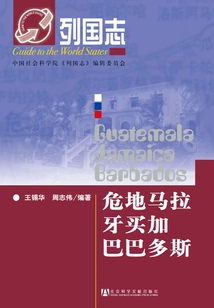
Guatemala Jamaica Barbados
History危地马拉牙买加巴巴多斯
Wang Xihua Zhou Zhiwei
Guatemala is a small country in Central America. It was once the center of the Mayan civilization and the birthplace of the Mayan culture; Jamaica is located in the heart of the Caribbean and is located on the only channel of the Panama Canal. It is the third largest island country in the Caribbean after Cuba and the seabed; Barbados is a small island country at the easternmost tip of the Lesser Antilles in the Caribbean. For Chinese people, the names of the above three Latin American countries may be a bit unfamiliar, and they are separated by oceans and far away from our country, so they don't know much about their national conditions. In this chronicle, we give a systematic introduction to the geography, humanities, history and current situation of these three countries, so that our readers can better understand these three countries.
Guatemala is a small country in Central America. It was once the center of the Mayan civilization and the birthplace of the Mayan culture; Jamaica is located in the heart of the Caribbean and is located on the only channel of the Panama Canal. It is the third largest island country in the Caribbean after Cuba and the seabed; Barbados is a small island country at the easternmost tip of the Lesser Antilles in the Caribbean. For Chinese people, the names of the above three Latin American countries may be a bit unfamiliar, and they are separated by oceans and far away from our country, so they don't know much about their national conditions. In this chronicle, we give a systematic introduction to the geography, humanities, history and current situation of these three countries, so that our readers can better understand these three countries.
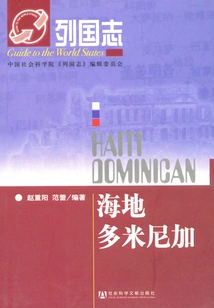
Haiti Dominican
History海地多米尼加
Fan Lei
Both Haiti and Dominica are located on the island of Hispaniola in the northern Caribbean Sea. Haiti is located in the west of the island, and Dominica is located in the east. After the outbreak of the Haitian Independence Revolution, the east and west parts of the island were unified twice, but were eventually divided into two countries. Although the two countries have deep historical roots and similarities in their historical development, they also have deep contradictions. In addition, due to different geographical conditions, population composition, and other reasons, the two countries have experienced different development paths and faced different problems.
Both Haiti and Dominica are located on the island of Hispaniola in the northern Caribbean Sea. Haiti is located in the west of the island, and Dominica is located in the east. After the outbreak of the Haitian Independence Revolution, the east and west parts of the island were unified twice, but were eventually divided into two countries. Although the two countries have deep historical roots and similarities in their historical development, they also have deep contradictions. In addition, due to different geographical conditions, population composition, and other reasons, the two countries have experienced different development paths and faced different problems.
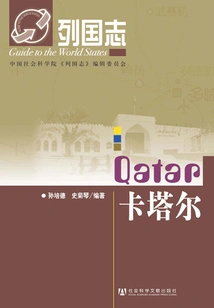
Qatar
History卡塔尔
Sun Peide
The magic of Qatar is reflected in many aspects: as a place name, it has a long history, but as a country, it is new; although it is a man's world due to historical tradition, women are not inferior to men in education, and the number of female college students exceeds that of boys; among regional countries, it is better to advocate the improvement of the status of women, but the distinction between men and women and the separation of men and women are still very strict; the elimination of press censorship and the establishment of the Ministry of Information is unique among regional countries, and freedom of speech often makes the US's regional hegemony obvious... And so on, which fully reflects the unique characteristics of Qatar, which enjoys a harmonious balance among various contradictions, which is impressive.
The magic of Qatar is reflected in many aspects: as a place name, it has a long history, but as a country, it is new; although it is a man's world due to historical tradition, women are not inferior to men in education, and the number of female college students exceeds that of boys; among regional countries, it is better to advocate the improvement of the status of women, but the distinction between men and women and the separation of men and women are still very strict; the elimination of press censorship and the establishment of the Ministry of Information is unique among regional countries, and freedom of speech often makes the US's regional hegemony obvious... And so on, which fully reflects the unique characteristics of Qatar, which enjoys a harmonious balance among various contradictions, which is impressive.
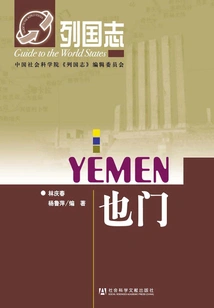
Yemen
History也门
Yang Luping Lin Qingchun
Yemen is located at the southwest tip of the Arabian Peninsula, straddling the outlet of the Red Sea to the Indian Ocean. Its strategic location is very important. It has been an important transportation route between the East and the West since ancient times. It was once a transit station on the famous ancient Maritime Silk Road and the starting point of the Spice Route. Yemen is derived from the word "to be happy" in Arabic. The word's original meaning is the right or right side, and it can also mean the south. In ancient times, some camel caravans in the Arabian Peninsula departed from Mecca and headed east, then turned right and headed south toward Yemen, hence the name Yemen, which means "Land of the South."
Yemen is located at the southwest tip of the Arabian Peninsula, straddling the outlet of the Red Sea to the Indian Ocean. Its strategic location is very important. It has been an important transportation route between the East and the West since ancient times. It was once a transit station on the famous ancient Maritime Silk Road and the starting point of the Spice Route. Yemen is derived from the word "to be happy" in Arabic. The word's original meaning is the right or right side, and it can also mean the south. In ancient times, some camel caravans in the Arabian Peninsula departed from Mecca and headed east, then turned right and headed south toward Yemen, hence the name Yemen, which means "Land of the South."
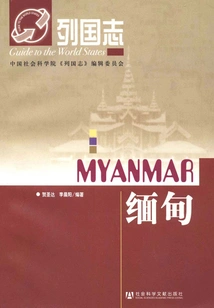
Myanmar
History缅甸
Li Chenyang He Shengda
Myanmar has a long history, a vast territory, beautiful mountains and rivers, numerous ethnic groups, rich resources, and significant diversity in geography, ecology, ethnicity, and culture; it has characteristics different from other Southeast Asian countries in terms of political, economic, and social development. This book comprehensively introduces the basic situation of Myanmar with detailed information, and interprets its tortuous development in politics, economy, society and other aspects, especially the new developments and problems faced since the new military government came to power in 1988.
Myanmar has a long history, a vast territory, beautiful mountains and rivers, numerous ethnic groups, rich resources, and significant diversity in geography, ecology, ethnicity, and culture; it has characteristics different from other Southeast Asian countries in terms of political, economic, and social development. This book comprehensively introduces the basic situation of Myanmar with detailed information, and interprets its tortuous development in politics, economy, society and other aspects, especially the new developments and problems faced since the new military government came to power in 1988.
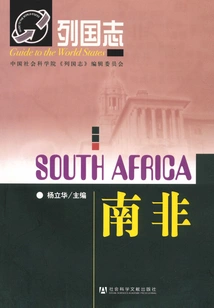
South Africa
History南非
Yang Lihua
The Republic of South Africa is one of the largest countries in Africa. Since the end of three and a half centuries of white racial rule in 1994, the Republic of South Africa has successfully achieved political change, smooth socio-economic transition, and multi-racial coexistence. It has become one of the major developing countries that has attracted worldwide attention. It is the world's largest gold producer and has a fairly complete financial system. This book comprehensively introduces the nature, history, politics, economy, society, military, culture and foreign relations of the Republic of South Africa, and provides a useful reference for Chinese people to understand South Africa.
The Republic of South Africa is one of the largest countries in Africa. Since the end of three and a half centuries of white racial rule in 1994, the Republic of South Africa has successfully achieved political change, smooth socio-economic transition, and multi-racial coexistence. It has become one of the major developing countries that has attracted worldwide attention. It is the world's largest gold producer and has a fairly complete financial system. This book comprehensively introduces the nature, history, politics, economy, society, military, culture and foreign relations of the Republic of South Africa, and provides a useful reference for Chinese people to understand South Africa.
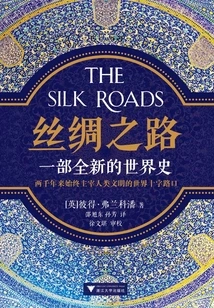
丝绸之路:一部全新的世界史
Q
A phenomenon-level bestseller that has shocked the world, a senior historian from Oxford University clarifies the past and present of the "Belt and Road Initiative" from the perspective of world history! It has topped the nonfiction bestseller list in more than 20 countries including the United Kingdom, the United States, Germany, Turkey, and India. It has received unanimous praise from celebrities in academic, political, and business circles at home and abroad. It was recommended twice for the first time by the People's Daily. From its inception, the Silk Road has always dominated the process of human civilization. The Silk Road made China's silk and civilization popular all over the world; Rome and Persia created their respective empires on the roadside; Buddhism, Christianity and Islam rose rapidly along the Silk Road and spread around the world, integrating the three thousand years of history of Jerusalem; Genghis Khan's Mongolian iron hoof went all the way to the west, bringing slaughter while promoting the integration of Eastern and Western civilizations; the British Empire created a glory that never sets by plundering the wealth on the Silk Road; Hitler pushed the world into the abyss of war and massacre for the resources on the Silk Road. To this day, refugees and the terrorist ISIS on the Silk Road are still a lingering nightmare for Europe and the United States. From Zhang Jian's passage through the Western Regions to the "One Belt, One Road" initiative, you will find in this all-encompassing epic that the Silk Road not only shaped the past of mankind, but will also dominate the future of the world.
A phenomenon-level bestseller that has shocked the world, a senior historian from Oxford University clarifies the past and present of the "Belt and Road Initiative" from the perspective of world history! It has topped the nonfiction bestseller list in more than 20 countries including the United Kingdom, the United States, Germany, Turkey, and India. It has received unanimous praise from celebrities in academic, political, and business circles at home and abroad. It was recommended twice for the first time by the People's Daily. From its inception, the Silk Road has always dominated the process of human civilization. The Silk Road made China's silk and civilization popular all over the world; Rome and Persia created their respective empires on the roadside; Buddhism, Christianity and Islam rose rapidly along the Silk Road and spread around the world, integrating the three thousand years of history of Jerusalem; Genghis Khan's Mongolian iron hoof went all the way to the west, bringing slaughter while promoting the integration of Eastern and Western civilizations; the British Empire created a glory that never sets by plundering the wealth on the Silk Road; Hitler pushed the world into the abyss of war and massacre for the resources on the Silk Road. To this day, refugees and the terrorist ISIS on the Silk Road are still a lingering nightmare for Europe and the United States. From Zhang Jian's passage through the Western Regions to the "One Belt, One Road" initiative, you will find in this all-encompassing epic that the Silk Road not only shaped the past of mankind, but will also dominate the future of the world.
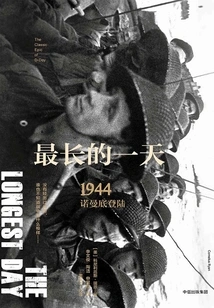
最长的一天:1944诺曼底登陆(修订珍藏版)
I
The Longest Day is "an unsurpassed epic about the D-Day invasion." The author Cornelius Ryan spent more than ten years searching for D-Day survivors. After interviewing almost all survivors and witnesses of the Normandy landing, he completed this epoch-making masterpiece of 200,000 words, "not a single word has a source." He magnified the nameless individuals on the battlefield to a sufficiently clear magnification and followed their line of sight to see the scene of the landing operation. This way of magnifying details to infinity and making history real enough makes everyone who reads this book immersed in it. This is a war epic about destiny and courage to change destiny. Here, you can see the fear and confusion of weak individuals when facing the dark unknown, and experience the cruelty and despair when they are in a desperate situation; and how people in this situation muster up the courage to persevere, fight, and finally usher in their own victory and glory. It deeply embeds war into everyone's life experience and accompanies us to find hope in the dark and gloomy times.
The Longest Day is "an unsurpassed epic about the D-Day invasion." The author Cornelius Ryan spent more than ten years searching for D-Day survivors. After interviewing almost all survivors and witnesses of the Normandy landing, he completed this epoch-making masterpiece of 200,000 words, "not a single word has a source." He magnified the nameless individuals on the battlefield to a sufficiently clear magnification and followed their line of sight to see the scene of the landing operation. This way of magnifying details to infinity and making history real enough makes everyone who reads this book immersed in it. This is a war epic about destiny and courage to change destiny. Here, you can see the fear and confusion of weak individuals when facing the dark unknown, and experience the cruelty and despair when they are in a desperate situation; and how people in this situation muster up the courage to persevere, fight, and finally usher in their own victory and glory. It deeply embeds war into everyone's life experience and accompanies us to find hope in the dark and gloomy times.
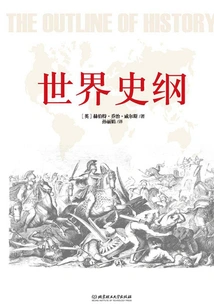
World History Outline
History世界史纲
H
As the first general history of the world written by a famous author who is both a writer and a historian, "Outline of World History" narrates the history from the origin of life on earth to the end of the First World War, achieving the perfect combination between historical reality and literary imagination. Since its publication, it has been highly praised by history experts and history enthusiasts around the world for nearly a hundred years.
As the first general history of the world written by a famous author who is both a writer and a historian, "Outline of World History" narrates the history from the origin of life on earth to the end of the First World War, achieving the perfect combination between historical reality and literary imagination. Since its publication, it has been highly praised by history experts and history enthusiasts around the world for nearly a hundred years.
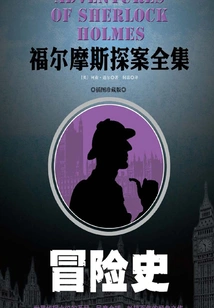
Adventure History
History冒险史
(uk) Conan Doyle
"The Adventures" is a collection of detective novels full of legend, adventure and wisdom. It is one of Conan Doyle's "The Complete Sherlock Holmes" series. "The Adventures" tells the story of the strange cases that the justice-sense detective Sherlock Holmes and his loyal doctor friend Watson experienced together. The book contains 12 stories, including "A Scandal in Bohemia", "The Red-Headed Society", "The Mystery of Identity", "The Case of the Speckled Belt", "The Case of the Engineer's Thumb", "The Case of the Bachelor", "The Case of the Jade Crown", "The Mystery of the Valley", "Several Orange Pips", "The Man with Crooked Lips", "The Sapphire Case", and "The Copper Beech Case". The plots of the stories are interlocking and fascinating.
"The Adventures" is a collection of detective novels full of legend, adventure and wisdom. It is one of Conan Doyle's "The Complete Sherlock Holmes" series. "The Adventures" tells the story of the strange cases that the justice-sense detective Sherlock Holmes and his loyal doctor friend Watson experienced together. The book contains 12 stories, including "A Scandal in Bohemia", "The Red-Headed Society", "The Mystery of Identity", "The Case of the Speckled Belt", "The Case of the Engineer's Thumb", "The Case of the Bachelor", "The Case of the Jade Crown", "The Mystery of the Valley", "Several Orange Pips", "The Man with Crooked Lips", "The Sapphire Case", and "The Copper Beech Case". The plots of the stories are interlocking and fascinating.
汉默顿人文启蒙·帝国兴衰
(english) Hamilton
The whole book uses rich writing and ink to show the historical events of the rise and fall of dozens of empires or dynasties on this planet. It is full of surrender and confrontation, intrigues and games. The history of mankind is made up of the rise and fall of many empires. The creation and collapse of each country promotes the evolution of political systems, the development of economic structures, and the integration of national cultures. Whether it is the mysterious disappearance of ethnic groups or the glorious rise of city-states, they have pushed the wheel of the times.
The whole book uses rich writing and ink to show the historical events of the rise and fall of dozens of empires or dynasties on this planet. It is full of surrender and confrontation, intrigues and games. The history of mankind is made up of the rise and fall of many empires. The creation and collapse of each country promotes the evolution of political systems, the development of economic structures, and the integration of national cultures. Whether it is the mysterious disappearance of ethnic groups or the glorious rise of city-states, they have pushed the wheel of the times.
World History Exploration
History世界史探秘
Editor-in-chief Ma Yunfei
From the ancient times of drilling wood to make fire and tying ropes to record events to today's virtual network and digital age, human beings have experienced thousands of years. In these thousands of years, the most wonderful thing we have experienced is mystery. Life is wonderful, and the nature, earth and universe that create life are even more magical. In this magical and magnificent world, there are endless mysteries. Chapter content of this book: Chapter 1: The royal mystery that has been suspenseful for eternity; Chapter 2: The turbulent political turmoil; Chapter 3: The never-ending smoke and war; Chapter 4: Controversial celebrity anecdotes. This book uses the most vivid words, the most meticulous thinking, and the most wonderful pictures to explain the mysteries of these puzzling and mysterious phenomena, and explore all kinds of confusing scientific doubts with you.
From the ancient times of drilling wood to make fire and tying ropes to record events to today's virtual network and digital age, human beings have experienced thousands of years. In these thousands of years, the most wonderful thing we have experienced is mystery. Life is wonderful, and the nature, earth and universe that create life are even more magical. In this magical and magnificent world, there are endless mysteries. Chapter content of this book: Chapter 1: The royal mystery that has been suspenseful for eternity; Chapter 2: The turbulent political turmoil; Chapter 3: The never-ending smoke and war; Chapter 4: Controversial celebrity anecdotes. This book uses the most vivid words, the most meticulous thinking, and the most wonderful pictures to explain the mysteries of these puzzling and mysterious phenomena, and explore all kinds of confusing scientific doubts with you.
人类酷刑简史
(u. S.) Mark P. Donnelly Daniel Dill
Over thousands of years, humans have devised many ingenious and cruel ways to inflict pain on their fellow humans. This sad but seemingly universal trait corrodes the very civilization humans strive for. Although we seem to abhor torture today, it has been an integral part of much of the law throughout Europe and the Far East for more than 3,000 years. A Brief History of Human Torture explores various methods of punishment, torture, coercion, and torture. It takes readers into the ancient Roman arena, medieval dungeons, the Inquisition, the Inquisition, witch trials and the most brutal prisons. This is a shocking and compelling study that reveals the shameful methods and motives of torturers and executioners, as well as the heinous acts they have committed throughout the ages.
Over thousands of years, humans have devised many ingenious and cruel ways to inflict pain on their fellow humans. This sad but seemingly universal trait corrodes the very civilization humans strive for. Although we seem to abhor torture today, it has been an integral part of much of the law throughout Europe and the Far East for more than 3,000 years. A Brief History of Human Torture explores various methods of punishment, torture, coercion, and torture. It takes readers into the ancient Roman arena, medieval dungeons, the Inquisition, the Inquisition, witch trials and the most brutal prisons. This is a shocking and compelling study that reveals the shameful methods and motives of torturers and executioners, as well as the heinous acts they have committed throughout the ages.
Palace Mystery
History宫廷之谜
Editor-in-chief Ma Yunfei
From the ancient times of drilling wood to make fire and tying ropes to record events to today's virtual network and digital age, human beings have experienced thousands of years. In these thousands of years, the most wonderful thing we have experienced is mystery. Life is wonderful, and the nature, earth and universe that create life are even more magical. In this magical and magnificent world, there are endless mysteries.
From the ancient times of drilling wood to make fire and tying ropes to record events to today's virtual network and digital age, human beings have experienced thousands of years. In these thousands of years, the most wonderful thing we have experienced is mystery. Life is wonderful, and the nature, earth and universe that create life are even more magical. In this magical and magnificent world, there are endless mysteries.
缔造共和:美利坚合众国的诞生(1783—1789)
O
This is America's overlooked "sub-revolution." In 1776, in order to resist the British and strive for independence, the thirteen states of the United States formed an alliance. The overthrow of the British colonial rulers in 1783 allowed the United States to win precious independence and freedom. However, at this time, it was still difficult for the United States to become a country worthy of the name. After the victory in the War of Independence, deep divisions between states in the country also emerged. Looking at these local powers that were doing their own thing from the perspective of that time, no one was sure whether there would be a country called "the United States" in the future. In the years after independence, the United States gradually lost control in an atmosphere of victory. No country is willing to pay for the foreign debts owed during the war; countries that disagree with the treaties negotiated with foreign countries refuse to implement them. In terms of international reputation, the United States quickly fell from the revolutionary light of mankind to a country with ruined credibility. In addition, there were differences such as western land interests, slavery, pro-French and pro-British differences, etc., Which pushed the United States to the brink of division in the early days of independence. Some optimistic British politicians even waited for the American states to fight in their nests, and then begged to return to the embrace of the British Empire. In this almost hopeless situation, it was indeed a political miracle that the American Revolution could succeed and establish a solid national foundation. The book "Creating the Republic" will spell out the full picture of this miracle for you: the Philadelphia Constitutional Convention in 1787, the "Federalist Papers", Washington, Madison, the father of the U. S. Constitution, Hamilton, the father of finance... These people and events are remembered because they formed the country and national identity of the United States at that critical moment.
This is America's overlooked "sub-revolution." In 1776, in order to resist the British and strive for independence, the thirteen states of the United States formed an alliance. The overthrow of the British colonial rulers in 1783 allowed the United States to win precious independence and freedom. However, at this time, it was still difficult for the United States to become a country worthy of the name. After the victory in the War of Independence, deep divisions between states in the country also emerged. Looking at these local powers that were doing their own thing from the perspective of that time, no one was sure whether there would be a country called "the United States" in the future. In the years after independence, the United States gradually lost control in an atmosphere of victory. No country is willing to pay for the foreign debts owed during the war; countries that disagree with the treaties negotiated with foreign countries refuse to implement them. In terms of international reputation, the United States quickly fell from the revolutionary light of mankind to a country with ruined credibility. In addition, there were differences such as western land interests, slavery, pro-French and pro-British differences, etc., Which pushed the United States to the brink of division in the early days of independence. Some optimistic British politicians even waited for the American states to fight in their nests, and then begged to return to the embrace of the British Empire. In this almost hopeless situation, it was indeed a political miracle that the American Revolution could succeed and establish a solid national foundation. The book "Creating the Republic" will spell out the full picture of this miracle for you: the Philadelphia Constitutional Convention in 1787, the "Federalist Papers", Washington, Madison, the father of the U. S. Constitution, Hamilton, the father of finance... These people and events are remembered because they formed the country and national identity of the United States at that critical moment.
美国建国史系列(套装全3册)
F
"The History of the Founding of the United States Series (set of 3 volumes)" includes three books: "American Genesis: Triumphs and Tragedies in the Founding of the Nation, 1775-1803", "Jefferson: The American Sphinx" and "Creating the Republic: The Birth of the United States of America, 1783-1789". It vividly displays the founding history of the United States from aspects such as leaders and the Declaration of Human Rights, and depicts how it rapidly grew from an emerging immigrant country to a superpower.
"The History of the Founding of the United States Series (set of 3 volumes)" includes three books: "American Genesis: Triumphs and Tragedies in the Founding of the Nation, 1775-1803", "Jefferson: The American Sphinx" and "Creating the Republic: The Birth of the United States of America, 1783-1789". It vividly displays the founding history of the United States from aspects such as leaders and the Declaration of Human Rights, and depicts how it rapidly grew from an emerging immigrant country to a superpower.