Library
Browse and search books
2,273 novels found
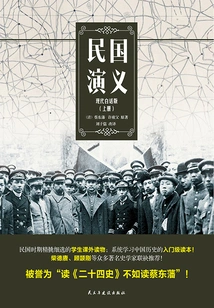
民国演义(现代白话版·上册)
Cai Dongfan Xu Genfu
"The Romance of the Republic of China" is the Republic of China part of "Popular Romance of the Past Dynasties", compiled by Cai Dongfan and Xu Genfu. The first 120 chapters of the book were originally written by Cai Dongfan, and the last 40 chapters were continued by Xu Genfu, totaling 160 chapters. "The Romance of the Republic of China" is rich in content and tells the history of the Republic of China in a simple and easy-to-understand way. It has been widely praised by people since its publication!
"The Romance of the Republic of China" is the Republic of China part of "Popular Romance of the Past Dynasties", compiled by Cai Dongfan and Xu Genfu. The first 120 chapters of the book were originally written by Cai Dongfan, and the last 40 chapters were continued by Xu Genfu, totaling 160 chapters. "The Romance of the Republic of China" is rich in content and tells the history of the Republic of China in a simple and easy-to-understand way. It has been widely praised by people since its publication!
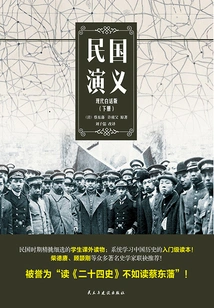
民国演义(现代白话版·下册)
Cai Dongfan Xu Genfu
"The Romance of the Republic of China" is the Republic of China part of "Popular Romance of the Past Dynasties", compiled by Cai Dongfan and Xu Genfu. The first 120 chapters of the book were originally written by Cai Dongfan, and the last 40 chapters were continued by Xu Genfu, totaling 160 chapters. "The Romance of the Republic of China" is rich in content and tells the history of the Republic of China in a simple and easy-to-understand way. It has been widely praised by people since its publication!
"The Romance of the Republic of China" is the Republic of China part of "Popular Romance of the Past Dynasties", compiled by Cai Dongfan and Xu Genfu. The first 120 chapters of the book were originally written by Cai Dongfan, and the last 40 chapters were continued by Xu Genfu, totaling 160 chapters. "The Romance of the Republic of China" is rich in content and tells the history of the Republic of China in a simple and easy-to-understand way. It has been widely praised by people since its publication!
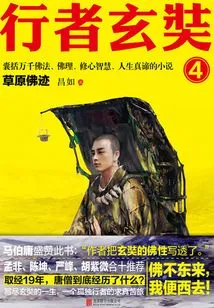
Traveler Xuanzang 4: Traces of Buddha on the Grassland
General Fiction行者玄奘4:草原佛迹
Chang Ru
After 19 years of studying Buddhist scriptures, what did Tang Monk experience? A unique book about faith and courage, including thousands of Buddhist teachings, principles, mind-cultivation wisdom and the true meaning of life. Open this book and walk into the legendary life of the eminent monk Xuanzang, listen to a true story full of adventures, and re-walk the human journey of depression, trouble and relief. Xuanzang climbed over the snow-capped mountains and came to the grasslands of Central Asia. This was originally a beautiful place where various cultures met, but now it is shrouded in the clouds of war. How would Tongyehu Khan, who had a delicate relationship with the Tang Dynasty, treat this Samana from the East? How will Sajiang Jianguo, who has always been hostile to Buddhism, deal with this Buddhist monk? As he gets closer and closer to the Buddhist Kingdom, those legendary past events that have been dusted away are unfolding before his eyes one by one. The emerging Tang Dynasty, the Turks on horseback, India where various ideas collided... They were all revealed in Xuanzang's arduous journey of seeking truth, which made him an insurmountable great adventure in the history of human hiking.
After 19 years of studying Buddhist scriptures, what did Tang Monk experience? A unique book about faith and courage, including thousands of Buddhist teachings, principles, mind-cultivation wisdom and the true meaning of life. Open this book and walk into the legendary life of the eminent monk Xuanzang, listen to a true story full of adventures, and re-walk the human journey of depression, trouble and relief. Xuanzang climbed over the snow-capped mountains and came to the grasslands of Central Asia. This was originally a beautiful place where various cultures met, but now it is shrouded in the clouds of war. How would Tongyehu Khan, who had a delicate relationship with the Tang Dynasty, treat this Samana from the East? How will Sajiang Jianguo, who has always been hostile to Buddhism, deal with this Buddhist monk? As he gets closer and closer to the Buddhist Kingdom, those legendary past events that have been dusted away are unfolding before his eyes one by one. The emerging Tang Dynasty, the Turks on horseback, India where various ideas collided... They were all revealed in Xuanzang's arduous journey of seeking truth, which made him an insurmountable great adventure in the history of human hiking.
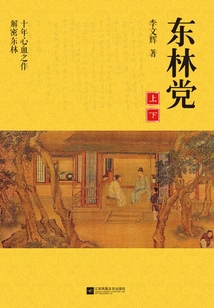
Donglin Party (complete Collection)
General Fiction东林党(全集)
Li Wenhui
During the Wanli period, Gu Xiancheng and others restored Donglin Academy where Yang Shi gave lectures in the Song Dynasty. At the time when Dong Lin was giving lectures, social conflicts in the Ming Dynasty intensified, internal and external troubles occurred, and the Ming Dynasty was in turmoil. At this time, the Donglin Party members represented by Gu Xiancheng and Gao Panlong focused on the main line of whether to support Zhu Changluo as the crown prince, and launched fierce struggles with the opposing factions in the "Strike Case", "Red Pill Case" and "Gong Relocation Case", and one bloody storm after another...
During the Wanli period, Gu Xiancheng and others restored Donglin Academy where Yang Shi gave lectures in the Song Dynasty. At the time when Dong Lin was giving lectures, social conflicts in the Ming Dynasty intensified, internal and external troubles occurred, and the Ming Dynasty was in turmoil. At this time, the Donglin Party members represented by Gu Xiancheng and Gao Panlong focused on the main line of whether to support Zhu Changluo as the crown prince, and launched fierce struggles with the opposing factions in the "Strike Case", "Red Pill Case" and "Gong Relocation Case", and one bloody storm after another...

Zhongning History
General Fiction中宁史话
Editor-in-chief Suo Zhanlong
Ningxia is one of the important birthplaces of Chinese civilization, with a long history, numerous ethnic groups, beautiful mountains and rivers, honest folk customs, and unique historical relics and cultural characteristics. This book records the historical changes of Zhongning, reflects the distinctive characteristics of the times and national characteristics, and provides a vivid and systematic explanation of the people and events in the historical changes of Zhongning.
Ningxia is one of the important birthplaces of Chinese civilization, with a long history, numerous ethnic groups, beautiful mountains and rivers, honest folk customs, and unique historical relics and cultural characteristics. This book records the historical changes of Zhongning, reflects the distinctive characteristics of the times and national characteristics, and provides a vivid and systematic explanation of the people and events in the historical changes of Zhongning.
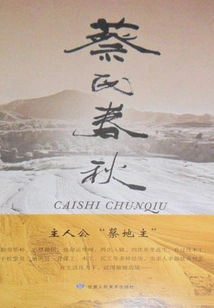
Cai's Spring and Autumn Period
General Fiction蔡氏春秋
Man Ziwen
"Cai's Spring and Autumn" is a novel. The author uses the Cai family's business and life as clues, and tells the story of the Cai family from the Jiaqing and Daoguang years of the Qing Dynasty to today in the first person, with a time span of nearly two hundred years. The novel places the reproduction history of a family and the fate of the characters against the background of society and dynasty changes. The fate of the characters changes with the progression of history and the changes of the times.
"Cai's Spring and Autumn" is a novel. The author uses the Cai family's business and life as clues, and tells the story of the Cai family from the Jiaqing and Daoguang years of the Qing Dynasty to today in the first person, with a time span of nearly two hundred years. The novel places the reproduction history of a family and the fate of the characters against the background of society and dynasty changes. The fate of the characters changes with the progression of history and the changes of the times.
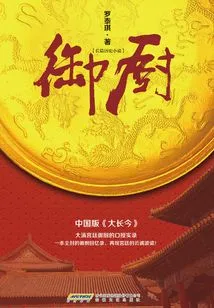
Royal Chef
General Fiction御厨
Luo Taiqi
This is a popular historical novel with a unique style that can be called the Chinese version of "Dae Jang Geum". The author uses humorous writing and self-narration to portray the image of an imperial cook of the Qing Dynasty. He vividly describes the legendary story of Liu Tubian, a cook who loved cooking since childhood and was determined to enter the palace to avenge his father. The novel integrates many readable elements such as palace battles, royal meals, gourmet cooking, revenge, etc. It is vivid, interesting, highly readable, and has market sales potential.
This is a popular historical novel with a unique style that can be called the Chinese version of "Dae Jang Geum". The author uses humorous writing and self-narration to portray the image of an imperial cook of the Qing Dynasty. He vividly describes the legendary story of Liu Tubian, a cook who loved cooking since childhood and was determined to enter the palace to avenge his father. The novel integrates many readable elements such as palace battles, royal meals, gourmet cooking, revenge, etc. It is vivid, interesting, highly readable, and has market sales potential.
The Legend of the Peacock Flying Southeast
General Fiction孔雀东南飞传说
Xie Wenzhong
This work is adapted from the story of the Han Dynasty Yuefu poem "The Peacock Flies Southeast" and the folklore of Qianshan and Huaining, the hometowns of Jiao Zhongqing and Liu Lanzhi, where the story of "The Peacock Flies Southeast" takes place. The work adds the relationship between the historical figures Cao Cao, Liu Lanzhi, and Jiao Zhongqing, making the storyline more attractive and beautiful.
This work is adapted from the story of the Han Dynasty Yuefu poem "The Peacock Flies Southeast" and the folklore of Qianshan and Huaining, the hometowns of Jiao Zhongqing and Liu Lanzhi, where the story of "The Peacock Flies Southeast" takes place. The work adds the relationship between the historical figures Cao Cao, Liu Lanzhi, and Jiao Zhongqing, making the storyline more attractive and beautiful.
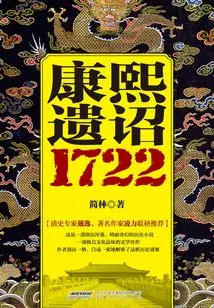
Kangxi's Edict: 1722
General Fiction康熙遗诏:1722
Jian Lin
Kangxi died in 1722 and Yongzheng succeeded to the throne. This book is a historical novel with a very strange story and a rigorous narrative. The succession of Yongzheng to the throne is the most eye-catching case in the history of the Qing Dynasty. This is the first time that the debate on this historical mystery has been presented in a literary form. The peculiarity of this book lies in its structure, which revolves around the case of Yongzheng's succession and unfolds in multiple layers. It extensively describes Chinese history and culture, as well as the impact that history and culture have had on us modern people. At the same time, it compares Chinese culture with Western culture, and the book presents the lost history in front of readers through vivid pictures.
Kangxi died in 1722 and Yongzheng succeeded to the throne. This book is a historical novel with a very strange story and a rigorous narrative. The succession of Yongzheng to the throne is the most eye-catching case in the history of the Qing Dynasty. This is the first time that the debate on this historical mystery has been presented in a literary form. The peculiarity of this book lies in its structure, which revolves around the case of Yongzheng's succession and unfolds in multiple layers. It extensively describes Chinese history and culture, as well as the impact that history and culture have had on us modern people. At the same time, it compares Chinese culture with Western culture, and the book presents the lost history in front of readers through vivid pictures.
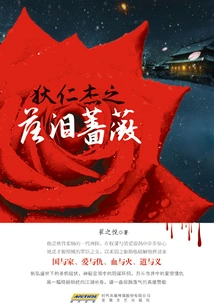
Dee Renjie: the Tearing Rose
General Fiction狄仁杰之落泪蔷薇
Zhai Zhiyue
This book is a long detective novel set in the Tang Dynasty and with Di Renjie as the main character. After Empress Wu Zetian became emperor, "fake Tongbao" (counterfeit currency) spread across the land of China, shaking the government and disrupting people's livelihood. The Queen was furious and ordered Di Renjie, the chief minister of Dali Temple, to investigate the case. Shangguan Wan'er, a member of the guilty minister's family, and Chu Chu, the Queen's confidant, were ordered by the Queen to join the criminal gang and assist Di Renjie in handling the case. After going through many obstacles, Di Renjie finally cracked the case of fake Tongbao. Rose is a wild flower in Wu Zetian's hometown. Like rose, Wu Zetian was of low origin but strong in vitality. The intention of rose shows that the female characters in the work are as beautiful and humble as rose, unable to decide their fate but still strong.
This book is a long detective novel set in the Tang Dynasty and with Di Renjie as the main character. After Empress Wu Zetian became emperor, "fake Tongbao" (counterfeit currency) spread across the land of China, shaking the government and disrupting people's livelihood. The Queen was furious and ordered Di Renjie, the chief minister of Dali Temple, to investigate the case. Shangguan Wan'er, a member of the guilty minister's family, and Chu Chu, the Queen's confidant, were ordered by the Queen to join the criminal gang and assist Di Renjie in handling the case. After going through many obstacles, Di Renjie finally cracked the case of fake Tongbao. Rose is a wild flower in Wu Zetian's hometown. Like rose, Wu Zetian was of low origin but strong in vitality. The intention of rose shows that the female characters in the work are as beautiful and humble as rose, unable to decide their fate but still strong.
Princess Anle
General Fiction安乐公主
Sun Ziyun
"Princess Anle" tells the story of Wu Zetian who pulled Li Xian, who had just succeeded to the throne, from the throne and demoted him to a commoner. While being imprisoned in the countryside, Li Xian and Wei Niang gave birth to a daughter, named Anle. After her father was restored to power, An Le, who grew up in hardship, became a princess. She indulged her desires without restraint and by any means. After becoming a princess, she also wanted to be a queen. She and Empress Wei had similar interests, and they indulged in power and beauty. Finally, a palace coup that had been brewing for a long time broke out...
"Princess Anle" tells the story of Wu Zetian who pulled Li Xian, who had just succeeded to the throne, from the throne and demoted him to a commoner. While being imprisoned in the countryside, Li Xian and Wei Niang gave birth to a daughter, named Anle. After her father was restored to power, An Le, who grew up in hardship, became a princess. She indulged her desires without restraint and by any means. After becoming a princess, she also wanted to be a queen. She and Empress Wei had similar interests, and they indulged in power and beauty. Finally, a palace coup that had been brewing for a long time broke out...
Romance of the Tang Dynasty
General Fiction唐朝的风花雪月
Lamboning
The prosperous three thousand voids are as illusionary as the wind. The clouds are rolling and relaxing. Sighing on the wind, flowers, snow and moon of this world, how can the endless warmth of this mortal world get rid of the coldness in your heart? A peach blossom catastrophe will eventually make you spend your entire life miserable.
The prosperous three thousand voids are as illusionary as the wind. The clouds are rolling and relaxing. Sighing on the wind, flowers, snow and moon of this world, how can the endless warmth of this mortal world get rid of the coldness in your heart? A peach blossom catastrophe will eventually make you spend your entire life miserable.
Bactrian Empire
General Fiction大夏帝国
Wang Zhongyi
"The Great Xia Empire" introduces Meixiran Palace. Cheng Tang was born, Yi Yin Qimou, destroyed Xia and established the Shang Empire. The author sorted out the five hundred years of history of the Great Xia Empire and vividly presented a grand picture of ancient iron and blood with a literary style. Dayu controlled the floods, traveled throughout the nine states, created the country of Daxia, and opened up more than two thousand families in the world. There were constant internal fights in the Xia court, with Hou Yi usurping the country and Hanzhuo taking power, until Zao Hao restored the country and revived it, and the Xia Empire reached its peak. After that, Kong Jia brought disaster to the country and became violent and violent.
"The Great Xia Empire" introduces Meixiran Palace. Cheng Tang was born, Yi Yin Qimou, destroyed Xia and established the Shang Empire. The author sorted out the five hundred years of history of the Great Xia Empire and vividly presented a grand picture of ancient iron and blood with a literary style. Dayu controlled the floods, traveled throughout the nine states, created the country of Daxia, and opened up more than two thousand families in the world. There were constant internal fights in the Xia court, with Hou Yi usurping the country and Hanzhuo taking power, until Zao Hao restored the country and revived it, and the Xia Empire reached its peak. After that, Kong Jia brought disaster to the country and became violent and violent.
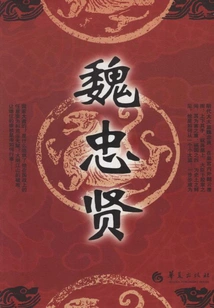
Wei Zhongxian
General Fiction魏忠贤
Wang Hongling
This book tells the story of the great eunuch Wei Zhongxian in the late Ming Dynasty, from his rise to ruin. The author complied with the purpose of basing this series on historical materials and allowing fiction in details and details, and carried out rigorous and vivid artistic creation. While focusing on shaping Wei Zhongxian, Ke Yinyue, Emperor Tianqi, Emperor Chongzhen and many other characters, he paid special attention to showing the pulse of the times and highlighting the eunuchs and Donglin parties. "The Struggle of Man" has done a lot of useful work in sorting out and choosing the plot and the relationship between the characters, making the work not only "good to read" and "engaging" in the sense of popular literature, but also able to satisfy people's demands for understanding history and thinking about the rise and fall of history through reading wonderful novels. While it has the advantage of subject matter, it also has considerable control over the quality of its works. As a serious historical novel, "Wei Eunuch Zhongxian" shows the greatest all-round care for the readers.
This book tells the story of the great eunuch Wei Zhongxian in the late Ming Dynasty, from his rise to ruin. The author complied with the purpose of basing this series on historical materials and allowing fiction in details and details, and carried out rigorous and vivid artistic creation. While focusing on shaping Wei Zhongxian, Ke Yinyue, Emperor Tianqi, Emperor Chongzhen and many other characters, he paid special attention to showing the pulse of the times and highlighting the eunuchs and Donglin parties. "The Struggle of Man" has done a lot of useful work in sorting out and choosing the plot and the relationship between the characters, making the work not only "good to read" and "engaging" in the sense of popular literature, but also able to satisfy people's demands for understanding history and thinking about the rise and fall of history through reading wonderful novels. While it has the advantage of subject matter, it also has considerable control over the quality of its works. As a serious historical novel, "Wei Eunuch Zhongxian" shows the greatest all-round care for the readers.
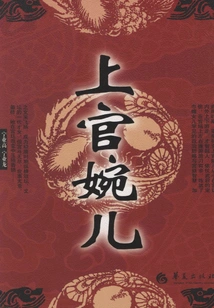
Shangguan Wan'er
General Fiction上官婉儿
Ning Yegao Ning Yelong Ning Yun
"Shangguan Wan'er" contains the plot of a traitor who plots to eliminate the emperor's heir Jiao'e and a female heroine who secretly plots to kill a powerful tiger and a pervert, the leader of Taiping recommends two male favorites, a lonely man talks about women's lust, and the affection of all the queens, and distinguishes between loyalty and traitor Wan'er. Xian advised the thieves to be executed and understood the overall situation, and the queen remonstrated with her relatives. The Wu family asked for an heir and the emperor and the ministers admonished Wan'er to enter Fangzhou to steal the prince and move to Beijing. The Turks raised an army and the king of Luling was restored to power.
"Shangguan Wan'er" contains the plot of a traitor who plots to eliminate the emperor's heir Jiao'e and a female heroine who secretly plots to kill a powerful tiger and a pervert, the leader of Taiping recommends two male favorites, a lonely man talks about women's lust, and the affection of all the queens, and distinguishes between loyalty and traitor Wan'er. Xian advised the thieves to be executed and understood the overall situation, and the queen remonstrated with her relatives. The Wu family asked for an heir and the emperor and the ministers admonished Wan'er to enter Fangzhou to steal the prince and move to Beijing. The Turks raised an army and the king of Luling was restored to power.
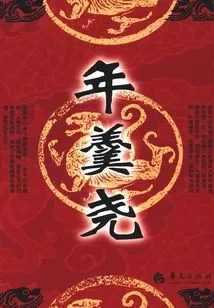
Nian Gengyao
General Fiction年羹尧
Yu Ping
This is a long historical novel. It tells the story of the legendary life of Nian Gengyao, a general of the Qing Dynasty during the Kangxi and Yong reigns. From a penniless little person, he traveled around the palace and outside, gradually climbed up, and finally grew into a towering tree with luxuriant leaves, deep roots, great achievements, and finally became a fleeting wave in the political whirlpool... The book has a strong sense of history, vivid characters, clear clues, and suspenseful legendary colors, making the story fascinating. Readers can also use this to understand the world's affairs and think about social life...
This is a long historical novel. It tells the story of the legendary life of Nian Gengyao, a general of the Qing Dynasty during the Kangxi and Yong reigns. From a penniless little person, he traveled around the palace and outside, gradually climbed up, and finally grew into a towering tree with luxuriant leaves, deep roots, great achievements, and finally became a fleeting wave in the political whirlpool... The book has a strong sense of history, vivid characters, clear clues, and suspenseful legendary colors, making the story fascinating. Readers can also use this to understand the world's affairs and think about social life...
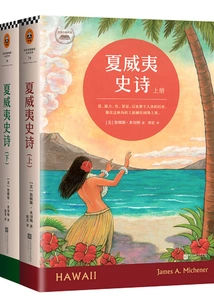
Hawaiian Epic (complete Collection)
General Fiction夏威夷史诗(全集)
(us) James Michener
Love, violence, sex, sin, and the entire history of mankind are all unfolding magnificently on this island. On average, every 3.77 Americans own one Michener novel. He is a Pulitzer Prize winner, the godfather of historical fiction, and is known as "the chronicler of 20th century history." Hundreds of millions of years ago, volcanoes erupted, seawater surged, and strange islands rose from the earth's crust; 1,200 years ago, 57 native Hawaiians drove a canoe across thousands of miles of sea to settle here to avoid disaster; in 1822, the "Thetis" arrived at the port of Hawaii carrying 11 missionary couples. Over the next 100 years, their descendants established a large family and gradually controlled the political and economic lifeline of the Hawaiian Islands.
Love, violence, sex, sin, and the entire history of mankind are all unfolding magnificently on this island. On average, every 3.77 Americans own one Michener novel. He is a Pulitzer Prize winner, the godfather of historical fiction, and is known as "the chronicler of 20th century history." Hundreds of millions of years ago, volcanoes erupted, seawater surged, and strange islands rose from the earth's crust; 1,200 years ago, 57 native Hawaiians drove a canoe across thousands of miles of sea to settle here to avoid disaster; in 1822, the "Thetis" arrived at the port of Hawaii carrying 11 missionary couples. Over the next 100 years, their descendants established a large family and gradually controlled the political and economic lifeline of the Hawaiian Islands.
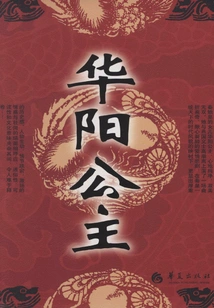
Princess Huayang
General Fiction华阳公主
Sun Ziyun
"A Long Historical Novel: Princess Huayang" tells the story of Princess Huayang, the daughter of Qin Shihuang, who is pure in heart and unparalleled in beauty. She and Gao Jianli, a righteous man of the Yan Kingdom, staged a love tragedy with twists and turns, heart-wrenching and twists. Against the background of the era when Emperor Qin ruled the world, it shows a rich sense of history. The characters are vivid and the plot is ups and downs; the exciting emotions echo the magnificent scenes, and the popularity, readability and cultural meaning are mixed together, making it difficult to let go.
"A Long Historical Novel: Princess Huayang" tells the story of Princess Huayang, the daughter of Qin Shihuang, who is pure in heart and unparalleled in beauty. She and Gao Jianli, a righteous man of the Yan Kingdom, staged a love tragedy with twists and turns, heart-wrenching and twists. Against the background of the era when Emperor Qin ruled the world, it shows a rich sense of history. The characters are vivid and the plot is ups and downs; the exciting emotions echo the magnificent scenes, and the popularity, readability and cultural meaning are mixed together, making it difficult to let go.
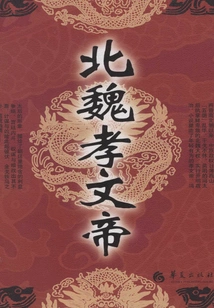
Emperor Xiaowen of the Northern Wei Dynasty
General Fiction北魏孝文帝
Wang Zhanjun
"A Long Historical Novel: Emperor Xiaowen of the Northern Wei Dynasty" focuses on the story of Emperor Xiaowen. The book is divided into twenty chapters. The specific contents include: mother and son fight for power, the death of the imperial concubine; the disaster of the young emperor, the death of his parents and children; Jiang Zhan was wronged, and Xiaowen took charge; the two daughters were traced, and the nobleman was moved; the two women died and were captured in double rape; the southern expedition failed, and the British leader died early, etc.
"A Long Historical Novel: Emperor Xiaowen of the Northern Wei Dynasty" focuses on the story of Emperor Xiaowen. The book is divided into twenty chapters. The specific contents include: mother and son fight for power, the death of the imperial concubine; the disaster of the young emperor, the death of his parents and children; Jiang Zhan was wronged, and Xiaowen took charge; the two daughters were traced, and the nobleman was moved; the two women died and were captured in double rape; the southern expedition failed, and the British leader died early, etc.
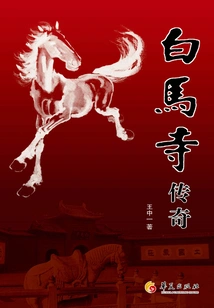
The Legend of White Horse Temple
General Fiction白马寺传奇
Wang Zhongyi
"The Legend of White Horse Temple" begins with war and ends with marriage. Against the grand historical background of family hatred and hatred of the country, through a legendary story in the early Eastern Han Dynasty that intertwined love, revenge, morality, pursuit, viciousness, and charity, it shows the young protagonist's ideological transformation and mental journey from cynicism to the courage to assume family and social responsibilities. It objectively and truly records the arduous journey and epoch-making significance of Buddhism first being introduced to the land of China from ancient India.
"The Legend of White Horse Temple" begins with war and ends with marriage. Against the grand historical background of family hatred and hatred of the country, through a legendary story in the early Eastern Han Dynasty that intertwined love, revenge, morality, pursuit, viciousness, and charity, it shows the young protagonist's ideological transformation and mental journey from cynicism to the courage to assume family and social responsibilities. It objectively and truly records the arduous journey and epoch-making significance of Buddhism first being introduced to the land of China from ancient India.
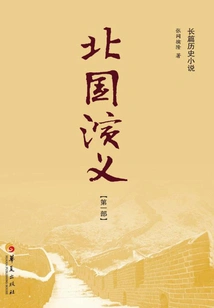
Romance of the North Country (part 1)
General Fiction北国演义(第一部)
Zhang Wang Captured Long
"The Romance of the Northern Kingdom (Part 1)" takes the life of Yelu Abaoji, Taizu of the Liao Dynasty, as the main line, showing the true qualities of a hero. He had great ambitions and courage, and spent his whole life as a soldier, opening up new territories, using the Han people, three-dimensional system, writing system, building an imperial capital, setting criminal laws, and working hard to govern, which forged the rise of the Khitan people and laid the foundation of the Liao Dynasty for more than two hundred years. "The Romance of the Northern Kingdom (Part 1)" also shows the magnificent history of the Western Xia Dynasty at the same time, the Later Liang, the Later Jin, the Later Han and the Later Zhou Dynasty during the Five Dynasties of the Central Plains, and the Song Dynasty.
"The Romance of the Northern Kingdom (Part 1)" takes the life of Yelu Abaoji, Taizu of the Liao Dynasty, as the main line, showing the true qualities of a hero. He had great ambitions and courage, and spent his whole life as a soldier, opening up new territories, using the Han people, three-dimensional system, writing system, building an imperial capital, setting criminal laws, and working hard to govern, which forged the rise of the Khitan people and laid the foundation of the Liao Dynasty for more than two hundred years. "The Romance of the Northern Kingdom (Part 1)" also shows the magnificent history of the Western Xia Dynasty at the same time, the Later Liang, the Later Jin, the Later Han and the Later Zhou Dynasty during the Five Dynasties of the Central Plains, and the Song Dynasty.
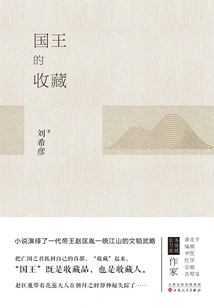
King's Collection
General Fiction国王的收藏
Liu Xiyan
"The King's Collection" written by Liu Xiyan interprets the literary, Taoist and military strategies of a generation of emperor Zhao Kuangyin who unified the country. Capture the subjugated king to your own capital and "collect" it. The "king" is both a collection and a collector. Zhao Kuangyin and Mrs. Huarui disappeared mysteriously during their pilgrimage...
"The King's Collection" written by Liu Xiyan interprets the literary, Taoist and military strategies of a generation of emperor Zhao Kuangyin who unified the country. Capture the subjugated king to your own capital and "collect" it. The "king" is both a collection and a collector. Zhao Kuangyin and Mrs. Huarui disappeared mysteriously during their pilgrimage...
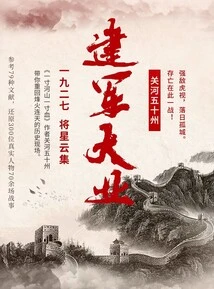
The Great Cause of Building an Army
General Fiction建军大业
I
In 1927, when the Northern Expedition was gaining momentum, the two camps of the Kuomintang and the Communist Party in the same trench were rife with murderous intent. In the rear of the Northern Expedition, from April to May, bloody massacres of communists broke out in Guangxi, Shanghai, Guangzhou, and Hunan. On the front line of the Northern Expedition, in July, the Nationalist Government in Wuhan announced the "division of the Communist Party," and the Chinese Communist Party fell into isolation both politically and militarily. Surrounded by forces from all sides, the CCP secretly launched the Nanchang Uprising on August 1 and succeeded in one fell swoop. However, capturing the city of Nanchang was almost the last good luck for the rebel army: Nanchang was surrounded by plains and had no danger to defend. It was located at a strategic point on land and water, and could face encirclement from all sides at any time. The rebel army decisively broke through and sought to establish a base in the Chaoshan area. In a desperate situation with no rear and no supplies, the rebel army fought hard all the way. After the Battle of Huichang, the Drifting of the Tingjiang River, the Battle of Tangkeng, and the Battle of Quicksand in early October, the main force of the rebel army led by Ye Ting and He Long was on the verge of collapse. At the time of crisis, Zhu De stepped forward and led the rest of the rebel army to fight in the Fujian, Guangdong, Jiangxi and Hunan border areas. In April of the following year, he successfully joined forces with Mao Zedong's troops in Jinggangshan.
In 1927, when the Northern Expedition was gaining momentum, the two camps of the Kuomintang and the Communist Party in the same trench were rife with murderous intent. In the rear of the Northern Expedition, from April to May, bloody massacres of communists broke out in Guangxi, Shanghai, Guangzhou, and Hunan. On the front line of the Northern Expedition, in July, the Nationalist Government in Wuhan announced the "division of the Communist Party," and the Chinese Communist Party fell into isolation both politically and militarily. Surrounded by forces from all sides, the CCP secretly launched the Nanchang Uprising on August 1 and succeeded in one fell swoop. However, capturing the city of Nanchang was almost the last good luck for the rebel army: Nanchang was surrounded by plains and had no danger to defend. It was located at a strategic point on land and water, and could face encirclement from all sides at any time. The rebel army decisively broke through and sought to establish a base in the Chaoshan area. In a desperate situation with no rear and no supplies, the rebel army fought hard all the way. After the Battle of Huichang, the Drifting of the Tingjiang River, the Battle of Tangkeng, and the Battle of Quicksand in early October, the main force of the rebel army led by Ye Ting and He Long was on the verge of collapse. At the time of crisis, Zhu De stepped forward and led the rest of the rebel army to fight in the Fujian, Guangdong, Jiangxi and Hunan border areas. In April of the following year, he successfully joined forces with Mao Zedong's troops in Jinggangshan.
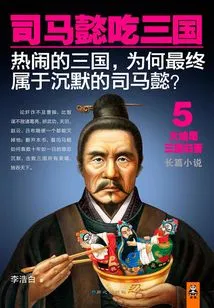
Sima Yi Eats Three Kingdoms 5 (finale)
General Fiction司马懿吃三国5(大结局)
Li Haobai
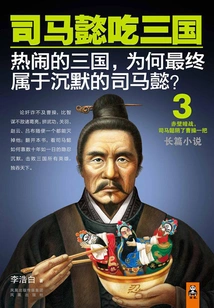
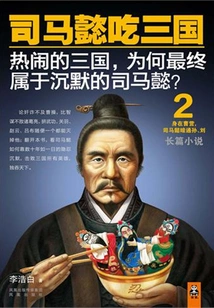
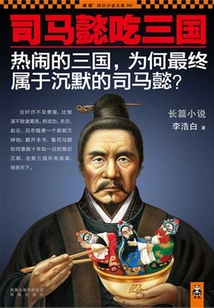
Why did the bustling Three Kingdoms end up belonging to the silent Sima Yi? In terms of cunning and cunning, he is inferior to Zhuge Liang. In terms of martial arts, any one of Guan Yu, Zhao Yun and Lu Bu can destroy him. Open this book and see how Sima Yi relied on decades of forbearance to defeat all the heroes of the Three Kingdoms and monopolize the world. Sima Yi lurked around Cao Cao for decades, letting Cao Cao do what he wanted. He pretended to be weak, stupid, sick, paralyzed, and even dead to paralyze his enemies, opponents, bosses, brothers, friends and even family members... Open this book and see Sima Yi's unparalleled silence, forbearance and strategy.
Why did the bustling Three Kingdoms end up belonging to the silent Sima Yi? In terms of cunning and cunning, he is inferior to Zhuge Liang. In terms of martial arts, any one of Guan Yu, Zhao Yun and Lu Bu can destroy him. Open this book and see how Sima Yi relied on decades of forbearance to defeat all the heroes of the Three Kingdoms and monopolize the world. Sima Yi lurked around Cao Cao for decades, letting Cao Cao do what he wanted. He pretended to be weak, stupid, sick, paralyzed, and even dead to paralyze his enemies, opponents, bosses, brothers, friends and even family members... Open this book and see Sima Yi's unparalleled silence, forbearance and strategy.
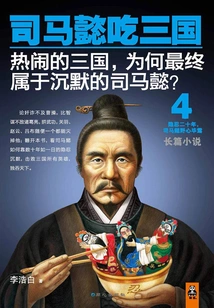
T
R
Q
Q
Princess Longevity
General Fiction万寿公主
Sun Ziyun
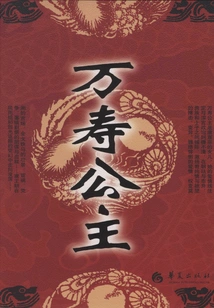
"A Long Historical Novel: Princess Longevity" tells the story of the intrigues and bloodshed that unfolded in the late Tang Dynasty amid court struggles, eunuchs, party disputes, and the separatist feudal vassals. Taking the experience of Princess Wanshou as the main line, several clues of love that are entangled with politics are laid out between the palace and the market, nobles and scholars, fully demonstrating the struggle and variation of human nature and ghost nature, innocence and desire. There are heart-warming love stories, unpredictable officialdom battles, and battlefield scenes of fierce battles... All of this is woven into a passionate but helpless, romantic and sad love network between the princess and the prince-in-law.
"A Long Historical Novel: Princess Longevity" tells the story of the intrigues and bloodshed that unfolded in the late Tang Dynasty amid court struggles, eunuchs, party disputes, and the separatist feudal vassals. Taking the experience of Princess Wanshou as the main line, several clues of love that are entangled with politics are laid out between the palace and the market, nobles and scholars, fully demonstrating the struggle and variation of human nature and ghost nature, innocence and desire. There are heart-warming love stories, unpredictable officialdom battles, and battlefield scenes of fierce battles... All of this is woven into a passionate but helpless, romantic and sad love network between the princess and the prince-in-law.
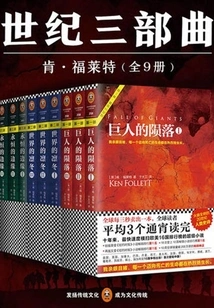
Century Trilogy (9 Volumes in Total)
General Fiction世纪三部曲(全9册)
I
Readers around the world spend an average of three nights reading this super novel. The 20th century human epic "Trilogy of the Century" that became popular all over the world! Sweeping the global charts! I have witnessed with my own eyes that every life approaching death is growing enthusiastically. From the dusty and dangerous coal mines to the gleaming royal palaces, from the corridors representing power to the bedrooms where love and hate are entangled, the five major families from the United States, Germany, Soviet Russia, England and Wales, their very different and entangled destinies are gradually revealed, magnificently showing a 20th century that we think we know, but have never felt so clearly.
Readers around the world spend an average of three nights reading this super novel. The 20th century human epic "Trilogy of the Century" that became popular all over the world! Sweeping the global charts! I have witnessed with my own eyes that every life approaching death is growing enthusiastically. From the dusty and dangerous coal mines to the gleaming royal palaces, from the corridors representing power to the bedrooms where love and hate are entangled, the five major families from the United States, Germany, Soviet Russia, England and Wales, their very different and entangled destinies are gradually revealed, magnificently showing a 20th century that we think we know, but have never felt so clearly.
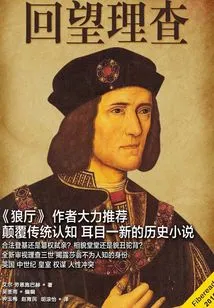
Looking Back at Richard
General Fiction回望理查
Al Raunschbach
This book is a historical novel about Richard III. The remains of Richard III were discovered in Leicestershire, England, in 2013. The medieval king was buried again in March 2015. There are three protagonists in this book: Thomas More in 1535, George Buck in 1619, and Jennifer Simpson in 1984. In reading about their respective plights, readers will also form their own opinions about historiography and Shakespeare's play.
This book is a historical novel about Richard III. The remains of Richard III were discovered in Leicestershire, England, in 2013. The medieval king was buried again in March 2015. There are three protagonists in this book: Thomas More in 1535, George Buck in 1619, and Jennifer Simpson in 1984. In reading about their respective plights, readers will also form their own opinions about historiography and Shakespeare's play.
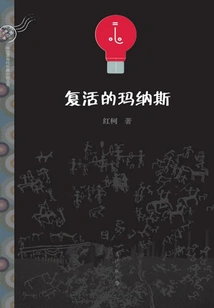
Resurrection of Manas
General Fiction复活的玛纳斯
Hongke
This book is a collection of Hong Ke's six representative novellas. "The Resurrection of Manas" takes the little-known Eta incident as the background, blends the heroic epic and the pioneering history of the military reclamation warriors who turned swords into plowshares, creating a contemporary creation myth. "Kuran" describes the story of Xinjiang governor Yang Zengxin's outsmarting the Belarusian soldiers in the early years of the Republic of China, as well as the explorer Przhevalski's five visits to China. "Guertu Wasteland" and "Moheyan" describe the real life of the lower class in the Western Regions. "Kanas Lake" is a poetic epic of forests, grasslands, lakes and mountains. "Tears of Populus euphratica" is full of reflection and critical spirit. Hong Ke's novels have a special texture and represent the model level that this series aims to achieve. His creation captures the atmosphere of the vast wilderness of the West, and is full of the wildness and masculinity of the multi-ethnic settlements in the frontier. The lines are imbued with a strong sense of epic magnificence and warmth. It is the writer's forthright and sincere song based on his personal experience of living in the West.
This book is a collection of Hong Ke's six representative novellas. "The Resurrection of Manas" takes the little-known Eta incident as the background, blends the heroic epic and the pioneering history of the military reclamation warriors who turned swords into plowshares, creating a contemporary creation myth. "Kuran" describes the story of Xinjiang governor Yang Zengxin's outsmarting the Belarusian soldiers in the early years of the Republic of China, as well as the explorer Przhevalski's five visits to China. "Guertu Wasteland" and "Moheyan" describe the real life of the lower class in the Western Regions. "Kanas Lake" is a poetic epic of forests, grasslands, lakes and mountains. "Tears of Populus euphratica" is full of reflection and critical spirit. Hong Ke's novels have a special texture and represent the model level that this series aims to achieve. His creation captures the atmosphere of the vast wilderness of the West, and is full of the wildness and masculinity of the multi-ethnic settlements in the frontier. The lines are imbued with a strong sense of epic magnificence and warmth. It is the writer's forthright and sincere song based on his personal experience of living in the West.
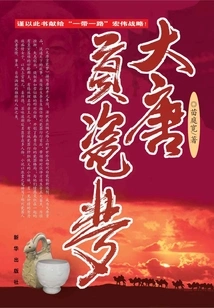
Tang Dynasty Tribute Porcelain Dream
General Fiction大唐贡瓷梦
Miao Tingkuan
The book is based on real history and caters to the grand strategy of "One Belt, One Road". It has been put into the filming of a TV series as a script. Please follow the media promotion in the later stage. In the second year of Tianshou in the Tang Dynasty (AD 691), Li Fu, the president (president) of the Xingzhou (Xingtai) Porcelain Company, died of illness. His son, Li Changsheng, was ordered by his mother to go to the residence of Prince Li Sujie (the fourth son of Emperor Gaozong of the Tang Dynasty) in Luozhou (Luoyang) to pay filial piety. He learned that Li Sujie was imprisoned and detained in the capital. Changsheng rushes to the porcelain store in Beijing to inquire about the news, and accidentally encounters the prince who was ordered to die by Empress Wu. Changsheng inexplicably obtains 800 taels of silver left by Prince Li Sujie. Guan Baozhu, a junior sister from the capital who has been a monk for six years, suddenly pays a night visit. On the way back to Xingzhou, he meets the mysterious woman Li Yuanchun.
The book is based on real history and caters to the grand strategy of "One Belt, One Road". It has been put into the filming of a TV series as a script. Please follow the media promotion in the later stage. In the second year of Tianshou in the Tang Dynasty (AD 691), Li Fu, the president (president) of the Xingzhou (Xingtai) Porcelain Company, died of illness. His son, Li Changsheng, was ordered by his mother to go to the residence of Prince Li Sujie (the fourth son of Emperor Gaozong of the Tang Dynasty) in Luozhou (Luoyang) to pay filial piety. He learned that Li Sujie was imprisoned and detained in the capital. Changsheng rushes to the porcelain store in Beijing to inquire about the news, and accidentally encounters the prince who was ordered to die by Empress Wu. Changsheng inexplicably obtains 800 taels of silver left by Prince Li Sujie. Guan Baozhu, a junior sister from the capital who has been a monk for six years, suddenly pays a night visit. On the way back to Xingzhou, he meets the mysterious woman Li Yuanchun.
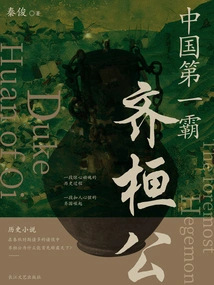
China's First Hegemon: Duke Huan of Qi
General Fiction中国第一霸:齐桓公
I
Among the many princes in the Spring and Autumn Period, why was Duke Huan of Qi the first to dominate the world and become the number one overlord in the Spring and Autumn Period? This book reproduces that thrilling historical process with ups and downs of the storyline and vivid characters.
Among the many princes in the Spring and Autumn Period, why was Duke Huan of Qi the first to dominate the world and become the number one overlord in the Spring and Autumn Period? This book reproduces that thrilling historical process with ups and downs of the storyline and vivid characters.
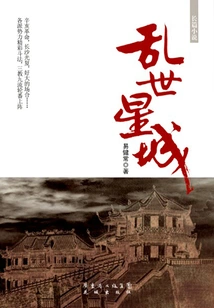
Star City in Troubled Times
General Fiction乱世星城
Yi Jianchang
This book is a full-length novel, set in the ancient city of Changsha at the end of the Qing Dynasty and the beginning of the Republic of China. Through the perspective of the protagonist "Peng Yazi", it describes the wonderful battles between the various factions of the Revolution of 1911, in which three religions and nine schools took turns to fight. It reproduces the tensions during the historical turning point a hundred years ago, and also depicts the bustle and bustle of the wide streets and narrow alleys of Star City in various forms. How are officials in and outside the city? How about gentleman? How is the army? How are the people? The officials, gentry, soldiers and civilians danced, and the evil forces of Tiangang and Earth disturbed the Star City. The author attempts to recreate the "Three Talents Picture Meeting" a hundred years ago under the complicated historical background: the "Refugee Picture" of rural people moving into the city; the "Dialogue Picture" of the game between the revolutionary party and the constitutionalists; and the "Qingming Riverside Picture" of citizens and the market.
This book is a full-length novel, set in the ancient city of Changsha at the end of the Qing Dynasty and the beginning of the Republic of China. Through the perspective of the protagonist "Peng Yazi", it describes the wonderful battles between the various factions of the Revolution of 1911, in which three religions and nine schools took turns to fight. It reproduces the tensions during the historical turning point a hundred years ago, and also depicts the bustle and bustle of the wide streets and narrow alleys of Star City in various forms. How are officials in and outside the city? How about gentleman? How is the army? How are the people? The officials, gentry, soldiers and civilians danced, and the evil forces of Tiangang and Earth disturbed the Star City. The author attempts to recreate the "Three Talents Picture Meeting" a hundred years ago under the complicated historical background: the "Refugee Picture" of rural people moving into the city; the "Dialogue Picture" of the game between the revolutionary party and the constitutionalists; and the "Qingming Riverside Picture" of citizens and the market.
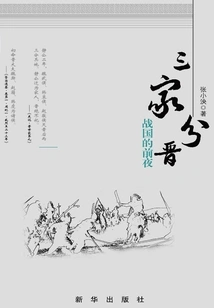
三家分晋:战国的前夜
Zhang Xiaoyang
Ten years later, Tian He, the great-grandson of Qi State official Tian Chang, deposed Qi Kanggong, destroyed Qi State's duke family, and established himself as the king of Qi State. As a result, in the land of China at this time, there were Qin State in the west, Qi State in the east, Yan State in the north, Chu State in the south, and Zhao, Han, and Wei in the middle. The situation of seven warring states vying for supremacy was officially formed. The Warring States Period began.
Ten years later, Tian He, the great-grandson of Qi State official Tian Chang, deposed Qi Kanggong, destroyed Qi State's duke family, and established himself as the king of Qi State. As a result, in the land of China at this time, there were Qin State in the west, Qi State in the east, Yan State in the north, Chu State in the south, and Zhao, Han, and Wei in the middle. The situation of seven warring states vying for supremacy was officially formed. The Warring States Period began.
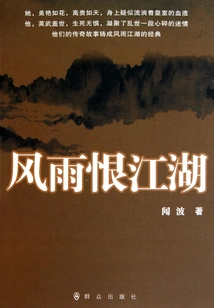
Wind and Rain Hate Jianghu
General Fiction风雨恨江湖
Wen Bo
This is the legendary history of the Republic of China; it is the essence of Jiangnan. After going through the turbulent and turbulent years of the early years of the Republic of China, you can take in the feasting and erotic scenes of Shanghai, creating a bloody and stunning love affair. This heart-pounding true story has been buried in the dust of history. As long as you brush it gently, your heart will be obsessed with, throbbing, and spasming!
This is the legendary history of the Republic of China; it is the essence of Jiangnan. After going through the turbulent and turbulent years of the early years of the Republic of China, you can take in the feasting and erotic scenes of Shanghai, creating a bloody and stunning love affair. This heart-pounding true story has been buried in the dust of history. As long as you brush it gently, your heart will be obsessed with, throbbing, and spasming!
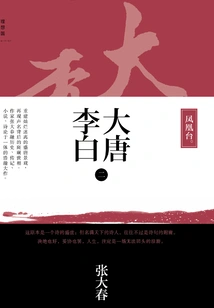
Li Bai of the Tang Dynasty·phoenix Stage
General Fiction大唐李白·凤凰台
Zhang Dachun
This was originally a prosperous age of poetry; but poets who are famous all over the world are often just appendages of poetry! "Li Bai of the Tang Dynasty" series - Taiwanese writer Zhang Dachun tells you about the study and wandering years of the poet Li Bai. "Phoenix Terrace" is the second tetralogy in the "Li Bai of the Tang Dynasty" series by Taiwanese writer Zhang Dachun. Following "Youth Travel", it tells the story of young Li Bai's traveling life along the Yangtze River after leaving Shu. In this volume, which can be called "Li Bai's Wandering Years", Li Bai and Fa Xiaowu guide their way to Yuzhou, pass through Wushan, pass through Jingmen, and reach Jiangling; they meet Taoist Sima Chengzhen, resolve the quarrels between Dongting Qiantang and Jingyang, and have many adventures, all of which are wonderful foreshadowings for him to approach the Mingjun in the temple step by step.
This was originally a prosperous age of poetry; but poets who are famous all over the world are often just appendages of poetry! "Li Bai of the Tang Dynasty" series - Taiwanese writer Zhang Dachun tells you about the study and wandering years of the poet Li Bai. "Phoenix Terrace" is the second tetralogy in the "Li Bai of the Tang Dynasty" series by Taiwanese writer Zhang Dachun. Following "Youth Travel", it tells the story of young Li Bai's traveling life along the Yangtze River after leaving Shu. In this volume, which can be called "Li Bai's Wandering Years", Li Bai and Fa Xiaowu guide their way to Yuzhou, pass through Wushan, pass through Jingmen, and reach Jiangling; they meet Taoist Sima Chengzhen, resolve the quarrels between Dongting Qiantang and Jingyang, and have many adventures, all of which are wonderful foreshadowings for him to approach the Mingjun in the temple step by step.
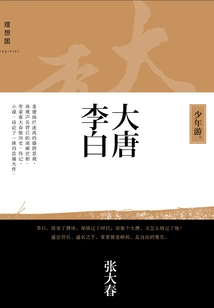
Li Bai of the Tang Dynasty·youth Tour
General Fiction大唐李白·少年游
Zhang Dachun
Li Bai changed Tang poetry, but missed the era; and how could the entire Tang Dynasty miss him? A poet who is a star and has the sound of immortality, but only his name remains; an era that claims to be prosperous but destroys poetry with vanity! The "Li Bai of the Tang Dynasty" series is a culmination of writer Zhang Dachun's modern novel skills and classical cultural literacy. It plans to recreate the life of the poet Li Bai and the rise and fall of the Tang Dynasty in a million words. The first part, "Youth Travel", combs through Li Bai's early travels, unravels the mystery of the poet's life experience and apprenticeship, and outlines the colorful world of the prosperous Tang Dynasty.
Li Bai changed Tang poetry, but missed the era; and how could the entire Tang Dynasty miss him? A poet who is a star and has the sound of immortality, but only his name remains; an era that claims to be prosperous but destroys poetry with vanity! The "Li Bai of the Tang Dynasty" series is a culmination of writer Zhang Dachun's modern novel skills and classical cultural literacy. It plans to recreate the life of the poet Li Bai and the rise and fall of the Tang Dynasty in a million words. The first part, "Youth Travel", combs through Li Bai's early travels, unravels the mystery of the poet's life experience and apprenticeship, and outlines the colorful world of the prosperous Tang Dynasty.
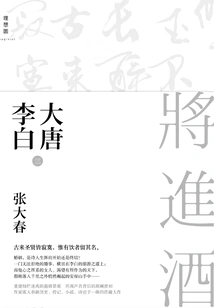
Li Bai of the Tang Dynasty·will Enter the Wine
General Fiction大唐李白·将进酒
Zhang Dachun
The poet's unspeakable lightness of life - Li Bai's love and marriage, the famous writer Zhang Dachun's masterpiece - "Li Bai of the Tang Dynasty", which integrates modern novel skills and classical cultural literacy - "Li Bai of the Tang Dynasty" "Will Enter the Wine" is the third part of the "Li Bai of the Tang Dynasty" series by Taiwanese writer Zhang Dachun. After learning skills in the mountains and crying for the first time in "Youth Journey" and "Phoenix Terrace", Li Bai's life entered the slow but crucial second movement - marriage. In the third year after leaving Shu, Li Bai changed his name to "Five Birds", spent a large sum of money in a restaurant, and had a night banquet in the Peach Garden. Wherever he wandered, he was greeted with songs. However, the young mistress, who was in love with her, has disappeared without a trace; and behind the marriage, which has an unlimited future, there is an inhumane and sophisticated calculation. At the same time, Yang Yuhuan, who was "raised in a boudoir unknown to others" thousands of miles away, and An Lushan, who rose up in the barren mountains and harsh waters, also had their own minds and would rise to the top with the emperor's appreciation...
The poet's unspeakable lightness of life - Li Bai's love and marriage, the famous writer Zhang Dachun's masterpiece - "Li Bai of the Tang Dynasty", which integrates modern novel skills and classical cultural literacy - "Li Bai of the Tang Dynasty" "Will Enter the Wine" is the third part of the "Li Bai of the Tang Dynasty" series by Taiwanese writer Zhang Dachun. After learning skills in the mountains and crying for the first time in "Youth Journey" and "Phoenix Terrace", Li Bai's life entered the slow but crucial second movement - marriage. In the third year after leaving Shu, Li Bai changed his name to "Five Birds", spent a large sum of money in a restaurant, and had a night banquet in the Peach Garden. Wherever he wandered, he was greeted with songs. However, the young mistress, who was in love with her, has disappeared without a trace; and behind the marriage, which has an unlimited future, there is an inhumane and sophisticated calculation. At the same time, Yang Yuhuan, who was "raised in a boudoir unknown to others" thousands of miles away, and An Lushan, who rose up in the barren mountains and harsh waters, also had their own minds and would rise to the top with the emperor's appreciation...
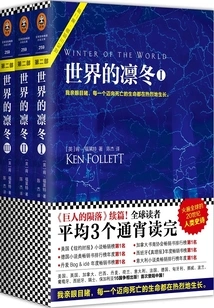
The Winter of the World (complete Collection)
General Fiction世界的凛冬(全集)
I
Readers around the world spend an average of three nights reading this super novel. The sequel to "Fall of Giants"! The second part of the "Trilogy of the Century", the 20th century human epic that has become popular all over the world. I have witnessed with my own eyes that every life approaching death is growing enthusiastically. The entire 20th century Yoshimitsu Kataha was written into this great novel by Ken Follett. Everything started from that great era of fission - Hitler came to power, Edward VIII abdicated, and atomic bombs exploded in Hiroshima and Nagasaki... A group of boys and girls in the golden age of life, the fate of their parents' generation was completely changed by World War I. Today, the world is broken again, even more violent and cruel. However, this was their time! In the eternal flow of time, everyone is making history.
Readers around the world spend an average of three nights reading this super novel. The sequel to "Fall of Giants"! The second part of the "Trilogy of the Century", the 20th century human epic that has become popular all over the world. I have witnessed with my own eyes that every life approaching death is growing enthusiastically. The entire 20th century Yoshimitsu Kataha was written into this great novel by Ken Follett. Everything started from that great era of fission - Hitler came to power, Edward VIII abdicated, and atomic bombs exploded in Hiroshima and Nagasaki... A group of boys and girls in the golden age of life, the fate of their parents' generation was completely changed by World War I. Today, the world is broken again, even more violent and cruel. However, this was their time! In the eternal flow of time, everyone is making history.
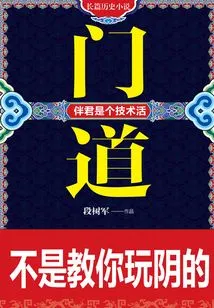
Doorway
General Fiction门道
Duan Shujun
Chen Ping (? - 178 BC)'s strategic achievements throughout his life astonished future generations. He repeatedly used strange strategies to assist Liu Bang in settling the world, and assisted Emperor Wen of the Han Dynasty to regulate the troubled times. He is not as deep as Zhang Liang at the same time, but he is more quick-witted than Zhang Liang. Although the two men were from the same clan as Huang Lao, they had great differences in their thinking: Zhang Liang adhered to the teaching of "inaction" in his later years; Chen Ping was determined to make progress throughout his life and had the style of a political strategist. Chen Ping's choice of three official positions is also very inspiring. He is competent in his job, integrates himself into others, and pervades the whole self. At the same time, he expands himself and achieves himself. Although he appears to be of lower status, he maintains a low profile, maintains his personality, and is loyal to the public. In the winding and ups and downs of his life, Chen Ping used his extraordinary wisdom to steer the boat of destiny. He was not trapped in difficulties and was not in danger, and finally established great achievements that were beyond the reach of ordinary people.
Chen Ping (? - 178 BC)'s strategic achievements throughout his life astonished future generations. He repeatedly used strange strategies to assist Liu Bang in settling the world, and assisted Emperor Wen of the Han Dynasty to regulate the troubled times. He is not as deep as Zhang Liang at the same time, but he is more quick-witted than Zhang Liang. Although the two men were from the same clan as Huang Lao, they had great differences in their thinking: Zhang Liang adhered to the teaching of "inaction" in his later years; Chen Ping was determined to make progress throughout his life and had the style of a political strategist. Chen Ping's choice of three official positions is also very inspiring. He is competent in his job, integrates himself into others, and pervades the whole self. At the same time, he expands himself and achieves himself. Although he appears to be of lower status, he maintains a low profile, maintains his personality, and is loyal to the public. In the winding and ups and downs of his life, Chen Ping used his extraordinary wisdom to steer the boat of destiny. He was not trapped in difficulties and was not in danger, and finally established great achievements that were beyond the reach of ordinary people.
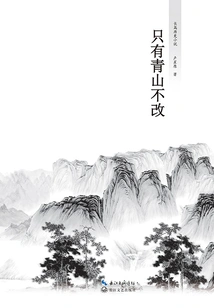
Only the Green Hills Remain Unchanged
General Fiction只有青山不改
Lu Xingyuan
This book is a full-length historical novel. The Ming and Qing Dynasties were the period of gradual decline of my country's feudal system and the consolidation of a unified multi-ethnic country. During this period, society was turbulent. This book takes the major historical events of the Ming and Qing Dynasties as the main line, and deeply reflects the duality and complexity of good and evil in human nature through the portrayal and description of historical figures such as Jin Shenghuan, Wang Deren, Li Chengdong, Ma Shiying, and Zhu Dadian.
This book is a full-length historical novel. The Ming and Qing Dynasties were the period of gradual decline of my country's feudal system and the consolidation of a unified multi-ethnic country. During this period, society was turbulent. This book takes the major historical events of the Ming and Qing Dynasties as the main line, and deeply reflects the duality and complexity of good and evil in human nature through the portrayal and description of historical figures such as Jin Shenghuan, Wang Deren, Li Chengdong, Ma Shiying, and Zhu Dadian.
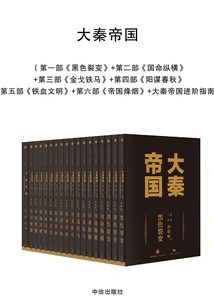
Great Qin Empire (set Version)
General Fiction大秦帝国(套装版)
Sun Haohui
The original work of the popular CCTV drama "The Qin Empire" is the most influential historical novel in more than ten years, and it is the Warring States version of "The Rise of the Great Powers" that inspires and benefits contemporary Chinese people. The book is divided into six parts and seventeen volumes, including "Black Fission", "National Destiny", "Golden Arms", "Spring and Autumn", "Iron-Blooded Civilization" and "Empire's Beacon", plus one volume "Advanced Guide to the Great Qin Empire". At the end of the Warring States period when rituals and music were broken and heroes were vying for the throne, the Qin State, which was facing the disaster of national subjugation, was surrounded by great powers and emerged in the forest of iron-blooded competition among great powers. Beginning with Qin Xiaogong, he had to work hard, make thorough changes, uphold the rule of law, and unify political orders. After more than 160 years and six generations of leaders' unswerving pursuit, they completed a great imperial revolution, wiped out the Liuhe and unified the world, and established a strong and unified empire. This masterpiece restores the huge historical gap and the dramatic fate of the empire, and reproduces the tragic process of a country realizing its dream step by step. Every line and page of the book is full of wisdom, strategy, and political character, and the spirit of hard work and strong survival. It is full of heroic spirit and true soul from the era of China's original civilization. The first three films have been adapted into TV series. The first film, "The Fission of the Great Qin Empire," stars Hou Yong, Wang Zhifei, Lu Yong, Lu Zhong, and Gao Yuanyuan, and is known as a domestic drama. The second film, "The Fission of the Great Qin Empire," stars Ning Jing, Fu Dalong, Fu Miao, and Yu Entai. The third film, "The Rise of the Great Qin Empire," stars Ning Jing, Zhang Bo, and Li Liqun, and also has a high reputation.
The original work of the popular CCTV drama "The Qin Empire" is the most influential historical novel in more than ten years, and it is the Warring States version of "The Rise of the Great Powers" that inspires and benefits contemporary Chinese people. The book is divided into six parts and seventeen volumes, including "Black Fission", "National Destiny", "Golden Arms", "Spring and Autumn", "Iron-Blooded Civilization" and "Empire's Beacon", plus one volume "Advanced Guide to the Great Qin Empire". At the end of the Warring States period when rituals and music were broken and heroes were vying for the throne, the Qin State, which was facing the disaster of national subjugation, was surrounded by great powers and emerged in the forest of iron-blooded competition among great powers. Beginning with Qin Xiaogong, he had to work hard, make thorough changes, uphold the rule of law, and unify political orders. After more than 160 years and six generations of leaders' unswerving pursuit, they completed a great imperial revolution, wiped out the Liuhe and unified the world, and established a strong and unified empire. This masterpiece restores the huge historical gap and the dramatic fate of the empire, and reproduces the tragic process of a country realizing its dream step by step. Every line and page of the book is full of wisdom, strategy, and political character, and the spirit of hard work and strong survival. It is full of heroic spirit and true soul from the era of China's original civilization. The first three films have been adapted into TV series. The first film, "The Fission of the Great Qin Empire," stars Hou Yong, Wang Zhifei, Lu Yong, Lu Zhong, and Gao Yuanyuan, and is known as a domestic drama. The second film, "The Fission of the Great Qin Empire," stars Ning Jing, Fu Dalong, Fu Miao, and Yu Entai. The third film, "The Rise of the Great Qin Empire," stars Ning Jing, Zhang Bo, and Li Liqun, and also has a high reputation.
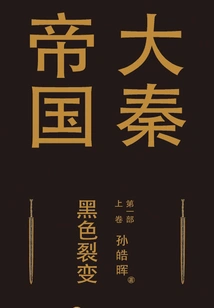
The Great Qin Empire Part 1: Black Fission (volume 1)
General Fiction大秦帝国第一部:黑色裂变(上卷)
Sun Haohui
Qin Xiaogong and Shang Yang implemented reforms to become stronger. The Qin State turned from weak to strong, regained its lost territory, and began to rise. In the "era of great contention" where heroes compete for power and mountains and rivers change day by day, in the Warring States period when heroes emerge in large numbers and hundreds of schools of thought contend, the western frontier of China is experiencing an unprecedented "black fission." In 362 BC, Duke Xiang of Qin was poisoned by an arrow and died in a battle. His legitimate son Yingqu ascended the throne in front of Liang Lingqian, and was known as Duke Xiao of Qin in history. The Qin State was despised by the foreign powers and its national power was weak. The six kingdoms of Shandong also formed an alliance and plotted to divide Qin. The 22-year-old young monarch Qin Xiaogong wrote a blood letter on the monument of national humiliation, and issued a request for talents to the world, vowing to strengthen the country through reforms. In repeated discussions with the scholars of the Qin Dynasty, Shang Yang stood out. On the bow of the Weishui River, Shang Yang showed his political opinions and impressed Duke Xiao of Qin with his Legalist thoughts. Qin Xiaogong worshiped Shang Yang as his prime minister and began a twenty-year reform of the monarchy and ministers. Legalist master Shang Yang comprehensively presided over the reform and led the Qin State to create a wartime legal civilization step by step... The first part of "The Great Qin Empire" has been adapted into the TV series "The Fission of the Great Qin Empire", starring Hou Yong, Wang Zhifei, Lu Yong, Lu Zhong, and Gao Yuanyuan. It was praised by netizens as a domestic drama, with a Douban score of 9.1! The second part was adapted into "The Great Qin Empire", starring Ning Jing, Fu Dalong, Fu Miao, and Yu Entai, and also has a high reputation. The third part was adapted as "The Rise of the Qin Empire", starring Ning Jing, Zhang Bo and Li Liqun.
Qin Xiaogong and Shang Yang implemented reforms to become stronger. The Qin State turned from weak to strong, regained its lost territory, and began to rise. In the "era of great contention" where heroes compete for power and mountains and rivers change day by day, in the Warring States period when heroes emerge in large numbers and hundreds of schools of thought contend, the western frontier of China is experiencing an unprecedented "black fission." In 362 BC, Duke Xiang of Qin was poisoned by an arrow and died in a battle. His legitimate son Yingqu ascended the throne in front of Liang Lingqian, and was known as Duke Xiao of Qin in history. The Qin State was despised by the foreign powers and its national power was weak. The six kingdoms of Shandong also formed an alliance and plotted to divide Qin. The 22-year-old young monarch Qin Xiaogong wrote a blood letter on the monument of national humiliation, and issued a request for talents to the world, vowing to strengthen the country through reforms. In repeated discussions with the scholars of the Qin Dynasty, Shang Yang stood out. On the bow of the Weishui River, Shang Yang showed his political opinions and impressed Duke Xiao of Qin with his Legalist thoughts. Qin Xiaogong worshiped Shang Yang as his prime minister and began a twenty-year reform of the monarchy and ministers. Legalist master Shang Yang comprehensively presided over the reform and led the Qin State to create a wartime legal civilization step by step... The first part of "The Great Qin Empire" has been adapted into the TV series "The Fission of the Great Qin Empire", starring Hou Yong, Wang Zhifei, Lu Yong, Lu Zhong, and Gao Yuanyuan. It was praised by netizens as a domestic drama, with a Douban score of 9.1! The second part was adapted into "The Great Qin Empire", starring Ning Jing, Fu Dalong, Fu Miao, and Yu Entai, and also has a high reputation. The third part was adapted as "The Rise of the Qin Empire", starring Ning Jing, Zhang Bo and Li Liqun.
凤舞未央:吕雉传(叁)
K
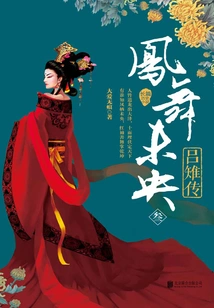
Lu Pheasant fell in love with Liu Bang, and after getting married, he followed his father's philosophy of "fate is a boat, and luck is a hired boatman". He was diligent and frugal in running the house, devoted himself to farming, entertained friends for her husband, and figured out Liu Bang's personal connections. Great cause; in order to motivate Liu Bang, Lu Pheasant cleverly distributed "Liu Family Crowns" and gathered his own "team" for Liu Bang beforehand; Lu Pheasant also joined forces with Xiao He and others to help Liu Bang get rid of the entanglements in lawsuits time and time again and stabilize the situation; before Liu Bang decided to escape Mangdang Mountain, Lu Pheasant took great pains to take the county magistrate's son as a hostage for him, keeping the government from encirclement and suppression, and bought time. Through repeated designs, Lu Pheasant finally helped Liu Bang seize the power of Peixian County, and successfully embarked on the road to overthrow the Qin Dynasty, eliminate Xiang Yu, and dominate the world...
Lu Pheasant fell in love with Liu Bang, and after getting married, he followed his father's philosophy of "fate is a boat, and luck is a hired boatman". He was diligent and frugal in running the house, devoted himself to farming, entertained friends for her husband, and figured out Liu Bang's personal connections. Great cause; in order to motivate Liu Bang, Lu Pheasant cleverly distributed "Liu Family Crowns" and gathered his own "team" for Liu Bang beforehand; Lu Pheasant also joined forces with Xiao He and others to help Liu Bang get rid of the entanglements in lawsuits time and time again and stabilize the situation; before Liu Bang decided to escape Mangdang Mountain, Lu Pheasant took great pains to take the county magistrate's son as a hostage for him, keeping the government from encirclement and suppression, and bought time. Through repeated designs, Lu Pheasant finally helped Liu Bang seize the power of Peixian County, and successfully embarked on the road to overthrow the Qin Dynasty, eliminate Xiang Yu, and dominate the world...
凤舞未央:吕雉传(肆)
K
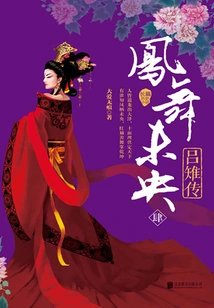
Emperor Liu Ying, who was frail and suffering from internal suffering, finally passed away. Lu Pheasant officially took the throne, and the Han Dynasty entered the era of Empress Lu. As he grew older, Lu Pheasant began to accelerate progress, promote members of the Lu family, break the "White Horse Alliance", and let the "King surnamed Liu" exist in name only. The growing Lu Group has become the core of power that both the government and the public are afraid of, and the Han Dynasty is in danger. At the critical moment, the ministers arranged by Liu Bang secretly gathered strength to launch a final attack on the Lu Group. A battle to defend the Han Dynasty was brewing day and night, with undercurrents surging and tensions rising...
Emperor Liu Ying, who was frail and suffering from internal suffering, finally passed away. Lu Pheasant officially took the throne, and the Han Dynasty entered the era of Empress Lu. As he grew older, Lu Pheasant began to accelerate progress, promote members of the Lu family, break the "White Horse Alliance", and let the "King surnamed Liu" exist in name only. The growing Lu Group has become the core of power that both the government and the public are afraid of, and the Han Dynasty is in danger. At the critical moment, the ministers arranged by Liu Bang secretly gathered strength to launch a final attack on the Lu Group. A battle to defend the Han Dynasty was brewing day and night, with undercurrents surging and tensions rising...
Daqin Empire Advanced Manual
General Fiction大秦帝国进阶手册
Sun Haohui
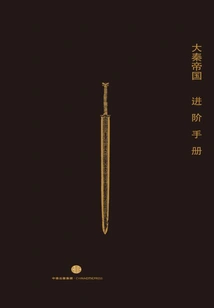
The Advancement Manual of the Great Qin Empire, at the end of the Warring States period when rituals and music were broken and heroes were vying for the throne, the Qin State, which was facing the disaster of national subjugation, was surrounded by great powers and emerged in the forest of iron-blooded competition among great powers. Beginning with Qin Xiaogong, he had to work hard, make thorough changes, uphold the rule of law, and unify political orders. After more than 160 years and six generations of leaders' unswerving pursuit, they completed a great imperial revolution, wiped out the Liuhe and unified the world, and established a strong and unified empire.
The Advancement Manual of the Great Qin Empire, at the end of the Warring States period when rituals and music were broken and heroes were vying for the throne, the Qin State, which was facing the disaster of national subjugation, was surrounded by great powers and emerged in the forest of iron-blooded competition among great powers. Beginning with Qin Xiaogong, he had to work hard, make thorough changes, uphold the rule of law, and unify political orders. After more than 160 years and six generations of leaders' unswerving pursuit, they completed a great imperial revolution, wiped out the Liuhe and unified the world, and established a strong and unified empire.
凤舞未央:吕雉传(贰)
K
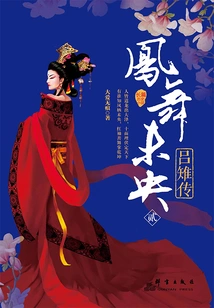
Lu Pheasant was dragged into prison by Liu Bang. Fortunately, Xiao He and others cleverly rescued him and escaped from the prison. Just when he wanted to take a breath, Liu Bang unexpectedly took action at the right time and launched an army to rebel. The most thrilling thing is that Liu Bang's closest friends also have hidden murderous intentions. Through repeated designs, Lu Pheasant finally helped Liu Bang seize the power of Peixian County. A series of hardships finally allowed Lu Pheasant to see through the nature of politics and begin to enter the political whirlpool. Lu Pheasant created "different appearances" for Liu Bang many times, convincing the people that Liu Bang was a "dragon", thus establishing a psychological protection for a group of people who followed Liu Bang wholeheartedly. Smoothly embark on the road to overthrow the Qin Dynasty, eliminate Xiang Yu, and dominate the world...
Lu Pheasant was dragged into prison by Liu Bang. Fortunately, Xiao He and others cleverly rescued him and escaped from the prison. Just when he wanted to take a breath, Liu Bang unexpectedly took action at the right time and launched an army to rebel. The most thrilling thing is that Liu Bang's closest friends also have hidden murderous intentions. Through repeated designs, Lu Pheasant finally helped Liu Bang seize the power of Peixian County. A series of hardships finally allowed Lu Pheasant to see through the nature of politics and begin to enter the political whirlpool. Lu Pheasant created "different appearances" for Liu Bang many times, convincing the people that Liu Bang was a "dragon", thus establishing a psychological protection for a group of people who followed Liu Bang wholeheartedly. Smoothly embark on the road to overthrow the Qin Dynasty, eliminate Xiang Yu, and dominate the world...