Library
Browse and search books
2,472 novels found
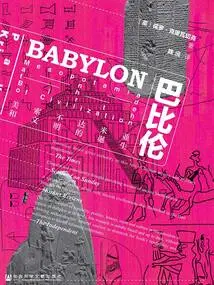
巴比伦:美索不达米亚和文明的诞生
(uk) Paul Krivacek
Babylon not only laid the foundation of civilization, but also supported the backbone of history. From the arrival of the first settlers in the Fertile Crescent around 5400 BC to the fall of Babylon to the Persians in the 6th century BC, the glorious history of Mesopotamia unfolds one by one. Civilization was born here. The land between the Tigris and Euphrates rivers has experienced dynasty changes and national integration. It has witnessed the birth of writing and literature, the formation of education and law, the beginnings of civil engineering and mathematics, and has also witnessed the rise of cities and the continuous improvement of human society. Paul Krivacek's "Babylon" explores not only the initial form of civilization, but also the laws of social progress and the model of human development.
Babylon not only laid the foundation of civilization, but also supported the backbone of history. From the arrival of the first settlers in the Fertile Crescent around 5400 BC to the fall of Babylon to the Persians in the 6th century BC, the glorious history of Mesopotamia unfolds one by one. Civilization was born here. The land between the Tigris and Euphrates rivers has experienced dynasty changes and national integration. It has witnessed the birth of writing and literature, the formation of education and law, the beginnings of civil engineering and mathematics, and has also witnessed the rise of cities and the continuous improvement of human society. Paul Krivacek's "Babylon" explores not only the initial form of civilization, but also the laws of social progress and the model of human development.
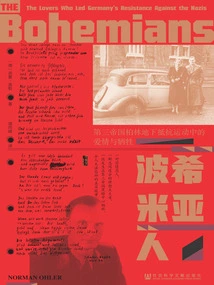
波希米亚人:第三帝国柏林地下抵抗运动中的爱情与牺牲
Ay
Summer 1935. On a lake near Berlin, a young man was sailing when a boat passed by him and he saw a woman leaning on the bow. Their eyes met-and one of the most audacious plans in history was born. Before he began his turbulent romance with Libertas Haas-Hayer, Haro Schulze-Boysen had already shed his blood in the fight against Nazism. Libertas joined the cause, and the two soon gathered a group of like-minded anti-fascist fighters, forming a network of resisters in Nazi-era Berlin to bravely resist the Nazis' reign of terror. Harrow himself also infiltrated the German military and intelligence services to deliver Nazi battle plans to the Allies, including details of Hitler's blitzkrieg campaign against the Soviet Union. But before young Harrow and Libertas are fully prepared, the omnipresent Gestapo is closing in - and in this secret war, it's hard to tell friend from foe. Harrow and Libertas were historically significant heroes who fought against the Nazi regime, but for a long time they did not receive the recognition they deserved, either in West or East Germany. Norman Oller used unpublished diaries, letters and Gestapo archives to reconstruct this heroic story of love and sacrifice in La Bohème.
Summer 1935. On a lake near Berlin, a young man was sailing when a boat passed by him and he saw a woman leaning on the bow. Their eyes met-and one of the most audacious plans in history was born. Before he began his turbulent romance with Libertas Haas-Hayer, Haro Schulze-Boysen had already shed his blood in the fight against Nazism. Libertas joined the cause, and the two soon gathered a group of like-minded anti-fascist fighters, forming a network of resisters in Nazi-era Berlin to bravely resist the Nazis' reign of terror. Harrow himself also infiltrated the German military and intelligence services to deliver Nazi battle plans to the Allies, including details of Hitler's blitzkrieg campaign against the Soviet Union. But before young Harrow and Libertas are fully prepared, the omnipresent Gestapo is closing in - and in this secret war, it's hard to tell friend from foe. Harrow and Libertas were historically significant heroes who fought against the Nazi regime, but for a long time they did not receive the recognition they deserved, either in West or East Germany. Norman Oller used unpublished diaries, letters and Gestapo archives to reconstruct this heroic story of love and sacrifice in La Bohème.
时间与东亚古代世界
Liu Xiaofeng
The main purpose of this book is to study the impact of ancient Chinese time culture system on East Asia and to explore the characteristics of time culture in East Asia. The book is composed of three parts: the first part "A brief discussion of the ancient time cultural system of East Asia", the middle part "East Asia in the cycle of four seasons" and the second part "East Asian time and space and East Asian folk customs". It conducts an overall study of time culture in East Asia. The author believes that the ancient Chinese time system is structured by a set of cultural concepts and is supported by the cosmic model constructed by the ancient Chinese. Therefore, cultural areas that share the ancient Chinese calendar are affected by the cosmic model constructed by the ancient Chinese. At the same time, they also share this complete set of cultural concepts, and therefore naturally share many common cultural characteristics.
The main purpose of this book is to study the impact of ancient Chinese time culture system on East Asia and to explore the characteristics of time culture in East Asia. The book is composed of three parts: the first part "A brief discussion of the ancient time cultural system of East Asia", the middle part "East Asia in the cycle of four seasons" and the second part "East Asian time and space and East Asian folk customs". It conducts an overall study of time culture in East Asia. The author believes that the ancient Chinese time system is structured by a set of cultural concepts and is supported by the cosmic model constructed by the ancient Chinese. Therefore, cultural areas that share the ancient Chinese calendar are affected by the cosmic model constructed by the ancient Chinese. At the same time, they also share this complete set of cultural concepts, and therefore naturally share many common cultural characteristics.

半小时漫画世界史(全三册)
Chen Lei·half Hour Comics Team
Brother Bastard talks about his new work while drawing, reads comics for half an hour, and learns about the history of various countries in the world! Ultra-clear mind maps clarify the context of events and easily understand the internal logic of the historical development of various countries. Learning history through hilarious memory is more profound than rote memorization. Endorsed by authoritative experts, the knowledge is rigorous and reliable! 30 Million readers have given it real positive reviews, which has truly improved its historical performance! "A Half-Hour Comic World History" ranges from laughter in Greece and Rome to Japan and the United States. There are historical jokes on every page, making you laugh every three seconds. Let you laugh out your abs while unknowingly knowing the history of the world. In "Half-Hour Comic World History 2", the four major ancient civilizations made their debut as a group. Why is China the only one left standing? Open this book and learn about the past and present of the other three ancient civilizations in the overwhelming paragraphs! "Half-hour Comic World History 3" From the Norman Conquest to the Hundred Years' War, why have Britain and France always been at odds with each other in history? Open this book and understand the dynasty changes and power struggles between Britain and France while laughing!
Brother Bastard talks about his new work while drawing, reads comics for half an hour, and learns about the history of various countries in the world! Ultra-clear mind maps clarify the context of events and easily understand the internal logic of the historical development of various countries. Learning history through hilarious memory is more profound than rote memorization. Endorsed by authoritative experts, the knowledge is rigorous and reliable! 30 Million readers have given it real positive reviews, which has truly improved its historical performance! "A Half-Hour Comic World History" ranges from laughter in Greece and Rome to Japan and the United States. There are historical jokes on every page, making you laugh every three seconds. Let you laugh out your abs while unknowingly knowing the history of the world. In "Half-Hour Comic World History 2", the four major ancient civilizations made their debut as a group. Why is China the only one left standing? Open this book and learn about the past and present of the other three ancient civilizations in the overwhelming paragraphs! "Half-hour Comic World History 3" From the Norman Conquest to the Hundred Years' War, why have Britain and France always been at odds with each other in history? Open this book and understand the dynasty changes and power struggles between Britain and France while laughing!
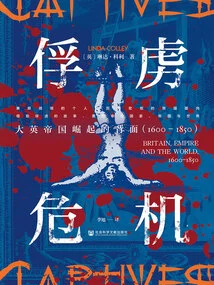
俘虏危机:大英帝国崛起的背面(1600—1850)
L
This is a groundbreaking work that examines the history of British expansion and colonization from a new perspective. At a time when Britain was emerging as a globally influential empire, large numbers of Britons were still being held captive outside Europe. The author makes these captives the subject of a historical narrative that re-evaluates the rise of the greatest empire in global history. Starting from a micro perspective, Colley spends a lot of space telling the personal experiences of different captives - the tragic stories of soldiers, sailors and their wives, businessmen and liars, white slaves and black slaves. He also quotes the captives' personal works, allowing readers to truly understand their mood at that time. At the same time, this book also has a macro aspect. Exploring these forgotten extraterritorial British captives elicits a history of the frustrations of the early British Empire, inviting people to rethink an old story that is often told in the same way.
This is a groundbreaking work that examines the history of British expansion and colonization from a new perspective. At a time when Britain was emerging as a globally influential empire, large numbers of Britons were still being held captive outside Europe. The author makes these captives the subject of a historical narrative that re-evaluates the rise of the greatest empire in global history. Starting from a micro perspective, Colley spends a lot of space telling the personal experiences of different captives - the tragic stories of soldiers, sailors and their wives, businessmen and liars, white slaves and black slaves. He also quotes the captives' personal works, allowing readers to truly understand their mood at that time. At the same time, this book also has a macro aspect. Exploring these forgotten extraterritorial British captives elicits a history of the frustrations of the early British Empire, inviting people to rethink an old story that is often told in the same way.
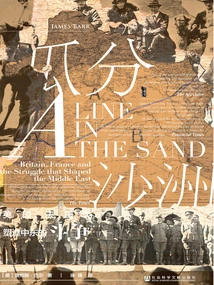
瓜分沙洲:英国、法国与塑造中东的斗争
(uk) James Barr
In 1916, British politician Mark Sykes and French diplomat François Georges-Picot secretly reached the "Sykes-Picot Agreement" to carve up the Middle East, defining a new map of the Middle East: Britain administered Palestine, Transjordan and Iraq, and France controlled Lebanon and Syria. Over the next thirty years, violence and secret politics were played out here, with politicians, diplomats, spies, and soldiers appearing one after another, including T. E. Lawrence, Churchill, and de Gaulle. Drawing on newly declassified documents from British and French archives, James Barr reconstructs the secret war between Britain and France for leadership in the Middle East, and reveals for the first time the French's masterful revenge in ending the British Mandate in Palestine.
In 1916, British politician Mark Sykes and French diplomat François Georges-Picot secretly reached the "Sykes-Picot Agreement" to carve up the Middle East, defining a new map of the Middle East: Britain administered Palestine, Transjordan and Iraq, and France controlled Lebanon and Syria. Over the next thirty years, violence and secret politics were played out here, with politicians, diplomats, spies, and soldiers appearing one after another, including T. E. Lawrence, Churchill, and de Gaulle. Drawing on newly declassified documents from British and French archives, James Barr reconstructs the secret war between Britain and France for leadership in the Middle East, and reveals for the first time the French's masterful revenge in ending the British Mandate in Palestine.
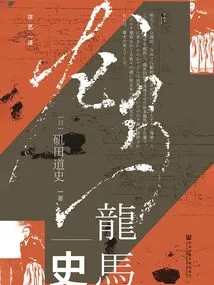
龙马史
(japan) Isoda Road History
Ryoma Sakamoto is a well-known figure in the history of the Bakumatsu Restoration, but his true identity is still shrouded in mystery. What inspired Sakamoto Ryoma's ideological change? As a low-level samurai in the remote Tosa domain, where did his vigorous political energy come from? And after the Edo shogunate decided to return the power, who killed him? The real Sakamoto Ryoma was not an otherworldly ideological pioneer, but a civilian hero full of fireworks. His adventure in the political situation at the end of the Tokugawa relied not only on the moral principles and courage of the samurai, but also on the business acumen and way of life of the businessman. Ryoma Sakamoto's personal history of struggle is also a history about how Japan's business spirit and political trends at the end of the Tokugawa era broke the feudal status order.
Ryoma Sakamoto is a well-known figure in the history of the Bakumatsu Restoration, but his true identity is still shrouded in mystery. What inspired Sakamoto Ryoma's ideological change? As a low-level samurai in the remote Tosa domain, where did his vigorous political energy come from? And after the Edo shogunate decided to return the power, who killed him? The real Sakamoto Ryoma was not an otherworldly ideological pioneer, but a civilian hero full of fireworks. His adventure in the political situation at the end of the Tokugawa relied not only on the moral principles and courage of the samurai, but also on the business acumen and way of life of the businessman. Ryoma Sakamoto's personal history of struggle is also a history about how Japan's business spirit and political trends at the end of the Tokugawa era broke the feudal status order.
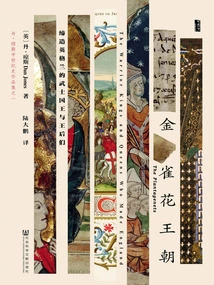
金雀花王朝:缔造英格兰的武士国王与王后们
I
"The Plantagenets" is a best-selling historical book by Penguin Publishing in the UK and the United States at the same time. It tells the story: The first king of the Plantagenet Dynasty inherited a broken country from the Norman Dynasty that was torn apart, bloody and drifting, and then developed it into an empire. At its peak, its territory stretched from Scotland to Jerusalem. In this epic narrative history, Dan Jones makes the point that the Tudor monarchs were far inferior to the Plantagenet Kings who came before them, who were equally fierce, fearless, and resourceful emperors.
"The Plantagenets" is a best-selling historical book by Penguin Publishing in the UK and the United States at the same time. It tells the story: The first king of the Plantagenet Dynasty inherited a broken country from the Norman Dynasty that was torn apart, bloody and drifting, and then developed it into an empire. At its peak, its territory stretched from Scotland to Jerusalem. In this epic narrative history, Dan Jones makes the point that the Tudor monarchs were far inferior to the Plantagenet Kings who came before them, who were equally fierce, fearless, and resourceful emperors.
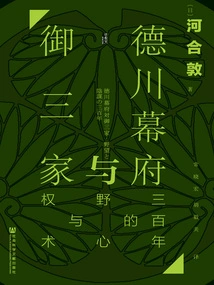
The Tokugawa Shogunate and the Three Imperial Households: Three Hundred Years of Ambition and Power
History德川幕府与御三家:三百年的野心与权术
(japan) Kawaiton
Among Tokugawa Ieyasu's descendants, the Owari family started from Yoshinao, the Kii family started from Yorinobu, and the Mito family started from Yorifusa. These three families are collectively called the Tokugawa Gosan family. But was the Yusan family only born to assist General Bi's family, or to supplement the general's successors? Historian Atsushi Kawai thinks this view is completely wrong. In this work, Atsushi Kawai reveals the hidden ambitions of the Gosan family and the overt and covert struggles among the shogunate, shoguns and the Gosan family over power and the shogun's successor during the three hundred years of Tokugawa rule.
Among Tokugawa Ieyasu's descendants, the Owari family started from Yoshinao, the Kii family started from Yorinobu, and the Mito family started from Yorifusa. These three families are collectively called the Tokugawa Gosan family. But was the Yusan family only born to assist General Bi's family, or to supplement the general's successors? Historian Atsushi Kawai thinks this view is completely wrong. In this work, Atsushi Kawai reveals the hidden ambitions of the Gosan family and the overt and covert struggles among the shogunate, shoguns and the Gosan family over power and the shogun's successor during the three hundred years of Tokugawa rule.
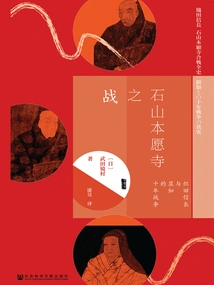
石山本愿寺之战:织田信长与显如的十年战争
(japan) Takeda Mirror Village
Who was the biggest opponent Oda Nobunaga encountered in the process of "distributing weapons to the world"? Was it Ashikaga Yoshiaki, the last shogun of the Muromachi shogunate, or Takeda Shingen, the powerful daimyo at the time? Is it the Asai Asai coalition that joins forces to deal with Nobunaga, or is it the Chinese region guardian Mori Terumoto who is sitting on Haili? Takeda Kagemura gave an unexpected answer-Ishiyama Honganji Temple. Starting from the perspective of Honganji Temple, this book vividly and meticulously presents the full picture of the ten-year battle of Ishiyama Honganji Temple, and examines it from the strategic perspective of Nobunaga's "Tianxia Dewar", which has caused thousands of waves in the field of research on the history of Japan's Warring States Period.
Who was the biggest opponent Oda Nobunaga encountered in the process of "distributing weapons to the world"? Was it Ashikaga Yoshiaki, the last shogun of the Muromachi shogunate, or Takeda Shingen, the powerful daimyo at the time? Is it the Asai Asai coalition that joins forces to deal with Nobunaga, or is it the Chinese region guardian Mori Terumoto who is sitting on Haili? Takeda Kagemura gave an unexpected answer-Ishiyama Honganji Temple. Starting from the perspective of Honganji Temple, this book vividly and meticulously presents the full picture of the ten-year battle of Ishiyama Honganji Temple, and examines it from the strategic perspective of Nobunaga's "Tianxia Dewar", which has caused thousands of waves in the field of research on the history of Japan's Warring States Period.
古代阿拉伯史学家及其著作目录
Compiled By Liang Daoyuan
Arab historiography emerged in the mid-7th century AD, and its time span is far inferior to that of Chinese and Western historiography. However, it started late, developed rapidly, has many historians, large volumes of books, complex content, and detailed descriptions. It is undoubtedly a branch with distinctive characteristics in the history of world history. In ancient times alone, there were about 5,000 Muslim historians who left about 12,000 kinds of history books (most of them written in Arabic). The author sorted out a large number of ancient Arab historical documents and used the periodization method to sort out about 1,500 Arab historians and their main works, filling the academic gaps in domestic research on the history of Arab history. This book lays a documentary foundation for the study of the history of Arab historiography and facilitates further exploration by learners and researchers.
Arab historiography emerged in the mid-7th century AD, and its time span is far inferior to that of Chinese and Western historiography. However, it started late, developed rapidly, has many historians, large volumes of books, complex content, and detailed descriptions. It is undoubtedly a branch with distinctive characteristics in the history of world history. In ancient times alone, there were about 5,000 Muslim historians who left about 12,000 kinds of history books (most of them written in Arabic). The author sorted out a large number of ancient Arab historical documents and used the periodization method to sort out about 1,500 Arab historians and their main works, filling the academic gaps in domestic research on the history of Arab history. This book lays a documentary foundation for the study of the history of Arab historiography and facilitates further exploration by learners and researchers.
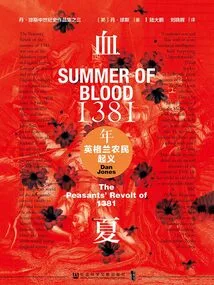
血夏:1381年英格兰农民起义
I
Faced with the heavy tax burden caused by the Hundred Years' War between England and France and the harsh labor laws after the Black Death, farmers who were once bound to the land coerced clergy and town residents to revolt and march towards London, the center of power in the Kingdom of England. How do unknown common people organize to fight against the nobility, church and wealthy businessmen who rule the country? How did the young King Richard II handle this major crisis that threatened the Plantagenet dynasty's rule, and what did he learn from it? The debut work of the well-known historical writer Dan Jones tells readers about this bloody and frenzied history of popular resistance in medieval England.
Faced with the heavy tax burden caused by the Hundred Years' War between England and France and the harsh labor laws after the Black Death, farmers who were once bound to the land coerced clergy and town residents to revolt and march towards London, the center of power in the Kingdom of England. How do unknown common people organize to fight against the nobility, church and wealthy businessmen who rule the country? How did the young King Richard II handle this major crisis that threatened the Plantagenet dynasty's rule, and what did he learn from it? The debut work of the well-known historical writer Dan Jones tells readers about this bloody and frenzied history of popular resistance in medieval England.
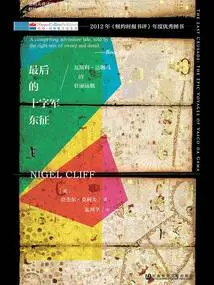
最后的十字军东征:瓦斯科·达伽马的壮丽远航
(uk) Nigel Cliff
This is a work about the sailing expeditions of Portuguese navigator Vasco da Gama at the end of the 15th century. Historian Nigel Cliff draws on newly discovered material, the diaries of Vasco da Gama's sailors, and rare correspondence between Vasco da Gama and the chiefs of the Indian state (now Kerala) to provide a comprehensive and fundamental reinterpretation of Vasco da Gama's pioneering voyage. The author reveals the significance of Vasco da Gama's voyage as a decisive turning point in the struggle between Christianity and Islam, telling us how a series of events during the voyage permanently changed the relationship between East and West. This book won the 2012 New York Times Book Review's Outstanding Book of the Year.
This is a work about the sailing expeditions of Portuguese navigator Vasco da Gama at the end of the 15th century. Historian Nigel Cliff draws on newly discovered material, the diaries of Vasco da Gama's sailors, and rare correspondence between Vasco da Gama and the chiefs of the Indian state (now Kerala) to provide a comprehensive and fundamental reinterpretation of Vasco da Gama's pioneering voyage. The author reveals the significance of Vasco da Gama's voyage as a decisive turning point in the struggle between Christianity and Islam, telling us how a series of events during the voyage permanently changed the relationship between East and West. This book won the 2012 New York Times Book Review's Outstanding Book of the Year.
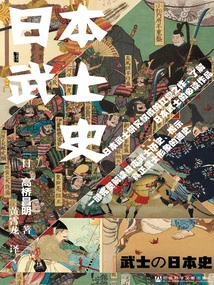
Japanese Samurai History
History日本武士史
(japan) Takahashi Masaaki
Wearing armor, riding on the battlefield, wielding a sword to kill the enemy, being brave and courageous, always taking bushido as the purpose of action, and swearing allegiance to the master to the death - is this image of a samurai consistent with historical facts? Has Japan really been a "land of samurai" since ancient times? "The History of the Japanese Samurai" not only outlines the complete history of samurai from the birth to modern times, but also shows rich details: the peculiar bun hairstyle in the Edo period, the forging and changes of Japanese swords, the complex structure and function of armor, the actual situation of the bow-horse battle, the reasons and influence of samurai seppuku, the distortion and use of bushido in modern countries, etc. Takahashi Masaaki, an authority on Japanese samurai research, has been working hard for many years. He used this work to subvert many "common senses" about samurai and reveal the true image of samurai.
Wearing armor, riding on the battlefield, wielding a sword to kill the enemy, being brave and courageous, always taking bushido as the purpose of action, and swearing allegiance to the master to the death - is this image of a samurai consistent with historical facts? Has Japan really been a "land of samurai" since ancient times? "The History of the Japanese Samurai" not only outlines the complete history of samurai from the birth to modern times, but also shows rich details: the peculiar bun hairstyle in the Edo period, the forging and changes of Japanese swords, the complex structure and function of armor, the actual situation of the bow-horse battle, the reasons and influence of samurai seppuku, the distortion and use of bushido in modern countries, etc. Takahashi Masaaki, an authority on Japanese samurai research, has been working hard for many years. He used this work to subvert many "common senses" about samurai and reveal the true image of samurai.
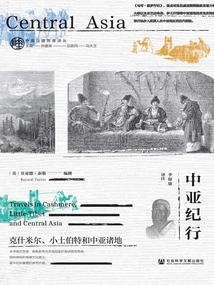
中亚纪行:克什米尔、小土伯特和中亚诸地
(us) Compiled By Bayard Taylor
This book collects the travel diaries, letters and reflections of explorers from many countries in Central Asia from the 13th to the 19th century in the Oxus River Basin, Badakhshan, Kashmir, Ladakh and other places. , Covering first-hand investigation data from Kashmir, the upper reaches of the Indus River, the Amu Darya and Syr Darya river basins, and the vast area to the Taklimakan Desert, including ecological environment, river distribution, mountain direction, road traffic, urban layout, fortifications, product conditions, and humanistic customs.
This book collects the travel diaries, letters and reflections of explorers from many countries in Central Asia from the 13th to the 19th century in the Oxus River Basin, Badakhshan, Kashmir, Ladakh and other places. , Covering first-hand investigation data from Kashmir, the upper reaches of the Indus River, the Amu Darya and Syr Darya river basins, and the vast area to the Taklimakan Desert, including ecological environment, river distribution, mountain direction, road traffic, urban layout, fortifications, product conditions, and humanistic customs.
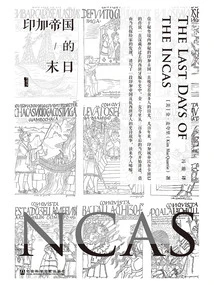
The End of the Inca Empire
History印加帝国的末日
(us)kim Mcquarrie
The mysterious ancient Inca country located in Peru has always attracted the attention of many people. For hundreds of years, the legend of the Inca city Vilcabamba has been hidden deep in the Spanish chronicles of the past. Kim McQuarrie starts from the present day more than three hundred years later, and uses the discoveries of contemporary explorers to compose an epic story of the Inca Empire's resistance to the Spanish. It is sad to read. This book tells the story of how a splendid ancient civilization came to complete destruction. From it, we can learn about the history of invasion and colonization of South America by capitalist countries represented by Spain, and thus gain a deep understanding of the history of the development of modern South America and its impact on contemporary development.
The mysterious ancient Inca country located in Peru has always attracted the attention of many people. For hundreds of years, the legend of the Inca city Vilcabamba has been hidden deep in the Spanish chronicles of the past. Kim McQuarrie starts from the present day more than three hundred years later, and uses the discoveries of contemporary explorers to compose an epic story of the Inca Empire's resistance to the Spanish. It is sad to read. This book tells the story of how a splendid ancient civilization came to complete destruction. From it, we can learn about the history of invasion and colonization of South America by capitalist countries represented by Spain, and thus gain a deep understanding of the history of the development of modern South America and its impact on contemporary development.
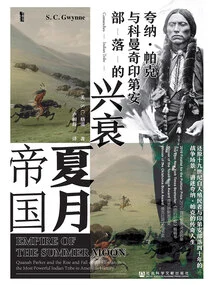
夏月帝国:夸纳·帕克与科曼奇印第安部落的兴衰
(us) S. C. Gwen
The vast western North America is full of wild nature. The Comanche tribe, a brave nomadic Indian tribe, capable of conquest and warfare, prevented Spanish colonists from advancing north from Mexico, prevented the French from expanding westward from Louisiana, and prevented white settlers from Texas from opening up new frontiers. Quanah Parker was its last legendary leader. Quanah quickly rose to become a tribal leader with his superb riding skills and flexible mind. He was once a radical Indian warrior. After entering the reservation, he left the glory of free life on the plains behind and led the backward tribes to adapt to the changes in the world and integrate into American industrial culture.
The vast western North America is full of wild nature. The Comanche tribe, a brave nomadic Indian tribe, capable of conquest and warfare, prevented Spanish colonists from advancing north from Mexico, prevented the French from expanding westward from Louisiana, and prevented white settlers from Texas from opening up new frontiers. Quanah Parker was its last legendary leader. Quanah quickly rose to become a tribal leader with his superb riding skills and flexible mind. He was once a radical Indian warrior. After entering the reservation, he left the glory of free life on the plains behind and led the backward tribes to adapt to the changes in the world and integrate into American industrial culture.
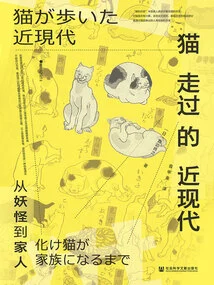
猫走过的近现代:从妖怪到家人
(japan) True Border General
From the legendary cat demon, to the important "rat-repelling general", to the "cat star" in the family, the changes in the status of cats in human society are a mirror of modern history. The modern era of cats is an era when cats finally become cats. People no longer fear cats as monsters or gods, and they no longer use moral principles such as loyalty to criticize them. However, modernization has allowed people to measure them by "whether they are useful", and large-scale breeding and large-scale hunting are repeated. It was not until the mid-to-late 20th century that cats finally began to use their own image to become the object of people's depiction and consumption, and the "cat craze" arrived. The hollowing out of life and family in modern society highlights the irreplaceable role of cats in companionship, and cats become members of the family. The modern era of cats is an extension of modern society. The happiness of cats can only be achieved by pushing human society forward, and the same is true for human happiness.
From the legendary cat demon, to the important "rat-repelling general", to the "cat star" in the family, the changes in the status of cats in human society are a mirror of modern history. The modern era of cats is an era when cats finally become cats. People no longer fear cats as monsters or gods, and they no longer use moral principles such as loyalty to criticize them. However, modernization has allowed people to measure them by "whether they are useful", and large-scale breeding and large-scale hunting are repeated. It was not until the mid-to-late 20th century that cats finally began to use their own image to become the object of people's depiction and consumption, and the "cat craze" arrived. The hollowing out of life and family in modern society highlights the irreplaceable role of cats in companionship, and cats become members of the family. The modern era of cats is an extension of modern society. The happiness of cats can only be achieved by pushing human society forward, and the same is true for human happiness.
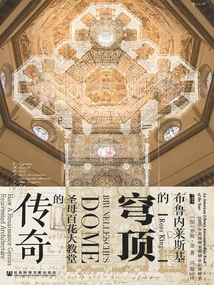
布鲁内莱斯基的穹顶:圣母百花大教堂的传奇
S
He is a genius, he is a madman, and he created architectural miracles that will go down in history. "Brunelleschi's Dome" is the story of how a Renaissance genius avoided limited manpower, material means and difficult natural conditions to build an architectural miracle that still amazes us today. In the book, the author describes how Brunelleschi, a genius, turned an impossible task into a pioneering achievement. He invented new machines and used new working methods to build them. In the story, the author organically weaves this historical event with plagues, wars, power struggles, and ideological turmoil. By narrating history, the author makes the life, traditions, various characters, and social conditions of the fifteenth century vivid on the page.
He is a genius, he is a madman, and he created architectural miracles that will go down in history. "Brunelleschi's Dome" is the story of how a Renaissance genius avoided limited manpower, material means and difficult natural conditions to build an architectural miracle that still amazes us today. In the book, the author describes how Brunelleschi, a genius, turned an impossible task into a pioneering achievement. He invented new machines and used new working methods to build them. In the story, the author organically weaves this historical event with plagues, wars, power struggles, and ideological turmoil. By narrating history, the author makes the life, traditions, various characters, and social conditions of the fifteenth century vivid on the page.
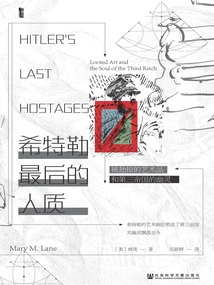
希特勒最后的人质:被劫掠的艺术品和第三帝国的幽灵
(u. S.) Lin Mei
In 2012, the German government seized approximately 1,300 works of art by masters such as George Gross, Henri Matisse, and Claude Monet from the apartment of Cornelius, son of Hildebrandt Gurlitt, Hitler's main art dealer. Focusing on Gross, Hitler and Hildebrandt, three figures closely associated with the art world of the Third Reich, journalist Lin Mei reveals the unknown crimes of the Nazis in looting art.
In 2012, the German government seized approximately 1,300 works of art by masters such as George Gross, Henri Matisse, and Claude Monet from the apartment of Cornelius, son of Hildebrandt Gurlitt, Hitler's main art dealer. Focusing on Gross, Hitler and Hildebrandt, three figures closely associated with the art world of the Third Reich, journalist Lin Mei reveals the unknown crimes of the Nazis in looting art.
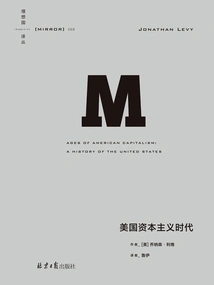
美国资本主义时代(理想国译丛068)
(us)jonathan Levy
This book regards the United States as a developing country and divides the development of American capitalism, which began when British colonists settled in North America in the 17th century and lasted until the Great Recession of the 21st century, into four eras: business, capital, control, and chaos. It not only shows the evolution of the American economy in a panoramic manner, but also depicts the economic life of Americans in the context of the times. In addition to demographic trends, trade patterns, investment preferences, and productivity indicators, the author also looks at Jefferson's disdain for the British, Thoreau's moral critique of business, labor violence movements, shopping malls in the 20th century, feminist critiques of marriage, the politics of income and distribution, and Obama's love-hate relationship with bankers.
This book regards the United States as a developing country and divides the development of American capitalism, which began when British colonists settled in North America in the 17th century and lasted until the Great Recession of the 21st century, into four eras: business, capital, control, and chaos. It not only shows the evolution of the American economy in a panoramic manner, but also depicts the economic life of Americans in the context of the times. In addition to demographic trends, trade patterns, investment preferences, and productivity indicators, the author also looks at Jefferson's disdain for the British, Thoreau's moral critique of business, labor violence movements, shopping malls in the 20th century, feminist critiques of marriage, the politics of income and distribution, and Obama's love-hate relationship with bankers.
希腊罗马简史
Chen Tongxie
With clear context and vivid writing, historian Chen Tongxie leads readers into the glory and twists and turns of ancient Mediterranean civilization. From the democratic experiments and philosophical trends of Greek city-states, to the expansion and institutional innovation of the Roman Empire, to the process of civilization integration and decline, it is all narrated. The author not only sorted out the important events and characters, but also revealed the profound influence of classical civilization on later politics, law, art and thought. This is a classic that is both suitable for entry and thought-provoking, providing a key to understanding the foundation of Western civilization.
With clear context and vivid writing, historian Chen Tongxie leads readers into the glory and twists and turns of ancient Mediterranean civilization. From the democratic experiments and philosophical trends of Greek city-states, to the expansion and institutional innovation of the Roman Empire, to the process of civilization integration and decline, it is all narrated. The author not only sorted out the important events and characters, but also revealed the profound influence of classical civilization on later politics, law, art and thought. This is a classic that is both suitable for entry and thought-provoking, providing a key to understanding the foundation of Western civilization.
Prairie Empire
History草原帝国
(france) René Grusset
"Steppe Empire" is a general history of the nomadic peoples of northern Eurasia in ancient times. The book takes the countries and dynasties established by the nomadic people as the outline, and systematically introduces the history of the rise and fall of ancient nomadic tribes or regimes in a chronicle style. This book describes the grand epic of the grassland peoples and their relations with surrounding peoples, as well as the history of thousands of years of collision and integration between nomadic peoples and farming peoples. They broke into developed historical and civilized areas, and while clashing with farming peoples, they also gradually formed their own rich and diverse culture, which had an impact on the entire world's civilization, pattern, order and historical process. These main activities have established a unique historical culture for the grassland peoples and played an important historical role in the process of human civilization.
"Steppe Empire" is a general history of the nomadic peoples of northern Eurasia in ancient times. The book takes the countries and dynasties established by the nomadic people as the outline, and systematically introduces the history of the rise and fall of ancient nomadic tribes or regimes in a chronicle style. This book describes the grand epic of the grassland peoples and their relations with surrounding peoples, as well as the history of thousands of years of collision and integration between nomadic peoples and farming peoples. They broke into developed historical and civilized areas, and while clashing with farming peoples, they also gradually formed their own rich and diverse culture, which had an impact on the entire world's civilization, pattern, order and historical process. These main activities have established a unique historical culture for the grassland peoples and played an important historical role in the process of human civilization.
At the Dawn of Civilization
History文明拂晓时
(uk) David Wingero
By archaeologically examining the earliest ways humans established city-states, monuments, and worshiped gods, as well as how they constructed daily life, the author of this book, Wengro, attempts to transcend the rise and fall of countries or regions and guide us back to the roots of history to rethink "what is civilization." He tried to explain that organized modern civilized society and ancient civilizations are of the same origin and closely related. This continuity transcends our traditional distinction between "prehistory" and "history." Based on archaeological discoveries, Unglot's discussion breaks through the scope of archeology and enters into the reflection of historical philosophy. He attempts to refute the "clash of civilizations theory" proposed by early theorists such as Huntington: From ancient times to the present, the connections and interactions between different civilizations in the world have never been interrupted. This connection is not only established at the level of trade and material flow, but also involves the mutual reference and penetration of cultures? The distance between civilizations has been seriously exaggerated by our consistent understanding. We are often tethered to identities and perspectives such as "European", "Egyptian" or "Middle Eastern", but in fact, cultural identity is not the product of isolation. Therefore, from this new historical perspective, different conclusions will be drawn about how modern society views the relationship between different civilizations, how to view their political and economic connections, and what sacrifices humans can make for a value system. In this book, we can get a glimpse of the origins of a certain civilization process, which may change our view of today's world order and future social development - the cycle of the rise and fall of empires may only represent a very small part of human experience.
By archaeologically examining the earliest ways humans established city-states, monuments, and worshiped gods, as well as how they constructed daily life, the author of this book, Wengro, attempts to transcend the rise and fall of countries or regions and guide us back to the roots of history to rethink "what is civilization." He tried to explain that organized modern civilized society and ancient civilizations are of the same origin and closely related. This continuity transcends our traditional distinction between "prehistory" and "history." Based on archaeological discoveries, Unglot's discussion breaks through the scope of archeology and enters into the reflection of historical philosophy. He attempts to refute the "clash of civilizations theory" proposed by early theorists such as Huntington: From ancient times to the present, the connections and interactions between different civilizations in the world have never been interrupted. This connection is not only established at the level of trade and material flow, but also involves the mutual reference and penetration of cultures? The distance between civilizations has been seriously exaggerated by our consistent understanding. We are often tethered to identities and perspectives such as "European", "Egyptian" or "Middle Eastern", but in fact, cultural identity is not the product of isolation. Therefore, from this new historical perspective, different conclusions will be drawn about how modern society views the relationship between different civilizations, how to view their political and economic connections, and what sacrifices humans can make for a value system. In this book, we can get a glimpse of the origins of a certain civilization process, which may change our view of today's world order and future social development - the cycle of the rise and fall of empires may only represent a very small part of human experience.
阿拉伯人的大航海:从古代到中世纪早期
(uk) George Houraney John Caswell
This book cuts through the fog of legends and recreates the Arabs' maritime history from hazy prehistory to the golden age of the Middle Ages. The competition and exchanges between Arabs and Phoenicians, Greeks, and Africans, the opening of routes between the Red Sea and the Persian Gulf, the "cannibalism" in Guangzhou and Quanzhou in Chinese history books, navigation stories in classic documents such as "One Thousand and One Nights", historical pictures and archaeological discoveries of ancient sailing ships, and the maritime activities of pirates, merchants, and armies. These interesting contents can be read in this little book for everyone.
This book cuts through the fog of legends and recreates the Arabs' maritime history from hazy prehistory to the golden age of the Middle Ages. The competition and exchanges between Arabs and Phoenicians, Greeks, and Africans, the opening of routes between the Red Sea and the Persian Gulf, the "cannibalism" in Guangzhou and Quanzhou in Chinese history books, navigation stories in classic documents such as "One Thousand and One Nights", historical pictures and archaeological discoveries of ancient sailing ships, and the maritime activities of pirates, merchants, and armies. These interesting contents can be read in this little book for everyone.
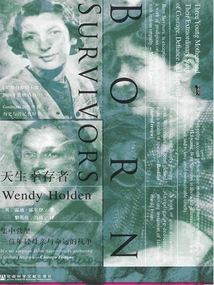
天生幸存者:集中营里三位年轻母亲与命运的抗争
(uk) Wendy Holden
Among the millions of Holocaust victims who were sent to the Auschwitz II-Birkenau extermination camp in 1944, Pelska, Rahel, and Anja each passed through that infamous and infamous gate with their own secrets. They are strangers to each other, they are newly pregnant, their husbands are not around, but they have to face an unpredictable fate of life and death. Lonely and frightened, with many of their loved ones already dead at the hands of the Nazis, the three young women were determined to save what they had: their lives and the unborn babies in their bellies. This book was the Sunday Times bestseller in 2015 and won the title of "Goodreads 2015 History and Biography Book of the Year".
Among the millions of Holocaust victims who were sent to the Auschwitz II-Birkenau extermination camp in 1944, Pelska, Rahel, and Anja each passed through that infamous and infamous gate with their own secrets. They are strangers to each other, they are newly pregnant, their husbands are not around, but they have to face an unpredictable fate of life and death. Lonely and frightened, with many of their loved ones already dead at the hands of the Nazis, the three young women were determined to save what they had: their lives and the unborn babies in their bellies. This book was the Sunday Times bestseller in 2015 and won the title of "Goodreads 2015 History and Biography Book of the Year".
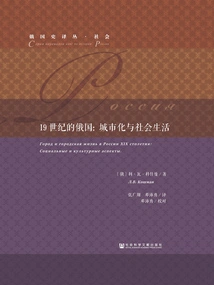
19世纪的俄国:城市化与社会生活
(russian) L. V. Koshman Deng Peiyong
This book combines micro-history, sociology and ethnological theories to comprehensively explain the development of Russian cities in the 19th century. The author mainly studies the development of Russian cities from four angles and two stages. The four perspectives mainly include the city's social and economic development, the urban citizen class, the urban education system and the communication system, striving to show the development process of Russian cities in many aspects; the two stages are mainly bounded by the serfdom reform in 1861, and compare the development of Russian cities before and after the reform. This book is a foundation work for the study of Russian urban development and has high academic value and theoretical significance for enriching the study of Russian history in my country.
This book combines micro-history, sociology and ethnological theories to comprehensively explain the development of Russian cities in the 19th century. The author mainly studies the development of Russian cities from four angles and two stages. The four perspectives mainly include the city's social and economic development, the urban citizen class, the urban education system and the communication system, striving to show the development process of Russian cities in many aspects; the two stages are mainly bounded by the serfdom reform in 1861, and compare the development of Russian cities before and after the reform. This book is a foundation work for the study of Russian urban development and has high academic value and theoretical significance for enriching the study of Russian history in my country.
Global History (volume 1)
History全球史(第1辑)
Editor-in-chief Li Xuetao
"Global History" is sponsored by the School of History at Beijing Foreign Studies University. It publishes two volumes per year. It specializes in publishing papers, translations, interviews and book reviews in the field of global history research. It strives to explore and present human interactions and interactions across various geographical, political and cultural boundaries in modern times at different scales and dimensions, including but not limited to trade history, immigration history, missionary history, language exchange history, knowledge transfer history, environmental history, science and technology history, disease history, conceptual history, translation history, history of study abroad, etc.
"Global History" is sponsored by the School of History at Beijing Foreign Studies University. It publishes two volumes per year. It specializes in publishing papers, translations, interviews and book reviews in the field of global history research. It strives to explore and present human interactions and interactions across various geographical, political and cultural boundaries in modern times at different scales and dimensions, including but not limited to trade history, immigration history, missionary history, language exchange history, knowledge transfer history, environmental history, science and technology history, disease history, conceptual history, translation history, history of study abroad, etc.
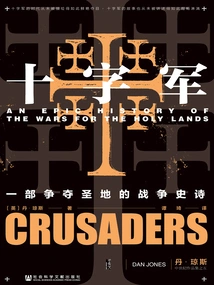
十字军:一部争夺圣地的战争史诗
I
"The Crusades" is Dan Jones' latest masterpiece. This book narrates the most religious historical event in the history of medieval Europe - the Crusades. The book is divided into three parts. The first part covers many ideas, activities and wars that influenced the development of the Crusades from the 11th century onwards, as well as the First Crusade that was initiated with help from the Byzantine Emperor Alexios I. The second part starts from the early 12th century and traces the Crusades in Syria and Palestine. While the country grew, it also focused on the wars between Christian rulers and Islamic regimes on the Iberian Peninsula; the third part focuses on the various efforts made by Western Christendom to recapture Jerusalem after the first half of the 13th century, as well as the collapse of the Eastern Crusader states after the rise of the Mongol Empire and the Mamluk Dynasty.
"The Crusades" is Dan Jones' latest masterpiece. This book narrates the most religious historical event in the history of medieval Europe - the Crusades. The book is divided into three parts. The first part covers many ideas, activities and wars that influenced the development of the Crusades from the 11th century onwards, as well as the First Crusade that was initiated with help from the Byzantine Emperor Alexios I. The second part starts from the early 12th century and traces the Crusades in Syria and Palestine. While the country grew, it also focused on the wars between Christian rulers and Islamic regimes on the Iberian Peninsula; the third part focuses on the various efforts made by Western Christendom to recapture Jerusalem after the first half of the 13th century, as well as the collapse of the Eastern Crusader states after the rise of the Mongol Empire and the Mamluk Dynasty.
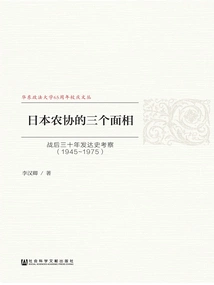
日本农协的三个面相:战后三十年发达史考察(1945~1975)
Li Hanqing
The Japanese Agricultural Cooperative is recognized as one of the most successful forms of rural cooperative economic organizations in the world. Under the leadership of the Japanese Agricultural Cooperative, not only has Japan's agriculture transformed from traditional farming methods to modern production methods and completed leapfrog development, but Japan has also not formed a dual urban-rural structure. For China, which also belongs to the Confucian cultural circle, although there are currently a variety of farmers' professional cooperative organizations, there are still many problems in the operation process. This book systematically examines the development of Japanese agricultural cooperatives and reveals the three aspects (characteristics) of Japanese agricultural cooperatives. It has important reference value and enlightenment significance for us to build a new socialist countryside and change the urban-rural dual structure.
The Japanese Agricultural Cooperative is recognized as one of the most successful forms of rural cooperative economic organizations in the world. Under the leadership of the Japanese Agricultural Cooperative, not only has Japan's agriculture transformed from traditional farming methods to modern production methods and completed leapfrog development, but Japan has also not formed a dual urban-rural structure. For China, which also belongs to the Confucian cultural circle, although there are currently a variety of farmers' professional cooperative organizations, there are still many problems in the operation process. This book systematically examines the development of Japanese agricultural cooperatives and reveals the three aspects (characteristics) of Japanese agricultural cooperatives. It has important reference value and enlightenment significance for us to build a new socialist countryside and change the urban-rural dual structure.
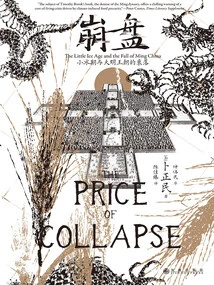
崩盘:小冰期与大明王朝的衰落
I
Why did the Ming Dynasty collapse in the mid-17th century after lasting for 276 years? From the unique perspective of climate history, Sinologist Professor Bu Zhengmin demonstrated how the extreme environment of the Little Ice Age broke through the empire's survival threshold, providing a new perspective in addition to the traditional narrative of "Chongzhen's lack of ability and the Manchus' southward movement leading to the collapse of the Ming Dynasty". Around the 14th century, the climate in the northern hemisphere began to turn colder, reaching its peak in the 17th century. In these three centuries, intermittent dry and cold weather and the persistent dry and cold climate around the 1640s gradually destroyed the agricultural foundation of the Ming Dynasty, causing it to slide from local famine in the Yongle period to the collapse of the national food system in the Chongzhen period. Professor Bu Zhengmin used a large number of private account books, local chronicles, notes and other materials to quantitatively analyze the soaring food prices and the soaring cost of survival, fully presenting the Ming people's feelings about the living environment, commodity prices (especially food prices), etc., As well as the difficulties of people's lives under climate change. The book is logically rigorous and advances layer by layer, demonstrating the impact of climate change on the Ming Dynasty regime. The author believes that climate often sets the limits of people's lives. If there is not enough food to feed everyone, it will at least trigger an economic and social crisis, and probably a political crisis. This understanding has far-reaching implications for understanding the fragility of pre-modern countries and the impact of climate fluctuations on countries.
Why did the Ming Dynasty collapse in the mid-17th century after lasting for 276 years? From the unique perspective of climate history, Sinologist Professor Bu Zhengmin demonstrated how the extreme environment of the Little Ice Age broke through the empire's survival threshold, providing a new perspective in addition to the traditional narrative of "Chongzhen's lack of ability and the Manchus' southward movement leading to the collapse of the Ming Dynasty". Around the 14th century, the climate in the northern hemisphere began to turn colder, reaching its peak in the 17th century. In these three centuries, intermittent dry and cold weather and the persistent dry and cold climate around the 1640s gradually destroyed the agricultural foundation of the Ming Dynasty, causing it to slide from local famine in the Yongle period to the collapse of the national food system in the Chongzhen period. Professor Bu Zhengmin used a large number of private account books, local chronicles, notes and other materials to quantitatively analyze the soaring food prices and the soaring cost of survival, fully presenting the Ming people's feelings about the living environment, commodity prices (especially food prices), etc., As well as the difficulties of people's lives under climate change. The book is logically rigorous and advances layer by layer, demonstrating the impact of climate change on the Ming Dynasty regime. The author believes that climate often sets the limits of people's lives. If there is not enough food to feed everyone, it will at least trigger an economic and social crisis, and probably a political crisis. This understanding has far-reaching implications for understanding the fragility of pre-modern countries and the impact of climate fluctuations on countries.
历史的延续与变迁
Xiang Rong
From politics, economy to society and culture, it shows the modern picture of Britain and even Europe as a whole, and reproduces an important part of the continuation and change of world history. This collection of academic essays by the famous historian Professor Xiang Rong mainly discusses the social transformation of early modern Europe, especially early modern Britain, involving politics, economy, society, culture, and mentality. It also compares Chinese and English. Some of them introduce or write book reviews of new academic works in related research fields. The enclosure movement and poverty issues in Britain in the 16th century, the agricultural revolution in early modern Britain, water conservancy and society in British history, rural commune issues in Russia, and the struggle to eradicate the plague in early modern Western Europe, etc., Have long attracted attention in academic research. Looking at the conflict between old and new values in early modern Britain through the beer hall problem, the Puritan view on education, and the great discussion of the "Piran proposition" by Western scholars, each has made breakthroughs in research perspectives from micro and macro perspectives. For readers who are concerned with the study of modern European history, this is an excellent "light academic" essay.
From politics, economy to society and culture, it shows the modern picture of Britain and even Europe as a whole, and reproduces an important part of the continuation and change of world history. This collection of academic essays by the famous historian Professor Xiang Rong mainly discusses the social transformation of early modern Europe, especially early modern Britain, involving politics, economy, society, culture, and mentality. It also compares Chinese and English. Some of them introduce or write book reviews of new academic works in related research fields. The enclosure movement and poverty issues in Britain in the 16th century, the agricultural revolution in early modern Britain, water conservancy and society in British history, rural commune issues in Russia, and the struggle to eradicate the plague in early modern Western Europe, etc., Have long attracted attention in academic research. Looking at the conflict between old and new values in early modern Britain through the beer hall problem, the Puritan view on education, and the great discussion of the "Piran proposition" by Western scholars, each has made breakthroughs in research perspectives from micro and macro perspectives. For readers who are concerned with the study of modern European history, this is an excellent "light academic" essay.
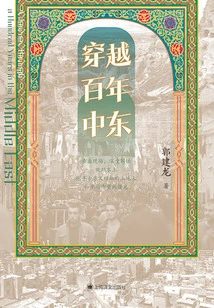
穿越百年中东
Guo Jianlong
A must-read to understand the century-old chaos in the Middle East. Here, peace is an illusion and war is eternal. After the smoke of World War I cleared, the declining Ottoman Empire completely collapsed amid the carving up of power by European powers, and the continued turmoil in the modern Middle East was the long aftershock it caused. A series of new Arab states were established, and they were prone to conflicts and disputes. This book is like a travelogue traveling through time and space in the Middle East, cleverly intertwining the author's on-site observations with historical retrospection. The book discusses major problems in the Middle East in chapters, digs deeply into the root causes of contradictions and conflicts hidden in the depths of time, and presents readers with a neutral and objective panoramic view of the chaos in the Middle East. It is not only a historical work, but also a profound reflection on the emergence, continuation and end of the chaos in the Middle East, leading us to jointly explore the dawn of peace and hope in that ancient and mysterious land.
A must-read to understand the century-old chaos in the Middle East. Here, peace is an illusion and war is eternal. After the smoke of World War I cleared, the declining Ottoman Empire completely collapsed amid the carving up of power by European powers, and the continued turmoil in the modern Middle East was the long aftershock it caused. A series of new Arab states were established, and they were prone to conflicts and disputes. This book is like a travelogue traveling through time and space in the Middle East, cleverly intertwining the author's on-site observations with historical retrospection. The book discusses major problems in the Middle East in chapters, digs deeply into the root causes of contradictions and conflicts hidden in the depths of time, and presents readers with a neutral and objective panoramic view of the chaos in the Middle East. It is not only a historical work, but also a profound reflection on the emergence, continuation and end of the chaos in the Middle East, leading us to jointly explore the dawn of peace and hope in that ancient and mysterious land.
新编第二次世界大战史
Chief Editor, Institute Of World History, Chinese Academy Of Social Sciences
"A New History of World War II" was written to commemorate the 80th anniversary of the victory of the Chinese People's War of Resistance Against Japanese Aggression and the World Anti-Fascist War. It is committed to promoting the correct historical view of World War II and constructing a historical discourse narrative of World War II with distinctive Chinese characteristics and the characteristics of the times. This book examines the historical process from the collapse of the Versailles-Washington system, the outbreak of the war to fascist surrender and the reshaping of the international order. It discusses the role of the Eastern Main Battlefield, the European Battlefield, the Pacific Battlefield, the Atlantic Battlefield, the North African Mediterranean Battlefield, and the linkage and cooperation between the battlefields. It presents a panoramic view of the magnificent world anti-fascist war; it emphasizes that the anti-fascist united front built by peace-loving righteous forces around the world is a war The decisive factor in the victory over the German, Italian and Japanese fascists was that the people of various countries in Europe and Asia actively carried out anti-fascist movements, the people of Africa, America and Oceania fully supported the anti-fascist struggle, and the anti-fascist allies strategically collaborated and supported each other, jointly writing a magnificent epic of the world's anti-fascist war; highlighting the status and contribution of the Chinese People's Anti-Japanese War in the world's anti-fascist war, and demonstrating the great image of the Communist Party of China as the mainstay of the entire nation's war of resistance. This book clearly points out that the Chinese people have always cherished peace, unswervingly followed the path of peaceful development, and actively shouldered their responsibilities in building a community with a shared future for mankind, demonstrating their noble character.
"A New History of World War II" was written to commemorate the 80th anniversary of the victory of the Chinese People's War of Resistance Against Japanese Aggression and the World Anti-Fascist War. It is committed to promoting the correct historical view of World War II and constructing a historical discourse narrative of World War II with distinctive Chinese characteristics and the characteristics of the times. This book examines the historical process from the collapse of the Versailles-Washington system, the outbreak of the war to fascist surrender and the reshaping of the international order. It discusses the role of the Eastern Main Battlefield, the European Battlefield, the Pacific Battlefield, the Atlantic Battlefield, the North African Mediterranean Battlefield, and the linkage and cooperation between the battlefields. It presents a panoramic view of the magnificent world anti-fascist war; it emphasizes that the anti-fascist united front built by peace-loving righteous forces around the world is a war The decisive factor in the victory over the German, Italian and Japanese fascists was that the people of various countries in Europe and Asia actively carried out anti-fascist movements, the people of Africa, America and Oceania fully supported the anti-fascist struggle, and the anti-fascist allies strategically collaborated and supported each other, jointly writing a magnificent epic of the world's anti-fascist war; highlighting the status and contribution of the Chinese People's Anti-Japanese War in the world's anti-fascist war, and demonstrating the great image of the Communist Party of China as the mainstay of the entire nation's war of resistance. This book clearly points out that the Chinese people have always cherished peace, unswervingly followed the path of peaceful development, and actively shouldered their responsibilities in building a community with a shared future for mankind, demonstrating their noble character.
门罗主义: 美国全球地缘战略的源起
(us) Thomas Benton Edgington
The "Monroe Doctrine" of the United States originated from the "non-interference principle" proposed by Washington. Since its birth in the early 19th century, it has gradually become the most important global strategy of the United States and has profoundly shaped the modern international political landscape. This book starts from the international background of the Monroe Doctrine - the European powers' attempts to rebuild Latin American colonies after the Napoleonic Wars, the Latin American War of Independence and the anti-colonial struggles of various countries after independence, and the United States' commitment to making Latin America a sphere of influence that no other country can interfere with. It focuses on the relationship between the United States and European powers. Strengthening the diplomatic relations among Latin American countries, with the goal of safeguarding the global interests of the United States, assisting the strategic rise of the United States, and establishing the United States' hegemony in the Western Hemisphere, it elaborates on the historical context and realistic basis of the Monroe Doctrine becoming the cornerstone of U. S. Foreign policy before World War II in diplomatic practices and conflicts.
The "Monroe Doctrine" of the United States originated from the "non-interference principle" proposed by Washington. Since its birth in the early 19th century, it has gradually become the most important global strategy of the United States and has profoundly shaped the modern international political landscape. This book starts from the international background of the Monroe Doctrine - the European powers' attempts to rebuild Latin American colonies after the Napoleonic Wars, the Latin American War of Independence and the anti-colonial struggles of various countries after independence, and the United States' commitment to making Latin America a sphere of influence that no other country can interfere with. It focuses on the relationship between the United States and European powers. Strengthening the diplomatic relations among Latin American countries, with the goal of safeguarding the global interests of the United States, assisting the strategic rise of the United States, and establishing the United States' hegemony in the Western Hemisphere, it elaborates on the historical context and realistic basis of the Monroe Doctrine becoming the cornerstone of U. S. Foreign policy before World War II in diplomatic practices and conflicts.
现代欧洲史(1500—1815)
J
Europe is a vast territory with numerous countries, numerous ethnic groups and diverse religions. As the source of Western civilization, it has shaped the spiritual world of Westerners with faith and rationality, and has also caused drastic changes in the world with technology. Since the end of the 15th century, Europe has entered modern times, marked by the geographical discovery, religious reform, and the rise of nation-states. European captains sailed into the depths of the ocean, launching a commercial revolution. Colonial competition among European countries intensified, nation-states emerged one after another, the authority of the Roman Catholic Church declined, the Glorious Revolution broke out, mercantilism became popular, the guns rang out in Lexington in the United States, the French Revolution broke out, science and technology advanced by leaps and bounds, and the bourgeoisie entered the stage of history... Carlton Hayes, a well-known American historian, tried to organically combine the social and political development of Europe from the 16th century to the early 19th century, using social and economic factors to assist in explaining political facts, thereby helping people "understand ourselves, our kind, and the various problems and prospects of mankind."
Europe is a vast territory with numerous countries, numerous ethnic groups and diverse religions. As the source of Western civilization, it has shaped the spiritual world of Westerners with faith and rationality, and has also caused drastic changes in the world with technology. Since the end of the 15th century, Europe has entered modern times, marked by the geographical discovery, religious reform, and the rise of nation-states. European captains sailed into the depths of the ocean, launching a commercial revolution. Colonial competition among European countries intensified, nation-states emerged one after another, the authority of the Roman Catholic Church declined, the Glorious Revolution broke out, mercantilism became popular, the guns rang out in Lexington in the United States, the French Revolution broke out, science and technology advanced by leaps and bounds, and the bourgeoisie entered the stage of history... Carlton Hayes, a well-known American historian, tried to organically combine the social and political development of Europe from the 16th century to the early 19th century, using social and economic factors to assist in explaining political facts, thereby helping people "understand ourselves, our kind, and the various problems and prospects of mankind."
埃及通史6:中世纪的埃及
(uk) Stanley Lane Poole
Citing the research results of modern Egyptology scholars such as Rogers, Milne, Sali, Ohman and Davis, this book tells the history of Egypt from its conquest by the Arab Empire (mid-seventh century) to its conquest by the Ottoman Empire (early 16th century), and analyzes the reasons for the rise and fall of the Turonid Dynasty, the Ikhshed Dynasty, the Fatimid Dynasty and the Mamluk Dynasty that appeared in Egypt during this period. The book is also equipped with 101 illustrations including coins, weights, seals, water level measuring rods, castles, inscriptions, murals, utensils, furniture, etc.
Citing the research results of modern Egyptology scholars such as Rogers, Milne, Sali, Ohman and Davis, this book tells the history of Egypt from its conquest by the Arab Empire (mid-seventh century) to its conquest by the Ottoman Empire (early 16th century), and analyzes the reasons for the rise and fall of the Turonid Dynasty, the Ikhshed Dynasty, the Fatimid Dynasty and the Mamluk Dynasty that appeared in Egypt during this period. The book is also equipped with 101 illustrations including coins, weights, seals, water level measuring rods, castles, inscriptions, murals, utensils, furniture, etc.
埃及通史4:托勒密王朝
(ireland) John Pentland Mahaffy
This book quotes the documents of ancient historians such as Strabo, Rufus, Flavius, Diodorus, Plutarch, and Livy, as well as the research results of modern Egyptology scholars such as Petrie, Bodi, and Claure, and tells the story of the Ptolemaic Dynasty (4th century BC to 3rd century BC). 0), Systematically combs the ins and outs of a series of major events such as Alexander's conquest of Egypt, the Diadochi War, the founding of Ptolemy I, the Hellenization of Egyptian civilization, royal intermarriage and communalism, the Syrian War, the Roman Civil War, and the demise of the Ptolemaic dynasty. The book also features 78 illustrations including coins, frescoes, statues, sarcophagi, shrines, headdresses, inscriptions and colonnades.
This book quotes the documents of ancient historians such as Strabo, Rufus, Flavius, Diodorus, Plutarch, and Livy, as well as the research results of modern Egyptology scholars such as Petrie, Bodi, and Claure, and tells the story of the Ptolemaic Dynasty (4th century BC to 3rd century BC). 0), Systematically combs the ins and outs of a series of major events such as Alexander's conquest of Egypt, the Diadochi War, the founding of Ptolemy I, the Hellenization of Egyptian civilization, royal intermarriage and communalism, the Syrian War, the Roman Civil War, and the demise of the Ptolemaic dynasty. The book also features 78 illustrations including coins, frescoes, statues, sarcophagi, shrines, headdresses, inscriptions and colonnades.
埃及通史1:从史前埃及到第十六王朝
J
Relying on the excavation results of Egyptian archaeology, quoting the documents of ancient historians such as Manetho and Josephus, and referring to the research results of modern Egyptology giants such as Mariette, Mabel, and Lepsius, this book tells the history of prehistoric Egypt from the First Dynasty to the Hyksos Dynasty (the Fifteenth Dynasty and the Sixteenth Dynasty), sorting out the main line of the ordering of the pharaohs of ancient Egypt, and initially solving the span problem of the early political power of ancient Egypt. The book also features 155 illustrations including scarabs, altars, statues, frescoes, coffins, pyramids and obelisks.
Relying on the excavation results of Egyptian archaeology, quoting the documents of ancient historians such as Manetho and Josephus, and referring to the research results of modern Egyptology giants such as Mariette, Mabel, and Lepsius, this book tells the history of prehistoric Egypt from the First Dynasty to the Hyksos Dynasty (the Fifteenth Dynasty and the Sixteenth Dynasty), sorting out the main line of the ordering of the pharaohs of ancient Egypt, and initially solving the span problem of the early political power of ancient Egypt. The book also features 155 illustrations including scarabs, altars, statues, frescoes, coffins, pyramids and obelisks.
埃及通史2:从第十七王朝到第十八王朝
J
This book relies on the results of Egyptian archaeological excavations, cites the documents of ancient historians such as Manetho and Josephus, and refers to the research results of modern Egyptology giants such as Mariette, Mabel, and Lepsius. It tells the history of Egypt from the 17th to the 18th Dynasty (from the 17th century AD to the 13th century AD). It provides a panoramic view of the political, economic, military, and diplomatic conditions of ancient Egypt during its prosperity. The book also features 164 illustrations including statues, frescoes, scarabs, obelisks, ornaments, utensils and chariots.
This book relies on the results of Egyptian archaeological excavations, cites the documents of ancient historians such as Manetho and Josephus, and refers to the research results of modern Egyptology giants such as Mariette, Mabel, and Lepsius. It tells the history of Egypt from the 17th to the 18th Dynasty (from the 17th century AD to the 13th century AD). It provides a panoramic view of the political, economic, military, and diplomatic conditions of ancient Egypt during its prosperity. The book also features 164 illustrations including statues, frescoes, scarabs, obelisks, ornaments, utensils and chariots.
埃及通史3:从第十九王朝到第三十王朝
J
Relying on the results of Egyptian archaeological excavations and referring to the research results of modern Egyptology giants such as Brugsch, Mariette, Champollion, Mabel, and Lepsius, this book tells the history of Egypt from the 19th to 30th dynasties (13th century BC to 4th century BC). It deeply analyzes the different forms of ancient Egyptian civilization, ancient Persian civilization, and ancient Greek civilization, as well as the conflicts and integration between them, and explains the reasons for the decline of ancient Egyptian civilization. The book also features 161 illustrations including mummies, frescoes, statues, scarabs, obelisks, altars, temples, stelae and ornaments.
Relying on the results of Egyptian archaeological excavations and referring to the research results of modern Egyptology giants such as Brugsch, Mariette, Champollion, Mabel, and Lepsius, this book tells the history of Egypt from the 19th to 30th dynasties (13th century BC to 4th century BC). It deeply analyzes the different forms of ancient Egyptian civilization, ancient Persian civilization, and ancient Greek civilization, as well as the conflicts and integration between them, and explains the reasons for the decline of ancient Egyptian civilization. The book also features 161 illustrations including mummies, frescoes, statues, scarabs, obelisks, altars, temples, stelae and ornaments.
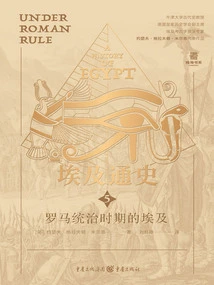
埃及通史5:罗马统治时期的埃及
(uk)joseph Grafton Milne
Citing the documents of ancient historians such as Pliny the Elder and Plutarch, as well as the research results of modern Egyptology scholars such as Petrie, Mahaffey and Kenyon, this book tells the history of Egypt during the Roman rule (from 30 BC to the mid-7th century) and reveals the subtle relationship between the central government of the Roman Empire and the local government of Egypt: when the central government was strong, Egypt was relatively obedient; when the central government was weak, Egypt was relatively independent and even became a country within a country. The book also features 164 illustrations of temples, murals, statues, stelae, coins, inscriptions, lamps and pottery.
Citing the documents of ancient historians such as Pliny the Elder and Plutarch, as well as the research results of modern Egyptology scholars such as Petrie, Mahaffey and Kenyon, this book tells the history of Egypt during the Roman rule (from 30 BC to the mid-7th century) and reveals the subtle relationship between the central government of the Roman Empire and the local government of Egypt: when the central government was strong, Egypt was relatively obedient; when the central government was weak, Egypt was relatively independent and even became a country within a country. The book also features 164 illustrations of temples, murals, statues, stelae, coins, inscriptions, lamps and pottery.
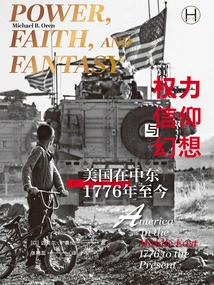
Power, Belief, and Illusion: America in the Middle East (1776 to the Present) (history School)
History权力、信仰与幻想:美国在中东(1776年至今)(历史学堂)
(by) Michael B. Oren
Describes the relationship between the United States and the Middle East over more than 200 years; analyzes why the Middle East has such a huge and far-reaching impact on U. S. Strategy and foreign policy. Why and how is the United States so entangled in the Middle East? Why does the Middle East, which is geographically far away from the United States, have such a huge and far-reaching impact on U. S. Strategy and foreign policy? Historian and former Israeli ambassador to the United States Michael B. Oren used three words: "power", "belief" and "fantasy" to explain this costly persistence, and also talked about the relationship between the United States and the Middle East since its independence in 1776. The author draws on a large number of government documents, private letters, and the memoirs of businessmen, missionaries, and travelers, supplemented by dozens of rare historical images, to vividly detail the United States's interaction with this dynamic and turbulent region for more than 200 years.
Describes the relationship between the United States and the Middle East over more than 200 years; analyzes why the Middle East has such a huge and far-reaching impact on U. S. Strategy and foreign policy. Why and how is the United States so entangled in the Middle East? Why does the Middle East, which is geographically far away from the United States, have such a huge and far-reaching impact on U. S. Strategy and foreign policy? Historian and former Israeli ambassador to the United States Michael B. Oren used three words: "power", "belief" and "fantasy" to explain this costly persistence, and also talked about the relationship between the United States and the Middle East since its independence in 1776. The author draws on a large number of government documents, private letters, and the memoirs of businessmen, missionaries, and travelers, supplemented by dozens of rare historical images, to vividly detail the United States's interaction with this dynamic and turbulent region for more than 200 years.
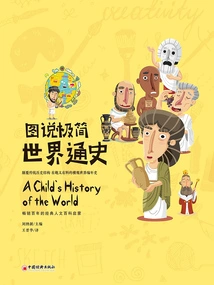
图说极简世界通史
Editor-in-chief Liu Naxin
The Illustrated Minimalist Humanities Knowledge Enlightenment Trilogy consists of "General History of the World", "World Geography" and "World Art History". It is not only comprehensive in content, but also truly serves as a window to understand the world. The editor-in-chief of this book selects classic books to show readers our interesting world. Among them, "Illustrated Minimalist General History of the World" takes into account historical events and historical figures, and uses a chronological view of the world from a historical panoramic perspective. The time staircase in it can help readers better compare historical events. I believe that after reading this book, we will have a clear map of world history in our minds, and what happened in different countries around the world at the same time.
The Illustrated Minimalist Humanities Knowledge Enlightenment Trilogy consists of "General History of the World", "World Geography" and "World Art History". It is not only comprehensive in content, but also truly serves as a window to understand the world. The editor-in-chief of this book selects classic books to show readers our interesting world. Among them, "Illustrated Minimalist General History of the World" takes into account historical events and historical figures, and uses a chronological view of the world from a historical panoramic perspective. The time staircase in it can help readers better compare historical events. I believe that after reading this book, we will have a clear map of world history in our minds, and what happened in different countries around the world at the same time.
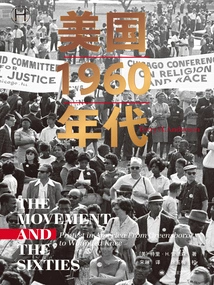
美国1960年代(历史学堂)
(us) Terry H. Anderson
In the 1960s, the world was almost a sea of movements, and the movements in the United States were not only as diverse as a kaleidoscope of names, but their ideas could be called the originators of almost all social movements since then. The social movement described in "America in the 1960s" began with the sit-in demonstrations in Greensboro and ended with the uprising of some Native Americans in Wounded Knee Valley in 1973 and the return of U. S. Troops from Vietnam. Among them were the "Freedom Rides", the Port Huron rally, the "Mississippi Summer", the Berkeley student movement, the Selma March, the anti-Vietnam War, the "Summer of Love", black power, the Chicago Convention, hippies, brown power, women's liberation... Why do millions of Americans join social movements and why do they take to the streets? This is the question that "America in the 1960s" will explore.
In the 1960s, the world was almost a sea of movements, and the movements in the United States were not only as diverse as a kaleidoscope of names, but their ideas could be called the originators of almost all social movements since then. The social movement described in "America in the 1960s" began with the sit-in demonstrations in Greensboro and ended with the uprising of some Native Americans in Wounded Knee Valley in 1973 and the return of U. S. Troops from Vietnam. Among them were the "Freedom Rides", the Port Huron rally, the "Mississippi Summer", the Berkeley student movement, the Selma March, the anti-Vietnam War, the "Summer of Love", black power, the Chicago Convention, hippies, brown power, women's liberation... Why do millions of Americans join social movements and why do they take to the streets? This is the question that "America in the 1960s" will explore.
季风海域的丝银对流:16—17世纪中西交往图景中的东亚移民、贸易与文化
(west) Ouyang An
This book is a historical work focusing on the cross-civilizational exchanges between China and Spain in the 16th and 17th centuries. The book is based on the route from Spain through the Americas to the Philippines and the southeastern coast of China. It describes the grand trade of large sailing ships traveling back and forth between Fujian and Mexico based on the regularity of monsoons and ocean currents. The "silk-silver convection" represented by silk, porcelain and silver has not only reshaped the trans-Pacific economic structure, but also driven in-depth interaction between people, concepts and culture. Missionaries, immigrants and even pirates jointly participated in building an ocean world full of competition and cooperation, blending and mutual learning. This book breaks the traditional narrative of Asia's role in the globalization process, reveals the influence of Chinese culture in the formation of the East Asian cultural circle, and provides a new perspective for understanding early globalization and its historical impact.
This book is a historical work focusing on the cross-civilizational exchanges between China and Spain in the 16th and 17th centuries. The book is based on the route from Spain through the Americas to the Philippines and the southeastern coast of China. It describes the grand trade of large sailing ships traveling back and forth between Fujian and Mexico based on the regularity of monsoons and ocean currents. The "silk-silver convection" represented by silk, porcelain and silver has not only reshaped the trans-Pacific economic structure, but also driven in-depth interaction between people, concepts and culture. Missionaries, immigrants and even pirates jointly participated in building an ocean world full of competition and cooperation, blending and mutual learning. This book breaks the traditional narrative of Asia's role in the globalization process, reveals the influence of Chinese culture in the formation of the East Asian cultural circle, and provides a new perspective for understanding early globalization and its historical impact.
社会变迁的催化剂:16世纪英格兰的印刷媒介
Zhang Wei
In England in the 16th century, the printing and publishing industry as an emerging industry gradually developed and expanded, and the rise of printing media was organically linked to the emergence and development of capitalist industry and commerce that English society was experiencing at this time, the Protestant Reformation aimed at breaking the dominance of the Catholic Church, the educational changes driven by humanistic trends, and the strengthening of the concepts of royal power and nation-state. This book examines the social influence of print media from the perspective of social change, details the interactive relationship between this new media and the political, economic, and cultural changes in England in the 16th century, emphasizes its catalytic role in the process of social change, and makes a useful exploration of the social transformation of early modern England from a media perspective.
In England in the 16th century, the printing and publishing industry as an emerging industry gradually developed and expanded, and the rise of printing media was organically linked to the emergence and development of capitalist industry and commerce that English society was experiencing at this time, the Protestant Reformation aimed at breaking the dominance of the Catholic Church, the educational changes driven by humanistic trends, and the strengthening of the concepts of royal power and nation-state. This book examines the social influence of print media from the perspective of social change, details the interactive relationship between this new media and the political, economic, and cultural changes in England in the 16th century, emphasizes its catalytic role in the process of social change, and makes a useful exploration of the social transformation of early modern England from a media perspective.
世俗与抗争:18世纪俄国乌拉尔劳动者的思想演变
(russia) Rudolf Gormanovich Pihoya
The Urals occupied a special place in the history of late feudal Russia. This area was developed by the Russian people as early as the 15th to 17th centuries. In the 18th century, it became the center of Russian metallurgy and gave birth to a large-scale mining industry. A large part of Russia's proletariat began to form here. The book explores the social and political ideas of the main workers in the Russian Urals from the late 17th to the 18th century and the main source of the Russian proletariat - subordinate farmers, craftsmen and workers, as well as the conditions that affected the formation of these ideas. Some of the struggle strategies, ideological characteristics, and organizational forms of the early Russian proletariat can be explained in this book.
The Urals occupied a special place in the history of late feudal Russia. This area was developed by the Russian people as early as the 15th to 17th centuries. In the 18th century, it became the center of Russian metallurgy and gave birth to a large-scale mining industry. A large part of Russia's proletariat began to form here. The book explores the social and political ideas of the main workers in the Russian Urals from the late 17th to the 18th century and the main source of the Russian proletariat - subordinate farmers, craftsmen and workers, as well as the conditions that affected the formation of these ideas. Some of the struggle strategies, ideological characteristics, and organizational forms of the early Russian proletariat can be explained in this book.
亚历山大一世与十二月党人:19世纪初俄国道路的选择
(russia) Sergey Vladimirovich Mironenko
Alexander I, the "Sphinx of the North," kept his true inner thoughts secret; the Decembrists, the "first generation of Russian revolutionaries," whose heroic uprising aimed at opposing serfdom and overthrowing the tsarist autocracy affected Russia's future destiny. The ideals of establishing constitutional government and liberating serfs intertwined them and led them to different paths, but in the end they failed to achieve what they wanted. Why? This book analyzes piece by piece, peels off the cocoon, deduce Alexander I's mental journey and the profound meaning behind every move, unearths the truth about Gribovsky's report on the Decembrists, restores for the first time the "Moscow Conspiracy" of 1817 by the Decembrists to assassinate the Tsar, and analyzes why Alexander I knew the truth The existence of the Happiness Association still made the decision that "I should not punish them", completely uncovering the revolutionary veil of the first secret society of the Decembrists, thinking about the historical accident and inevitability of the Decembrist uprising, and answering the question of the era in the early 19th century: "Why was the Russian constitutional monarchy not established, and why was serfdom not abolished?"
Alexander I, the "Sphinx of the North," kept his true inner thoughts secret; the Decembrists, the "first generation of Russian revolutionaries," whose heroic uprising aimed at opposing serfdom and overthrowing the tsarist autocracy affected Russia's future destiny. The ideals of establishing constitutional government and liberating serfs intertwined them and led them to different paths, but in the end they failed to achieve what they wanted. Why? This book analyzes piece by piece, peels off the cocoon, deduce Alexander I's mental journey and the profound meaning behind every move, unearths the truth about Gribovsky's report on the Decembrists, restores for the first time the "Moscow Conspiracy" of 1817 by the Decembrists to assassinate the Tsar, and analyzes why Alexander I knew the truth The existence of the Happiness Association still made the decision that "I should not punish them", completely uncovering the revolutionary veil of the first secret society of the Decembrists, thinking about the historical accident and inevitability of the Decembrist uprising, and answering the question of the era in the early 19th century: "Why was the Russian constitutional monarchy not established, and why was serfdom not abolished?"