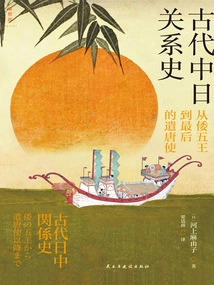
History of Sino-japanese Relations in Ancient Times: from the Five Japanese Kings to the Last Envoy to the Tang Dynasty
About This Novel
In the first month of 666 AD, Emperor Gaozong of the Tang Dynasty Li Zhi took Empress Wu, the clan, and officials to Mount Tai to enshrine Zen. The Tang court held a high-profile Zen ceremony, which was undoubtedly one of the purposes of promoting the country's prestige to surrounding countries. Present were envoys from all over West Asia, Central Asia, South Asia and East Asia, and of course envoys from Japan, which was defeated by the Tang Dynasty and Silla coalition forces three years ago. At this time, Japan had fully imitated and studied the laws and regulations of the Tang Dynasty, established a centralized system, and tried to compete with the Tang Dynasty for supremacy on the Korean Peninsula. Since the Japanese king Zan sent envoys to Liu and Song Dynasty in 421 AD, various Japanese regimes have successively sent envoys, students and monks to the Southern Qi, Nanliang, Sui and Tang dynasties over hundreds of years. In the Five Dynasties and Ten Kingdoms and the early Song Dynasty, a large number of Buddhist monks arrived amidst wars and turmoil. The culture, religion, and politics of East Asian countries interacted closely through personnel exchanges. Since the Yuan and Ming Dynasties, the relationship between China and Japan has always been an important part of China's foreign relations. Whether it is the Mongol conquest, the tribute system, cultural and commercial exchanges, or the several aggressive wars launched by Japan in East Asia, it has always affected the international structure of Asia today. How to re-view ancient Sino-Japanese relations within the framework of Asian history? Based on the analysis and textual research of historical data, the author of this book presents a vivid and rich picture of the history of Sino-Japanese exchanges by discussing and clarifying the concept of "tianxia" and the legitimacy of rule, fifteen envoy exchanges between the Tang and Japan, the spread of Buddhist culture, and the transformation of Sino-Japanese relations after the fall of the Tang Dynasty.
Official Sources
What Readers Think
Rating
Community(0)
Rating
Community(0)