Library
Browse and search books
3,417 novels found
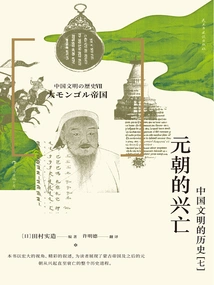
中国文明的历史(七):元朝的兴亡
(japan) Tamura Mizo
This book is the seventh volume in the series "The History of Chinese Civilization" written by a famous Chinese historian in Japan. It starts with the birth of Genghis Khan and introduces the entire process of Genghis Khan's unification of various Mongolian tribes, establishment of the Mongol Empire, and then the Mongol Empire's conquest of Eurasia. After that, it mainly talks about the transformation of the Mongol Empire into the Yuan Dynasty, the rise and fall of the Yuan Dynasty, as well as its economic, social and diplomatic conditions, etc., Including a more detailed introduction to Kublai Khan's two expeditions to Japan.
This book is the seventh volume in the series "The History of Chinese Civilization" written by a famous Chinese historian in Japan. It starts with the birth of Genghis Khan and introduces the entire process of Genghis Khan's unification of various Mongolian tribes, establishment of the Mongol Empire, and then the Mongol Empire's conquest of Eurasia. After that, it mainly talks about the transformation of the Mongol Empire into the Yuan Dynasty, the rise and fall of the Yuan Dynasty, as well as its economic, social and diplomatic conditions, etc., Including a more detailed introduction to Kublai Khan's two expeditions to Japan.
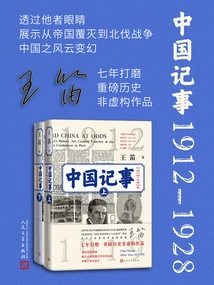
中国记事:1912—1928(全2卷)
Wang Di
In 1911, the Revolution of 1911 occurred in China; in 1914, the First World War broke out, and China entered the war three years later; in 1919, China sent a delegation to the Paris Peace Conference, and then the May Fourth Movement broke out. From the Revolution of 1911 to the outbreak of the May Fourth Movement, what was the situation in China like? Western media such as The New York Times, The Washington Post, and The Christian Science Monitor carried many reports. Many Westerners who came to China, including Nobel Prize-winning writer Pearl Buck, also told stories about China. At the Paris Peace Conference, in order to regain Shandong's rights and interests, how did China's Ambassador to the United States Gu Weijun, China's Foreign Minister Lu Zhengxiang and others mediate? Wilson wanted to help China recover its rights and interests in Shandong, so why did he compromise with Japan and what were the consequences? Is the origin of the May 4th Movement related to Wilson's advocacy of equality and national self-determination? Chinese intellectual elites such as Hu Shi, Cai Yuanpei, and Chen Duxiu led the May Fourth New Culture Movement. The United States compromised with Japan, and they were disappointed with the United States. But the Western news media saw the drastic changes taking place in China, which was called "China's awakening." Historian Wang Di's new book "Chronicles of China: 1912-1919" shows this magnificent and colorful non-fiction history.
In 1911, the Revolution of 1911 occurred in China; in 1914, the First World War broke out, and China entered the war three years later; in 1919, China sent a delegation to the Paris Peace Conference, and then the May Fourth Movement broke out. From the Revolution of 1911 to the outbreak of the May Fourth Movement, what was the situation in China like? Western media such as The New York Times, The Washington Post, and The Christian Science Monitor carried many reports. Many Westerners who came to China, including Nobel Prize-winning writer Pearl Buck, also told stories about China. At the Paris Peace Conference, in order to regain Shandong's rights and interests, how did China's Ambassador to the United States Gu Weijun, China's Foreign Minister Lu Zhengxiang and others mediate? Wilson wanted to help China recover its rights and interests in Shandong, so why did he compromise with Japan and what were the consequences? Is the origin of the May 4th Movement related to Wilson's advocacy of equality and national self-determination? Chinese intellectual elites such as Hu Shi, Cai Yuanpei, and Chen Duxiu led the May Fourth New Culture Movement. The United States compromised with Japan, and they were disappointed with the United States. But the Western news media saw the drastic changes taking place in China, which was called "China's awakening." Historian Wang Di's new book "Chronicles of China: 1912-1919" shows this magnificent and colorful non-fiction history.
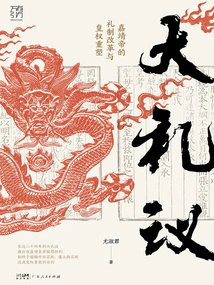
Great Etiquette Discussion: Emperor Jiajing's Etiquette Reform and Reshaping of Imperial Power
History大礼议:嘉靖帝的礼制改革与皇权重塑
You Shujun
After the death of Emperor Zhengde, he had no children. Zhu Houcong, the crown prince of Xingfan, succeeded him as Emperor Jiajing. All civil and military officials asked him to succeed him. As his heir, he recognized his cousin Emperor Hongzhi as his father and called his biological father uncle. This triggered a "Great Ceremony" that shocked the court for twenty-four years. In order to honor his biological parents, Emperor Jiajing did not hesitate to use force to suppress the group of officials who protested in Fuque, leading to the Zuoshunmen massacre; he compiled the "Minglun Dadian" to construct a theoretical text on the legitimacy of imperial power; he fabricated charges to block the way of speech and stifled the policy of "serving the king as a teacher" among scholars. The ideal of governance; the constant changes in national etiquette and laws, called "restoring the ancestral system", actually improved the political status of the biological father and consolidated his own imperial power; he also controlled the ministers, expanded the power of the cabinet, changed chief ministers several times, and the political atmosphere of the court declined, creating conditions for intensified party struggles. This book studies the changes in the political culture of the Jiajing Dynasty in the Ming Dynasty through the "Great Ceremony" incident, especially the issue surrounding the entry of Emperor Jiajing's biological father, God Zhu Youqi, into the Nephew Ancestral Temple. Jiajing monarchs and ministers argued with each other for many years. In the end, Emperor Jiajing got his wish and named his biological father the ancestral temple, which also achieved the purpose of reshaping imperial power and transforming a small sect into a large ancestral temple. However, Emperor Jiajing shook up the political and cultural system based on "rituals", privatized imperial power, and confused the status and etiquette, which led to political turmoil, conflicts between emperors and ministers, and social disorder crises in the middle Ming Dynasty, and even the gradual collapse and disintegration of the political order in the late Ming Dynasty.
After the death of Emperor Zhengde, he had no children. Zhu Houcong, the crown prince of Xingfan, succeeded him as Emperor Jiajing. All civil and military officials asked him to succeed him. As his heir, he recognized his cousin Emperor Hongzhi as his father and called his biological father uncle. This triggered a "Great Ceremony" that shocked the court for twenty-four years. In order to honor his biological parents, Emperor Jiajing did not hesitate to use force to suppress the group of officials who protested in Fuque, leading to the Zuoshunmen massacre; he compiled the "Minglun Dadian" to construct a theoretical text on the legitimacy of imperial power; he fabricated charges to block the way of speech and stifled the policy of "serving the king as a teacher" among scholars. The ideal of governance; the constant changes in national etiquette and laws, called "restoring the ancestral system", actually improved the political status of the biological father and consolidated his own imperial power; he also controlled the ministers, expanded the power of the cabinet, changed chief ministers several times, and the political atmosphere of the court declined, creating conditions for intensified party struggles. This book studies the changes in the political culture of the Jiajing Dynasty in the Ming Dynasty through the "Great Ceremony" incident, especially the issue surrounding the entry of Emperor Jiajing's biological father, God Zhu Youqi, into the Nephew Ancestral Temple. Jiajing monarchs and ministers argued with each other for many years. In the end, Emperor Jiajing got his wish and named his biological father the ancestral temple, which also achieved the purpose of reshaping imperial power and transforming a small sect into a large ancestral temple. However, Emperor Jiajing shook up the political and cultural system based on "rituals", privatized imperial power, and confused the status and etiquette, which led to political turmoil, conflicts between emperors and ministers, and social disorder crises in the middle Ming Dynasty, and even the gradual collapse and disintegration of the political order in the late Ming Dynasty.
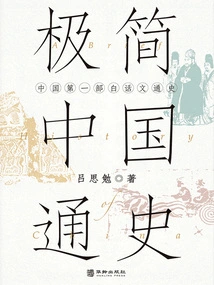
极简中国通史
Lu Simian
"A Minimalist General History of China" is Mr. Lu Simian's famous historical work, and it is also the first general history of China told in vernacular in the history of our country. The original name of this book is "The History of the Country, Fuxing Senior High School Textbook". It is a general history of China written for high school students in the 1930s by the great historian Mr. Lu Simian. The author uses concise and smooth words to give a comprehensive description of China's politics, geography, society, culture, etc. From ancient times to modern times. The book is full of citations, vivid in form, clear in organization, and unique in insights. It is an excellent popular reading on the general history of China.
"A Minimalist General History of China" is Mr. Lu Simian's famous historical work, and it is also the first general history of China told in vernacular in the history of our country. The original name of this book is "The History of the Country, Fuxing Senior High School Textbook". It is a general history of China written for high school students in the 1930s by the great historian Mr. Lu Simian. The author uses concise and smooth words to give a comprehensive description of China's politics, geography, society, culture, etc. From ancient times to modern times. The book is full of citations, vivid in form, clear in organization, and unique in insights. It is an excellent popular reading on the general history of China.
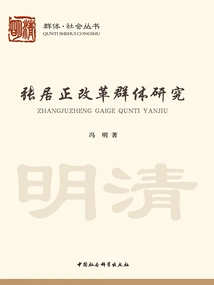
张居正改革群体研究
Feng Ming
This book takes Zhang Juzheng's reform group as the research object and places Zhang Juzheng's reform in the historical evolution background of the middle and late Ming Dynasty. By examining Zhang Juzheng's reform group and its evolution, it reveals the complex relationship between Zhang Juzheng's reform group and Zhang Juzheng, Zhang Juzheng's reforms, the political structure of the late Ming Dynasty, and the social changes of the late Ming Dynasty. This book implements empirical research and, on the basis of fully studying existing research results, systematically collects and organizes documents related to Zhang Juzheng's reform group since the Ming and Qing Dynasties, including official history, local chronicles, archives, anthologies, notes, family trees, inscriptions, oral historical materials, etc. It pays attention to the excavation of new historical materials, especially local documents, and discovers multiple aspects of history from the documents. Highlight the perspective of social history group research, and examine the characteristics, value tendencies and interactions of Zhang Juzheng's reform group through macroscopic stage grasp and microscopic case analysis, focusing on the integration of political history research with social changes and cultural changes. By sorting out important issues such as Zhang Juzheng's reform group and national political operations, changes in social life, and balance of interests, the important role and historical influence of Zhang Juzheng's reform group in the social evolution of the mid-to-late Ming Dynasty are profoundly explained, providing historical reference for my country to further promote the reform cause in the new era.
This book takes Zhang Juzheng's reform group as the research object and places Zhang Juzheng's reform in the historical evolution background of the middle and late Ming Dynasty. By examining Zhang Juzheng's reform group and its evolution, it reveals the complex relationship between Zhang Juzheng's reform group and Zhang Juzheng, Zhang Juzheng's reforms, the political structure of the late Ming Dynasty, and the social changes of the late Ming Dynasty. This book implements empirical research and, on the basis of fully studying existing research results, systematically collects and organizes documents related to Zhang Juzheng's reform group since the Ming and Qing Dynasties, including official history, local chronicles, archives, anthologies, notes, family trees, inscriptions, oral historical materials, etc. It pays attention to the excavation of new historical materials, especially local documents, and discovers multiple aspects of history from the documents. Highlight the perspective of social history group research, and examine the characteristics, value tendencies and interactions of Zhang Juzheng's reform group through macroscopic stage grasp and microscopic case analysis, focusing on the integration of political history research with social changes and cultural changes. By sorting out important issues such as Zhang Juzheng's reform group and national political operations, changes in social life, and balance of interests, the important role and historical influence of Zhang Juzheng's reform group in the social evolution of the mid-to-late Ming Dynasty are profoundly explained, providing historical reference for my country to further promote the reform cause in the new era.
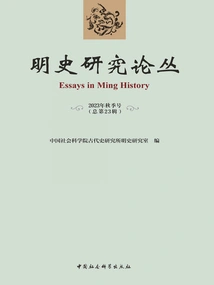
明史研究论丛(2023年秋季号\u002F总第二十三辑)
Compiled By Ming History Research Office, Institute Of Ancient History, Chinese Academy Of Social Sciences
"Ming History Research Series" is sponsored by the Ming History Research Office of the Institute of Ancient History, Chinese Academy of Social Sciences. This series is the autumn issue of 2023. It has three columns: monographs, graduate assignments, and book reviews. It includes the evolution of the selection system for grassroots military attachés in the Beijing camp in the Ming Dynasty, and an examination of the flag service and gun system in the Ming Dynasty. , The stratification of living standards in the Ming Dynasty and its measurement standards, the local false accusation trend and its judicial practice in the Ming Dynasty, the financing of construction funds and the financial operation of the Ministry of Industry during the Jiajing period of the Ming Dynasty, the composition and influence of the group of examiners of the Yingtian Township Examination in the Ming Dynasty, and the analysis of the historical value of Gongyuan Records in the Ming Dynasty.
"Ming History Research Series" is sponsored by the Ming History Research Office of the Institute of Ancient History, Chinese Academy of Social Sciences. This series is the autumn issue of 2023. It has three columns: monographs, graduate assignments, and book reviews. It includes the evolution of the selection system for grassroots military attachés in the Beijing camp in the Ming Dynasty, and an examination of the flag service and gun system in the Ming Dynasty. , The stratification of living standards in the Ming Dynasty and its measurement standards, the local false accusation trend and its judicial practice in the Ming Dynasty, the financing of construction funds and the financial operation of the Ministry of Industry during the Jiajing period of the Ming Dynasty, the composition and influence of the group of examiners of the Yingtian Township Examination in the Ming Dynasty, and the analysis of the historical value of Gongyuan Records in the Ming Dynasty.
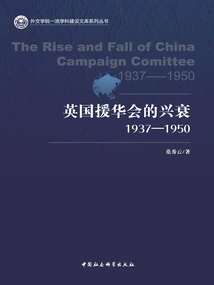
英国援华会的兴衰(1937—1950)
Fan Xiuyun
After the outbreak of the all-out Anti-Japanese War, China received support from many non-governmental aid organizations in the international community, the most prominent of which was the British Aid to China Association, known as the Chinese people's "most loyal friend in the Western Hemisphere." The China Aid Association was established in September 1937. It not only set off an upsurge in aiding China and resisting Japan in the UK, but also established a platform for international cooperation to aid China, making the UK once the center of the world's aid to China movement. Based on rich historical materials, this book examines the entire process of the establishment, development and withdrawal of the China Aid Club from the historical stage, and analyzes the reasons for the early vigorous development of the China Aid Club and its gradual decline in the later period. The historical contributions and limitations of the China Aid Association were also discussed, providing a new perspective for understanding the aid China movement of international civil society organizations.
After the outbreak of the all-out Anti-Japanese War, China received support from many non-governmental aid organizations in the international community, the most prominent of which was the British Aid to China Association, known as the Chinese people's "most loyal friend in the Western Hemisphere." The China Aid Association was established in September 1937. It not only set off an upsurge in aiding China and resisting Japan in the UK, but also established a platform for international cooperation to aid China, making the UK once the center of the world's aid to China movement. Based on rich historical materials, this book examines the entire process of the establishment, development and withdrawal of the China Aid Club from the historical stage, and analyzes the reasons for the early vigorous development of the China Aid Club and its gradual decline in the later period. The historical contributions and limitations of the China Aid Association were also discussed, providing a new perspective for understanding the aid China movement of international civil society organizations.
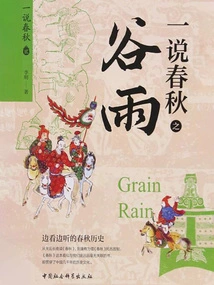
一说春秋之谷雨
Li Ming
"A Story of Spring and Autumn Period" is the second book in the "A Story of Spring and Autumn Period" series. It mainly tells the stories of the Spring and Autumn Period from 700 BC to 664 BC. This series of books is based on "Spring and Autumn", with "Historical Records" and "Guoyu" as main supplements. At the same time, it is written with reference to dozens of other related books. Different from other vernacular versions of "Spring and Autumn", the "A Story of Spring and Autumn" series adds background information such as calendars, rituals, systems, and character relationships based on the original historical materials, connects the events of the Spring and Autumn Period in series, and forms opinions and judgments based on a large number of historical materials to facilitate readers to understand this period of history more clearly. "A Story of Spring and Autumn" was originally an audio program. After being reorganized, revised, and supplemented, it finally formed the current series of "A Story of Spring and Autumn". Each chapter in the book contains a QR code of the original audio program, which can be read by reference to each other. "Spring and Autumn" is one of the Six Classics of Confucian classics in ancient China, and it is also China's first chronological history book. Its writing is subtle but explicit, ambitious but obscure, euphemistic and comprehensive, exhaustive but not dirty, punishing evil and encouraging good. It is known as the Spring and Autumn writing style and the subtle words and great meaning. The Six Classics of the Pre-Qin Dynasty, the Five Classics of the early Han Dynasty, the Seven Classics of the Three Kingdoms of the Later Han Dynasty, the Twelve Classics of the Tang Dynasty, and the Thirteen Classics of the Southern Song Dynasty and later all have references to Spring and Autumn.
"A Story of Spring and Autumn Period" is the second book in the "A Story of Spring and Autumn Period" series. It mainly tells the stories of the Spring and Autumn Period from 700 BC to 664 BC. This series of books is based on "Spring and Autumn", with "Historical Records" and "Guoyu" as main supplements. At the same time, it is written with reference to dozens of other related books. Different from other vernacular versions of "Spring and Autumn", the "A Story of Spring and Autumn" series adds background information such as calendars, rituals, systems, and character relationships based on the original historical materials, connects the events of the Spring and Autumn Period in series, and forms opinions and judgments based on a large number of historical materials to facilitate readers to understand this period of history more clearly. "A Story of Spring and Autumn" was originally an audio program. After being reorganized, revised, and supplemented, it finally formed the current series of "A Story of Spring and Autumn". Each chapter in the book contains a QR code of the original audio program, which can be read by reference to each other. "Spring and Autumn" is one of the Six Classics of Confucian classics in ancient China, and it is also China's first chronological history book. Its writing is subtle but explicit, ambitious but obscure, euphemistic and comprehensive, exhaustive but not dirty, punishing evil and encouraging good. It is known as the Spring and Autumn writing style and the subtle words and great meaning. The Six Classics of the Pre-Qin Dynasty, the Five Classics of the early Han Dynasty, the Seven Classics of the Three Kingdoms of the Later Han Dynasty, the Twelve Classics of the Tang Dynasty, and the Thirteen Classics of the Southern Song Dynasty and later all have references to Spring and Autumn.
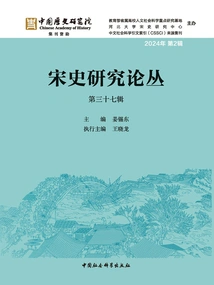
宋史研究论丛(第三十七辑)
Editor-in-chief Jiang Xidong
"Song History Research Series" is a collection of academic papers sponsored by the Song History Research Center of Hebei University, a key research base for humanities and social sciences in provincial universities under the Ministry of Education founded by the late famous historian Qi Xia. This collection focuses on "new materials, new methods, and new perspectives" in academic research, and mainly publishes academic papers in the field of Song history, as well as the history of Liao, Xia, Jin, and Yuan Dynasties. This is the 37th series and includes 35 academic papers, divided into columns such as research on the political system of the Song Dynasty, research on the military history of the Song Dynasty, research on the social and economic history of the Song Dynasty, research on the legal history of the Song Dynasty, research on the cultural history of the Song Dynasty, literature and textual research on the Song Dynasty, research on the history of the Liao, Jin and Yuan Dynasties, and research summaries and reviews. The papers published in this volume either propose new insights through research or textual research, or unearth new historical materials. They are the latest research results on relevant issues in the academic community and can be used as a reference for researchers and enthusiasts of the history of the Song, Liao, Xia, Jin and Yuan Dynasties.
"Song History Research Series" is a collection of academic papers sponsored by the Song History Research Center of Hebei University, a key research base for humanities and social sciences in provincial universities under the Ministry of Education founded by the late famous historian Qi Xia. This collection focuses on "new materials, new methods, and new perspectives" in academic research, and mainly publishes academic papers in the field of Song history, as well as the history of Liao, Xia, Jin, and Yuan Dynasties. This is the 37th series and includes 35 academic papers, divided into columns such as research on the political system of the Song Dynasty, research on the military history of the Song Dynasty, research on the social and economic history of the Song Dynasty, research on the legal history of the Song Dynasty, research on the cultural history of the Song Dynasty, literature and textual research on the Song Dynasty, research on the history of the Liao, Jin and Yuan Dynasties, and research summaries and reviews. The papers published in this volume either propose new insights through research or textual research, or unearth new historical materials. They are the latest research results on relevant issues in the academic community and can be used as a reference for researchers and enthusiasts of the history of the Song, Liao, Xia, Jin and Yuan Dynasties.
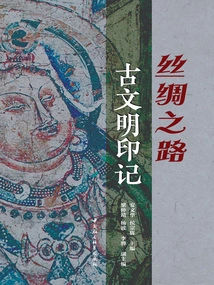
丝绸之路古文明印记
An Wenhua Editor-in-chief Hou Zonghui
Since Zhang Qian's "hollowing out", the thousands-mile-long Silk Road has creatively built a network system for exchanges and interactions between the East and the West. The countless ancient civilization ruins attached to the Silk Road vividly demonstrate the splendid civilization of more than 5,000 years. This book describes the ruins of ancient civilizations embedded on the Silk Road from multiple angles. It not only allows readers to appreciate the role of the Silk Road as a bridge in cultural exchanges and mutual learning between Eastern and Western civilizations, but also helps people deeply understand the birth, development, communication, and mutual influence of ancient Eastern and Western civilizations.
Since Zhang Qian's "hollowing out", the thousands-mile-long Silk Road has creatively built a network system for exchanges and interactions between the East and the West. The countless ancient civilization ruins attached to the Silk Road vividly demonstrate the splendid civilization of more than 5,000 years. This book describes the ruins of ancient civilizations embedded on the Silk Road from multiple angles. It not only allows readers to appreciate the role of the Silk Road as a bridge in cultural exchanges and mutual learning between Eastern and Western civilizations, but also helps people deeply understand the birth, development, communication, and mutual influence of ancient Eastern and Western civilizations.
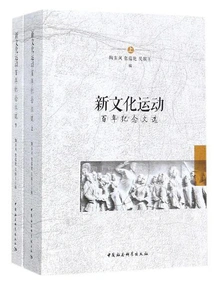
新文化运动百年纪念文选(全2册)
Tao Dongfeng, Zhang Yunyan, Wu Yuyu
This book is a collection of representative papers on the re-evaluation of the New Culture Movement over the past 20 years, edited by Professor Tao Dongfeng and others. The New Culture Movement was a social reform movement and ideological and cultural enlightenment movement initiated by a group of Western-educated intellectuals in the early 20th century. Since Chen Duxiu founded the magazine "New Youth" and launched the New Culture Movement in 1915, the centenary reflection on the New Culture Movement has become a hot topic in Chinese academic circles. Around this hot spot, different trends of thought have made different voices, putting forward their own unique views on re-evaluating the New Culture Movement. This book adheres to an objective and neutral stance and tries its best to include representative papers from various stances, so it has high historical value.
This book is a collection of representative papers on the re-evaluation of the New Culture Movement over the past 20 years, edited by Professor Tao Dongfeng and others. The New Culture Movement was a social reform movement and ideological and cultural enlightenment movement initiated by a group of Western-educated intellectuals in the early 20th century. Since Chen Duxiu founded the magazine "New Youth" and launched the New Culture Movement in 1915, the centenary reflection on the New Culture Movement has become a hot topic in Chinese academic circles. Around this hot spot, different trends of thought have made different voices, putting forward their own unique views on re-evaluating the New Culture Movement. This book adheres to an objective and neutral stance and tries its best to include representative papers from various stances, so it has high historical value.
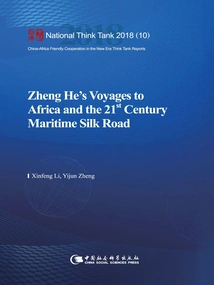
郑和远航非洲与21世纪海上丝绸之路(英文)
Li Xinfeng Zheng Yijun
Zheng He's four voyages to Africa were a symbol of the early Ming Dynasty's diplomatic policy of "sharing the blessings of peace" with other countries, covering the world. This report explains in depth that the achievement of this unprecedented feat in human history was inseparable from China's advanced boating technology and navigation support at that time, as well as the opening of three new routes across the Indian Ocean to Africa: Zheng He's visit to Africa included Mugudushu, Bulawa, Zhubu, Malin, Manbasa and other places into the Maritime Silk Road The trade system of the Maritime Silk Road shows the international significance of the Maritime Silk Road more than ever before: through a visit to the "Chinese Village" on Patai Island, it was found that the descendants of Zheng He's subordinates who stayed in Africa due to the shipwreck still retain Chinese cultural traditions and have successfully integrated into African society. They are the first batch of Chinese to "immigrate" to Africa. It advances the history of Chinese immigration to Africa by two to three hundred years, effectively countering the so-called "neo-colonialism theory" and the "China threat theory," and providing theoretical and practical support for Africa's "Look East" and the development of China-Africa trade. This report is of extremely important historical and practical significance in promoting China and Africa to jointly build the 21st Century Maritime Silk Road and promoting the construction of a China-Africa community with a shared future.
Zheng He's four voyages to Africa were a symbol of the early Ming Dynasty's diplomatic policy of "sharing the blessings of peace" with other countries, covering the world. This report explains in depth that the achievement of this unprecedented feat in human history was inseparable from China's advanced boating technology and navigation support at that time, as well as the opening of three new routes across the Indian Ocean to Africa: Zheng He's visit to Africa included Mugudushu, Bulawa, Zhubu, Malin, Manbasa and other places into the Maritime Silk Road The trade system of the Maritime Silk Road shows the international significance of the Maritime Silk Road more than ever before: through a visit to the "Chinese Village" on Patai Island, it was found that the descendants of Zheng He's subordinates who stayed in Africa due to the shipwreck still retain Chinese cultural traditions and have successfully integrated into African society. They are the first batch of Chinese to "immigrate" to Africa. It advances the history of Chinese immigration to Africa by two to three hundred years, effectively countering the so-called "neo-colonialism theory" and the "China threat theory," and providing theoretical and practical support for Africa's "Look East" and the development of China-Africa trade. This report is of extremely important historical and practical significance in promoting China and Africa to jointly build the 21st Century Maritime Silk Road and promoting the construction of a China-Africa community with a shared future.
郑和远航非洲与21世纪海上丝绸之路
Li Xinfeng Zheng Yijun
This book is part of a series of national think tank reports by the Central Society Think Tank. It covers a total of seven ocean voyages of Zheng He's fleet, which spanned nearly thirty years. The fleet reached Southeast Asian countries, the northern shores of the Indian Ocean, Arab countries, and as far as the east coast of the African continent, leaving many historical and civilized relics in these areas. This great navigational feat played an extremely important role in spreading advanced Chinese civilization, cultural exchanges with other countries around the world, and expanding economic and trade exchanges, and had a profound impact on future generations. In the history of human navigation, the Chinese nation (and also mankind) entered the vast Indian Ocean with a large-scale maritime fleet for the first time, and conducted long-term exchanges with coastal countries in terms of trade exchanges and cultural dissemination, ultimately marking the first strong rainbow in the history of world navigation. The recasting of the "Maritime Silk Road" in the 21st century will greatly promote the cross-connection of my country and the world economy. (Five Links) can further radiate China's influence to the northern Indian Ocean, Middle Eastern countries, Mediterranean coasts and African regions. While expanding China's economic influence and building China's soft power, it will have major economic benefits for countries along the route, and is conducive to the further formation of new Eurasian trade channels and regional economic development belts. Therefore, in response to the doubts that some governments and people have about the "Maritime Silk Road", active interpretation is the first thing to do.
This book is part of a series of national think tank reports by the Central Society Think Tank. It covers a total of seven ocean voyages of Zheng He's fleet, which spanned nearly thirty years. The fleet reached Southeast Asian countries, the northern shores of the Indian Ocean, Arab countries, and as far as the east coast of the African continent, leaving many historical and civilized relics in these areas. This great navigational feat played an extremely important role in spreading advanced Chinese civilization, cultural exchanges with other countries around the world, and expanding economic and trade exchanges, and had a profound impact on future generations. In the history of human navigation, the Chinese nation (and also mankind) entered the vast Indian Ocean with a large-scale maritime fleet for the first time, and conducted long-term exchanges with coastal countries in terms of trade exchanges and cultural dissemination, ultimately marking the first strong rainbow in the history of world navigation. The recasting of the "Maritime Silk Road" in the 21st century will greatly promote the cross-connection of my country and the world economy. (Five Links) can further radiate China's influence to the northern Indian Ocean, Middle Eastern countries, Mediterranean coasts and African regions. While expanding China's economic influence and building China's soft power, it will have major economic benefits for countries along the route, and is conducive to the further formation of new Eurasian trade channels and regional economic development belts. Therefore, in response to the doubts that some governments and people have about the "Maritime Silk Road", active interpretation is the first thing to do.
唐宋乡村社会与国家经济关系研究
Geng Yuanli
By observing the rural power structure, this book understands its operating mechanism, understands the basic trend of ancient Chinese rural society, and understands the basic economic structure, power structure and internal operating mechanism of traditional Chinese society. In the establishment of contractual relationships among rural people, state power can be exercised and rural social order can be maintained. Taxes and levies directly or indirectly affect economic development and people's lives. The country tries its best to maintain a balance and basically maintains the stable operation of society. At the same time, we examine the process of wealth circulation and distribution in rural society, and understand the delicate balance between control and counter-control, survival and order in rural society. The whole book strives to form a continuous dynamic study spanning the Tang, Five Dynasties and Song Dynasties, focusing on "process" and "relationship". In a detailed analysis of basic historical data, the real life of rural residents is discussed. Try to change the top-down national perspective to a grassroots perspective and try your best to integrate into it. Explore the behavior of local rural people at that time, and look at the relationship between rural society, state and county power, the court and the country from the perspective of rural residents. Based on the interpretation of basic historical materials, new insights are put forward, hoping to slightly advance the research on some traditional propositions.
By observing the rural power structure, this book understands its operating mechanism, understands the basic trend of ancient Chinese rural society, and understands the basic economic structure, power structure and internal operating mechanism of traditional Chinese society. In the establishment of contractual relationships among rural people, state power can be exercised and rural social order can be maintained. Taxes and levies directly or indirectly affect economic development and people's lives. The country tries its best to maintain a balance and basically maintains the stable operation of society. At the same time, we examine the process of wealth circulation and distribution in rural society, and understand the delicate balance between control and counter-control, survival and order in rural society. The whole book strives to form a continuous dynamic study spanning the Tang, Five Dynasties and Song Dynasties, focusing on "process" and "relationship". In a detailed analysis of basic historical data, the real life of rural residents is discussed. Try to change the top-down national perspective to a grassroots perspective and try your best to integrate into it. Explore the behavior of local rural people at that time, and look at the relationship between rural society, state and county power, the court and the country from the perspective of rural residents. Based on the interpretation of basic historical materials, new insights are put forward, hoping to slightly advance the research on some traditional propositions.
元明江南政治生态与社会发展
Editor-in-chief Li Zhian
This book is a collection of papers from the "Academic Symposium on Jiangnan Society in the Yuan and Ming Dynasties" held in Tianjin in January 2016. It is also one of the final results of the National Social Science Fund's key research project "Jiangnan Policies and Social Development in the Early Yuan and Ming Dynasties." The important issues focused on Jiangnan in the Yuan and Ming dynasties include: Comparison of Jiangnan policies and social development from the Yuan to the Ming dynasty, the evolution of the household registration system in the Yuan and Ming dynasties, the military household system and the social structure of Jiangnan, procedural criminal law, Jiangnan imperial examinations, the political and cultural life of local literati, the origin and spatial structure of towns, maritime trade, maritime prohibition and coastal defense, etc. When compiling the book, the above issues were divided into five parts: "Politics and Military System in Jiangnan in Yuan and Ming Dynasties", "Household Registration, Taxes and Economic History in Jiangnan in Yuan and Ming Dynasties", "Imperial Examinations, Scholars and Religious Culture in Jiangnan in Yuan and Ming Dynasties", "Enriching the People, Families and Customs in Yuan and Ming Dynasties" and "Maritime Commerce, Maritime Prohibition and Coastal Defense". This book is the first successful attempt by scholars of Yuan history and Ming history to bring together scholars of Yuan history and Ming history to break down dynasty boundaries and comprehensively examine Jiangnan issues from the late 13th century to the 16th century. In addition to the fact that Chinese and Japanese academic circles are keen on the "Tang and Song Dynasties" and some European and American scholars are paying attention to the "Song, Yuan and Ming transitions", it also puts forward a number of enlightening insights, which can be regarded as a useful exploration to deepen the understanding of the development of medieval and modern history.
This book is a collection of papers from the "Academic Symposium on Jiangnan Society in the Yuan and Ming Dynasties" held in Tianjin in January 2016. It is also one of the final results of the National Social Science Fund's key research project "Jiangnan Policies and Social Development in the Early Yuan and Ming Dynasties." The important issues focused on Jiangnan in the Yuan and Ming dynasties include: Comparison of Jiangnan policies and social development from the Yuan to the Ming dynasty, the evolution of the household registration system in the Yuan and Ming dynasties, the military household system and the social structure of Jiangnan, procedural criminal law, Jiangnan imperial examinations, the political and cultural life of local literati, the origin and spatial structure of towns, maritime trade, maritime prohibition and coastal defense, etc. When compiling the book, the above issues were divided into five parts: "Politics and Military System in Jiangnan in Yuan and Ming Dynasties", "Household Registration, Taxes and Economic History in Jiangnan in Yuan and Ming Dynasties", "Imperial Examinations, Scholars and Religious Culture in Jiangnan in Yuan and Ming Dynasties", "Enriching the People, Families and Customs in Yuan and Ming Dynasties" and "Maritime Commerce, Maritime Prohibition and Coastal Defense". This book is the first successful attempt by scholars of Yuan history and Ming history to bring together scholars of Yuan history and Ming history to break down dynasty boundaries and comprehensively examine Jiangnan issues from the late 13th century to the 16th century. In addition to the fact that Chinese and Japanese academic circles are keen on the "Tang and Song Dynasties" and some European and American scholars are paying attention to the "Song, Yuan and Ming transitions", it also puts forward a number of enlightening insights, which can be regarded as a useful exploration to deepen the understanding of the development of medieval and modern history.
中华历史与传统文化论丛(第4辑)
Dong Shaowei Editor-in-chief Chai Bing
"Chinese History and Traditional Culture" is an academic journal sponsored by Northeastern University Qinhuangdao Branch. The collection aims to promote China's excellent traditional culture. Research related to traditional culture in the disciplines of history, philosophy, literature, politics, etc. Is the focus of the collection. It mainly collects original academic papers and has columns such as book reviews, interviews with scholars, essays by famous writers, and collection of historical materials. Among them, book reviews welcome in-depth analysis of classic works, new works and other historical books that reflect the study of traditional Chinese culture. Scholar interviews can conduct in-depth and enlightening interviews with academic leaders and young and middle-aged scholars. Essays by Famous Writers welcomes scholars' reflections on life outside of academia. Collection of historical materials, welcome all walks of life to provide exclusive new historical materials, or archives, or inscriptions, or contract documents, etc.
"Chinese History and Traditional Culture" is an academic journal sponsored by Northeastern University Qinhuangdao Branch. The collection aims to promote China's excellent traditional culture. Research related to traditional culture in the disciplines of history, philosophy, literature, politics, etc. Is the focus of the collection. It mainly collects original academic papers and has columns such as book reviews, interviews with scholars, essays by famous writers, and collection of historical materials. Among them, book reviews welcome in-depth analysis of classic works, new works and other historical books that reflect the study of traditional Chinese culture. Scholar interviews can conduct in-depth and enlightening interviews with academic leaders and young and middle-aged scholars. Essays by Famous Writers welcomes scholars' reflections on life outside of academia. Collection of historical materials, welcome all walks of life to provide exclusive new historical materials, or archives, or inscriptions, or contract documents, etc.
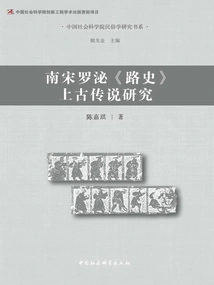
南宋罗泌《路史》上古传说研究
Chen Jiaqi
"History of the Road" is a general history of ancient times. It uses the tenth century of Wei Shu as the chronology. It believes that the world was opened to Confucius and Huolin, and a total of "two million two hundred and seventy-six thousand years" passed. Under the tenth century view of time, Luo Bi added fifty-eight ancient emperors to the imperial line of the Three Sovereigns and Five Emperors, narrating the ancient history from the creation of the world to the Xia Dynasty. The concept of ancient history behind the imperial lineage in "History of the Road" demonstrates Luo Mi's thinking on ancient history and cultural processes, and has a profound influence on the ancient history writings and mythological novels of future generations. From the perspective of literary research, Luo Mi reinterpreted the symbols of mythical characters and made them consistent with history. From the perspective of historical research, "History of the Road" constructs the development of ancient history through prophecies and Taoist historical views. It is a general cultural history recorded through the process of "historicization of myths." This book attempts to analyze the significance of the ordering of the imperial lineage in "History of the Road" and its evolution from "mythology" to "history", and then reposition the value of "History of the Road" in academic history from a more macro-historical and literary perspective.
"History of the Road" is a general history of ancient times. It uses the tenth century of Wei Shu as the chronology. It believes that the world was opened to Confucius and Huolin, and a total of "two million two hundred and seventy-six thousand years" passed. Under the tenth century view of time, Luo Bi added fifty-eight ancient emperors to the imperial line of the Three Sovereigns and Five Emperors, narrating the ancient history from the creation of the world to the Xia Dynasty. The concept of ancient history behind the imperial lineage in "History of the Road" demonstrates Luo Mi's thinking on ancient history and cultural processes, and has a profound influence on the ancient history writings and mythological novels of future generations. From the perspective of literary research, Luo Mi reinterpreted the symbols of mythical characters and made them consistent with history. From the perspective of historical research, "History of the Road" constructs the development of ancient history through prophecies and Taoist historical views. It is a general cultural history recorded through the process of "historicization of myths." This book attempts to analyze the significance of the ordering of the imperial lineage in "History of the Road" and its evolution from "mythology" to "history", and then reposition the value of "History of the Road" in academic history from a more macro-historical and literary perspective.
明史研究论丛(第十六辑)
Compiled By Ming History Research Office, Institute Of History, Chinese Academy Of Social Sciences
This journal is sponsored by the Ming History Research Office of the Institute of History, Chinese Academy of Social Sciences. It is the earliest academic special journal on Ming history research in China. It publishes research papers, reviews, comments, etc. On the theme of Ming history. It is published once a year and is publicly distributed. Fans at home and abroad are welcome to send us excellent works.
This journal is sponsored by the Ming History Research Office of the Institute of History, Chinese Academy of Social Sciences. It is the earliest academic special journal on Ming history research in China. It publishes research papers, reviews, comments, etc. On the theme of Ming history. It is published once a year and is publicly distributed. Fans at home and abroad are welcome to send us excellent works.
清代伯都讷满汉文档案选辑(上册)
Editor-in-chief Wu Zhongliang Zhao Hongxiang
The Archives of Fuyu City, Jilin Province contains Manchu and Chinese archives of the Baduna Deputy Dutong Yamen and the Bertune Banner Office in the Qing Dynasty. The archives start and end from the sixth year of Tongzhi (1867) to the third year of Xuantong (1911) in the Qing Dynasty, with a total volume of more than 5,000 volumes and more than 30,000 items. Among them, there are about 100 archives in Manchu or a combination of Manchu and Chinese, and the rest are in Chinese. The archives selected in this "Selected Archives" are mainly Manchu or Manchu-Chinese documents, as well as a few Chinese documents that are closely related to their contents. They are mainly official documents exchanged between the Bodune Deputy Dutong Yamen or the Boduna Flag Affairs Office, the Jilin General Yamen or the Jilin Province Flag Affairs Office, and various agencies under their jurisdiction. Its content mainly involves issues such as military, official system, personnel, finance, banner people's livelihood, people's management, education and other aspects.
The Archives of Fuyu City, Jilin Province contains Manchu and Chinese archives of the Baduna Deputy Dutong Yamen and the Bertune Banner Office in the Qing Dynasty. The archives start and end from the sixth year of Tongzhi (1867) to the third year of Xuantong (1911) in the Qing Dynasty, with a total volume of more than 5,000 volumes and more than 30,000 items. Among them, there are about 100 archives in Manchu or a combination of Manchu and Chinese, and the rest are in Chinese. The archives selected in this "Selected Archives" are mainly Manchu or Manchu-Chinese documents, as well as a few Chinese documents that are closely related to their contents. They are mainly official documents exchanged between the Bodune Deputy Dutong Yamen or the Boduna Flag Affairs Office, the Jilin General Yamen or the Jilin Province Flag Affairs Office, and various agencies under their jurisdiction. Its content mainly involves issues such as military, official system, personnel, finance, banner people's livelihood, people's management, education and other aspects.
秦史与秦文化论集
Editor-in-chief Wang Zijin
The study of Qin history and Qin culture is a hot issue in today's historical circles. Related research has made great progress and achieved many excellent results. This book contains a total of 28 papers, divided into four topics: politics and economy, central and local governments, beliefs and folk customs, and handed down documents and unearthed slips. Some papers combine handed down documents and classics, archaeological unearthed materials and image materials to analyze the characteristics of each stage of Qin history, summarize the positive significance of Qin culture, and conduct a microscopic examination of the material life and spiritual belief world of the Qin people; some papers analyze the aspects of politics, military, and It analyzes the reasons for Qin's unification from several aspects such as culture and system, and conducts case studies on Qin's economic life and production methods, achieving some breakthrough insights; some papers use unearthed slip materials and handed down documents to discuss Qin's political structure, administrative system, bureaucracy and grassroots management, and discuss Qin's social structure, class relations and the impact of Qin's politics on later generations. The authors discussed from different angles, clarified some difficult academic issues, and put forward many constructive new insights.
The study of Qin history and Qin culture is a hot issue in today's historical circles. Related research has made great progress and achieved many excellent results. This book contains a total of 28 papers, divided into four topics: politics and economy, central and local governments, beliefs and folk customs, and handed down documents and unearthed slips. Some papers combine handed down documents and classics, archaeological unearthed materials and image materials to analyze the characteristics of each stage of Qin history, summarize the positive significance of Qin culture, and conduct a microscopic examination of the material life and spiritual belief world of the Qin people; some papers analyze the aspects of politics, military, and It analyzes the reasons for Qin's unification from several aspects such as culture and system, and conducts case studies on Qin's economic life and production methods, achieving some breakthrough insights; some papers use unearthed slip materials and handed down documents to discuss Qin's political structure, administrative system, bureaucracy and grassroots management, and discuss Qin's social structure, class relations and the impact of Qin's politics on later generations. The authors discussed from different angles, clarified some difficult academic issues, and put forward many constructive new insights.
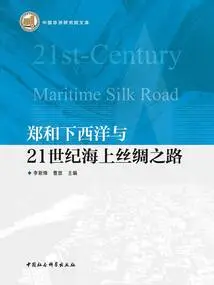
郑和下西洋与21世纪海上丝绸之路
Li Xinfeng Editor-in-chief Cao Fang
This book is a collection of papers from the academic symposium "The Age of Discovery and the 21st Century Maritime Silk Road". The book is divided into five topics, including "Zheng He's voyages to the West and the Belt and Road Initiative", "Historical Zheng He's voyages to the West and archeology", "Rethinking Zheng He's voyages to the West", and "The Age of Discovery and the Maritime Silk Road". The author of this book has assembled a group of well-known scholars in the fields of history, international trade, international finance, archaeology, etc. They have studied and analyzed the historical details of Zheng He's voyages to the West from various angles, from the macroscopic significance and impact to the mesoscopic examination of the route and scope of Zheng He's voyage, to the microscopic archaeology of Chinese porcelain in the places he visited, and finally, from the age of great navigation created by Zheng He, the historical inheritance and practical value of China's "One Belt, One Road" initiative are derived.
This book is a collection of papers from the academic symposium "The Age of Discovery and the 21st Century Maritime Silk Road". The book is divided into five topics, including "Zheng He's voyages to the West and the Belt and Road Initiative", "Historical Zheng He's voyages to the West and archeology", "Rethinking Zheng He's voyages to the West", and "The Age of Discovery and the Maritime Silk Road". The author of this book has assembled a group of well-known scholars in the fields of history, international trade, international finance, archaeology, etc. They have studied and analyzed the historical details of Zheng He's voyages to the West from various angles, from the macroscopic significance and impact to the mesoscopic examination of the route and scope of Zheng He's voyage, to the microscopic archaeology of Chinese porcelain in the places he visited, and finally, from the age of great navigation created by Zheng He, the historical inheritance and practical value of China's "One Belt, One Road" initiative are derived.
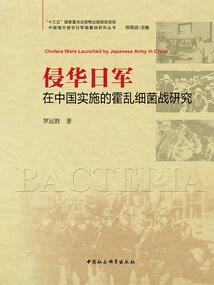
侵华日军在中国实施的霍乱细菌战研究
Luo Yunsheng
During the Anti-Japanese War, cholera bacteria were one of the most widely used bacterial weapons by the Japanese bacterial warfare troops. The cholera bacteriological warfare carried out by the Japanese invaders was an important source of the cholera pandemic during China's Anti-Japanese War, and the serious harm caused must be exposed. The first chapter of this book summarizes the history of cholera epidemics in various parts of the world and in China before the Anti-Japanese War; the second chapter examines the research activities of the Japanese invaders on the weaponization of cholera bacteria; the third chapter examines the cholera bacterial warfare experiments and combat methods and technologies of the Japanese invaders from 1937 to 1941. Formed; Chapters 4 to 6 examine the Japanese military's cholera bacteriological warfare in China year by year from 1942 to 1945; Chapter 7 generally discusses the characteristics, patterns, consequences and hazards of the Japanese cholera bacteriological warfare, providing a reference for continued in-depth study of the history of Japanese cholera bacteriological warfare. This book believes that from 1938 to 1945, the Japanese invaders carried out more than 20 cholera bacteriological warfare activities in China, covering 20 provinces and cities, causing hundreds of thousands of Chinese people to suffer harm, including at least 160,000 people who died from the Japanese cholera bacteriological warfare. This book is a systematic investigation of the cholera bacteriological warfare of the Japanese invaders in China. It has important academic value for studying and discussing the relationship between the cholera epidemic in China and the Japanese bacteriological warfare.
During the Anti-Japanese War, cholera bacteria were one of the most widely used bacterial weapons by the Japanese bacterial warfare troops. The cholera bacteriological warfare carried out by the Japanese invaders was an important source of the cholera pandemic during China's Anti-Japanese War, and the serious harm caused must be exposed. The first chapter of this book summarizes the history of cholera epidemics in various parts of the world and in China before the Anti-Japanese War; the second chapter examines the research activities of the Japanese invaders on the weaponization of cholera bacteria; the third chapter examines the cholera bacterial warfare experiments and combat methods and technologies of the Japanese invaders from 1937 to 1941. Formed; Chapters 4 to 6 examine the Japanese military's cholera bacteriological warfare in China year by year from 1942 to 1945; Chapter 7 generally discusses the characteristics, patterns, consequences and hazards of the Japanese cholera bacteriological warfare, providing a reference for continued in-depth study of the history of Japanese cholera bacteriological warfare. This book believes that from 1938 to 1945, the Japanese invaders carried out more than 20 cholera bacteriological warfare activities in China, covering 20 provinces and cities, causing hundreds of thousands of Chinese people to suffer harm, including at least 160,000 people who died from the Japanese cholera bacteriological warfare. This book is a systematic investigation of the cholera bacteriological warfare of the Japanese invaders in China. It has important academic value for studying and discussing the relationship between the cholera epidemic in China and the Japanese bacteriological warfare.
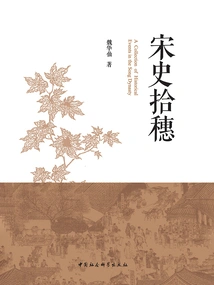
Song History Gleaners
History宋史拾穗
Wei Huaxian
This book mainly discusses the economic conditions of the Song Dynasty, focusing on flower planting and consumption, festival markets and government consumption measures, and the issuance of banknotes; the social life of the Song Dynasty, focusing on festivals, paper, flower consumption, festival cultural characteristics, real estate composition and conditions, and the environment and disaster conditions of the Song Dynasty. It strives to show the changes in the Song Dynasty from the aspects of production, circulation, currency, consumption, and the environment.
This book mainly discusses the economic conditions of the Song Dynasty, focusing on flower planting and consumption, festival markets and government consumption measures, and the issuance of banknotes; the social life of the Song Dynasty, focusing on festivals, paper, flower consumption, festival cultural characteristics, real estate composition and conditions, and the environment and disaster conditions of the Song Dynasty. It strives to show the changes in the Song Dynasty from the aspects of production, circulation, currency, consumption, and the environment.
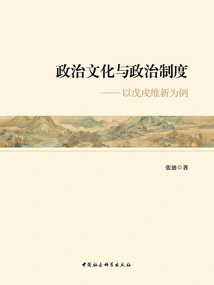
政治文化与政治制度:以戊戌维新为例
Zhang Di
On the basis of adhering to materialist research methods, this book selects the specific case of the Reform Movement of 1898 as the research object, analyzes the reasons for the failure of the movement in political system change from the perspective of political culture, and summarizes the specific mechanism of political culture affecting political system change. This book believes that the Reform Movement of 1898 had a limited scope of influence in promoting the new political culture, did not complete the integration of Chinese and Western political culture, and did not realize the transformation of political thought into political psychology. Therefore, the new political culture did not form a solid support for the constitutional monarchy, and the proposal for political system change did not become a political reality.
On the basis of adhering to materialist research methods, this book selects the specific case of the Reform Movement of 1898 as the research object, analyzes the reasons for the failure of the movement in political system change from the perspective of political culture, and summarizes the specific mechanism of political culture affecting political system change. This book believes that the Reform Movement of 1898 had a limited scope of influence in promoting the new political culture, did not complete the integration of Chinese and Western political culture, and did not realize the transformation of political thought into political psychology. Therefore, the new political culture did not form a solid support for the constitutional monarchy, and the proposal for political system change did not become a political reality.
晚明史家的明史考据研究
Yu Qian
This book mainly discusses several important issues in the textual research of Ming history by historians in the late Ming Dynasty. It mainly focuses on the textual research results of Ming history by Wang Shizhen, Qian Qianyi, and Pan Tiezhang. It also includes the works of historians such as Jiao Hong, Zhang Chaorui, Zhu Guozhen, and Xu Xuemo who made important contributions to the textual research of Ming history. It adds another explanation for the rise of textual research in the middle and late Ming Dynasty. At the same time, it comprehensively examines the textual research achievements of Ming history in the Ming Dynasty, and comprehensively analyzes and summarizes the achievements of Ming people's textual research on Ming history.
This book mainly discusses several important issues in the textual research of Ming history by historians in the late Ming Dynasty. It mainly focuses on the textual research results of Ming history by Wang Shizhen, Qian Qianyi, and Pan Tiezhang. It also includes the works of historians such as Jiao Hong, Zhang Chaorui, Zhu Guozhen, and Xu Xuemo who made important contributions to the textual research of Ming history. It adds another explanation for the rise of textual research in the middle and late Ming Dynasty. At the same time, it comprehensively examines the textual research achievements of Ming history in the Ming Dynasty, and comprehensively analyzes and summarizes the achievements of Ming people's textual research on Ming history.
侵华日军南京1644细菌部队研究
Zhu Qingru
The Nanjing "Rong" 1644 Unit of the Japanese invaders was one of Japan's six overseas bacteriological units during World War II. Its organizational size, bacteriological weapons research and development and actual combat capabilities were second only to the Harbin Unit 731. This book is based on the peaceful vision of the international community prohibiting the use of weapons of mass destruction. By exposing the history of biological and bacteriological warfare crimes of the "Rong" 1644 Unit, it achieves the academic goal of warning the world and serving as a mirror. This book first uses Japanese war history documents, the Soviet Union's "Kaboli Trial Materials", and relevant declassified materials in American collections as the main basis. Secondly, it uses the research results of Chinese, Japanese, and American scholars as important references to explore how the "Glory" 1644 unit was organized and organized, the development of bacterial weapons, actual combat, and collapse issues; the first choice is the Chinese original Based on original documents, and the research results of Chinese, Japanese, and American scholars and local cultural and historical workers (including oral histories of perpetrators, victims and survivors), it explores the harm caused by the joint implementation of bacteriological warfare by "Rong" 1644 Unit and Harbin Unit 731 and other Japanese bacteriological warfare agencies in vast areas of central China, as well as the gains and losses of China's epidemic prevention work. This book contains rich literature references and detailed historical materials. It is currently the first historical monograph at home and abroad to systematically study the "Rong" 1644 bacterial unit of the Japanese army that invaded China.
The Nanjing "Rong" 1644 Unit of the Japanese invaders was one of Japan's six overseas bacteriological units during World War II. Its organizational size, bacteriological weapons research and development and actual combat capabilities were second only to the Harbin Unit 731. This book is based on the peaceful vision of the international community prohibiting the use of weapons of mass destruction. By exposing the history of biological and bacteriological warfare crimes of the "Rong" 1644 Unit, it achieves the academic goal of warning the world and serving as a mirror. This book first uses Japanese war history documents, the Soviet Union's "Kaboli Trial Materials", and relevant declassified materials in American collections as the main basis. Secondly, it uses the research results of Chinese, Japanese, and American scholars as important references to explore how the "Glory" 1644 unit was organized and organized, the development of bacterial weapons, actual combat, and collapse issues; the first choice is the Chinese original Based on original documents, and the research results of Chinese, Japanese, and American scholars and local cultural and historical workers (including oral histories of perpetrators, victims and survivors), it explores the harm caused by the joint implementation of bacteriological warfare by "Rong" 1644 Unit and Harbin Unit 731 and other Japanese bacteriological warfare agencies in vast areas of central China, as well as the gains and losses of China's epidemic prevention work. This book contains rich literature references and detailed historical materials. It is currently the first historical monograph at home and abroad to systematically study the "Rong" 1644 bacterial unit of the Japanese army that invaded China.
唐宋国家与乡村社会(修订版)
Tani Sarada
This book examines the issues of rural control in the Tang and Song Dynasties and the issues of rural farmers in the Song Dynasty. The author intends to study the transformation of the Tang and Song Dynasties from the perspective of the political structure of rural society, or the changes in the Tang and Song Dynasties. The author's discussion of this issue does not follow the previous formal thinking, but goes deep into the social life history of ordinary farmers, and understands the events and historical significance of this changing era through perceptual observation and rational analysis.
This book examines the issues of rural control in the Tang and Song Dynasties and the issues of rural farmers in the Song Dynasty. The author intends to study the transformation of the Tang and Song Dynasties from the perspective of the political structure of rural society, or the changes in the Tang and Song Dynasties. The author's discussion of this issue does not follow the previous formal thinking, but goes deep into the social life history of ordinary farmers, and understands the events and historical significance of this changing era through perceptual observation and rational analysis.
History of the Weiguo
History卫国史
Guo Xia
Weiguo was the longest vassal state in China during the pre-Qin period. It was first established in the early years of the Western Zhou Dynasty and was destroyed by Qin II. It was established for more than 800 years (about 11th century BC to 209 BC). This book shows the rise and fall of Weiguo during the two-week period, uses a large number of detailed historical materials to reproduce Weiguo's developed economy and culture, and conducts certain research on Weiguo's historical celebrities. The political status, geographical and humanistic environment of Wei State was quite prominent among the vassal states of the Central Plains at that time. It was an advanced representative of Chinese civilization and played an indispensable role in the inheritance and development of the ancient culture of the Central Plains.
Weiguo was the longest vassal state in China during the pre-Qin period. It was first established in the early years of the Western Zhou Dynasty and was destroyed by Qin II. It was established for more than 800 years (about 11th century BC to 209 BC). This book shows the rise and fall of Weiguo during the two-week period, uses a large number of detailed historical materials to reproduce Weiguo's developed economy and culture, and conducts certain research on Weiguo's historical celebrities. The political status, geographical and humanistic environment of Wei State was quite prominent among the vassal states of the Central Plains at that time. It was an advanced representative of Chinese civilization and played an indispensable role in the inheritance and development of the ancient culture of the Central Plains.
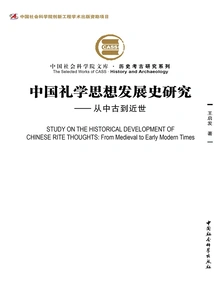
Research on the Development History of Chinese Ritual Thought: from Medieval Times to Modern Times
History中国礼学思想发展史研究:从中古到近世
Wang Qifa
Etiquette is both an object and a perspective; it is both a scope and a field. In the historical development process of ritual studies, in the writings of ritual scholars, it has presented a variety of academic forms and academic demands of explanation and argumentation. Its connection with various ideological expressions also has different presentations. This can be seen in the case studies and discussions in this book. This book selects some important ritual figures from the Wei, Jin, Southern and Northern Dynasties to the Song and Ming dynasties, and examines and discusses them in eight chapters, either collectively or separately. The first chapter is the study of Wang Su, Xiong Ansheng and Huang Kan's "Book of Rites" studies, as well as Kong Yingda's quotations and comments on their theories in the Tang Dynasty, including the evaluation of later scholars, etc., Which becomes the content of the first chapter. Then the era jumped to the Song Dynasty, that is, the etiquette thoughts of Li Gou, Wang Anshi, Cheng Hao, Cheng Yi, and Zhu Xi became the discussion content of Chapters 2 to 5 respectively. Among them, the political ideals, reform practices, and metaphysical theoretical constructions carried by etiquette, as well as the reconstruction of the etiquette text system and the emphasis on family rituals, can be said to be the embodiment of the academic and profound thinking of the representatives of etiquette in the two Song Dynasties. Wu Cheng, Fang Xiaoru, and Huang Daozhou are representatives of etiquette writings and ideological expressions in the Yuan and Ming Dynasties. Their writings and academic thoughts are expressed in different forms. The last three chapters of this book select their distinctive etiquette chapters for investigation and analysis to present their different styles of etiquette thought.
Etiquette is both an object and a perspective; it is both a scope and a field. In the historical development process of ritual studies, in the writings of ritual scholars, it has presented a variety of academic forms and academic demands of explanation and argumentation. Its connection with various ideological expressions also has different presentations. This can be seen in the case studies and discussions in this book. This book selects some important ritual figures from the Wei, Jin, Southern and Northern Dynasties to the Song and Ming dynasties, and examines and discusses them in eight chapters, either collectively or separately. The first chapter is the study of Wang Su, Xiong Ansheng and Huang Kan's "Book of Rites" studies, as well as Kong Yingda's quotations and comments on their theories in the Tang Dynasty, including the evaluation of later scholars, etc., Which becomes the content of the first chapter. Then the era jumped to the Song Dynasty, that is, the etiquette thoughts of Li Gou, Wang Anshi, Cheng Hao, Cheng Yi, and Zhu Xi became the discussion content of Chapters 2 to 5 respectively. Among them, the political ideals, reform practices, and metaphysical theoretical constructions carried by etiquette, as well as the reconstruction of the etiquette text system and the emphasis on family rituals, can be said to be the embodiment of the academic and profound thinking of the representatives of etiquette in the two Song Dynasties. Wu Cheng, Fang Xiaoru, and Huang Daozhou are representatives of etiquette writings and ideological expressions in the Yuan and Ming Dynasties. Their writings and academic thoughts are expressed in different forms. The last three chapters of this book select their distinctive etiquette chapters for investigation and analysis to present their different styles of etiquette thought.
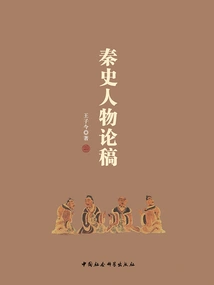
秦史人物论稿
Wang Zijin
Shang Yang, Empress Dowager Xuan, Gan Luo, Bai Qi, Zheng Guo, Lu Buwei, Qin Shihuang, Li Si, Wushi Luo, Ba Zhuqing, Zhao Tuo, Shangshan Sihao, etc. All played important historical roles on the stage of Qin history. "Manuscript on Figures in Qin History" is based on the author's research on the above figures in Qin history. Through the analysis of these historical figures who have influenced the process of Qin history, it deepens the understanding of Qin history and Qin culture. Understanding the positions, thoughts, expressions and historical impacts of these characters can provide valuable new discoveries for examining Qin history from multiple perspectives. The style of Qin culture can also be explained more specifically and vividly.
Shang Yang, Empress Dowager Xuan, Gan Luo, Bai Qi, Zheng Guo, Lu Buwei, Qin Shihuang, Li Si, Wushi Luo, Ba Zhuqing, Zhao Tuo, Shangshan Sihao, etc. All played important historical roles on the stage of Qin history. "Manuscript on Figures in Qin History" is based on the author's research on the above figures in Qin history. Through the analysis of these historical figures who have influenced the process of Qin history, it deepens the understanding of Qin history and Qin culture. Understanding the positions, thoughts, expressions and historical impacts of these characters can provide valuable new discoveries for examining Qin history from multiple perspectives. The style of Qin culture can also be explained more specifically and vividly.
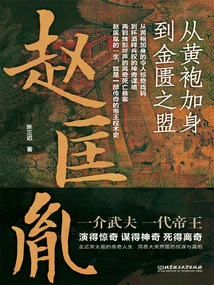
赵匡胤:从黄袍加身到金匮之盟
Zhang Sanchi
This is a historical work that deeply explores the life of Zhao Kuangyin, the founding emperor of the Song Dynasty. From Zhao Kuangyin's early experience, military talents, political wisdom to his final mysterious death, the multi-faceted nature of this historical figure is comprehensively and truly demonstrated. By sorting out Zhao Kuangyin's life, readers can have a deeper understanding of the background of the establishment of the Song Dynasty, Zhao Kuangyin's personal charm and his important role in Chinese history.
This is a historical work that deeply explores the life of Zhao Kuangyin, the founding emperor of the Song Dynasty. From Zhao Kuangyin's early experience, military talents, political wisdom to his final mysterious death, the multi-faceted nature of this historical figure is comprehensively and truly demonstrated. By sorting out Zhao Kuangyin's life, readers can have a deeper understanding of the background of the establishment of the Song Dynasty, Zhao Kuangyin's personal charm and his important role in Chinese history.
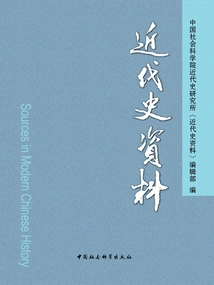
近代史资料(总137号)
Edited By The Editorial Department Of "modern History Materials" Of The Institute Of Modern History, Chinese Academy Of Social Sciences
This issue contains a total of 6 articles, including 4 Chinese documents and 2 translated manuscripts. "Selected Historical Materials Concerning the Sino-Japanese War of 1899-1899" written by Enze Cunzhao contains letters sent by Changshun, Anding, Yiketang'a, and Liu Kunyi during the Sino-Japanese War of 1894 by Enze Cunzha, who were former generals of Heilongjiang. The content is mostly related to military affairs, especially the response strategies of all parties, and has important historical value. "Gu Zhaoxin's Family Letters" contains 19 family letters from Gu Zhaoxin, who served as the General Office of the Prime Minister's Office Zhang Jing, covering the negotiations at Jiaozhou Bay, the obstruction of Zhang Zhidong's entry into the hub in the year 1898, Weng Tonghe's vacancy, the "Sixth Letter" of the General Administration's proposal to rehabilitate Kang Youwei, Zhang Yinhuan's dismissal after the coup, and Emperor Guangxu's edict to seek medical treatment. "Selected Translations of the Archives of Sino-Soviet Relations (1924-1932)" is selected from the Russian Archives and a collection of documents published by Russia after the collapse of the Soviet Union. The content mainly covers the Soviet attitude towards the Middle East Railway, Sino-Soviet relations after the September 18th Incident, and Xinjiang issues. It is of great reference value for understanding Sino-Soviet relations during this period. "Zhang Tailei's Speech at the Fourth Congress of the Youth Communist International" comes from the Russian State Social and Political Historical Archives. It is a record of Zhang Tailei's speech at the Youth Communist International Congress in 1924. This issue will continue to publish "Letter from Xiliang" and "Memories of June 2nd".
This issue contains a total of 6 articles, including 4 Chinese documents and 2 translated manuscripts. "Selected Historical Materials Concerning the Sino-Japanese War of 1899-1899" written by Enze Cunzhao contains letters sent by Changshun, Anding, Yiketang'a, and Liu Kunyi during the Sino-Japanese War of 1894 by Enze Cunzha, who were former generals of Heilongjiang. The content is mostly related to military affairs, especially the response strategies of all parties, and has important historical value. "Gu Zhaoxin's Family Letters" contains 19 family letters from Gu Zhaoxin, who served as the General Office of the Prime Minister's Office Zhang Jing, covering the negotiations at Jiaozhou Bay, the obstruction of Zhang Zhidong's entry into the hub in the year 1898, Weng Tonghe's vacancy, the "Sixth Letter" of the General Administration's proposal to rehabilitate Kang Youwei, Zhang Yinhuan's dismissal after the coup, and Emperor Guangxu's edict to seek medical treatment. "Selected Translations of the Archives of Sino-Soviet Relations (1924-1932)" is selected from the Russian Archives and a collection of documents published by Russia after the collapse of the Soviet Union. The content mainly covers the Soviet attitude towards the Middle East Railway, Sino-Soviet relations after the September 18th Incident, and Xinjiang issues. It is of great reference value for understanding Sino-Soviet relations during this period. "Zhang Tailei's Speech at the Fourth Congress of the Youth Communist International" comes from the Russian State Social and Political Historical Archives. It is a record of Zhang Tailei's speech at the Youth Communist International Congress in 1924. This issue will continue to publish "Letter from Xiliang" and "Memories of June 2nd".
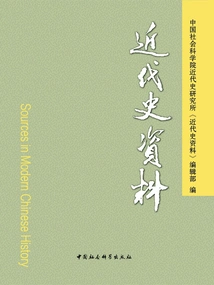
近代史资料(总138号)
Edited By The Editorial Department Of "modern History Materials" Of The Institute Of Modern History, Chinese Academy Of Social Sciences
This issue contains a total of 6 articles, including 4 Chinese documents and 2 translated manuscripts. "Selected Historical Materials Concerning the Sino-Japanese War of 1899-1899" written by Enze Cunzhao contains letters sent by Changshun, Anding, Yiketang'a, and Liu Kunyi during the Sino-Japanese War of 1894 by Enze Cunzha, who were former generals of Heilongjiang. The content is mostly related to military affairs, especially the response strategies of all parties, and has important historical value. "Gu Zhaoxin's Family Letters" contains 19 family letters from Gu Zhaoxin, who served as the General Office of the Prime Minister's Office Zhang Jing, covering the negotiations at Jiaozhou Bay, the obstruction of Zhang Zhidong's entry into the hub in the year 1898, Weng Tonghe's vacancy, the "Sixth Letter" of the General Administration's proposal to rehabilitate Kang Youwei, Zhang Yinhuan's dismissal after the coup, and Emperor Guangxu's edict to seek medical treatment. "Selected Translations of the Archives of Sino-Soviet Relations (1924-1932)" is selected from the Russian Archives and a collection of documents published by Russia after the collapse of the Soviet Union. The content mainly covers the Soviet attitude towards the Middle East Railway, Sino-Soviet relations after the September 18th Incident, and Xinjiang issues. It is of great reference value for understanding Sino-Soviet relations during this period. "Zhang Tailei's Speech at the Fourth Congress of the Youth Communist International" comes from the Russian State Social and Political Historical Archives. It is a record of Zhang Tailei's speech at the Youth Communist International Congress in 1924. This issue will continue to publish "Letter from Xiliang" and "Memories of June 2nd".
This issue contains a total of 6 articles, including 4 Chinese documents and 2 translated manuscripts. "Selected Historical Materials Concerning the Sino-Japanese War of 1899-1899" written by Enze Cunzhao contains letters sent by Changshun, Anding, Yiketang'a, and Liu Kunyi during the Sino-Japanese War of 1894 by Enze Cunzha, who were former generals of Heilongjiang. The content is mostly related to military affairs, especially the response strategies of all parties, and has important historical value. "Gu Zhaoxin's Family Letters" contains 19 family letters from Gu Zhaoxin, who served as the General Office of the Prime Minister's Office Zhang Jing, covering the negotiations at Jiaozhou Bay, the obstruction of Zhang Zhidong's entry into the hub in the year 1898, Weng Tonghe's vacancy, the "Sixth Letter" of the General Administration's proposal to rehabilitate Kang Youwei, Zhang Yinhuan's dismissal after the coup, and Emperor Guangxu's edict to seek medical treatment. "Selected Translations of the Archives of Sino-Soviet Relations (1924-1932)" is selected from the Russian Archives and a collection of documents published by Russia after the collapse of the Soviet Union. The content mainly covers the Soviet attitude towards the Middle East Railway, Sino-Soviet relations after the September 18th Incident, and Xinjiang issues. It is of great reference value for understanding Sino-Soviet relations during this period. "Zhang Tailei's Speech at the Fourth Congress of the Youth Communist International" comes from the Russian State Social and Political Historical Archives. It is a record of Zhang Tailei's speech at the Youth Communist International Congress in 1924. This issue will continue to publish "Letter from Xiliang" and "Memories of June 2nd".
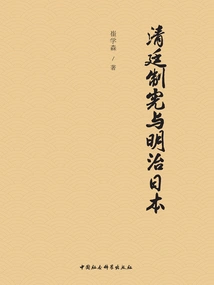
清廷制宪与明治日本
Cui Xuesen
As a part of the world's great trend of constitution-making, the Qing court's constitution-making was deeply influenced by Meiji Japan, and it can be said that "it must be called Japan". Its constitution-making process came to an abrupt halt due to the Revolution of 1911 and suffered setbacks. From the perspective of the Qing government, this book closely follows the relationship between the Qing court's constitution-making and Meiji Japan, details the entire process of China's first constitution-making, summarizes its experience, and evaluates its gains and losses.
As a part of the world's great trend of constitution-making, the Qing court's constitution-making was deeply influenced by Meiji Japan, and it can be said that "it must be called Japan". Its constitution-making process came to an abrupt halt due to the Revolution of 1911 and suffered setbacks. From the perspective of the Qing government, this book closely follows the relationship between the Qing court's constitution-making and Meiji Japan, details the entire process of China's first constitution-making, summarizes its experience, and evaluates its gains and losses.
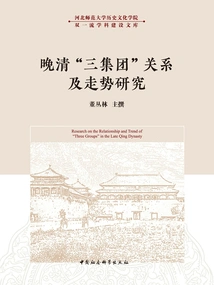
晚清“三集团”关系及走势研究
Written By Dong Conglin
The "Three Groups" refer to the Hunan Group founded by Zeng Guofan, the Huai Group headed by Li Hongzhang, and the most recent Yuan Shikai Beiyang Group. On the basis of clarifying the status of their respective groups, this book pays special attention to examining the relationships and trends among them, revealing the complex situation of their "multilateral interactions". This means that it is necessary to carry out targeted integrated research, comparative research, dynamic research, and research on the impact of the "internal and external importance" of the power structure of the Qing Dynasty, break the limitations of the perspective of focusing on each of them in isolation, broaden the scope of investigation, enhance the height of conception, and effectively highlight its overall evolutionary characteristics. This can be said to be the basic point of the significance and academic value of this research.
The "Three Groups" refer to the Hunan Group founded by Zeng Guofan, the Huai Group headed by Li Hongzhang, and the most recent Yuan Shikai Beiyang Group. On the basis of clarifying the status of their respective groups, this book pays special attention to examining the relationships and trends among them, revealing the complex situation of their "multilateral interactions". This means that it is necessary to carry out targeted integrated research, comparative research, dynamic research, and research on the impact of the "internal and external importance" of the power structure of the Qing Dynasty, break the limitations of the perspective of focusing on each of them in isolation, broaden the scope of investigation, enhance the height of conception, and effectively highlight its overall evolutionary characteristics. This can be said to be the basic point of the significance and academic value of this research.
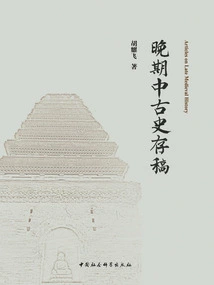
晚期中古史存稿
Hu Yaofei
This book mainly brings together the author's research and thinking in the past ten years, with a total of 7 papers, 8 academic history articles, and 13 academic book reviews. Generally speaking, these articles focus on late medieval history, that is, the late Tang Dynasty, the Five Dynasties and the early Song Dynasty. The topics covered range from the ethnic trends in the north to the middle and lower classes in the south, from the various ideological trends in the late Tang Dynasty to the political systems of the Five Dynasties and Ten Kingdoms, from the academic history of the Five Dynasties in the late Qing Dynasty and the Republic of China, to the history of children, psychological history and other academic reflections in the feudal era. For the author, writing papers and book reviews is a learning process in itself. After writing, the work presented will always be unsatisfactory, so it will always need everyone's criticism and correction!
This book mainly brings together the author's research and thinking in the past ten years, with a total of 7 papers, 8 academic history articles, and 13 academic book reviews. Generally speaking, these articles focus on late medieval history, that is, the late Tang Dynasty, the Five Dynasties and the early Song Dynasty. The topics covered range from the ethnic trends in the north to the middle and lower classes in the south, from the various ideological trends in the late Tang Dynasty to the political systems of the Five Dynasties and Ten Kingdoms, from the academic history of the Five Dynasties in the late Qing Dynasty and the Republic of China, to the history of children, psychological history and other academic reflections in the feudal era. For the author, writing papers and book reviews is a learning process in itself. After writing, the work presented will always be unsatisfactory, so it will always need everyone's criticism and correction!
秦统一的进程与意义
Editor-in-chief Wang Zijin
Qin was an important turning point in the history of unifying China, and the subsequent historical evolution had a profound impact on Chinese society. As a phased result of the National Social Science Foundation's major project "Re-Study of Qin Unification and Its Historical Significance", this book contains 34 academic papers on the process and significance of Qin Unification. All discussions are based on the academic frontier, using the latest unearthed literature and materials to explore academic hot and difficult issues. The paper discusses the political structure, economic process, cultural trend, and social landscape of the Qin unification era, and puts forward some new insights. Several academic gains may advance the study of Qin history and help deepen the understanding of the historical significance of Qin's unification.
Qin was an important turning point in the history of unifying China, and the subsequent historical evolution had a profound impact on Chinese society. As a phased result of the National Social Science Foundation's major project "Re-Study of Qin Unification and Its Historical Significance", this book contains 34 academic papers on the process and significance of Qin Unification. All discussions are based on the academic frontier, using the latest unearthed literature and materials to explore academic hot and difficult issues. The paper discusses the political structure, economic process, cultural trend, and social landscape of the Qin unification era, and puts forward some new insights. Several academic gains may advance the study of Qin history and help deepen the understanding of the historical significance of Qin's unification.
辽金史论集(第十七辑)
Jia Shurong Editor-in-chief Han Shiming
This book is selected based on more than 90 papers submitted at the 14th China Liao-Jin Khitan Jurchen History Academic Symposium and the first China Suibin Symposium on the Origin of the Wanyan Family in 2018. The whole book is divided into two parts: research on the history of Liao Khitan and research on the history of Jin Jurchen. The content covers Liao and Jin politics, economy, culture, geography, society, ancient ethnic characters and other aspects. It comprehensively reflects the general status and dynamics of Liao and Jin history research, and also represents the current level of Liao and Jin history research.
This book is selected based on more than 90 papers submitted at the 14th China Liao-Jin Khitan Jurchen History Academic Symposium and the first China Suibin Symposium on the Origin of the Wanyan Family in 2018. The whole book is divided into two parts: research on the history of Liao Khitan and research on the history of Jin Jurchen. The content covers Liao and Jin politics, economy, culture, geography, society, ancient ethnic characters and other aspects. It comprehensively reflects the general status and dynamics of Liao and Jin history research, and also represents the current level of Liao and Jin history research.
孔庙国子监论丛(2017年)
Compiled By Confucius Temple And Imperial College Museum
"Confucius Temple and Imperial College Research Series" is a publication published publicly. This publication contains academic papers on Confucius Temple research, Imperial College research, Confucianism research, ancient education and imperial examination system research, museology research, etc. The "Confucius Temple and Imperial Academy" not only provides an academic and cultural platform for researchers inside and outside the museum, it has increasingly become an important window for the museum to display excellent academic achievements and expand foreign cultural exchanges, and continues to provide intellectual support for various exhibitions and large-scale cultural activities launched by the museum.
"Confucius Temple and Imperial College Research Series" is a publication published publicly. This publication contains academic papers on Confucius Temple research, Imperial College research, Confucianism research, ancient education and imperial examination system research, museology research, etc. The "Confucius Temple and Imperial Academy" not only provides an academic and cultural platform for researchers inside and outside the museum, it has increasingly become an important window for the museum to display excellent academic achievements and expand foreign cultural exchanges, and continues to provide intellectual support for various exhibitions and large-scale cultural activities launched by the museum.
中国古代奏议文研究:以秦汉魏晋南北朝为中心
Qiu Haiping
Memorial essays are a large collection of ancient Chinese articles and have important research value. This book aims to examine the origin, generation and development of memorials in ancient China, and to clearly define the concept, research scope and stylistic characteristics of the genre. Focusing on the Qin, Han, Wei, Jin, Southern and Northern Dynasties, it conducts a stylistic analysis of memorials and related styles as well as the main categories of memorials. This book believes that memorials are petitions or discussion documents submitted to the monarch by central officials and local governors sent by the central government from the Qin and Han dynasties to the Ming and Qing Dynasties in ancient Chinese society when they exercised their participation in and discussion of political power. Memorials are the product of ancient Chinese bureaucratic political system and ritual and music culture. Its intrinsic attribute is "the status of monarch and minister" and its external characteristic is "imperial nature". Ancient Chinese memorials were conceived in the pre-Qin period and formally came into being in the Qin Dynasty. During the Han, Wei and Six Dynasties, the compilation of memorial collections and the study of memorial style contributed to the formation of the concept of memorial genre. During the Ming and Qing Dynasties, the study of zouyi style gradually became more and more in-depth. When Yao Nai's "Ancient Wen Ci Lei Tu" was published, the name "zouyi" was finally established. The stylistic analysis part of this book compares memorials with related styles such as imperial edicts, petitions, and lianzhu to examine the stylistic functions and characteristics of memorials. It also analyzes the main titles of memorials such as "Zhang", "Table", "Zou", "Yi", "Shu", "Qi", "Countermeasures" and "Fengshi", etc., And examines its stylistic format, stylistic function, stylistic characteristics and development changes. The innovation of this book is to make a more detailed analysis of the name and reality of the memorials from the perspective of stylistic generation, and to make a more detailed stylistic analysis of the main titles of the memorials.
Memorial essays are a large collection of ancient Chinese articles and have important research value. This book aims to examine the origin, generation and development of memorials in ancient China, and to clearly define the concept, research scope and stylistic characteristics of the genre. Focusing on the Qin, Han, Wei, Jin, Southern and Northern Dynasties, it conducts a stylistic analysis of memorials and related styles as well as the main categories of memorials. This book believes that memorials are petitions or discussion documents submitted to the monarch by central officials and local governors sent by the central government from the Qin and Han dynasties to the Ming and Qing Dynasties in ancient Chinese society when they exercised their participation in and discussion of political power. Memorials are the product of ancient Chinese bureaucratic political system and ritual and music culture. Its intrinsic attribute is "the status of monarch and minister" and its external characteristic is "imperial nature". Ancient Chinese memorials were conceived in the pre-Qin period and formally came into being in the Qin Dynasty. During the Han, Wei and Six Dynasties, the compilation of memorial collections and the study of memorial style contributed to the formation of the concept of memorial genre. During the Ming and Qing Dynasties, the study of zouyi style gradually became more and more in-depth. When Yao Nai's "Ancient Wen Ci Lei Tu" was published, the name "zouyi" was finally established. The stylistic analysis part of this book compares memorials with related styles such as imperial edicts, petitions, and lianzhu to examine the stylistic functions and characteristics of memorials. It also analyzes the main titles of memorials such as "Zhang", "Table", "Zou", "Yi", "Shu", "Qi", "Countermeasures" and "Fengshi", etc., And examines its stylistic format, stylistic function, stylistic characteristics and development changes. The innovation of this book is to make a more detailed analysis of the name and reality of the memorials from the perspective of stylistic generation, and to make a more detailed stylistic analysis of the main titles of the memorials.
History of Later Yan
History后燕史
Tian Likun
The former Qin destroyed the former Yan and the latter, and then successively destroyed the former Liang and Dai, and unified the north. In the Battle of Feishui, the former Qin Dynasty was defeated miserably. Murong Chui took the opportunity to leave Fu Jian for an excuse, stayed in Guandong, raised troops to restore the country, and established his capital in Zhongshan, which was known as Later Yan in history. After the Battle of Shenhebei, Murong Chui died of illness, Tuoba Wei marched southward to the Central Plains, and Murong Bao abandoned Zhongshan and retreated to Longcheng. Hou Yan passed through Murong Bao and Murong Sheng in Longcheng, and finally died at the hands of Murong Xi. This book is divided into six parts: general history, classics, biography, textual research, charts, and chronology of major events, trying to give a comprehensive introduction to the history of Later Yan.
The former Qin destroyed the former Yan and the latter, and then successively destroyed the former Liang and Dai, and unified the north. In the Battle of Feishui, the former Qin Dynasty was defeated miserably. Murong Chui took the opportunity to leave Fu Jian for an excuse, stayed in Guandong, raised troops to restore the country, and established his capital in Zhongshan, which was known as Later Yan in history. After the Battle of Shenhebei, Murong Chui died of illness, Tuoba Wei marched southward to the Central Plains, and Murong Bao abandoned Zhongshan and retreated to Longcheng. Hou Yan passed through Murong Bao and Murong Sheng in Longcheng, and finally died at the hands of Murong Xi. This book is divided into six parts: general history, classics, biography, textual research, charts, and chronology of major events, trying to give a comprehensive introduction to the history of Later Yan.
Studying the Relationship between Heaven and Man: a Study of Mythology in "historical Records
History究天人之际:《史记》神话学研究
Yu Yurong
This book takes mythology as a research perspective and takes the "Shiji", the source of Chinese official history, as a whole research object to explore why there are a lot of myths in the official history and what Sima Qian's intention was in writing the history book in this way. The writing of "Historical Records" reflects the long-standing mythological narrative context in ancient classics and continues the tradition of witchcraft history in the Shang and Zhou dynasties. The Western Han Dynasty was at a time when "witchcraft" and "history" were gradually alternating, so it had a rational, rigorous, and systematic historical expression that was recognized by later generations. However, at the same time, the book also left a large number of myths, legends, dreams, spells, divination and other "indecent teachings" about the legacy of witchcraft. The two are not inconsistent with each other. This is the deep reason and cultural background for the use of myths as historical materials in "Historical Records". The Western Han Dynasty coincided with the establishment of a unified empire. Sima Shigong's use of myths not only continued the cultural context, but also had the intention of using it for the present. Therefore, there are two levels of interpretation of mythological narratives in "Historical Records": one is the subconscious level, which is the unconscious inheritance and development of mythological thinking; the other is the ideological level, which is based on the subconscious level, using the deep-rooted influence of mythical thinking on religious culture, academic thought and folk beliefs to organize and transform the myths and legends handed down from previous generations, so as to "set up Shinto teachings" and complete new historical expressions. In this era background and cultural atmosphere, the use of a large number of mythological materials in the official history "Historical Records" appeared.
This book takes mythology as a research perspective and takes the "Shiji", the source of Chinese official history, as a whole research object to explore why there are a lot of myths in the official history and what Sima Qian's intention was in writing the history book in this way. The writing of "Historical Records" reflects the long-standing mythological narrative context in ancient classics and continues the tradition of witchcraft history in the Shang and Zhou dynasties. The Western Han Dynasty was at a time when "witchcraft" and "history" were gradually alternating, so it had a rational, rigorous, and systematic historical expression that was recognized by later generations. However, at the same time, the book also left a large number of myths, legends, dreams, spells, divination and other "indecent teachings" about the legacy of witchcraft. The two are not inconsistent with each other. This is the deep reason and cultural background for the use of myths as historical materials in "Historical Records". The Western Han Dynasty coincided with the establishment of a unified empire. Sima Shigong's use of myths not only continued the cultural context, but also had the intention of using it for the present. Therefore, there are two levels of interpretation of mythological narratives in "Historical Records": one is the subconscious level, which is the unconscious inheritance and development of mythological thinking; the other is the ideological level, which is based on the subconscious level, using the deep-rooted influence of mythical thinking on religious culture, academic thought and folk beliefs to organize and transform the myths and legends handed down from previous generations, so as to "set up Shinto teachings" and complete new historical expressions. In this era background and cultural atmosphere, the use of a large number of mythological materials in the official history "Historical Records" appeared.
明史丛稿
Wanming
This book selects and compiles 22 papers that the author has engaged in research on Ming history since 1983. It is divided into three parts: the first part is system and culture, including 11 papers; the second part is archives and documents, including 7 papers; the third part is academic and memory, including 3 reminiscence articles and 1 review article. The research covers a wide range of areas and is rich in content, covering many fields such as Ming Dynasty politics, economy, law, military, finance, culture, religion, society, Sino-foreign relations, archival documents, etc. It is an academic exploration of the overall thinking and detailed narrative of the study of Ming history, the study of the historical development process of the Ming Dynasty, the theoretical discussion of the country and society in the Ming Dynasty, and the excavation, organization and utilization of Ming Dynasty archival documents.
This book selects and compiles 22 papers that the author has engaged in research on Ming history since 1983. It is divided into three parts: the first part is system and culture, including 11 papers; the second part is archives and documents, including 7 papers; the third part is academic and memory, including 3 reminiscence articles and 1 review article. The research covers a wide range of areas and is rich in content, covering many fields such as Ming Dynasty politics, economy, law, military, finance, culture, religion, society, Sino-foreign relations, archival documents, etc. It is an academic exploration of the overall thinking and detailed narrative of the study of Ming history, the study of the historical development process of the Ming Dynasty, the theoretical discussion of the country and society in the Ming Dynasty, and the excavation, organization and utilization of Ming Dynasty archival documents.
Pre-yan History
History前燕史
Zhao Hongmei
Former Yan was a local government established by Murong Xianbei with the Northeast as its political center. It began in the sixth year of Taikang (285), the reign of Emperor Wu of the Western Jin Dynasty, and ended in the fifth year of Taihe (370), the deposed Emperor of the Eastern Jin Dynasty. Murong Xian established Qian Yan, Murong Wei claimed to be King of Yan, and Murong Jun proclaimed himself emperor. The country was destroyed during the period of Murong Wei. It lasted for 4 generations and lasted for 85 years. This book organizes the historical events of the former Yan Dynasty into general history, classics, biographies, diagrams, textual research, and chronology of major events, etc., And shows the historical process of the former Yan rulers and their auxiliary political groups who worked hard to make the local government established by Murong Xianbei go from a corner of the northeast to the Central Plains, and became one of the sixteen countries established by the "Five Hus" during the Wei, Jin, Southern and Northern Dynasties.
Former Yan was a local government established by Murong Xianbei with the Northeast as its political center. It began in the sixth year of Taikang (285), the reign of Emperor Wu of the Western Jin Dynasty, and ended in the fifth year of Taihe (370), the deposed Emperor of the Eastern Jin Dynasty. Murong Xian established Qian Yan, Murong Wei claimed to be King of Yan, and Murong Jun proclaimed himself emperor. The country was destroyed during the period of Murong Wei. It lasted for 4 generations and lasted for 85 years. This book organizes the historical events of the former Yan Dynasty into general history, classics, biographies, diagrams, textual research, and chronology of major events, etc., And shows the historical process of the former Yan rulers and their auxiliary political groups who worked hard to make the local government established by Murong Xianbei go from a corner of the northeast to the Central Plains, and became one of the sixteen countries established by the "Five Hus" during the Wei, Jin, Southern and Northern Dynasties.
宋代至清代都城形制布局研究
Meng Fanren
The capital structure from the Song Dynasty to the Qing Dynasty was in an important period of change, transformation and finalization of the ancient Chinese capital structure. Mainly based on archaeological survey and excavation data, this book introduces and discusses the planning concepts and layout of formal capitals such as Kaifeng Prefecture in Tokyo in the Northern Song Dynasty, Lin'an Prefecture in the Southern Song Dynasty, Shangjing in the Liao Dynasty, Shangjing in the Jin Dynasty, Zhongdu in the Jin Dynasty, Shangdu in the Yuan Dynasty, Dadu in the Yuan Dynasty, Nanjing City in the Ming Dynasty, and Beijing City in the Ming Dynasty. This book believes that each capital is the materialized form of its planning concept. Therefore, this book presents the specific structure of each capital's layout in a relatively complete manner, making it a platform for comprehensive, in-depth, and connotative research on each capital. On this basis, it analyzes its characteristics and layout art, analyzes the inheritance and evolution relationship between the layouts of various capitals, summarizes the commonalities of the layout of the capitals in this period, and explores the development and change rules of the layout of the capitals in this period.
The capital structure from the Song Dynasty to the Qing Dynasty was in an important period of change, transformation and finalization of the ancient Chinese capital structure. Mainly based on archaeological survey and excavation data, this book introduces and discusses the planning concepts and layout of formal capitals such as Kaifeng Prefecture in Tokyo in the Northern Song Dynasty, Lin'an Prefecture in the Southern Song Dynasty, Shangjing in the Liao Dynasty, Shangjing in the Jin Dynasty, Zhongdu in the Jin Dynasty, Shangdu in the Yuan Dynasty, Dadu in the Yuan Dynasty, Nanjing City in the Ming Dynasty, and Beijing City in the Ming Dynasty. This book believes that each capital is the materialized form of its planning concept. Therefore, this book presents the specific structure of each capital's layout in a relatively complete manner, making it a platform for comprehensive, in-depth, and connotative research on each capital. On this basis, it analyzes its characteristics and layout art, analyzes the inheritance and evolution relationship between the layouts of various capitals, summarizes the commonalities of the layout of the capitals in this period, and explores the development and change rules of the layout of the capitals in this period.
Research on Yuan Shikai and Social Changes in the Late Qing Dynasty and the Early Republic of China
History袁世凯与清末民初社会变革研究
Zhang Huateng
Yuan Shikai was an important figure in the history of modern China. He had a significant impact on the development and progress of society in the late Qing Dynasty and the early Republic of China, and influenced the process of modern Chinese history. He is worthy of extensive and in-depth study by the academic community. However, the current academic research on Yuan Shikai is still insufficient. It is limited to the research perspectives of political history and revolutionary history, and ignores Yuan Shikai's control and grasp of the economic situation. This book collects the author's more than 20 years of research on Yuan Shikai and Beiyang history, which can provide researchers with a more multi-dimensional perspective to observe Yuan Shikai. The book is divided into seven parts, respectively discussing the theory, methods and research status of Yuan Shikai's research, the study of Yuan Shikai and social changes in the late Qing Dynasty and the early Republic of China, the study of Yuan Shikai and China's military modernization, the study of Yuan Shikai and China's educational modernization, etc. It conducts a comprehensive and in-depth study of Yuan Shikai. In the current research on Yuan Shikai, he is the leader and unique. This work is based on historical archival documents, with a balanced argument and comprehensive analysis, and represents the current cutting-edge level of Yuan Shikai's research.
Yuan Shikai was an important figure in the history of modern China. He had a significant impact on the development and progress of society in the late Qing Dynasty and the early Republic of China, and influenced the process of modern Chinese history. He is worthy of extensive and in-depth study by the academic community. However, the current academic research on Yuan Shikai is still insufficient. It is limited to the research perspectives of political history and revolutionary history, and ignores Yuan Shikai's control and grasp of the economic situation. This book collects the author's more than 20 years of research on Yuan Shikai and Beiyang history, which can provide researchers with a more multi-dimensional perspective to observe Yuan Shikai. The book is divided into seven parts, respectively discussing the theory, methods and research status of Yuan Shikai's research, the study of Yuan Shikai and social changes in the late Qing Dynasty and the early Republic of China, the study of Yuan Shikai and China's military modernization, the study of Yuan Shikai and China's educational modernization, etc. It conducts a comprehensive and in-depth study of Yuan Shikai. In the current research on Yuan Shikai, he is the leader and unique. This work is based on historical archival documents, with a balanced argument and comprehensive analysis, and represents the current cutting-edge level of Yuan Shikai's research.
晚清满汉矛盾与国政朝局(1884—1912):以统治阶级上层为中心的考察
Xue Weiqiang
The conflict between Manchu and Han was one of the core contents and fundamental features of the political history of the Qing Dynasty. This book is based on the advanced relevant achievements in the academic field. From the overall perspective of the Qing Dynasty, it combines qualitative analysis and quantitative analysis, focusing on the upper class of the ruling class, and based on the measurement data of the four central agencies of the Cabinet, the Ministry, the Military Aircraft Department, the General Administration and the local governors. It is the first time to systematically imitate the Jiashen Yishu. In the nearly thirty years since the fall of the Qing Dynasty, the relationship between the Manchu-Han conflict and many political and political changes such as the Sino-Japanese War, the Sino-Japanese War, the Reform Movement of 1898, the Gengzi Incident, Southeast Mutual Protection, the New Deal in the late Qing Dynasty, and the Revolution of 1911 has highlighted the complexity, tortuousness, and rich layers of the political history of the late Qing Dynasty, and has made some achievements.
The conflict between Manchu and Han was one of the core contents and fundamental features of the political history of the Qing Dynasty. This book is based on the advanced relevant achievements in the academic field. From the overall perspective of the Qing Dynasty, it combines qualitative analysis and quantitative analysis, focusing on the upper class of the ruling class, and based on the measurement data of the four central agencies of the Cabinet, the Ministry, the Military Aircraft Department, the General Administration and the local governors. It is the first time to systematically imitate the Jiashen Yishu. In the nearly thirty years since the fall of the Qing Dynasty, the relationship between the Manchu-Han conflict and many political and political changes such as the Sino-Japanese War, the Sino-Japanese War, the Reform Movement of 1898, the Gengzi Incident, Southeast Mutual Protection, the New Deal in the late Qing Dynasty, and the Revolution of 1911 has highlighted the complexity, tortuousness, and rich layers of the political history of the late Qing Dynasty, and has made some achievements.
秦国历史与北方历史地理研究
Liu Jingchun
This book is part of the author's study and research on Chinese historical geography and Qin history and culture. The main content is divided into four parts: (1) Research on the history and culture of the Qin State, including 9 papers, which mainly studies the regional development of the Qin State and its cultural spirit, the development of the Qin State's industry and commerce, the Qin State's Eastern Expedition, and the political characteristics of the Qin Zhao Dynasty. (2) Research on "Shui Jing Zhu", including 4 papers and notes, mainly discussing issues such as the writing of "Shui Jing Zhu" and the significance of the temples and regional descriptions contained in "Shui Jing Zhu". (3) Research on historical towns and settlements, including 12 papers, mainly discussing the concept of unifying Wancheng, the Ming Dynasty's capital building, and the urban geography and culture of the Loess Plateau in the Qing Dynasty; (4) Research on other issues in historical geography, including 4 papers and interviews and questions, mainly discussing Yansui Town, Shaanxi Weaving Bureau, Money Making Bureau, and the history of Ming Dynasty The main ideas and practices of Nianhai's historical geography, as well as the basic views on historical military geography and its research: The above parts record the author's study and research on historical geography and Qin history and culture, and reflect the author's basic attitude, path and partial thinking in learning and engaging in related academic research.
This book is part of the author's study and research on Chinese historical geography and Qin history and culture. The main content is divided into four parts: (1) Research on the history and culture of the Qin State, including 9 papers, which mainly studies the regional development of the Qin State and its cultural spirit, the development of the Qin State's industry and commerce, the Qin State's Eastern Expedition, and the political characteristics of the Qin Zhao Dynasty. (2) Research on "Shui Jing Zhu", including 4 papers and notes, mainly discussing issues such as the writing of "Shui Jing Zhu" and the significance of the temples and regional descriptions contained in "Shui Jing Zhu". (3) Research on historical towns and settlements, including 12 papers, mainly discussing the concept of unifying Wancheng, the Ming Dynasty's capital building, and the urban geography and culture of the Loess Plateau in the Qing Dynasty; (4) Research on other issues in historical geography, including 4 papers and interviews and questions, mainly discussing Yansui Town, Shaanxi Weaving Bureau, Money Making Bureau, and the history of Ming Dynasty The main ideas and practices of Nianhai's historical geography, as well as the basic views on historical military geography and its research: The above parts record the author's study and research on historical geography and Qin history and culture, and reflect the author's basic attitude, path and partial thinking in learning and engaging in related academic research.
靖康之败:从太原之战到汴京之围(经纬度丛书)
Big Fat Zhao
Analyze the political game between the Song and Jin Dynasties and restore the officialdom ecology in troubled times. The defeat of Jingkang, which occurred in the late Northern Song Dynasty, was a major tragedy in Chinese history that destroyed the country, destroyed the family, and left the people in dire straits. Based on historical data analysis and scenario restoration, this book reproduces the complete details of the Battle of Taiyuan in the Song and Jin Dynasties, and presents the entire process of the game between the Song and Jin Dynasties and the defeat of Jingkang in the Northern Song Dynasty. The author describes in detail the march route and siege tactics adopted by the Jin Army, the defense strategies of Taiyuan soldiers and civilians, the chaotic political situation of the Northern Song Dynasty, the military laws to be defended from it, and the many military actions of the first-class generals in the Northern Song Dynasty. It not only reproduces the beacon fire weapons on the battlefield, but also provides a thought-provoking and rich historical interpretation of why the Northern Song Dynasty failed.
Analyze the political game between the Song and Jin Dynasties and restore the officialdom ecology in troubled times. The defeat of Jingkang, which occurred in the late Northern Song Dynasty, was a major tragedy in Chinese history that destroyed the country, destroyed the family, and left the people in dire straits. Based on historical data analysis and scenario restoration, this book reproduces the complete details of the Battle of Taiyuan in the Song and Jin Dynasties, and presents the entire process of the game between the Song and Jin Dynasties and the defeat of Jingkang in the Northern Song Dynasty. The author describes in detail the march route and siege tactics adopted by the Jin Army, the defense strategies of Taiyuan soldiers and civilians, the chaotic political situation of the Northern Song Dynasty, the military laws to be defended from it, and the many military actions of the first-class generals in the Northern Song Dynasty. It not only reproduces the beacon fire weapons on the battlefield, but also provides a thought-provoking and rich historical interpretation of why the Northern Song Dynasty failed.