Library
Browse and search books
2,982 novels found
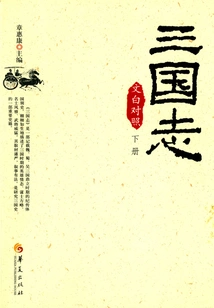
三国志(文白对照)下册
Editor-in-chief Zhang Huikang
"Three Kingdoms" is a chronicle and country history that records the three kingdoms of Wei, Shu and Wu. It records the sixty-year history from the first year of Huangchu (AD 220) by Emperor Wen of Wei (Cao Pi) to the first year of Taikang (AD 280) by Emperor Wu (Sima Yan) of Jin Dynasty. It also records part of the history of the late Eastern Han Dynasty. It is one of the first four histories and highly respected by later generations. "Three Kingdoms" has a total of sixty-five volumes, including thirty volumes of "Book of Wei", fifteen volumes of "Book of Shu", and twenty volumes of "Book of Wu". The content is carefully selected and the writing is concise and clean. It can be regarded as a masterpiece in the fields of literature and history. The compiler, Chen Shou, was a historian during the Wei and Jin Dynasties. On the basis of respecting historical facts, he drew vivid portraits of the characters of the Three Kingdoms in concise and beautiful language, leaving precious historical materials of the Three Kingdoms period for future generations.
"Three Kingdoms" is a chronicle and country history that records the three kingdoms of Wei, Shu and Wu. It records the sixty-year history from the first year of Huangchu (AD 220) by Emperor Wen of Wei (Cao Pi) to the first year of Taikang (AD 280) by Emperor Wu (Sima Yan) of Jin Dynasty. It also records part of the history of the late Eastern Han Dynasty. It is one of the first four histories and highly respected by later generations. "Three Kingdoms" has a total of sixty-five volumes, including thirty volumes of "Book of Wei", fifteen volumes of "Book of Shu", and twenty volumes of "Book of Wu". The content is carefully selected and the writing is concise and clean. It can be regarded as a masterpiece in the fields of literature and history. The compiler, Chen Shou, was a historian during the Wei and Jin Dynasties. On the basis of respecting historical facts, he drew vivid portraits of the characters of the Three Kingdoms in concise and beautiful language, leaving precious historical materials of the Three Kingdoms period for future generations.
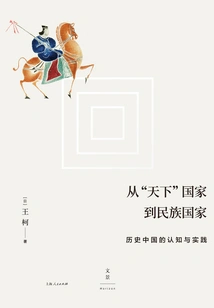
从“天下”国家到民族国家:历史中国的认知与实践
(japan) Wang Ke
The roots of China's idea of a multi-ethnic unified country can be traced back to the Chinese people's original understanding of the world, to the contractual relationship established between human beings and natural gods based on this understanding, and in order to abide by this contractual relationship, the understanding of the relationship between people, between individuals, communities, societies, and countries, between culture and politics, between authority and power, and between national attributes and cultural attributes. Only on the basis of this macro understanding can we correctly grasp the historical context of China's multi-ethnic unified country, understand the development and evolution of China's multi-ethnic unified country thought in various eras, understand the ethnic relations in each era and the gains and losses of various regimes' policies to deal with ethnic issues, and then think about the reasons for the occurrence of modern ethnic issues and find the key to deconstructing modern ethnic issues.
The roots of China's idea of a multi-ethnic unified country can be traced back to the Chinese people's original understanding of the world, to the contractual relationship established between human beings and natural gods based on this understanding, and in order to abide by this contractual relationship, the understanding of the relationship between people, between individuals, communities, societies, and countries, between culture and politics, between authority and power, and between national attributes and cultural attributes. Only on the basis of this macro understanding can we correctly grasp the historical context of China's multi-ethnic unified country, understand the development and evolution of China's multi-ethnic unified country thought in various eras, understand the ethnic relations in each era and the gains and losses of various regimes' policies to deal with ethnic issues, and then think about the reasons for the occurrence of modern ethnic issues and find the key to deconstructing modern ethnic issues.
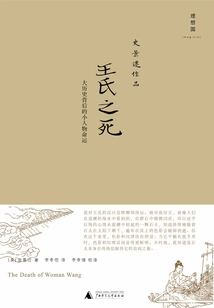
王氏之死:大历史背后的小人物命运
I
"The Death of Wang" is not large in length. It reproduces the lives of the rural people in Yancheng and Zichuan, Shandong Province in the early Qing Dynasty. One of the protagonists, Mrs. Wang, could not bear the pressure of life and eloped with others, but died tragically at the hands of her husband. The author Shi Jingqian has always focused on literary narrative, trying to reshape or capture the lost time, space and characters' lives behind rigid historical materials through superb narrative skills and keen perception. In terms of data, "Tancheng County Chronicle" and local chronicles of several other places are important basis for this book. The third source used in this book, "Strange Stories from a Chinese Studio", is a fictional novel. The author used it extensively to construct the mental images of local people in Shandong in the early Qing Dynasty. From the perspective of today's cultural history research, this method of combining historical documents and literary works shows the author's creativity and foresight.
"The Death of Wang" is not large in length. It reproduces the lives of the rural people in Yancheng and Zichuan, Shandong Province in the early Qing Dynasty. One of the protagonists, Mrs. Wang, could not bear the pressure of life and eloped with others, but died tragically at the hands of her husband. The author Shi Jingqian has always focused on literary narrative, trying to reshape or capture the lost time, space and characters' lives behind rigid historical materials through superb narrative skills and keen perception. In terms of data, "Tancheng County Chronicle" and local chronicles of several other places are important basis for this book. The third source used in this book, "Strange Stories from a Chinese Studio", is a fictional novel. The author used it extensively to construct the mental images of local people in Shandong in the early Qing Dynasty. From the perspective of today's cultural history research, this method of combining historical documents and literary works shows the author's creativity and foresight.
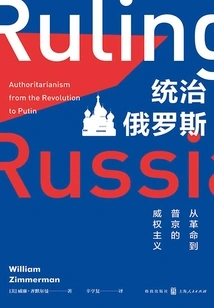
统治俄罗斯:从革命到普京的威权主义
(us) William Zimmerman
"Running Russia: From Revolution to Putin's Authoritarianism" discusses the historical evolution of the Russian political system from 1917 to 2015. William Zimmerman drew on Schumpeter's criteria to classify regime types into democracy, competitive authoritarianism, complete authoritarianism, and totalitarian regimes, and evaluated and compared the Soviet and Russian regimes accordingly. The book shows the changes in the polity-society relationship in the Soviet Union and Russia through the political behaviors of leaders during the Soviet and Russian periods (including repression, purges, mobilization, elections and campaigns, electoral reforms, etc.).
"Running Russia: From Revolution to Putin's Authoritarianism" discusses the historical evolution of the Russian political system from 1917 to 2015. William Zimmerman drew on Schumpeter's criteria to classify regime types into democracy, competitive authoritarianism, complete authoritarianism, and totalitarian regimes, and evaluated and compared the Soviet and Russian regimes accordingly. The book shows the changes in the polity-society relationship in the Soviet Union and Russia through the political behaviors of leaders during the Soviet and Russian periods (including repression, purges, mobilization, elections and campaigns, electoral reforms, etc.).
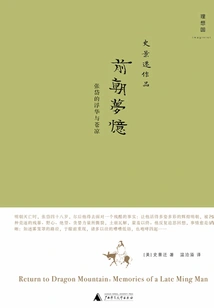
前朝梦忆:张岱的浮华与苍凉
I
While writing about Zhang Dai's life, inner transitions and recollections of the past, it also explores more deeply how Zhang Dai, as an intellectual, established his own existence value through memories and history revision. Between gain and loss, only by capturing fading memories and using writing to fight against forgetfulness can we calmly face, or even resist, the changes in world affairs and the impermanence of life. This undoubtedly reflects the nature and relationship between history and writing.
While writing about Zhang Dai's life, inner transitions and recollections of the past, it also explores more deeply how Zhang Dai, as an intellectual, established his own existence value through memories and history revision. Between gain and loss, only by capturing fading memories and using writing to fight against forgetfulness can we calmly face, or even resist, the changes in world affairs and the impermanence of life. This undoubtedly reflects the nature and relationship between history and writing.
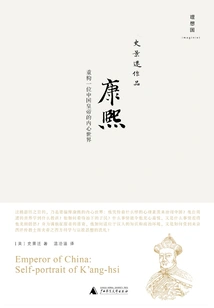
康熙:重构一位中国皇帝的内心世界
(us) Shi Jingqian
Kangxi was the Chinese emperor who reigned from 1661 to 1722 AD. What kind of psychological quality does he rely on to govern China? What lessons has he learned from the world around him? How does he view the people under his rule? What could make his dragon heart happy, and what could make his dragon face angry? As a Miao descendant of the Manchu conquerors, how did he adapt to the intellectual and political environment of the Han people, and how was he baptized by the Western scientific and religious ideas carried by the Western missionaries who came to Beijing? In this book, Shi Jingqian breaks the linear sense of time that he is accustomed to and wanders among the piles of old papers. He attempts to describe the various joys, fears, suspicions, regrets, helplessness, and even memories and dreams of Kangxi's inner world through Kangxi's own mouth, so as to deeply understand Kangxi's personality traits and mental thoughts.
Kangxi was the Chinese emperor who reigned from 1661 to 1722 AD. What kind of psychological quality does he rely on to govern China? What lessons has he learned from the world around him? How does he view the people under his rule? What could make his dragon heart happy, and what could make his dragon face angry? As a Miao descendant of the Manchu conquerors, how did he adapt to the intellectual and political environment of the Han people, and how was he baptized by the Western scientific and religious ideas carried by the Western missionaries who came to Beijing? In this book, Shi Jingqian breaks the linear sense of time that he is accustomed to and wanders among the piles of old papers. He attempts to describe the various joys, fears, suspicions, regrets, helplessness, and even memories and dreams of Kangxi's inner world through Kangxi's own mouth, so as to deeply understand Kangxi's personality traits and mental thoughts.
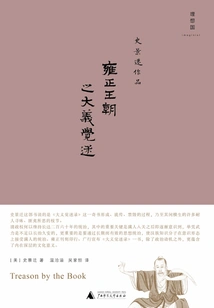
雍正王朝之大义觉迷
(us) Shi Jingqian
The key to why the Manchu Qing regime maintained its rule for 260 years was that the Manchus gradually realized after entering the country that force alone was not enough to maintain long-term peace and stability. More importantly, long-term and effective ideological rule was needed to make the Han intellectuals ideologically accept the rule of the Manchus. The book "Dayi Jue Mi Lu" published by Yongzheng, in addition to political motivations, also contains inner and deep cultural significance. This book tells the detailed process of the formation, circulation, and banning of the strange book "Dayi Jue Mi Lu". It contains many intriguing and incredible details, thus reflecting the relationship between ancient Chinese monarchy and intellectuals and the fate of the old literati.
The key to why the Manchu Qing regime maintained its rule for 260 years was that the Manchus gradually realized after entering the country that force alone was not enough to maintain long-term peace and stability. More importantly, long-term and effective ideological rule was needed to make the Han intellectuals ideologically accept the rule of the Manchus. The book "Dayi Jue Mi Lu" published by Yongzheng, in addition to political motivations, also contains inner and deep cultural significance. This book tells the detailed process of the formation, circulation, and banning of the strange book "Dayi Jue Mi Lu". It contains many intriguing and incredible details, thus reflecting the relationship between ancient Chinese monarchy and intellectuals and the fate of the old literati.
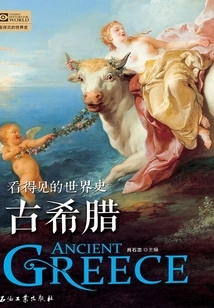
Ancient Greece
History古希腊
Xiao Shizhong
"It must be said that it is Greece." When tracing back to the origin of Western civilization, ancient Greek civilization cannot be bypassed. It is a dazzling pearl on the blue Aegean Sea and a golden key to Western civilization. The cultural heritage it left behind is still enjoyed by the world. "Visible History of the World: Ancient Greece" beautifully presents the history of ancient Greek civilization in the form of stories from the aspects of history, culture, war and military, mythology and art. The glorious history of ancient Greece has amazed the world; the splendid culture of ancient Greece has made future generations look up to it. Going back to the source, this book solidly condenses the results of human exploration of ancient Greek civilization so far. The content is vivid and full, mainly including: ancient Greek mythology, city-state civilization, living customs, colonial expansion, and ancient Greek culture, art, science and technology, military and other civilizational characteristics, deeply showing the glorious and splendid ancient Greek civilization.
"It must be said that it is Greece." When tracing back to the origin of Western civilization, ancient Greek civilization cannot be bypassed. It is a dazzling pearl on the blue Aegean Sea and a golden key to Western civilization. The cultural heritage it left behind is still enjoyed by the world. "Visible History of the World: Ancient Greece" beautifully presents the history of ancient Greek civilization in the form of stories from the aspects of history, culture, war and military, mythology and art. The glorious history of ancient Greece has amazed the world; the splendid culture of ancient Greece has made future generations look up to it. Going back to the source, this book solidly condenses the results of human exploration of ancient Greek civilization so far. The content is vivid and full, mainly including: ancient Greek mythology, city-state civilization, living customs, colonial expansion, and ancient Greek culture, art, science and technology, military and other civilizational characteristics, deeply showing the glorious and splendid ancient Greek civilization.
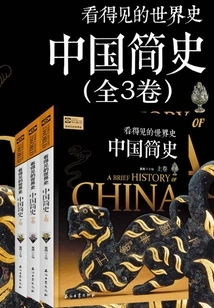
看得见的世界史:中国简史(全集)
Editor-in-chief Tong Chao
Taking history as a mirror, we can think over thousands of years and see thousands of miles away, grasp the inherent laws of the rise and fall of Chinese society, and gain insight into the eternal wisdom of cultivating order and peace. However, it is not easy for people to fully and deeply understand Chinese history and grasp the wisdom contained in Chinese history. During the five thousand years, there are many characters and events, myths and legends coexist, official history and unofficial history are intertwined, there are many clues and complex content. If political, economic, military, Sino-foreign exchanges, culture, thought, art and other contents are piled together without sorting out, readers will often be confused. In addition to the history carried by classics and historical materials, cultural relics, monuments, sites, works of art, etc. Also reflect the true history.
Taking history as a mirror, we can think over thousands of years and see thousands of miles away, grasp the inherent laws of the rise and fall of Chinese society, and gain insight into the eternal wisdom of cultivating order and peace. However, it is not easy for people to fully and deeply understand Chinese history and grasp the wisdom contained in Chinese history. During the five thousand years, there are many characters and events, myths and legends coexist, official history and unofficial history are intertwined, there are many clues and complex content. If political, economic, military, Sino-foreign exchanges, culture, thought, art and other contents are piled together without sorting out, readers will often be confused. In addition to the history carried by classics and historical materials, cultural relics, monuments, sites, works of art, etc. Also reflect the true history.
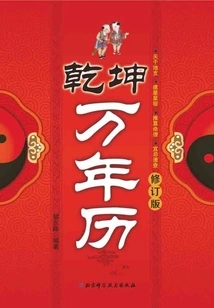
Qiankun Perpetual Calendar
History乾坤万年历
Zou Dongchen
With a book in hand, everything is convenient. Almanacs are closely related to the lives and productive labor of the masses. "Qiankun Perpetual Calendar" collects almanacs for a total of 120 years from 1924 to 2043. It combines my country's traditional lunar calendar with the current Gregorian calendar. It also compiles knowledge on calendars, solar terms, heavenly stems and earthly branches, twelve constellations and twenty-eight constellations.
With a book in hand, everything is convenient. Almanacs are closely related to the lives and productive labor of the masses. "Qiankun Perpetual Calendar" collects almanacs for a total of 120 years from 1924 to 2043. It combines my country's traditional lunar calendar with the current Gregorian calendar. It also compiles knowledge on calendars, solar terms, heavenly stems and earthly branches, twelve constellations and twenty-eight constellations.
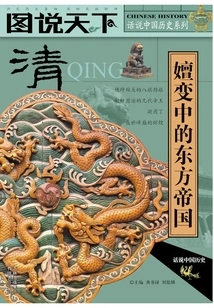
清:嬗变中的东方帝国
Gong Shuduo Liu Delin
"Talking about Chinese History" is based on different historical periods and uses new styles and models to integrate and tell Chinese history, covering politics, economy, military, Sino-foreign exchanges, art, thought, science and technology, social life and other aspects. It uses time as the warp and characters and events as the latitude. The warp and latitude are intertwined to comprehensively reflect the entire process of the rise and fall of each dynasty. Each story contains either high-pitched or sad scenes, allowing people to relive that period of history, continuously arouse people's long-lost memories, have close contact with Chinese history again, and deeply explore the national wisdom contained in history and understand the national spirit. Randomly interspersed knowledge tidbits, special topics and appendices are organically and closely combined, so that the knowledge information is more dense, thus creating a holographic historical mirror. Through words, you can feel the historical mirror, and through pictures, you can read the history in the pictures. Pictures and text complement each other, which can reflect Chinese history in a three-dimensional way and show the long history, profoundness and profoundness of Chinese history and culture. Through this combination, the text information is made more vivid and colorful, allowing readers to deeply feel the heritage of Chinese culture, thus creating a shock in reading.
"Talking about Chinese History" is based on different historical periods and uses new styles and models to integrate and tell Chinese history, covering politics, economy, military, Sino-foreign exchanges, art, thought, science and technology, social life and other aspects. It uses time as the warp and characters and events as the latitude. The warp and latitude are intertwined to comprehensively reflect the entire process of the rise and fall of each dynasty. Each story contains either high-pitched or sad scenes, allowing people to relive that period of history, continuously arouse people's long-lost memories, have close contact with Chinese history again, and deeply explore the national wisdom contained in history and understand the national spirit. Randomly interspersed knowledge tidbits, special topics and appendices are organically and closely combined, so that the knowledge information is more dense, thus creating a holographic historical mirror. Through words, you can feel the historical mirror, and through pictures, you can read the history in the pictures. Pictures and text complement each other, which can reflect Chinese history in a three-dimensional way and show the long history, profoundness and profoundness of Chinese history and culture. Through this combination, the text information is made more vivid and colorful, allowing readers to deeply feel the heritage of Chinese culture, thus creating a shock in reading.
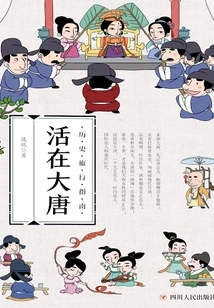
Living in the Tang Dynasty
History活在大唐
Hou Yue
The book "Living in the Tang Dynasty" uses a relaxed way of reading history and a modern perspective to return to the Tang Dynasty to experience the lively lives of the people of the Tang Dynasty and the royal aristocracy. The author integrates the solid and profound knowledge of the history and historiography of the Tang Dynasty into relaxed and humorous modern words to restore a fun and beautiful panorama of the Tang Dynasty. This book starts with some basic social common sense and extends to all aspects of the Tang Dynasty such as the political system, military system, economy and culture, foreign exchanges, entertainment life, and fashion trends. It uses a relaxed and humorous interpretation method to present the Tang Dynasty in the eyes of modern people. The real historical events and the interpretation with modern concepts create a light historical interest and the freshness of different perspectives. The text is pure and simple, thick yet lively, easy to handle, and elegant, which not only improves readability, but also makes people feel refreshed. Moreover, this book is also equipped with relaxed and humorous Q-version historical illustrations and fun and fresh historical topics, which not only echoes the relaxed style of the text, but also allows readers to enjoy the fun of reading history.
The book "Living in the Tang Dynasty" uses a relaxed way of reading history and a modern perspective to return to the Tang Dynasty to experience the lively lives of the people of the Tang Dynasty and the royal aristocracy. The author integrates the solid and profound knowledge of the history and historiography of the Tang Dynasty into relaxed and humorous modern words to restore a fun and beautiful panorama of the Tang Dynasty. This book starts with some basic social common sense and extends to all aspects of the Tang Dynasty such as the political system, military system, economy and culture, foreign exchanges, entertainment life, and fashion trends. It uses a relaxed and humorous interpretation method to present the Tang Dynasty in the eyes of modern people. The real historical events and the interpretation with modern concepts create a light historical interest and the freshness of different perspectives. The text is pure and simple, thick yet lively, easy to handle, and elegant, which not only improves readability, but also makes people feel refreshed. Moreover, this book is also equipped with relaxed and humorous Q-version historical illustrations and fun and fresh historical topics, which not only echoes the relaxed style of the text, but also allows readers to enjoy the fun of reading history.
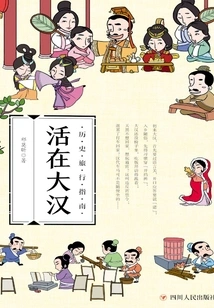
Live in the Han Dynasty
History活在大汉
Qi Moxin
This book "Living in the Han Dynasty" uses a relaxed historical reading method and a modern perspective to return to the Han Dynasty to experience the lively life of the Han people and the royal nobles. The author integrates the solid and profound knowledge of the history and historiography of the Han Dynasty into relaxed and humorous modern words to restore a fun and beautiful panoramic view of the Han Dynasty. This book starts with some basic social common sense and extends to all aspects of the Han Dynasty such as the political system, military system, economy and culture, foreign exchanges, entertainment life, and fashion trends. It uses a relaxed and humorous interpretation method to present the Han Dynasty in the eyes of modern people. The real historical events and the interpretation with modern concepts create a light historical interest and a fresh feeling from different perspectives. The text is pure and simple, thick yet lively, easy to handle, and elegant, which not only improves readability, but also makes people feel refreshed. Moreover, this book is also equipped with relaxed and humorous Q-version historical illustrations and fun and fresh historical topics, which not only echoes the relaxed style of the text, but also allows readers to enjoy the fun of reading history.
This book "Living in the Han Dynasty" uses a relaxed historical reading method and a modern perspective to return to the Han Dynasty to experience the lively life of the Han people and the royal nobles. The author integrates the solid and profound knowledge of the history and historiography of the Han Dynasty into relaxed and humorous modern words to restore a fun and beautiful panoramic view of the Han Dynasty. This book starts with some basic social common sense and extends to all aspects of the Han Dynasty such as the political system, military system, economy and culture, foreign exchanges, entertainment life, and fashion trends. It uses a relaxed and humorous interpretation method to present the Han Dynasty in the eyes of modern people. The real historical events and the interpretation with modern concepts create a light historical interest and a fresh feeling from different perspectives. The text is pure and simple, thick yet lively, easy to handle, and elegant, which not only improves readability, but also makes people feel refreshed. Moreover, this book is also equipped with relaxed and humorous Q-version historical illustrations and fun and fresh historical topics, which not only echoes the relaxed style of the text, but also allows readers to enjoy the fun of reading history.
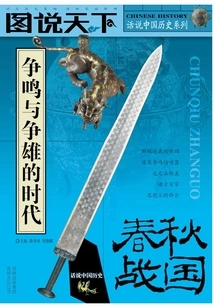
战国春秋:争鸣与争雄的时代
Gong Shuduo Liu Delin
"Talking about Chinese History" is based on different historical periods and uses new styles and models to integrate and tell Chinese history, covering politics, economy, military, Sino-foreign exchanges, art, thought, science and technology, social life and other aspects. It uses time as the warp and characters and events as the latitude. The warp and latitude are intertwined to comprehensively reflect the entire process of the rise and fall of each dynasty. Each story contains either high-pitched or sad scenes, allowing people to relive that period of history, continuously arouse people's long-lost memories, have close contact with Chinese history again, and deeply explore the national wisdom contained in history and understand the national spirit. Randomly interspersed knowledge tidbits, special topics and appendices are organically and closely combined, so that the knowledge information is more dense, thus creating a holographic historical mirror. Through words, you can feel the historical mirror, and through pictures, you can read the history in the pictures. Pictures and text complement each other, which can reflect Chinese history in a three-dimensional way and show the long history, profoundness and profoundness of Chinese history and culture. Through this combination, the text information is made more vivid and colorful, allowing readers to deeply feel the heritage of Chinese culture, thus creating a shock in reading.
"Talking about Chinese History" is based on different historical periods and uses new styles and models to integrate and tell Chinese history, covering politics, economy, military, Sino-foreign exchanges, art, thought, science and technology, social life and other aspects. It uses time as the warp and characters and events as the latitude. The warp and latitude are intertwined to comprehensively reflect the entire process of the rise and fall of each dynasty. Each story contains either high-pitched or sad scenes, allowing people to relive that period of history, continuously arouse people's long-lost memories, have close contact with Chinese history again, and deeply explore the national wisdom contained in history and understand the national spirit. Randomly interspersed knowledge tidbits, special topics and appendices are organically and closely combined, so that the knowledge information is more dense, thus creating a holographic historical mirror. Through words, you can feel the historical mirror, and through pictures, you can read the history in the pictures. Pictures and text complement each other, which can reflect Chinese history in a three-dimensional way and show the long history, profoundness and profoundness of Chinese history and culture. Through this combination, the text information is made more vivid and colorful, allowing readers to deeply feel the heritage of Chinese culture, thus creating a shock in reading.
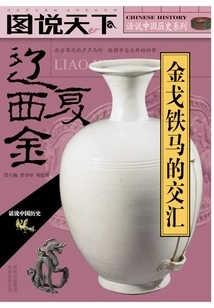
辽·西夏·金:金戈铁马的交汇
Gong Shuduo Liu Delin
"Talking about Chinese History" is based on different historical periods and uses new styles and models to integrate and tell Chinese history, covering politics, economy, military, Sino-foreign exchanges, art, thought, science and technology, social life and other aspects. It uses time as the warp and characters and events as the latitude. The warp and latitude are intertwined to comprehensively reflect the entire process of the rise and fall of each dynasty. Each story contains either high-pitched or sad scenes, allowing people to relive that period of history, continuously arouse people's long-lost memories, have close contact with Chinese history again, and deeply explore the national wisdom contained in history and understand the national spirit. Randomly interspersed knowledge tidbits, special topics and appendices are organically and closely combined, so that the knowledge information is more dense, thus creating a holographic historical mirror. Through words, you can feel the historical mirror, and through pictures, you can read the history in the pictures. Pictures and text complement each other, which can reflect Chinese history in a three-dimensional way and show the long history, profoundness and profoundness of Chinese history and culture. Through this combination, the text information is made more vivid and colorful, allowing readers to deeply feel the heritage of Chinese culture, thus creating a shock in reading.
"Talking about Chinese History" is based on different historical periods and uses new styles and models to integrate and tell Chinese history, covering politics, economy, military, Sino-foreign exchanges, art, thought, science and technology, social life and other aspects. It uses time as the warp and characters and events as the latitude. The warp and latitude are intertwined to comprehensively reflect the entire process of the rise and fall of each dynasty. Each story contains either high-pitched or sad scenes, allowing people to relive that period of history, continuously arouse people's long-lost memories, have close contact with Chinese history again, and deeply explore the national wisdom contained in history and understand the national spirit. Randomly interspersed knowledge tidbits, special topics and appendices are organically and closely combined, so that the knowledge information is more dense, thus creating a holographic historical mirror. Through words, you can feel the historical mirror, and through pictures, you can read the history in the pictures. Pictures and text complement each other, which can reflect Chinese history in a three-dimensional way and show the long history, profoundness and profoundness of Chinese history and culture. Through this combination, the text information is made more vivid and colorful, allowing readers to deeply feel the heritage of Chinese culture, thus creating a shock in reading.
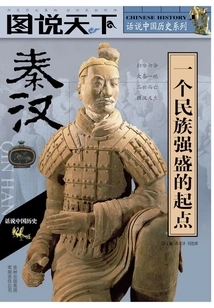
秦汉:一个民族强盛的起点
Gong Shuduo Liu Delin
"Talking about Chinese History" is based on different historical periods and uses new styles and models to integrate and tell Chinese history, covering politics, economy, military, Sino-foreign exchanges, art, thought, science and technology, social life and other aspects. It uses time as the warp and characters and events as the latitude. The warp and latitude are intertwined to comprehensively reflect the entire process of the rise and fall of each dynasty. Each story contains either high-pitched or sad scenes, allowing people to relive that period of history, continuously arouse people's long-lost memories, have close contact with Chinese history again, and deeply explore the national wisdom contained in history and understand the national spirit. Randomly interspersed knowledge tidbits, special topics and appendices are organically and closely combined, so that the knowledge information is more dense, thus creating a holographic historical mirror. Through words, you can feel the historical mirror, and through pictures, you can read the history in the pictures. Pictures and text complement each other, which can reflect Chinese history in a three-dimensional way and show the long history, profoundness and profoundness of Chinese history and culture. Through this combination, the text information is made more vivid and colorful, allowing readers to deeply feel the heritage of Chinese culture, thus creating a shock in reading.
"Talking about Chinese History" is based on different historical periods and uses new styles and models to integrate and tell Chinese history, covering politics, economy, military, Sino-foreign exchanges, art, thought, science and technology, social life and other aspects. It uses time as the warp and characters and events as the latitude. The warp and latitude are intertwined to comprehensively reflect the entire process of the rise and fall of each dynasty. Each story contains either high-pitched or sad scenes, allowing people to relive that period of history, continuously arouse people's long-lost memories, have close contact with Chinese history again, and deeply explore the national wisdom contained in history and understand the national spirit. Randomly interspersed knowledge tidbits, special topics and appendices are organically and closely combined, so that the knowledge information is more dense, thus creating a holographic historical mirror. Through words, you can feel the historical mirror, and through pictures, you can read the history in the pictures. Pictures and text complement each other, which can reflect Chinese history in a three-dimensional way and show the long history, profoundness and profoundness of Chinese history and culture. Through this combination, the text information is made more vivid and colorful, allowing readers to deeply feel the heritage of Chinese culture, thus creating a shock in reading.
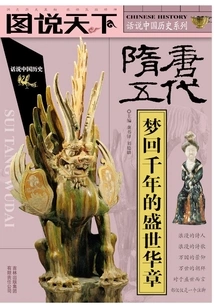
隋·唐·五代:梦回千年的盛世华章
Gong Shuduo Liu Delin
"Talking about Chinese History" is based on different historical periods and uses new styles and models to integrate and tell Chinese history, covering politics, economy, military, Sino-foreign exchanges, art, thought, science and technology, social life and other aspects. It uses time as the warp and characters and events as the latitude. The warp and latitude are intertwined to comprehensively reflect the entire process of the rise and fall of each dynasty. Each story contains either high-pitched or sad scenes, allowing people to relive that period of history, continuously arouse people's long-lost memories, have close contact with Chinese history again, and deeply explore the national wisdom contained in history and understand the national spirit. Randomly interspersed knowledge tidbits, special topics and appendices are organically and closely combined, so that the knowledge information is more dense, thus creating a holographic historical mirror. Through words, you can feel the historical mirror, and through pictures, you can read the history in the pictures. Pictures and text complement each other, which can reflect Chinese history in a three-dimensional way and show the long history, profoundness and profoundness of Chinese history and culture. Through this combination, the text information is made more vivid and colorful, allowing readers to deeply feel the heritage of Chinese culture, thus creating a shock in reading.
"Talking about Chinese History" is based on different historical periods and uses new styles and models to integrate and tell Chinese history, covering politics, economy, military, Sino-foreign exchanges, art, thought, science and technology, social life and other aspects. It uses time as the warp and characters and events as the latitude. The warp and latitude are intertwined to comprehensively reflect the entire process of the rise and fall of each dynasty. Each story contains either high-pitched or sad scenes, allowing people to relive that period of history, continuously arouse people's long-lost memories, have close contact with Chinese history again, and deeply explore the national wisdom contained in history and understand the national spirit. Randomly interspersed knowledge tidbits, special topics and appendices are organically and closely combined, so that the knowledge information is more dense, thus creating a holographic historical mirror. Through words, you can feel the historical mirror, and through pictures, you can read the history in the pictures. Pictures and text complement each other, which can reflect Chinese history in a three-dimensional way and show the long history, profoundness and profoundness of Chinese history and culture. Through this combination, the text information is made more vivid and colorful, allowing readers to deeply feel the heritage of Chinese culture, thus creating a shock in reading.
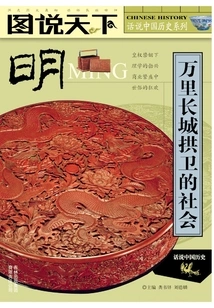
明:万里长城拱卫的社会
Gong Shuduo Liu Delin
"Talking about Chinese History" is based on different historical periods and uses new styles and models to integrate and tell Chinese history, covering politics, economy, military, Sino-foreign exchanges, art, thought, science and technology, social life and other aspects. It uses time as the warp and characters and events as the latitude. The warp and latitude are intertwined to comprehensively reflect the entire process of the rise and fall of each dynasty. Each story contains either high-pitched or sad scenes, allowing people to relive that period of history, continuously arouse people's long-lost memories, have close contact with Chinese history again, and deeply explore the national wisdom contained in history and understand the national spirit. Randomly interspersed knowledge tidbits, special topics and appendices are organically and closely combined, so that the knowledge information is more dense, thus creating a holographic historical mirror. Through words, you can feel the historical mirror, and through pictures, you can read the history in the pictures. Pictures and text complement each other, which can reflect Chinese history in a three-dimensional way and show the long history, profoundness and profoundness of Chinese history and culture. Through this combination, the text information is made more vivid and colorful, allowing readers to deeply feel the heritage of Chinese culture, thus creating a shock in reading.
"Talking about Chinese History" is based on different historical periods and uses new styles and models to integrate and tell Chinese history, covering politics, economy, military, Sino-foreign exchanges, art, thought, science and technology, social life and other aspects. It uses time as the warp and characters and events as the latitude. The warp and latitude are intertwined to comprehensively reflect the entire process of the rise and fall of each dynasty. Each story contains either high-pitched or sad scenes, allowing people to relive that period of history, continuously arouse people's long-lost memories, have close contact with Chinese history again, and deeply explore the national wisdom contained in history and understand the national spirit. Randomly interspersed knowledge tidbits, special topics and appendices are organically and closely combined, so that the knowledge information is more dense, thus creating a holographic historical mirror. Through words, you can feel the historical mirror, and through pictures, you can read the history in the pictures. Pictures and text complement each other, which can reflect Chinese history in a three-dimensional way and show the long history, profoundness and profoundness of Chinese history and culture. Through this combination, the text information is made more vivid and colorful, allowing readers to deeply feel the heritage of Chinese culture, thus creating a shock in reading.
Talking Garden
History说苑
Translated And Annotated By Wang Tianhai And Yang Xiulan
"Shuo Yuan" is a collection of historical stories compiled by Liu Xiang during the Western Han Dynasty when he was in charge of the imperial library. In "Shuo Yuan Preface", Liu Xiang said: "The "Shuo Yuan Miscellaneous Affairs" in the school's Zhongshu, as well as the ministers' letters, folk books, and false accusations, have many types of things, and the chapters and sentences are confused, or the top and bottom are confused, making it difficult to distinguish the order. Except those that are overlapping with the "New Preface" , the rest are shallow and do not follow the principles. They are grouped together as hundreds of schools. Later, they were ordered to follow each other, and they were divided into chapters one by one, and more than 100,000 words were created. Each of the 20 chapters and 784 chapters was titled "Xinyuan", which is worth mentioning. "
"Shuo Yuan" is a collection of historical stories compiled by Liu Xiang during the Western Han Dynasty when he was in charge of the imperial library. In "Shuo Yuan Preface", Liu Xiang said: "The "Shuo Yuan Miscellaneous Affairs" in the school's Zhongshu, as well as the ministers' letters, folk books, and false accusations, have many types of things, and the chapters and sentences are confused, or the top and bottom are confused, making it difficult to distinguish the order. Except those that are overlapping with the "New Preface" , the rest are shallow and do not follow the principles. They are grouped together as hundreds of schools. Later, they were ordered to follow each other, and they were divided into chapters one by one, and more than 100,000 words were created. Each of the 20 chapters and 784 chapters was titled "Xinyuan", which is worth mentioning. "
隋唐五代文化史:孙昌武文集
Sun Changwu
The nearly four hundred years from the establishment of the Tang Dynasty in the Sui Dynasty to the separation of the "Five Dynasties and Ten Kingdoms" was a period of glorious development in Chinese history and the heyday of China's feudal society. This book comprehensively discusses the cultural development status, characteristics and development rules of this period, including the Sui and Tang Dynasties The social conditions and ideological environment for the development of the culture of the Five Dynasties, the main characteristics of the culture of the Sui, Tang and Five Dynasties, education and imperial examinations, academics, literature, art, science and technology, religion, the cultural development of border ethnic groups and their cultural exchanges with the mainland, the international influence of the culture of the Sui, Tang and Five Dynasties, etc. The research is detailed and in-depth and is worthy of reference reading by the majority of historical researchers.
The nearly four hundred years from the establishment of the Tang Dynasty in the Sui Dynasty to the separation of the "Five Dynasties and Ten Kingdoms" was a period of glorious development in Chinese history and the heyday of China's feudal society. This book comprehensively discusses the cultural development status, characteristics and development rules of this period, including the Sui and Tang Dynasties The social conditions and ideological environment for the development of the culture of the Five Dynasties, the main characteristics of the culture of the Sui, Tang and Five Dynasties, education and imperial examinations, academics, literature, art, science and technology, religion, the cultural development of border ethnic groups and their cultural exchanges with the mainland, the international influence of the culture of the Sui, Tang and Five Dynasties, etc. The research is detailed and in-depth and is worthy of reference reading by the majority of historical researchers.
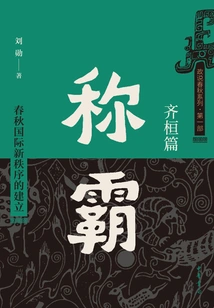
称霸:春秋国际新秩序的建立(齐桓篇)
Liu Xun
This book breaks away from the old perspective of "the collapse of rituals and the collapse of music" and interprets the history of the Spring and Autumn Period from the perspective of international political games and domestic political evolution. It is a popular history book that explains the political stories of the Spring and Autumn Period. The whole book is divided into two volumes. The first volume is "Qi Huan Pian" and the second volume is "Jin Wen Pian". "Qi Huan Chapter" focuses on the keyword "Qi Huan Hegemony", starting from the collapse of the old order of the Western Zhou Dynasty, and describing the efforts of each vassal state to develop and strive for a higher status in the process of establishing a new order in this general environment. It focuses on the Qi State and analyzes the historical process of the Qi State after the unremitting efforts of four generations of monarchs and ministers. Finally, with the assistance of Guan Zhong, Qi Huan Gong finally became the hegemony. "Jin Wen Pian" tells the story of the rise of the Jin State in the midst of changes, its growth in hardships, its dominance under the leadership of Jin Wengong's team, and the process of building a new world order with the southern hegemon Chu State. At the end of the book, the author combs the evolution of the Spring and Autumn international order of "confusion-exploration-new normal-checks and balances" from a macro perspective, showing the general development trend of the early Spring and Autumn period history.
This book breaks away from the old perspective of "the collapse of rituals and the collapse of music" and interprets the history of the Spring and Autumn Period from the perspective of international political games and domestic political evolution. It is a popular history book that explains the political stories of the Spring and Autumn Period. The whole book is divided into two volumes. The first volume is "Qi Huan Pian" and the second volume is "Jin Wen Pian". "Qi Huan Chapter" focuses on the keyword "Qi Huan Hegemony", starting from the collapse of the old order of the Western Zhou Dynasty, and describing the efforts of each vassal state to develop and strive for a higher status in the process of establishing a new order in this general environment. It focuses on the Qi State and analyzes the historical process of the Qi State after the unremitting efforts of four generations of monarchs and ministers. Finally, with the assistance of Guan Zhong, Qi Huan Gong finally became the hegemony. "Jin Wen Pian" tells the story of the rise of the Jin State in the midst of changes, its growth in hardships, its dominance under the leadership of Jin Wengong's team, and the process of building a new world order with the southern hegemon Chu State. At the end of the book, the author combs the evolution of the Spring and Autumn international order of "confusion-exploration-new normal-checks and balances" from a macro perspective, showing the general development trend of the early Spring and Autumn period history.
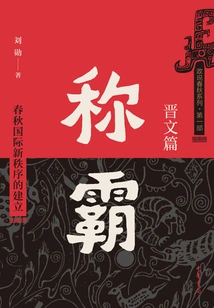
Hegemony: the Establishment of a New International Order in the Spring and Autumn Period (jin Wen)
History称霸:春秋国际新秩序的建立(晋文篇)
Liu Xun
This book breaks away from the old perspective of "the collapse of rituals and the collapse of music" and interprets the history of the Spring and Autumn Period from the perspective of international political games and domestic political evolution. It is a popular history book that explains the political stories of the Spring and Autumn Period. The whole book is divided into two volumes. The first volume is "Qi Huan Pian" and the second volume is "Jin Wen Pian". "Qi Huan Chapter" focuses on the keyword "Qi Huan Hegemony", starting from the collapse of the old order of the Western Zhou Dynasty, and describing the efforts of each vassal state to develop and strive for a higher status in the process of establishing a new order in this general environment. It focuses on the Qi State and analyzes the historical process of the Qi State after the unremitting efforts of four generations of monarchs and ministers. Finally, with the assistance of Guan Zhong, Qi Huan Gong finally became the hegemony. "Jin Wen Pian" tells the story of the rise of the Jin State in the midst of changes, its growth in hardships, its dominance under the leadership of Jin Wengong's team, and the process of building a new world order with the southern hegemon Chu State. At the end of the book, the author combs the evolution of the Spring and Autumn international order of "confusion-exploration-new normal-checks and balances" from a macro perspective, showing the general development trend of the early Spring and Autumn period history.
This book breaks away from the old perspective of "the collapse of rituals and the collapse of music" and interprets the history of the Spring and Autumn Period from the perspective of international political games and domestic political evolution. It is a popular history book that explains the political stories of the Spring and Autumn Period. The whole book is divided into two volumes. The first volume is "Qi Huan Pian" and the second volume is "Jin Wen Pian". "Qi Huan Chapter" focuses on the keyword "Qi Huan Hegemony", starting from the collapse of the old order of the Western Zhou Dynasty, and describing the efforts of each vassal state to develop and strive for a higher status in the process of establishing a new order in this general environment. It focuses on the Qi State and analyzes the historical process of the Qi State after the unremitting efforts of four generations of monarchs and ministers. Finally, with the assistance of Guan Zhong, Qi Huan Gong finally became the hegemony. "Jin Wen Pian" tells the story of the rise of the Jin State in the midst of changes, its growth in hardships, its dominance under the leadership of Jin Wengong's team, and the process of building a new world order with the southern hegemon Chu State. At the end of the book, the author combs the evolution of the Spring and Autumn international order of "confusion-exploration-new normal-checks and balances" from a macro perspective, showing the general development trend of the early Spring and Autumn period history.
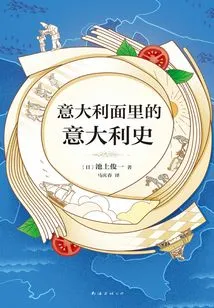
Italian History in Pasta
History意大利面里的意大利史
(japan) Ikegami Junichi
This book uses pasta as a clue to trace the history of Italy for two thousand years. The birth and development process of pasta is also the process of Italy's transformation from foreign invasion and dense cities to national unification. The author eloquently restores the vivid side of history. The exchanges of civilizations in the Age of Discovery, the competition for political power in Europe, the life outlook of all strata of Italian society and the formation of national character... From ancient Rome, the Middle Ages to modern times, pasta, which seems insignificant, is closely related to the changes in Italian politics, economy, culture and society.
This book uses pasta as a clue to trace the history of Italy for two thousand years. The birth and development process of pasta is also the process of Italy's transformation from foreign invasion and dense cities to national unification. The author eloquently restores the vivid side of history. The exchanges of civilizations in the Age of Discovery, the competition for political power in Europe, the life outlook of all strata of Italian society and the formation of national character... From ancient Rome, the Middle Ages to modern times, pasta, which seems insignificant, is closely related to the changes in Italian politics, economy, culture and society.
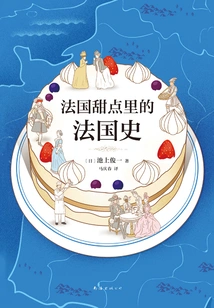
法国甜点里的法国史
(japan) Ikegami Junichi
This book uses the close connection between French culture and desserts as a clue to trace the history of France and involve the political, economic, social and religious development of France. Through ancient and simple French pastries, we can see the struggle for survival on the land of France between the Celts and the Franks in ancient times and the early Middle Ages. After 1000 AD, the real history of France began. From the rule of kings and nobles, royal power covered the entire territory of France, to the bourgeoisie becoming the protagonist, and then the French people became the protagonist. People of different classes and nationalities build society and cultivate culture in France. In the process of cultural fusion, the "essence" that unites France was produced, and this essence also gave birth to dessert, an important part of French culture. Open the book and listen to the author talk about the history of France through French desserts, a daily thing that ordinary people are familiar with.
This book uses the close connection between French culture and desserts as a clue to trace the history of France and involve the political, economic, social and religious development of France. Through ancient and simple French pastries, we can see the struggle for survival on the land of France between the Celts and the Franks in ancient times and the early Middle Ages. After 1000 AD, the real history of France began. From the rule of kings and nobles, royal power covered the entire territory of France, to the bourgeoisie becoming the protagonist, and then the French people became the protagonist. People of different classes and nationalities build society and cultivate culture in France. In the process of cultural fusion, the "essence" that unites France was produced, and this essence also gave birth to dessert, an important part of French culture. Open the book and listen to the author talk about the history of France through French desserts, a daily thing that ordinary people are familiar with.
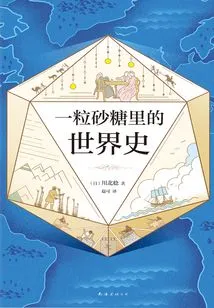
一粒砂糖里的世界史
E
This is a history book with a unique perspective on sugar, showing the process of the mutually independent continents of the world gradually becoming integrated. The content covers the westward expansion of Muslims in the Middle Ages to the independence movement in the Americas in the 19th century. It especially focuses on the mass production and popularization of sugar in the 16th and 17th centuries, the tragic fate of African slaves, social changes in the Caribbean, changes in European lifestyles, and the struggle of political forces. Historical events that seem far away find connecting points through sugar.
This is a history book with a unique perspective on sugar, showing the process of the mutually independent continents of the world gradually becoming integrated. The content covers the westward expansion of Muslims in the Middle Ages to the independence movement in the Americas in the 19th century. It especially focuses on the mass production and popularization of sugar in the 16th and 17th centuries, the tragic fate of African slaves, social changes in the Caribbean, changes in European lifestyles, and the struggle of political forces. Historical events that seem far away find connecting points through sugar.
Greek Spirit
History希腊精神
(us) Edith Hamilton
Greece is the dawn of Western civilization and the most glorious time of human civilization. Among the books about Greece, "The Spirit of Greece" is a very attractive one. This book introduces writers from the heyday of Greece, such as Pindar, Aeschylus, Sophocles, Aristophanes, Herodotus and Thucydides; it introduces the literature, art, and religion of ancient Greece; it introduces the spirit and rationality of the ancient Greeks and the way they treat the world, etc. The author uses beautiful writing to describe the ideological and artistic achievements of Greece's most glorious era.
Greece is the dawn of Western civilization and the most glorious time of human civilization. Among the books about Greece, "The Spirit of Greece" is a very attractive one. This book introduces writers from the heyday of Greece, such as Pindar, Aeschylus, Sophocles, Aristophanes, Herodotus and Thucydides; it introduces the literature, art, and religion of ancient Greece; it introduces the spirit and rationality of the ancient Greeks and the way they treat the world, etc. The author uses beautiful writing to describe the ideological and artistic achievements of Greece's most glorious era.
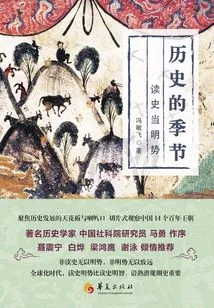
Historical Season
History历史的季节
Feng Minfei
"Historical Seasons: Reading History to Revise the Trend" focuses on China's 14 long-lived dynasties, conducts a slice-by-section analysis of the historical nodes around the 70th anniversary of the founding of the People's Republic of China, and uniquely illustrates the historical trajectory of the rise and fall of dynasties. Through statistical analysis of dynasty samples in Chinese history, the author confirmed that the 70 years was the "ceiling" or "trumpet" of the dynasty. Most dynasties cannot pass this "ceiling", and a small number of dynasties that pass the "ceiling" generally last for a long time, but problems still arise one after another. Turnaround and reform are eternal topics in Chinese history and remain fresh throughout the ages. The author's cold thinking on the complexity of history, careful thinking and discernment on the rise and fall of ancient Chinese politics and the long-standing shortcomings of traditional culture are interesting and thought-provoking, allowing us to appreciate the vicissitudes and charm of history through witty words and new ways. Confucius' cage from version 1.0 To version 4.0, The strong and weak Qin Dynasty, the number of hermits, what words should be added to Wu Zetian's wordless monument? "The benevolence of women" and "the benevolence of the Ming Dynasty", the emperor was more and more spoiled by the post-Confucianism, the "trade war" in history, etc., All over Jinou, full of romance.
"Historical Seasons: Reading History to Revise the Trend" focuses on China's 14 long-lived dynasties, conducts a slice-by-section analysis of the historical nodes around the 70th anniversary of the founding of the People's Republic of China, and uniquely illustrates the historical trajectory of the rise and fall of dynasties. Through statistical analysis of dynasty samples in Chinese history, the author confirmed that the 70 years was the "ceiling" or "trumpet" of the dynasty. Most dynasties cannot pass this "ceiling", and a small number of dynasties that pass the "ceiling" generally last for a long time, but problems still arise one after another. Turnaround and reform are eternal topics in Chinese history and remain fresh throughout the ages. The author's cold thinking on the complexity of history, careful thinking and discernment on the rise and fall of ancient Chinese politics and the long-standing shortcomings of traditional culture are interesting and thought-provoking, allowing us to appreciate the vicissitudes and charm of history through witty words and new ways. Confucius' cage from version 1.0 To version 4.0, The strong and weak Qin Dynasty, the number of hermits, what words should be added to Wu Zetian's wordless monument? "The benevolence of women" and "the benevolence of the Ming Dynasty", the emperor was more and more spoiled by the post-Confucianism, the "trade war" in history, etc., All over Jinou, full of romance.
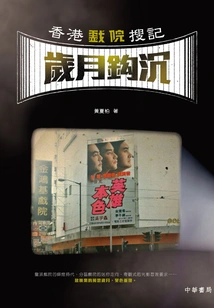
香港戏院搜记·岁月钩沉
Huang Xiabai
The history of Hong Kong's projection industry has spanned over a hundred years. The author narrates relevant materials, attempts to trace old anecdotes in the industry, and shows the transformation process of Hong Kong theaters. There is also a special article describing several theaters that opened before the war, including Lee Theater, Po Hing, Yau Ma Tei, Ko Sing, etc. Some of them continued to operate until the 1970s and 1980s, covering an important part of the development history of local theaters.
The history of Hong Kong's projection industry has spanned over a hundred years. The author narrates relevant materials, attempts to trace old anecdotes in the industry, and shows the transformation process of Hong Kong theaters. There is also a special article describing several theaters that opened before the war, including Lee Theater, Po Hing, Yau Ma Tei, Ko Sing, etc. Some of them continued to operate until the 1970s and 1980s, covering an important part of the development history of local theaters.
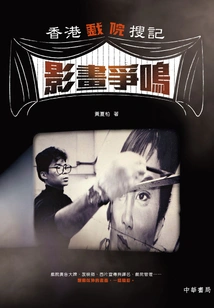
香港戏院搜记·影画争鸣
Huang Xiabai
This book interviews many people in the industry and details the bustling years of the theater industry. The book's search of big names in theaters includes a number of senior theater advertising painters who painted theaters in Hong Kong, Kowloon and the New Territories, witnessing the decline of billboards; the search of theater publicity includes a variety of film promotion tricks, special editions across generations, and the distribution of colors in theaters; the search of practitioners goes beyond box offices, computer rooms, and offices to find projectionists, theater managers, publicity and translators, etc., To talk about the changes in the industry.
This book interviews many people in the industry and details the bustling years of the theater industry. The book's search of big names in theaters includes a number of senior theater advertising painters who painted theaters in Hong Kong, Kowloon and the New Territories, witnessing the decline of billboards; the search of theater publicity includes a variety of film promotion tricks, special editions across generations, and the distribution of colors in theaters; the search of practitioners goes beyond box offices, computer rooms, and offices to find projectionists, theater managers, publicity and translators, etc., To talk about the changes in the industry.
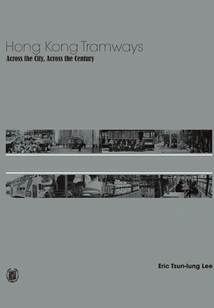
Hong Kong Tramways Across the City, Across the Century
Eric Tsun-lung Lee
The author has collected more than 200 precious photos and relevant literature to concisely and gently present the history of tram development And little known trivia on the production and anecdotes.
The author has collected more than 200 precious photos and relevant literature to concisely and gently present the history of tram development And little known trivia on the production and anecdotes.
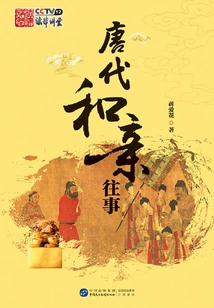
唐代和亲往事
Jiang Aihua
In ancient Chinese history, marriage as a national policy was adopted repeatedly. The Tang Dynasty was one of the most powerful dynasties in Chinese history, with the largest scale and the most number of marriages, reaching 28. Some kings often took this measure out of the need for national interests and border peace. Whether it was the Zhenguan period of the Tang Dynasty, the prosperous Kaiyuan period, or the prosperous period of Kangxi and Qianlong in the Qing Dynasty, marriage has become a common method of national policy. This book tells the story of the contributions and sacrifices made by Princess Heqin in the process of historical evolution and national integration.
In ancient Chinese history, marriage as a national policy was adopted repeatedly. The Tang Dynasty was one of the most powerful dynasties in Chinese history, with the largest scale and the most number of marriages, reaching 28. Some kings often took this measure out of the need for national interests and border peace. Whether it was the Zhenguan period of the Tang Dynasty, the prosperous Kaiyuan period, or the prosperous period of Kangxi and Qianlong in the Qing Dynasty, marriage has become a common method of national policy. This book tells the story of the contributions and sacrifices made by Princess Heqin in the process of historical evolution and national integration.
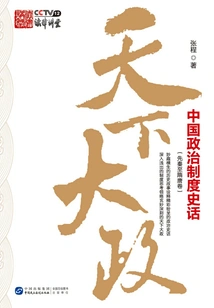
天下大政:中国政治制度史话(先秦至隋唐卷)
Zhang Cheng
There were many great political systems created in ancient China, and this book uses popular language and concise explanations to show readers the political systems of ancient China. The content of the pre-Qin period focuses on the elaboration of political concepts and institutional concepts, while the content after the Qin and Han dynasties focuses on the description and analysis of specific political systems. We are not the parties involved, and it is always easy to point out the gains and losses of the time with the superiority or arrogance of latecomers. If you gossip on the outside, nothing is difficult in the world; if you talk after the fact, no one is perfect in ancient or modern times. The author tries his best to put himself in the situation and analyze the system to grasp the spirit of courage and innovation and development of the ancients contained in the system, which is of great practical significance and historical value.
There were many great political systems created in ancient China, and this book uses popular language and concise explanations to show readers the political systems of ancient China. The content of the pre-Qin period focuses on the elaboration of political concepts and institutional concepts, while the content after the Qin and Han dynasties focuses on the description and analysis of specific political systems. We are not the parties involved, and it is always easy to point out the gains and losses of the time with the superiority or arrogance of latecomers. If you gossip on the outside, nothing is difficult in the world; if you talk after the fact, no one is perfect in ancient or modern times. The author tries his best to put himself in the situation and analyze the system to grasp the spirit of courage and innovation and development of the ancients contained in the system, which is of great practical significance and historical value.
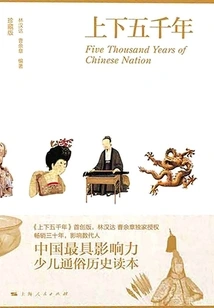
上下五千年(珍藏版)(套装共3册)
Lin Handa Cao Yuzhang
"Five Thousand Years Up and Down" is a popular history book for teenagers. It has been selling well for more than thirty years and has been trusted and recognized by generations of readers. The book uses a classic form of storytelling to tell history, arranging 262 historical stories in chronological order, from the myth of the creation of the world, the legend of drilling wood to make fire, to Qianlong's banned books and revision of books, Cao Xueqin's "Dream of Red Mansions", which involves all aspects of the history of the development of Chinese civilization.
"Five Thousand Years Up and Down" is a popular history book for teenagers. It has been selling well for more than thirty years and has been trusted and recognized by generations of readers. The book uses a classic form of storytelling to tell history, arranging 262 historical stories in chronological order, from the myth of the creation of the world, the legend of drilling wood to make fire, to Qianlong's banned books and revision of books, Cao Xueqin's "Dream of Red Mansions", which involves all aspects of the history of the development of Chinese civilization.
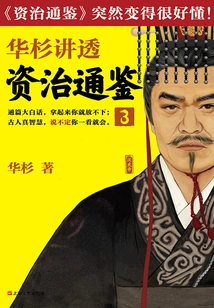
华杉讲透《资治通鉴》3
Huashan
The pillow book of ancient emperors, the reference book of today's leaders! "Zi Zhi Tong Jian" suddenly became very easy to understand! See how the great emperor Wu of Han brought the Han Dynasty to its peak! The whole article is written in plain language, and you won't be able to put it down once you pick it up. The ancients were so wise that you might understand it as soon as you read it. "Zizhi Tongjian" is written from the Warring States Period to the Five Dynasties and Ten Kingdoms, vividly showing the living people and stories in the 1362-year history of 16 dynasties. It can be said to be the "big data" and "super case collection" of China's political and cultural heritage. Open this book and read "Zi Zhi Tong Jian" with gusto like a novel! Explain thoroughly the wisdom in "Zi Zhi Tong Jian" that is really useful to ordinary people in the 21st century - people will know it after reading it once, and they will be able to use it after reading it. Best-selling author Hua Shan's new masterpiece! "Zi Zhi Tong Jian" records a total of 1,362 years of history in 16 dynasties and is a "super case collection" of Chinese culture.
The pillow book of ancient emperors, the reference book of today's leaders! "Zi Zhi Tong Jian" suddenly became very easy to understand! See how the great emperor Wu of Han brought the Han Dynasty to its peak! The whole article is written in plain language, and you won't be able to put it down once you pick it up. The ancients were so wise that you might understand it as soon as you read it. "Zizhi Tongjian" is written from the Warring States Period to the Five Dynasties and Ten Kingdoms, vividly showing the living people and stories in the 1362-year history of 16 dynasties. It can be said to be the "big data" and "super case collection" of China's political and cultural heritage. Open this book and read "Zi Zhi Tong Jian" with gusto like a novel! Explain thoroughly the wisdom in "Zi Zhi Tong Jian" that is really useful to ordinary people in the 21st century - people will know it after reading it once, and they will be able to use it after reading it. Best-selling author Hua Shan's new masterpiece! "Zi Zhi Tong Jian" records a total of 1,362 years of history in 16 dynasties and is a "super case collection" of Chinese culture.
刘基事迹考
Yang Na
It provides a comprehensive and brief textual research account of Liu Ji's life story, including the most important historical materials, explaining Liu Ji's life trajectory and major events.
It provides a comprehensive and brief textual research account of Liu Ji's life story, including the most important historical materials, explaining Liu Ji's life trajectory and major events.
世界征服者:成吉思汗及其子孙
Yang Na
The story of Genghis Khan and his descendants is concisely narrated, focusing on the process of conquering the world. It is easy to understand, readable and scientific.
The story of Genghis Khan and his descendants is concisely narrated, focusing on the process of conquering the world. It is easy to understand, readable and scientific.
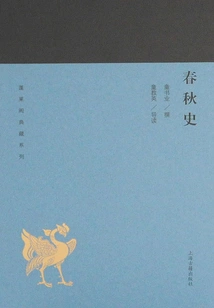
Spring and Autumn History
History春秋史
Children's Book Industry Children's Education Guide Reading
"History of the Spring and Autumn Period" combines vertical and horizontal aspects, clearly sorting out the development and changes in the economy, politics, society, and ethnic relations of the Zhou Dynasty and the major feudal states during the Spring and Autumn Period in 242 years, and dynamically showing all aspects of the Spring and Autumn Period, one of the most intense periods of turmoil and change in our country, to readers.
"History of the Spring and Autumn Period" combines vertical and horizontal aspects, clearly sorting out the development and changes in the economy, politics, society, and ethnic relations of the Zhou Dynasty and the major feudal states during the Spring and Autumn Period in 242 years, and dynamically showing all aspects of the Spring and Autumn Period, one of the most intense periods of turmoil and change in our country, to readers.
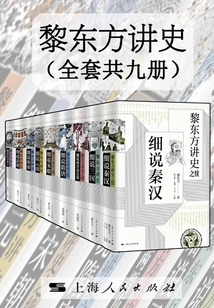
黎东方讲史(全套共九册)
Li Dongfang
The series of books on Li Dongfang's lectures on history include: "The continuation of Li Dongfang's lectures on history. A detailed account of the Qin and Han Dynasties", "The continuation of Li Dongfang's lectures on history. A detailed account of the Three Kingdoms", "The continuation of Li Dongfang's lectures on history. A detailed account of the two Jin, Southern and Northern Dynasties" and "The continuation of Li Dongfang's lectures on history. A detailed account of the Sui and Tang Dynasties". "The continuation of Li Dongfang's lecture on history. A detailed explanation of the Song Dynasty" "The continuation of Li Dongfang's lecture on history. A detailed explanation of the Yuan Dynasty" "The continuation of Li Dongfang's lecture on history. A detailed explanation of the Ming Dynasty" "The continuation of Li Dongfang's lecture on history. A detailed explanation of the Qing Dynasty" "Li Dongfang's lecture on history. A detailed explanation of the founding of the Republic of China". "The Continuation of Li Dongfang's Lecture on History. A Detailed Description of the Qin and Han Dynasties" explains the history from the unification of the six kingdoms by the Qin Dynasty to the establishment of the Jin Dynasty in the form of a history lecture. The important figures involved include Qin Shihuang, Li Si, Liu Bang, Xiang Yu, Emperor Wu of the Han Dynasty, etc.; Important events include burning books and humiliating Confucian scholars, calling deer a horse, the Battle of Gaixia, the Rebellion of the Seven Kingdoms of Wu and Chu, etc. "Li Dongfang's History. A Detailed Description of the Three Kingdoms" uses a vivid and unique "history" form to describe in detail the important figures and events in the historical period from the Yellow Turban Uprising at the end of the Eastern Han Dynasty to the return of the Three Kingdoms to the Jin Dynasty. The book not only analyzes and introduces various events and characters in the Three Kingdoms period clearly, but also adds the author's own judgment and comments, allowing readers to understand the historical truth more deeply and interestingly. The author is also good at using terms that modern people understand to explain various official positions and family relationships in the history, making the whole book easy to understand. This book is the most readable one in the series. "The Continuation of Li Dongfang's Lecture on History. A Detailed Description of the Two Jin and Southern and Northern Dynasties" explains the history from the establishment of the Western Jin Dynasty to the unification of the Southern and Northern Dynasties by Emperor Wen of the Sui Dynasty in the form of a historical lecture. The author Li Dongfang is a famous writer of popular history books. He is familiar with historical facts and has beautiful writing style. The whole book follows Li Dongfang's "history telling" style and is highly readable. "The Continuation of Li Dongfang's Lecture on History. A Detailed Description of the Sui and Tang Dynasties" explains in the form of a history lecture the history from the establishment of the Sui Dynasty by Emperor Wen of the Sui Dynasty to the establishment of the Song Dynasty by Taizu of the Song Dynasty who unified the Five Dynasties and Ten Kingdoms. The important events involved include Emperor Yang of the Sui Dynasty, Emperor Taizong of the Tang Dynasty, Wu Zetian, Emperor Xuanzong of the Tang Dynasty, Wei Zheng, the Xuanwumen Incident, the Anshi Rebellion, etc. Following Li Dongfang's "history telling" style, the history of the Sui and Tang Dynasties is vividly narrated. The "detailed narrative style" is unique in the field of popularizing history. It has wonderful and vivid stories as well as incisive and profound comments, allowing readers to gain rich historical knowledge in easy reading. "The Continuation of Li Dongfang's Lecture on History. A Detailed Description of the Song Dynasty" narrates the history from the unification of the country by Song Taizu to the Yuan Dynasty's destruction of the Southern Song Dynasty, involving important histories and figures of the Song Dynasty, Xixia, Liao, Jin and other regimes. In the form of "history telling", the author narrates major events such as the Chenqiao Mutiny, the Release of Military Power over Drinking Wine, the Chanyuan Alliance, and the Jingkang Incident, as well as important figures such as Song Taizu, Liao Taizu, Jin Taizu, Song Renzong, Song Zong, Yue Fei, Qin Hui, and Wen Tianxiang. He also gives a historical explanation of the Yang family generals, Bao Zheng, and civet cats for princes in folklore. The "detailed description style" contains not only vivid stories and real history, but also insightful comments, and the style is unique. "Li Dongfang's History. Detailed Description of the Yuan Dynasty" narrates the important events and figures from the time when Genghis Khan unified the country to the demise of the Yuan Dynasty. In the form of "history telling", it popularly and vividly tells the historical events such as Genghis Khan's conquest of Western Xia, the destruction of the Jin Kingdom, Kublai Khan's fire in the Southern Song Dynasty, and the establishment of the Yuan Dynasty, as well as historical figures such as Ogedai, Meng Ge, Ahema, Yelu Chucai, and Marco Polo. "The Continuation of Li Dongfang's Lecture on History. Details of the Ming Dynasty" narrates the important events and figures from the establishment of the Ming Dynasty by Zhu Yuanzhang, the founder of the Ming Dynasty, to the demise of the Ming Dynasty. In the form of "history telling", the author narrates the Northern Expedition and the Western Expedition of Ming Taizu, as well as historical events such as Tumu Incident, Seizing the Gate Incident, and the three major cases in the late Ming Dynasty, as well as historical figures such as Chen Youliang, Zhang Shicheng, Xu Da, Chang Yuchun, Liu Bowen, Li Shanchang, Fang Xiaoru, and Zhang Juzheng. "Le Dongfang's History. Detailed Description of the Qing Dynasty" is one of the "Le Dongfang's History Series". It narrates the important events and figures from the establishment of the Qing Dynasty by Nurhachi and Huang Taiji to the demise of the Qing Dynasty, including the War with Russia, the Opium War, the Taiping Revolution, and the Xu coup, the Eight-Power Allied Forces' invasion of China and other historical events, as well as historical figures such as Kangxi, Yongzheng, Qianlong, Wu Sangui, Hong Xiuquan, Heshen, Li Hongzhang, Kang Youwei, Cixi, etc. In addition, it also explains historical mysteries such as Shunzhi becoming a monk, Yongzheng's violent death, and Qianlong's life experience. "Li Dongfang's History. Detailed Description of the Founding of the Republic of China" narrates the important events and figures from the founding of the Xingzhonghui by Sun Yat-sen to the founding of the Republic of China in 1912, including the seven uprisings led by Sun Yat-sen, the "Soviet Report", the road protection trend, the Wuchang Uprising and other historical events, as well as historical figures such as Sun Yat-sen, Huang Xing, Chen Tianhua and Qiu Jin.
The series of books on Li Dongfang's lectures on history include: "The continuation of Li Dongfang's lectures on history. A detailed account of the Qin and Han Dynasties", "The continuation of Li Dongfang's lectures on history. A detailed account of the Three Kingdoms", "The continuation of Li Dongfang's lectures on history. A detailed account of the two Jin, Southern and Northern Dynasties" and "The continuation of Li Dongfang's lectures on history. A detailed account of the Sui and Tang Dynasties". "The continuation of Li Dongfang's lecture on history. A detailed explanation of the Song Dynasty" "The continuation of Li Dongfang's lecture on history. A detailed explanation of the Yuan Dynasty" "The continuation of Li Dongfang's lecture on history. A detailed explanation of the Ming Dynasty" "The continuation of Li Dongfang's lecture on history. A detailed explanation of the Qing Dynasty" "Li Dongfang's lecture on history. A detailed explanation of the founding of the Republic of China". "The Continuation of Li Dongfang's Lecture on History. A Detailed Description of the Qin and Han Dynasties" explains the history from the unification of the six kingdoms by the Qin Dynasty to the establishment of the Jin Dynasty in the form of a history lecture. The important figures involved include Qin Shihuang, Li Si, Liu Bang, Xiang Yu, Emperor Wu of the Han Dynasty, etc.; Important events include burning books and humiliating Confucian scholars, calling deer a horse, the Battle of Gaixia, the Rebellion of the Seven Kingdoms of Wu and Chu, etc. "Li Dongfang's History. A Detailed Description of the Three Kingdoms" uses a vivid and unique "history" form to describe in detail the important figures and events in the historical period from the Yellow Turban Uprising at the end of the Eastern Han Dynasty to the return of the Three Kingdoms to the Jin Dynasty. The book not only analyzes and introduces various events and characters in the Three Kingdoms period clearly, but also adds the author's own judgment and comments, allowing readers to understand the historical truth more deeply and interestingly. The author is also good at using terms that modern people understand to explain various official positions and family relationships in the history, making the whole book easy to understand. This book is the most readable one in the series. "The Continuation of Li Dongfang's Lecture on History. A Detailed Description of the Two Jin and Southern and Northern Dynasties" explains the history from the establishment of the Western Jin Dynasty to the unification of the Southern and Northern Dynasties by Emperor Wen of the Sui Dynasty in the form of a historical lecture. The author Li Dongfang is a famous writer of popular history books. He is familiar with historical facts and has beautiful writing style. The whole book follows Li Dongfang's "history telling" style and is highly readable. "The Continuation of Li Dongfang's Lecture on History. A Detailed Description of the Sui and Tang Dynasties" explains in the form of a history lecture the history from the establishment of the Sui Dynasty by Emperor Wen of the Sui Dynasty to the establishment of the Song Dynasty by Taizu of the Song Dynasty who unified the Five Dynasties and Ten Kingdoms. The important events involved include Emperor Yang of the Sui Dynasty, Emperor Taizong of the Tang Dynasty, Wu Zetian, Emperor Xuanzong of the Tang Dynasty, Wei Zheng, the Xuanwumen Incident, the Anshi Rebellion, etc. Following Li Dongfang's "history telling" style, the history of the Sui and Tang Dynasties is vividly narrated. The "detailed narrative style" is unique in the field of popularizing history. It has wonderful and vivid stories as well as incisive and profound comments, allowing readers to gain rich historical knowledge in easy reading. "The Continuation of Li Dongfang's Lecture on History. A Detailed Description of the Song Dynasty" narrates the history from the unification of the country by Song Taizu to the Yuan Dynasty's destruction of the Southern Song Dynasty, involving important histories and figures of the Song Dynasty, Xixia, Liao, Jin and other regimes. In the form of "history telling", the author narrates major events such as the Chenqiao Mutiny, the Release of Military Power over Drinking Wine, the Chanyuan Alliance, and the Jingkang Incident, as well as important figures such as Song Taizu, Liao Taizu, Jin Taizu, Song Renzong, Song Zong, Yue Fei, Qin Hui, and Wen Tianxiang. He also gives a historical explanation of the Yang family generals, Bao Zheng, and civet cats for princes in folklore. The "detailed description style" contains not only vivid stories and real history, but also insightful comments, and the style is unique. "Li Dongfang's History. Detailed Description of the Yuan Dynasty" narrates the important events and figures from the time when Genghis Khan unified the country to the demise of the Yuan Dynasty. In the form of "history telling", it popularly and vividly tells the historical events such as Genghis Khan's conquest of Western Xia, the destruction of the Jin Kingdom, Kublai Khan's fire in the Southern Song Dynasty, and the establishment of the Yuan Dynasty, as well as historical figures such as Ogedai, Meng Ge, Ahema, Yelu Chucai, and Marco Polo. "The Continuation of Li Dongfang's Lecture on History. Details of the Ming Dynasty" narrates the important events and figures from the establishment of the Ming Dynasty by Zhu Yuanzhang, the founder of the Ming Dynasty, to the demise of the Ming Dynasty. In the form of "history telling", the author narrates the Northern Expedition and the Western Expedition of Ming Taizu, as well as historical events such as Tumu Incident, Seizing the Gate Incident, and the three major cases in the late Ming Dynasty, as well as historical figures such as Chen Youliang, Zhang Shicheng, Xu Da, Chang Yuchun, Liu Bowen, Li Shanchang, Fang Xiaoru, and Zhang Juzheng. "Le Dongfang's History. Detailed Description of the Qing Dynasty" is one of the "Le Dongfang's History Series". It narrates the important events and figures from the establishment of the Qing Dynasty by Nurhachi and Huang Taiji to the demise of the Qing Dynasty, including the War with Russia, the Opium War, the Taiping Revolution, and the Xu coup, the Eight-Power Allied Forces' invasion of China and other historical events, as well as historical figures such as Kangxi, Yongzheng, Qianlong, Wu Sangui, Hong Xiuquan, Heshen, Li Hongzhang, Kang Youwei, Cixi, etc. In addition, it also explains historical mysteries such as Shunzhi becoming a monk, Yongzheng's violent death, and Qianlong's life experience. "Li Dongfang's History. Detailed Description of the Founding of the Republic of China" narrates the important events and figures from the founding of the Xingzhonghui by Sun Yat-sen to the founding of the Republic of China in 1912, including the seven uprisings led by Sun Yat-sen, the "Soviet Report", the road protection trend, the Wuchang Uprising and other historical events, as well as historical figures such as Sun Yat-sen, Huang Xing, Chen Tianhua and Qiu Jin.
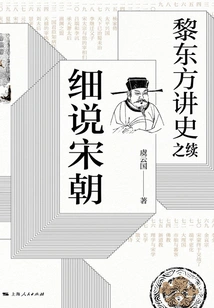
黎东方讲史之续·细说宋朝
Yu Yunguo
"The Continuation of Li Dongfang's Lecture on History. A Detailed Description of the Song Dynasty" narrates the history from the unification of the country by Song Taizu to the Yuan Dynasty's destruction of the Southern Song Dynasty, involving important histories and figures of the Song Dynasty, Xixia, Liao, Jin and other regimes. In the form of "history telling", Mr. Li Dongfang narrated major events such as the Chenqiao Mutiny, the Release of Military Power over Drinking Wine, the Chanyuan Alliance, and the Jingkang Incident, as well as important figures such as Song Taizu, Liao Taizu, Jin Taizu, Song Renzong, Song Zong, Yue Fei, Qin Hui, and Wen Tianxiang. He also gave a historical explanation of the Yang family generals, Bao Zheng, and civet cats for princes in folklore, which is extremely informative and readable. The "detailed description style" contains not only vivid stories and real history, but also insightful comments, and the style is unique.
"The Continuation of Li Dongfang's Lecture on History. A Detailed Description of the Song Dynasty" narrates the history from the unification of the country by Song Taizu to the Yuan Dynasty's destruction of the Southern Song Dynasty, involving important histories and figures of the Song Dynasty, Xixia, Liao, Jin and other regimes. In the form of "history telling", Mr. Li Dongfang narrated major events such as the Chenqiao Mutiny, the Release of Military Power over Drinking Wine, the Chanyuan Alliance, and the Jingkang Incident, as well as important figures such as Song Taizu, Liao Taizu, Jin Taizu, Song Renzong, Song Zong, Yue Fei, Qin Hui, and Wen Tianxiang. He also gave a historical explanation of the Yang family generals, Bao Zheng, and civet cats for princes in folklore, which is extremely informative and readable. The "detailed description style" contains not only vivid stories and real history, but also insightful comments, and the style is unique.
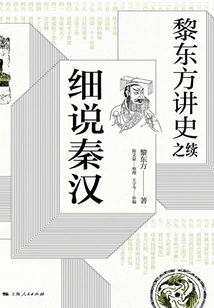
The Continuation of Li Dongfang's Lecture on History·elaborating on the Qin and Han Dynasties
History黎东方讲史之续·细说秦汉
Written By Li Dongfang And Compiled By Chen Wenhao
"The Continuation of Li Dongfang's Lecture on History. A Detailed Description of the Qin and Han Dynasties" explains the history from the unification of the six kingdoms by the Qin Dynasty to the establishment of the Jin Dynasty in the form of a history lecture. The important figures involved include Qin Shihuang, Li Si, Liu Bang, Xiang Yu, Emperor Wu of the Han Dynasty, etc.; Important events include burning books and humiliating Confucian scholars, calling deer a horse, the Battle of Gaixia, the Rebellion of the Seven Kingdoms of Wu and Chu, etc. Li Dongfang's original "detailed explanation style" narrates serious historical stories in a popular and vivid writing style. The five types of "detailed explanations" that have been published have been welcomed by readers. Now the Chinese history from the Qin and Han Dynasties to the Republic of China has been completed at once, and the nine volumes have been released as a set, bringing a feast of "detailed explanation".
"The Continuation of Li Dongfang's Lecture on History. A Detailed Description of the Qin and Han Dynasties" explains the history from the unification of the six kingdoms by the Qin Dynasty to the establishment of the Jin Dynasty in the form of a history lecture. The important figures involved include Qin Shihuang, Li Si, Liu Bang, Xiang Yu, Emperor Wu of the Han Dynasty, etc.; Important events include burning books and humiliating Confucian scholars, calling deer a horse, the Battle of Gaixia, the Rebellion of the Seven Kingdoms of Wu and Chu, etc. Li Dongfang's original "detailed explanation style" narrates serious historical stories in a popular and vivid writing style. The five types of "detailed explanations" that have been published have been welcomed by readers. Now the Chinese history from the Qin and Han Dynasties to the Republic of China has been completed at once, and the nine volumes have been released as a set, bringing a feast of "detailed explanation".
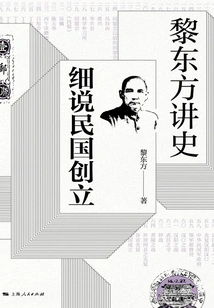
黎东方讲史·细说民国创立
Li Dongfang
"Li Dongfang Tells History. Detailed Description of the Founding of the Republic of China" was written by Mr. Li Dongfang, a famous historian in the United States. It describes the important events and figures from the founding of the Xingzhonghui by Sun Yat-sen to the founding of the Republic of China in 1912. The author Li Dongfang uses the form of "history telling" to popularly and vividly describe the seven uprisings led by Sun Yat-sen, the "Soviet Report Case", the road protection trend, the Wuchang Uprising and other historical events, as well as historical figures such as Sun Yat-sen, Huang Xing, Chen Tianhua and Qiu Jin. The book contains both vivid stories and true history, as well as insightful comments. The "detailed narrative style" used in this series is neither as difficult and boring as official history nor as haphazard as unofficial history. It is a unique style of historical work.
"Li Dongfang Tells History. Detailed Description of the Founding of the Republic of China" was written by Mr. Li Dongfang, a famous historian in the United States. It describes the important events and figures from the founding of the Xingzhonghui by Sun Yat-sen to the founding of the Republic of China in 1912. The author Li Dongfang uses the form of "history telling" to popularly and vividly describe the seven uprisings led by Sun Yat-sen, the "Soviet Report Case", the road protection trend, the Wuchang Uprising and other historical events, as well as historical figures such as Sun Yat-sen, Huang Xing, Chen Tianhua and Qiu Jin. The book contains both vivid stories and true history, as well as insightful comments. The "detailed narrative style" used in this series is neither as difficult and boring as official history nor as haphazard as unofficial history. It is a unique style of historical work.
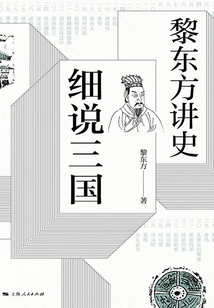
黎东方讲史·细说三国
Li Dongfang
"Li Dongfang's History. Detailed Description of the Three Kingdoms" was written by Mr. Li Dongfang, a famous historian in the United States. The author uses a vivid and unique "historical" form to describe in detail the important figures and events in the historical period from the Yellow Turban Uprising at the end of the Eastern Han Dynasty to the return of the Three Kingdoms to the Jin Dynasty. The book not only clearly analyzes and introduces various events and characters during the Three Kingdoms period, but also adds the author Mr. Li Dongfang's own judgment and comments, allowing readers to understand the historical truth more deeply and with more interest. Mr. Li Dongfang is also good at using terms that modern people understand to explain various official positions and family relationships in the history, making the whole book easy to understand.
"Li Dongfang's History. Detailed Description of the Three Kingdoms" was written by Mr. Li Dongfang, a famous historian in the United States. The author uses a vivid and unique "historical" form to describe in detail the important figures and events in the historical period from the Yellow Turban Uprising at the end of the Eastern Han Dynasty to the return of the Three Kingdoms to the Jin Dynasty. The book not only clearly analyzes and introduces various events and characters during the Three Kingdoms period, but also adds the author Mr. Li Dongfang's own judgment and comments, allowing readers to understand the historical truth more deeply and with more interest. Mr. Li Dongfang is also good at using terms that modern people understand to explain various official positions and family relationships in the history, making the whole book easy to understand.
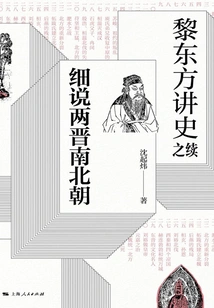
黎东方讲史之续·细说两晋南北朝
Shen Qiwei
"The Continuation of Li Dongfang's Lecture on History. A Detailed Description of the Two Jin and Southern and Northern Dynasties" explains the history from the establishment of the Western Jin Dynasty to the unification of the Southern and Northern Dynasties by Emperor Wen of the Sui Dynasty in the form of a historical lecture.
"The Continuation of Li Dongfang's Lecture on History. A Detailed Description of the Two Jin and Southern and Northern Dynasties" explains the history from the establishment of the Western Jin Dynasty to the unification of the Southern and Northern Dynasties by Emperor Wen of the Sui Dynasty in the form of a historical lecture.
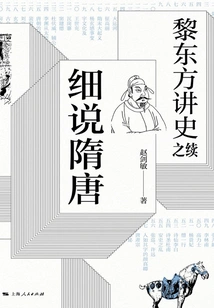
The Continuation of Li Dongfang's Historical Lecture·elaborating on the Sui and Tang Dynasties
History黎东方讲史之续·细说隋唐
Zhao Jianmin
"The Continuation of Li Dongfang's Lecture on History. A Detailed Description of the Sui and Tang Dynasties" explains in the form of a history lecture the history from the establishment of the Sui Dynasty by Emperor Wen of the Sui Dynasty to the establishment of the Song Dynasty by Taizu of the Song Dynasty who unified the Five Dynasties and Ten Kingdoms. The important events involved include Emperor Yang of the Sui Dynasty, Emperor Taizong of the Tang Dynasty, Wu Zetian, Emperor Xuanzong of the Tang Dynasty, Wei Zheng, the Xuanwumen Incident, the Anshi Rebellion, etc. The "detailed narrative style" is unique in the field of popularizing history. It has wonderful and vivid stories as well as incisive and profound comments, allowing readers to gain rich historical knowledge in easy reading.
"The Continuation of Li Dongfang's Lecture on History. A Detailed Description of the Sui and Tang Dynasties" explains in the form of a history lecture the history from the establishment of the Sui Dynasty by Emperor Wen of the Sui Dynasty to the establishment of the Song Dynasty by Taizu of the Song Dynasty who unified the Five Dynasties and Ten Kingdoms. The important events involved include Emperor Yang of the Sui Dynasty, Emperor Taizong of the Tang Dynasty, Wu Zetian, Emperor Xuanzong of the Tang Dynasty, Wei Zheng, the Xuanwumen Incident, the Anshi Rebellion, etc. The "detailed narrative style" is unique in the field of popularizing history. It has wonderful and vivid stories as well as incisive and profound comments, allowing readers to gain rich historical knowledge in easy reading.
黎东方讲史·细说元朝
Li Dongfang
"Li Dongfang Lectures History. Detailed Description of the Yuan Dynasty" is written by Mr. Li Dongfang, a famous historian in the United States. It narrates important events and figures from the time when Genghis Khan unified the country to the fall of the Yuan Dynasty. In the form of "history telling", the author popularly and vividly tells historical events such as Genghis Khan's conquest of Western Xia, the destruction of the Jin Kingdom, Kublai Khan's fire in the Southern Song Dynasty, and the establishment of the Yuan Dynasty, as well as historical figures such as Ogedai, Meng Ge, Ahema, Yelu Chucai, and Marco Polo. The book contains both vivid stories and true history, as well as insightful comments. The "detailed narrative style" used in this series is neither as difficult and boring as official history nor as haphazard as unofficial history. It is a unique style of historical work.
"Li Dongfang Lectures History. Detailed Description of the Yuan Dynasty" is written by Mr. Li Dongfang, a famous historian in the United States. It narrates important events and figures from the time when Genghis Khan unified the country to the fall of the Yuan Dynasty. In the form of "history telling", the author popularly and vividly tells historical events such as Genghis Khan's conquest of Western Xia, the destruction of the Jin Kingdom, Kublai Khan's fire in the Southern Song Dynasty, and the establishment of the Yuan Dynasty, as well as historical figures such as Ogedai, Meng Ge, Ahema, Yelu Chucai, and Marco Polo. The book contains both vivid stories and true history, as well as insightful comments. The "detailed narrative style" used in this series is neither as difficult and boring as official history nor as haphazard as unofficial history. It is a unique style of historical work.
黎东方讲史之续·细说明朝
Li Dongfang
"The Continuation of Li Dongfang's Lecture on History. Details of the Ming Dynasty" was written by Mr. Li Dongfang, a famous historian in the United States. It narrates the important events and figures from the establishment of the Ming Dynasty by Zhu Yuanzhang, the founder of the Ming Dynasty, to the demise of the Ming Dynasty. In the form of "history telling", the author popularly and vividly tells the story of Ming Taizu's Northern Expedition, Western Expedition, as well as historical events such as Tumu Incident, Gate Seizing Incident, and the three major cases in the late Ming Dynasty, as well as historical figures such as Chen Youliang, Zhang Shicheng, Xu Da, Chang Yuchun, Liu Bowen, Li Shanchang, Fang Xiaoru, and Zhang Juzheng. The book contains both vivid stories and real history, and is also quite insightful.
"The Continuation of Li Dongfang's Lecture on History. Details of the Ming Dynasty" was written by Mr. Li Dongfang, a famous historian in the United States. It narrates the important events and figures from the establishment of the Ming Dynasty by Zhu Yuanzhang, the founder of the Ming Dynasty, to the demise of the Ming Dynasty. In the form of "history telling", the author popularly and vividly tells the story of Ming Taizu's Northern Expedition, Western Expedition, as well as historical events such as Tumu Incident, Gate Seizing Incident, and the three major cases in the late Ming Dynasty, as well as historical figures such as Chen Youliang, Zhang Shicheng, Xu Da, Chang Yuchun, Liu Bowen, Li Shanchang, Fang Xiaoru, and Zhang Juzheng. The book contains both vivid stories and real history, and is also quite insightful.
黎东方讲史·细说清朝
Li Dongfang
"Li Dongfang Lectures on History. Detailed Description of the Qing Dynasty" is one of the "Le Dongfang Lectures on History Series" and was written by Mr. Li Dongfang, a famous historian in the United States. It narrates the important events and figures from the establishment of the Qing Dynasty by Nurhachi and Huang Taiji to the demise of the Qing Dynasty. It also explains historical mysteries such as Shunzhi becoming a monk, Yongzheng's violent death, and Qianlong's life experience. The "detailed narrative style" used in this book is neither as difficult and boring as official history nor as haphazard as unofficial history. It is a unique historical work.
"Li Dongfang Lectures on History. Detailed Description of the Qing Dynasty" is one of the "Le Dongfang Lectures on History Series" and was written by Mr. Li Dongfang, a famous historian in the United States. It narrates the important events and figures from the establishment of the Qing Dynasty by Nurhachi and Huang Taiji to the demise of the Qing Dynasty. It also explains historical mysteries such as Shunzhi becoming a monk, Yongzheng's violent death, and Qianlong's life experience. The "detailed narrative style" used in this book is neither as difficult and boring as official history nor as haphazard as unofficial history. It is a unique historical work.
Chuhan Times
History楚汉时报
Han Minghui
This book is one of the "Historical Times" series. It provides a new interpretation and packaging of the history of the Chu and Han Dynasties in the form of an unprecedented, unique and novel "Times". In this book, this history is strung together in the form of "news", sorted by time, and arranged into a compilation of "Chu-Han Times". It uses various news report genres (including editorials, newsletters, columns, abstracts, editorial correspondence, etc.) With humorous and relaxing illustrations, which greatly enhances readability and allows people to easily grasp the history of Chu and Han.
This book is one of the "Historical Times" series. It provides a new interpretation and packaging of the history of the Chu and Han Dynasties in the form of an unprecedented, unique and novel "Times". In this book, this history is strung together in the form of "news", sorted by time, and arranged into a compilation of "Chu-Han Times". It uses various news report genres (including editorials, newsletters, columns, abstracts, editorial correspondence, etc.) With humorous and relaxing illustrations, which greatly enhances readability and allows people to easily grasp the history of Chu and Han.
Three Kingdoms Times
History三国时报
Han Minghui
This book uses the unique and novel "Times" format to give a new interpretation and packaging of the history of the Three Kingdoms period. In this book, the history of the Warring States Period is strung together in the form of "news", sorted by time, and arranged into a compilation of "Three Kingdoms Times". It is equipped with humorous and relaxing illustrations and relevant knowledge, which is both educational and entertaining, allowing people to easily grasp the history of the Three Kingdoms.
This book uses the unique and novel "Times" format to give a new interpretation and packaging of the history of the Three Kingdoms period. In this book, the history of the Warring States Period is strung together in the form of "news", sorted by time, and arranged into a compilation of "Three Kingdoms Times". It is equipped with humorous and relaxing illustrations and relevant knowledge, which is both educational and entertaining, allowing people to easily grasp the history of the Three Kingdoms.