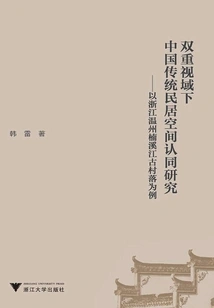
Research on the Spatial Identity of Traditional Chinese Dwellings from Dual Perspectives: Taking the Ancient Village of Nanxi River in Wenzhou, Zhejiang as an Example
by Han Lei
About This Novel
This book takes two ancient villages in the Nanxi River Basin in Wenzhou, Zhejiang as examples. Based on in-depth field surveys, it focuses on four aspects: the history of spatial identity of traditional Chinese dwellings, changes in clan culture, changes in village life culture, and urbanization. It studies the spatial identity of the dwellings of the residents of the ancient villages, and then explores in depth the issues of protection of traditional dwellings' cultural heritage from the perspective of folk beliefs.
Official Sources
What Readers Think
Rating
Community(0)
Official(1)Scraped 2mo ago
There are so many quotes in the book that are difficult to understand without context. A lot of literary content appears in the book, and the book even ends with Ricker's poem, which seems inappropriate for an academic book. What impressed me most were the words related to houses in the hieroglyphics: room, home, house, capital, palace, etc. Regarding the protection of ancient villages, it is indeed necessary to make the village a living village. The ancient village is a relic of the agricultural era. Nowadays, farming is no longer common in the countryside, and clan dependence is no longer so important. Can this village still exist? The town where my home is located is also an ancient town, and I have a similar experience.
Rating
Community(0)
Official(1)Scraped 2mo ago
There are so many quotes in the book that are difficult to understand without context. A lot of literary content appears in the book, and the book even ends with Ricker's poem, which seems inappropriate for an academic book. What impressed me most were the words related to houses in the hieroglyphics: room, home, house, capital, palace, etc. Regarding the protection of ancient villages, it is indeed necessary to make the village a living village. The ancient village is a relic of the agricultural era. Nowadays, farming is no longer common in the countryside, and clan dependence is no longer so important. Can this village still exist? The town where my home is located is also an ancient town, and I have a similar experience.