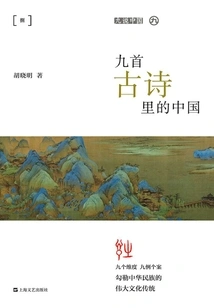
China in Nine Ancient Poems (nine Talks About China)
by Hu Xiaoming
About This Novel
The nine ancient poems selected in this book start from the "Book of Songs" in the pre-Qin era and end with "Miscellaneous Poems of Jihai" written by Gong Zizhen in the Qing Dynasty. With Qu Yuan, Tao Yuanming, Li Bai, Du Fu, and Su Dongpo as the mainstay, Zhang Ruoxu and Wang Yangming are the must-selects. Its characteristic is that it uses the most essential works in the history of poetry to form a Chinese humanistic poetics pedigree from Shi Sao to the late Qing Dynasty, expressing the cultural spirit of ancient Chinese poetry for thousands of years. With one volume in hand, you can find the era and the overall situation, masters and famous works, philosophy and artistic realm, poetic style, Li Du, Tang and Song Dynasty, oddity and integrity, hardness and softness, all at the same time. The way of interpreting ancient poetry is actually a way of life and existence. People today still resonate with ancient poems when they read them, because they awaken our feelings about life and allow us to realize the origin of life and the fullness of existence. Hu Xiaoming is a tenured professor and library director of East China Normal University, deputy director of the Institute of Modern Chinese Thought and Culture at the Humanities and Social Sciences Research Base of the Ministry of Education, and director of the China Jiangnan Literature Research Center. He is also the president of the Ancient Chinese Literature Theory Society and Nanshan Chair Professor of the China Academy of Art. Currently engaged in research on Chinese literary thought and Jiangnan culture. He is the author of "The Spirit of Chinese Poetics", "Moon of Ten Thousand Rivers: The Spiritual Realm of Chinese Landscape Poetry", "Spiritual Roots and Emotions: Research on Pre-Qin Literary Thoughts", "Notes on Cultural Jiangnan", "Poetry and Cultural Soul", "Poetics of Jiangnan Culture", etc.
Official Sources
What Readers Think
Rating
Community(0)
Rating
Community(0)
