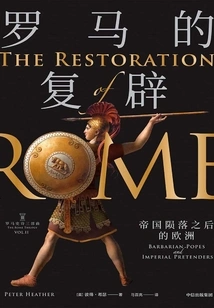
The Restoration of Rome: Europe after the Fall of the Empire
About This Novel
In 476, the last emperor of Western Rome was deposed, and centuries of imperial tradition came to an end. However, the culture, system, and spirit of the empire still existed, and the interests associated with them spurred the ambition to rebuild the empire. In the west, Theoderic the Goth almost restored the empire to its glory. In 511, he used Roman methods to direct the affairs of nearly half of the Western Roman homeland, and his hegemony extended to North Africa and Central Europe. But as soon as he died, the aura of the empire completely disappeared from his former territory. In Eastern Rome, Emperor Justinian, who ascended the throne in 527, compiled legal codes and used war to demonstrate his strength. He conquered North Africa and recaptured Italy. He was like the reviver of the Western Empire. But less than two generations after his death, Eastern Rome's territory was only one-third of its former size, and it no longer had the power to regain its glory. On Christmas Day 800, Charlemagne, a Frank from the north, walked into St. Peter's Basilica. The Pope crowned him and declared him emperor of the Romans. Charlemagne initiated reforms as a divine monarch and unified Christian culture within the empire. After his death, however, the fortunes of the Carolingian dynasty ran out, and succession disputes shattered the dream of a renewed empire. 500 Years after the fall of Western Rome, attempts at revival from the west, east, and north have all failed. The structure of the western part of the Eurasian continent is no longer what it once was, and it is impossible for the empire that embodies the essence of Rome to be resurrected. However, the competition for royal power gave religion great power and inadvertently created the pope's new Roman Empire - Latin Christendom, which has stood for thousands of years since the 11th century and its influence continues to this day.
Official Sources
What Readers Think
Rating
Community(0)
Rating
Community(0)