Library
Browse and search books
3,417 novels found
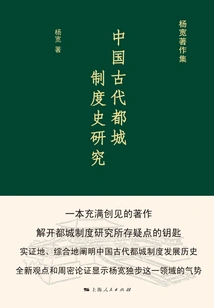
中国古代都城制度史研究
Yang Kuan
"Research on the History of Capital Systems in Ancient China" combines documentary materials with rich archaeological excavation results, and through many field investigations, systematically studies and demonstrates the development and evolution of ancient Chinese capitals and their systems, many of which are original. Mr. Yang Kuan believes that the pre-Qin Dynasty to the Tang Dynasty was the historical stage in which the closed capital system was implemented. During the Western Han and Eastern Han Dynasties, the capital system underwent a major change. The entire capital structure changed from "sitting west and facing east" to "sitting north and facing south." During the Tang and Song Dynasties, the capital system underwent another even greater change, that is, from closed to open. This is a change caused by the rapid growth of the capital's population and social and economic development. "Research on the History of the Capital System in Ancient China" conducts a detailed investigation and study of the capital cities in ancient China, and provides a large number of pictures and materials for illustration.
"Research on the History of Capital Systems in Ancient China" combines documentary materials with rich archaeological excavation results, and through many field investigations, systematically studies and demonstrates the development and evolution of ancient Chinese capitals and their systems, many of which are original. Mr. Yang Kuan believes that the pre-Qin Dynasty to the Tang Dynasty was the historical stage in which the closed capital system was implemented. During the Western Han and Eastern Han Dynasties, the capital system underwent a major change. The entire capital structure changed from "sitting west and facing east" to "sitting north and facing south." During the Tang and Song Dynasties, the capital system underwent another even greater change, that is, from closed to open. This is a change caused by the rapid growth of the capital's population and social and economic development. "Research on the History of the Capital System in Ancient China" conducts a detailed investigation and study of the capital cities in ancient China, and provides a large number of pictures and materials for illustration.
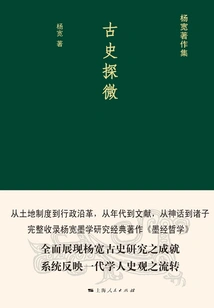
古史探微
Yang Kuan
"Exploration of Ancient History" collects Mr. Yang Kuan's main loose works and compiles them into "Exploration of Ancient History". It covers a wide range of topics, from the land system to the administrative system, from chronology to documents, from mythology to philosophers. All recorded are Mr. Yang Kuan's most representative papers with high academic value in the study of ancient history, covering many aspects such as politics, economy, and academics of the Pre-Qin, Qin and Han dynasties. In particular, Mr. Yang Kuan's research on myths and legends of ancient history has been highly praised by Japanese scholars as emerging from the school of antiquity, fully absorbing the methods and achievements of the school of ancient interpretation, and striving to open up a "new realm" of the "new school of ancient interpretation."
"Exploration of Ancient History" collects Mr. Yang Kuan's main loose works and compiles them into "Exploration of Ancient History". It covers a wide range of topics, from the land system to the administrative system, from chronology to documents, from mythology to philosophers. All recorded are Mr. Yang Kuan's most representative papers with high academic value in the study of ancient history, covering many aspects such as politics, economy, and academics of the Pre-Qin, Qin and Han dynasties. In particular, Mr. Yang Kuan's research on myths and legends of ancient history has been highly praised by Japanese scholars as emerging from the school of antiquity, fully absorbing the methods and achievements of the school of ancient interpretation, and striving to open up a "new realm" of the "new school of ancient interpretation."
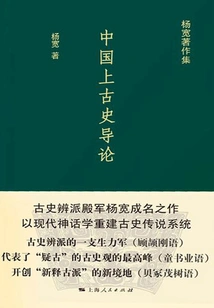
中国上古史导论
Yang Kuan
"Introduction to Ancient Chinese History" was revised by Mr. Yang Kuan based on the first draft of the lecture notes on "Ancient Chinese History" taught at Guangdong Xingqin University in 1937. It compared and referred to various research results and was included in the seventh volume of "Ancient History". It is one of the pioneering works in the field of ancient Chinese history research. In "Introduction to Ancient Chinese History", Yang Kuan proposed the theory of differentiation of mythology, which was a development and supplement to Gu Jiegang's theory of "ancient Chinese history created layer by layer" and became an important successor to the mythology of the ancient history dialectics founded by Gu Jiegang.
"Introduction to Ancient Chinese History" was revised by Mr. Yang Kuan based on the first draft of the lecture notes on "Ancient Chinese History" taught at Guangdong Xingqin University in 1937. It compared and referred to various research results and was included in the seventh volume of "Ancient History". It is one of the pioneering works in the field of ancient Chinese history research. In "Introduction to Ancient Chinese History", Yang Kuan proposed the theory of differentiation of mythology, which was a development and supplement to Gu Jiegang's theory of "ancient Chinese history created layer by layer" and became an important successor to the mythology of the ancient history dialectics founded by Gu Jiegang.
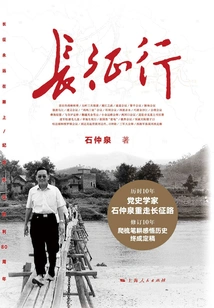
Long March
History长征行
Shi Zhongquan
"The Long March" commemorates the 80th anniversary of the victory of the Chinese Workers' and Peasants' Red Army's Long March. The book examines some important events in the history of the Party, resolves controversial issues, describes the folk customs, ceremonial costumes, dietary specialties, etc. Along the way, and collects a large number of first-hand precious pictures. The author Shi Zhongquan interpreted the connotation of the Long March spirit in the new era based on his inspections on the Long March. This updated edition adds some new investigation content, making up for the important events and links that were not covered in the first edition. It has been expanded from 33 chapters in the first edition to 38 chapters, and the number of words has increased by nearly 200,000. The content is more vivid and rich, and it is the most intuitive channel to understand the history of the Long March and learn the spirit of the Long March.
"The Long March" commemorates the 80th anniversary of the victory of the Chinese Workers' and Peasants' Red Army's Long March. The book examines some important events in the history of the Party, resolves controversial issues, describes the folk customs, ceremonial costumes, dietary specialties, etc. Along the way, and collects a large number of first-hand precious pictures. The author Shi Zhongquan interpreted the connotation of the Long March spirit in the new era based on his inspections on the Long March. This updated edition adds some new investigation content, making up for the important events and links that were not covered in the first edition. It has been expanded from 33 chapters in the first edition to 38 chapters, and the number of words has increased by nearly 200,000. The content is more vivid and rich, and it is the most intuitive channel to understand the history of the Long March and learn the spirit of the Long March.
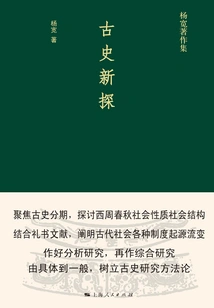
古史新探
Yang Kuan
"New Exploration of Ancient History" mainly explores the social history of the Western Zhou Dynasty and the Spring and Autumn Period, with special emphasis on the social nature and social structure at that time. Institutional research, the second half is the study of various "rituals", especially through the method of corroborating handed down documents with unearthed documents, intensive study of "rituals", including Ji Li, Guan Li, Dasou Li, Countryside Drinking Ceremony, Food Ceremony, Shooting Ceremony, Zhi Jian Ceremony, etc., And many wonderful conclusions were drawn.
"New Exploration of Ancient History" mainly explores the social history of the Western Zhou Dynasty and the Spring and Autumn Period, with special emphasis on the social nature and social structure at that time. Institutional research, the second half is the study of various "rituals", especially through the method of corroborating handed down documents with unearthed documents, intensive study of "rituals", including Ji Li, Guan Li, Dasou Li, Countryside Drinking Ceremony, Food Ceremony, Shooting Ceremony, Zhi Jian Ceremony, etc., And many wonderful conclusions were drawn.
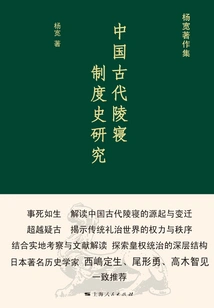
中国古代陵寝制度史研究
Yang Kuan
"Research on the History of the Ancient Mausoleum System in China" is a compilation of Mr. Yang Kuan's research on the history of the ancient mausoleum system. It is divided into three parts: the upper, middle and lower parts. The first part discusses the origin of the mausoleums during the Spring and Autumn Period and the Warring States Period and the changes in the mausoleum system from the mid-Warring States Period to the Tang, Song, Ming and Qing Dynasties; the middle part discusses several topics about the ancient mausoleum system; the second part "Research on the Layout of Ancient Mausoleums and Cemetery" focuses on the layout and structure of the Qin Shihuang Mausoleum and the Qin and Han Mausoleums, which are the results of field investigations.
"Research on the History of the Ancient Mausoleum System in China" is a compilation of Mr. Yang Kuan's research on the history of the ancient mausoleum system. It is divided into three parts: the upper, middle and lower parts. The first part discusses the origin of the mausoleums during the Spring and Autumn Period and the Warring States Period and the changes in the mausoleum system from the mid-Warring States Period to the Tang, Song, Ming and Qing Dynasties; the middle part discusses several topics about the ancient mausoleum system; the second part "Research on the Layout of Ancient Mausoleums and Cemetery" focuses on the layout and structure of the Qin Shihuang Mausoleum and the Qin and Han Mausoleums, which are the results of field investigations.
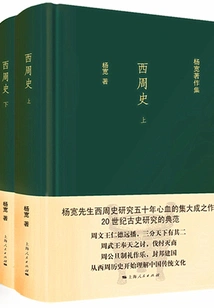
西周史(全二册)
Yang Kuan
The Western Zhou Dynasty refers to the period of about 280 years from the end of the 11th century BC, when King Wu of Zhou conquered the Shang Dynasty, established the Zhou Dynasty, and established its capital in Hao, until King Zhou You was killed in 771 BC and King Ping moved the capital to Luoyi. The Western Zhou Dynasty was a dynasty established after the Xia and Shang dynasties. The political culture of the Western Zhou Dynasty developed brilliantly on the basis of the two generations, and had a profound impact on the development of the entire Chinese history and culture. "History of the Western Zhou Dynasty" is a comprehensive introduction to the history of the Western Zhou Dynasty by the famous historian Yang Kuan. It is the most important work for understanding and studying the history of the Western Zhou Dynasty. "History of the Western Zhou Dynasty" is one of Mr. Yang Kuan's masterpieces. It began to be written in the 1950s and lasted for more than 40 years. The book is divided into seven parts, which respectively discuss the founding of the Western Zhou Dynasty, the land system, agricultural production and handicraft production in the Western Zhou Dynasty, the political institutions, social structures and important systems of the Western Zhou Dynasty, the military and political events of the Western Zhou Dynasty, the Chu and Zeng States in the Western Zhou Dynasty, the cultural education and etiquette of the Western Zhou Dynasty, and the decline and eastward migration of the Western Zhou Dynasty. The book is rich in information, with mutual corroboration of epigraphic inscriptions and documentary records, precise research and detailed and reliable conclusions, and has very high academic value.
The Western Zhou Dynasty refers to the period of about 280 years from the end of the 11th century BC, when King Wu of Zhou conquered the Shang Dynasty, established the Zhou Dynasty, and established its capital in Hao, until King Zhou You was killed in 771 BC and King Ping moved the capital to Luoyi. The Western Zhou Dynasty was a dynasty established after the Xia and Shang dynasties. The political culture of the Western Zhou Dynasty developed brilliantly on the basis of the two generations, and had a profound impact on the development of the entire Chinese history and culture. "History of the Western Zhou Dynasty" is a comprehensive introduction to the history of the Western Zhou Dynasty by the famous historian Yang Kuan. It is the most important work for understanding and studying the history of the Western Zhou Dynasty. "History of the Western Zhou Dynasty" is one of Mr. Yang Kuan's masterpieces. It began to be written in the 1950s and lasted for more than 40 years. The book is divided into seven parts, which respectively discuss the founding of the Western Zhou Dynasty, the land system, agricultural production and handicraft production in the Western Zhou Dynasty, the political institutions, social structures and important systems of the Western Zhou Dynasty, the military and political events of the Western Zhou Dynasty, the Chu and Zeng States in the Western Zhou Dynasty, the cultural education and etiquette of the Western Zhou Dynasty, and the decline and eastward migration of the Western Zhou Dynasty. The book is rich in information, with mutual corroboration of epigraphic inscriptions and documentary records, precise research and detailed and reliable conclusions, and has very high academic value.
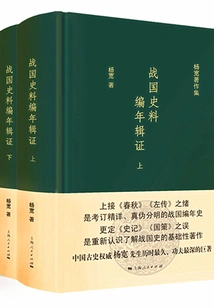
战国史料编年辑证(全二册)
Yang Kuan
"Chronicle of Historical Materials of the Warring States Period" is one of the representative works of Mr. Yang Kuan, a famous historian in my country. This book compiles historical materials by year, starting from the final year of "Zuo Zhuan" and ending with the destruction and unification of the six kingdoms by Qin, starting from the first year of King Zhending of Zhou Dynasty (468 BC) and ending with the 26th year of King Zheng of Qin (221 BC). Historical materials that were originally scattered, messy, dated, and confused about authenticity are organized and revised chronologically, turning them into orderly and authentic historical documents. Each year's historical materials focus on the major events of the year, including the stories, lobbying speeches and letters recorded by political strategists about political and political changes. It extensively uses various ancient books and recent research results, draws on rich materials, and conducts precise research, which has very high academic value.
"Chronicle of Historical Materials of the Warring States Period" is one of the representative works of Mr. Yang Kuan, a famous historian in my country. This book compiles historical materials by year, starting from the final year of "Zuo Zhuan" and ending with the destruction and unification of the six kingdoms by Qin, starting from the first year of King Zhending of Zhou Dynasty (468 BC) and ending with the 26th year of King Zheng of Qin (221 BC). Historical materials that were originally scattered, messy, dated, and confused about authenticity are organized and revised chronologically, turning them into orderly and authentic historical documents. Each year's historical materials focus on the major events of the year, including the stories, lobbying speeches and letters recorded by political strategists about political and political changes. It extensively uses various ancient books and recent research results, draws on rich materials, and conducts precise research, which has very high academic value.
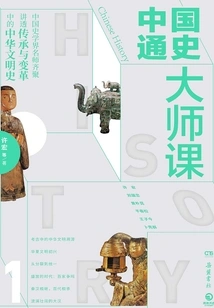
中国通史大师课.1
Xu Hong
This set of books is co-written by many famous teachers and scholars in the current field of Chinese history. It is a set of readers on the general history of China written for everyone. Each teacher focuses on his or her own field of expertise, uses rigorous and scientific methods to sort out the evolution of Chinese history, and analyzes the economic, political, cultural and social development of past dynasties, helping readers understand the overview of Chinese history and grasp the laws and context of historical development. This set of books is rich in content and has reliable information. It is an excellent book for history lovers, students, and professionals to study Chinese history. This set of books is divided into three volumes. This is the first volume, covering the history from the pre-Qin Dynasty to the Han Dynasty.
This set of books is co-written by many famous teachers and scholars in the current field of Chinese history. It is a set of readers on the general history of China written for everyone. Each teacher focuses on his or her own field of expertise, uses rigorous and scientific methods to sort out the evolution of Chinese history, and analyzes the economic, political, cultural and social development of past dynasties, helping readers understand the overview of Chinese history and grasp the laws and context of historical development. This set of books is rich in content and has reliable information. It is an excellent book for history lovers, students, and professionals to study Chinese history. This set of books is divided into three volumes. This is the first volume, covering the history from the pre-Qin Dynasty to the Han Dynasty.
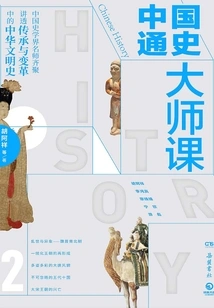
中国通史大师课.2
Hu Axiang
This set of books is co-written by many famous teachers and scholars in the current field of Chinese history. It is a set of readers on the general history of China written for everyone. Each teacher focuses on his or her own field of expertise, uses rigorous and scientific methods to sort out the evolution of Chinese history, and analyzes the economic, political, cultural and social development of past dynasties, helping readers understand the overview of Chinese history and grasp the laws and context of historical development. This set of books is rich in content and has reliable information. It is an excellent book for history lovers, students, and professionals to study Chinese history. This set of books is divided into three volumes. This is the second volume, covering the history from the Three Kingdoms period to the Song Dynasty.
This set of books is co-written by many famous teachers and scholars in the current field of Chinese history. It is a set of readers on the general history of China written for everyone. Each teacher focuses on his or her own field of expertise, uses rigorous and scientific methods to sort out the evolution of Chinese history, and analyzes the economic, political, cultural and social development of past dynasties, helping readers understand the overview of Chinese history and grasp the laws and context of historical development. This set of books is rich in content and has reliable information. It is an excellent book for history lovers, students, and professionals to study Chinese history. This set of books is divided into three volumes. This is the second volume, covering the history from the Three Kingdoms period to the Song Dynasty.
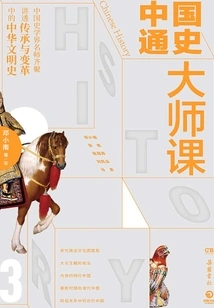
中国通史大师课.3
Deng Xiaonan
This set of books is co-written by many famous teachers and scholars in the current field of Chinese history. It is a set of readers on the general history of China written for everyone. Each teacher focuses on his or her own field of expertise, uses rigorous and scientific methods to sort out the evolution of Chinese history, and analyzes the economic, political, cultural and social development of past dynasties, helping readers understand the overview of Chinese history and grasp the laws and context of historical development. This set of books is rich in content and has reliable information. It is an excellent book for history lovers, students, and professionals to study Chinese history. This set of books is divided into three volumes. This is the third volume, covering history from the Song Dynasty to modern times.
This set of books is co-written by many famous teachers and scholars in the current field of Chinese history. It is a set of readers on the general history of China written for everyone. Each teacher focuses on his or her own field of expertise, uses rigorous and scientific methods to sort out the evolution of Chinese history, and analyzes the economic, political, cultural and social development of past dynasties, helping readers understand the overview of Chinese history and grasp the laws and context of historical development. This set of books is rich in content and has reliable information. It is an excellent book for history lovers, students, and professionals to study Chinese history. This set of books is divided into three volumes. This is the third volume, covering history from the Song Dynasty to modern times.
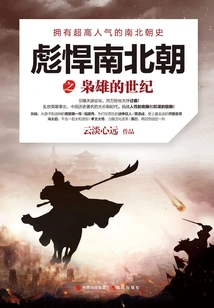
彪悍南北朝之枭雄的世纪
The Clouds Are Calm And The Heart Is Far Away
This is an era of great divisions in Chinese history, an era of great national integration, an era of troubled times, and an era of great heroes. Over the past three hundred years, the Southern and Northern Dynasties have prospered and prospered, and the North and the South have been divided and confronted for a long time, with frequent wars. It was such a legendary era in which Chinese history found a way out in constant conflicts and integration, entering the Sui and Tang Dynasties, which were unprecedentedly powerful, and was reborn from the ashes. This is an era of achieving hegemony, with heroes vying for the throne and turbulence rising. Liu Yu went from being a prodigal son to a god of war, and finally became the first emperor of the Southern Song Dynasty. He conquered thousands of miles during the two Northern Expeditions; Tuoba Tao was good at fighting and killing, violent and heroic, and unified the north, ending the era of the Sixteen Kingdoms and starting the era of the Southern and Northern Dynasties; Liu Yilong was good at maneuvering and accomplished the rule of Yuanjia; He sought to compare with Zhuge; Xiao Daocheng abolished the Song Dynasty and established the Qi Dynasty, resisted the invasion of the Northern Wei Dynasty and the Southern Dynasty, and laid the foundation for the rule of Yongming; Empress Dowager Feng and Taihe reformed the system, which can be regarded as an empress for thousands of years; Emperor Xiaowen, the young emperor, pretended to conquer the south and moved the capital to Luoyang, strongly promoting The Sinicization Reform; Xiao Yan sent two empty letters to determine a state, and the world and the earth worked together to build the Liang Dynasty. He can be called the "King of Koi"; This is the most glorious era, but also the most dangerous era, which has attracted countless heroes to enter the arena of history. The support and abandonment of monarchs and ministers, the games and intrigues in the officialdom, the fight for the throne and secrets of the clan, the expansion and plunder of territories, the blood and intrigue of war, the ambition for power and the long-cherished wish for unification, all staged a different kind of legend in troubled times. When this book was serialized in the Tianya community, it was highly praised by countless fans and was hailed as "one of the best histories of the Southern and Northern Dynasties"!
This is an era of great divisions in Chinese history, an era of great national integration, an era of troubled times, and an era of great heroes. Over the past three hundred years, the Southern and Northern Dynasties have prospered and prospered, and the North and the South have been divided and confronted for a long time, with frequent wars. It was such a legendary era in which Chinese history found a way out in constant conflicts and integration, entering the Sui and Tang Dynasties, which were unprecedentedly powerful, and was reborn from the ashes. This is an era of achieving hegemony, with heroes vying for the throne and turbulence rising. Liu Yu went from being a prodigal son to a god of war, and finally became the first emperor of the Southern Song Dynasty. He conquered thousands of miles during the two Northern Expeditions; Tuoba Tao was good at fighting and killing, violent and heroic, and unified the north, ending the era of the Sixteen Kingdoms and starting the era of the Southern and Northern Dynasties; Liu Yilong was good at maneuvering and accomplished the rule of Yuanjia; He sought to compare with Zhuge; Xiao Daocheng abolished the Song Dynasty and established the Qi Dynasty, resisted the invasion of the Northern Wei Dynasty and the Southern Dynasty, and laid the foundation for the rule of Yongming; Empress Dowager Feng and Taihe reformed the system, which can be regarded as an empress for thousands of years; Emperor Xiaowen, the young emperor, pretended to conquer the south and moved the capital to Luoyang, strongly promoting The Sinicization Reform; Xiao Yan sent two empty letters to determine a state, and the world and the earth worked together to build the Liang Dynasty. He can be called the "King of Koi"; This is the most glorious era, but also the most dangerous era, which has attracted countless heroes to enter the arena of history. The support and abandonment of monarchs and ministers, the games and intrigues in the officialdom, the fight for the throne and secrets of the clan, the expansion and plunder of territories, the blood and intrigue of war, the ambition for power and the long-cherished wish for unification, all staged a different kind of legend in troubled times. When this book was serialized in the Tianya community, it was highly praised by countless fans and was hailed as "one of the best histories of the Southern and Northern Dynasties"!
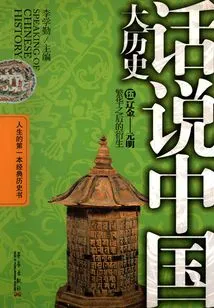
话说中国大历史5:辽金-元明
Li Xueqin
"Talking about the Great History of China" is a six-volume book with pictures and texts, giving a panoramic view of the magnificent historical picture of Chinese civilization. Taking the major historical events that occurred in various periods of China as clues, the historical process from primitive society to the Qing Dynasty is highlighted three-dimensionally, and the content covers the entire trajectory of China's historical development. Special topics and supplementary readings absorb a large number of the latest research results of domestic history, allowing readers to not only appreciate wonderful historical stories, but also truly feel the progress and changes of history. The layout design further reflects the characteristics of strong readability, equal emphasis on pictures and text, and convenient retrieval; more than 3,000 exquisite pictures, printed in full color, present the high-end taste of history and culture.
"Talking about the Great History of China" is a six-volume book with pictures and texts, giving a panoramic view of the magnificent historical picture of Chinese civilization. Taking the major historical events that occurred in various periods of China as clues, the historical process from primitive society to the Qing Dynasty is highlighted three-dimensionally, and the content covers the entire trajectory of China's historical development. Special topics and supplementary readings absorb a large number of the latest research results of domestic history, allowing readers to not only appreciate wonderful historical stories, but also truly feel the progress and changes of history. The layout design further reflects the characteristics of strong readability, equal emphasis on pictures and text, and convenient retrieval; more than 3,000 exquisite pictures, printed in full color, present the high-end taste of history and culture.
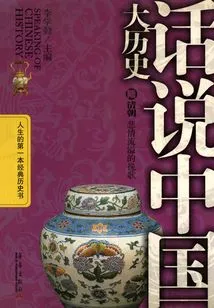
话说中国大历史6:清朝
Li Xueqin
"Talking about the Great History of China" is a six-volume book with pictures and texts, giving a panoramic view of the magnificent historical picture of Chinese civilization. Taking the major historical events that occurred in various periods of China as clues, the historical process from primitive society to the Qing Dynasty is highlighted three-dimensionally, and the content covers the entire trajectory of China's historical development. Special topics and supplementary readings absorb a large number of the latest research results of domestic history, allowing readers to not only appreciate wonderful historical stories, but also truly feel the progress and changes of history. The layout design further reflects the characteristics of strong readability, equal emphasis on pictures and text, and convenient retrieval; more than 3,000 exquisite pictures, printed in full color, present the high-end taste of history and culture.
"Talking about the Great History of China" is a six-volume book with pictures and texts, giving a panoramic view of the magnificent historical picture of Chinese civilization. Taking the major historical events that occurred in various periods of China as clues, the historical process from primitive society to the Qing Dynasty is highlighted three-dimensionally, and the content covers the entire trajectory of China's historical development. Special topics and supplementary readings absorb a large number of the latest research results of domestic history, allowing readers to not only appreciate wonderful historical stories, but also truly feel the progress and changes of history. The layout design further reflects the characteristics of strong readability, equal emphasis on pictures and text, and convenient retrieval; more than 3,000 exquisite pictures, printed in full color, present the high-end taste of history and culture.
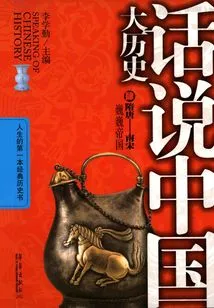
话说中国大历史4:隋唐-南宋
Li Xueqin
"Talking about the Great History of China" is a six-volume book with pictures and texts, giving a panoramic view of the magnificent historical picture of Chinese civilization. Taking the major historical events that occurred in various periods of China as clues, the historical process from primitive society to the Qing Dynasty is highlighted three-dimensionally, and the content covers the entire trajectory of China's historical development. Special topics and supplementary readings absorb a large number of the latest research results of domestic history, allowing readers to not only appreciate wonderful historical stories, but also truly feel the progress and changes of history. The layout design further reflects the characteristics of strong readability, equal emphasis on pictures and text, and convenient retrieval; more than 3,000 exquisite pictures, printed in full color, present the high-end taste of history and culture.
"Talking about the Great History of China" is a six-volume book with pictures and texts, giving a panoramic view of the magnificent historical picture of Chinese civilization. Taking the major historical events that occurred in various periods of China as clues, the historical process from primitive society to the Qing Dynasty is highlighted three-dimensionally, and the content covers the entire trajectory of China's historical development. Special topics and supplementary readings absorb a large number of the latest research results of domestic history, allowing readers to not only appreciate wonderful historical stories, but also truly feel the progress and changes of history. The layout design further reflects the characteristics of strong readability, equal emphasis on pictures and text, and convenient retrieval; more than 3,000 exquisite pictures, printed in full color, present the high-end taste of history and culture.
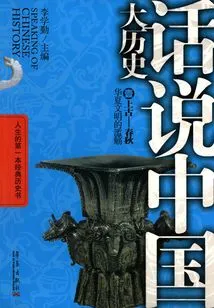
话说中国大历史1:上古-春秋
Li Xueqin
"Talking about the Great History of China" is a six-volume book with pictures and texts, giving a panoramic view of the magnificent historical picture of Chinese civilization. Taking the major historical events that occurred in various periods of China as clues, the historical process from primitive society to the Qing Dynasty is highlighted three-dimensionally, and the content covers the entire trajectory of China's historical development. Special topics and supplementary readings absorb a large number of the latest research results of domestic history, allowing readers to not only appreciate wonderful historical stories, but also truly feel the progress and changes of history. The layout design further reflects the characteristics of strong readability, equal emphasis on pictures and text, and convenient retrieval; more than 3,000 exquisite pictures, printed in full color, present the high-end taste of history and culture.
"Talking about the Great History of China" is a six-volume book with pictures and texts, giving a panoramic view of the magnificent historical picture of Chinese civilization. Taking the major historical events that occurred in various periods of China as clues, the historical process from primitive society to the Qing Dynasty is highlighted three-dimensionally, and the content covers the entire trajectory of China's historical development. Special topics and supplementary readings absorb a large number of the latest research results of domestic history, allowing readers to not only appreciate wonderful historical stories, but also truly feel the progress and changes of history. The layout design further reflects the characteristics of strong readability, equal emphasis on pictures and text, and convenient retrieval; more than 3,000 exquisite pictures, printed in full color, present the high-end taste of history and culture.
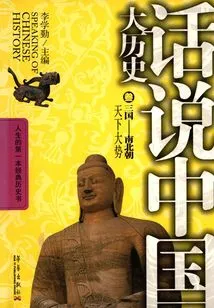
话说中国大历史3:三国-南北朝
Li Xueqin
"Talking about the Great History of China" is a six-volume book with pictures and texts, giving a panoramic view of the magnificent historical picture of Chinese civilization. Taking the major historical events that occurred in various periods of China as clues, the historical process from primitive society to the Qing Dynasty is highlighted three-dimensionally, and the content covers the entire trajectory of China's historical development. Special topics and supplementary readings absorb a large number of the latest research results of domestic history, allowing readers to not only appreciate wonderful historical stories, but also truly feel the progress and changes of history. The layout design further reflects the characteristics of strong readability, equal emphasis on pictures and text, and convenient retrieval; more than 3,000 exquisite pictures, printed in full color, present the high-end taste of history and culture.
"Talking about the Great History of China" is a six-volume book with pictures and texts, giving a panoramic view of the magnificent historical picture of Chinese civilization. Taking the major historical events that occurred in various periods of China as clues, the historical process from primitive society to the Qing Dynasty is highlighted three-dimensionally, and the content covers the entire trajectory of China's historical development. Special topics and supplementary readings absorb a large number of the latest research results of domestic history, allowing readers to not only appreciate wonderful historical stories, but also truly feel the progress and changes of history. The layout design further reflects the characteristics of strong readability, equal emphasis on pictures and text, and convenient retrieval; more than 3,000 exquisite pictures, printed in full color, present the high-end taste of history and culture.
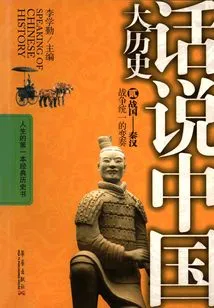
话说中国大历史2:战国-秦汉
Li Xueqin
"Talking about the Great History of China" is a six-volume book with pictures and texts, giving a panoramic view of the magnificent historical picture of Chinese civilization. Taking the major historical events that occurred in various periods of China as clues, the historical process from primitive society to the Qing Dynasty is highlighted three-dimensionally, and the content covers the entire trajectory of China's historical development. Special topics and supplementary readings absorb a large number of the latest research results of domestic history, allowing readers to not only appreciate wonderful historical stories, but also truly feel the progress and changes of history. The layout design further reflects the characteristics of strong readability, equal emphasis on pictures and text, and convenient retrieval; more than 3,000 exquisite pictures, printed in full color, present the high-end taste of history and culture.
"Talking about the Great History of China" is a six-volume book with pictures and texts, giving a panoramic view of the magnificent historical picture of Chinese civilization. Taking the major historical events that occurred in various periods of China as clues, the historical process from primitive society to the Qing Dynasty is highlighted three-dimensionally, and the content covers the entire trajectory of China's historical development. Special topics and supplementary readings absorb a large number of the latest research results of domestic history, allowing readers to not only appreciate wonderful historical stories, but also truly feel the progress and changes of history. The layout design further reflects the characteristics of strong readability, equal emphasis on pictures and text, and convenient retrieval; more than 3,000 exquisite pictures, printed in full color, present the high-end taste of history and culture.
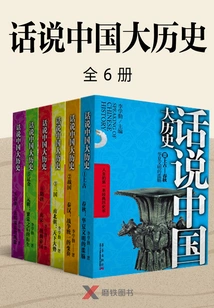
话说中国大历史(全6册)
Li Xueqin
"Talking about the Great History of China" is a six-volume book with pictures and texts, giving a panoramic view of the magnificent historical picture of Chinese civilization. Taking the major historical events that occurred in various periods of China as clues, the historical process from primitive society to the Qing Dynasty is highlighted three-dimensionally, and the content covers the entire trajectory of China's historical development. Special topics and supplementary readings absorb a large number of the latest research results of domestic history, allowing readers to not only appreciate wonderful historical stories, but also truly feel the progress and changes of history. The layout design further reflects the characteristics of strong readability, equal emphasis on pictures and text, and convenient retrieval; more than 3,000 exquisite pictures, printed in full color, present the high-end taste of history and culture.
"Talking about the Great History of China" is a six-volume book with pictures and texts, giving a panoramic view of the magnificent historical picture of Chinese civilization. Taking the major historical events that occurred in various periods of China as clues, the historical process from primitive society to the Qing Dynasty is highlighted three-dimensionally, and the content covers the entire trajectory of China's historical development. Special topics and supplementary readings absorb a large number of the latest research results of domestic history, allowing readers to not only appreciate wonderful historical stories, but also truly feel the progress and changes of history. The layout design further reflects the characteristics of strong readability, equal emphasis on pictures and text, and convenient retrieval; more than 3,000 exquisite pictures, printed in full color, present the high-end taste of history and culture.
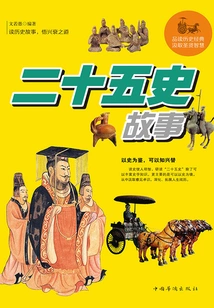
二十五史故事
Wen Ruoyu
"Historical Records" was written by Sima Qian of the Western Han Dynasty and has a total of 130 volumes. The record begins with the legendary Yellow Emperor and ends with Emperor Wu of the Han Dynasty during the Taichu period, a total of about 3,000 years. It is the first biographical general history of our country. "Historical Records" pioneered the compilation method of biographical history books centered on biographies, and became a model for the revision of history by feudal dynasties in the past.
"Historical Records" was written by Sima Qian of the Western Han Dynasty and has a total of 130 volumes. The record begins with the legendary Yellow Emperor and ends with Emperor Wu of the Han Dynasty during the Taichu period, a total of about 3,000 years. It is the first biographical general history of our country. "Historical Records" pioneered the compilation method of biographical history books centered on biographies, and became a model for the revision of history by feudal dynasties in the past.
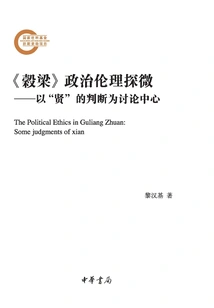
《穀梁》政治伦理探微:以“贤”的判断为讨论中心(上下册)
Lai Hanji
The "Six Classics" are the outstanding ideological and cultural heritage of Chinese traditional culture and the Chinese nation. They are also one of the driving forces that promote the continuous advancement and development of contemporary social culture, so they are worthy of in-depth study. This book selects several core issues related to traditional Chinese political ethics in "Gu Liang", such as death righteousness, revenge, caution, etc., And uses the method of classic interpretation, in-depth interpretation of the text, comparison of different texts and detailed elucidation of principles. It makes a relatively systematic and in-depth discussion on the formation and historical evolution, basic connotation, main characteristics, and value orientation of the relevant content of traditional Chinese political ethics consciousness, and can put forward many independent opinions of its own. It has made some breakthroughs in some text interpretations and theoretical elucidations that have not been published before.
The "Six Classics" are the outstanding ideological and cultural heritage of Chinese traditional culture and the Chinese nation. They are also one of the driving forces that promote the continuous advancement and development of contemporary social culture, so they are worthy of in-depth study. This book selects several core issues related to traditional Chinese political ethics in "Gu Liang", such as death righteousness, revenge, caution, etc., And uses the method of classic interpretation, in-depth interpretation of the text, comparison of different texts and detailed elucidation of principles. It makes a relatively systematic and in-depth discussion on the formation and historical evolution, basic connotation, main characteristics, and value orientation of the relevant content of traditional Chinese political ethics consciousness, and can put forward many independent opinions of its own. It has made some breakthroughs in some text interpretations and theoretical elucidations that have not been published before.
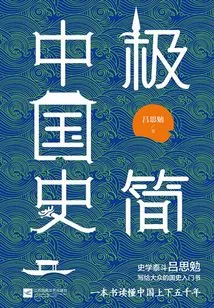
Minimalist Chinese History
History极简中国史
Lu Simian
This book is a reprint of "The History of the Country, Fuxing Senior High School Textbook" written by Lu Simian, a leading historian. The book is divided into six chapters: introduction, ancient history, medieval history, modern history, modern history, and conclusion. In the book, Mr. Lu Simian uses concise and smooth words to give a comprehensive and concise description of China's politics, geography, society, and culture from ancient times to modern times. The writing is plain and easy to understand, the organization is clear, and the insights are novel and unique. This book is the first general history of China written in vernacular. It is also an epoch-making masterpiece that allows people to quickly understand Chinese history. It is praised by readers at home and abroad as "a book that allows you to understand five thousand years of Chinese history."
This book is a reprint of "The History of the Country, Fuxing Senior High School Textbook" written by Lu Simian, a leading historian. The book is divided into six chapters: introduction, ancient history, medieval history, modern history, modern history, and conclusion. In the book, Mr. Lu Simian uses concise and smooth words to give a comprehensive and concise description of China's politics, geography, society, and culture from ancient times to modern times. The writing is plain and easy to understand, the organization is clear, and the insights are novel and unique. This book is the first general history of China written in vernacular. It is also an epoch-making masterpiece that allows people to quickly understand Chinese history. It is praised by readers at home and abroad as "a book that allows you to understand five thousand years of Chinese history."
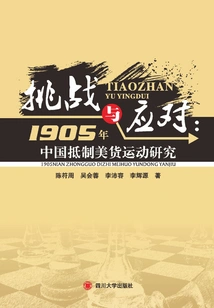
挑战与应对:1905年中国抵制美货运动研究
Chen Fuzhou Wu Huirong Li Peirong Li Huiyuan
Based on a brief review of the development of Sino-US relations and the evolution of the Qing government's policy on Chinese workers going abroad, this book analyzes the crises faced by the late Qing government. It then examines the origins of China's boycott of American goods in 1905 and the performance of the late Qing government from the perspective of challenges and responses. It also sorts out the understanding and response of social public opinion in the late Qing Dynasty. Finally, it summarizes and explains the reasons for the failure of the boycott movement.
Based on a brief review of the development of Sino-US relations and the evolution of the Qing government's policy on Chinese workers going abroad, this book analyzes the crises faced by the late Qing government. It then examines the origins of China's boycott of American goods in 1905 and the performance of the late Qing government from the perspective of challenges and responses. It also sorts out the understanding and response of social public opinion in the late Qing Dynasty. Finally, it summarizes and explains the reasons for the failure of the boycott movement.
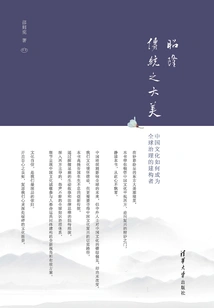
昭隆传统之大美:中国文化如何成为全球治理的建构者
Shao Zexian
When the book "The Great Beauty of Zhaolong Tradition" was written, the Sino-US trade war had not yet emerged. Nowadays, the United States uses a very graphic and ugly face to highlight the fundamental dilemma of Chinese culture explored in this book. These dilemmas will continue to change, but their patterns and answers are all in this book. Read this book quietly and suddenly realize the subtle door for Chinese culture to look at the West and move toward renaissance.
When the book "The Great Beauty of Zhaolong Tradition" was written, the Sino-US trade war had not yet emerged. Nowadays, the United States uses a very graphic and ugly face to highlight the fundamental dilemma of Chinese culture explored in this book. These dilemmas will continue to change, but their patterns and answers are all in this book. Read this book quietly and suddenly realize the subtle door for Chinese culture to look at the West and move toward renaissance.
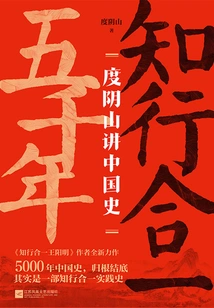
知行合一五千年:度阴山讲中国史(独家定制版)
Duyin Mountain
[Exclusively published on WeChat Reading, exclusive customized version] "Five Thousand Years of Knowledge and Action" is a set of popular Chinese history, with a total of five volumes, telling the five thousand years of history from the mythical period to the end of the Qing Dynasty. This is the first volume, which mainly talks about the historical development from the founding of Pangu to Wang Mang of the Western Han Dynasty. The content of this book is written in a chronological format, including famous historical events and figures, which helps readers establish a historical framework. At the same time, the author also embeds spiritual knowledge into the interpretation of history. The viewpoint is novel, which is a unique highlight different from other history books.
[Exclusively published on WeChat Reading, exclusive customized version] "Five Thousand Years of Knowledge and Action" is a set of popular Chinese history, with a total of five volumes, telling the five thousand years of history from the mythical period to the end of the Qing Dynasty. This is the first volume, which mainly talks about the historical development from the founding of Pangu to Wang Mang of the Western Han Dynasty. The content of this book is written in a chronological format, including famous historical events and figures, which helps readers establish a historical framework. At the same time, the author also embeds spiritual knowledge into the interpretation of history. The viewpoint is novel, which is a unique highlight different from other history books.
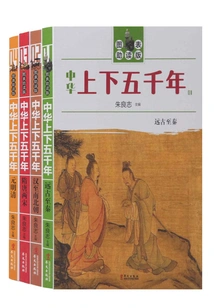
中国上下五千年(图表助读版)
Zhu Liangzhi
This is a set of excellent popular Chinese history and culture books for teenagers. This book uses time as a clue to connect the long history of the Chinese nation from ancient times to the eve of modern times, from the pre-Qin Dynasty when hundreds of schools of thought contended, to the Qin and Han Dynasties when the world was unified, from the Wei, Jin, Southern and Northern Dynasties with elegant literary talents, to the Sui and Tang Dynasties when "all nations worshiped the crown princes with beautiful clothes", the prosperous lanes of the Song Dynasty, and the science and technology of the Yuan Dynasty. The technological achievements and the lingering afterglow of the feudal prosperous times of the Ming and Qing Dynasties are all presented in the form of stories in the book, allowing young people to learn from history and expand their knowledge, while also feeling the warmth under the seemingly cold surface of history, and feeling the national pride from the five thousand years of history.
This is a set of excellent popular Chinese history and culture books for teenagers. This book uses time as a clue to connect the long history of the Chinese nation from ancient times to the eve of modern times, from the pre-Qin Dynasty when hundreds of schools of thought contended, to the Qin and Han Dynasties when the world was unified, from the Wei, Jin, Southern and Northern Dynasties with elegant literary talents, to the Sui and Tang Dynasties when "all nations worshiped the crown princes with beautiful clothes", the prosperous lanes of the Song Dynasty, and the science and technology of the Yuan Dynasty. The technological achievements and the lingering afterglow of the feudal prosperous times of the Ming and Qing Dynasties are all presented in the form of stories in the book, allowing young people to learn from history and expand their knowledge, while also feeling the warmth under the seemingly cold surface of history, and feeling the national pride from the five thousand years of history.
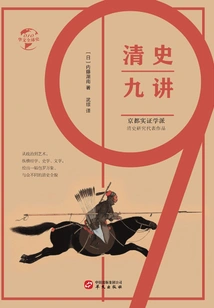
清史九讲
E
This book is the content of two lectures given by Konan Naito in 1911 and 1915 when he was teaching at Kyoto University. In 1911, when the Qing Dynasty was in turmoil, the author made an incisive and profound analysis of why the Qing Dynasty came to an end from three aspects: military strength, finance, and ideology, and made a bold and rational prediction of China's future destiny. In 1915, China had entered the period of the Republic of China. The author once again sorted out the history of the Qing Dynasty, from politics to art, spanning Confucian classics, history, and literature. Listening to Naito Honan's lecture on history, listening to a dusty past event, I gained a new understanding. When I opened the scroll, I realized that there is still such a way to read history, and there is still that way to study it.
This book is the content of two lectures given by Konan Naito in 1911 and 1915 when he was teaching at Kyoto University. In 1911, when the Qing Dynasty was in turmoil, the author made an incisive and profound analysis of why the Qing Dynasty came to an end from three aspects: military strength, finance, and ideology, and made a bold and rational prediction of China's future destiny. In 1915, China had entered the period of the Republic of China. The author once again sorted out the history of the Qing Dynasty, from politics to art, spanning Confucian classics, history, and literature. Listening to Naito Honan's lecture on history, listening to a dusty past event, I gained a new understanding. When I opened the scroll, I realized that there is still such a way to read history, and there is still that way to study it.
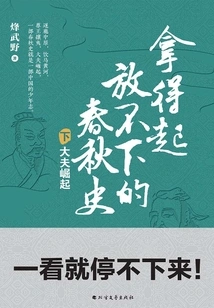
拿得起放不下的春秋史(下册)
Fengwuye
This book tells the story of the troubled times of more than three hundred years in the Spring and Autumn Period from multiple dimensions: politics, military, geography, economy, and culture. It overturns the explanations of some major historical events and reinterprets the historical truth. The second volume tells the story of the later Spring and Autumn Period, which spans from the death of King Chuzhuang in 591 to the division of the Jin Dynasty among the three families in 453. After the death of King Chuzhuang, the story of the Five Hegemons of the Spring and Autumn Period came to an end. Due to the persecution of the feudal system, the power of the officials within each prince's country rose, and many highly capable officials became the actual rulers of the country. "Rites and music conquer the great masters" became the main theme of this era.
This book tells the story of the troubled times of more than three hundred years in the Spring and Autumn Period from multiple dimensions: politics, military, geography, economy, and culture. It overturns the explanations of some major historical events and reinterprets the historical truth. The second volume tells the story of the later Spring and Autumn Period, which spans from the death of King Chuzhuang in 591 to the division of the Jin Dynasty among the three families in 453. After the death of King Chuzhuang, the story of the Five Hegemons of the Spring and Autumn Period came to an end. Due to the persecution of the feudal system, the power of the officials within each prince's country rose, and many highly capable officials became the actual rulers of the country. "Rites and music conquer the great masters" became the main theme of this era.
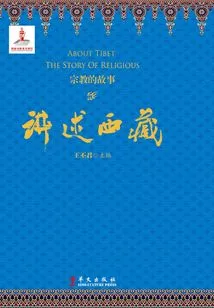
讲述西藏:宗教的故事
Edited By Wang Pijun
"The Story of Religion" shows the unique religious culture of Tibet from several aspects such as religious customs, reincarnated living Buddhas, scripture study system, religious art and the combination of religion and modern civilization. It tells about the devout faith on the snowy plateau and the art rooted in faith. Behind the crimson cassocks, we can see the real life of the monks, the inheritance of religion in modern life, and the integration of it with modern life.
"The Story of Religion" shows the unique religious culture of Tibet from several aspects such as religious customs, reincarnated living Buddhas, scripture study system, religious art and the combination of religion and modern civilization. It tells about the devout faith on the snowy plateau and the art rooted in faith. Behind the crimson cassocks, we can see the real life of the monks, the inheritance of religion in modern life, and the integration of it with modern life.
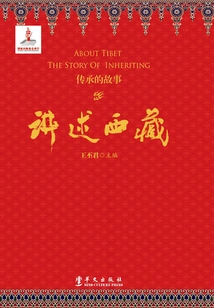
讲述西藏:传承的故事
Edited By Wang Pijun
"The Story of Inheritance" shows the image of such a group of contemporary Tibetans. Some of them adhere to the craftsmanship passed down by their families for generations. Although they are old, they are still working hard for the art that has been passed down by their families and even the nation for thousands of years and seriously cultivating the next generation; some have achieved remarkable results in their respective fields, but they still do not forget to actively and seriously study and promote the excellent culture of the Tibetan nation; some are the younger generation of the plateau. The times have opened up a new picture of their lives and provided a variety of rich possibilities. They connect the past, present and future of Tibet.
"The Story of Inheritance" shows the image of such a group of contemporary Tibetans. Some of them adhere to the craftsmanship passed down by their families for generations. Although they are old, they are still working hard for the art that has been passed down by their families and even the nation for thousands of years and seriously cultivating the next generation; some have achieved remarkable results in their respective fields, but they still do not forget to actively and seriously study and promote the excellent culture of the Tibetan nation; some are the younger generation of the plateau. The times have opened up a new picture of their lives and provided a variety of rich possibilities. They connect the past, present and future of Tibet.
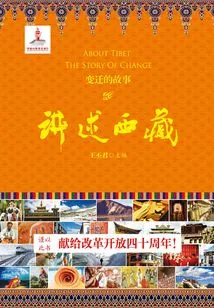
讲述西藏:变迁的故事
Edited By Wang Pijun
"The Story of Change" tells the stories of ordinary people during Tibet's greatest historical change. For ordinary people, every social change is a destiny choice. In this historical process, we will all actively or passively become participants in the reform. For them, historical changes are real life.
"The Story of Change" tells the stories of ordinary people during Tibet's greatest historical change. For ordinary people, every social change is a destiny choice. In this historical process, we will all actively or passively become participants in the reform. For them, historical changes are real life.
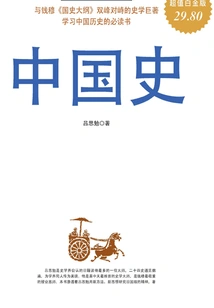
Chinese History
History中国史
Lu Simian
This book is the first Chinese historical work written in vernacular Chinese - General History of China - written by historian Lu Simian. The book covers the complete history of China in three major periods: ancient times, modern times and modern times. It is the most authoritative and complete history of the country to date.
This book is the first Chinese historical work written in vernacular Chinese - General History of China - written by historian Lu Simian. The book covers the complete history of China in three major periods: ancient times, modern times and modern times. It is the most authoritative and complete history of the country to date.
图解资治通鉴
Sima Guang
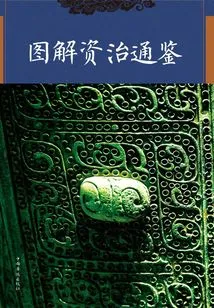
"Zizhi Tongjian" is China's first chronological general history. Its content starts from the 23rd year of King Weilie of Zhou Dynasty (403 BC) to the 6th year of Xiande of the Later Zhou Dynasty (959 AD). It covers the historical events of sixteen dynasties and more than 1,300 years, and is divided into sixteen eras according to dynasties. That is, "Zhou Ji" (five volumes), "Qin Ji" (three volumes), "Han Ji" (60 volumes), "Wei Ji" (10 volumes), "Jin Ji" (40 volumes), "Song Ji" (16 volumes), "Qi Ji" (10 volumes), "Liang Ji" (22 volumes), "Chen Ji" (ten volumes), "Sui Ji" (eight volumes), "Tang Ji" (eighty-one volumes), "Later Liang Ji" (six volumes), "Later Tang Ji" (eight volumes), "Later Jin Ji" (six volumes), "Later Han Ji" (four volumes), "Later Zhou Ji" (five volumes). Altogether, there are 294 volumes in total, of which the Sui, Tang and Five Dynasties sections account for the largest proportion.
"Zizhi Tongjian" is China's first chronological general history. Its content starts from the 23rd year of King Weilie of Zhou Dynasty (403 BC) to the 6th year of Xiande of the Later Zhou Dynasty (959 AD). It covers the historical events of sixteen dynasties and more than 1,300 years, and is divided into sixteen eras according to dynasties. That is, "Zhou Ji" (five volumes), "Qin Ji" (three volumes), "Han Ji" (60 volumes), "Wei Ji" (10 volumes), "Jin Ji" (40 volumes), "Song Ji" (16 volumes), "Qi Ji" (10 volumes), "Liang Ji" (22 volumes), "Chen Ji" (ten volumes), "Sui Ji" (eight volumes), "Tang Ji" (eighty-one volumes), "Later Liang Ji" (six volumes), "Later Tang Ji" (eight volumes), "Later Jin Ji" (six volumes), "Later Han Ji" (four volumes), "Later Zhou Ji" (five volumes). Altogether, there are 294 volumes in total, of which the Sui, Tang and Five Dynasties sections account for the largest proportion.
Compiled by Zizhi Tongjian
History资治通鉴精编
Sima Guang
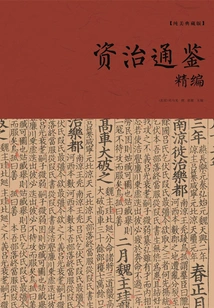
"Zizhi Tongjian" is China's first chronological general history. Its content starts from the 23rd year of King Weilie of Zhou Dynasty (403 BC) to the 6th year of Xiande of the Later Zhou Dynasty (959). It covers the historical events of sixteen dynasties and more than 1,300 years, and is divided into sixteen periods according to dynasty. That is, Zhou Ji (five volumes), Qin Ji (three volumes), Han Ji (sixty volumes), Wei Ji (ten volumes), Jin Ji (forty volumes), Song Ji (sixteen volumes), Qi Ji (ten volumes), Liang Ji (twenty-two volumes), Chen Ji (ten volumes), Sui Ji ( Eight volumes), "Tang Ji" (81 volumes), "Hou Liang Ji" (six volumes), "Later Tang Ji" (eight volumes), "Hou Jin Ji" (six volumes), "Hou Han Ji" (four volumes), "Hou Zhou Ji" (five volumes), adding up to a total of 294 volumes, of which the Sui, Tang and Five Dynasties account for the largest proportion.
"Zizhi Tongjian" is China's first chronological general history. Its content starts from the 23rd year of King Weilie of Zhou Dynasty (403 BC) to the 6th year of Xiande of the Later Zhou Dynasty (959). It covers the historical events of sixteen dynasties and more than 1,300 years, and is divided into sixteen periods according to dynasty. That is, Zhou Ji (five volumes), Qin Ji (three volumes), Han Ji (sixty volumes), Wei Ji (ten volumes), Jin Ji (forty volumes), Song Ji (sixteen volumes), Qi Ji (ten volumes), Liang Ji (twenty-two volumes), Chen Ji (ten volumes), Sui Ji ( Eight volumes), "Tang Ji" (81 volumes), "Hou Liang Ji" (six volumes), "Later Tang Ji" (eight volumes), "Hou Jin Ji" (six volumes), "Hou Han Ji" (four volumes), "Hou Zhou Ji" (five volumes), adding up to a total of 294 volumes, of which the Sui, Tang and Five Dynasties account for the largest proportion.
大宋国士·北宋卷
Chen Qiwen
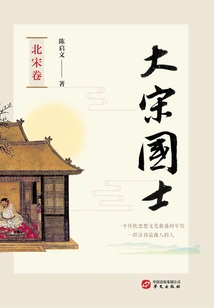
This book is based on historical narrative. This volume captures ten national scholars from the Northern Song Dynasty, Zhao Pu, Kou Zhun, Yan Shu, Fan Zhongyan, Ouyang Xiu, Su Xun, Su Shi, Su Che, Wang Anshi, and Sima Guang, as key figures and narrative subjects in interpreting the history of the Song Dynasty. Each character is written in an independent chapter, presenting the character's profile from all aspects such as life story, values, lifestyle, spiritual world, etc., And extensively cutting into the political, economic, military, and cultural background of their respective dynasties, reproducing the unique living environment of their era, and using historical materials as the basis to restore history as truly as possible. Each character is related to each other, complementing each other and integrating into one. The whole manuscript can be regarded as a historical essay or a micro-biography of ten national scholars in the Southern Song Dynasty. The two volumes of the Northern Song Dynasty and the Southern Song Dynasty can also be considered as a comprehensive and three-dimensional empirical record that reflects the Song Dynasty from its founding, prosperity to decline.
This book is based on historical narrative. This volume captures ten national scholars from the Northern Song Dynasty, Zhao Pu, Kou Zhun, Yan Shu, Fan Zhongyan, Ouyang Xiu, Su Xun, Su Shi, Su Che, Wang Anshi, and Sima Guang, as key figures and narrative subjects in interpreting the history of the Song Dynasty. Each character is written in an independent chapter, presenting the character's profile from all aspects such as life story, values, lifestyle, spiritual world, etc., And extensively cutting into the political, economic, military, and cultural background of their respective dynasties, reproducing the unique living environment of their era, and using historical materials as the basis to restore history as truly as possible. Each character is related to each other, complementing each other and integrating into one. The whole manuscript can be regarded as a historical essay or a micro-biography of ten national scholars in the Southern Song Dynasty. The two volumes of the Northern Song Dynasty and the Southern Song Dynasty can also be considered as a comprehensive and three-dimensional empirical record that reflects the Song Dynasty from its founding, prosperity to decline.
大宋国士·南宋卷
Chen Qiwen
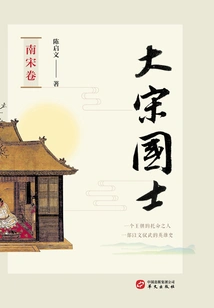
This book is based on historical narrative. This volume captures ten national scholars from the Southern Song Dynasty: Li Gang, Chen Gui, Zhang Jun, Yu Yunwen, Hu Quan, Lu You, Xin Qiji, Zhu Xi, Chen Wenlong, and Wen Tianxiang, as key figures and narrative subjects in interpreting the history of the Song Dynasty. Each character is written in an independent chapter, presenting the character's profile from all aspects such as life story, values, lifestyle, spiritual world, etc., And extensively cutting into the political, economic, military, and cultural background of their respective dynasties, reproducing the unique living environment of their era, and using historical materials as the basis to restore history as truly as possible. Each character is related to each other, complementing each other and integrating into one. The whole manuscript can be regarded as a historical essay or a micro-biography of ten national scholars in the Southern Song Dynasty. The two volumes of the Southern Song Dynasty and the Northern Song Dynasty can also be considered as a comprehensive and three-dimensional empirical record that reflects the Song Dynasty from its founding, prosperity to decline.
This book is based on historical narrative. This volume captures ten national scholars from the Southern Song Dynasty: Li Gang, Chen Gui, Zhang Jun, Yu Yunwen, Hu Quan, Lu You, Xin Qiji, Zhu Xi, Chen Wenlong, and Wen Tianxiang, as key figures and narrative subjects in interpreting the history of the Song Dynasty. Each character is written in an independent chapter, presenting the character's profile from all aspects such as life story, values, lifestyle, spiritual world, etc., And extensively cutting into the political, economic, military, and cultural background of their respective dynasties, reproducing the unique living environment of their era, and using historical materials as the basis to restore history as truly as possible. Each character is related to each other, complementing each other and integrating into one. The whole manuscript can be regarded as a historical essay or a micro-biography of ten national scholars in the Southern Song Dynasty. The two volumes of the Southern Song Dynasty and the Northern Song Dynasty can also be considered as a comprehensive and three-dimensional empirical record that reflects the Song Dynasty from its founding, prosperity to decline.
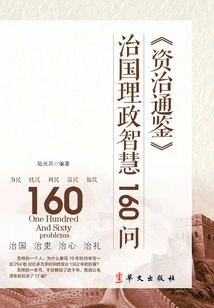
《资治通鉴》治国理政智慧160问
Lu Yuanbing
Politicians must have the ambition to govern the country and bring peace to the world, have the concept of putting the people first, have the ability to govern the country and bring peace to the country, and have the wisdom to serve the people, care for the people, benefit the people, enrich the people, and benefit the people. The essence of governing a country lies in governing officials. The key to governing officials lies in governing the mind. The core of governing the mind lies in governing rituals. Sima Guang's "Zizhi Tongjian" provides mirror-like answers to these fundamental questions of state governance. Mao Zedong once pointed out, "Zi Zhi Tong Jian" is well written, has a well-narrated narrative, and has a complete story of the rise and fall of past dynasties and the control of chaos. We can read this book critically to familiarize ourselves with historical events and draw lessons from it." Because of this, Mao Zedong read this historical masterpiece 17 times. In order to overcome the reading difficulties of classical Chinese, this book organizes the contents of "Zi Zhi Tong Jian" that directly explain state governance into categories. From the aspects of governing the country, governing officials, governing the heart, and governing etiquette, this book uses modern vernacular and adopts a question-and-answer format to closely focus on the issues that leaders should pay attention to in life and work as officials. It presents the mirrors provided by "Zi Zhi Tong Jian" one by one. It is hoped that readers can gain historical experience and broaden their governance ideas.
Politicians must have the ambition to govern the country and bring peace to the world, have the concept of putting the people first, have the ability to govern the country and bring peace to the country, and have the wisdom to serve the people, care for the people, benefit the people, enrich the people, and benefit the people. The essence of governing a country lies in governing officials. The key to governing officials lies in governing the mind. The core of governing the mind lies in governing rituals. Sima Guang's "Zizhi Tongjian" provides mirror-like answers to these fundamental questions of state governance. Mao Zedong once pointed out, "Zi Zhi Tong Jian" is well written, has a well-narrated narrative, and has a complete story of the rise and fall of past dynasties and the control of chaos. We can read this book critically to familiarize ourselves with historical events and draw lessons from it." Because of this, Mao Zedong read this historical masterpiece 17 times. In order to overcome the reading difficulties of classical Chinese, this book organizes the contents of "Zi Zhi Tong Jian" that directly explain state governance into categories. From the aspects of governing the country, governing officials, governing the heart, and governing etiquette, this book uses modern vernacular and adopts a question-and-answer format to closely focus on the issues that leaders should pay attention to in life and work as officials. It presents the mirrors provided by "Zi Zhi Tong Jian" one by one. It is hoped that readers can gain historical experience and broaden their governance ideas.
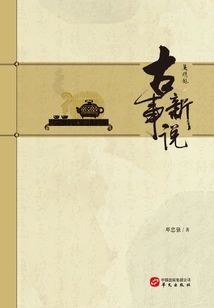
古事新说
Deng Zhongqiang
This manuscript is a collection of miscellaneous thoughts on reading history published by the author Deng Zhongqiang in the past ten years, including "Gourds, Bad Horses and Dialectics", "Selecting Talents and Appointments Must Follow the Mass Line", "Cao Ding Is Not Possible", "Gossip about Life and Death", "Reminiscent of Gongsun Hong", "The Tragedy of Jia Yi", "Officials serving the people", "Frugality to educate the people", "Gong Zizhen's view of talents", "Exposing shortcomings and rumors", "Character of good history" and other articles. Using the method of "telling ancient stories in detail" to tell historical stories, it is related to the criticism of life in historical criticism, giving these ancient stories new significance of the times.
This manuscript is a collection of miscellaneous thoughts on reading history published by the author Deng Zhongqiang in the past ten years, including "Gourds, Bad Horses and Dialectics", "Selecting Talents and Appointments Must Follow the Mass Line", "Cao Ding Is Not Possible", "Gossip about Life and Death", "Reminiscent of Gongsun Hong", "The Tragedy of Jia Yi", "Officials serving the people", "Frugality to educate the people", "Gong Zizhen's view of talents", "Exposing shortcomings and rumors", "Character of good history" and other articles. Using the method of "telling ancient stories in detail" to tell historical stories, it is related to the criticism of life in historical criticism, giving these ancient stories new significance of the times.
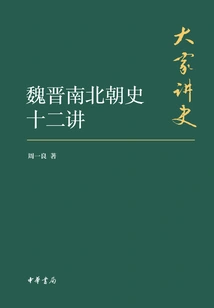
Twelve Lectures on the History of Wei, Jin, Southern and Northern Dynasties (collection Edition)
History魏晋南北朝史十二讲(典藏本)
Zhou Liang
The famous historian Mr. Zhou Yiliang has studied both China and the West. He has high attainments in the fields of Chinese history, Japanese history, Asian history, Dunhuang studies, and the history of Sino-foreign relations. He is especially profound in the study of the history of the Wei, Jin, Southern and Northern Dynasties. This book is a collection of Mr. Zhou's papers on the history of the Wei, Jin, Southern and Northern Dynasties. The content involves discussions on important historical figures, such as Zhuge Liang, Emperor Wu of Liang, etc.; Reviews of laws and regulations, such as the Wei and Jin military systems, civil and military official positions in the Southern Dynasties, and the three-chief system in the Northern Wei Dynasty; it also examines the Qing discussions in the two Jin and Southern Dynasties, the refugees during the Two Jin Dynasties, Yuwen Zhou's race, "Shishuo Xinyu" and its author Liu Yiqing, as well as historical issues in the Wei, Jin, Southern and Northern Dynasties, etc. In addition to collecting monographs, several of the author's notes on social life during this period are also compiled into "Parts of Social Life in Wei, Jin, Southern and Northern Dynasties" to present the social scene at that time. The "Preface" of this book includes "Me and the History of the Wei, Jin, Southern and Northern Dynasties", and the appendices "Academic Autobiography" and "How to Study the History of the Wei, Jin, Southern and Northern Dynasties", making it easier for readers to understand the author's academic philosophy and academic process.
The famous historian Mr. Zhou Yiliang has studied both China and the West. He has high attainments in the fields of Chinese history, Japanese history, Asian history, Dunhuang studies, and the history of Sino-foreign relations. He is especially profound in the study of the history of the Wei, Jin, Southern and Northern Dynasties. This book is a collection of Mr. Zhou's papers on the history of the Wei, Jin, Southern and Northern Dynasties. The content involves discussions on important historical figures, such as Zhuge Liang, Emperor Wu of Liang, etc.; Reviews of laws and regulations, such as the Wei and Jin military systems, civil and military official positions in the Southern Dynasties, and the three-chief system in the Northern Wei Dynasty; it also examines the Qing discussions in the two Jin and Southern Dynasties, the refugees during the Two Jin Dynasties, Yuwen Zhou's race, "Shishuo Xinyu" and its author Liu Yiqing, as well as historical issues in the Wei, Jin, Southern and Northern Dynasties, etc. In addition to collecting monographs, several of the author's notes on social life during this period are also compiled into "Parts of Social Life in Wei, Jin, Southern and Northern Dynasties" to present the social scene at that time. The "Preface" of this book includes "Me and the History of the Wei, Jin, Southern and Northern Dynasties", and the appendices "Academic Autobiography" and "How to Study the History of the Wei, Jin, Southern and Northern Dynasties", making it easier for readers to understand the author's academic philosophy and academic process.
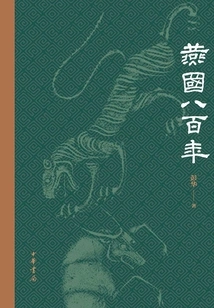
燕国八百年
Peng Hua
This book uses the "double evidence method" and combines handed down documents, unearthed documents and archaeological data to discuss the history and culture of the Yan Kingdom for more than 800 years (from the middle of the 11th century BC to 222 BC), and comprehensively reveals the various connotations of the "Yan Kingdom's history and culture". Vertically, the "archaeological culture" of the Yan land (before the Western Zhou Dynasty enfeoffed Yan) and the history of the Yan state itself (founding, development, prosperity, decline and destruction) are all described in detail; horizontally, the Yan state's economy, politics, ancient tribes and ancient countries, ideological culture, social life, and historical figures are all described and discussed in detail, making the Yan state two or three thousand years ago vividly appear on the page.
This book uses the "double evidence method" and combines handed down documents, unearthed documents and archaeological data to discuss the history and culture of the Yan Kingdom for more than 800 years (from the middle of the 11th century BC to 222 BC), and comprehensively reveals the various connotations of the "Yan Kingdom's history and culture". Vertically, the "archaeological culture" of the Yan land (before the Western Zhou Dynasty enfeoffed Yan) and the history of the Yan state itself (founding, development, prosperity, decline and destruction) are all described in detail; horizontally, the Yan state's economy, politics, ancient tribes and ancient countries, ideological culture, social life, and historical figures are all described and discussed in detail, making the Yan state two or three thousand years ago vividly appear on the page.
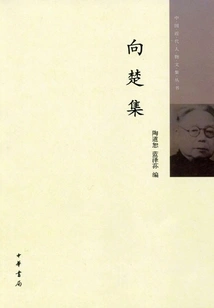
向楚集(中国近代人物文集丛书)
Compiled By Tao Daoshu And Lan Zesun
Xiang Chu (1877-1961), courtesy name Xianqiao (also known as Xianqiao) and nicknamed Jianweng, was born in Ba County. In the twenty-eighth year of Guangxu (1902), he was elected. He studied at Shandong Academy and was one of the three outstanding disciples of Zhao Xi, a famous scholar in the late Qing Dynasty. He worked for the revolution in his early years and was one of the main propagandists, organizers and leaders of the Revolution of 1911 in Chongqing. Later he served as the Secretary-General of the Shu Military Government and the Secretary-General of the Sichuan Military Government. During the war to protect the country, he participated in instigating the Zhaohe warship uprising. He once served as Director of Government Affairs, Acting Governor, and Director of Education of Sichuan Province. Later, he concentrated on academics and served successively as professor of the Chinese Language and Literature Department of Nanjing University, professor and director of the Chinese Language Department of Chengdu Normal University, dean of the School of Chinese Literature of Public Sichuan University, dean of the School of Liberal Arts of National Sichuan University and professor of the Chinese Department. Because of his outstanding contributions in both meritorious service (revolutionary activities) and academic activities (academic activities), he was awarded the inscription "Become a Confucian" by Sun Yat-sen. Xiang Chu wrote a self-edited collection of essays called "Gonghui Manuscripts", of which the academic portion was submitted to Zhonghua Book Company. Later, due to the start of the "Cultural Revolution", the academic manuscripts were withdrawn, and most of the articles on revolutionary activities were lost. Now his family members, Mr. Tao Daoshu and his wife from the School of Liberal Arts of Sichuan University, have returned to the board of directors, and the book has been compiled and published for the first time. The contents include: "Gong Hui Manuo·Academic Edition" (copied by the family), Collection of Foreign Languages (articles, prefaces and memoirs about the Revolution of 1911 collected extensively from newspapers and periodicals), "Poetry Collection in Kongshiju" (a collection of poems recording revolutionary activities, academic contacts, and life experiences), etc.
Xiang Chu (1877-1961), courtesy name Xianqiao (also known as Xianqiao) and nicknamed Jianweng, was born in Ba County. In the twenty-eighth year of Guangxu (1902), he was elected. He studied at Shandong Academy and was one of the three outstanding disciples of Zhao Xi, a famous scholar in the late Qing Dynasty. He worked for the revolution in his early years and was one of the main propagandists, organizers and leaders of the Revolution of 1911 in Chongqing. Later he served as the Secretary-General of the Shu Military Government and the Secretary-General of the Sichuan Military Government. During the war to protect the country, he participated in instigating the Zhaohe warship uprising. He once served as Director of Government Affairs, Acting Governor, and Director of Education of Sichuan Province. Later, he concentrated on academics and served successively as professor of the Chinese Language and Literature Department of Nanjing University, professor and director of the Chinese Language Department of Chengdu Normal University, dean of the School of Chinese Literature of Public Sichuan University, dean of the School of Liberal Arts of National Sichuan University and professor of the Chinese Department. Because of his outstanding contributions in both meritorious service (revolutionary activities) and academic activities (academic activities), he was awarded the inscription "Become a Confucian" by Sun Yat-sen. Xiang Chu wrote a self-edited collection of essays called "Gonghui Manuscripts", of which the academic portion was submitted to Zhonghua Book Company. Later, due to the start of the "Cultural Revolution", the academic manuscripts were withdrawn, and most of the articles on revolutionary activities were lost. Now his family members, Mr. Tao Daoshu and his wife from the School of Liberal Arts of Sichuan University, have returned to the board of directors, and the book has been compiled and published for the first time. The contents include: "Gong Hui Manuo·Academic Edition" (copied by the family), Collection of Foreign Languages (articles, prefaces and memoirs about the Revolution of 1911 collected extensively from newspapers and periodicals), "Poetry Collection in Kongshiju" (a collection of poems recording revolutionary activities, academic contacts, and life experiences), etc.
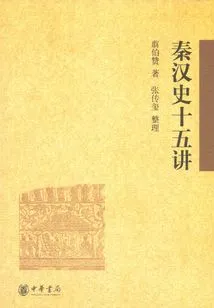
秦汉史十五讲
Written By Jian Bo And Compiled By Zhang Chuanxi
This book is one of the "Famous Masters Telling History" series of Zhonghua Book Company. It is a selection of the famous historian Jian Bozan's articles on the study of Qin and Han history, compiled by Mr. Zhang Chuanxi. The content involves major political, economic, cultural, social and other issues in the history of the Qin and Han Dynasties, such as "The Establishment of the Qin Dynasty and its Historical Situation", "The Formation of the Han Nationality and the Activities of Other Nationalities in the Country", "Commercial Cities and International Trade in the Western Han Dynasty", "On the Disaster of Party Confinement at the End of the Eastern Han Dynasty", "The Development of Confucianism in the Two Han Dynasties", etc.
This book is one of the "Famous Masters Telling History" series of Zhonghua Book Company. It is a selection of the famous historian Jian Bozan's articles on the study of Qin and Han history, compiled by Mr. Zhang Chuanxi. The content involves major political, economic, cultural, social and other issues in the history of the Qin and Han Dynasties, such as "The Establishment of the Qin Dynasty and its Historical Situation", "The Formation of the Han Nationality and the Activities of Other Nationalities in the Country", "Commercial Cities and International Trade in the Western Han Dynasty", "On the Disaster of Party Confinement at the End of the Eastern Han Dynasty", "The Development of Confucianism in the Two Han Dynasties", etc.
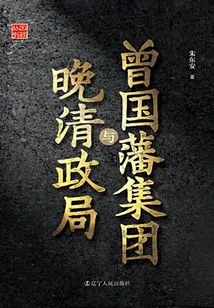
曾国藩集团与晚清政局
Zhu Dongan
This book tells the story of a decades-long game. In this protracted chess game, the Empress Dowager Cixi, Prince Gong Yixin, the important minister Sushun, as well as emerging and powerful Han ministers such as Hu Linyi, Zuo Zongtang, and Li Hongzhang all appeared on the stage and performed historical dramas. The rise of the Zeng Guofan clique destroyed the Taiping Heavenly Kingdom and created the so-called "Tongzhi Zhongxing"; at the same time, it greatly changed the power structure and structure, laying the foundation for the fall of the Qing Dynasty.
This book tells the story of a decades-long game. In this protracted chess game, the Empress Dowager Cixi, Prince Gong Yixin, the important minister Sushun, as well as emerging and powerful Han ministers such as Hu Linyi, Zuo Zongtang, and Li Hongzhang all appeared on the stage and performed historical dramas. The rise of the Zeng Guofan clique destroyed the Taiping Heavenly Kingdom and created the so-called "Tongzhi Zhongxing"; at the same time, it greatly changed the power structure and structure, laying the foundation for the fall of the Qing Dynasty.
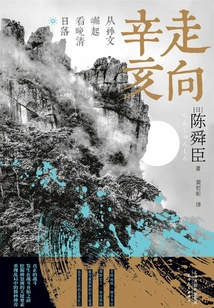
走向辛亥:从孙文崛起看晚清日落
H
The real battle often happens before the battle begins. What role did Empress Dowager Cixi play in the crisis of the late Qing Dynasty? How responsible is Kang Youwei for the failure of the Reform Movement of 1898? Why does Li Hongzhang call himself a "paper maker"? How did Sun Yat-sen gradually become the "Father of the Republic" of the Republic of China?
The real battle often happens before the battle begins. What role did Empress Dowager Cixi play in the crisis of the late Qing Dynasty? How responsible is Kang Youwei for the failure of the Reform Movement of 1898? Why does Li Hongzhang call himself a "paper maker"? How did Sun Yat-sen gradually become the "Father of the Republic" of the Republic of China?
中国史纲(国民阅读经典)
Zhang Yinlin
"Outline of Chinese History" is the only monograph left by Mr. Zhang Yinlin in his short life. It was originally part of the high school history textbook that the author was hired to compile. Based on his own view of history, the author made a relatively strict selection and selection of the Chinese history before the Eastern Han Dynasty, integrated the previous research results with his own "playing and exploring", and used storytelling to write about the social changes, ideological contributions, and the personalities and activities of several important figures during the period. The chapters are arranged concisely and appropriately, the writing skills are lively and moving, the thoughts and wisdom are thorough and accessible, and the author's talent and intention are revealed at any time. In this publication, the author's unfinished Chapter 12 and the three texts written by the author for the Song History part of the book are listed as appendices. And more than 20 color pictures are selected.
"Outline of Chinese History" is the only monograph left by Mr. Zhang Yinlin in his short life. It was originally part of the high school history textbook that the author was hired to compile. Based on his own view of history, the author made a relatively strict selection and selection of the Chinese history before the Eastern Han Dynasty, integrated the previous research results with his own "playing and exploring", and used storytelling to write about the social changes, ideological contributions, and the personalities and activities of several important figures during the period. The chapters are arranged concisely and appropriately, the writing skills are lively and moving, the thoughts and wisdom are thorough and accessible, and the author's talent and intention are revealed at any time. In this publication, the author's unfinished Chapter 12 and the three texts written by the author for the Song History part of the book are listed as appendices. And more than 20 color pictures are selected.
Outline of Chinese History
History中国人史纲
Bo Yang
"Outline of Chinese History" starts from the mythical age of Pangu and ends with the war of aggression against China launched by the Eight-Power Allied Forces in the early 20th century. It uses 100 years (a century) as the chronological unit. It is a masterpiece that covers five thousand years of Chinese history. Bo Yang had no intention of hypocritically praising the emperors and generals. He abandoned all meaningless posthumous titles and honorary titles, pulled them down from the altar, called them by their first names, and judged them as ordinary Chinese. At the same time, Bo Yang also focused on the ordinary Chinese people who were drowned by history. He sympathized with the working people, despised the powerful warlords, and took humanity and human rights as his only foothold. Therefore, "Outline of Chinese History" is a general history of China with attitude and human touch. We can learn from the "Outline of Chinese History" that there are five major turning points that have affected China's national destiny: the three golden ages (the contention of a hundred schools of thought in the Spring and Autumn Period and the Warring States Period, the prosperous Tang Dynasty during the Li Shimin period, and the Qing Dynasty established by the Manchus who entered the country) and the Great Split Era ( It was these five major turning points that established China's territory, culture, values, economic structure, social stratification and international status. When reviewing Chinese history through Bo Yang's writings, we can also find that history keeps repeating itself, and China has always learned the same lesson for thousands of years: every dynasty in Chinese history reached a bottleneck period forty or fifty years after its establishment, or when it passed to the second or third generation. When entering the narrow channel of the bottleneck, unless the ruling class has a high degree of wisdom and ability, they cannot avoid encountering a bottleneck crisis that is enough to undo all their previous efforts, that is, to destroy their country and their family. History shows that if you can get through this bottleneck, you can achieve longer-term stability; if you can't get through this bottleneck or remain stuck in this bottleneck, it will inevitably collapse. In the cycle of history, China has gone through thousands of years. Although it has gone through vicissitudes of life, it remains unyielding. As Bo Yang said: China is like a huge cube. It will topple in the waves of water and sea. But after the wave recedes, it still stands there proudly, facing the world from the other side, never disappearing, never sinking. Read "Outline of Chinese History" to understand China's past, and then create our own golden age.
"Outline of Chinese History" starts from the mythical age of Pangu and ends with the war of aggression against China launched by the Eight-Power Allied Forces in the early 20th century. It uses 100 years (a century) as the chronological unit. It is a masterpiece that covers five thousand years of Chinese history. Bo Yang had no intention of hypocritically praising the emperors and generals. He abandoned all meaningless posthumous titles and honorary titles, pulled them down from the altar, called them by their first names, and judged them as ordinary Chinese. At the same time, Bo Yang also focused on the ordinary Chinese people who were drowned by history. He sympathized with the working people, despised the powerful warlords, and took humanity and human rights as his only foothold. Therefore, "Outline of Chinese History" is a general history of China with attitude and human touch. We can learn from the "Outline of Chinese History" that there are five major turning points that have affected China's national destiny: the three golden ages (the contention of a hundred schools of thought in the Spring and Autumn Period and the Warring States Period, the prosperous Tang Dynasty during the Li Shimin period, and the Qing Dynasty established by the Manchus who entered the country) and the Great Split Era ( It was these five major turning points that established China's territory, culture, values, economic structure, social stratification and international status. When reviewing Chinese history through Bo Yang's writings, we can also find that history keeps repeating itself, and China has always learned the same lesson for thousands of years: every dynasty in Chinese history reached a bottleneck period forty or fifty years after its establishment, or when it passed to the second or third generation. When entering the narrow channel of the bottleneck, unless the ruling class has a high degree of wisdom and ability, they cannot avoid encountering a bottleneck crisis that is enough to undo all their previous efforts, that is, to destroy their country and their family. History shows that if you can get through this bottleneck, you can achieve longer-term stability; if you can't get through this bottleneck or remain stuck in this bottleneck, it will inevitably collapse. In the cycle of history, China has gone through thousands of years. Although it has gone through vicissitudes of life, it remains unyielding. As Bo Yang said: China is like a huge cube. It will topple in the waves of water and sea. But after the wave recedes, it still stands there proudly, facing the world from the other side, never disappearing, never sinking. Read "Outline of Chinese History" to understand China's past, and then create our own golden age.
唐人时代:一部富有烟火气息的唐代生活史
Shi Yongtao
This book attempts to abandon the current way of writing about food, clothing, housing and transportation in categories. It attempts to salvage the fragments of daily life scattered in the vast history from basic historical materials, Tang Dynasty notes, Tang legends, Dunhuang posthumous documents and cultural relics. It uses the cultivation of scholars and supplemented by popular writing methods to unfold the restoration of life in the Tang Dynasty through topics such as foreign civilization, clothing, nobles and civilians, food, cities, marriage, imperial examinations, art and other topics. This attempt not only makes the text highly readable, but also allows readers to understand the society of the Tang Dynasty in a parallel era through comparative writing throughout the book, allowing today's people to complete a fascinating investigation of the entire society and life of the Tang people.
This book attempts to abandon the current way of writing about food, clothing, housing and transportation in categories. It attempts to salvage the fragments of daily life scattered in the vast history from basic historical materials, Tang Dynasty notes, Tang legends, Dunhuang posthumous documents and cultural relics. It uses the cultivation of scholars and supplemented by popular writing methods to unfold the restoration of life in the Tang Dynasty through topics such as foreign civilization, clothing, nobles and civilians, food, cities, marriage, imperial examinations, art and other topics. This attempt not only makes the text highly readable, but also allows readers to understand the society of the Tang Dynasty in a parallel era through comparative writing throughout the book, allowing today's people to complete a fascinating investigation of the entire society and life of the Tang people.
Taiping Heavenly Kingdom
History实说太平天国
Sheng Xunchang
This book is an academic work written by Mr. Sheng Xunchang based on the information he collected about the Taiping Heavenly Kingdom. However, it is different from the general academic writing method. The author targets a wider audience. He does not focus on research, but tells the historical facts and directly narrates the confirmed research conclusions to the readers. Therefore, reading this book is like reading about the Taiping Heavenly Kingdom. The true history of going deep into its interior is also based on the author's comprehensive and sufficient grasp of the Taiping Heavenly Kingdom information. It is greatly different from the previously published monographs on the history of the Taiping Heavenly Kingdom. Therefore, the narrative is more comprehensive and objective. It corrects some previous discussions that relied on conjecture and guesswork due to lack of information, or concluded one-sidedly and fallaciously, or made unreasonable statements to cater to a certain trend of thought.
This book is an academic work written by Mr. Sheng Xunchang based on the information he collected about the Taiping Heavenly Kingdom. However, it is different from the general academic writing method. The author targets a wider audience. He does not focus on research, but tells the historical facts and directly narrates the confirmed research conclusions to the readers. Therefore, reading this book is like reading about the Taiping Heavenly Kingdom. The true history of going deep into its interior is also based on the author's comprehensive and sufficient grasp of the Taiping Heavenly Kingdom information. It is greatly different from the previously published monographs on the history of the Taiping Heavenly Kingdom. Therefore, the narrative is more comprehensive and objective. It corrects some previous discussions that relied on conjecture and guesswork due to lack of information, or concluded one-sidedly and fallaciously, or made unreasonable statements to cater to a certain trend of thought.
蝴蝶效应:历史漩涡中的汉唐帝国
Tang Dao Fisherman
The first part begins with Sima Qian, the author of "Historical Records". From the origin of Sima Qian's palace punishment to the "legend" of Li Ling's family, it leads to the dynasty wars from the Sui to the Tang Dynasty, as well as the feud between the "Hongnong Yang Family" and the "Longxi Li Family" that have been entangled for hundreds of years behind the history. This part ends with the Anshi Rebellion caused by Emperor Xuanzong of Tang Dynasty.
The first part begins with Sima Qian, the author of "Historical Records". From the origin of Sima Qian's palace punishment to the "legend" of Li Ling's family, it leads to the dynasty wars from the Sui to the Tang Dynasty, as well as the feud between the "Hongnong Yang Family" and the "Longxi Li Family" that have been entangled for hundreds of years behind the history. This part ends with the Anshi Rebellion caused by Emperor Xuanzong of Tang Dynasty.