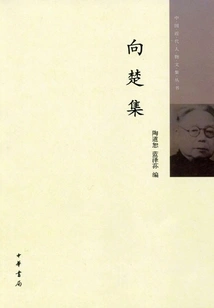
Collection of Xiang Chu (anthology Series of Modern Chinese Figures)
by Compiled By Tao Daoshu And Lan Zesun
About This Novel
Xiang Chu (1877-1961), courtesy name Xianqiao (also known as Xianqiao) and nicknamed Jianweng, was born in Ba County. In the twenty-eighth year of Guangxu (1902), he was elected. He studied at Shandong Academy and was one of the three outstanding disciples of Zhao Xi, a famous scholar in the late Qing Dynasty. He worked for the revolution in his early years and was one of the main propagandists, organizers and leaders of the Revolution of 1911 in Chongqing. Later he served as the Secretary-General of the Shu Military Government and the Secretary-General of the Sichuan Military Government. During the war to protect the country, he participated in instigating the Zhaohe warship uprising. He once served as Director of Government Affairs, Acting Governor, and Director of Education of Sichuan Province. Later, he concentrated on academics and served successively as professor of the Chinese Language and Literature Department of Nanjing University, professor and director of the Chinese Language Department of Chengdu Normal University, dean of the School of Chinese Literature of Public Sichuan University, dean of the School of Liberal Arts of National Sichuan University and professor of the Chinese Department. Because of his outstanding contributions in both meritorious service (revolutionary activities) and academic activities (academic activities), he was awarded the inscription "Become a Confucian" by Sun Yat-sen. Xiang Chu wrote a self-edited collection of essays called "Gonghui Manuscripts", of which the academic portion was submitted to Zhonghua Book Company. Later, due to the start of the "Cultural Revolution", the academic manuscripts were withdrawn, and most of the articles on revolutionary activities were lost. Now his family members, Mr. Tao Daoshu and his wife from the School of Liberal Arts of Sichuan University, have returned to the board of directors, and the book has been compiled and published for the first time. The contents include: "Gong Hui Manuo·Academic Edition" (copied by the family), Collection of Foreign Languages (articles, prefaces and memoirs about the Revolution of 1911 collected extensively from newspapers and periodicals), "Poetry Collection in Kongshiju" (a collection of poems recording revolutionary activities, academic contacts, and life experiences), etc.
Official Sources
What Readers Think
Rating
Community(0)
Rating
Community(0)
