Library
Browse and search books
471 novels found
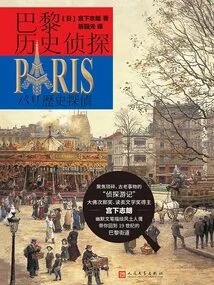
Paris Historical Detective
History巴黎历史侦探
(japan) Shiro Miyashita
The simple style of Paris streets contains the memory of the city, with unnatural steps or narrow paths dividing the landscape. This faint sense of uneasiness prompts us to turn over old maps and search for the Paris in historical travel guides and literary works, and to find the era when Maupassant, Rimbaud and Zola lived. The author presents the past of Paris in front of readers, humorously explaining the customs and world conditions of Paris in the 19th century. Under the guidance of medieval and Renaissance researchers, this book will tell the trivial and tiny ancient things in the form of a "detective travelogue", leading readers to experience the journey of Paris from the Middle Ages to the 19th century.
The simple style of Paris streets contains the memory of the city, with unnatural steps or narrow paths dividing the landscape. This faint sense of uneasiness prompts us to turn over old maps and search for the Paris in historical travel guides and literary works, and to find the era when Maupassant, Rimbaud and Zola lived. The author presents the past of Paris in front of readers, humorously explaining the customs and world conditions of Paris in the 19th century. Under the guidance of medieval and Renaissance researchers, this book will tell the trivial and tiny ancient things in the form of a "detective travelogue", leading readers to experience the journey of Paris from the Middle Ages to the 19th century.
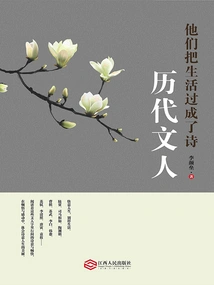
历代文人:他们把生活过成了诗
Li Yanlei
This book tells the unique lives of literati in the past dynasties. On a warm sunny afternoon, when I turn over the pages of a book that exudes the faint fragrance of ink, stories worth revisiting emerge before my eyes. Among them are Tao Yuanming who retired to the countryside, Li Bai who traveled around the world, Jiang Shangyuan who took the bait, Huo Qubing who was proud of the spring breeze, Sima Xiangru who begged for a phoenix, Bai Juyi who lived in Bai Juyi... The crazy life of more than 40 literati. "To be happy in life, you must have all the joy. Don't let the gold bottle stand empty against the moon. I am born with talents that will be useful. I will come back after all the gold is gone." Read history books leisurely, look down at the heaven and earth, and comment on the spring and autumn. There is so much pleasure and joy in the world waiting for you to enjoy and drink. Open your arms, open your mind, take a deep breath of fresh air, exhale the depression, and you will feel extremely happy.
This book tells the unique lives of literati in the past dynasties. On a warm sunny afternoon, when I turn over the pages of a book that exudes the faint fragrance of ink, stories worth revisiting emerge before my eyes. Among them are Tao Yuanming who retired to the countryside, Li Bai who traveled around the world, Jiang Shangyuan who took the bait, Huo Qubing who was proud of the spring breeze, Sima Xiangru who begged for a phoenix, Bai Juyi who lived in Bai Juyi... The crazy life of more than 40 literati. "To be happy in life, you must have all the joy. Don't let the gold bottle stand empty against the moon. I am born with talents that will be useful. I will come back after all the gold is gone." Read history books leisurely, look down at the heaven and earth, and comment on the spring and autumn. There is so much pleasure and joy in the world waiting for you to enjoy and drink. Open your arms, open your mind, take a deep breath of fresh air, exhale the depression, and you will feel extremely happy.
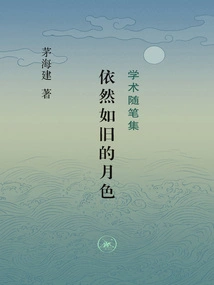
依然如旧的月色(学术随笔集)
Mao Haijian
This book was first published in 2014. It is compiled from several types of articles, of any length, and is relatively easy to read. Some chapters of the updated edition have been adjusted, with some additions and some deletions. As one of the few collections of academic essays by Professor Mao Haijian, we can see a true portrayal of his inner activities and an expression of the historian's temperament. "The moonlight is still the same as before" is the author's determination and persistence in the academic path he established back then. Among them is a group of articles focusing on the cultural life history of the late Qing Dynasty, which can be regarded as small topics created by the author using leftover materials from reading massive archives. For example, on "Huxiang Culture"; on Gong Zizhen; on the Empress Dowager Cixi, Emperor Guangxu, Regent Zaifeng and other late Qing emperors' textbooks; on reading the gift lists and tributes found in the archives of Zhang Zhidong, Prince Chun's Mansion, Li Hongzao, etc., And sorting out the changes in the upper class society in the late Qing Dynasty from the gift-giving activities of high-ranking officials, which is solid, detailed and interesting.
This book was first published in 2014. It is compiled from several types of articles, of any length, and is relatively easy to read. Some chapters of the updated edition have been adjusted, with some additions and some deletions. As one of the few collections of academic essays by Professor Mao Haijian, we can see a true portrayal of his inner activities and an expression of the historian's temperament. "The moonlight is still the same as before" is the author's determination and persistence in the academic path he established back then. Among them is a group of articles focusing on the cultural life history of the late Qing Dynasty, which can be regarded as small topics created by the author using leftover materials from reading massive archives. For example, on "Huxiang Culture"; on Gong Zizhen; on the Empress Dowager Cixi, Emperor Guangxu, Regent Zaifeng and other late Qing emperors' textbooks; on reading the gift lists and tributes found in the archives of Zhang Zhidong, Prince Chun's Mansion, Li Hongzao, etc., And sorting out the changes in the upper class society in the late Qing Dynasty from the gift-giving activities of high-ranking officials, which is solid, detailed and interesting.
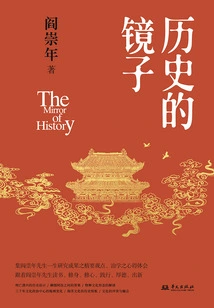
Mirror of History
History历史的镜子
Yan Chongnian
This book collects the essence of Mr. Yan Chongnian's lifelong research results, perspectives and academic experience. This book collects the essence of many speeches that Mr. Yan Chongnian gave at invitations to institutions, universities, libraries, museums, cultural groups and other institutions at home and abroad for nearly 40 years starting from 1984. The book consists of five parts. It is divided into "Learning from History", "Cultural Heritage", "Historical Figures", "Reading and Self-cultivation" and "Patriotic Spirit", with a total of 47 articles. There are "historical revelations from the fall of the Ming Dynasty and the rise of the Qing Dynasty\u002FAnswers to Hetuala's question\u002FInterpretation of cultural forms of species\u002FRegional changes in the cultural and political center of three thousand years\u002FHistorical shortcomings of marine culture\u002FThe conflict and integration of cultures", etc., As well as how Yan Chongnian "read, cultivate oneself, cultivate one's mind, practice, be virtuous, and create something new".
This book collects the essence of Mr. Yan Chongnian's lifelong research results, perspectives and academic experience. This book collects the essence of many speeches that Mr. Yan Chongnian gave at invitations to institutions, universities, libraries, museums, cultural groups and other institutions at home and abroad for nearly 40 years starting from 1984. The book consists of five parts. It is divided into "Learning from History", "Cultural Heritage", "Historical Figures", "Reading and Self-cultivation" and "Patriotic Spirit", with a total of 47 articles. There are "historical revelations from the fall of the Ming Dynasty and the rise of the Qing Dynasty\u002FAnswers to Hetuala's question\u002FInterpretation of cultural forms of species\u002FRegional changes in the cultural and political center of three thousand years\u002FHistorical shortcomings of marine culture\u002FThe conflict and integration of cultures", etc., As well as how Yan Chongnian "read, cultivate oneself, cultivate one's mind, practice, be virtuous, and create something new".
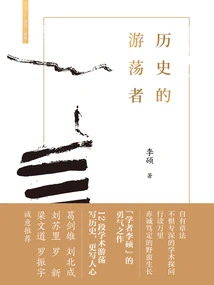
Wanderer of History
History历史的游荡者
Li Shuo
This book is the courageous work of Li Shuo, a genius in history. It is an ideological journey and an academic autobiography. It has a broad vision and takes into account many fields of political history, social history, legal history, and intellectual history: from the ancient world of King Zhou You to the frontiers of the late Qing Empire by Lin Zexu; from the "immortals" and ascetics in "Zhen Gao" to the tragic bureaucrats in the era of Emperor Xiaowen; from the eating and drinking men who disappeared into the dust. Women, to the dangerous and joyful forbidden love in the history of law; from Lattimore's northern travels, to the causes of the paradox of Hobbes's political theory; from the dining hall in Li County, to the Han Dynasty city ruins at the end of the Hexi Corridor in the wilderness... Starting from historical facts, 12 academic wanderings, in addition to the crawling of historical materials and story construction, are also insightful into people's hearts, and strive to restore the little-known subtleties and truths in the depths of time.
This book is the courageous work of Li Shuo, a genius in history. It is an ideological journey and an academic autobiography. It has a broad vision and takes into account many fields of political history, social history, legal history, and intellectual history: from the ancient world of King Zhou You to the frontiers of the late Qing Empire by Lin Zexu; from the "immortals" and ascetics in "Zhen Gao" to the tragic bureaucrats in the era of Emperor Xiaowen; from the eating and drinking men who disappeared into the dust. Women, to the dangerous and joyful forbidden love in the history of law; from Lattimore's northern travels, to the causes of the paradox of Hobbes's political theory; from the dining hall in Li County, to the Han Dynasty city ruins at the end of the Hexi Corridor in the wilderness... Starting from historical facts, 12 academic wanderings, in addition to the crawling of historical materials and story construction, are also insightful into people's hearts, and strive to restore the little-known subtleties and truths in the depths of time.
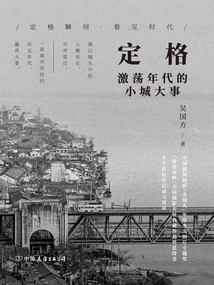
定格:激荡年代的小城大事
Wu Guofang
This is a work that collects moments of memories. A senior reporter used his camera to record the urban street scenes and residents' lives in Hangzhou over the past 50 years. In that era when photography was expensive and scarce, these pictures were not only the life journey of this reporter, but also a portrayal of the journey of the city and generations of people, freezing a period of wonderful ups and downs of the changes of the times and major events in people's livelihood. People who lived through the 1970s and 1980s may reminisce about the old days; people born in the prosperous new century may want to know about the glorious years of their parents' generation. Only by clarifying the path we came on will we cherish the present more and be more determined in the direction of the future. The hurried morning light, dusty markets, water carrying burdens, and leaky roofs in the 1970s; the squares, new buildings, markets, and old streets in the 1980s; the demolished old houses in the 1990s, the last handicraft shops, tiger stoves, and foreign fast food; the millennium has pressed the accelerator button, with the bustling commodity economy, population mobility, and emerging trends. Time passes without realizing it, and time easily throws people away. The world we live in has undergone too many changes, and we need to stop at a certain moment, carefully put away the memories of these times and people, and slowly cherish them.
This is a work that collects moments of memories. A senior reporter used his camera to record the urban street scenes and residents' lives in Hangzhou over the past 50 years. In that era when photography was expensive and scarce, these pictures were not only the life journey of this reporter, but also a portrayal of the journey of the city and generations of people, freezing a period of wonderful ups and downs of the changes of the times and major events in people's livelihood. People who lived through the 1970s and 1980s may reminisce about the old days; people born in the prosperous new century may want to know about the glorious years of their parents' generation. Only by clarifying the path we came on will we cherish the present more and be more determined in the direction of the future. The hurried morning light, dusty markets, water carrying burdens, and leaky roofs in the 1970s; the squares, new buildings, markets, and old streets in the 1980s; the demolished old houses in the 1990s, the last handicraft shops, tiger stoves, and foreign fast food; the millennium has pressed the accelerator button, with the bustling commodity economy, population mobility, and emerging trends. Time passes without realizing it, and time easily throws people away. The world we live in has undergone too many changes, and we need to stop at a certain moment, carefully put away the memories of these times and people, and slowly cherish them.
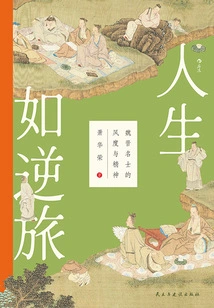
人生如逆旅:魏晋名士的风度与精神
Xiao Huarong
Celebrities in the Wei and Jin Dynasties are a unique cultural phenomenon in Chinese history. They are in a dark and turbulent political situation. They are indulgent and unruly, but they are also suffering from contradictions and fears. Their spiritual pursuit and life practice are a painful and rugged journey. This book uses the change of eras in the Wei and Jin Dynasties as the narrative sequence, integrates various official and unofficial historical materials, and uses the changes in the political world as the development logic. It details the five generations of celebrities (Zhengshi celebrities, Zhulin celebrities, Zhongchao celebrities, Dujiang celebrities, and Jiangzuo celebrities) from the end of Cao Wei to the middle of the Eastern Jin Dynasty for about 120 years. It outlines the life experiences and talents of the celebrities in a criss-cross manner.
Celebrities in the Wei and Jin Dynasties are a unique cultural phenomenon in Chinese history. They are in a dark and turbulent political situation. They are indulgent and unruly, but they are also suffering from contradictions and fears. Their spiritual pursuit and life practice are a painful and rugged journey. This book uses the change of eras in the Wei and Jin Dynasties as the narrative sequence, integrates various official and unofficial historical materials, and uses the changes in the political world as the development logic. It details the five generations of celebrities (Zhengshi celebrities, Zhulin celebrities, Zhongchao celebrities, Dujiang celebrities, and Jiangzuo celebrities) from the end of Cao Wei to the middle of the Eastern Jin Dynasty for about 120 years. It outlines the life experiences and talents of the celebrities in a criss-cross manner.
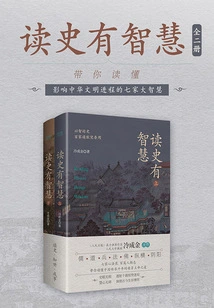
读史有智慧(全二册)
Cold Into Gold
The author Leng Chengjin uses wisdom to discuss history and history to explain wisdom. Through vivid and interesting historical allusions and character stories, he explains the great wisdom in history. They are: profound Confucian wisdom, seeking saints instead of seeking wisdom; harmonious Taoist wisdom, ruling the world with nothingness; detached Buddhist wisdom, pursuing the original heart and seeing one's nature to become a Buddha; harsh Legalist wisdom, analyzing laws, techniques, and trends, and governing by law. Country; the game wisdom of political strategists, the strategic wisdom of military strategists, the natural philosophical wisdom of the Yin Yang family... The whole book vividly displays the rise and fall of historical chaos and the success and failure of characters, leading readers to understand the true meaning of wisdom in traditional culture.
The author Leng Chengjin uses wisdom to discuss history and history to explain wisdom. Through vivid and interesting historical allusions and character stories, he explains the great wisdom in history. They are: profound Confucian wisdom, seeking saints instead of seeking wisdom; harmonious Taoist wisdom, ruling the world with nothingness; detached Buddhist wisdom, pursuing the original heart and seeing one's nature to become a Buddha; harsh Legalist wisdom, analyzing laws, techniques, and trends, and governing by law. Country; the game wisdom of political strategists, the strategic wisdom of military strategists, the natural philosophical wisdom of the Yin Yang family... The whole book vividly displays the rise and fall of historical chaos and the success and failure of characters, leading readers to understand the true meaning of wisdom in traditional culture.
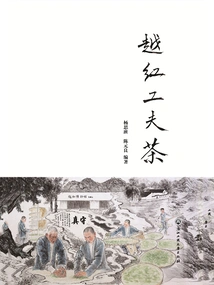
Yuehong Gongfu Tea
History越红工夫茶
Yang Siban Chen Yuanliang
The tea industry in Zhuji has been recorded and described about tea in the local chronicles of all dynasties since tea cultivation began in the Tang Dynasty when the Zen forests in Dongbai Mountain were densely populated. Based on long-term working experience and practice in tea, the author of this book has collected and compiled various articles written by Zhuji tea production and scientific and technological workers in different periods, especially about the succession of Yuehong Gongfu tea, in order to provide experience and reference for the tea industry to move into the future.
The tea industry in Zhuji has been recorded and described about tea in the local chronicles of all dynasties since tea cultivation began in the Tang Dynasty when the Zen forests in Dongbai Mountain were densely populated. Based on long-term working experience and practice in tea, the author of this book has collected and compiled various articles written by Zhuji tea production and scientific and technological workers in different periods, especially about the succession of Yuehong Gongfu tea, in order to provide experience and reference for the tea industry to move into the future.
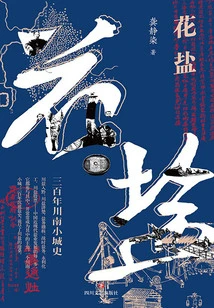
Flower Salt
History花盐
Gong Jingran
"Yesterday's Border Town" is one of the trilogy of "Yesterday's Border Town" written by Gong Jingran Xiaocheng. Three hundred years of history of this small town in southern Sichuan recreates a former salt industry town. A non-fiction work on the history, geography and culture of Sichuan and Sichuan, a dual witness of history and literature. Sichuan salt enters Guizhou, Sichuan salt helps Chu, salt audit, wartime salt affairs, Wynn Chemical, Sichuan salt stock... It has participated in every step of the development of China's modern salt industry and often becomes the protagonist. A small town in southern Sichuan, with a history of three hundred years of sinking salt, tells the story of the vicissitudes of Sichuan salt. "Flower Salt" is the second in Gong Jingran's Small Town series. It focuses on Wutong Bridge and uses the local flower salt industry as a link to connect the three hundred years from the early Qing Dynasty to the present. This book is a revision of "Qiao Tan Ji". Due to the discovery of new materials in the process, it started anew and changed the conceptual structure. The book is divided into six parts: the brine spring, the place where wells were dug, the Spring and Autumn Period of Shang Dynasty, the important town of westward migration, salt in the play, and salty rivers and lakes. It is not only a timeline of the three hundred years of development of the small town, but also an interpretation of the small town from six dimensions.
"Yesterday's Border Town" is one of the trilogy of "Yesterday's Border Town" written by Gong Jingran Xiaocheng. Three hundred years of history of this small town in southern Sichuan recreates a former salt industry town. A non-fiction work on the history, geography and culture of Sichuan and Sichuan, a dual witness of history and literature. Sichuan salt enters Guizhou, Sichuan salt helps Chu, salt audit, wartime salt affairs, Wynn Chemical, Sichuan salt stock... It has participated in every step of the development of China's modern salt industry and often becomes the protagonist. A small town in southern Sichuan, with a history of three hundred years of sinking salt, tells the story of the vicissitudes of Sichuan salt. "Flower Salt" is the second in Gong Jingran's Small Town series. It focuses on Wutong Bridge and uses the local flower salt industry as a link to connect the three hundred years from the early Qing Dynasty to the present. This book is a revision of "Qiao Tan Ji". Due to the discovery of new materials in the process, it started anew and changed the conceptual structure. The book is divided into six parts: the brine spring, the place where wells were dug, the Spring and Autumn Period of Shang Dynasty, the important town of westward migration, salt in the play, and salty rivers and lakes. It is not only a timeline of the three hundred years of development of the small town, but also an interpretation of the small town from six dimensions.
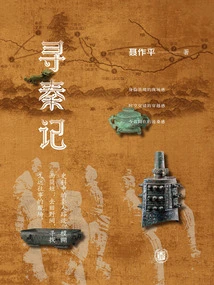
Looking for Qin Ji
History寻秦记
Nie Zuoping
The Qin people were originally a weak tribe living in the "Xicui". After hundreds of years of twists and turns, they gradually grew and rose in the west, becoming the hegemon of the west, and then unified the six countries. The Qin people moved their capitals eight times, from Qinyi, the first true capital, to Xianyang, the last capital, and made arduous efforts to gain space, strive for hegemony eastward, and make strategic progress. The author follows the migration trajectory of the Qin people, looking for clues about the Qin people left on the ground, and discovers the remaining traces of the Qin people in folk customs and culture. Through the search, investigation, and analysis of geography, he discovers the accidental and inevitable reasons why the Qin State grew from small to large, from weak to strong, and finally unified the six countries.
The Qin people were originally a weak tribe living in the "Xicui". After hundreds of years of twists and turns, they gradually grew and rose in the west, becoming the hegemon of the west, and then unified the six countries. The Qin people moved their capitals eight times, from Qinyi, the first true capital, to Xianyang, the last capital, and made arduous efforts to gain space, strive for hegemony eastward, and make strategic progress. The author follows the migration trajectory of the Qin people, looking for clues about the Qin people left on the ground, and discovers the remaining traces of the Qin people in folk customs and culture. Through the search, investigation, and analysis of geography, he discovers the accidental and inevitable reasons why the Qin State grew from small to large, from weak to strong, and finally unified the six countries.
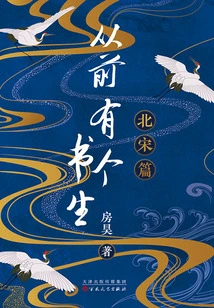
从前有个书生:北宋篇
Fang Hao
This book is the "Northern Song Dynasty" written by the famous author Fang Hao after "Once upon a time there was a scholar: Wei and Jin Dynasties". When you get this book, you have no idea whose story it tells. Almost every story begins with "Once upon a time there was a scholar." When the life trajectories of these "scholars" slowly emerge on the page with the author's strokes, you suddenly realize that you have become so familiar with these "scholars" many years ago. They may even have had a profound impact on you at some point. After "reciting and dictating the full text" in the textbook of my boyhood, there are touching stories one after another.
This book is the "Northern Song Dynasty" written by the famous author Fang Hao after "Once upon a time there was a scholar: Wei and Jin Dynasties". When you get this book, you have no idea whose story it tells. Almost every story begins with "Once upon a time there was a scholar." When the life trajectories of these "scholars" slowly emerge on the page with the author's strokes, you suddenly realize that you have become so familiar with these "scholars" many years ago. They may even have had a profound impact on you at some point. After "reciting and dictating the full text" in the textbook of my boyhood, there are touching stories one after another.
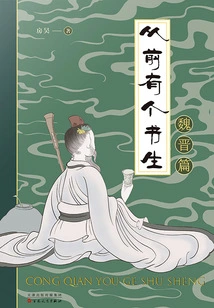
从前有个书生:魏晋篇
Fang Hao
The manuscript of this book is a collection of historical blog posts published by the author Fang Hao on Weibo (30% of which are unpublished content), which have been compiled and linked together with the times as a popular historical and interesting reading. The manuscript is planned to have three to four volumes. The first volume is the Wei and Jin chapters. Most of the articles begin with "Once upon a time there was a scholar." They do not tell who the characters are during the narration process. They tell the characters' lives in a humorous and witty writing style, and reveal the answer to the mystery at the end of the article. The reading process is both appreciation and a test of the reader's historical knowledge. It is currently divided into eight chapters, including "The Afterglow of the Empire's Setting Sun", "The Afterglow and Character of the Old Era", "Songs of the Romantic Young Master", "Sufferers in the Cracks of the Times", "Silent Cultivators", "Sighs Looking North to China", "Intoxicating Styles of the Wei and Jin Dynasties" and "Unknown People in Troubled Times", involving more than 50 historical figures.
The manuscript of this book is a collection of historical blog posts published by the author Fang Hao on Weibo (30% of which are unpublished content), which have been compiled and linked together with the times as a popular historical and interesting reading. The manuscript is planned to have three to four volumes. The first volume is the Wei and Jin chapters. Most of the articles begin with "Once upon a time there was a scholar." They do not tell who the characters are during the narration process. They tell the characters' lives in a humorous and witty writing style, and reveal the answer to the mystery at the end of the article. The reading process is both appreciation and a test of the reader's historical knowledge. It is currently divided into eight chapters, including "The Afterglow of the Empire's Setting Sun", "The Afterglow and Character of the Old Era", "Songs of the Romantic Young Master", "Sufferers in the Cracks of the Times", "Silent Cultivators", "Sighs Looking North to China", "Intoxicating Styles of the Wei and Jin Dynasties" and "Unknown People in Troubled Times", involving more than 50 historical figures.
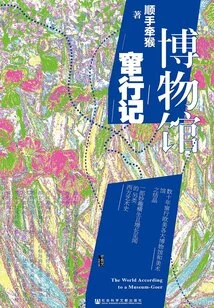
Museum Travels
History博物馆窜行记
Leading The Monkey
In a witty and humorous way, the author of this book tells about the collections and related histories and anecdotes of dozens of museums and art galleries including the Palace of Versailles, the Museum of Arts and Crafts in Paris, the Metropolitan Museum of Art, the Gardner Museum, the Rijksmuseum in Amsterdam, the Paul Getty Museum, the Field Museum of Natural History, the Museum of Modern Art in New York, the Uffizi Gallery, the Peggy Guggenheim Museum, and the Acropolis Museum. The book is filled with historical allusions and anecdotes, allowing people to enrich their understanding of Western art history through easy reading. It is a highly story-telling read.
In a witty and humorous way, the author of this book tells about the collections and related histories and anecdotes of dozens of museums and art galleries including the Palace of Versailles, the Museum of Arts and Crafts in Paris, the Metropolitan Museum of Art, the Gardner Museum, the Rijksmuseum in Amsterdam, the Paul Getty Museum, the Field Museum of Natural History, the Museum of Modern Art in New York, the Uffizi Gallery, the Peggy Guggenheim Museum, and the Acropolis Museum. The book is filled with historical allusions and anecdotes, allowing people to enrich their understanding of Western art history through easy reading. It is a highly story-telling read.
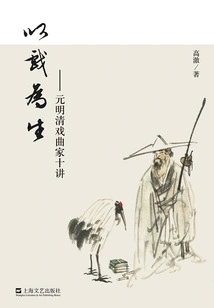
以戏为生:元明清戏曲家十讲
Gao Che
This book is a historical and cultural essay about the life and creative achievements of ancient Chinese opera artists. It uses a chronological flashback method, each with one topic, to comment on the life ups and downs, surviving works and historical background of ten famous opera artists between 1220 and 1680. Through their social situation, survivor status, cultural background Human vision, free character, critical personality, creative environment, language skills, tragic consciousness, breakthrough spirit and leadership style, examine the living conditions of people in the non-official context, and analyze the source of prosperity, change and decline of drama and opera art in the magnificent social and historical development process of the Yuan, Ming and Qing dynasties.
This book is a historical and cultural essay about the life and creative achievements of ancient Chinese opera artists. It uses a chronological flashback method, each with one topic, to comment on the life ups and downs, surviving works and historical background of ten famous opera artists between 1220 and 1680. Through their social situation, survivor status, cultural background Human vision, free character, critical personality, creative environment, language skills, tragic consciousness, breakthrough spirit and leadership style, examine the living conditions of people in the non-official context, and analyze the source of prosperity, change and decline of drama and opera art in the magnificent social and historical development process of the Yuan, Ming and Qing dynasties.
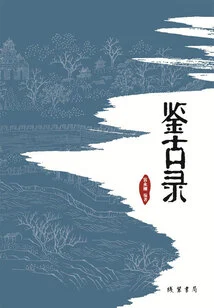
Jiangulu
History鉴古录
Compiled By Gong Yonggang
The book "Jian Gu Lu" is excerpted from "Twenty-Four Histories". The author intercepted some biographical chapters, especially readable historical stories, and compiled them into a volume, totaling more than a thousand short stories. After each short story, he explains it with his own thoughts, and also annotates some obscure words and phrases, in order to allow readers to get inspiration and gain from history.
The book "Jian Gu Lu" is excerpted from "Twenty-Four Histories". The author intercepted some biographical chapters, especially readable historical stories, and compiled them into a volume, totaling more than a thousand short stories. After each short story, he explains it with his own thoughts, and also annotates some obscure words and phrases, in order to allow readers to get inspiration and gain from history.
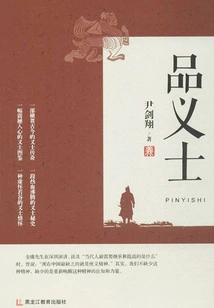
Good Moral Character
History品义士
Yin Jianxiang
The book selects dozens of chivalrous figures in Chinese history. These heroes either draw their swords to help when encountering injustice, or help those in need, winning the love of the people, or fighting against foreign enemies to ensure peace. Their deeds are either recorded separately in official history or scattered in various unofficial histories. This book re-excavates and organizes their stories, and makes comments that are in line with modern people's perspectives. It is highly readable, allowing readers to feel the heroic spirit in the bones of the Chinese nation while reading, and to gallop through the present.
The book selects dozens of chivalrous figures in Chinese history. These heroes either draw their swords to help when encountering injustice, or help those in need, winning the love of the people, or fighting against foreign enemies to ensure peace. Their deeds are either recorded separately in official history or scattered in various unofficial histories. This book re-excavates and organizes their stories, and makes comments that are in line with modern people's perspectives. It is highly readable, allowing readers to feel the heroic spirit in the bones of the Chinese nation while reading, and to gallop through the present.
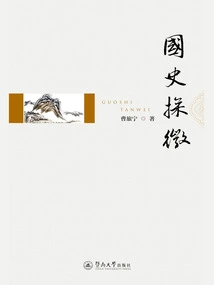
国史探微
Cao Lvning
This book contains more than 40 essays by the author Cao Lvning, covering a time span from the Wei, Jin, Southern and Northern Dynasties to modern times. The collected articles are divided into three parts according to the theme: The first part is "A Thousand Years of Stones", which mainly contains essays on stone carvings and the history of Buddhism. Most of them are based on first-hand historical materials. From the temple steles, epitaphs, and slips and paper documents of the Sui and Tang Dynasties, we can get a glimpse of that time. Social beliefs, precepts, etc.; The second part, "Bookstore of Difficult Students", mainly collects reading notes, and the content contained can mostly be classified as miscellaneous studies, and several of the notes discussing academic history are quite fascinating; the third part, "Academic History", contains articles by the author recalling teachers and friends, as well as miscellaneous notes on study tours, which also have the meaning of academic history.
This book contains more than 40 essays by the author Cao Lvning, covering a time span from the Wei, Jin, Southern and Northern Dynasties to modern times. The collected articles are divided into three parts according to the theme: The first part is "A Thousand Years of Stones", which mainly contains essays on stone carvings and the history of Buddhism. Most of them are based on first-hand historical materials. From the temple steles, epitaphs, and slips and paper documents of the Sui and Tang Dynasties, we can get a glimpse of that time. Social beliefs, precepts, etc.; The second part, "Bookstore of Difficult Students", mainly collects reading notes, and the content contained can mostly be classified as miscellaneous studies, and several of the notes discussing academic history are quite fascinating; the third part, "Academic History", contains articles by the author recalling teachers and friends, as well as miscellaneous notes on study tours, which also have the meaning of academic history.
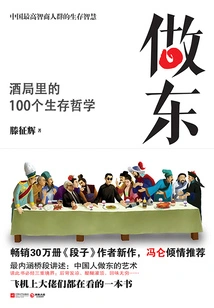
做东:酒局里的100个生存哲学
Teng Zhenghui
Decipher the 100 most interesting wine games in history. The wine bureau is a stage for the struggle of human nature surrounded by intrigues, and a place where people's highest survival wisdom is displayed. "Being a Host" is the first book to provide a comprehensive analysis of the 100 most noteworthy drinking establishments in history. No matter how developed materials and technology are, human nature remains unchanged forever. In "Being Dong", the author combines people and events in history and current society to show the survival philosophies of different people in the political circle, business circle, cultural circle and the general world. Each of the 100 wine parties is more exciting than the last, the 100 jokes are more meaningful than the last, and the 100 philosophies of life are more realistic and cruel than the last. "Doing the East" inherits the author's "most artistic" style of restoring "most life" in the book "Duanzi". The language is humorous and sharp, and the thoughts are profound. However, the knowledge is broader, the viewpoint is more unique, the vision is broader, and the author's storytelling skills are also more hearty. "Being Dong" makes everyone think of themselves when reading about others, and think of today or the future when reading history.
Decipher the 100 most interesting wine games in history. The wine bureau is a stage for the struggle of human nature surrounded by intrigues, and a place where people's highest survival wisdom is displayed. "Being a Host" is the first book to provide a comprehensive analysis of the 100 most noteworthy drinking establishments in history. No matter how developed materials and technology are, human nature remains unchanged forever. In "Being Dong", the author combines people and events in history and current society to show the survival philosophies of different people in the political circle, business circle, cultural circle and the general world. Each of the 100 wine parties is more exciting than the last, the 100 jokes are more meaningful than the last, and the 100 philosophies of life are more realistic and cruel than the last. "Doing the East" inherits the author's "most artistic" style of restoring "most life" in the book "Duanzi". The language is humorous and sharp, and the thoughts are profound. However, the knowledge is broader, the viewpoint is more unique, the vision is broader, and the author's storytelling skills are also more hearty. "Being Dong" makes everyone think of themselves when reading about others, and think of today or the future when reading history.
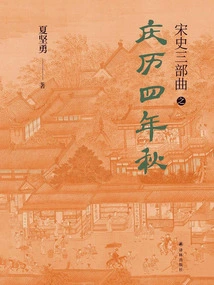
庆历四年秋(宋史三部曲)
Xia Jianyong
"Spring of the fourth year of Qingli" is the immortal time fixed in the first sentence of Fan Zhongyan's eternal classic "The Story of Yueyang Tower". During the fourth year of the reign of Emperor Renzong of the Song Dynasty, in this seemingly short time axis, Fan Zhongyan, Ouyang Xiu, Su Shunqin, Teng Zijing... How many stories and literary talents have been recorded in history? Xia Jianyong goes from spring to autumn, discusses the past from the present, and looks at the present from the past. He uses novel writing style, small talk and great meaning, and opens and closes in the folds of history to unearth rich humanistic significance. "Autumn of the Fourth Year of Qingli" is the second part of Xia Jianyong's "Song History Trilogy". A small dinner party to honor the gods caused an uproar in the court. The background was the Qingli New Deal in the mid-Northern Song Dynasty. The work shows the broad aspects of life from the court of the Northern Song Dynasty to the common people in the city, including politics, society, military diplomacy, and the intricacies of government affairs; power struggles for reform, conspiracies and man-made disasters, and the undercurrents are turbulent and thrilling. The twists and turns of the new policies of the imperial court are placed in the depiction of daily life. It not only contains detailed insights into human affairs, the publicity of the spirit of the broad-minded Qingyuan scholars, but also has a macroscopic grasp of the general trend of the world. It is thought-provoking to read.
"Spring of the fourth year of Qingli" is the immortal time fixed in the first sentence of Fan Zhongyan's eternal classic "The Story of Yueyang Tower". During the fourth year of the reign of Emperor Renzong of the Song Dynasty, in this seemingly short time axis, Fan Zhongyan, Ouyang Xiu, Su Shunqin, Teng Zijing... How many stories and literary talents have been recorded in history? Xia Jianyong goes from spring to autumn, discusses the past from the present, and looks at the present from the past. He uses novel writing style, small talk and great meaning, and opens and closes in the folds of history to unearth rich humanistic significance. "Autumn of the Fourth Year of Qingli" is the second part of Xia Jianyong's "Song History Trilogy". A small dinner party to honor the gods caused an uproar in the court. The background was the Qingli New Deal in the mid-Northern Song Dynasty. The work shows the broad aspects of life from the court of the Northern Song Dynasty to the common people in the city, including politics, society, military diplomacy, and the intricacies of government affairs; power struggles for reform, conspiracies and man-made disasters, and the undercurrents are turbulent and thrilling. The twists and turns of the new policies of the imperial court are placed in the depiction of daily life. It not only contains detailed insights into human affairs, the publicity of the spirit of the broad-minded Qingyuan scholars, but also has a macroscopic grasp of the general trend of the world. It is thought-provoking to read.
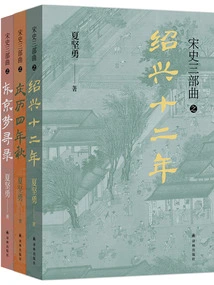
宋史三部曲(套装共3册)
Xia Jianyong
The "Song History Trilogy" includes "The Twelve Years of Shaoxing", "Autumn of the Fourth Year of Qingli" and "Tokyo Dream Search". Taking three representative historical periods as the twelfth year of Shaoxing under Gaozong of the Southern Song Dynasty, the fourth year of Qingli under Emperor Renzong of the Northern Song Dynasty, and the first year of Xiangfu under Emperor Zhenzong of the Northern Song Dynasty as narrative nodes, it starts with the meaningful historical events of Yue Fei's murder, Qingli's New Deal, and Song Zhenzong's eastward enfeoffment, and enters into a cross-section of history, elucidating the subtle details and peeling off cocoons. The narrative time of the work spans the two Song Dynasties, covering customs, prices, imperial examinations, arts and literature, officialdom, reform, tea administration, horse administration, ultimatums, edicts, geography, climate, celestial phenomena, industry, foreign trade, clan, relatives, officials, It covers every detail, from the turbulent political struggles and checks and balances between monarchs and ministers, to the various world conditions of people selling pulp in shacks and carts, vividly reflecting the political situation and social life of the two Song Dynasties. It can be called the literal version of "Along the River During the Qingming Festival". Xia Jianyong has been deeply involved in the history of the Song Dynasty for more than ten years. He "searched for new aesthetic objects on the big coordinates of nature, history and life, and also looked for a new territory to promote individual souls and reflect on the national spirit." Song Gaozong, Song Renzong, Song Zhenzong, emperors, monarchs and ministers were all human beings. Understanding human nature naturally means understanding the emperor. He profoundly revealed the inner world and behavioral logic of the parties involved, deeply explored the subtleties and commonalities of human nature behind the events, and understood the eternal nature of human nature.
The "Song History Trilogy" includes "The Twelve Years of Shaoxing", "Autumn of the Fourth Year of Qingli" and "Tokyo Dream Search". Taking three representative historical periods as the twelfth year of Shaoxing under Gaozong of the Southern Song Dynasty, the fourth year of Qingli under Emperor Renzong of the Northern Song Dynasty, and the first year of Xiangfu under Emperor Zhenzong of the Northern Song Dynasty as narrative nodes, it starts with the meaningful historical events of Yue Fei's murder, Qingli's New Deal, and Song Zhenzong's eastward enfeoffment, and enters into a cross-section of history, elucidating the subtle details and peeling off cocoons. The narrative time of the work spans the two Song Dynasties, covering customs, prices, imperial examinations, arts and literature, officialdom, reform, tea administration, horse administration, ultimatums, edicts, geography, climate, celestial phenomena, industry, foreign trade, clan, relatives, officials, It covers every detail, from the turbulent political struggles and checks and balances between monarchs and ministers, to the various world conditions of people selling pulp in shacks and carts, vividly reflecting the political situation and social life of the two Song Dynasties. It can be called the literal version of "Along the River During the Qingming Festival". Xia Jianyong has been deeply involved in the history of the Song Dynasty for more than ten years. He "searched for new aesthetic objects on the big coordinates of nature, history and life, and also looked for a new territory to promote individual souls and reflect on the national spirit." Song Gaozong, Song Renzong, Song Zhenzong, emperors, monarchs and ministers were all human beings. Understanding human nature naturally means understanding the emperor. He profoundly revealed the inner world and behavioral logic of the parties involved, deeply explored the subtleties and commonalities of human nature behind the events, and understood the eternal nature of human nature.
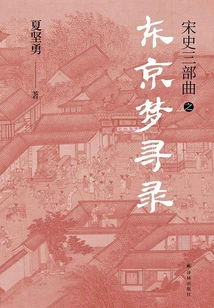
东京梦寻录(宋史三部曲)
Xia Jianyong
"Tokyo Dream Search" is the final work of Xia Jianyong's "Song History Trilogy" after "The Twelve Years of Shaoxing" and "The Autumn of the Fourth Year of Qingli". "Tokyo Meng Xun Lu" is derived from a perfunctory sentence in "History of the Song Dynasty: The Annals of Zhenzong", "The alliance with Chanzhou was established, the Zen ceremony was completed, the auspiciousness was great, the heavenly book was repeatedly dropped, and the guide was paid to pay tribute. The king and ministers of the country were as sick as crazy. It's strange." The whole country has been dreaming of Tokyo for ten years. Zhenzong of the Song Dynasty was the end of the two thousand years of feudal emperors who sealed Mount Tai in the east. As a benevolent but inferior king of Taiping who loved his people but was superstitious, Zhenzong's psychology of sealing Mount Tai in the east was not uncomplicated. He was the third emperor of the Northern Song Dynasty, the third prince of Taizong Zhao Guangyi, and he used to be named Zhao Dechang, Zhao Yuanxiu and Zhao Yuankan. In 985, the eldest son of the emperor Yuan Zuo was deposed in Fengong; in 986, the second prince Yuan Xi died unexpectedly. Three years later, Taizong, who had always been at odds over the issue of establishing a crown prince, officially issued an edict to establish Yuan Kan as the crown prince and change his name to Zhao Heng. At this time, the drama belonging to the third prince had just begun. In the fourth year of Jingde (1007 AD), Song Zhenzong Zhao Heng, who had concluded the "Chanyuan Alliance", ascended the throne and had been in power for ten years. On the last day of the year, Zhenzong gave a banquet and summoned Wang Dan, the prime minister of the dynasty, to "drink in it" and rewarded an altar of jewels during the banquet. On the third day of the first lunar month of the year, Zhao Heng summoned all the officials in Chongzheng Hall. A minister reported that a bunch of yellow silk hung on the owl kiss in the south corner of the left palace gate, known as the Book of Heaven. As a result, a seven-eight-year-old historical drama in which heavenly books frequently descended and auspiciousness arose... Slowly began...
"Tokyo Dream Search" is the final work of Xia Jianyong's "Song History Trilogy" after "The Twelve Years of Shaoxing" and "The Autumn of the Fourth Year of Qingli". "Tokyo Meng Xun Lu" is derived from a perfunctory sentence in "History of the Song Dynasty: The Annals of Zhenzong", "The alliance with Chanzhou was established, the Zen ceremony was completed, the auspiciousness was great, the heavenly book was repeatedly dropped, and the guide was paid to pay tribute. The king and ministers of the country were as sick as crazy. It's strange." The whole country has been dreaming of Tokyo for ten years. Zhenzong of the Song Dynasty was the end of the two thousand years of feudal emperors who sealed Mount Tai in the east. As a benevolent but inferior king of Taiping who loved his people but was superstitious, Zhenzong's psychology of sealing Mount Tai in the east was not uncomplicated. He was the third emperor of the Northern Song Dynasty, the third prince of Taizong Zhao Guangyi, and he used to be named Zhao Dechang, Zhao Yuanxiu and Zhao Yuankan. In 985, the eldest son of the emperor Yuan Zuo was deposed in Fengong; in 986, the second prince Yuan Xi died unexpectedly. Three years later, Taizong, who had always been at odds over the issue of establishing a crown prince, officially issued an edict to establish Yuan Kan as the crown prince and change his name to Zhao Heng. At this time, the drama belonging to the third prince had just begun. In the fourth year of Jingde (1007 AD), Song Zhenzong Zhao Heng, who had concluded the "Chanyuan Alliance", ascended the throne and had been in power for ten years. On the last day of the year, Zhenzong gave a banquet and summoned Wang Dan, the prime minister of the dynasty, to "drink in it" and rewarded an altar of jewels during the banquet. On the third day of the first lunar month of the year, Zhao Heng summoned all the officials in Chongzheng Hall. A minister reported that a bunch of yellow silk hung on the owl kiss in the south corner of the left palace gate, known as the Book of Heaven. As a result, a seven-eight-year-old historical drama in which heavenly books frequently descended and auspiciousness arose... Slowly began...
故宫的古物之美5
Zhu Yong
Zhu Yong uses poetic language, prose style, and historical attitude to select masterpieces of calligraphy collected by the Forbidden City on both sides of the Taiwan Strait, using ancient calligraphers such as Ouyang Xiu, Su Shi, Huang Tingjian, Mi Fu, Yue Fei, Xin Qiji, Lu You, and Wen Tianxiang as clues to tell the unknown historical stories behind these artworks and reproduce the ups and downs of these calligraphers' personal fates. This is a "Forbidden City on paper" that allows us to know how those ancient Chinese works of art that were greater than those of distant dynasties were born, and how they arrived in front of us after experiencing the ups and downs. Facing those long-lasting ink marks, both you and I will feel our hearts beat. In addition to marveling at the amazing techniques of ancient artists, I also think of the stories behind those pages, and the people and things that appeared and disappeared in the Forbidden City emerge.
Zhu Yong uses poetic language, prose style, and historical attitude to select masterpieces of calligraphy collected by the Forbidden City on both sides of the Taiwan Strait, using ancient calligraphers such as Ouyang Xiu, Su Shi, Huang Tingjian, Mi Fu, Yue Fei, Xin Qiji, Lu You, and Wen Tianxiang as clues to tell the unknown historical stories behind these artworks and reproduce the ups and downs of these calligraphers' personal fates. This is a "Forbidden City on paper" that allows us to know how those ancient Chinese works of art that were greater than those of distant dynasties were born, and how they arrived in front of us after experiencing the ups and downs. Facing those long-lasting ink marks, both you and I will feel our hearts beat. In addition to marveling at the amazing techniques of ancient artists, I also think of the stories behind those pages, and the people and things that appeared and disappeared in the Forbidden City emerge.
故宫的古物之美4
Zhu Yong
Zhu Yong uses poetic language, prose style, and historical attitude to select calligraphy masterpieces collected by the Forbidden City on both sides of the Taiwan Strait, using Li Si, Wang Xizhi, Li Bai, Yan Zhenqing, Huai Su, Zhang Xu, Cai Xiang, Cai Jing and other ancient calligraphers as clues to tell the unknown historical stories behind these artworks and reproduce the ups and downs of the personal fate of these calligraphers. This is a "Forbidden City on paper" that allows us to know how those ancient Chinese works of art that were greater than those of distant dynasties were born, and how they arrived in front of us after experiencing the ups and downs. Facing those long-lasting ink marks, both you and I will feel our hearts beat. In addition to marveling at the amazing techniques of ancient artists, I also think of the stories behind those pages, and the people and things that appeared and disappeared in the Forbidden City emerge.
Zhu Yong uses poetic language, prose style, and historical attitude to select calligraphy masterpieces collected by the Forbidden City on both sides of the Taiwan Strait, using Li Si, Wang Xizhi, Li Bai, Yan Zhenqing, Huai Su, Zhang Xu, Cai Xiang, Cai Jing and other ancient calligraphers as clues to tell the unknown historical stories behind these artworks and reproduce the ups and downs of the personal fate of these calligraphers. This is a "Forbidden City on paper" that allows us to know how those ancient Chinese works of art that were greater than those of distant dynasties were born, and how they arrived in front of us after experiencing the ups and downs. Facing those long-lasting ink marks, both you and I will feel our hearts beat. In addition to marveling at the amazing techniques of ancient artists, I also think of the stories behind those pages, and the people and things that appeared and disappeared in the Forbidden City emerge.
老南阳:古韵悠长
Yin Dejie
What is history? History is a delicious meal. After eating it, people become mature. This book is a side dish made by the author with great effort and difficulty for this big meal. The raw materials used are some selected old anecdotes from Nanyang and pictures related to these old anecdotes. It's like a small plate of finger-sized tofu cubes mixed with finely ground sesame oil and some green coriander leaves. It may not fill your stomach, but it still contains trace elements of history, and the color and aroma are also attractive. You might as well try it.
What is history? History is a delicious meal. After eating it, people become mature. This book is a side dish made by the author with great effort and difficulty for this big meal. The raw materials used are some selected old anecdotes from Nanyang and pictures related to these old anecdotes. It's like a small plate of finger-sized tofu cubes mixed with finely ground sesame oil and some green coriander leaves. It may not fill your stomach, but it still contains trace elements of history, and the color and aroma are also attractive. You might as well try it.
老南阳:旧事苍茫
Yin Dejie
What is history? History is a delicious meal. After eating it, people become mature. This book is a side dish made by the author with great effort and difficulty for this big meal. The raw materials used are some selected old anecdotes from Nanyang and pictures related to these old anecdotes. It's like a small plate of finger-sized tofu cubes mixed with finely ground sesame oil and some green coriander leaves. It may not fill your stomach, but it still contains trace elements of history, and the color and aroma are also attractive. You might as well try it.
What is history? History is a delicious meal. After eating it, people become mature. This book is a side dish made by the author with great effort and difficulty for this big meal. The raw materials used are some selected old anecdotes from Nanyang and pictures related to these old anecdotes. It's like a small plate of finger-sized tofu cubes mixed with finely ground sesame oil and some green coriander leaves. It may not fill your stomach, but it still contains trace elements of history, and the color and aroma are also attractive. You might as well try it.
Learn History with Qian Mu
History跟着钱穆学历史
Compiled By Wang Yanming
Qian Mu has extensive knowledge and has covered a wide range of subjects - history and historiography, philosophy and ideological history, cultural studies and cultural history, political science and institutional history, etc. He can be called an encyclopedic scholar and the "study of Confucianism" in traditional Chinese studies. Therefore, some people call him "the last master of Chinese studies" and "the last scholar" in our country.
Qian Mu has extensive knowledge and has covered a wide range of subjects - history and historiography, philosophy and ideological history, cultural studies and cultural history, political science and institutional history, etc. He can be called an encyclopedic scholar and the "study of Confucianism" in traditional Chinese studies. Therefore, some people call him "the last master of Chinese studies" and "the last scholar" in our country.
Mirror of History
History历史的镜子
Wu Han
"Mirror of History" is one of the representative works of Wu Han, a famous historian in my country. From the long history from the pre-Qin Dynasty to the late Qing Dynasty, the author narrated some strange people, some anecdotes, or commented on loyal ministers and famous generals, talked about talents and beauties, and discussed social phenomena.
"Mirror of History" is one of the representative works of Wu Han, a famous historian in my country. From the long history from the pre-Qin Dynasty to the late Qing Dynasty, the author narrated some strange people, some anecdotes, or commented on loyal ministers and famous generals, talked about talents and beauties, and discussed social phenomena.
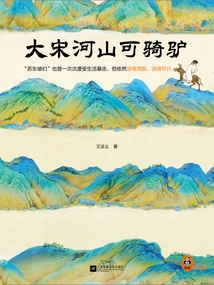
大宋河山可骑驴
Wang Is So
Su Dongpo is broad-minded, Wang Anshi is stubborn, Li Qingzhao is chivalrous, and Lu You is maverick. They are so free and easy that people forget that they have also suffered a critical blow in life: Su Dongpo was demoted three times in his life, to Huangzhou, Huizhou, and Danzhou, and was not pardoned until he was sixty-five years old; Wang Anshi was betrayed by his cronies when he implemented the new law and was falsely accused of treason; Li Qingzhao was deceived and domestically abused by a "scumbag"; Lu You was disqualified from the palace examination because he blocked the path of the grandson of the powerful official Qin Hui, and lost his name... Times were bad, but accepting reality was not their style. Su Dongpo turned every place of exile into his own paradise; Wang Anshi dared to defend himself in front of the emperor for his ideal of reform; Li Qingzhao would rather face the worldly ridicule and prison to find his freedom; Lu You searched up and down, actively seeking every opportunity to rush to the front line... Open this book and have the courage of "Su Dongpo" to face life head-on!
Su Dongpo is broad-minded, Wang Anshi is stubborn, Li Qingzhao is chivalrous, and Lu You is maverick. They are so free and easy that people forget that they have also suffered a critical blow in life: Su Dongpo was demoted three times in his life, to Huangzhou, Huizhou, and Danzhou, and was not pardoned until he was sixty-five years old; Wang Anshi was betrayed by his cronies when he implemented the new law and was falsely accused of treason; Li Qingzhao was deceived and domestically abused by a "scumbag"; Lu You was disqualified from the palace examination because he blocked the path of the grandson of the powerful official Qin Hui, and lost his name... Times were bad, but accepting reality was not their style. Su Dongpo turned every place of exile into his own paradise; Wang Anshi dared to defend himself in front of the emperor for his ideal of reform; Li Qingzhao would rather face the worldly ridicule and prison to find his freedom; Lu You searched up and down, actively seeking every opportunity to rush to the front line... Open this book and have the courage of "Su Dongpo" to face life head-on!
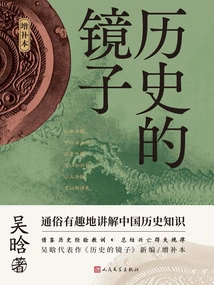
历史的镜子(增补本)
Wu Han
This book is an expanded edition of Wu Han's masterpiece "Mirror of History". "Mirror of History" is the first collection of essays edited by Wu Han himself and published in 1947. The content includes politics, military, culture, characters and many other aspects. The author extracts a large number of historical details, observes from multiple angles and levels, discusses the gains and losses of the rise and fall, highlights his thinking on the fate of the country and the nation, focuses on the relationship between the decline of social morality, political corruption, people's hardship and the rise and fall of the country, and proposes many issues such as improving social morality and eradicating corruption. This publication adds 250,000 words, adding Wu Han's research on Ming Dynasty politics, ancient military, ancient economy, ancient culture, and stories of historical figures, which are very enlightening whether it is for national construction or personal growth.
This book is an expanded edition of Wu Han's masterpiece "Mirror of History". "Mirror of History" is the first collection of essays edited by Wu Han himself and published in 1947. The content includes politics, military, culture, characters and many other aspects. The author extracts a large number of historical details, observes from multiple angles and levels, discusses the gains and losses of the rise and fall, highlights his thinking on the fate of the country and the nation, focuses on the relationship between the decline of social morality, political corruption, people's hardship and the rise and fall of the country, and proposes many issues such as improving social morality and eradicating corruption. This publication adds 250,000 words, adding Wu Han's research on Ming Dynasty politics, ancient military, ancient economy, ancient culture, and stories of historical figures, which are very enlightening whether it is for national construction or personal growth.
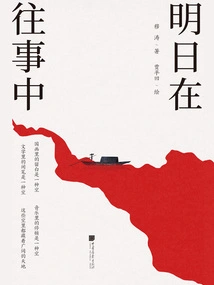
Tomorrow is in the Past
History明日在往事中
Written By Mu Tao And Painted By Jia Ping
This book is a joint work of Mu Tao and Jia Pingwa, with Mu writing and Jia painting. Starting from his concern for traditional Chinese culture, Mr. Mu Tao uses plain and friendly language to tell wonderful and informative historical knowledge, explain the connotation of Chinese culture, look at the past and reflect the present, discuss freely, and have sharp words about Chinese characters, politics, economy, phenology, reading and even all aspects of life. Mr. Jia Pingwa uses paintings as his pen, conveying humor and interest to readers through paintings rich in profound meanings and metaphors. The idea of a calm and flowing life: "Where can a cup of water be kept? It should be stored in a river." The interesting explanation of ancient cultural customs: "Each Chinese character is a profound and kind elder. Behind the simplicity and tranquility, there is a belly full of historical smoke." Broad historical concern: "One of the great contributions of the ancient Chinese is to name the national history books after the Spring and Autumn Period, and to look at the world by referring to astronomy, geography, and the vicissitudes of the human world."
This book is a joint work of Mu Tao and Jia Pingwa, with Mu writing and Jia painting. Starting from his concern for traditional Chinese culture, Mr. Mu Tao uses plain and friendly language to tell wonderful and informative historical knowledge, explain the connotation of Chinese culture, look at the past and reflect the present, discuss freely, and have sharp words about Chinese characters, politics, economy, phenology, reading and even all aspects of life. Mr. Jia Pingwa uses paintings as his pen, conveying humor and interest to readers through paintings rich in profound meanings and metaphors. The idea of a calm and flowing life: "Where can a cup of water be kept? It should be stored in a river." The interesting explanation of ancient cultural customs: "Each Chinese character is a profound and kind elder. Behind the simplicity and tranquility, there is a belly full of historical smoke." Broad historical concern: "One of the great contributions of the ancient Chinese is to name the national history books after the Spring and Autumn Period, and to look at the world by referring to astronomy, geography, and the vicissitudes of the human world."
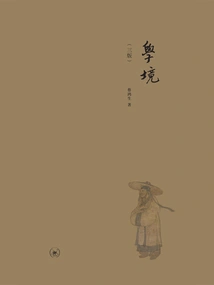
学境(第三版)
Cai Hongsheng
This book is a collection of essays on historical topics written by Professor Cai Hongsheng, a senior professor in the Department of History at Sun Yat-sen University. The book includes Mr. Cai's experiences in studying, as well as his induction and summary of the historical achievements of Chen Yinke and Cen Zhongmian, as well as his own opinions on how students in the history department conduct research. Each text in the book is relatively concise and highly readable. Mr. Cai Hongsheng studied under Mr. Chen Yinke in the History Department of Sun Yat-sen University, and his academic approach was deeply influenced by Mr. Chen. Many texts in the book involve his recollections of Mr. Chen's life and scholarship, and he also provides an incisive summary of Mr. Chen's main research results.
This book is a collection of essays on historical topics written by Professor Cai Hongsheng, a senior professor in the Department of History at Sun Yat-sen University. The book includes Mr. Cai's experiences in studying, as well as his induction and summary of the historical achievements of Chen Yinke and Cen Zhongmian, as well as his own opinions on how students in the history department conduct research. Each text in the book is relatively concise and highly readable. Mr. Cai Hongsheng studied under Mr. Chen Yinke in the History Department of Sun Yat-sen University, and his academic approach was deeply influenced by Mr. Chen. Many texts in the book involve his recollections of Mr. Chen's life and scholarship, and he also provides an incisive summary of Mr. Chen's main research results.
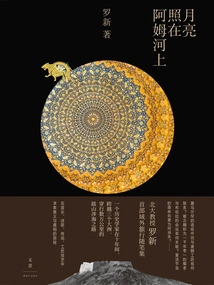
月亮照在阿姆河上
Luo Xin
Where is Iron Gate Pass? What is the connection between the Rubaiyat, Samarkand Paper and Talas Prisoners of War? Why are dates called "thousand-year dates"? Why are Easter Island's forests disappearing? ...Luo Xin's journey is always closely related to these issues. This book contains ten articles, recording historian Luo Xin's inspections and travels around the world in recent years. It contains both rich perceptual details and fresh and sharp academic thinking. They bear witness to the overlapping and blending of identities of travelers and historians.
Where is Iron Gate Pass? What is the connection between the Rubaiyat, Samarkand Paper and Talas Prisoners of War? Why are dates called "thousand-year dates"? Why are Easter Island's forests disappearing? ...Luo Xin's journey is always closely related to these issues. This book contains ten articles, recording historian Luo Xin's inspections and travels around the world in recent years. It contains both rich perceptual details and fresh and sharp academic thinking. They bear witness to the overlapping and blending of identities of travelers and historians.
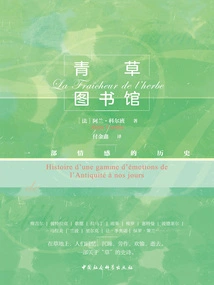
青草图书馆:一部情感的历史
(france) Alain Corbin
The soothing power of plants can be seen from our balconies and on the sidewalks of our cities, and modern citizens are aware of this. Today, green beings have regained their rights, to satisfy a desire and to recover lost emotions. Many people have praised the magical power of grass. From Lucretius to Petrarch, from Ronsard to George Sand, from Lamartine to Rene Charles... In this book, the author sorts out the tributes paid by literary and artistic giants to grass in various states: from a single plant to a clump, from wild growth to decline. This allows us to once again feel those familiar throbbings: the joy of children rolling on the lawn, the comfort of taking a nap on the grass after a meal, the fresh smell of the grass being cut, the excitement of the natural kingdom in the grass, the passion of using the sky as a cover and grass as a mat, until finally the peace brought by the green grass in the cemetery. The author summarizes the text fragments with the theme of "grass" from the perspective of a historian, leading us on a lush and emotional walk. This book is poetic and healing, full of delicate feelings and thoughts, bringing the call of nature to busy readers in the city.
The soothing power of plants can be seen from our balconies and on the sidewalks of our cities, and modern citizens are aware of this. Today, green beings have regained their rights, to satisfy a desire and to recover lost emotions. Many people have praised the magical power of grass. From Lucretius to Petrarch, from Ronsard to George Sand, from Lamartine to Rene Charles... In this book, the author sorts out the tributes paid by literary and artistic giants to grass in various states: from a single plant to a clump, from wild growth to decline. This allows us to once again feel those familiar throbbings: the joy of children rolling on the lawn, the comfort of taking a nap on the grass after a meal, the fresh smell of the grass being cut, the excitement of the natural kingdom in the grass, the passion of using the sky as a cover and grass as a mat, until finally the peace brought by the green grass in the cemetery. The author summarizes the text fragments with the theme of "grass" from the perspective of a historian, leading us on a lush and emotional walk. This book is poetic and healing, full of delicate feelings and thoughts, bringing the call of nature to busy readers in the city.
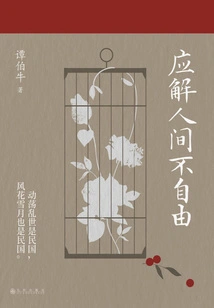
应解人间不自由
Tan Boniu
Regarding modern cultural celebrities, there are many exaggerated and distorted legends in later generations. As a textual research historian, the author Tan Boniu searched many historical materials and restored the true side of the literati for readers. Refuse to spread rumors and conjectures, and rationally observe the love, hatred and hatred of the times. From a head-up perspective, it tells the story of the grievances, hatreds, joys and sorrows of cultural celebrities in love.
Regarding modern cultural celebrities, there are many exaggerated and distorted legends in later generations. As a textual research historian, the author Tan Boniu searched many historical materials and restored the true side of the literati for readers. Refuse to spread rumors and conjectures, and rationally observe the love, hatred and hatred of the times. From a head-up perspective, it tells the story of the grievances, hatreds, joys and sorrows of cultural celebrities in love.
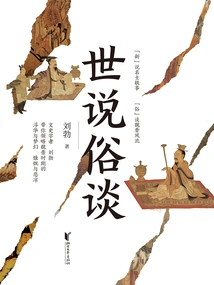
Worldly Talk
History世说俗谈
Liu Bo
"Shishuo Sutan" is a historical essay by the literary and historical writer Liu Bo interpreting "Shishuo Xinyu". Liu Bo used the form of telling jokes to interestingly interpret the behaviors and thoughts of various well-known figures in "Shishuoxinyu", such as Ruan Ji, Ji Kang, Wang Xizhi and others. The whole book is divided into five major chapters: "The Changes of Dynasties in the Han, Wei and Shichang Xuanfeng", "Seven Sages in the Bamboo Forest", "The Glitz and Dreams of China and North Korea", "The Differences in Rivers", and "The Old Thief Who Can't Get Around". Liu Bo is based on the text of "Shishuoxinyu" and refers to "Book of Jin" Through accurate textual research and other relevant historical materials, many celebrities in the Wei and Jin Dynasties are put into the specific historical background for interpretation, and multiple clues of imagination and reasoning are used to interpret the romance and desolation of the Wei and Jin Dynasties from a more diversified perspective.
"Shishuo Sutan" is a historical essay by the literary and historical writer Liu Bo interpreting "Shishuo Xinyu". Liu Bo used the form of telling jokes to interestingly interpret the behaviors and thoughts of various well-known figures in "Shishuoxinyu", such as Ruan Ji, Ji Kang, Wang Xizhi and others. The whole book is divided into five major chapters: "The Changes of Dynasties in the Han, Wei and Shichang Xuanfeng", "Seven Sages in the Bamboo Forest", "The Glitz and Dreams of China and North Korea", "The Differences in Rivers", and "The Old Thief Who Can't Get Around". Liu Bo is based on the text of "Shishuoxinyu" and refers to "Book of Jin" Through accurate textual research and other relevant historical materials, many celebrities in the Wei and Jin Dynasties are put into the specific historical background for interpretation, and multiple clues of imagination and reasoning are used to interpret the romance and desolation of the Wei and Jin Dynasties from a more diversified perspective.
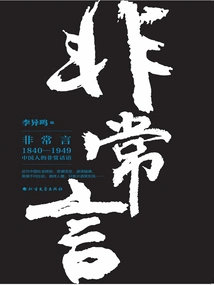
非常言:1840-1949中国人的非常话语
Li Yiming
This book tells about those little-known trivial historical fragments that can make people today understand. For readers who are interested in history, and for creators who want to collect alternative historical materials, this set of books is worth collecting. History is often shaped by personal, accidental, even inconspicuous circumstances. In the past hundred years of modern China, the ups and downs of society, the changes in ideological trends, and the changes in mission destiny have all been far greater than before. This book uses a similar genre as "Shishuoxinyu", excerpting some little-known historical fragments and anecdotes of people during this extraordinary period, trying to restore the original appearance of history with scraps from the pile of old papers, and pry out the truth of the events from the details. "Extraordinary Statements" is divided into 15 chapters, including historical scenes, state affairs, military movements, military affairs, revolution, generals, world affairs, love and hate, integrity, and humor. It strives to peep into and restore history from the smallest details. It is a rare masterpiece in notebook style.
This book tells about those little-known trivial historical fragments that can make people today understand. For readers who are interested in history, and for creators who want to collect alternative historical materials, this set of books is worth collecting. History is often shaped by personal, accidental, even inconspicuous circumstances. In the past hundred years of modern China, the ups and downs of society, the changes in ideological trends, and the changes in mission destiny have all been far greater than before. This book uses a similar genre as "Shishuoxinyu", excerpting some little-known historical fragments and anecdotes of people during this extraordinary period, trying to restore the original appearance of history with scraps from the pile of old papers, and pry out the truth of the events from the details. "Extraordinary Statements" is divided into 15 chapters, including historical scenes, state affairs, military movements, military affairs, revolution, generals, world affairs, love and hate, integrity, and humor. It strives to peep into and restore history from the smallest details. It is a rare masterpiece in notebook style.
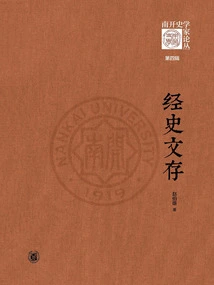
经史文存(南开史学家论丛·第四辑)
Zhao Boxiong
This book is divided into three parts. It is an academic summary of Professor Zhao Boxiong of Nankai University since he started teaching and research. It focuses on discussing some important propositions, classics and figures in the history of Confucianism and Confucianism. Among them, there are 16 chapters in the first part, discussing issues related to Spring and Autumn Studies, Zuo Zhuan, and Gongyang Studies. There are 12 chapters in the middle volume, which use handed down documents and archaeological materials to analyze some political issues since the pre-Qin Dynasty, and do detailed and practical historical research, involving Wang Ji and the relocation of capitals, concept research, and character research. The second part contains 13 chapters, which mainly focus on the research on specific issues in specific documents, as well as the author's thoughts on the turn of Confucian classics since the late Qing Dynasty and the relationship between contemporary Chinese studies, Confucianism and Confucian classics.
This book is divided into three parts. It is an academic summary of Professor Zhao Boxiong of Nankai University since he started teaching and research. It focuses on discussing some important propositions, classics and figures in the history of Confucianism and Confucianism. Among them, there are 16 chapters in the first part, discussing issues related to Spring and Autumn Studies, Zuo Zhuan, and Gongyang Studies. There are 12 chapters in the middle volume, which use handed down documents and archaeological materials to analyze some political issues since the pre-Qin Dynasty, and do detailed and practical historical research, involving Wang Ji and the relocation of capitals, concept research, and character research. The second part contains 13 chapters, which mainly focus on the research on specific issues in specific documents, as well as the author's thoughts on the turn of Confucian classics since the late Qing Dynasty and the relationship between contemporary Chinese studies, Confucianism and Confucian classics.
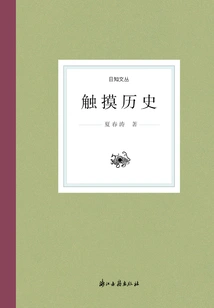
Touch History
History触摸历史
Xia Chuntao
This book is a collection of academic essays by Mr. Xia Chuntao, a famous expert on the history of the Taiping Rebellion and a researcher at the Institute of Historical Theory of the Chinese Academy of History. This book has certain academic value and market value.
This book is a collection of academic essays by Mr. Xia Chuntao, a famous expert on the history of the Taiping Rebellion and a researcher at the Institute of Historical Theory of the Chinese Academy of History. This book has certain academic value and market value.
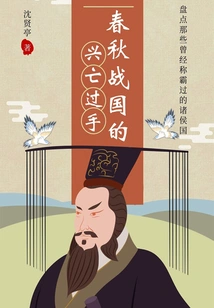
春秋战国的兴亡过手:盘点那些曾经称霸过的诸侯国
Shen Xianting
The Spring and Autumn Period and the Warring States Period were a period of great division in Chinese history. It was also the most active period in terms of military, science and technology, diplomacy, thought, and talent. During this turbulent period of more than five hundred years, all vassal states, regardless of their size, were trying their best to use all means to find a place in this troubled world. This book combines story form with historical analysis to take stock of those countries that once dominated during the Spring and Autumn Period and the Warring States Period but eventually declined, revealing for you the unknown secrets about the rise and fall of history...
The Spring and Autumn Period and the Warring States Period were a period of great division in Chinese history. It was also the most active period in terms of military, science and technology, diplomacy, thought, and talent. During this turbulent period of more than five hundred years, all vassal states, regardless of their size, were trying their best to use all means to find a place in this troubled world. This book combines story form with historical analysis to take stock of those countries that once dominated during the Spring and Autumn Period and the Warring States Period but eventually declined, revealing for you the unknown secrets about the rise and fall of history...
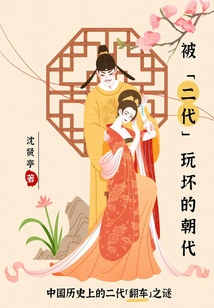
被「二代」玩坏的朝代:中国历史上的二代「翻车」之谜
Shen Xianting
The second-generation power transition in Chinese history will more or less cause some "rollover" accidents. They may lead to the direct collapse of the dynasty, or they may affect the historical direction and pattern of future generations. Are these second-generation rulers too stupid or too shrewd, or did their generation fail to arrange their funeral arrangements well? Or is there an unspeakable secret behind this? This book selects several typical cases of second-generation power changes, and uses stories as the mainstay and discussion as a supplement to reveal for you the mystery of why the second-generation power changes always "overturn"...
The second-generation power transition in Chinese history will more or less cause some "rollover" accidents. They may lead to the direct collapse of the dynasty, or they may affect the historical direction and pattern of future generations. Are these second-generation rulers too stupid or too shrewd, or did their generation fail to arrange their funeral arrangements well? Or is there an unspeakable secret behind this? This book selects several typical cases of second-generation power changes, and uses stories as the mainstay and discussion as a supplement to reveal for you the mystery of why the second-generation power changes always "overturn"...
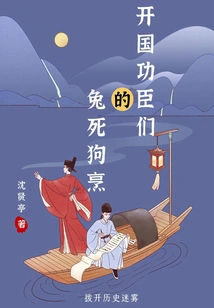
拨开历史迷雾:开国功臣们的兔死狗烹
Shen Xianting
A group of founding heroes in history unexpectedly share the same fate of tragic death. Shang Yang was torn apart by a chariot, Li Si was cut in half, Lan Yu was skinned... Why did they end up like this? This book will reveal to you the fate of the founding heroes. They all have the same identity: the founding heroes who helped the king determine the country. They also all have the same fate: die miserably! When talking about the way of death, Shang Yang was the first to raise his hand: I was torn apart by a car! Li Si was dissatisfied: I was cut in half! Han Xin said: I regret not listening to Kuai Tong's plan back then! Liu Wenjing said: The ancients said that when the high birds are gone, a good bow is hidden. It seems that this statement is true! Wen Zhong said calmly: Let me just say that if history talks about the fate of loyal ministers in the future, my fate will definitely be used as a metaphor! Why did they end up like this? This book will reveal the secret for you!
A group of founding heroes in history unexpectedly share the same fate of tragic death. Shang Yang was torn apart by a chariot, Li Si was cut in half, Lan Yu was skinned... Why did they end up like this? This book will reveal to you the fate of the founding heroes. They all have the same identity: the founding heroes who helped the king determine the country. They also all have the same fate: die miserably! When talking about the way of death, Shang Yang was the first to raise his hand: I was torn apart by a car! Li Si was dissatisfied: I was cut in half! Han Xin said: I regret not listening to Kuai Tong's plan back then! Liu Wenjing said: The ancients said that when the high birds are gone, a good bow is hidden. It seems that this statement is true! Wen Zhong said calmly: Let me just say that if history talks about the fate of loyal ministers in the future, my fate will definitely be used as a metaphor! Why did they end up like this? This book will reveal the secret for you!
The Whisper of History
History历史的微声
Wang Di
"The Whisper of History" mainly collects English book reviews published by historian Wang Di in the West, most of which are translated into Chinese for the first time. The biggest difficulty in studying people is finding their voices, because most of them have disappeared or been forgotten throughout history. When historians write history for the people, they must find their true voices. They are not recorded in official history, but they still leave a weak voice in history. It is up to historians to find the traces of the people in history from various documents and even literature using various methods. Historical writing in the past concentrated on emperors, generals, politicians, intellectual elites, etc., And only saw them galloping on the historical stage, while the broad masses of the people who promoted historical development have basically disappeared. It becomes very important to find the whisper of history. This book consists of five parts.
"The Whisper of History" mainly collects English book reviews published by historian Wang Di in the West, most of which are translated into Chinese for the first time. The biggest difficulty in studying people is finding their voices, because most of them have disappeared or been forgotten throughout history. When historians write history for the people, they must find their true voices. They are not recorded in official history, but they still leave a weak voice in history. It is up to historians to find the traces of the people in history from various documents and even literature using various methods. Historical writing in the past concentrated on emperors, generals, politicians, intellectual elites, etc., And only saw them galloping on the historical stage, while the broad masses of the people who promoted historical development have basically disappeared. It becomes very important to find the whisper of history. This book consists of five parts.
昨日明月照今心(日知文丛)
Cheng Nianqi
This book is one of the "Japanese Knowledge Series". The main content of this book is some historical academic essays written by Cheng Nianqi, a scholar at the Institute of History of the Shanghai Academy of Social Sciences, during his historical research. There are more than 40 articles in total. The content is rich and embodies the author's experience in studying history for many years. The author discusses many historical issues from the pre-Qin to the Song and Ming dynasties based on the ancient political system and economic conditions. The materials are detailed and sometimes creative. In addition to commenting on historical events, the author is always committed to exploring their reference significance to today's life, and strives to use history as a mirror to clearly understand the gains and losses of ups and downs. The writing is concise, humorous and easy to understand. It is a work that is both academic and readable.
This book is one of the "Japanese Knowledge Series". The main content of this book is some historical academic essays written by Cheng Nianqi, a scholar at the Institute of History of the Shanghai Academy of Social Sciences, during his historical research. There are more than 40 articles in total. The content is rich and embodies the author's experience in studying history for many years. The author discusses many historical issues from the pre-Qin to the Song and Ming dynasties based on the ancient political system and economic conditions. The materials are detailed and sometimes creative. In addition to commenting on historical events, the author is always committed to exploring their reference significance to today's life, and strives to use history as a mirror to clearly understand the gains and losses of ups and downs. The writing is concise, humorous and easy to understand. It is a work that is both academic and readable.
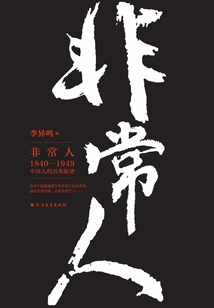
非常人:1840-1949中国人的另类脸谱
Li Yiming
History is often shaped by personal, occasional, even inconspicuous circumstances. In the past hundred years of modern China, the changes in ideological trends and the changes in the fate of characters have been far greater than before. This book uses a similar genre as "Shishuoxinyu", excerpting the words, deeds, and thoughts of various characters during this extraordinary period, showing the true side of human nature through details, and restoring the truth to history. The whole book is divided into twenty-three chapters, including learning the Tao, uprightness, dedication, loyalty, self-cultivation, integrity, heroism, friendship, and deep affection.
History is often shaped by personal, occasional, even inconspicuous circumstances. In the past hundred years of modern China, the changes in ideological trends and the changes in the fate of characters have been far greater than before. This book uses a similar genre as "Shishuoxinyu", excerpting the words, deeds, and thoughts of various characters during this extraordinary period, showing the true side of human nature through details, and restoring the truth to history. The whole book is divided into twenty-three chapters, including learning the Tao, uprightness, dedication, loyalty, self-cultivation, integrity, heroism, friendship, and deep affection.
Pin Ren Lu
History品人录
Du Dongxia
This book excerpts the comments and related stories about various figures in various periods in history, allowing people to appreciate the complex social factor of "people" from different angles and gain enlightenment in taste and philosophy. The focus is not to evaluate and analyze a certain historical figure in depth and detail, but to excerpt the performance of some of the characters in their dealings with others, as well as the comments of people at that time or later generations, to show certain characters and traits of the characters. It can be comprehensive and general, or it can be a certain aspect, so that readers can gain knowledge and be inspired in a relaxed atmosphere. Readers can feel life in the process of savoring people and things, examine themselves and understand the world, thereby better understanding people and society, and creating a more harmonious and relaxed life.
This book excerpts the comments and related stories about various figures in various periods in history, allowing people to appreciate the complex social factor of "people" from different angles and gain enlightenment in taste and philosophy. The focus is not to evaluate and analyze a certain historical figure in depth and detail, but to excerpt the performance of some of the characters in their dealings with others, as well as the comments of people at that time or later generations, to show certain characters and traits of the characters. It can be comprehensive and general, or it can be a certain aspect, so that readers can gain knowledge and be inspired in a relaxed atmosphere. Readers can feel life in the process of savoring people and things, examine themselves and understand the world, thereby better understanding people and society, and creating a more harmonious and relaxed life.
Temples and Rivers and Lakes: the Biography of Fan Zhongyan·the Meeting of Wind and Cloud (part 1)
History庙堂与江湖:范仲淹传·风云际会(第一部)
Teng Fei
"Temple and Rivers and Lakes: The Biography of Fan Zhongyan" takes many historical events that occurred from Duangong to Huangyou in the Northern Song Dynasty as clues, and features many famous historical figures such as Fan Zhongyan, Yan Shu, Ouyang Xiu, Lu Yijian, Han Qi, Fu Bi, etc. From the perspective of the intersection between the two dynasties, and based on historical books such as "Song History", "Zizhi Tongjian" and "Zi Zhi Tongjian Changbian", it shows the magnificent historical picture of Zhenzong and Renzong in the Northern Song Dynasty for more than 60 years from a unique perspective. The first part: The Meeting of Wind and Cloud, mainly introduces the stories that happened among the big figures of Fan Zhongyan's contemporaries. It is intended to explain the history and background of Fan Zhongyan's life. It also introduces his life such as his determination in childhood, living under the shelter of others, being a good doctor, and being a good doctor.
"Temple and Rivers and Lakes: The Biography of Fan Zhongyan" takes many historical events that occurred from Duangong to Huangyou in the Northern Song Dynasty as clues, and features many famous historical figures such as Fan Zhongyan, Yan Shu, Ouyang Xiu, Lu Yijian, Han Qi, Fu Bi, etc. From the perspective of the intersection between the two dynasties, and based on historical books such as "Song History", "Zizhi Tongjian" and "Zi Zhi Tongjian Changbian", it shows the magnificent historical picture of Zhenzong and Renzong in the Northern Song Dynasty for more than 60 years from a unique perspective. The first part: The Meeting of Wind and Cloud, mainly introduces the stories that happened among the big figures of Fan Zhongyan's contemporaries. It is intended to explain the history and background of Fan Zhongyan's life. It also introduces his life such as his determination in childhood, living under the shelter of others, being a good doctor, and being a good doctor.
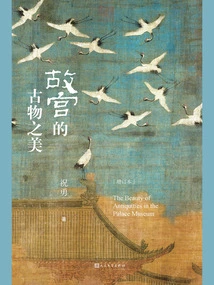
故宫的古物之美(增订本)
Zhu Yong
In this book, Zhu Yong selected 18 pieces from the Forbidden City collection and told the past and present lives of each national treasure in 18 essays, linking together the history of art in the Forbidden City and recreating the beauty of Chinese civilization. The "antiques" in Zhu Yong's works reflect the cultural spirit of the same era through the material carrier of an era. This is a surprise and sigh for our ancient civilization, and a sincere pride brought by cultural origin. The book contains nearly a hundred high-definition detailed pictures of the Forbidden City and museums at home and abroad.
In this book, Zhu Yong selected 18 pieces from the Forbidden City collection and told the past and present lives of each national treasure in 18 essays, linking together the history of art in the Forbidden City and recreating the beauty of Chinese civilization. The "antiques" in Zhu Yong's works reflect the cultural spirit of the same era through the material carrier of an era. This is a surprise and sigh for our ancient civilization, and a sincere pride brought by cultural origin. The book contains nearly a hundred high-definition detailed pictures of the Forbidden City and museums at home and abroad.
行走的柠檬:意大利的柑橘园之旅
(uk) Helena Atlee
This book uses the growing and cultivation of Italian citrus fruits to show an unexpected history of Italy, from the arrival of citron in Calabria in the 2nd century, to the Arab control of Sicily in the 9th century, to the Slow Food movement and advanced genetic research in the 21st century. Explores the curious past and present of these citrus fruits, the use of its essential oil in perfume, the raw violence of the Battle of the Oranges of Ivrea, the earliest emergence of the Mafia in the lemon groves outside Palermo, the connection between organized crime and the citrus industry, and more. Combining travel writing with history, recipes, gardening and art, the author draws on keen observation, captivating narrative, casual humor and a wealth of knowledge to take readers on a unique and rich journey through Italy's cultural, moral, culinary and political past.
This book uses the growing and cultivation of Italian citrus fruits to show an unexpected history of Italy, from the arrival of citron in Calabria in the 2nd century, to the Arab control of Sicily in the 9th century, to the Slow Food movement and advanced genetic research in the 21st century. Explores the curious past and present of these citrus fruits, the use of its essential oil in perfume, the raw violence of the Battle of the Oranges of Ivrea, the earliest emergence of the Mafia in the lemon groves outside Palermo, the connection between organized crime and the citrus industry, and more. Combining travel writing with history, recipes, gardening and art, the author draws on keen observation, captivating narrative, casual humor and a wealth of knowledge to take readers on a unique and rich journey through Italy's cultural, moral, culinary and political past.