Library
Browse and search books
2,823 novels found
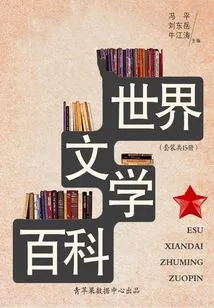
世界文学百科(套装共15册)
Editor-in-chief: Feng Ping, Liu Dongyue, Niu Jiangtao
To study world literature, you must study world-famous literary masters, famous literary works and the history of literary development in order to grasp the overview of world literature. The content of this series of books is comprehensive and specific, with strong information and systematicity. It is a good reading material for readers to learn about world literature.
To study world literature, you must study world-famous literary masters, famous literary works and the history of literary development in order to grasp the overview of world literature. The content of this series of books is comprehensive and specific, with strong information and systematicity. It is a good reading material for readers to learn about world literature.
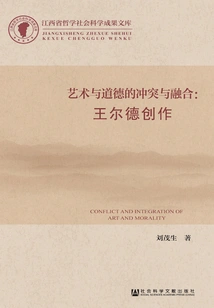
艺术与道德的冲突与融合:王尔德创作
Liu Maosheng
This book mainly uses literary ethics criticism as a research method, combined with the historical, political and social background of the British Victorian period, and based on a close reading of the text, systematically discusses the formation and development process of Wilde's ethical thoughts in his artistic practice, reveals the ethical connotation and internal correlation in Wilde's artistic practice, and focuses on the specific characteristics of conflict and integration between art and ethics.
This book mainly uses literary ethics criticism as a research method, combined with the historical, political and social background of the British Victorian period, and based on a close reading of the text, systematically discusses the formation and development process of Wilde's ethical thoughts in his artistic practice, reveals the ethical connotation and internal correlation in Wilde's artistic practice, and focuses on the specific characteristics of conflict and integration between art and ethics.
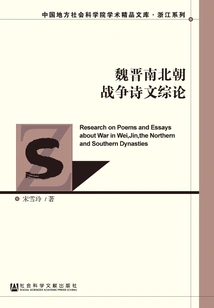
A Comprehensive Review of War Poetry and Prose in the Wei, Jin, Southern and Northern Dynasties
Literature魏晋南北朝战争诗文综论
Song Xueling
Through a macroscopic examination of the war poetry of the Wei, Jin, Southern and Northern Dynasties, this book explores its development and evolution rules and its deep connection with the history, society, and culture of the time, and explores the development of its style under the special historical background and the spiritual core it contains. Among them, the war poems section systematically explores the development, trend and trend characteristics of war poems in the Wei, Jin, Southern and Northern Dynasties; the war essays section examines the political appeal and cultural psychology of polemic essays, explores the stylistic function, content expression mode and special stylistic system of appeal essays, and also conducts a comprehensive and detailed discussion on the origin, creation and theme evolution of martial arts poems.
Through a macroscopic examination of the war poetry of the Wei, Jin, Southern and Northern Dynasties, this book explores its development and evolution rules and its deep connection with the history, society, and culture of the time, and explores the development of its style under the special historical background and the spiritual core it contains. Among them, the war poems section systematically explores the development, trend and trend characteristics of war poems in the Wei, Jin, Southern and Northern Dynasties; the war essays section examines the political appeal and cultural psychology of polemic essays, explores the stylistic function, content expression mode and special stylistic system of appeal essays, and also conducts a comprehensive and detailed discussion on the origin, creation and theme evolution of martial arts poems.
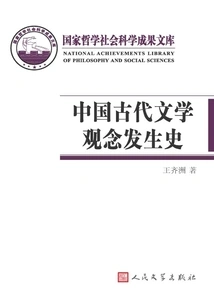
中国古代文学观念发生史
Wang Qizhou
This manuscript is a monograph that uses "historical cultural semantics" to study the concept of ancient Chinese literature. The author places the literary concept in the entire social history in which it occurred for dynamic investigation to clarify the process, reasons and mechanisms of the construction of Chinese literary concepts. It is based on the requirements of "genetics" to explore the occurrence of ancient Chinese literary concepts and construct the history of the occurrence of ancient Chinese literary concepts. This manuscript uses research methods from many disciplines such as history, sociology, folklore, religion, art, and cultural anthropology. It has a novel perspective and unique viewpoints. It is a substantial academic monograph on the concept of ancient Chinese literature.
This manuscript is a monograph that uses "historical cultural semantics" to study the concept of ancient Chinese literature. The author places the literary concept in the entire social history in which it occurred for dynamic investigation to clarify the process, reasons and mechanisms of the construction of Chinese literary concepts. It is based on the requirements of "genetics" to explore the occurrence of ancient Chinese literary concepts and construct the history of the occurrence of ancient Chinese literary concepts. This manuscript uses research methods from many disciplines such as history, sociology, folklore, religion, art, and cultural anthropology. It has a novel perspective and unique viewpoints. It is a substantial academic monograph on the concept of ancient Chinese literature.
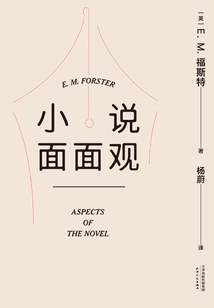
Aspects of the Novel
Literature小说面面观
H
"Aspects of the Novel" is a series of lectures given by Forster in Cambridge in 1927. It was widely praised in the history of literature and had an important influence on later literary creation and literary criticism. This book is characterized by a clear, comprehensive and easy-to-read structure. The author uses his own writing as a starting point and conducts in-depth analysis against famous works in literary history, including some sharp comments on writers such as Fitzgerald and Henry James. In this series of lectures, Forster talked about the relationship between novels and reality, proposing the view that novels are both larger than reality and smaller than reality; he proposed the views of "flat characters" and "round characters", which became terms often used by later critics; he proposed that "the function of the novelist is to reveal the hidden life from its roots". The discussion of narrative angles and artistic expressions such as patterns and rhythms is particularly pioneering and inspiring.
"Aspects of the Novel" is a series of lectures given by Forster in Cambridge in 1927. It was widely praised in the history of literature and had an important influence on later literary creation and literary criticism. This book is characterized by a clear, comprehensive and easy-to-read structure. The author uses his own writing as a starting point and conducts in-depth analysis against famous works in literary history, including some sharp comments on writers such as Fitzgerald and Henry James. In this series of lectures, Forster talked about the relationship between novels and reality, proposing the view that novels are both larger than reality and smaller than reality; he proposed the views of "flat characters" and "round characters", which became terms often used by later critics; he proposed that "the function of the novelist is to reveal the hidden life from its roots". The discussion of narrative angles and artistic expressions such as patterns and rhythms is particularly pioneering and inspiring.
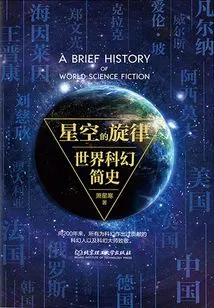
星空的旋律:世界科幻简史
Xiao Xinghan
"Melody of the Starry Sky: A Brief History of World Science Fiction" is an encyclopedia of the history of world science fiction literature written by Xiao Xinghan, a scholarly science fiction writer, suitable for Chinese readers and covering the whole world. "Melody of the Starry Sky: A Brief History of World Science Fiction" uses plain language to explain the origin and development of world science fiction and the development of Chinese science fiction literature. There is thinking in the narrative, and there is prospect in the thinking, which unfolds an exquisite picture of the development of science fiction literature for readers.
"Melody of the Starry Sky: A Brief History of World Science Fiction" is an encyclopedia of the history of world science fiction literature written by Xiao Xinghan, a scholarly science fiction writer, suitable for Chinese readers and covering the whole world. "Melody of the Starry Sky: A Brief History of World Science Fiction" uses plain language to explain the origin and development of world science fiction and the development of Chinese science fiction literature. There is thinking in the narrative, and there is prospect in the thinking, which unfolds an exquisite picture of the development of science fiction literature for readers.
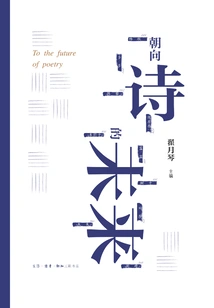
Toward the Future of Poetry
Literature朝向诗的未来
Editor-in-chief Zhai Yueqin
To approach the poet is to enter the poetry scene. This book is an in-depth dialogue between poets and critics, a review of the individual poetry histories of ten contemporary poets, a summary of the development of new Chinese poetry since the 1980s, and a vision towards the future of poetry. The interviewer in this book is a poetry researcher himself, and has his own awareness of the problems of the poets involved in the book. Each poet has a different life experience and creative style. Whether it is Yang Mu, the godfather poet in Taiwan, Chen Dongdong, a representative poet in intellectual writing, or Zhou Zan, who experimented with theatrical poetry, they all have their own distinctive personalities. On the surface, this is an interview with ten poets, but from a broader perspective, it can also be regarded as another presentation of the history of contemporary poetry.
To approach the poet is to enter the poetry scene. This book is an in-depth dialogue between poets and critics, a review of the individual poetry histories of ten contemporary poets, a summary of the development of new Chinese poetry since the 1980s, and a vision towards the future of poetry. The interviewer in this book is a poetry researcher himself, and has his own awareness of the problems of the poets involved in the book. Each poet has a different life experience and creative style. Whether it is Yang Mu, the godfather poet in Taiwan, Chen Dongdong, a representative poet in intellectual writing, or Zhou Zan, who experimented with theatrical poetry, they all have their own distinctive personalities. On the surface, this is an interview with ten poets, but from a broader perspective, it can also be regarded as another presentation of the history of contemporary poetry.
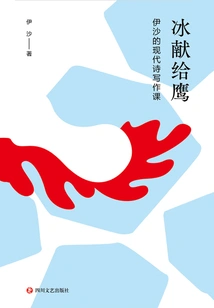
冰献给鹰:伊沙的现代诗写作课
Isha
Through detailed readings of Chinese and foreign poetry works, combined with analysis of various poetry communities and poetic concepts, Isha provides a practical sample of modern poetry teaching and inspires a large number of young students to become enthusiastic about poetry writing.
Through detailed readings of Chinese and foreign poetry works, combined with analysis of various poetry communities and poetic concepts, Isha provides a practical sample of modern poetry teaching and inspires a large number of young students to become enthusiastic about poetry writing.
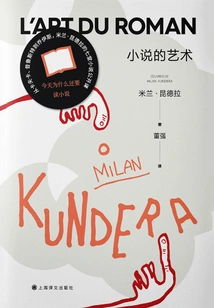
小说的艺术(米兰·昆德拉作品系列·2022版)
Milan Kundera
Where did the novel come from? Why do people like novels? How does reading novels help our lives? In this book, Milan Kundera starts from when Don Quixote leaves home, describes the changes in the novel and the spiritual comfort it brings to mankind, and then expresses the wisdom of the novel. "When humans think, God laughs." Kundera said, inspired by this motto, he likes to imagine that Rabelais heard God's laughter one day, and Europe's first great novel was born. The art of fiction came into the world as an echo of God's laughter. The wisdom of novels is different from the wisdom of philosophy. It does not come from the spirit of theory, but from the spirit of humor. "The Art of the Novel" is also a concentrated expression of the aesthetics of Kundera's novels. Through this book, we can understand the writer's artistic views, style, techniques, his attitude towards writing, his understanding of literary tradition, and his thoughts on people and the world behind this attitude. It is the best answer to the existence value of novels.
Where did the novel come from? Why do people like novels? How does reading novels help our lives? In this book, Milan Kundera starts from when Don Quixote leaves home, describes the changes in the novel and the spiritual comfort it brings to mankind, and then expresses the wisdom of the novel. "When humans think, God laughs." Kundera said, inspired by this motto, he likes to imagine that Rabelais heard God's laughter one day, and Europe's first great novel was born. The art of fiction came into the world as an echo of God's laughter. The wisdom of novels is different from the wisdom of philosophy. It does not come from the spirit of theory, but from the spirit of humor. "The Art of the Novel" is also a concentrated expression of the aesthetics of Kundera's novels. Through this book, we can understand the writer's artistic views, style, techniques, his attitude towards writing, his understanding of literary tradition, and his thoughts on people and the world behind this attitude. It is the best answer to the existence value of novels.
古代印度文艺理论文选
(india)bharat Muni Etc.
This collection contains five selected translations of classic theoretical works on Sanskrit literature, including "Dance Theory" (written by Bharata Muni), "Poetic Mirror" (written by Tanding), "Yun Guang" (written by Ananda Vardana, Huan Zeng), "Poetry Light" (written by Manmoza) and "Literary Mirror" (written by Vishunatha), through which you can understand the tip of the iceberg of traditional Indian literary theory.
This collection contains five selected translations of classic theoretical works on Sanskrit literature, including "Dance Theory" (written by Bharata Muni), "Poetic Mirror" (written by Tanding), "Yun Guang" (written by Ananda Vardana, Huan Zeng), "Poetry Light" (written by Manmoza) and "Literary Mirror" (written by Vishunatha), through which you can understand the tip of the iceberg of traditional Indian literary theory.
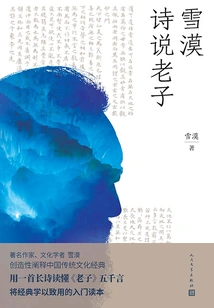
Xue Mo's Poem Talks About Lao Tzu
Literature雪漠诗说老子
Snow Desert
This book is a new work by the famous writer and cultural scholar Mr. Xue Mo that explains the classics of Chinese traditional culture. It is also an introductory reading of "Laozi" for contemporary people. The whole book covers the contents of the 81 chapters of "Laozi", especially in the form of a long philosophical poem, explaining the essence of the 81 chapters of "Laozi". It can be called "understanding Laozi in one book". The author began to lecture on "Laozi" in 2016. The collection of lectures was titled "Laozi's Thoughts" and was published in the first and second series by China Encyclopedia Publishing House, with a total circulation of nearly 100,000 copies. At present, many readers are looking forward to reading Mr. Xue Mo's complete explanation of "Laozi". This book is Mr. Xuemo's only comprehensive reading of "Laozi" at present.
This book is a new work by the famous writer and cultural scholar Mr. Xue Mo that explains the classics of Chinese traditional culture. It is also an introductory reading of "Laozi" for contemporary people. The whole book covers the contents of the 81 chapters of "Laozi", especially in the form of a long philosophical poem, explaining the essence of the 81 chapters of "Laozi". It can be called "understanding Laozi in one book". The author began to lecture on "Laozi" in 2016. The collection of lectures was titled "Laozi's Thoughts" and was published in the first and second series by China Encyclopedia Publishing House, with a total circulation of nearly 100,000 copies. At present, many readers are looking forward to reading Mr. Xue Mo's complete explanation of "Laozi". This book is Mr. Xuemo's only comprehensive reading of "Laozi" at present.
Flaubert's Literary Letters
Literature福楼拜文学书简
I
This book collects letters written by Flaubert to his lovers, friends, senior writers and disciples between 1847 and 1880. It is divided into four series: love and sex, personalization and impersonality, art first, and inner mission. The content covers many aspects such as literary creation, love, friendship, travel, artistic concepts, trends of the times, religious beliefs, etc. In Proust's words, Flaubert's letters not only reflect the author's literary and artistic concepts, but are also filled with friendship and family affection. They are an important reference for studying Flaubert. Flaubert argued that novelists should not reveal themselves in their works, just as God should not reveal himself in nature. Therefore, his letters become the key to reveal the author Flaubert hidden behind the characters in his works, and are an indispensable supplement for readers to understand Flaubert's era and works.
This book collects letters written by Flaubert to his lovers, friends, senior writers and disciples between 1847 and 1880. It is divided into four series: love and sex, personalization and impersonality, art first, and inner mission. The content covers many aspects such as literary creation, love, friendship, travel, artistic concepts, trends of the times, religious beliefs, etc. In Proust's words, Flaubert's letters not only reflect the author's literary and artistic concepts, but are also filled with friendship and family affection. They are an important reference for studying Flaubert. Flaubert argued that novelists should not reveal themselves in their works, just as God should not reveal himself in nature. Therefore, his letters become the key to reveal the author Flaubert hidden behind the characters in his works, and are an indispensable supplement for readers to understand Flaubert's era and works.
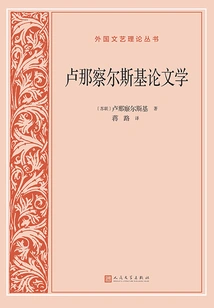
Lunacharsky's Literature
Literature卢那察尔斯基论文学
(soviet Union) Lunacharsky
Lunacharsky's writings throughout his life were of many types and wide in scope, covering philosophy, history, education, science, diplomacy, religion, architecture, literature and art, etc. In the field of literature and art, in addition to the twenty-eight plays, some poems and translations he created, as far as his treatises are concerned, in the past thirty years, he has written about 2,000 articles on domestic and Western literature, drama, music, dance, painting, sculpture, film and aesthetics. This book selects thirty-nine papers that have had an important impact on one aspect of literature, including "Lenin and Literature and Art", "Socialist Realism", "A. Sergey Griboyedov", "Alexander Sergeyevich Pushkin", "Nekrasov and the Poets in Life" "Status", "N. G. Chernyshevsky's Novels", "Thinker and Artist Dostoevsky", "V. G. Korolenko's General Commentary", "An. B. Chekhov in Our Today", "Artist Gorky", "Writer and Politician", "Innovator Mayakovsky", etc.
Lunacharsky's writings throughout his life were of many types and wide in scope, covering philosophy, history, education, science, diplomacy, religion, architecture, literature and art, etc. In the field of literature and art, in addition to the twenty-eight plays, some poems and translations he created, as far as his treatises are concerned, in the past thirty years, he has written about 2,000 articles on domestic and Western literature, drama, music, dance, painting, sculpture, film and aesthetics. This book selects thirty-nine papers that have had an important impact on one aspect of literature, including "Lenin and Literature and Art", "Socialist Realism", "A. Sergey Griboyedov", "Alexander Sergeyevich Pushkin", "Nekrasov and the Poets in Life" "Status", "N. G. Chernyshevsky's Novels", "Thinker and Artist Dostoevsky", "V. G. Korolenko's General Commentary", "An. B. Chekhov in Our Today", "Artist Gorky", "Writer and Politician", "Innovator Mayakovsky", etc.
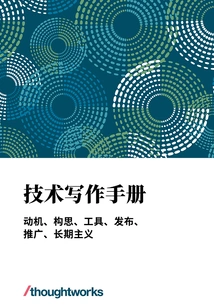
Technical Writing Handbook
Literature技术写作手册
Thoughtworkschina
I feel more and more that writing is a very difficult thing. In today's daily life, if you want to achieve a sustained writing state, there are two essential things that you have to do. One is restraint. The second is immersion. We need to deliberately make time for such transitions, immersion and flow, even if it seems like a luxury at the moment. But what is more common nowadays is that people are chased by one thing after another every day, their thoughts are like a mess of headphone cords, and their thoughts can only be turned into a powerless desert. Why you need to write, where the inspiration comes from, what tools you use, and where you send it. It is said to be a manual, but to what extent can writing be achieved through technology and searching? Although the table of contents and article structure of this book may give readers some rational reference in terms of perception, what writing requires more is a person's long-term investment.
I feel more and more that writing is a very difficult thing. In today's daily life, if you want to achieve a sustained writing state, there are two essential things that you have to do. One is restraint. The second is immersion. We need to deliberately make time for such transitions, immersion and flow, even if it seems like a luxury at the moment. But what is more common nowadays is that people are chased by one thing after another every day, their thoughts are like a mess of headphone cords, and their thoughts can only be turned into a powerless desert. Why you need to write, where the inspiration comes from, what tools you use, and where you send it. It is said to be a manual, but to what extent can writing be achieved through technology and searching? Although the table of contents and article structure of this book may give readers some rational reference in terms of perception, what writing requires more is a person's long-term investment.
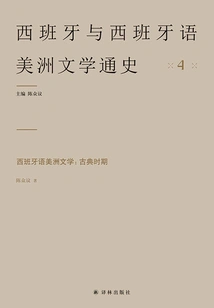
西班牙语美洲文学:古典时期(西班牙与西班牙语美洲文学通史4)
Editor-in-chief Chen Zhongyi
"General History of Spanish and Spanish American Literature" is the first true general history of Spanish literature, and it is not limited to the Spanish language. This is because it originated from Spain as a relatively independent kingdom - the Visigoths, and has lasted for more than 1,500 years, spanning the two continents of Europe and the United States, involving twenty countries, plus the heritage of the ancient Mayan, Inca and Aztec civilizations. The five-volume general history consists of "Spanish Literature: The Medieval Period", "Spanish Literature: The Golden Century", "Spanish Literature: Modern Times", "Spanish American Literature: The Classical Period" and "Spanish American Literature: Modern Times". "Hispanic American Literature: The Classical Period" consists of literature from the ancient Indian period and the Spanish colonial period. The literature of the ancient Indian period mainly includes Mayan, Inca and Aztec literature; Spanish colonial literature began in 1492, when Columbus discovered America, and his logbook is considered the beginning of "New World" literature. During more than three hundred years of colonial rule, Spanish culture dominated Spanish America. At the beginning of the 19th century, the American independence movement and the French Revolution spread to Spanish America. Colonial writers opened the curtain of enlightenment, and the clarion call of the independent revolution resounded from north to south.
"General History of Spanish and Spanish American Literature" is the first true general history of Spanish literature, and it is not limited to the Spanish language. This is because it originated from Spain as a relatively independent kingdom - the Visigoths, and has lasted for more than 1,500 years, spanning the two continents of Europe and the United States, involving twenty countries, plus the heritage of the ancient Mayan, Inca and Aztec civilizations. The five-volume general history consists of "Spanish Literature: The Medieval Period", "Spanish Literature: The Golden Century", "Spanish Literature: Modern Times", "Spanish American Literature: The Classical Period" and "Spanish American Literature: Modern Times". "Hispanic American Literature: The Classical Period" consists of literature from the ancient Indian period and the Spanish colonial period. The literature of the ancient Indian period mainly includes Mayan, Inca and Aztec literature; Spanish colonial literature began in 1492, when Columbus discovered America, and his logbook is considered the beginning of "New World" literature. During more than three hundred years of colonial rule, Spanish culture dominated Spanish America. At the beginning of the 19th century, the American independence movement and the French Revolution spread to Spanish America. Colonial writers opened the curtain of enlightenment, and the clarion call of the independent revolution resounded from north to south.
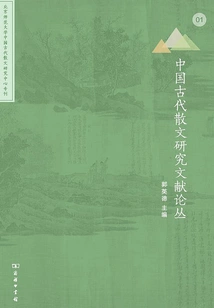
中国古代散文研究文献论丛
Editor-in-chief Guo Yingde
"A Collection of Ancient Chinese Prose Research Documents" is the first treatise with the theme of compilation and research of ancient Chinese prose research documents. The book is divided into four sections: "Research Perspectives", "Documentary Collection", "Literature Examination", and "Implications". The "Research Horizons" section discusses major theoretical issues such as "ancient Chinese prose" and "integration of ancient Chinese prose research documents", and reviews the arrangement and research status of ancient Chinese prose research documents throughout the ages. The "Documentation Collection" section uses the methods of edition and bibliography to sort out ancient Chinese prose research documents. The "Literature Research" section examines the authenticity and value of documents such as Li Qingzhao's "Postscript to the Records of Epigraphy and Stone", Mao Kun's "Eight Great Masters of the Tang and Song Dynasties", Li Zhaoluo's "Parallel Style Texts" and the "General Catalog of Siku Quanshu". The "Micro Meanings" section, on the premise of document sorting, explores the inherent meanings of prose research documents and reveals the historical and theoretical value of ancient prose. This book not only presents the academic scope and research depth to be explored in the "Integration of Ancient Chinese Prose Research Documents" project, but will also play a positive role in promoting the organization and research of ancient Chinese prose research documents.
"A Collection of Ancient Chinese Prose Research Documents" is the first treatise with the theme of compilation and research of ancient Chinese prose research documents. The book is divided into four sections: "Research Perspectives", "Documentary Collection", "Literature Examination", and "Implications". The "Research Horizons" section discusses major theoretical issues such as "ancient Chinese prose" and "integration of ancient Chinese prose research documents", and reviews the arrangement and research status of ancient Chinese prose research documents throughout the ages. The "Documentation Collection" section uses the methods of edition and bibliography to sort out ancient Chinese prose research documents. The "Literature Research" section examines the authenticity and value of documents such as Li Qingzhao's "Postscript to the Records of Epigraphy and Stone", Mao Kun's "Eight Great Masters of the Tang and Song Dynasties", Li Zhaoluo's "Parallel Style Texts" and the "General Catalog of Siku Quanshu". The "Micro Meanings" section, on the premise of document sorting, explores the inherent meanings of prose research documents and reveals the historical and theoretical value of ancient prose. This book not only presents the academic scope and research depth to be explored in the "Integration of Ancient Chinese Prose Research Documents" project, but will also play a positive role in promoting the organization and research of ancient Chinese prose research documents.
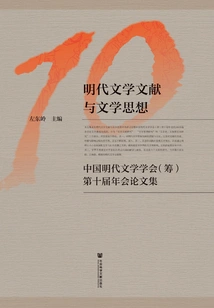
明代文学文献与文学思想:中国明代文学学会(筹)第十届年会论文集
Editor-in-chief Zuo Dongling
This book was selected from more than 100 participating papers at the Academic Seminar on Ming Dynasty Literary Documents and Literary Thoughts and the 10th Annual Conference of the China Ming Dynasty Literature Society (in preparation). It is divided into three parts: "Literary Document Research", "Literary Thought Research" and "Literary History, Style and Text Research".
This book was selected from more than 100 participating papers at the Academic Seminar on Ming Dynasty Literary Documents and Literary Thoughts and the 10th Annual Conference of the China Ming Dynasty Literature Society (in preparation). It is divided into three parts: "Literary Document Research", "Literary Thought Research" and "Literary History, Style and Text Research".
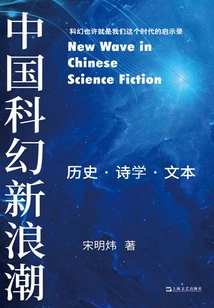
中国科幻新浪潮:历史·诗学·文本
Song Mingwei
"The New Wave of Chinese Science Fiction: History·Poetics·Text" is Professor Song Mingwei's thematic theoretical monograph on Chinese science fiction. It selects twenty of his most influential essays over the past ten years and divides them into four series. "Genesis" introduces the beginning and end of the rise of science fiction in the new century; "Exploration of the Space of Science Fiction Poetics" proposes theoretical innovation attempts relative to mainstream literary models; "Archaeology and Futurology" explores the genealogy of science fiction narratives in the past and present, and the possibility of rewriting literary history; "The Broadcasting Era of Chinese Science Fiction" discusses the brilliance and challenges of Chinese science fiction after entering the international arena and film and television platforms.
"The New Wave of Chinese Science Fiction: History·Poetics·Text" is Professor Song Mingwei's thematic theoretical monograph on Chinese science fiction. It selects twenty of his most influential essays over the past ten years and divides them into four series. "Genesis" introduces the beginning and end of the rise of science fiction in the new century; "Exploration of the Space of Science Fiction Poetics" proposes theoretical innovation attempts relative to mainstream literary models; "Archaeology and Futurology" explores the genealogy of science fiction narratives in the past and present, and the possibility of rewriting literary history; "The Broadcasting Era of Chinese Science Fiction" discusses the brilliance and challenges of Chinese science fiction after entering the international arena and film and television platforms.
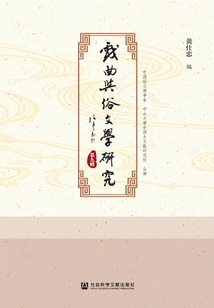
戏曲与俗文学研究(第9辑)
Huang Shizhong
This book provides a platform for the textual research of Chinese popular literature. The book takes the study of ancient operas and popular literature as its main object, features empirical research, attaches great importance to the discovery and utilization of first-hand documentary materials, and emphasizes the investigation, cataloging, and textual research of basic literature. It especially emphasizes the research of textual research on literature and materials, that is, it focuses on author research, important event research, edition literature research, collection of catalogs for collectors at home and abroad, research on rare documents, and collection and interpretation of new literature materials. Opera, popular literature, literature, and empirical evidence are the key words that distinguish this book from other similar publications.
This book provides a platform for the textual research of Chinese popular literature. The book takes the study of ancient operas and popular literature as its main object, features empirical research, attaches great importance to the discovery and utilization of first-hand documentary materials, and emphasizes the investigation, cataloging, and textual research of basic literature. It especially emphasizes the research of textual research on literature and materials, that is, it focuses on author research, important event research, edition literature research, collection of catalogs for collectors at home and abroad, research on rare documents, and collection and interpretation of new literature materials. Opera, popular literature, literature, and empirical evidence are the key words that distinguish this book from other similar publications.
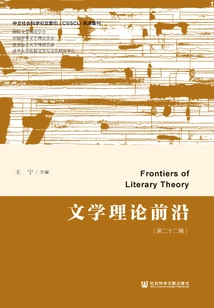
文学理论前沿(第22辑)
Editor-in-chief Wang Ning
"Frontiers of Literary Theory" (biannual) was founded in 2004. As the journal of the Chinese and Foreign Literary Theory Society and the only Chinese publication of the International Society of Literary Theory, it is currently one of the largest circulation journals in the humanities and social sciences in my country. This book is the 221st edition. It has three columns: "Discussion of Frontier Theoretical Trends", "Marxism and World Literature Research" and "Literary Reading and Theoretical Interpretation", with a total of eleven articles. Standing at the forefront of international literary theory and cultural research, we pay attention to and study hot topics that are generally of concern to the academic community today, and make new interpretations.
"Frontiers of Literary Theory" (biannual) was founded in 2004. As the journal of the Chinese and Foreign Literary Theory Society and the only Chinese publication of the International Society of Literary Theory, it is currently one of the largest circulation journals in the humanities and social sciences in my country. This book is the 221st edition. It has three columns: "Discussion of Frontier Theoretical Trends", "Marxism and World Literature Research" and "Literary Reading and Theoretical Interpretation", with a total of eleven articles. Standing at the forefront of international literary theory and cultural research, we pay attention to and study hot topics that are generally of concern to the academic community today, and make new interpretations.
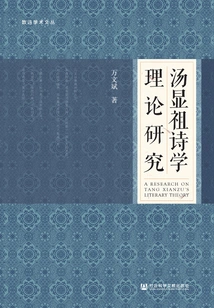
Research on Tang Xianzu's Poetic Theory
Literature汤显祖诗学理论研究
Wan Wenbin
Tang Xianzu was a writer who stood at the turning point of the middle and late Ming Dynasty. He is worthy of comprehensive and comprehensive research in the history of literature, drama, and poetic theory. This book studies the basic core of Tang Xianzu's poetic theory from the perspective of broad poetics. Starting from the philosophical foundation and historical and cultural background of the formation of his poetics, it focuses on analyzing the dialectics of emotion and reason, historical poetics, poetry subject theory, poetry creation theory, poetry aesthetic theory, etc. In his poetic theory. It also conducts some tentative research on other literary styles created by Tang Xianzu and the Chinese and foreign reception of opera.
Tang Xianzu was a writer who stood at the turning point of the middle and late Ming Dynasty. He is worthy of comprehensive and comprehensive research in the history of literature, drama, and poetic theory. This book studies the basic core of Tang Xianzu's poetic theory from the perspective of broad poetics. Starting from the philosophical foundation and historical and cultural background of the formation of his poetics, it focuses on analyzing the dialectics of emotion and reason, historical poetics, poetry subject theory, poetry creation theory, poetry aesthetic theory, etc. In his poetic theory. It also conducts some tentative research on other literary styles created by Tang Xianzu and the Chinese and foreign reception of opera.
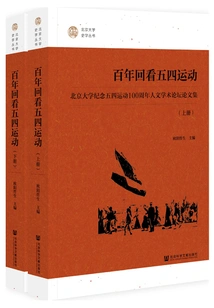
百年回看五四运动:北京大学纪念五四运动100周年人文学术论坛论文集(全2册)
Editor-in-chief Ouyang Zhesheng
2019 is the 100th anniversary of the May Fourth Movement. In order to commemorate this great event of historical significance and showcase the latest achievements in academic research on the history of the May Fourth Movement, Peking University held a humanities academic forum to commemorate the 100th anniversary of the May Fourth Movement with the theme of "A Centenary Look Back at the May Fourth Movement" in June 2019. This forum invited well-known scholars at home and abroad to engage in heated discussions on topics such as the May Fourth Movement and modern Chinese social politics, the May Fourth Movement and modern Chinese thought and culture, the May Fourth Movement and modern Chinese science, education, and religion, the study of historical figures and ideas during the May Fourth period, the May Fourth Movement from an international perspective, and the historical reflections and interpretations of the May Fourth Movement. This book is a collection of the results of this forum.
2019 is the 100th anniversary of the May Fourth Movement. In order to commemorate this great event of historical significance and showcase the latest achievements in academic research on the history of the May Fourth Movement, Peking University held a humanities academic forum to commemorate the 100th anniversary of the May Fourth Movement with the theme of "A Centenary Look Back at the May Fourth Movement" in June 2019. This forum invited well-known scholars at home and abroad to engage in heated discussions on topics such as the May Fourth Movement and modern Chinese social politics, the May Fourth Movement and modern Chinese thought and culture, the May Fourth Movement and modern Chinese science, education, and religion, the study of historical figures and ideas during the May Fourth period, the May Fourth Movement from an international perspective, and the historical reflections and interpretations of the May Fourth Movement. This book is a collection of the results of this forum.
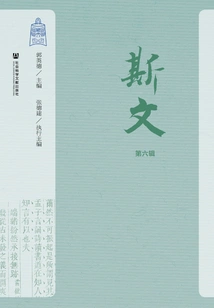
Sven (volume 6)
Literature斯文(第6辑)
Editor-in-chief Guo Yingde
"Sven" is a large-scale academic journal with the research object of ancient Chinese prose planned to be co-founded by the Institute of Ancient Literature of the School of Liberal Arts of Beijing Normal University and the Ancient Chinese Prose Society. This is the sixth volume of this book, which focuses on presenting the latest scientific research results in the field of ancient Chinese prose research, such as the collection and arrangement of new materials on ancient prose, the exploration of new methods in ancient prose research, and the review and praise of new treatises on ancient Chinese prose research, in order to build a platform for ancient Chinese prose research and communicate practical experience in theories and methods in ancient Chinese prose research.
"Sven" is a large-scale academic journal with the research object of ancient Chinese prose planned to be co-founded by the Institute of Ancient Literature of the School of Liberal Arts of Beijing Normal University and the Ancient Chinese Prose Society. This is the sixth volume of this book, which focuses on presenting the latest scientific research results in the field of ancient Chinese prose research, such as the collection and arrangement of new materials on ancient prose, the exploration of new methods in ancient prose research, and the review and praise of new treatises on ancient Chinese prose research, in order to build a platform for ancient Chinese prose research and communicate practical experience in theories and methods in ancient Chinese prose research.
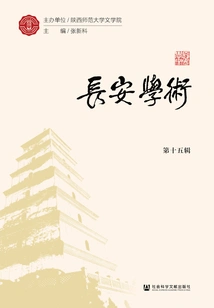
Chang'an Academic (volume 15)
Literature长安学术(第15辑)
Editor-in-chief Zhang Xinke
"Chang'an Academic" is a comprehensive journal on Chinese language and literature research, serving the construction and development of Chinese language and literature disciplines. The content included in the collection involves the content of secondary disciplines under the first-level discipline of Chinese language and literature, including language studies, literary studies (ancient literature, modern and contemporary literature, literary theory and foreign literature, etc.), Philology, etc., In addition to book reviews and other content. The book mainly publishes the latest research results in various disciplines such as Chinese language and literature, aiming to strengthen academic exchanges, display cutting-edge results, and promote the development of Chinese language and literature research.
"Chang'an Academic" is a comprehensive journal on Chinese language and literature research, serving the construction and development of Chinese language and literature disciplines. The content included in the collection involves the content of secondary disciplines under the first-level discipline of Chinese language and literature, including language studies, literary studies (ancient literature, modern and contemporary literature, literary theory and foreign literature, etc.), Philology, etc., In addition to book reviews and other content. The book mainly publishes the latest research results in various disciplines such as Chinese language and literature, aiming to strengthen academic exchanges, display cutting-edge results, and promote the development of Chinese language and literature research.
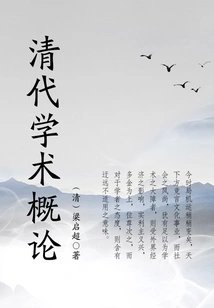
Introduction to Qing Dynasty Academics
Literature清代学术概论
Liang Qichao
"Introduction to Academic Thought in the Qing Dynasty" is my country's first work that systematically summarizes the history of academic thought in the Qing Dynasty. The book analyzes the academic thoughts of the Qing Dynasty, covering philosophy, classics, history, archaeology, geography, epigraphy, philology, Buddhism, fine arts, poetry, calendar, mathematics, water conservancy and other academic fields. In "Introduction to Academics in the Qing Dynasty", Liang Qichao divided the evolution of academic thought in the Qing Dynasty into four stages: the enlightenment period, the heyday, the degeneration period, and the decline period. He made an in-depth analysis of the interconnections, academic achievements and limitations of each stage, and put forward many precise insights. A notable feature of "Introduction to Academics in the Qing Dynasty" is that it breaks through the traditional academic history framework of "study cases" and uses "trends of thought" as the main axis to expound the academic thoughts of the Qing Dynasty. Another notable feature of "Introduction to Qing Dynasty Academics" is that it reveals the characteristics of Qing Dynasty academic thought through the comparison of Chinese and Western cultures.
"Introduction to Academic Thought in the Qing Dynasty" is my country's first work that systematically summarizes the history of academic thought in the Qing Dynasty. The book analyzes the academic thoughts of the Qing Dynasty, covering philosophy, classics, history, archaeology, geography, epigraphy, philology, Buddhism, fine arts, poetry, calendar, mathematics, water conservancy and other academic fields. In "Introduction to Academics in the Qing Dynasty", Liang Qichao divided the evolution of academic thought in the Qing Dynasty into four stages: the enlightenment period, the heyday, the degeneration period, and the decline period. He made an in-depth analysis of the interconnections, academic achievements and limitations of each stage, and put forward many precise insights. A notable feature of "Introduction to Academics in the Qing Dynasty" is that it breaks through the traditional academic history framework of "study cases" and uses "trends of thought" as the main axis to expound the academic thoughts of the Qing Dynasty. Another notable feature of "Introduction to Qing Dynasty Academics" is that it reveals the characteristics of Qing Dynasty academic thought through the comparison of Chinese and Western cultures.
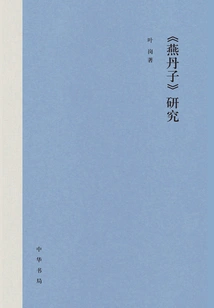
Research on "yan Danzi
Literature《燕丹子》研究
Ye Gang
"Yan Danzi" is one of the early miscellaneous novels, with the theme of Jing Ke's assassination of Qin Dynasty. It has important value in the history of novels. Hu Yinglin in the Ming Dynasty called it "the ancestor of miscellaneous biographies of ancient and modern novels." In the early stages of the history of Chinese novels, the appearance of "Yan Danzi" is amazing. Its long structure and mature stylistic features pose a challenge to the current concept of novel history. Its literary achievements help us to correctly understand the occurrence of Chinese novels and the national character of the novel's stylistic features. This book combines text research with history, literature, and textual research, and conducts a comprehensive and systematic study of key issues related to the research field of "Yan Danzi". In view of the fact that "Warring States Policy" and "Historical Records" also record this historical event, on the basis of examining the complex relationship between "Yan Danzi" and the two historical books, we focus on the time when this work was written, the possible compiler, historical records and other related propositions. At the same time, based on the academic background in which the novel took place, it provides a corresponding explanation of its literary achievements and status in the history of novels.
"Yan Danzi" is one of the early miscellaneous novels, with the theme of Jing Ke's assassination of Qin Dynasty. It has important value in the history of novels. Hu Yinglin in the Ming Dynasty called it "the ancestor of miscellaneous biographies of ancient and modern novels." In the early stages of the history of Chinese novels, the appearance of "Yan Danzi" is amazing. Its long structure and mature stylistic features pose a challenge to the current concept of novel history. Its literary achievements help us to correctly understand the occurrence of Chinese novels and the national character of the novel's stylistic features. This book combines text research with history, literature, and textual research, and conducts a comprehensive and systematic study of key issues related to the research field of "Yan Danzi". In view of the fact that "Warring States Policy" and "Historical Records" also record this historical event, on the basis of examining the complex relationship between "Yan Danzi" and the two historical books, we focus on the time when this work was written, the possible compiler, historical records and other related propositions. At the same time, based on the academic background in which the novel took place, it provides a corresponding explanation of its literary achievements and status in the history of novels.
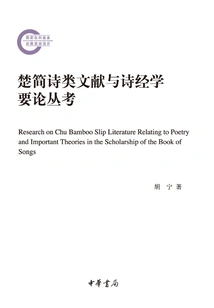
楚简诗类文献与诗经学要论丛考
Hu Ning
This book analyzes five Chu bamboo slip poetic documents that have been published for more than ten years and uses these documents and materials from multiple levels and angles to explore important theoretical issues in the Book of Songs, reveal new inspirations provided by new materials, and gain new understanding. The whole book consists of four parts: narrative, part 1, part 2, and conclusion. Part 1 and part 2 are the main parts of the book, named respectively "Poetry as Movement" and "Poetry as Historical Style". The former is divided into four chapters, which respectively explore the "Three Hundred Poems into Music", "the system of collecting poems and observing the wind", "composing poems at banquets", and the relationship between the text form of Three Hundred Poems and rituals and music; the latter is divided into three chapters, respectively exploring the historical connotation of "ambition" in "Poetry Expressing Ambition", the historical nature of ritual music and dance, and the political function of "beautiful thorns" in poetry. A series of new viewpoints were put forward and demonstrated.
This book analyzes five Chu bamboo slip poetic documents that have been published for more than ten years and uses these documents and materials from multiple levels and angles to explore important theoretical issues in the Book of Songs, reveal new inspirations provided by new materials, and gain new understanding. The whole book consists of four parts: narrative, part 1, part 2, and conclusion. Part 1 and part 2 are the main parts of the book, named respectively "Poetry as Movement" and "Poetry as Historical Style". The former is divided into four chapters, which respectively explore the "Three Hundred Poems into Music", "the system of collecting poems and observing the wind", "composing poems at banquets", and the relationship between the text form of Three Hundred Poems and rituals and music; the latter is divided into three chapters, respectively exploring the historical connotation of "ambition" in "Poetry Expressing Ambition", the historical nature of ritual music and dance, and the political function of "beautiful thorns" in poetry. A series of new viewpoints were put forward and demonstrated.
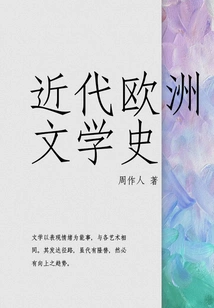
周作人经典作品:近代欧洲文学史
Zhou Zuoren
"History of Modern European Literature" is a companion volume to "History of European Literature". It is a compilation of the "History of European Literature in the Nineteenth Century" lecture notes given by Zhou Zuoren for the second-year Chinese students of Peking University after "History of European Literature". The content ranges from the Middle Ages to the 19th century, with a special focus on European legendary and realist literature of the 19th century that had a profound influence on the scholars of the May 4th generation. Zhou's work on literary history has profound insights, elegant writing, and easy-to-understand explanations. It is known as the work that started "Chinese Enlightenment Literature."
"History of Modern European Literature" is a companion volume to "History of European Literature". It is a compilation of the "History of European Literature in the Nineteenth Century" lecture notes given by Zhou Zuoren for the second-year Chinese students of Peking University after "History of European Literature". The content ranges from the Middle Ages to the 19th century, with a special focus on European legendary and realist literature of the 19th century that had a profound influence on the scholars of the May 4th generation. Zhou's work on literary history has profound insights, elegant writing, and easy-to-understand explanations. It is known as the work that started "Chinese Enlightenment Literature."
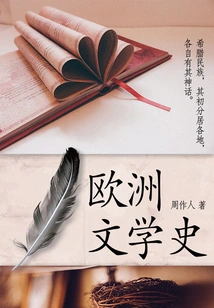
周作人经典作品:欧洲文学史
Zhou Zuoren
"History of European Literature" is a compilation of the lecture notes given by Zhou Zuoren, who was employed as a professor of liberal arts at Peking University in 1917 and taught the "History of European Literature" course in the first-year Chinese Studies course. Narrating the development history of European literature from ancient Greece to the 18th century, it is an important achievement of Zhou Zuoren and his brother Lu Xun's "search for new voices in foreign countries" after they jointly translated "Collection of Foreign Novels". It is also China's first relatively systematic history of European literature. Zhou Zuoren's advocacy of "human literature" and ideological revolution during the May Fourth Movement can all be traced back to this, and he made great contributions to the New Culture Movement.
"History of European Literature" is a compilation of the lecture notes given by Zhou Zuoren, who was employed as a professor of liberal arts at Peking University in 1917 and taught the "History of European Literature" course in the first-year Chinese Studies course. Narrating the development history of European literature from ancient Greece to the 18th century, it is an important achievement of Zhou Zuoren and his brother Lu Xun's "search for new voices in foreign countries" after they jointly translated "Collection of Foreign Novels". It is also China's first relatively systematic history of European literature. Zhou Zuoren's advocacy of "human literature" and ideological revolution during the May Fourth Movement can all be traced back to this, and he made great contributions to the New Culture Movement.
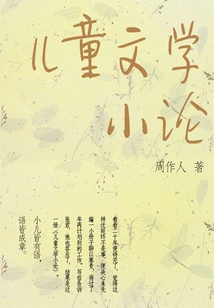
周作人经典作品:儿童文学小论
Zhou Zuoren
Children's studies and children's literature were of great concern to Zhou Zuoren, who called him "a special literary activity". There are a total of eleven articles collected here. The first four articles were all written in the 23rd year of the Republic of China and were written in classical Chinese. In the ninth year of the Republic of China, the Confucius School in Beijing asked Zhou Zuoren to give a lecture, which was the fifth article "Children's Literature." The remaining six articles were all written in 1123. From then on, more and more people paid attention to children's literature, and people who specialized in it gradually appeared. To study and discuss children's literature, one must have considerable accomplishments in anthropology, folklore, and childhood studies. Zhou Zuoren said: "Although these articles are superficial, they look at the meaning of myths based on the theories of the anthropology school and the application of fairy tales based on child psychology. This direction is always good and is not useless in the current world of children's literature."
Children's studies and children's literature were of great concern to Zhou Zuoren, who called him "a special literary activity". There are a total of eleven articles collected here. The first four articles were all written in the 23rd year of the Republic of China and were written in classical Chinese. In the ninth year of the Republic of China, the Confucius School in Beijing asked Zhou Zuoren to give a lecture, which was the fifth article "Children's Literature." The remaining six articles were all written in 1123. From then on, more and more people paid attention to children's literature, and people who specialized in it gradually appeared. To study and discuss children's literature, one must have considerable accomplishments in anthropology, folklore, and childhood studies. Zhou Zuoren said: "Although these articles are superficial, they look at the meaning of myths based on the theories of the anthropology school and the application of fairy tales based on child psychology. This direction is always good and is not useless in the current world of children's literature."
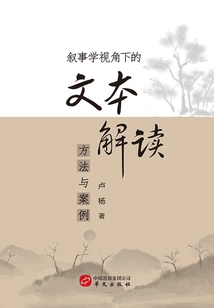
叙事学视角下的文本解读方法与案例
Lu Yang
Starting from the needs of Chinese narrative teaching in primary and secondary schools, this book introduces the important concepts, principles and methods of text interpretation from the perspective of narratology. In order to transcend the traditional interpretation methods of chapter excerpts or personal reflections after reading, text interpretation from the perspective of narratology strives to achieve a holistic and in-depth understanding of the text through the application of targeted concepts or methods based on the analysis of the structure of the work. The first three chapters of this book mainly introduce the theory of narratology, including the elements and principles of the structure of narrative works, the generation mechanism of textual meaning, the analysis and application of core concepts of narratology, etc. It also uses narrative texts in textbooks as examples to demonstrate the general methods of analysis. The fourth chapter of this book is the case part. A total of 28 texts including fairy tales, fables, myths and legends, biographies, narrative essays, and novels from primary and secondary Chinese language textbooks are selected to provide practical examples of interpretation from the perspective of narratology. This book aims to provide reference for Chinese language teachers in primary and secondary schools to improve their text analysis abilities. We also hope that Chinese language education colleagues can conduct their own expansion and in-depth research based on this book.
Starting from the needs of Chinese narrative teaching in primary and secondary schools, this book introduces the important concepts, principles and methods of text interpretation from the perspective of narratology. In order to transcend the traditional interpretation methods of chapter excerpts or personal reflections after reading, text interpretation from the perspective of narratology strives to achieve a holistic and in-depth understanding of the text through the application of targeted concepts or methods based on the analysis of the structure of the work. The first three chapters of this book mainly introduce the theory of narratology, including the elements and principles of the structure of narrative works, the generation mechanism of textual meaning, the analysis and application of core concepts of narratology, etc. It also uses narrative texts in textbooks as examples to demonstrate the general methods of analysis. The fourth chapter of this book is the case part. A total of 28 texts including fairy tales, fables, myths and legends, biographies, narrative essays, and novels from primary and secondary Chinese language textbooks are selected to provide practical examples of interpretation from the perspective of narratology. This book aims to provide reference for Chinese language teachers in primary and secondary schools to improve their text analysis abilities. We also hope that Chinese language education colleagues can conduct their own expansion and in-depth research based on this book.
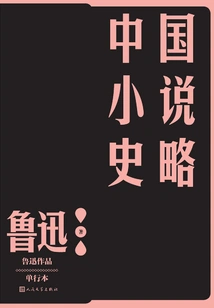
A Brief History of Chinese Novels
Literature中国小说史略
Lu Xun
"A Brief History of Chinese Novels" is the first monograph written by Lu Xun that systematically discusses the development history of Chinese novels. There are 28 articles in total. At the back of the book is the article "Historical Changes in Chinese Novels", which is the author's lecture notes in Xi'an in July 1924. This monograph begins with ancient myths and legends and ends with the condemnation of novels in the late Qing Dynasty. It completely discusses the origin and evolution of Chinese novels, accurately evaluates representative novel writers and works in various historical periods of China, and deeply analyzes the internal connections between earlier and later novels.
"A Brief History of Chinese Novels" is the first monograph written by Lu Xun that systematically discusses the development history of Chinese novels. There are 28 articles in total. At the back of the book is the article "Historical Changes in Chinese Novels", which is the author's lecture notes in Xi'an in July 1924. This monograph begins with ancient myths and legends and ends with the condemnation of novels in the late Qing Dynasty. It completely discusses the origin and evolution of Chinese novels, accurately evaluates representative novel writers and works in various historical periods of China, and deeply analyzes the internal connections between earlier and later novels.
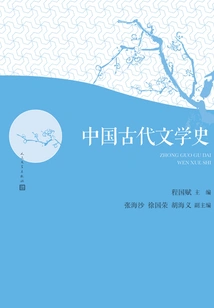
History of Ancient Chinese Literature
Literature中国古代文学史
Editor-in-chief Cheng Guobin
This "History of Ancient Chinese Literature" was compiled under the new teaching situation in colleges and universities. It strives to better handle the relationship between historical theory and works, so that the writing style is more suitable for the needs of classroom teaching and students' self-study. The length is appropriate and suitable for the selection of teaching materials and learning needs of students in different majors. When writing, focus on the work and pay attention to the analysis of the work. Integrating works and historical theory, it strives to comprehensively display the historical aspects of the development of ancient Chinese literature. At the same time, it eliminates the complex and simplifies it to highlight the key points.
This "History of Ancient Chinese Literature" was compiled under the new teaching situation in colleges and universities. It strives to better handle the relationship between historical theory and works, so that the writing style is more suitable for the needs of classroom teaching and students' self-study. The length is appropriate and suitable for the selection of teaching materials and learning needs of students in different majors. When writing, focus on the work and pay attention to the analysis of the work. Integrating works and historical theory, it strives to comprehensively display the historical aspects of the development of ancient Chinese literature. At the same time, it eliminates the complex and simplifies it to highlight the key points.
清代韩愈诗文文献研究
Ding Junli
This book conducts a comprehensive study of Han Yu's poetry and literature in the Qing Dynasty. The first part summarizes the development of Hanji literature in the Qing Dynasty, and analyzes the impact of Qing Dynasty academic culture, literary fashion and other factors on the editing and arrangement of Hanji. The following part selects six representative cases - Lin Yunming's "Han Wenqi", Fang Shiju's "Chronological Notes on the Collected Poems of Han Changli", Li Xianqiao's review of Fang Shiju's "Chronological Notes on the Collected Poems of Han Changli", Gao Shu However, "Hanwengu" and the Korean annotations of Ma Qichang and Lin Shu were studied in depth and systematically to analyze the achievements and characteristics of the Qing people's research on Han Yu, and to reveal the Qing people's contribution to the study of Han Yu.
This book conducts a comprehensive study of Han Yu's poetry and literature in the Qing Dynasty. The first part summarizes the development of Hanji literature in the Qing Dynasty, and analyzes the impact of Qing Dynasty academic culture, literary fashion and other factors on the editing and arrangement of Hanji. The following part selects six representative cases - Lin Yunming's "Han Wenqi", Fang Shiju's "Chronological Notes on the Collected Poems of Han Changli", Li Xianqiao's review of Fang Shiju's "Chronological Notes on the Collected Poems of Han Changli", Gao Shu However, "Hanwengu" and the Korean annotations of Ma Qichang and Lin Shu were studied in depth and systematically to analyze the achievements and characteristics of the Qing people's research on Han Yu, and to reveal the Qing people's contribution to the study of Han Yu.
中国古代叙事文法理论研究
Fang Zhihong
This book is based on the classic texts of ancient Chinese narrative theory. From the perspective of theoretical discourse or propositions, this book systematically summarizes the ancient Chinese narrative grammar theory based on the most discussed elements of narrative works such as time, space, events, scenes, scenes, characters, aesthetics, narrative, etc. In the current situation where academic circles are trying to establish "Chinese narratology" but fail to clean up and analyze China's inherent narrative theory, it has shown great theoretical value and practical significance.
This book is based on the classic texts of ancient Chinese narrative theory. From the perspective of theoretical discourse or propositions, this book systematically summarizes the ancient Chinese narrative grammar theory based on the most discussed elements of narrative works such as time, space, events, scenes, scenes, characters, aesthetics, narrative, etc. In the current situation where academic circles are trying to establish "Chinese narratology" but fail to clean up and analyze China's inherent narrative theory, it has shown great theoretical value and practical significance.
Research on Zheng Xuan's Book of Songs
Literature郑玄《诗经》学研究
Kong Deling
This is a monograph on the study of Zheng Jian in the Book of Songs. The book systematically sorts out various aspects of Zheng's "Jian", including a description of Zheng Xuan himself, the academic and social background of Zheng's "Jian", and an introduction to relevant document versions. Among them, the content and characteristics of the preface to the Book of Songs, Mao's "Biography", Zheng's "Jian", and "Mao Shipu" are the most used and fully discussed, as well as the relationship between them. The author has made a relatively detailed analysis and summary of the relationship between Zheng's "Jian" and the modern "Three Family Poems", the exegesis regulations and principles of Zheng's "Jian", and the connotation of "Mao Shipu", which has high academic value.
This is a monograph on the study of Zheng Jian in the Book of Songs. The book systematically sorts out various aspects of Zheng's "Jian", including a description of Zheng Xuan himself, the academic and social background of Zheng's "Jian", and an introduction to relevant document versions. Among them, the content and characteristics of the preface to the Book of Songs, Mao's "Biography", Zheng's "Jian", and "Mao Shipu" are the most used and fully discussed, as well as the relationship between them. The author has made a relatively detailed analysis and summary of the relationship between Zheng's "Jian" and the modern "Three Family Poems", the exegesis regulations and principles of Zheng's "Jian", and the connotation of "Mao Shipu", which has high academic value.
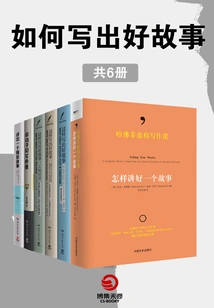
如何写出好故事(共6册)
(u. S.) Mark Kramer Et Al.
The set contains 6 volumes, namely "Harvard Nonfiction Writing Course: How to Tell a Good Story", "Writing a Good Story This Way" series, "Telling a Wonderful Story", and "Writing Courses for Children".
The set contains 6 volumes, namely "Harvard Nonfiction Writing Course: How to Tell a Good Story", "Writing a Good Story This Way" series, "Telling a Wonderful Story", and "Writing Courses for Children".
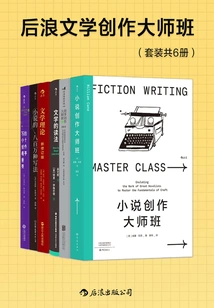
后浪文学创作大师班(套装共6册)
(u. S.) William Kane Et Al.
From Maugham to Kafka, from Dickens to Shakespeare, read the classics carefully, decipher the creative methods and tips of literary masters, and explain to readers in detail what literary style is and how literary style is produced through rhetoric. Crack the creative codes of world-renowned masters, learn various writing methods and tips, and create unique hit novels!
From Maugham to Kafka, from Dickens to Shakespeare, read the classics carefully, decipher the creative methods and tips of literary masters, and explain to readers in detail what literary style is and how literary style is produced through rhetoric. Crack the creative codes of world-renowned masters, learn various writing methods and tips, and create unique hit novels!
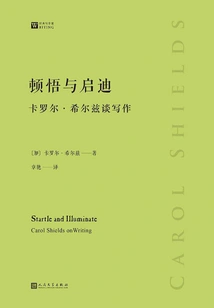
顿悟与启迪:卡罗尔·希尔兹谈写作
(add) Carol Shields
On Mother's Day 2013, her daughter Anne Giardini, who is also a writer, proposed to her son Nicolas Giardini that they edit a book together. To this end, Nicholas has become a frequent visitor to the National Library and Archives of Canada. He carefully read through all the files left by his grandmother Carol Shields - her correspondence with her daughter, friends, students, essays, reading notes, critical articles and speeches, etc., Sorted out Carol Shields' various thoughts on writing, and published it under the title "Epiphany and Enlightenment". This book valuablely conveys the true voice of Carol Shields, just like chatting with a friend, inadvertently reflecting on the most fundamental questions about writing: Why do we write? Can writing be taught? What drives readers from the first page to the last? Carol Shields said: "I've always wanted to believe that fiction is about redemption, about trying to understand how people become the way they are."
On Mother's Day 2013, her daughter Anne Giardini, who is also a writer, proposed to her son Nicolas Giardini that they edit a book together. To this end, Nicholas has become a frequent visitor to the National Library and Archives of Canada. He carefully read through all the files left by his grandmother Carol Shields - her correspondence with her daughter, friends, students, essays, reading notes, critical articles and speeches, etc., Sorted out Carol Shields' various thoughts on writing, and published it under the title "Epiphany and Enlightenment". This book valuablely conveys the true voice of Carol Shields, just like chatting with a friend, inadvertently reflecting on the most fundamental questions about writing: Why do we write? Can writing be taught? What drives readers from the first page to the last? Carol Shields said: "I've always wanted to believe that fiction is about redemption, about trying to understand how people become the way they are."
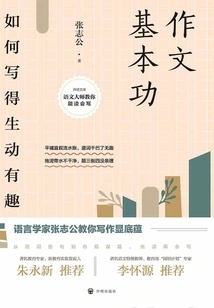
作文基本功:如何写得生动有趣(2021版)
Zhang Zhigong
This book was originally titled "A Summary of Rhetoric" and the author is Mr. Zhang Zhigong, a famous linguist and educator in my country. The book is divided into four chapters: "Word Use", "Sentence Making", "Rhetoric" and "Chapter and Style". It is rich in examples, citing the classic works of modern literature masters such as Lu Xun, Lao She, and Zhao Shuli as examples. It also combines the shortcomings in general writing with appropriate remedies. From theory to practice, it elaborates on several issues in rhetoric. Thorough reasoning and clear analysis will help students grasp the inherent laws of language expression and improve the artistic level of language use.
This book was originally titled "A Summary of Rhetoric" and the author is Mr. Zhang Zhigong, a famous linguist and educator in my country. The book is divided into four chapters: "Word Use", "Sentence Making", "Rhetoric" and "Chapter and Style". It is rich in examples, citing the classic works of modern literature masters such as Lu Xun, Lao She, and Zhao Shuli as examples. It also combines the shortcomings in general writing with appropriate remedies. From theory to practice, it elaborates on several issues in rhetoric. Thorough reasoning and clear analysis will help students grasp the inherent laws of language expression and improve the artistic level of language use.
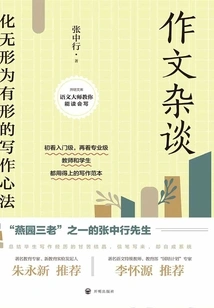
Essays on Composition (2021 Edition)
Literature作文杂谈(2021版)
Zhang Zhongxing
"Miscellaneous Talks on Composition" is a book about how to write written by Mr. Zhang Zhongxing. It is a summary of his own writing experience and understanding by an expert who has been dealing with Chinese for more than half a century. "Miscellaneous Talks on Composition" starts from "What is composition" and ends with "Composition correction", analyzing and demonstrating all aspects of composition. The language is friendly and the principles are simple. Both teachers and scholars can benefit from it. Zhang Zhongxing is erudite and has profound attainments, rich experience and rigorous scholarship. His writings are good at exploring hidden knowledge when talking about knowledge, and winning with philosophical philosophy that is based on emotions and reasons. They are all beneficial to the world and people's hearts with their true feelings, true knowledge and true opinions. Therefore, they are quite popular among people in the academic and reading circles. This book also follows the same style of writing, explaining the profound things in simple terms and eloquently.
"Miscellaneous Talks on Composition" is a book about how to write written by Mr. Zhang Zhongxing. It is a summary of his own writing experience and understanding by an expert who has been dealing with Chinese for more than half a century. "Miscellaneous Talks on Composition" starts from "What is composition" and ends with "Composition correction", analyzing and demonstrating all aspects of composition. The language is friendly and the principles are simple. Both teachers and scholars can benefit from it. Zhang Zhongxing is erudite and has profound attainments, rich experience and rigorous scholarship. His writings are good at exploring hidden knowledge when talking about knowledge, and winning with philosophical philosophy that is based on emotions and reasons. They are all beneficial to the world and people's hearts with their true feelings, true knowledge and true opinions. Therefore, they are quite popular among people in the academic and reading circles. This book also follows the same style of writing, explaining the profound things in simple terms and eloquently.
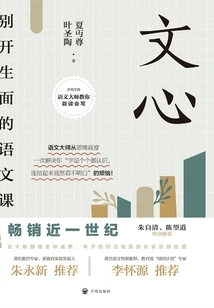
文心:别开生面的语文课(2021版)
Xia Chuzun Ye Shengtao
Knowledge is boring, stories are interesting. Integrating knowledge skillfully into interesting stories and acquiring a lot of knowledge while reading stories is undoubtedly the most ideal learning method. "Wenxin" is an example of this successful approach. Mr. Xia Chuzun and Mr. Ye Shengtao used 32 stories from "Wenxin" to explain "all the knowledge about Chinese language" based on their many years of teaching experience. They are approachable and entertaining, and have been praised by countless readers for many years. Mr. Wu Haoran added Republic of China-style illustrations to vividly reproduce the study and life of students during the Republic of China. Modern readers can not only learn reading and writing knowledge easily and happily through this book, but also learn about the Republic of China "in person".
Knowledge is boring, stories are interesting. Integrating knowledge skillfully into interesting stories and acquiring a lot of knowledge while reading stories is undoubtedly the most ideal learning method. "Wenxin" is an example of this successful approach. Mr. Xia Chuzun and Mr. Ye Shengtao used 32 stories from "Wenxin" to explain "all the knowledge about Chinese language" based on their many years of teaching experience. They are approachable and entertaining, and have been praised by countless readers for many years. Mr. Wu Haoran added Republic of China-style illustrations to vividly reproduce the study and life of students during the Republic of China. Modern readers can not only learn reading and writing knowledge easily and happily through this book, but also learn about the Republic of China "in person".
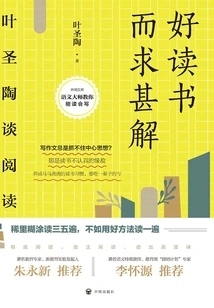
Love Reading and Seeking Deeper Understanding: Ye Shengtao Talks About Reading (2021 Edition)
Literature好读书而求甚解:叶圣陶谈阅读(2021版)
Ye Shengtao
"Good Reading and Seeking Deep Understanding" is a work written by Mr. Ye Shengtao about how to read. Its full name is "Good Reading and Seeking Deep Understanding: Ye Shengtao Talks about Reading". The book is divided into four parts, which elaborate on the importance of reading and how to develop good reading habits from the aspects of why you should read, the difficulties of reading, the methods of reading and the selection of reading materials. The views in the book are exquisite, unique, practical and effective. It is a must-read book for improving reading skills and improving inefficient reading.
"Good Reading and Seeking Deep Understanding" is a work written by Mr. Ye Shengtao about how to read. Its full name is "Good Reading and Seeking Deep Understanding: Ye Shengtao Talks about Reading". The book is divided into four parts, which elaborate on the importance of reading and how to develop good reading habits from the aspects of why you should read, the difficulties of reading, the methods of reading and the selection of reading materials. The views in the book are exquisite, unique, practical and effective. It is a must-read book for improving reading skills and improving inefficient reading.
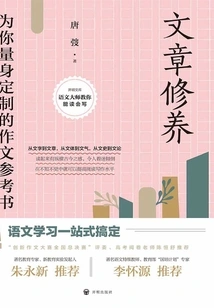
Article Cultivation (2021 Edition)
Literature文章修养(2021版)
Tang Tao
"Article Cultivation" is a pamphlet written by Mr. Tang Tao when he was twenty-seven years old. At that time, it was positioned as "an extracurricular reading for young people." The first six chapters discuss the knowledge and evolution of writing, from words to articles, from articles to literature, and from ancient prose to vernacular. It is basically a historical narrative; the second eight chapters focus on practice and rhetoric. They not only discuss the specific use of characters, words, sentences and various rhetorical techniques, how to write conversations and other detailed elements, but also grasp the major points of the article such as collecting themes, establishing themes and creating literary style. A major feature of this book is that it is easy to read, concise and vivid, without the boring and rigid textbook style, and there is no "eight-legged spirit". The author discusses historical times and cites a large number of perceptual literary materials, including poetry, ancient and modern novels, and foreign literature. His words are well-founded, persuasive, clear, and considerate of ordinary readers.
"Article Cultivation" is a pamphlet written by Mr. Tang Tao when he was twenty-seven years old. At that time, it was positioned as "an extracurricular reading for young people." The first six chapters discuss the knowledge and evolution of writing, from words to articles, from articles to literature, and from ancient prose to vernacular. It is basically a historical narrative; the second eight chapters focus on practice and rhetoric. They not only discuss the specific use of characters, words, sentences and various rhetorical techniques, how to write conversations and other detailed elements, but also grasp the major points of the article such as collecting themes, establishing themes and creating literary style. A major feature of this book is that it is easy to read, concise and vivid, without the boring and rigid textbook style, and there is no "eight-legged spirit". The author discusses historical times and cites a large number of perceptual literary materials, including poetry, ancient and modern novels, and foreign literature. His words are well-founded, persuasive, clear, and considerate of ordinary readers.
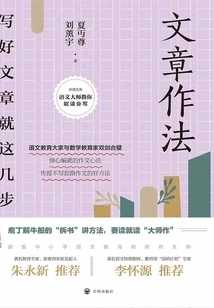
文章作法:写好文章就这几步(2021版)
Xia Chuzun Liu Xunyu
"How to Write an Article" was first published in 1922 by Kaiming Bookstore. The prototype is Mr. Xia Jizun's lecture notes at Changsha No. 1 Normal University and Baima Lake Chunhui Middle School. It was later modified and edited by the educator Mr. Liu Xunyu based on his own teaching practice and finally became a book. In the book, Mr. Xia Zunzun and Mr. Liu Xunyu explain the author's attitude, the selection, arrangement and order of narrative materials, literary narratives, the meaning of narratives, the mixture of narratives and narratives, etc. "Article Methods" summarizes the specific writing methods of narratives, expository essays, argumentative essays, etc., And answers practical questions such as how to quickly improve writing skills by writing short essays in various forms. It also provides incisive and unique opinions on common problems encountered in writing through concise comments on the masterpieces of famous writers such as Lu Xun and Bing Xin.
"How to Write an Article" was first published in 1922 by Kaiming Bookstore. The prototype is Mr. Xia Jizun's lecture notes at Changsha No. 1 Normal University and Baima Lake Chunhui Middle School. It was later modified and edited by the educator Mr. Liu Xunyu based on his own teaching practice and finally became a book. In the book, Mr. Xia Zunzun and Mr. Liu Xunyu explain the author's attitude, the selection, arrangement and order of narrative materials, literary narratives, the meaning of narratives, the mixture of narratives and narratives, etc. "Article Methods" summarizes the specific writing methods of narratives, expository essays, argumentative essays, etc., And answers practical questions such as how to quickly improve writing skills by writing short essays in various forms. It also provides incisive and unique opinions on common problems encountered in writing through concise comments on the masterpieces of famous writers such as Lu Xun and Bing Xin.
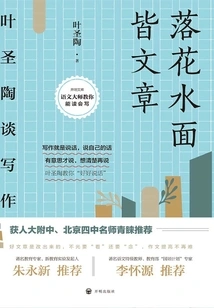
The Falling Flowers and the Water Are All Articles: Ye Shengtao Talks About Writing (2021 Edition)
Literature落花水面皆文章:叶圣陶谈写作(2021版)
Ye Shengtao
"The Flowers Falling on the Water Surface Are All Articles" is a book written by Mr. Ye Shengtao to teach people how to write. The full name is "The Flowers Falling on the Water Surface Are All Articles: Ye Shengtao Talks about Writing". This book is divided into five parts, which discuss the essentials of writing in detail from aspects such as what writing is, how to find writing materials, how to write, how to revise articles, and how to judge the quality of articles, etc., And carefully answers any doubts you may encounter during the writing process. The book is full of practical writing techniques and insightful articles. This is a master classic not to be missed.
"The Flowers Falling on the Water Surface Are All Articles" is a book written by Mr. Ye Shengtao to teach people how to write. The full name is "The Flowers Falling on the Water Surface Are All Articles: Ye Shengtao Talks about Writing". This book is divided into five parts, which discuss the essentials of writing in detail from aspects such as what writing is, how to find writing materials, how to write, how to revise articles, and how to judge the quality of articles, etc., And carefully answers any doubts you may encounter during the writing process. The book is full of practical writing techniques and insightful articles. This is a master classic not to be missed.
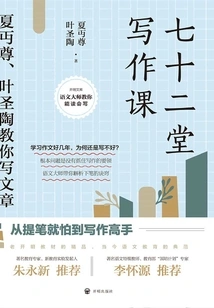
七十二堂写作课:夏丏尊、叶圣陶教你写文章(2021版)
Xia Chuzun Ye Shengtao
"Seventy-two Writing Lessons" is a book about article writing co-authored by Xia Chuzun and Ye Shengtao. The articles in the book "Seventy-two Writing Lessons" are all selected from "One Hundred and Eight Chinese Lessons" co-edited by the two. "Seventy-Two Writing Lessons" is a book that focuses on the form of articles. Although the selected articles also take into account the purity of content and changes in nature, the handling of the articles is all based on form. The book has a total of seventy-two lectures, covering almost all articles and literary genres, including narrative, explanation, discussion, application, poetry, novels, drama, and prose. Each category has very precise and easy-to-understand insights and guidance. It is a must-read book for people to learn writing and improve their writing skills.
"Seventy-two Writing Lessons" is a book about article writing co-authored by Xia Chuzun and Ye Shengtao. The articles in the book "Seventy-two Writing Lessons" are all selected from "One Hundred and Eight Chinese Lessons" co-edited by the two. "Seventy-Two Writing Lessons" is a book that focuses on the form of articles. Although the selected articles also take into account the purity of content and changes in nature, the handling of the articles is all based on form. The book has a total of seventy-two lectures, covering almost all articles and literary genres, including narrative, explanation, discussion, application, poetry, novels, drama, and prose. Each category has very precise and easy-to-understand insights and guidance. It is a must-read book for people to learn writing and improve their writing skills.
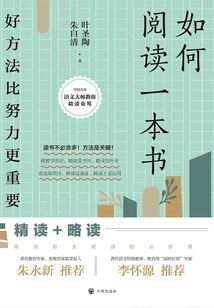
如何阅读一本书:好方法比努力更重要(2021版)
Ye Shengtao Zhu Ziqing
This book is a collection of "Examples for Intensive Reading Guidance" and "Examples for Skimming Reading Guidance" written by Ye Shengtao and Zhu Ziqing for Chinese language teaching in middle schools. It selects classics from various genres such as expository essays, argumentative essays, lyrical essays, novels, poetry, etc. As examples to comprehensively explain the issues and methods that should be paid attention to in the reading process. It can be called a treasure book for guiding reading.
This book is a collection of "Examples for Intensive Reading Guidance" and "Examples for Skimming Reading Guidance" written by Ye Shengtao and Zhu Ziqing for Chinese language teaching in middle schools. It selects classics from various genres such as expository essays, argumentative essays, lyrical essays, novels, poetry, etc. As examples to comprehensively explain the issues and methods that should be paid attention to in the reading process. It can be called a treasure book for guiding reading.
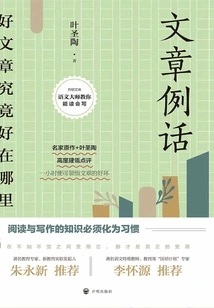
文章例话:好文章究竟好在哪里(2021版)
Ye Shengtao
This book is written by Mr. Ye Shengtao to guide young people on how to appreciate literature. A total of twenty-seven works by famous writers are selected in the book. Each article adopts the format of quoting the original text of the famous work, followed by Mr. Ye Shengtao's comments, detailing the advantages and merits of the good article. The articles selected in the book are all works by classic masters, such as Zhu Ziqing's "Back", Ba Jin's "Friends", Lu Xun's "Watching a Opera", Zhou Zuoren's "Little River", etc. Each article has its typical and unique excellence, which can be used as a reference by future generations when learning to write articles. The words Mr. Ye Shengtao added after each article pointed out the benefits of these articles and gave people the eyes to discover the beauty of literature. After reading this book, you will understand clearly how to write an article, what problems can be avoided when writing, and what techniques can be used.
This book is written by Mr. Ye Shengtao to guide young people on how to appreciate literature. A total of twenty-seven works by famous writers are selected in the book. Each article adopts the format of quoting the original text of the famous work, followed by Mr. Ye Shengtao's comments, detailing the advantages and merits of the good article. The articles selected in the book are all works by classic masters, such as Zhu Ziqing's "Back", Ba Jin's "Friends", Lu Xun's "Watching a Opera", Zhou Zuoren's "Little River", etc. Each article has its typical and unique excellence, which can be used as a reference by future generations when learning to write articles. The words Mr. Ye Shengtao added after each article pointed out the benefits of these articles and gave people the eyes to discover the beauty of literature. After reading this book, you will understand clearly how to write an article, what problems can be avoided when writing, and what techniques can be used.