Library
Browse and search books
3,417 novels found
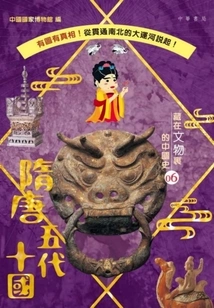
藏在文物里的中国史06:隋唐五代十国
National Museum Of China
As the name suggests, the "History of China Hidden in Cultural Relics" series uses cultural relics as clues to tell the history of China, which is different from the general works that tell history based on historical documents. "Chinese History Hidden in Cultural Relics 06 Sui, Tang, Five Dynasties and Ten Kingdoms" starts with the ingenious strategies and weapons of the heroes of the Three Kingdoms. Brick paintings and unique pottery figurines left over from the Cao Wei era reproduce the scenes of farming work and the lives of the characters at that time. During the centuries of chaos from the Five Hu and Sixteen Kingdoms to the Southern and Northern Dynasties, the Hu and Han cultures influenced each other, which can be seen from various unearthed cultural relics. Features of this book 1. Spanning the history of the Sui and Tang Dynasties to the Five Dynasties and Ten Kingdoms, this book is divided into seven chapters, starting from the shipbuilding industry in the Sui Dynasty, the fashion trends of the Tang Dynasty, to the ink landscape paintings of the Five Dynasties and Ten Kingdoms, telling the development of Sino-foreign exchanges, science and technology, and culture during this period. 2. Compiled by experts from the National Museum of China, the pictures are carefully selected, making readers feel like they have entered a history museum with rich collections, which is an eye-opener. 3. Use cultural relics as clues and use a large number of pictures to introduce the general situation of life in China's prehistoric era and the development of civilization to enhance historical knowledge.
As the name suggests, the "History of China Hidden in Cultural Relics" series uses cultural relics as clues to tell the history of China, which is different from the general works that tell history based on historical documents. "Chinese History Hidden in Cultural Relics 06 Sui, Tang, Five Dynasties and Ten Kingdoms" starts with the ingenious strategies and weapons of the heroes of the Three Kingdoms. Brick paintings and unique pottery figurines left over from the Cao Wei era reproduce the scenes of farming work and the lives of the characters at that time. During the centuries of chaos from the Five Hu and Sixteen Kingdoms to the Southern and Northern Dynasties, the Hu and Han cultures influenced each other, which can be seen from various unearthed cultural relics. Features of this book 1. Spanning the history of the Sui and Tang Dynasties to the Five Dynasties and Ten Kingdoms, this book is divided into seven chapters, starting from the shipbuilding industry in the Sui Dynasty, the fashion trends of the Tang Dynasty, to the ink landscape paintings of the Five Dynasties and Ten Kingdoms, telling the development of Sino-foreign exchanges, science and technology, and culture during this period. 2. Compiled by experts from the National Museum of China, the pictures are carefully selected, making readers feel like they have entered a history museum with rich collections, which is an eye-opener. 3. Use cultural relics as clues and use a large number of pictures to introduce the general situation of life in China's prehistoric era and the development of civilization to enhance historical knowledge.
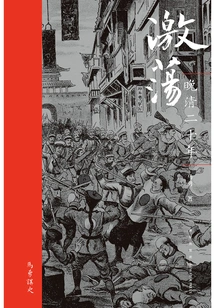
激荡:晚清二十年
Ma Yong
"Agitation: Twenty Years of the Late Qing Dynasty" is a comprehensive study of the last two decades of the collapse of the Qing Dynasty. It briefly narrates and reinterprets a series of major events, including the Sino-Japanese War of 1898, the Reform Movement of 1898, the Boxer Rebellion, the New Deal Reform, the overthrow of the imperial system, and the move toward republic. This book analyzes the particularity and positive significance of the last two decades of the late Qing Dynasty in the entire process of China's modernization; it also allows us to realize the possible other side of familiar historical figures and events.
"Agitation: Twenty Years of the Late Qing Dynasty" is a comprehensive study of the last two decades of the collapse of the Qing Dynasty. It briefly narrates and reinterprets a series of major events, including the Sino-Japanese War of 1898, the Reform Movement of 1898, the Boxer Rebellion, the New Deal Reform, the overthrow of the imperial system, and the move toward republic. This book analyzes the particularity and positive significance of the last two decades of the late Qing Dynasty in the entire process of China's modernization; it also allows us to realize the possible other side of familiar historical figures and events.
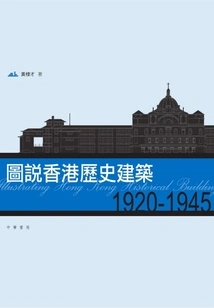
图说香港历史建筑(1920-1945)
Huang Dicai
The period from 1920 to 1945 was the period of formation of the current old districts of Hong Kong and Kowloon. Wan Chai, Mong Kok, Sham Shui Po, and Kai Tak Promenade in Kowloon City were full of buildings. After a long time of baptism, these characteristic buildings have either disappeared or been renovated. The author, Dr. Huang Dicai, spent ten years, referring to a large number of historical documents, and through meticulous architectural drawings, to recreate the original appearance of these representative historical buildings that fully reflect the style of the times, hoping to leave a mark on our city with each image.
The period from 1920 to 1945 was the period of formation of the current old districts of Hong Kong and Kowloon. Wan Chai, Mong Kok, Sham Shui Po, and Kai Tak Promenade in Kowloon City were full of buildings. After a long time of baptism, these characteristic buildings have either disappeared or been renovated. The author, Dr. Huang Dicai, spent ten years, referring to a large number of historical documents, and through meticulous architectural drawings, to recreate the original appearance of these representative historical buildings that fully reflect the style of the times, hoping to leave a mark on our city with each image.
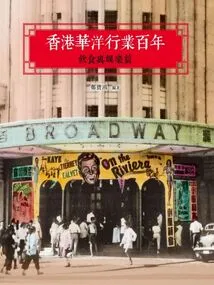
香港华洋行业百年:饮食与娱乐篇
Compiled By Zheng Baohong
Food and entertainment are closest to ordinary people's lives. Over the past century or so, some of Hong Kong's catering and entertainment industries have gradually disappeared due to changes in times and environment, while others are still standing, accompanying Hong Kong residents through every era. Local history expert Zheng Baohong, following "Century of Hong Kong's Huayang Industry - Trade and Finance", in "Food and Entertainment" uses more than 200 rare photos and many newspaper materials to review more than 20 catering and entertainment industries in Hong Kong that are closely related to people's livelihood over the past century, allowing you to appreciate a moment of leisure in the past through historical details.
Food and entertainment are closest to ordinary people's lives. Over the past century or so, some of Hong Kong's catering and entertainment industries have gradually disappeared due to changes in times and environment, while others are still standing, accompanying Hong Kong residents through every era. Local history expert Zheng Baohong, following "Century of Hong Kong's Huayang Industry - Trade and Finance", in "Food and Entertainment" uses more than 200 rare photos and many newspaper materials to review more than 20 catering and entertainment industries in Hong Kong that are closely related to people's livelihood over the past century, allowing you to appreciate a moment of leisure in the past through historical details.
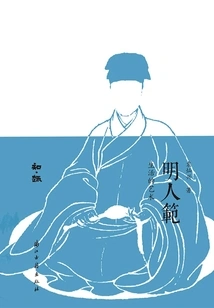
明人范:生活的艺术(知﹒趣丛书)
Yuan Canxing
This book displays the life of the Ming Dynasty people from the perspectives of daily diet, culture and entertainment, food, clothing, housing and transportation, and folk beliefs. On the one hand, it reflects the creative spirit of the Ming Dynasty people who dared to break etiquette and lead social trends. On the other hand, it focuses on the artistic realm of the Ming Dynasty people in tea drinking, utensil modeling, calligraphy and painting, and other areas of life. The characters involved include historical figures such as Tang Bohu, Yuan Zhongdao, Wang Shizhen, Tu Long, Li Kaixian, Zhang Dai, Wang Ruqian, Chen Hongshou, Chen Jiru, Feng Menglong, Qian Qianyi, Dong Xiaowan, etc., As well as literary figures Ximen Qing. It has a wonderful description of the social life of the Ming people and a relatively in-depth revelation of the spiritual world of the Ming people. It is a good book that can help readers understand the society and culture of the late Ming Dynasty. The book has rich content, reasonable structure, easy-to-understand language and strong readability.
This book displays the life of the Ming Dynasty people from the perspectives of daily diet, culture and entertainment, food, clothing, housing and transportation, and folk beliefs. On the one hand, it reflects the creative spirit of the Ming Dynasty people who dared to break etiquette and lead social trends. On the other hand, it focuses on the artistic realm of the Ming Dynasty people in tea drinking, utensil modeling, calligraphy and painting, and other areas of life. The characters involved include historical figures such as Tang Bohu, Yuan Zhongdao, Wang Shizhen, Tu Long, Li Kaixian, Zhang Dai, Wang Ruqian, Chen Hongshou, Chen Jiru, Feng Menglong, Qian Qianyi, Dong Xiaowan, etc., As well as literary figures Ximen Qing. It has a wonderful description of the social life of the Ming people and a relatively in-depth revelation of the spiritual world of the Ming people. It is a good book that can help readers understand the society and culture of the late Ming Dynasty. The book has rich content, reasonable structure, easy-to-understand language and strong readability.
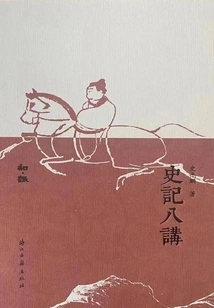
史记八讲(知﹒趣丛书)
Shi Jiepeng
This manuscript is a collection of lecture notes written by Shi Jiepeng, a visiting scholar at the Institute of Oriental Culture in Japan, for the online course "Historical Records". It is divided into topics such as "Assassin", "Ranger", "War", "Strategy" and "Women". It mainly analyzes the social conditions, economic life, political system, academic thoughts and other aspects of the Pre-Qin, Qin and Han Dynasties from the perspectives of characters, phonology, and exegesis. Let's examine the famous historical work "Historical Records" in the historical context in which it was produced. We conduct special analyzes and put forward convincing viewpoints on controversial topics that are of interest to some history enthusiasts, such as "Which one is stronger or weaker among Li Guang, Wei Qing, and Huo Qubing?" And "Whether the title of Marquis Genjie contains derogatory connotations." The language is vivid, informative and interesting.
This manuscript is a collection of lecture notes written by Shi Jiepeng, a visiting scholar at the Institute of Oriental Culture in Japan, for the online course "Historical Records". It is divided into topics such as "Assassin", "Ranger", "War", "Strategy" and "Women". It mainly analyzes the social conditions, economic life, political system, academic thoughts and other aspects of the Pre-Qin, Qin and Han Dynasties from the perspectives of characters, phonology, and exegesis. Let's examine the famous historical work "Historical Records" in the historical context in which it was produced. We conduct special analyzes and put forward convincing viewpoints on controversial topics that are of interest to some history enthusiasts, such as "Which one is stronger or weaker among Li Guang, Wei Qing, and Huo Qubing?" And "Whether the title of Marquis Genjie contains derogatory connotations." The language is vivid, informative and interesting.
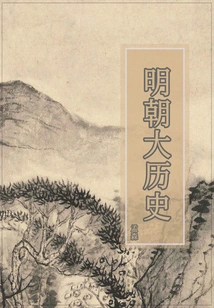
Ming Dynasty History
History明朝大历史
Monson
This book is the culmination of Mr. Meng Sen's research on Qing history. It is also a representative and foundational work on research on Qing history issues. Mr. Meng Sen used "Records of the Qing Dynasty" and "Manuscripts of the History of the Qing Dynasty", as well as rarely used historical materials such as the Qing court archives and "Records of the Korean Dynasty" to reveal and analyze many core issues in the history of the Qing Dynasty, and gave a comprehensive review of the politics, economy, and culture of the Qing Dynasty for more than 200 years. The book has a rigorous structure, precise comments, elegant vocabulary, and well-chosen quotations. It is a must-read for those who study Qing history.
This book is the culmination of Mr. Meng Sen's research on Qing history. It is also a representative and foundational work on research on Qing history issues. Mr. Meng Sen used "Records of the Qing Dynasty" and "Manuscripts of the History of the Qing Dynasty", as well as rarely used historical materials such as the Qing court archives and "Records of the Korean Dynasty" to reveal and analyze many core issues in the history of the Qing Dynasty, and gave a comprehensive review of the politics, economy, and culture of the Qing Dynasty for more than 200 years. The book has a rigorous structure, precise comments, elegant vocabulary, and well-chosen quotations. It is a must-read for those who study Qing history.
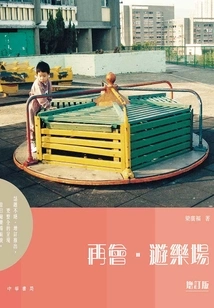
再会·游乐场(增订版)
Liang Guangfu
The topics are endless. The new edition has been launched, presenting a more complete look of the amusement park in the past. The famous photographer Leung Kwong-fu has traveled to every corner of Hong Kong since the 1980s, taking precious photos of amusement parks everywhere. In addition to retaining the precious amusement park photos from the original book, the "enhanced edition" also adds pictures of traditional amusement facilities that are still preserved today.
The topics are endless. The new edition has been launched, presenting a more complete look of the amusement park in the past. The famous photographer Leung Kwong-fu has traveled to every corner of Hong Kong since the 1980s, taking precious photos of amusement parks everywhere. In addition to retaining the precious amusement park photos from the original book, the "enhanced edition" also adds pictures of traditional amusement facilities that are still preserved today.
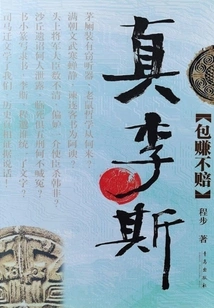
真李斯:包赚不赔
Cheng Bu
Li Si was born a commoner, but relied on his own efforts to become the prime minister of the Qin Empire. Liz is a miracle. A miracle in the ups and downs of career and officialdom. To sum up Li Si's success, it is actually very simple. There are only two words: choice. In a person's life, whether he is rich or poor; whether he is noble or humble; whether he succeeds or fails, all come from choices. Correct choices make life go up step by step, while wrong choices make life more difficult and unlucky. What is the secret to making money without losing money in officialdom? After studying Li Si's legendary life, you will have the answer.
Li Si was born a commoner, but relied on his own efforts to become the prime minister of the Qin Empire. Liz is a miracle. A miracle in the ups and downs of career and officialdom. To sum up Li Si's success, it is actually very simple. There are only two words: choice. In a person's life, whether he is rich or poor; whether he is noble or humble; whether he succeeds or fails, all come from choices. Correct choices make life go up step by step, while wrong choices make life more difficult and unlucky. What is the secret to making money without losing money in officialdom? After studying Li Si's legendary life, you will have the answer.
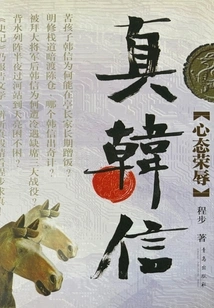
真韩信:心态荣辱
Cheng Bu
Cheng Bu used a new perspective to view and write history, and his books "The True Shang Yang" and "The True Qin Shihuang" attracted the attention of experts and were well received by readers. This book uses a new perspective and new historical materials to interpret Han Xin, revealing Han Xin's true face layer by layer. It is different from Sima Qian's narrative and emotional identification. Although it is written by a family, it is not without novelty and originality.
Cheng Bu used a new perspective to view and write history, and his books "The True Shang Yang" and "The True Qin Shihuang" attracted the attention of experts and were well received by readers. This book uses a new perspective and new historical materials to interpret Han Xin, revealing Han Xin's true face layer by layer. It is different from Sima Qian's narrative and emotional identification. Although it is written by a family, it is not without novelty and originality.
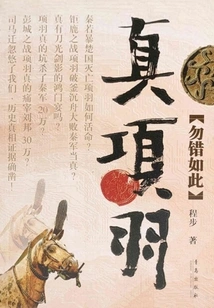
真项羽:勿错如此
Cheng Bu
Cheng Bu used a new perspective to view and write history. His books "True Shang Yang" and "True Qin Shihuang" attracted the attention of experts and were well received by readers. This book interprets Xiang Yu from a new perspective and new historical materials, revealing Xiang Yu's true face layer by layer. It is different from Sima Qian's narrative and emotional identification. Although it is written by a family, it is not without novelty and originality.
Cheng Bu used a new perspective to view and write history. His books "True Shang Yang" and "True Qin Shihuang" attracted the attention of experts and were well received by readers. This book interprets Xiang Yu from a new perspective and new historical materials, revealing Xiang Yu's true face layer by layer. It is different from Sima Qian's narrative and emotional identification. Although it is written by a family, it is not without novelty and originality.
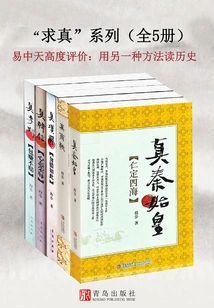
“求真”系列(全5册)
Cheng Bu
Cheng Bu uses a new perspective to view and write history, and the "Seeking Truth" series he wrote has attracted the attention of experts and has been well received by readers.
Cheng Bu uses a new perspective to view and write history, and the "Seeking Truth" series he wrote has attracted the attention of experts and has been well received by readers.
中国历代党争
Wang Tongling
"Party Struggles in Ancient China" is a history of power struggles between parties, between parties and imperial power, and between people. Taking strategy as its warp and history as its weft, it records many intertwined stories. The book recounts the three thousand years of party struggle in the Spring and Autumn and Warring States, Qin, Han, Tang, Song, Ming and Qing dynasties. It introduces the major events, rise and fall of honors and disgrace, and vicissitudes of these dynasties in chapters. It also records many wonderful figures who changed according to the times, strategized, and maneuvered. The struggle for power is the key to interpreting Chinese history and human nature, and the struggle for power and interests is also the motivation for party struggle.
"Party Struggles in Ancient China" is a history of power struggles between parties, between parties and imperial power, and between people. Taking strategy as its warp and history as its weft, it records many intertwined stories. The book recounts the three thousand years of party struggle in the Spring and Autumn and Warring States, Qin, Han, Tang, Song, Ming and Qing dynasties. It introduces the major events, rise and fall of honors and disgrace, and vicissitudes of these dynasties in chapters. It also records many wonderful figures who changed according to the times, strategized, and maneuvered. The struggle for power is the key to interpreting Chinese history and human nature, and the struggle for power and interests is also the motivation for party struggle.
My Hometown Was in the 1980s
History我的故乡在八十年代
"new Weekly"
This book is based on the 400 special issues of "New Weekly", with unpublished special interviews from the 1980s and panoramic life, culture and economic materials added. The soul is in the 1980s, the mind is in the 1990s, and the body is in the new century. This is the Chinese syllogism. I can't go back to the 1980s, and because I can't go back, I miss home even more. The soul, hometown, love and fear of a generation are all entangled in an unavoidable time and space node. A comprehensive inventory and systematic collection of China in the 1980s. A chronological history belonging to the Chinese. A brand-new dictionary of the 1980s, taking you back to the familiar 1980s. Interviews with 400 enlighteners, artists, entrepreneurs, and scholars in the 1980s. Sincere dialogue between the 1980s and the post-80s generation, re-examining an era and its potential impact. Will the 1980s become a new driving force for Chinese people to face the real dilemma?
This book is based on the 400 special issues of "New Weekly", with unpublished special interviews from the 1980s and panoramic life, culture and economic materials added. The soul is in the 1980s, the mind is in the 1990s, and the body is in the new century. This is the Chinese syllogism. I can't go back to the 1980s, and because I can't go back, I miss home even more. The soul, hometown, love and fear of a generation are all entangled in an unavoidable time and space node. A comprehensive inventory and systematic collection of China in the 1980s. A chronological history belonging to the Chinese. A brand-new dictionary of the 1980s, taking you back to the familiar 1980s. Interviews with 400 enlighteners, artists, entrepreneurs, and scholars in the 1980s. Sincere dialogue between the 1980s and the post-80s generation, re-examining an era and its potential impact. Will the 1980s become a new driving force for Chinese people to face the real dilemma?
香港华洋行业百年:贸易与金融篇
Compiled By Zheng Baohong
Since its opening as a port in 1841, Hong Kong has gradually developed various industries under the colonial government. According to government statistics in 1860, in addition to simple fishery and agriculture, Hong Kong already had some commercial trade and service industries. By the mid-20th century, all walks of life in Hong Kong were flourishing, and their development had reached a very mature level. Local history expert Zheng Baohong, through more than a hundred precious photos and historical details, introduces nearly 20 trade and financial industries in Hong Kong that have either declined or have kept pace with the times over the past century. This allows you to understand the historical trajectory of the development of the industry and remember the Hong Kong people's silent hard work and struggle for life.
Since its opening as a port in 1841, Hong Kong has gradually developed various industries under the colonial government. According to government statistics in 1860, in addition to simple fishery and agriculture, Hong Kong already had some commercial trade and service industries. By the mid-20th century, all walks of life in Hong Kong were flourishing, and their development had reached a very mature level. Local history expert Zheng Baohong, through more than a hundred precious photos and historical details, introduces nearly 20 trade and financial industries in Hong Kong that have either declined or have kept pace with the times over the past century. This allows you to understand the historical trajectory of the development of the industry and remember the Hong Kong people's silent hard work and struggle for life.
西夏王朝:神秘的黑水城
Liu Xuechao
The Xixia royal tombs are known as the Eastern Pyramids, and the mysterious Blackwater City holds coveted treasures; without its complete history in the "official history", is the Xixia Dynasty a "legend" or an "unattainable existence"? The Western Xia Dynasty, with the Dangxiang ethnic group as the main body, followed by the Liao Dynasty of the Khitans, the Northern Song Dynasty of the Han people, the Jin Dynasty of the Jurchen people, and the Southern Song Dynasty of the Han people, twice forming a situation of three kingdoms. The prosperity of Xixia fully demonstrates the strong resilience and adaptability of Party people. Xixia once created Xixia characters with special shapes. Many ethnic minorities have established political power in history, but most of them did not have their own national script, which shows the important status of Xixia script. In recent years, Buddhist scriptures translated from Xixia have been unearthed one after another. This study of the changes in Chinese phonetics is of high academic value. The Xixia Dynasty lasted for 190 years from the time when Yuan Hao officially proclaimed himself emperor in the fifth year of Jingyou, Renzong of the Northern Song Dynasty, to the 22nd year of Emperor Taizu of the Yuan Dynasty, which lasted for 190 years. It was considered a long-lived dynasty in Chinese history. If we count from the time when Tuoba Sigong, the ancestor of Yuan Hao, was awarded the envoys of Xia, Sui and Yinjie and the title of Dingnan Army for his contribution in pacifying Huangchao, it would have been a long-lasting regime for 346 years.
The Xixia royal tombs are known as the Eastern Pyramids, and the mysterious Blackwater City holds coveted treasures; without its complete history in the "official history", is the Xixia Dynasty a "legend" or an "unattainable existence"? The Western Xia Dynasty, with the Dangxiang ethnic group as the main body, followed by the Liao Dynasty of the Khitans, the Northern Song Dynasty of the Han people, the Jin Dynasty of the Jurchen people, and the Southern Song Dynasty of the Han people, twice forming a situation of three kingdoms. The prosperity of Xixia fully demonstrates the strong resilience and adaptability of Party people. Xixia once created Xixia characters with special shapes. Many ethnic minorities have established political power in history, but most of them did not have their own national script, which shows the important status of Xixia script. In recent years, Buddhist scriptures translated from Xixia have been unearthed one after another. This study of the changes in Chinese phonetics is of high academic value. The Xixia Dynasty lasted for 190 years from the time when Yuan Hao officially proclaimed himself emperor in the fifth year of Jingyou, Renzong of the Northern Song Dynasty, to the 22nd year of Emperor Taizu of the Yuan Dynasty, which lasted for 190 years. It was considered a long-lived dynasty in Chinese history. If we count from the time when Tuoba Sigong, the ancestor of Yuan Hao, was awarded the envoys of Xia, Sui and Yinjie and the title of Dingnan Army for his contribution in pacifying Huangchao, it would have been a long-lasting regime for 346 years.
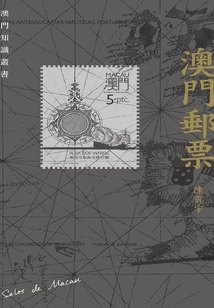
Macau Stamps
History澳门邮票
Chen Zhenyu
As the first stop for cultural exchanges between China and the West in modern times, Macao has its own unique meaning behind each exquisite Macao stamp, which has become a treasure trove of knowledge for exploring Macao's history and thinking about Macao's future. This book not only leads readers to experience and appreciate the beauty of Macau, but also disseminates some knowledge about Macau that is easy to ignore, but is actually helpful for in-depth understanding of Macau.
As the first stop for cultural exchanges between China and the West in modern times, Macao has its own unique meaning behind each exquisite Macao stamp, which has become a treasure trove of knowledge for exploring Macao's history and thinking about Macao's future. This book not only leads readers to experience and appreciate the beauty of Macau, but also disseminates some knowledge about Macau that is easy to ignore, but is actually helpful for in-depth understanding of Macau.
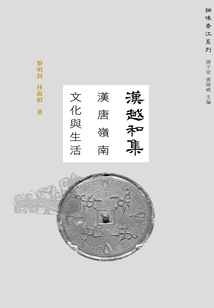
Collection of Han and Yue Dynasties: Culture and Life in Lingnan During the Han and Tang Dynasties
History汉越和集:汉唐岭南文化与生活
Liming Zhao
Lingnan was originally the land of Baiyue. Because it was separated by the Five Ridges, its lifestyle and customs were quite different from those in the Central Plains of the same period. After Qin unified the six kingdoms, it established counties and counties in Lingnan, stationed a large number of Qin troops, and moved merchants and criminals to Lingnan. The Lingnan area began to be under the rule of the central government. With Han and Yue being mixed together, the Yue people were influenced by Han cultural customs on the one hand, and on the other hand, they retained the traditions of Baiyue culture and enriched the connotation of Lingnan culture. This book combines archaeological and documentary materials to examine the cultural characteristics of the Han and Yue people in the Lingnan area and the cultural conflicts and integration between the two. It hopes to understand the cultural landscape of Hong Kong during the Qin and Han Dynasties through discussing Lingnan culture.
Lingnan was originally the land of Baiyue. Because it was separated by the Five Ridges, its lifestyle and customs were quite different from those in the Central Plains of the same period. After Qin unified the six kingdoms, it established counties and counties in Lingnan, stationed a large number of Qin troops, and moved merchants and criminals to Lingnan. The Lingnan area began to be under the rule of the central government. With Han and Yue being mixed together, the Yue people were influenced by Han cultural customs on the one hand, and on the other hand, they retained the traditions of Baiyue culture and enriched the connotation of Lingnan culture. This book combines archaeological and documentary materials to examine the cultural characteristics of the Han and Yue people in the Lingnan area and the cultural conflicts and integration between the two. It hopes to understand the cultural landscape of Hong Kong during the Qin and Han Dynasties through discussing Lingnan culture.
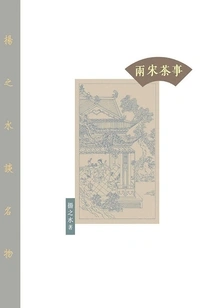
两宋茶事
Yangzhishui
Tea affairs are only one aspect of social life, but when reviewing its details within the scope of "Complete Poems of the Song Dynasty" and "Complete Song Ci", one cannot help but be surprised by its richness. The subtle details in tea affairs are originally sentiments, situations, and spirits in tea poems; the choice of tea drinking method often shows the drinker's magnanimity and spirit. Lu Yu once worked hard to make the tea ceremony an art and a realm. Scholars in the Song and Song Dynasties turned the suspended art and realm into daily life, and they could still use "objects" to carry their own "culture". So is there any difference between the tea of scholars and the tea of the world? Starting from the examination of the school's famous objects, we should be able to discover the significance of some details in the mutual contrast between tea poems and tea events.
Tea affairs are only one aspect of social life, but when reviewing its details within the scope of "Complete Poems of the Song Dynasty" and "Complete Song Ci", one cannot help but be surprised by its richness. The subtle details in tea affairs are originally sentiments, situations, and spirits in tea poems; the choice of tea drinking method often shows the drinker's magnanimity and spirit. Lu Yu once worked hard to make the tea ceremony an art and a realm. Scholars in the Song and Song Dynasties turned the suspended art and realm into daily life, and they could still use "objects" to carry their own "culture". So is there any difference between the tea of scholars and the tea of the world? Starting from the examination of the school's famous objects, we should be able to discover the significance of some details in the mutual contrast between tea poems and tea events.
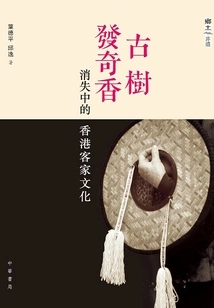
古树发奇香:消失中的香港客家文化
Ye Deping Qiu Yi
The Hakka group is an important part of the original residents of Hong Kong. During many migrations over thousands of years, the Hakka ancestors brought the culture and customs of the Central Plains to Jiangxi, Fujian, Guangdong and Taiwan, and blended them with the local customs and culture to form a unique Hakka culture and art form. The two authors of this book lead students to explore the centuries-old inheritance story of the Hakka group in Hong Kong through the Hakka intangible cultural heritage items included in the "Hong Kong's First Intangible Cultural Heritage List" announced in 2014: Wai Ming Song, Hakka Kirin Dance, Tea Cake Making, Lantern Making, Sun-salted Salt at Sai Kung Yantian Tsai, and the Patron's Day Ceremony. Through fieldwork, we explore the historical vicissitudes of the New Territories and salvage historical culture and collective memories.
The Hakka group is an important part of the original residents of Hong Kong. During many migrations over thousands of years, the Hakka ancestors brought the culture and customs of the Central Plains to Jiangxi, Fujian, Guangdong and Taiwan, and blended them with the local customs and culture to form a unique Hakka culture and art form. The two authors of this book lead students to explore the centuries-old inheritance story of the Hakka group in Hong Kong through the Hakka intangible cultural heritage items included in the "Hong Kong's First Intangible Cultural Heritage List" announced in 2014: Wai Ming Song, Hakka Kirin Dance, Tea Cake Making, Lantern Making, Sun-salted Salt at Sai Kung Yantian Tsai, and the Patron's Day Ceremony. Through fieldwork, we explore the historical vicissitudes of the New Territories and salvage historical culture and collective memories.
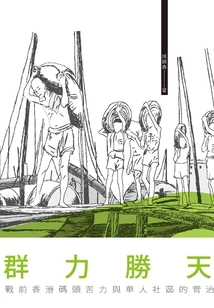
The Power of a Crowd: Dock Coolies and the Governance of the Chinese Community in Pre-war Hong Kong
History群力胜天:战前香港码头苦力与华人社区的管治
Yao Yingjia
The author's research covers the period from 1844 to 1945. By understanding the life and work of dock coolies, the author examines how these lower-class Chinese interacted with the government, and seeks a new perspective on understanding Chinese society. Taking the Pier Gurli group as the research object is based on the lack of relevant discussion in existing Hong Kong historical works. Since the opening of the port, the seaport freight industry has been closely related to Hong Kong's economic development. Before the war, cargo transportation relied on manpower and was an industry that many grassroots Chinese who lacked livelihood skills relied on to make a living. Therefore, it is quite representative for observing the situation of the Chinese community in Hong Kong. This study uses the perspective of social history to look at the history of the Chinese and the colonial government through the Gurli community in Hong Kong's docks, supplementing the history of Hong Kong. The author uses micro-historical investigation to reconstruct the history of the lower class groups by collecting and sorting out a large number of fragmentary historical materials, so as to achieve the goal of reflecting on the values of Hong Kong people.
The author's research covers the period from 1844 to 1945. By understanding the life and work of dock coolies, the author examines how these lower-class Chinese interacted with the government, and seeks a new perspective on understanding Chinese society. Taking the Pier Gurli group as the research object is based on the lack of relevant discussion in existing Hong Kong historical works. Since the opening of the port, the seaport freight industry has been closely related to Hong Kong's economic development. Before the war, cargo transportation relied on manpower and was an industry that many grassroots Chinese who lacked livelihood skills relied on to make a living. Therefore, it is quite representative for observing the situation of the Chinese community in Hong Kong. This study uses the perspective of social history to look at the history of the Chinese and the colonial government through the Gurli community in Hong Kong's docks, supplementing the history of Hong Kong. The author uses micro-historical investigation to reconstruct the history of the lower class groups by collecting and sorting out a large number of fragmentary historical materials, so as to achieve the goal of reflecting on the values of Hong Kong people.
中国历代史学名著快读
Zhou Jiarong
Based on the six periods of Pre-Qin, Han, Wei, Jin, Southern and Northern Dynasties, Tang Dynasty, Song and Yuan, and Qing Dynasty, the book elaborates on the important historical masterpieces of the past dynasties, including the "Four Histories", "Three Communications", and historical reviews. In addition to introducing the life of the compiler, the process of writing the book, the content and style, and historical evaluation, it also refers to a variety of related classics, either as supplements or for comparison, in order to present the general appearance of ancient Chinese historiography in an orderly manner. The content of the discussion should be as complex and concise as possible, while trying to refer to recent research results. Important items are explained with tables, and each chapter has annotations, which can be read with selected passages from historical classics. A bibliography is attached at the end of the book, which can serve as clues for further reading.
Based on the six periods of Pre-Qin, Han, Wei, Jin, Southern and Northern Dynasties, Tang Dynasty, Song and Yuan, and Qing Dynasty, the book elaborates on the important historical masterpieces of the past dynasties, including the "Four Histories", "Three Communications", and historical reviews. In addition to introducing the life of the compiler, the process of writing the book, the content and style, and historical evaluation, it also refers to a variety of related classics, either as supplements or for comparison, in order to present the general appearance of ancient Chinese historiography in an orderly manner. The content of the discussion should be as complex and concise as possible, while trying to refer to recent research results. Important items are explained with tables, and each chapter has annotations, which can be read with selected passages from historical classics. A bibliography is attached at the end of the book, which can serve as clues for further reading.
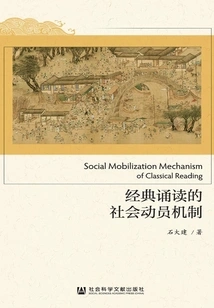
经典诵读的社会动员机制
Shi Dajian
This book takes as the research object the activity of reciting Chinese cultural classics that once withdrew from the stage of history, has been dormant for eighty years, and then re-emerged. It uses resource mobilization theory as a research perspective to explore the social mobilization mechanism of the rise of classic recitation. How were the material resources mobilized for the rise of Chinese cultural classic reading activities? How are member resources mobilized? How are discourse resources mobilized? Through nearly a year of fieldwork, the author of this book uses the three research dimensions of resource mobilization theory to reveal one by one the process and mechanism of the three main types of resources used by social elites to actively mobilize Chinese cultural classic reading activities, and further reveals the deep background factors such as social transformation, the rejuvenation of the Chinese nation, and the profound traditional cultural heritage of the rise of this cultural phenomenon.
This book takes as the research object the activity of reciting Chinese cultural classics that once withdrew from the stage of history, has been dormant for eighty years, and then re-emerged. It uses resource mobilization theory as a research perspective to explore the social mobilization mechanism of the rise of classic recitation. How were the material resources mobilized for the rise of Chinese cultural classic reading activities? How are member resources mobilized? How are discourse resources mobilized? Through nearly a year of fieldwork, the author of this book uses the three research dimensions of resource mobilization theory to reveal one by one the process and mechanism of the three main types of resources used by social elites to actively mobilize Chinese cultural classic reading activities, and further reveals the deep background factors such as social transformation, the rejuvenation of the Chinese nation, and the profound traditional cultural heritage of the rise of this cultural phenomenon.
近代史学刊(第21辑)
Ma Min
"Journal of Modern History" is a professional academic journal sponsored by the Institute of Modern History of China at Central China Normal University, a key research base for the humanities and social sciences of the Ministry of Education. It publishes the latest research results and information in the field of modern Chinese history from 1840 to 1949, including special discussions, research papers, research reviews, book reviews, historical factual examinations, scholars' letters, academic information, etc. This book is the 21st volume and is divided into six parts: customs and modern China, modern taxation and finance, modern industry history research, political and cultural research, academic review, and book reviews.
"Journal of Modern History" is a professional academic journal sponsored by the Institute of Modern History of China at Central China Normal University, a key research base for the humanities and social sciences of the Ministry of Education. It publishes the latest research results and information in the field of modern Chinese history from 1840 to 1949, including special discussions, research papers, research reviews, book reviews, historical factual examinations, scholars' letters, academic information, etc. This book is the 21st volume and is divided into six parts: customs and modern China, modern taxation and finance, modern industry history research, political and cultural research, academic review, and book reviews.
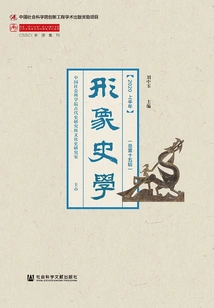
形象史学(2020上半年\u002F总第15辑)
Liu Zhongyu
"Image History" is a Chinese academic journal sponsored by the Cultural History Research Office of the Institute of History, Chinese Academy of Social Sciences. The papers collected mainly focus on different forms of material culture in various periods in ancient Chinese history. The collection breaks the boundaries of disciplines, and under the guidance of materialist dialectics, combines the commonalities and particularities of history, archeology, art history and other disciplines, and combines the textual research in the study of ancient Chinese history with methodologies such as iconography and new cultural history to sort out the evolution of human civilization from multiple angles and levels, further expanding the path and vision of historical research.
"Image History" is a Chinese academic journal sponsored by the Cultural History Research Office of the Institute of History, Chinese Academy of Social Sciences. The papers collected mainly focus on different forms of material culture in various periods in ancient Chinese history. The collection breaks the boundaries of disciplines, and under the guidance of materialist dialectics, combines the commonalities and particularities of history, archeology, art history and other disciplines, and combines the textual research in the study of ancient Chinese history with methodologies such as iconography and new cultural history to sort out the evolution of human civilization from multiple angles and levels, further expanding the path and vision of historical research.
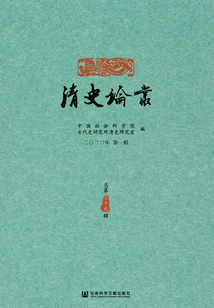
清史论丛(2020年第1辑\u002F总第39辑)
Compiled By Qing History Research Office, Institute Of Ancient History, Chinese Academy Of Social Sciences
"Qing History Series" is sponsored by the Qing History Research Office of the Institute of History, Chinese Academy of Social Sciences. It is a collection of academic papers on Qing history research at home and abroad. It was founded in 1979. This collection has wide influence at home and abroad, and is highly valued by the academic community. Its important features are concentrated research, rigorous academic style, and grasp of academic frontiers. The articles included in the book include both research articles on the critical history of the Qing Dynasty and research articles on the academic history of the Qing Dynasty. It includes both erudite Hongci research on the traditional culture of the Qing Dynasty and articles on the exchange of local Chinese and Western cultures in the Qing Dynasty.
"Qing History Series" is sponsored by the Qing History Research Office of the Institute of History, Chinese Academy of Social Sciences. It is a collection of academic papers on Qing history research at home and abroad. It was founded in 1979. This collection has wide influence at home and abroad, and is highly valued by the academic community. Its important features are concentrated research, rigorous academic style, and grasp of academic frontiers. The articles included in the book include both research articles on the critical history of the Qing Dynasty and research articles on the academic history of the Qing Dynasty. It includes both erudite Hongci research on the traditional culture of the Qing Dynasty and articles on the exchange of local Chinese and Western cultures in the Qing Dynasty.
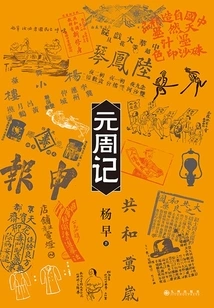
Yuan Zhou Ji
History元周记
Yang Zao
The author incarnates as a newspaperman of the Republic of China, reporting through the old world composed of words, leading readers back to 1912 to witness many details of the politics, economy, society, culture and other aspects of the first year of the Republic of China. Compared with the vigor of the Revolution of 1911 in 1911, 1912 was indeed an ordinary and anxious year: there was no progress in science and technology, the society was more chaotic, the economy was lackluster, and there was little academic innovation. However, under the dilapidation, the spiritual life of the entire society is undergoing earth-shaking changes, and everything is full of infinite possibilities. The author uses words to recreate China and the world in 1912, depicting a complete, vivid and pyrotechnic social picture.
The author incarnates as a newspaperman of the Republic of China, reporting through the old world composed of words, leading readers back to 1912 to witness many details of the politics, economy, society, culture and other aspects of the first year of the Republic of China. Compared with the vigor of the Revolution of 1911 in 1911, 1912 was indeed an ordinary and anxious year: there was no progress in science and technology, the society was more chaotic, the economy was lackluster, and there was little academic innovation. However, under the dilapidation, the spiritual life of the entire society is undergoing earth-shaking changes, and everything is full of infinite possibilities. The author uses words to recreate China and the world in 1912, depicting a complete, vivid and pyrotechnic social picture.
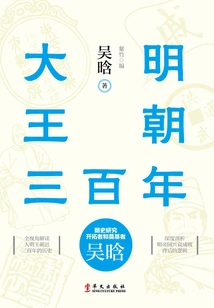
大明王朝三百年
Wu Han
Why are modern people so interested in the Ming Dynasty? Why is Ming Dynasty so popular among novelists and film and television dramas? Why do some comments say that "the Ming Dynasty was China's most prosperous age after the Han and Tang Dynasties"? Why are there almost no emperors in the Ming Dynasty who have a good reputation? Why did eunuchs rule and eunuchs dominate the Ming Dynasty? What kind of unique existence was the Ming Dynasty in Chinese history? ... In order to give readers a more systematic and comprehensive understanding of the history of the Ming Dynasty, we have compiled this "Three Hundred Years of the Ming Dynasty". This book brings together many of Mr. Wu Han's works and articles on the study of Ming history, such as "A Brief Introduction to the History of the Ming Dynasty", "The Biography of Zhu Yuanzhang", "An Examination of Hu Weiyong's Party Case", "An Examination of the Ancestral Mothers of the Ming Dynasty", etc. The content of the book has been rearranged and organized, covering the politics, military, institutions, economy, diplomacy, social life, famous figures, etc. Of the Ming Dynasty. It interprets the history of the Ming Dynasty in the past three hundred years from a full perspective and deeply analyzes the historical logic behind the rise and fall of the Ming Dynasty. In order to facilitate everyone's reading, this publication has carried out rigorous collation work on the ancient book quotations involved in the work, and annotated some rare words and phrases, striving to present the master's works more perfectly to readers.
Why are modern people so interested in the Ming Dynasty? Why is Ming Dynasty so popular among novelists and film and television dramas? Why do some comments say that "the Ming Dynasty was China's most prosperous age after the Han and Tang Dynasties"? Why are there almost no emperors in the Ming Dynasty who have a good reputation? Why did eunuchs rule and eunuchs dominate the Ming Dynasty? What kind of unique existence was the Ming Dynasty in Chinese history? ... In order to give readers a more systematic and comprehensive understanding of the history of the Ming Dynasty, we have compiled this "Three Hundred Years of the Ming Dynasty". This book brings together many of Mr. Wu Han's works and articles on the study of Ming history, such as "A Brief Introduction to the History of the Ming Dynasty", "The Biography of Zhu Yuanzhang", "An Examination of Hu Weiyong's Party Case", "An Examination of the Ancestral Mothers of the Ming Dynasty", etc. The content of the book has been rearranged and organized, covering the politics, military, institutions, economy, diplomacy, social life, famous figures, etc. Of the Ming Dynasty. It interprets the history of the Ming Dynasty in the past three hundred years from a full perspective and deeply analyzes the historical logic behind the rise and fall of the Ming Dynasty. In order to facilitate everyone's reading, this publication has carried out rigorous collation work on the ancient book quotations involved in the work, and annotated some rare words and phrases, striving to present the master's works more perfectly to readers.
明史简述
Wu Han
"A Brief Introduction to the History of the Ming Dynasty" is a transcript of an academic lecture given by Wu Han at the Central Advanced Party School. It briefly and systematically describes the most basic, important and critical issues in the history of the Ming Dynasty such as the founding of the Ming Dynasty by Taizu of the Ming Dynasty, the move of the capital of Ming Dynasty to Beijing by Ming Chengzu, the Northern and Southern Japanese, the Donglin party struggle, the founding of Jurchens in Zhouzhou, Zheng He's voyages to the West, and the emergence of capitalism. Understanding these issues will help us grasp the basic appearance, main characteristics and development context of the history of the Ming Dynasty. Although it is not big. But it is a must-read book for studying and researching Ming history. Wu Han's writing is as clear as words, easy to read and understand.
"A Brief Introduction to the History of the Ming Dynasty" is a transcript of an academic lecture given by Wu Han at the Central Advanced Party School. It briefly and systematically describes the most basic, important and critical issues in the history of the Ming Dynasty such as the founding of the Ming Dynasty by Taizu of the Ming Dynasty, the move of the capital of Ming Dynasty to Beijing by Ming Chengzu, the Northern and Southern Japanese, the Donglin party struggle, the founding of Jurchens in Zhouzhou, Zheng He's voyages to the West, and the emergence of capitalism. Understanding these issues will help us grasp the basic appearance, main characteristics and development context of the history of the Ming Dynasty. Although it is not big. But it is a must-read book for studying and researching Ming history. Wu Han's writing is as clear as words, easy to read and understand.
张宏杰:历史的正面与侧面(全7册)
Zhang Hongjie
This set is a series of brief readings of Chinese history by the well-known historian Zhang Hongjie. "A Brief Reading of Chinese History: China in the Coordination of World History": This book puts Chinese history into the context of world history, clarifies the development of Chinese history, and hopes that readers can establish an overall concept of Chinese history in a short time. At the same time, it uses a "long-term, long-distance, wide-view" interpretation method to comprehensively present the internal logic and rules of the game behind the cycle of chaos in Chinese history. "A Brief Reading of Chinese History: Power and Finance Behind the Corruption in Chinese History": Power games and financial rules, systems and checks and balances, top-level designs and the naked humanity behind bad rules are real and cruel. The root cause of corruption in China's past dynasties is absolute power control. It is impossible to solve the corruption problem without solving the foundation of the power structure. The history of imperial rule and the history of official corruption have always been inseparable. The author focuses on the Han, Tang, Song, Yuan, Ming and Qing dynasties, makes horizontal and vertical comparisons, explores the imperial rule and official ecology of ancient Chinese society, and clearly presents a multi-angle context of Chinese history to readers. "Qianlong: Politics, Love and Character": A politician, a scholar, a poet, a traveler, a hunter, the politics, harem and life of the most complicated emperor in Chinese history. "Bad Rules: Corruption and Anti-Corruption in the Ming and Qing Dynasties": This book focuses on the Ming and Qing Dynasties, and uses clear logic and vivid details to completely tell the beginning and end of the anti-corruption efforts of Zhu Yuanzhang, Hongli and others. Taking "bad regulations", a phenomenon of corruption that ran through the Ming and Qing dynasties, as an entry point, it reproduces the imperial institutional structure and officialdom ecology at that time, deeply explores the root causes of the decline of the Ming and Qing dynasties, and puts forward reflections that transcend the times. "The Evolution of Chinese National Character": A general history of China from a new perspective, exploring the past and future of the national character, and fundamentally understanding and changing the thoughts and behaviors of the Chinese people! "The Front and Side of Zeng Guofan": From an angry youth to a successful official, how he "reborn" after experiencing five humiliations. Zeng Guofan, who was completely different around the age of 30, showed the majority of young people how a young man moves from ideal to reality, which is of great practical significance. "Seven Faces of the Ming Dynasty": an emperor: Zhu Yuanzhang; a usurper: Zhu Di; an upright official: Hai Rui; an eunuch: Wei Zhongxian; a rebel: Zhang Xianzhong; a traitor: Wu Sangui; and a loyal minister: Zheng Chenggong. Seven people and seven profiles form a complete picture of the autocratic centralization system of the Ming Dynasty and the spiritual enslavement of the Chinese people.
This set is a series of brief readings of Chinese history by the well-known historian Zhang Hongjie. "A Brief Reading of Chinese History: China in the Coordination of World History": This book puts Chinese history into the context of world history, clarifies the development of Chinese history, and hopes that readers can establish an overall concept of Chinese history in a short time. At the same time, it uses a "long-term, long-distance, wide-view" interpretation method to comprehensively present the internal logic and rules of the game behind the cycle of chaos in Chinese history. "A Brief Reading of Chinese History: Power and Finance Behind the Corruption in Chinese History": Power games and financial rules, systems and checks and balances, top-level designs and the naked humanity behind bad rules are real and cruel. The root cause of corruption in China's past dynasties is absolute power control. It is impossible to solve the corruption problem without solving the foundation of the power structure. The history of imperial rule and the history of official corruption have always been inseparable. The author focuses on the Han, Tang, Song, Yuan, Ming and Qing dynasties, makes horizontal and vertical comparisons, explores the imperial rule and official ecology of ancient Chinese society, and clearly presents a multi-angle context of Chinese history to readers. "Qianlong: Politics, Love and Character": A politician, a scholar, a poet, a traveler, a hunter, the politics, harem and life of the most complicated emperor in Chinese history. "Bad Rules: Corruption and Anti-Corruption in the Ming and Qing Dynasties": This book focuses on the Ming and Qing Dynasties, and uses clear logic and vivid details to completely tell the beginning and end of the anti-corruption efforts of Zhu Yuanzhang, Hongli and others. Taking "bad regulations", a phenomenon of corruption that ran through the Ming and Qing dynasties, as an entry point, it reproduces the imperial institutional structure and officialdom ecology at that time, deeply explores the root causes of the decline of the Ming and Qing dynasties, and puts forward reflections that transcend the times. "The Evolution of Chinese National Character": A general history of China from a new perspective, exploring the past and future of the national character, and fundamentally understanding and changing the thoughts and behaviors of the Chinese people! "The Front and Side of Zeng Guofan": From an angry youth to a successful official, how he "reborn" after experiencing five humiliations. Zeng Guofan, who was completely different around the age of 30, showed the majority of young people how a young man moves from ideal to reality, which is of great practical significance. "Seven Faces of the Ming Dynasty": an emperor: Zhu Yuanzhang; a usurper: Zhu Di; an upright official: Hai Rui; an eunuch: Wei Zhongxian; a rebel: Zhang Xianzhong; a traitor: Wu Sangui; and a loyal minister: Zheng Chenggong. Seven people and seven profiles form a complete picture of the autocratic centralization system of the Ming Dynasty and the spiritual enslavement of the Chinese people.
A History of the Two Jin Dynasties That You Can't Afford to Put Down (set of 2 Volumes in Total)
History拿得起放不下的两晋史(套装共2册)
The Old Sun
The Eastern and Western Jin Dynasties were a dark and dazzling era in Chinese history. Here are the most beautiful men, the most straightforward women, the emperor who gave birth to the most sons, the most talented people who killed the most emperors, the wildest and most fascinating celebrities in history, and the freest and most repressive atmosphere. "The bright mirror reflects the image, and the ancient events inform the present." The author uses the characters of the Two Jin Dynasties as the main line, conducts serious research, sorts out the historical context, explores the cause and effect of events, and creates a history of the Two Jin Dynasties that people can understand at a glance and cannot afford to put down!
The Eastern and Western Jin Dynasties were a dark and dazzling era in Chinese history. Here are the most beautiful men, the most straightforward women, the emperor who gave birth to the most sons, the most talented people who killed the most emperors, the wildest and most fascinating celebrities in history, and the freest and most repressive atmosphere. "The bright mirror reflects the image, and the ancient events inform the present." The author uses the characters of the Two Jin Dynasties as the main line, conducts serious research, sorts out the historical context, explores the cause and effect of events, and creates a history of the Two Jin Dynasties that people can understand at a glance and cannot afford to put down!
Pre-qing Dynasty
History清朝前纪
Monson
"The Preface of the Qing Dynasty" is a book published by Zhonghua Book Company on May 1, 2008. The author is Meng Sen. This book is the lecture notes given by Mr. Meng Sen when he taught the history of Manchuria at Nanjing Central University. The book is divided into eleven chapters: the first Jurchen Chronicle, the second Jianzhou Chronicle, the third Jianzhou Zuowei Preface Chronicle, the fourth Zhaozu Chronicle, the fifth Chu Yan Chongshan Chronicle, the sixth Tuoluo Chronicle, the seventh Xingzu Chronicle, the eighth Jingzu Chronicle, the ninth Xianzu Chronicle, and the Wang Gao Chronicle.
"The Preface of the Qing Dynasty" is a book published by Zhonghua Book Company on May 1, 2008. The author is Meng Sen. This book is the lecture notes given by Mr. Meng Sen when he taught the history of Manchuria at Nanjing Central University. The book is divided into eleven chapters: the first Jurchen Chronicle, the second Jianzhou Chronicle, the third Jianzhou Zuowei Preface Chronicle, the fourth Zhaozu Chronicle, the fifth Chu Yan Chongshan Chronicle, the sixth Tuoluo Chronicle, the seventh Xingzu Chronicle, the eighth Jingzu Chronicle, the ninth Xianzu Chronicle, and the Wang Gao Chronicle.
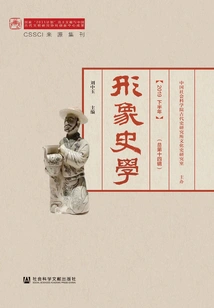
形象史学(2019下半年\u002F总第14辑)
Editor-in-chief Liu Zhongyu
"Image History" is a Chinese academic journal sponsored by the Cultural History Research Office of the Institute of History, Chinese Academy of Social Sciences. The papers collected mainly focus on different forms of material culture in various periods in ancient Chinese history. The collection breaks the boundaries of disciplines, and under the guidance of materialist dialectics, combines the commonalities and particularities of history, archeology, art history and other disciplines, and combines the textual research in the study of ancient Chinese history with methodologies such as iconography and new cultural history to sort out the evolution of human civilization from multiple angles and levels, further expanding the path and vision of historical research.
"Image History" is a Chinese academic journal sponsored by the Cultural History Research Office of the Institute of History, Chinese Academy of Social Sciences. The papers collected mainly focus on different forms of material culture in various periods in ancient Chinese history. The collection breaks the boundaries of disciplines, and under the guidance of materialist dialectics, combines the commonalities and particularities of history, archeology, art history and other disciplines, and combines the textual research in the study of ancient Chinese history with methodologies such as iconography and new cultural history to sort out the evolution of human civilization from multiple angles and levels, further expanding the path and vision of historical research.
太平天国及晚清社会研究(2020年第1辑\u002F总第4辑)
Editor-in-chief Zhu Qingbao
"Research on Taiping Rebellion and Late Qing Society" is an academic special issue sponsored by the China Taiping Rebellion History Research Association, a national first-level society approved by the Ministry of Civil Affairs. This journal mainly publishes research articles on relevant historical facts and theories about the Taiping Heavenly Kingdom and the late Qing Dynasty (1840-1911). Its purpose is to maintain a rigorous and solid academic style and expand the breadth and depth of research on the Taiping Heavenly Kingdom and the late Qing history with objective and rational research concepts. This collection contains a total of 14 articles, divided into four parts: "Research on the History of the Taiping Rebellion", "Research on the Social History of the Late Qing Dynasty", "Notes on Historical Reading" and "Selected Historical Materials".
"Research on Taiping Rebellion and Late Qing Society" is an academic special issue sponsored by the China Taiping Rebellion History Research Association, a national first-level society approved by the Ministry of Civil Affairs. This journal mainly publishes research articles on relevant historical facts and theories about the Taiping Heavenly Kingdom and the late Qing Dynasty (1840-1911). Its purpose is to maintain a rigorous and solid academic style and expand the breadth and depth of research on the Taiping Heavenly Kingdom and the late Qing history with objective and rational research concepts. This collection contains a total of 14 articles, divided into four parts: "Research on the History of the Taiping Rebellion", "Research on the Social History of the Late Qing Dynasty", "Notes on Historical Reading" and "Selected Historical Materials".
清史研究发展与趋势(2020)
Editor-in-chief Zhou Qun Wu Siwu Lu Wenli Dong Xinjie Yu Hongliang Deputy Editor-in-chief Liao Xichen
This book focuses on reflecting the development trends of domestic Qing history research in 2020. The collected papers are all published academic papers, and the authors come from different units such as the Chinese Academy of History, Renmin University of China, and Minzu University of China. These papers are intended to demonstrate the "Chineseness" of the Qing Dynasty, answer questions such as "what is China" and "how did the concept of China come to be" in history, prove that China has been a unified multi-ethnic country since ancient times, and refute the erroneous views led by the American "New Qing History" that "dynasties ruled by ethnic minorities in Chinese history are not China" and "north of the Great Wall Line is not China".
This book focuses on reflecting the development trends of domestic Qing history research in 2020. The collected papers are all published academic papers, and the authors come from different units such as the Chinese Academy of History, Renmin University of China, and Minzu University of China. These papers are intended to demonstrate the "Chineseness" of the Qing Dynasty, answer questions such as "what is China" and "how did the concept of China come to be" in history, prove that China has been a unified multi-ethnic country since ancient times, and refute the erroneous views led by the American "New Qing History" that "dynasties ruled by ethnic minorities in Chinese history are not China" and "north of the Great Wall Line is not China".
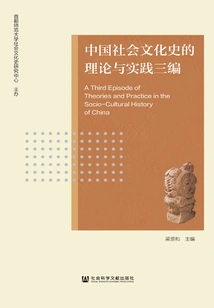
中国社会文化史的理论与实践三编
Editor-in-chief Liang Jinghe
The social and cultural history that emerged in China has gone through a thirty-year process from 1988 to 2018. This book pays attention to its development status in the four years from 2015 to 2018. The main perspective still focuses on three parts: theory and method, book preface and book review, and academic review. The academic vision, direction and academic interests of Chinese social and cultural history are diverse, and the social and cultural history originated in China is only a part of it. I hope that the efforts and progress in this part can contribute to the overall development of Chinese social and cultural history.
The social and cultural history that emerged in China has gone through a thirty-year process from 1988 to 2018. This book pays attention to its development status in the four years from 2015 to 2018. The main perspective still focuses on three parts: theory and method, book preface and book review, and academic review. The academic vision, direction and academic interests of Chinese social and cultural history are diverse, and the social and cultural history originated in China is only a part of it. I hope that the efforts and progress in this part can contribute to the overall development of Chinese social and cultural history.
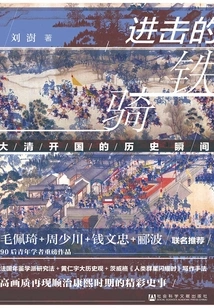
进击的铁骑:大清开国的历史瞬间
Liu Shu
From 1644 to 1723, political tensions were high, military affairs were frequent, and the world's tribute system began to collide with Western nation-states. Based on a large number of historical materials, the author uses a relaxed and fun writing style to not only restore the details of the life history of various classes and multiple ethnic groups in the Qing Dynasty, but also to restore the secrets of the struggle between the concubines and the process of the nine kings' seizure of the legitimate rights based on "Qing Shi Lu", as well as the liberal arts It provides students with an understandable explanation of the history of natural sciences in the Qing Dynasty, as well as an epic reappearance of the duel between the Qing Dynasty, the Southern Ming Dynasty, Li Zicheng, Zhang Xianzhong, the Junggar Mongols, the Zheng Group, the Dutch, Spanish and Russian colonists, and the Yarkand Khanate in the 17th century in China!
From 1644 to 1723, political tensions were high, military affairs were frequent, and the world's tribute system began to collide with Western nation-states. Based on a large number of historical materials, the author uses a relaxed and fun writing style to not only restore the details of the life history of various classes and multiple ethnic groups in the Qing Dynasty, but also to restore the secrets of the struggle between the concubines and the process of the nine kings' seizure of the legitimate rights based on "Qing Shi Lu", as well as the liberal arts It provides students with an understandable explanation of the history of natural sciences in the Qing Dynasty, as well as an epic reappearance of the duel between the Qing Dynasty, the Southern Ming Dynasty, Li Zicheng, Zhang Xianzhong, the Junggar Mongols, the Zheng Group, the Dutch, Spanish and Russian colonists, and the Yarkand Khanate in the 17th century in China!
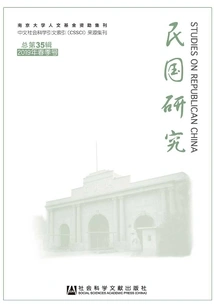
民国研究(2019年春季号\u002F总第35辑)
Editor-in-chief Zhu Qingbao
"Republic of China Studies" is an academic special issue sponsored by the Research Center for the History of the Republic of China at Nanjing University, a key research base in the humanities and social sciences of the Ministry of Education. It mainly publishes research articles on relevant historical facts and theories about the Republic of China period (1912-1949). It is now a CSSCI source publication. This volume is the 35th in total and contains a total of 16 articles, divided into four columns: "Politics and Diplomacy of the Republic of China", "Economy and Life of the Republic of China", "Education of the Republic of China" and "Academic Review".
"Republic of China Studies" is an academic special issue sponsored by the Research Center for the History of the Republic of China at Nanjing University, a key research base in the humanities and social sciences of the Ministry of Education. It mainly publishes research articles on relevant historical facts and theories about the Republic of China period (1912-1949). It is now a CSSCI source publication. This volume is the 35th in total and contains a total of 16 articles, divided into four columns: "Politics and Diplomacy of the Republic of China", "Economy and Life of the Republic of China", "Education of the Republic of China" and "Academic Review".
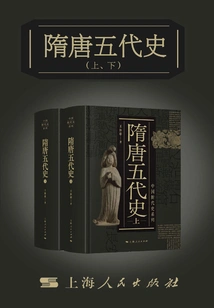
隋唐五代史(上、下)(中国断代史系列)
Wang Zhongluo
"History of Sui, Tang and Five Dynasties" is divided into two volumes, with a total of more than one million words. It elaborates on the comprehensive development of my country's feudal society in the aspects of politics, economy, military, culture, foreign exchanges, and ethnic integration during the Sui, Tang, and Five Dynasties periods, and has many unique insights. In particular, it describes the unprecedented prosperity of cultural thought, literature and art in the Sui and Tang Dynasties at a large length, which is unparalleled by similar works. It fully reflects the high level of domestic research on the history of the Sui, Tang and Five Dynasties.
"History of Sui, Tang and Five Dynasties" is divided into two volumes, with a total of more than one million words. It elaborates on the comprehensive development of my country's feudal society in the aspects of politics, economy, military, culture, foreign exchanges, and ethnic integration during the Sui, Tang, and Five Dynasties periods, and has many unique insights. In particular, it describes the unprecedented prosperity of cultural thought, literature and art in the Sui and Tang Dynasties at a large length, which is unparalleled by similar works. It fully reflects the high level of domestic research on the history of the Sui, Tang and Five Dynasties.
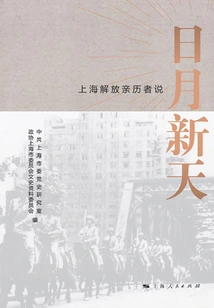
日月新天:上海解放亲历者说
Party History Research Office Of The Shanghai Municipal Committee Of China, Cultural And Historical Materials Committee Of The Shanghai Municipal Committee Of The Chinese People's Political Consultative Conference
This book takes the liberation of Shanghai as its theme and adopts the form of oral history to record the raging revolutionary years 70 years ago. Dozens of oral accounts by the old leaders and soldiers who participated in crossing the Yangtze River and fighting in Shanghai, the veteran cadres who participated in the takeover, and the veteran comrades of the Shanghai underground party recalled with clear memories and simple language 70 years ago, amidst the roaring artillery fire of the Liberation War, the Chinese people The People's Liberation Army resolutely implemented the general policy of the Central Committee of the Communist Party of China on the Shanghai Campaign. With its invincible power and superb command skills, and with the strong support and cooperation of the Shanghai underground party organization of the Communist Party of China and the broad masses of the people, the People's Liberation Army liberated China's largest city, Shanghai, in its history.
This book takes the liberation of Shanghai as its theme and adopts the form of oral history to record the raging revolutionary years 70 years ago. Dozens of oral accounts by the old leaders and soldiers who participated in crossing the Yangtze River and fighting in Shanghai, the veteran cadres who participated in the takeover, and the veteran comrades of the Shanghai underground party recalled with clear memories and simple language 70 years ago, amidst the roaring artillery fire of the Liberation War, the Chinese people The People's Liberation Army resolutely implemented the general policy of the Central Committee of the Communist Party of China on the Shanghai Campaign. With its invincible power and superb command skills, and with the strong support and cooperation of the Shanghai underground party organization of the Communist Party of China and the broad masses of the people, the People's Liberation Army liberated China's largest city, Shanghai, in its history.
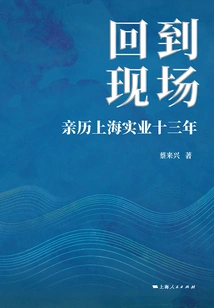
回到现场:亲历上海实业十三年
Cai Laixing
"Back to the Scene: Thirteen Years of Shanghai Industrial" is a personal memoir of Mr. Cai Laixing, the former chairman of SI Group. It is also his review and summary of his thirteen years of working experience in SI Group. This book truly reflects the SI Group's courageous struggle to achieve leapfrog development under the background of reform and opening up. What it records is not only the development of an enterprise, but also a microcosm of the development of an era and the entire country. There are inspiring words recalling the glorious past, as well as analysis and summary of many years of rich experience in state-owned enterprise management and reform. As Mr. Wang Zhan, chairman of the Shanghai Federation of Social Works, said in the preface of the book, "These insights can provide useful reference for the reform of Shanghai's state-owned assets and state-owned enterprises and the strengthening and improvement of state-owned capital in the new era."
"Back to the Scene: Thirteen Years of Shanghai Industrial" is a personal memoir of Mr. Cai Laixing, the former chairman of SI Group. It is also his review and summary of his thirteen years of working experience in SI Group. This book truly reflects the SI Group's courageous struggle to achieve leapfrog development under the background of reform and opening up. What it records is not only the development of an enterprise, but also a microcosm of the development of an era and the entire country. There are inspiring words recalling the glorious past, as well as analysis and summary of many years of rich experience in state-owned enterprise management and reform. As Mr. Wang Zhan, chairman of the Shanghai Federation of Social Works, said in the preface of the book, "These insights can provide useful reference for the reform of Shanghai's state-owned assets and state-owned enterprises and the strengthening and improvement of state-owned capital in the new era."
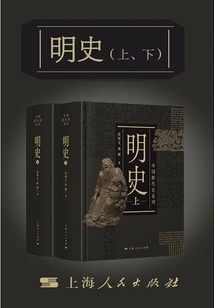
明史(上、下)(中国断代史系列)
Nan Bingwen Tang Gang
"History of the Ming Dynasty (Set of Volumes 1 and 2)" systematically discusses and analyzes the development of politics, economy, military, ethnic relations, Sino-foreign relations and the class situation of the Ming Dynasty. The Ming Dynasty was an important period in the history of our country. During this historical period, social productivity and social economy achieved great development. The development of the commodity economy broke through any previous era in history, which caused subtle changes in production relations. The author believes that the emergence of this change is a sign of the emergence of capitalism, and this change was relatively obvious in society and the production sector at that time. "History of the Ming Dynasty (Set of Volumes 1 and 2)" is known for its rich content and detailed historical materials. In terms of elaboration of many historical facts, its level of informativeness and detail is unparalleled by similar books.
"History of the Ming Dynasty (Set of Volumes 1 and 2)" systematically discusses and analyzes the development of politics, economy, military, ethnic relations, Sino-foreign relations and the class situation of the Ming Dynasty. The Ming Dynasty was an important period in the history of our country. During this historical period, social productivity and social economy achieved great development. The development of the commodity economy broke through any previous era in history, which caused subtle changes in production relations. The author believes that the emergence of this change is a sign of the emergence of capitalism, and this change was relatively obvious in society and the production sector at that time. "History of the Ming Dynasty (Set of Volumes 1 and 2)" is known for its rich content and detailed historical materials. In terms of elaboration of many historical facts, its level of informativeness and detail is unparalleled by similar books.
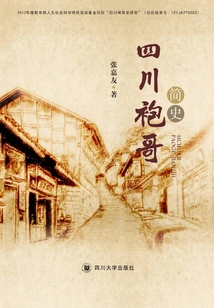
四川袍哥简史
Zhang Jiayou
This book is the research result of the Humanities and Social Sciences Research Planning Fund Project of the Ministry of Education in 2012 (project approval number: 12YJA770052). It is a theoretical monograph on local history. Sichuan Pao Ge spread throughout the southwest and northwest regions, especially during the Republic of China. The academic community has achieved some research results on the history of Sichuan Pao Ge, but the research is not comprehensive and in-depth enough. Pao Ge plays a very important and complex role in China's modern history. The book consists of seven chapters, introducing Sichuan Pao Ge and Sichuan Pao Ge characters in the late Qing Dynasty, the Revolution of 1911, the period of warlord rule, the Anti-Japanese War, and the War of Liberation.
This book is the research result of the Humanities and Social Sciences Research Planning Fund Project of the Ministry of Education in 2012 (project approval number: 12YJA770052). It is a theoretical monograph on local history. Sichuan Pao Ge spread throughout the southwest and northwest regions, especially during the Republic of China. The academic community has achieved some research results on the history of Sichuan Pao Ge, but the research is not comprehensive and in-depth enough. Pao Ge plays a very important and complex role in China's modern history. The book consists of seven chapters, introducing Sichuan Pao Ge and Sichuan Pao Ge characters in the late Qing Dynasty, the Revolution of 1911, the period of warlord rule, the Anti-Japanese War, and the War of Liberation.
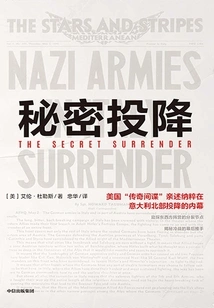
Secret Surrender
History秘密投降
(us) Allen Dulles
Allen Dulles, the former director of the United States Central Intelligence Agency (CIA) and the "legendary spy", brilliantly directed the top-secret but controversial "Operation Sunrise" in Switzerland at the end of World War II, which was regarded as a standard by the intelligence community, prompting the surrender of millions of Nazis in northern Italy. As the planner and direct executor of the plan, the author secretly contacted and negotiated with German SS Chief of Staff Karl Wolff in an attempt to deceive allied pacifists, including U. S. President Roosevelt, to make peace with the Nazis and jointly fight against socialist countries and socialist democratic parties, including the Soviet Union. After this act was discovered by Soviet investigators, the People's Commissariat of Foreign Affairs of the Soviet Union immediately took action to prevent the negotiations, but the perfidious Allied monopoly class still completed the plan. The book revolves around "Operation Sunrise" and uses a fascinating and suspenseful narrative to reveal the details of how the United States and the Soviet Union seized Italy and Germany and used all possible means to seize the fruits of victory. It also reveals the competition for interests of all parties in the surrender process. It also explores the important link in the escalation of internal conflicts among the allies represented by the United States and the Soviet Union and the confrontation between the two camps of the East and the West. It provides valuable first-hand historical information for insight into the beginning of the Cold War.
Allen Dulles, the former director of the United States Central Intelligence Agency (CIA) and the "legendary spy", brilliantly directed the top-secret but controversial "Operation Sunrise" in Switzerland at the end of World War II, which was regarded as a standard by the intelligence community, prompting the surrender of millions of Nazis in northern Italy. As the planner and direct executor of the plan, the author secretly contacted and negotiated with German SS Chief of Staff Karl Wolff in an attempt to deceive allied pacifists, including U. S. President Roosevelt, to make peace with the Nazis and jointly fight against socialist countries and socialist democratic parties, including the Soviet Union. After this act was discovered by Soviet investigators, the People's Commissariat of Foreign Affairs of the Soviet Union immediately took action to prevent the negotiations, but the perfidious Allied monopoly class still completed the plan. The book revolves around "Operation Sunrise" and uses a fascinating and suspenseful narrative to reveal the details of how the United States and the Soviet Union seized Italy and Germany and used all possible means to seize the fruits of victory. It also reveals the competition for interests of all parties in the surrender process. It also explores the important link in the escalation of internal conflicts among the allies represented by the United States and the Soviet Union and the confrontation between the two camps of the East and the West. It provides valuable first-hand historical information for insight into the beginning of the Cold War.
中华优秀传统文化的核心理念
Editor-in-chief Zhang Qizhi
This book summarizes and elaborates on the twelve core concepts of China's excellent traditional culture: the study of nature and man, the Tao follows nature, be prepared for danger in times of peace, strive for self-improvement, be honest and trustworthy, be virtuous, put the people first, be benevolent and love others, respect teachers and respect the Tao, be harmonious but different, change with each passing day, and the world will be unified. The author tells us in the book why these twelve concepts are the core concepts of China's excellent traditional culture, their emergence, inheritance, and development process in the history of Chinese thought and culture, as well as their historical significance.
This book summarizes and elaborates on the twelve core concepts of China's excellent traditional culture: the study of nature and man, the Tao follows nature, be prepared for danger in times of peace, strive for self-improvement, be honest and trustworthy, be virtuous, put the people first, be benevolent and love others, respect teachers and respect the Tao, be harmonious but different, change with each passing day, and the world will be unified. The author tells us in the book why these twelve concepts are the core concepts of China's excellent traditional culture, their emergence, inheritance, and development process in the history of Chinese thought and culture, as well as their historical significance.
江苏地方文化史·盐城卷
Editor-in-chief Lu Yuqin
This book is part of Jiangsu Wenku's local cultural history series. Its main content is the sorting out and reproduction of Yancheng's history and culture. Yancheng is located in the eastern coastal area of northern Jiangsu. During its long historical evolution, through the continuous addition of new immigrants and the continuous integration and collision of various cultures, it has gradually formed a diverse local cultural history with multiple participation in the region. After the reform and opening up, Yancheng City has made great progress in economic, social and other aspects. It has also made fruitful achievements in the inheritance and construction of traditional culture, and its cultural influence has also been expanding. As an important part of Jiangsu's local culture, Yancheng's history, culture and value need to be understood by people. This book contains 15 chapters and nearly 500,000 words. The manuscript conducts in-depth and detailed research on the history and culture of Yancheng. It has a clear structure, clear and fluent language, and strong readability.
This book is part of Jiangsu Wenku's local cultural history series. Its main content is the sorting out and reproduction of Yancheng's history and culture. Yancheng is located in the eastern coastal area of northern Jiangsu. During its long historical evolution, through the continuous addition of new immigrants and the continuous integration and collision of various cultures, it has gradually formed a diverse local cultural history with multiple participation in the region. After the reform and opening up, Yancheng City has made great progress in economic, social and other aspects. It has also made fruitful achievements in the inheritance and construction of traditional culture, and its cultural influence has also been expanding. As an important part of Jiangsu's local culture, Yancheng's history, culture and value need to be understood by people. This book contains 15 chapters and nearly 500,000 words. The manuscript conducts in-depth and detailed research on the history and culture of Yancheng. It has a clear structure, clear and fluent language, and strong readability.
中华苏维埃共和国史
Shu Long Editor-in-chief Of Lingbuji
In November 1931, with the support and help of the Comintern, the Communist Party of China held the First National Congress of Soviets in Ruijin, Jiangxi Province, announcing the establishment of the Chinese Soviet Republic, formulating a series of laws and decrees, and electing a leadership agency. The Soviet Republic of China was the first proletarian political organization in Chinese history. In order to unify and lead the national revolutionary movement, the revolutionary pioneers worked diligently and frugally, and lived without food and clothing, and wrote a glorious page in the struggle of blood and fire. Although the Chinese Soviet Republic actually existed for only three years, it accumulated experience, prepared cadres, and laid the foundation for the later establishment of the People's Republic of China. With detailed information, this book completely records all aspects of the Chinese Soviet Republic, vividly reflects the entire process of the Chinese Soviet Republic from germination, establishment to development, and discusses the achievements, experiences and lessons of the Chinese Soviet Republic. It is the earliest precious wealth accumulated by the party and the people for the construction and rejuvenation of the country. In November 1931, with the support and help of the Soviet Union and the Comintern, the Communist Party of China established the Soviet Republic of China in Ruijin, Jiangxi Province, and formulated a series of laws and regulations to carry out various aspects of work in the form of the first people's power in Chinese history. Due to military and united front needs, the Chinese Soviet Republic was canceled in 1937. This book combs the clear context of the entire process of the Chinese Soviet Republic from preparation, establishment to development, and summarizes the party's multi-faceted exploration and positive and negative experiences in building a new type of people's political power. The scope is not limited to the Central Soviet Area in southern Jiangxi and western Fujian, but also includes Hubei, Henan, Anhui, western Hunan, Hubei, Fujian, Zhejiang and other Soviet areas. The content is not limited to the country's political organization and military construction, but also involves economy, culture, legal system, territory, population, etc. It is a good book that reflects the history of the Chinese Soviet Republic in the most comprehensive and detailed way so far.
In November 1931, with the support and help of the Comintern, the Communist Party of China held the First National Congress of Soviets in Ruijin, Jiangxi Province, announcing the establishment of the Chinese Soviet Republic, formulating a series of laws and decrees, and electing a leadership agency. The Soviet Republic of China was the first proletarian political organization in Chinese history. In order to unify and lead the national revolutionary movement, the revolutionary pioneers worked diligently and frugally, and lived without food and clothing, and wrote a glorious page in the struggle of blood and fire. Although the Chinese Soviet Republic actually existed for only three years, it accumulated experience, prepared cadres, and laid the foundation for the later establishment of the People's Republic of China. With detailed information, this book completely records all aspects of the Chinese Soviet Republic, vividly reflects the entire process of the Chinese Soviet Republic from germination, establishment to development, and discusses the achievements, experiences and lessons of the Chinese Soviet Republic. It is the earliest precious wealth accumulated by the party and the people for the construction and rejuvenation of the country. In November 1931, with the support and help of the Soviet Union and the Comintern, the Communist Party of China established the Soviet Republic of China in Ruijin, Jiangxi Province, and formulated a series of laws and regulations to carry out various aspects of work in the form of the first people's power in Chinese history. Due to military and united front needs, the Chinese Soviet Republic was canceled in 1937. This book combs the clear context of the entire process of the Chinese Soviet Republic from preparation, establishment to development, and summarizes the party's multi-faceted exploration and positive and negative experiences in building a new type of people's political power. The scope is not limited to the Central Soviet Area in southern Jiangxi and western Fujian, but also includes Hubei, Henan, Anhui, western Hunan, Hubei, Fujian, Zhejiang and other Soviet areas. The content is not limited to the country's political organization and military construction, but also involves economy, culture, legal system, territory, population, etc. It is a good book that reflects the history of the Chinese Soviet Republic in the most comprehensive and detailed way so far.
故宫文物南迁
Compiled By Li Jiajun
This book takes the southward migration of the Forbidden City cultural relics as its theme, focuses on the southward, westward and northern route of the Forbidden City cultural relics, and takes the storage process of the Forbidden City cultural relics in Emei as an important content. It combines the southward relocation of the Forbidden City cultural relics with Emei's local culture and history for the first time, and systematically introduces the history and influence of the Forbidden City cultural relics in Emei. It is a monograph on the southward and northern route of the Forbidden City cultural relics, filling the gap in the field of the southward relocation of the Forbidden City cultural relics.
This book takes the southward migration of the Forbidden City cultural relics as its theme, focuses on the southward, westward and northern route of the Forbidden City cultural relics, and takes the storage process of the Forbidden City cultural relics in Emei as an important content. It combines the southward relocation of the Forbidden City cultural relics with Emei's local culture and history for the first time, and systematically introduces the history and influence of the Forbidden City cultural relics in Emei. It is a monograph on the southward and northern route of the Forbidden City cultural relics, filling the gap in the field of the southward relocation of the Forbidden City cultural relics.
抗日老兵亲历记
Li Rui Lu Yi Long Fei
This book is based on the oral recollections of more than 30 Sichuan veterans who participated in the Anti-Japanese War. The content reflects the period from 1937 to 1945. Through their personal perspectives, they reflect the injustice of the Japanese invaders and the heroism of the Chinese nation, warning us not to forget our national humiliation and cherish peace. During the writing process of this book, the content described in it was verified to ensure the accuracy of historical facts. In order to enable readers to have a deeper understanding of their experiences, introductions to the historical events of the Anti-Japanese War related to their experiences have been added to the content.
This book is based on the oral recollections of more than 30 Sichuan veterans who participated in the Anti-Japanese War. The content reflects the period from 1937 to 1945. Through their personal perspectives, they reflect the injustice of the Japanese invaders and the heroism of the Chinese nation, warning us not to forget our national humiliation and cherish peace. During the writing process of this book, the content described in it was verified to ensure the accuracy of historical facts. In order to enable readers to have a deeper understanding of their experiences, introductions to the historical events of the Anti-Japanese War related to their experiences have been added to the content.