Library
Browse and search books
2,472 novels found
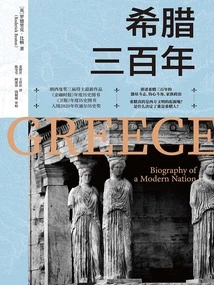
Greece Three Hundred Years
History希腊三百年
E
Greece was born out of the bloody conflict between Christian Europe and the Ottoman Empire. In the approximately 300 years since 1718, Greece has built a modern nation-state on the ruins of a vanished civilization. After Roderick Beaton tells the story of the birth of the Greek nation-state at the beginning, he directly introduces the plot of the story into modern times and analyzes the grudges and resentments between Greece and other EU member states after the economic crisis. By examining in detail how Greeks understood their own shared identity, Beaton reveals centuries of Greek anxieties and insecurities about self-understanding. This is not only the story of the building of the Greek nation-state, but more fundamentally, the story of the collective identity that went hand in hand with the building of the nation-state; not only the history of major events and high politics, but also the history of culture, art, people and ideas. Beaton sees modern Greece as a living entity, a living entity, encouraging us to re-examine a people and history whose glorious past we have so long commemorated. The country and its people were struggling to build their future as part of the modern West. As an important country that affects the situation in Europe and a great country in the history of world civilization, Greece, between the East and the West, has too many mysteries, which this book will reveal one by one.
Greece was born out of the bloody conflict between Christian Europe and the Ottoman Empire. In the approximately 300 years since 1718, Greece has built a modern nation-state on the ruins of a vanished civilization. After Roderick Beaton tells the story of the birth of the Greek nation-state at the beginning, he directly introduces the plot of the story into modern times and analyzes the grudges and resentments between Greece and other EU member states after the economic crisis. By examining in detail how Greeks understood their own shared identity, Beaton reveals centuries of Greek anxieties and insecurities about self-understanding. This is not only the story of the building of the Greek nation-state, but more fundamentally, the story of the collective identity that went hand in hand with the building of the nation-state; not only the history of major events and high politics, but also the history of culture, art, people and ideas. Beaton sees modern Greece as a living entity, a living entity, encouraging us to re-examine a people and history whose glorious past we have so long commemorated. The country and its people were struggling to build their future as part of the modern West. As an important country that affects the situation in Europe and a great country in the history of world civilization, Greece, between the East and the West, has too many mysteries, which this book will reveal one by one.
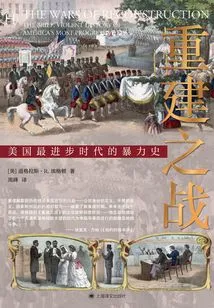
重建之战(历史学堂)
(us) Douglas R. Egerton
The period from 1865 to 1877 after the end of the American Civil War was known in history as the "Reconstruction Period." During this period, not only the southern economy was rebuilt, but also the entire American democracy. The aftermath still exists in the United States 100 years later, in the 1960s and even today. "Reconstruction" is a momentous and provocative contribution to American history. Understanding the Reconstruction period goes a long way toward understanding issues that still roiling American politics today, such as the definition of citizenship, the meaning of equality, and the relative powers of national and state governments.
The period from 1865 to 1877 after the end of the American Civil War was known in history as the "Reconstruction Period." During this period, not only the southern economy was rebuilt, but also the entire American democracy. The aftermath still exists in the United States 100 years later, in the 1960s and even today. "Reconstruction" is a momentous and provocative contribution to American history. Understanding the Reconstruction period goes a long way toward understanding issues that still roiling American politics today, such as the definition of citizenship, the meaning of equality, and the relative powers of national and state governments.

黑色雅典娜(套装共3卷)
(uk)martin Bernard
The Black Athena volume focuses on the critical period from 1785 to 1850, when Romanticism and racism responded to the Enlightenment and the French Revolution, and the expansion of Nordic civilization into other continents was consolidated. Bernard established an unprecedented feat of meaningful connections across a wide range of fields of study and disciplines-drama, poetry, mythology, theological polemics, esoteric religion, philosophy, biography, language, historical narrative, and the emergence of "modern scholarship." The research object of Volume 2 of "Black Athena" is the two historical models of the origin of Greek civilization. These two models are diametrically opposed. This volume not only traces the archaeological and documentary evidence of contact and exchange between Egypt and the Levant in the Bronze Age (3400 BC - 1100 BC), but also includes archaeological and documentary evidence of contact and exchange between Egypt and the Aegean region in this era. This evidence is supplemented by later Greek myths, legends, religious cults, and language. Accordingly, Bernard proposed a revised ancient model to show that the influence of Egyptian civilization on the Aegean region during the formation of Greek culture and national identity was broader and more influential than usually thought. Volume Three of Black Athena explores linguistic evidence that contradicts claims about the Aryan model in ancient Greece. Bernard reveals how nearly 40% of Greek words plausibly evolved from two Afro-Asiatic languages, Ancient Egyptian and West Semitic. The use of these etymologies is not limited to commercial and trade matters, but also extends to politics, religion, philosophy and other aspects. In the author's opinion, this evidence strongly supports the hypothesis that the Indo-European-speaking peoples of Greece were culturally dominated by the Ancient Egyptian and West Semitic-speaking peoples.
The Black Athena volume focuses on the critical period from 1785 to 1850, when Romanticism and racism responded to the Enlightenment and the French Revolution, and the expansion of Nordic civilization into other continents was consolidated. Bernard established an unprecedented feat of meaningful connections across a wide range of fields of study and disciplines-drama, poetry, mythology, theological polemics, esoteric religion, philosophy, biography, language, historical narrative, and the emergence of "modern scholarship." The research object of Volume 2 of "Black Athena" is the two historical models of the origin of Greek civilization. These two models are diametrically opposed. This volume not only traces the archaeological and documentary evidence of contact and exchange between Egypt and the Levant in the Bronze Age (3400 BC - 1100 BC), but also includes archaeological and documentary evidence of contact and exchange between Egypt and the Aegean region in this era. This evidence is supplemented by later Greek myths, legends, religious cults, and language. Accordingly, Bernard proposed a revised ancient model to show that the influence of Egyptian civilization on the Aegean region during the formation of Greek culture and national identity was broader and more influential than usually thought. Volume Three of Black Athena explores linguistic evidence that contradicts claims about the Aryan model in ancient Greece. Bernard reveals how nearly 40% of Greek words plausibly evolved from two Afro-Asiatic languages, Ancient Egyptian and West Semitic. The use of these etymologies is not limited to commercial and trade matters, but also extends to politics, religion, philosophy and other aspects. In the author's opinion, this evidence strongly supports the hypothesis that the Indo-European-speaking peoples of Greece were culturally dominated by the Ancient Egyptian and West Semitic-speaking peoples.
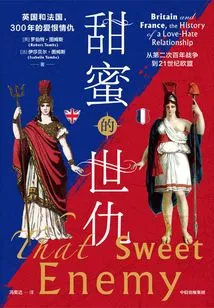
Sweet Feud
History甜蜜的世仇
(uk) Robert Toombs Et Al.
In 1066, the Duke of Normandy, a vassal of the King of France, conquered England. Since then, the fates of England and France, the two European powers, have been intertwined. The two countries fought a Hundred Years War in the Middle Ages. By 1689, after the Glorious Revolution, Britain joined the Grand Alliance War against the hegemony of the French "Sun King", and the war rekindled between the two countries. In the following more than a century, in order to compete for power in Europe and the world, the two countries fought in the War of Spanish Succession, the War of Austrian Succession, the Seven Years' War, the American War of Independence, as well as the French Revolution and the Napoleonic Wars. The war stage extended from Europe to North America, India, and even the world. In the end, Britain, the maritime power, defeated France, the continental power. This book reviews the relationship between Britain and France over more than 300 years from the Glorious Revolution to the beginning of the 21st century. The book not only covers politics and economy, war and peace, but also ideas and literature, tourism and food, sports and fashion; not only interactions at the national level, but also people-to-people exchanges. Those who crossed the English Channel were not only Churchill, de Gaulle, Rousseau, Voltaire, Hume and other great figures, but also ordinary people of all kinds such as travelers yearning for exotic locales, craftsmen looking for job opportunities, publishers of popular literature, spies spying on business intelligence.
In 1066, the Duke of Normandy, a vassal of the King of France, conquered England. Since then, the fates of England and France, the two European powers, have been intertwined. The two countries fought a Hundred Years War in the Middle Ages. By 1689, after the Glorious Revolution, Britain joined the Grand Alliance War against the hegemony of the French "Sun King", and the war rekindled between the two countries. In the following more than a century, in order to compete for power in Europe and the world, the two countries fought in the War of Spanish Succession, the War of Austrian Succession, the Seven Years' War, the American War of Independence, as well as the French Revolution and the Napoleonic Wars. The war stage extended from Europe to North America, India, and even the world. In the end, Britain, the maritime power, defeated France, the continental power. This book reviews the relationship between Britain and France over more than 300 years from the Glorious Revolution to the beginning of the 21st century. The book not only covers politics and economy, war and peace, but also ideas and literature, tourism and food, sports and fashion; not only interactions at the national level, but also people-to-people exchanges. Those who crossed the English Channel were not only Churchill, de Gaulle, Rousseau, Voltaire, Hume and other great figures, but also ordinary people of all kinds such as travelers yearning for exotic locales, craftsmen looking for job opportunities, publishers of popular literature, spies spying on business intelligence.
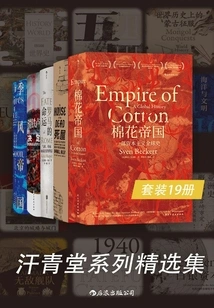
汗青堂系列精选集(套装共19册)
(u. S.) Sven Beckett, Kyle Harper, Etc.
The complete digital version of Houlang Book Brand's "History Hall" series allows you to experience history from multiple perspectives, reveal the rise and fall of civilizations and the evolution of the times, and pursue the interest and new knowledge of world history! The set includes: The Empire of Cotton: A Global History of Capitalism, The House of the Dead: The Siberian Exile System under the Tsar, The Fate of Rome: Climate, Disease, and the End of Empire, Waterloo: Four Days That Decided the Fate of Europe, The Monsoon Empire: A History of the Indian Ocean and Its Invaders, and a total of 19 volumes.
The complete digital version of Houlang Book Brand's "History Hall" series allows you to experience history from multiple perspectives, reveal the rise and fall of civilizations and the evolution of the times, and pursue the interest and new knowledge of world history! The set includes: The Empire of Cotton: A Global History of Capitalism, The House of the Dead: The Siberian Exile System under the Tsar, The Fate of Rome: Climate, Disease, and the End of Empire, Waterloo: Four Days That Decided the Fate of Europe, The Monsoon Empire: A History of the Indian Ocean and Its Invaders, and a total of 19 volumes.
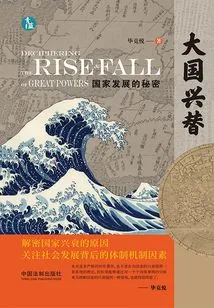
大国兴替:国家发展的秘密
Bi Jingyue
This book aims to provide a perspective for understanding the rise and fall of countries through the analysis of specific cases. This book not only focuses on the development of Western countries, including the Netherlands, Britain, France, Germany, the United States, Japan, etc., But also focuses on the rise and fall of ancient Chinese dynasties, including the Shu Han, Cao Wei, Tang Dynasty, Song Dynasty, etc. The whole book is divided into three parts: "Stones from Other Mountains", "Mirror of History" and "Uncertain Rules". "Stones from Other Mountains" explores the decline of the ancient Roman Empire, the rise and decline of the Netherlands as a great power, the reasons why the energy revolution occurred in the United Kingdom, the sudden rise of Germany, Sakamoto Ryoma's strategy, etc. "The Realm of History" explores the political flaws and demise of the Shu Han Dynasty, the reforms of Emperor Xuanzong of the Tang Dynasty, and the regressive tax system in Chinese history. "Uncertain Rules" explores the reasons why the industrial revolution did not grow on China's "land" and how cross-identity is the key to successful reform.
This book aims to provide a perspective for understanding the rise and fall of countries through the analysis of specific cases. This book not only focuses on the development of Western countries, including the Netherlands, Britain, France, Germany, the United States, Japan, etc., But also focuses on the rise and fall of ancient Chinese dynasties, including the Shu Han, Cao Wei, Tang Dynasty, Song Dynasty, etc. The whole book is divided into three parts: "Stones from Other Mountains", "Mirror of History" and "Uncertain Rules". "Stones from Other Mountains" explores the decline of the ancient Roman Empire, the rise and decline of the Netherlands as a great power, the reasons why the energy revolution occurred in the United Kingdom, the sudden rise of Germany, Sakamoto Ryoma's strategy, etc. "The Realm of History" explores the political flaws and demise of the Shu Han Dynasty, the reforms of Emperor Xuanzong of the Tang Dynasty, and the regressive tax system in Chinese history. "Uncertain Rules" explores the reasons why the industrial revolution did not grow on China's "land" and how cross-identity is the key to successful reform.

I
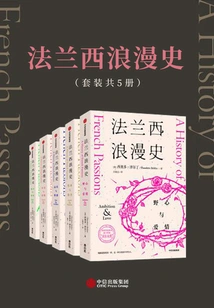
法兰西浪漫史(套装共5册)
(english) Theodore Zeldin
"French Romance: Power and Conflict" is a work about the dreams and passions of the French. The author explores the emotions, ideologies, and social pressures behind partisanship. "French Romance: Taste and Depravity" interprets France's "joy of life" from a new perspective, helping readers to have a deeper understanding and appreciation of French paintings, novels, movies, fashion, French singers' metaphors and abundant emotions, the French's high enthusiasm for pursuing a better life, the unique charm of the French happy smile, and the contradictions and doubts hidden under the calm appearance of the French. "French Romance: Wisdom and Pride" explores the unique thinking, reasoning and expression abilities of the French. The author carefully studies the teaching methods of various schools at all levels to see how schools cultivate students' logical ability, language ability, and competitiveness. It describes how schools struggle with rebellious students and how chaotic university life is. "French Romance: Ambition and Love" depicts the colorful style of French society from 1848 to 1945. "French Romance: Anxiety and Hypocrisy" describes the evolution of France in religion, history, culture, society and other aspects from 1848 to 1945. Based on a large number of social surveys and archival research, it conducts an in-depth analysis of the evolution of French society. Its multi-perspective research and interpretation provide an effective way for readers to understand French society.
"French Romance: Power and Conflict" is a work about the dreams and passions of the French. The author explores the emotions, ideologies, and social pressures behind partisanship. "French Romance: Taste and Depravity" interprets France's "joy of life" from a new perspective, helping readers to have a deeper understanding and appreciation of French paintings, novels, movies, fashion, French singers' metaphors and abundant emotions, the French's high enthusiasm for pursuing a better life, the unique charm of the French happy smile, and the contradictions and doubts hidden under the calm appearance of the French. "French Romance: Wisdom and Pride" explores the unique thinking, reasoning and expression abilities of the French. The author carefully studies the teaching methods of various schools at all levels to see how schools cultivate students' logical ability, language ability, and competitiveness. It describes how schools struggle with rebellious students and how chaotic university life is. "French Romance: Ambition and Love" depicts the colorful style of French society from 1848 to 1945. "French Romance: Anxiety and Hypocrisy" describes the evolution of France in religion, history, culture, society and other aspects from 1848 to 1945. Based on a large number of social surveys and archival research, it conducts an in-depth analysis of the evolution of French society. Its multi-perspective research and interpretation provide an effective way for readers to understand French society.

日本激荡三十年:平成政治1989-2019
(japanese) Yuchu Taka, Written By Serikawa Yoichi
This book analyzes the ups and downs of the thirty years of the Heisei era from a political perspective. Learned researchers and senior journalists invite three theorists who understand the essence of Japanese politics to engage in a real political discussion: How should Japanese politics be viewed when looking back on the Heisei era. A reporter who has been conducting political interviews for a long time invited three theorists to think with readers, criticizing or looking forward to Japanese politics, and interspersed with anecdotes from bureaucratic ministers to present a vivid short history of Japanese politics. Where will Japanese politics go in the future, and will Abe remain in power? Who are the future Japanese politicians?
This book analyzes the ups and downs of the thirty years of the Heisei era from a political perspective. Learned researchers and senior journalists invite three theorists who understand the essence of Japanese politics to engage in a real political discussion: How should Japanese politics be viewed when looking back on the Heisei era. A reporter who has been conducting political interviews for a long time invited three theorists to think with readers, criticizing or looking forward to Japanese politics, and interspersed with anecdotes from bureaucratic ministers to present a vivid short history of Japanese politics. Where will Japanese politics go in the future, and will Abe remain in power? Who are the future Japanese politicians?
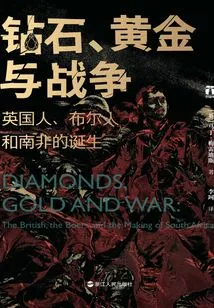
钻石、黄金与战争:英国人、布尔人和南非的诞生
(uk) Martin Meredith
South Africa was once a chaotic patchwork of British colonies, Boer republics and African chiefdoms, a land considered worthless until prospectors discovered it contained some of the world's richest deposits of diamonds and gold. This began a bloody conflict for control of South Africa's land. The British fought fiercely with the Boers, even launching the most expensive, bloody, and humiliating war in nearly a century. In the end, the British severely damaged the Boer Republic. Today, South Africa remains the richest country in Africa. The discovery of diamonds and gold in the 19th century laid the foundation for South Africa to develop into a highly prosperous and well-functioning country, but not everyone is eligible to enjoy it. As the author said, if you ignore the pain and turmoil of history, diamonds and gold mean great wealth. But for the indigenous people of South Africa, this is just the bane of constant plunder, unrest, conflict, and oppression.
South Africa was once a chaotic patchwork of British colonies, Boer republics and African chiefdoms, a land considered worthless until prospectors discovered it contained some of the world's richest deposits of diamonds and gold. This began a bloody conflict for control of South Africa's land. The British fought fiercely with the Boers, even launching the most expensive, bloody, and humiliating war in nearly a century. In the end, the British severely damaged the Boer Republic. Today, South Africa remains the richest country in Africa. The discovery of diamonds and gold in the 19th century laid the foundation for South Africa to develop into a highly prosperous and well-functioning country, but not everyone is eligible to enjoy it. As the author said, if you ignore the pain and turmoil of history, diamonds and gold mean great wealth. But for the indigenous people of South Africa, this is just the bane of constant plunder, unrest, conflict, and oppression.

日本激荡三十年(套装共3册)
(japan) Takao Komine, Noriyuki Itami, Etc.
"Thirty Years of Agitation in Japan: Heisei Politics 1989-2019": Japan's Heisei era politics evolved from multi-party reorganization and two-party competition to one-party dominance, and finally established the "Abe-one-strong" system. How will Japan's political economy go in the post-Abe era? "Thirty Years of Turmoil in Japan: The Heisei Economy 1989-2019": This book reviews the Heisei economy that lasted for about thirty years. Looking back, the economy of the Heisei era was very different from that of the previous Showa era (1926-1988). "Thirty Years of Agitation in Japan: Heisei Enterprises 1989-2019": Japanese enterprises went from the peak to the abyss, wandering in low growth for 30 years. After the recession following the bursting of the bubble economy in the Heisei era, can the Reiwa era be reborn? This is a question that many people are thinking deeply about. It is also an issue that needs to be solved urgently in Japan's Reiwa era. At the same time, it also has a profound and important influence on China, its neighbor separated by a narrow strip of water.
"Thirty Years of Agitation in Japan: Heisei Politics 1989-2019": Japan's Heisei era politics evolved from multi-party reorganization and two-party competition to one-party dominance, and finally established the "Abe-one-strong" system. How will Japan's political economy go in the post-Abe era? "Thirty Years of Turmoil in Japan: The Heisei Economy 1989-2019": This book reviews the Heisei economy that lasted for about thirty years. Looking back, the economy of the Heisei era was very different from that of the previous Showa era (1926-1988). "Thirty Years of Agitation in Japan: Heisei Enterprises 1989-2019": Japanese enterprises went from the peak to the abyss, wandering in low growth for 30 years. After the recession following the bursting of the bubble economy in the Heisei era, can the Reiwa era be reborn? This is a question that many people are thinking deeply about. It is also an issue that needs to be solved urgently in Japan's Reiwa era. At the same time, it also has a profound and important influence on China, its neighbor separated by a narrow strip of water.

近代日本外交的双轨:结盟与侵略
Zhu Haiyan
Japan's diplomatic strategy in modern times was to pursue alliances and aggression and expansion in parallel. When facing a strong one, Japan chooses to partner with it to strengthen its energy for external expansion. When facing a weak one, Japan uses naked force to invade. In Japan's modern diplomatic history, the alliance between Japan and Britain and Japan's invasion of China are typical cases that demonstrate Japan's two-front diplomatic strategy. Through analysis and research, we can see how Japan maneuvered between alliances and aggression to serve its "national interests." However, Japan's preference for strong alliances prevented Japan from clearly recognizing the fundamental contradiction between its desire for expansion and its own strength, which ultimately led to Japan's defeat.
Japan's diplomatic strategy in modern times was to pursue alliances and aggression and expansion in parallel. When facing a strong one, Japan chooses to partner with it to strengthen its energy for external expansion. When facing a weak one, Japan uses naked force to invade. In Japan's modern diplomatic history, the alliance between Japan and Britain and Japan's invasion of China are typical cases that demonstrate Japan's two-front diplomatic strategy. Through analysis and research, we can see how Japan maneuvered between alliances and aggression to serve its "national interests." However, Japan's preference for strong alliances prevented Japan from clearly recognizing the fundamental contradiction between its desire for expansion and its own strength, which ultimately led to Japan's defeat.
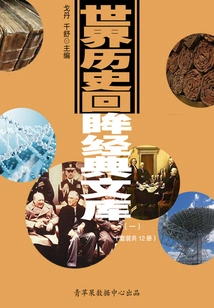
世界历史回眸经典文库(一)(套装共12册)
Gedan Qian Shu Chief Editor
This series of books provides a panoramic scan of major historical events in the world over thousands of years. From it, we can see the improvement and transformation of political economy, the struggle and conflict between progress and conservatism, the destruction and birth of old and new systems, the creation and development of theoretical doctrines, difficult breakthroughs in scientific inventions, etc. The whole book sweeps away the obsolescence and dullness of traditional historical books, allowing readers to enjoy the fun of knowledge while reading and experience the reality of history personally. At the same time, its new perspective and unique analysis also give readers a broader cultural vision and imagination.
This series of books provides a panoramic scan of major historical events in the world over thousands of years. From it, we can see the improvement and transformation of political economy, the struggle and conflict between progress and conservatism, the destruction and birth of old and new systems, the creation and development of theoretical doctrines, difficult breakthroughs in scientific inventions, etc. The whole book sweeps away the obsolescence and dullness of traditional historical books, allowing readers to enjoy the fun of knowledge while reading and experience the reality of history personally. At the same time, its new perspective and unique analysis also give readers a broader cultural vision and imagination.
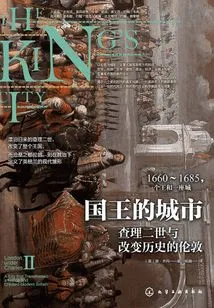
新史纪丛书·国王的城市:查理二世与改变历史的伦敦
(uk) Don Jordan
During the reign of Charles II, the city of London was in constant flux. After several years of civil war and political turmoil, London entered a new era and became a center of major progress in the fields of science and technology, literature, drama, architecture, astronomy, medicine, statistics, finance, trade, navigation and shipbuilding, politics, and military. It showed unprecedented vitality and paved the way for the quiet formation of modern England. And this vitality has the king at its core. In 1660, Charles II ended his exile and entered a city he had not visited in nearly 20 years. His restoration ignited the explosive development of all areas of the city. London gradually emerged as a prosperous city, with its wealth, vitality and success owed to many of its now-familiar luminaries, including Newton, Hooke, Boyle, John Webb, Thomas Hobbes, John Locke, William Davenant, Christopher Wren, Samuel Pepys and John Dryden, as well as others overlooked by history. Charles II's 25-year reign was not all smooth sailing. During this period, London suffered several major setbacks: the plague pandemic in 1665, the catastrophic fire in 1666, and the disastrous defeat in the Second Anglo-Dutch War, all of which led to obvious economic decline. Faced with tests such as these, Charlie's character is exposed. He proved to be a contradictory man: both brave and selfless, but also too selfish. Despite the King's shaky governance, thanks to the ingenuity and resilience of Londoners, the city rose from the ashes to become the economic capital of Europe; and much of what would shape modern Britain first took shape during this period.
During the reign of Charles II, the city of London was in constant flux. After several years of civil war and political turmoil, London entered a new era and became a center of major progress in the fields of science and technology, literature, drama, architecture, astronomy, medicine, statistics, finance, trade, navigation and shipbuilding, politics, and military. It showed unprecedented vitality and paved the way for the quiet formation of modern England. And this vitality has the king at its core. In 1660, Charles II ended his exile and entered a city he had not visited in nearly 20 years. His restoration ignited the explosive development of all areas of the city. London gradually emerged as a prosperous city, with its wealth, vitality and success owed to many of its now-familiar luminaries, including Newton, Hooke, Boyle, John Webb, Thomas Hobbes, John Locke, William Davenant, Christopher Wren, Samuel Pepys and John Dryden, as well as others overlooked by history. Charles II's 25-year reign was not all smooth sailing. During this period, London suffered several major setbacks: the plague pandemic in 1665, the catastrophic fire in 1666, and the disastrous defeat in the Second Anglo-Dutch War, all of which led to obvious economic decline. Faced with tests such as these, Charlie's character is exposed. He proved to be a contradictory man: both brave and selfless, but also too selfish. Despite the King's shaky governance, thanks to the ingenuity and resilience of Londoners, the city rose from the ashes to become the economic capital of Europe; and much of what would shape modern Britain first took shape during this period.
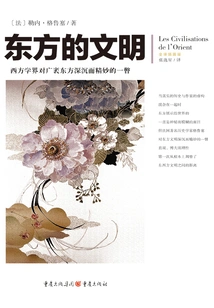
Eastern Civilization
History东方的文明
H
"Civilization of the East" is one of the representative works of French historian Rene Gruset. The book systematically explains Eastern civilization around "Civilization of the Near East and the Middle East", "Civilization of India", "Civilization of China" and "Civilization of Japan". Grusset did not start from the overall picture of Eastern history, but relied on his extensive knowledge and collection and research of antiquities materials, and clarified the artistic development path of the ancient Eastern countries based on aesthetics and academics. Because of Grusser's introduction, the ancient charm of the East vividly appeared on the page, and the civilization of the East was also presented to the world from another perspective.
"Civilization of the East" is one of the representative works of French historian Rene Gruset. The book systematically explains Eastern civilization around "Civilization of the Near East and the Middle East", "Civilization of India", "Civilization of China" and "Civilization of Japan". Grusset did not start from the overall picture of Eastern history, but relied on his extensive knowledge and collection and research of antiquities materials, and clarified the artistic development path of the ancient Eastern countries based on aesthetics and academics. Because of Grusser's introduction, the ancient charm of the East vividly appeared on the page, and the civilization of the East was also presented to the world from another perspective.
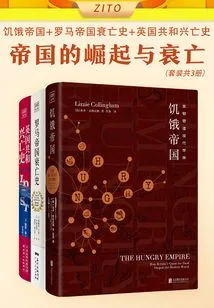
帝国的崛起与衰亡(套装共3册)
(uk) Lizzie Clingham And Others
This set includes a total of 3 books: "The Hungry Empire", "The History of the Decline and Fall of the Roman Empire", and "The History of the Rise and Fall of the British Republic". It shows the driving force of the rise of empires through the subtle perspectives of food and navigation. Through the rise and fall of great powers, it presents a different direction of thinking for the development of today's world. "The Hungry Empire" describes history from the long-neglected theme of food, showing that hunger and taste are actually the dual forces that define the process of civilization, providing another perspective for a deeper understanding of Britain and modern civilization. "The History of the Decline and Fall of the Roman Empire" provides a clear and coherent display of the rise and fall of the Roman Empire, reproducing Gibbon's thorough vision and smooth and graceful writing of overlooking the rise and fall of the country and the changes in the world, helping readers gain a more direct insight into the rise and fall of the Roman Empire for thousands of years. "The Rise and Fall of the British Republic" explains the Republic of England, the most unusual but little-known historical period in British history, helping experts and readers to have a more thorough understanding of British and Western history.
This set includes a total of 3 books: "The Hungry Empire", "The History of the Decline and Fall of the Roman Empire", and "The History of the Rise and Fall of the British Republic". It shows the driving force of the rise of empires through the subtle perspectives of food and navigation. Through the rise and fall of great powers, it presents a different direction of thinking for the development of today's world. "The Hungry Empire" describes history from the long-neglected theme of food, showing that hunger and taste are actually the dual forces that define the process of civilization, providing another perspective for a deeper understanding of Britain and modern civilization. "The History of the Decline and Fall of the Roman Empire" provides a clear and coherent display of the rise and fall of the Roman Empire, reproducing Gibbon's thorough vision and smooth and graceful writing of overlooking the rise and fall of the country and the changes in the world, helping readers gain a more direct insight into the rise and fall of the Roman Empire for thousands of years. "The Rise and Fall of the British Republic" explains the Republic of England, the most unusual but little-known historical period in British history, helping experts and readers to have a more thorough understanding of British and Western history.
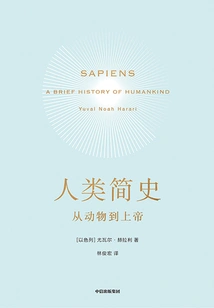
人类简史:从动物到上帝
J
100,000 years ago, there were at least 6 different human species on the earth, but today only 1 remains, Homo sapiens. What happened to cause the rest of the human species to disappear? What will happen to us Homo sapiens? The famous Israeli historian Yuval Harari pioneered the combination of history and science to tell the complete story of the history of Homo sapiens from the Big Bang to the present. Professor Yuval Harari believes that in the long evolutionary history of Homo sapiens from an inconspicuous animal to the ruler of the earth, three key revolutions took place: the cognitive revolution, the agricultural revolution and the scientific revolution. The cognitive revolution gave Homo sapiens the ability to create imaginary orders and fictional stories, completely surpassing other species; the agricultural revolution allowed Homo sapiens to move from a hunter-gatherer life to a settled life, with revolutionary changes in lifestyle and social organization; the scientific revolution allowed Homo sapiens to become a god-like "creator" and gain dominance over the entire earth. Professor Yuval Harari also reminded us to look forward, because in the past few decades, we have begun to violate the law of natural selection, which has been the law of life for the past 4 billion years. Today, we have not only gained the ability to design the world around us, but also gained the ability to design ourselves. Where will this lead us, and what kind of human beings do we want to be? It's time to redefine "human". "A Brief History of Mankind" is a global bestseller that abandons the old interpretive framework and proposes subversive ideas, giving us a new understanding of our own existence.
100,000 years ago, there were at least 6 different human species on the earth, but today only 1 remains, Homo sapiens. What happened to cause the rest of the human species to disappear? What will happen to us Homo sapiens? The famous Israeli historian Yuval Harari pioneered the combination of history and science to tell the complete story of the history of Homo sapiens from the Big Bang to the present. Professor Yuval Harari believes that in the long evolutionary history of Homo sapiens from an inconspicuous animal to the ruler of the earth, three key revolutions took place: the cognitive revolution, the agricultural revolution and the scientific revolution. The cognitive revolution gave Homo sapiens the ability to create imaginary orders and fictional stories, completely surpassing other species; the agricultural revolution allowed Homo sapiens to move from a hunter-gatherer life to a settled life, with revolutionary changes in lifestyle and social organization; the scientific revolution allowed Homo sapiens to become a god-like "creator" and gain dominance over the entire earth. Professor Yuval Harari also reminded us to look forward, because in the past few decades, we have begun to violate the law of natural selection, which has been the law of life for the past 4 billion years. Today, we have not only gained the ability to design the world around us, but also gained the ability to design ourselves. Where will this lead us, and what kind of human beings do we want to be? It's time to redefine "human". "A Brief History of Mankind" is a global bestseller that abandons the old interpretive framework and proposes subversive ideas, giving us a new understanding of our own existence.
海之龙:利物浦和她的中国海员(汉英对照)
(uk) Charles Frederick William Foley Ewan Margaret Foley
This book tells the history of the formation of the Chinese community in Liverpool. Different from the characteristics of Chinese communities (Chinatowns) in other countries and regions, the Chinese community in Liverpool is mainly formed by Chinese sailors. The book tells the historical process of Chinese seafarers settling in Liverpool, especially the role Chinese seafarers played in serving the British merchant ships and ensuring Britain's "maritime lifeline" during World War II. During this period, the Chinese seafarers fought for equal pay and equal treatment for equal work; and due to the war, a large number of Chinese seafarers stayed in the UK for a long time, and some seafarers married local British women. Their living conditions. After the war, the British government, the British Seamen's Union and the shipping companies ruthlessly repatriated most of the Chinese seafarers, resulting in the tragedy of many Chinese-British families being separated from their wives.
This book tells the history of the formation of the Chinese community in Liverpool. Different from the characteristics of Chinese communities (Chinatowns) in other countries and regions, the Chinese community in Liverpool is mainly formed by Chinese sailors. The book tells the historical process of Chinese seafarers settling in Liverpool, especially the role Chinese seafarers played in serving the British merchant ships and ensuring Britain's "maritime lifeline" during World War II. During this period, the Chinese seafarers fought for equal pay and equal treatment for equal work; and due to the war, a large number of Chinese seafarers stayed in the UK for a long time, and some seafarers married local British women. Their living conditions. After the war, the British government, the British Seamen's Union and the shipping companies ruthlessly repatriated most of the Chinese seafarers, resulting in the tragedy of many Chinese-British families being separated from their wives.
华盛顿的王牌:改变美国革命进程的精英部队
(u. S.)patrick K. O'connell
In August 1776, less than a month after the Continental Army formally declared independence from Britain, the War of Independence came to an unexpected and disastrous end. At the Battle of Brooklyn, General George Washington found that the enemy's troops were more numerous and better trained, and that his side seemed to be losing ground. Thanks to that desperate and heroic rearguard force, also known as the "Immortal 400". As a work about the history of the American Revolutionary War, the author uses time as the main line and uses multiple perspectives such as political leaders, senior military officers, ordinary soldiers, prisoners, and wartime civilians in the Revolutionary War to present this famous classic war in the history of world wars in a narrative way.
In August 1776, less than a month after the Continental Army formally declared independence from Britain, the War of Independence came to an unexpected and disastrous end. At the Battle of Brooklyn, General George Washington found that the enemy's troops were more numerous and better trained, and that his side seemed to be losing ground. Thanks to that desperate and heroic rearguard force, also known as the "Immortal 400". As a work about the history of the American Revolutionary War, the author uses time as the main line and uses multiple perspectives such as political leaders, senior military officers, ordinary soldiers, prisoners, and wartime civilians in the Revolutionary War to present this famous classic war in the history of world wars in a narrative way.
Professor's British History
History教授的英国史
(us) Lacey Baldwin Smith
It contains both serious historical facts and humorous language; it not only allows tourists and history "newbies" to quickly understand the unforgettable stories in British history, but also allows readers who are interested in British history to feel the fun of "ridicule" and "irony"! Importantly, it allows more people to realize the importance of the United Kingdom to us: the United Kingdom has always occupied the world's economic, political, and cultural high points with a strong posture. Throughout the world, no country has won as much praise in history as the UK; and no country has suffered as much condemnation as the UK. They were hailed as modern Athenians and pioneers of modernization, but they were widely criticized for their excessive pride. British history is compelling at all times. This book changes from the serious and orthodox official approach to introduce British history in an entertaining, relaxed and even ridiculing tone. The content covers the most dramatic events and figures in British history, and is paired with more than 100 funny cartoons from the old British satirical magazine "Punch" and other publications, telling readers about a vivid and interesting history of Britain! Why read history? Because - "History is not what has happened, but the past worth remembering."
It contains both serious historical facts and humorous language; it not only allows tourists and history "newbies" to quickly understand the unforgettable stories in British history, but also allows readers who are interested in British history to feel the fun of "ridicule" and "irony"! Importantly, it allows more people to realize the importance of the United Kingdom to us: the United Kingdom has always occupied the world's economic, political, and cultural high points with a strong posture. Throughout the world, no country has won as much praise in history as the UK; and no country has suffered as much condemnation as the UK. They were hailed as modern Athenians and pioneers of modernization, but they were widely criticized for their excessive pride. British history is compelling at all times. This book changes from the serious and orthodox official approach to introduce British history in an entertaining, relaxed and even ridiculing tone. The content covers the most dramatic events and figures in British history, and is paired with more than 100 funny cartoons from the old British satirical magazine "Punch" and other publications, telling readers about a vivid and interesting history of Britain! Why read history? Because - "History is not what has happened, but the past worth remembering."
交换之物:大航海时代的商业与科学革命
(us) Ke Haode
This book is a classic work that the author has devoted more than 20 years of research to. It reinterprets the causes of the scientific revolution and clarifies the complex relationship between modern scientific development and business globalization. The author focuses on the Dutch Golden Age. In the 17th century, the prosperity of ocean trade brought the "New World" to Europeans, and the Netherlands set off "Tulip Fever". Some people even sell their houses and land in order to get a bulb. Tulip bulbs, once eaten as onions, became the trigger for the financial crisis. With the development of commercial globalization, people not only enjoy the wealth of the unknown world, but also long for a comprehensive understanding of the objective world. Their eyes have shifted from exploring the theological world to paying attention to the secular world, and from questioning oracles to pursuing profits. Brokers who make a living by reselling goods and information appear; Eastern medicinal materials and spices are rapidly becoming popular in Europe; A new type of university with any religious bias was established; Dutch doctors could study acupuncture and moxibustion with their colleagues in Japan, and translate Chinese medical literature... Trade and exchange not only allowed the circulation of goods and materials around the world, but also promoted the spread of knowledge and culture. With the rise of the information economy, people's worldview and values changed accordingly, inspiring the scientific revolution. Kohold integrated the economic history, social history, medical history, and ideological history of the Age of Discovery into a unified framework, and found that the scientific revolution was triggered by the globalization of business and exchange, and that the history of the scientific revolution is a history of exchange.
This book is a classic work that the author has devoted more than 20 years of research to. It reinterprets the causes of the scientific revolution and clarifies the complex relationship between modern scientific development and business globalization. The author focuses on the Dutch Golden Age. In the 17th century, the prosperity of ocean trade brought the "New World" to Europeans, and the Netherlands set off "Tulip Fever". Some people even sell their houses and land in order to get a bulb. Tulip bulbs, once eaten as onions, became the trigger for the financial crisis. With the development of commercial globalization, people not only enjoy the wealth of the unknown world, but also long for a comprehensive understanding of the objective world. Their eyes have shifted from exploring the theological world to paying attention to the secular world, and from questioning oracles to pursuing profits. Brokers who make a living by reselling goods and information appear; Eastern medicinal materials and spices are rapidly becoming popular in Europe; A new type of university with any religious bias was established; Dutch doctors could study acupuncture and moxibustion with their colleagues in Japan, and translate Chinese medical literature... Trade and exchange not only allowed the circulation of goods and materials around the world, but also promoted the spread of knowledge and culture. With the rise of the information economy, people's worldview and values changed accordingly, inspiring the scientific revolution. Kohold integrated the economic history, social history, medical history, and ideological history of the Age of Discovery into a unified framework, and found that the scientific revolution was triggered by the globalization of business and exchange, and that the history of the scientific revolution is a history of exchange.
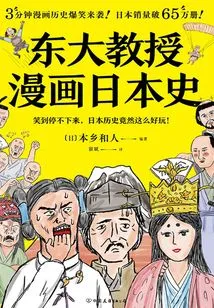
东大教授漫画日本史
(japan) Compiled By Kazuto Hongo
Only things that are not written in textbooks or mentioned in historical records can best restore the true Japan. Deep knowledge, shallow output. Authoritatively compiled by a professor from the University of Tokyo, the nonsensical style is hilarious and viral! Understand the evolution of the times through three-minute comics! Understand world events with a one-minute chronology! Expose the greatness and absurdity of 38 historical celebrities! Say goodbye to heavy historical stories and restore the ordinary world created by ordinary people! Onmyoji Seimei was cuckolded by his disciple? The legendary general Minamoto Yoshitsune has big buck teeth? Are the Ping An nobles actually staying at home? Edo samurai changed careers and became salarymen? Tokugawa Ieyasu's embarrassment when he was defeated, and Natsume Soseki's weird bad habits when writing.
Only things that are not written in textbooks or mentioned in historical records can best restore the true Japan. Deep knowledge, shallow output. Authoritatively compiled by a professor from the University of Tokyo, the nonsensical style is hilarious and viral! Understand the evolution of the times through three-minute comics! Understand world events with a one-minute chronology! Expose the greatness and absurdity of 38 historical celebrities! Say goodbye to heavy historical stories and restore the ordinary world created by ordinary people! Onmyoji Seimei was cuckolded by his disciple? The legendary general Minamoto Yoshitsune has big buck teeth? Are the Ping An nobles actually staying at home? Edo samurai changed careers and became salarymen? Tokugawa Ieyasu's embarrassment when he was defeated, and Natsume Soseki's weird bad habits when writing.
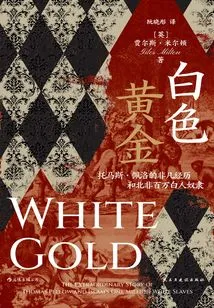
白色黄金:托马斯·佩洛的非凡经历和北非百万白人奴隶
I
In the two to three hundred years after 1500, millions of white Europeans were kidnapped by Muslims from their homes at sea or along the coast, and then sold in the slave markets of North Africa. The British boy Thomas Pellow was one of the white slaves. In the early 18th century, he was bought by the Moroccan Sultan Moulay Ismail. At that time, the sultan was building a magnificent palace, which was built entirely by white slaves. Because Pelo was younger and more resourceful, he became the Sultan's personal slave. Perrault witnessed both this cruel regime and the spectacular scene of this court. After more than twenty years of servitude, Pelo finally regained his freedom and wrote his own story. This book is mainly based on Perlow's experiences and other relevant documents.
In the two to three hundred years after 1500, millions of white Europeans were kidnapped by Muslims from their homes at sea or along the coast, and then sold in the slave markets of North Africa. The British boy Thomas Pellow was one of the white slaves. In the early 18th century, he was bought by the Moroccan Sultan Moulay Ismail. At that time, the sultan was building a magnificent palace, which was built entirely by white slaves. Because Pelo was younger and more resourceful, he became the Sultan's personal slave. Perrault witnessed both this cruel regime and the spectacular scene of this court. After more than twenty years of servitude, Pelo finally regained his freedom and wrote his own story. This book is mainly based on Perlow's experiences and other relevant documents.

牛津通识读本:拜占庭
(uk) Peter Sarris
After the fall of the Western Roman Empire in the 5th century, the Byzantine Empire, one of Europe's economic, cultural and military powers, flourished for a thousand years and formed a unique Byzantine civilization in many aspects such as cities, architecture, literature, art and social economy, thus occupying a special position in modern imagery. Under the centuries-long rule of Emperor Constantine and his successors, Constantinople, the imperial capital, evolved into a unique blend of Roman political culture, Greek intellectual tradition, and Christian faith. Peter Sarris focused on the wars between empires and their impact on Byzantine politics and culture, especially in the face of continuous external challenges and threats. Although the Byzantine Empire used its statecraft and political strategies to ensure the continuation of the empire for a certain period of time, it was eventually abandoned by the Christian forces in Western Europe and came to an end.
After the fall of the Western Roman Empire in the 5th century, the Byzantine Empire, one of Europe's economic, cultural and military powers, flourished for a thousand years and formed a unique Byzantine civilization in many aspects such as cities, architecture, literature, art and social economy, thus occupying a special position in modern imagery. Under the centuries-long rule of Emperor Constantine and his successors, Constantinople, the imperial capital, evolved into a unique blend of Roman political culture, Greek intellectual tradition, and Christian faith. Peter Sarris focused on the wars between empires and their impact on Byzantine politics and culture, especially in the face of continuous external challenges and threats. Although the Byzantine Empire used its statecraft and political strategies to ensure the continuation of the empire for a certain period of time, it was eventually abandoned by the Christian forces in Western Europe and came to an end.
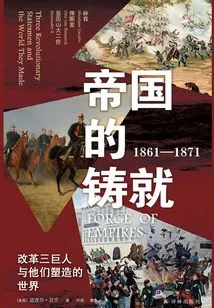
U
Historyu
V
During the critical decade of reforms by Lincoln, Bismarck, and Alexander II, the United States, Germany, and Russia established the world power structure. 1861-1871, Particularly dazzling in the historical galaxy. Lincoln, Bismarck, and Alexander II promoted reforms in their respective countries, forging free nations and witnessing the rise of a new philosophy of power. The revolutions in the United States, Germany and Russia were all carried out in the name of freedom, but in very different ways: Lincoln wanted to give the United States a "new life of freedom", abolished the black slave system, and opened the way for the United States to become the world's leading power; Bismarck used "iron blood" to promote power and unify the German states, clearing obstacles for the rise of a unified Germany; Alexander II's "top-down" reforms broke the shackles of serfdom and put Russia on the road to a modern power. The reform masters shaped the United States, Germany, and Russia in their own styles, leading the three countries to embark on three different paths of freedom, autocracy, and revolution, and established the pattern of today's world. Beland clarifies the internal logic of complex historical events, organically connects the American Civil War, the abolition of slavery in Russia, and the establishment of the German Empire according to time slices, revealing the inevitable reasons why Lincoln, Bismarck, and Alexander II were selected by history to become reform giants, as well as the occurrence patterns of major events.
During the critical decade of reforms by Lincoln, Bismarck, and Alexander II, the United States, Germany, and Russia established the world power structure. 1861-1871, Particularly dazzling in the historical galaxy. Lincoln, Bismarck, and Alexander II promoted reforms in their respective countries, forging free nations and witnessing the rise of a new philosophy of power. The revolutions in the United States, Germany and Russia were all carried out in the name of freedom, but in very different ways: Lincoln wanted to give the United States a "new life of freedom", abolished the black slave system, and opened the way for the United States to become the world's leading power; Bismarck used "iron blood" to promote power and unify the German states, clearing obstacles for the rise of a unified Germany; Alexander II's "top-down" reforms broke the shackles of serfdom and put Russia on the road to a modern power. The reform masters shaped the United States, Germany, and Russia in their own styles, leading the three countries to embark on three different paths of freedom, autocracy, and revolution, and established the pattern of today's world. Beland clarifies the internal logic of complex historical events, organically connects the American Civil War, the abolition of slavery in Russia, and the establishment of the German Empire according to time slices, revealing the inevitable reasons why Lincoln, Bismarck, and Alexander II were selected by history to become reform giants, as well as the occurrence patterns of major events.
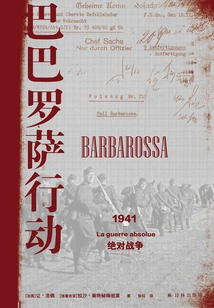
巴巴罗萨行动:1941,绝对战争
(france) Jean Lope (georgia) Rasha Otehemezuri
The winning work of the 2020 European History Book Award, the 2019 French Chateaubriand Prize, and the 2019 French Guéclin Historical Book Award; from the grand strategy to the multi-level presentation of the suffering of small people, it tells the ins and outs of the Soviet-German War in World War II and reveals the historical causes of the post-war European situation. Operation Barbarossa, which began on June 22, 1941, kicked off the bloody war in human history. The two most powerful armies in the world at the time started a direct confrontation. The German army once posed a huge threat with its "blitzkrieg" tactics. The Soviet Red Army shouldered the responsibility and pressure of defending the country and fought against the enemy's fierce artillery fire with their flesh and blood. In this book, the two authors use the process of the war as a clue and consult new documents and archives to describe the magnificent history of World War II in detail and vividly restore the people and events in the war. The author does not limit himself to the war itself, but instead casts his sights on the longer past, conducting a meticulous excavation of the cultural traditions, political demands, economic conditions and even the psychology of the leadership of the warring parties. The book contains both grand strategic analysis, detailed tactical deductions, and detailed presentations of individual sufferings, describing this thrilling "absolute war" in an all-round way.
The winning work of the 2020 European History Book Award, the 2019 French Chateaubriand Prize, and the 2019 French Guéclin Historical Book Award; from the grand strategy to the multi-level presentation of the suffering of small people, it tells the ins and outs of the Soviet-German War in World War II and reveals the historical causes of the post-war European situation. Operation Barbarossa, which began on June 22, 1941, kicked off the bloody war in human history. The two most powerful armies in the world at the time started a direct confrontation. The German army once posed a huge threat with its "blitzkrieg" tactics. The Soviet Red Army shouldered the responsibility and pressure of defending the country and fought against the enemy's fierce artillery fire with their flesh and blood. In this book, the two authors use the process of the war as a clue and consult new documents and archives to describe the magnificent history of World War II in detail and vividly restore the people and events in the war. The author does not limit himself to the war itself, but instead casts his sights on the longer past, conducting a meticulous excavation of the cultural traditions, political demands, economic conditions and even the psychology of the leadership of the warring parties. The book contains both grand strategic analysis, detailed tactical deductions, and detailed presentations of individual sufferings, describing this thrilling "absolute war" in an all-round way.
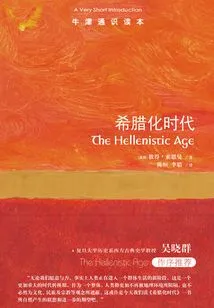
牛津通识读本:希腊化时代
(uk) Peter Thornman
The Hellenistic Age was an era of cultural globalization and perhaps the most exciting period in ancient European history. In the 3rd century BC, you could roam from Rome to India just by knowing a single language; from Sicily to Tajikistan, kings grappled with the challenges of ruling a multi-ethnic nation, while Greek city-states came together in the earliest known federal system in history; Ptolemaic scientists measured the circumference of the Earth, while the pioneering Greek Argonauts explored the Indian Ocean and the Atlantic coast of Africa. In this book, you can learn about many aspects of the Hellenistic world, including its history, culture, architecture, literature, science, and art, from the death of Alexander the Great (323 BC) to the Roman conquest of the Ptolemaic Kingdom (30 BC). Peter Thornman gives us a broad historical overview of this period, as well as narrative close-ups of individual cities and kings.
The Hellenistic Age was an era of cultural globalization and perhaps the most exciting period in ancient European history. In the 3rd century BC, you could roam from Rome to India just by knowing a single language; from Sicily to Tajikistan, kings grappled with the challenges of ruling a multi-ethnic nation, while Greek city-states came together in the earliest known federal system in history; Ptolemaic scientists measured the circumference of the Earth, while the pioneering Greek Argonauts explored the Indian Ocean and the Atlantic coast of Africa. In this book, you can learn about many aspects of the Hellenistic world, including its history, culture, architecture, literature, science, and art, from the death of Alexander the Great (323 BC) to the Roman conquest of the Ptolemaic Kingdom (30 BC). Peter Thornman gives us a broad historical overview of this period, as well as narrative close-ups of individual cities and kings.
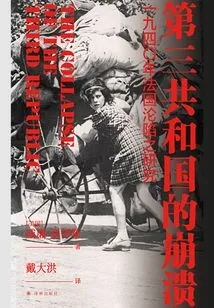
第三共和国的崩溃:一九四〇年法国沦陷之研究
K
A companion piece to "The Rise and Fall of the Third Reich", it reveals the darkest moment in France's modern history. William Shirer is not only a researcher of the history of France's defeat and collapse in World War II, but also a witness. He witnessed France, a military power on the European continent, helpless in the face of the invasion of Nazi Germany, and completely fell in just six weeks. How did this happen? After nearly ten years of research on the vast archives left behind and hundreds of interviews with leaders, generals, diplomats and ordinary people of the French Third Republic, Shirer gives the answer to this question in this book: France died from internal strife. This internal division and contradiction can be traced back to the 1890s, and has not been slowed down by the outbreak of war. This book records and analyzes major events that occurred in France before and after the outbreak of World War II, both at home and abroad, and details the thoughts and behaviors of the characters on all sides.
A companion piece to "The Rise and Fall of the Third Reich", it reveals the darkest moment in France's modern history. William Shirer is not only a researcher of the history of France's defeat and collapse in World War II, but also a witness. He witnessed France, a military power on the European continent, helpless in the face of the invasion of Nazi Germany, and completely fell in just six weeks. How did this happen? After nearly ten years of research on the vast archives left behind and hundreds of interviews with leaders, generals, diplomats and ordinary people of the French Third Republic, Shirer gives the answer to this question in this book: France died from internal strife. This internal division and contradiction can be traced back to the 1890s, and has not been slowed down by the outbreak of war. This book records and analyzes major events that occurred in France before and after the outbreak of World War II, both at home and abroad, and details the thoughts and behaviors of the characters on all sides.
世界近现代史研究(第17辑)
Nankai University Center For Modern And Contemporary World History
"World Modern History Research" is an academic annual journal sponsored by the World Modern History Research Center of Nankai University, a key humanities and social science research base of the Ministry of Education. It is oriented to domestic universities and research institutions and provides a forum for academic exchanges to promote and promote domestic research on world modern history. It has columns such as historical theoretical research, global history research, international relations history, regional and national history, doctoral student forums, debates, book reviews, historical materials, research reviews, etc. It has important academic value in promoting China's research on world modern history.
"World Modern History Research" is an academic annual journal sponsored by the World Modern History Research Center of Nankai University, a key humanities and social science research base of the Ministry of Education. It is oriented to domestic universities and research institutions and provides a forum for academic exchanges to promote and promote domestic research on world modern history. It has columns such as historical theoretical research, global history research, international relations history, regional and national history, doctoral student forums, debates, book reviews, historical materials, research reviews, etc. It has important academic value in promoting China's research on world modern history.
东亚变迁与周边世界
Editor-in-chief Wang Chaoguang
Since modern times, with the globalization, East Asia and its surrounding world have undergone tremendous changes. They have experienced historical changes such as invasion by foreign powers, national independence, social transformation, and national development. They are completely different from their past appearance. They have always attracted the attention of academic circles and have become an important theme in world history research. This book is a collection of research related to academic discussions between Chinese and Malaysian scholars. The collected articles cover a variety of topics, including research on the history of China, Japan, South Korea, Vietnam, Malaysia and the Malay Peninsula, as well as discussions on the development of bilateral relations between the two countries since the establishment of diplomatic relations between China and Malaysia, international relations in East Asia and its surrounding world, theoretical issues in historical writing, etc. These research results reflect the academic efforts of scholars from China and Malaysia on related topics, and have promoted the further development and deepening of existing research to varying degrees.
Since modern times, with the globalization, East Asia and its surrounding world have undergone tremendous changes. They have experienced historical changes such as invasion by foreign powers, national independence, social transformation, and national development. They are completely different from their past appearance. They have always attracted the attention of academic circles and have become an important theme in world history research. This book is a collection of research related to academic discussions between Chinese and Malaysian scholars. The collected articles cover a variety of topics, including research on the history of China, Japan, South Korea, Vietnam, Malaysia and the Malay Peninsula, as well as discussions on the development of bilateral relations between the two countries since the establishment of diplomatic relations between China and Malaysia, international relations in East Asia and its surrounding world, theoretical issues in historical writing, etc. These research results reflect the academic efforts of scholars from China and Malaysia on related topics, and have promoted the further development and deepening of existing research to varying degrees.
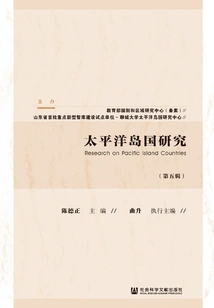
太平洋岛国研究(第五辑)
Editor-in-chief Chen Dezheng
"Pacific Island Countries Studies" is an academic journal sponsored by Liaocheng University. It aims to explore the history and current issues of Pacific Island Countries, focusing on the history and culture, political situation and system, foreign relations, economy, trade and tourism, and regional integration of Pacific Island Countries. This book is the fifth volume. It has columns such as politics, diplomacy, literature and art, education, cultural exchanges, book reviews, and materials. The author conducts theoretical analysis and academic exploration of the politics, economy, diplomacy, culture, education, and history of the Pacific Islands region and Pacific Island countries from different subject areas and multi-dimensional research perspectives, and has made useful explorations for in-depth research on Pacific Island countries.
"Pacific Island Countries Studies" is an academic journal sponsored by Liaocheng University. It aims to explore the history and current issues of Pacific Island Countries, focusing on the history and culture, political situation and system, foreign relations, economy, trade and tourism, and regional integration of Pacific Island Countries. This book is the fifth volume. It has columns such as politics, diplomacy, literature and art, education, cultural exchanges, book reviews, and materials. The author conducts theoretical analysis and academic exploration of the politics, economy, diplomacy, culture, education, and history of the Pacific Islands region and Pacific Island countries from different subject areas and multi-dimensional research perspectives, and has made useful explorations for in-depth research on Pacific Island countries.
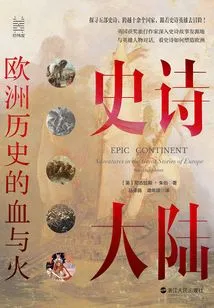
史诗大陆:欧洲历史的血与火
(uk)nicholas Zuber
This book mainly tells the story of the author following in the footsteps of epic heroes and traveling and exploring on the European continent. In European history, heroic epics have a special status. They play an important role in the identity of nation-states and the connection between history and reality. In the book, the author explores five great epics, namely: "The Odyssey", "Song of Roland", "Song of the Nibelungs", "Beowulf" and "Nyarsaka". These epics are classic stories about human nature and a window through which we can see through European history and culture. The author starts from the warm Greek islands and travels all the way to the cold Iceland, covering the entire European continent. He went deep into the place where the epic story took place, and deeply felt the local natural environment and human history. Through this book, we can understand how the times shape the epic, and how the epic affects the times.
This book mainly tells the story of the author following in the footsteps of epic heroes and traveling and exploring on the European continent. In European history, heroic epics have a special status. They play an important role in the identity of nation-states and the connection between history and reality. In the book, the author explores five great epics, namely: "The Odyssey", "Song of Roland", "Song of the Nibelungs", "Beowulf" and "Nyarsaka". These epics are classic stories about human nature and a window through which we can see through European history and culture. The author starts from the warm Greek islands and travels all the way to the cold Iceland, covering the entire European continent. He went deep into the place where the epic story took place, and deeply felt the local natural environment and human history. Through this book, we can understand how the times shape the epic, and how the epic affects the times.
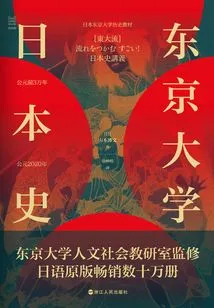
东京大学日本史
(japan) Yamamoto Hirobumi
Yamamoto Hirobumi, a professor of history at the University of Tokyo and a front-line teacher, used a question-and-answer format to carefully sort out important and typical issues in Japanese history, and told the entire history of Japan in 57 questions. It is a very excellent Japanese history textbook that integrates the test points, key points, and difficulties of Japanese history. The book consists of 4 parts and 9 chapters, respectively telling the ancient history, medieval history, modern history and modern history of Japan. The first part starts from primitive society to the end of the Heian period; the second part tells the history of the Kamakura and Muromachi shogunate periods; the third part focuses on the Warring States and Edo shogunate periods of Japan; and the fourth part covers the history from the Meiji Restoration to modern times. In addition, there are many reference documents attached for those who are interested in Japanese history to continue their study.
Yamamoto Hirobumi, a professor of history at the University of Tokyo and a front-line teacher, used a question-and-answer format to carefully sort out important and typical issues in Japanese history, and told the entire history of Japan in 57 questions. It is a very excellent Japanese history textbook that integrates the test points, key points, and difficulties of Japanese history. The book consists of 4 parts and 9 chapters, respectively telling the ancient history, medieval history, modern history and modern history of Japan. The first part starts from primitive society to the end of the Heian period; the second part tells the history of the Kamakura and Muromachi shogunate periods; the third part focuses on the Warring States and Edo shogunate periods of Japan; and the fourth part covers the history from the Meiji Restoration to modern times. In addition, there are many reference documents attached for those who are interested in Japanese history to continue their study.
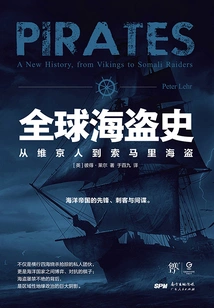
全球海盗史:从维京人到索马里海盗
(uk) Peter Leal
"Global History of Piracy: From Vikings to Somali Pirates" is a new masterpiece by Peter Lehr, an expert on terrorism research. This book puts aside the romanticized imagination of pirates. From the Vikings in the Middle Ages to the modern Somali pirates, it comprehensively tells the history of pirates for more than 1,000 years, and deeply explores the motives and development process of pirates. In history, pirates are not only private gangs that roam the world, but also tools and chess pieces for mutual games and confrontations between maritime empires in various eras. Behind the repeated bans on pirates is the huge influence of regional geopolitics.
"Global History of Piracy: From Vikings to Somali Pirates" is a new masterpiece by Peter Lehr, an expert on terrorism research. This book puts aside the romanticized imagination of pirates. From the Vikings in the Middle Ages to the modern Somali pirates, it comprehensively tells the history of pirates for more than 1,000 years, and deeply explores the motives and development process of pirates. In history, pirates are not only private gangs that roam the world, but also tools and chess pieces for mutual games and confrontations between maritime empires in various eras. Behind the repeated bans on pirates is the huge influence of regional geopolitics.
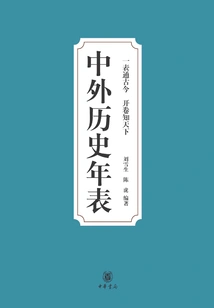
中外历史年表
Liu Xuesheng Chen Hu
This table uses time as the coordinate and icons of different colors to represent different regions. It displays the major historical events, historical figures, science and technology and culture in the history of China and other countries and regions in the world in as much detail as possible. It not only describes the development of world history, but also facilitates readers to make horizontal comparisons. It can be said that with one volume in hand, you can have an overview of the world, ancient and modern events.
This table uses time as the coordinate and icons of different colors to represent different regions. It displays the major historical events, historical figures, science and technology and culture in the history of China and other countries and regions in the world in as much detail as possible. It not only describes the development of world history, but also facilitates readers to make horizontal comparisons. It can be said that with one volume in hand, you can have an overview of the world, ancient and modern events.
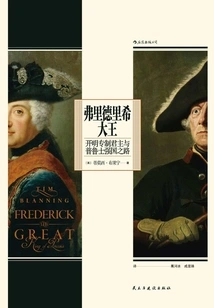
弗里德里希大王:开明专制君主与普鲁士强国之路
Q
In European history, there are few figures as great as King Friedrich the Great. When he succeeded to the Prussian throne in 1740, he ruled a weak and scattered kingdom; by the end of his reign, Prussia had become one of the great powers of continental Europe. In this book, historian Timothy Braining gives us a comprehensive portrait of the king who dominated the political, military, and cultural life of Europe half a century before Napoleon. Friedrich had a complex and multi-faceted character. He was sometimes a ruthless monarch, sometimes a strategizing battlefield commander, and sometimes an enthusiastic patron of the arts. He also maintained active contacts with other major thinkers of the era such as Voltaire. Timothy Breining's ambitious biography recounts Friedrich's remarkable life and the sweeping political and cultural transformation of Prussia under his rule. Readers can delve into the mind of this great monarch and better understand Prussia's rise to become a European power.
In European history, there are few figures as great as King Friedrich the Great. When he succeeded to the Prussian throne in 1740, he ruled a weak and scattered kingdom; by the end of his reign, Prussia had become one of the great powers of continental Europe. In this book, historian Timothy Braining gives us a comprehensive portrait of the king who dominated the political, military, and cultural life of Europe half a century before Napoleon. Friedrich had a complex and multi-faceted character. He was sometimes a ruthless monarch, sometimes a strategizing battlefield commander, and sometimes an enthusiastic patron of the arts. He also maintained active contacts with other major thinkers of the era such as Voltaire. Timothy Breining's ambitious biography recounts Friedrich's remarkable life and the sweeping political and cultural transformation of Prussia under his rule. Readers can delve into the mind of this great monarch and better understand Prussia's rise to become a European power.
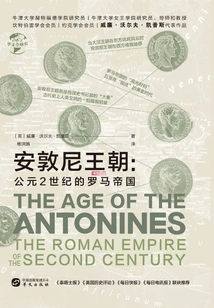
安敦尼王朝:公元2世纪的罗马帝国(华文全球史)
(uk) William Wolfe Capes
The Antoninus Dynasty (96-192 AD), also known as the Nerva-Antoni Dynasty, was a dynasty in the Roman Empire. It was also a powerful golden age for the Roman Empire. In the early years of the dynasty, the Dacian and Parthian Wars were fought. In 115 AD, the Roman Empire reached its largest extent. After this Hadrian gave up the territory of Mesopotamia. Marcus Aurelius was a master of Stoicism. Among them, Nerva, Trajan, Hadrian, Antony, and Marcus Aurelius formed the Five Good Emperors of Rome.
The Antoninus Dynasty (96-192 AD), also known as the Nerva-Antoni Dynasty, was a dynasty in the Roman Empire. It was also a powerful golden age for the Roman Empire. In the early years of the dynasty, the Dacian and Parthian Wars were fought. In 115 AD, the Roman Empire reached its largest extent. After this Hadrian gave up the territory of Mesopotamia. Marcus Aurelius was a master of Stoicism. Among them, Nerva, Trajan, Hadrian, Antony, and Marcus Aurelius formed the Five Good Emperors of Rome.
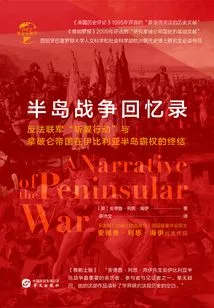
半岛战争回忆录(华文全球史)
(english) Andrew Leith Hay
This book tells the story of the beginning and end of the Iberian Peninsula War, an important part of Napoleon Bonaparte's foreign war, and interprets the major military operations during the Peninsular War such as the Battle of Coruña, the Battle of Busacou, the Battle of Badajoz, the Battle of Salamanca, the Battle of Victoria, and the Battle of the Pyrenees. In what name did Napoleon Bonaparte lead an army of 100,000 to attack the Kingdom of Spain? Why did the Spanish national salvation movement fail in the face of the French army? Why did Marshal Nicolas Jean Dedieu Soult, who had repeatedly accomplished extraordinary feats, encounter the army of Arthur Wellesley, Duke of Wellington? How did Arthur Wellesley, Duke of Wellington, boost the morale of European armies, break Napoleon Bonaparte's curse of victory, and allow the European people to see the dawn of national liberation? How did Arthur Wellesley, Duke of Wellington, accumulate all his strength, defeat the French army, march straight to Toulouse, and finally win the Peninsular War? This book will answer it in detail.
This book tells the story of the beginning and end of the Iberian Peninsula War, an important part of Napoleon Bonaparte's foreign war, and interprets the major military operations during the Peninsular War such as the Battle of Coruña, the Battle of Busacou, the Battle of Badajoz, the Battle of Salamanca, the Battle of Victoria, and the Battle of the Pyrenees. In what name did Napoleon Bonaparte lead an army of 100,000 to attack the Kingdom of Spain? Why did the Spanish national salvation movement fail in the face of the French army? Why did Marshal Nicolas Jean Dedieu Soult, who had repeatedly accomplished extraordinary feats, encounter the army of Arthur Wellesley, Duke of Wellington? How did Arthur Wellesley, Duke of Wellington, boost the morale of European armies, break Napoleon Bonaparte's curse of victory, and allow the European people to see the dawn of national liberation? How did Arthur Wellesley, Duke of Wellington, accumulate all his strength, defeat the French army, march straight to Toulouse, and finally win the Peninsular War? This book will answer it in detail.
皇家海军史(华文全球史)
(uk) David Mcdowell Hannay
This book takes the evolution of the British Royal Navy from a weak force in the Middle Ages to a powerful force in modern times as the main line, and explains in detail the entire process of confrontation, battle, and hegemony between the Royal Navy and the navies of other European countries. What role did the Royal Navy play in the Hundred Years' War? Why did the Spanish Armada's plan to invade England fail during the reign of Elizabeth I? What contribution did historically notorious English privateers make to the advancement of the Royal Navy and the development of maritime trade in the Kingdom of England? Why has the corruption problem in the Royal Navy remained unresolved during the Stuart dynasty? What position did the Royal Navy take during the English Civil War and during the Glorious Revolution, which ultimately turned the political tide of the Kingdom of England around? How did the Royal Navy defeat the Dutch naval fleet and become a veritable maritime supremacy? Which invincible, brave and adept admirals have appeared during the development of the Royal Navy?
This book takes the evolution of the British Royal Navy from a weak force in the Middle Ages to a powerful force in modern times as the main line, and explains in detail the entire process of confrontation, battle, and hegemony between the Royal Navy and the navies of other European countries. What role did the Royal Navy play in the Hundred Years' War? Why did the Spanish Armada's plan to invade England fail during the reign of Elizabeth I? What contribution did historically notorious English privateers make to the advancement of the Royal Navy and the development of maritime trade in the Kingdom of England? Why has the corruption problem in the Royal Navy remained unresolved during the Stuart dynasty? What position did the Royal Navy take during the English Civil War and during the Glorious Revolution, which ultimately turned the political tide of the Kingdom of England around? How did the Royal Navy defeat the Dutch naval fleet and become a veritable maritime supremacy? Which invincible, brave and adept admirals have appeared during the development of the Royal Navy?
明智光秀与本能寺之变
Hu Weiquan
On June 21, 1582, an event occurred in Kyoto, Japan, which could be said to have affected Japan's Warring States Period and changed the direction of Japanese history - the "Honnoji Incident". At that time, Oda Nobunaga, who wanted to end the chaos of the Warring States Period and unify Japan, was raided by one of his most trusted retainers, Akechi Mitsuhide. Because he was outnumbered, he committed suicide in the flames of Honnoji Temple at the age of 49. Nobunaga's eldest son, Oda Nobutada, also died in the battle. In one night, the Oda father and son, who had dominated the Warring States Period, both died. However, thirteen days later, Akechi Mitsuhide was isolated and helpless, and was defeated by Hashiba Hideyoshi (later Toyotomi Hideyoshi) who rushed over immediately to lead his army to avenge Nobunaga. After the defeat, Mitsuhide was reportedly killed in an ambush on the outskirts of Kyoto Mountain. However, this most famous rebellion in Japanese history is still a puzzling topic that attracts people to study and discuss to this day. What exactly is Mitsuhide Akechi's motivation? How did he manage to remain unaware of God and ghosts? Is there a conspiracy behind this? I believe that many historians and history enthusiasts would like to explore the answer. This book is the first Chinese scholar's exploration of the twists and turns of the mystery, and is both academically rigorous and readable.
On June 21, 1582, an event occurred in Kyoto, Japan, which could be said to have affected Japan's Warring States Period and changed the direction of Japanese history - the "Honnoji Incident". At that time, Oda Nobunaga, who wanted to end the chaos of the Warring States Period and unify Japan, was raided by one of his most trusted retainers, Akechi Mitsuhide. Because he was outnumbered, he committed suicide in the flames of Honnoji Temple at the age of 49. Nobunaga's eldest son, Oda Nobutada, also died in the battle. In one night, the Oda father and son, who had dominated the Warring States Period, both died. However, thirteen days later, Akechi Mitsuhide was isolated and helpless, and was defeated by Hashiba Hideyoshi (later Toyotomi Hideyoshi) who rushed over immediately to lead his army to avenge Nobunaga. After the defeat, Mitsuhide was reportedly killed in an ambush on the outskirts of Kyoto Mountain. However, this most famous rebellion in Japanese history is still a puzzling topic that attracts people to study and discuss to this day. What exactly is Mitsuhide Akechi's motivation? How did he manage to remain unaware of God and ghosts? Is there a conspiracy behind this? I believe that many historians and history enthusiasts would like to explore the answer. This book is the first Chinese scholar's exploration of the twists and turns of the mystery, and is both academically rigorous and readable.
角逐深蓝:霍雷肖、皇家海军与大英帝国的海洋霸权(华文全球史)
(english) John Knox Lawton
This book is the representative work of British naval historian John Knox Lawton, who was highly praised by Alfred Thayer Mahan, the "father of sea power theory". This book systematically analyzes a large number of original materials, and comprehensively tells the history of Horatio Nelson, a key figure in the establishment of the British Empire's maritime hegemony, who led the Royal Navy to compete with the French Navy through his profound strategic wisdom and superb command art. It also provides a profound interpretation of the major battles in Horatio Nelson's life, especially the Battle of Valentine's Day, the Battle of the Nile, the Battle of Copenhagen and the Battle of Trafalgar.
This book is the representative work of British naval historian John Knox Lawton, who was highly praised by Alfred Thayer Mahan, the "father of sea power theory". This book systematically analyzes a large number of original materials, and comprehensively tells the history of Horatio Nelson, a key figure in the establishment of the British Empire's maritime hegemony, who led the Royal Navy to compete with the French Navy through his profound strategic wisdom and superb command art. It also provides a profound interpretation of the major battles in Horatio Nelson's life, especially the Battle of Valentine's Day, the Battle of the Nile, the Battle of Copenhagen and the Battle of Trafalgar.
发生在南非的战争:起因、过程与结果(华文全球史)
Arthur Conan Doyle
The Second Boer War (English: Second Boer War) refers to a war between the United Kingdom and the Transvaal Republic and the Orange Free State established by the Boers, descendants of Dutch immigrants, from October 11, 1899 to May 31, 1902, to compete for South African territory and resources. It is also called the South African War.
The Second Boer War (English: Second Boer War) refers to a war between the United Kingdom and the Transvaal Republic and the Orange Free State established by the Boers, descendants of Dutch immigrants, from October 11, 1899 to May 31, 1902, to compete for South African territory and resources. It is also called the South African War.
洛伦佐·德·美第奇与意大利文艺复兴(华文全球史)
(uk) Cecilia Marie Addy
This book tells the story of Lorenzo de' Medici's short but glorious life and shows the magnificent picture of the Italian Renaissance. What kind of existence is the famous Medici family in European history? How did the Medici family rise step by step to become a prominent Italian family and exert great influence in the fields of politics and art? How did Lorenzo de' Medici use his family's economic and political advantages and his political marriage with Clarice Orsini to obtain the rule of Florence? How did Lorenzo de' Medici use outstanding diplomatic methods to deal with many autocratic monarchs, princes and nobles in Italy and abroad under complex political and religious backgrounds? What consequences did the "Pazzi Conspiracy" have in Italy, which resulted in the assassination of Lorenzo de' Medici's brother Giuliano de' Medici and the execution of many of the conspirators? After the "Pazzi Conspiracy" ended, how did Lorenzo de' Medici promote constitutional changes in Florence and solve Florence's serious financial problems in various ways? How did the Medici family promote the Italian Renaissance? What effect did the death of Lorenzo de' Medici have on the peace in Italy? Why is it said that the most glorious era in Florence's history was the era of Lorenzo de' Medici?
This book tells the story of Lorenzo de' Medici's short but glorious life and shows the magnificent picture of the Italian Renaissance. What kind of existence is the famous Medici family in European history? How did the Medici family rise step by step to become a prominent Italian family and exert great influence in the fields of politics and art? How did Lorenzo de' Medici use his family's economic and political advantages and his political marriage with Clarice Orsini to obtain the rule of Florence? How did Lorenzo de' Medici use outstanding diplomatic methods to deal with many autocratic monarchs, princes and nobles in Italy and abroad under complex political and religious backgrounds? What consequences did the "Pazzi Conspiracy" have in Italy, which resulted in the assassination of Lorenzo de' Medici's brother Giuliano de' Medici and the execution of many of the conspirators? After the "Pazzi Conspiracy" ended, how did Lorenzo de' Medici promote constitutional changes in Florence and solve Florence's serious financial problems in various ways? How did the Medici family promote the Italian Renaissance? What effect did the death of Lorenzo de' Medici have on the peace in Italy? Why is it said that the most glorious era in Florence's history was the era of Lorenzo de' Medici?
亨利八世时代(华文全球史)
(uk) A. F. Pollard
"The Age of Henry VIII" is a wonderful interpretation of the magnificent life of Henry VIII, the first hero of the Tudor dynasty, the promoter of the English religious reform and the founder of modern Britain, and the great success of the Tudor dynasty's domestic and foreign affairs history under his rule. How did Henry VIII ascend to the throne of England? Are the achievements of the early years of his reign solely the work of Thomas Wolsey? What impact did the marriages of Henry VIII and six queens including Catherine of Aragon have on the Kingdom of England? Was Henry VIII's break with the Holy See just because of his divorce? What is the attitude towards the Reformation in England at home and abroad? Was the downfall of powerful ministers Thomas Wolsey and Thomas Cromwell simply due to their failure to successfully deal with Henry VIII's marital problems? In a turbulent and ever-changing international situation, how did Henry VIII rely on his extraordinary courage to face risks, flexibly handle foreign relations, and actively protect the interests of the Kingdom of England? Is he a wise king or a tyrant? This book will answer it in detail.
"The Age of Henry VIII" is a wonderful interpretation of the magnificent life of Henry VIII, the first hero of the Tudor dynasty, the promoter of the English religious reform and the founder of modern Britain, and the great success of the Tudor dynasty's domestic and foreign affairs history under his rule. How did Henry VIII ascend to the throne of England? Are the achievements of the early years of his reign solely the work of Thomas Wolsey? What impact did the marriages of Henry VIII and six queens including Catherine of Aragon have on the Kingdom of England? Was Henry VIII's break with the Holy See just because of his divorce? What is the attitude towards the Reformation in England at home and abroad? Was the downfall of powerful ministers Thomas Wolsey and Thomas Cromwell simply due to their failure to successfully deal with Henry VIII's marital problems? In a turbulent and ever-changing international situation, how did Henry VIII rely on his extraordinary courage to face risks, flexibly handle foreign relations, and actively protect the interests of the Kingdom of England? Is he a wise king or a tyrant? This book will answer it in detail.
苏伊士运河史(华文全球史)
(english) Arnold T. Wilson
"History of the Suez Canal" is a geopolitical masterpiece recognized by European academic circles. It tells the history of the discovery of the Isthmus of Suez, the excavation and navigation of the Suez Canal, and the struggle for control of the Suez Canal. What disputes occurred between the Ottoman Empire, Britain and France from the Isthmus of Suez to the Suez Canal? What role did local Egyptian forces play in the construction of the Suez Canal? What was Napoleon Bonaparte's understanding and conception of the Suez Canal? How did the French gain the upper hand in the fight for the right to dig, operate, and manage the Suez Canal? How did the opening of the Suez Canal change the world's geopolitical landscape? Why has the conflict between Britain and France become more intense than ever? What strategies did the British adopt to gradually control the Suez Canal and change its strategic disadvantage? How well did the Suez Canal fare under British management? Why is the Suez Canal a key to Britain maintaining global hegemony? This book will answer it in detail.
"History of the Suez Canal" is a geopolitical masterpiece recognized by European academic circles. It tells the history of the discovery of the Isthmus of Suez, the excavation and navigation of the Suez Canal, and the struggle for control of the Suez Canal. What disputes occurred between the Ottoman Empire, Britain and France from the Isthmus of Suez to the Suez Canal? What role did local Egyptian forces play in the construction of the Suez Canal? What was Napoleon Bonaparte's understanding and conception of the Suez Canal? How did the French gain the upper hand in the fight for the right to dig, operate, and manage the Suez Canal? How did the opening of the Suez Canal change the world's geopolitical landscape? Why has the conflict between Britain and France become more intense than ever? What strategies did the British adopt to gradually control the Suez Canal and change its strategic disadvantage? How well did the Suez Canal fare under British management? Why is the Suez Canal a key to Britain maintaining global hegemony? This book will answer it in detail.
朱利安大帝与罗马帝国的中兴(华文全球史)
(uk) Alice Gardner
The entire history of Rome is divided into three stages: the royal era, the republican era and the imperial era. The Imperial Age is divided into two periods: the period of unity and the period of division. During the unification of the Roman Empire, apart from the founding monarch Octavian, the only ones who could be called "the great" were Constantine and Julian. "Julian the Great and the Resurgence of the Roman Empire" is an interpretation of Julian the Great, the great master of the revival of the Roman Empire. This book is based on three major backgrounds: on the political side, there are powerful people everywhere, warlords are divided, and there are many political reasons; on the religious side, the Roman Empire's native religions inevitably declined, and Christianity prospered and developed; on the national side, barbarian free people or slaves poured into the Roman legions as mercenaries in large numbers, and the Roman Empire faced the long-term threat of barbarian invasion in the border areas of the Rhine and Danube rivers. Against this background, Julian stepped onto the stage of history. After fighting in the north and south, he defeated the separatist forces and reunified the Roman Empire; he was baptized by Christianity, but later believed in Neoplatonism and crazily suppressed Christianity; he carried out drastic reforms, advocated frugality, accumulated wealth, improved the fiscal and tax system, and turned the treasury from losses to profits; he promoted judicial reform, combated corruption, and opened up channels for the poor to appeal; he strengthened military construction and improved its combat effectiveness. Under his rule, the Roman Empire returned to unity from fragmentation, and evolved from exclusive Christianity to the equal development of multiple religions. The domestic political situation was stable and the economy prospered, realizing the resurgence of the Roman Empire.
The entire history of Rome is divided into three stages: the royal era, the republican era and the imperial era. The Imperial Age is divided into two periods: the period of unity and the period of division. During the unification of the Roman Empire, apart from the founding monarch Octavian, the only ones who could be called "the great" were Constantine and Julian. "Julian the Great and the Resurgence of the Roman Empire" is an interpretation of Julian the Great, the great master of the revival of the Roman Empire. This book is based on three major backgrounds: on the political side, there are powerful people everywhere, warlords are divided, and there are many political reasons; on the religious side, the Roman Empire's native religions inevitably declined, and Christianity prospered and developed; on the national side, barbarian free people or slaves poured into the Roman legions as mercenaries in large numbers, and the Roman Empire faced the long-term threat of barbarian invasion in the border areas of the Rhine and Danube rivers. Against this background, Julian stepped onto the stage of history. After fighting in the north and south, he defeated the separatist forces and reunified the Roman Empire; he was baptized by Christianity, but later believed in Neoplatonism and crazily suppressed Christianity; he carried out drastic reforms, advocated frugality, accumulated wealth, improved the fiscal and tax system, and turned the treasury from losses to profits; he promoted judicial reform, combated corruption, and opened up channels for the poor to appeal; he strengthened military construction and improved its combat effectiveness. Under his rule, the Roman Empire returned to unity from fragmentation, and evolved from exclusive Christianity to the equal development of multiple religions. The domestic political situation was stable and the economy prospered, realizing the resurgence of the Roman Empire.
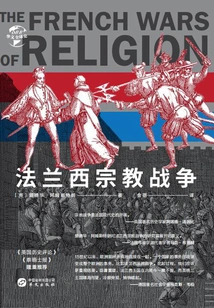
法兰西宗教战争(华文全球史)
(english) Edward Armstrong
Throughout the history of France, the following are major historical events recognized by historians as having turning points: 1. Caesar's conquest of Gaul (the beginning of French civilization); 2. The disintegration of Charlemagne's empire (the key to the formation of the French nation); 3. Joan of Arc and the restoration of France (the establishment of the French national spirit); 4. The French Wars of Religion (the solidification of French religious beliefs); 5. The French Revolution (the key to France's move toward modernity). This book is about the fourth major historical event with turning significance in French history - the French War of Religion. The perspective of this book is very novel. From the struggle between Huguenots and Catholics, the struggle between royal power and aristocratic power, the struggle between unity and secession, the struggle between national independence and external interference, it tells the whole process of the origin, development, turning point and end of the French War of Religion from a wide angle and multiple levels.
Throughout the history of France, the following are major historical events recognized by historians as having turning points: 1. Caesar's conquest of Gaul (the beginning of French civilization); 2. The disintegration of Charlemagne's empire (the key to the formation of the French nation); 3. Joan of Arc and the restoration of France (the establishment of the French national spirit); 4. The French Wars of Religion (the solidification of French religious beliefs); 5. The French Revolution (the key to France's move toward modernity). This book is about the fourth major historical event with turning significance in French history - the French War of Religion. The perspective of this book is very novel. From the struggle between Huguenots and Catholics, the struggle between royal power and aristocratic power, the struggle between unity and secession, the struggle between national independence and external interference, it tells the whole process of the origin, development, turning point and end of the French War of Religion from a wide angle and multiple levels.
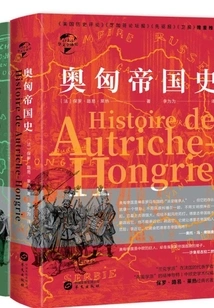
奥匈帝国史(全两册)(华文全球史)
(france) Paul Louis Léger
The Austro-Hungarian Empire was ruled by the Habsburg dynasty. Austria-Hungary was legally regarded as two equal and independent countries within the country, but in the international community, Austria-Hungary was generally regarded as the same political entity. Austria-Hungary enjoys autonomy in the fields of legislation, administration, justice, taxation, customs, coinage, etc. The overall finance, diplomacy and national defense must be managed by the central government of the empire.
The Austro-Hungarian Empire was ruled by the Habsburg dynasty. Austria-Hungary was legally regarded as two equal and independent countries within the country, but in the international community, Austria-Hungary was generally regarded as the same political entity. Austria-Hungary enjoys autonomy in the fields of legislation, administration, justice, taxation, customs, coinage, etc. The overall finance, diplomacy and national defense must be managed by the central government of the empire.
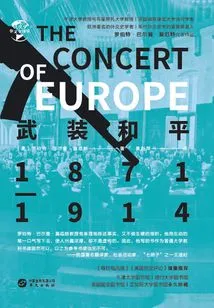
武装和平:1871—1914(华文全球史)
K
"Armed peace" is recognized by European historians as the "key" to the outbreak of World War I. The Franco-Prussian War defeated France and Germany was unified. Why couldn't France be destroyed? What role did coordination among European powers play at the Berlin Conference? Why was the transition of the Second German Empire from the Bismarck era to the Wilhelm II era a strategic mistake? Why are there irreconcilable contradictions between the Austro-Hungarian Empire's coveting of the Balkan Peninsula and the Russian Empire's Pan-Slavism? Why did the Ottoman Empire lose to the Balkan Alliance in the First Balkan War? How did the uneven distribution of spoils in the Balkan Alliance trigger the Second Balkan War? How did the Moroccan crisis occur and be resolved? Was the assassination of Archduke Franz Ferdinand, Crown Prince of the Austro-Hungarian Empire, an official act of the Kingdom of Serbia or a private act? What happened in the critical twelve days before the outbreak of World War I? Why did the European coordination and ambassadorial conferences fail to prevent the outbreak of the First World War? This book will give detailed answers.
"Armed peace" is recognized by European historians as the "key" to the outbreak of World War I. The Franco-Prussian War defeated France and Germany was unified. Why couldn't France be destroyed? What role did coordination among European powers play at the Berlin Conference? Why was the transition of the Second German Empire from the Bismarck era to the Wilhelm II era a strategic mistake? Why are there irreconcilable contradictions between the Austro-Hungarian Empire's coveting of the Balkan Peninsula and the Russian Empire's Pan-Slavism? Why did the Ottoman Empire lose to the Balkan Alliance in the First Balkan War? How did the uneven distribution of spoils in the Balkan Alliance trigger the Second Balkan War? How did the Moroccan crisis occur and be resolved? Was the assassination of Archduke Franz Ferdinand, Crown Prince of the Austro-Hungarian Empire, an official act of the Kingdom of Serbia or a private act? What happened in the critical twelve days before the outbreak of World War I? Why did the European coordination and ambassadorial conferences fail to prevent the outbreak of the First World War? This book will give detailed answers.