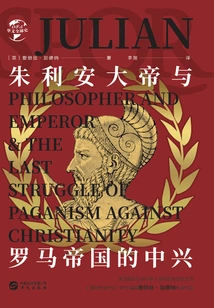
Julian the Great and the Resurgence of the Roman Empire (chinese Global History)
About This Novel
The entire history of Rome is divided into three stages: the royal era, the republican era and the imperial era. The Imperial Age is divided into two periods: the period of unity and the period of division. During the unification of the Roman Empire, apart from the founding monarch Octavian, the only ones who could be called "the great" were Constantine and Julian. "Julian the Great and the Resurgence of the Roman Empire" is an interpretation of Julian the Great, the great master of the revival of the Roman Empire. This book is based on three major backgrounds: on the political side, there are powerful people everywhere, warlords are divided, and there are many political reasons; on the religious side, the Roman Empire's native religions inevitably declined, and Christianity prospered and developed; on the national side, barbarian free people or slaves poured into the Roman legions as mercenaries in large numbers, and the Roman Empire faced the long-term threat of barbarian invasion in the border areas of the Rhine and Danube rivers. Against this background, Julian stepped onto the stage of history. After fighting in the north and south, he defeated the separatist forces and reunified the Roman Empire; he was baptized by Christianity, but later believed in Neoplatonism and crazily suppressed Christianity; he carried out drastic reforms, advocated frugality, accumulated wealth, improved the fiscal and tax system, and turned the treasury from losses to profits; he promoted judicial reform, combated corruption, and opened up channels for the poor to appeal; he strengthened military construction and improved its combat effectiveness. Under his rule, the Roman Empire returned to unity from fragmentation, and evolved from exclusive Christianity to the equal development of multiple religions. The domestic political situation was stable and the economy prospered, realizing the resurgence of the Roman Empire.
Official Sources
What Readers Think
Rating
Community(0)
Official(4)Scraped 1mo ago
As far as the trend of the times of innovation is concerned, the rebellious Julian is tantamount to an enemy-like existence, but now that the wave of innovation has passed, this issue can be viewed more objectively.
The recognition of the three major facts greatly affected Julian's life, because he realized that he must resolutely resist this trend, so he came up with the idea of following ancient precepts.
Although Julian's efforts did not produce obvious results, it is admirable that he did not choose to follow the trend of innovation.
Julian the Great was inextricably linked to the resurgence of Rome. He made unreserved efforts to recreate the glorious era of the Roman Senate system and Athenian democracy.
Rating
Community(0)
Official(4)Scraped 1mo ago
As far as the trend of the times of innovation is concerned, the rebellious Julian is tantamount to an enemy-like existence, but now that the wave of innovation has passed, this issue can be viewed more objectively.
The recognition of the three major facts greatly affected Julian's life, because he realized that he must resolutely resist this trend, so he came up with the idea of following ancient precepts.
Although Julian's efforts did not produce obvious results, it is admirable that he did not choose to follow the trend of innovation.
Julian the Great was inextricably linked to the resurgence of Rome. He made unreserved efforts to recreate the glorious era of the Roman Senate system and Athenian democracy.
