Library
Browse and search books
3,417 novels found
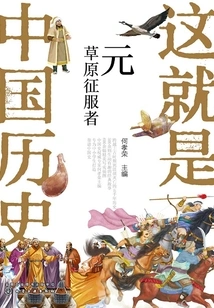
元:草原征服者(这就是中国历史)
Editor-in-chief He Xiaorong
This series of books records the history from myths and legends, Xia, Shang and Western Zhou dynasties to the end of the Qing Dynasty. It uses a combination of hand-painted style and historical pictures, and selects nearly a thousand color pictures and photos of precious cultural relics. After rigorous research, it uses realistic techniques to express historical events and character costumes, allowing children to be immersed in the scenes, conveying correct historical knowledge, and enriching children's aesthetic experience. This book uses experience and language that children can understand to describe the people, events, times, places, and things that have had a profound impact on Chinese history. It makes the originally abstract and difficult concepts or complex backgrounds lively and interesting, and establishes a clear concept of China's official history for children.
This series of books records the history from myths and legends, Xia, Shang and Western Zhou dynasties to the end of the Qing Dynasty. It uses a combination of hand-painted style and historical pictures, and selects nearly a thousand color pictures and photos of precious cultural relics. After rigorous research, it uses realistic techniques to express historical events and character costumes, allowing children to be immersed in the scenes, conveying correct historical knowledge, and enriching children's aesthetic experience. This book uses experience and language that children can understand to describe the people, events, times, places, and things that have had a profound impact on Chinese history. It makes the originally abstract and difficult concepts or complex backgrounds lively and interesting, and establishes a clear concept of China's official history for children.
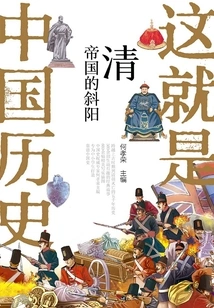
清:帝国的斜阳(这就是中国历史)
Editor-in-chief He Xiaorong
This series of books records the history from myths and legends, Xia, Shang and Western Zhou dynasties to the end of the Qing Dynasty. It uses a combination of hand-painted style and historical pictures, and selects nearly a thousand color pictures and photos of precious cultural relics. After rigorous research, it uses realistic techniques to express historical events and character costumes, allowing children to be immersed in the scenes, conveying correct historical knowledge, and enriching children's aesthetic experience. This book uses experience and language that children can understand to describe the people, events, times, places, and things that have had a profound impact on Chinese history. It makes the originally abstract and difficult concepts or complex backgrounds lively and interesting, and establishes a clear concept of China's official history for children.
This series of books records the history from myths and legends, Xia, Shang and Western Zhou dynasties to the end of the Qing Dynasty. It uses a combination of hand-painted style and historical pictures, and selects nearly a thousand color pictures and photos of precious cultural relics. After rigorous research, it uses realistic techniques to express historical events and character costumes, allowing children to be immersed in the scenes, conveying correct historical knowledge, and enriching children's aesthetic experience. This book uses experience and language that children can understand to describe the people, events, times, places, and things that have had a profound impact on Chinese history. It makes the originally abstract and difficult concepts or complex backgrounds lively and interesting, and establishes a clear concept of China's official history for children.
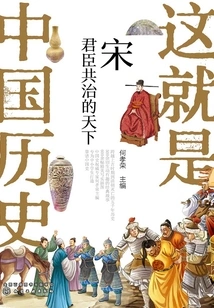
宋:君臣共治的天下(这就是中国历史)
Editor-in-chief He Xiaorong
This series of books records the history from myths and legends, Xia, Shang and Western Zhou dynasties to the end of the Qing Dynasty. It uses a combination of hand-painted style and historical pictures, and selects nearly a thousand color pictures and photos of precious cultural relics. After rigorous research, it uses realistic techniques to express historical events and character costumes, allowing children to be immersed in the scenes, conveying correct historical knowledge, and enriching children's aesthetic experience. This book uses experience and language that children can understand to describe the people, events, times, places, and things that have had a profound impact on Chinese history. It makes the originally abstract and difficult concepts or complex backgrounds lively and interesting, and establishes a clear concept of China's official history for children.
This series of books records the history from myths and legends, Xia, Shang and Western Zhou dynasties to the end of the Qing Dynasty. It uses a combination of hand-painted style and historical pictures, and selects nearly a thousand color pictures and photos of precious cultural relics. After rigorous research, it uses realistic techniques to express historical events and character costumes, allowing children to be immersed in the scenes, conveying correct historical knowledge, and enriching children's aesthetic experience. This book uses experience and language that children can understand to describe the people, events, times, places, and things that have had a profound impact on Chinese history. It makes the originally abstract and difficult concepts or complex backgrounds lively and interesting, and establishes a clear concept of China's official history for children.
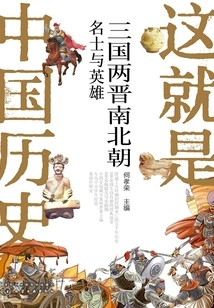
三国两晋南北朝(这就是中国历史)
Editor-in-chief He Xiaorong
This series of books records the history from myths and legends, Xia, Shang and Western Zhou dynasties to the end of the Qing Dynasty. It uses a combination of hand-painted style and historical pictures, and selects nearly a thousand color pictures and photos of precious cultural relics. After rigorous research, it uses realistic techniques to express historical events and character costumes, allowing children to be immersed in the scenes, conveying correct historical knowledge, and enriching children's aesthetic experience. This book uses experience and language that children can understand to describe the people, events, times, places, and things that have had a profound impact on Chinese history. It makes the originally abstract and difficult concepts or complex backgrounds lively and interesting, and establishes a clear concept of China's official history for children.
This series of books records the history from myths and legends, Xia, Shang and Western Zhou dynasties to the end of the Qing Dynasty. It uses a combination of hand-painted style and historical pictures, and selects nearly a thousand color pictures and photos of precious cultural relics. After rigorous research, it uses realistic techniques to express historical events and character costumes, allowing children to be immersed in the scenes, conveying correct historical knowledge, and enriching children's aesthetic experience. This book uses experience and language that children can understand to describe the people, events, times, places, and things that have had a profound impact on Chinese history. It makes the originally abstract and difficult concepts or complex backgrounds lively and interesting, and establishes a clear concept of China's official history for children.
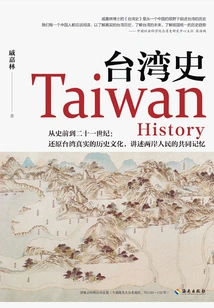
Taiwan History
History台湾史
Qi Jialin
Taiwan is an inalienable part of China's sacred territory. Due to well-known reasons, the two sides of the Taiwan Strait are still separated so far. This is the misfortune of the Chinese nation. Every Chinese person earnestly hopes to end this distressing situation as soon as possible. Is Taiwan where it is today due to fate, or is it the planning of politicians? This book will let you see the true history of Taiwan. The book provides a complete and systematic introduction to the historical evolution of Taiwan since the beginning of written records: it not only describes the early colonial rule of the Netherlands and Spain in detail, but also provides a thoughtful discussion of the invasion plans of Britain, the United States, Japan, Russia, and Germany. It not only introduces the economic development of Taiwan at different stages of development, but also systematically describes major events in agricultural and industrial development, taxation, education, culture, etc. In addition, it also touches on aspects such as national integration and cross-strait reunification. The book is equipped with hundreds of precious pictures to support history and enable readers to imagine historical situations. In addition, this book not only restores the historical truth of Taiwan in an all-round and in-depth and objective manner, but also provides undoubted and strong evidence for the historical fact that "both sides of the Taiwan Strait belong to one China." It is a "Taiwan History" that every Chinese should read.
Taiwan is an inalienable part of China's sacred territory. Due to well-known reasons, the two sides of the Taiwan Strait are still separated so far. This is the misfortune of the Chinese nation. Every Chinese person earnestly hopes to end this distressing situation as soon as possible. Is Taiwan where it is today due to fate, or is it the planning of politicians? This book will let you see the true history of Taiwan. The book provides a complete and systematic introduction to the historical evolution of Taiwan since the beginning of written records: it not only describes the early colonial rule of the Netherlands and Spain in detail, but also provides a thoughtful discussion of the invasion plans of Britain, the United States, Japan, Russia, and Germany. It not only introduces the economic development of Taiwan at different stages of development, but also systematically describes major events in agricultural and industrial development, taxation, education, culture, etc. In addition, it also touches on aspects such as national integration and cross-strait reunification. The book is equipped with hundreds of precious pictures to support history and enable readers to imagine historical situations. In addition, this book not only restores the historical truth of Taiwan in an all-round and in-depth and objective manner, but also provides undoubted and strong evidence for the historical fact that "both sides of the Taiwan Strait belong to one China." It is a "Taiwan History" that every Chinese should read.
Compilation of Historical Materials on Taiwan's Recovery (part 2): Selected Government Documents
History台湾光复史料汇编(第二编):政府文件选编
Editor-in-chief Zhang Haipeng
This book collects documents, letters, telegrams, etc. Issued and received by relevant departments of the National Government and local governments between 1945 and February 1947, concerning the handling of Japanese prisoners of war and the return of Taiwanese compatriots to the province. It also includes the public statements of a few dignitaries representing the government's position on Taiwan policies and propositions. The content is selected from published materials in Taiwan and Mainland China, and all materials are arranged in chronological order. Those with only a year but no specific date will be placed at the end of the historical data for that year. In order to be loyal to historical data, the terms in the original text are generally not changed, and the original quotations are also noted in detail. The publication of the manuscript will help readers understand the historical process of Taiwan's recovery.
This book collects documents, letters, telegrams, etc. Issued and received by relevant departments of the National Government and local governments between 1945 and February 1947, concerning the handling of Japanese prisoners of war and the return of Taiwanese compatriots to the province. It also includes the public statements of a few dignitaries representing the government's position on Taiwan policies and propositions. The content is selected from published materials in Taiwan and Mainland China, and all materials are arranged in chronological order. Those with only a year but no specific date will be placed at the end of the historical data for that year. In order to be loyal to historical data, the terms in the original text are generally not changed, and the original quotations are also noted in detail. The publication of the manuscript will help readers understand the historical process of Taiwan's recovery.
Compilation of Historical Materials on Taiwan's Recovery (part 1): Selected Government Documents
History台湾光复史料汇编(第一编):政府文件选编
Editor-in-chief Zhang Haipeng
This book collects statements, documents, letters, telegrams, etc. Issued and received by relevant departments and groups of the National Government and local governments from December 1941 (when the Nationalist Government declared war on Japan) to February 1947 regarding the reception and administration of Taiwan. It is divided into three parts: establishment of stance on Taiwan and external negotiations, opinions on governing Taiwan and preparation for acceptance, implementation of acceptance, and legal arrangement. Each part is arranged in chronological order. Those with only a year but no specific date will be placed at the end of the historical data for that year. In order to be loyal to historical data, the original terms are generally not changed. The publication of the manuscript will help readers understand the historical process of Taiwan's recovery.
This book collects statements, documents, letters, telegrams, etc. Issued and received by relevant departments and groups of the National Government and local governments from December 1941 (when the Nationalist Government declared war on Japan) to February 1947 regarding the reception and administration of Taiwan. It is divided into three parts: establishment of stance on Taiwan and external negotiations, opinions on governing Taiwan and preparation for acceptance, implementation of acceptance, and legal arrangement. Each part is arranged in chronological order. Those with only a year but no specific date will be placed at the end of the historical data for that year. In order to be loyal to historical data, the original terms are generally not changed. The publication of the manuscript will help readers understand the historical process of Taiwan's recovery.
Compilation of Historical Materials on Taiwan's Recovery (part 4): Taiwan under Japanese Rule
History台湾光复史料汇编(第四编):日本统治下的台湾
Editor-in-chief Zhang Haipeng
The content of this book covers Taiwan's administration, household administration, agriculture, police, sugar industry, finance, water conservancy, fisheries, education and other systems under Japanese rule, as well as the theory and content of the Japanese Control Council. The publication of the manuscript will help readers understand the historical status of Japan's rule of Taiwan.
The content of this book covers Taiwan's administration, household administration, agriculture, police, sugar industry, finance, water conservancy, fisheries, education and other systems under Japanese rule, as well as the theory and content of the Japanese Control Council. The publication of the manuscript will help readers understand the historical status of Japan's rule of Taiwan.
Compilation of Historical Materials on Taiwan's Recovery (part 3): Selected Government Documents
History台湾光复史料汇编(第三编):政府文件选编
Editor-in-chief Zhang Haipeng
This book mainly collects documents, letters, telegrams, etc. Issued and received by relevant departments of the Nationalist Government and Taiwanese local government on the administration of Taiwan from 1945 to March 1947. The content involves the establishment of administrative agencies, the formulation of operational rules for public opinion organizations, the requisition of Japanese employees, the payment of civil servant allowances, the exchange of currency, the inventory of household registrations, the management of floating population, the rectification of bad customs, etc. Relevant documents are arranged in chronological order. Those with only a year but no specific date will be placed at the end of the historical data for that year. In order to be loyal to historical data, the terms in the original text are generally not changed, and the original quotations are also noted in detail. The publication of the manuscript will help readers understand the historical process of Taiwan's recovery.
This book mainly collects documents, letters, telegrams, etc. Issued and received by relevant departments of the Nationalist Government and Taiwanese local government on the administration of Taiwan from 1945 to March 1947. The content involves the establishment of administrative agencies, the formulation of operational rules for public opinion organizations, the requisition of Japanese employees, the payment of civil servant allowances, the exchange of currency, the inventory of household registrations, the management of floating population, the rectification of bad customs, etc. Relevant documents are arranged in chronological order. Those with only a year but no specific date will be placed at the end of the historical data for that year. In order to be loyal to historical data, the terms in the original text are generally not changed, and the original quotations are also noted in detail. The publication of the manuscript will help readers understand the historical process of Taiwan's recovery.
重庆抗战兵器工业遗址群研究
Editor-in-chief Ai Zhike
"Research on the Anti-Japanese War Weaponry Industrial Site Group in Chongqing" focuses on the Anti-Japanese War Weaponry Industrial Site Group established in the seventh batch of national key cultural relics protection units. It also conducts a more detailed review of the ordnance industrial sites in Chongqing's urban-level cultural relics protection units, declared and declared cultural relic sites, and proposes different protection and utilization measures based on the actual situation, that is, measures based on local conditions and classification.
"Research on the Anti-Japanese War Weaponry Industrial Site Group in Chongqing" focuses on the Anti-Japanese War Weaponry Industrial Site Group established in the seventh batch of national key cultural relics protection units. It also conducts a more detailed review of the ordnance industrial sites in Chongqing's urban-level cultural relics protection units, declared and declared cultural relic sites, and proposes different protection and utilization measures based on the actual situation, that is, measures based on local conditions and classification.
台湾光复史料汇编(第五编):台湾军事、司法接收及日产处理总报告书
Editor-in-chief Zhang Haipeng
This book includes four single copies made around 1946, including the "General Report of the Military Reception of the Commander-in-Chief of the Taiwan Military", "Taiwan Judicial Reception Report", "General Report of the End of the Nissan Disposal Committee of the Taiwan Provincial Reception Committee", and "Compilation of the Taiwan Provincial Nissan Disposal Act", which were compiled for the Taiwan Investigation Committee of the National Government. These single copies came from Stanford University and other places in the United States. The publication of this book will help readers understand the historical situation of Taiwan's recovery.
This book includes four single copies made around 1946, including the "General Report of the Military Reception of the Commander-in-Chief of the Taiwan Military", "Taiwan Judicial Reception Report", "General Report of the End of the Nissan Disposal Committee of the Taiwan Provincial Reception Committee", and "Compilation of the Taiwan Provincial Nissan Disposal Act", which were compiled for the Taiwan Investigation Committee of the National Government. These single copies came from Stanford University and other places in the United States. The publication of this book will help readers understand the historical situation of Taiwan's recovery.
台湾光复史料汇编(第六编):台湾行政长官公署施政与工作报告
Editor-in-chief Zhang Haipeng
The contents of this book include: "Policy Report of the Chief Executive's Office of Taiwan Province", "Work Report of the Chief Executive's Office of Taiwan Province in the 35th Year of the Republic of China", "Work Summary of the Chief Executive's Office of Taiwan Province in March", "Policy Report of the Chief Executive's Office of Taiwan Province on Agriculture and Forestry" "" and other single copies on the reception and administration around 1946 are reports made by the Chief Executive's Office of Taiwan Province to the First Senate of Taiwan Province in 1946. The originals are stored in the special collection rooms of Stanford University, the Institute of Modern History of the Chinese Academy of Social Sciences, and other places. This book helps readers understand the historical situation of Taiwan's recovery.
The contents of this book include: "Policy Report of the Chief Executive's Office of Taiwan Province", "Work Report of the Chief Executive's Office of Taiwan Province in the 35th Year of the Republic of China", "Work Summary of the Chief Executive's Office of Taiwan Province in March", "Policy Report of the Chief Executive's Office of Taiwan Province on Agriculture and Forestry" "" and other single copies on the reception and administration around 1946 are reports made by the Chief Executive's Office of Taiwan Province to the First Senate of Taiwan Province in 1946. The originals are stored in the special collection rooms of Stanford University, the Institute of Modern History of the Chinese Academy of Social Sciences, and other places. This book helps readers understand the historical situation of Taiwan's recovery.
中国抗战大后方研究论著目录索引(1979—2011)
Zhou Yong Editor-in-chief Pan Xun
This book uses major domestic academic journals and monographs as carriers and is organized by theme and chronological order. It is the first comprehensive review of research works on China's rear area during the Anti-Japanese War since 1979. The publication of the manuscript will help promote the in-depth development of research on the history and culture of the rear area and has important academic value.
This book uses major domestic academic journals and monographs as carriers and is organized by theme and chronological order. It is the first comprehensive review of research works on China's rear area during the Anti-Japanese War since 1979. The publication of the manuscript will help promote the in-depth development of research on the history and culture of the rear area and has important academic value.
中华上下五千年(三)
Editor-in-chief Dong Sheng
When Wang Chong wrote "Lunheng", although there was already rough hemp paper made of hemp, ramie and other raw materials, the texture of the paper was relatively rough, the fiber tissue was unevenly distributed, and it was not suitable for writing. His book was written on bamboo slips and wooden slips. Shortly after Wang Chong's death, Cai Lun improved the papermaking technology and created paper suitable for writing.
When Wang Chong wrote "Lunheng", although there was already rough hemp paper made of hemp, ramie and other raw materials, the texture of the paper was relatively rough, the fiber tissue was unevenly distributed, and it was not suitable for writing. His book was written on bamboo slips and wooden slips. Shortly after Wang Chong's death, Cai Lun improved the papermaking technology and created paper suitable for writing.
中华上下五千年(七)
Editor-in-chief Dong Sheng
In 1637, due to the fierce siege of the Ming army, Zhang Xianzhong accepted the Ming Dynasty's recruitment in Gucheng, Hubei. He did not sincerely surrender, but secretly accumulated troops to prepare for a comeback. The generals of the Ming Dynasty discovered Zhang Xianzhong's evil intentions and prepared to send troops to suppress it.
In 1637, due to the fierce siege of the Ming army, Zhang Xianzhong accepted the Ming Dynasty's recruitment in Gucheng, Hubei. He did not sincerely surrender, but secretly accumulated troops to prepare for a comeback. The generals of the Ming Dynasty discovered Zhang Xianzhong's evil intentions and prepared to send troops to suppress it.
中华上下五千年(六)
Editor-in-chief Dong Sheng
The rulers of the Jin and Yuan dynasties first developed from nomadic peoples on the northern grasslands and then came to dominate the Central Plains. Their original political, economic and cultural levels lagged behind the Han people, so their governance methods were relatively backward. In order to consolidate and strengthen their rule and management of the Central Plains, they had to learn the Han people's governance methods and accept the Han people's politics, economy and culture. Therefore, both the Jin and Yuan dynasties supported religion in order to control the people, and people in war also needed religious beliefs to help them escape. Taoism during the Jin and Yuan Dynasties developed under such a background. Because Taoism was highly praised in the Song Dynasty, Emperor Huizong of the Song Dynasty even called himself "Emperor Taoism", which led to many drawbacks. The government and the public had a sense of distrust in Taoism. Therefore, the development of Southern Tianshi Taoism (Zhengyi Sect) tended to stagnate in the Southern Song Dynasty, Jin and Yuan Dynasties. In the north controlled by the Jin and Yuan Dynasties, three new Taoist sects developed and formed due to the above-mentioned reasons: Quanzhen Sect, Dao Sect, and Taiyi Sect, among which Quanzhen Sect was the most prosperous.
The rulers of the Jin and Yuan dynasties first developed from nomadic peoples on the northern grasslands and then came to dominate the Central Plains. Their original political, economic and cultural levels lagged behind the Han people, so their governance methods were relatively backward. In order to consolidate and strengthen their rule and management of the Central Plains, they had to learn the Han people's governance methods and accept the Han people's politics, economy and culture. Therefore, both the Jin and Yuan dynasties supported religion in order to control the people, and people in war also needed religious beliefs to help them escape. Taoism during the Jin and Yuan Dynasties developed under such a background. Because Taoism was highly praised in the Song Dynasty, Emperor Huizong of the Song Dynasty even called himself "Emperor Taoism", which led to many drawbacks. The government and the public had a sense of distrust in Taoism. Therefore, the development of Southern Tianshi Taoism (Zhengyi Sect) tended to stagnate in the Southern Song Dynasty, Jin and Yuan Dynasties. In the north controlled by the Jin and Yuan Dynasties, three new Taoist sects developed and formed due to the above-mentioned reasons: Quanzhen Sect, Dao Sect, and Taiyi Sect, among which Quanzhen Sect was the most prosperous.
中华上下五千年(一)
Editor-in-chief Dong Sheng
The ancestors of our Chinese nation have been working, living and reproducing on the land of our motherland since ancient times.
The ancestors of our Chinese nation have been working, living and reproducing on the land of our motherland since ancient times.
中华上下五千年(四)
Editor-in-chief Dong Sheng
The rulers of the Northern Wei Dynasty were members of the Tuoba tribe of the Xianbei ethnic group. People in the Tuoba tribe all wear long braids. Its history originates from the period of Ba Mao. In the early years of the Eastern Han Dynasty, Tuoba Tuiyin led everyone to move to the vicinity of Hulun Lake in present-day Inner Mongolia. In the early years of the Eastern Jin Dynasty, the Tuoba tribe was still a nomadic tribe in Northeast my country. Later, it absorbed the culture of the Central Plains and gradually established a feudal economic system.
The rulers of the Northern Wei Dynasty were members of the Tuoba tribe of the Xianbei ethnic group. People in the Tuoba tribe all wear long braids. Its history originates from the period of Ba Mao. In the early years of the Eastern Han Dynasty, Tuoba Tuiyin led everyone to move to the vicinity of Hulun Lake in present-day Inner Mongolia. In the early years of the Eastern Jin Dynasty, the Tuoba tribe was still a nomadic tribe in Northeast my country. Later, it absorbed the culture of the Central Plains and gradually established a feudal economic system.
中华上下五千年(五)
Editor-in-chief Dong Sheng
In the middle of the Tang Dynasty, Huaixi Town was a stubborn fortress of the feudal separatist regime at that time. (814 AD) After the death of Wu Shaoyang, the Huaixi Jiedu envoy, his son Wu Yuanji became independent. Emperor Xianzong of the Tang Dynasty sent troops to conquer Huaixi in four directions, but the offensive continued for three or four years to no avail. The first coach Gao Xiayu was defeated by Wu Yuanji. The second coach Yuan Zi was as fearful of the enemy as a tiger and never dared to fight Wu Yuanji. In this situation, many officials in the court believed that the war could no longer continue, but Minister Pei Du believed that Huaixi was like a malignant sore on the body that had to be removed. Emperor Xianzong of the Tang Dynasty worshiped Pei Du as prime minister and determined to continue the conquest of Huaixi.
In the middle of the Tang Dynasty, Huaixi Town was a stubborn fortress of the feudal separatist regime at that time. (814 AD) After the death of Wu Shaoyang, the Huaixi Jiedu envoy, his son Wu Yuanji became independent. Emperor Xianzong of the Tang Dynasty sent troops to conquer Huaixi in four directions, but the offensive continued for three or four years to no avail. The first coach Gao Xiayu was defeated by Wu Yuanji. The second coach Yuan Zi was as fearful of the enemy as a tiger and never dared to fight Wu Yuanji. In this situation, many officials in the court believed that the war could no longer continue, but Minister Pei Du believed that Huaixi was like a malignant sore on the body that had to be removed. Emperor Xianzong of the Tang Dynasty worshiped Pei Du as prime minister and determined to continue the conquest of Huaixi.
中华上下五千年(二)
Editor-in-chief Dong Sheng
Our country's medicine has unique methods of diagnosing and treating diseases, and it has reached a very high level of treatment during the Spring and Autumn Period and the Warring States Period. Bian Que, known as the "Founder", was the most famous doctor from the late Spring and Autumn Period to the early Warring States Period.
Our country's medicine has unique methods of diagnosing and treating diseases, and it has reached a very high level of treatment during the Spring and Autumn Period and the Warring States Period. Bian Que, known as the "Founder", was the most famous doctor from the late Spring and Autumn Period to the early Warring States Period.
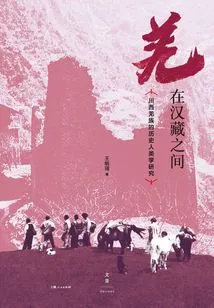
羌在汉藏之间:川西羌族的历史人类学研究
Wang Mingke
This book is one of the representative works of historical anthropologist Wang Mingke. The author Wang Mingke has repeatedly visited Qiang settlements in the high mountain valleys of the Minjiang and Mianjiang river basins in western Sichuan Province for more than ten years, including Wenchuan, Maoxian, Lixian, Beichuan, Songpan and other places, and conducted multi-point, mobile field investigations. Based on the field texts obtained from the investigation and rich historical archives, Wang Mingke used the "Qiang" as a case to deeply discuss the origin of "nation" and the integration and changes of China's marginalized ethnic groups, and refined creative historical anthropological theoretical summaries such as "a cut to curse", "poison cat", "heroic ancestors and brother nations". The book is divided into three parts: "Society", "History" and "Culture", which respectively discuss the identity and distinction in the social structure of the Qiang people, the exemplary narrative of the Qiang people's history and the formation of historical mentality, and the cultural reconstruction and performance under ethnic identity.
This book is one of the representative works of historical anthropologist Wang Mingke. The author Wang Mingke has repeatedly visited Qiang settlements in the high mountain valleys of the Minjiang and Mianjiang river basins in western Sichuan Province for more than ten years, including Wenchuan, Maoxian, Lixian, Beichuan, Songpan and other places, and conducted multi-point, mobile field investigations. Based on the field texts obtained from the investigation and rich historical archives, Wang Mingke used the "Qiang" as a case to deeply discuss the origin of "nation" and the integration and changes of China's marginalized ethnic groups, and refined creative historical anthropological theoretical summaries such as "a cut to curse", "poison cat", "heroic ancestors and brother nations". The book is divided into three parts: "Society", "History" and "Culture", which respectively discuss the identity and distinction in the social structure of the Qiang people, the exemplary narrative of the Qiang people's history and the formation of historical mentality, and the cultural reconstruction and performance under ethnic identity.
Volume 26·conquering Tianjin
History第二十六卷·攻克天津
Pan Qiangen
The contents of this book include the shock outside Tianjin, Chen Changjie's decision to negotiate, the Commander-in-Chief's little white flag, the uninvited guest at the headquarters, the turning point in the dark night, the road to peace talks at Taiji Factory, Fu Zuoyi's decision to negotiate peace talks, and leading from the dead end. On the road to death, before the hibiscus blooms, where to go after a heavy decision, the Tongxian peace talks settled the situation, Chiang Kai-shek left a mess, the acting president was helpless, the actions of the executive president, the revision of the family tree to clarify the authenticity, the military meeting in Xikou, etc.
The contents of this book include the shock outside Tianjin, Chen Changjie's decision to negotiate, the Commander-in-Chief's little white flag, the uninvited guest at the headquarters, the turning point in the dark night, the road to peace talks at Taiji Factory, Fu Zuoyi's decision to negotiate peace talks, and leading from the dead end. On the road to death, before the hibiscus blooms, where to go after a heavy decision, the Tongxian peace talks settled the situation, Chiang Kai-shek left a mess, the acting president was helpless, the actions of the executive president, the revision of the family tree to clarify the authenticity, the military meeting in Xikou, etc.
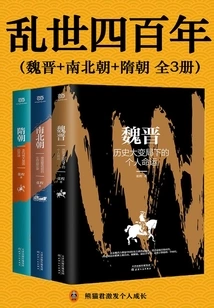
乱世四百年(魏晋+南北朝+隋朝 全3册)
Zhang Cheng
Four hundred years of chaos! Only by understanding China in troubled times can we understand the logic of China's historical evolution! From the Wei, Jin, Southern and Northern Dynasties to the end of the Sui Dynasty, China fell into the second great division in history, with a sharp decline in population and destabilization of the Central Plains. Wake up at dawn! Competition in the Central Plains, cultural collisions, national integration, imperial examinations, three provinces and six tribes... The rapid shocks of the troubled times laid the political foundation for the prosperous Tang Dynasty. Yan Jiulin, Li Haobai, Lu Zheng, and Nanmen Prefect sincerely recommend! Reader comments: "For people who are not interested in history or can't remember allusions, this book is simply a treasure." "Trilogy of Troubled Times" includes: "Wei and Jin: Personal Destiny under Great Historical Changes", "Southern and Northern Dynasties: Apocalypse of Survival before the Dawn of the Empire", "Sui Dynasty: The Beginning of a Great Empire", read Wei, Jin, Southern and Northern Dynasties, and Sui Dynasty together! Read 400 years of troubled history in one go.
Four hundred years of chaos! Only by understanding China in troubled times can we understand the logic of China's historical evolution! From the Wei, Jin, Southern and Northern Dynasties to the end of the Sui Dynasty, China fell into the second great division in history, with a sharp decline in population and destabilization of the Central Plains. Wake up at dawn! Competition in the Central Plains, cultural collisions, national integration, imperial examinations, three provinces and six tribes... The rapid shocks of the troubled times laid the political foundation for the prosperous Tang Dynasty. Yan Jiulin, Li Haobai, Lu Zheng, and Nanmen Prefect sincerely recommend! Reader comments: "For people who are not interested in history or can't remember allusions, this book is simply a treasure." "Trilogy of Troubled Times" includes: "Wei and Jin: Personal Destiny under Great Historical Changes", "Southern and Northern Dynasties: Apocalypse of Survival before the Dawn of the Empire", "Sui Dynasty: The Beginning of a Great Empire", read Wei, Jin, Southern and Northern Dynasties, and Sui Dynasty together! Read 400 years of troubled history in one go.
大宋帝国三百年(第四部)
Moon Run Jiangnan
This series of books follows chronological order and tells the historical stories that happened in more than three hundred years from the peasant uprising in the late Tang Dynasty to the Battle of Yashan. This book is the fourth one and mainly tells the historical stories of the Zhenzong era of Song Dynasty. The historical materials in the whole book are all derived from official history, which includes the games between countries and the love and hatred between people; the expansion of territories by emperors, whether in the Ming Dynasty or the late Qing Dynasty, and the life experiences of famous ministers, the ups and downs of officialdom, and the stories of many people. It is intertwined with events into a majestic historical drama of the Two Song Dynasties. Readers can feel the social style and human emotions of that period, and can also taste the warmth and warmth of the world and the way of life from the games between people and between countries.
This series of books follows chronological order and tells the historical stories that happened in more than three hundred years from the peasant uprising in the late Tang Dynasty to the Battle of Yashan. This book is the fourth one and mainly tells the historical stories of the Zhenzong era of Song Dynasty. The historical materials in the whole book are all derived from official history, which includes the games between countries and the love and hatred between people; the expansion of territories by emperors, whether in the Ming Dynasty or the late Qing Dynasty, and the life experiences of famous ministers, the ups and downs of officialdom, and the stories of many people. It is intertwined with events into a majestic historical drama of the Two Song Dynasties. Readers can feel the social style and human emotions of that period, and can also taste the warmth and warmth of the world and the way of life from the games between people and between countries.

中国百年科幻史话
Compiled By Dong Renwei
"Century History of Chinese Science Fiction": records the development of China's science fiction history over the past century, tells the life experiences and writing processes of famous science fiction writers, excerpts from the representative works and famous works of some outstanding celebrities, and describes the new stars of science fiction to promote the vigorous development of Chinese science fiction. This book presents readers with a rich and detailed picture of the history of science fiction, with detailed and testable content and strong historical nature.
"Century History of Chinese Science Fiction": records the development of China's science fiction history over the past century, tells the life experiences and writing processes of famous science fiction writers, excerpts from the representative works and famous works of some outstanding celebrities, and describes the new stars of science fiction to promote the vigorous development of Chinese science fiction. This book presents readers with a rich and detailed picture of the history of science fiction, with detailed and testable content and strong historical nature.
大师讲历史:吕思勉讲中国史(6)
Lu Simian
This book was originally titled "General History of China by Lu". It is one of Mr. Lu Simian's two major general history works, and it is also the highlight of the study of Chinese cultural history during the Republic of China. This book was written to meet the teaching needs of universities at that time after Shanghai fell into an "isolated island" during the Anti-Japanese War. The first volume is originally cultural history, which is the focus and key of this book. By describing the historical development of China's society, economy, political system and cultural academics, it explores the laws of China's historical development and its benefits to reality. It has detailed research and original opinions, and The writing is popular and fluent, making it a rare masterpiece in cultural history; the second volume is political history. In order to meet the teaching needs of the time, it is relatively simple, but it is comprehensive and coherent, clearly showing the development of Chinese history to readers, and the author's style is permeated every word.
This book was originally titled "General History of China by Lu". It is one of Mr. Lu Simian's two major general history works, and it is also the highlight of the study of Chinese cultural history during the Republic of China. This book was written to meet the teaching needs of universities at that time after Shanghai fell into an "isolated island" during the Anti-Japanese War. The first volume is originally cultural history, which is the focus and key of this book. By describing the historical development of China's society, economy, political system and cultural academics, it explores the laws of China's historical development and its benefits to reality. It has detailed research and original opinions, and The writing is popular and fluent, making it a rare masterpiece in cultural history; the second volume is political history. In order to meet the teaching needs of the time, it is relatively simple, but it is comprehensive and coherent, clearly showing the development of Chinese history to readers, and the author's style is permeated every word.
大师讲历史:吕思勉讲中国史(2)
Lu Simian
This book was originally titled "General History of China by Lu". It is one of Mr. Lu Simian's two major general history works, and it is also the highlight of the study of Chinese cultural history during the Republic of China. This book was written to meet the teaching needs of universities at that time after Shanghai fell into an "isolated island" during the Anti-Japanese War. The first volume is originally cultural history, which is the focus and key of this book. By describing the historical development of China's society, economy, political system and cultural academics, it explores the laws of China's historical development and its benefits to reality. It has detailed research and original opinions, and The writing is popular and fluent, making it a rare masterpiece in cultural history; the second volume is political history. In order to meet the teaching needs of the time, it is relatively simple, but it is comprehensive and coherent, clearly showing the development of Chinese history to readers, and the author's style is permeated every word.
This book was originally titled "General History of China by Lu". It is one of Mr. Lu Simian's two major general history works, and it is also the highlight of the study of Chinese cultural history during the Republic of China. This book was written to meet the teaching needs of universities at that time after Shanghai fell into an "isolated island" during the Anti-Japanese War. The first volume is originally cultural history, which is the focus and key of this book. By describing the historical development of China's society, economy, political system and cultural academics, it explores the laws of China's historical development and its benefits to reality. It has detailed research and original opinions, and The writing is popular and fluent, making it a rare masterpiece in cultural history; the second volume is political history. In order to meet the teaching needs of the time, it is relatively simple, but it is comprehensive and coherent, clearly showing the development of Chinese history to readers, and the author's style is permeated every word.
大师讲历史:吕思勉讲中国史(5)
Lu Simian
This book was originally titled "General History of China by Lu". It is one of Mr. Lu Simian's two major general history works, and it is also the highlight of the study of Chinese cultural history during the Republic of China. This book was written to meet the teaching needs of universities at that time after Shanghai fell into an "isolated island" during the Anti-Japanese War. The first volume is originally cultural history, which is the focus and key of this book. By describing the historical development of China's society, economy, political system and cultural academics, it explores the laws of China's historical development and its benefits to reality. It has detailed research and original opinions, and The writing is popular and fluent, making it a rare masterpiece in cultural history; the second volume is political history. In order to meet the teaching needs of the time, it is relatively simple, but it is comprehensive and coherent, clearly showing the development of Chinese history to readers, and the author's style is permeated every word.
This book was originally titled "General History of China by Lu". It is one of Mr. Lu Simian's two major general history works, and it is also the highlight of the study of Chinese cultural history during the Republic of China. This book was written to meet the teaching needs of universities at that time after Shanghai fell into an "isolated island" during the Anti-Japanese War. The first volume is originally cultural history, which is the focus and key of this book. By describing the historical development of China's society, economy, political system and cultural academics, it explores the laws of China's historical development and its benefits to reality. It has detailed research and original opinions, and The writing is popular and fluent, making it a rare masterpiece in cultural history; the second volume is political history. In order to meet the teaching needs of the time, it is relatively simple, but it is comprehensive and coherent, clearly showing the development of Chinese history to readers, and the author's style is permeated every word.
大师讲历史:吕思勉讲中国史(1)
Lu Simian
This book was originally titled "General History of China by Lu". It is one of Mr. Lu Simian's two major general history works, and it is also the highlight of the study of Chinese cultural history during the Republic of China. This book was written to meet the teaching needs of universities at that time after Shanghai fell into an "isolated island" during the Anti-Japanese War. The first volume is originally cultural history, which is the focus and key of this book. By describing the historical development of China's society, economy, political system and cultural academics, it explores the laws of China's historical development and its benefits to reality. It has detailed research and original opinions, and The writing is popular and fluent, making it a rare masterpiece in cultural history; the second volume is political history. In order to meet the teaching needs of the time, it is relatively simple, but it is comprehensive and coherent, clearly showing the development of Chinese history to readers, and the author's style is permeated every word.
This book was originally titled "General History of China by Lu". It is one of Mr. Lu Simian's two major general history works, and it is also the highlight of the study of Chinese cultural history during the Republic of China. This book was written to meet the teaching needs of universities at that time after Shanghai fell into an "isolated island" during the Anti-Japanese War. The first volume is originally cultural history, which is the focus and key of this book. By describing the historical development of China's society, economy, political system and cultural academics, it explores the laws of China's historical development and its benefits to reality. It has detailed research and original opinions, and The writing is popular and fluent, making it a rare masterpiece in cultural history; the second volume is political history. In order to meet the teaching needs of the time, it is relatively simple, but it is comprehensive and coherent, clearly showing the development of Chinese history to readers, and the author's style is permeated every word.
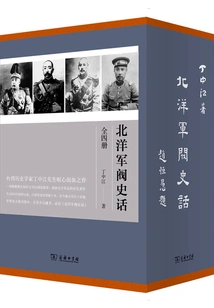
北洋军阀史话(全四册)
Ding Zhongjiang
This book begins with Yuan Shikai's military training at the small station and ends with Zhang Xueliang's change of banner in the Northeast. It lasts for fifty years and outlines the historical picture of warlord disputes in the late Qing Dynasty and the early Republic of China. The Beiyang warlords refer to the soldiers who supported the military and participated in politics during the Beiyang era. Most of them were protected by Yuan Shikai and called themselves "We Beiyang Group" and "We Beiyang Faction". The Beiyang Warlords not only represent Yuan Shikai and his forces, but also represent the period when they ruled most of China. "History of the Beiyang Warlords" (four volumes in total) is the masterpiece of Mr. Ding Zhongjiang who has accumulated many years of hard work. It has rich information and complete descriptions. It is of great reference value for the study of modern Chinese history, especially the history of the Beiyang Warlords. It is a historical book that can not only increase knowledge but also be read and appreciated, just like a literary work. The author uses news analysis techniques to process a large amount of historical data, which is well organized and has a unique vision. The book is accompanied by a large number of precious materials and pictures, which is extremely helpful in filling the gaps in historical works about the early years of the Republic of China.
This book begins with Yuan Shikai's military training at the small station and ends with Zhang Xueliang's change of banner in the Northeast. It lasts for fifty years and outlines the historical picture of warlord disputes in the late Qing Dynasty and the early Republic of China. The Beiyang warlords refer to the soldiers who supported the military and participated in politics during the Beiyang era. Most of them were protected by Yuan Shikai and called themselves "We Beiyang Group" and "We Beiyang Faction". The Beiyang Warlords not only represent Yuan Shikai and his forces, but also represent the period when they ruled most of China. "History of the Beiyang Warlords" (four volumes in total) is the masterpiece of Mr. Ding Zhongjiang who has accumulated many years of hard work. It has rich information and complete descriptions. It is of great reference value for the study of modern Chinese history, especially the history of the Beiyang Warlords. It is a historical book that can not only increase knowledge but also be read and appreciated, just like a literary work. The author uses news analysis techniques to process a large amount of historical data, which is well organized and has a unique vision. The book is accompanied by a large number of precious materials and pictures, which is extremely helpful in filling the gaps in historical works about the early years of the Republic of China.
吕著中国通史
Lu Simian
Mr. Lu Simian devoted his life to the research and education of ancient Chinese history. He was a famous historian in the 20th century and made great contributions to the study of ancient Chinese history. This book is of high value for historical research and is a must-read for history lovers and historical researchers.
Mr. Lu Simian devoted his life to the research and education of ancient Chinese history. He was a famous historian in the 20th century and made great contributions to the study of ancient Chinese history. This book is of high value for historical research and is a must-read for history lovers and historical researchers.
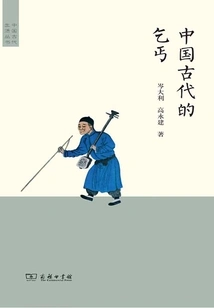
Beggar in Ancient China
History中国古代的乞丐
Cen Dali Gao Yongjian
The history of beggars in ancient my country began almost at the same time as civilized society. Although beggars are the poor at the bottom of society and are not valued by the ruling classes of the past dynasties and are rarely recorded in official history, many records about beggars have been left in the notebooks, novels, local chronicles and folk legends of literati. From these scattered but precious records, people can see complicated and colorful scenes of beggars. From emperors, generals, scholars, and common people, they are all included in this begging scene. No one is spared, and it is thought-provoking. Although this social group belongs to the poor at the bottom of society and is not valued by the rulers, they have always been active in every corner of every dynasty and have become an unavoidable social phenomenon. "Beggars in Ancient China" aims to use popular and vivid language to systematically sort out and analyze the reasons for the emergence of this group, its personnel composition, begging methods, beggar gang organizations, and the policies of past rulers towards beggars, in order to provide readers with some meaningful reference for understanding this group.
The history of beggars in ancient my country began almost at the same time as civilized society. Although beggars are the poor at the bottom of society and are not valued by the ruling classes of the past dynasties and are rarely recorded in official history, many records about beggars have been left in the notebooks, novels, local chronicles and folk legends of literati. From these scattered but precious records, people can see complicated and colorful scenes of beggars. From emperors, generals, scholars, and common people, they are all included in this begging scene. No one is spared, and it is thought-provoking. Although this social group belongs to the poor at the bottom of society and is not valued by the rulers, they have always been active in every corner of every dynasty and have become an unavoidable social phenomenon. "Beggars in Ancient China" aims to use popular and vivid language to systematically sort out and analyze the reasons for the emergence of this group, its personnel composition, begging methods, beggar gang organizations, and the policies of past rulers towards beggars, in order to provide readers with some meaningful reference for understanding this group.
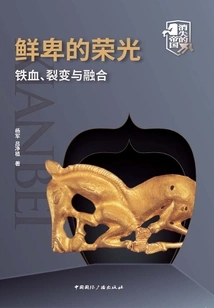
鲜卑的荣光:铁血、裂变与融合
Yang Jun Lu Jingzhi
Xianbei, after the Xiongnu, was another horseback nation that dominated the Mongolian grasslands. It originated in the dense forests, marched westward with difficulty, and lost its foreign lands due to the Five Husbands. It has traveled a long history of 800 years, with conflicts, reforms, prosperity, and decline, and has performed scenes of magnificent historical scenes. They fought everywhere, stained the nine states with blood, established many kingdoms, and their reputation spread throughout most of Asia. They flourished for a while and then died quickly. This book takes the towering Xing'an Mountains as a guide, takes into account the narrative of history and legends, and presents to readers a panoramic view of the rise and fall of the Xianbei regime. In this massive wave of ethnic migration, grassland culture is integrating into the Central Plains culture and transforming the Central Plains culture. As a nation, the Xianbei no longer exist, but their influence continues...
Xianbei, after the Xiongnu, was another horseback nation that dominated the Mongolian grasslands. It originated in the dense forests, marched westward with difficulty, and lost its foreign lands due to the Five Husbands. It has traveled a long history of 800 years, with conflicts, reforms, prosperity, and decline, and has performed scenes of magnificent historical scenes. They fought everywhere, stained the nine states with blood, established many kingdoms, and their reputation spread throughout most of Asia. They flourished for a while and then died quickly. This book takes the towering Xing'an Mountains as a guide, takes into account the narrative of history and legends, and presents to readers a panoramic view of the rise and fall of the Xianbei regime. In this massive wave of ethnic migration, grassland culture is integrating into the Central Plains culture and transforming the Central Plains culture. As a nation, the Xianbei no longer exist, but their influence continues...
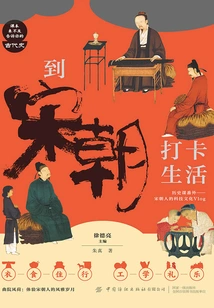
到宋朝打卡生活
Zhu Zhen
"Coming to Life in the Song Dynasty" is one of the series of books "Ancient History That Textbooks Can't Tell You". It describes various forms of civil society life in the Song Dynasty in a light and lively narrative way. The book vividly displays the Song Dynasty people's daily diet, heatstroke prevention and warmth, transportation, housing, occupation, tourism, cultural and sports activities, etc., Like a text version of "Along the River During the Qingming Festival". What was folk life like in the Song Dynasty and what were the special customs and habits? Modern people's curiosity about the life of people in the Song Dynasty will be answered one by one in the book. At the same time, the book is equipped with many exquisite illustrations, which vividly reproduce the daily life of people in the Song Dynasty. The "Ancient History That Textbooks Can't Tell You" series covers the history of people's daily lives in various periods of Chinese history. It is written by writers who are deeply involved in the field of history. Based on official history, it uses humorous and easy-to-read history telling methods to restore the different social features of each dynasty and vividly present the changes and inheritance of people's lives in ancient China.
"Coming to Life in the Song Dynasty" is one of the series of books "Ancient History That Textbooks Can't Tell You". It describes various forms of civil society life in the Song Dynasty in a light and lively narrative way. The book vividly displays the Song Dynasty people's daily diet, heatstroke prevention and warmth, transportation, housing, occupation, tourism, cultural and sports activities, etc., Like a text version of "Along the River During the Qingming Festival". What was folk life like in the Song Dynasty and what were the special customs and habits? Modern people's curiosity about the life of people in the Song Dynasty will be answered one by one in the book. At the same time, the book is equipped with many exquisite illustrations, which vividly reproduce the daily life of people in the Song Dynasty. The "Ancient History That Textbooks Can't Tell You" series covers the history of people's daily lives in various periods of Chinese history. It is written by writers who are deeply involved in the field of history. Based on official history, it uses humorous and easy-to-read history telling methods to restore the different social features of each dynasty and vividly present the changes and inheritance of people's lives in ancient China.
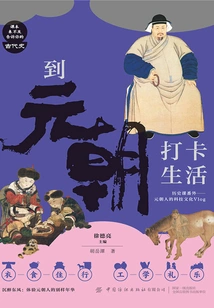
到元朝打卡生活
Hu Yuetan
"Coming to Life in the Yuan Dynasty" is one of the series of books "Ancient History That Textbooks Can't Tell You". It describes various aspects of civil society life in the Yuan Dynasty in a lively and lively narrative way. The whole book vividly shows the Yuan Dynasty people's daily diet, heatstroke prevention and warmth, transportation, housing, occupation, tourism, cultural and sports activities, etc., Like a text version of "Along the River During the Qingming Festival". What was the life of the people in the Yuan Dynasty like, and what were the special customs and habits? Modern people's curiosity about the life of the Yuan Dynasty people will be answered one by one in the book. At the same time, the book is equipped with many exquisite illustrations, which vividly reproduce the daily life of people in the Yuan Dynasty. The "Ancient History That Textbooks Can't Tell You" series covers the history of people's daily lives in various periods of Chinese history. It is written by writers who are deeply involved in the field of history. Based on official history, it uses humorous and easy-to-read history telling methods to restore the different social features of each dynasty and vividly present the changes and inheritance of people's lives in ancient China.
"Coming to Life in the Yuan Dynasty" is one of the series of books "Ancient History That Textbooks Can't Tell You". It describes various aspects of civil society life in the Yuan Dynasty in a lively and lively narrative way. The whole book vividly shows the Yuan Dynasty people's daily diet, heatstroke prevention and warmth, transportation, housing, occupation, tourism, cultural and sports activities, etc., Like a text version of "Along the River During the Qingming Festival". What was the life of the people in the Yuan Dynasty like, and what were the special customs and habits? Modern people's curiosity about the life of the Yuan Dynasty people will be answered one by one in the book. At the same time, the book is equipped with many exquisite illustrations, which vividly reproduce the daily life of people in the Yuan Dynasty. The "Ancient History That Textbooks Can't Tell You" series covers the history of people's daily lives in various periods of Chinese history. It is written by writers who are deeply involved in the field of history. Based on official history, it uses humorous and easy-to-read history telling methods to restore the different social features of each dynasty and vividly present the changes and inheritance of people's lives in ancient China.
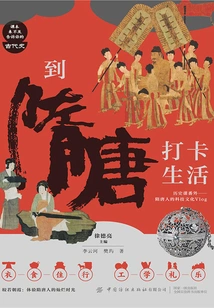
到隋唐打卡生活
Li Yunhe Fan Yu
"Visiting Life in the Sui and Tang Dynasties" is one of the series of books "Ancient History That Textbooks Can't Tell You". It describes various forms of civil society life in the Sui and Tang Dynasties in a lively and lively narrative way. The whole book vividly displays the daily diet, heatstroke prevention and warmth, transportation, housing, occupation, tourism, cultural and sports activities, etc. Of the Sui and Tang Dynasties, like a text version of "Along the River During the Qingming Festival". What was the life of the people in the Sui and Tang Dynasties like, and what were the special customs and habits? Modern people's curiosity about the lives of the people in the Sui and Tang Dynasties will be answered one by one in the book. At the same time, the book is equipped with many exquisite illustrations, which vividly reproduce the daily life of people in the Sui and Tang Dynasties. The "Ancient History That Textbooks Can't Tell You" series covers the history of people's daily lives in various periods of Chinese history. It is written by writers who are deeply involved in the field of history. Based on official history, it uses humorous and easy-to-read history telling methods to restore the different social features of each dynasty and vividly present the changes and inheritance of people's lives in ancient China.
"Visiting Life in the Sui and Tang Dynasties" is one of the series of books "Ancient History That Textbooks Can't Tell You". It describes various forms of civil society life in the Sui and Tang Dynasties in a lively and lively narrative way. The whole book vividly displays the daily diet, heatstroke prevention and warmth, transportation, housing, occupation, tourism, cultural and sports activities, etc. Of the Sui and Tang Dynasties, like a text version of "Along the River During the Qingming Festival". What was the life of the people in the Sui and Tang Dynasties like, and what were the special customs and habits? Modern people's curiosity about the lives of the people in the Sui and Tang Dynasties will be answered one by one in the book. At the same time, the book is equipped with many exquisite illustrations, which vividly reproduce the daily life of people in the Sui and Tang Dynasties. The "Ancient History That Textbooks Can't Tell You" series covers the history of people's daily lives in various periods of Chinese history. It is written by writers who are deeply involved in the field of history. Based on official history, it uses humorous and easy-to-read history telling methods to restore the different social features of each dynasty and vividly present the changes and inheritance of people's lives in ancient China.
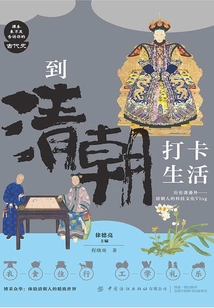
到清朝打卡生活
Cheng Xiaonan
"Coming to Life in the Qing Dynasty" is one of the series of books "Ancient History That Textbooks Can't Tell You". It describes various aspects of civil society life during the Qing Dynasty in a lively and lively narrative way. The book vividly displays the Qing Dynasty people's daily diet, heatstroke prevention and warmth, transportation, housing, occupation, tourism, cultural and sports activities, etc., Like a text version of "Along the River During Qingming Festival". What was the life of the people in the Qing Dynasty like, and what were the special customs and habits? Modern people's curiosity about the lives of the Qing Dynasty people will be answered one by one in the book. At the same time, the book is equipped with many exquisite illustrations, which vividly reproduce the daily life of people in the Qing Dynasty. The "Ancient History That Textbooks Can't Tell You" series covers the history of people's daily lives in various periods of Chinese history. It is written by writers who are deeply involved in the field of history. Based on official history, it uses humorous and easy-to-read history telling methods to restore the different social features of each dynasty and vividly present the changes and inheritance of people's lives in ancient China.
"Coming to Life in the Qing Dynasty" is one of the series of books "Ancient History That Textbooks Can't Tell You". It describes various aspects of civil society life during the Qing Dynasty in a lively and lively narrative way. The book vividly displays the Qing Dynasty people's daily diet, heatstroke prevention and warmth, transportation, housing, occupation, tourism, cultural and sports activities, etc., Like a text version of "Along the River During Qingming Festival". What was the life of the people in the Qing Dynasty like, and what were the special customs and habits? Modern people's curiosity about the lives of the Qing Dynasty people will be answered one by one in the book. At the same time, the book is equipped with many exquisite illustrations, which vividly reproduce the daily life of people in the Qing Dynasty. The "Ancient History That Textbooks Can't Tell You" series covers the history of people's daily lives in various periods of Chinese history. It is written by writers who are deeply involved in the field of history. Based on official history, it uses humorous and easy-to-read history telling methods to restore the different social features of each dynasty and vividly present the changes and inheritance of people's lives in ancient China.
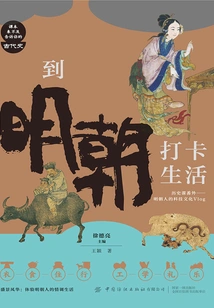
到明朝打卡生活
Wang Ying
"Coming to Life in the Ming Dynasty" is one of the series of books "Ancient History That Textbooks Can't Tell You". It describes various aspects of civil society life during the Ming Dynasty in a light and lively narrative way. The whole book vividly shows the daily diet, heatstroke prevention and warmth, transportation, housing, occupation, tourism, cultural and sports activities, etc. Of the Ming Dynasty people, like a text version of "Along the River During the Qingming Festival". What was the life of the people in the Ming Dynasty like, and what were the special customs and habits? Modern people's curiosity about the lives of people in the Ming Dynasty will be answered one by one in the book. At the same time, the book is equipped with many exquisite illustrations, which vividly reproduce the daily life of people in the Ming Dynasty. The "Ancient History That Textbooks Can't Tell You" series covers the history of people's daily lives in various periods of Chinese history. It is written by writers who are deeply involved in the field of history. Based on official history, it uses humorous and easy-to-read history telling methods to restore the different social features of each dynasty and vividly present the changes and inheritance of people's lives in ancient China.
"Coming to Life in the Ming Dynasty" is one of the series of books "Ancient History That Textbooks Can't Tell You". It describes various aspects of civil society life during the Ming Dynasty in a light and lively narrative way. The whole book vividly shows the daily diet, heatstroke prevention and warmth, transportation, housing, occupation, tourism, cultural and sports activities, etc. Of the Ming Dynasty people, like a text version of "Along the River During the Qingming Festival". What was the life of the people in the Ming Dynasty like, and what were the special customs and habits? Modern people's curiosity about the lives of people in the Ming Dynasty will be answered one by one in the book. At the same time, the book is equipped with many exquisite illustrations, which vividly reproduce the daily life of people in the Ming Dynasty. The "Ancient History That Textbooks Can't Tell You" series covers the history of people's daily lives in various periods of Chinese history. It is written by writers who are deeply involved in the field of history. Based on official history, it uses humorous and easy-to-read history telling methods to restore the different social features of each dynasty and vividly present the changes and inheritance of people's lives in ancient China.
定鼎中原之路:从皇太极入关到玄烨亲政
Yao Nianci
The book consists of four articles: "The Opportunities and Gains and Loss of Huang Taiji's Entry", "Dorgon and Imperial Politics", "Comments on the Edicts of the Qing Dynasty Ancestors", and "A Brief Discussion on the Four Ministers' Assistant Government in the Early Years of Kangxi". The four articles all focus on important areas of political history in the early Qing Dynasty, and the figures involved are of greater concern to academic circles and ordinary readers. The author is a traditional empirical historian, and his conclusions are all based on historical data, reflecting his solid historical data skills. What is even more valuable is that the author's articles often reveal things that have not been published before, so they have important reference value and enlightenment significance.
The book consists of four articles: "The Opportunities and Gains and Loss of Huang Taiji's Entry", "Dorgon and Imperial Politics", "Comments on the Edicts of the Qing Dynasty Ancestors", and "A Brief Discussion on the Four Ministers' Assistant Government in the Early Years of Kangxi". The four articles all focus on important areas of political history in the early Qing Dynasty, and the figures involved are of greater concern to academic circles and ordinary readers. The author is a traditional empirical historian, and his conclusions are all based on historical data, reflecting his solid historical data skills. What is even more valuable is that the author's articles often reveal things that have not been published before, so they have important reference value and enlightenment significance.
康熙盛世与帝王心术:评“自古得天下之正莫如我朝”
Yao Nianci
The book consists of five articles, which raise the core political issue of the Kangxi Dynasty in the Qing Dynasty, which is the struggle for the legitimacy of the Qing Dynasty. Starting from specific aspects such as the suppression of the rebellion of San Francisco, the promotion and elimination of princes, Taoist concepts, the relationship between Manchu and Han, and the dispatch of troops, this paper systematically criticizes Xuan Ye's proposition that "since ancient times, there is no better way to achieve justice in the world than in our dynasty."
The book consists of five articles, which raise the core political issue of the Kangxi Dynasty in the Qing Dynasty, which is the struggle for the legitimacy of the Qing Dynasty. Starting from specific aspects such as the suppression of the rebellion of San Francisco, the promotion and elimination of princes, Taoist concepts, the relationship between Manchu and Han, and the dispatch of troops, this paper systematically criticizes Xuan Ye's proposition that "since ancient times, there is no better way to achieve justice in the world than in our dynasty."
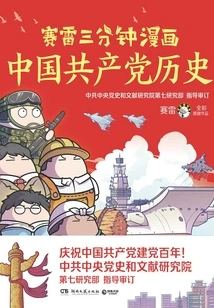
赛雷三分钟漫画中国共产党历史
Saire
Hilarious Sai Lei's new work! An introductory book for learning the history of the Chinese Communist Party! Party history study book for teenagers! The Seventh Research Department of the Institute of Party History and Documentation guided the review and revision. Based on "A Brief History of the Communist Party of China", the popular science cartoon team "Three Minutes of Sai Lei" carefully drew a full-color cartoon of the history of the Communist Party of China! Full movie-style scenes and full-color comics restore the history of the Communist Party of China! Super three-dimensional, super vivid, super-expanding knowledge! Party history books that teenagers like! An introductory book for ordinary readers to learn the history of the Communist Party of China! The popular science comic team "Sailei Three Minutes" carefully drew this "Sailei Three Minutes Comic History of the Communist Party of China" under the guidance of the Seventh Research Department of the Institute of Party History and Documentation. This full-color cartoon party history book is based on the history of the Communist Party of China and uses the recommended party history learning and education textbook "A Brief History of the Communist Party of China" as a reference. It uses interesting comics to comprehensively and vividly show the glorious history from the founding of the Communist Party of China in 1921 to the realization of the Chinese dream of the great rejuvenation of the Chinese nation. I believe that the book "Serei's Three-Minute Cartoon History of the Communist Party of China" will be a party history book that the majority of party members, cadres, and the masses, especially teenagers, like to read. It will also be an introductory book for ordinary readers to understand and learn the history of the Communist Party of China.
Hilarious Sai Lei's new work! An introductory book for learning the history of the Chinese Communist Party! Party history study book for teenagers! The Seventh Research Department of the Institute of Party History and Documentation guided the review and revision. Based on "A Brief History of the Communist Party of China", the popular science cartoon team "Three Minutes of Sai Lei" carefully drew a full-color cartoon of the history of the Communist Party of China! Full movie-style scenes and full-color comics restore the history of the Communist Party of China! Super three-dimensional, super vivid, super-expanding knowledge! Party history books that teenagers like! An introductory book for ordinary readers to learn the history of the Communist Party of China! The popular science comic team "Sailei Three Minutes" carefully drew this "Sailei Three Minutes Comic History of the Communist Party of China" under the guidance of the Seventh Research Department of the Institute of Party History and Documentation. This full-color cartoon party history book is based on the history of the Communist Party of China and uses the recommended party history learning and education textbook "A Brief History of the Communist Party of China" as a reference. It uses interesting comics to comprehensively and vividly show the glorious history from the founding of the Communist Party of China in 1921 to the realization of the Chinese dream of the great rejuvenation of the Chinese nation. I believe that the book "Serei's Three-Minute Cartoon History of the Communist Party of China" will be a party history book that the majority of party members, cadres, and the masses, especially teenagers, like to read. It will also be an introductory book for ordinary readers to understand and learn the history of the Communist Party of China.
甲午!甲午!
Ma Junjie
Based on thirty years of naval historical research, the author of this book examines the Sino-Japanese Sino-Japanese Sino-Japanese War from the unique perspective of a naval soldier, and takes you into the war in which victory or defeat was determined by the navy. This book starts with details, analyzes the war strategy, highlights the emotions of the characters, answers cutting-edge questions, summarizes the enlightenment of the war, and makes people think deeply.
Based on thirty years of naval historical research, the author of this book examines the Sino-Japanese Sino-Japanese Sino-Japanese War from the unique perspective of a naval soldier, and takes you into the war in which victory or defeat was determined by the navy. This book starts with details, analyzes the war strategy, highlights the emotions of the characters, answers cutting-edge questions, summarizes the enlightenment of the war, and makes people think deeply.
大宋王朝1120:中华命脉的历史拐点
Yongmu
The 1120s were a tumultuous era in Chinese history, with the four great dynasties of the Northern Song, Liao, Jin, and Xixia coexisting. History intersects here, where heroes, heroes, and cowardly kings and ministers appear on stage to stir up troubles. Emperor Huizong of the Song Dynasty, Zhao Ji, was talented but incompetent; Emperor Tianzuo of the Liao Dynasty did nothing and only indulged in pleasure; Wanyan Agu built the Jin Kingdom and destroyed the Liao Kingdom, and practiced martial arts; Emperor Li Qianshun of the Western Xia Dynasty struggled to survive in the cracks and seek the greatest interests in troubled times. The great wheel of history carries the fate of the characters forward: Song and Jin agreed on a maritime alliance to jointly attack the Liao; the Liao was destroyed, and the Liao clan Yelu Dashi went westward to establish the Western Liao Empire; Aguda died, and the Jin State went south to attack the Song Dynasty, which eventually led to the demise of the Northern Song Dynasty; Focusing on the historical events and key figures of the 1120s, the author uses a relaxed and serious style to describe the fate of the characters and the complexity of human nature. He writes and interprets the causes and truth of the war, restores the social scene at that time, explores the causes and consequences of the great historical changes, and conducts an in-depth analysis of the culture, politics, and economy of the 1120s.
The 1120s were a tumultuous era in Chinese history, with the four great dynasties of the Northern Song, Liao, Jin, and Xixia coexisting. History intersects here, where heroes, heroes, and cowardly kings and ministers appear on stage to stir up troubles. Emperor Huizong of the Song Dynasty, Zhao Ji, was talented but incompetent; Emperor Tianzuo of the Liao Dynasty did nothing and only indulged in pleasure; Wanyan Agu built the Jin Kingdom and destroyed the Liao Kingdom, and practiced martial arts; Emperor Li Qianshun of the Western Xia Dynasty struggled to survive in the cracks and seek the greatest interests in troubled times. The great wheel of history carries the fate of the characters forward: Song and Jin agreed on a maritime alliance to jointly attack the Liao; the Liao was destroyed, and the Liao clan Yelu Dashi went westward to establish the Western Liao Empire; Aguda died, and the Jin State went south to attack the Song Dynasty, which eventually led to the demise of the Northern Song Dynasty; Focusing on the historical events and key figures of the 1120s, the author uses a relaxed and serious style to describe the fate of the characters and the complexity of human nature. He writes and interprets the causes and truth of the war, restores the social scene at that time, explores the causes and consequences of the great historical changes, and conducts an in-depth analysis of the culture, politics, and economy of the 1120s.
Shi Xianglu
History史想录
Fu Guoyong
"Historical Thoughts" is a collection of a series of speeches by the well-known scholar Fu Guoyong. It explores key issues in the social transformation of modern China: the Revolution of 1911, the May 4th Movement, the intellectual and business class, a century-old history of public opinion and corporate history, etc. It reconstructs the internal historical context of China for a century, vividly presents the rich face of history to us, and is enlightening in understanding the current China in transformation.
"Historical Thoughts" is a collection of a series of speeches by the well-known scholar Fu Guoyong. It explores key issues in the social transformation of modern China: the Revolution of 1911, the May 4th Movement, the intellectual and business class, a century-old history of public opinion and corporate history, etc. It reconstructs the internal historical context of China for a century, vividly presents the rich face of history to us, and is enlightening in understanding the current China in transformation.
Zhoukoudian Memory
History周口店记忆
Editor-in-chief Dong Cuiping
This book is an oral history of Zhoukoudian. Edited by Dong Cuiping, Director of Zhoukoudian Museum. The author interviewed more than 20 experts, scholars and related staff who have conducted archaeological excavations at the Zhoukoudian site or worked at the Zhoukoudian Museum, and recorded their memories in writing. These reminiscences may have memory biases or even contradict each other, but they all reflect from different perspectives an aspect of the excavation of the Zhoukoudian site from the 1950s and 1960s until the present, as well as the research and exhibition on Zhoukoudian's history, geography, and culture. They are rare first-hand materials for studying the history of Zhoukoudian.
This book is an oral history of Zhoukoudian. Edited by Dong Cuiping, Director of Zhoukoudian Museum. The author interviewed more than 20 experts, scholars and related staff who have conducted archaeological excavations at the Zhoukoudian site or worked at the Zhoukoudian Museum, and recorded their memories in writing. These reminiscences may have memory biases or even contradict each other, but they all reflect from different perspectives an aspect of the excavation of the Zhoukoudian site from the 1950s and 1960s until the present, as well as the research and exhibition on Zhoukoudian's history, geography, and culture. They are rare first-hand materials for studying the history of Zhoukoudian.
康熙盛世与帝王心术:评
Yao Nianci
The book consists of five articles, which raise the core political issue of the Kangxi Dynasty in the Qing Dynasty, which is the struggle for the legitimacy of the Qing Dynasty. Starting from specific aspects such as the suppression of the rebellion of San Francisco, the promotion and elimination of princes, Taoist concepts, the relationship between Manchu and Han, and the dispatch of troops, this paper systematically criticizes Xuan Ye's proposition that "since ancient times, there is no better way to achieve justice in the world than in our dynasty."
The book consists of five articles, which raise the core political issue of the Kangxi Dynasty in the Qing Dynasty, which is the struggle for the legitimacy of the Qing Dynasty. Starting from specific aspects such as the suppression of the rebellion of San Francisco, the promotion and elimination of princes, Taoist concepts, the relationship between Manchu and Han, and the dispatch of troops, this paper systematically criticizes Xuan Ye's proposition that "since ancient times, there is no better way to achieve justice in the world than in our dynasty."
五四新文化的源流(修订版)
Chen Wanxiong
The importance of the historical role and significance of the May 4th New Culture Movement should not be too focused on measuring the effectiveness of the innovative plans proposed by the intellectuals at that time, but should face up to their ability to evade and dare to expose all the problems that China must face to get rid of its bad luck and move towards modernization. Only at this point can the Chinese have a thorough understanding of their predicament. The advocating force of the May 4th New Culture Movement was the representative of the first generation of "modern intellectuals" in modern China and the first generation of "modernists" in modern China. The historical environment of profound national crisis and the unique educational background that coincided with the situation endowed this generation of "modernists" with a strong historical character. Analyzing these historical characteristics can reflect the rich content of the May Fourth New Culture Movement.
The importance of the historical role and significance of the May 4th New Culture Movement should not be too focused on measuring the effectiveness of the innovative plans proposed by the intellectuals at that time, but should face up to their ability to evade and dare to expose all the problems that China must face to get rid of its bad luck and move towards modernization. Only at this point can the Chinese have a thorough understanding of their predicament. The advocating force of the May 4th New Culture Movement was the representative of the first generation of "modern intellectuals" in modern China and the first generation of "modernists" in modern China. The historical environment of profound national crisis and the unique educational background that coincided with the situation endowed this generation of "modernists" with a strong historical character. Analyzing these historical characteristics can reflect the rich content of the May Fourth New Culture Movement.
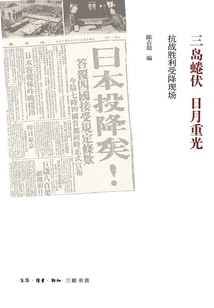
三岛蜷伏·日月重光:抗战胜利受降现场
Chen Zhanbiao
Regarding Japan's surrender, we often hear such popular views: Japan's surrender was the result of "Qu Yuan" (the American atomic bomb) and "Su Wu" (the Soviet Red Army); Japan was defeated by the United States, not China; Japan's surrender was "conditional", not "unconditional"; Japan did not surrender, etc. These statements not only existed at that time, but are still popular even today. They are not only accepted by foreigners, but even tacitly accepted by Chinese people. But if these views were true, then in 1945 the Japanese army would have repeatedly knelt down and submitted letters of surrender to China, which would not have happened.
Regarding Japan's surrender, we often hear such popular views: Japan's surrender was the result of "Qu Yuan" (the American atomic bomb) and "Su Wu" (the Soviet Red Army); Japan was defeated by the United States, not China; Japan's surrender was "conditional", not "unconditional"; Japan did not surrender, etc. These statements not only existed at that time, but are still popular even today. They are not only accepted by foreigners, but even tacitly accepted by Chinese people. But if these views were true, then in 1945 the Japanese army would have repeatedly knelt down and submitted letters of surrender to China, which would not have happened.
天公不语对枯棋:晚清的政局和人物
Jiang Ming
This is a historical reading that closely focuses on important events and key figures and tells the political situation of the late Qing Dynasty. The scenic spots in Beijing described by the author, including the imperial palaces, gardens, palaces, and streets, were once the stage for the activities of the undead in history. The author uses highly contagious detailed narratives to reproduce the difficult choices and complex and ever-changing inner worlds of the Empress Dowager Cixi, Emperor Guangxu, Li Hongzhang and other princes and ministers, and reformers such as Kang and Liang, at historical junctures. The author outlines a vivid image of that era. It is not only a leisurely and boring Beijing anecdote, but also imbued with the kung fu of historians, old thoughts and new ideas.
This is a historical reading that closely focuses on important events and key figures and tells the political situation of the late Qing Dynasty. The scenic spots in Beijing described by the author, including the imperial palaces, gardens, palaces, and streets, were once the stage for the activities of the undead in history. The author uses highly contagious detailed narratives to reproduce the difficult choices and complex and ever-changing inner worlds of the Empress Dowager Cixi, Emperor Guangxu, Li Hongzhang and other princes and ministers, and reformers such as Kang and Liang, at historical junctures. The author outlines a vivid image of that era. It is not only a leisurely and boring Beijing anecdote, but also imbued with the kung fu of historians, old thoughts and new ideas.