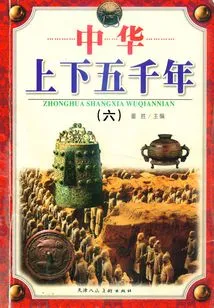
Five Thousand Years of China (6)
About This Novel
The rulers of the Jin and Yuan dynasties first developed from nomadic peoples on the northern grasslands and then came to dominate the Central Plains. Their original political, economic and cultural levels lagged behind the Han people, so their governance methods were relatively backward. In order to consolidate and strengthen their rule and management of the Central Plains, they had to learn the Han people's governance methods and accept the Han people's politics, economy and culture. Therefore, both the Jin and Yuan dynasties supported religion in order to control the people, and people in war also needed religious beliefs to help them escape. Taoism during the Jin and Yuan Dynasties developed under such a background. Because Taoism was highly praised in the Song Dynasty, Emperor Huizong of the Song Dynasty even called himself "Emperor Taoism", which led to many drawbacks. The government and the public had a sense of distrust in Taoism. Therefore, the development of Southern Tianshi Taoism (Zhengyi Sect) tended to stagnate in the Southern Song Dynasty, Jin and Yuan Dynasties. In the north controlled by the Jin and Yuan Dynasties, three new Taoist sects developed and formed due to the above-mentioned reasons: Quanzhen Sect, Dao Sect, and Taiyi Sect, among which Quanzhen Sect was the most prosperous.
Official Sources
What Readers Think
Rating
Community(0)
Rating
Community(0)