Library
Browse and search books
3,417 novels found
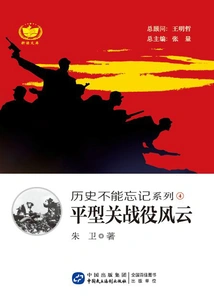
Battle of Pingxingguan
History平型关战役风云
Zhu Wei
"History Can't Forget" is a themed series of books specially designed by China Democracy and Legal Publishing House for young readers. It aims to allow young people to fully understand the face of the Anti-Japanese War and inspire their patriotism. This book is a volume in the series. It mainly describes the struggle of the Communist Party of China to establish the anti-Japanese national united front, the changes in the domestic and foreign policies of the Nationalist government, the second Kuomintang-Communist cooperation negotiation and the establishment of the anti-Japanese national united front, the Kuomintang's strategic deployment in North and Northwest China, the Red Army's reorganization and the Eighth Route Army's Pingxingguan ambush battle, etc.
"History Can't Forget" is a themed series of books specially designed by China Democracy and Legal Publishing House for young readers. It aims to allow young people to fully understand the face of the Anti-Japanese War and inspire their patriotism. This book is a volume in the series. It mainly describes the struggle of the Communist Party of China to establish the anti-Japanese national united front, the changes in the domestic and foreign policies of the Nationalist government, the second Kuomintang-Communist cooperation negotiation and the establishment of the anti-Japanese national united front, the Kuomintang's strategic deployment in North and Northwest China, the Red Army's reorganization and the Eighth Route Army's Pingxingguan ambush battle, etc.
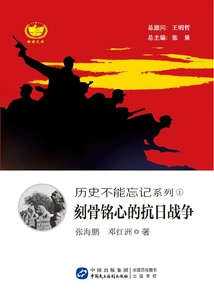
刻骨铭心的抗日战争
Zhang Haipeng Deng Hongzhou
"History Can't Forget" is a themed series of books specially designed by China Democracy and Legal Publishing House for young readers. It aims to allow young people to fully understand the face of the Anti-Japanese War and inspire their patriotism. This book is a volume in the series, which mainly reflects the Anti-Japanese War deeds such as the Great Wall Anti-Japanese War, the December 9th Movement, the Luochuan Conference, the Battle of Xinkou, the Taiyuan Defense War, the establishment of anti-Japanese base areas behind enemy lines in North China and guerrilla warfare, tunnel warfare in North China, mine warfare in North China, and the Baiyangdian battle of the Yanling Team.
"History Can't Forget" is a themed series of books specially designed by China Democracy and Legal Publishing House for young readers. It aims to allow young people to fully understand the face of the Anti-Japanese War and inspire their patriotism. This book is a volume in the series, which mainly reflects the Anti-Japanese War deeds such as the Great Wall Anti-Japanese War, the December 9th Movement, the Luochuan Conference, the Battle of Xinkou, the Taiyuan Defense War, the establishment of anti-Japanese base areas behind enemy lines in North China and guerrilla warfare, tunnel warfare in North China, mine warfare in North China, and the Baiyangdian battle of the Yanling Team.
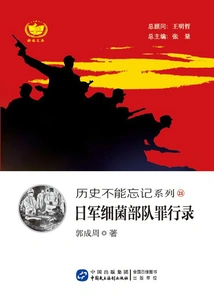
日军细菌部队罪行录
Guo Chengzhou
"History Can't Forget" is a themed series of books specially designed by China Democracy and Legal Publishing House for young readers. It aims to allow young people to fully understand the face of the Anti-Japanese War and inspire their patriotism. This book is a volume in the series. It mainly introduces the basic concepts of bacterial (biological) weapons, the overall organizational structure of the Japanese invading Japanese army's bacterial warfare unit, and reveals the Kwantung Army's 731st Epidemic Prevention Water Supply-Bacteriological Warfare Unit, the Kwantung Army's Changchun No. 1 Livestock and Crop Cells The heinous crimes committed by the Bacteriological Warfare Unit, the 1855th Epidemic Prevention and Water Supply-Bacteriological Warfare Unit of North China (Beiping) North Branch A, the 1644th Epidemic Prevention and Water Supply-Bacteriological Warfare Unit of Central China (Nanjing), and the 864th Epidemic Prevention and Water Supply-Bacteriological Warfare Unit of South China (Guangzhou).
"History Can't Forget" is a themed series of books specially designed by China Democracy and Legal Publishing House for young readers. It aims to allow young people to fully understand the face of the Anti-Japanese War and inspire their patriotism. This book is a volume in the series. It mainly introduces the basic concepts of bacterial (biological) weapons, the overall organizational structure of the Japanese invading Japanese army's bacterial warfare unit, and reveals the Kwantung Army's 731st Epidemic Prevention Water Supply-Bacteriological Warfare Unit, the Kwantung Army's Changchun No. 1 Livestock and Crop Cells The heinous crimes committed by the Bacteriological Warfare Unit, the 1855th Epidemic Prevention and Water Supply-Bacteriological Warfare Unit of North China (Beiping) North Branch A, the 1644th Epidemic Prevention and Water Supply-Bacteriological Warfare Unit of Central China (Nanjing), and the 864th Epidemic Prevention and Water Supply-Bacteriological Warfare Unit of South China (Guangzhou).
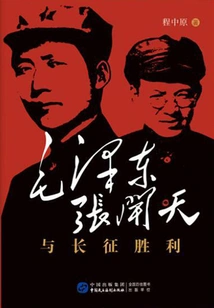
毛泽东张闻天与长征胜利
Cheng Zhongyuan
The Long March of the Chinese Workers' and Peasants' Red Army was a strategic shift in the history of our country's revolution. The Long March of the Chinese Workers' and Peasants' Red Army was an important event in China's modern history. It had a far-reaching impact and determined the historical direction of China to a certain extent. The victory of the Red Army's Long March was the key to turning the Chinese revolution from crisis to safety. In this event with far-reaching historical consequences, party leaders such as Mao Zedong and Zhang Wentian responded to the situation, sized up the situation, overcame various difficulties and resistance, and worked hard to ensure that the Communist Party and the army led by the party moved in the correct historical direction.
The Long March of the Chinese Workers' and Peasants' Red Army was a strategic shift in the history of our country's revolution. The Long March of the Chinese Workers' and Peasants' Red Army was an important event in China's modern history. It had a far-reaching impact and determined the historical direction of China to a certain extent. The victory of the Red Army's Long March was the key to turning the Chinese revolution from crisis to safety. In this event with far-reaching historical consequences, party leaders such as Mao Zedong and Zhang Wentian responded to the situation, sized up the situation, overcame various difficulties and resistance, and worked hard to ensure that the Communist Party and the army led by the party moved in the correct historical direction.
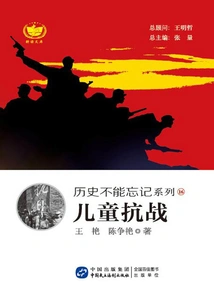
Children War
History儿童抗战
Wang Yan Chen Zhengyan
"History Can't Forget" is a themed series of books specially designed by China Democracy and Legal Publishing House for young readers. It aims to allow young people to fully understand the face of the Anti-Japanese War and inspire their patriotism. This book is a part of the series. It mainly reflects the glorious images of the young heroes of the Anti-Japanese Children's League, the Chinese Boy Scouts, and the Children's Theater Troupe during the Anti-Japanese War. It also describes the wartime child care societies, anti-child slavery education, and other children's protection and education work during the Anti-Japanese War.
"History Can't Forget" is a themed series of books specially designed by China Democracy and Legal Publishing House for young readers. It aims to allow young people to fully understand the face of the Anti-Japanese War and inspire their patriotism. This book is a part of the series. It mainly reflects the glorious images of the young heroes of the Anti-Japanese Children's League, the Chinese Boy Scouts, and the Children's Theater Troupe during the Anti-Japanese War. It also describes the wartime child care societies, anti-child slavery education, and other children's protection and education work during the Anti-Japanese War.
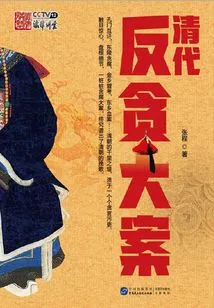
清代反贪大案
Zhang Cheng
"Anti-Corruption Cases in the Qing Dynasty" is a masterpiece that is both academic and interesting. The author vividly describes the major corruption cases that occurred in the Qing Dynasty: the Confucian quarrel between Confucius and his disciples triggered the exploration of morality and the status of descendants of sages; the case of Chen Huizu triggered the debate between corrupt officials and thieves; the harassment of the inn involved picketing and corruption incidents; the adventurous examination in Jinxiang reflected the rise of social classes due to changes in social class. The great turmoil; the Ministry of War's loss of seals, falsification of donations, and theft of the treasury reflected the corruption of lower-level officials; the Huang Yulin case was the epitome of the game between salt merchants and the government in the Qing Dynasty; the Dongling corruption, the reckless and corrupt officials dared to extend their black hands to the emperor's tomb; the Dongxiang murder case, the shaping of this unjust case and the ordinary can be described as twists and turns. The various ills brought to society by corrupt behaviors such as embezzlement and misappropriation, bribery and bribery, bending the law for personal gain, selling one's position and title, conveying benefits, party affiliation and dissent, dereliction of duty, and perfunctory duties are also shown in this book, which can give future generations an opportunity to learn from history. The content of this book is clear. It is not only a popular book that everyone can read, but also an interesting book with educational significance. The publication of this book will bring good social value and social influence, and it is recommended to be published.
"Anti-Corruption Cases in the Qing Dynasty" is a masterpiece that is both academic and interesting. The author vividly describes the major corruption cases that occurred in the Qing Dynasty: the Confucian quarrel between Confucius and his disciples triggered the exploration of morality and the status of descendants of sages; the case of Chen Huizu triggered the debate between corrupt officials and thieves; the harassment of the inn involved picketing and corruption incidents; the adventurous examination in Jinxiang reflected the rise of social classes due to changes in social class. The great turmoil; the Ministry of War's loss of seals, falsification of donations, and theft of the treasury reflected the corruption of lower-level officials; the Huang Yulin case was the epitome of the game between salt merchants and the government in the Qing Dynasty; the Dongling corruption, the reckless and corrupt officials dared to extend their black hands to the emperor's tomb; the Dongxiang murder case, the shaping of this unjust case and the ordinary can be described as twists and turns. The various ills brought to society by corrupt behaviors such as embezzlement and misappropriation, bribery and bribery, bending the law for personal gain, selling one's position and title, conveying benefits, party affiliation and dissent, dereliction of duty, and perfunctory duties are also shown in this book, which can give future generations an opportunity to learn from history. The content of this book is clear. It is not only a popular book that everyone can read, but also an interesting book with educational significance. The publication of this book will bring good social value and social influence, and it is recommended to be published.
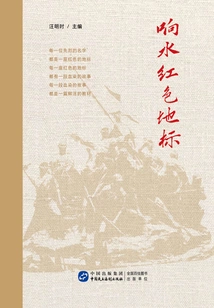
Xiangshui Red Landmark
History响水红色地标
Editor-in-chief Wang Mingshi
This book is divided into three parts: "Important Revolutionary Memorial Sites", "Red Landmarks" and "Important Memorial Venues", and contains more than 40 original works by members of the Xiangshui New Fourth Army Research Association. Each work is written by the author through on-the-spot investigations and visits, as well as authoritative archival materials, and has certain historical value. This book aims to not forget history, remember the martyrs, educate future generations, and indicate the future. To arouse people to not forget their original aspirations, keep their mission in mind, and complete the unfinished business of the martyrs.
This book is divided into three parts: "Important Revolutionary Memorial Sites", "Red Landmarks" and "Important Memorial Venues", and contains more than 40 original works by members of the Xiangshui New Fourth Army Research Association. Each work is written by the author through on-the-spot investigations and visits, as well as authoritative archival materials, and has certain historical value. This book aims to not forget history, remember the martyrs, educate future generations, and indicate the future. To arouse people to not forget their original aspirations, keep their mission in mind, and complete the unfinished business of the martyrs.
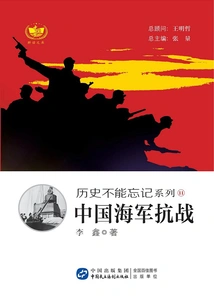
中国海军抗战
Li Xin
"History Can't Forget" is a themed series of books specially designed by China Democracy and Legal Publishing House for young readers. It aims to allow young people to fully understand the face of the Anti-Japanese War and inspire their patriotism. This book is a part of the series. It mainly reflects the naval military strength of China and Japan during the Anti-Japanese War. The Chinese Navy participated in the 128th Songhu Anti-Japanese War, the Songhu Battle, the Yangtze River Blockade Operation, the defense of the fortresses such as Madang and Hukou, and the mine-laying guerrilla warfare. It also describes the details of the Zhongshan ship's bloodbath and the Navy's surrender.
"History Can't Forget" is a themed series of books specially designed by China Democracy and Legal Publishing House for young readers. It aims to allow young people to fully understand the face of the Anti-Japanese War and inspire their patriotism. This book is a part of the series. It mainly reflects the naval military strength of China and Japan during the Anti-Japanese War. The Chinese Navy participated in the 128th Songhu Anti-Japanese War, the Songhu Battle, the Yangtze River Blockade Operation, the defense of the fortresses such as Madang and Hukou, and the mine-laying guerrilla warfare. It also describes the details of the Zhongshan ship's bloodbath and the Navy's surrender.
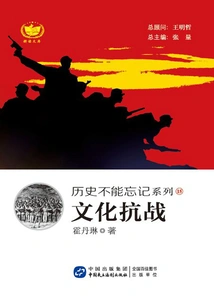
Cultural Resistance
History文化抗战
Huo Danlin
"History Can't Forget" is a themed series of books specially designed by China Democracy and Legal Publishing House for young readers. It aims to allow young people to fully understand the face of the Anti-Japanese War and inspire their patriotism. This book is a part of the series, which mainly reflects the deeds of the cultural circles participating in the struggle to save the nation during the Anti-Japanese War, including the creation of Anti-Japanese War songs such as "March of the Broadsword", Anti-Japanese War poets such as Ai Qing and Tian Jian and their poems, photography and videos reflecting the history of the Anti-Japanese War, the Yan'an Forum on Literature and Art, Guilin's "Cultural City" and Chongqing's Anti-Japanese War culture, etc.
"History Can't Forget" is a themed series of books specially designed by China Democracy and Legal Publishing House for young readers. It aims to allow young people to fully understand the face of the Anti-Japanese War and inspire their patriotism. This book is a part of the series, which mainly reflects the deeds of the cultural circles participating in the struggle to save the nation during the Anti-Japanese War, including the creation of Anti-Japanese War songs such as "March of the Broadsword", Anti-Japanese War poets such as Ai Qing and Tian Jian and their poems, photography and videos reflecting the history of the Anti-Japanese War, the Yan'an Forum on Literature and Art, Guilin's "Cultural City" and Chongqing's Anti-Japanese War culture, etc.
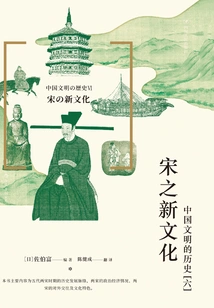
中国文明的历史(六):宋之新文化
(japanese) Compiled By Tomi Saeki
It is titled "New Culture of the Song Dynasty", but for the sake of the coherence of historical narrative, a small amount of space is also used to introduce the history of the Five Dynasties period. The main content is the historical development context of the Five Dynasties and Two Song Dynasties, the political and economic conditions of the two Song Dynasties, the foreign exchanges and cultural characteristics of the two Song Dynasties, etc. The core view is that the rise of the scholar-bureaucrat class and its "new" culture during the Song Dynasty had a profound impact on the historical development trend of China.
It is titled "New Culture of the Song Dynasty", but for the sake of the coherence of historical narrative, a small amount of space is also used to introduce the history of the Five Dynasties period. The main content is the historical development context of the Five Dynasties and Two Song Dynasties, the political and economic conditions of the two Song Dynasties, the foreign exchanges and cultural characteristics of the two Song Dynasties, etc. The core view is that the rise of the scholar-bureaucrat class and its "new" culture during the Song Dynasty had a profound impact on the historical development trend of China.
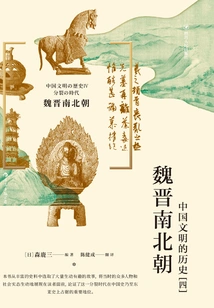
中国文明的历史(四):魏晋南北朝
(japanese) Compiled By Morika San
From the fall of the Han Dynasty to the Three Kingdoms era, to the brief unification of the Western Jin Dynasty, to the sixteen kingdoms of the Eastern Jin Dynasty and even the confrontation between the Southern and Northern Dynasties, China has entered an era of division and melee. Although politically divided, there are many heroes. This book selects a large number of vivid and interesting stories from rich historical materials, vividly presents many characters and social realities at that time to readers, and demonstrates the important position of this divided era in the history of China and even East Asia.
From the fall of the Han Dynasty to the Three Kingdoms era, to the brief unification of the Western Jin Dynasty, to the sixteen kingdoms of the Eastern Jin Dynasty and even the confrontation between the Southern and Northern Dynasties, China has entered an era of division and melee. Although politically divided, there are many heroes. This book selects a large number of vivid and interesting stories from rich historical materials, vividly presents many characters and social realities at that time to readers, and demonstrates the important position of this divided era in the history of China and even East Asia.
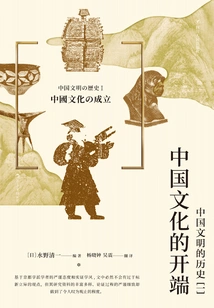
中国文明的历史(一):中国文化的开端
(japan) Compiled By Seiichi Mizuno
This book uses a large amount of archaeological and historical knowledge to restore the history of the nascent period of Chinese civilization from the Paleolithic Age of Peking Man to the end of the Western Zhou Dynasty. Through archaeological data and written materials such as oracle bone inscriptions and bronze inscriptions, it deeply explores the society of the Shang and Western Zhou dynasties and focuses on how the ritual and music systems of the Shang and Western Zhou dynasties were absorbed by Confucianism and gradually formed the basis of Chinese civilization. It is a best-selling book with depth and breadth that helps readers gain a deeper understanding of the origins of Chinese culture.
This book uses a large amount of archaeological and historical knowledge to restore the history of the nascent period of Chinese civilization from the Paleolithic Age of Peking Man to the end of the Western Zhou Dynasty. Through archaeological data and written materials such as oracle bone inscriptions and bronze inscriptions, it deeply explores the society of the Shang and Western Zhou dynasties and focuses on how the ritual and music systems of the Shang and Western Zhou dynasties were absorbed by Confucianism and gradually formed the basis of Chinese civilization. It is a best-selling book with depth and breadth that helps readers gain a deeper understanding of the origins of Chinese culture.
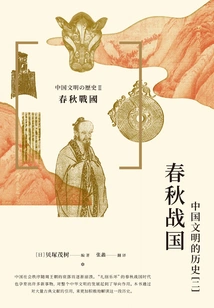
中国文明的历史(二):春秋战国
(japan) Compiled By Shigeki Kaizuka
At the same time as the Zhou Dynasty declined, China's social order also gradually collapsed, and China entered the Spring and Autumn and Warring States eras with frequent wars. In the process of "the collapse of rituals and music", this era also gave birth to many new things, which played a guiding role in the development of the entire Chinese civilization. This book more actively interprets this period of history from this new perspective by citing a large number of classical documents such as "Zuo Zhuan" and "Historical Records".
At the same time as the Zhou Dynasty declined, China's social order also gradually collapsed, and China entered the Spring and Autumn and Warring States eras with frequent wars. In the process of "the collapse of rituals and music", this era also gave birth to many new things, which played a guiding role in the development of the entire Chinese civilization. This book more actively interprets this period of history from this new perspective by citing a large number of classical documents such as "Zuo Zhuan" and "Historical Records".
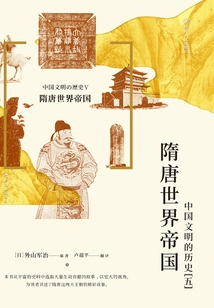
中国文明的历史(五):隋唐世界帝国
(japanese) Compiled By Junji Toyama
After the long-term division of the Wei, Jin, Southern and Northern Dynasties, the unified dynasty of the Sui and Tang Dynasties reached unprecedented heights in all aspects and had a profound impact on surrounding countries. This book selects a large number of vivid and interesting stories from rich historical materials, and tells readers the history of the two dynasties from a broader perspective, focusing on the political changes in the Sui and Tang Dynasties. It is a classic popular book on the history of the Sui and Tang Dynasties.
After the long-term division of the Wei, Jin, Southern and Northern Dynasties, the unified dynasty of the Sui and Tang Dynasties reached unprecedented heights in all aspects and had a profound impact on surrounding countries. This book selects a large number of vivid and interesting stories from rich historical materials, and tells readers the history of the two dynasties from a broader perspective, focusing on the political changes in the Sui and Tang Dynasties. It is a classic popular book on the history of the Sui and Tang Dynasties.
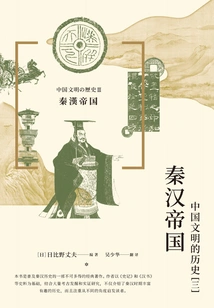
中国文明的历史(三):秦汉帝国
(japan) Compiled By Hibino Husband
This book is based on historical materials such as "Historical Records" and "Hanshu", combined with a large number of archaeological excavations and empirical research, to provide a relatively complete narrative and concise commentary on the historical facts of the Qin and Han Dynasties. The author not only introduces rich and interesting historical knowledge of the Qin and Han Dynasties, but also focuses on inspiring readers to have a deeper understanding of this period of history from different perspectives. Due to its empirical research methods and detailed textual research, this book can be said to be timeless and a rare classic that popularizes the history of Qin and Han Dynasties.
This book is based on historical materials such as "Historical Records" and "Hanshu", combined with a large number of archaeological excavations and empirical research, to provide a relatively complete narrative and concise commentary on the historical facts of the Qin and Han Dynasties. The author not only introduces rich and interesting historical knowledge of the Qin and Han Dynasties, but also focuses on inspiring readers to have a deeper understanding of this period of history from different perspectives. Due to its empirical research methods and detailed textual research, this book can be said to be timeless and a rare classic that popularizes the history of Qin and Han Dynasties.
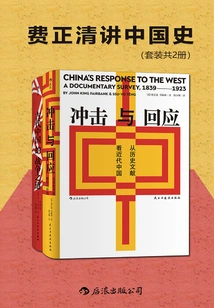
费正清讲中国史(套装共2册)
(u. S.) Fairbank Et Al.
"Impact and Response": Under the framework of the "impact-response" model, this book attempts to analyze an important clue in China's modern history: in the face of the strong expansion of the West, how did the Chinese elite understand this unfamiliar civilization and how to survive the country's culture, politics, and social system. By selecting some core historical materials and classic chapters from modern historical documents, this book gives a panoramic view of the exploration of the path to modernization by several generations of pioneers in modern China. "The Way of War in Ancient China": This book is a collection of eight famous sinologists' detailed analysis of ancient China's military history. The research content covers field battles and sieges, external expeditions and internal campaigns, resisting insults and quelling chaos, starting from 632 BC and ending in 1556 AD. , Spanning the pre-Qin, Western Han, Tang, Song, and Ming dynasties, through classic battles such as the Battle of Chengpu, the Expedition of the Huns, the Battle of Huaixi, the Siege of Xiangyang, the Battle of Poyang, the Civil War, and the suppression of Japanese pirates, it presents the often overlooked military style and military tradition of ancient China.
"Impact and Response": Under the framework of the "impact-response" model, this book attempts to analyze an important clue in China's modern history: in the face of the strong expansion of the West, how did the Chinese elite understand this unfamiliar civilization and how to survive the country's culture, politics, and social system. By selecting some core historical materials and classic chapters from modern historical documents, this book gives a panoramic view of the exploration of the path to modernization by several generations of pioneers in modern China. "The Way of War in Ancient China": This book is a collection of eight famous sinologists' detailed analysis of ancient China's military history. The research content covers field battles and sieges, external expeditions and internal campaigns, resisting insults and quelling chaos, starting from 632 BC and ending in 1556 AD. , Spanning the pre-Qin, Western Han, Tang, Song, and Ming dynasties, through classic battles such as the Battle of Chengpu, the Expedition of the Huns, the Battle of Huaixi, the Siege of Xiangyang, the Battle of Poyang, the Civil War, and the suppression of Japanese pirates, it presents the often overlooked military style and military tradition of ancient China.
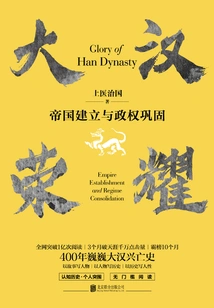
大汉荣耀:帝国建立与政权巩固
Heal The Country
During the turmoil at the end of the Qin Dynasty, heroes rose up. How did the ordinary Liu Bang complete the transformation from a commoner to an emperor step by step? After the Han Dynasty was first established, it seemed to be powerful in scale, but in fact there were internal and external troubles. How did the builders of the Han Dynasty manage this huge empire to its peak? What untold story happened in it?
During the turmoil at the end of the Qin Dynasty, heroes rose up. How did the ordinary Liu Bang complete the transformation from a commoner to an emperor step by step? After the Han Dynasty was first established, it seemed to be powerful in scale, but in fact there were internal and external troubles. How did the builders of the Han Dynasty manage this huge empire to its peak? What untold story happened in it?
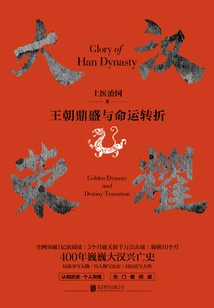
大汉荣耀:王朝鼎盛与命运转折
Heal The Country
After the rule of Wenjing, Liu Che, the heroic emperor of Han Dynasty, stepped onto the stage of history, making the Han Dynasty stand on the top of the world dynasty in just a few decades. However, while the Han Dynasty was making rapid progress, various hidden dangers gradually surfaced... What was the reason that caused the mighty and prosperous Western Han Dynasty to come to an end after Wang Mang's new dynasty?
After the rule of Wenjing, Liu Che, the heroic emperor of Han Dynasty, stepped onto the stage of history, making the Han Dynasty stand on the top of the world dynasty in just a few decades. However, while the Han Dynasty was making rapid progress, various hidden dangers gradually surfaced... What was the reason that caused the mighty and prosperous Western Han Dynasty to come to an end after Wang Mang's new dynasty?
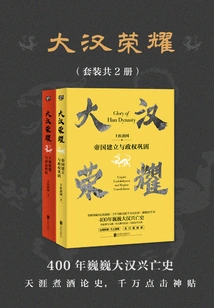
大汉荣耀(套装共2册)
Heal The Country
The "Glory of the Han Dynasty" series details the success and failure of the Han Dynasty during the four hundred years from Liu Bang, the founder of the Han Dynasty, to Liu Xie, the emperor of the Han Dynasty. As an unprecedentedly prosperous empire in Chinese history, the Han Dynasty created brilliant achievements and a splendid civilization, which had a profound and long-lasting impact on later generations. It was ranked as the most advanced and powerful empire in the world at that time with the European Roman Empire at almost the same time. As time goes by, this history becomes farther and farther away from us. This book attempts to clear away the mists of time and present a true and wonderful Han Dynasty before your eyes. If you want to see history, there is real history here; if you want to read stories, there are good stories here; if you just want entertainment and relaxation, you will not be disappointed here.
The "Glory of the Han Dynasty" series details the success and failure of the Han Dynasty during the four hundred years from Liu Bang, the founder of the Han Dynasty, to Liu Xie, the emperor of the Han Dynasty. As an unprecedentedly prosperous empire in Chinese history, the Han Dynasty created brilliant achievements and a splendid civilization, which had a profound and long-lasting impact on later generations. It was ranked as the most advanced and powerful empire in the world at that time with the European Roman Empire at almost the same time. As time goes by, this history becomes farther and farther away from us. This book attempts to clear away the mists of time and present a true and wonderful Han Dynasty before your eyes. If you want to see history, there is real history here; if you want to read stories, there are good stories here; if you just want entertainment and relaxation, you will not be disappointed here.
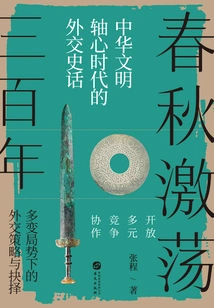
春秋激荡三百年
Zhang Cheng
During the Spring and Autumn Period, our ancestors had used idealism or realism to analyze the diplomacy at that time. Western diplomatic concepts or theories such as hegemony, power, superpowers, bipolarity, multipolarity, one superpower and multiple powers, multilateral diplomacy, and national interests can all find echoes in the Spring and Autumn Period. Comprehensively demonstrate the "openness, diversity, competition, and collaboration" of the Spring and Autumn Period, and interpret diplomatic strategies and choices in changing situations.
During the Spring and Autumn Period, our ancestors had used idealism or realism to analyze the diplomacy at that time. Western diplomatic concepts or theories such as hegemony, power, superpowers, bipolarity, multipolarity, one superpower and multiple powers, multilateral diplomacy, and national interests can all find echoes in the Spring and Autumn Period. Comprehensively demonstrate the "openness, diversity, competition, and collaboration" of the Spring and Autumn Period, and interpret diplomatic strategies and choices in changing situations.
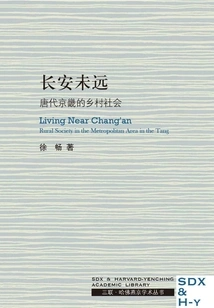
长安未远:唐代京畿的乡村社会
Xu Chang
During the Tang Dynasty, the golden age of Chinese history, Chang'an was the capital of the country and the political center of East Asia, with dazzling material civilization and a blend of foreign cultures. Due to the lack of data, academic research on it is far less than that of Dunhuang and Turpan, the border cities in the west. In recent years, with the progress of urban archeology, the publication of stone epitaphs, and the rediscovery of urban information in Tang poetry, the study of Chang'an urban society has ushered in new opportunities, and "Chang'an Studies" was born. In medieval China, there was a continuum between cities (Guo) and countryside (Wild) based on their physical form (Urban-Rural). Continuum); in the case of Chang'an, the city and the suburbs jointly played the role of the core area of the empire. The author treats the capital and surrounding villages as "Greater Chang'an" as a whole. From the perspective of regional history, it shows the interaction, integration, contradictions and conflicts of state and social forces in the Gyeonggi region (especially the rural area), which is the center of the Tang Empire and has a local stance, as well as a panoramic view of the production and life, security and mobility, and ideological beliefs of people of all strata. The book focuses on analyzing the Chang'an urban and rural life experience of the Gyeonggi gentry represented by the Wei and Du families, and the literati officials represented by Bai Juyi. This book is a synthesis and innovation of Chang'an research in the new era. It is a substantial work on the study of medieval rural society. It also contributes to a comprehensive understanding of the urban-rural relationship in ancient my country.
During the Tang Dynasty, the golden age of Chinese history, Chang'an was the capital of the country and the political center of East Asia, with dazzling material civilization and a blend of foreign cultures. Due to the lack of data, academic research on it is far less than that of Dunhuang and Turpan, the border cities in the west. In recent years, with the progress of urban archeology, the publication of stone epitaphs, and the rediscovery of urban information in Tang poetry, the study of Chang'an urban society has ushered in new opportunities, and "Chang'an Studies" was born. In medieval China, there was a continuum between cities (Guo) and countryside (Wild) based on their physical form (Urban-Rural). Continuum); in the case of Chang'an, the city and the suburbs jointly played the role of the core area of the empire. The author treats the capital and surrounding villages as "Greater Chang'an" as a whole. From the perspective of regional history, it shows the interaction, integration, contradictions and conflicts of state and social forces in the Gyeonggi region (especially the rural area), which is the center of the Tang Empire and has a local stance, as well as a panoramic view of the production and life, security and mobility, and ideological beliefs of people of all strata. The book focuses on analyzing the Chang'an urban and rural life experience of the Gyeonggi gentry represented by the Wei and Du families, and the literati officials represented by Bai Juyi. This book is a synthesis and innovation of Chang'an research in the new era. It is a substantial work on the study of medieval rural society. It also contributes to a comprehensive understanding of the urban-rural relationship in ancient my country.
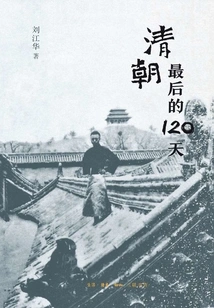
清朝最后的120天
Liu Jianghua
From the Wuchang Uprising on October 10, 1911, the beginning of the Revolution of 1911, to the abdication of the Qing emperor on February 12, 1912, the end of the feudal monarchy, there were more than 120 days. Although these 120 days are fleeting, they are also thrilling. They condense the last memories of the 3,000-year feudal dynasty and the 300-year disintegration of the Qing Empire. This book is a historical reconstruction of the last 120 days of the Qing Dynasty. Based on first-hand historical materials such as Qing palace archives, this book follows the time chain when the Qing government learned about the Wuchang Uprising, and outlines the historical scene before its collapse. The author carefully and concretely explains the Qing government's gains and losses in military, financial, diplomatic, and central operations after the Wuchang Uprising from multiple dimensions, reproduces the historical process of the Qing government from hasty disposal to helpless abdication, and uses concrete writing to restore the Revolution of 1911, a major event that changed the destiny of Chinese history.
From the Wuchang Uprising on October 10, 1911, the beginning of the Revolution of 1911, to the abdication of the Qing emperor on February 12, 1912, the end of the feudal monarchy, there were more than 120 days. Although these 120 days are fleeting, they are also thrilling. They condense the last memories of the 3,000-year feudal dynasty and the 300-year disintegration of the Qing Empire. This book is a historical reconstruction of the last 120 days of the Qing Dynasty. Based on first-hand historical materials such as Qing palace archives, this book follows the time chain when the Qing government learned about the Wuchang Uprising, and outlines the historical scene before its collapse. The author carefully and concretely explains the Qing government's gains and losses in military, financial, diplomatic, and central operations after the Wuchang Uprising from multiple dimensions, reproduces the historical process of the Qing government from hasty disposal to helpless abdication, and uses concrete writing to restore the Revolution of 1911, a major event that changed the destiny of Chinese history.
南明史(全集)
Gu Cheng
If there is internal fighting, the country will be destroyed, and if the country is destroyed, there will be internal fighting! There is nothing more absurd than this in human nature! In March 1644 AD, the Dashun Army led by Li Zicheng captured Beijing, and Emperor Chongzhen hanged himself. When the news reached Nanjing, the capital of the capital, the question of who to appoint as the new emperor became urgent. Civil and military officials rushed to take the lead in front of the new emperor, but they did not expect that this kind of ulterior motives left huge hidden dangers for the Nanming regime. With the support of military general Ma Shiying and others, King Fu Zhu Yousong ascended the throne and changed the Yuan Dynasty to Hongguang. These "strategic" heroes also caused an imbalance of power within Nanming, which in turn triggered constant internal strife. The Hongguang regime, the Longwu regime, and the Yongli regime successively established themselves, and successively competed with the Dashun army and the Qing army. However, fierce internal struggles caused the Nanming monarchs and ministers to lose countless opportunities for comebacks in the constant internal strife, leading to failure. Nanming made his debut in the midst of infighting, and also fell apart in the midst of infighting! Open this book and see through the absurdity of human nature from the demise of Nanming!
If there is internal fighting, the country will be destroyed, and if the country is destroyed, there will be internal fighting! There is nothing more absurd than this in human nature! In March 1644 AD, the Dashun Army led by Li Zicheng captured Beijing, and Emperor Chongzhen hanged himself. When the news reached Nanjing, the capital of the capital, the question of who to appoint as the new emperor became urgent. Civil and military officials rushed to take the lead in front of the new emperor, but they did not expect that this kind of ulterior motives left huge hidden dangers for the Nanming regime. With the support of military general Ma Shiying and others, King Fu Zhu Yousong ascended the throne and changed the Yuan Dynasty to Hongguang. These "strategic" heroes also caused an imbalance of power within Nanming, which in turn triggered constant internal strife. The Hongguang regime, the Longwu regime, and the Yongli regime successively established themselves, and successively competed with the Dashun army and the Qing army. However, fierce internal struggles caused the Nanming monarchs and ministers to lose countless opportunities for comebacks in the constant internal strife, leading to failure. Nanming made his debut in the midst of infighting, and also fell apart in the midst of infighting! Open this book and see through the absurdity of human nature from the demise of Nanming!
秦汉交通史稿
Wang Zijin
The Qin and Han Dynasties were an important historical stage in the history of transportation in China. This book summarizes the achievements of the Qin and Han Dynasties in transportation road construction, Jinqiao, vehicle production, transportation power development, inland navigation, offshore shipping and overseas transportation, shipbuilding industry, urban transportation, etc. It also discusses the transportation structure, warehouse system and main grain roads, industrial layout and transportation and marketing divisions, transportation industry, population migration and population flow, communication forms, and extraterritorial transportation in the main cultural areas of the Qin and Han Dynasties. Transportation and the establishment of the Qin and Han polities, transportation and the operation of the Qin and Han economy, transportation and the development of Qin and Han culture are explained under the theme of "Transportation Historical Background of Qin and Han Civilizations". "The traffic psychology and traffic habits of the Qin and Han people" were also discussed as an object of historical and cultural investigation.
The Qin and Han Dynasties were an important historical stage in the history of transportation in China. This book summarizes the achievements of the Qin and Han Dynasties in transportation road construction, Jinqiao, vehicle production, transportation power development, inland navigation, offshore shipping and overseas transportation, shipbuilding industry, urban transportation, etc. It also discusses the transportation structure, warehouse system and main grain roads, industrial layout and transportation and marketing divisions, transportation industry, population migration and population flow, communication forms, and extraterritorial transportation in the main cultural areas of the Qin and Han Dynasties. Transportation and the establishment of the Qin and Han polities, transportation and the operation of the Qin and Han economy, transportation and the development of Qin and Han culture are explained under the theme of "Transportation Historical Background of Qin and Han Civilizations". "The traffic psychology and traffic habits of the Qin and Han people" were also discussed as an object of historical and cultural investigation.
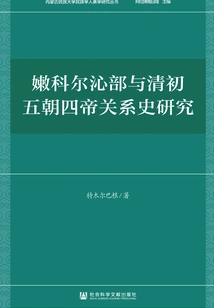
嫩科尔沁部与清初五朝四帝关系史研究
Temurbagan
The history of the Nenhorqin tribe is an important part of Mongolian history and plays an important role in both the history of the Mongolian nation and the history of the Qing Dynasty. From the "Battle of the Nine Tribes" in 1593 to the sacrifice of all Xibo people under his command in 1693, the Nenhorqin Tribe had many relationships with the four emperors of the Five Dynasties of the early Qing Dynasty. On the basis of fully absorbing previous research results, this book further explores Manchu and Mongolian archives such as the "Secretary Academy of the Qing Dynasty", "National History Institute of the Qing Dynasty" and "Mongol Hall Archives of the Qing Cabinet". It combines archival materials with historical records to complement each other and corroborate each other. It conducts a special study on the history of the relationship between the Nenhorqin tribe in the early Qing Dynasty and the four emperors of the Five Dynasties in the early Qing Dynasty. It aims to clarify the development and evolution trajectory of the Mongolian history in the early Qing Dynasty, which has certain academic significance.
The history of the Nenhorqin tribe is an important part of Mongolian history and plays an important role in both the history of the Mongolian nation and the history of the Qing Dynasty. From the "Battle of the Nine Tribes" in 1593 to the sacrifice of all Xibo people under his command in 1693, the Nenhorqin Tribe had many relationships with the four emperors of the Five Dynasties of the early Qing Dynasty. On the basis of fully absorbing previous research results, this book further explores Manchu and Mongolian archives such as the "Secretary Academy of the Qing Dynasty", "National History Institute of the Qing Dynasty" and "Mongol Hall Archives of the Qing Cabinet". It combines archival materials with historical records to complement each other and corroborate each other. It conducts a special study on the history of the relationship between the Nenhorqin tribe in the early Qing Dynasty and the four emperors of the Five Dynasties in the early Qing Dynasty. It aims to clarify the development and evolution trajectory of the Mongolian history in the early Qing Dynasty, which has certain academic significance.
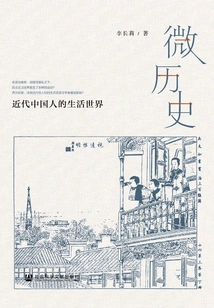
微历史:近代中国人的生活世界
Li Changli
From the late Qing Dynasty to the early Republic of China, Chinese and Western civilizations collided violently. Amid political decline, turmoil, and chaos, how did people's living world change? What impact did the spread of Western power and the popularity of foreign goods to the east have on people's lives and ideas? How do people respond to these changes? What new lifestyles, new pursuits and new concepts have been nurtured? Focusing on these issues, this book uses rich historical materials such as archives, local chronicles, diaries, notebooks, novels, newspapers, and foreign travel notes to examine the urban and rural living environment, consumer life, urban life, marriage and family life, etc., Explores the role and mechanism of changes in people's lives on the transformation of modern society, and reveals the role that the potential vitality and regeneration of Chinese civilization contained in the world of people's lives plays in the survival, continuation and rejuvenation of the Chinese nation.
From the late Qing Dynasty to the early Republic of China, Chinese and Western civilizations collided violently. Amid political decline, turmoil, and chaos, how did people's living world change? What impact did the spread of Western power and the popularity of foreign goods to the east have on people's lives and ideas? How do people respond to these changes? What new lifestyles, new pursuits and new concepts have been nurtured? Focusing on these issues, this book uses rich historical materials such as archives, local chronicles, diaries, notebooks, novels, newspapers, and foreign travel notes to examine the urban and rural living environment, consumer life, urban life, marriage and family life, etc., Explores the role and mechanism of changes in people's lives on the transformation of modern society, and reveals the role that the potential vitality and regeneration of Chinese civilization contained in the world of people's lives plays in the survival, continuation and rejuvenation of the Chinese nation.
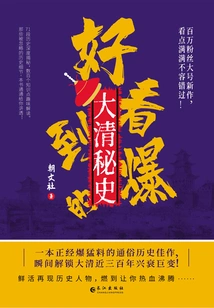
好看到爆的大清秘史
Chaowenshe
The Qing Dynasty was the last unified feudal dynasty in China. In the past three hundred years, there have been magnificent events and turbulent times; there have been prosperous times and humiliating experiences. Whether it is the secret of the palace or the historical truth, there are still different opinions... This book sorts out the historical context of the Qing Dynasty and selects 8 major themes and 71 important topics, from the daily life of the people to the palace changes, from small figures to major historical events, making the originally serious history interesting and approachable. At the same time, the author quotes extensively and strives to restore the historical truth and ensure that every knowledge point is supported by reliable historical data. The book's witty language and unique perspective will make you smile knowingly while walking into the real and vivid history of the Qing Dynasty.
The Qing Dynasty was the last unified feudal dynasty in China. In the past three hundred years, there have been magnificent events and turbulent times; there have been prosperous times and humiliating experiences. Whether it is the secret of the palace or the historical truth, there are still different opinions... This book sorts out the historical context of the Qing Dynasty and selects 8 major themes and 71 important topics, from the daily life of the people to the palace changes, from small figures to major historical events, making the originally serious history interesting and approachable. At the same time, the author quotes extensively and strives to restore the historical truth and ensure that every knowledge point is supported by reliable historical data. The book's witty language and unique perspective will make you smile knowingly while walking into the real and vivid history of the Qing Dynasty.
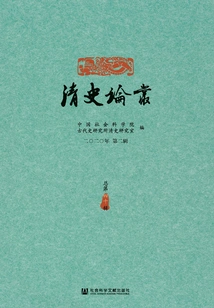
清史论丛(2020年第2辑\u002F总第40辑)
Compiled By Qing History Research Office, Institute Of Ancient History, Chinese Academy Of Social Sciences
"Qing History Series" is sponsored by the Qing History Research Office of the Institute of History, Chinese Academy of Social Sciences. It is a collection of academic papers on Qing history research at home and abroad. It was founded in 1979. This collection has wide influence at home and abroad, and is highly valued by the academic community. Its important features are concentrated research, rigorous academic style, and grasp of academic frontiers. The articles included in the book include both research articles on the critical history of the Qing Dynasty and research articles on the academic history of the Qing Dynasty. It includes both erudite Hongci research on the traditional culture of the Qing Dynasty and articles on the exchange of local Chinese and Western cultures in the Qing Dynasty.
"Qing History Series" is sponsored by the Qing History Research Office of the Institute of History, Chinese Academy of Social Sciences. It is a collection of academic papers on Qing history research at home and abroad. It was founded in 1979. This collection has wide influence at home and abroad, and is highly valued by the academic community. Its important features are concentrated research, rigorous academic style, and grasp of academic frontiers. The articles included in the book include both research articles on the critical history of the Qing Dynasty and research articles on the academic history of the Qing Dynasty. It includes both erudite Hongci research on the traditional culture of the Qing Dynasty and articles on the exchange of local Chinese and Western cultures in the Qing Dynasty.
影视中的近代中国与世界
Compiled By Chen Dan
This book is a supporting textbook for the general course "Modern China and the World in Film and Television". Taking the modern history of China, especially the history of modern Sino-foreign relations, as the main focus, relevant film and television works are selected and used as an introduction and entry point to explain relevant key professional knowledge.
This book is a supporting textbook for the general course "Modern China and the World in Film and Television". Taking the modern history of China, especially the history of modern Sino-foreign relations, as the main focus, relevant film and television works are selected and used as an introduction and entry point to explain relevant key professional knowledge.
从秦朝说起,到清朝结束(一):大秦风云
History Is Not A Zombie
Qin Shihuang defeated the six kingdoms, established a centralized feudal dynasty, and created a unified situation in Chinese history. Among them, many important figures and events became the key to pushing history forward, such as Lu Buwei, Li Si, Chen Sheng, Wu Guang, Liu Bang, Xiang Yu and other figures, as well as events such as the First Emperor's tour and the Dazexiang Uprising. The author of this book uses easy-to-understand language to introduce the important nodes of the Qin Dynasty from its establishment, development to disintegration in a story-like manner, and uses history as a mirror to reflect history into reality. This allows us to easily grasp the main thread of history, happily experience historical stories, establish a correct view of history, and live a good life today.
Qin Shihuang defeated the six kingdoms, established a centralized feudal dynasty, and created a unified situation in Chinese history. Among them, many important figures and events became the key to pushing history forward, such as Lu Buwei, Li Si, Chen Sheng, Wu Guang, Liu Bang, Xiang Yu and other figures, as well as events such as the First Emperor's tour and the Dazexiang Uprising. The author of this book uses easy-to-understand language to introduce the important nodes of the Qin Dynasty from its establishment, development to disintegration in a story-like manner, and uses history as a mirror to reflect history into reality. This allows us to easily grasp the main thread of history, happily experience historical stories, establish a correct view of history, and live a good life today.
Book of Southern Qi (part 2)
History南齐书(下)
Xiao Zixian
"The Book of Southern Qi" is one of the "Twenty-Four Histories" and is a history book written by Xiao Zixian of the Southern Dynasty. The book records the historical events of the Xiao Qi Dynasty in the Southern Dynasty from the first year of the founding of Emperor Gao of Qi (479 AD) to the second year of Emperor Zhongxing of Qi He (502 AD), a total of twenty-three years of history. It is the earliest chronological and chronological history of the Southern Qi Dynasty. This book is worth reading for readers interested in the history of this period. The text of the work is relatively concise, the writing style is smooth, and the narrative is complete. The writing of biographies inherited the method of narration in Ban Gu's "Book of Han" and also drew on the method of narration in Shen Yue's "Book of Song". It can list more characters in one biography and avoid the disadvantage of each biography being overwhelming. Except for a few, most of the journals and biographies in the book have prefaces to summarize the content of the entire article and indicate the main purpose of the writing. The work includes eight volumes of Emperor Chronicles. In addition to tracing Xiao Daocheng's political activities in the late Liu Song Dynasty, it mainly records the historical events of the Xiao Qi Dynasty (479-502) during the 23 years. There are eight chapters and eleven volumes in the Zhi, some of which are inherited from the Liu Song Dynasty, and some are from the founding of the Xiao Qi Dynasty. The boundaries are obvious. There are forty volumes of biographies, many of which record historical events in minority areas. One volume of preface was lost very early. When Xiao Zixian wrote about these events and characters, he did not directly comment on them, but revealed the character of the characters through the comparison of previous and later historical events. Xiao Zixian studied Sima Qian's method of describing history and achieved certain achievements. He was called "good history" by later generations of historians.
"The Book of Southern Qi" is one of the "Twenty-Four Histories" and is a history book written by Xiao Zixian of the Southern Dynasty. The book records the historical events of the Xiao Qi Dynasty in the Southern Dynasty from the first year of the founding of Emperor Gao of Qi (479 AD) to the second year of Emperor Zhongxing of Qi He (502 AD), a total of twenty-three years of history. It is the earliest chronological and chronological history of the Southern Qi Dynasty. This book is worth reading for readers interested in the history of this period. The text of the work is relatively concise, the writing style is smooth, and the narrative is complete. The writing of biographies inherited the method of narration in Ban Gu's "Book of Han" and also drew on the method of narration in Shen Yue's "Book of Song". It can list more characters in one biography and avoid the disadvantage of each biography being overwhelming. Except for a few, most of the journals and biographies in the book have prefaces to summarize the content of the entire article and indicate the main purpose of the writing. The work includes eight volumes of Emperor Chronicles. In addition to tracing Xiao Daocheng's political activities in the late Liu Song Dynasty, it mainly records the historical events of the Xiao Qi Dynasty (479-502) during the 23 years. There are eight chapters and eleven volumes in the Zhi, some of which are inherited from the Liu Song Dynasty, and some are from the founding of the Xiao Qi Dynasty. The boundaries are obvious. There are forty volumes of biographies, many of which record historical events in minority areas. One volume of preface was lost very early. When Xiao Zixian wrote about these events and characters, he did not directly comment on them, but revealed the character of the characters through the comparison of previous and later historical events. Xiao Zixian studied Sima Qian's method of describing history and achieved certain achievements. He was called "good history" by later generations of historians.
1644: Imperial Pain
History1644:帝国的疼痛
Nie Zuoping
In 1644 AD, war broke out all over the land of China, and heroes stood side by side, devastated... From the fall of Chongzhen to the failure of Li Zicheng; from the painstaking efforts of Nurhachi and his descendants to the intrigues of the small court of the Southern Ming Dynasty; from the traditional Chinese literati after the fall of the Ming Dynasty. From the different reactions to the generosity and tragedy of the people at the bottom who "know that there is no way to do anything but do it", the author describes to us the historical silhouette of a tragic era from six different angles, with a fresh, delicate but slightly heavy style unique to a professional writer.
In 1644 AD, war broke out all over the land of China, and heroes stood side by side, devastated... From the fall of Chongzhen to the failure of Li Zicheng; from the painstaking efforts of Nurhachi and his descendants to the intrigues of the small court of the Southern Ming Dynasty; from the traditional Chinese literati after the fall of the Ming Dynasty. From the different reactions to the generosity and tragedy of the people at the bottom who "know that there is no way to do anything but do it", the author describes to us the historical silhouette of a tragic era from six different angles, with a fresh, delicate but slightly heavy style unique to a professional writer.
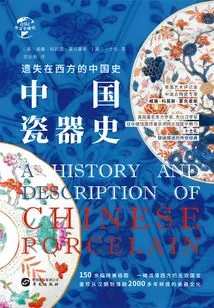
中国瓷器史(华文全球史)
(uk) William Cosmo Monkhouse
"History of Chinese Porcelain" is a monograph on the study of Chinese ceramics from a Western perspective, consisting of two parts. The first part is written by William Cosmo Monkhouse, a British art critic and expert on ancient Chinese ceramics, and the second part is written by Bo Shili, a famous British orientalist. It partly introduces the development characteristics of Chinese porcelain before the Song Dynasty, the Song Dynasty, the Yuan Dynasty, the Ming Dynasty, and the Qing Dynasty, the types and production techniques of Chinese porcelain, and the history of collecting Chinese ceramics in Europe. It also describes in detail the various patterns of Chinese porcelain, such as flowers, mythical animals, mythical characters, etc., And illustrates and explains the inscriptions on Chinese porcelain. The second part introduces the historical context of Chinese porcelain. The characteristics of porcelain at different stages are described in detail in chronological order.
"History of Chinese Porcelain" is a monograph on the study of Chinese ceramics from a Western perspective, consisting of two parts. The first part is written by William Cosmo Monkhouse, a British art critic and expert on ancient Chinese ceramics, and the second part is written by Bo Shili, a famous British orientalist. It partly introduces the development characteristics of Chinese porcelain before the Song Dynasty, the Song Dynasty, the Yuan Dynasty, the Ming Dynasty, and the Qing Dynasty, the types and production techniques of Chinese porcelain, and the history of collecting Chinese ceramics in Europe. It also describes in detail the various patterns of Chinese porcelain, such as flowers, mythical animals, mythical characters, etc., And illustrates and explains the inscriptions on Chinese porcelain. The second part introduces the historical context of Chinese porcelain. The characteristics of porcelain at different stages are described in detail in chronological order.
了不起的中国简史(下):从隋唐到明清
Brain Hole Dad
A brief history of China that you can't stop reading. The content of this volume starts from the Sui and Tang Dynasties and ends with the Qing Dynasty. It will take you to see all kinds of things in the world while laughing and scolding. In the imaginative "jokes", you can understand the inner temperament of each dynasty. Almost every page is full of laughter, allowing you to fully understand ancient Chinese history in a very short time, and help you establish a more modern view of history. There is no threshold for reading, it is popular enough! It is suitable for you who are intimidated by "General History of China" and want to get started; you who like to read historical stories and broaden your horizons; you who have heavy coursework and want to increase your interest in reading and increase your knowledge at the same time.
A brief history of China that you can't stop reading. The content of this volume starts from the Sui and Tang Dynasties and ends with the Qing Dynasty. It will take you to see all kinds of things in the world while laughing and scolding. In the imaginative "jokes", you can understand the inner temperament of each dynasty. Almost every page is full of laughter, allowing you to fully understand ancient Chinese history in a very short time, and help you establish a more modern view of history. There is no threshold for reading, it is popular enough! It is suitable for you who are intimidated by "General History of China" and want to get started; you who like to read historical stories and broaden your horizons; you who have heavy coursework and want to increase your interest in reading and increase your knowledge at the same time.
The Great Brief History of China (part 1): from Ancient Times to the Southern and Northern Dynasties
History了不起的中国简史(上):从远古到南北朝
Brain Hole Dad
A brief history of China that you can't stop reading. The content of this volume starts from ancient times and ends with the Southern and Northern Dynasties. It will take you to see all kinds of things in the world while laughing and scolding. In the imaginative "jokes", you can understand the inner temperament of each dynasty. Almost every page is full of laughter, allowing you to fully understand ancient Chinese history in a very short time, and help you establish a more modern view of history. There is no threshold for reading, it is popular enough! It is suitable for you who are intimidated by "General History of China" and want to get started; you who like to read historical stories and broaden your horizons; you who have heavy coursework and want to increase your interest in reading and increase your knowledge at the same time.
A brief history of China that you can't stop reading. The content of this volume starts from ancient times and ends with the Southern and Northern Dynasties. It will take you to see all kinds of things in the world while laughing and scolding. In the imaginative "jokes", you can understand the inner temperament of each dynasty. Almost every page is full of laughter, allowing you to fully understand ancient Chinese history in a very short time, and help you establish a more modern view of history. There is no threshold for reading, it is popular enough! It is suitable for you who are intimidated by "General History of China" and want to get started; you who like to read historical stories and broaden your horizons; you who have heavy coursework and want to increase your interest in reading and increase your knowledge at the same time.
Modern History of China
History中国近代史
Jiang Tingfu
This book is Jiang Tingfu's classic work on the study of modern Chinese history and has had a wide range of influences. With a calm and objective attitude, Jiang Tingfu narrated the history of China from the Opium War to the Revolution of 1911. He expressed concerns about the future of China and the fate of the nation in an academic way, and put forward many insights. Fairbank, a famous American sinologist, called Jiang Tingfu "the leader in the study of modern Chinese history." The historiographic framework and chronological history system constructed by "Modern History of China" once led the trend of modern history research and were praised by subsequent researchers. It is called the pioneering work in the study of modern Chinese history. There is no boring textual research, no accumulation of historical materials, or even many descriptions of specific historical events in the book. It is his thorough analysis of modern history with his unique insights. This book runs through nearly a hundred years of China's history from the Opium War in the 1840s to the Anti-Japanese War in the 20th century. It is a must-read for understanding China's modern history.
This book is Jiang Tingfu's classic work on the study of modern Chinese history and has had a wide range of influences. With a calm and objective attitude, Jiang Tingfu narrated the history of China from the Opium War to the Revolution of 1911. He expressed concerns about the future of China and the fate of the nation in an academic way, and put forward many insights. Fairbank, a famous American sinologist, called Jiang Tingfu "the leader in the study of modern Chinese history." The historiographic framework and chronological history system constructed by "Modern History of China" once led the trend of modern history research and were praised by subsequent researchers. It is called the pioneering work in the study of modern Chinese history. There is no boring textual research, no accumulation of historical materials, or even many descriptions of specific historical events in the book. It is his thorough analysis of modern history with his unique insights. This book runs through nearly a hundred years of China's history from the Opium War in the 1840s to the Anti-Japanese War in the 20th century. It is a must-read for understanding China's modern history.
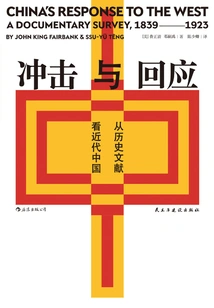
Impact and Response
History冲击与回应
(u. S.) Fairbank Deng Siyu
Under the framework of the "impact-response" model, this book attempts to analyze an important clue in China's modern history: in the face of the strong expansion of the West, how did the Chinese elite understand this unfamiliar civilization and how to survive the country's culture, politics, and social system. By selecting some core historical materials and classic chapters from modern historical documents, this book gives a panoramic view of the exploration of the path to modernization by several generations of pioneers in modern China.
Under the framework of the "impact-response" model, this book attempts to analyze an important clue in China's modern history: in the face of the strong expansion of the West, how did the Chinese elite understand this unfamiliar civilization and how to survive the country's culture, politics, and social system. By selecting some core historical materials and classic chapters from modern historical documents, this book gives a panoramic view of the exploration of the path to modernization by several generations of pioneers in modern China.
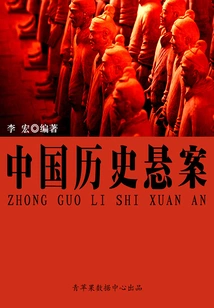
中国历史悬案
Compiled By Li Hong
"Chinese Historical Unsolved Cases" collects the most influential, most research-worthy and most widely watched historical unsolved cases in Chinese history, covering the mysteries of national treasures, the lives of emperors, unsolved war cases, palace coups, mysterious treasures, historical odd cases, etc. This book takes you to uncover history, get a glimpse of the story behind it, and evaluate the inexplicable legend. By reading this book, you can not only increase your knowledge and broaden your horizons, but also learn from the experiences and lessons of your predecessors, thereby strengthening your confidence in challenging the world of knowledge.
"Chinese Historical Unsolved Cases" collects the most influential, most research-worthy and most widely watched historical unsolved cases in Chinese history, covering the mysteries of national treasures, the lives of emperors, unsolved war cases, palace coups, mysterious treasures, historical odd cases, etc. This book takes you to uncover history, get a glimpse of the story behind it, and evaluate the inexplicable legend. By reading this book, you can not only increase your knowledge and broaden your horizons, but also learn from the experiences and lessons of your predecessors, thereby strengthening your confidence in challenging the world of knowledge.
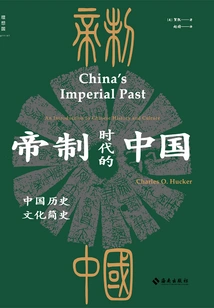
帝制时代的中国:中国历史文化简史
(us) He Kai
This book is a general history of China written by the famous American sinologist He Kai and published by Stanford University Press in 1975. It is specially written for general readers who are interested in Chinese history and culture, and vividly shows the long process of Chinese civilization from prehistory to 1850. This book, which covers the entire history of China, is not very large, but the selection of materials is unique and the narrative is precise. It is in line with the characteristics of excellent general history textbooks in American universities. Since its publication, it has been widely adopted by American universities as a basic textbook on Chinese history. The author divides Chinese history into three main periods: the Formative Period, from ancient times to the 3rd century BC; the Early Imperial Era, from the 3rd century BC to the 10th century; and the Late Imperial Era, from the 10th century to the mid-19th century. These three periods in ancient times are analyzed in several chapters, covering respectively general or political history, governance patterns, socioeconomic organization, religious and cultural development, and literary and artistic achievements.
This book is a general history of China written by the famous American sinologist He Kai and published by Stanford University Press in 1975. It is specially written for general readers who are interested in Chinese history and culture, and vividly shows the long process of Chinese civilization from prehistory to 1850. This book, which covers the entire history of China, is not very large, but the selection of materials is unique and the narrative is precise. It is in line with the characteristics of excellent general history textbooks in American universities. Since its publication, it has been widely adopted by American universities as a basic textbook on Chinese history. The author divides Chinese history into three main periods: the Formative Period, from ancient times to the 3rd century BC; the Early Imperial Era, from the 3rd century BC to the 10th century; and the Late Imperial Era, from the 10th century to the mid-19th century. These three periods in ancient times are analyzed in several chapters, covering respectively general or political history, governance patterns, socioeconomic organization, religious and cultural development, and literary and artistic achievements.
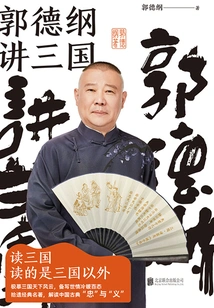
郭德纲讲三国
Guo Degang
Guo Degang's 2022 blockbuster work interprets the Three Kingdoms for the first time, creating a newer, more readable, and more interesting story of the Three Kingdoms. You will be addicted after reading one page, suitable for all ages. When Guo Degang talks about the Three Kingdoms, he talks about the people of the Three Kingdoms, the people's hearts, feelings, and humanity in the Three Kingdoms. Why did Cao Cao become a great hero? General He Jin's actions determined his tragic life; how Yuan Shao and Yuan Shu, brothers with outstanding family background and family background, ruined a good hand; Dong Zhuo led troops from Xiliang to occupy Luoyang to hold the emperor hostage, could he be a fatuous person; Situ Wang Yun ruined the hundreds of years of Han Dynasty's foundation with one sentence, what did he say? The ups and downs of the Three Kingdoms era, the lofty ambitions of heroes from all walks of life, more than 260,000 words, more than 300 pages of content, including the Three Brothers in Taoyuan, Warming Wine and Killing Hua Xiong, Three Heroes Fighting Lu Bu, Diao Chan's Beauty Trap... Reunion of flesh-and-blood heroic figures, laughter and colorful classic stories, Guo Degang uses humorous language and unique perspective to make you addicted as soon as you read it. Appreciate the warmth and coldness of human relationships, the harshness of the world, watch the disputes of honor and disgrace, and escape to death. Based on the historical stories of the Three Kingdoms, read the classic works collected by Guo Degang, clearly analyze the officialdom, workplace, and love in ancient and modern times, and explore the hearts of hundreds of people in the world.
Guo Degang's 2022 blockbuster work interprets the Three Kingdoms for the first time, creating a newer, more readable, and more interesting story of the Three Kingdoms. You will be addicted after reading one page, suitable for all ages. When Guo Degang talks about the Three Kingdoms, he talks about the people of the Three Kingdoms, the people's hearts, feelings, and humanity in the Three Kingdoms. Why did Cao Cao become a great hero? General He Jin's actions determined his tragic life; how Yuan Shao and Yuan Shu, brothers with outstanding family background and family background, ruined a good hand; Dong Zhuo led troops from Xiliang to occupy Luoyang to hold the emperor hostage, could he be a fatuous person; Situ Wang Yun ruined the hundreds of years of Han Dynasty's foundation with one sentence, what did he say? The ups and downs of the Three Kingdoms era, the lofty ambitions of heroes from all walks of life, more than 260,000 words, more than 300 pages of content, including the Three Brothers in Taoyuan, Warming Wine and Killing Hua Xiong, Three Heroes Fighting Lu Bu, Diao Chan's Beauty Trap... Reunion of flesh-and-blood heroic figures, laughter and colorful classic stories, Guo Degang uses humorous language and unique perspective to make you addicted as soon as you read it. Appreciate the warmth and coldness of human relationships, the harshness of the world, watch the disputes of honor and disgrace, and escape to death. Based on the historical stories of the Three Kingdoms, read the classic works collected by Guo Degang, clearly analyze the officialdom, workplace, and love in ancient and modern times, and explore the hearts of hundreds of people in the world.
有趣有料忘不掉的隋朝史
Liangshan Weimu
This book is a collection of articles in the "300 Years of the Sui and Tang Dynasty" series published by the historical publication "Liangshan Weimu Shuo History". The Sui Dynasty only lasted for less than 40 years, but it had a profound impact on later generations in terms of politics, economy, and culture. It ended nearly 300 years of division since the end of the Western Jin Dynasty and achieved national reunification; it implemented equalization of land and changed taxes and levies, which promoted economic development; it established the imperial examination system and promoted cultural prosperity... This book uses humorous language and a unique perspective to tell the story from 5 years ago It covers the history from Yang Jian's usurpation of the throne in 81 AD to Yang Guang's murder in 618 AD and the demise of the Sui Dynasty, and provides an in-depth analysis of many events that occurred during this period, helping readers understand that period of history, understand the life and death choices of the ancients at historical junctures, and face their own lives more calmly.
This book is a collection of articles in the "300 Years of the Sui and Tang Dynasty" series published by the historical publication "Liangshan Weimu Shuo History". The Sui Dynasty only lasted for less than 40 years, but it had a profound impact on later generations in terms of politics, economy, and culture. It ended nearly 300 years of division since the end of the Western Jin Dynasty and achieved national reunification; it implemented equalization of land and changed taxes and levies, which promoted economic development; it established the imperial examination system and promoted cultural prosperity... This book uses humorous language and a unique perspective to tell the story from 5 years ago It covers the history from Yang Jian's usurpation of the throne in 81 AD to Yang Guang's murder in 618 AD and the demise of the Sui Dynasty, and provides an in-depth analysis of many events that occurred during this period, helping readers understand that period of history, understand the life and death choices of the ancients at historical junctures, and face their own lives more calmly.
China in the Past
History从前的中国
(japan) Takeuchi Yasuhiro
"Once Upon a Time in China" is a masterpiece of the famous Japanese scholar Yasuhiro Takeuchi's study of Chinese history. Taking the home and family in ancient Chinese society as the starting point for his research, Yasuhiro Takeuchi pays attention to the livelihood of ordinary people. Through the study of the relationship between individuals and families, and the relationship between individuals and society, he re-describes the life patterns of ordinary people (rather than emperors and generals) in ancient Chinese society and the history of social operations. If the choices made by human beings at various points in time and space are connected using the theory of cause and effect, history will form a context map. Yasuhiro Takeuchi uses the life of ordinary Chinese in ancient times as an observation perspective, trying to connect these historical cause and effect points and outline a picture of the life of the Chinese in the past. In this picture, people have social attributes of "private" and "public" dimensions, and these two attributes are intertwined and interesting. From Qin Shihuang to Puyi, this kind of life lasted for two thousand years. In the new era of society, how can we make life perfect? How can we live a safe life? How to think? How does one need to be born? The author believes that answers and inspiration to these questions can be found in ancient Chinese history.
"Once Upon a Time in China" is a masterpiece of the famous Japanese scholar Yasuhiro Takeuchi's study of Chinese history. Taking the home and family in ancient Chinese society as the starting point for his research, Yasuhiro Takeuchi pays attention to the livelihood of ordinary people. Through the study of the relationship between individuals and families, and the relationship between individuals and society, he re-describes the life patterns of ordinary people (rather than emperors and generals) in ancient Chinese society and the history of social operations. If the choices made by human beings at various points in time and space are connected using the theory of cause and effect, history will form a context map. Yasuhiro Takeuchi uses the life of ordinary Chinese in ancient times as an observation perspective, trying to connect these historical cause and effect points and outline a picture of the life of the Chinese in the past. In this picture, people have social attributes of "private" and "public" dimensions, and these two attributes are intertwined and interesting. From Qin Shihuang to Puyi, this kind of life lasted for two thousand years. In the new era of society, how can we make life perfect? How can we live a safe life? How to think? How does one need to be born? The author believes that answers and inspiration to these questions can be found in ancient Chinese history.
弱宋:造极之世
Chen Shengli
The Song Dynasty was destroyed twice by the invasion of northern ethnic minorities, and the "weak Song" was almost a historical conclusion. However, the two Song Dynasties lasted for 319 years and established the country based on civil rule, making brilliant achievements in the fields of national governance, institutional culture, literature and art. Most of the emperors of the Northern Song Dynasty were accomplished kings, and they implemented reforms three times. Wang Anshi's reforms had a particularly far-reaching impact. In the Song Dynasty, famous scholars emerged in large numbers, and the stars shone brightly. The scholars' character was the most prosperous, creating an epic memory in the history of the development of our national spirit. In terms of killing, using force, and opening up territories, the Song people left very few achievements for future generations to be proud of, but in the realm of national governance, as well as spiritual and cultural areas, the Song people left a rich legacy. The so-called "weak Song Dynasty" can actually be called the "prosperous Song Dynasty": she created the peak of ancient Chinese political civilization. She set off a magnificent wave of reform. She cultivated an upright scholar. She is an extraordinary dynasty worthy of our stopping and looking back.
The Song Dynasty was destroyed twice by the invasion of northern ethnic minorities, and the "weak Song" was almost a historical conclusion. However, the two Song Dynasties lasted for 319 years and established the country based on civil rule, making brilliant achievements in the fields of national governance, institutional culture, literature and art. Most of the emperors of the Northern Song Dynasty were accomplished kings, and they implemented reforms three times. Wang Anshi's reforms had a particularly far-reaching impact. In the Song Dynasty, famous scholars emerged in large numbers, and the stars shone brightly. The scholars' character was the most prosperous, creating an epic memory in the history of the development of our national spirit. In terms of killing, using force, and opening up territories, the Song people left very few achievements for future generations to be proud of, but in the realm of national governance, as well as spiritual and cultural areas, the Song people left a rich legacy. The so-called "weak Song Dynasty" can actually be called the "prosperous Song Dynasty": she created the peak of ancient Chinese political civilization. She set off a magnificent wave of reform. She cultivated an upright scholar. She is an extraordinary dynasty worthy of our stopping and looking back.
贞石诠唐
Chen Shangjun
The study of the literature and history of the Tang Dynasty has been nourished by countless new materials such as Dunhuang documents, foreign classics, two collections of Buddhism and Taoism, and stone inscriptions over the past century. Scholars specializing in the Tang Dynasty, such as Chen Yinke, Cen Zhongmian, Yan Gengwang, Huang Yongnian, Zhang Guangda, Fu Xuancong, Tao Min, etc., Made outstanding achievements, all relying on their comprehensive mastery of existing classics and new documents and their mutual invention. How can I celebrate and comfort those who live in this era and specialize in governing the Tang Dynasty like me?
The study of the literature and history of the Tang Dynasty has been nourished by countless new materials such as Dunhuang documents, foreign classics, two collections of Buddhism and Taoism, and stone inscriptions over the past century. Scholars specializing in the Tang Dynasty, such as Chen Yinke, Cen Zhongmian, Yan Gengwang, Huang Yongnian, Zhang Guangda, Fu Xuancong, Tao Min, etc., Made outstanding achievements, all relying on their comprehensive mastery of existing classics and new documents and their mutual invention. How can I celebrate and comfort those who live in this era and specialize in governing the Tang Dynasty like me?
英美记者眼中的延安
Compiled By Zhao Hong
The Thirteen Years of Yan'an (1935-1948) was an important stage in which the Communist Party of China led the Chinese people to victory in the War of Resistance Against Japan and the War of Liberation. It was also an important period in which the Communist Party of China moved from a non-ruling position to a ruling party, and from Yan'an to the world. In the process of the victory of the Chinese revolution, many international friends gave great support and help to the Chinese Communists. They came from all over the world, including friends from Britain, France, the United States, the Soviet Union, North Korea, Austria, India, Germany, and even Japan. They not only broke the national The party's slanderous words against the Communist Party have shown that the CCP's democratic governance in the border areas has won the sincere support of the broad masses of the people, and have shown to the world the high image of the Chinese Communists as being smart and capable, with noble moral character, equal officers and soldiers, selfless dedication, and fighting for the interests of the country and the people. They witnessed the victory of China's Anti-Japanese War, and also witnessed the historical process of Chinese Communists growing up and going global. This book takes the British and American journalists who came to Yan'an from 1935 to 1948 as the main research object, and conducts a comprehensive study of the 33 journalists who came to Yan'an in chronological order. The book is divided into three chapters: upper, middle and lower: based on collecting and sorting information, the author tries his best to give an overall overview of the life of each journalist who came to Yan'an, the reasons for their visit, their activities in Yan'an, the content of their conversations with the leaders of the Communist Party of China, and the feelings and significance of their trip to Yan'an. (Due to data limitations, the situation of individual journalists can only be briefly introduced) By writing the "Yan'an Story" of British and American journalists, their important contribution and historical significance to the Chinese revolution are highlighted.
The Thirteen Years of Yan'an (1935-1948) was an important stage in which the Communist Party of China led the Chinese people to victory in the War of Resistance Against Japan and the War of Liberation. It was also an important period in which the Communist Party of China moved from a non-ruling position to a ruling party, and from Yan'an to the world. In the process of the victory of the Chinese revolution, many international friends gave great support and help to the Chinese Communists. They came from all over the world, including friends from Britain, France, the United States, the Soviet Union, North Korea, Austria, India, Germany, and even Japan. They not only broke the national The party's slanderous words against the Communist Party have shown that the CCP's democratic governance in the border areas has won the sincere support of the broad masses of the people, and have shown to the world the high image of the Chinese Communists as being smart and capable, with noble moral character, equal officers and soldiers, selfless dedication, and fighting for the interests of the country and the people. They witnessed the victory of China's Anti-Japanese War, and also witnessed the historical process of Chinese Communists growing up and going global. This book takes the British and American journalists who came to Yan'an from 1935 to 1948 as the main research object, and conducts a comprehensive study of the 33 journalists who came to Yan'an in chronological order. The book is divided into three chapters: upper, middle and lower: based on collecting and sorting information, the author tries his best to give an overall overview of the life of each journalist who came to Yan'an, the reasons for their visit, their activities in Yan'an, the content of their conversations with the leaders of the Communist Party of China, and the feelings and significance of their trip to Yan'an. (Due to data limitations, the situation of individual journalists can only be briefly introduced) By writing the "Yan'an Story" of British and American journalists, their important contribution and historical significance to the Chinese revolution are highlighted.
用年表读懂中国史(第3版)
Ma Dongfeng Zhang Jingzhong
The content of the book starts from ancient times and goes down to one hundred years of the Opium War. It is divided into seventeen chapters according to the dynasties, and each chapter has a general story. The chronology is marked with AD, dynasty, and emperor year names, and is based on Chinese historical events; it is directly compared with major Western historical events. With time as the longitude and events as the latitude, it is a Chinese history reference book that is convenient for inquiry and suitable for students and the general public to read.
The content of the book starts from ancient times and goes down to one hundred years of the Opium War. It is divided into seventeen chapters according to the dynasties, and each chapter has a general story. The chronology is marked with AD, dynasty, and emperor year names, and is based on Chinese historical events; it is directly compared with major Western historical events. With time as the longitude and events as the latitude, it is a Chinese history reference book that is convenient for inquiry and suitable for students and the general public to read.
Traces of Time
History岁月印痕
Zhang Guoli Zhang Qiang Liu Jianhua
"Marks of Time\u002F Looking at Ningxia for 70 Years Series" is a picture album in the "Looking at Ningxia for 70 Years" series. It selects dozens of representative layouts from "Ningxia Daily" since its inception in 1949. It not only shows the development process of "Ningxia Daily" in the past 70 years, but also shows a new perspective on the development of Ningxia in the 70 years since the founding of New China.
"Marks of Time\u002F Looking at Ningxia for 70 Years Series" is a picture album in the "Looking at Ningxia for 70 Years" series. It selects dozens of representative layouts from "Ningxia Daily" since its inception in 1949. It not only shows the development process of "Ningxia Daily" in the past 70 years, but also shows a new perspective on the development of Ningxia in the 70 years since the founding of New China.
The 25th Red Army in Lund
History红二十五军在隆德
Editor-in-chief Wang Sheng
"The 25th Red Army in Lunde" excavates, organizes, protects and inherits the glorious history of the 25th Red Army in Lunde, and integrates revolutionary traditional education and historical and cultural education. This is our original intention and mission. Its publication and distribution will be of extremely important and far-reaching significance for the people of Longde to win the battle against poverty, build a moderately prosperous society in an all-round way, and successfully embark on the new Long March. It will definitely have a positive impact on the children of the Returned Han Dynasty in Longde, especially the young people, to have a deep understanding of the glorious history of the 25th Red Army and the great achievements and great spirit of their ancestors, establish a correct world outlook, outlook on life, and values, strengthen their ideals and beliefs, support the leadership of the Communist Party, and adhere to the path of socialism with Chinese characteristics.
"The 25th Red Army in Lunde" excavates, organizes, protects and inherits the glorious history of the 25th Red Army in Lunde, and integrates revolutionary traditional education and historical and cultural education. This is our original intention and mission. Its publication and distribution will be of extremely important and far-reaching significance for the people of Longde to win the battle against poverty, build a moderately prosperous society in an all-round way, and successfully embark on the new Long March. It will definitely have a positive impact on the children of the Returned Han Dynasty in Longde, especially the young people, to have a deep understanding of the glorious history of the 25th Red Army and the great achievements and great spirit of their ancestors, establish a correct world outlook, outlook on life, and values, strengthen their ideals and beliefs, support the leadership of the Communist Party, and adhere to the path of socialism with Chinese characteristics.
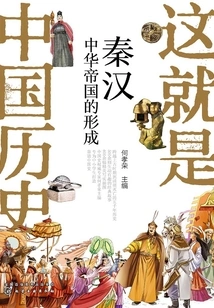
秦汉:中华帝国的形成(这就是中国历史)
Editor-in-chief He Xiaorong
This series of books records the history from myths and legends, Xia, Shang and Western Zhou dynasties to the end of the Qing Dynasty. It uses a combination of hand-painted style and historical pictures, and selects nearly a thousand color pictures and photos of precious cultural relics. After rigorous research, it uses realistic techniques to express historical events and character costumes, allowing children to be immersed in the scenes, conveying correct historical knowledge, and enriching children's aesthetic experience. This book uses experience and language that children can understand to describe the people, events, times, places, and things that have had a profound impact on Chinese history. It makes the originally abstract and difficult concepts or complex backgrounds lively and interesting, and establishes a clear concept of China's official history for children.
This series of books records the history from myths and legends, Xia, Shang and Western Zhou dynasties to the end of the Qing Dynasty. It uses a combination of hand-painted style and historical pictures, and selects nearly a thousand color pictures and photos of precious cultural relics. After rigorous research, it uses realistic techniques to express historical events and character costumes, allowing children to be immersed in the scenes, conveying correct historical knowledge, and enriching children's aesthetic experience. This book uses experience and language that children can understand to describe the people, events, times, places, and things that have had a profound impact on Chinese history. It makes the originally abstract and difficult concepts or complex backgrounds lively and interesting, and establishes a clear concept of China's official history for children.