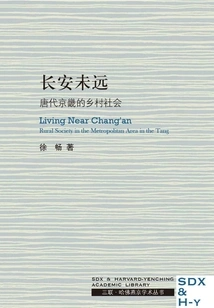
Chang'an is Not Far Away: Rural Society in the Capital of the Tang Dynasty
by Xu Chang
About This Novel
During the Tang Dynasty, the golden age of Chinese history, Chang'an was the capital of the country and the political center of East Asia, with dazzling material civilization and a blend of foreign cultures. Due to the lack of data, academic research on it is far less than that of Dunhuang and Turpan, the border cities in the west. In recent years, with the progress of urban archeology, the publication of stone epitaphs, and the rediscovery of urban information in Tang poetry, the study of Chang'an urban society has ushered in new opportunities, and "Chang'an Studies" was born. In medieval China, there was a continuum between cities (Guo) and countryside (Wild) based on their physical form (Urban-Rural). Continuum); in the case of Chang'an, the city and the suburbs jointly played the role of the core area of the empire. The author treats the capital and surrounding villages as "Greater Chang'an" as a whole. From the perspective of regional history, it shows the interaction, integration, contradictions and conflicts of state and social forces in the Gyeonggi region (especially the rural area), which is the center of the Tang Empire and has a local stance, as well as a panoramic view of the production and life, security and mobility, and ideological beliefs of people of all strata. The book focuses on analyzing the Chang'an urban and rural life experience of the Gyeonggi gentry represented by the Wei and Du families, and the literati officials represented by Bai Juyi. This book is a synthesis and innovation of Chang'an research in the new era. It is a substantial work on the study of medieval rural society. It also contributes to a comprehensive understanding of the urban-rural relationship in ancient my country.
Official Sources
What Readers Think
Rating
Community(0)
Rating
Community(0)
