Library
Browse and search books
3,417 novels found
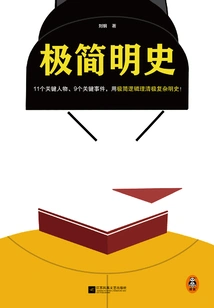
A Very Concise History
History极简明史
Liu Gang
In chronological order, through vivid stories and detailed historical facts, the author of this book selects 11 historical figures such as Zhu Yuanzhang, Zhang Juzheng, and Wei Zhongxian, as well as 9 historical events such as the Battle of Jingnan, Zheng He's voyages to the West, and the Tumubao Incident, and clarifies the history of the Ming Dynasty by narrating the key figures and key events from the founding of the Ming Dynasty by Zhu Yuanzhang to the demise of the Ming Dynasty.
In chronological order, through vivid stories and detailed historical facts, the author of this book selects 11 historical figures such as Zhu Yuanzhang, Zhang Juzheng, and Wei Zhongxian, as well as 9 historical events such as the Battle of Jingnan, Zheng He's voyages to the West, and the Tumubao Incident, and clarifies the history of the Ming Dynasty by narrating the key figures and key events from the founding of the Ming Dynasty by Zhu Yuanzhang to the demise of the Ming Dynasty.
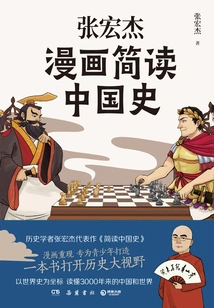
张宏杰漫画简读中国史
Zhang Hongjie
Using world history as a coordinate, understand China and the world over the past 3,000 years! If you don't read Chinese history, you don't know the greatness of China; if you don't read world history, you don't know the characteristics of China! Review 20 special topics on Chinese history from a global perspective, with a grand perspective and many subversive views! This book brings world history and Chinese history into the same time and space, and uses comics to reproduce the colorful picture of mutual learning and exchange between China and the world in history. What are the world factors in the origin of Chinese civilization? Why could the Roman Empire not be reunited after it split? What are the unique historical cycles between the Central Plains and the grasslands? Why is it said that the Chinese nation is united in diversity? These key issues in history are presented one by one through witty cartoons, supplemented by in-depth and easy-to-understand text explanations, allowing you to understand Chinese history while laughing, and gain a comprehensive understanding of historical laws from a bird's-eye perspective.
Using world history as a coordinate, understand China and the world over the past 3,000 years! If you don't read Chinese history, you don't know the greatness of China; if you don't read world history, you don't know the characteristics of China! Review 20 special topics on Chinese history from a global perspective, with a grand perspective and many subversive views! This book brings world history and Chinese history into the same time and space, and uses comics to reproduce the colorful picture of mutual learning and exchange between China and the world in history. What are the world factors in the origin of Chinese civilization? Why could the Roman Empire not be reunited after it split? What are the unique historical cycles between the Central Plains and the grasslands? Why is it said that the Chinese nation is united in diversity? These key issues in history are presented one by one through witty cartoons, supplemented by in-depth and easy-to-understand text explanations, allowing you to understand Chinese history while laughing, and gain a comprehensive understanding of historical laws from a bird's-eye perspective.
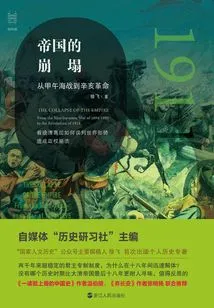
帝国的崩塌:从甲午海战到辛亥革命
Xu Fei
This book is a new historical work by the young historian Xu Fei. This book will sort out and analyze the various misunderstandings of modernization by many important figures in the self-rescue movement of the late Qing Dynasty, and the historical process in which these misunderstandings pushed the Qing Dynasty towards its demise. No idea is created in a vacuum, and this book will also trace the origins and explore the origins of various misunderstandings. The Opium War opened the door to China, and China, which was closed and backward, suffered constant disasters. From the Sino-Japanese War of 1891 to the Revolution of 1911, the Qing Empire struggled to save itself. At the central level, there were enlightened Westernization leaders like Li Hongzhang and Yi? At the local level, there were pragmatic innovative forces like Zhang Zhidong and Liu Kunyi. Among the people, there were intellectuals like Kang Youwei and Tan Sitong who were passionate about saving the country. However, their various efforts failed to save this dying empire. Why is this? The self-rescue process of the Qing Empire was also China's effort to modernize. The fall of the Qing government was actually related to the Chinese people's misunderstanding of modernization at that time. The Qing government lacked reference coordinates at the critical moment and lost its way forward. A striking example is Kang Youwei's misunderstanding of the Western parliamentary system, and his reform plan was neither fish nor fowl. Even if Cixi had not launched a coup, the reform movement would have had no future.
This book is a new historical work by the young historian Xu Fei. This book will sort out and analyze the various misunderstandings of modernization by many important figures in the self-rescue movement of the late Qing Dynasty, and the historical process in which these misunderstandings pushed the Qing Dynasty towards its demise. No idea is created in a vacuum, and this book will also trace the origins and explore the origins of various misunderstandings. The Opium War opened the door to China, and China, which was closed and backward, suffered constant disasters. From the Sino-Japanese War of 1891 to the Revolution of 1911, the Qing Empire struggled to save itself. At the central level, there were enlightened Westernization leaders like Li Hongzhang and Yi? At the local level, there were pragmatic innovative forces like Zhang Zhidong and Liu Kunyi. Among the people, there were intellectuals like Kang Youwei and Tan Sitong who were passionate about saving the country. However, their various efforts failed to save this dying empire. Why is this? The self-rescue process of the Qing Empire was also China's effort to modernize. The fall of the Qing government was actually related to the Chinese people's misunderstanding of modernization at that time. The Qing government lacked reference coordinates at the critical moment and lost its way forward. A striking example is Kang Youwei's misunderstanding of the Western parliamentary system, and his reform plan was neither fish nor fowl. Even if Cixi had not launched a coup, the reform movement would have had no future.
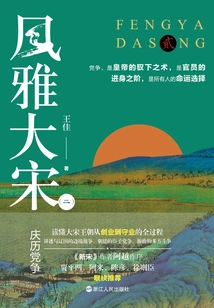
风雅大宋(二):庆历党争
Wang Jia
This book is an overview of the history of the Northern Song Dynasty from Song Zhenzong to Song Renzong. The author combines and compares the contents of official history and ancient notes to explain in detail the history of the Song Dynasty from starting a business to keeping a business. Using rich historical materials and rigorous reasoning, it clarifies some people's views and prejudices about the Song Dynasty over the years, which is refreshing. The text is easy to understand and is both readable and academic at the same time. It is a rare popular history work.
This book is an overview of the history of the Northern Song Dynasty from Song Zhenzong to Song Renzong. The author combines and compares the contents of official history and ancient notes to explain in detail the history of the Song Dynasty from starting a business to keeping a business. Using rich historical materials and rigorous reasoning, it clarifies some people's views and prejudices about the Song Dynasty over the years, which is refreshing. The text is easy to understand and is both readable and academic at the same time. It is a rare popular history work.
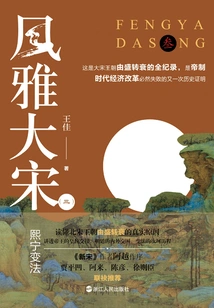
风雅大宋(三):熙宁变法
Wang Jia
This book is an overview of the history of the Northern Song Dynasty from Song Renzong to Song Shenzong. The author combines and compares the contents of official history and ancient notes to explain in detail the history of the Song Dynasty from starting a business to keeping a business. Using rich historical materials and rigorous reasoning, it clarifies some people's views and prejudices about the Song Dynasty over the years, which is refreshing. The text is easy to understand and is both readable and academic at the same time. It is a rare popular history work.
This book is an overview of the history of the Northern Song Dynasty from Song Renzong to Song Shenzong. The author combines and compares the contents of official history and ancient notes to explain in detail the history of the Song Dynasty from starting a business to keeping a business. Using rich historical materials and rigorous reasoning, it clarifies some people's views and prejudices about the Song Dynasty over the years, which is refreshing. The text is easy to understand and is both readable and academic at the same time. It is a rare popular history work.
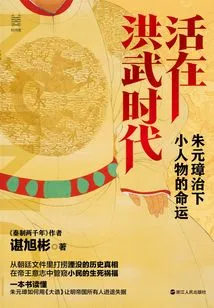
活在洪武时代:朱元璋治下小人物的命运
Chen Xubin
This book peels off the thirteen cases written by Hongwu Emperor Zhu Yuanzhang in the "Da Gao", and elaborates on the ins and outs behind these cases that have no legal basis, common sense and logic. Starting from the military, land, political, legal and other policy systems of the early Ming Dynasty, we sort out the behavioral motivations of the people involved in the case, and interpret the basis and purpose of Emperor Hongwu's trial and judgment, thereby outlining the absurd fate and horrific living conditions of various characters in the Hongwu era, and reproducing the true face of Emperor Hongwu's "rule of law". In these cases, we can see the slaves of the guards who had no personal freedom, the farmers who were tied to the land and were not allowed to leave their hometowns, the old women who said wrong things and injured their neighbors and had their property confiscated, the scholars who did not want to be officials and had to cut off their fingers, the officials who followed reasonable case filing procedures but failed to guess the "holy will"... Through the careless fate of these little people, we see how a founding emperor with a brilliant mind deceived the controlling officials and spied on the people. These cases allow us to see another side of the "Hongwu rule".
This book peels off the thirteen cases written by Hongwu Emperor Zhu Yuanzhang in the "Da Gao", and elaborates on the ins and outs behind these cases that have no legal basis, common sense and logic. Starting from the military, land, political, legal and other policy systems of the early Ming Dynasty, we sort out the behavioral motivations of the people involved in the case, and interpret the basis and purpose of Emperor Hongwu's trial and judgment, thereby outlining the absurd fate and horrific living conditions of various characters in the Hongwu era, and reproducing the true face of Emperor Hongwu's "rule of law". In these cases, we can see the slaves of the guards who had no personal freedom, the farmers who were tied to the land and were not allowed to leave their hometowns, the old women who said wrong things and injured their neighbors and had their property confiscated, the scholars who did not want to be officials and had to cut off their fingers, the officials who followed reasonable case filing procedures but failed to guess the "holy will"... Through the careless fate of these little people, we see how a founding emperor with a brilliant mind deceived the controlling officials and spied on the people. These cases allow us to see another side of the "Hongwu rule".
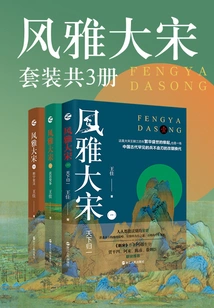
风雅大宋(套装共3册)
Wang Jia
This book is an overview of the history of the Northern Song Dynasty from Song Zhenzong to Song Renzong. The author combines and compares the contents of official history and ancient notes to explain in detail the history of the Song Dynasty from starting a business to keeping a business. Using rich historical materials and rigorous reasoning, it clarifies some people's views and prejudices about the Song Dynasty over the years, which is refreshing. The text is easy to understand and is both readable and academic at the same time. It is a rare popular history work.
This book is an overview of the history of the Northern Song Dynasty from Song Zhenzong to Song Renzong. The author combines and compares the contents of official history and ancient notes to explain in detail the history of the Song Dynasty from starting a business to keeping a business. Using rich historical materials and rigorous reasoning, it clarifies some people's views and prejudices about the Song Dynasty over the years, which is refreshing. The text is easy to understand and is both readable and academic at the same time. It is a rare popular history work.
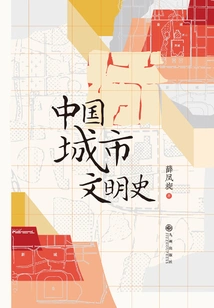
中国城市文明史
Xue Fengxuan
More than half of the world's population lives in cities today. Cities provide residents with a safe, convenient, and comfortable living environment and are the fulcrum of every country's politics, culture, and non-agricultural economy. However, the meaning of a city is not only reflected in its practical functions. The author creatively uses cities as an entry point to observe Chinese civilization and history, and systematically analyzes how the development of civilization and historical evolution over thousands of years are reflected in urban construction. Relying on a large number of Chinese and Western literature and cutting-edge archaeological results, this book sorts out the urban development from the Neolithic Age to the present in terms of military and political systems, economic conditions, territorial changes, etc., And strives to meticulously restore the trajectory of changes in Chinese civilization and cities over the past five thousand years.
More than half of the world's population lives in cities today. Cities provide residents with a safe, convenient, and comfortable living environment and are the fulcrum of every country's politics, culture, and non-agricultural economy. However, the meaning of a city is not only reflected in its practical functions. The author creatively uses cities as an entry point to observe Chinese civilization and history, and systematically analyzes how the development of civilization and historical evolution over thousands of years are reflected in urban construction. Relying on a large number of Chinese and Western literature and cutting-edge archaeological results, this book sorts out the urban development from the Neolithic Age to the present in terms of military and political systems, economic conditions, territorial changes, etc., And strives to meticulously restore the trajectory of changes in Chinese civilization and cities over the past five thousand years.
各领风骚:春秋霸主的天空
Chao Fulin
There have always been different opinions on who the Five Hegemons of the Spring and Autumn Period specifically refer to. Among them, Qi Huan, Song Xiang, Jin Wen, Qin Mu, and Chu Zhuang are widely circulated. This book is a masterpiece of scholar Chao Fulin's research on pre-Qin history. Focusing on the changes in hegemony in the Spring and Autumn Period, he carefully combed the evolution of hegemony in the Spring and Autumn Period, focusing on the many overlords of the "Changing King's Banner on the City Head" and the counselors around them on that historical stage. What is commendable is that the language of this book is easy to understand, and it is a popular book for understanding the history of the Spring and Autumn Period. Chao Fulin's concept of "Qi Huan, Jin Wen, Chuzhuang, Wu Helu, and Yue Goujian" as the Five Hegemons of the Spring and Autumn Period has never changed, but he also believes that in the development of Spring and Autumn history, in addition to the Five Hegemons of the Spring and Autumn Period, there are other strong ones, so he discusses the Hegemons of the Spring and Autumn Period rather than the Five Hegemons of the Spring and Autumn Period. This revision has added the author's new thinking and revised it.
There have always been different opinions on who the Five Hegemons of the Spring and Autumn Period specifically refer to. Among them, Qi Huan, Song Xiang, Jin Wen, Qin Mu, and Chu Zhuang are widely circulated. This book is a masterpiece of scholar Chao Fulin's research on pre-Qin history. Focusing on the changes in hegemony in the Spring and Autumn Period, he carefully combed the evolution of hegemony in the Spring and Autumn Period, focusing on the many overlords of the "Changing King's Banner on the City Head" and the counselors around them on that historical stage. What is commendable is that the language of this book is easy to understand, and it is a popular book for understanding the history of the Spring and Autumn Period. Chao Fulin's concept of "Qi Huan, Jin Wen, Chuzhuang, Wu Helu, and Yue Goujian" as the Five Hegemons of the Spring and Autumn Period has never changed, but he also believes that in the development of Spring and Autumn history, in addition to the Five Hegemons of the Spring and Autumn Period, there are other strong ones, so he discusses the Hegemons of the Spring and Autumn Period rather than the Five Hegemons of the Spring and Autumn Period. This revision has added the author's new thinking and revised it.
趣谈中国史
Zhao Dahan
"Interesting Talks about Chinese History" highlights the word "interesting" and is written in a humorous and slightly ridiculing way. Let each "cold" knowledge point become vivid, lively and tense. At the same time, in order to ensure that the content is rigorous and informative, the author has done a lot of search work in the pile of old papers. I believe that these in-depth content, as well as this highly immersive and unique narrative method, will definitely be loved by you.
"Interesting Talks about Chinese History" highlights the word "interesting" and is written in a humorous and slightly ridiculing way. Let each "cold" knowledge point become vivid, lively and tense. At the same time, in order to ensure that the content is rigorous and informative, the author has done a lot of search work in the pile of old papers. I believe that these in-depth content, as well as this highly immersive and unique narrative method, will definitely be loved by you.
Talking About Yangzhou: the Ups and Downs of the Commercial Capital of Ming and Qing Dynasties
History说扬州:明清商业之都的沉浮
(australia) Andongli
The name "Yangzhou" carries thousands of years of historical and cultural resonance. When talking about Yangzhou, images of artists, literati, big businessmen, beautiful waterways, bridges, gardens, and a history full of romance or tragedy all come to mind. This book is a "biography" that records all aspects of Yangzhou, telling readers how the city re-emerged from the flames of war at the turn of the Ming and Qing Dynasties, reaching its peak in the 18th century and becoming an important commercial capital; and how it gradually faded amidst historical accidents and inevitability, leaving only a few cultural fragments connecting the past with today. The author An Dongli has devoted more than ten years to researching this city, consulting a large number of historical books, local chronicles, poems and notes of contemporary people, filling in countless moving and real details for his grand writing structure, and restoring the true urban texture of Yangzhou during the Ming and Qing Dynasties. In this vivid urban picture, China's great changes in the late imperial period are also vividly displayed on the page.
The name "Yangzhou" carries thousands of years of historical and cultural resonance. When talking about Yangzhou, images of artists, literati, big businessmen, beautiful waterways, bridges, gardens, and a history full of romance or tragedy all come to mind. This book is a "biography" that records all aspects of Yangzhou, telling readers how the city re-emerged from the flames of war at the turn of the Ming and Qing Dynasties, reaching its peak in the 18th century and becoming an important commercial capital; and how it gradually faded amidst historical accidents and inevitability, leaving only a few cultural fragments connecting the past with today. The author An Dongli has devoted more than ten years to researching this city, consulting a large number of historical books, local chronicles, poems and notes of contemporary people, filling in countless moving and real details for his grand writing structure, and restoring the true urban texture of Yangzhou during the Ming and Qing Dynasties. In this vivid urban picture, China's great changes in the late imperial period are also vividly displayed on the page.
书写中国文明史
Jiang Linchang
Ancient Chinese civilization has fully demonstrated its uniqueness both in its origin and in its development process. However, since modern times, due to the spread of Western learning to the east, academic circles have basically applied relevant Western theories, concepts, and terminology in describing the history of ancient Chinese civilization, ancient Chinese thought, and ancient Chinese literature. This is neither in line with China's reality nor conducive to enhancing the Chinese people's national self-confidence. This book is guided by Marxist historical materialism, based on archaeological data, handed down documents as clues, and the theory of the history of Western civilization as a reference. It specifically analyzes and studies the background reasons such as geographical climate, environment, production and lifestyle in ancient China, thereby revealing the earlyness and diversity of the origin of Chinese civilization. The analysis is ongoing. The unique path of the early development process of Chinese civilization that is different from Western civilization, and the continuity of the mature development process of Chinese civilization that is different from Western civilization, thus constructing a unique path of ancient Chinese civilization history of more than 5,000 years, and providing a historical basis for the path confidence, theoretical confidence, and cultural confidence of socialism with Chinese characteristics today.
Ancient Chinese civilization has fully demonstrated its uniqueness both in its origin and in its development process. However, since modern times, due to the spread of Western learning to the east, academic circles have basically applied relevant Western theories, concepts, and terminology in describing the history of ancient Chinese civilization, ancient Chinese thought, and ancient Chinese literature. This is neither in line with China's reality nor conducive to enhancing the Chinese people's national self-confidence. This book is guided by Marxist historical materialism, based on archaeological data, handed down documents as clues, and the theory of the history of Western civilization as a reference. It specifically analyzes and studies the background reasons such as geographical climate, environment, production and lifestyle in ancient China, thereby revealing the earlyness and diversity of the origin of Chinese civilization. The analysis is ongoing. The unique path of the early development process of Chinese civilization that is different from Western civilization, and the continuity of the mature development process of Chinese civilization that is different from Western civilization, thus constructing a unique path of ancient Chinese civilization history of more than 5,000 years, and providing a historical basis for the path confidence, theoretical confidence, and cultural confidence of socialism with Chinese characteristics today.
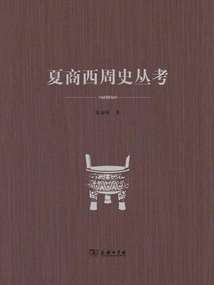
夏商西周史丛考
Chao Fulin
Compared with the social development in the Spring and Autumn and Warring States periods, and even after the Qin and Han dynasties, the social and historical evolution process of the Xia, Shang and Western Zhou Dynasties was quite long in terms of both the time span and the speed of evolution, but the speed of evolution was relatively slow. However, compared with the primitive era of our country, the social and historical evolution of Xia, Shang and Western Zhou Dynasty was shorter and the speed of evolution was very fast. In the historical process of our country since ancient times, the Xia, Shang and Western Zhou dynasties are a medium-sized link connecting two great eras. If our country's outstanding and glorious ancient culture since the Qin and Han Dynasties is a historical monument made of copper and iron, then the fiercely turbulent Spring and Autumn and Warring States periods were the moment when the molten copper and molten iron that cast this monument were boiling. The Xia, Shang and Western Zhou Dynasties made perfect preparations for this huge historical project. Therefore, an in-depth investigation of the historical situation of the Xia, Shang and Western Zhou dynasties is particularly important for us to correctly and profoundly understand and grasp traditional Chinese culture.
Compared with the social development in the Spring and Autumn and Warring States periods, and even after the Qin and Han dynasties, the social and historical evolution process of the Xia, Shang and Western Zhou Dynasties was quite long in terms of both the time span and the speed of evolution, but the speed of evolution was relatively slow. However, compared with the primitive era of our country, the social and historical evolution of Xia, Shang and Western Zhou Dynasty was shorter and the speed of evolution was very fast. In the historical process of our country since ancient times, the Xia, Shang and Western Zhou dynasties are a medium-sized link connecting two great eras. If our country's outstanding and glorious ancient culture since the Qin and Han Dynasties is a historical monument made of copper and iron, then the fiercely turbulent Spring and Autumn and Warring States periods were the moment when the molten copper and molten iron that cast this monument were boiling. The Xia, Shang and Western Zhou Dynasties made perfect preparations for this huge historical project. Therefore, an in-depth investigation of the historical situation of the Xia, Shang and Western Zhou dynasties is particularly important for us to correctly and profoundly understand and grasp traditional Chinese culture.
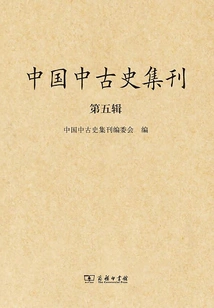
中国中古史集刊(第5辑)
Editor Of The Editorial Board Of The Collection Of Medieval Chinese History
"Collection of Medieval Chinese History (Volume 5)" contains a total of 16 papers such as "Book of Song Prefectures and Chronicles of Prefectures and the Liu Song Dynasty in Historical Materials", "From Yan to Tang: The Transformation and Recognition of the Image of An Lushan", "Okazaki Fumio's Theory of Aristocracy in the Southern Dynasties", "Wang Su in "A Brief Essay on the Origin of Institutions in the Sui and Tang Dynasties"", and 3 book reviews such as "The Kingdom of Missions: Reading Larry and "High-level Civil Service Officials of the Tang Dynasty"". Including many aspects such as politics, economy, religion, and military affairs in the Middle Ages, it covers a wide range of topics, with new theories emerging one after another, mixed with a series of knowledge such as religious history, ethnic history, and agricultural history. Among them, the papers on the history of the Wei, Jin, Southern and Northern Dynasties mainly discuss a series of issues such as the "Stories of the Han and Wei", Nanyue Huisi's study and missionary activities, and the famous objects of Jiuxi in the Northern Wei Dynasty. The history of the Sui and Tang Dynasties involves the development of agriculture in Xizhou in the Tang Dynasty, the change and recognition of the image of Anlu Mountain, the time and space garrison of the Guanzhong Anti-Autumn Army in the Middle Tang Dynasty, woodblock printing in the late Tang Dynasty, and the political relationship between Baekje and medieval China.
"Collection of Medieval Chinese History (Volume 5)" contains a total of 16 papers such as "Book of Song Prefectures and Chronicles of Prefectures and the Liu Song Dynasty in Historical Materials", "From Yan to Tang: The Transformation and Recognition of the Image of An Lushan", "Okazaki Fumio's Theory of Aristocracy in the Southern Dynasties", "Wang Su in "A Brief Essay on the Origin of Institutions in the Sui and Tang Dynasties"", and 3 book reviews such as "The Kingdom of Missions: Reading Larry and "High-level Civil Service Officials of the Tang Dynasty"". Including many aspects such as politics, economy, religion, and military affairs in the Middle Ages, it covers a wide range of topics, with new theories emerging one after another, mixed with a series of knowledge such as religious history, ethnic history, and agricultural history. Among them, the papers on the history of the Wei, Jin, Southern and Northern Dynasties mainly discuss a series of issues such as the "Stories of the Han and Wei", Nanyue Huisi's study and missionary activities, and the famous objects of Jiuxi in the Northern Wei Dynasty. The history of the Sui and Tang Dynasties involves the development of agriculture in Xizhou in the Tang Dynasty, the change and recognition of the image of Anlu Mountain, the time and space garrison of the Guanzhong Anti-Autumn Army in the Middle Tang Dynasty, woodblock printing in the late Tang Dynasty, and the political relationship between Baekje and medieval China.
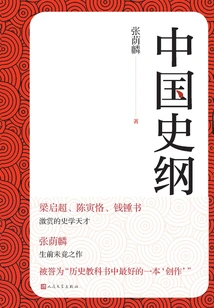
Outline of Chinese History
History中国史纲
Zhang Yinlin
This book is the masterpiece of historian Zhang Yinlin and is part of the high school history textbook he compiled for the school where he was employed. Based on his own view of history, the author made relatively strict selections and choices about Chinese history before the Eastern Han Dynasty. He integrated the research results of predecessors with his own "playing and exploring" and wrote about the social changes, ideological contributions, and the personalities and activities of several important figures during the period in a story-telling way. The chapter arrangement of this book is concise and appropriate, the writing skills are lively and moving, the thoughts and wisdom are thorough and accessible, and the author's talent and intention are always revealed. It is not only praised as "the best "creation" among history textbooks"" (Chen Mengjia's words), but also a unique general history reading.
This book is the masterpiece of historian Zhang Yinlin and is part of the high school history textbook he compiled for the school where he was employed. Based on his own view of history, the author made relatively strict selections and choices about Chinese history before the Eastern Han Dynasty. He integrated the research results of predecessors with his own "playing and exploring" and wrote about the social changes, ideological contributions, and the personalities and activities of several important figures during the period in a story-telling way. The chapter arrangement of this book is concise and appropriate, the writing skills are lively and moving, the thoughts and wisdom are thorough and accessible, and the author's talent and intention are always revealed. It is not only praised as "the best "creation" among history textbooks"" (Chen Mengjia's words), but also a unique general history reading.
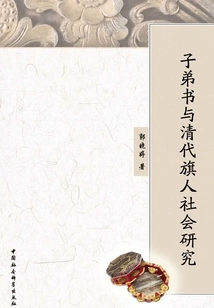
子弟书与清代旗人社会研究
Guo Xiaoting
Zi Di Shu is an art form that emerged in Banner society after the mid-Qing Dynasty. It declined with the decline of the Qing Dynasty. In the history of Chinese literature, no other art form is so closely linked to the rise and fall of a nation and dynasty. This book is the first to conduct an interactive and systematic study of Zi Di Shu from the perspective of banner society in the Qing Dynasty. The author starts from the lifestyle of the children of the Eight Banners to explore the origin of the cultural life of the children of the Eight Banners. From the books of the children of the Eight Banners, the author looks at the social conditions, entertainment life, market conditions, family life, and characters of the banner people. Then from the perspective of the source of the subject matter, we will explore the absorption of Han art in Zi Di Shu, the language art of Zi Di Shu and the cultural accomplishment of the Eight Banners disciples. Thus, the birth, development, and decline of an art are blended seamlessly with the history of the rise and fall of a nation. It is not only a major advancement in the study of Zi Di Shu, but also opens up a new perspective that reveals the relationship between art and life, and provides a typical example.
Zi Di Shu is an art form that emerged in Banner society after the mid-Qing Dynasty. It declined with the decline of the Qing Dynasty. In the history of Chinese literature, no other art form is so closely linked to the rise and fall of a nation and dynasty. This book is the first to conduct an interactive and systematic study of Zi Di Shu from the perspective of banner society in the Qing Dynasty. The author starts from the lifestyle of the children of the Eight Banners to explore the origin of the cultural life of the children of the Eight Banners. From the books of the children of the Eight Banners, the author looks at the social conditions, entertainment life, market conditions, family life, and characters of the banner people. Then from the perspective of the source of the subject matter, we will explore the absorption of Han art in Zi Di Shu, the language art of Zi Di Shu and the cultural accomplishment of the Eight Banners disciples. Thus, the birth, development, and decline of an art are blended seamlessly with the history of the rise and fall of a nation. It is not only a major advancement in the study of Zi Di Shu, but also opens up a new perspective that reveals the relationship between art and life, and provides a typical example.
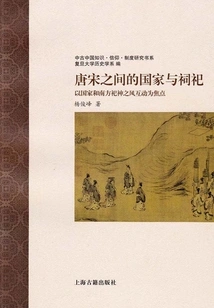
唐宋之间的国家与祠祀:以国家和南方祀神之风互动为焦点
Yang Junfeng
This book starts with the sacrificial activities of local officials in the Tang Dynasty and outlines the original historical appearance of the relationship between the two. Since the central court in the Tang Dynasty rarely participated in Western temples in various places, the relationship between the state and temple beliefs at this time was mainly related to the temple activities at the local government level. Secondly, it outlines the activities of local government temples and tries to explain that these activities are manifestations of local "customs". Finally, it is described that the imperial court significantly intervened in local society through measures to enshrine gods, and began to deal head-on with ordinary people's religious activities in temples.
This book starts with the sacrificial activities of local officials in the Tang Dynasty and outlines the original historical appearance of the relationship between the two. Since the central court in the Tang Dynasty rarely participated in Western temples in various places, the relationship between the state and temple beliefs at this time was mainly related to the temple activities at the local government level. Secondly, it outlines the activities of local government temples and tries to explain that these activities are manifestations of local "customs". Finally, it is described that the imperial court significantly intervened in local society through measures to enshrine gods, and began to deal head-on with ordinary people's religious activities in temples.
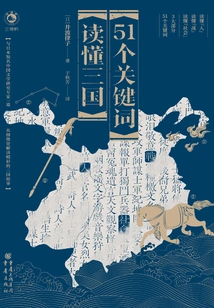
51个关键词读懂三国
(japan) Ritsuko Inami
This book interprets the historical stories of the Wei, Shu, and Wu Three Kingdoms periods in ancient China from the perspective of a Japanese sinologist. The author, Professor Ritsuko Inami, is a well-known Japanese expert on Chinese literature. She has studied the history of the Three Kingdoms for more than half a century, and has translated "The Romance of the Three Kingdoms" in full for Japanese readers. In the book "51 Keywords to Understand the Three Kingdoms", Professor Ritsuko Inami carefully selected 51 keywords from the Three Kingdoms story, divided into three parts: "Understanding 'People'," "Understanding 'War,'" and "Understanding 'Society,'" to interpret this famous historical period in ancient Chinese history from a new perspective. From the troubled times when the heroes were divided, to the tripartite confrontation of Wei, Shu, and Wu, to the Jin Dynasty's destruction of Dongwu and the unification of the Three Kingdoms, it gives a detailed explanation of the powerful world of the Three Kingdoms, the diverse characters of the Three Kingdoms, and the complex stories of the Three Kingdoms. The book is based on the historical facts written in "Three Kingdoms" and the storyline of "The Romance of the Three Kingdoms", interpreting Chinese culture, historical events and social life in the Three Kingdoms era about 1800 years ago. The 51 keywords correspond to each other and restore the complex story world of the Three Kingdoms. It is a new perspective for foreign sinologists to interpret and study Chinese history and classical novels.
This book interprets the historical stories of the Wei, Shu, and Wu Three Kingdoms periods in ancient China from the perspective of a Japanese sinologist. The author, Professor Ritsuko Inami, is a well-known Japanese expert on Chinese literature. She has studied the history of the Three Kingdoms for more than half a century, and has translated "The Romance of the Three Kingdoms" in full for Japanese readers. In the book "51 Keywords to Understand the Three Kingdoms", Professor Ritsuko Inami carefully selected 51 keywords from the Three Kingdoms story, divided into three parts: "Understanding 'People'," "Understanding 'War,'" and "Understanding 'Society,'" to interpret this famous historical period in ancient Chinese history from a new perspective. From the troubled times when the heroes were divided, to the tripartite confrontation of Wei, Shu, and Wu, to the Jin Dynasty's destruction of Dongwu and the unification of the Three Kingdoms, it gives a detailed explanation of the powerful world of the Three Kingdoms, the diverse characters of the Three Kingdoms, and the complex stories of the Three Kingdoms. The book is based on the historical facts written in "Three Kingdoms" and the storyline of "The Romance of the Three Kingdoms", interpreting Chinese culture, historical events and social life in the Three Kingdoms era about 1800 years ago. The 51 keywords correspond to each other and restore the complex story world of the Three Kingdoms. It is a new perspective for foreign sinologists to interpret and study Chinese history and classical novels.
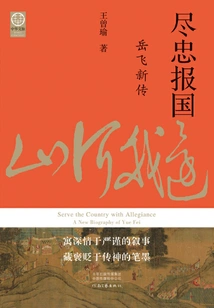
尽忠报国:岳飞新传
Wang Zengyu
This book uses detailed and accurate historical materials to provide an in-depth perspective on Yue Fei's glorious and tragic life, an in-depth analysis of Yue Fei's character traits and spiritual structure, an analysis of the unique social structure and political ecology of his era, and a true representation of the social environment at the turn of the two Song Dynasties.
This book uses detailed and accurate historical materials to provide an in-depth perspective on Yue Fei's glorious and tragic life, an in-depth analysis of Yue Fei's character traits and spiritual structure, an analysis of the unique social structure and political ecology of his era, and a true representation of the social environment at the turn of the two Song Dynasties.
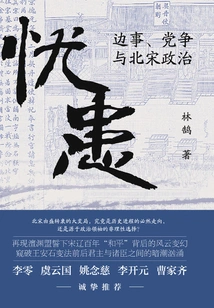
忧患:边事、党争与北宋政治
Lin Hu
The hundred years of peace after the Chanyuan Alliance was just an accidental result of the sometimes correct and sometimes wrong decisions made by policymakers on both sides of the Song and Liao Dynasties. The Xixia rebellion against the Song Dynasty, Qingli's increase in coins, and the Liao-Xia war shattered the Song people's dream of peace and left deep and lasting psychological trauma. Emperor Shenzong, who was considered the most talented person after Zhao Kuangyin, had a dark shadow hidden in his heart. He ignored the collective opposition of the elders and ministers and insisted on supporting Wang Anshi, who had an extreme personality, to implement reforms. This great revolution completely changed the history of the Northern Song Dynasty. From then on, the increasingly fierce party struggle occupied the center of the political stage and became the most terrifying internal worry of the Song Dynasty until the Jurchens went south, Bianliang fell, and the Northern Song Dynasty perished. Party strife begins with external troubles and ends with external troubles... In the story of "Sorrow", there is no historical inevitability beyond the individual. There are only specific responses of specific characters to specific issues at specific historical moments, and the corresponding specific historical consequences.
The hundred years of peace after the Chanyuan Alliance was just an accidental result of the sometimes correct and sometimes wrong decisions made by policymakers on both sides of the Song and Liao Dynasties. The Xixia rebellion against the Song Dynasty, Qingli's increase in coins, and the Liao-Xia war shattered the Song people's dream of peace and left deep and lasting psychological trauma. Emperor Shenzong, who was considered the most talented person after Zhao Kuangyin, had a dark shadow hidden in his heart. He ignored the collective opposition of the elders and ministers and insisted on supporting Wang Anshi, who had an extreme personality, to implement reforms. This great revolution completely changed the history of the Northern Song Dynasty. From then on, the increasingly fierce party struggle occupied the center of the political stage and became the most terrifying internal worry of the Song Dynasty until the Jurchens went south, Bianliang fell, and the Northern Song Dynasty perished. Party strife begins with external troubles and ends with external troubles... In the story of "Sorrow", there is no historical inevitability beyond the individual. There are only specific responses of specific characters to specific issues at specific historical moments, and the corresponding specific historical consequences.
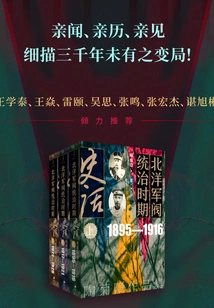
北洋军阀统治时期史话(全三册)
Tao Juyin
The period from 1895 to 1928 was a historical turning point in China's transition from imperialism to republicanism. Warlords from all walks of life stepped onto the historical stage one after another and became an important political force influencing the historical process of the late Qing Dynasty and the early Republic of China. Complex historical clues virtually hinder people's understanding of this important historical period. "History of the Beiyang Warlord Reign Period" combines the personal experience of Tao Juyin, a journalist in the Republic of China, and the rich historical materials he has mastered to restore the historical details of this era. Based on the advantage of "people at the time recounting the history of the world", it objectively and rationally creates a grand historical scene for readers and unfolds the historical picture of that turbulent era. With profound insight and vivid expressiveness of words, Mr. Tao Juyin narrated the warlord's turmoil that lasted for more than thirty years. It not only pays attention to the correlation between historical events, but also delicately depicts human nature and the climate of the world; it not only reflects a strict logical chain, but also shortens the distance between readers and history.
The period from 1895 to 1928 was a historical turning point in China's transition from imperialism to republicanism. Warlords from all walks of life stepped onto the historical stage one after another and became an important political force influencing the historical process of the late Qing Dynasty and the early Republic of China. Complex historical clues virtually hinder people's understanding of this important historical period. "History of the Beiyang Warlord Reign Period" combines the personal experience of Tao Juyin, a journalist in the Republic of China, and the rich historical materials he has mastered to restore the historical details of this era. Based on the advantage of "people at the time recounting the history of the world", it objectively and rationally creates a grand historical scene for readers and unfolds the historical picture of that turbulent era. With profound insight and vivid expressiveness of words, Mr. Tao Juyin narrated the warlord's turmoil that lasted for more than thirty years. It not only pays attention to the correlation between historical events, but also delicately depicts human nature and the climate of the world; it not only reflects a strict logical chain, but also shortens the distance between readers and history.
峥嵘岁月:华侨青年回国参加抗战回忆录
Cppcc National Committee On Culture, History And Study
During the Anti-Japanese War, the vast number of passionate young Chinese living abroad traveled across mountains and rivers for the survival of the motherland and the liberation of the nation, broke through layers of blockades by the reactionaries, returned to the country to participate in the Anti-Japanese War, and made indelible contributions to the great victory of the Anti-Japanese War. The 31 memories collected in this book truly reproduce the prosperous years of overseas Chinese youth. The epic and glorious achievements made by millions of overseas Chinese young people in the Anti-Japanese War will always be remembered in the hearts of the people.
During the Anti-Japanese War, the vast number of passionate young Chinese living abroad traveled across mountains and rivers for the survival of the motherland and the liberation of the nation, broke through layers of blockades by the reactionaries, returned to the country to participate in the Anti-Japanese War, and made indelible contributions to the great victory of the Anti-Japanese War. The 31 memories collected in this book truly reproduce the prosperous years of overseas Chinese youth. The epic and glorious achievements made by millions of overseas Chinese young people in the Anti-Japanese War will always be remembered in the hearts of the people.
明末农民战争史
Gu Cheng
He was invincible for sixteen years, and fell thousands of miles away in four hundred days. Open this book and understand why Li Zicheng failed, and he failed so quickly! In March 1644, Li Zicheng invaded Beijing and the Ming Dynasty fell. He had been fighting for sixteen years. In April of the same year, Li Zicheng was defeated at Shanhaiguan and the Qing army entered the pass. In May of the following year, Li Zicheng sacrificed his life in Jiugong Mountain in Huguang, only 400 days before the fall of the Ming Dynasty. Public opinion lost ground: Dashun's army intensified torture and torture during the pursuit of stolen goods, and the Jin gentry was disgraced. In order to gain a foothold in Han territory, the Qing army aggressively sought to win over Han officials, gentry and landlords. These people had been attacked by the peasant army and all welcomed the Qing army. Strategic mistake: In Dashun's mind, the Ming and Qing wars were a matter of the previous dynasty. They did not have any enemies with the Qing Dynasty, so they could live in peace. They thought that after Wu Sangui surrendered, the Northeast issue would be solved, and the Qing army would be ignored. Misplacement of personnel: Dashun Army lacks a group of strategic talents who can look at the world and coordinate the overall situation. However, the Qing court recruited a group of "guides" such as Fan Wencheng and Hong Chengchou before entering the customs.
He was invincible for sixteen years, and fell thousands of miles away in four hundred days. Open this book and understand why Li Zicheng failed, and he failed so quickly! In March 1644, Li Zicheng invaded Beijing and the Ming Dynasty fell. He had been fighting for sixteen years. In April of the same year, Li Zicheng was defeated at Shanhaiguan and the Qing army entered the pass. In May of the following year, Li Zicheng sacrificed his life in Jiugong Mountain in Huguang, only 400 days before the fall of the Ming Dynasty. Public opinion lost ground: Dashun's army intensified torture and torture during the pursuit of stolen goods, and the Jin gentry was disgraced. In order to gain a foothold in Han territory, the Qing army aggressively sought to win over Han officials, gentry and landlords. These people had been attacked by the peasant army and all welcomed the Qing army. Strategic mistake: In Dashun's mind, the Ming and Qing wars were a matter of the previous dynasty. They did not have any enemies with the Qing Dynasty, so they could live in peace. They thought that after Wu Sangui surrendered, the Northeast issue would be solved, and the Qing army would be ignored. Misplacement of personnel: Dashun Army lacks a group of strategic talents who can look at the world and coordinate the overall situation. However, the Qing court recruited a group of "guides" such as Fan Wencheng and Hong Chengchou before entering the customs.
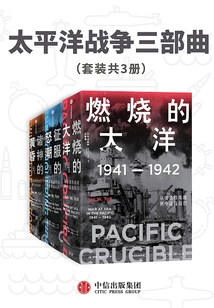
太平洋战争三部曲(套装共3册)
I
"The Burning Ocean: 1941-1942, from the Assault on Pearl Harbor to the Battle of Midway": In the early morning of December 7, 1941, the residents of Honolulu, who were used to military exercises, woke up to the noisy sound of artillery fire as usual. They did not realize that a magnificent symphony that staked the fate of the country had already been played... The arrogant Japan launched an undeclared war on the United States. "The Fury of Conquest: 1942-1944, from the Battle of Guadalcanal to the Battle of the Philippine Sea": In early June 1942, the Japanese army, eager to win, suffered heavy losses in the Battle of Midway. The desire for a quick victory was completely shattered. The Pacific War has since turned into a protracted war of attrition. After the Allied forces sounded the clarion call for counterattack, the beautiful Pacific islands, from the Solomon Islands, the Gilbert Islands to the Marshall Islands, all turned into blood-filled Shura fields. "Twilight of the Gods: 1944-1945, from the Battle of Leyte Gulf to Japan's Surrender": Continuing the characteristics of the first two volumes, it vividly restores the thrilling scenes at the end of the war, and leads readers into the decision-making places in Washington and Tokyo to appreciate the major strategic and diplomatic decisions made by the leaders of all parties. It not only brings a perfect conclusion to this landmark work, but also pushes military history writing to a new peak.
"The Burning Ocean: 1941-1942, from the Assault on Pearl Harbor to the Battle of Midway": In the early morning of December 7, 1941, the residents of Honolulu, who were used to military exercises, woke up to the noisy sound of artillery fire as usual. They did not realize that a magnificent symphony that staked the fate of the country had already been played... The arrogant Japan launched an undeclared war on the United States. "The Fury of Conquest: 1942-1944, from the Battle of Guadalcanal to the Battle of the Philippine Sea": In early June 1942, the Japanese army, eager to win, suffered heavy losses in the Battle of Midway. The desire for a quick victory was completely shattered. The Pacific War has since turned into a protracted war of attrition. After the Allied forces sounded the clarion call for counterattack, the beautiful Pacific islands, from the Solomon Islands, the Gilbert Islands to the Marshall Islands, all turned into blood-filled Shura fields. "Twilight of the Gods: 1944-1945, from the Battle of Leyte Gulf to Japan's Surrender": Continuing the characteristics of the first two volumes, it vividly restores the thrilling scenes at the end of the war, and leads readers into the decision-making places in Washington and Tokyo to appreciate the major strategic and diplomatic decisions made by the leaders of all parties. It not only brings a perfect conclusion to this landmark work, but also pushes military history writing to a new peak.
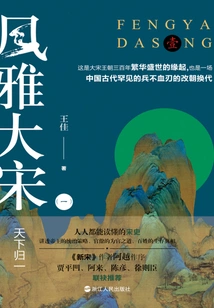
风雅大宋(一):天下归一
Wang Jia
This book is a review of the history of the founding period of the Northern Song Dynasty. The author combines and compares the contents of official history and ancient notes to explain in detail the history from the founding of the Song Dynasty to its unification. Using rich historical materials and rigorous reasoning, it clarifies some people's views and prejudices about the Song Dynasty over the years, which is refreshing. The text is easy to understand and is both readable and academic at the same time. It is a rare popular history work.
This book is a review of the history of the founding period of the Northern Song Dynasty. The author combines and compares the contents of official history and ancient notes to explain in detail the history from the founding of the Song Dynasty to its unification. Using rich historical materials and rigorous reasoning, it clarifies some people's views and prejudices about the Song Dynasty over the years, which is refreshing. The text is easy to understand and is both readable and academic at the same time. It is a rare popular history work.
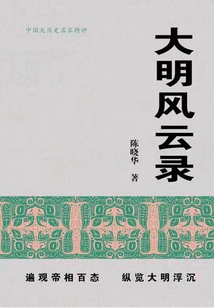
Records of the Ming Dynasty
History大明风云录
Chen Xiaohua
The Ming Dynasty (1368-1644) was the last unified Central Plains dynasty established by the Han people in Chinese history. It lasted for 276 years and lasted for 276 years. The Ming Dynasty experienced the peak of centralization of my country's feudal society, experienced the short-lived emergence of capitalism, witnessed the turbulent reforms, the ups and downs of the coming storm, experienced prosperity and decline, tasted the difficult journey of the Yi Dynasty, and the shock of Western learning; There are the merits and demeanor of emperors and generals, as well as the style and joy of common people; there is the arrogance of the victors, but also the end of the heroes; there are the songs of the prosperous times, and the helplessness and cheer of the declining times. In the end, internal and external troubles defeated this dynasty that was far ahead of the West. This book is divided into three major themes: rise and consolidation, glory and desolation, and military and political diplomacy. Through in-depth analysis of the key figures under each theme, it restores the root causes of the rise and fall of the Ming Dynasty's chaos. Chen Xiaohua, professor and doctoral supervisor at Capital Normal University. Director of the Chinese Historical Documents Research Association, visiting professor at the State University of New York at Buffalo (2013.8.22-2014.1.22), Visiting researcher at the Lu Zuofu Research Center of Southwest University, and president of the Siku Cultural Research Branch of the Chinese Qu Yuan Society. He once visited the University of Vienna and the State University of New York at Buffalo. Mainly engaged in teaching and scientific research on Siku studies, Ming and Qing history, and Chinese and Western cultural exchanges. He has presided over many projects including the National Social Science Fund, authored four monographs, and published more than 80 papers. He is the editor-in-chief of the journal "Siku Studies", serves as an editorial board member of the journal "Siku Studies of China", and won the 7th Wu Yuzhang Youth Award for Humanities and Social Sciences.
The Ming Dynasty (1368-1644) was the last unified Central Plains dynasty established by the Han people in Chinese history. It lasted for 276 years and lasted for 276 years. The Ming Dynasty experienced the peak of centralization of my country's feudal society, experienced the short-lived emergence of capitalism, witnessed the turbulent reforms, the ups and downs of the coming storm, experienced prosperity and decline, tasted the difficult journey of the Yi Dynasty, and the shock of Western learning; There are the merits and demeanor of emperors and generals, as well as the style and joy of common people; there is the arrogance of the victors, but also the end of the heroes; there are the songs of the prosperous times, and the helplessness and cheer of the declining times. In the end, internal and external troubles defeated this dynasty that was far ahead of the West. This book is divided into three major themes: rise and consolidation, glory and desolation, and military and political diplomacy. Through in-depth analysis of the key figures under each theme, it restores the root causes of the rise and fall of the Ming Dynasty's chaos. Chen Xiaohua, professor and doctoral supervisor at Capital Normal University. Director of the Chinese Historical Documents Research Association, visiting professor at the State University of New York at Buffalo (2013.8.22-2014.1.22), Visiting researcher at the Lu Zuofu Research Center of Southwest University, and president of the Siku Cultural Research Branch of the Chinese Qu Yuan Society. He once visited the University of Vienna and the State University of New York at Buffalo. Mainly engaged in teaching and scientific research on Siku studies, Ming and Qing history, and Chinese and Western cultural exchanges. He has presided over many projects including the National Social Science Fund, authored four monographs, and published more than 80 papers. He is the editor-in-chief of the journal "Siku Studies", serves as an editorial board member of the journal "Siku Studies of China", and won the 7th Wu Yuzhang Youth Award for Humanities and Social Sciences.
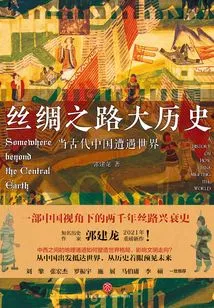
丝绸之路大历史:当古代中国遭遇世界
Guo Jianlong
For more than two thousand years, China's unique geographical conditions have created China's unique tradition of unification and the resilient continuity of Chinese civilization. However, since Zhang Qian emptied the Western Regions, there have been an endless stream of envoys, monks, and businessmen throughout the dynasties with different missions and purposes. They set out from China, either through the mountains and Gobi deserts in the west, or across the oceans, all the way westward to explore the wider world outside of China. The materials and ideas they brought back have also profoundly affected the living world of the Chinese people. Thus the Silk Road was born. This is a history of two thousand years of civilizational exchange between ancient China and the Western world. It is also a grand history of the formation, prosperity, evolution and decline of the Silk Road from a Chinese perspective. Through meticulous excavation of historical materials and vivid and popular words, the author restores the legendary experiences of important diplomats, monks, explorers, etc. On the Silk Road. During the Western Han Dynasty, Zhang Qian served as an envoy to the west to communicate with the Yuezhi and Wusun to jointly attack the Xiongnu, opening up the road to the Western Regions. During the Tang Dynasty, Xuanzang went to India to learn Buddhist scriptures. Entering the Song Dynasty, maritime trade in the southeast flourished, and porcelain and silk were exported overseas. During the Ming and Qing Dynasties, with the strict implementation of the maritime ban policy, the Silk Road gradually weakened. The Silk Road is not only a historical road of conquest, belief, trade and empire, but also a future road that determines the direction of human civilization in the current new era.
For more than two thousand years, China's unique geographical conditions have created China's unique tradition of unification and the resilient continuity of Chinese civilization. However, since Zhang Qian emptied the Western Regions, there have been an endless stream of envoys, monks, and businessmen throughout the dynasties with different missions and purposes. They set out from China, either through the mountains and Gobi deserts in the west, or across the oceans, all the way westward to explore the wider world outside of China. The materials and ideas they brought back have also profoundly affected the living world of the Chinese people. Thus the Silk Road was born. This is a history of two thousand years of civilizational exchange between ancient China and the Western world. It is also a grand history of the formation, prosperity, evolution and decline of the Silk Road from a Chinese perspective. Through meticulous excavation of historical materials and vivid and popular words, the author restores the legendary experiences of important diplomats, monks, explorers, etc. On the Silk Road. During the Western Han Dynasty, Zhang Qian served as an envoy to the west to communicate with the Yuezhi and Wusun to jointly attack the Xiongnu, opening up the road to the Western Regions. During the Tang Dynasty, Xuanzang went to India to learn Buddhist scriptures. Entering the Song Dynasty, maritime trade in the southeast flourished, and porcelain and silk were exported overseas. During the Ming and Qing Dynasties, with the strict implementation of the maritime ban policy, the Silk Road gradually weakened. The Silk Road is not only a historical road of conquest, belief, trade and empire, but also a future road that determines the direction of human civilization in the current new era.
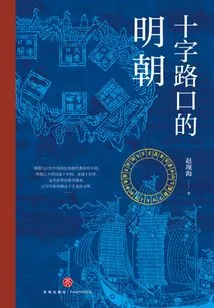
十字路口的明朝
Zhao Xianhai
What were the factors that determined the direction of historical development in the Ming Dynasty? Looking at the world in the 14th century, why did the Ming Dynasty make a choice that was different from other civilizations? In the early historical trend of globalization, why did the Ming Dynasty miss historical opportunities? In the mid-14th century, the Mongol Empire began to disintegrate, ushering in a new chapter in world history. In 1368, a new star rose on the East Asian continent, and the Ming Dynasty was established. At the same time, Western Europe ushered in the "Renaissance" and the subsequent new routes opened up the Arab civilization to expand its power in the Eurasian continent, acting as an intermediary for trade and culture between the East and the West. The Principality of Muscovy integrated the Rus tribes and established Russian civilization on the basis of the territory of the Mongol Empire. In the space of power left after the disintegration of the Mongol Empire, four civilizations began to compete, outlining the basic context of future world history and promoting the opening of modern world history. Compared with the other three civilizations, the Ming Dynasty, which was isolated in East Asia, adopted a "restrained" approach to territorial policy. After the Ming Dynasty largely regained the old territory of the Yuan Dynasty, it did not use its powerful national power to follow the world expansion of the Mongol Empire. Instead, it returned to Asia and established the traditional "Chinese Asian Order" with the Central Plains Dynasty as the core. When the world entered the crossroads of modern times, this choice of the Ming Dynasty missed a rare historical opportunity and provided historical space for the expansion of the other three civilizations, which is regrettable. However, if you immerse yourself in history, you will find that the Ming Dynasty's choice has inherent rationality and is the inevitable result of a combination of geopolitics, civilizational traditions, and dynastic character. Starting from the perspective of global history, the author selects 17 typical figures and events in the history of the Ming Dynasty. Taking the "introverted" orientation of the Ming Dynasty as a clue, he vividly describes the complicated people and events in the Ming Dynasty from the political, economic, military, ideological, and cultural levels. He deeply reveals the deep connotation behind this complicated picture, and points out the profound impact of these people and events on Ming Dynasty China, and even the modern history of the world.
What were the factors that determined the direction of historical development in the Ming Dynasty? Looking at the world in the 14th century, why did the Ming Dynasty make a choice that was different from other civilizations? In the early historical trend of globalization, why did the Ming Dynasty miss historical opportunities? In the mid-14th century, the Mongol Empire began to disintegrate, ushering in a new chapter in world history. In 1368, a new star rose on the East Asian continent, and the Ming Dynasty was established. At the same time, Western Europe ushered in the "Renaissance" and the subsequent new routes opened up the Arab civilization to expand its power in the Eurasian continent, acting as an intermediary for trade and culture between the East and the West. The Principality of Muscovy integrated the Rus tribes and established Russian civilization on the basis of the territory of the Mongol Empire. In the space of power left after the disintegration of the Mongol Empire, four civilizations began to compete, outlining the basic context of future world history and promoting the opening of modern world history. Compared with the other three civilizations, the Ming Dynasty, which was isolated in East Asia, adopted a "restrained" approach to territorial policy. After the Ming Dynasty largely regained the old territory of the Yuan Dynasty, it did not use its powerful national power to follow the world expansion of the Mongol Empire. Instead, it returned to Asia and established the traditional "Chinese Asian Order" with the Central Plains Dynasty as the core. When the world entered the crossroads of modern times, this choice of the Ming Dynasty missed a rare historical opportunity and provided historical space for the expansion of the other three civilizations, which is regrettable. However, if you immerse yourself in history, you will find that the Ming Dynasty's choice has inherent rationality and is the inevitable result of a combination of geopolitics, civilizational traditions, and dynastic character. Starting from the perspective of global history, the author selects 17 typical figures and events in the history of the Ming Dynasty. Taking the "introverted" orientation of the Ming Dynasty as a clue, he vividly describes the complicated people and events in the Ming Dynasty from the political, economic, military, ideological, and cultural levels. He deeply reveals the deep connotation behind this complicated picture, and points out the profound impact of these people and events on Ming Dynasty China, and even the modern history of the world.
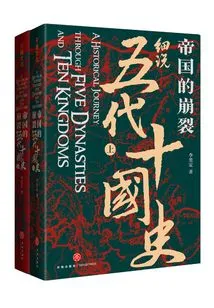
The Collapse of the Empire: a Detailed History of the Five Dynasties and Ten Kingdoms (two Volumes)
History帝国的崩裂:细说五代十国史(全二册)
Li Yiding
The Five Dynasties and Ten Kingdoms was a period of great division in Chinese history. Civil uprisings broke out in the late Tang Dynasty, vassal towns in various places proclaimed themselves kings, and civil strife continued in the Central Plains. During this half-century of chaos, the world was torn apart, laws and regulations were lax, the ruling class was changing frequently, and morality was disordered. Arrogant soldiers and powerful generals proclaimed themselves kings and emperors, fathers and sons killed each other in endless reincarnations, literati and bachelors sold themselves for glory, and the people's lives were in ruins, and the people were in dire straits. But it was also this dark period that provided a lesson for the new round of integration and unification of China, and gave birth to the Zhao and Song Dynasties with prosperous civil rule and highly developed political civilization. This book is a popular book about the history of the Five Dynasties and Ten Kingdoms. The author begins with Huang Chao's War, and then narrates the replacement of the Central Plains dynasties of the Later Liang, Later Tang, Later Jin, Later Han, and Later Wu, as well as the establishment of many separatist regimes such as the Former Shu, Wu, and Southern Tang in the south, and the rise of the Khitan in the north, until the death of Chai Rong, Emperor Shizong of Zhou Dynasty, and the establishment of the Song Dynasty by Zhao Kuangyin. The author focuses on the emperors who established the dynasty, as well as their advisers, generals and other figures, and uses military operations, major events, and the rise and fall of dynasties as lines, supplemented by describing the reactions and actions of the Central Plains dynasties against the separatist regimes. The author uses points to cover, clear layers, and clear context to depict a picture of the troubled times in which "all the heroes came together to fight for hegemony in the world."
The Five Dynasties and Ten Kingdoms was a period of great division in Chinese history. Civil uprisings broke out in the late Tang Dynasty, vassal towns in various places proclaimed themselves kings, and civil strife continued in the Central Plains. During this half-century of chaos, the world was torn apart, laws and regulations were lax, the ruling class was changing frequently, and morality was disordered. Arrogant soldiers and powerful generals proclaimed themselves kings and emperors, fathers and sons killed each other in endless reincarnations, literati and bachelors sold themselves for glory, and the people's lives were in ruins, and the people were in dire straits. But it was also this dark period that provided a lesson for the new round of integration and unification of China, and gave birth to the Zhao and Song Dynasties with prosperous civil rule and highly developed political civilization. This book is a popular book about the history of the Five Dynasties and Ten Kingdoms. The author begins with Huang Chao's War, and then narrates the replacement of the Central Plains dynasties of the Later Liang, Later Tang, Later Jin, Later Han, and Later Wu, as well as the establishment of many separatist regimes such as the Former Shu, Wu, and Southern Tang in the south, and the rise of the Khitan in the north, until the death of Chai Rong, Emperor Shizong of Zhou Dynasty, and the establishment of the Song Dynasty by Zhao Kuangyin. The author focuses on the emperors who established the dynasty, as well as their advisers, generals and other figures, and uses military operations, major events, and the rise and fall of dynasties as lines, supplemented by describing the reactions and actions of the Central Plains dynasties against the separatist regimes. The author uses points to cover, clear layers, and clear context to depict a picture of the troubled times in which "all the heroes came together to fight for hegemony in the world."
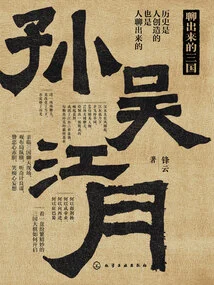
新史纪丛书·聊出来的三国:孙吴江月
Fengyun
This is a historical fact that changed the history of the Three Kingdoms in the late Han Dynasty through chatting. In Chinese history before the Three Kingdoms, the confrontation between the East and the West was overwhelmingly superior to the confrontation between the North and the South - whether it was Zhou's destruction of Shang or Qin's destruction of the Six Kingdoms; whether it was the peasant uprising at the end of the Qin Dynasty or the subsequent struggle between Chu and Han for hegemony... Almost all battles were expressed in the form of a confrontation between East and West. However, when the river of history turned to Chibiji, everything changed. From then on, Jiangdong was no longer a corner of Yangzhou's rule, but became a refuge for the Central Plains regime or separatist forces, and the Yangtze River was their moat. How did this all change? One chat after another gave the answer. From Zhang Hong's "Jingyang Policy" to Lu Su's "Couch Policy", from Gan Ning's "Western Advance Policy" to Zhou Yu's "Ba-Shu Policy", if Zhuge Liang's "Longzhong Pair" aims to achieve one-third of the world, what the above chats want to achieve is at least one-third of the world. So, why did the world end up being divided into three parts? Let's listen to what Jiangdong's Sun family talked about with the counselors and generals!
This is a historical fact that changed the history of the Three Kingdoms in the late Han Dynasty through chatting. In Chinese history before the Three Kingdoms, the confrontation between the East and the West was overwhelmingly superior to the confrontation between the North and the South - whether it was Zhou's destruction of Shang or Qin's destruction of the Six Kingdoms; whether it was the peasant uprising at the end of the Qin Dynasty or the subsequent struggle between Chu and Han for hegemony... Almost all battles were expressed in the form of a confrontation between East and West. However, when the river of history turned to Chibiji, everything changed. From then on, Jiangdong was no longer a corner of Yangzhou's rule, but became a refuge for the Central Plains regime or separatist forces, and the Yangtze River was their moat. How did this all change? One chat after another gave the answer. From Zhang Hong's "Jingyang Policy" to Lu Su's "Couch Policy", from Gan Ning's "Western Advance Policy" to Zhou Yu's "Ba-Shu Policy", if Zhuge Liang's "Longzhong Pair" aims to achieve one-third of the world, what the above chats want to achieve is at least one-third of the world. So, why did the world end up being divided into three parts? Let's listen to what Jiangdong's Sun family talked about with the counselors and generals!
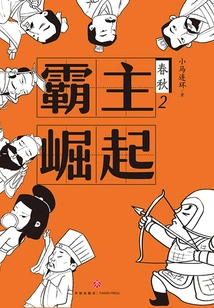
春秋2:霸主崛起
Pony Chain
The king of Zhou Dynasty moved eastward, the royal family declined, and the Central Plains had no uncle, which was in danger. In the darkness before dawn, the "savage" Guan Zhong, who was unable to do anything and took everything with nothing left, stepped onto the stage of history with big strides. Before his debut, he also played a cruel trick - he "killed" the young master Xiaobai with one arrow, and then "changed into a living person", transforming into an overlord who could save the Qi Empire from falling. Guan Zhong: Salted fish also need to have dreams. Let's look at the counterattack of a generation of great politicians. Duke Huan of Qi: The obedient novice in the power field finally broke out of the beacon smoke and became the first of the five hegemons of the Spring and Autumn Period. Song Xianggong: Is he a weirdo or a true gentleman? Interpret the most quixotic king in the history of the Spring and Autumn Period.
The king of Zhou Dynasty moved eastward, the royal family declined, and the Central Plains had no uncle, which was in danger. In the darkness before dawn, the "savage" Guan Zhong, who was unable to do anything and took everything with nothing left, stepped onto the stage of history with big strides. Before his debut, he also played a cruel trick - he "killed" the young master Xiaobai with one arrow, and then "changed into a living person", transforming into an overlord who could save the Qi Empire from falling. Guan Zhong: Salted fish also need to have dreams. Let's look at the counterattack of a generation of great politicians. Duke Huan of Qi: The obedient novice in the power field finally broke out of the beacon smoke and became the first of the five hegemons of the Spring and Autumn Period. Song Xianggong: Is he a weirdo or a true gentleman? Interpret the most quixotic king in the history of the Spring and Autumn Period.
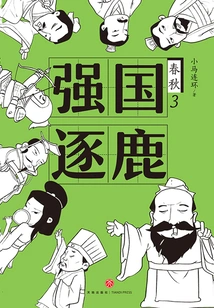
春秋3:强国逐鹿
Pony Chain
Everyone who can leave their name in the Spring and Autumn Period has a similar concept - only by not taking the ordinary path can you have your own path. Li Ji, who was originally the sweet girl of heaven, was forced to marry the enemy who killed her father. Let's see how her sister Chengfeng Panglang participated in the power struggle. Chong'er, the leader of the "Jin Wandering Group", has been looked down upon and despised, but never abandons or gives up, and finally performs the drama of "The Return of the King"! Killing the expert Jin Xiangong, he led his soldiers to achieve the best personal record of "merging the country seventeen times and subjugating the country thirty-eight", laying a solid foundation for Jin's hegemony. Baili Xi, a cowherd who refused to settle down and was poor, decided to embark on a long and arduous job search after eating the only egg-laying hen in the family.
Everyone who can leave their name in the Spring and Autumn Period has a similar concept - only by not taking the ordinary path can you have your own path. Li Ji, who was originally the sweet girl of heaven, was forced to marry the enemy who killed her father. Let's see how her sister Chengfeng Panglang participated in the power struggle. Chong'er, the leader of the "Jin Wandering Group", has been looked down upon and despised, but never abandons or gives up, and finally performs the drama of "The Return of the King"! Killing the expert Jin Xiangong, he led his soldiers to achieve the best personal record of "merging the country seventeen times and subjugating the country thirty-eight", laying a solid foundation for Jin's hegemony. Baili Xi, a cowherd who refused to settle down and was poor, decided to embark on a long and arduous job search after eating the only egg-laying hen in the family.
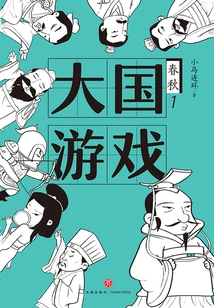
春秋1:大国游戏
Pony Chain
Lu Yingong, who had never held an official position in his life, worked hard and was recognized by historians, becoming the first person in the "Spring and Autumn" chronicle. When he was a child, his mother didn't care for him, but when he grew up, his boss didn't love him. However, Ji Yousheng learned tolerance and achieved a career. The young King Huan of Zhou was unwilling to "lay flat", so he fought hard and won the respect of his subordinates for five hundred years for the declining Zhou royal family. The communicative genius Qi Xigong, without spending a single soldier, relied on his two stunning daughters to achieve "kingdom"! Duke Xianggang of Qi, who was not afraid of serious troubles, sensationalized the Spring and Autumn Period with gossipy news, and did not delay laying the foundation for Qi's hegemony. After Chu Xiaodi started his own business and became a rich man, he began to think about how to compete for the Central Plains market.
Lu Yingong, who had never held an official position in his life, worked hard and was recognized by historians, becoming the first person in the "Spring and Autumn" chronicle. When he was a child, his mother didn't care for him, but when he grew up, his boss didn't love him. However, Ji Yousheng learned tolerance and achieved a career. The young King Huan of Zhou was unwilling to "lay flat", so he fought hard and won the respect of his subordinates for five hundred years for the declining Zhou royal family. The communicative genius Qi Xigong, without spending a single soldier, relied on his two stunning daughters to achieve "kingdom"! Duke Xianggang of Qi, who was not afraid of serious troubles, sensationalized the Spring and Autumn Period with gossipy news, and did not delay laying the foundation for Qi's hegemony. After Chu Xiaodi started his own business and became a rich man, he began to think about how to compete for the Central Plains market.
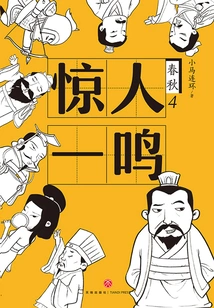
春秋4:惊人一鸣
Pony Chain
Duke Xiang of Jin, who devoted his life to getting rid of his father's influence and living his own style, finally won the honorable title of "Excellent City Defender". From the smug "Second Generation of the Homecoming Regiment" to the first powerful official in the Jin Kingdom, let's take a look at Zhao Dun's promotion and salary increase and his road to maintaining hegemony and carrying the flag. King Chuzhuang: After three years of dormancy, he is the strongest king hidden in the power field! We are not afraid of bad relationships, but we are afraid of making too much of a joke - Director Qi Qinggong is a super prankster! From the son of a guilty minister to a leader, interpret the wisdom of Sun Shuao, a truly powerful figure in the management world. Without a father to work hard and a mother to rely on, how will the exiled doctor come back and create glory?
Duke Xiang of Jin, who devoted his life to getting rid of his father's influence and living his own style, finally won the honorable title of "Excellent City Defender". From the smug "Second Generation of the Homecoming Regiment" to the first powerful official in the Jin Kingdom, let's take a look at Zhao Dun's promotion and salary increase and his road to maintaining hegemony and carrying the flag. King Chuzhuang: After three years of dormancy, he is the strongest king hidden in the power field! We are not afraid of bad relationships, but we are afraid of making too much of a joke - Director Qi Qinggong is a super prankster! From the son of a guilty minister to a leader, interpret the wisdom of Sun Shuao, a truly powerful figure in the management world. Without a father to work hard and a mother to rely on, how will the exiled doctor come back and create glory?
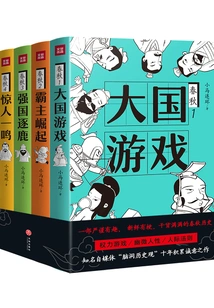
春秋(套装共4册)
Pony Chain
In the "Spring and Autumn" series of works, the author Xiao Ma Huanlian uses humorous, popular and sophisticated language to show readers a history of the Spring and Autumn Period. The Spring and Autumn Period stories written by the author can go deep into the historical materials, explore the characters' hearts, and use a humorous style to outline each vivid historical figure. It is amazing. It has been praised as the most worth-read long historical vernacular text after "Those Things in the Ming Dynasty" and "the best long vernacular Spring and Autumn Period popular reader in the past 30 years." On the premise of fully respecting history, the author interprets history in connection with reality, allowing readers to more clearly clarify the complex relationships between countries and understand the stories behind history. At the same time, it also provides important enlightenment for today's readers in the workplace and shopping malls. It is an interesting and easy-to-understand popular historical reading.
In the "Spring and Autumn" series of works, the author Xiao Ma Huanlian uses humorous, popular and sophisticated language to show readers a history of the Spring and Autumn Period. The Spring and Autumn Period stories written by the author can go deep into the historical materials, explore the characters' hearts, and use a humorous style to outline each vivid historical figure. It is amazing. It has been praised as the most worth-read long historical vernacular text after "Those Things in the Ming Dynasty" and "the best long vernacular Spring and Autumn Period popular reader in the past 30 years." On the premise of fully respecting history, the author interprets history in connection with reality, allowing readers to more clearly clarify the complex relationships between countries and understand the stories behind history. At the same time, it also provides important enlightenment for today's readers in the workplace and shopping malls. It is an interesting and easy-to-understand popular historical reading.
蒙曼精选隋唐大历史(套装共7册)
Monman
This book consists of "Wu Zetian", "The Rise and Fall of the Sui Dynasty for Forty Years", "Xuanzong of the Tang Dynasty", and "Princess Taiping and Her Era". "Wu Zetian": Douban score 8.2! The masterpiece of Meng Man, a scholar of Sui and Tang history! Peel away the cocoons, quote classics, and restore the generation of Empress Wu Zetian! "The Rise and Fall of the Sui Dynasty in Forty Years": a famous work by Meng Man, a scholar of Sui and Tang history. Write down the suffocating 38-year history of the rise and fall of power in the Sui Dynasty. Subversive interpretation of Emperor Wen and Emperor Yang of Sui Dynasty! A popular classic that cannot be ignored when talking about the history of the Sui Dynasty. If you want to understand the history of the Sui and Tang Dynasties, this set of books is a must-read! "Xuanzong of the Tang Dynasty": If you only read one history, you should read the History of the Tang Dynasty. If you can only read about one emperor, you should read Emperor Ming of the Tang Dynasty. He reigned for 44 years. He was high-spirited in his youth, complacent in his middle age, and indulged in absurdity in his old age. His life was mixed with reputation and reputation, but it ended sadly. "Princess Taiping and Her Era": There has never been a period when so many women were involved in fierce and complex political competitions at the same time! Princess Taiping, Shangguan Wan'er, Queen Wei, and Princess Anle, these four women almost rewrote history.
This book consists of "Wu Zetian", "The Rise and Fall of the Sui Dynasty for Forty Years", "Xuanzong of the Tang Dynasty", and "Princess Taiping and Her Era". "Wu Zetian": Douban score 8.2! The masterpiece of Meng Man, a scholar of Sui and Tang history! Peel away the cocoons, quote classics, and restore the generation of Empress Wu Zetian! "The Rise and Fall of the Sui Dynasty in Forty Years": a famous work by Meng Man, a scholar of Sui and Tang history. Write down the suffocating 38-year history of the rise and fall of power in the Sui Dynasty. Subversive interpretation of Emperor Wen and Emperor Yang of Sui Dynasty! A popular classic that cannot be ignored when talking about the history of the Sui Dynasty. If you want to understand the history of the Sui and Tang Dynasties, this set of books is a must-read! "Xuanzong of the Tang Dynasty": If you only read one history, you should read the History of the Tang Dynasty. If you can only read about one emperor, you should read Emperor Ming of the Tang Dynasty. He reigned for 44 years. He was high-spirited in his youth, complacent in his middle age, and indulged in absurdity in his old age. His life was mixed with reputation and reputation, but it ended sadly. "Princess Taiping and Her Era": There has never been a period when so many women were involved in fierce and complex political competitions at the same time! Princess Taiping, Shangguan Wan'er, Queen Wei, and Princess Anle, these four women almost rewrote history.
我们从哪里来:史前环境与中华文明的起源
Luo Sanyang
The author focuses on the land that was later called "China" from 960 million years ago to 4000 BC. Compared with the colorful and splendid history of Chinese civilization that everyone is familiar with since the beginning of written records, the prehistoric history of China in this distant time and space seems particularly lonely. But is this history really boring? What kind of environmental changes are these? How did our ancestors resist the dramatic changes in the outside world? What did our ancestors with similar brain capacity as modern humans do and think? In areas that cannot be explored solely by relying on history, the author comprehensively uses knowledge from anthropology, environmental studies, archaeology, geology, myths and legends and many other fields to try to answer "where do we come from?"
The author focuses on the land that was later called "China" from 960 million years ago to 4000 BC. Compared with the colorful and splendid history of Chinese civilization that everyone is familiar with since the beginning of written records, the prehistoric history of China in this distant time and space seems particularly lonely. But is this history really boring? What kind of environmental changes are these? How did our ancestors resist the dramatic changes in the outside world? What did our ancestors with similar brain capacity as modern humans do and think? In areas that cannot be explored solely by relying on history, the author comprehensively uses knowledge from anthropology, environmental studies, archaeology, geology, myths and legends and many other fields to try to answer "where do we come from?"
中国文明的历史(十):东亚的开国
(japan) Compiled By Hatano Zendai
In the mid-to-late 19th century, the sleeping East Asian countries encountered invasions from Western powers one after another. This led to a fierce collision and confrontation between the East and the West, tradition and modernity. Under the severe impact, East Asian countries were forced to begin a painful transformation, opening their doors to the world. This book is written by an organization of well-known Japanese experts on Eastern history. It compares the seclusion of China, Japan and other countries in the late Qing Dynasty with the history of the same period in Europe. It then tells the process of the invasion of Western countries and the forced establishment of countries in East Asia one after another. Finally, it introduces in detail a series of resistance struggles and countermeasures taken by East Asian countries.
In the mid-to-late 19th century, the sleeping East Asian countries encountered invasions from Western powers one after another. This led to a fierce collision and confrontation between the East and the West, tradition and modernity. Under the severe impact, East Asian countries were forced to begin a painful transformation, opening their doors to the world. This book is written by an organization of well-known Japanese experts on Eastern history. It compares the seclusion of China, Japan and other countries in the late Qing Dynasty with the history of the same period in Europe. It then tells the process of the invasion of Western countries and the forced establishment of countries in East Asia one after another. Finally, it introduces in detail a series of resistance struggles and countermeasures taken by East Asian countries.
中国文明的历史(八):明帝国与倭寇
(japan) Taisuke Mitamura
This book is a popular history of the Ming Dynasty compiled by a well-known Japanese historian organization. It uses a magnificent view of Asian history to tell the entire historical process of the Ming Dynasty from the peasant uprising at the end of the Yuan Dynasty, the establishment of the Ming Dynasty, to the demise of the Ming Dynasty. It focuses on the theme of Japanese pirates, focusing on elucidating the relationship between the Ming Dynasty and Japan, the origin and development of Japanese pirates, and Toyotomi Hideyoshi's Greater East Asia concept.
This book is a popular history of the Ming Dynasty compiled by a well-known Japanese historian organization. It uses a magnificent view of Asian history to tell the entire historical process of the Ming Dynasty from the peasant uprising at the end of the Yuan Dynasty, the establishment of the Ming Dynasty, to the demise of the Ming Dynasty. It focuses on the theme of Japanese pirates, focusing on elucidating the relationship between the Ming Dynasty and Japan, the origin and development of Japanese pirates, and Toyotomi Hideyoshi's Greater East Asia concept.
遗失在西方的中国史:法国《小日报》记录的晚清(1891-1911)
Compiled By Shen Hong
The manuscript contains a total of 134 color lithographs published in the French "Le Petit Daily" and "Le Petit Parisien" from 1891 to 1911. The content covers the 1891 lesson plan, the Sino-Japanese War of 1895, Li Hongzhang's visit to Europe in 1896, the Boxer Rebellion, the Eight-Power Allied Forces' invasion of China, the 1905 Russo-Japanese War, the funerals of Empress Dowager Cixi and Guangxu in 1908, Yuan Shikai's military training at the small station in 1909, and Yuan Shikai's braid cutting and taking office as interim president in 1911. It covers many secrets and old news, and the historical materials are precious. This batch of color lithographs, which has never been seen in authoritative collection institutions in China, not only makes up for the shortcomings in the history of early Chinese imaging and modern Chinese printing and publishing history, but more importantly, while tracing that thought-provoking history, it is also possible to examine the profound impact of that period of history on the development of China through a Western perspective. These precious picture materials are first-hand original materials and their origin is France. Their records and views on historical events of this period are often neglected fragments in Chinese historical materials. Some of the events and details of Chinese social life they report are often blind spots in Chinese historical materials; and the systematicness and continuity of their reports are also beyond the reach of many other Chinese and Western historical materials. This provides an objective reference for us to study history. The eyes of others, the Western perspective, and the freeze-frame of history supplement our memories of the Republic of China. Based on the original manuscript, Teacher Shen Hong added 16 new explanations and background introductions to related events, providing a more detailed interpretation of the historical background.
The manuscript contains a total of 134 color lithographs published in the French "Le Petit Daily" and "Le Petit Parisien" from 1891 to 1911. The content covers the 1891 lesson plan, the Sino-Japanese War of 1895, Li Hongzhang's visit to Europe in 1896, the Boxer Rebellion, the Eight-Power Allied Forces' invasion of China, the 1905 Russo-Japanese War, the funerals of Empress Dowager Cixi and Guangxu in 1908, Yuan Shikai's military training at the small station in 1909, and Yuan Shikai's braid cutting and taking office as interim president in 1911. It covers many secrets and old news, and the historical materials are precious. This batch of color lithographs, which has never been seen in authoritative collection institutions in China, not only makes up for the shortcomings in the history of early Chinese imaging and modern Chinese printing and publishing history, but more importantly, while tracing that thought-provoking history, it is also possible to examine the profound impact of that period of history on the development of China through a Western perspective. These precious picture materials are first-hand original materials and their origin is France. Their records and views on historical events of this period are often neglected fragments in Chinese historical materials. Some of the events and details of Chinese social life they report are often blind spots in Chinese historical materials; and the systematicness and continuity of their reports are also beyond the reach of many other Chinese and Western historical materials. This provides an objective reference for us to study history. The eyes of others, the Western perspective, and the freeze-frame of history supplement our memories of the Republic of China. Based on the original manuscript, Teacher Shen Hong added 16 new explanations and background introductions to related events, providing a more detailed interpretation of the historical background.
遗失在西方的中国史:《伦敦新闻画报》记录的晚清(1842—1873)
Compiled By Shen Hong
The British "Illustrated London News", founded in 1842, was the world's first weekly magazine with pictures as its main content. He used delicate and vivid dense-line woodcuts and lithographs to reproduce major events around the world as fast as the technical conditions of that era could achieve. The Pictorial paid close attention to the Chinese Empire from the beginning and sent a large number of painters and reporters. From 1857 to 1901 alone, it sent back thousands of sketches and hundreds of thousands of words of written reports about China to the United Kingdom. Most of them are on-site eyewitness reports and are first-hand original data; their views and opinions on historical events are often inconsistent with those in Chinese historical materials, which provides us with an objective reference for studying history; some of the events and details of Chinese social life they report are often blind spots in Chinese historical materials; the systematicness and continuity of their reports are also beyond the reach of many other Chinese and Western historical materials.
The British "Illustrated London News", founded in 1842, was the world's first weekly magazine with pictures as its main content. He used delicate and vivid dense-line woodcuts and lithographs to reproduce major events around the world as fast as the technical conditions of that era could achieve. The Pictorial paid close attention to the Chinese Empire from the beginning and sent a large number of painters and reporters. From 1857 to 1901 alone, it sent back thousands of sketches and hundreds of thousands of words of written reports about China to the United Kingdom. Most of them are on-site eyewitness reports and are first-hand original data; their views and opinions on historical events are often inconsistent with those in Chinese historical materials, which provides us with an objective reference for studying history; some of the events and details of Chinese social life they report are often blind spots in Chinese historical materials; the systematicness and continuity of their reports are also beyond the reach of many other Chinese and Western historical materials.
讲给大家的中国历史11:光明与黑暗并存的时代
Yang Zhao
The "Chinese History for Everyone" series is a brand-new general history of China. It does not introduce readers to dry historical events and knowledge points, but explores the deep logic behind Chinese history and provides a new set of cognitive methods for understanding Chinese history. The series consists of 4 volumes and 13 volumes, presenting a panoramic view of the evolution of "China", a unique and tenacious life entity. "Chinese History for Everyone 11: An Era of Light and Darkness" tells the story of China during the Ming Dynasty. The Ming Dynasty was an era full of contradictions, an era where light and darkness coexisted. While new things, new lives, and new enjoyments emerged in an endless stream, the palace, officialdom, and the scholar community were full of darkness and decay; Wang Yangming's ideological breakthrough provided the scholars with different ideals, but it was caused by dark political oppression and frustration; financial chaos, cliques of eunuchs and foreign ministers, and the emperor either inaction or acting haphazardly... However, under all kinds of high contradictions, why could the Ming Dynasty continue for so many years? This book also provides an answer to this key question. You will see: The whole country is crazy about showing off their clothes and food. To highlight one's identity, one must wear clothes that others cannot afford, and to show off what one eats, drinks, tableware and pomp. The rapidly growing population caused changes in all aspects of the Ming Dynasty, from economic production to social organization and bureaucracy. Great changes; encountered a series of setbacks and crises, Wang Yangming achieved an ideological and spiritual breakthrough in Longchang; Emperor Chongzhen actually used 50 cabinet ministers in less than 17 years of reign, with an average term of 4 months, which shows how difficult it is to serve the emperor of the Ming Dynasty...
The "Chinese History for Everyone" series is a brand-new general history of China. It does not introduce readers to dry historical events and knowledge points, but explores the deep logic behind Chinese history and provides a new set of cognitive methods for understanding Chinese history. The series consists of 4 volumes and 13 volumes, presenting a panoramic view of the evolution of "China", a unique and tenacious life entity. "Chinese History for Everyone 11: An Era of Light and Darkness" tells the story of China during the Ming Dynasty. The Ming Dynasty was an era full of contradictions, an era where light and darkness coexisted. While new things, new lives, and new enjoyments emerged in an endless stream, the palace, officialdom, and the scholar community were full of darkness and decay; Wang Yangming's ideological breakthrough provided the scholars with different ideals, but it was caused by dark political oppression and frustration; financial chaos, cliques of eunuchs and foreign ministers, and the emperor either inaction or acting haphazardly... However, under all kinds of high contradictions, why could the Ming Dynasty continue for so many years? This book also provides an answer to this key question. You will see: The whole country is crazy about showing off their clothes and food. To highlight one's identity, one must wear clothes that others cannot afford, and to show off what one eats, drinks, tableware and pomp. The rapidly growing population caused changes in all aspects of the Ming Dynasty, from economic production to social organization and bureaucracy. Great changes; encountered a series of setbacks and crises, Wang Yangming achieved an ideological and spiritual breakthrough in Longchang; Emperor Chongzhen actually used 50 cabinet ministers in less than 17 years of reign, with an average term of 4 months, which shows how difficult it is to serve the emperor of the Ming Dynasty...
September 18th Incident
History九一八事变
Tang Xiaohui
"History Can't Forget" is a themed series of books specially designed by China Democracy and Legal Publishing House for young readers. It aims to allow young people to fully understand the face of the Anti-Japanese War and inspire their patriotism. This book is a part of the series. It mainly reflects the September 18th Incident and its impact, such as the establishment of the puppet Manchukuo, when Japan invaded China in 1931. At the same time, it records in detail the heroic resistance of the Chinese military and civilians surrounding the September 18th Incident and the Japanese invasion of Northeast China, such as the Mazhanshanjiang Bridge Resistance War, etc.
"History Can't Forget" is a themed series of books specially designed by China Democracy and Legal Publishing House for young readers. It aims to allow young people to fully understand the face of the Anti-Japanese War and inspire their patriotism. This book is a part of the series. It mainly reflects the September 18th Incident and its impact, such as the establishment of the puppet Manchukuo, when Japan invaded China in 1931. At the same time, it records in detail the heroic resistance of the Chinese military and civilians surrounding the September 18th Incident and the Japanese invasion of Northeast China, such as the Mazhanshanjiang Bridge Resistance War, etc.
七七卢沟桥抗战
Meng Chao
"History Can't Forget" is a themed series of books specially designed by China Democracy and Legal Publishing House for young readers. It aims to allow young people to fully understand the face of the Anti-Japanese War and inspire their patriotism. This book is a part of the series. It mainly reflects the background and process of the Marco Polo Bridge Incident caused by the Japanese army, as well as the heroic deeds of the Chinese military and civilians in the resistance, including the cooperation between the Kuomintang and the Communist Party, Song Zheyuan's preparations for the war, the fortification of Marco Polo Bridge, Japanese military exercises and attacks, Wang Lengzhai's negotiations into the city, etc. It focuses on describing the deeds of generals such as Tong Linge, Zhao Dengyu, Jin Zhenzhong, and Zhang Zizhong.
"History Can't Forget" is a themed series of books specially designed by China Democracy and Legal Publishing House for young readers. It aims to allow young people to fully understand the face of the Anti-Japanese War and inspire their patriotism. This book is a part of the series. It mainly reflects the background and process of the Marco Polo Bridge Incident caused by the Japanese army, as well as the heroic deeds of the Chinese military and civilians in the resistance, including the cooperation between the Kuomintang and the Communist Party, Song Zheyuan's preparations for the war, the fortification of Marco Polo Bridge, Japanese military exercises and attacks, Wang Lengzhai's negotiations into the city, etc. It focuses on describing the deeds of generals such as Tong Linge, Zhao Dengyu, Jin Zhenzhong, and Zhang Zizhong.
华侨支援祖国抗战纪实
Ren Guixiang
"History Can't Forget" is a themed series of books specially designed by China Democracy and Legal Publishing House for young readers. It aims to allow young people to fully understand the face of the Anti-Japanese War and inspire their patriotism. This book is a volume in the series. It mainly introduces the rise of the anti-Japanese national salvation movement and the cohesion of overseas Chinese to save the motherland. It details the heroic deeds of overseas Chinese in propagating and praising the motherland for the war of resistance, returning to China to rescue the injured laborers, overseas Chinese pilots fighting in the blue sky, donating to the country and sacrificing their lives for the country, Chinese workers going on strike, supporting the anti-Japanese base areas, and carrying out international aid activities to China.
"History Can't Forget" is a themed series of books specially designed by China Democracy and Legal Publishing House for young readers. It aims to allow young people to fully understand the face of the Anti-Japanese War and inspire their patriotism. This book is a volume in the series. It mainly introduces the rise of the anti-Japanese national salvation movement and the cohesion of overseas Chinese to save the motherland. It details the heroic deeds of overseas Chinese in propagating and praising the motherland for the war of resistance, returning to China to rescue the injured laborers, overseas Chinese pilots fighting in the blue sky, donating to the country and sacrificing their lives for the country, Chinese workers going on strike, supporting the anti-Japanese base areas, and carrying out international aid activities to China.
国际友人与抗日战争
Qiao Lingmei
"History Can't Forget" is a themed series of books specially designed by China Democracy and Legal Publishing House for young readers. It aims to allow young people to fully understand the face of the Anti-Japanese War and inspire their patriotism. This book is a part of the series, which mainly reflects the glorious image of foreign friends who helped our country during the Anti-Japanese War, and describes the glorious deeds of Edgar Snow, Smedley, Epstein, Hans Heber, Rewi Alley, Bethune, Kotnis, Kurishenko, Chennault and others.
"History Can't Forget" is a themed series of books specially designed by China Democracy and Legal Publishing House for young readers. It aims to allow young people to fully understand the face of the Anti-Japanese War and inspire their patriotism. This book is a part of the series, which mainly reflects the glorious image of foreign friends who helped our country during the Anti-Japanese War, and describes the glorious deeds of Edgar Snow, Smedley, Epstein, Hans Heber, Rewi Alley, Bethune, Kotnis, Kurishenko, Chennault and others.
血战台儿庄
Chen Mingming
"History Can't Forget" is a themed series of books specially designed by China Democracy and Legal Publishing House for young readers. It aims to allow young people to fully understand the face of the Anti-Japanese War and inspire their patriotism. This book is a part of the series, which mainly reflects the historical facts of Li Zongren becoming the commander-in-chief of the Fifth War Zone and leading the Battle of Xuzhou, and Zhou Enlai urging Li Zongren to fight against the Japanese in the Xutai area, including the Great Victory of Linyi, the Defense of Teng County, and the Battle of Taierzhuang.
"History Can't Forget" is a themed series of books specially designed by China Democracy and Legal Publishing House for young readers. It aims to allow young people to fully understand the face of the Anti-Japanese War and inspire their patriotism. This book is a part of the series, which mainly reflects the historical facts of Li Zongren becoming the commander-in-chief of the Fifth War Zone and leading the Battle of Xuzhou, and Zhou Enlai urging Li Zongren to fight against the Japanese in the Xutai area, including the Great Victory of Linyi, the Defense of Teng County, and the Battle of Taierzhuang.
抗战中的延安
Huang Chao
"History Can't Forget" is a themed series of books specially designed by China Democracy and Legal Publishing House for young readers. It aims to allow young people to fully understand the face of the Anti-Japanese War and inspire their patriotism. This book is a volume in the series. It mainly tells the story of the Red Army's settlement in northern Shaanxi, the Central Committee of the Communist Party of China's stationed in Yan'an, formulating the anti-war route, the Yan'an Rectification Movement, the Yan'an Forum on Literature and Art, the schools and publishing industry in Yan'an, the convening of the Seventh National Congress of the Communist Party of China, etc.
"History Can't Forget" is a themed series of books specially designed by China Democracy and Legal Publishing House for young readers. It aims to allow young people to fully understand the face of the Anti-Japanese War and inspire their patriotism. This book is a volume in the series. It mainly tells the story of the Red Army's settlement in northern Shaanxi, the Central Committee of the Communist Party of China's stationed in Yan'an, formulating the anti-war route, the Yan'an Rectification Movement, the Yan'an Forum on Literature and Art, the schools and publishing industry in Yan'an, the convening of the Seventh National Congress of the Communist Party of China, etc.
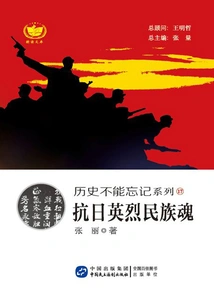
抗日英烈民族魂
Zhang Li
"History Can't Forget" is a themed series of books specially designed by China Democracy and Legal Publishing House for young readers. It aims to allow young people to fully understand the face of the Anti-Japanese War and inspire their patriotism. This book is a volume in the series, which mainly introduces Zhao Yiman, Zhao Shangzhi, Yang Jingyu, Tong Linge, Zhao Dengyu, Gao Zhihang, Fan Zhuxian, Ma Yaonan, Li Lin, Zhang Zizhong, Jie Zhen Guo, Xie Jinyuan, Ma Benzhai mother and son, Zuo Quan, Dai Anlan, Li Jiayu, Peng Xuefeng, Ke Dihua, Yao Mingda, the eight women who threw themselves into the river, the ten warriors of Jiaodong and other heroic deeds that fertilized China.
"History Can't Forget" is a themed series of books specially designed by China Democracy and Legal Publishing House for young readers. It aims to allow young people to fully understand the face of the Anti-Japanese War and inspire their patriotism. This book is a volume in the series, which mainly introduces Zhao Yiman, Zhao Shangzhi, Yang Jingyu, Tong Linge, Zhao Dengyu, Gao Zhihang, Fan Zhuxian, Ma Yaonan, Li Lin, Zhang Zizhong, Jie Zhen Guo, Xie Jinyuan, Ma Benzhai mother and son, Zuo Quan, Dai Anlan, Li Jiayu, Peng Xuefeng, Ke Dihua, Yao Mingda, the eight women who threw themselves into the river, the ten warriors of Jiaodong and other heroic deeds that fertilized China.