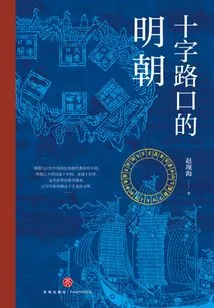
Ming Dynasty at the Crossroads
by Zhao Xianhai
About This Novel
What were the factors that determined the direction of historical development in the Ming Dynasty? Looking at the world in the 14th century, why did the Ming Dynasty make a choice that was different from other civilizations? In the early historical trend of globalization, why did the Ming Dynasty miss historical opportunities? In the mid-14th century, the Mongol Empire began to disintegrate, ushering in a new chapter in world history. In 1368, a new star rose on the East Asian continent, and the Ming Dynasty was established. At the same time, Western Europe ushered in the "Renaissance" and the subsequent new routes opened up the Arab civilization to expand its power in the Eurasian continent, acting as an intermediary for trade and culture between the East and the West. The Principality of Muscovy integrated the Rus tribes and established Russian civilization on the basis of the territory of the Mongol Empire. In the space of power left after the disintegration of the Mongol Empire, four civilizations began to compete, outlining the basic context of future world history and promoting the opening of modern world history. Compared with the other three civilizations, the Ming Dynasty, which was isolated in East Asia, adopted a "restrained" approach to territorial policy. After the Ming Dynasty largely regained the old territory of the Yuan Dynasty, it did not use its powerful national power to follow the world expansion of the Mongol Empire. Instead, it returned to Asia and established the traditional "Chinese Asian Order" with the Central Plains Dynasty as the core. When the world entered the crossroads of modern times, this choice of the Ming Dynasty missed a rare historical opportunity and provided historical space for the expansion of the other three civilizations, which is regrettable. However, if you immerse yourself in history, you will find that the Ming Dynasty's choice has inherent rationality and is the inevitable result of a combination of geopolitics, civilizational traditions, and dynastic character. Starting from the perspective of global history, the author selects 17 typical figures and events in the history of the Ming Dynasty. Taking the "introverted" orientation of the Ming Dynasty as a clue, he vividly describes the complicated people and events in the Ming Dynasty from the political, economic, military, ideological, and cultural levels. He deeply reveals the deep connotation behind this complicated picture, and points out the profound impact of these people and events on Ming Dynasty China, and even the modern history of the world.
Official Sources
What Readers Think
Rating
Community(0)
Rating
Community(0)